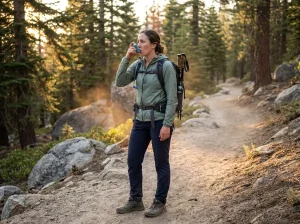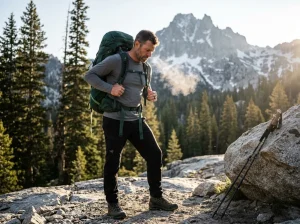
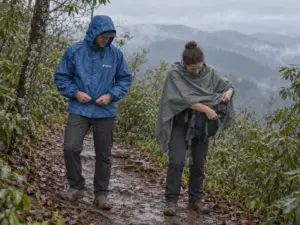
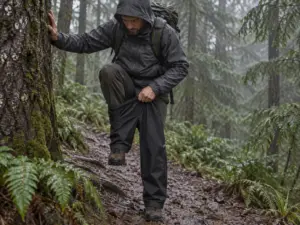

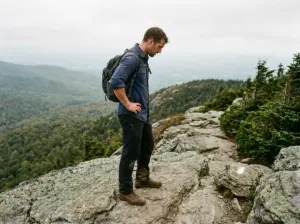
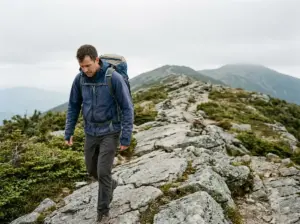
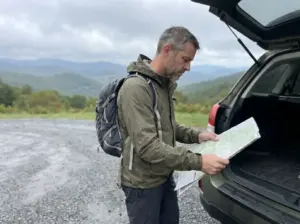
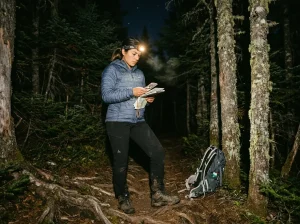
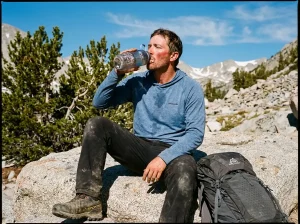
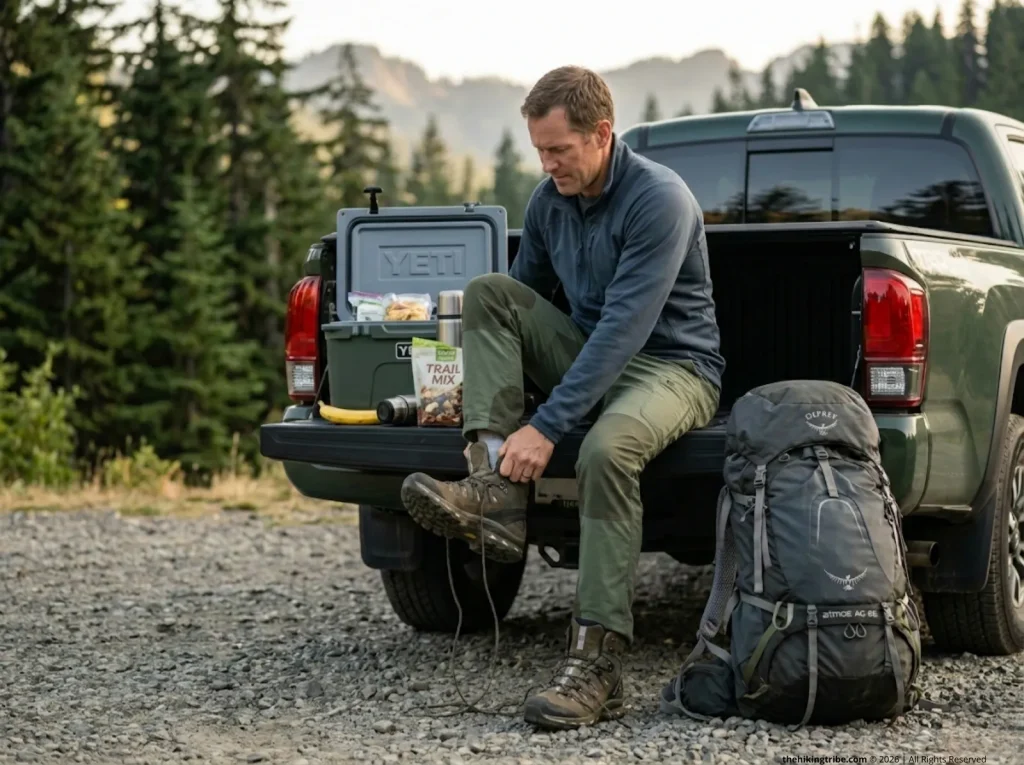
You stumbled off the trail after a 12-miler in the Cascades, calves burning, knees complaining on every step down to the parking lot. You chugged some water, drove home, crashed on the couch. Then Tuesday arrived and you could barely walk downstairs. Two days of stiffness. Again.
That’s not bad luck and it’s not age. I’ve done enough Pacific Northwest trails to know the difference between a hard day on the mountain and a recovery fail. The soreness that lingers past day two almost always traces back to the same three mistakes — skipping the nutrition window, neglecting the right stretches, and treating sleep like a bonus instead of the main event.
Here’s the post-hike recovery blueprint that actually works, built on the same field-tested on real trails principles I rely on after big days in the backcountry.
⚡ Quick Answer: Within 30-60 minutes of finishing your hike, eat a 3:1 carbohydrate-to-protein ratio snack — about 60g carbs and 20g protein. Rehydrate at 24 oz of fluid per pound of body weight lost. Stretch your quads, calves, hamstrings, and hips for 20-30 seconds each. Then sleep 7-9 hours. Do those four things consistently and most day-after soreness disappears by morning.
Why Your Legs Still Hurt 48 Hours Later
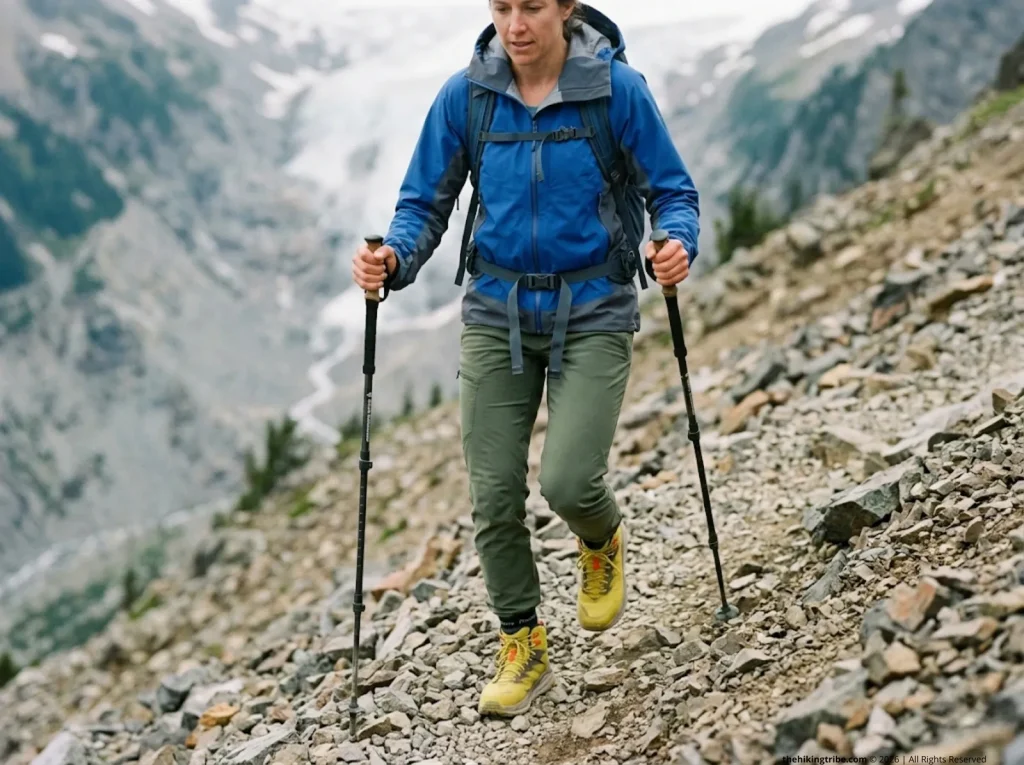
Not all hiking soreness is the same, and knowing what’s actually happening in your muscles helps you treat it correctly.
DOMS — delayed onset muscle soreness — starts 12-24 hours after a hard hike and peaks between 24 and 72 hours. That’s why Thursday’s legs feel worse than Wednesday’s after a Tuesday hike. It’s not inflammation spreading. It’s the normal peak of a repair cycle triggered by eccentric contractions, the kind where your muscles lengthen under load. Descending a steep trail is a wall-to-wall eccentric workout for your quads and calves, according to Cleveland Clinic’s research on DOMS from hiking micro-tears.
Flat and uphill terrain is relatively forgiving by comparison. Downhill is where the damage happens. Every step down a switchback, your quads are firing while lengthening — the opposite of a squat. That’s what creates the micro-tears that produce muscle soreness. The heavier your backpack, the worse it gets.
Soreness vs. Injury — How to Tell the Difference
Soreness vs. injury differentiation matters because treating an injury like soreness makes things worse. DOMS feels like a dull, diffuse ache that moves around when you move and eases up as you warm into it. It improves daily over 3-5 days. That’s safe territory.
Sharp, localized pain that worsens with movement, swelling that doesn’t go down, or soreness that hasn’t improved after a week — those are signals to stop and see someone. Same goes for dark urine after a hot, long hike. That’s your kidneys asking for help, not a recovery inconvenience.
Pro-tip: If the soreness spreads to your whole quad when you climb stairs and fades a bit after a few steps, it’s DOMS. If it stays locked in one specific spot no matter what you do, have it looked at.
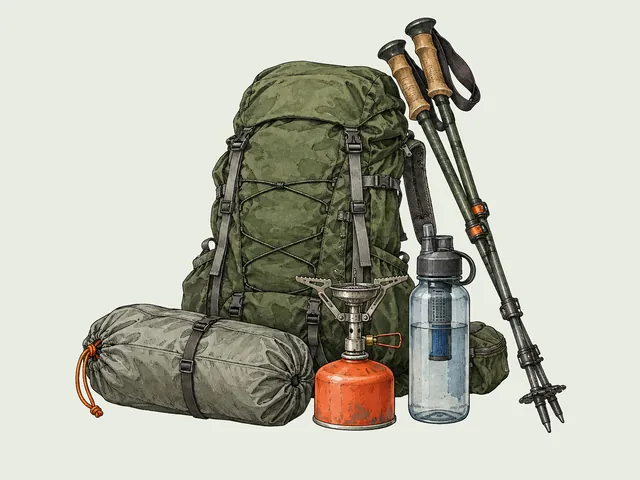
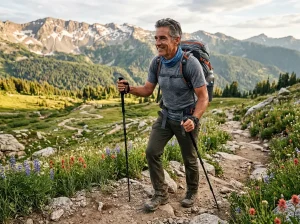
To reduce your total eccentric loading on descent and protect your knees, look at the bio-mechanical benefits of using trekking poles on descent. It’s one of the most underrated recovery tools that costs nothing beyond poles you probably already own.
Why Multi-Day Hikers Get Hit Hardest
A single hard day generates DOMS. Four or five consecutive hard days create a muscle damage debt that compounds if you don’t actively pay it down. Research published in PMC shows that repeated descents on multi-day hikes impair recovery without proper protocols — your postural control starts slipping, your reaction time on technical terrain slows, and the soreness you feel on Day 5 isn’t from Day 5’s miles alone.
Most recovery guides target people who hike once a week. If you’re planning back-to-back weekends or a backpacking trip, the standard advice isn’t enough. You need a system, starting at the trailhead.
The 30-Minute Nutrition Window Most Hikers Miss
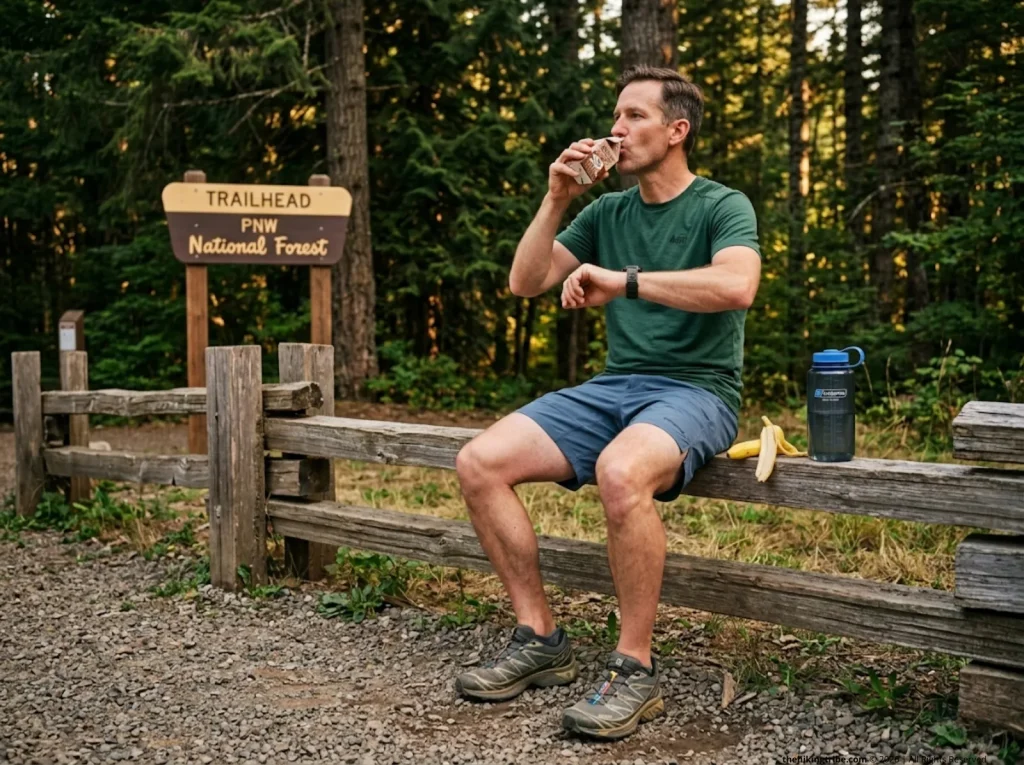
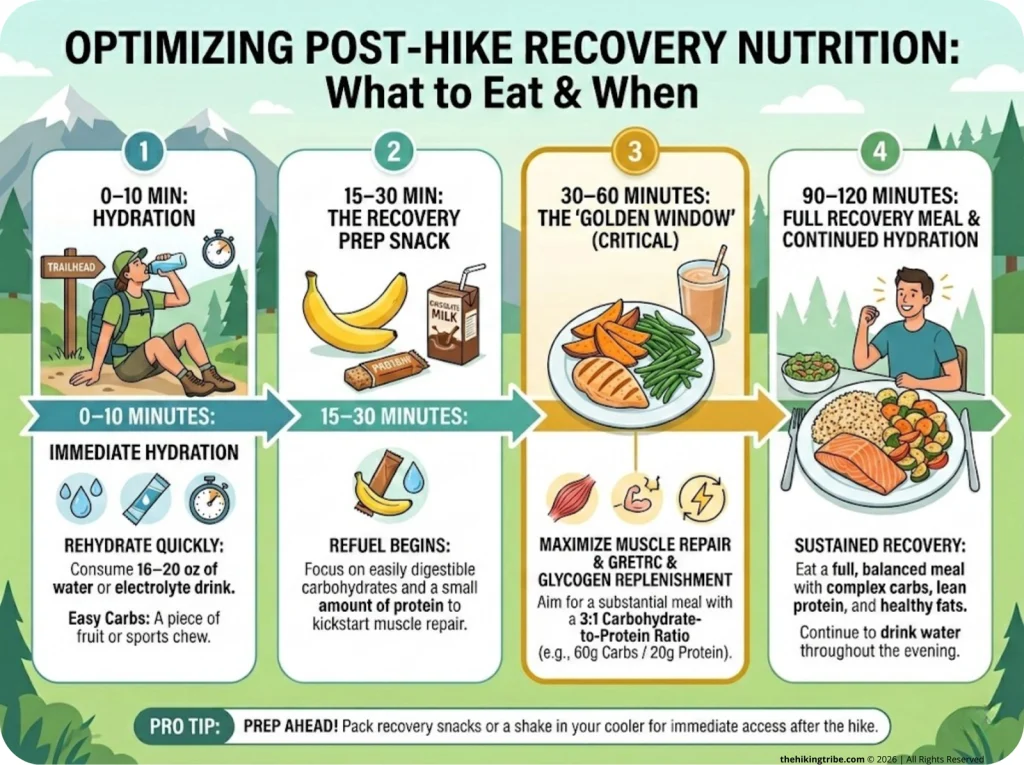
Here’s the thing nobody talks about at the trailhead while everyone’s unlacing their boots. There’s a narrow window — roughly 30-60 minutes post-hike — when your muscles are primed to absorb carbohydrates and protein at a dramatically higher rate than any other time. Miss it and your overnight muscle glycogen replenishment takes twice as long.
The 3:1 Carb-to-Protein Ratio That Speeds Recovery
The 3:1 carbohydrate to protein ratio is solid and practical. A mix of roughly 60g of carbs and 20g of protein kicks your body into faster muscle protein synthesis and restores glycogen better than carbs alone, per Oregon tactical athlete guidelines on the 30-60 minute golden window.
For a 180 lb hiker after a 10-15 mile day, that translates to roughly 70g of carbs and 23g of protein in that immediate snack, followed by a full 800-1200 cal recovery meal within two hours. Backcountry Foodie, whose author holds sports nutrition credentials plus 20+ years of field time, puts the optimal carb rate at 1.0-1.2g per kilogram of body weight per hour for the first four to six hours after finishing.
Trail-Ready Recovery Meals That Actually Work
Chocolate milk is the most convenient field-tested recovery drink for most hikers — it hits close to a 4:1 carb-to-protein ratio and comes with electrolytes already built in. REI Co-op veteran Tim Bird recommends eating right after hiking and keeping it practical: complex carbs, quality protein, no overthinking.
Banana with jerky and a handful of dried cherries gets you to roughly 45g carbs and 15g protein with a dose of antioxidants that actively reduce exercise-induced inflammation. Blueberries work the same way. Golden milk with turmeric is worth adding that evening — curcumin has real anti-inflammatory effects, and the warmth helps your nervous system downshift after a long hike.
For no-cook meal options that work on the trail, the principles are identical — prioritize fast-absorbing carbs with quality protein and nutrient-dense foods, get it in early.
What Happens When You Skip the Window
Muscle glycogen synthesis rates are highest in the first 30-60 minutes after exercise. They drop off fast after two hours. Skip the window on a one-day hike and you feel stiff the next morning. Skip it on Day 2 of a multi-day trip and your Day 3 legs are starting depleted before you even hit trail.
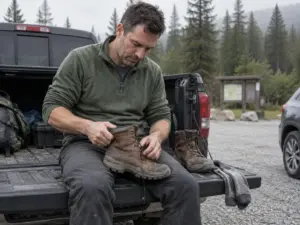
Pro-tip: I keep a Ziploc of trail mix and a portion of chocolate milk powder in my truck. By the time I’ve unlaced my boots and stretched out my calves, the recovery snack is mixed and down. It takes 90 seconds and makes a real difference by morning.
Rehydration by the Numbers — Not Just “Drink Water”
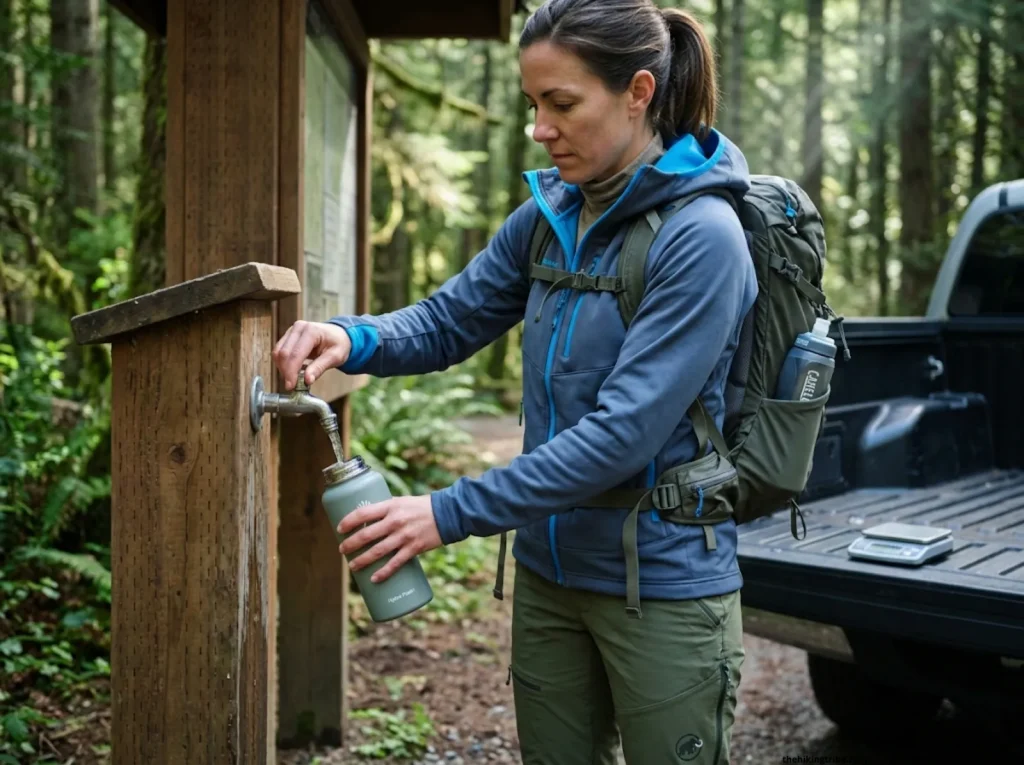
Plain water fixes thirst. It doesn’t fix dehydration. After a long hike, your body has lost sodium, potassium, and chloride in sweat — and without those electrolytes, the fluid you drink doesn’t absorb into muscle cells the way it needs to.
The 24 oz Per Pound Formula
The gold standard for weight-specific rehydration formulas is 24 oz of fluid per pound of body weight lost during the hike. That’s the 24 oz fluid per lb body weight lost formula backed by sports nutrition guidelines and cited by Johns Hopkins in their sports hydration recommendations to restore electrolyte balance.
Weigh yourself before and after your hike — even a 2% drop in body weight affects cognitive performance and makes hard terrain feel harder. Most hikers lose more than they realize, especially in summer heat.
Electrolytes vs. Plain Water — What the Science Says
Fluid intake without electrolytes risks hyponatremia on hot, high-mileage days when you’re drinking a lot of plain water and not replacing sodium. The symptoms look like dehydration — headache, fatigue, confusion — which causes people to drink even more plain water and make things worse.
At altitude, dehydration compounds faster. Dry air and increased respiration rate pull moisture out with every breath, well beyond what flatland formulas account for. If you’re hiking at high altitude and wondering why you’re so wiped despite drinking regularly, check your electrolyte intake before you blame fitness.
Pro-tip: Add a pinch of salt and a dissolvable electrolyte tablet to every other water bottle on hot trail days. The headache and “next-day fog” that most hikers blame on the miles often disappears.
For managing fluid balance in cold conditions when you’re less aware of thirst, see keeping your hydration system functional in cold conditions — the same dehydration problem exists in winter, just harder to notice.
The 5 Post-Hike Stretches That End Next-Day Stiffness
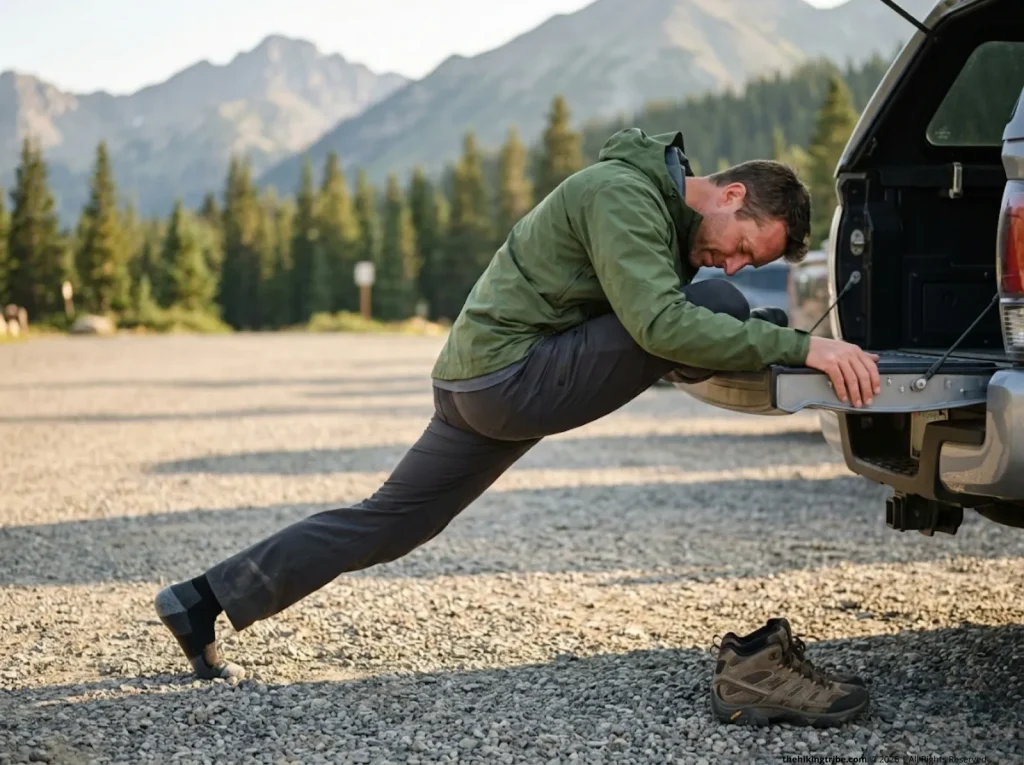
Static stretching immediately post-hike — 20-30 second holds — restores muscle length and tells your nervous system to stand down. According to the Washington Trails Association’s post-hike stretch protocol, focusing on the right five muscle groups makes the difference between waking up mobile and waking up with the post-hike hobble.
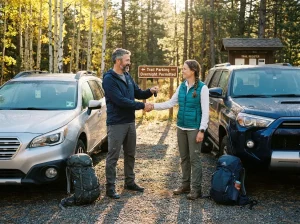
Do these at the trailhead before you get in the car. Not at home on the couch. At the trailhead.
Quads and Hip Flexors — Standing Pull and Pigeon Pose
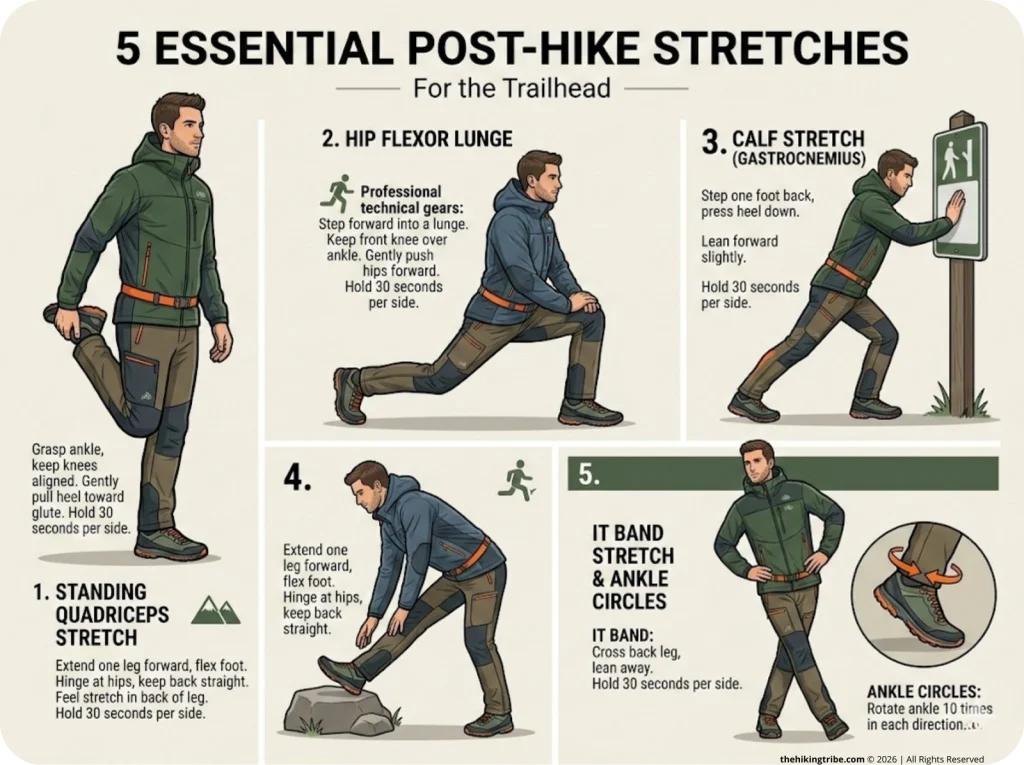
Grab your ankle behind you, squeeze your glute to deepen the pull on your quads, and hold 20-30 seconds per side. Then find a tailgate, a large rock, or a log and do a modified pigeon stretch — front knee bent up on the surface, lean forward into your hip flexors. These two muscle groups take the hardest hit on steep uphills and stair-stepping terrain.
Calves and Hamstrings — Wall Push and Forward Fold
Press your palms flat against your truck or a tree, one foot forward, back heel pressed down into the ground. Hold 30 seconds, switch. That’s your calves getting unstuck from the eccentrics of descent. For hamstrings, stand with a slight bend in your knees and hinge forward at the hips — let gravity provide the hamstring stretch, no bouncing.
Hips and IT Band — Figure-Four and Lunge Stretch
Cross one ankle over the opposite knee and sit back like you’re in a chair — the standing figure-four gets deep into the IT band and glute that locked up on every lateral step. Follow it with a deep lunge, rear knee down, push your hips forward. Finish with ankle circles — 10 clockwise, 10 counter — to restore the range of motion that trail terrain steals.
This 10-minute sequence is the most field-tested stretch routine I know, and the video below from physiotherapist Michelle Kenway is the closest to what I actually do:
The Overnight Recovery Protocol Serious Hikers Follow
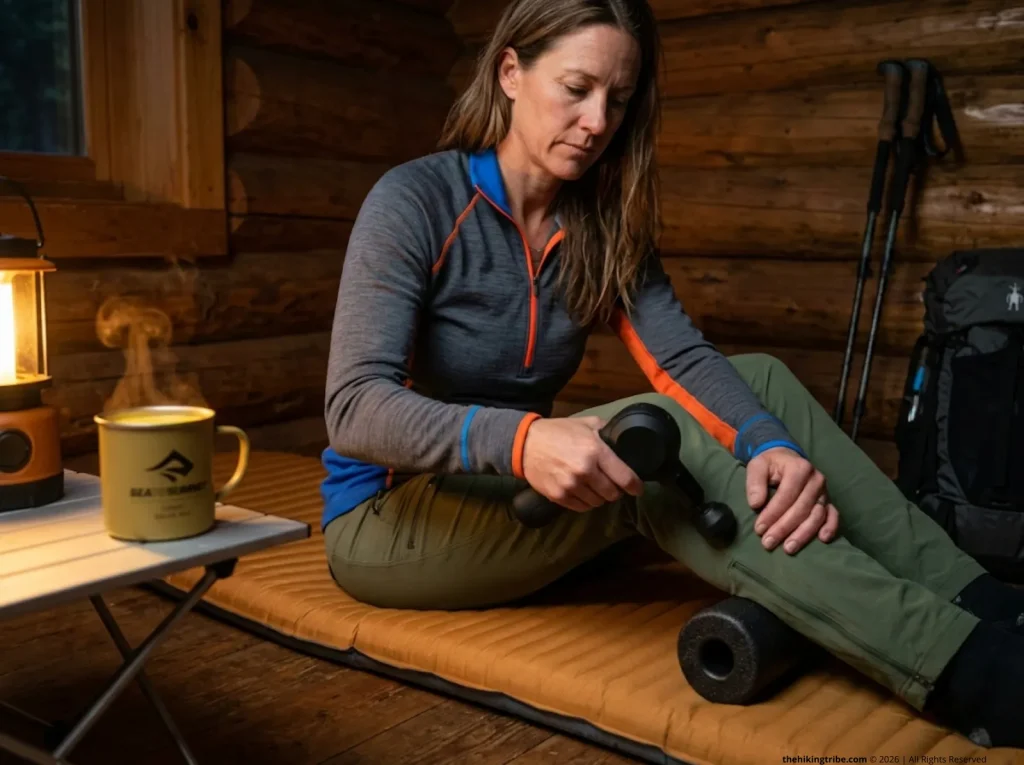
What you do between trailhead and sleep determines what your legs feel like the next morning. The window doesn’t close when you eat your recovery meal.
Foam Rolling and Self-Massage — Timing Matters
Compression and massage applied within two hours of finishing your hike reduce the inflammatory response in recovering muscles. Run a foam roller or a massage device along your quads and calves — 30-60 seconds per muscle, moderate pressure. Don’t go hard. The goal is circulation, not deep tissue breakdown.
Avoid aggressive massage during peak DOMS at 24-48 hours. That’s when the micro-tears are still raw. Going hard on them at that stage increases inflammation rather than reducing it. Think of anti-inflammatory timing — gentle early, rest later.
Sleep Quality — The Free Recovery Tool
Seven to nine hours of quality sleep is when your body produces the growth hormone that drives actual muscle repair. Cut that short and you’re cutting the repair cycle short. Elevating your legs slightly before bed encourages blood flow back to your core and keeps overnight swelling down.
An Epsom salts soak before bed — two cups in warm water, 15-20 minutes — provides magnesium through the skin and has a real effect on muscle relaxation. It’s old-school, but it works. Combine it with the golden milk from your recovery routine and you’re stacking anti-inflammatory benefits in your favor.
Next-Morning Active Recovery — Move to Heal
Complete rest the day after a hard hike feels like the right call. It’s not. Light active recovery — a 15-20 minute walk at conversational pace, an easy swim, gentle yoga — promotes blood flow and reduces next-day stiffness better than lying still.
“I thought complete rest would help, but I was stiffer. Should have done light movement.” That’s one of the most common things I hear from hikers who are frustrated by recurring muscle soreness on multi-day trips.
Pro-tip: A 15-minute easy walk the morning after a hard trail day does more for your legs than an extra hour on the couch. Your muscles need movement to flush the metabolic waste from yesterday’s damage.
For context on how to structure rest within a larger hike plan, the approach to strategic zero days on a thru-hike applies the same principle — deliberate movement beats passive rest for recovery. And if you want to accelerate circulation during those easy days, hiking compression socks that support recovery are worth the investment for anyone doing back-to-back trail days.
Building a Recovery Plan for Back-to-Back Trail Days
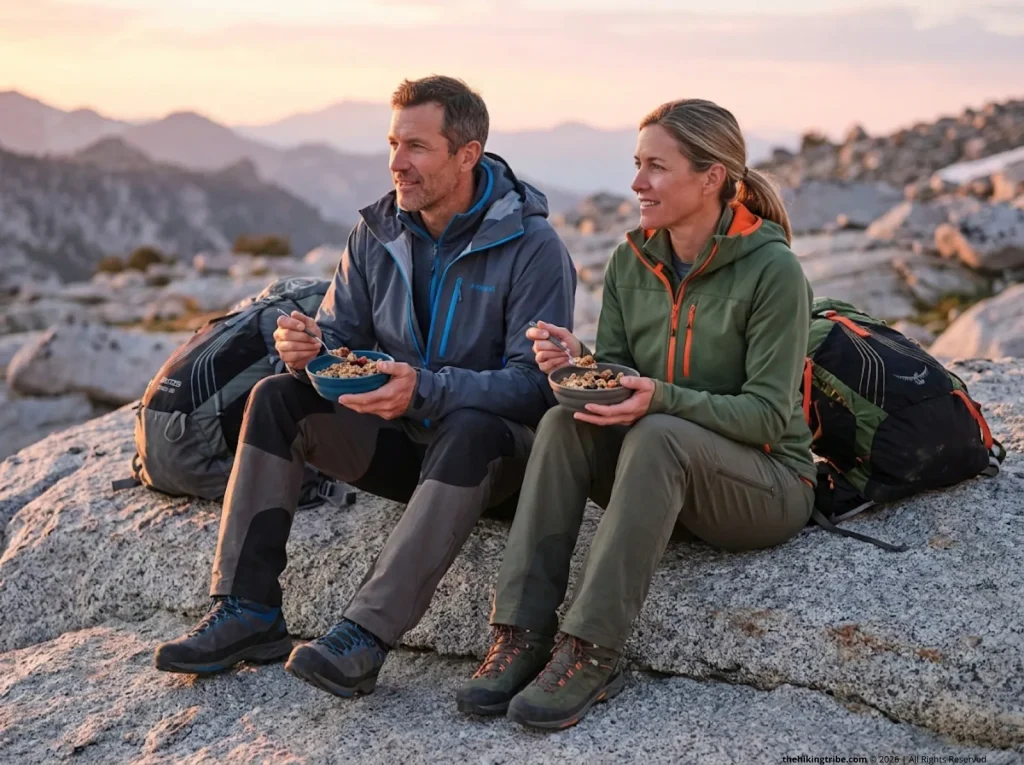
One hard hike is manageable with the basics above. A week-long mountaineering approach or a backpacking trip requires a more deliberate multi-day thru-hike recovery progression.
Day 1 vs Day 5 — How Recovery Evolves
Your first hiking day is usually your most damaged. Hit the full recovery protocol — 3:1 refuel, all five stretches, foam roll, eight hours of sleep. By Days 2-3, your body starts adapting. Trail legs is a real phenomenon — repeated exposure conditions the muscle tissue and reduces the severity of DOMS with each day. What wrecked you on Day 1 causes only mild stiffness by Day 4.
The shift from Day 3 onward moves away from acute DOMS management toward caloric surplus and hydration maintenance. On long trips, undereating is the most common and least diagnosed recovery problem. Your muscles can’t promote muscle repair without raw material — nutrients, healthy fats, and enough total calories to fund the work.
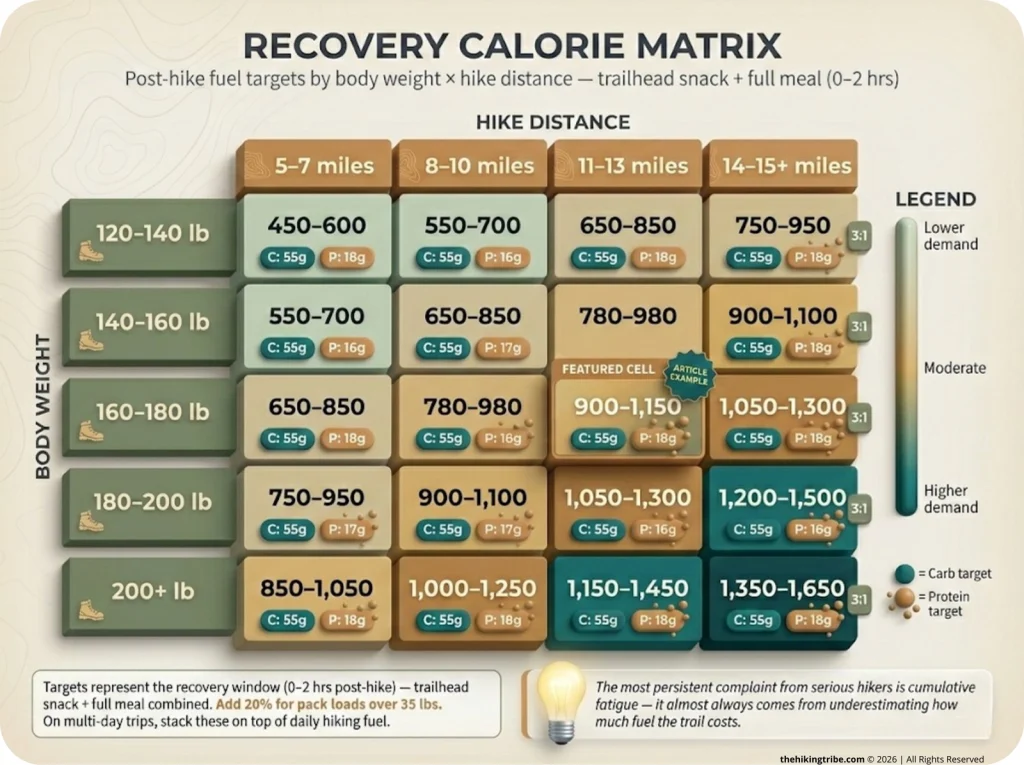
Hiker-Calibrated Calorie Targets for Recovery Meals
Generic advice says “eat protein.” Hiker-calibrated nutrition says something more specific. A 180 lb male after a 10-15 mile day with a 35 lb pack needs roughly 800-1200 cal recovery meal in the recovery window — combining an immediate trailhead snack and a full meal within two hours. A 140 lb female after an 8-12 mile day targets 600-900 calories in that same window.
These are hiker-specific calorie estimates that account for distance, body weight, and pack load — not generic sports nutrition numbers copied from marathon training guides. On multi-day trips, add those recovery calories on top of your daily hiking fuel. The most persistent complaint from serious hikers is cumulative fatigue that begins as an underestimation of how much food the trail actually costs.
See the complete hiking training system for how pre-hike fitness preparation affects how quickly you develop trail legs and reduce recovery time across a season.
Conclusion
Post-hike recovery isn’t complicated, but it’s specific. The 30-60 minute nutrition window is real — hit it with a 3:1 snack and you don’t wake up with depleted legs. The 24 oz fluid per lb body weight lost formula is more useful than “drink plenty of water” because it tells you how much plenty actually means. And the five-stretch trailhead sequence isn’t optional if you care about being trail-ready next morning.
Do all three consistently and your recovery stops being a sore, slow process that eats into your trail time. It becomes a system. The kind that lets you be back on the mountain two days later instead of two weeks.
On your next trail day, pack your recovery snack in the car, weigh yourself before and after, and run through the stretch sequence at the trailhead before you drive home. Track your next-day soreness against your previous baseline. The protocol speaks for itself.
FAQ
What should I eat after a long hike?
Eat a mix of carbohydrates and protein in a 3:1 ratio within 30-60 minutes of finishing — 60g carbs plus 20g protein for a 150 lb hiker. Chocolate milk, a banana with jerky, or a sweet potato with chicken all hit close to the right ratio. Follow with a full 800-1,200 calorie meal within two hours to complete muscle glycogen replenishment.
Is it good to stretch after hiking?
Yes — static stretching immediately post-hike reduces next-day stiffness by restoring contracted muscle length. Focus on quads, calves, hamstrings, hip flexors, and IT band, holding each for 20-30 seconds. Stretch at the trailhead before driving home, not after you’ve stiffened up on the couch.
How long does it take to recover from a hike?
DOMS peaks at 24-72 hours and clears within 3-5 days for most hikers. With proper post-hike recovery nutrition, stretching, and active recovery, most people feel trail-ready within 48 hours. Multi-day hikers develop trail legs by Day 3-4, which reduces soreness with each consecutive day on trail.
What helps with soreness after hiking?
The most effective combination is immediate 3:1 carb-protein refueling, trailhead stretching, foam rolling within two hours, 7-9 hours of sleep, and light active recovery the next morning. Antioxidants from tart cherries, blueberries, and turmeric also help reduce exercise-induced inflammation.
How do you recover muscles after downhill hiking?
Downhill hiking causes more muscle damage than flat or uphill terrain because of the eccentric loading on descent. After heavy-descent days, prioritize extra attention to quad and calf stretching, anti-inflammatory foods, and avoid aggressive massage during peak DOMS at 24-48 hours. Active recovery the next morning beats complete rest for getting your legs back.
I've spent more than a decade researching hiking gear and trail technique. I read the specs, the forum threads and the long-term reviews, and every pick here comes with what it gets wrong.
End of the trail
You read every mile of this one. Here's where the trail goes next.