
In this article
The squelch of a wet sock inside a heavy boot is the sound of a ticking clock. Cold seeps into your toes, the leather gets heavy, and your boots turn into a perfect incubator for bacterial growth and blisters.
In my twenty years leading backcountry trips, I’ve seen hikers get desperate to fix this. The urge to blast boots with a blow dryer or shove them next to a wood stove is strong. It feels like the only way to fight the cold.
But that instinct is the fastest way to destroy a $300 investment. I have watched soles peel right off midway through a hike because a student tried to dry their boots too close to a campfire the night before.
Real footwear maintenance isn’t about high heat. It is about using an airflow-first approach to get the water out without breaking the glue that holds your boot together. Here is how to save your feet without ruining your gear.
Why is heat the enemy of modern footwear?
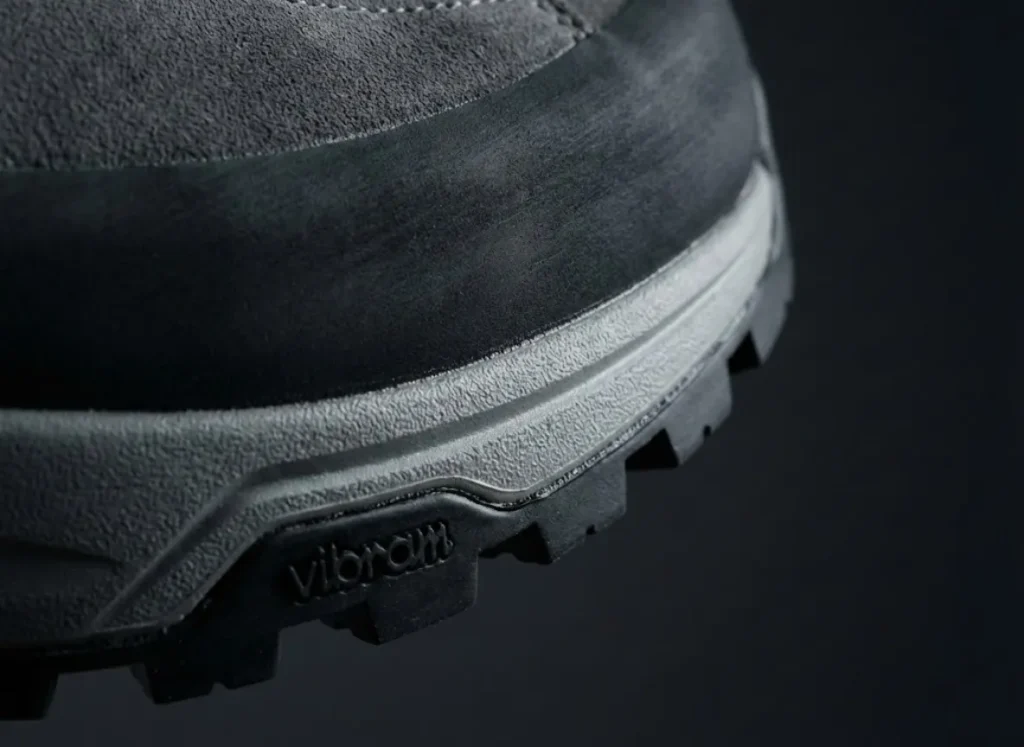
High heat ruins boots because it melts the glue holding the sole to the upper, causing the bottom to peel off—a process known as delamination.
What is the heat limit for boot glue?
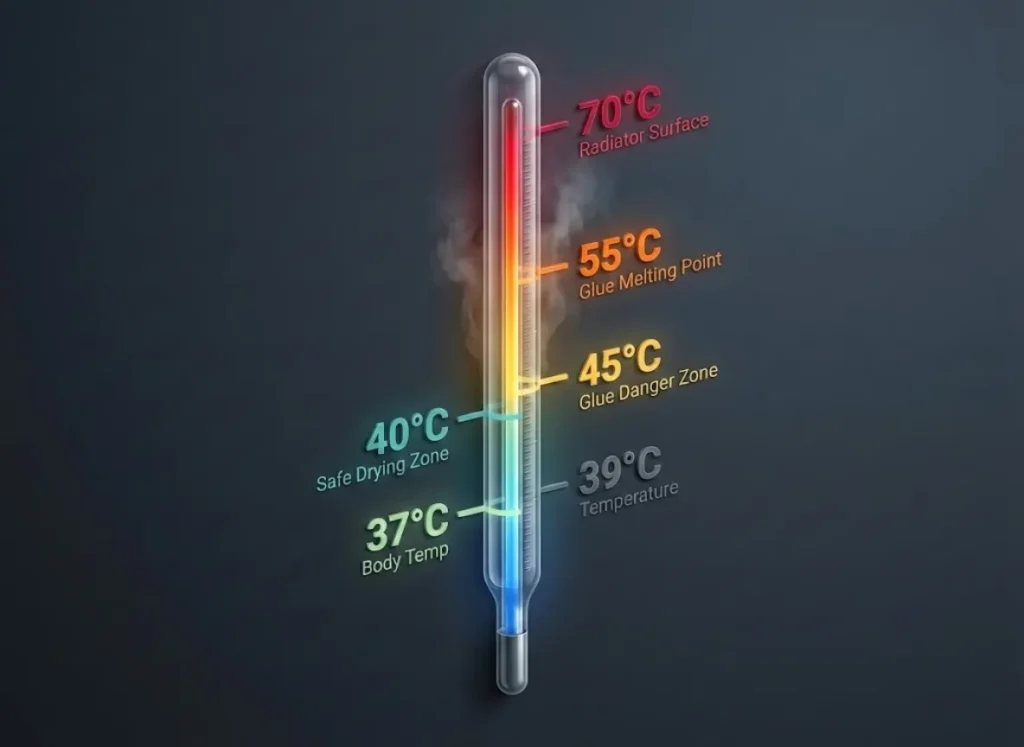
Modern hiking boots are built tough, but they have a weak spot: the glue. Manufacturers use special adhesives to bond the rubber sole to the rest of the boot. This glue provides structural integrity, but it has a specific melting point. Often, this is as low as 55°C (131°F).
When you put a boot near a radiator, a fire, or—heaven forbid—in an oven, you aren’t just evaporating moisture. You are softening that glue. Once the glue gets hot and rubbery, the tension of the boot pulls the sole away. Direct heat damages boot glue, leading to irreversible failure.
The damage isn’t always instant. It gets worse with water. There is a chemical reaction called “hydrolysis” where water basically rots the glue over time. According to research on the thermal ageing of bonded materials, adding heat to wet glue makes this aging happen much faster. In fact, for every 10°C (18°F) you go up, the damage rate doubles.
To keep your gear safe, you must stay in the “Safe Zone.” This means keeping the temperature strictly below 45°C (113°F). Crossing this line risks your boots falling apart now or crumbling later. This is why knowing how to store hiking gear to stop mold and delamination is just as important as how you dry it. Both deal with the same chemical breakdown.
What are the safest methods for drying boots at home?
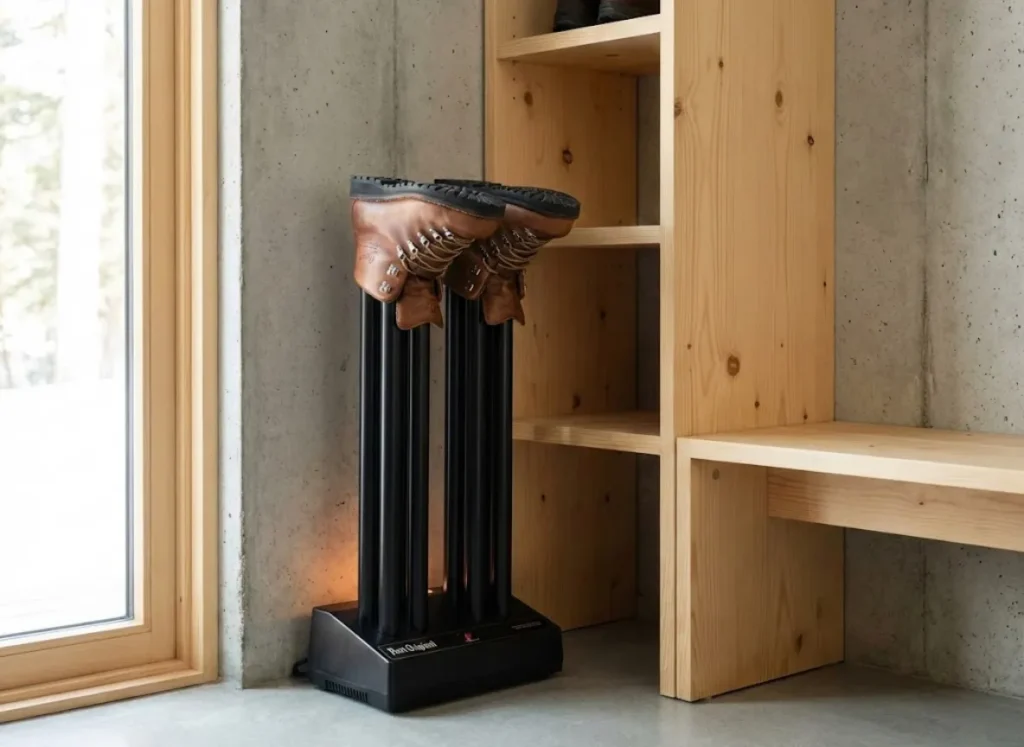
The safest methods use moving air rather than hot heat. You want the air to flow, keeping the temperature close to a warm summer day.
Is “gentle air” the best way to save your boots?
Thermal convection dryers, like the classic Peet Original, are widely considered the safest shoe dryer you can buy. They work on a simple idea: warm air rises.
These units use very little electricity to warm the air just slightly above room temperature. They usually settle between 30°C and 40°C.
The warm air rises through tubes into the toe of the boot. It picks up moisture, cools down, and falls back out. This creates a gentle, non-stop cycle of ventilation.
Because it relies on rising air rather than a fan, it is slow. It usually takes overnight drying (6–10 hours). However, this slow pace ensures the deep foam dries out without shocking the material integrity with heat.
Pro-Tip: If you have custom orthotics, this gentle method is the only one I recommend. High heat can warp the plastic arch support of expensive insoles, which ruins the fit of your boot.
This method is also better for your foot health. Studies on footwear microclimate show that controlling the environment inside your shoe is key to stopping odor control issues and mold. The steady airflow handles moisture in Gore-Tex boots perfectly, preventing that damp, swampy feeling inside waterproof gear.
| Shoe Drying Methods Comparison | |||
|---|---|---|---|
| Method | Speed (Hours) | Safety Score (1-10) | Noise Level |
| Peet (Thermal Convection) | 3-8 Hours | 10/10 | Silent (0 dB) |
| Fan (Forced Air Systems) | 1-3 Hours | 8-9/10 | Fan Hum |
| Newspaper | Overnight (Requires active changing) | 10/10 | Silent |
| Radiator | Fast (Unregulated) | Tier 3 (Dangerous) | Silent |
| Fire | Fast (Unregulated) | 1/10 (Hot Rocks proxy) | Ambient |
Since these boot dryers have no motors, they are silent. They rarely break. Using them regularly is a big part of a smart hiking gear lifecycle guide, helping your boots last for years instead of just a few seasons.
How effective are fan dryers?
Forced air systems use a fan to push air into the boot. This moves the wet air out much faster than the gentle rising method. It can dry a boot in 1 to 3 hours.
Many of these units have a heater. If you use one, you must make sure it has a thermostat that keeps it near 40.5°C (105°F). Alternatively, simple box fans or non-heated fans directed at the laces work well for air drying.
Safety is critical here. Consumer safety recalls regarding dryer fire hazards remind us that if you block the air intake, the machine can overheat and catch fire.
Fan dryers are great for families or hikers who need to dry multiple pairs during a quick lunch break. If the device has a “No Heat” setting, that is arguably the safest possible way to dry delicate vintage leather or suede. It relies purely on air movement.
To see why this works, look at a hiking boot anatomy guide. A boot is a sandwich of layers. Water soaks deep into the foam middle. Gentle air struggles to reach that deep foam quickly, but a fan pushes dry air right into the core, drying it from the inside out.
How do you handle wet boots in the backcountry?
When it is freezing outside, your goal changes. You aren’t trying to get them “bone dry.” You are trying to stop them from freezing solid.
Is the hot water bottle trick safe?
When you are camping and the temperature drops below freezing, a wet boot can turn into a block of ice by morning. Putting on a frozen boot is nearly impossible and dangerous for your toes.
In these spots, we use the “Hot Water Bottle Hack.”
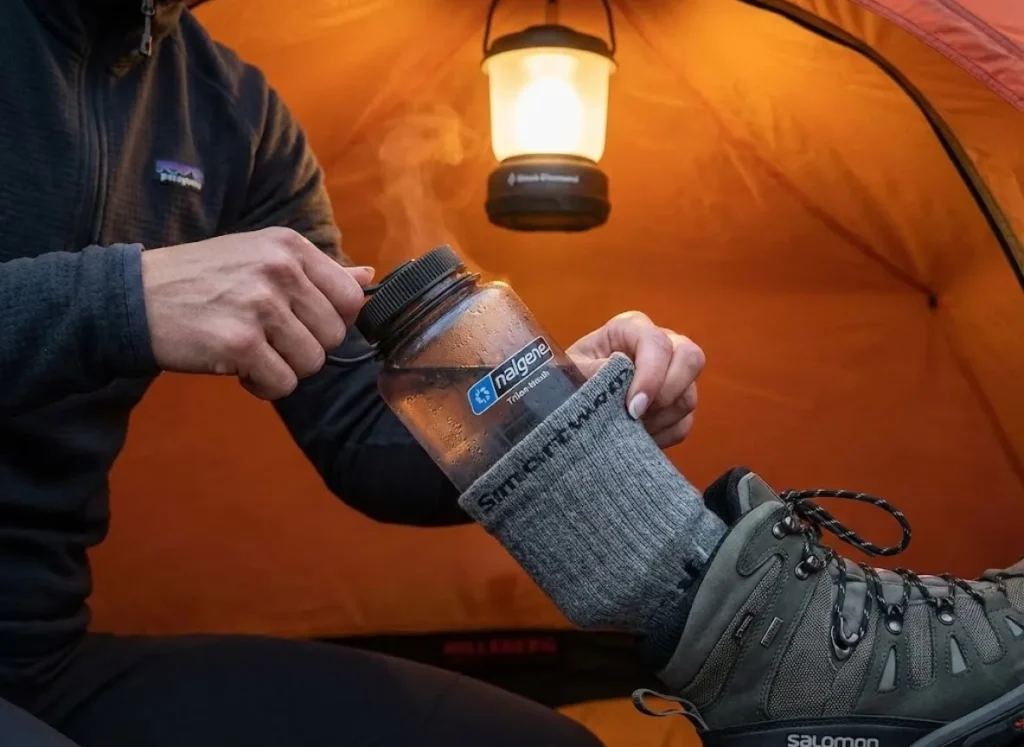
This involves filling a hard plastic bottle (like a Nalgene) with hot water. However, you cannot just shove the bottle into the boot. The plastic surface gets very hot—up to boiling temperatures. That is hot enough to melt synthetic liners and ruin glue.
Crucial Safety Step: You must place the hot bottle inside a thick wool sock before putting it in the boot.
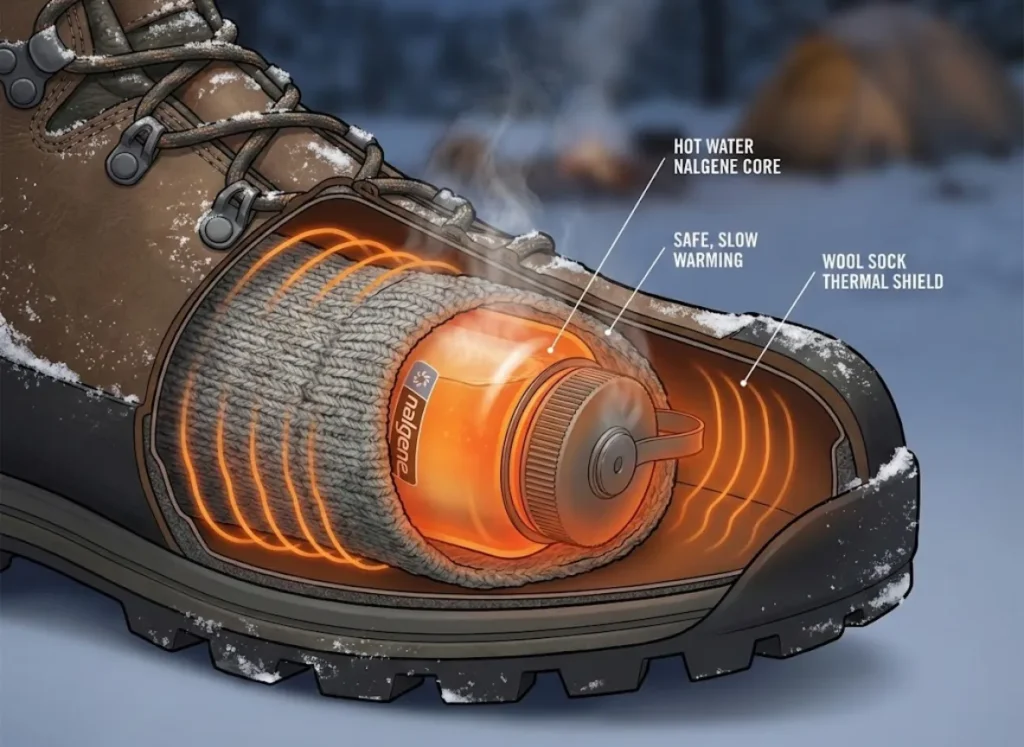
The sock acts as a shield. It slows down the heat, warming the boot gently over several hours instead of burning it instantly. This pushes moisture out of the lining while you sleep. It won’t get the boots perfectly dry, but it keeps them soft and warm for the morning.
Pro-Tip: Always remove insoles at night. Put them inside your sleeping bag near your chest. Your body heat will dry them out significantly, and standing on warm insoles in the morning makes a huge difference.
This is an advanced trick found in field manuals on prevention of cold weather injuries, used by soldiers and guides. It is a survival tactic, not a cleaning routine. For more on surviving the cold, check out our winter hiking guide to gear, skills, and safety.
Are there specific risks for different materials?
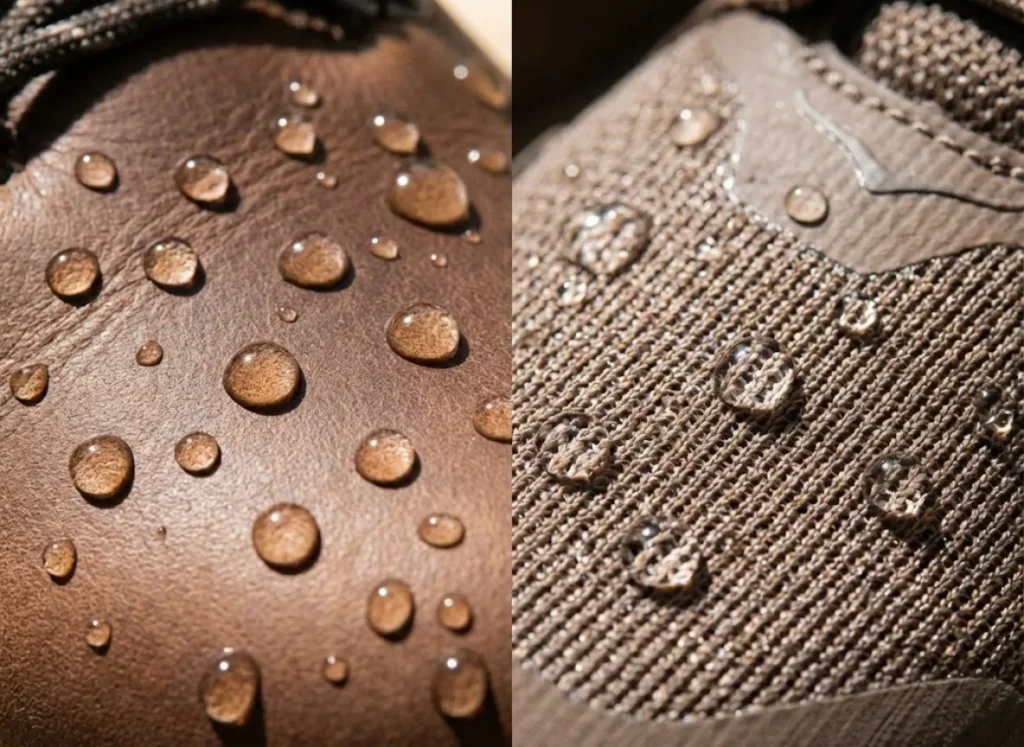
Yes. Leather can shrink and crack, while synthetic waterproof boots can get clogged or come unglued.
How does fast drying hurt leather vs. Gore-Tex?
Leather is skin. It relies on natural oils to stay soft and flexible. When you heat wet leather, the water evaporates too fast and takes those oils with it.
This causes the leather fibers to stick together. The leather shrinks, gets hard, and eventually suffers from cracking leather. Analysis of hydrothermal stability in leather shows that once this happens, you can’t fix it. For leather, use slow air drying and always apply a leather conditioner afterward for shape retention.
Gore-Tex, mesh, and other synthetic boots have different risks. The fabrics might handle heat okay, but the boot is made of many glued layers. Because waterproof boots trap steam inside (the “Thermodynamic Paradox”), they dry slowly.
If you use high heat to rush it, you might melt the foam and glue holding those layers together. Also, avoid putting rice or powder inside your boots. The dust can clog the tiny pores that make the boot breathable, ruining the waterproofing.
When choosing between the true cost of hiking boots: leather vs synthetic, remember that synthetics usually dry faster. Leather lasts longer, but only if you never cook it.
The Bottom Line
Being good outdoors means taking care of your gear so it doesn’t fail you. Keeping the “engine” of your hike—your feet and boots—in good shape takes patience, not high heat.
- The 45°C Hard Limit: Never go hotter than this to save the glue.
- Use Air, Not Heat: Box fans and gentle warm air are safe. Radiators and fires are not.
- Hygiene Matters: Dry your boots within 12 hours to stop bacterial growth and odor control problems.
- In the Wild: If it’s freezing, focus on keeping boots warm, not perfectly dry.
For more on keeping your kit ready for the next trail, check our full library of Gear Maintenance Guides.
FAQ – Frequently Asked Questions
Does putting rice in boots actually dry them?
Uncooked rice is messy and risky. While it absorbs a little water, it creates dust. This dust clogs the breathable pores of waterproof boots like Gore-Tex. It is safer to use the newspaper method changed every hour, or insert silica gel packets.
Can I dry my hiking boots in the oven on the lowest setting?
No. Never put boots in an oven. Even the lowest setting is usually too hot for the glue. The radiant heat can melt the adhesive and shrink leather in minutes.
Is it safe to use a hair dryer on wet shoes?
Yes, but only if you use the Cool or No Heat setting. Using a hair dryer on high heat is a leading cause of soles peeling off. You want the airflow, not the heat.
How long does it take to dry soaked boots safely?
Safe drying time takes patience, usually 8 to 12 hours using a fan or gentle dryer. Rushing this with heat risks breaking your boots, so plan to let them dry overnight.
How should I prep muddy boots before drying?
Before you start the drying process, remove excess mud and dirt with a damp cloth, paper towels, or kitchen roll. Drying mud onto the leather sucks moisture out of the material, making it brittle.
Risk Disclaimer: Hiking, trekking, backpacking, and all related outdoor activities involve inherent
risks which may result in serious injury, illness, or death. The information provided on The Hiking Tribe is for
educational and informational purposes only. While we strive for accuracy, information on trails, gear, techniques,
and safety is not a substitute for your own best judgment and thorough preparation. Trail conditions, weather, and
other environmental factors change rapidly and may differ from what is described on this site. Always check with
official sources like park services for the most current alerts and conditions. Never undertake a hike beyond your
abilities and always be prepared for the unexpected. By using this website, you agree that you are solely
responsible for your own safety. Any reliance you place on our content is strictly at your own risk, and you assume
all liability for your actions and decisions in the outdoors. The Hiking Tribe and its authors will not be held
liable for any injury, damage, or loss sustained in connection with the use of the information herein.
Affiliate Disclosure: We are a participant in the Amazon Services LLC Associates Program, an
affiliate advertising program designed to provide a means for us to earn advertising fees by advertising and linking
to Amazon.com. As an Amazon Associate, we earn from qualifying purchases. We are also an official affiliate partner
of Black Diamond Equipment via the AvantLink network. If you click on a Black Diamond affiliate link and make a
purchase, we may earn a commission at no additional cost to you. We also participate in other affiliate programs and
may receive a commission on products purchased through our links. Additional terms are found in the terms of
service.