




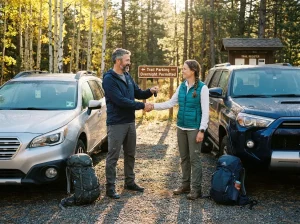



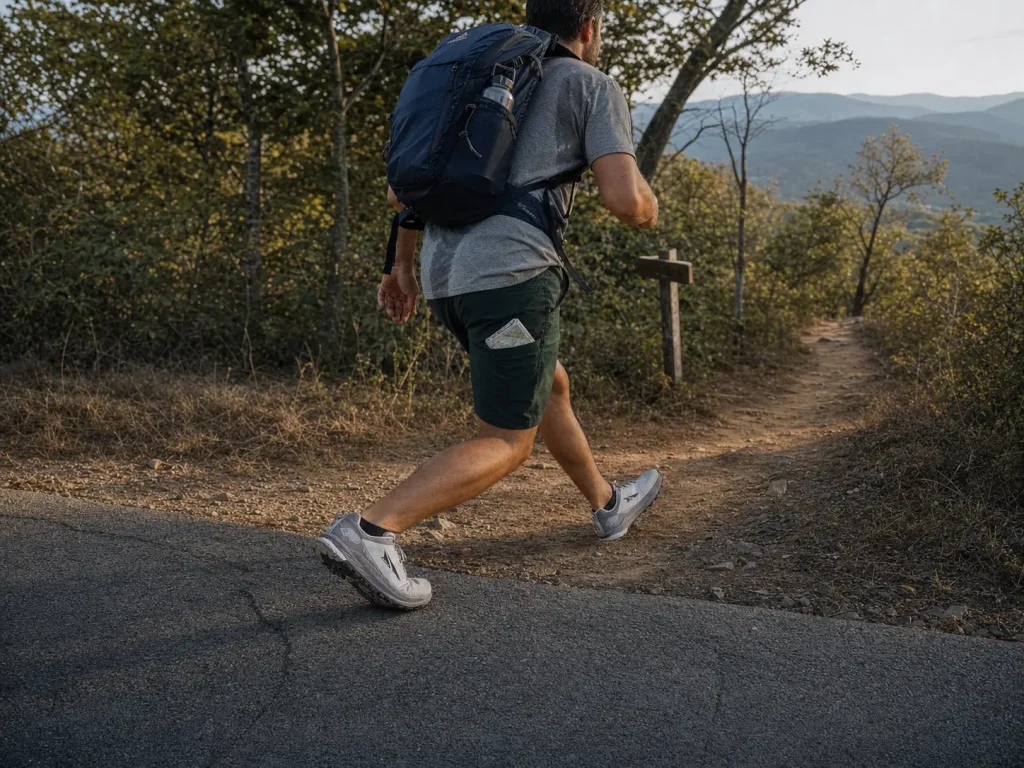
You park at the trailhead, and the walk from the parking lot is a quarter mile of hot asphalt with your pack already on, and two hundred yards past the sign the surface turns to roots and dry dirt. Almost every guide to road-to-trail combo shoes was written for runners carrying nothing heavier than a phone, which is why so much of that advice falls apart the moment there’s fifteen pounds on your back. Pack weight changes what “stable” means, what “cushioned” feels like, and how fast your tread wears out. Here’s what actually makes a shoe work on both surfaces, and seven pairs that hold up when you’re loaded.
What Makes a Shoe Road-to-Trail (and What Doesn’t)
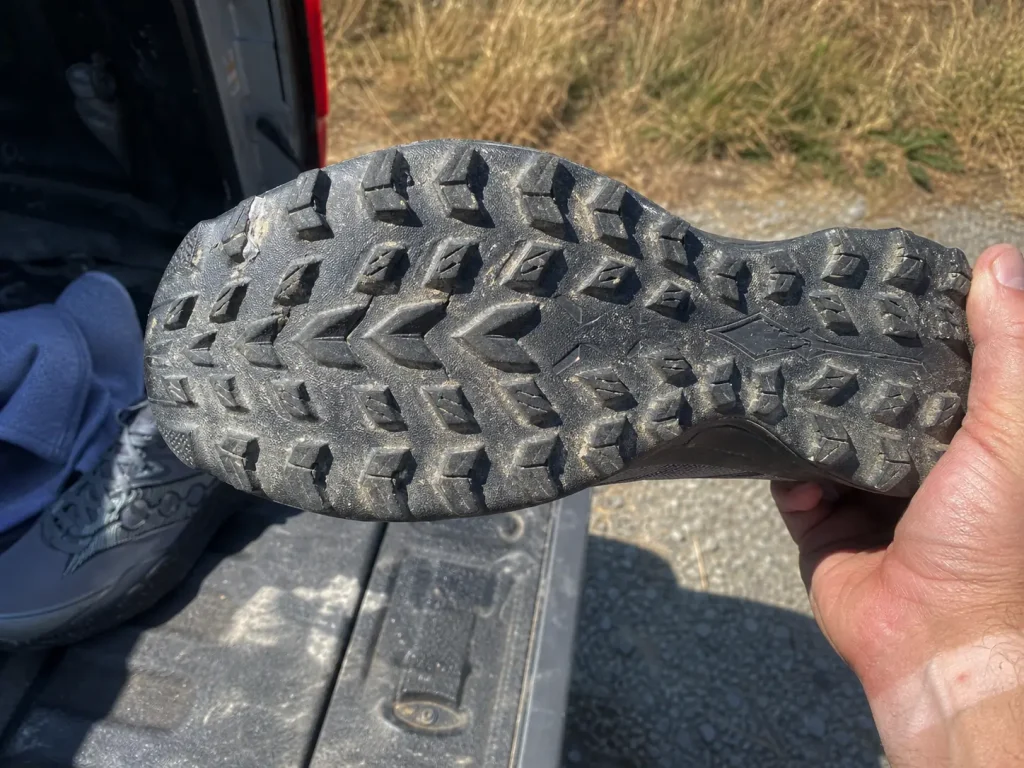
Flip the shoe over first. Everything else about this category is marketing until you look at the tread and bend the forefoot in your hands.
The Lug-Depth Bands, Translated
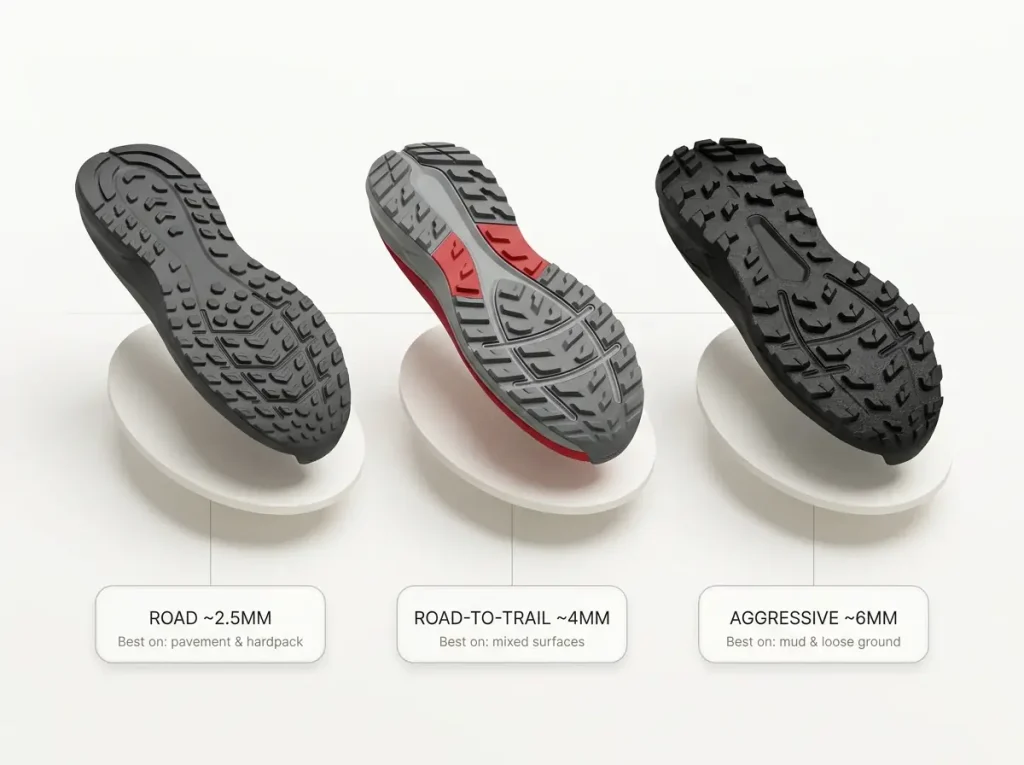
Lug depth sorts trail footwear into three usable bands, and the numbers are more consistent across brands than the names on the box. Shallow lugs of 2 to 3.5mm are road and hardpack tread: fine on gravel, useless in mud. Medium lugs of 3.5 to 5mm are the mixed-surface all-rounder, and that band is where road-to-trail lives.
Aggressive lugs of 5 to 6mm and up belong to mud, wet clay, and steep loose ground. They also feel like walking on marbles once you hit pavement, and they wear down faster there than the shallow tread they replaced.
The industry has quietly agreed on roughly 4mm for this category. The Saucony Experience Wild 3 runs a 4mm drop with 4mm lugs, the Hoka Challenger 8 pairs an 8mm drop with 4mm lugs, the Brooks Cascadia 19 sits at a 6mm drop with 4mm lugs, and the Nike ACG Pegasus Trail comes in at 3.1mm. Different design philosophies, same answer.
That number matters more than it sounds, because the shoes people usually reach for on mixed ground sit well below it. Most walking sneakers sold for hiking run road-depth lugs around 2.9mm, which is why they feel fine on the greenway and sketchy on the first wet root.
Flex, Upper, and Why “Trail Shoe” Isn’t One Thing
Tread is half the definition. The other half is how the shoe behaves when you flex it.
A true road-to-trail shoe keeps a road-style flexible forefoot and a breathable mesh upper. Grab it at the heel and toe and twist: it should give. A technical trail running shoe built for singletrack fights you, because it’s braced with overlays, a stiffer chassis, and sometimes a full-length plate.
That flexibility is what makes three miles of sidewalk tolerable, and it’s what gives a hybrid shoe something close to a road shoe ride on hard surface. It’s also what you give up when the terrain gets genuinely rough, which is a trade worth making if most of your miles run over non-technical trail, dirt road, and forest road rather than sustained rock.
The Three Builds That Disqualify a Shoe
Three features push a shoe out of this category no matter what the box says. Deep self-cleaning lugs, which are designed to shed mud and do nothing useful on hardpack. A full-length carbon plate, which is a racing feature that adds stiffness you’ll feel on every paved step. And a rigid, heavily plated chassis built for sustained rock.
None of those are flaws. They’re specialization, and specialization is the opposite of what you’re shopping for here.
The most common way people get this wrong is picking on lug depth alone, reasoning that more tread means more capability. What they end up with is aggressive tread that wears unevenly, rounds off on the paved half of the route, and clunks underfoot the whole way to the trailhead.
Why Runner Reviews Break Down Under a Daypack
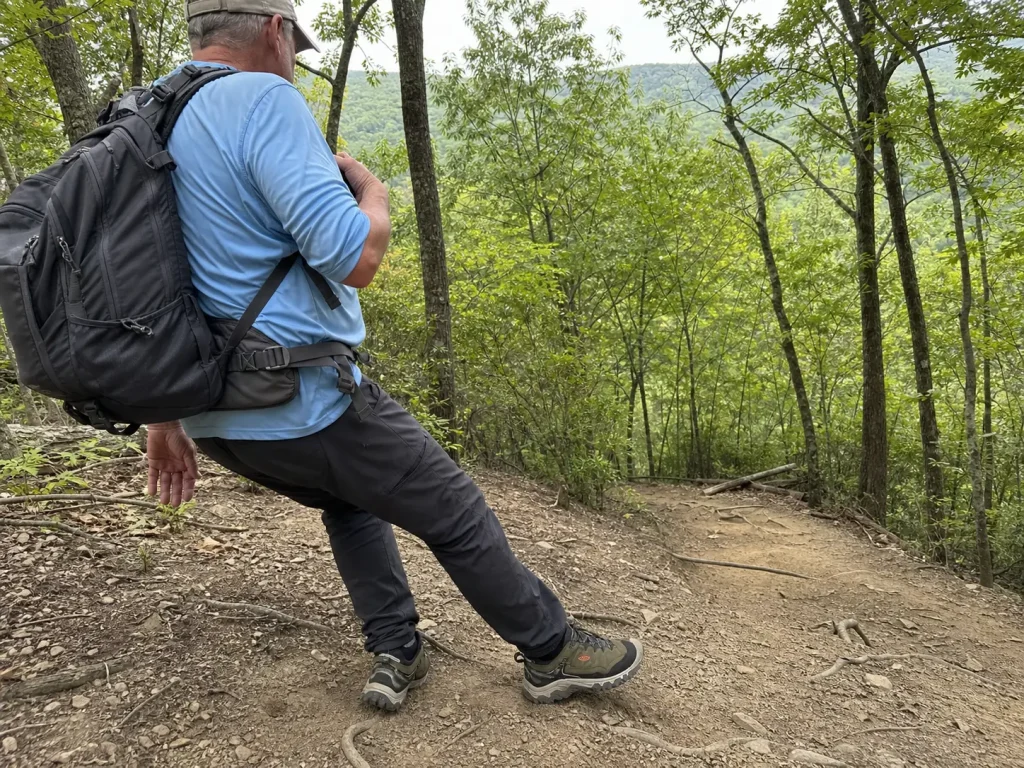
Every glowing review of these shoes was written by someone carrying nothing. That’s not a knock on the reviewers. It’s a mismatch between their test conditions and yours, and it quietly poisons half the advice in this category.
What a Pack Actually Changes Underfoot
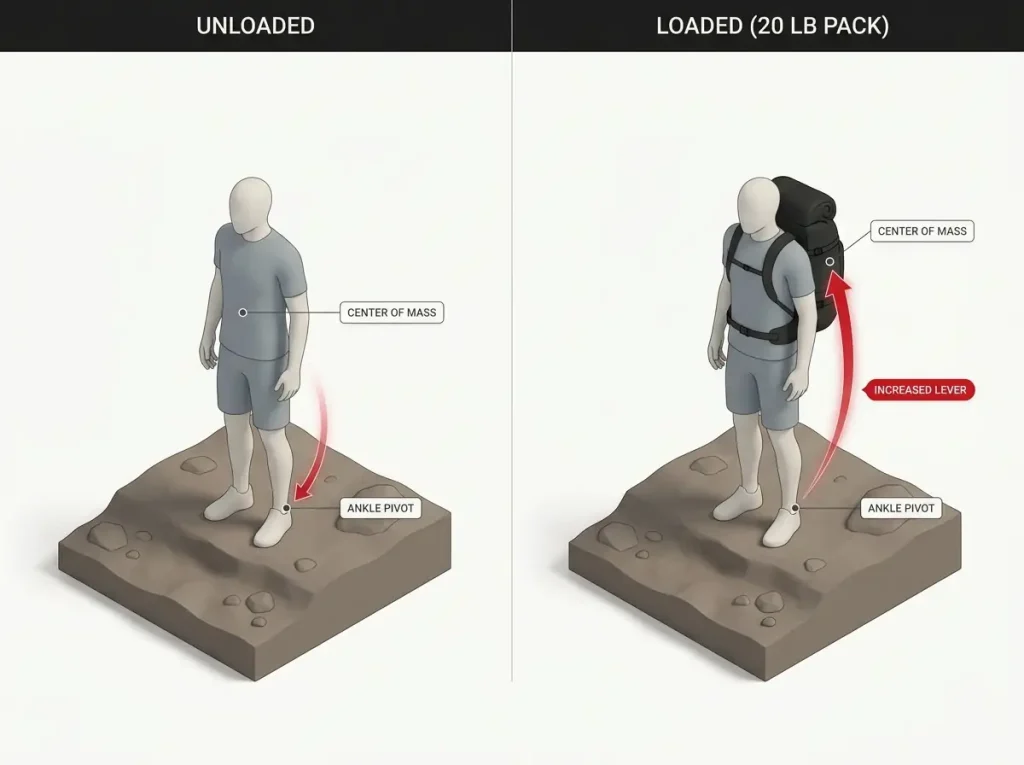
A loaded daypack raises your center of mass. That does two things at once: it increases the leverage acting on your ankle when a foot lands off-camber, and it compresses the midsole further on every step.
Soft, tall foam that feels forgiving at zero pack weight starts feeling vague at twenty pounds, because the midsole is suddenly load-bearing in a way no unweighted test reveals. The shoe doesn’t fail. It just stops telling you what the ground is doing, and on a cambered dirt shoulder that feedback is what keeps your ankle honest.
This is the single most useful thing to know before you buy: cushioning and stability trade against each other, and adding weight to your back moves the whole trade toward stability. A shoe two people describe completely differently is usually just a shoe that was tested at two different loads.
The Ankle-Support Argument, Checked Against the Data
Someone will tell you that low-cut shoes wreck ankles. The injury data doesn’t back it up.
A 2019 meta-analysis in the *Journal of Athletic Training* found no statistically significant difference in ankle sprain rates between hikers in boots and hikers in trail runners, as the Appalachian Mountain Club’s footwear breakdown explains. A stiff cuff doesn’t do what people assume it does.
What actually keeps your ankle stable is your own strength and proprioception, plus the width and firmness of the platform under you. That’s the useful reframe: stop shopping for ankle support at the collar and start shopping for it at the midsole. A wide, firm base under a loaded foot does more than fabric above it.
How to Read a Review That Wasn’t Written for You
Once you know the mismatch exists, most reviews become usable again. You just have to translate them.
Take every claim about plushness and discount it one notch. A shoe described as “protective without feeling mushy” by an unloaded reviewer usually lands as “adequate” under a daypack, and a shoe they called “soft and forgiving” often reads as vague. The direction of the error is consistent, which makes it easy to correct for.
Do the opposite with stability complaints. A reviewer calling a shoe firm, planted, or “a little dead underfoot” is describing exactly the trait that gets better with weight on your back. Firm-and-boring at zero pounds is frequently the best-behaved shoe at twenty.
The tell to look for is what surface the reviewer spent their miles on. Someone logging 40-mile weeks on singletrack is telling you about a shoe’s behavior at speed on dirt, not its behavior at 3 mph on asphalt with a load, and those two use cases pull the design in opposite directions.
Where the 30-Pound Line Sits
There is a real cutoff, and it’s more honest than “it depends.” Boots start clearly outperforming low-cut shoes once pack weight goes past roughly 30 pounds. Below that, the support argument mostly evaporates.
Almost every road-to-trail outing lives under that line. Day hikes, rail-trail approaches, town roadwalks, and light overnights all sit comfortably below 30 pounds for most people, which is exactly why low-cut hiking shoes beat boots for most hikes once you look at the numbers instead of the tradition.
There’s a cost on the other side too. Carrying weight on your feet costs roughly five times the energy of carrying the same weight on your back. That’s the number that should stop you from buying the most over-built hybrid in the store because it feels reassuring in the aisle. Every extra ounce of lug, plate, and overlay is charged to you five times over, mile after mile.
Try the shoe on with your loaded pack on your back, not empty-handed in the aisle. Walk the length of the store twice. A midsole that felt plush unweighted often feels tippy under twenty pounds, and that’s a thirty-second test that saves a return.
Lug Depth, Traction, and What Pavement Does to Tread
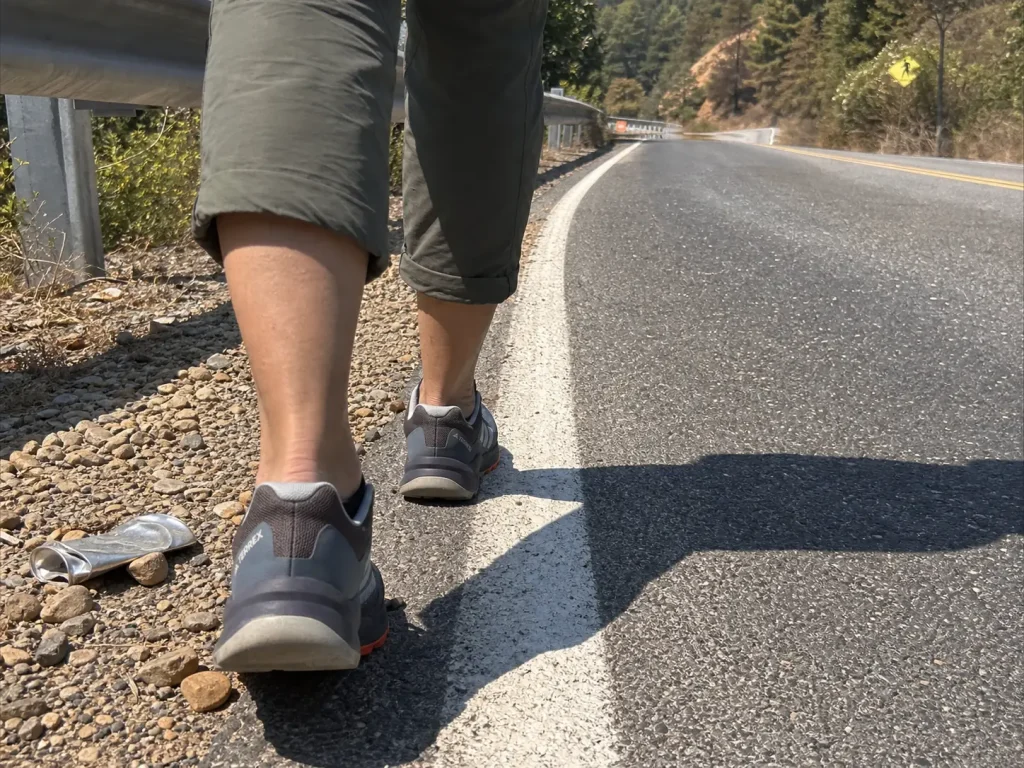
Runners split road and trail across different days. Hikers grind pavement inside the same outing, which is why the durability question matters more here than the grip question.
How Much Traction You Actually Need
For hardpack, gravel, dry rock, and dry roots, a 4mm lug pattern is plenty. Grip on those surfaces comes mostly from rubber contact area and compound, not from tread depth biting in.
Where shallow tread runs out is specific and predictable: wet clay, standing mud, wet grass on a slope, and steep loose descents. On those, lugs need depth to penetrate, and 4mm doesn’t. No compound saves you.
That’s the whole calculus. If your typical route has an occasional wet root and a stretch of gravel, moderate lugs are correct. If it has a reliable mud section every spring, you’re shopping in the wrong band.
The Wear Pattern Nobody Warns You About
Here’s the part running-focused guides skip. On a hiker’s mixed route, the shoe spends far more continuous time on hard surface than a runner’s road-day-then-trail-day split, and hard surface is what destroys tread.
A tread pattern on pavement doesn’t wear evenly. The forefoot lugs polish flat first, because that’s where you push off, while the lugs under the arch stay sharp because they barely touch anything. Six months in you get a shoe with a smooth front and an aggressive middle, which grips worse than either would on its own.
You can see it coming if you look. Flip the shoe over every few weeks and check whether the forefoot lug edges are still square or already rounded. Rounded edges mean the tread has stopped biting and started sliding, and it will show up first on a wet descent when you least want the surprise.
Self-cleaning lugs are the other thing pavement quietly ruins. The design works by spacing lugs widely enough that mud releases as the sole flexes, and it depends entirely on the lug edges staying sharp. Once hard surface has rounded them, the same tread packs and holds instead of shedding, which is a strange way to end up with worse mud performance than the shallow tread you rejected.
There’s a practical consequence for how you rotate shoes. If you have an older pair with polished forefoot lugs, they’re still fine for pure pavement and dry hardpack, and they’re the wrong choice for the wet-root section of the same route. Retiring a pair from mixed duty into road-only duty is a real second life rather than a consolation prize.
Compound vs. Depth on Hard Surfaces
Rubber compound matters more than depth once pavement enters the picture. Softer, stickier compounds grip wet rock beautifully and abrade fast on asphalt. Harder compounds last but feel slick on damp stone.
You’ll see three names repeatedly on spec sheets in this category: Vibram Megagrip, Continental Rubber, and Saucony’s PWRTRAC. All three are legitimate. None of them mean the same thing across models, because Vibram is a licensor, not a single compound, and the same brand name can sit on rubber tuned very differently.
The scenario driving all of this isn’t hypothetical. “Roadwalk” is an established term in long-distance hiking for a trail section rerouted onto paved or gravel road, whether to bypass a closure or to reach a resupply town, and roadwalking is common enough on long trails to have its own name. Thru-hikers have limped three miles of hot asphalt into town in stiff, technical singletrack shoes and discovered that the shoe that’s excellent in the backcountry is punishing on a shoulder.
Cushioning, Stack Height, and Drop Under Load
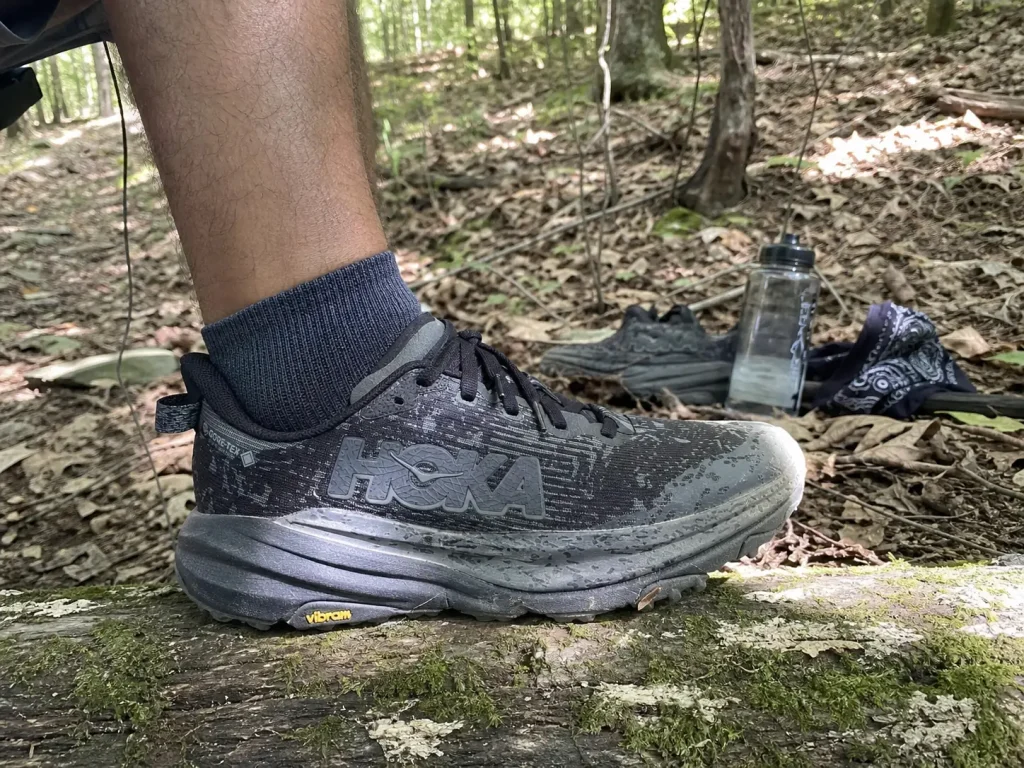
Spec sheets sell foam like it’s free. It isn’t. Every millimeter of stack buys pavement comfort and sells back ground feel, and with a pack on, that trade lands differently than it does for a runner.
Stack Height and What It Costs You
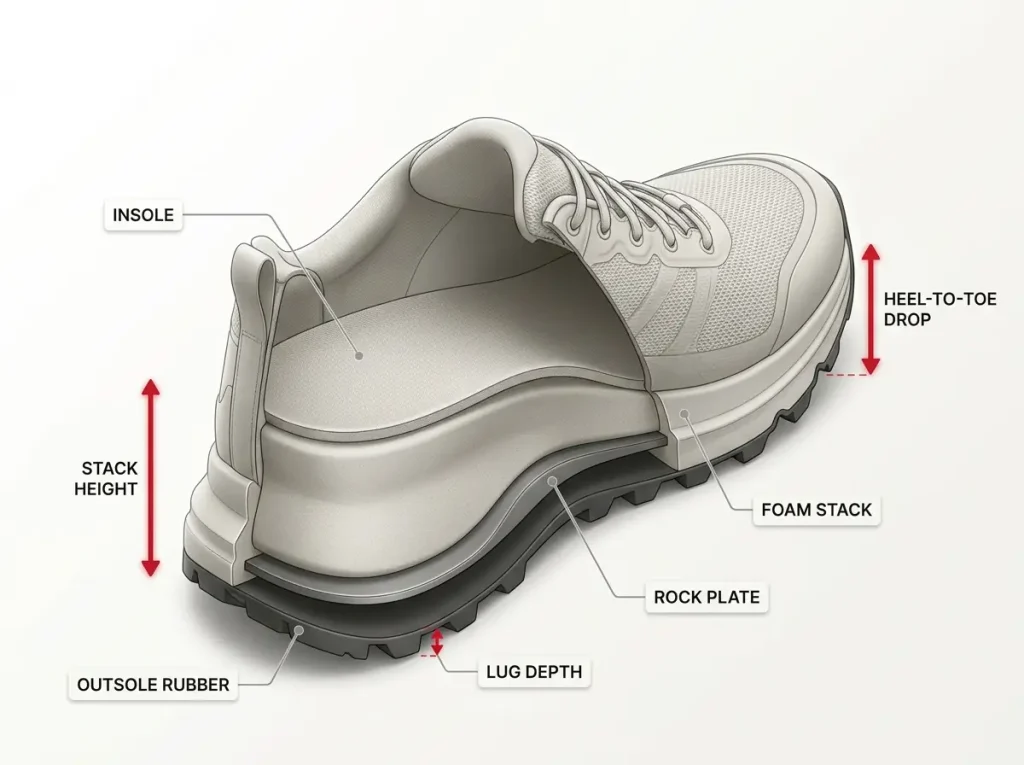
Stack height is how much material sits between your foot and the ground. Tall stacks absorb hours of hard surface, which is exactly what you want on a long paved approach.
The cost shows up on uneven ground. The higher you sit, the longer the lever between your ankle and the dirt, and the more a loaded step wants to roll. That’s not a reason to avoid tall stacks. It’s a reason to match stack to route, and choosing stack height by the terrain you actually walk beats picking the highest number in the catalog.
Rule of thumb that holds up: the more pavement in your route, the more stack you want. The more off-camber dirt and the heavier your pack, the less.
Heel-to-Toe Drop, and the Zero-Drop Transition
Heel-to-toe drop is the height difference between the heel and the forefoot. Standard road running shoes usually run 8 to 12mm, and shoes in that range with moderate stacks around 26 to 30mm feel closest to what most people already walk in.
That makes high-drop the gentle bridge. If you’re coming straight out of everyday street shoes, an 8mm-ish drop asks nothing new of your calves, and it’s what heel-to-toe drop means for your knees that usually decides whether a shoe feels natural or wrong in the first mile.
Zero-drop is a legitimate destination and a bad starting point. Dropping from 10mm to 0mm overnight loads the Achilles and calves in a way they haven’t trained for, and the standard community approach is a stepped transition over weeks: 12 to 8, then 8 to 4, then 4 to 0. Hikers who skip that step and take a fresh zero-drop shoe straight onto a twelve-mile day pay for it in calf soreness by mile eight.
Break in a new zero-drop shoe on errands, not on trail. Two weeks of grocery runs and dog walks tells your calves what’s coming without stranding you eight miles from the car when they start complaining.
Rock Plates: Who Needs One
A rock plate is a thin protective layer in the midsole that spreads the load from sharp objects so you don’t feel every stone through the sole. In practice a rock plate is a 1–2mm layer, not armor, and knowing that changes how you weigh it.
For road-to-trail use, a plate earns its place if your dirt sections are rocky and your stack is low. It’s dead weight if your dirt is smooth and your stack is already tall, because tall foam does most of the same job.
Remember the five-to-one rule from earlier. A plate you don’t need is weight on your feet, and weight on your feet is the most expensive place to carry it.
Fit and Sizing for Continuous Mixed-Surface Miles
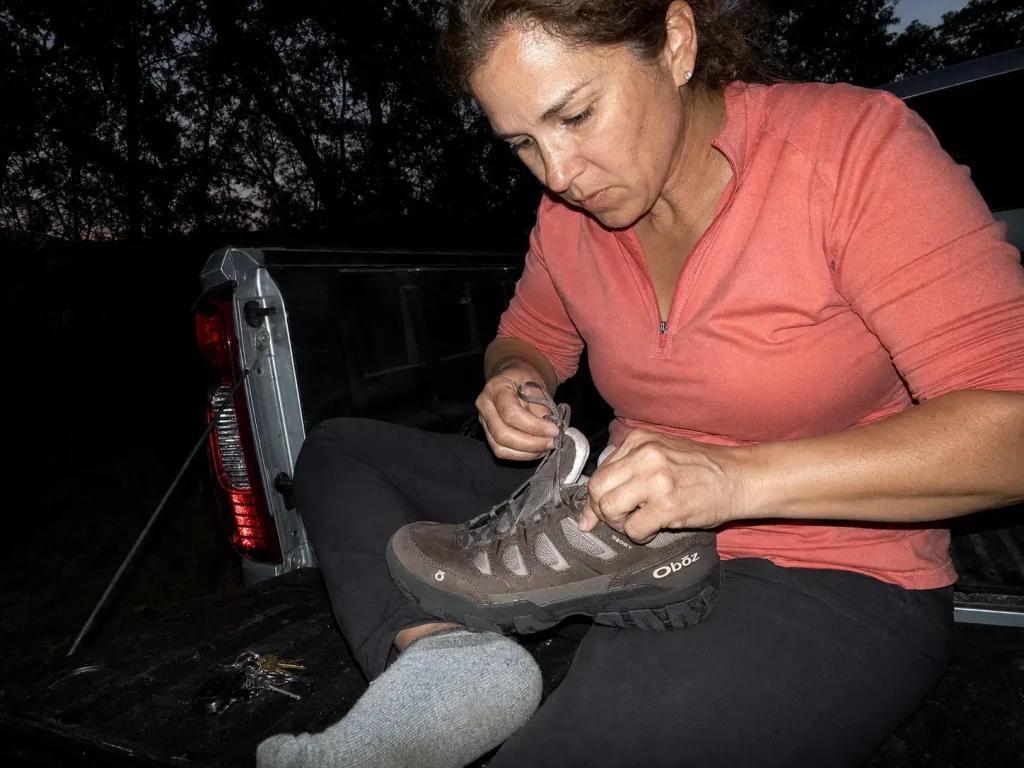
The fit rules most people quote come from boot fitting, where the terrain is technical and the pace is stop-start. Road-to-trail use is the opposite: more continuous hours, more heat coming off hard surface, more swelling. The margins change.
The Sizing Rules, and When to Go Up Half a Size
Three baseline rules cover most of it. Fit footwear at the end of the day, when your feet are at their largest. Leave a thumb’s width ahead of your longest toe. Aim for snug everywhere and tight nowhere.
Foot swelling is the variable people underestimate here. Pavement radiates heat, and a mixed route keeps you moving without the natural pauses that technical ground forces on you. Feet that would have been fine on a scrambly six-mile day swell noticeably on a flat twelve-mile one.
That’s why sizing up half a size is common advice for this category specifically. It’s not a universal rule for hiking footwear. It’s a response to long, hot, continuous efforts, and if your outings are short, you probably don’t need it.
Toebox Width and Foot Shape
Toebox width is a real decision, not a preference. Wide-platform designs, the Altra zero-drop last being the obvious example, let the forefoot splay under load. Narrower hiking-brand lasts hold the foot more firmly and feel more precise on uneven ground.
Neither is better. They’re answers to different feet. People with wide forefeet who force themselves into a narrow last get hot spots on the first long day, and people with narrow feet swimming in a wide toebox get heel slip and blisters on descents.
Fit beats the spec sheet, every time. A shoe with ideal numbers that pinches will lose to a slightly less ideal shoe that matches your foot shape, and no amount of foam technology changes that.
Heel Lock, Lacing, and Grit
Heel slip is the failure mode that ruins mixed-surface days. The transition from flat pavement to a cambered dirt shoulder is exactly where a loose heel starts moving, and once it’s moving, blister prevention becomes damage control.
Use the top eyelet. Most shoes ship with an extra eyelet nobody uses, and threading a heel-lock loop through it pulls the collar down onto the heel without tightening the whole shoe. Snug the forefoot separately and leave it looser than the ankle.
A gusseted tongue matters more than it looks like it should. Gravel dust and trail grit find their way in through the sides of an ungusseted tongue within a mile of leaving pavement, and grit in the shoe is how a comfortable pair becomes a miserable one.
Hiking Brands vs Running Brands for Mixed Surfaces
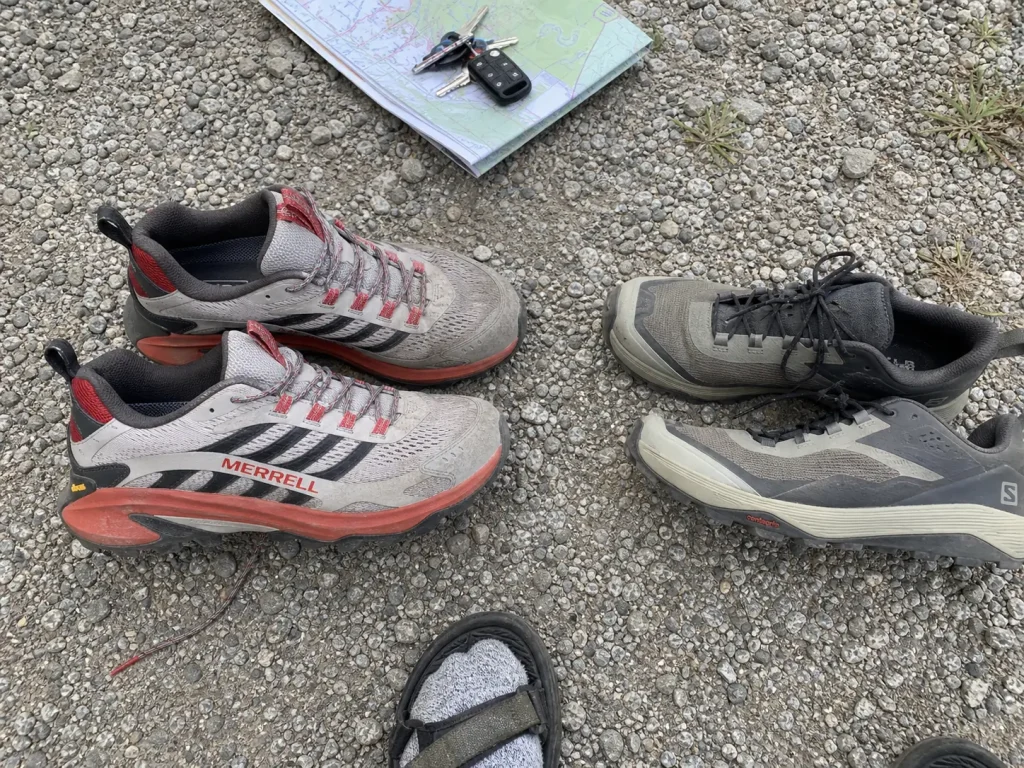
Search this category and you get ten running shoes from ten running brands. Merrell, KEEN, Oboz, and the hiking side of Adidas Terrex don’t show up at all, even though those are the shoes actually on people’s feet in the trailhead lot. That gap isn’t a conspiracy. It’s just that the people writing these guides are runners.
What Running Brands Get Right
Running brands win on weight and foam. They’ve been iterating midsole compounds for decades under competitive pressure, and they deliver more cushioning per ounce than anyone else.
They also build for continuous forward motion, which is what a paved approach actually is. On three miles of asphalt a running-derived shoe is simply more comfortable than a hiking-derived one, and the difference isn’t subtle.
The strongest evidence for running crossovers doing hiking work comes from the people with the most miles. Roughly 80% of thru-hikers on the AT and PCT converge on the Altra Lone Peak, a zero-drop trail running shoe, and they do it carrying multi-day loads across every surface a long trail throws at them. That’s the whole argument for trail runners as hiking footwear, made by people who had months to reconsider.
What Hiking Brands Get Right
Hiking brands win on platform and durability. Wider, firmer bases that stay predictable under load. Uppers with real abrasion resistance instead of race-weight mesh. Lasts shaped for walking rather than running gait, which matters because a loaded hiker lands on a heel strike far more consistently than a runner cycling through midfoot strike and forefoot strike over the same ground.
They also treat waterproofing as a normal option rather than a specialty model, which matters if your greenway mornings are wet.
The hiking-brand model that belongs in this conversation is the Merrell Moab Speed and its Moab Speed 2 update, a genuine road-to-trail hybrid with a Vibram TC5+ outsole and roughly 30% more underfoot foam than the standard Moab 3. It’s the clearest proof that hiking brands build for this use case, even though the running-focused guides never mention it. Live listings for it come and go, so the picks below are the ones you can actually buy right now.
Waterproof or Not, for This Use Case
Waterproofing is a climate call, not an upgrade. A membrane keeps wet grass and puddle spray out on cool mornings, which is genuinely useful on greenway and rail-trail approaches in spring and fall.
It also costs you breathability. On a hot paved stretch a waterproof shoe runs warmer and dries far slower once water gets in over the collar, which it eventually does. That’s the whole waterproofing trade, and it’s why the picks below include both.
Simple heuristic: cool and wet climate, go waterproof. Hot and dry climate, go mesh and let the shoe drain and dry. Mixed climate, buy for the season you hike most.
Which Side to Shop First
The honest way to choose between the two camps is to weigh your route rather than your loyalty. Count the fraction of a typical outing spent on hard surface and the weight you usually carry, then let those two numbers point you.
Pavement-heavy and light load sends you to the running brands, where the foam and the weight savings do the most good. Dirt-heavy and toward the upper end of a daypack sends you to the hiking brands, where the wider platform and tougher upper earn their extra ounces.
Fit breaks the tie when the numbers land in the middle, and it should. A hiking-brand last that matches your foot beats a running-brand shoe with better foam that doesn’t, because hot spots end days and a slightly firmer ride never does. The list below deliberately includes both camps so you can pick by foot shape instead of by brand category.
The 7 Best Road-to-Trail Shoes for Hikers Who Carry Weight
Every pick below gets the same question asked of it: what does this feel like with twenty pounds on your back after two miles of pavement? That filter changes the order from what a running site would publish, and it changes which shoes make the list at all.
One warning before the specs. Brand foam names and outsole labels tell you which family a component belongs to, not how good it is, spec labels name categories, not qualities. Read the platform, the drop, and the lug depth. Ignore the marketing nouns.
All seven come in men’s and women’s lasts, so both links are on every card.
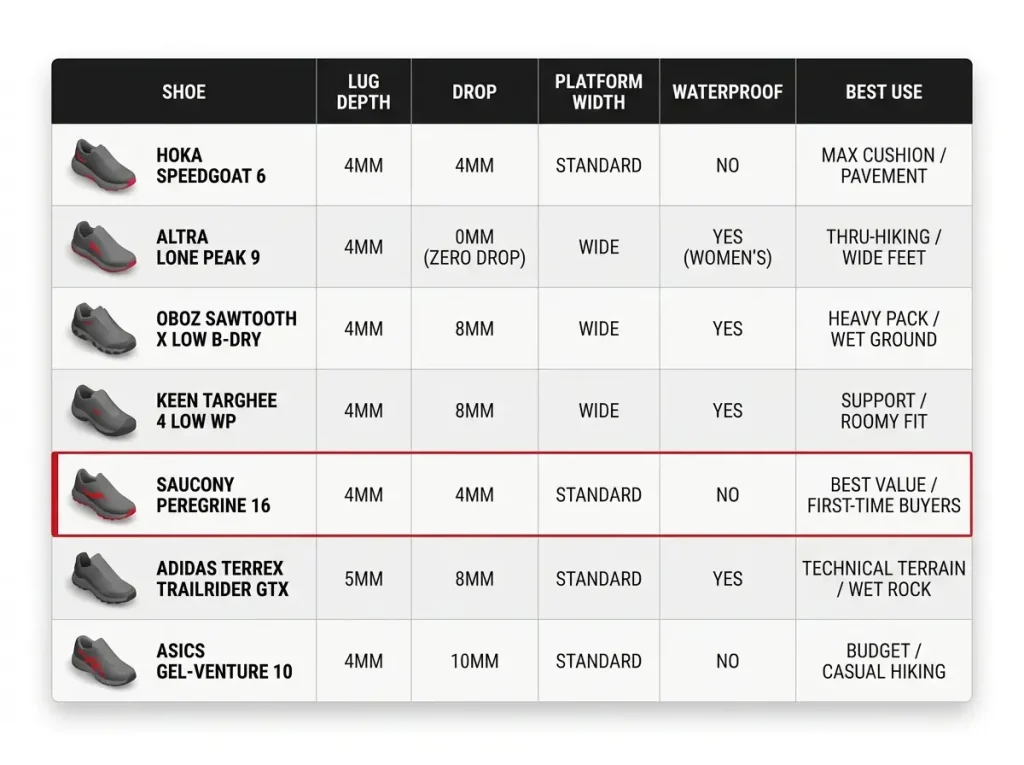
Best Cushioned: HOKA Speedgoat 6
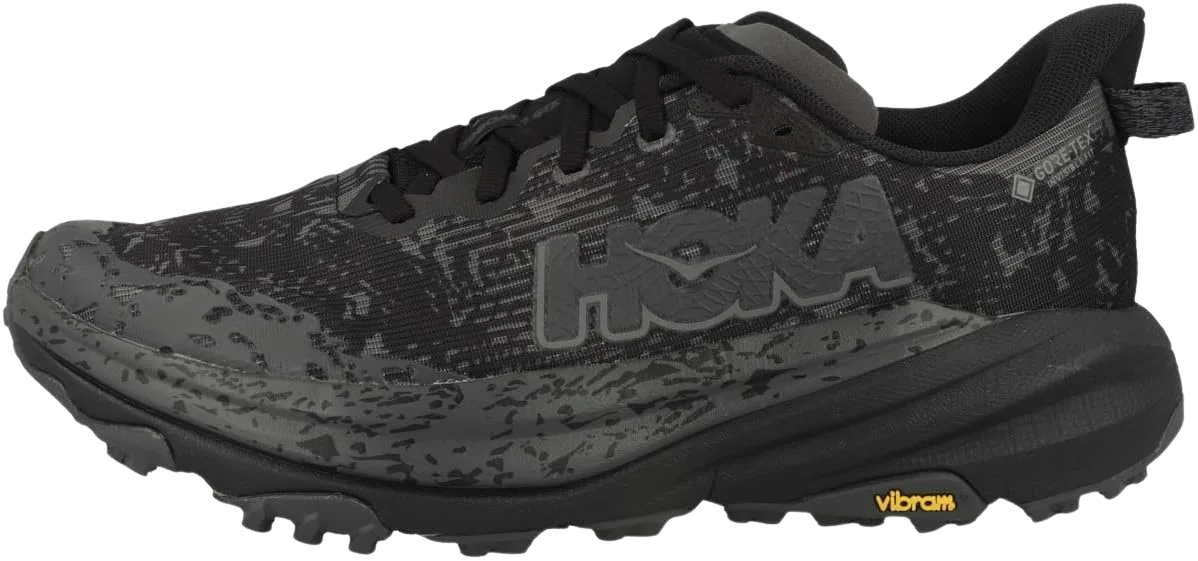
The Speedgoat 6 for men and women is the shoe to buy if the pavement portion of your route is the part you dread. Hoka’s whole design argument is that a deep bed of foam beats ground feel on hard surface, and on asphalt they’re right.
It’s also the pick most affected by pack weight. Under a light daypack the Speedgoat feels plush and secure. At the upper end of the day-hike range, on a rutted sidehill, that tall midsole gives you a longer lever than a lower shoe would, and you’ll notice it.
Wrong for: hikers who want ground feel, anyone regularly on off-camber dirt with a heavy load, and people who find high-stack shoes unstable in general. Right for: high-mileage mixed routes where hard surface dominates.
Best Zero-Drop: Altra Lone Peak 9
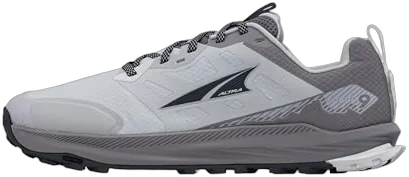
No shoe in this category has a stronger field record. Roughly 80% of AT and PCT thru-hikers wear the Lone Peak, carrying real weight over every surface a long trail offers, including a lot of roadwalk. That’s not a marketing claim, it’s what the gear surveys keep finding. The women’s version linked here is the Waterproof Low, so expect a warmer, slower-drying shoe than the standard mesh men’s model.
Zero drop is the reason to buy it and the reason to be careful. Sitting flat keeps your center of mass low, which is a genuine stability advantage under a pack, and the wide forefoot lets your toes splay on long descents. It also asks your calves and Achilles to work through a range they may not have used in years. If you’re curious about the full field, there are other zero drop options for the trail worth comparing before you commit.
Wrong for: anyone buying a week before a big trip with no transition time. Right for: hikers who want maximum toe room and the lowest, most planted platform here.
Best Hiking-Brand All-Rounder: Oboz Sawtooth X Low B-DRY
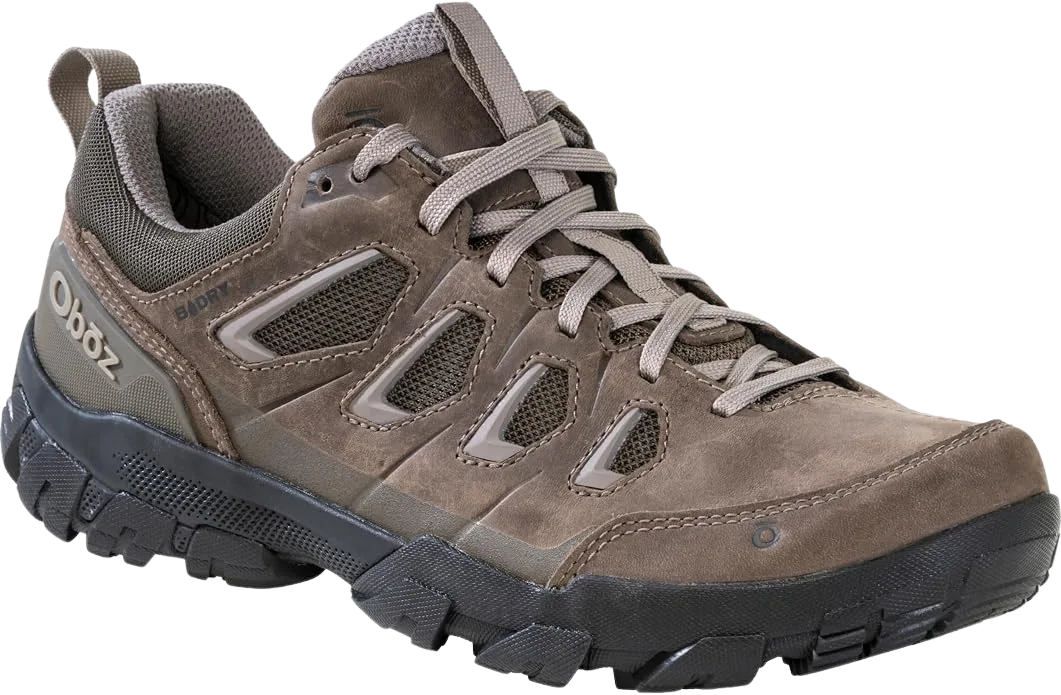
If the running-brand picks feel unstable to you under load, the Sawtooth X Low for men or women is the correction. Oboz sits in that unglamorous middle ground where the shoe doesn’t do anything spectacular and doesn’t do anything badly, which is underrated in footwear you’re going to walk twelve miles in.
The B-DRY membrane makes this the pick for wet-grass mornings and shoulder-season greenways. In August heat on asphalt it’s the wrong shoe, and you’ll know within a mile.
Wrong for: hot dry climates, and anyone counting ounces. Right for: hikers who carry toward the heavy end of a daypack and want a base that doesn’t wander.
Best for Support and Roomy Fit: KEEN Targhee 4 Low WP
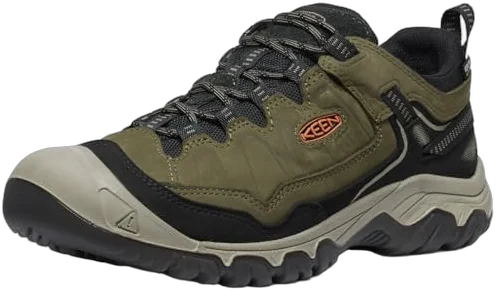
Two kinds of hikers end up in the Targhee 4 Low for men or women: people with wide feet who don’t want a zero-drop platform, and people who want the ankle-stability benefits discussed earlier without giving up toe room.
The trade is weight and pavement comfort. This is the least running-like shoe here, and on a long asphalt approach it feels like what it is, a hiking shoe doing road duty rather than a road shoe doing trail duty.
Wrong for: fast-and-light hikers, and anyone whose route is mostly pavement. Right for: wide feet, structured support, and mixed routes weighted toward dirt.
Best Value: Saucony Peregrine 16
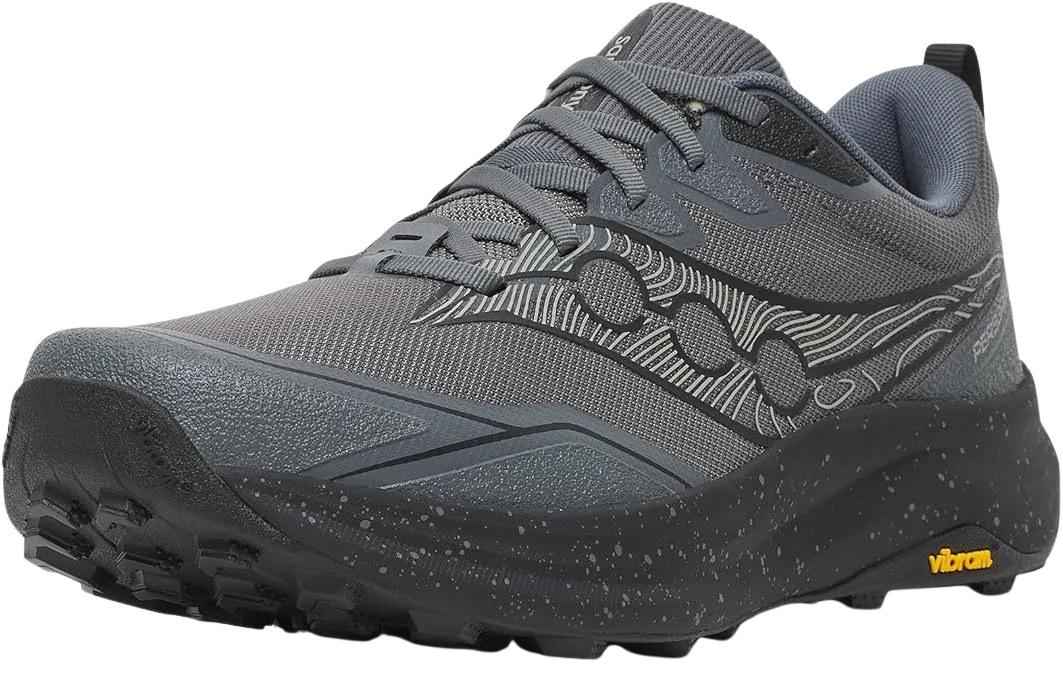
If you asked me to pick one shoe from this list for a hiker who hasn’t figured out their preferences yet, it’s the Peregrine 16 for men or women. Moderate everything, a rock plate you’d otherwise pay up for, and grip that holds on wet rock better than the tread depth suggests.
Its weakness is the flip side of its balance. On a long paved approach it’s noticeably firmer than the Hoka, and on a heavy-pack sidehill it’s narrower than the Oboz. It’s the shoe that’s second-best at everything, which in a category defined by compromise is close to the point.
Wrong for: people who already know they want max cushion or max width. Right for: first-time buyers and anyone who wants the fewest regrets.
Best for Technical Terrain: Adidas Terrex Trailrider GTX
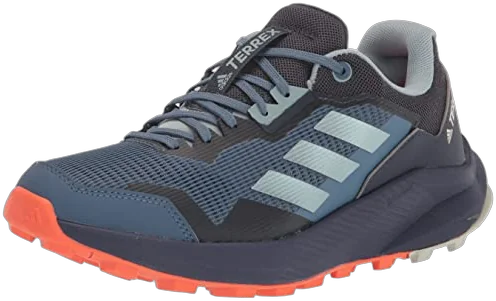
The Trailrider GTX for men or women sits at the trail end of this category. If your mixed route means two paved miles and then something with real rock in it, this is the one that won’t feel outgunned.
Continental’s rubber is the reason. Wet stone is where cheap outsoles quietly fail, and this compound holds when others start to skate. The Lightstrike midsole is firmer than the Hoka’s foam, which reads as harsh on asphalt and as reassuring on a loaded traverse.
Wrong for: hot climates, pavement-dominant routes. Right for: wet regions and routes where the trail portion is the part that scares you.
Best Budget: Asics Gel-Venture 10
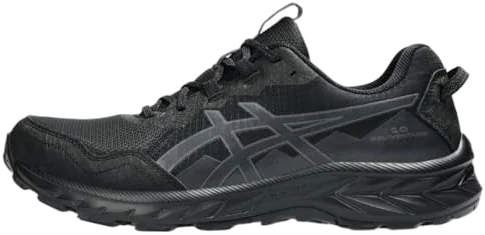
The Gel-Venture 10 for men or women exists to answer one question: what should someone buy who hikes twice a month, doesn’t want two shoe categories, and isn’t going to spend premium money on either?
What you actually give up in an entry-level trail shoe is durability, not capability. The foam packs out sooner, the upper abrades faster, and you’ll replace it before you’d replace anything else here. On the terrain most people call road-to-trail, it does the job while it lasts.
Wrong for: heavy packs, high mileage, technical dirt. Right for: casual mixed-surface hikers and anyone testing whether they even like this category.
Buying One Pair Instead of Two
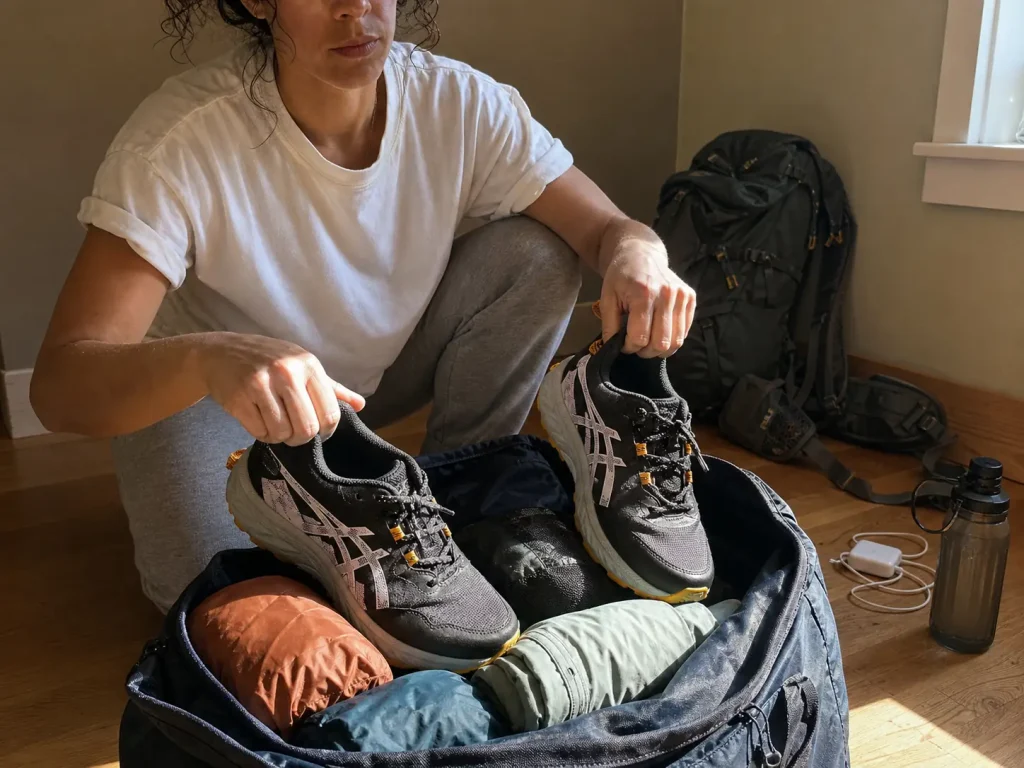
Here’s the blunt version. If you hike a couple of times a month and walk the rest of the week, buying a dedicated road shoe and a dedicated trail shoe is solving a problem you don’t have.
Who Actually Needs Two Pairs
Three groups genuinely benefit from a two-shoe rotation. High-mileage runners, because road and trail running load the foot differently enough that the specialization pays. Hikers who spend real time in mud and wet technical terrain, because no shallow-lug shoe covers that. And anyone routinely carrying more than about 30 pounds, where the boot conversation opens up regardless.
There’s also the pace argument. If you’re moving fast and light on trail and slow around town, that split can justify a second, lighter pair. It’s a preference, not a requirement.
Everyone else, which is most people, is better served by one shoe chosen well. The twice-a-month day hiker, the rail-trail and greenway walker, the traveler who wants one pair that works from the airport to the trailhead. For all of them a second pair is storage, not capability.
What One Pair Costs You in Wear
The honest cost of one-pair living is tread life. Pavement grinds lugs faster than dirt does, so a shoe splitting duty wears its outsole sooner than a trail-only shoe would.
Two things soften that. You’re only wearing out one outsole instead of gradually aging two, and the shallow tread you chose was picked for hard surfaces in the first place, so the wear is happening to lugs that weren’t doing much on dirt anyway.
Long-distance hikers have already run this experiment. They carry loads across every surface a trail offers, they wear one pair, and they replace it more often. That’s the actual model, and it works.
Rotate two identical pairs instead of two different shoes if you hike a lot. Same fit, same feel, and alternating days lets each midsole rebound fully, which stretches total lifespan further than splitting duty between a road pair and a trail pair ever will.
Where the Budget Tier Gives Out
A category range helps here: a solid mixed-surface shoe generally runs $80–$150, and the bottom of that band buys real capability with a shorter life.
What you lose at the low end is midsole resilience and upper durability. Cheap foam compresses permanently after a few hundred miles and stops absorbing anything, and lighter uppers abrade at the toe and flex points sooner. Neither of those is a safety problem. Both are replacement-cycle problems.
What you don’t lose is traction or basic fit. A budget shoe with 4mm lugs grips about as well as an expensive shoe with 4mm lugs on the day you buy it. It just stops doing so sooner.
The Travel Case for One Pair
The one-pair argument gets stronger the moment your shoes have to fit in a bag. A road-to-trail shoe is the only footwear category that works for the airport, the town walk, and the trail on the same trip, which is why it shows up so often on packing lists that allow exactly one pair.
That’s a real constraint, not a lifestyle preference. Two pairs of shoes is most of a carry-on’s volume, and the second pair spends the trip unworn far more often than anyone plans for.
The same logic runs at home. A shoe you’ll wear on Tuesday errands and Saturday trails accumulates miles fast, and it also means the pair on your feet is always the one you’re used to. Fit surprises happen when you pull out a shoe you haven’t worn in three months, not when you’re wearing the same platform every week.
When One Shoe Isn’t Enough
The useful thing a hiking friend does is tell you when not to buy what they just recommended. Here’s where this category runs out.
When the Load Is Too Heavy
Past roughly 30 pounds, a stiffer sole and a supportive cuff start earning the weight they cost. Your foot fatigues faster under load, and a fatigued foot on a soft, flexible midsole is where rolled ankles actually happen.
That threshold isn’t a hard wall. It’s the point where the honest answer shifts from “a low-cut shoe is fine” to “it depends on your feet, your terrain, and how far you’re going.”
If you’re regularly at or past it, the conversation moves to a stiffer backpacking shoe or a boot, not to a beefier road-to-trail hybrid. Buying the most over-built hybrid in the category to handle heavy loads gets you the weight penalty of a boot with none of the support.
When the Terrain Is Too Technical
Sharp talus, sustained scrambling, and long stretches of rock demand sticky rubber and toe protection that hybrids don’t carry. That’s approach-shoe territory, and it’s a genuinely different tool. Which shoe wins by terrain, not by label is the framework worth applying before you assume one pair covers it.
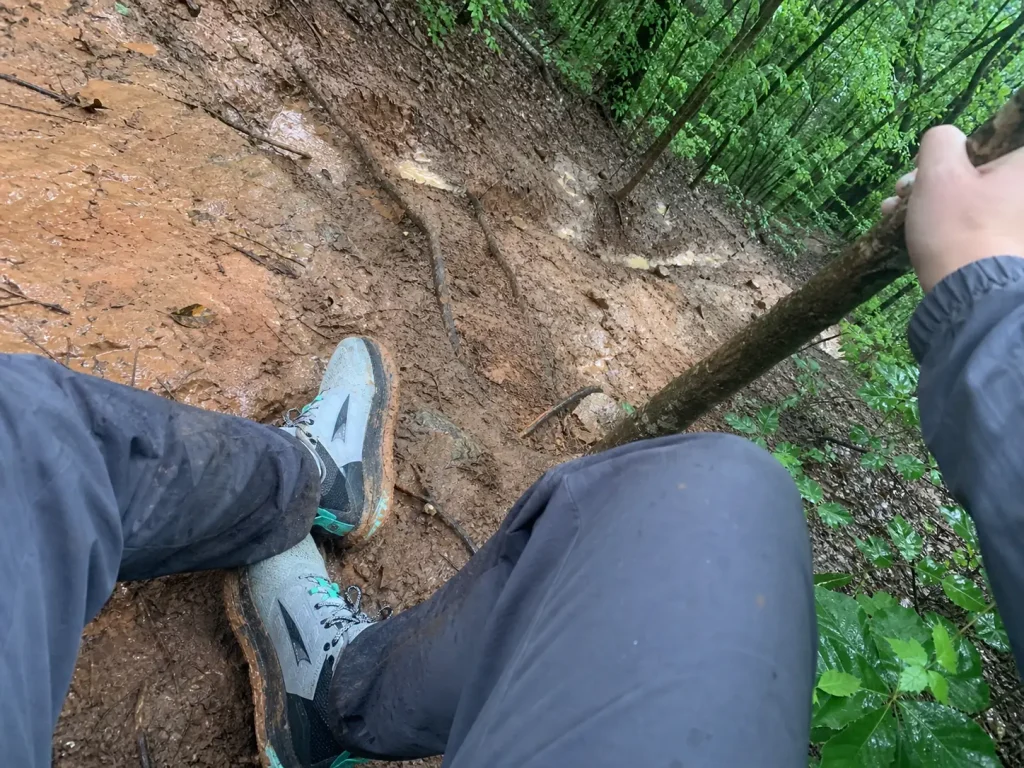
Mud is the other hard limit. Shallow lugs pack solid with wet clay within a few hundred yards, and once the tread fills in you’re sliding on a smooth rubber plate. No compound, no plate, and no amount of cushioning fixes that.
When the Season Rules It Out
Low-cut mesh loses to shoulder-season snow and prolonged cold-wet regardless of membrane. Water comes in over the collar, and a waterproof shoe that’s full of water is worse than a mesh shoe that drains.
Postholing through spring snow is the clearest case. Once you’re punching through crust into wet snow, a low collar means snow in the shoe on every step, and no amount of gaiter improvisation fully solves it.
Winter is a different purchase, not a compromise on this one. Buy the road-to-trail shoe for the three seasons it’s excellent in and stop asking it to cover the fourth.
Conclusion
Three things worth carrying out of this.
Road-to-trail means moderate lugs around 4mm, a flexible forefoot, and a platform that stays honest when you’re loaded. It doesn’t mean a de-tuned trail shoe, and the number on the outsole tells you more than anything on the box.
Read every spec through pack weight. Plush reviews differently at zero pounds than at twenty, and weight on your feet costs roughly five times what the same weight costs on your back, which is the strongest argument against buying more shoe than your route needs.
For most day hikers under 30 pounds, one well-chosen pair genuinely covers pavement and dirt. The hiking brands belong in that comparison even though the search results never show them.
Go flip over the shoes you already own and measure the lugs against the bands above. You’ll know in ten seconds whether you need a new pair or just a better plan for the paved stretch.
Frequently Asked Questions
01What is a road-to-trail shoe?
A road-to-trail shoe is a low-cut shoe that blends road-running cushioning with a shallow-to-moderate lug pattern, usually around 3 to 4mm, so it works on pavement and on dirt. It sits between a road shoe and a technical trail shoe on purpose.
02Are road-to-trail shoes good for hiking?
Yes, for day hiking with a pack under about 30 pounds, which covers most outings. Above that weight, or on sustained mud and technical terrain, a stiffer low-cut hiking shoe or a boot makes more sense.
03Is it okay to use trail shoes on the road?
It works for short stretches, but deep lugs wear down unevenly on pavement and the ride feels clunky underfoot. If more than about a third of your route is hard surface, a road-to-trail shoe is the better buy.
04Is there a difference between hiking shoes and trail running shoes?
Yes. Hiking shoes use wider, firmer platforms and more durable uppers built for carrying weight, while trail runners prioritize low weight and cushioning. Road-to-trail models sit between them, which is why both categories appear in this list.
05Should you size up in road-to-trail shoes?
Many hikers go up half a size for long days, since feet swell on continuous efforts and pavement adds heat. Fit at the end of the day, leave a thumb width ahead of your longest toe, and aim for snug everywhere and tight nowhere.

I've spent more than a decade researching hiking gear and trail technique. I read the specs, the forum threads and the long-term reviews, and every pick here comes with what it gets wrong.
End of the trail
You read every mile of this one. Here's where the trail goes next.