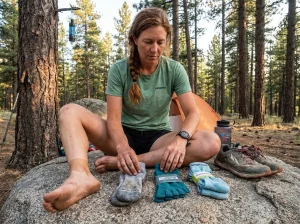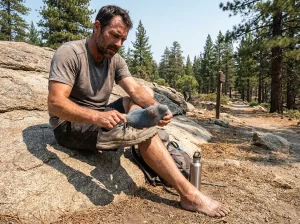
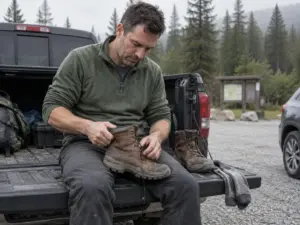
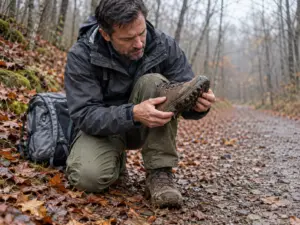
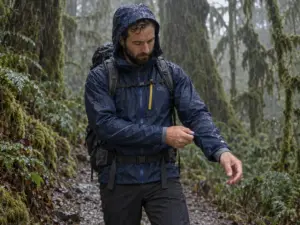
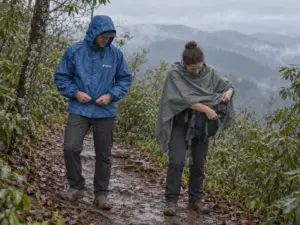
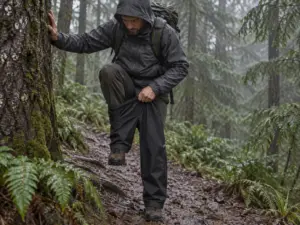


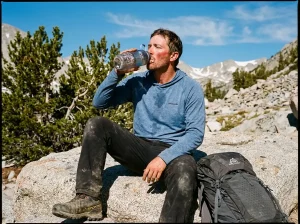
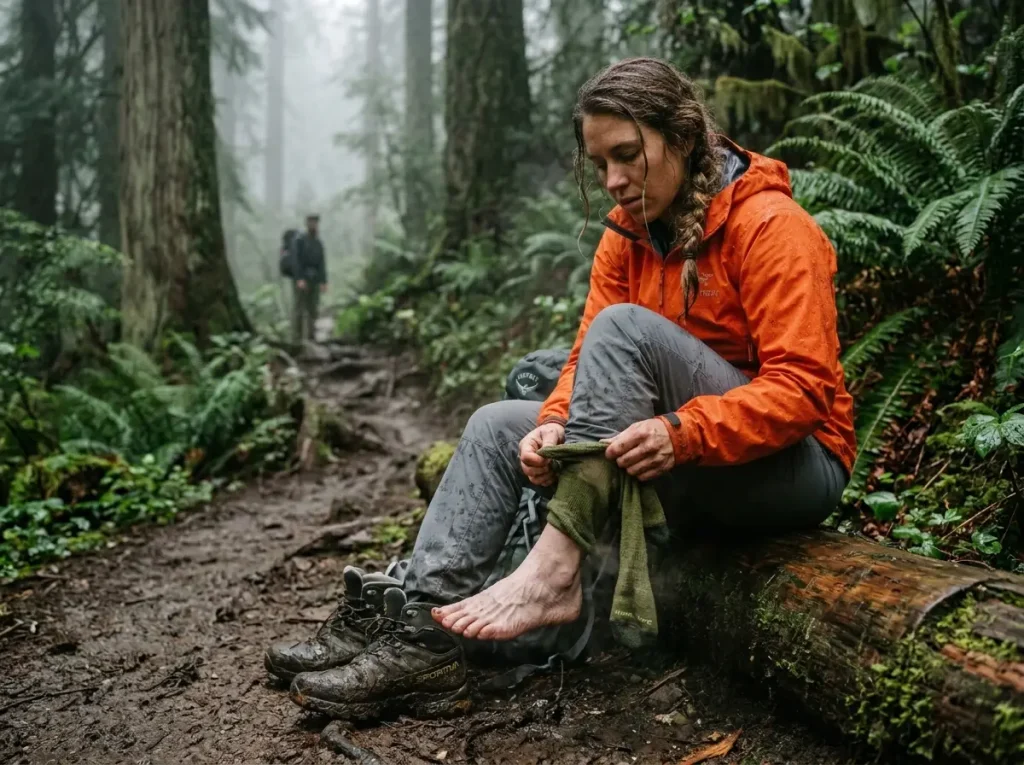
Day 3. The PNW drizzle had been unrelenting since before dawn. My hiking partner slowed to a halt on the switchback, pulled off her trail runner, and peeled back a sock that had become a second skin — white, wrinkled, and already starting to blister at the heel. She had two pairs of socks. Both were soaked. Neither had been rinsed in two days. There was no system. There was just wet.
After guiding week-long routes across the Cascades and the Olympics, I’ve watched this exact scenario play out more times than I can count. The blister isn’t bad luck. It’s math. Three variables — moisture, friction, and salt — converge on a specific day and a specific mile to tear the tissue inside your foot. The 3-sock system exists to prevent all three from aligning at once. By the end of this guide, you’ll know exactly how many pairs to carry, how to keep one pair dry in a Pacific Northwest downpour, and what to do when the rotation fails completely.
| Hiking Sock Rotation Strategy | |||
|---|---|---|---|
| Pair | Label | Status During Hiking Day | Status at Camp |
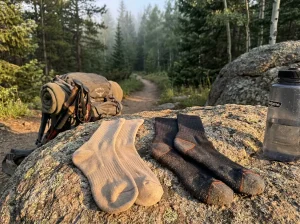
| Pair A | Active | Being worn — accumulating moisture and salt | Torso-dry or rinse, then hang on tent line |
| Pair B | Buffer | Drying on exterior of pack — UV + airflow | Check at lunch; reposition if still damp |
| Pair C | Sacred | Stored in dry bag inside pack — never worn hiking | Worn for sleep only — never compromised |
⚡ Quick Answer: Carry three pairs of hiking socks on any multi-day trip: one to wear (Active), one drying on your pack (Buffer), and one locked away as sleep-only (Sacred). The Sacred pair is not a comfort item — it’s the clinical reset that allows your skin to recover its structural strength overnight. Rinse your Active pair daily in any freshwater source, even without soap, to flush the salt crystals that act as sandpaper against your softened skin. When Gore-Tex wets out or all pairs are saturated, use the torso drying method: squeeze out liquid water and sleep with damp socks against your belly under your base layer — they’ll be dry by morning.
The Biology Behind Every Blister You’ve Ever Had
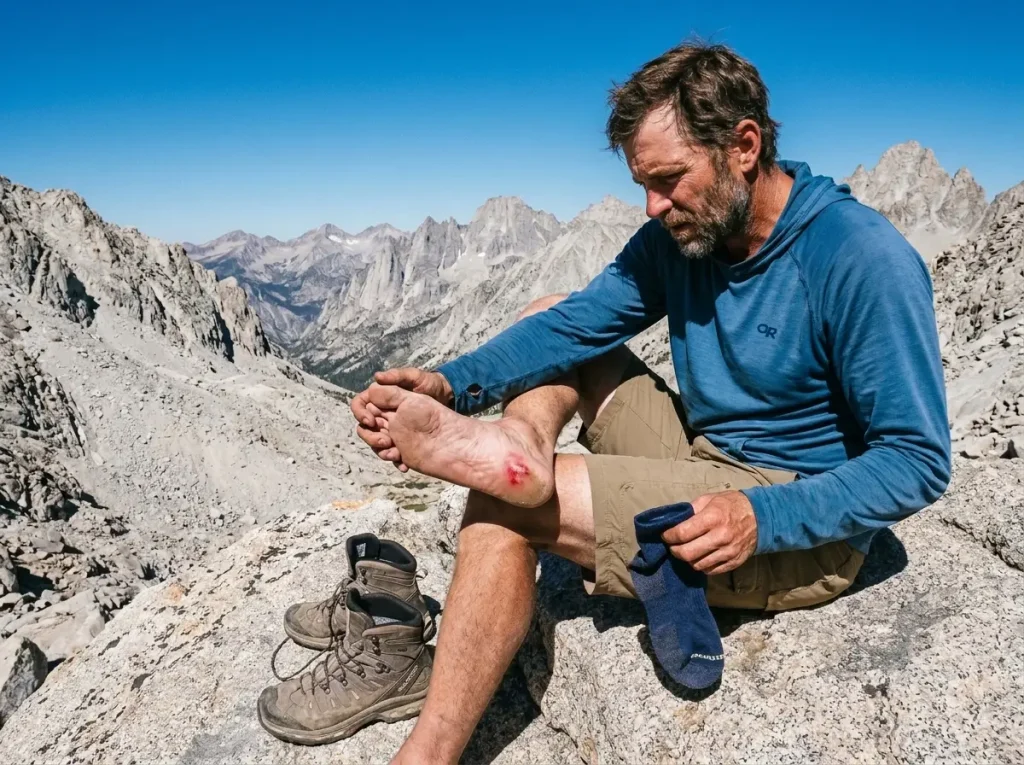
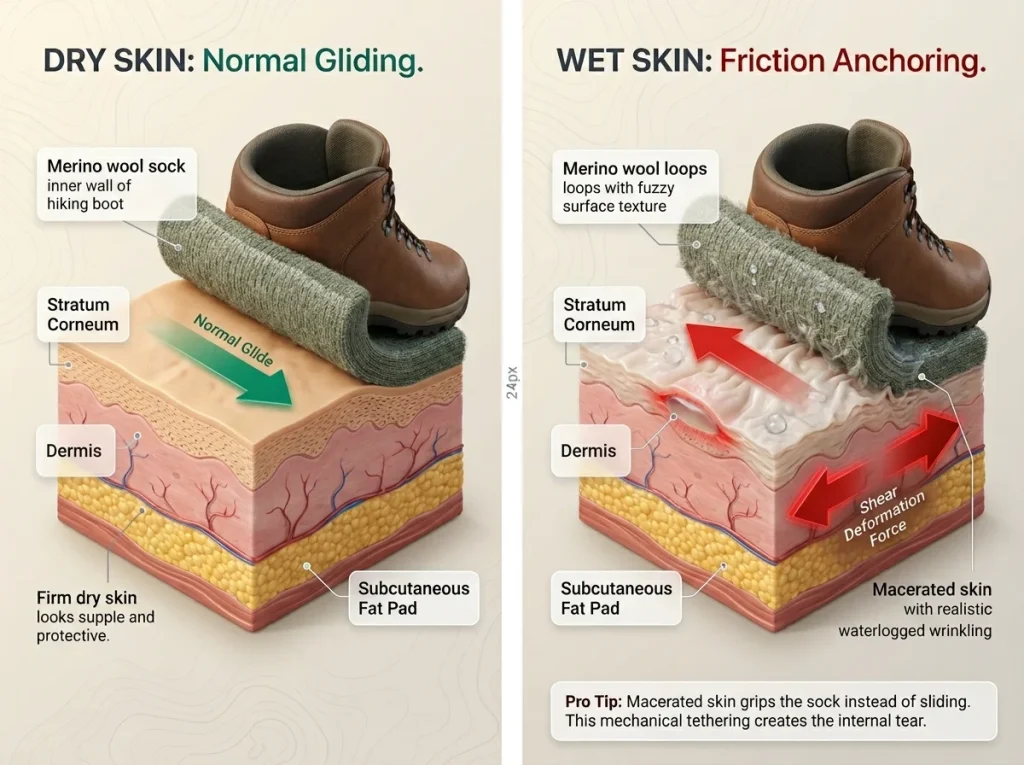
A friction blister is not a burn. It’s a mechanical fatigue injury, and understanding the difference changes how you respond to it. According to a 2024 review in the Journal of Athletic Training, the mechanism is repetitive shear deformation — the bone in your foot moves forward with each step while the overlying skin is held momentarily stationary by friction at the sock interface. Those two layers of tissue pull in opposite directions. Millions of times.
The failure isn’t random. It requires three things happening simultaneously: a moving bone, a high-friction zone between skin and sock fiber, and enough repetitions — roughly 2,000 steps per mile under a heavy pack — to reach the fatigue threshold. Take any one of those pieces away and the blister does not form.
Moisture is the accelerant. When your feet sweat or absorb external water, the outer armor layer of your skin softens in a process called maceration. Macerated skin grips sock fiber instead of gliding past it. Dry skin sliding is blister risk. Wet skin gripping is blister certainty. A clinical analysis of blister pathomechanics confirms that incidence on major trails ranges from 29% to 95% of hikers — a spread that tracks directly with how well hikers manage moisture.
The first signal is a hot spot — localized warmth at the heel or ball that arrives before any visible redness. That warmth is your 10-minute window. The tissue has begun to separate inside, but the fluid-filled cleft hasn’t formed yet. That warm spot on your heel is a 10-minute warning — stop, air the foot, and deal with it there. Most hikers keep walking. That’s when the blister locks in.
Pro-Tip: If you feel warmth at the heel before pain develops, sit down right there on the trail. Don’t push through to the next rest stop. The blister is already forming inside the tissue — stopping is the only way to interrupt it.
The Salt Cycle — The Variable Everyone Misses
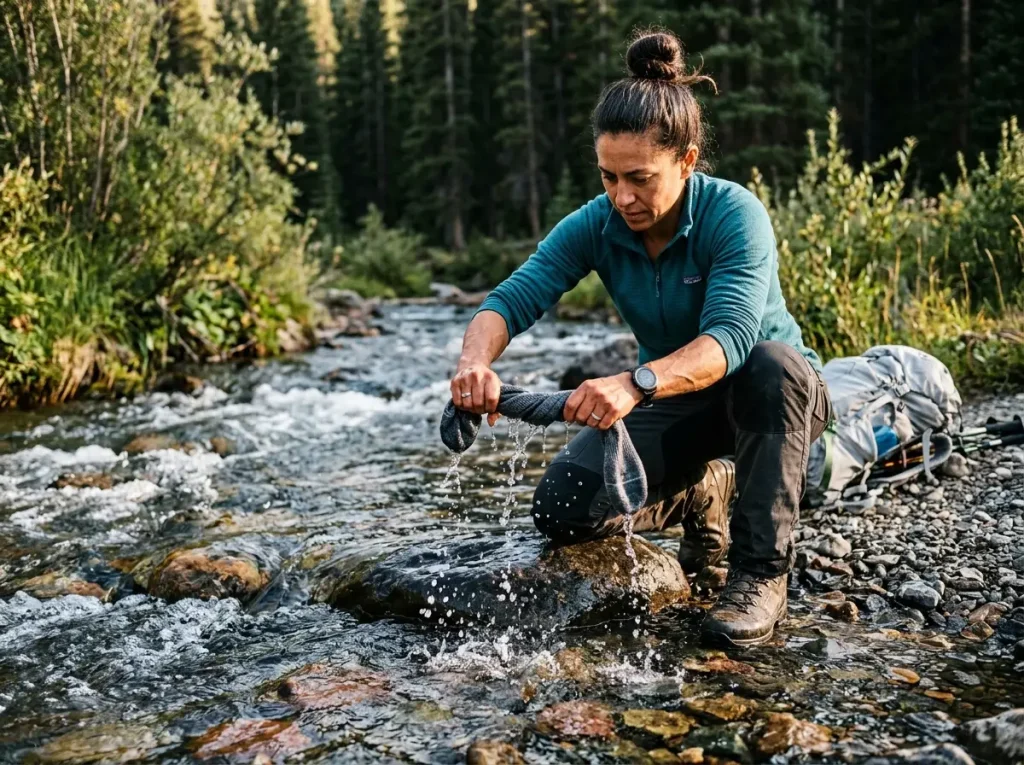
Here’s what no sock guide will tell you: a dirty sock and a salty sock are two completely different threats. The visible dirt in a sock is cosmetic. The invisible salt baked into those fibers is the structural problem.
Sweat is a saline solution. During the hiking day, your foot perspires into the sock. As the sock dries during rest breaks or overnight, the water evaporates — but the salt stays in the fiber matrix. Over multiple days without rinsing, that salt concentrates and crystallizes into microscopic jagged structures. When you pull that sock back on the next morning, you’re grinding crystalline grit against skin that maceration has already softened. It’s a double failure: degraded skin against an abrasive surface. According to the APMA Summer Foot Care Guidelines, secondary heat rash and folliculitis can also develop when salt deposits close sweat glands, compounding the breakdown beyond mechanical failure alone.
To understand exactly how much this matters, see how salt and moisture combine to spike the friction index at the skin-liner interface — the numbers make the case better than any gut feeling.
The fix takes 60 seconds. Find any freshwater source — a creek, a snowmelt stream — dip the sock, wring it thoroughly, and hang it on your pack for the afternoon. No soap necessary. The goal is to flush the salt out, not achieve cleanliness. A sock that looks clean but hasn’t been rinsed is more hazardous on Day 4 than you think.
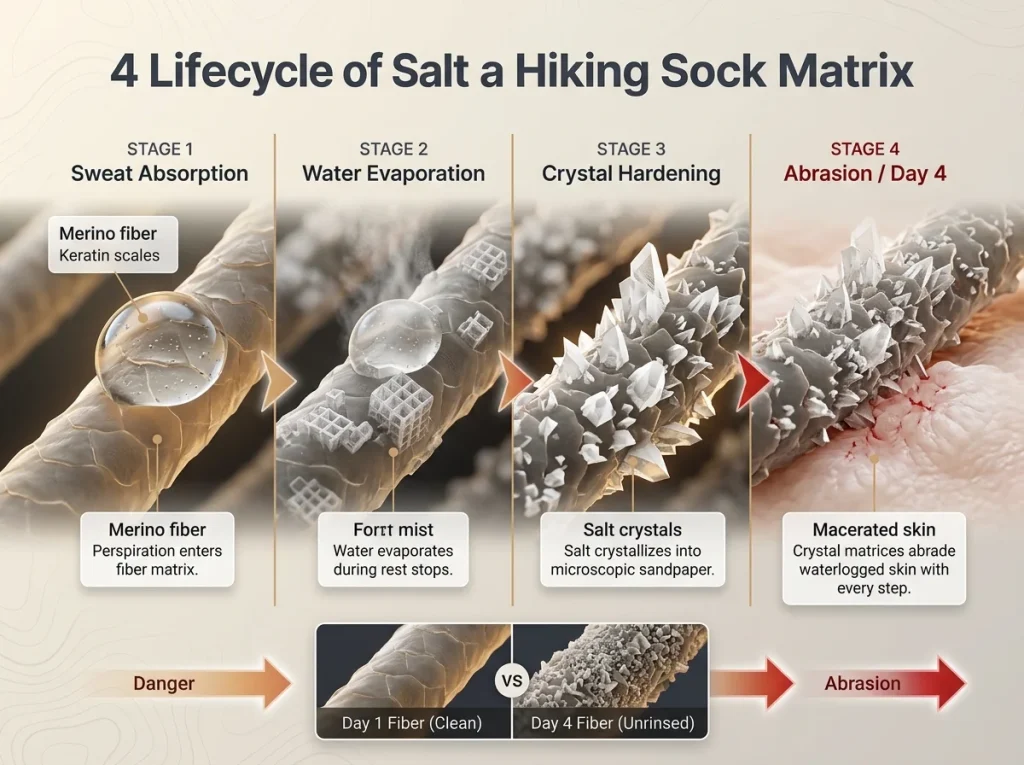
Pro-Tip: The Freshwater Rinse Protocol. Even in heavy rain conditions when everything feels wet anyway, rinsing your Active pair at the end of the day removes enough salt to prevent the next morning’s sandpaper effect. It’s the single highest-ROI maintenance task you can do on a multi-day trip.
The 3-Sock System — How the Math Actually Works
The Three Roles — Active, Buffer, and Sacred
The system only works when each pair has a strict, non-negotiable assignment.
Pair A (Active) goes on your foot in the morning. It’s your working pair — a consumable that will be wet and salty by mile 5. Accept that. Its job is to get you through the day, not to stay clean.
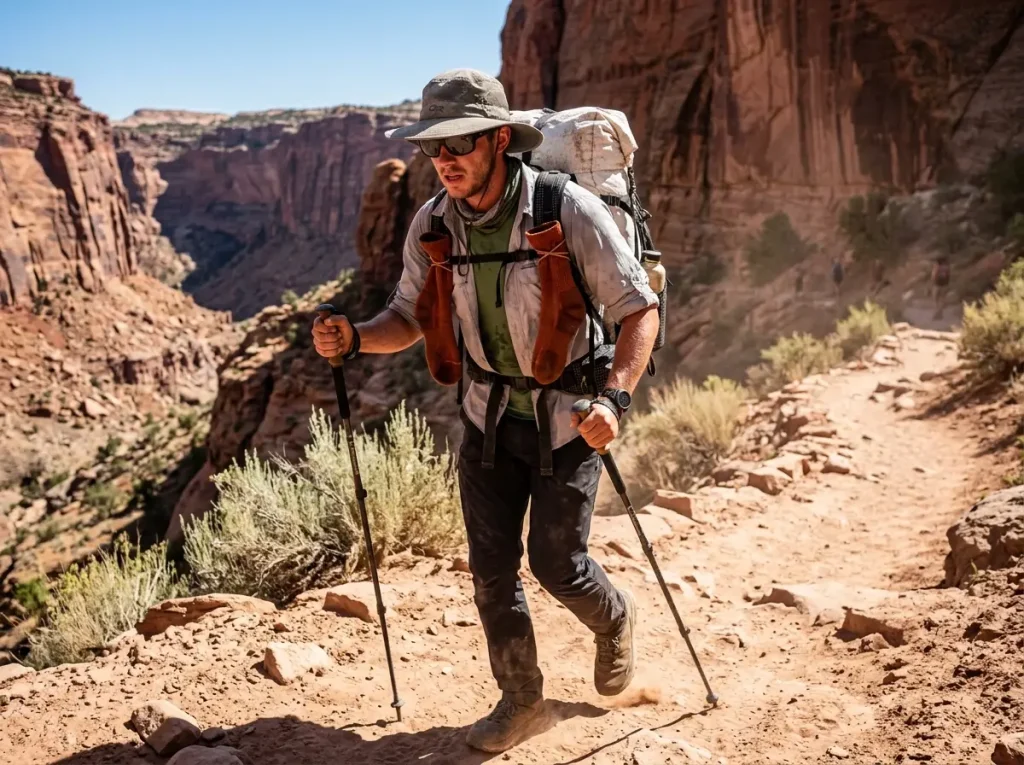
Pair B (Buffer) lives on the exterior of your pack during the hiking day. The UV exposure has a genuine antimicrobial effect on bacterial odor organisms. The airflow from movement through the pack frame creates evaporative cooling that drives moisture out of the fiber. Check its status at your midday break. If Pair B is still damp after 4 hours of pack drying, it needs repositioning — or the torso method tonight.
Pair C (Sacred) never touches your boot. Sleep-only status. This is a clinical decision, not a comfort preference. By keeping Pair C 100% dry and free of salt crystal buildup, you give the stratum corneum its only real chance to recover each night. Overnight, the tissue re-tightens and sheds its waterlogged, fragile state. Without this nightly reset, your skin stays in perpetual maceration — and why 500 miles of field testing showed the double-sock system still falls short without a dedicated sleep pair is the reason every serious backpacker eventually arrives at three.
The midday decision point runs like this: if Pair B is dry enough — not stiff, not dripping — swap it onto your foot and put Pair A on the pack to continue drying. If Pair B is still damp, keep Pair A on through the afternoon and move Pair B to a higher-airflow position on the pack. Never compromise the Sacred pair to cover a gap.
Pro-Tip: The Shoulder-Strap Method. Tuck Pair A under the front of both shoulder straps — not under the pack body. It sits against your body where heat rises, while trail air constantly moves past it. In moderate conditions this pair can reach wearable dryness in 3–4 hours.
Fiber Physics — Why Merino Wool Is Not Marketing
The 3-sock system performs differently depending on what you put in it. Fiber choice matters, and the marketing language around socks obscures more than it reveals.
Merino wool holds up to 30% of its dry weight in moisture vapor before feeling wet to the touch. When wool fibers absorb water, they release heat through a process called Heat of Sorption — an exothermic reaction that is the physical reason wool feels warm even when 30% saturated. This is why you can wear a damp Merino sock and not feel the cold-clammy effect that kills synthetic performance.
Polyester wicks via capillary action along the fiber surface and dries 15% faster than standard acrylic blends. Moisture regain is under 1%, which means water never enters the fiber core. Coolmax and similar performance synthetics are excellent Buffer pair candidates because their drying speed on the pack is hard to beat. A clinical review of fiber absorbency and drying speed differences backs these numbers.
Cotton has 8–25% moisture regain and no capillary wicking mechanism — water just sits in the fiber core. The thermal conductivity physics of wet cotton versus wet wool make the outcome stark: cotton accelerates heat loss dramatically. Cotton is excluded from backcountry sock rotation. Not for any trail. Not for any conditions.
The ideal blend for a rotation sock: 40–75% Merino wool, 20–50% nylon or polyester, and 1–5% elastane. Nylon adds structural durability at the heel and toe; elastane maintains compression geometry and prevents sock migration inside the boot — which is its own source of shear deformation.
Thicker is not better. Darn Tough’s tight-loop dense knit facilitates faster moisture management and moisture transit than plush loopy alternatives. Less bulk inside the boot also means fewer secondary pressure points from excess fabric compression.
The Daily Rotation Schedule — A 7-Day Protocol
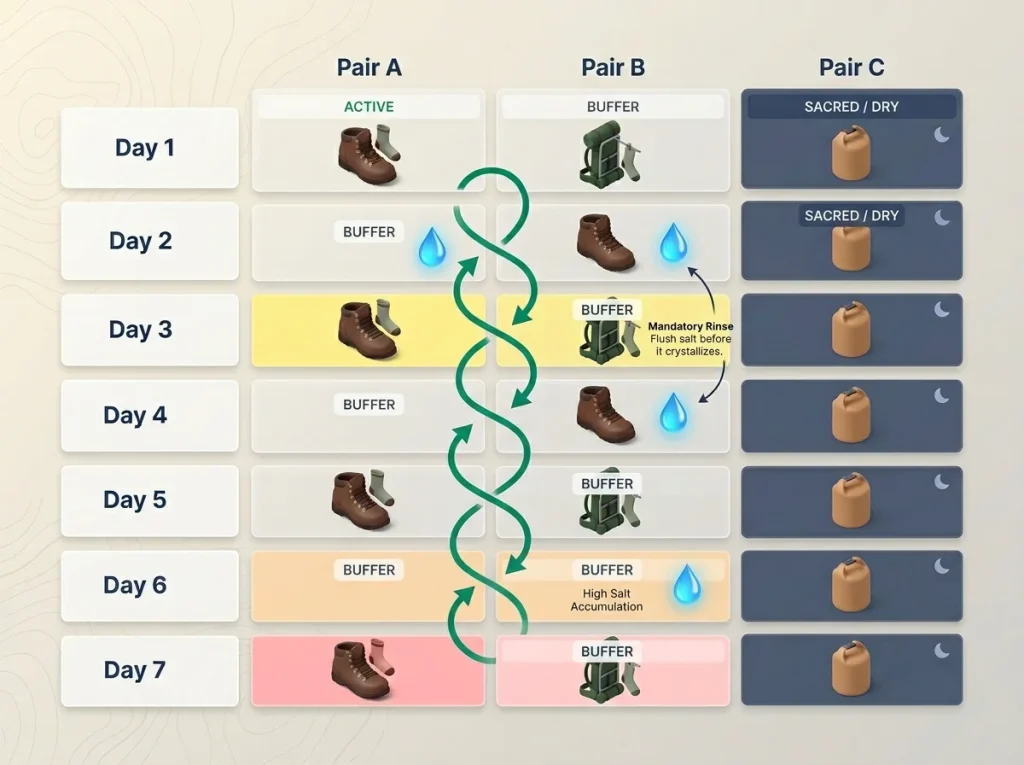
Days 1 and 2 carry the lowest blister risk. Skin is fresh, salt hasn’t accumulated, and the rotation builds its rhythm. Focus this phase on identifying hot spots before they become anything else. Rinse Pair A each evening when water is accessible.
Days 3 and 4 are the hazard window. Skin has been in sustained maceration. Salt has had two full cycles to accumulate. This is peak incidence territory. The freshwater rinse becomes mandatory, not optional. Do not bend the Sacred pair rule on these days.
Days 5 through 7: the skin may have begun partial adaptation to the moisture load, or the rotation may have broken under sustained rain. Salt management pressure is intense. Any sock that hasn’t been rinsed carries serious abrasive load. Watch for the early signs of trench foot on Days 6 and 7 if conditions have been wet: white, wrinkled skin at the heel and ball that doesn’t regain its normal color and texture after warming.
In desert terrain — Utah slickrock, SW Colorado high routes — Pair B air-dries in 2 to 3 hours of pack exposure. In Pacific Northwest or tropical conditions, the internal drying technique becomes mandatory, not a backup plan.
Advanced Drying Techniques for Humid Environments
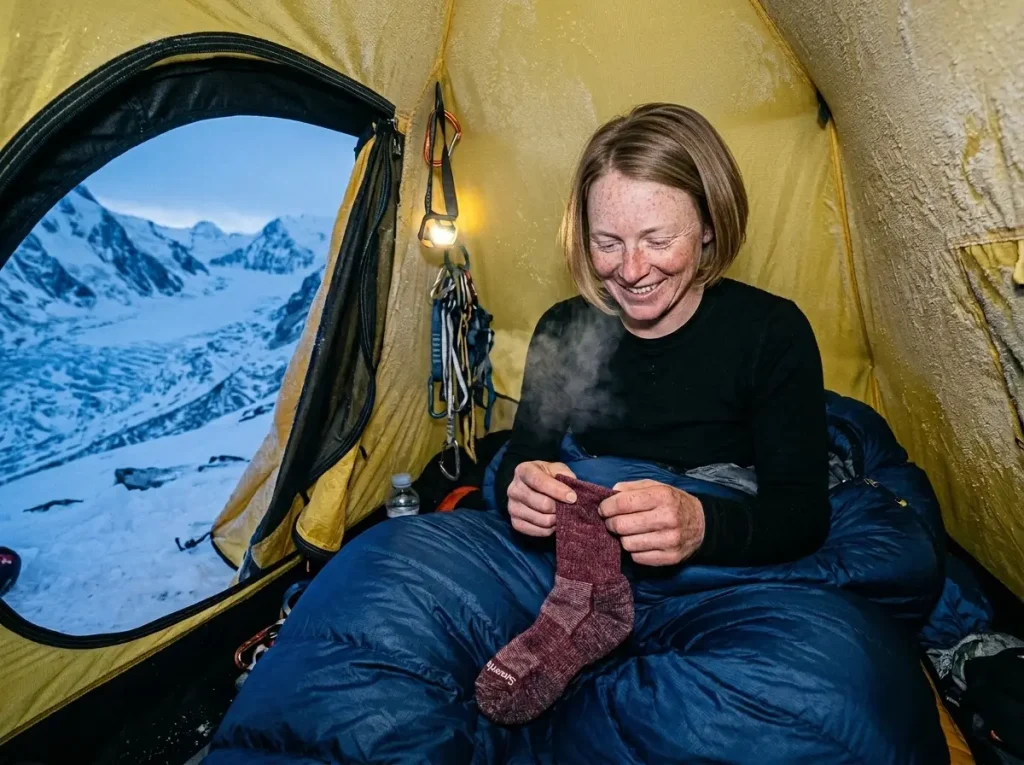
The Metabolic Heat Engine (Torso Method)
When the air outside won’t do the job — when humidity is at 95% and every hanging surface just holds moisture instead of releasing it — you use your own body as the drying engine.
Your torso runs at a constant 98.6°F. That’s a physically sufficient heat source to evaporate water from a damp sock overnight, provided you execute this correctly. First: squeeze every drop of liquid water out of the sock — not just most of it. Then lay the socks against your belly or chest skin, under your base layer, before you climb into your sleeping bag. Your body heat evaporates the water molecules; because your sleeping bag’s insulation is breathable, moisture vapor moves through the fill and out into the air. By 5:00 AM, those socks are warm and dry.
This technique only works above 32°F. In freezing temperatures, wet clothing against your core accelerates heat loss and creates a serious hazard. This is a contraindication in sub-zero environments, not a protocol. And it requires Merino or synthetic blends to function — cotton placed against the torso conducts heat away from the core instead of benefiting from it.
For camp mobility when your boots are wet: the Bread Bag Hack. Pull your Sacred sleep socks on, then slide plastic bread bags over them before stepping into the wet boot interior. The bags act as a VBL (Vapor Barrier Liner), keeping the Sacred pair completely isolated from the saturated boot. For the full picture of the right way to wash and dry your hiking socks on trail, there’s more detail on fiber-specific care that extends the life of your rotation.
The Gore-Tex Paradox — When Your Boot Sabotages the Rotation
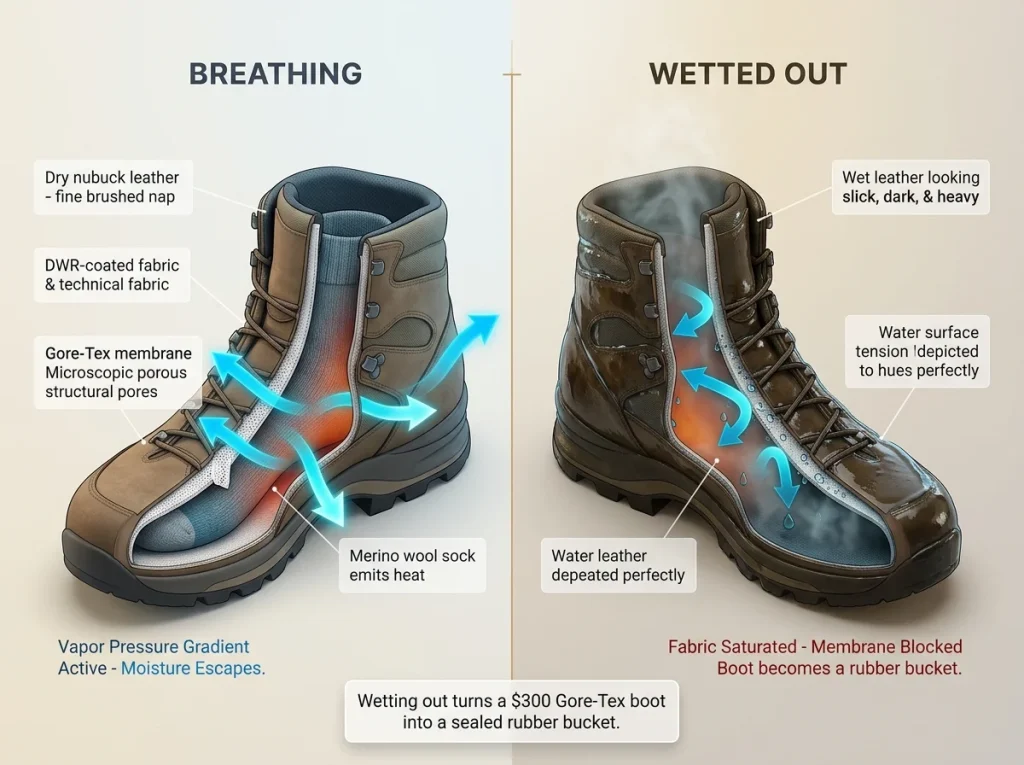
Gore-Tex breathability is a function of vapor pressure, not magic. Moisture inside the boot moves through the membrane only when there’s a meaningful differential — higher heat and humidity inside, lower outside. That gradient drives evaporation.
When the outer fabric of your boot wets out — meaning the external surface becomes fully saturated — that gradient disappears. The boot stops functioning as a breathable system and becomes a sealed container. It doesn’t matter what’s on your foot; every pair you put in there will be soaked within two hours. This is why waterproof socks trap sweat and complicate the rotation math — when the membrane of the boot fails, the sock can’t compensate.
The source of wetting out isn’t always age. Using heavy wax conditioner on a Gore-Tex boot instead of a spray DWR physically clogs the membrane pores. You can turn a new boot into a rubber container this way.
When wetting out happens on trail, the MOPP (Moisture-Optimization Positioning Protocol) shifts: Pair B stops drying on the pack exterior and moves entirely to the torso method. Pair A is accepted as wet for the hiking day — a known variable, not a crisis. The Sacred pair is the only non-negotiable. It stays in a dry bag inside the pack no matter what else is happening.
Fiber Selection and the Liner System
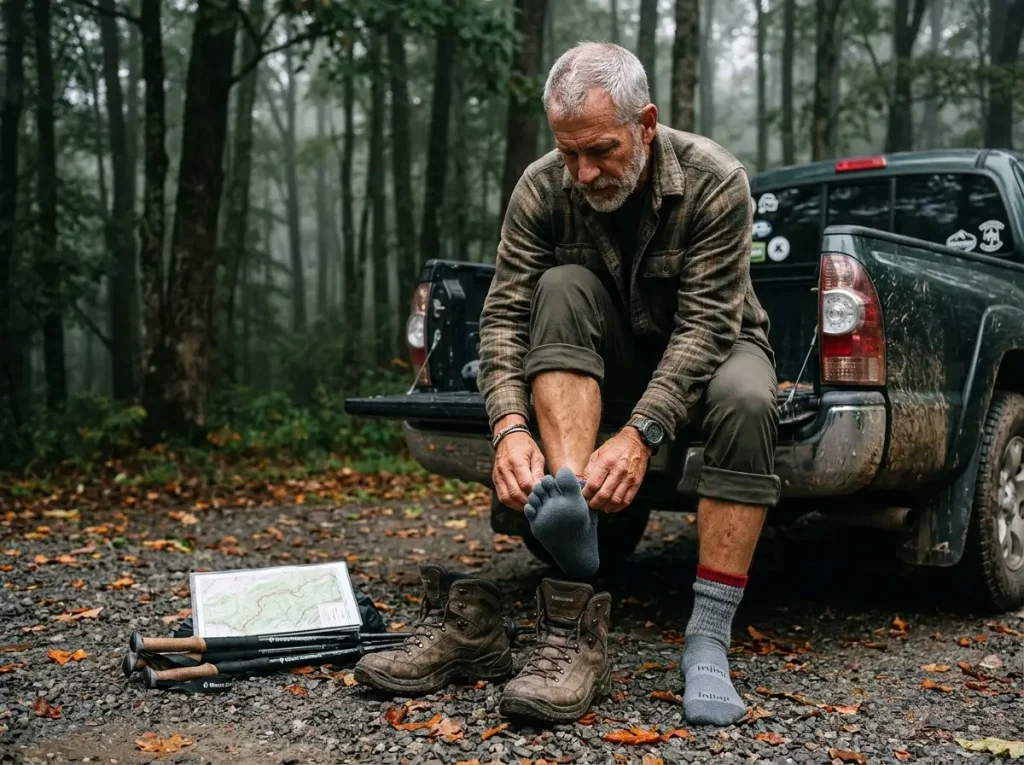
When Liner Socks Help (and When They Don’t)
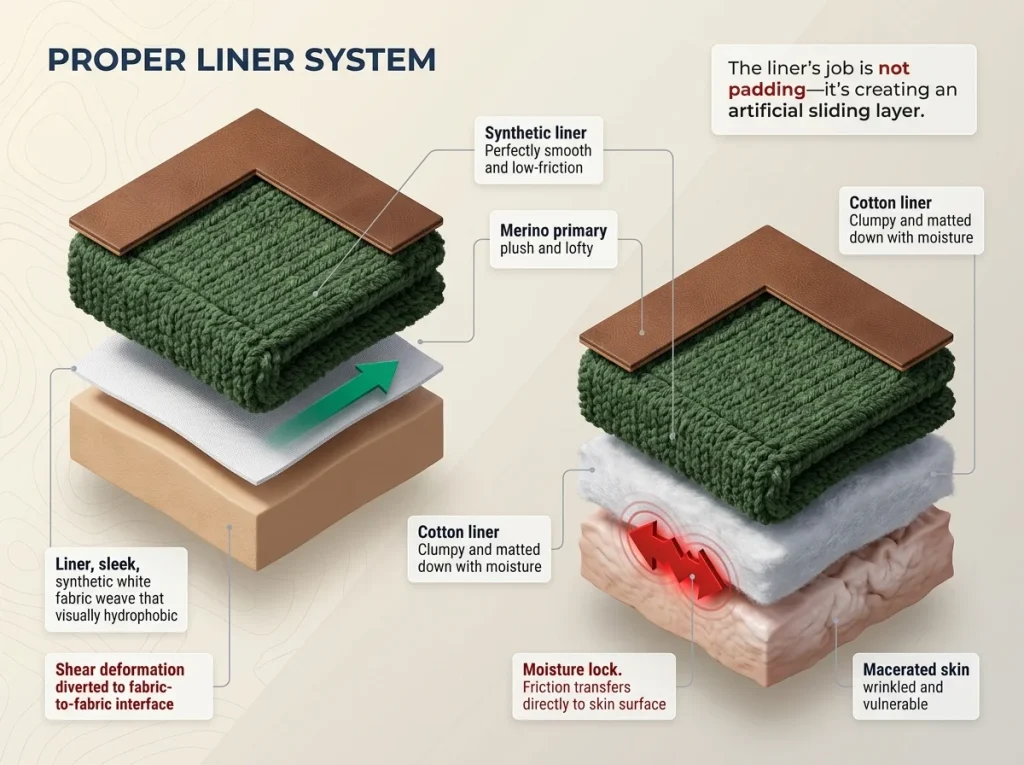
A liner sock works differently from a primary sock. It doesn’t add padding — it creates an artificial sliding layer. The liner moves against the primary sock, while the skin-liner interface stays comparatively still. This redirects shear deformation away from your skin and into the space between the two fabric layers. Blister prophylaxis through layer shifting, not cushioning.
This mechanism works when the liner is hydrophobic — thin polyester or nylon — and the primary sock is Merino. The liner moves moisture away from skin toward the wool; the wool handles thermoregulation and manages the moisture load. The whole system works together.
The liner fails when it’s cotton. A cotton liner holds moisture against the skin, raising friction at the skin-liner interface. The exact opposite of its intended function. For a field-tested analysis of toe socks and blister reduction protocols with specific product comparisons, that’s where to go for the details.
Injinji toe socks represent a different category — they eliminate the inter-toe interface entirely, where blisters form between adjacent toes. They work as liners inside a standard Merino sock or standalone in high temperatures.
Boot fit is the first variable, and a liner system can’t compensate for a boot that doesn’t fit. Incorrect last width, loose heel hold, or volume mismatch creates excessive movement that no sock combination can neutralize. Fix the fit first. Then optimize the sock system.
For trip length: under 4 days in moderate conditions, a well-fitted Merino single-layer sock usually outperforms a liner setup. On 5-plus day trips in wet terrain, the liner adds meaningful blister prophylaxis — especially at the heel and ball.
Sock Height Selection by Terrain
Micro-crew height — just above the ankle — works for trail runners and light day hikes on low-cut footwear. The moment you move to a mid-cut or high-cut boot, the boot collar rubs directly against bare skin if the sock doesn’t extend above it. That collar abrasion generates its own separate shear mechanism, independent of everything else.
Crew socks solve this cleanly. They extend above the boot collar and eliminate collar abrasion. Crew-height socks also have more fabric surface area relative to the pack exterior when drying — a real advantage for drying socks while hiking during a high-moisture day.
Knee-high socks belong in expedition alpine contexts where deep gaiters and below-freezing temperatures are factors. For standard warm-season or shoulder-season multi-day trips, they add weight and thermal mass without proportionate benefit.
The terrain rule is simple: sock height follows boot collar height. The sock must extend at least one inch above the collar. For the full breakdown of optimal sock height by terrain and boot type across different trip profiles, that article goes deep on the edge cases.
The Safety Matrix — What to Do When the System Fails
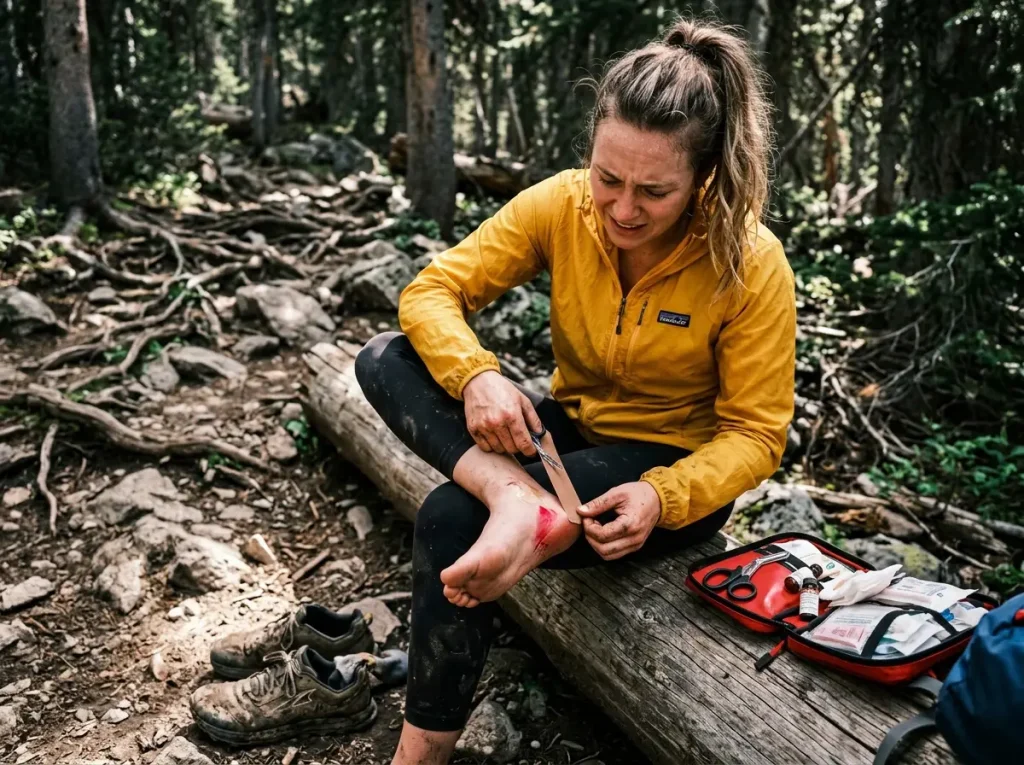
The 5-Level Severity Scale
Most people think about foot problems in binary terms: blister or no blister. Working guides think in levels.
Level 1 — Management. Damp socks, no redness, no pain. Normal rotation applies. Sock rotation strategy is functioning. Midday swap, dry the active pair, carry on.
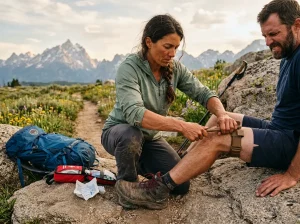
Level 2 — Warning (Hot Spot). Localized heat or redness that you catch early. Stop immediately. Remove the sock and air-dry the foot for 5 to 10 minutes. Apply Leukotape P over the hot spot. If you have tincture of benzoin, apply it to the skin first — it increases adhesive bonding strength and creates a chemical sliding layer under the tape. Leukotape P uses a medical-grade acrylic adhesive that won’t shred macerated skin on removal, unlike standard duct tape. For taping protocols that use Leukotape and benzoin for field-grade skin protection, the ankle taping guide covers the same consumables in depth.
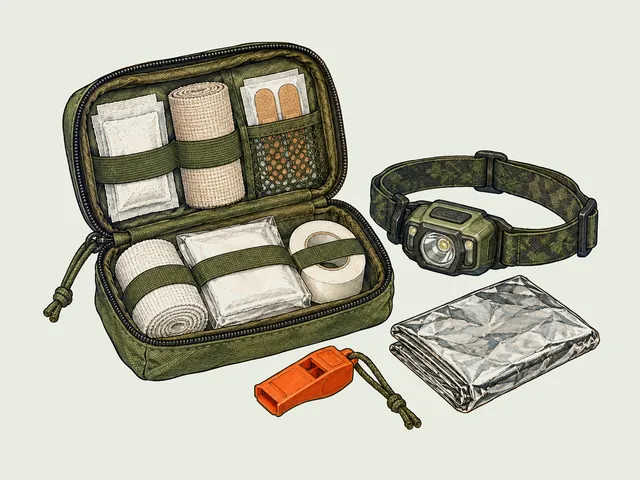
Level 3 — Injury (Intact Blister). A fluid-filled bubble has formed. Do not pop it in the field unless you have clean tools and can dress the wound properly. Cut a moleskin donut — a ring with a hole in the center — and place it so the blister sits in the open hole surrounded by raised padding. This keeps direct pressure off the tissue while you walk. For wilderness first aid emergency preparedness and full blister treatment protocols, Level 3 through Level 5 procedures are covered there.
Level 4 — Critical (Ruptured Blister / Maceration). Open skin, white wrinkled tissue, possible signs of infection. Infection is now the primary concern. Disinfect with antiseptic, apply a hydrogel “Second Skin” dressing, and keep it covered and dry. Inspect every rest stop.
Level 5 — Emergency (Trench Foot / Frostbite). Full evacuation protocol. Trench foot develops after prolonged cold-water immersion exceeding 12 hours. If you suspect frostbite, follow WMS guidelines: WMS Practice Guidelines for Frostbite specify a 37–39°C water bath for rewarming. Do not rub frozen tissue.

Total Saturation Protocol — When All Pairs Are Wet
Stream crossings, sudden weather, Gore-Tex wetting out on a sustained rain day — the rotation collapses. Here’s what you do.
Accept it and do not panic-wear the Sacred pair. Every decision from here has one goal: protect Pair C for the overnight recovery. Put on whichever pair is least wet — Pair A has likely been on your foot and is warmest. Keep hiking. Movement is the most effective drying mechanism available mid-trail.
At camp, deploy the VBL tactic for the Sacred pair. Put Pair C on, then slide plastic bread bags over them before stepping into wet boots for camp chores. The bags isolate the dry pair from the boot interior completely.
Torso-dry Pair A overnight — squeeze all liquid water out first, then sleep with them against your belly under your base layer. If conditions are at or near freezing, skip the torso method and focus on getting into a dry sleeping bag and managing core temperature instead.
By morning, Pair A emerges dry. The rotation restores. The Sacred pair is still clean.
If feet have been cold and wet continuously for more than 6 hours, elevate inspection frequency to every 2 hours. Look specifically for white, wrinkled skin at the heel and forefoot that doesn’t recover normal texture when warmed. That’s the 100% saturation scenario shifting toward trench foot territory, and that conversation ends with evacuation if it progresses.
Field Hygiene and Long-Term Foot Resilience
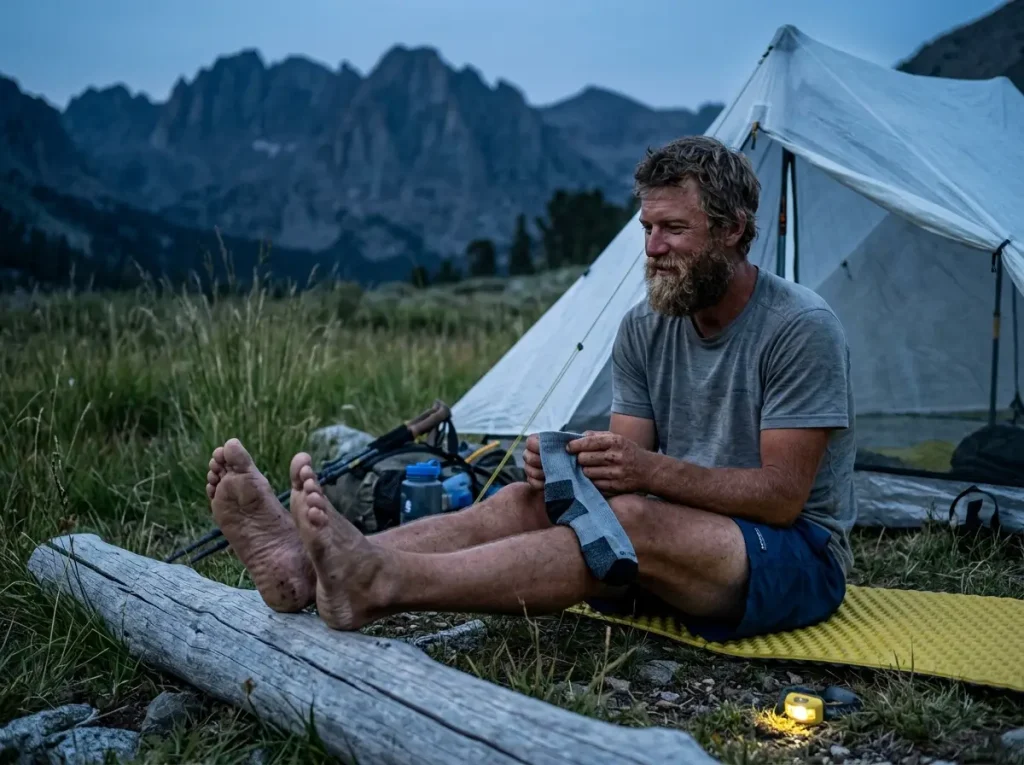
The Nightly Foot Care Ritual
The moment you reach camp, pull the boots before you do anything else. Before the tent goes up, before the stove comes out. The feet have been compressed and moist for 8 to 10 hours. They need decompression time, not more compression.
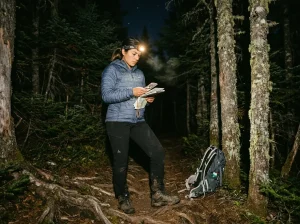
Do a full inspection. Use your headlamp to check the entire foot surface — between the toes, the heel margins, the ball. Look for redness, white macerated skin, and any hot spots you may have missed during the day. This is your daily foot hygiene protocol in action. It takes 3 minutes and is the difference between catching a Level 2 problem and waking up to Level 4.
A water-only foot rinse at end of day reduces microbial load by 60–80% without soap or any Leave No Trace concerns — just do it 200 feet from any water source. Let the feet air-dry for at least 15 minutes before putting on the Sacred pair. That drying window lets the skin start its nightly recovery cycle.
Aluminum-based antiperspirants applied to the soles and heels 2–3 nights before a long trip reduce foot perspiration rate, extending the effective dry period at the sock-foot interface. Clinical evidence supports this for both blister reduction and secondary fungal infection prevention. According to APMA clinical guidelines for Tinea Pedis (Athlete’s Foot) prevention, the warm, dark, moist boot environment is the optimal habitat for fungal colonization. The anti-microbial properties of Merino’s natural lanolin suppress bacterial and fungal growth better than synthetics — but antifungal powder dusted into the Sacred sleep pair adds another layer when itching or redness develops between the toes.
After 7 days of disciplined rotation, the feet feel structurally different. Less puffy. Less reactive. Intact skin on technical terrain where every other hiker has blisters. That physical result is repeatable, and it’s the proof that the system works.
For how to dry wet boots overnight without damaging the adhesives or membrane, the boot side of the foot care system has its own protocol that pairs with everything here.
Gear Maintenance — Keeping the Socks Performing Trip After Trip
Machine wash on cold, gentle cycle with technical gear wash — no fabric softener. Fabric softener residue fills the fiber pores and kills wicking capacity permanently. Merino wool degrades structurally above 105°F; never hot-wash it.
Air dry flat. Never machine dry Merino at high heat. Tumble dry on low is acceptable for synthetic blends only.
Store dry and uncompressed. Compressing rotation socks in a stuff sack sets permanent creases in the cushioning zones, reducing their protective function over time. Store them loose in your gear bin.
The replacement indicators: thin spots visible against a light source, elastane tension gone (sock slides down the calf during the day), or pilling severe enough to catch on skin. A worn-out sock that causes a blister on Day 3 costs you far more than the replacement would have. For when to replace hiking gear — the field-tested signs that matter, the same diagnostic framework applies across your full kit.
Darn Tough, Smartwool, and Silverlight socks in the $20–40 range typically last 3–5 times longer than budget alternatives because of their higher nylon percentage in the heel and toe reinforcement zones. The dense knit construction on the Darn Tough line also dries faster on the pack — which isn’t a small thing when your whole system depends on Pair B being ready.
Conclusion
Three paired takeaways.
Blisters are physics, not bad luck. Repetitive shear deformation at the skin-sock interface, amplified by moisture-induced maceration and salt crystal buildup, causes mechanical tissue failure. Every element of the 3-sock system exists to interrupt at least one of those three variables before they converge.
The Sacred pair is non-negotiable. Pair C is the clinical reset mechanism. It exists so that your skin can recover overnight instead of grinding through Days 4 through 7 in perpetual maceration. Without it, you’re not running a rotation — you’re managing inevitable failure.
Salt is the hidden adversary. The freshwater rinse protocol — 60 seconds in any stream, no soap — is the single highest-return maintenance move on a backcountry trip. Dirty socks are cosmetic. Salty socks are structural.
Before your next multi-day trip, lay your three pairs on the table, designate one as “Sacred — Do Not Touch,” and commit to the one rule that matters most: that pair sleeps with you every night, never hikes. Run the system for a full trip. Then look at your feet on Day 7.
FAQ
How many socks should I bring for a 3-day hike?
Three pairs minimum — one to wear, one to dry on the pack, and one reserved for sleep only. Two pairs create a false sense of security: the daily rotation schedule only works if the buffer pair dries completely between rotations, which is impossible in wet conditions without a third pair as the overnight recovery anchor.
Can I wear the same pair of hiking socks two days in a row?
Only if you rinsed them the previous evening and they are completely dry — no residual moisture and no salt crystal buildup. Salt is the primary issue, not visual dirt. A sock that dried overnight on a tent line without being rinsed has crystallized salt abrasives baked into the fibers. That sock is mechanically more hazardous than a damp but freshly rinsed one.
How do you dry socks while hiking in rainy conditions?
Two methods, used in sequence. First, external drying: tuck damp socks under the front shoulder straps of the pack — body heat and trail breeze create enough thermal differential to drive evaporation within 3 to 4 hours in moderate humidity. Second, if that fails in high-humidity PNW conditions: the internal drying technique. Squeeze all liquid water out, place socks directly against the torso under the base layer before sleep. Works only with Merino or synthetic blends — never with cotton.
What is the best material for hiking socks on multi-day trips?
A Merino wool blend in the 40–75% Merino range, with nylon for durability and elastane for fit retention. Merino wool manages moisture regain better than pure synthetics in fluctuating conditions — it holds up to 30% of its dry weight in moisture before feeling wet, while its Heat of Sorption reaction releases exothermic heat to maintain thermal stability. Pure synthetics dry faster but feel cold and clammy when saturated. Cotton is excluded.
What do you do if all your socks are completely soaked?
Execute the Total Saturation Protocol. Accept the rotation has collapsed temporarily. Put on the least-wet pair and keep hiking — movement is your best mid-trail drying mechanism. Protect the Sacred pair by keeping it in a dry bag inside the pack. At camp, deploy the VBL (Vapor Barrier Liner) tactic: Sacred pair inside plastic bread bags for camp mobility. Torso-dry Pair A overnight. By morning, the rotation restores. If feet have been cold and wet continuously for more than 6 hours, inspect every 2 hours for trench foot indicators — white, wrinkled, sore skin that does not recover when warmed.
I've spent more than a decade researching hiking gear and trail technique. I read the specs, the forum threads and the long-term reviews, and every pick here comes with what it gets wrong.
End of the trail
You read every mile of this one. Here's where the trail goes next.