










You’re standing in your living room staring at a pile of socks, trying to figure out how many pairs to stuff into a pack you’ll carry for five months. Bring too many and you’re hauling dead weight. Bring too few and your feet pay for it somewhere around mile 300. After putting in serious miles on the AT and PCT, I’ve dialed in a sock system that keeps feet healthy without wasting a single ounce of pack weight.
Quick Answer: Most thru-hikers carry 2 to 3 pairs of socks — one for hiking, one dry pair for sleeping, and optionally a third for rotation on wet trails. Two pairs is the minimum that works; three is the comfort margin that prevents foot problems on wet trails like the AT.
The Short Answer — Carry 2 to 3 Pairs
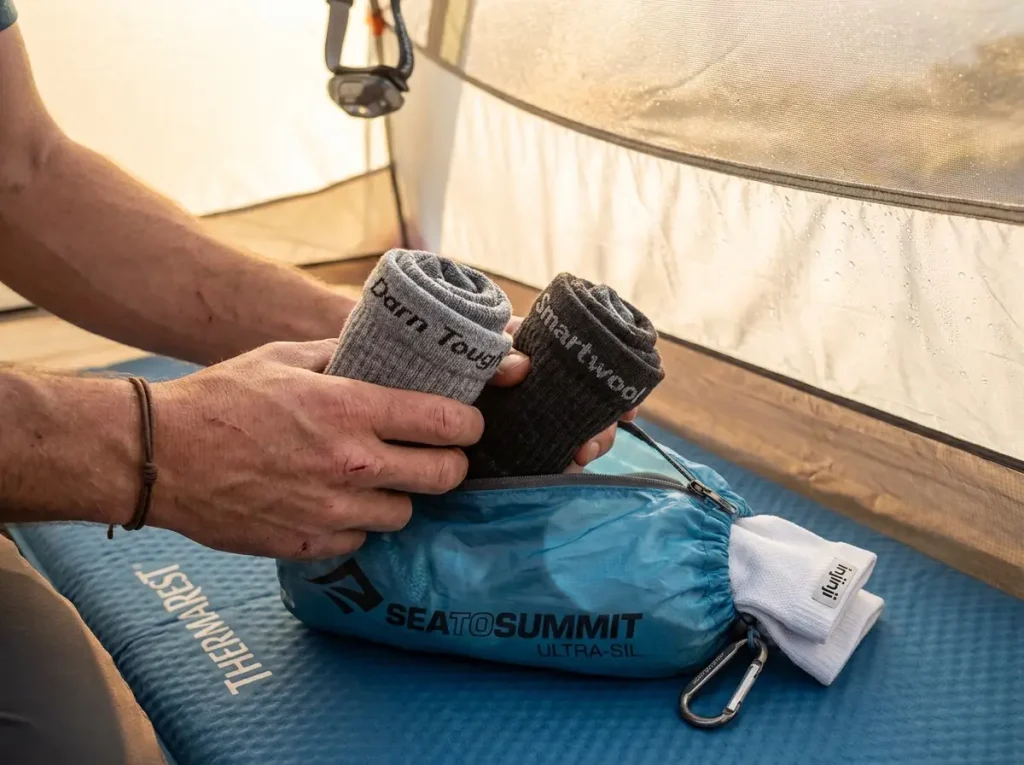
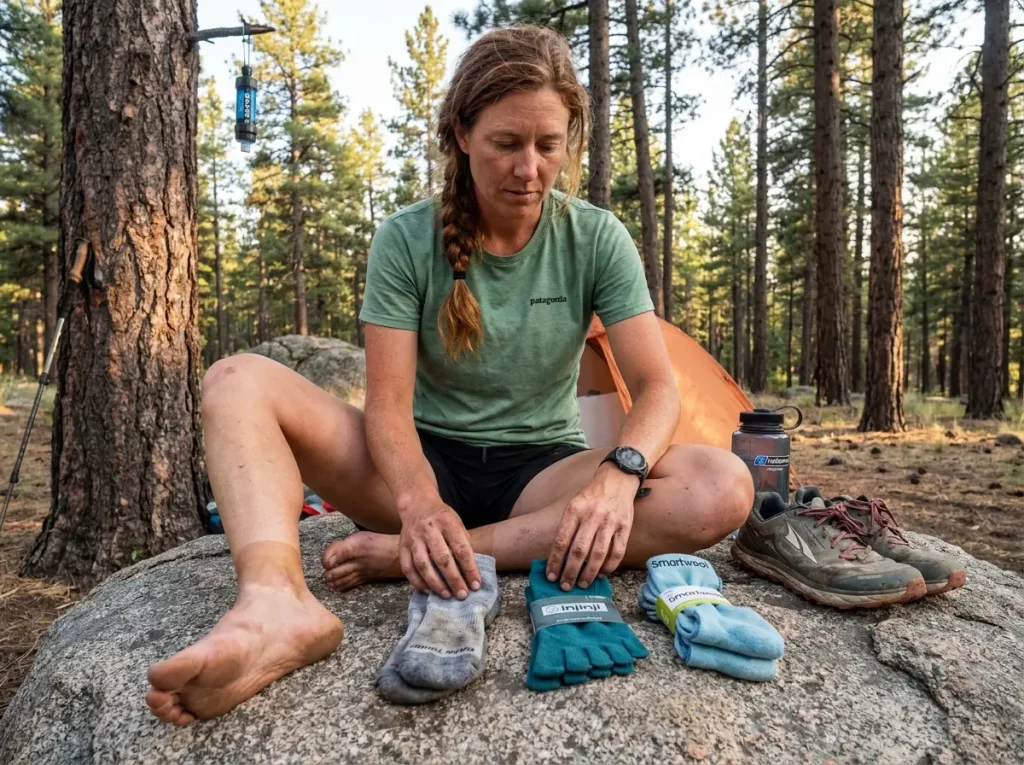
Two to three pairs. That’s it. Not five. Not the seven pairs your mom thinks you need. Two or three pairs of good hiking socks will get you from Georgia to Maine or from Mexico to Canada if you take care of them.
The 2-Pair System
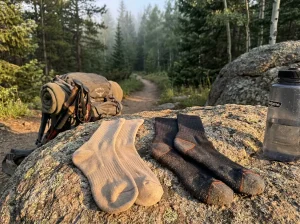
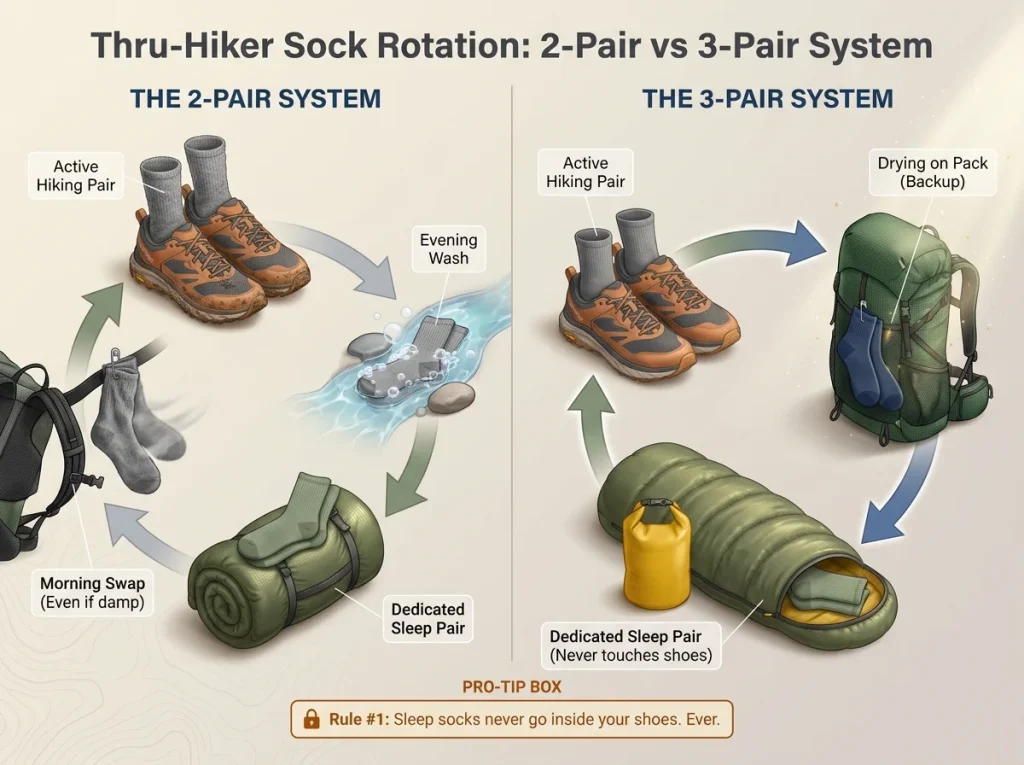
The most common setup among experienced thru-hikers: one pair on your feet, one pair in your pack. You hike all day in the first pair. At camp, you wash them and hang them to dry. You put on the clean pair for sleeping.
In the morning, you swap back — even if the hiking pair is still damp from last night’s wash. Your body heat and foot friction will dry them within the first hour of walking, especially if you’re wearing trail runners with mesh uppers.
This system weighs almost nothing. Two pairs of midweight merino wool crew socks weigh about 6 ounces total. That’s less than a granola bar.
The catch: it requires discipline. You have to wash your socks every single night. Skip a night, and bacteria builds up. Skip two nights, and you’re inviting blisters and skin breakdown.
The 3-Pair System
Add one more pair and everything gets easier. One pair hiking, one pair drying (clipped to your pack or hung at camp), one pair clean and dry in your pack for sleeping. You always have a guaranteed dry pair and a backup if one gets destroyed crossing a river.
The third pair adds roughly 3 ounces to your pack weight. On a 2,000-mile hike, those 3 ounces buy you a margin of comfort that’s hard to argue against. Most long-distance hikers who start with two pairs end up buying a third at their first resupply stop.
Why More Than 3 Is Dead Weight
Every pair of socks beyond three is weight you carry but rarely use. Merino wool dries faster than cotton, resists odor for days, and washes out in camp with nothing but water and hand friction. If your socks are wool and your system is consistent, you don’t need a fourth pair.
The math doesn’t change no matter how long the trail is — whether it’s a 5-day section hike or a 5-month thru-hike, the rotation stays the same.
Pro tip: Carry a lightweight safety pin clipped to your pack strap. Pin damp socks to the back of your pack while you hike and they’ll dry in direct sunlight within a few hours. The old-school method still works better than any fancy drying clip.
Why the Dedicated Sleep Sock Is Non-Negotiable
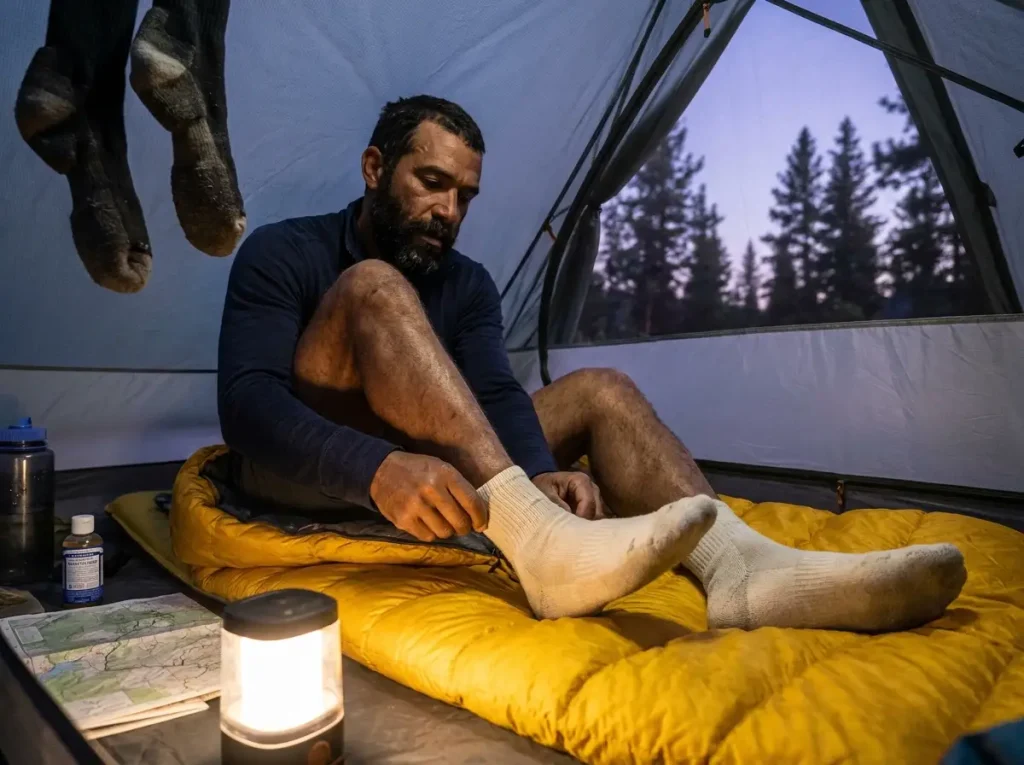
This is the sock most beginners skip and most veterans won’t hike without. A dedicated pair of clean, dry socks that never touches the inside of your shoes.
The Physiology of Overnight Foot Recovery
Your feet take more punishment per square inch than any other part of your body on a thru hike. After 20+ miles of walking, the skin on your feet is saturated with moisture, compressed by your shoes, and colonized by bacteria from sweat and trail grime.
If you sleep in the same socks you hiked in — or worse, barefoot in a damp sleeping bag — your skin never fully dries. This is how trench foot starts. Not the dramatic battlefield version, but the low-grade maceration that softens skin, weakens its structure, and sets up blisters the next morning.
A wilderness first aid instructor put it plainly: it doesn’t matter how wet your feet get during the day, as long as you sleep with dry feet.
Dry sleep socks reset your skin overnight. Eight hours in clean, dry merino wool wicks residual moisture, allows skin to firm back up, and reduces the bacterial load that causes hot spots. Cheapest, lightest insurance policy in your pack.
What Makes a Good Sleep Sock
Lightweight merino wool, crew height, no heavy cushioning. Sleep socks don’t need the durability or padding of hiking socks — they just need to be dry, soft, and breathable. A thin merino liner sock works fine. Some hikers use Injinji toe socks as their sleep pair, which separates toes and prevents the inter-toe moisture that breeds blisters on longer trails.
The rule is simple: the sleep sock never goes into a shoe. Ever. It lives in a small dry bag inside your pack during the day and comes out only when you’re in your sleeping system for the night.
If your sleep socks accidentally get wet, swap them with a hiking pair and dry them at your next opportunity. The system only works if one pair stays dry.
Pro tip: Mark your sleep socks with a small dot of permanent marker on the toe. On day 30 of a thru hike, when everything looks the same shade of trail-grey, you’ll thank yourself for knowing exactly which pair is which without sniffing them.
If you want a deeper look at the full daily routine, the system in how to manage foot care on a thru hike covers everything from morning prep to the camp wash.
Merino Wool vs Synthetic — Which Lasts a Thru Hike
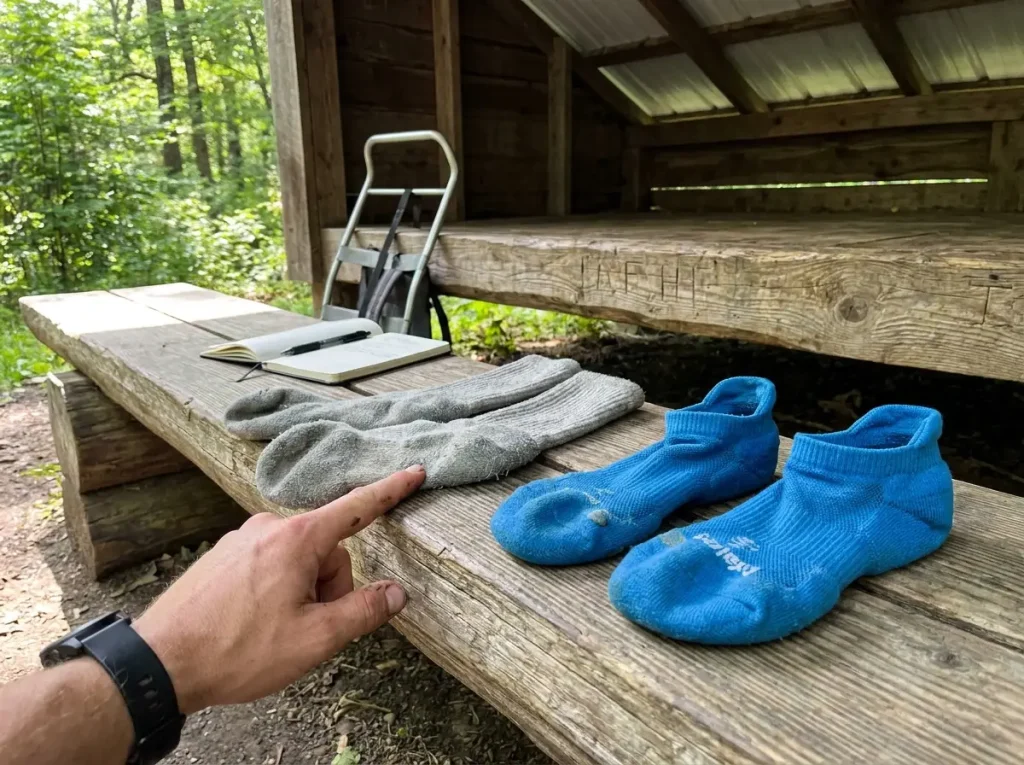
Material choice matters more than brand loyalty. The right fiber handles moisture, odor, and abrasion differently — and on a trail that takes months, those differences compound.
Merino Wool Wins on Odor and Moisture
Merino wool fibers have a protein structure — specifically keratin — that actively binds to the volatile organic compounds responsible for body odor. Research from the International Wool Textile Organisation confirmed that merino garments can be worn significantly longer than synthetic ones before needing a wash. On trail, this means your merino socks won’t clear the shelter after three days the way polyester socks will.
Merino also manages moisture differently from synthetics. The fiber absorbs up to 30% of its weight in water before it feels damp to the touch, pulling sweat away from your skin and releasing it through evaporation. Synthetics wick moisture to the surface faster but don’t absorb it — so in humid conditions, the moisture sits on your skin instead of being drawn into the fiber.
For a trail test of how this plays out over a full week, why merino socks smell less on trail breaks down the science with real field data.
Where Synthetics Hold Up
Synthetics dry faster when soaked. If you’re doing frequent stream crossings or hiking in sustained rain, a blended sock (merino/nylon/spandex) dries faster than pure merino while keeping most of the odor resistance. Most dedicated thru-hiking socks use a blend — typically 50–70% merino wool with nylon for abrasion resistance and a small percentage of Lycra or spandex for stretch.
Pure synthetic socks also cost less and last longer under heavy abrasion. If you’re hiking through sandy terrain or crossing gravelly streambeds daily, synthetics survive the sandpaper effect better than pure merino. But they smell worse. Much worse.
The Practical Answer
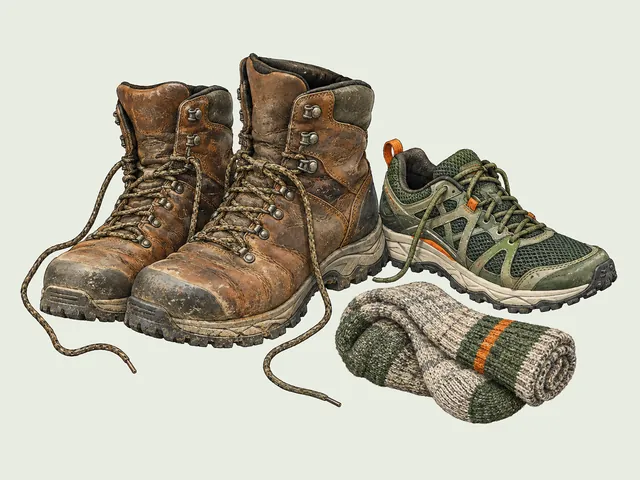
For most thru-hikers: merino blend socks (50–70% merino, rest nylon/spandex) hit the sweet spot. You get the odor resistance and moisture management of wool with the durability and faster drying of synthetics. Darn Tough, Smartwool, and Cloudline all make socks in this range that hold up for 400–600 miles per pair before the cushioning breaks down.

The Rotation System That Prevents Blisters
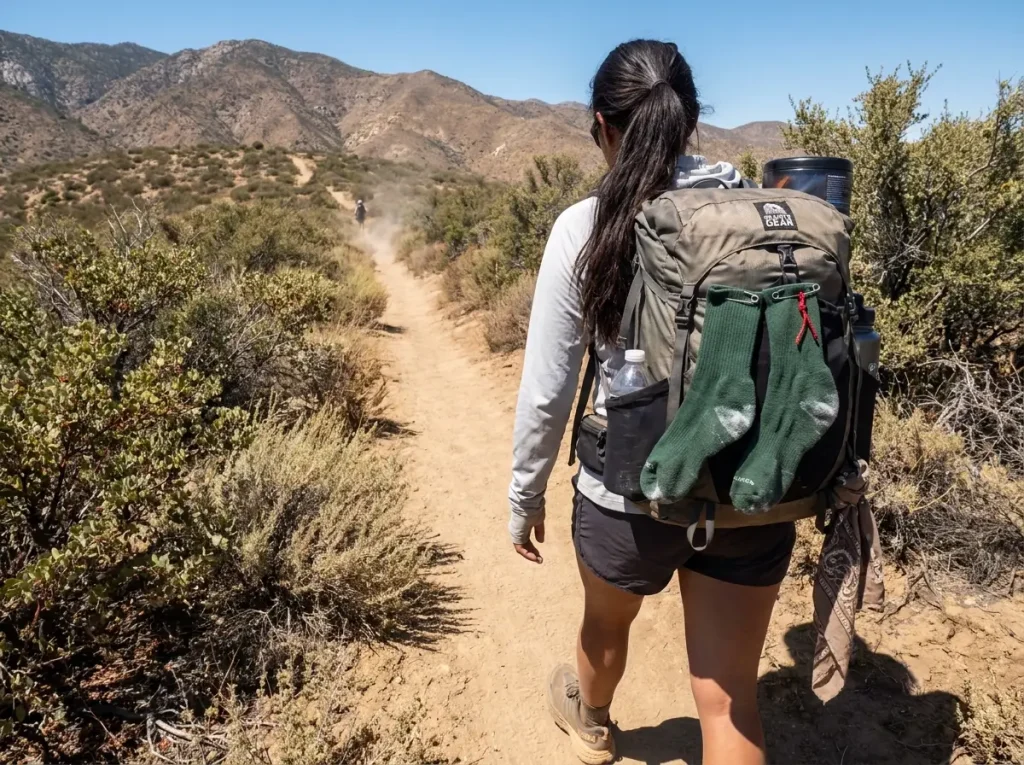
Carrying the right number of socks is step one. Rotating them properly is what actually keeps your feet healthy.
The Daily Swap
The core of any sock rotation is this: never start a day in the socks you ended yesterday. Even if your hiking socks feel dry by morning, they still carry the salt, bacteria, and compressed fibers from yesterday’s miles. Fresh socks create less friction against your skin because the fibers are lofted and the fabric surface is cleaner.
The swap happens at camp. Take off your hiking socks. Wash them with water and hand friction — soap isn’t necessary but a few drops of Dr. Bronner’s works if you have it. Wring them out, hang them to dry.
Put on your sleep socks. In the morning, put on whatever pair is driest for hiking. The other pair dries on your pack.
When to Change Socks Mid-Day
Most hikers don’t need to change socks during the day. But there are three situations where a mid-day swap saves your feet.
First, after a deep stream crossing where both feet were submerged. Wet skin is soft skin, and soft skin blisters faster. If you have a dry pair, change into them and let the wet pair dry on your pack.
Second, after a long, sustained rain section where your feet have been wet for hours. Even with trail runners that drain well, hours of wet socks compress the skin and increase friction.
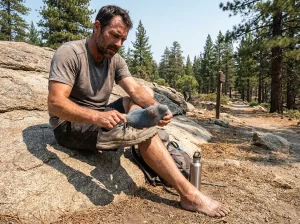
Third, when you feel a hot spot forming. A hot spot is the warm, slightly tender sensation that precedes a blister. Stop. Change socks. Adjust lacing. Apply Leukotape to the irritated area. The hot spot is your 10-minute warning before a blister forms, and a sock change is the fastest response.
Pro tip: When you stop for lunch on a long day, take your shoes off and let your feet air out for 10–15 minutes. Prop your feet up on your pack. This isn’t luxury — it’s maintenance. The evaporation cools the skin, reduces swelling, and lets compressed sock fibers loft back up.
When to Replace Socks on a Thru Hike
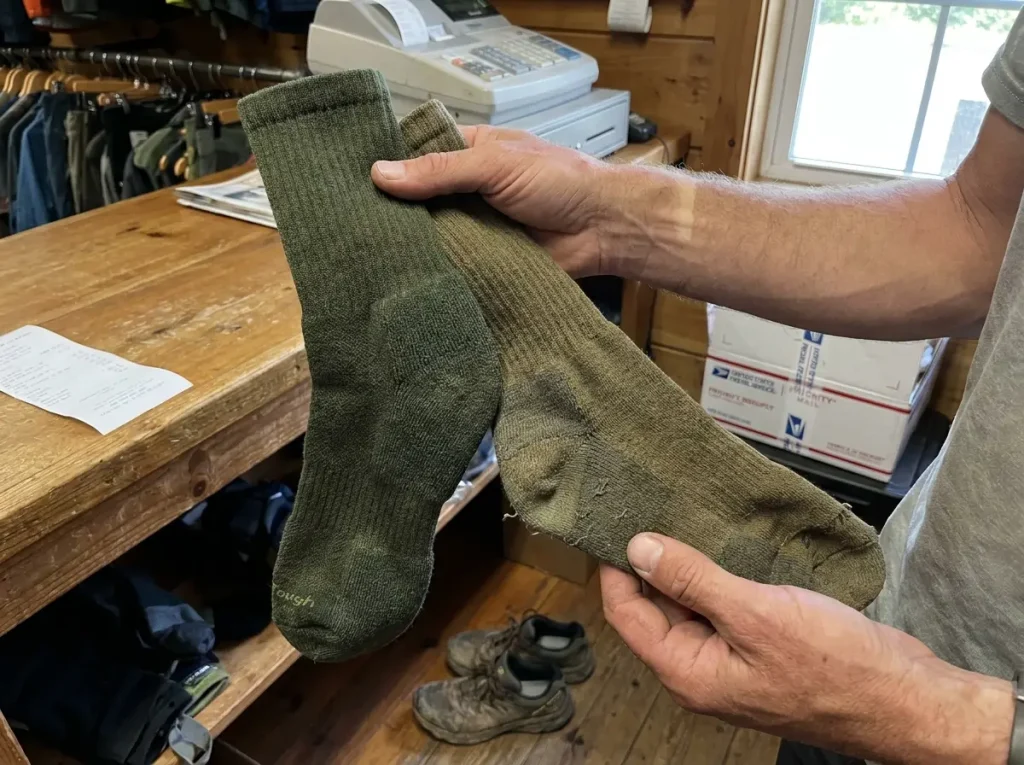
Socks wear out. Even good ones. Knowing when to swap for fresh pairs at a resupply town is part of planning your thru hike logistics.
Mileage-Based Replacement
Quality merino blend socks last roughly 400–600 miles before the cushioning at the heel and ball of the foot compresses enough to matter. You won’t see holes — modern hiking socks are built tougher than that. But you’ll feel the difference.
The cushion goes flat. The fiber gets slick. The sock slides more inside your shoe instead of gripping, which increases friction and blister risk.
Darn Tough socks on the upper end of this range consistently last 500–600 miles thanks to their denser knit and reinforced heel. Smartwool and Cloudline socks tend to hit their limit closer to 400 miles, especially in lightweight cushion models. Sandy terrain accelerates wear, and smooth trail extends it.
How to Time Replacements With Resupply
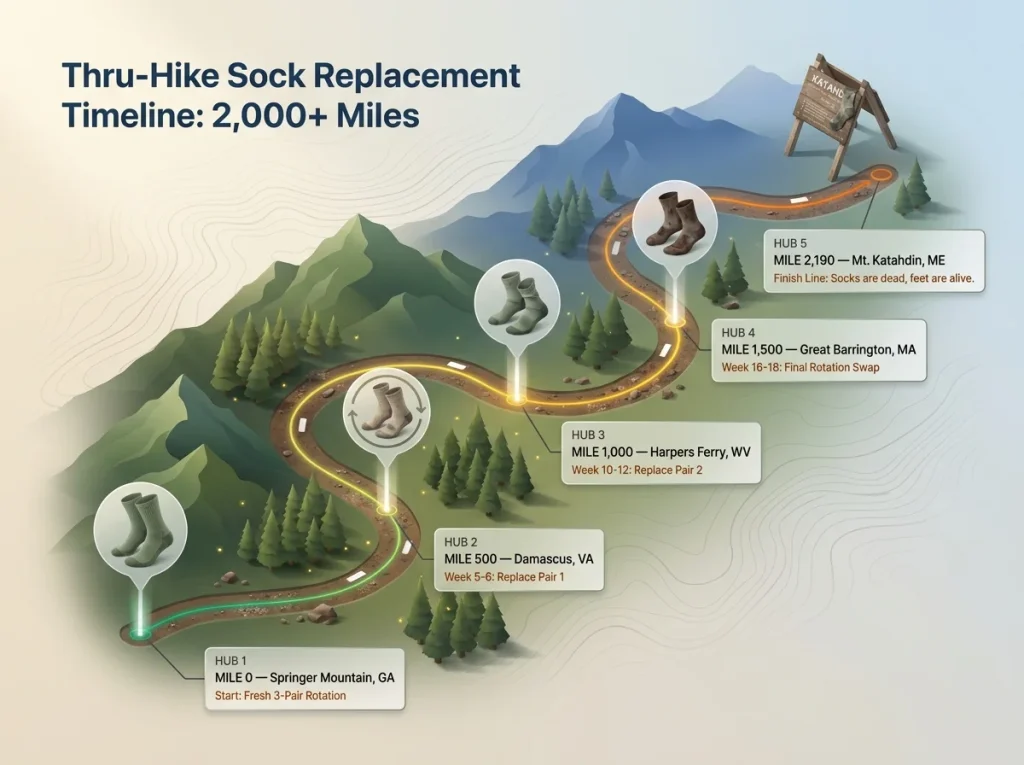
Most thru-hikers hit a resupply town every 4–7 days. At typical thru-hiker pace (15–20 miles per day), that’s 60–140 miles between stops. Plan sock replacements every 400–500 miles, which means roughly every 4–6 resupply stops you’ll want to grab fresh socks.
Some hikers mail resupply boxes to themselves with socks included. Others buy at trail-town outfitters, which usually carry Darn Tough and Smartwool in the standard sizes. Add “check sock cushion” to your resupply mental checklist alongside food, fuel, and sunscreen.
If you’re sending resupply boxes, include two fresh pairs and keep the best pair from the previous rotation. That gets you back to three pairs with two fresh and one still-good backup.
Signs Your Socks Are Done
The cushion at the ball of the foot feels noticeably thinner than the arch. The heel padding has compressed flat. The elastic at the ankle cuff doesn’t grip anymore, and the sock slides down into your shoe during the day.
Any of these means the sock has given you everything it has. Replace it at the next town without guilt — even if it looks fine from the outside.
Pro tip: When you buy new socks at a resupply town, hike the first day in your old socks and break in the new ones on day two. Brand-new socks can feel different enough to cause friction points if you jump straight into a 20-mile day.
Adjusting Your Sock Count by Trail and Season
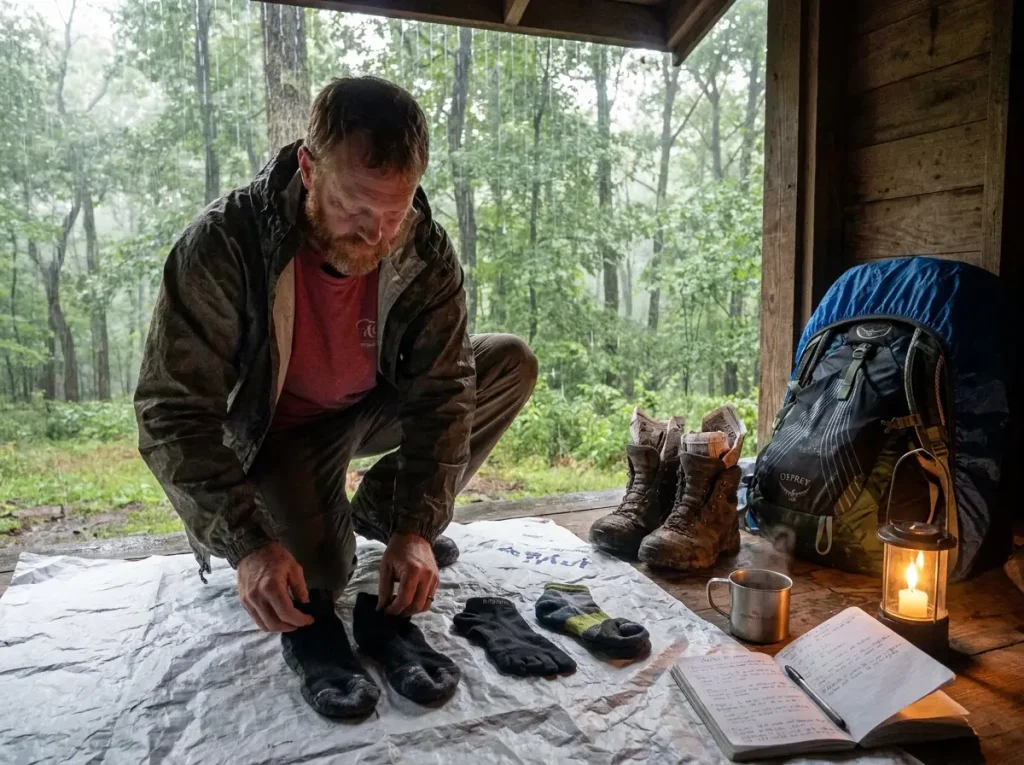
Two to three pairs is the baseline. But not every trail and not every season are the same, and the adjustment is straightforward.
Wet Trails — AT, PNW Sections of the PCT
The Appalachian Trail is a wet hike. Rain, mud, stream crossings, and humidity that never quits. The AT’s lush canopy means socks pinned to your pack don’t get direct sunlight, so they dry slower.
Most AT thru-hikers carry three pairs and consider it the minimum. Some carry four during the mid-Atlantic and New England sections where rain is constant and the trail surface holds water like a sponge.
The PNW sections of the Pacific Crest Trail (Washington and northern Oregon) are similarly wet in shoulder season. If you’re hitting these sections in September or October, bump to three pairs even if you ran two pairs through the dry desert sections.
Dry Trails — PCT Desert, CDT Arid Sections
The desert sections of the PCT and CDT are a different story. Low humidity means socks dry in an hour pinned to your pack. Sweat evaporates fast. Two pairs works reliably in these conditions because you can count on the drying pair being bone-dry by lunchtime.
Some ultralight hikers run with just two pairs for the entire Southern California desert stretch and never miss a third.
The trade-off in dry conditions is dust and grit. Sand gets inside trail runners and acts like sandpaper on sock fibers. Replace socks more frequently — closer to 400 miles than 600 — even though the moisture situation is easier.
Cold Weather and Shoulder Season
Winter sections, early-season starts, or late-season finishes add a variable: cold feet. Merino wool insulates when wet, which is why it’s the clear choice for cold conditions. But cold and wet together slow drying times significantly.
If you’re hiking in temperatures below 40°F regularly, carry three pairs and consider swapping your lightweight hiking socks for midweight cushion socks that add insulation.
For a full layering strategy that includes foot warmth decisions, I got shoulder season layering wrong for years covers the broader system.
Conclusion
The number is two to three pairs. The system is what matters: hike in one, dry one, sleep in one that stays clean. Merino wool blend socks in the 50–70% merino range handle moisture, odor, and durability better than pure wool or pure synthetics. Replace them every 400–600 miles at resupply towns.
The dedicated sleep sock — the pair that never goes into a shoe — is the cheapest, lightest piece of gear that prevents the most foot problems on a long trail.
Pack your socks, wash them at camp, and trust the system. Your feet will carry you 2,000 miles if you take care of them for 10 minutes every night.
Q1 How many pairs of socks do thru-hikers carry?
Most experienced thru-hikers carry 2 to 3 pairs of hiking socks. Two pairs is the minimum — one for hiking, one for sleeping. Three pairs adds a rotation buffer for wet conditions and is the standard on trails like the Appalachian Trail.
Q2 Should I bring extra socks on a thru-hike?
Beyond 3 pairs, extra socks are dead weight. Merino wool dries overnight, resists odor for days, and washes out with just water. Replace worn socks at resupply towns every 400–600 miles instead of carrying spares for the entire trail.
Q3 How often should you change socks when hiking?
Change socks at least once per day — at camp. Change mid-day after deep stream crossings, sustained rain, or when you feel a hot spot forming. On dry trails in good conditions, once per day at camp is enough.
Q4 What are the best socks for thru-hiking?
Merino wool blends with 50–70% merino content and nylon for durability. Darn Tough Hiker Micro Crew and Smartwool PhD Outdoor are field-proven choices. Avoid pure cotton, which absorbs moisture, dries slowly, and causes blisters.
Q5 Do you need sock liners for thru-hiking?
Liner socks reduce friction between your skin and outer sock, which helps prevent blisters. Injinji toe socks are popular as liners because they separate toes and prevent inter-toe blisters. Not everyone needs them, but if you’re blister-prone, they’re worth the 1–2 ounces.

I've spent more than a decade researching hiking gear and trail technique. I read the specs, the forum threads and the long-term reviews, and every pick here comes with what it gets wrong.
End of the trail
You read every mile of this one. Here's where the trail goes next.