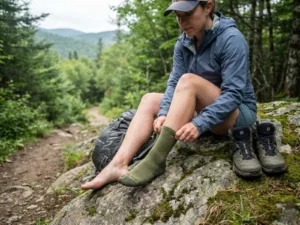
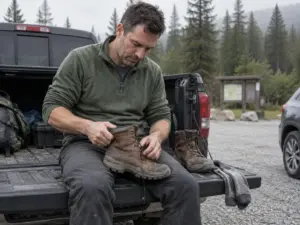
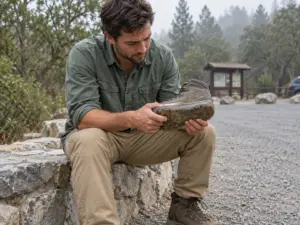
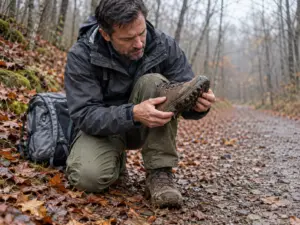
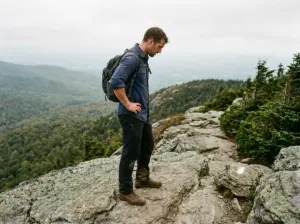
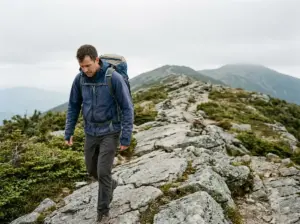
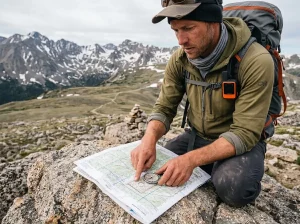
Mile 6 on the Collegiate Loop, 11,000 feet, and that faint warmth under my right heel crossed from “maybe nothing” to “definitely something.” I had ten minutes. Maybe less. After four years of guiding trips through Colorado’s high country and one very painful lesson on the John Muir Trail, I knew exactly what that pre-blister hot spot was telling me — and what would happen if I ignored it.
What I did in the next three minutes is the reason I haven’t popped a blister in four years. And the system I built around that moment — the boot-sock-tape combination that prevents hot spots from forming in the first place — is exactly what you’re about to learn.
⚡ Quick Answer: A hot spot is your skin’s 10-minute warning before a full blister forms. The moment you feel localized warmth, stop walking immediately, remove your boot, and apply Leukotape P directly over the reddened area. Prevention starts before the hike with proper boot fit, a moisture-wicking liner sock under a merino wool hiking sock, and pre-taping known trouble spots. On multi-day trips, a nightly foot care routine with foot powder and dry camp socks stops cumulative damage.
What a Hot Spot Actually Is (And Why You Have 10 Minutes)
The Skin-Fatigue Sequence Your Body Is Broadcasting
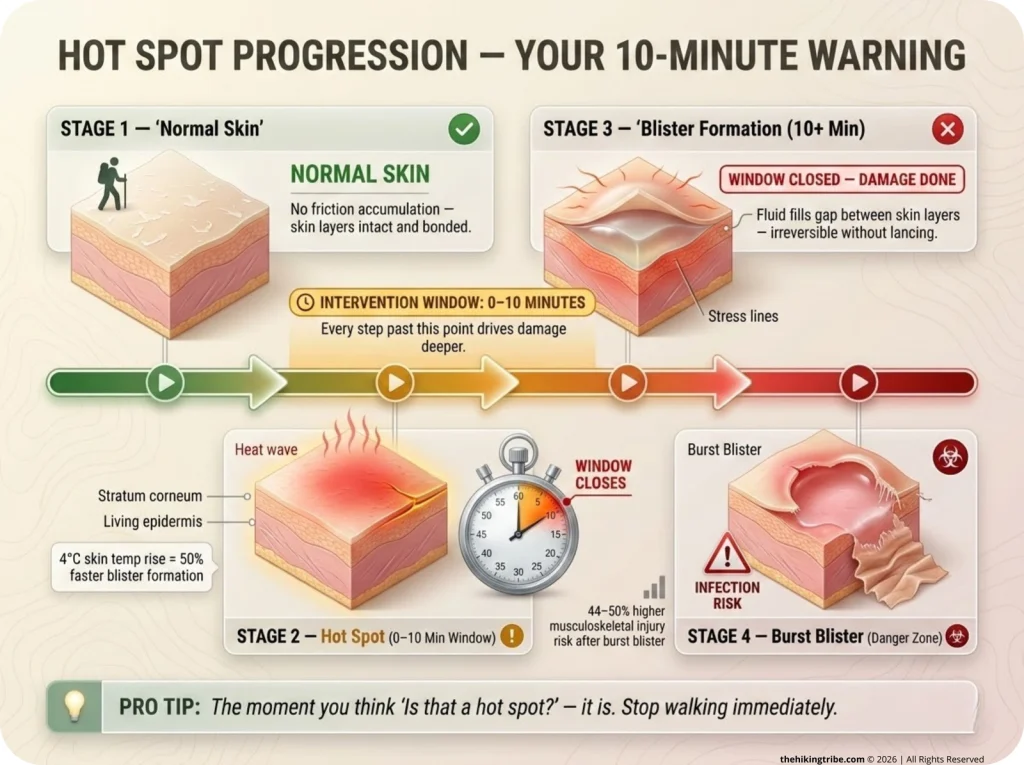
That warmth under your heel isn’t random. A hot spot is localized redness and heat caused by friction grinding against your stratum corneum — the outermost dead-skin layer that acts as your foot’s first line of defense. Think of it like sanding a piece of wood. The surface heats up before anything tears.
The progression goes: normal skin → warm, red patch → fluid-filled sac. Once that fluid fills the gap between your outer skin layer and the living tissue underneath, you’ve got a full friction blister, and the window is closed. A 4°C rise in skin temperature speeds up that process by roughly 50%. On a hot desert trail with sweaty feet, that window shrinks fast.
Pro tip: The moment you think “Is that a hot spot?” — it is. Stop walking. Every step past that point drives the damage deeper into your skin.
Friction vs. Shear Force — The Distinction That Changes Everything
Most advice focuses on surface friction — your sock rubbing against your skin. But the real damage comes from shear force, which is the lateral stretching that happens deeper, between layers of skin. Your foot slides inside the boot, the skin on top moves with the sock, but the tissue underneath stays put. That pulling-apart motion is what actually separates tissue and creates blisters.
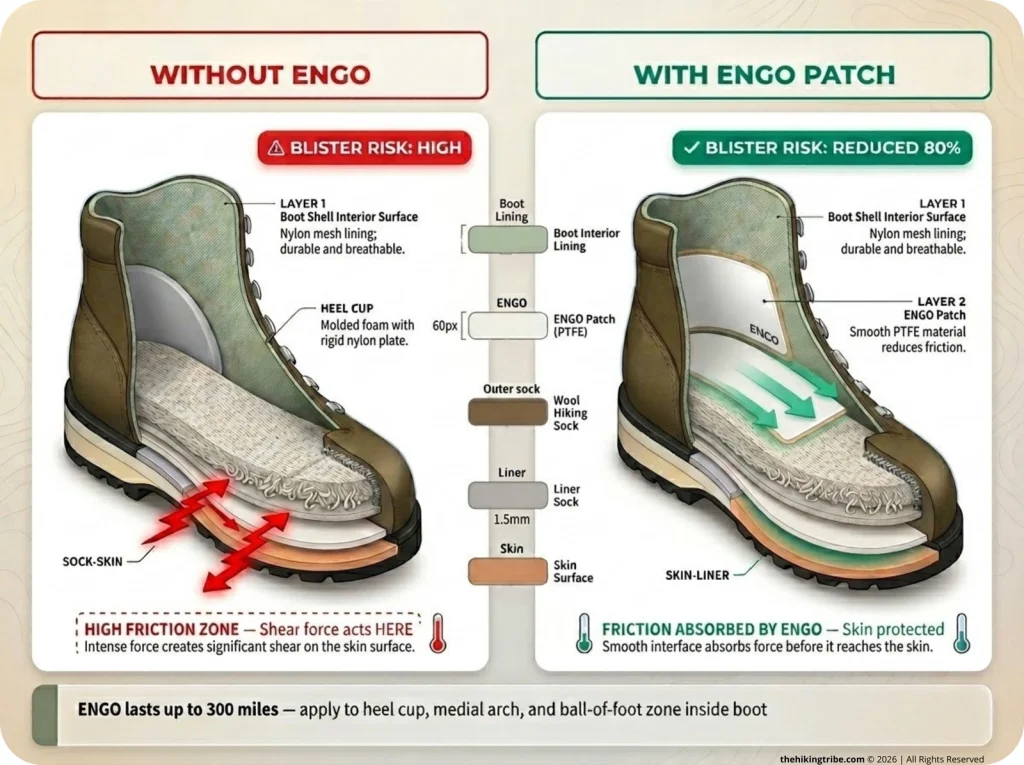
This matters because different products fight different forces. ENGO patches reduce friction at the shoe-sock interface. Liner socks shift the friction plane away from your skin entirely. Understanding which force you’re fighting is the difference between real blister prevention and band-aid advice.
Why Day Two Is the Most Dangerous Day of Your Trip
If you’ve ever wondered why your feet felt fine on Day 1 of a backpacking trip and then fell apart on Day 2, you’re not alone. Blister incidence peaks on the second day — your feet are swollen from the previous day’s effort, your socks have lost some loft, and your skin hasn’t adapted yet.
The numbers back this up. Blister rates among long-distance hikers and backpackers range from 54 to 86 percent, according to the National Institutes of Health. And blisters don’t just hurt — military blister research found they increase your risk of a musculoskeletal injury by 44–50% because you start walking differently to avoid the pain.
The STOP Protocol — What to Do the Second You Feel Warmth
Step 1 — Stop, Sit, Strip the Boot
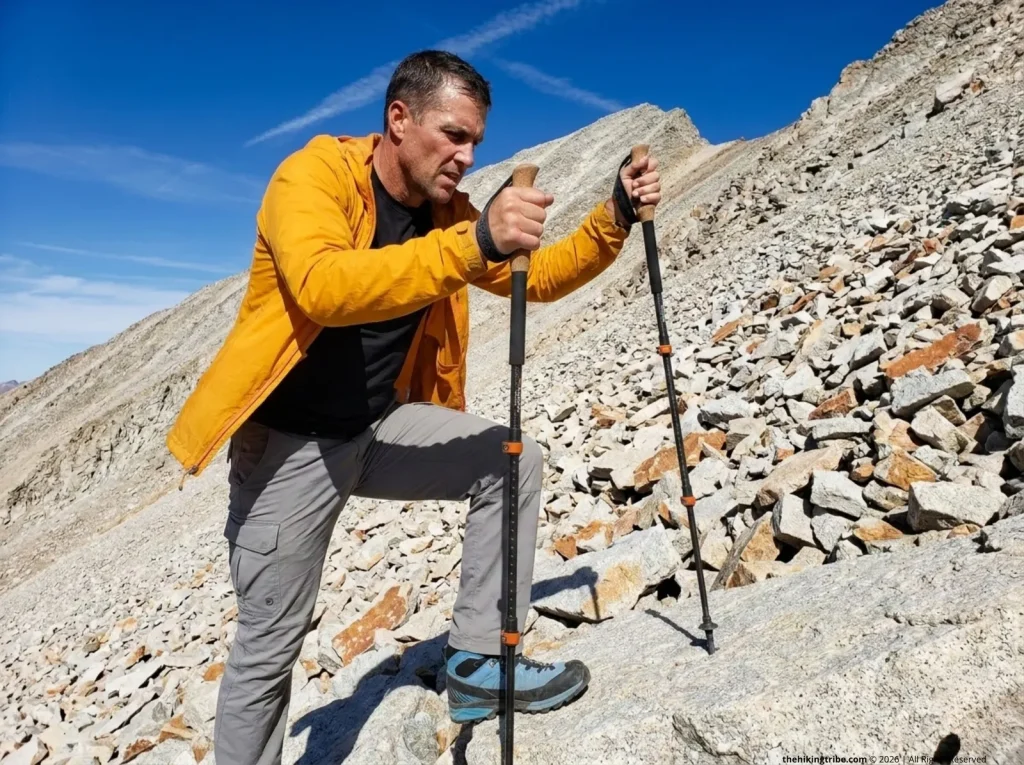
The word “STOP” is literal. Do not walk “just to the next switchback.” Do not tell yourself it’ll go away. Every step after detection drives the damage deeper.
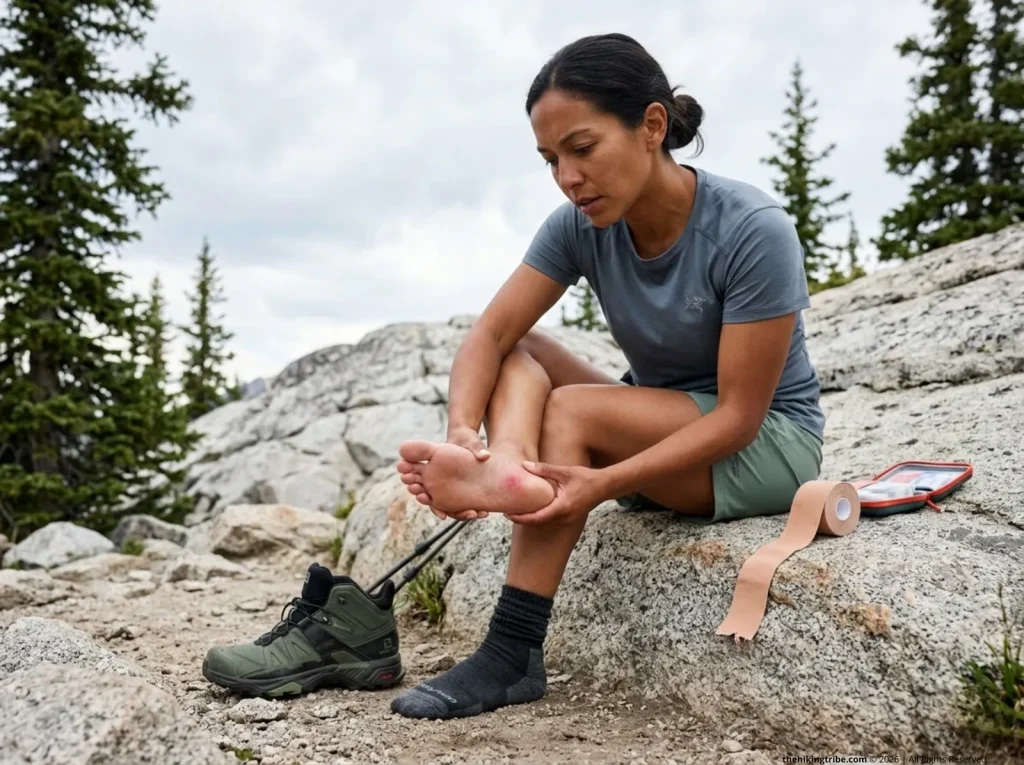
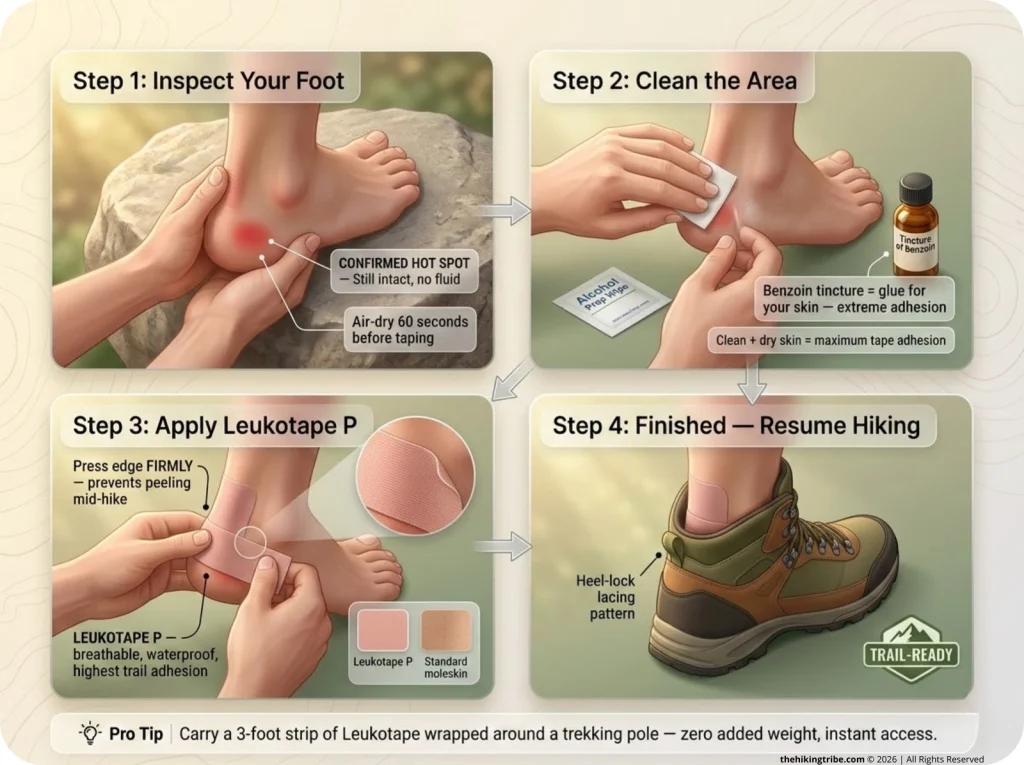
Remove your boot and sock completely. Look at the area — you’re checking for redness, slight puffiness, and warmth to the touch. If the skin is still flat and intact, you’re in the window of opportunity. Air-dry the foot for 60 seconds. Moisture trapped against the hot-spot accelerates the damage.
Step 2 — Clean and Protect the Area
If you carry alcohol wipes, clean the area first. Tape adhesion depends on dry, clean skin. Then apply Leukotape P directly over the hot spot — press the edges firmly to prevent peeling. Leukotape is breathable, stays put when wet, and has the highest adhesion of any trail-ready tape.
If you don’t have Leukotape, cut a donut pad from moleskin — the hole sits over the tender spot to reduce direct pressure while the surrounding ring absorbs friction. A hydrocolloid blister bandage works too if the hot spot has advanced.
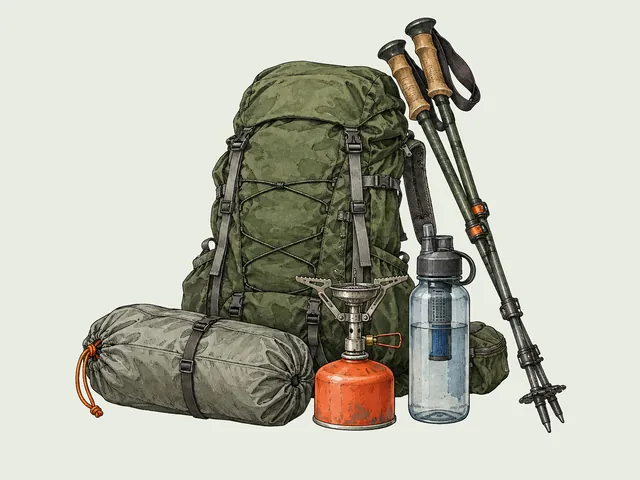
Pro tip: Carry a 3-foot strip of Leukotape P wrapped around a trekking pole. It weighs nothing and saves everything. It’s the only tape that stays on when your feet are soaked.
Step 3 — Reassess After 15 Minutes of Walking
Put the boot back on, lace it snugly using a heel lock lacing pattern (more on that below), and hike for 15 minutes. If warmth returns in the same spot, the root cause isn’t solved — it’s a fit issue or a moisture problem. Re-evaluate your lacing, swap socks, or add an ENGO patch inside the boot.
If the tape shifts or bunches up, peel it off and reapply. Bunched tape creates new friction points and makes things worse.
The Boot-Sock-Tape System That Prevents Hot Spots Before the Hike
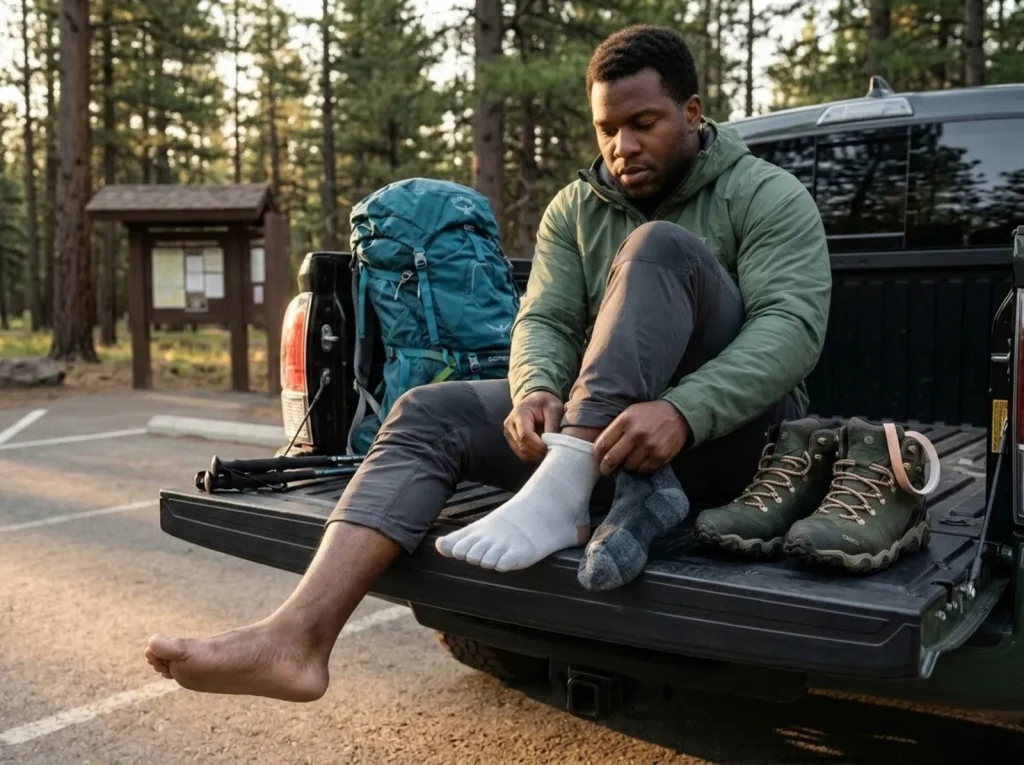
Boot Fit — The Foundation Nobody Gets Right
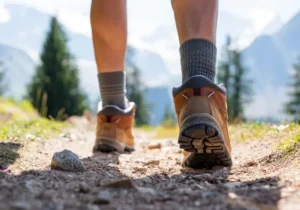
A boot that’s too tight creates pressure points. A boot that’s too loose allows heel slippage — the primary cause of heel blisters and a major contributor to black toenails on descents. Both generate hot spots.
Your feet swell 5–8% during a full day of hiking. Fit boots in the afternoon with the socks you’ll actually hike in. The thumb rule — one thumb width between your longest toe and the end of the boot — prevents toe blisters on long downhills. And boot break-in matters more than most hikers admit. Put at least 50 miles on new boots before any multi-day trip. New boots on a thru-hike is the number one blister mistake, and it’s totally avoidable.
The Double-Sock System vs. Single-Layer Merino
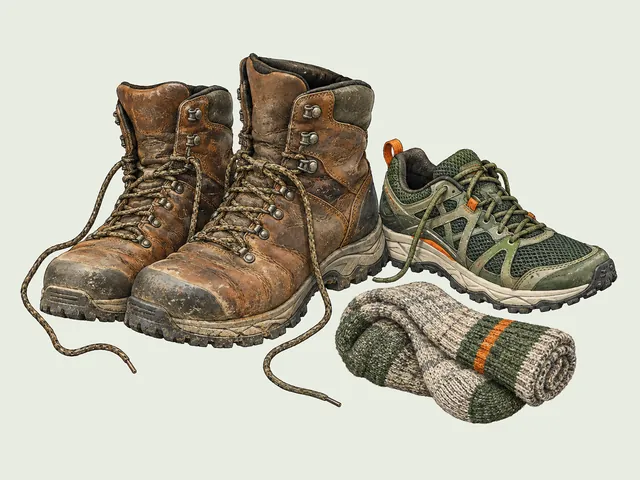
The double sock system puts a thin liner sock underneath a thicker wool hiking sock. Friction happens between the two sock layers instead of grinding against your skin. The liner absorbs the lateral shear force while your outer sock handles cushioning and moisture management.
A single-layer Darn Tough Merino sock wicks moisture well on its own, but it puts all friction at the skin-sock interface. It works when boot fit is precise and your feet don’t run hot. If you’re a chronic blister sufferer, default to the double-sock system until you’ve dialed in your fit — and if you want the data behind why, we broke it down in what 500 miles taught us about double-sock blister prevention.
Pre-Taping Known Trouble Spots
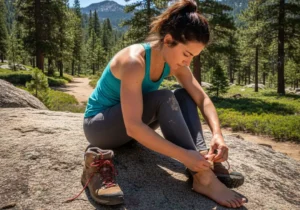
If you already know your heels, pinky toes, or ball-of-foot are vulnerable, pre-tape those areas BEFORE the hike. Not after pain starts. Apply Leukotape P over clean, dry skin. For extreme adhesion in wet conditions, paint on tincture of benzoin first — it turns your skin into glue.
There’s also a trick most hiking guides don’t mention. Applying 20% aluminum chloride hexahydrate antiperspirant to your feet the night before reduces skin hydration, which directly lowers blister risk. It’s backed by the Journal of the American Academy of Dermatology and it flat-out works. Combine that with applying tape to your known trouble spots, and you’ve handled both friction reduction and moisture management before you even hit the trail.
ENGO, Lacing, and the Gear Upgrades Most Hikers Miss
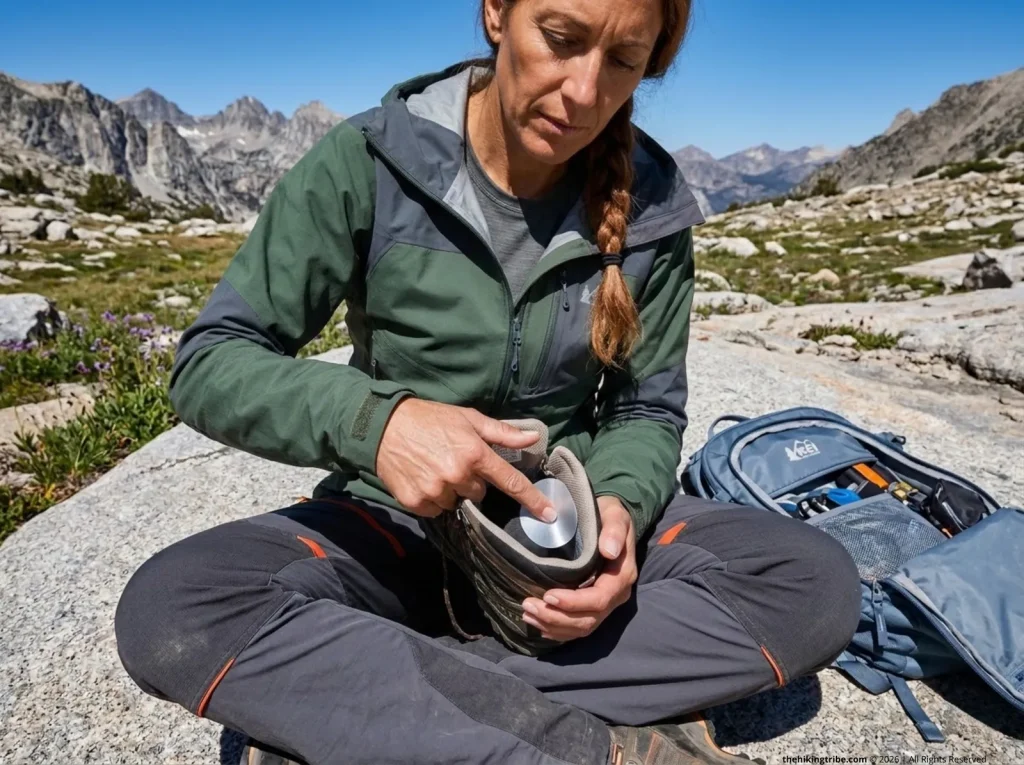
ENGO Patches — Attacking Friction at the Source
ENGO blister patches are made from PTFE — the same slick material as Teflon — and you stick them to the inside of your boot, not to your foot. They cut friction right where shear originates: at the shoe-sock interface. Unlike tape, which protects your skin after friction starts, ENGO prevents the blister-causing forces from building up in the first place.
They last up to 300 miles and report an 80% success rate across field reviews. Best placement: the heel cup, medial arch, and ball-of-foot area inside the boot. No competitor article explains the mechanism behind the science of fabric friction coefficients against skin, but understanding it is what separates a system from a guess.
Heel-Lock Lacing — The Single Most Underused Prevention Technique
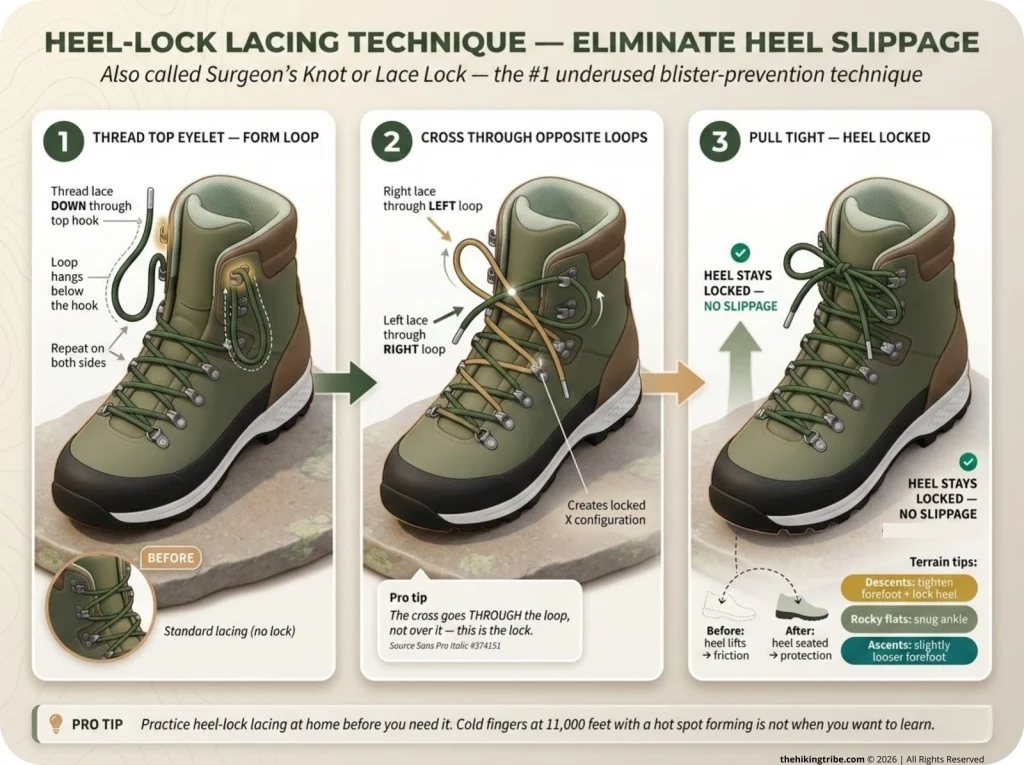
Also called the Surgeon’s Knot or Lace Lock, this creates a secure anchor at the ankle that eliminates heel slippage. Thread your lace through the top eyelet to create a loop on each side. Cross the laces through the opposite loops, then pull tight. The result is a heel that doesn’t move.
Different terrain demands different tension. Steep descents need a tighter forefoot and locked heel. Rocky flats need a looser forefoot with a snug ankle. If you haven’t tried this yet, our complete heel-lock lacing guide for downhill terrain walks through the technique step-by-step, with terrain-specific adjustments.
Pro tip: Practice heel-lock lacing at home before you need it on the trail. Fumbling with laces at 11,000 feet with cold fingers and a hot spot forming is not when you want to learn.
Custom Insoles and Tongue Shims for Stubborn Fit Problems
When boots are slightly too large, aftermarket custom insoles from Superfeet or a podiatrist fill the extra volume and improve arch support. For boots with thin tongues that create pressure on the instep, a tongue-depressor shim — a trick from the Backpacking Light forums — creates just enough gap to relieve the pinch.
Toe-props and donut pads separate toes to stop toe-on-toe blisters. They’re rarely mentioned, but if you’ve ever lost a toenail because your second toe was grinding against your big toe for 15 miles, you’ll wish someone had told you sooner.
Multi-Day Foot Care — The Nightly Routine Nobody Talks About
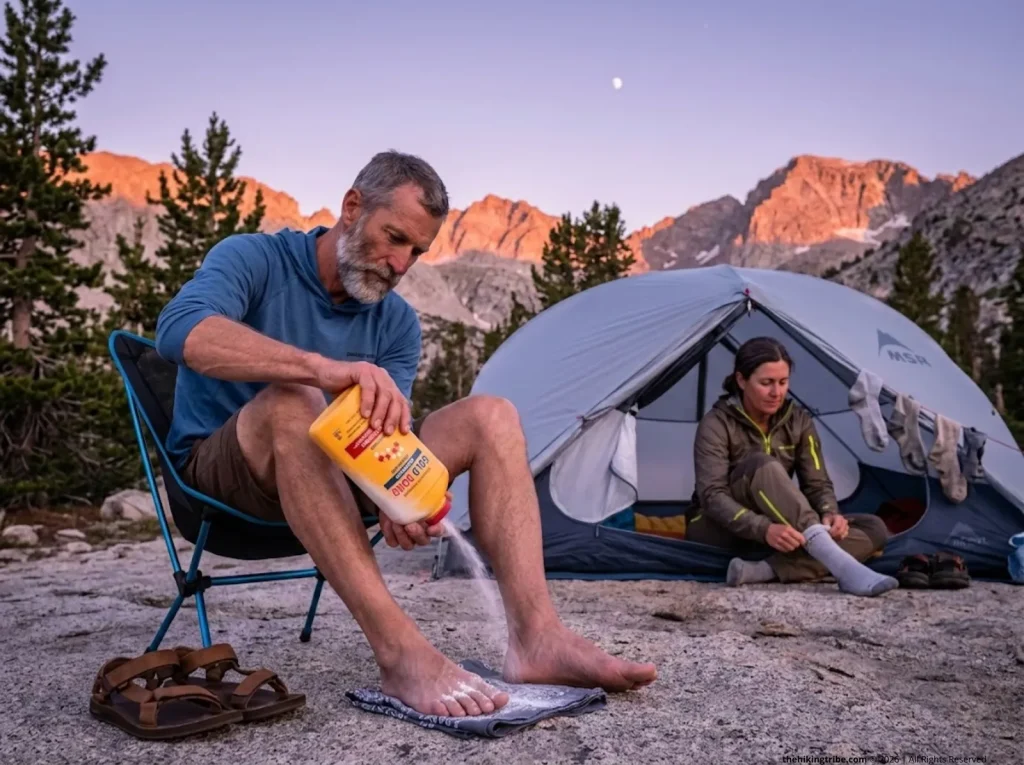
The Camp Foot Recovery Protocol
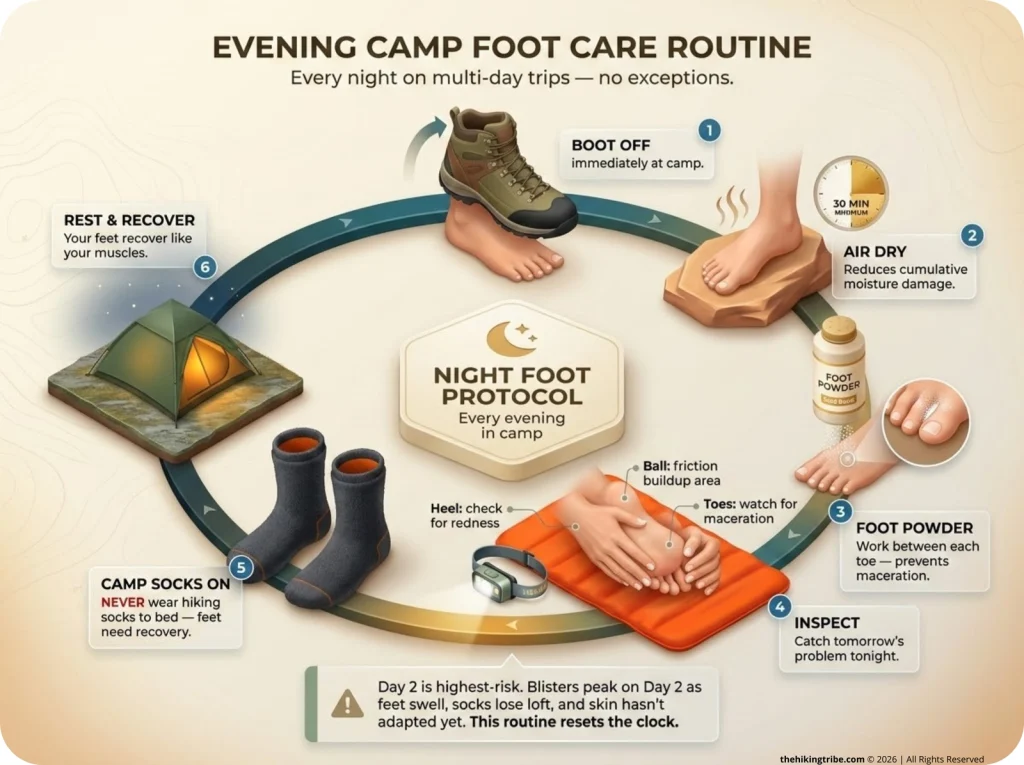
At camp, remove your boots and socks immediately. Let your feet air-dry for at least 30 minutes. Then dust them with foot powder — Gold Bond or Zeasorb — working it between each toe. Switch into clean, dry puffy socks for camp. Never wear your hiking socks around the tent. Your feet need recovery time just like your muscles.
Inspect every inch by sight and touch. Catch micro-hot spots now, because Day 2 is the highest-risk day and your feet are already carrying the accumulated stress of Day 1.
Sock Rotation Strategy for 3+ Day Trips
Carry a minimum of two pairs of hiking socks plus one camp pair. Rotate daily. Hang used socks on the outside of your pack during morning miles — sun and airflow dry them faster than you’d expect. By lunch, yesterday’s socks are ready for tomorrow. If you want your Merino wool to last and perform, read up on how to wash and dry Merino socks on trail without destroying them.
Wet socks dramatically increase blister risk. Even Merino, which retains warmth when damp, still needs to be dry to prevent maceration — that soft, white, wrinkled skin you see after hours in wet boots.
Wet Crossing and Rain Day Adjustments
For planned wet crossings, swap to Sealskinz vapor-barrier socks or drainage shoes before you step into the water. After crossing, stop and strip — dry your feet, apply fresh tape to any vulnerable spots, and continue.
In persistent rain, change socks every 3–4 hours if your pack allows it. Waterproof socks sound like the perfect solution, but they trap sweat inside, which creates the same blister-creating moisture problem you’re trying to avoid. They have their place in cold, wet conditions — not as an all-day blister prevention tool.
When a Hot Spot Wins — Emergency Trail Fixes With What You’ve Got
The Duct Tape and Bandana Field Fix
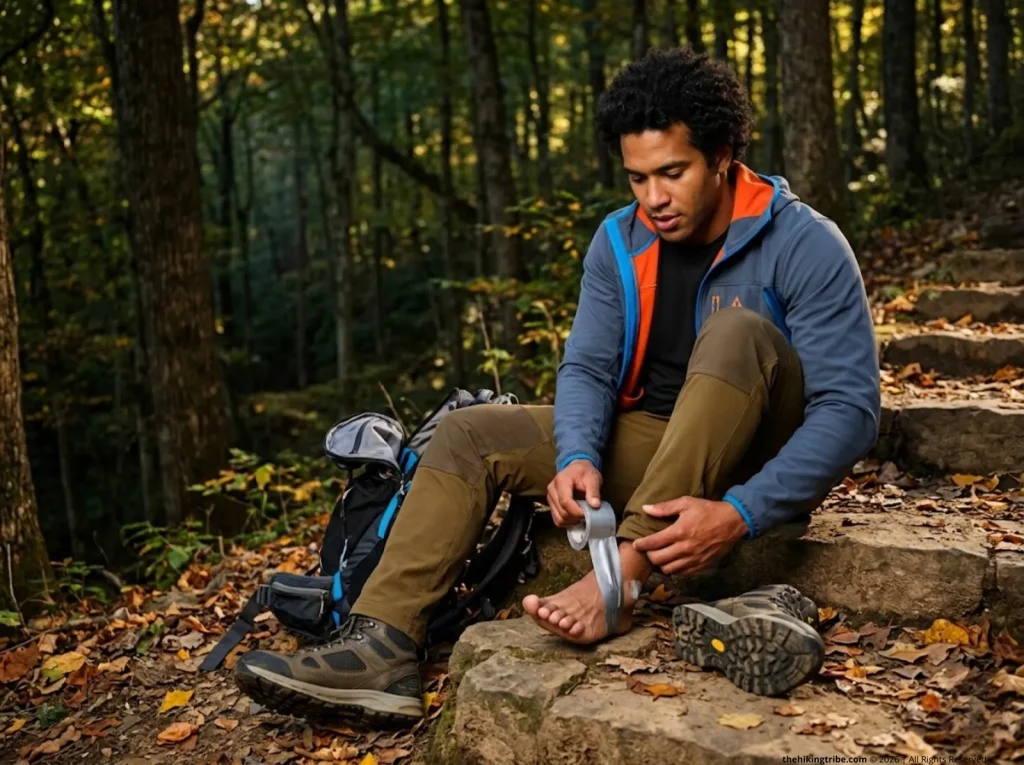
No blister kit? No problem. Cut a piece of duct tape slightly larger than the hot spot, round the corners to prevent peeling, and apply to clean, dry skin. It won’t breathe like Leukotape, but it holds. A folded bandana placed inside the boot over the sore spot reduces direct pressure in a pinch. Athletic tape from a general first-aid kit works temporarily but loses adhesion the minute your feet get wet.
When to Keep Hiking and When to Cut the Day Short
Hot spot caught early with tape applied? Safe to continue with a 15-minute recheck. Blister already formed with visible fluid? Cover it with a padded blister bandage and reduce your mileage for the day. Do not drain it unless the blister is large enough to affect your gait.
Watch for signs of infection — redness spreading beyond the blister margins, pus, or fever. At that point, this is no longer a foot care issue. Head for the trailhead and get proper medical attention. Our wilderness first aid field protocol covers evacuation decisions in detail.
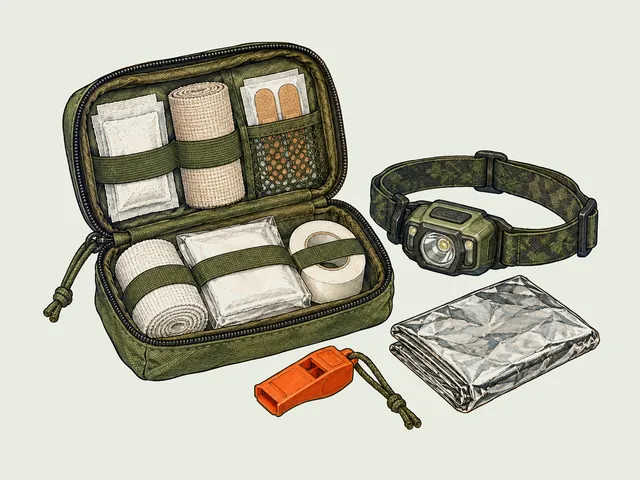
Pro tip: Add a Leukotape strip, two alcohol wipes, and a pair of blister bandages to a Ziploc in your hip-belt pocket. That’s your 2-ounce blister kit. Keep it where you can reach it in 10 seconds, not buried at the bottom of your pack.
Conclusion
Three things separate hikers who finish multi-day trips in good shape from those limping into camp.
First, a hot spot is a 10-minute warning. If you feel warmth, stop. Every step past that point is damage you could have prevented with a 3-minute tape job.
Second, blister prevention is a system, not a single product. Proper boot fit, the right liner sock and wool hiking sock combination, pre-taping known trouble spots, and the right heel-lock lacing pattern all work together. Skip one link and the chain breaks.
Third, multi-day trips demand nightly foot care. The hikers who finish without blisters aren’t lucky — they built a nightly sock-rotation protocol and stuck with it every evening in camp.
On your next hike, wrap a 3-foot strip of Leukotape around a trekking pole and practice the heel lock before you leave the trailhead. The first time you feel that warm skin and catch it in time, you’ll understand why this protocol exists.
FAQ
Do hot spots always become blisters?
Not if you act fast. A hot spot is reversible — it’s your body’s early warning system. The moment you feel localized warmth, stop and apply tape or moleskin. If you keep walking, the upper skin layer separates and fluid fills the gap, forming a blister that can’t be undone.
How do you treat a hot spot on your foot mid-hike?
Stop, pull off your boot and sock, air-dry the foot for 60 seconds, then apply Leukotape P directly over the reddened area. Smooth the edges firmly. Resume hiking and recheck at 15 minutes. If the warmth returns, the problem is boot fit or moisture, not just friction.
What causes hot spots to form while hiking?
Three factors combine: friction at the boot-sock-skin interface, moisture from sweat or wet crossings that softens the skin, and poor fit that allows heel slippage or toe jamming. Shear force — the lateral stretching between skin layers — is the deeper mechanism. Reduce any one factor and your risk drops significantly.
Are liner socks or double-sock systems better for preventing blisters?
It depends on your boot fit. The double sock system moves friction between the liner and outer sock instead of against your skin — ideal for slightly loose boots or chronic blister sufferers. A single-layer Merino works when performance fit is precise. Test both on day hikes before committing for a multi-day trip.
Can I use BodyGlide or lubricant instead of tape for hot spots?
BodyGlide reduces surface friction temporarily, but you’ll need to reapply every 2–3 hours. It doesn’t address shear force. Tape gives you persistent, reliable blister protection. Use lubricant as a supplement — between toes or in low-friction zones — but rely on tape and proper lacing for heels and high friction zones.
I've spent more than a decade researching hiking gear and trail technique. I read the specs, the forum threads and the long-term reviews, and every pick here comes with what it gets wrong.
End of the trail
You read every mile of this one. Here's where the trail goes next.