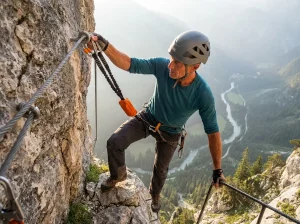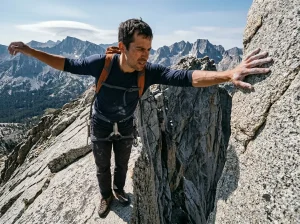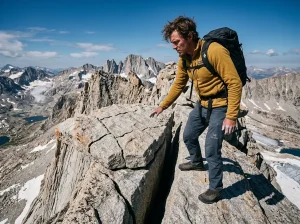


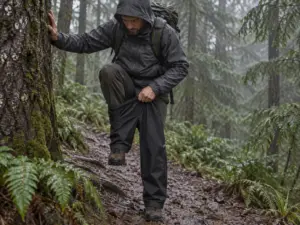

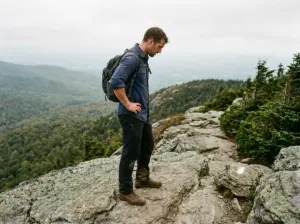
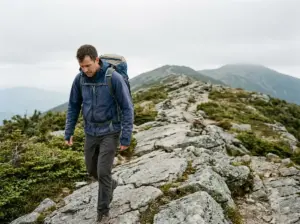
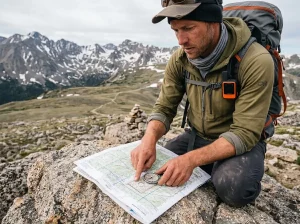



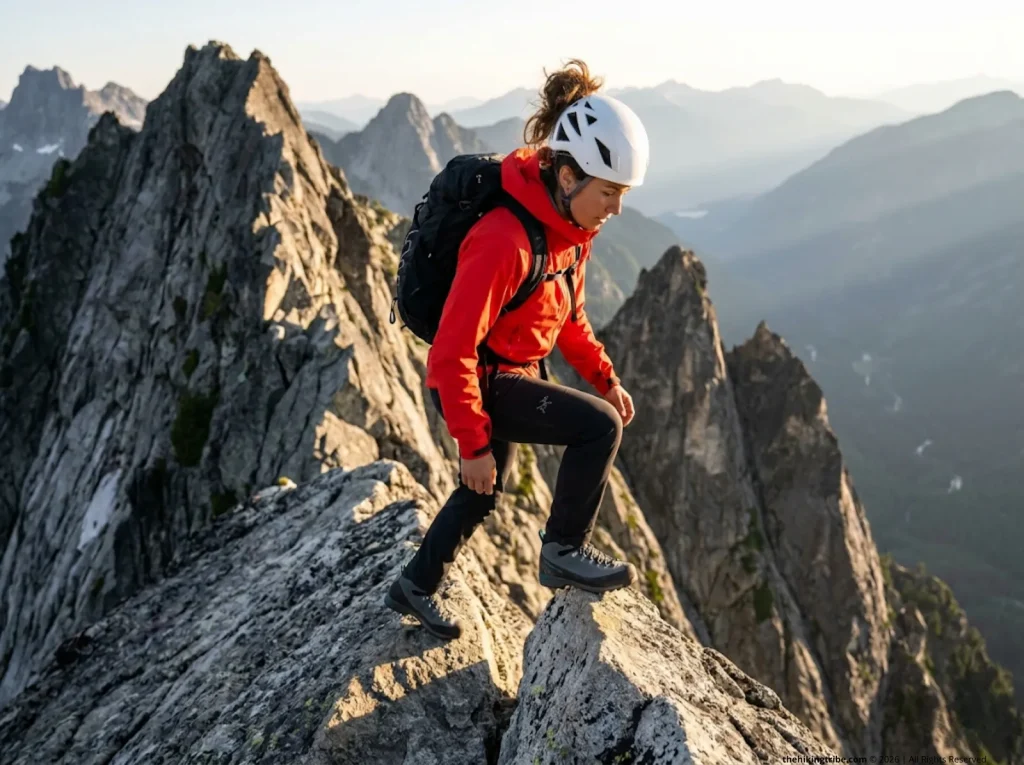
My left leg was vibrating — not trembling, vibrating — against a granite hold on a Class 3 arete, 600 feet of air below my right heel. I’d done the step-ups, the squats, the lunges. I was “fit.” And yet my neuromuscular system was hitting a wall that no treadmill had ever prepared me for. That violent, humiliating shaking is called Elvis Leg. Scramblers know it. Trail hikers don’t train for it. And it’s the gap that sends otherwise capable people retreating from ridges they could have sent.
This article breaks down the five exercises that standard hiking training programs skip — movements that bridge the gap between trail fit and technically competent on Class 2–4 terrain. You’ll understand what to do, why it works, and how to plug it into a 7-Day Field Prep before your next objective.
| Mountain Training Exercises | |||
|---|---|---|---|
| Exercise | Sets × Reps | Primary Mountain Benefit | Equipment |
| Multi-Planar Ankle Stabilization | 3 × 15 each direction | Prevents rollover on scree and talus | Theraband |
| Eccentric Step-Downs (Heel-Down) | 3 × 8 per leg | Builds quad braking for Class 3 descents | Step or box |
| Foot Core Drills | 3 × 20 per foot | Edging and smearing precision in stiff boots | Towel, marbles |
| Lock-Off Isometrics (3-6-9 Ladder) | 3-4 ladders | Holds position at decision-point cruxes | Pull-up bar |
| Anti-Rotational Stability (Suitcase Carry + Pallof Press) | 3 rounds per side | Neutralizes pack sway on ridge traverses | Kettlebell, resistance band |
⚡ Quick Answer: Standard hiking fitness builds concentric, sagittal-plane strength — useful on steady trails, insufficient on technical terrain. The five exercises here target the gaps: lateral ankle stabilization, eccentric braking capacity, foot-core strength for edging, isometric lock-off endurance, and anti-rotational core stability. Train these for 4–6 weeks before any Class 3–4 objective, and run the 7-Day Field Prep in your mountain boots and loaded pack the week before you go.
Why Standard Hiking Fitness Fails on Technical Terrain
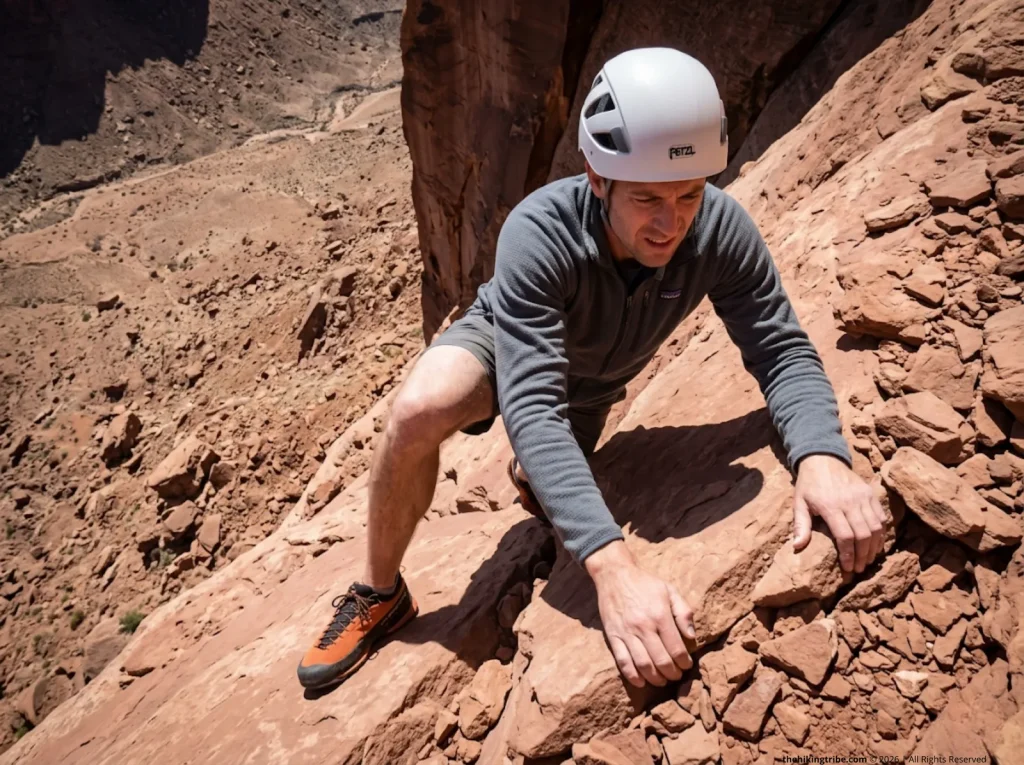
Here is where almost every hiker goes wrong: they train for the approach and completely ignore the climb. Step-ups, lunges, squats — all move in one direction. Forward. Hiking, at its core, is a sagittal-plane sport. Scrambling is not.
If you want context on understanding where Class 3 terrain ends and genuine climbing begins, read that first. If you already know what a Class 3 arete looks like, you know the problem. The terrain demands lateral weight shifts, diagonal knee-to-shoulder moves, and one foot braced sideways against a slab while your pack tries to peel you off the wall. Your body has no rehearsed motor program for any of that — because you never trained it.
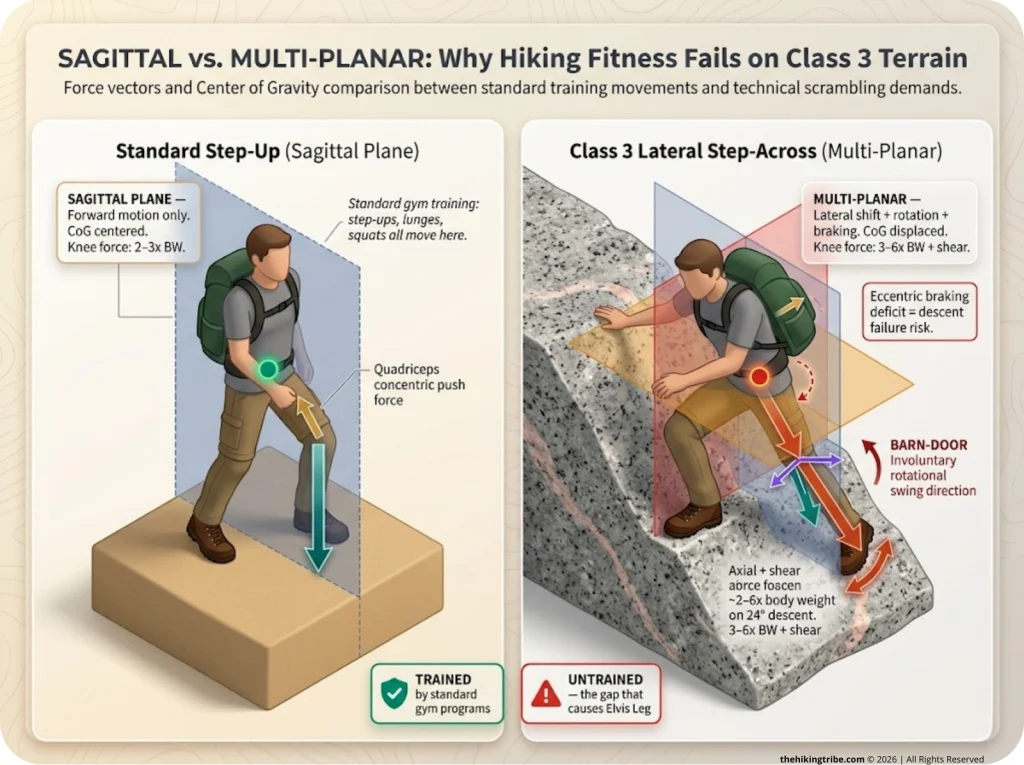
The numbers aren’t abstract: knee-joint forces on a 24° descent reach 3–6 times body weight, according to clinical research on eccentric loading and joint stress. At an incline, it’s 2–3 times. The descent is where the real work happens. And maximal eccentric strength is estimated to be 40% higher than concentric — which means hikers who only train going up are leaving a massive braking deficit in place every time they start down a technical ridge.
The Sagittal Plane Trap — How Hiking Training Leaves You Exposed
Standard gym programs for hikers hit the same movements every time: step-ups, lunges, squats. All sagittal. All predictable. Scrambling throws at you what your gym never did: rotational braking, step-across moves, diagonal reach-and-push patterns. The body has no stored motor program for those movements because it has never practiced them.
The result is barn-dooring — that involuntary rotational swing away from the rock when your center of gravity drifts outside your base of support. You’ve felt it. One foot high, hand reaching for the next hold, and suddenly you’re rotating outward like a door on a hinge. Training multi-planar stability requires lateral lunges, transverse-plane hip circles, and single-leg balance on angled surfaces. None of that appears in standard hike prep plans.
Eccentric Deficit — The Invisible Injury Risk
Eccentric contractions are the braking mechanism on every descent. The quads fire long, lengthening under load to slow you down. Most gym programs load the concentric phase — the push up — and release the weight fast on the way down. That’s the opposite of what mountain terrain demands.
Pro tip: Add a three-second lowering phase to every squat and step-up in your program. Do it now, before you’re on a Class 3 ridge discovering that your braking system doesn’t exist. Eccentric resistance training improves leg strength 16–28% relative to control groups. That delta is the difference between controlled descents and sideways shuffling.
The Pack-Shift Problem — Center of Gravity
When your pack reaches 10% of your body weight, measurable postural changes kick in. The system center of gravity shifts backward and upward, which means your anterior trunk muscles have to work continuously to keep you from tipping off the face. Every lateral step on technical terrain compounds this — the pack becomes a lever working against you.
This isn’t a gear problem. It’s a training problem. Hikers who never carry weight during strength training have never adapted to managing a shifted center of gravity under load. On a loaded Class 2–4 traverse, that adaptation gap shows up fast.
Exercise 1 — Multi-Planar Ankle Stabilization
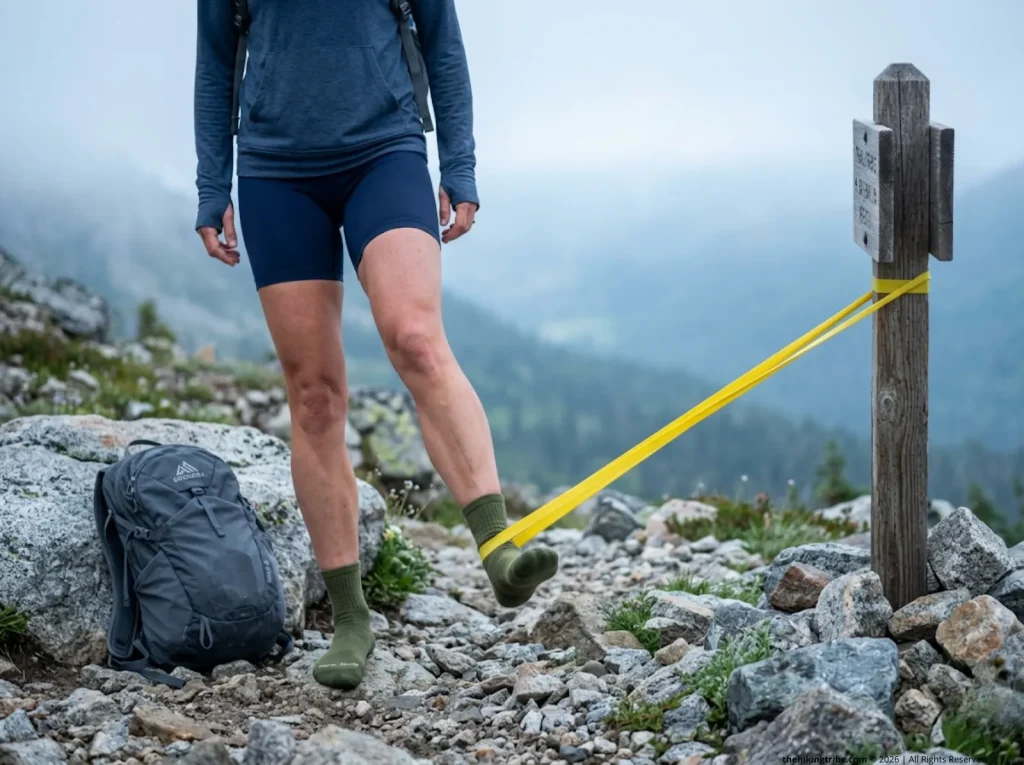
Most scramblers think grip strength wins on rock. It doesn’t. The ankle loses first — and when it goes, everything else follows.
The ankle’s primary lateral stabilizers are the Peroneus Longus and Brevis for eversion and the Tibialis Posterior for inversion. When you edge on the inside of a boot on micro-features, evertors must fire hard to prevent arch collapse. On Class 2 scree, the ankle resists unpredictable lateral rollover forces on every single step. Standard calf raises prepare nothing for this — they work only in one plane.
I started Theraband eversion work after my second rolled ankle on talus. After six weeks, I stopped micro-bracing on every step. The ankle just held. It’s the single exercise I give every client who’s transitioning to Class 3 terrain.
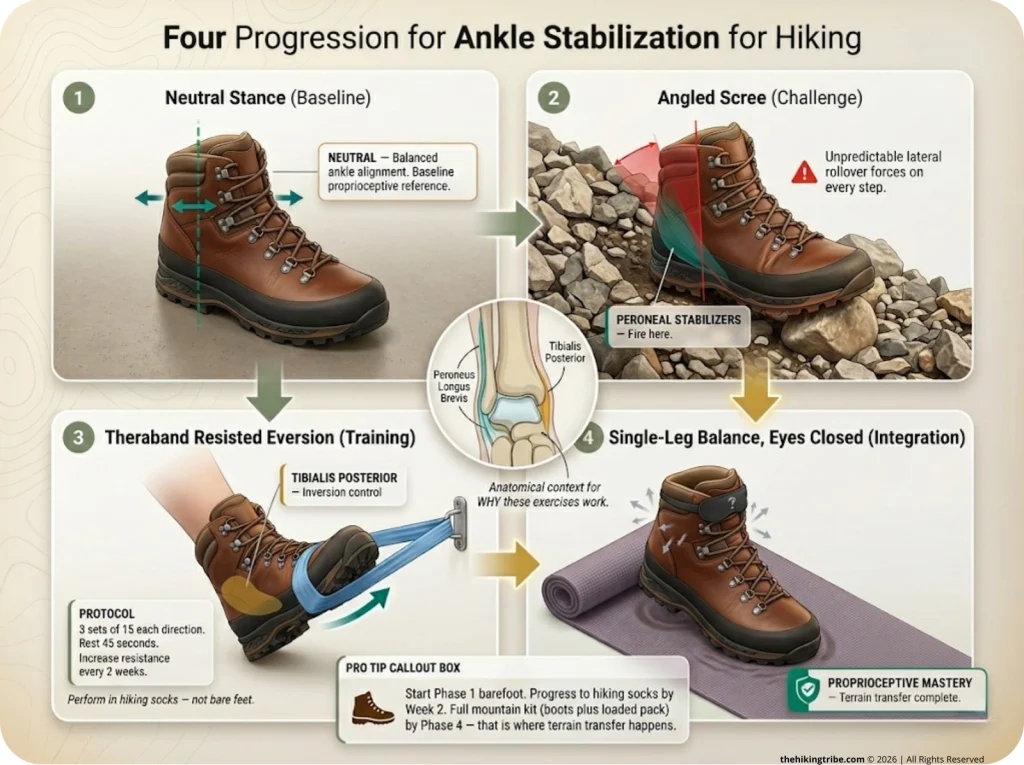
The Theraband protocol is straightforward: loop the band around your foot, anchor it laterally for resisted inversion, medially for resisted eversion. Three sets of 15 reps each direction. Rest 45 seconds between sets. Increase band resistance every two weeks. Perform in hiking socks — not bare feet — to simulate the reduced proprioceptive feedback of wearing a boot.
If you have a history of ankle sprains, pair this with a taping protocol for ankle sprain prevention on unstable ground while the strengthening work catches up.
For the three points of contact rule for climbing, a stable ankle isn’t optional — it’s what allows one limb to move while three hold position.
Single-Leg Balance Progressions — Training the Brain, Not Just the Muscle
These drills train the neuromuscular system, not just the muscle belly. That distinction matters.
Phase 1 is eyes open on flat ground, 30-second holds per leg. Phase 2 takes away vision — eyes closed, flat ground. Phase 3 moves to an angled surface (a folded yoga mat works). Phase 4 adds your full mountain kit: heavy boots and a loaded pack. That last step is where the terrain transfer happens. These small lateral stabilizers fatigue first on technical terrain, and once center of pressure excursions start increasing as they tire, Elvis Leg isn’t far behind.
Exercise 2 — Eccentric Step-Downs (The Downhill Braking Engine)
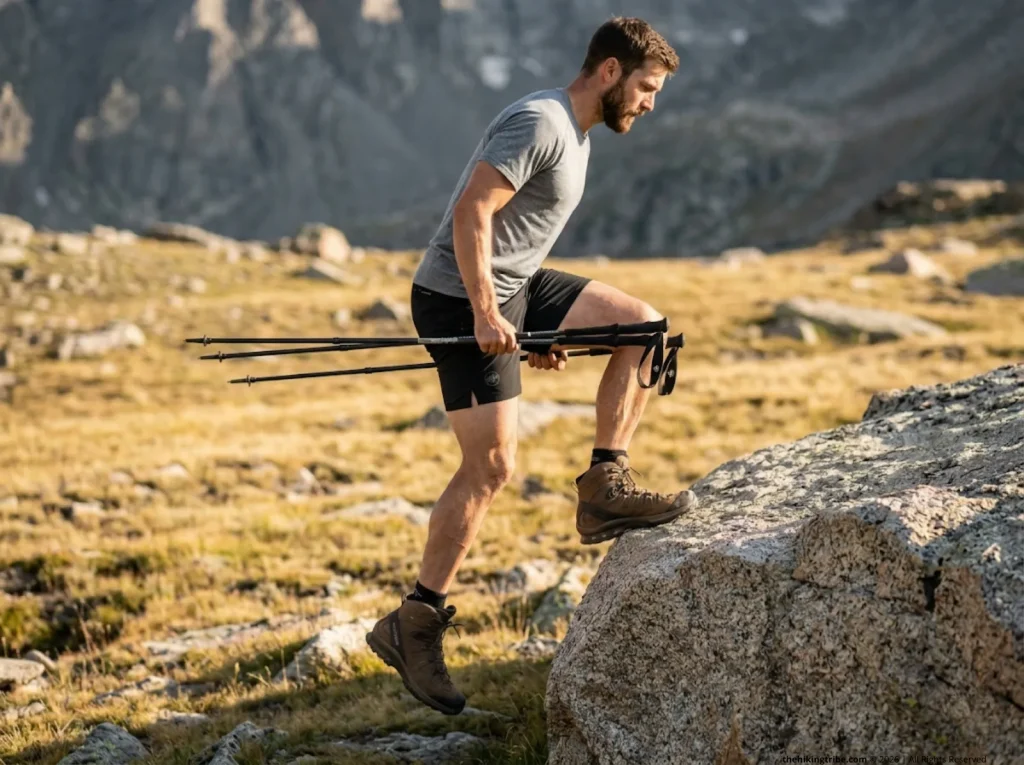
Every hiker who’s had their quads lock up on a long descent has found their eccentric ceiling. Here’s what no one tells you: you didn’t find it because you were weak. You found it because you never trained that specific capacity.
Knee joint compression on a 24° descent reaches up to 6.0 times body weight. ACL shear force reaches up to 3.0 times higher than level ground. That’s not a gym problem — it’s a real problem on long Class 3 descents. And per eccentric vs. concentric resistance training for lower limb strength, eccentric-specific training produces 16–28% strength gains. Hikers who skip this have a chronically undertrained braking system.
The first time I completed a 3,000-foot Class 3 descent with trained eccentrics, I felt it immediately. No quad-burn lockdown. No walking sideways down the switchbacks. Just controlled, rhythmic lowering. That’s what this exercise builds.
The Heel-Down Exercise — Terrain-Specific Protocol
The Heel-Down exercise is the most terrain-specific eccentric builder available without a mountain. Stand on a step or box 6–12 inches high. Shift your weight to one foot. The other leg hangs free.
Slowly lower the free heel toward the floor over 3–5 seconds. Don’t drop — control the descent. The heel barely touches the floor. Don’t sit into the hip; keep quad tension throughout. Then push back up through the standing heel. Do not rush this phase — the eccentric is the training stimulus, not the press back up.
Sets: 3 × 8 per leg. Progress by raising the step height for more range of motion, or add a loaded pack. At weeks 3–4, run the protocol in your mountain boots to include boot-flex resistance in the training load.
For readers who already use poles: trekking poles reduce ground reaction forces and knee flexion moments by 12–25%, which helps. But poles can’t substitute for the intrinsic eccentric capacity this exercise builds. Read the biomechanics of trekking poles on technical descents if you want to use both strategies together.
Eccentric Split Squats — Adding Lateral Demand
A split squat with a 4-second lowering phase combines quad eccentrics with single-leg balance. The Bulgarian variation adds hip-flexor mobility demand — necessary for high-steps on Class 3 terrain. Run 3 × 10 per leg at a 3-second lowering tempo.
Pro tip: Perform the eccentric split squat in your approach shoes at least once per week. The flatter sole versus a running shoe recruits different foot-arch musculature and is closer to the actual movement pattern on rock.
Reading Descent Terrain Before Committing Weight
Physical training without terrain-reading skills is incomplete. Before any long Class 3 descent, assess slope angle, surface stability (solid vs. chossy), and exposure consequence. Strategic rest intervals of 30–60 seconds mid-descent allow muscle re-perfusion, slowing the rate of 3CC fatigue threshold crossings. Down-climbing facing the rock is correct technique on Class 4 terrain. Untrained scramblers default to facing out — which compounds fatigue and risk simultaneously.
Exercise 3 — Digital Flexion and Foot Core (“Toe-Off” Power)
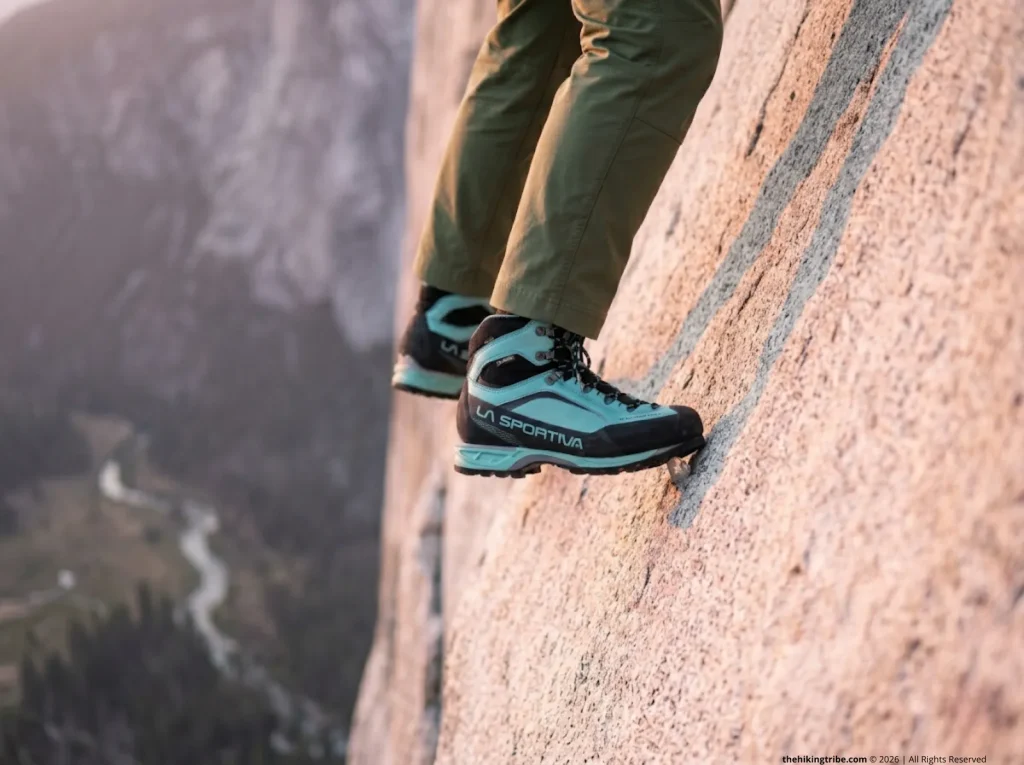
This is the one nobody talks about. REI doesn’t cover it. Backpacker Magazine doesn’t cover it. And it may be the biggest physical gap between a hiker and a scrambler.
In technical movement, the big toe is the primary anchor. Whether you’re edging on a narrow ledge or smearing on a granite slab, the ability to scrunch the toes and create internal tension in the boot is what prevents the slip. According to official NPS scrambling safety guidelines, three points of contact is the gold standard — but that rule means nothing if two of those points are passive.
Here’s the problem: mountaineering boots with stiff midsoles cause passive toes. The foot outsources structure to the boot instead of generating force itself. On marginal holds, passive toes slide. I spent a full month on towel curls and marble pick-ups before a Class 4 objective. The grip difference on granite was immediate — the boot stopped sliding on edges I’d previously written off as too small.
For a deeper look at matching boot midsole stiffness to scrambling terrain, that article helps contextualize which footwear decisions affect this training most.
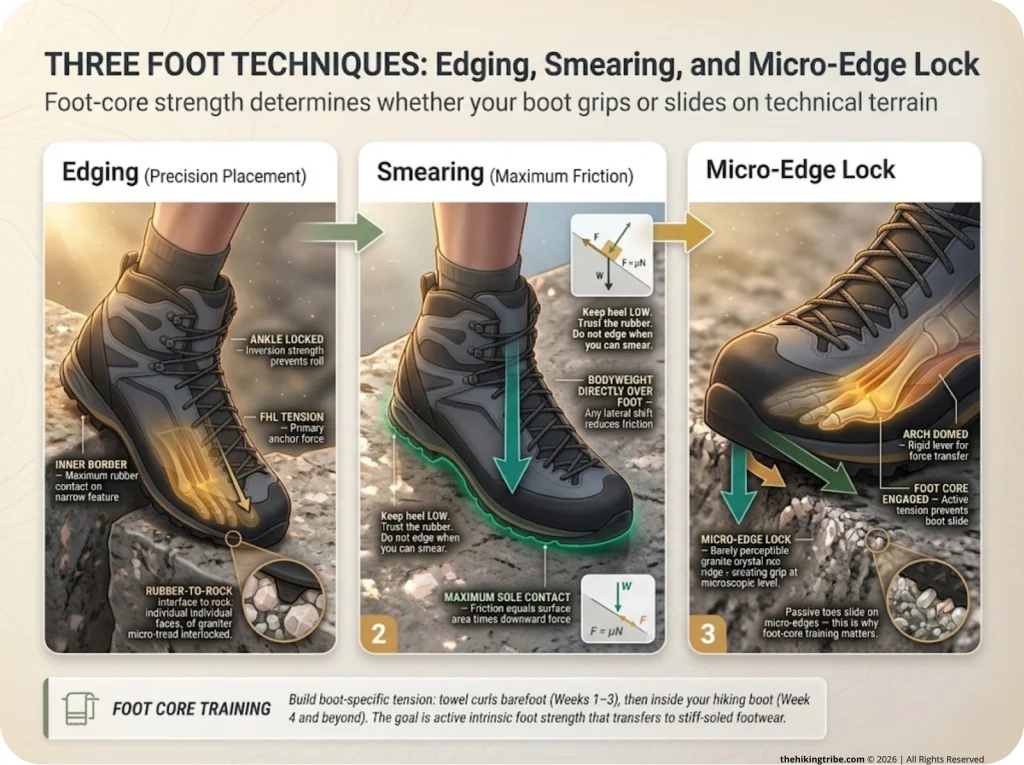
The Foot Core Protocol — Towel Curls, Marble Pick-Ups, and Short-Foot Drill
Do these barefoot, daily:
Towel Curl: Place a hand towel on the floor. Crunch it toward you using only your toes. 3 × 20 reps per foot. This builds the Flexor Digitorum Brevis and Lumbricals — the muscles that create active tension inside a stiff boot.
Marble Pick-Up: Place 10 marbles on the floor, pick each one up with your toes and drop into a cup. Builds individual toe dexterity and intrinsic plantar flexor strength.
Short-Foot Drill: Seated, press the ball of the foot down and shorten the foot by doming the arch — without curling the toes. Activates the Abductor Hallucis. Keeps the plantar fascia healthy over long seasons.
At week 4, transition to performing towel curls inside a hiking boot. The goal is building boot-specific internal tension.
Pro tip: Do the Short-Foot Drill standing, not seated, in week 3. Standing forces the arch to support body weight simultaneously — closer to the actual load on a scramble.
Edging, Smearing, and Wedging — What the Foot Is Actually Doing
Edging requires the stiff inner border of the boot to sit on a small ledge while the foot creates internal tension to prevent rocking. High Flexor Hallucis Longus tension is the mechanism.
Smearing uses the full sole against blank rock. Keep the heel low to maximize rubber contact, bodyweight directly over the foot. Wedging jams the boot into a crack — it requires torsional rigidity against the crack walls. Ankle inversion strength is what creates that rigidity.
In softer boots, the foot naturally supinates and pronates more freely. Foot-core strength keeps those movements controlled under load rather than collapsing. The video below shows all three techniques in action:
Exercise 4 — Lock-Off Isometrics (Preventing Decision-Point Fatigue)
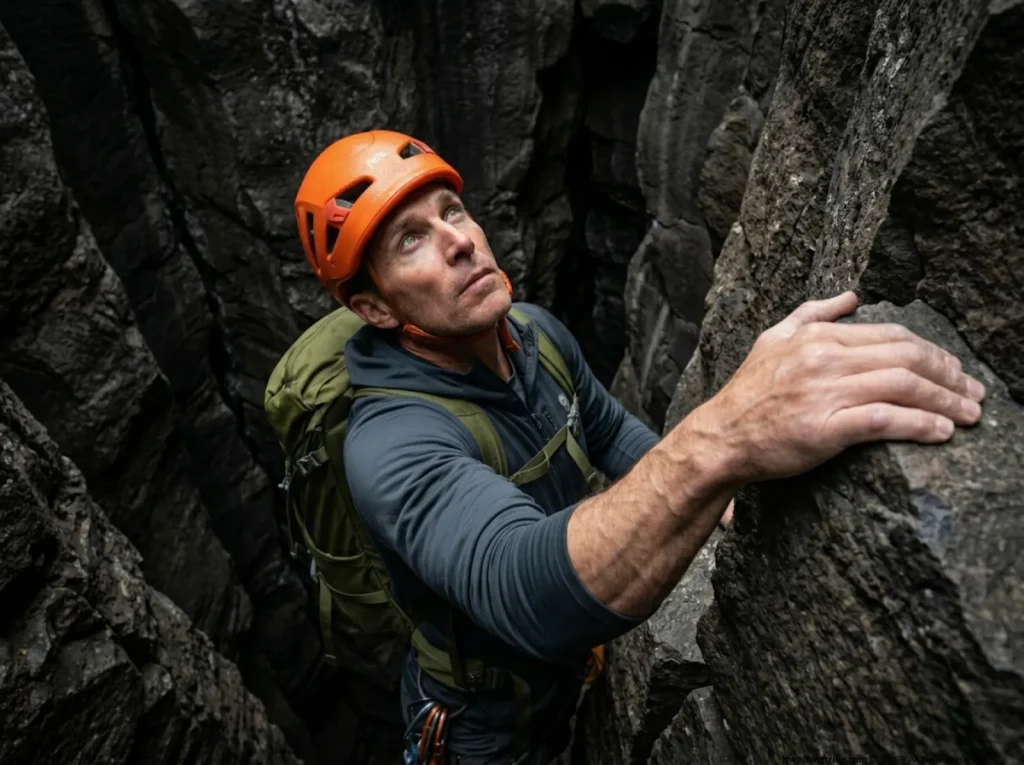
Class 3–4 scrambling makes you freeze. One arm bent at 90°, one foot high, hand searching for the next hold. That pause — which can last 3 to 10 seconds — is a sustained isometric contraction. And it’s where most untrained scramblers fail.
The 3-Compartment Fatigue Model explains what happens in your muscle during a sustained isometric hold: blood flow to active fibers reduces. Active fibers become fatigued. If the recruitment of resting fibers can’t keep pace, the muscle fails — involuntary tremors follow. That’s Elvis Leg. It’s not a mental weakness. It’s a threshold you can train.
According to the three-compartment muscle fatigue model for sustained isometric tasks, this threshold is trainable and specific to position and angle. Which means the gym work has to match the terrain angle — 90° arm-bend, not straight-arm dead hangs.
As Steve Bechtel, founder of Climb Strong, put it: “People are very explosive… but they can’t hold those hard static positions… where you have to lock off and try to get your next hold in.”
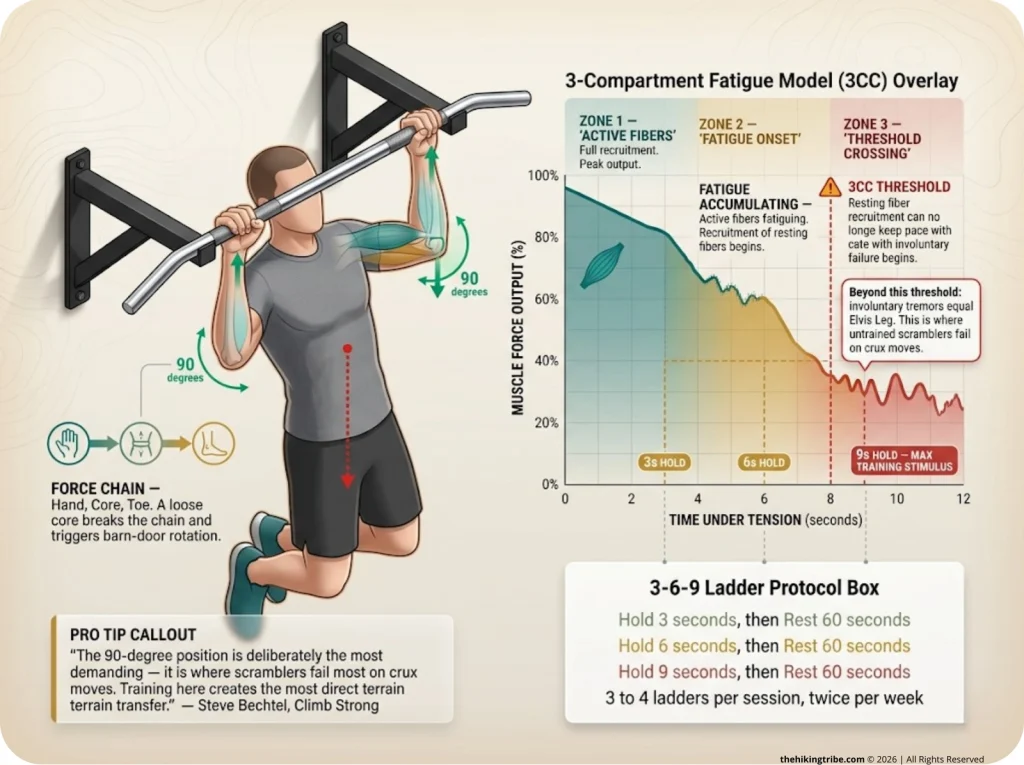
Steve Bechtel’s 3-6-9 Ladder Protocol
Equipment: any fixed bar at varying heights — a chin-up bar, a climbing hold mounted to a door frame, or a solid tree branch at trail level.
Hang at a 90° arm-bend (mid-lock-off position). Hold for 3 seconds. Release. Rest 60 seconds. Repeat for 6 seconds. Rest. Repeat for 9 seconds. That’s one ladder. Complete 3–4 ladders per session, twice per week.
The 90° angle is deliberately the most demanding position. It’s where scramblers most often fail on a crux. Training specifically there creates the most direct terrain transfer.
At week 4, add a 10-lb vest to increase load on the same time-under-tension protocol.
After the 3-6-9 Ladder, use testing rock stability before committing weight to a hold as your next piece: training the hold capacity is only half the equation. Knowing which holds are worth holding is the other.
The Grip-to-Leg Connection — Core Tension as Force Transfer
Scrambling is not upper body or lower body. It’s a kinetic chain. Force transfers from a handhold, through a braced core, to a toe-edge.
A loose core during a lock-off sags the torso, rotating the center of gravity away from the rock — triggering barn-dooring. Think of your abs as a zip-tie between your hand and your foot. If the zip-tie is loose, the chain fails regardless of how strong your arms or legs are separately.
The Pallof Press and Side Plank train anti-rotational core stiffness — the ability to resist the torque that barn-dooring generates. Run the Pallof Press immediately after the 3-6-9 Ladder in the same session. Training the core in a fatigued state matches terrain conditions.
Exercise 5 — Anti-Rotational Stability (The Pack-Sway Matrix)

A loaded pack on a lateral ridge move isn’t just weight. It’s a pendulum. When you side-step across exposed terrain, the pack’s center shifts upward and backward, creating rotational torque that can pull you off the rock. Most hikers have felt it with a loose or borrowed pack — that sickening lateral pull on a step-across that suddenly feels much more consequential than it should.
Laboratory research on backpack design and gait kinematics confirms that poorly fitted packs high on the torso create maximum destabilizing torque on lateral moves. You can learn more about reducing that torque at the gear level by reading how to distribute pack weight to optimize your Center of Gravity. But the muscular side of the equation requires training, not just pack-fitting.
Most core training is linear — sit-ups, planks, crunches. Scrambling requires anti-rotational strength — resisting lateral torque, not generating forward force. Those are different motor patterns.
Pro tip: At week 4, perform the Pallof Press while standing on one leg. This combines anti-rotation with single-leg stability — the exact combination demanded during a Class 3 step-across move.
The Suitcase Carry — Load-Shift Simulation
Grab a kettlebell (16–24kg for most hikers) or a loaded daypack. Hold it in one hand at your side. Walk 40 meters in a straight line. Do not let the torso lean toward the weighted side. Your obliques and Quadratus Lumborum have to fire continuously to maintain a plumb vertical trunk.
Rest 60 seconds at each end. Three rounds per side. At week 3, move to a grassy slope to introduce lateral ground reaction force asymmetry — closer to an actual scrambling terrain condition.
The Pallof Press — Anti-Rotation for Ridge Traverses
Anchor a resistance band at chest height to a door hinge, pillar, or tree. Stand perpendicular to the anchor. Both hands grip the band at your chest. Press your hands directly forward. The band attempts to rotate your torso toward the anchor. Resist. Hold 2 seconds at full extension. Return.
Three sets of 10 per side. The band tension should make the extended position genuinely difficult to hold without shifting your feet. Progress by stepping farther from the anchor rather than adding reps — the stimulus is rotational resistance, not endurance volume.
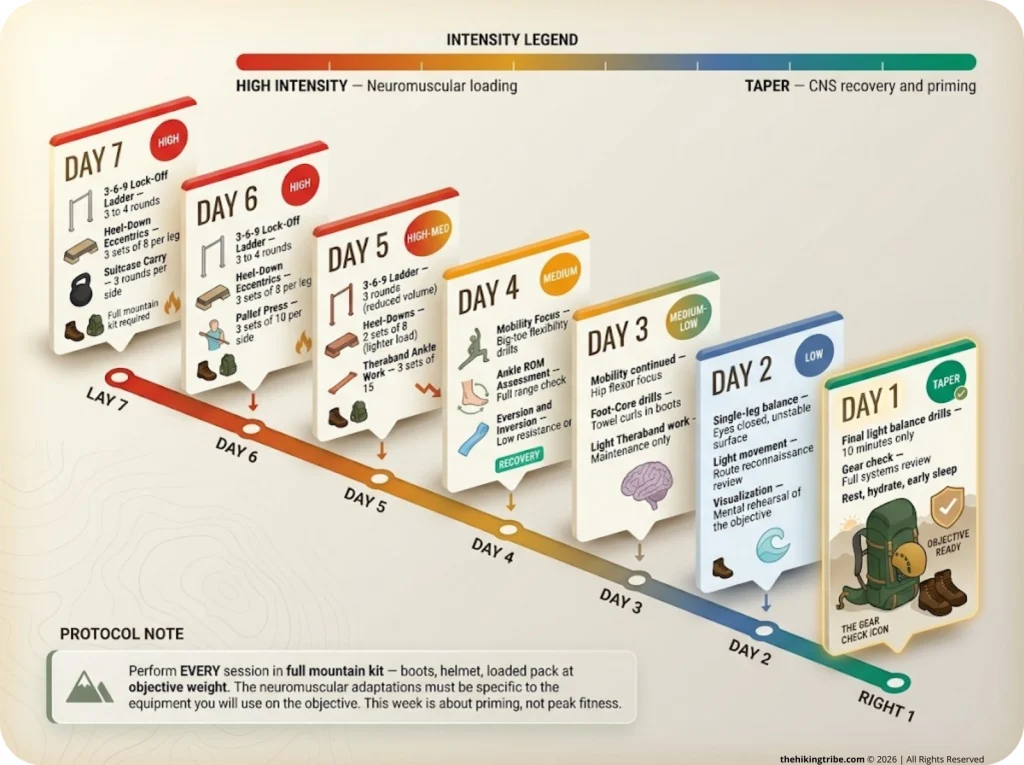
The 7-Day Field Prep — Sequencing the Protocol Before a Technical Objective
Days 7–5: High-intensity sessions. 3-6-9 Ladder lock-offs, Heel-Down eccentrics, Suitcase Carry. Full neuromuscular loading with pack at objective weight.
Days 4–3: Mobility and foot-core focus. Big-toe flexibility, ankle ROM assessments, Theraband eversion work at low resistance.
Days 2–1: Nervous system taper. Light single-leg balance on unstable surfaces, route reconnaissance, gear check.
Perform every session in full mountain kit — boots, helmet, loaded pack. The neuromuscular adaptations need to be specific to the equipment you’ll use on the objective. This isn’t about peak fitness. It’s about neuromuscular priming and injury prevention in the final week.
Three Takeaways Before You Head Out
Train the eccentric, not just the concentric. Every descent requires a braking system your treadmill never built. Heel-downs with a 3–5 second lowering phase replicate what Class 3 terrain demands. Skip them and your quads will tell you the first time you’re 2,000 feet down a technical ridge.
Your ankles and feet are the platform. Ankle inversion and eversion strength, plus foot-core exercises like towel curls and marble pick-ups, keep the boot stable when the rock tries to toss it. This is the gap most training guides never mention.
Isometric lock-off strength prevents the single most hazardous moment on a scramble. Train the 3-6-9 Ladder at 90° arm-bend. That position is where the 3CC fatigue model crosses its threshold — and where holds fail, confidence goes, and safety margins disappear.
Run the 7-Day Field Prep before your next Class 3 objective. On Day 7, do the protocol in street clothes. On Day 1, do it in your boots with your pack loaded to objective weight. Notice the difference. That specific delta — the adaptation from training in your actual kit — is what separates a hiker from a scrambler.
FAQ
How fit do I need to be for scrambling?
You need more than aerobic fitness — you need multi-planar neuromuscular strength. For a Class 2 scramble, strong general fitness (hiking 10+ miles with elevation) is sufficient. For Class 3–4, you need trained eccentric quad capacity, lateral ankle stability, and lock-off isometric strength. The benchmark is completing the 7-Day Field Prep exercises without form breakdown.
What muscles does scrambling use?
Scrambling demands the quadriceps for eccentric braking on descents, glutes for high-step power, Peroneus Longus and Brevis plus Tibialis Posterior for ankle lateral stabilization, intrinsic foot muscles for edging and smearing precision, and the anti-rotational core for resisting pack torque on lateral traverses. The unique demand versus hiking is the upper body — lock-off strength in the biceps, forearms, and rotator cuff for static holds.
Can I train for scrambling in a gym?
Mostly yes, with one important caveat. Heel-down eccentrics, Suitcase Carries, Pallof Presses, and Theraband ankle work all transfer from gym to terrain. The gap is proprioceptive specificity — you need to perform balance and foot-core exercises in your mountain boots on uneven surfaces at some point. At minimum, run the 7-Day Field Prep in your objective footwear.
How do I build grip strength for scrambling?
Lock-off strength for scrambling is less about peak crushing force and more about isometric endurance at mid-bend positions. The 3-6-9 Ladder protocol — 3, 6, and 9-second holds at 90° arm-bend — builds the terrain-specific quality that matters on Class 3–4 terrain. Dead hangs build baseline capacity; Steve Bechtel’s ladder builds what actually transfers to rock.
How do I stop Elvis Leg on technical terrain?
Elvis Leg is a symptom of neuromuscular fatigue — your 3CC fatigue threshold has been crossed. Short-term fix: step to a stable rest position, shake out the leg, allow muscle re-perfusion before continuing. Long-term fix: build lock-off isometric strength via the 3-6-9 Ladder, ankle lateral stability via Theraband work, and train to your objective’s fatigue level during the Field Prep phase. The longer you delay that threshold crossing, the farther into a route you stay controlled.

I've spent more than a decade researching hiking gear and trail technique. I read the specs, the forum threads and the long-term reviews, and every pick here comes with what it gets wrong.
End of the trail
You read every mile of this one. Here's where the trail goes next.