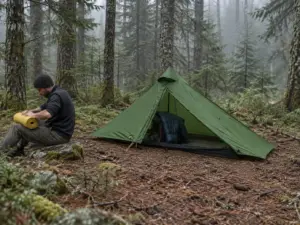
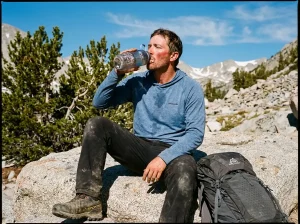
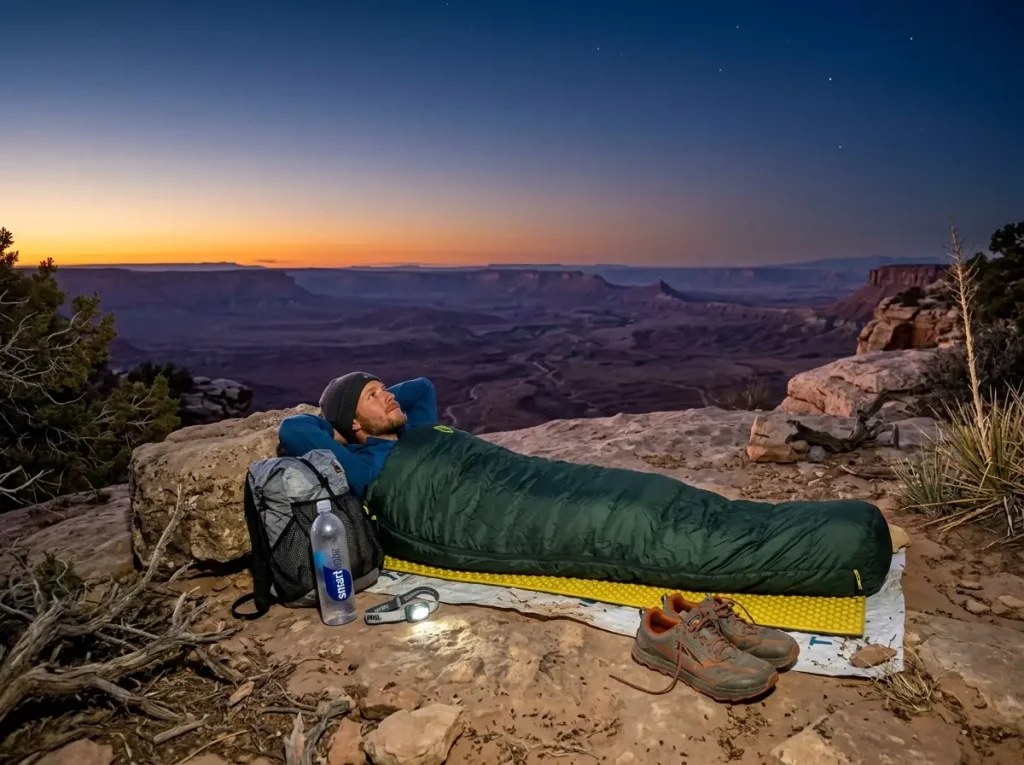
Somewhere around night fifty on the Pacific Crest Trail, I stopped setting up my tent on clear evenings. Not because I was lazy — because I’d finally learned to read the signs. Two hundred cowboy camping nights later, across desert basins, alpine ridges, and high-altitude pine forests, I can tell you the decision isn’t complicated. It just takes knowing what to look for. Here’s the framework I use every single evening to decide whether to sleep under the stars or set up shelter.
Quick Answer: Cowboy camping works well when these conditions align:
- Clear sky with no clouds building on the horizon after sunset
- Dew point at least 15°F below the current temperature
- Wind present (even light breeze reduces bugs and condensation)
- Campsite elevated above surrounding terrain and away from water
- No rain in the forecast for the next 12 hours
- Bug pressure low (dry regions, above treeline, or shoulder season)
The Cowboy Camping Decision — Yes or No in 30 Seconds
The Evening Sky Check
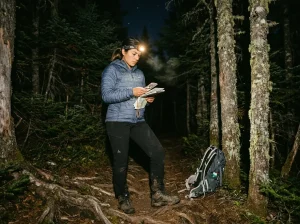
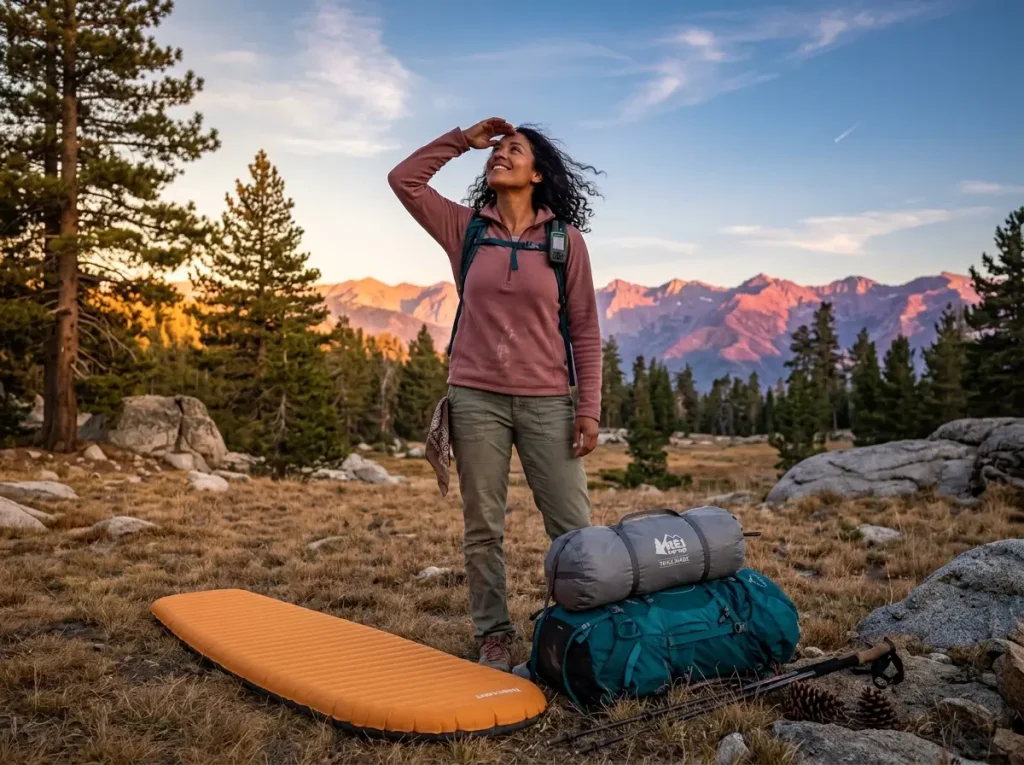
Here’s the entire decision in real time. You’re rolling into camp around sunset. Drop your pack, look up. What do you see?
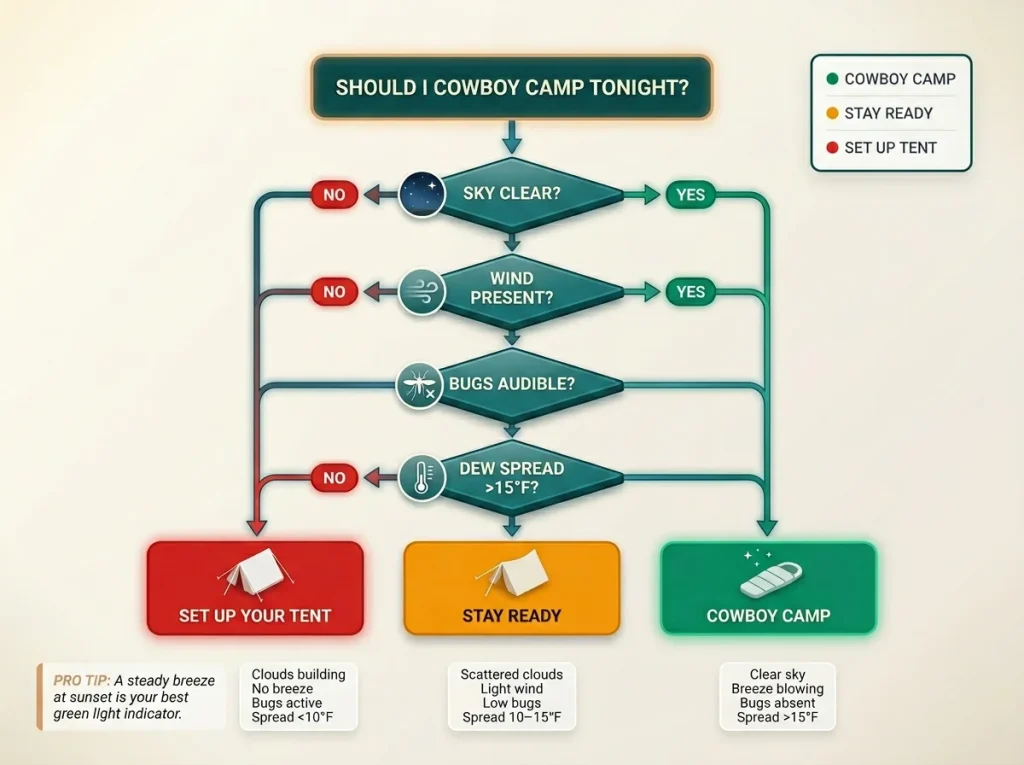
Green light (cowboy tonight): Clear sky overhead. Maybe a few small flat cumulus dissolving at the horizon — that means stable air sinking and drying out. Stars punching through the blue before the sun fully sets. Wind moving steadily from one direction. You’re golden.
Yellow light (maybe, stay ready): Scattered clouds but gaps between them. No vertical development. Moderate humidity but a breeze keeping things moving. Set up your groundsheet and pad, but keep your tarp accessible. If you wake at 2 AM and clouds have filled in, you might need to roll out the backup.
Red light (set up the tent): Clouds building vertically on any horizon. Cirrostratus moving in from the west (that milky veil that makes a halo around the moon). Still, humid air with no breeze. Mosquitoes already buzzing your ears. Any of these alone is reason enough.
The 30-Second Field Test
This is what I actually do. It takes less than half a minute:
- Look straight up — is more than 80% of the sky clear? Yes or no.
- Look at the western horizon — are clouds growing taller or dissolving? Growing = tent. Dissolving = cowboy.
- Feel the air — is there any breeze at all on your skin? Breeze = good. Dead calm = condensation risk.
- Listen — can you hear mosquitoes? If yes, tent. No debate.
Pro tip: A steady breeze at sunset that doesn’t die off is your best friend for cowboy camping. Wind prevents dew formation, drives bugs away, and keeps the air mixed so cold pockets don’t settle on you. Windy nights are actually the BEST nights to sleep without shelter — you’re low-profile and don’t have to listen to flapping tent fabric.
Reading the Sky — Weather Clues That Say “Go for It”
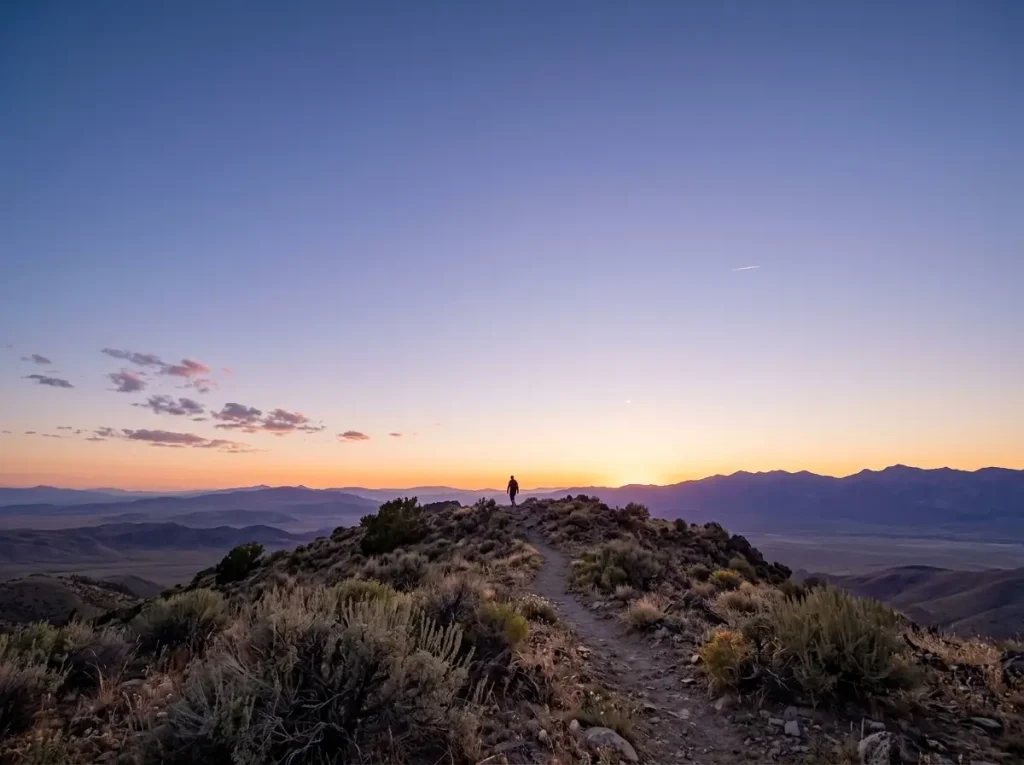
Cloud Types That Mean Safety
You don’t need a meteorology degree. You need to recognize three things:
Fair-weather cumulus — small, flat-bottomed white puffs that dissolve by sunset. These form from daytime heating and disappear when the sun goes down. If they’re dissolving as evening approaches, the atmosphere is stable. You’re safe.
High thin cirrus — wispy streaks way up high, moving slowly. These alone don’t mean rain. They become a warning only when they thicken into a milky veil (cirrostratus) that covers more sky over a few hours. Watch the trend, not the snapshot.
Clear horizon all directions — the strongest green light. If you can see sharp mountain silhouettes 30+ miles away at sunset with no haze or buildup, the air is dry and stable. Cowboy camp with confidence.
The Cloud Progression That Says “Set Up Your Tent”
When weather moves in, it follows a predictable sequence: high cirrus → thickening cirrostratus (milky veil, moon halo) → lowering altostratus (gray, no shadows) → rain within 12-24 hours. If you see step one progressing to step two during the evening, set up shelter. That progression rarely reverses overnight.
Monsoon Season Is Different
In the American Southwest from July through September, thunderstorms can build in two hours with no morning warning. During monsoon season, never cowboy camp without your backup shelter within arm’s reach. These storms are fast, violent, and localized — clear sky a mile away means nothing when a cell parks on your ridge.
The best time of day to start a hike by season also covers lightning timing windows that affect evening campsite decisions.
The National Weather Service’s point forecast lets you check hourly precipitation probability and dew point for your exact campsite coordinates — far more useful than a generic regional forecast.
Site Selection — Where to Lay Your Bag
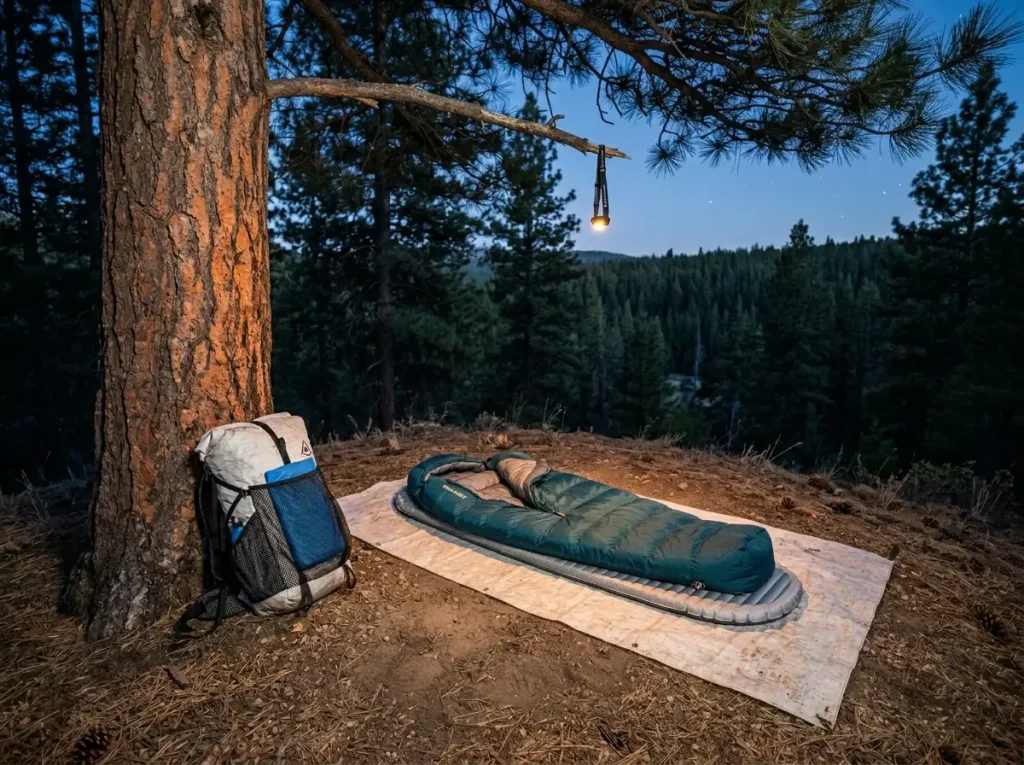
Elevation Is Everything
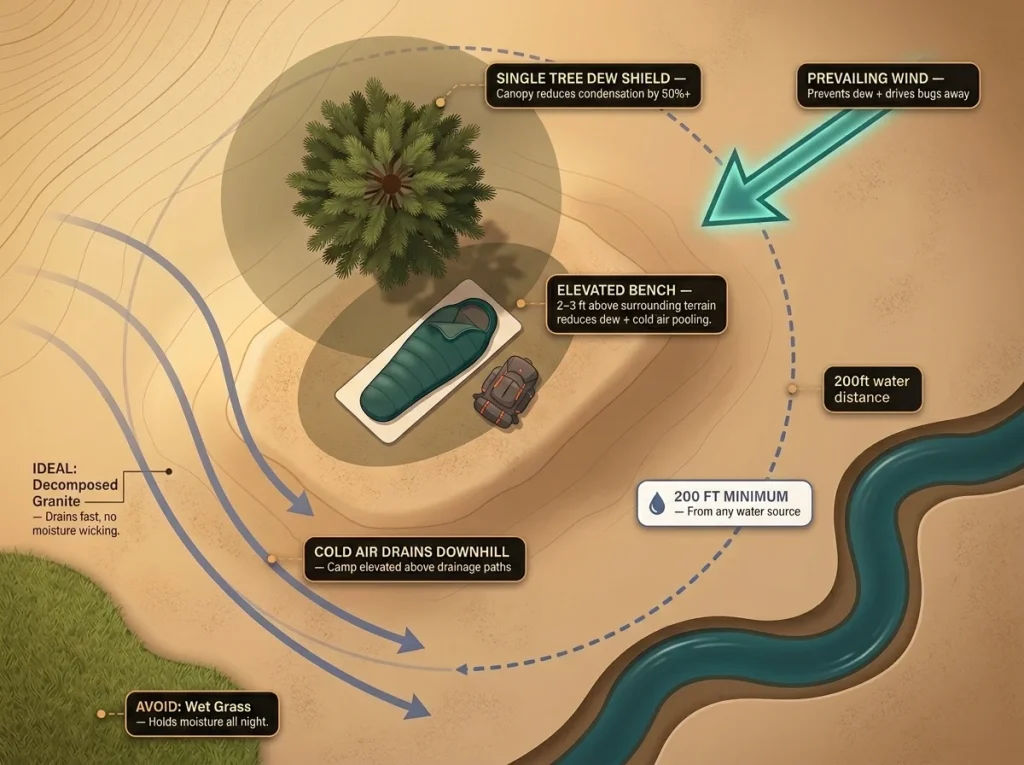
Cold air is heavier than warm air. At night, it flows downhill like invisible water and pools in valleys, depressions, and flat meadows. That’s where dew forms heaviest, where frost appears first, and where cold-blooded critters seek warmth (meaning they might seek you).
Camp slightly elevated — even 2-3 feet above the surrounding terrain makes a measurable difference. Ridgetops, knolls, slight mounds, and elevated benches drain cold air away from your sleeping bag instead of collecting it.
Trees Are Your Dew Shield
A single tree above your bag can reduce condensation by 50% or more. Here’s why: the canopy acts as a radiation barrier. On clear nights, heat radiates from the ground straight into space. A tree canopy reflects some of that radiation back down, keeping the air around you warmer and above the dew point longer.
Camp under a tree with gaps in the branches and you get both the dew protection and the star views. Best of both.
Distance From Water
This one is non-negotiable. Camp at least 200 feet from any water source — streams, lakes, ponds, even seasonal puddles. Water raises local humidity, attracts insects, and creates the cold-air-plus-moisture combination that guarantees a soaking wet sleeping bag by morning.
The Leave No Trace Center recommends 200 feet from water for ecological reasons too — but the practical reason for cowboy campers is keeping your bag dry.
Ground Surface Matters
Your groundsheet goes between you and whatever’s below. But the surface underneath still matters:
- Dry pine duff or decomposed granite: ideal. Drains fast, insulates slightly, no sharp puncture risks
- Sandy soil above the waterline: excellent drainage, comfortable, packs flat
- Packed dirt or rock shelf: good drainage, no moisture wicking up from below
- Lush green grass: looks inviting but holds moisture all night — you’ll wake to a soggy groundsheet
Inspect for thorns, sharp rocks, and ant activity before committing. One cactus spine through your pad ruins the night faster than any weather event.
Pro tip: When you find your spot, sit on it for five minutes before unrolling your gear. If you feel moisture coming through your pants in that time, the ground is too wet for cowboy camping regardless of what the sky looks like.
If your tent ventilation setup normally fights condensation, cowboy camping eliminates the problem entirely on the right nights.
Condensation Science — The Dew Point Trick Veterans Know
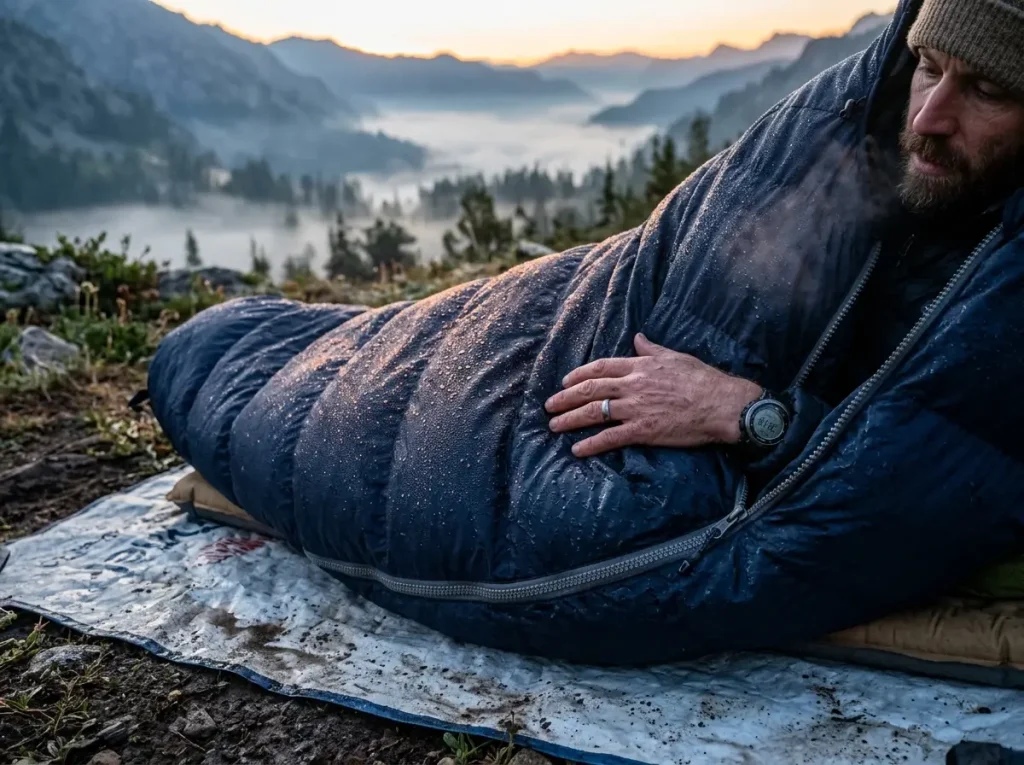
Why Your Bag Gets Wet (And How to Predict It)
Every cowboy camping guide says “you might get dew.” None of them explain the actual physics that lets you predict it in advance.
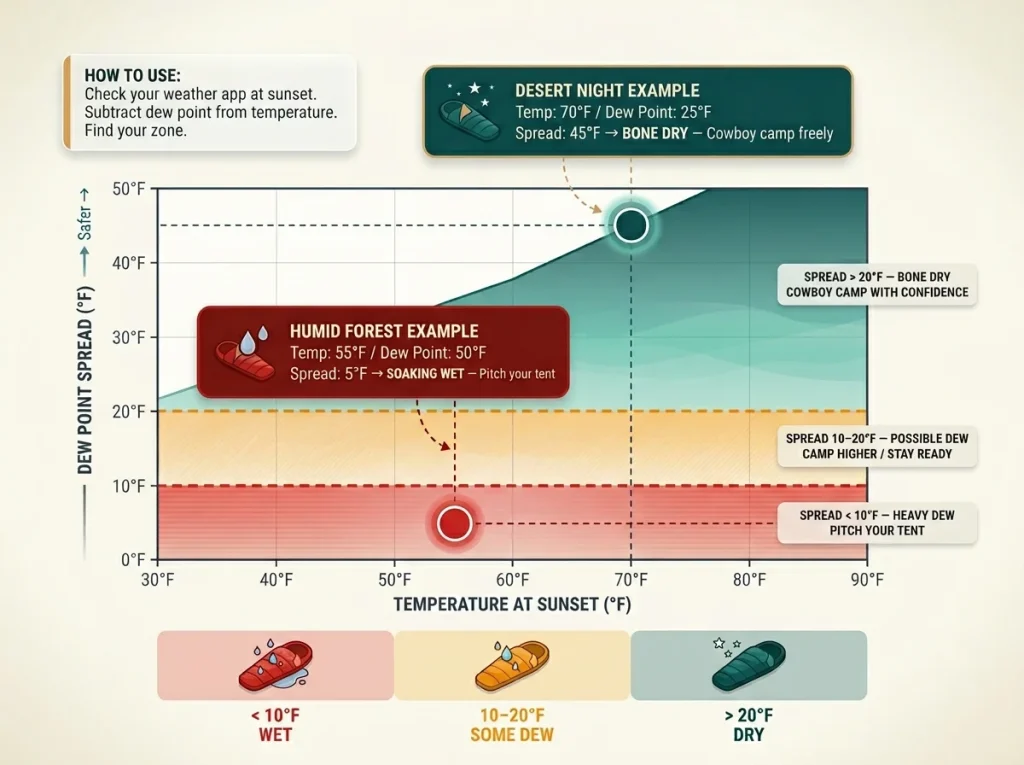
Here’s the science made simple: air holds water vapor. As temperature drops overnight, air can hold less vapor. When the temperature drops to the dew point, the air is 100% saturated and water condenses on every surface — including your sleeping bag.
The key number: the spread between current temperature and dew point. At sunset, check both numbers on your weather app or Garmin device.
- Spread of 20°F or more: condensation is extremely unlikely. Cowboy camp with confidence.
- Spread of 10-20°F: some condensation possible in low spots. Camp higher.
- Spread under 10°F: heavy dew guaranteed. Set up your tent or accept a damp bag.
Why Wind Breaks the Dew Cycle
Wind mixes the air column near the ground, preventing the still-air cooling that causes temperature to reach dew point at ground level. Even a 5 mph breeze can keep ground-level temperature above the dew point all night — which is why breezy ridges stay dry while calm valleys get soaked.
This is the single most overlooked factor in cowboy camping. Experienced thru-hikers choose breezy exposed campsites over sheltered ones specifically because wind prevents condensation, bugs, and cold-air pooling simultaneously.
The Morning Dew Reality
Sometimes you do everything right and still wake up slightly damp. It happens. On the PCT desert sections, I’d estimate one in five cowboy nights left me with light condensation on the bag’s shell. The fix is simple: drape the bag over a rock or bush during your first break and it dries in 20 minutes of morning sun.
A down bag in a waterproof shell (like Sea to Summit’s Spark series with water-resistant down) handles occasional dew without lofting issues. Synthetic bags don’t care at all — they maintain warmth even when damp.
Pro tip: If your sleeping bag gets more wet than just surface dew — meaning the insulation feels damp when you squeeze it — you either camped too close to water, chose too low a spot, or ignored a high dew point reading. One of those three was the mistake. Fix it next time rather than abandoning cowboy camping entirely.
Gear Stripped Down — What You Actually Need
The Non-Negotiables
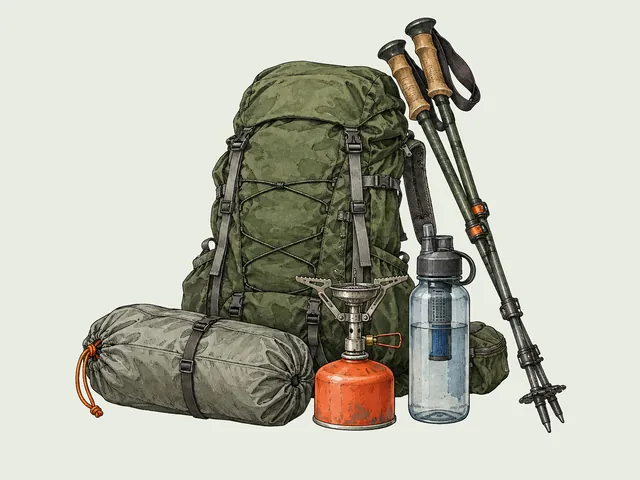
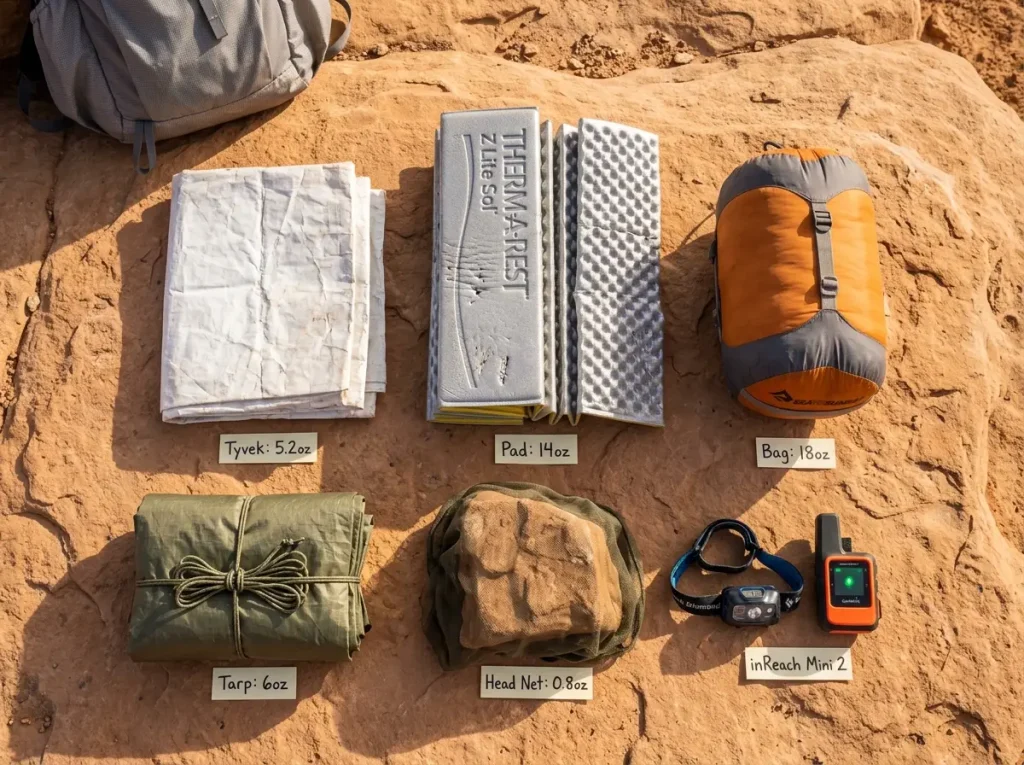
Cowboy camping doesn’t mean no gear — it means less gear set up. You still carry everything you’d normally bring. The weight savings come from not deploying your shelter, which saves 5-10 minutes at camp and reduces the gear you need to dry in the morning.
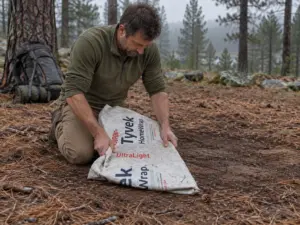
Groundsheet: Tyvek (1443R or HomeWrap) cut to pad size plus 6 inches all around. Costs about $15, weighs 5 oz, and lasts hundreds of nights. The extra margin beyond your pad keeps your bag edges off the bare ground if you roll.
Sleeping pad: Closed-cell foam (Therm-a-Rest Z Lite Sol) is the safest choice for cowboy camping — no puncture risk from thorns or rocks. Inflatable pads work if you’re careful about site inspection, but one rogue cactus spine at 2 AM ends your night.
Sleeping bag: Whatever you normally use. Down bags benefit from a DWR-treated shell for the occasional dew contact. Synthetic bags handle moisture better but weigh more.
Head net: One ounce of insurance. On most cowboy camping nights you won’t need it. On the one night mosquitoes appear at dusk, having a net saves you from a midnight tent-pitching scramble.
The Backup Shelter Rule
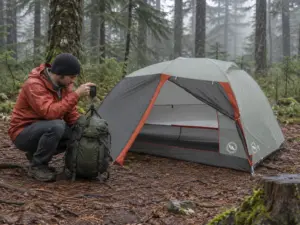
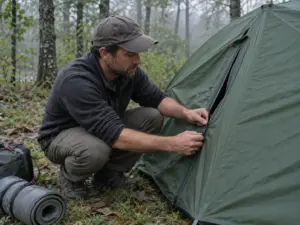
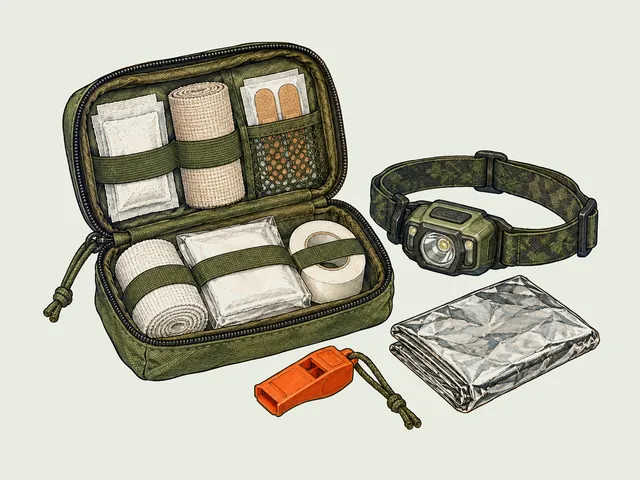
Every veteran cowboy camper still carries shelter. The consequences of getting caught without any cover in unexpected rain are too serious — especially with a down sleeping bag that loses all insulation when saturated.
The lightest option: a flat tarp (Mountain Laurel Designs Monk at 5 oz, or a sheet of silnylon at 4 oz). It stays in your pack 90% of the time. When you need it, you pitch it in 3 minutes with trekking poles or between trees.
The key principle: your backup shelter should be the easiest thing in your pack to deploy in the dark. Practice pitching it at home with your eyes closed. When you wake at 2 AM to rain drops on your face, you need muscle memory — not instructions.
Your tent weight determines how much you save by going tentless. The lighter your backup tarp versus your full tent, the bigger the weight advantage of defaulting to cowboy camping.
What You Don’t Need
- Bivy sack for fair-weather cowboy camping: adds weight and traps sweat vapor inside. Save bivies for alpine climbing or emergency preparedness — they solve a problem cowboy camping doesn’t have on appropriate nights.
- Bug spray for nighttime: pick the right site and season instead. Chemical layers on your sleeping bag create smell and fabric degradation.
- Earplugs: most cowboy camping sounds (wind, coyotes, owls) are part of the experience. If you need silence to sleep, a tent’s fabric walls provide enough psychological buffer.
If you’re building a lightweight kit with minimal gear weight, the tarp-as-primary-shelter approach lets cowboy camping become your default rather than a special occasion.
When NOT to Cowboy Camp (The Hard No List)
Weather Dealbreakers
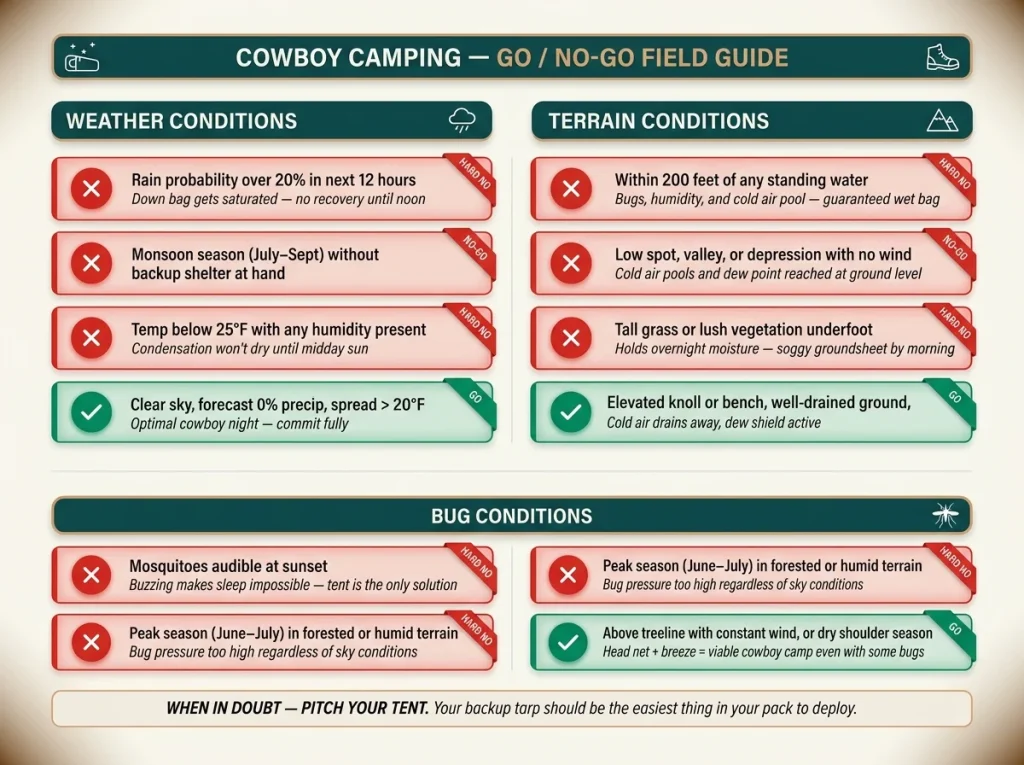
- Any precipitation probability over 20% in the next 12 hours. Period. Don’t gamble with a down bag.
- Monsoon season in the desert Southwest without your backup shelter literally touching your sleeping bag. Storms build in minutes.
- Nights below 25°F unless you’re in a very dry climate with near-zero humidity. Cold + any moisture = serious condensation that won’t dry until noon.
Terrain Dealbreakers
- Anywhere within 200 feet of standing water. The bug and condensation penalty is too high.
- Low spots, valleys, and depressions without wind. Cold air pools, dew forms, and you wake shivering in a wet bag.
- Tall grass or lush vegetation that holds moisture and hides ground-level hazards.
- Known heavy wildlife corridors at night (game trails to water sources). You’re not in hazard, but animals walking through your camp at 3 AM ruins sleep.
Bug Dealbreakers
If mosquitoes are audible at sunset, that’s it. Set up your tent. Head nets work in theory but the buzzing-in-your-ears factor makes actual sleep almost impossible for most people. The exception: above-treeline alpine sites where wind is constant — there, a head net with steady breeze actually works.
Peak mosquito seasons (typically June-July in most of the US) are tent months in all but the driest, most windswept locations.
The night hiking guide covers how late-arrival scenarios might push you into cowboy camping by default — useful skills when you reach camp after dark.
Conclusion
Three principles make cowboy camping reliable instead of risky. First, learn to read the 30-second sky check — clear overhead, dissolving clouds at sunset, and any breeze at all means green light. Second, master site selection: elevated, away from water, under partial tree cover when possible, on dry well-drained ground. Third, always carry your backup tarp and know the dew point spread number before you commit.
Pick a clear night on your next trip — a forecast with 0% precipitation and a dew point spread over 20°F — and try it once. The worst that happens is you wake up slightly damp and dry your bag at breakfast. The best that happens is you fall asleep watching satellites cross the Milky Way and wonder why you ever bothered with tent walls on nights like this.
Q1 Is cowboy camping safe from wildlife?
Yes. Snakes, bears, and mountain lions avoid sleeping humans. A thin tent wall provides zero physical protection — only psychological comfort. Keep food stored properly and camp away from game trails. In hundreds of cowboy camping nights, the most common visitor is a curious mouse.
Q2 What gear do you need for cowboy camping?
A groundsheet (Tyvek works best at 5 oz), your regular sleeping pad, sleeping bag, and a head net. Always carry a backup tarp in your pack — a flat tarp at 4-6 oz provides emergency coverage if weather changes overnight.
Q3 How do you stay dry without a tent?
Camp elevated above surrounding terrain, under partial tree cover, away from water, and on nights when the dew point spread exceeds 15°F. Wind is your ally — breeze prevents the still-air cooling that causes condensation on your bag.
Q4 Can you cowboy camp in bear country?
Yes, with normal precautions. Store food in a bear canister or hang 200+ feet from your sleeping spot. Bears approach food sources, not sleeping humans. Your low ground profile actually makes you less visible than a tent.
Q5 When is cowboy camping season?
In dry western states, April through October. In humid eastern regions, the best windows are early spring and late fall when bugs die off and rain frequency drops. Monsoon season (July-September in the Southwest) requires extra vigilance but isn’t off-limits with proper backup shelter.

I've spent more than a decade researching hiking gear and trail technique. I read the specs, the forum threads and the long-term reviews, and every pick here comes with what it gets wrong.
End of the trail
You read every mile of this one. Here's where the trail goes next.