In this article
The pack that wins every “lightest” spec sheet is the wrong pack for most of the people who buy it. A 15-ounce frameless pack loaded to 30 pounds carries worse than a 2-pound framed pack at the same weight, and the truth is that most hikers chasing the featherweight aren’t ready for it yet. Ask anyone who’s limped through a long water carry with an overstuffed frameless pack riding on their shoulders. There’s another catch nobody mentions: nearly every “best ultralight backpack” list online is stacked with cottage brands that ship in six weeks with no easy returns, which doesn’t help when you want to hike next month. This roundup sticks to packs you can order today, send back if the fit is wrong, and actually live with, after a quick word on what ultralight even means.
Here’s how the five Amazon-available picks stack up before we get into who each one is for.
| Pack | Volume | Weight | Frame | Best for |
|---|---|---|---|---|
| Osprey Exos 58 / Eja 58 | 58L | ~2 lb 13 oz | Wire perimeter | Best all-around carry |
| Granite Gear Crown3 60 | 60L | ~2 lb 6 oz | Removable sheet | Most versatile |
| Osprey Exos Pro 55 / Eja Pro 55 | 55L | Sub-2 lb | Wire tube | Dialed kits, still framed |
| 3F UL Gear Qidian Pro | 46+10L | ~1.94 lb | Pad + stay | Tightest budget |
| Granite Gear Virga3 55 | 55L | ~1.2 lb | Frameless | Low base weights only |
What “Ultralight” Actually Means (It’s Not the Pack)
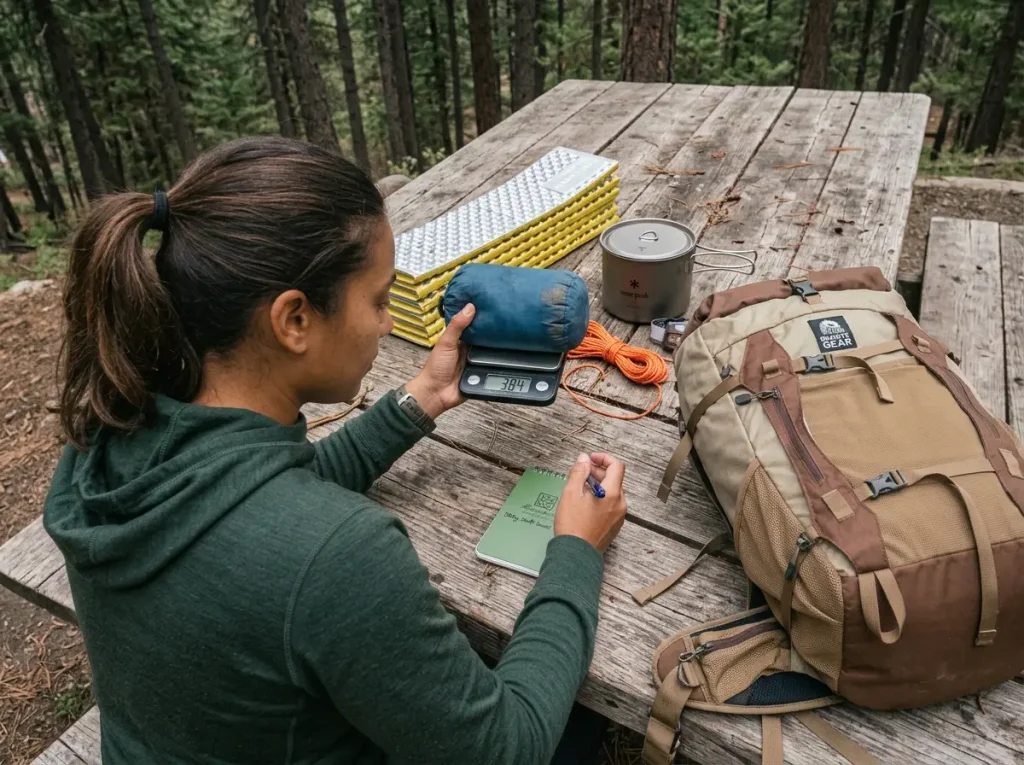
New hikers think buying a one-pound pack makes them ultralight. It doesn’t. The pack is maybe two of the ten pounds that actually decide whether your kit is light, and chasing the bag before the rest of the system is backwards.
Base Weight Is the Number That Matters
Base weight is your full kit minus the stuff you consume on trail: food, water, and fuel, plus what you wear. That’s the number the whole sport revolves around. The widely cited ultralight benchmark of a sub-10-pound base weight is the line people aim for, and your pack is only one slice of it. You can strap on the lightest bag made and still walk out the door at a 25-pound base weight because the rest of your gear is heavy.
This is why the smart move is to fix the kit first and buy the pack last. Once your sleep system, shelter, and clothing are dialed, you know how much volume and frame you actually need, instead of guessing.
How Light Is “Ultralight,” Really
Most ultralight packs run 35 to 70 liters and weigh under 3 pounds. A “true” ultralight pack clears 2 pounds empty, and the average one lands around 55 to 60 liters at roughly 2 pounds. Anything under 3 pounds in that volume range still earns the label, so you have more room than the purists admit. If you specifically want bags that genuinely break the two-pound mark, we keep a separate roundup of packs that truly clear two pounds for hikers who’ve already done the work on their base weight.
The Cottage-Brand Catch (Why Most Lists Can’t Help You)
Open any “best ultralight backpack” article and you’ll see the same names: the Zpacks Arc Haul, anything from Hyperlite Mountain Gear, the Durston Kakwa, the Gossamer Gear Mariposa, the ULA Circuit. Great packs, all of them. None easy to buy. Most are made to order by small shops with three-to-eight-week lead times and no real return process, so if the torso runs long you’re eating the cost or the wait.
The buy-it-now reality is less glamorous and a lot more useful. An Osprey Exos or a Granite Gear Crown3 gets you roughly 80% of the weight savings, ships in days, and goes back for free if the fit is wrong. That tradeoff, a few extra ounces for the ability to actually get the pack and return it, is the whole reason this list exists. If you want the deeper buying framework, our full guide to choosing a hiking backpack without wasting money walks through the fit and capacity decisions underneath all of this.
Before you buy any pack, do a shakedown weekend with the kit you already own and weigh every item on a kitchen scale in grams. Ounces lie at low weights, and most hikers find 500 to 1,000 grams of free cuts sitting in their pack before they spend a dollar on gear.
Are You Actually Ready for a Frameless Pack?
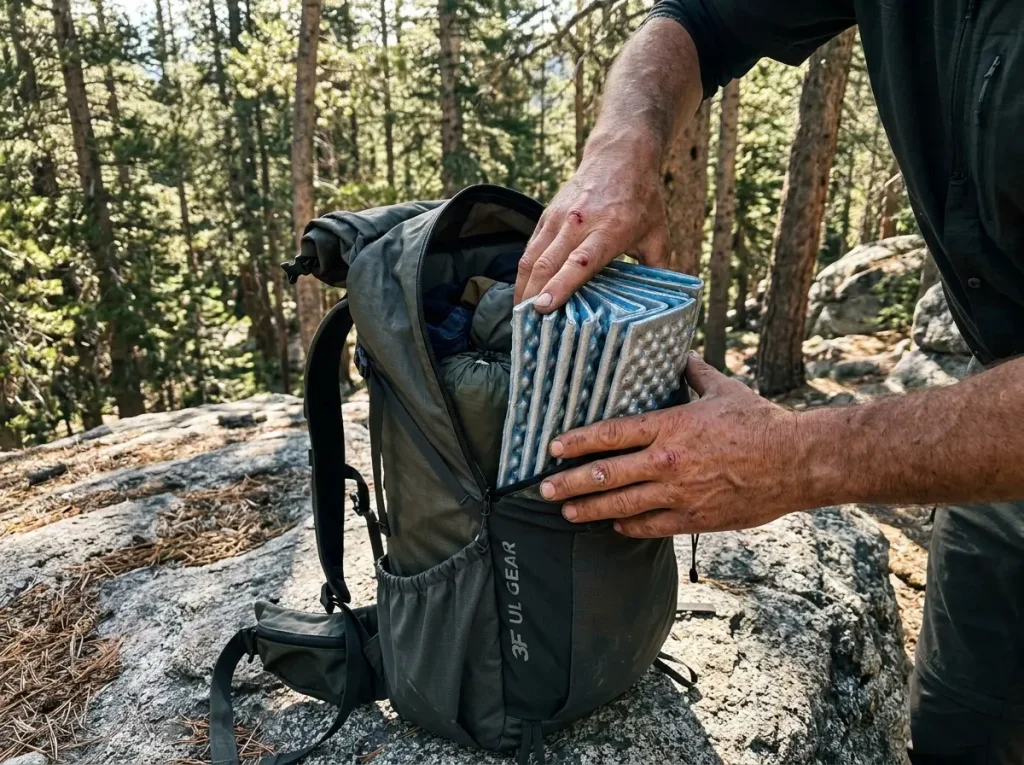
This is the question the spec sheets never ask, and it’s the one that decides whether you love your new pack or hate it. The lightest bag on the rack is a trap for most people, and a friend at the trailhead would stop you before you bought it and ask one thing: what’s your base weight?
What the Frame Actually Does
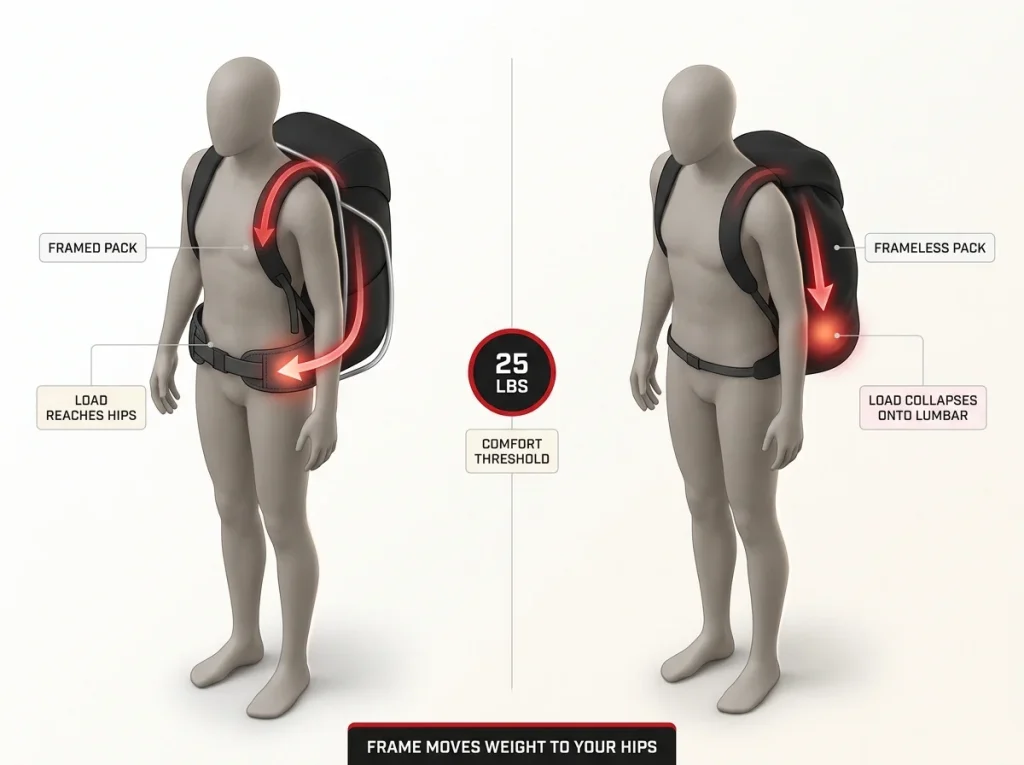
A frame, even a thin wire one, is what moves the load off your shoulders and onto your hips. That’s the entire job. Take it away and your shoulders and lower back carry everything, which feels fine in the parking lot and miserable by mile eight. If you want the mechanics in detail, our breakdown of how different suspension systems move weight to your hips covers why internal frames, external frames, and frameless designs each behave the way they do.
The 25-Pound Line
Field consensus is blunt about this. Frameless packs carry best under about 20 to 25 pounds. Framed packs handle 30-plus and keep going. Here’s the part that surprises people: a 15-ounce frameless pack at 30 pounds is a worse carry than a 32-ounce framed pack at that same 30 pounds. The lighter bag on paper is the heavier bag on your back, because the frame is doing work your body would otherwise do. The full framed-versus-frameless breakdown and the 25-pound rule is worth a read before you commit either way.
Frameless only makes sense once your base weight is genuinely under about 12 to 14 pounds. Below that line the pack is a joy. Above it, you bought punishment.
Building a Virtual Frame
If you do go frameless, you don’t go without a frame, you build one out of your gear. A folded closed-cell foam pad pressed against the back panel creates what people call a virtual frame, and it doubles as your sleeping pad so you carry nothing extra. The flip side is that an under-stuffed frameless pack collapses into your lumbar like a sack of laundry. Pack it firm or it punishes you.
The honest path for most hikers: start framed with something like the Exos or the Crown3, then graduate to frameless once your kit earns it.
A Z-Lite-style foam pad folded against the back panel is the cheapest frame upgrade you’ll ever buy, because you already own it. Slot it in first, pack everything else around it, and a frameless bag suddenly carries like it has structure, since it does.
The Load-Ceiling Cliff: Why Light Packs Hurt When You Overload Them
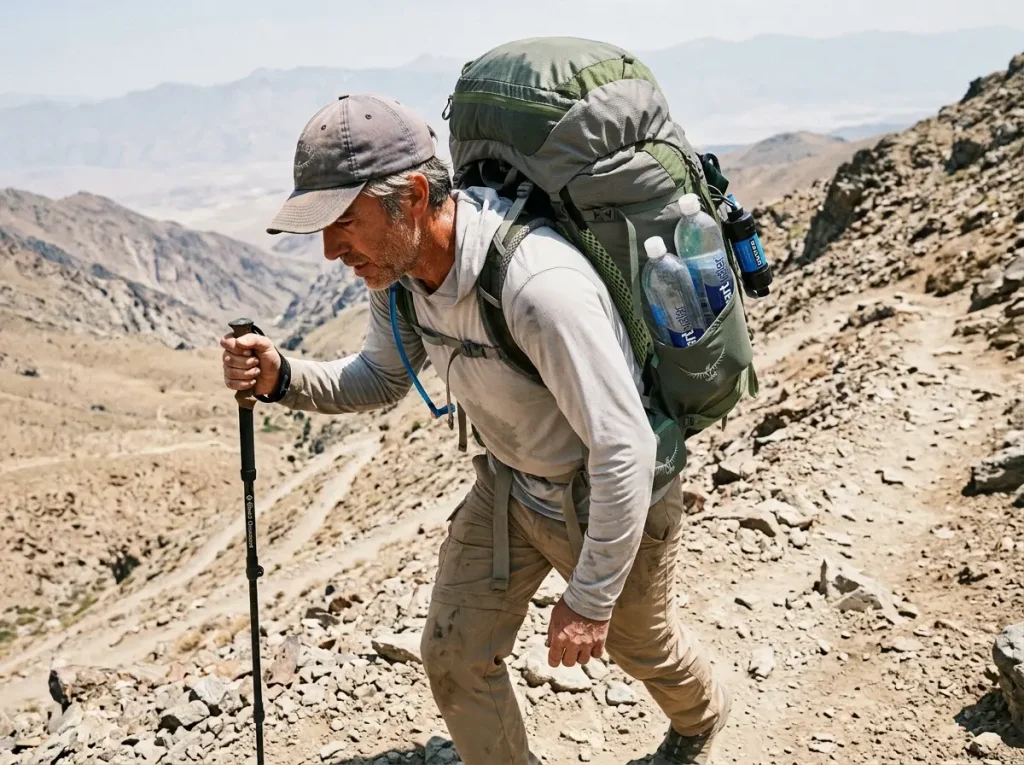
Picture a long desert stretch where the next water is 15 miles out. You load six liters, the pack tips past 30 pounds, and a bag that felt great all morning turns into a slow grind on your hips by afternoon. That’s not a defective pack. That’s the load-ceiling cliff, and it’s felt, not quoted from a spec sheet.
Where the Comfort Drops Off
The comfortable ceiling for most ultralight packs sits around 30 to 35 pounds. Thin hip belts and minimal frames transfer weight cleanly right up to that line, then the belt starts to sag onto your butt and the ache climbs your spine. Conventional packs hide this with thicker belts and stiffer frames, which is exactly the weight ultralight packs cut. Molding the belt to your body helps, and our guide on getting a hip belt to actually hold the load is the first fix to try when a pack sags under weight.
The 80/20 Rule (and Its Limit)
The comfort target everyone repeats is the 80/20 rule: about 80% of the load on your hips, 20% on your shoulders. It’s good advice, but it only holds inside the pack’s design ceiling. Past that, no amount of strap-tweaking saves you, because the frame has run out of capacity. Dialing your load lifters and hip belt for that 80/20 split is what keeps you in the comfortable zone while you’re inside it.
Pack Weight vs Body Weight
A useful sanity check: aim to keep total pack weight near 20% of your body weight. A 160-pound hiker should sit around 32 pounds loaded, which lands right at the ultralight ceiling. That math is the real argument for a low base weight. The lighter your kit, the more food and water you can add before you hit the cliff.
Getting the Fit Right When You Can’t Try It On
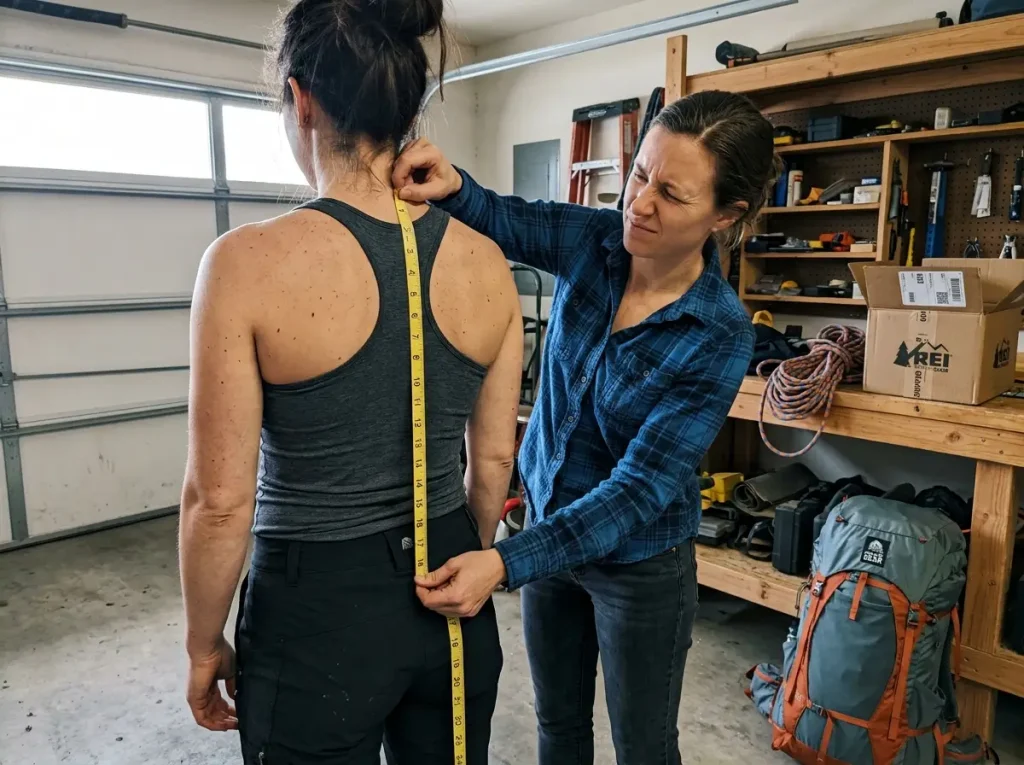
You can buy the best pack on this list and still hate it if the torso is wrong. Online ordering hides fit until the box shows up, so the work happens before you click buy, not after.
Measure Your Torso, Not Your Height
Pack fit runs on torso length, the distance from your C7 vertebra (the bony bump at the base of your neck) to your iliac crest (the top of your hip bones). Under 18 inches is a small, 18 to 20 is a medium, over 20 is a large. Your height barely matters. The Appalachian Mountain Club’s pack-fitting guide walks through measuring your torso before you buy, and our own step-by-step on measuring torso length shows the exact landmarks.
Have a friend find your C7 (tip your head forward, it’s the vertebra that sticks out most) and your iliac crest (hands on your hips, thumbs back, that shelf of bone). Measure straight down your spine between the two. That number picks your pack size, not the height on your driver’s license.
What a Bad Fit Feels Like
A pack with too long a torso drops the hip belt onto your thighs, so the load rides your shoulders no matter how you cinch it. Too short and the shoulder straps pull down and dig in. Either way you’ll blame the pack when the real problem is two inches of measurement you skipped at home. Ultralight packs make this worse because many use fixed or limited sizing, with less adjustment than a heavier trail pack.
When Adjustable Beats Fixed
If you’re not 100% sure of your size, an adjustable torso is cheap insurance. The Granite Gear Crown3 below has one, which makes it the forgiving pick for a first ultralight pack ordered sight-unseen. Capacity matters too, and our look at how many liters you actually need by trip length helps you avoid buying more volume than you’ll fill.
Best Overall: Osprey Exos 58 / Eja 58
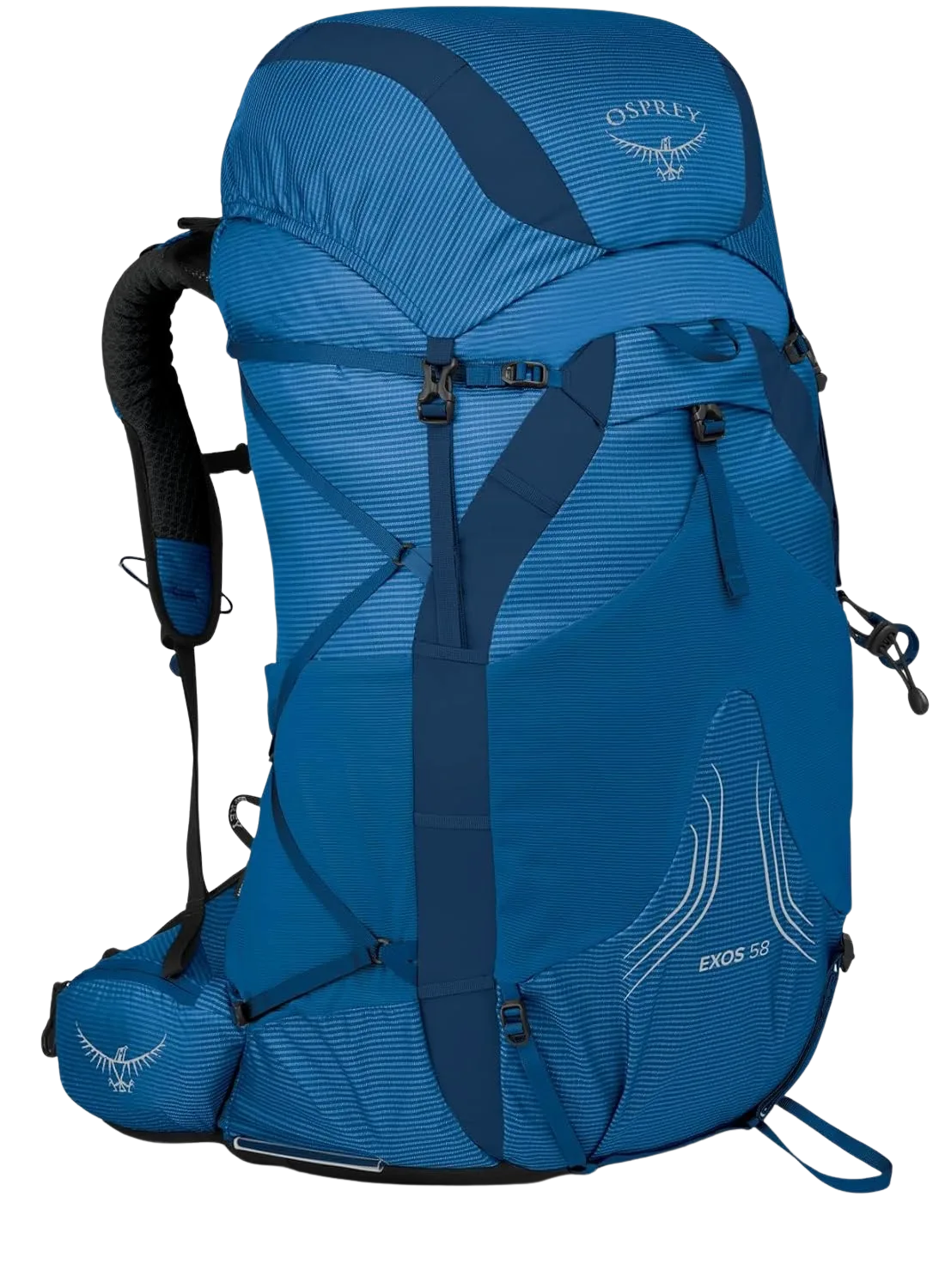
This is the pack to hand a friend who wants to go ultralight without gambling on frameless. The Osprey Exos (men’s) and Eja (women’s) share a suspended AirSpeed trampoline back panel that holds the load off your spine and lets air move, which on a hot climb is the difference between a sweat-soaked back and a tolerable one. The peripheral wire frame moves weight to your hips and carries comfortably into the 30-to-35-pound range, right where most weekend and section loads land.
The two names are the same pack with gender-specific torso and hip-belt shaping, so order the one that matches your body. Browse more men’s pack options or read up on how women’s-specific packs differ in fit if you’re between sizes. The honest knock: at nearly 2 pounds 13 ounces it’s the heaviest pack on this list. You’re paying those ounces for comfort and ventilation, and for most hikers that’s the right trade.
Best Capacity-to-Weight: Granite Gear Crown3 60
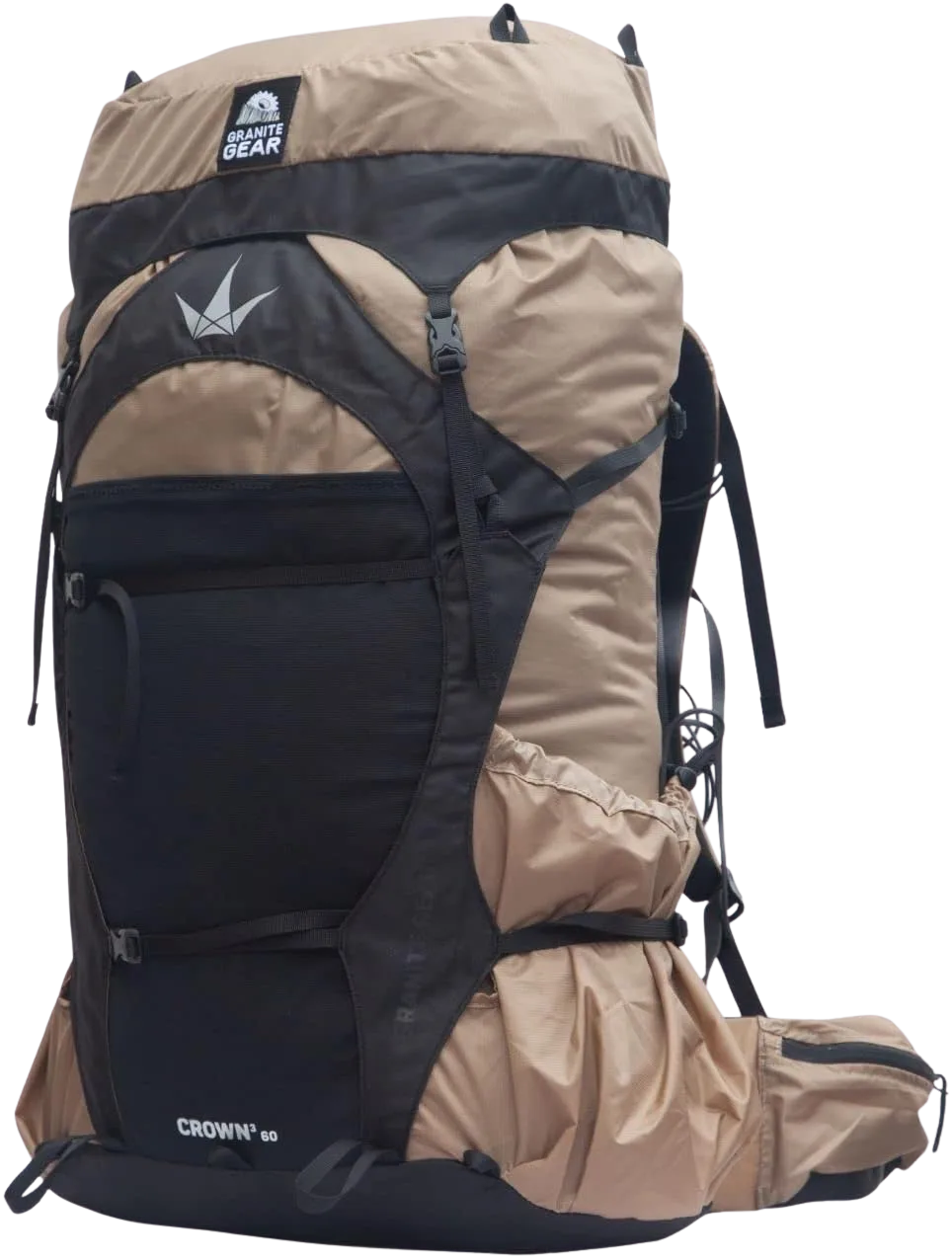
The Granite Gear Crown3 60 is the pack that flexes. It’s about seven ounces lighter than the Exos and a touch roomier, and it gives you the best volume-per-ounce of anything here you can actually order today. The trick is its modularity: the lid, hip belt, and frame sheet all come off, and you can drop in an aluminum stay if you want more structure. One pack covers you from your first framed weekend trips through to a stripped-down minimalist setup once your base weight earns it.
The adjustable torso makes it the forgiving choice when you’re buying without trying it on, which ties straight back to the sizing problem above. If you like the idea of pulling the lid for short trips, our take on the brain-lid-versus-roll-top trade-off explains what you gain and lose. The tradeoff against the Osprey is back ventilation: the Crown3’s back panel sits closer to your body, so you trade some airflow for the lighter weight and the customization.
You still get the daily essentials: a stretchy mesh front pocket, side bottle access you can reach without stopping, and hip belt pockets for snacks. One honest caveat that applies to every pack here: none are truly waterproof, and the fabric’s water resistance fades with use. A pack liner or rain cover does the real work in a storm, and our breakdown of pack liners versus rain covers covers which one wins.
Best True-Ultralight With a Frame: Osprey Exos Pro 55 / Eja Pro 55
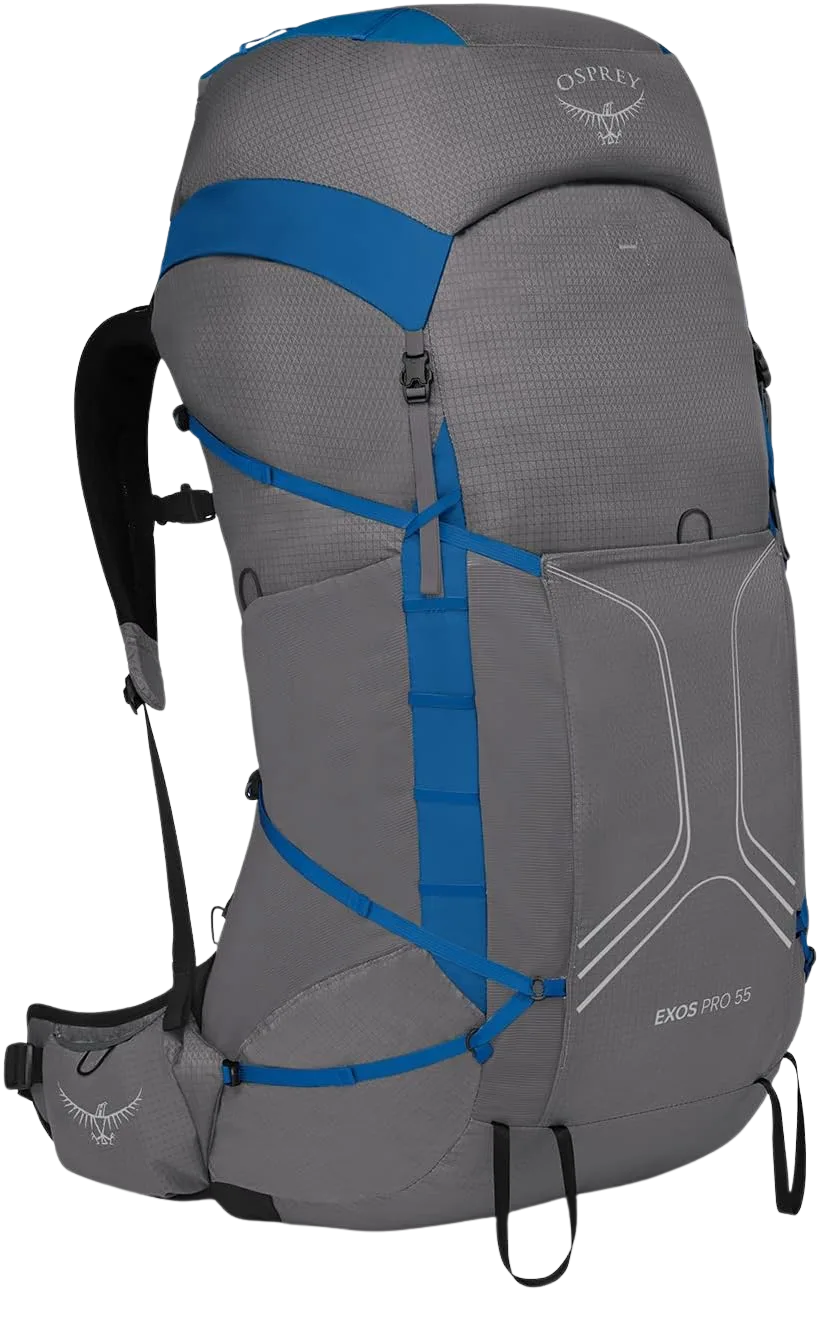
The Exos Pro and Eja Pro are the upgrade you earn, not the one you start with. Osprey took the Exos formula and rebuilt it in lighter NanoFly fabric, a UHMWPE-and-nylon blend, dropping the whole pack under 2 pounds while keeping a real tube frame. That’s the rare combination: true ultralight weight with hip-carrying structure intact.
Who it’s for is specific. If your base weight is already low and you’ve decided frameless isn’t worth the fuss, this is the lightest framed pack you can buy on Amazon, the kind long-trail hikers carry on the Appalachian Trail, the PCT, or the CDT. If your kit isn’t there yet, the standard Exos or Eja is the smarter buy and saves you real money. For the packs that go even lighter, our roundup of bags that truly clear two pounds is the next stop. The catch is price: this is the premium pick, and you’re paying for fabric technology and grams.
Best Budget Pick: 3F UL Gear Qidian Pro
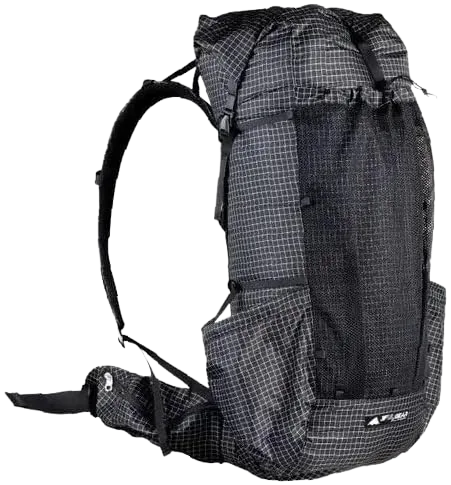
Here’s where it’s worth being honest about money. The gap between a budget Amazon pack like the 3F UL Gear Qidian Pro and a top cottage pack is mostly fabric technology and about ten ounces, not comfort. The expensive packs lean on Dyneema Composite Fabric (DCF, the old Cuben Fiber) or Ultra fabric and Robic ripstop nylon; the Qidian runs a similar UHMWPE weave for a fraction of the cost. It packs 46+10 liters at roughly 1.94 pounds, with a foam-pad sleeve that builds the same virtual frame we talked about earlier.
For a beginner, that’s where the money actually goes, and knowing it saves you from overspending on your first pack. The honest framing: 3F UL is a smaller brand, and quality control isn’t as consistent as Osprey or Granite Gear, so check the seams when it arrives and run it on a shakedown overnight before you trust it on a long trip. If budget is the real constraint, this is the pack that gets you into ultralight without a painful receipt.
Best Frameless for Dialed Kits: Granite Gear Virga3 55
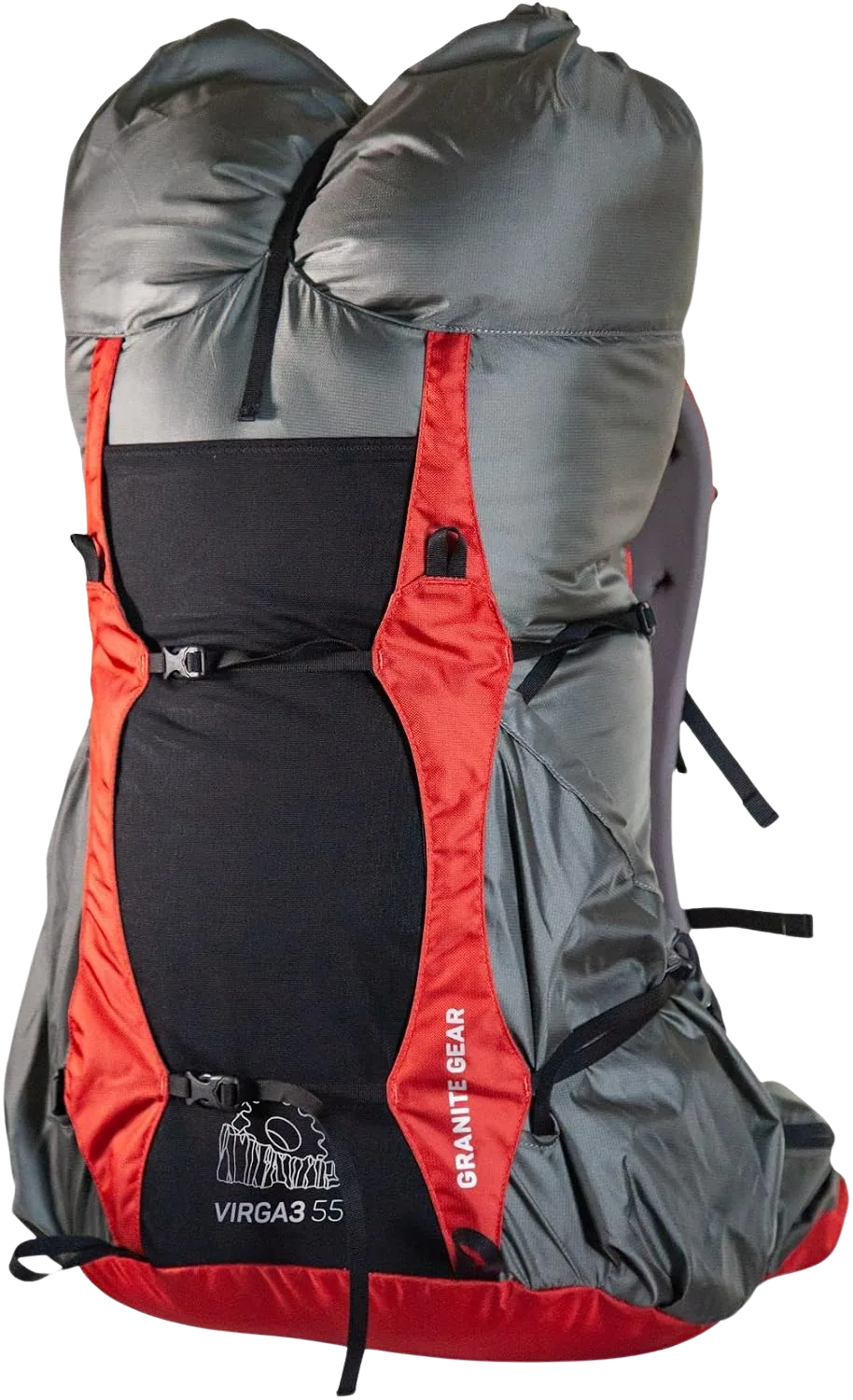
The Granite Gear Virga3 55 is the payoff at the end of the base-weight journey, and only then. At roughly 1.2 pounds it’s the lightest pack here, a 55-liter true frameless design with no frame or stay. It leans entirely on a good pack-out and a foam-pad virtual frame, and its comfortable ceiling is around 25 pounds. Stay under that with a dialed kit and it carries beautifully, the bag you forget you’re wearing.
This is not a beginner pack, and buying it before your base weight is genuinely under about 12 to 14 pounds is the fastest way to hate frameless. If you’re not sure you’re there, the Crown3 above is the more forgiving call. Understanding why frameless changes how the load rides is worth the read before you commit, because with this pack the packing technique is the suspension.
The Bottom Line on Ultralight Packs
Three things carry over from all of this. First, base weight makes you ultralight, not the pack, so do the shakedown and cut the free grams before you spend anything. Second, match the pack to your real loaded weight: stay framed with the Exos, Eja, or Crown3 until your base weight earns a frameless bag like the Virga3. Third, you can buy roughly 80% of the savings on Amazon today, with returns, instead of waiting six weeks on a cottage pack and hoping the torso fits.
Weigh your current kit this weekend before you buy a single thing. Most hikers cut close to a pound for free and figure out they need less pack than they thought.
Frequently Asked Questions
01What is considered an ultralight backpack?
An ultralight backpack weighs under about 3 pounds and runs 35 to 70 liters, though a true ultralight pack clears 2 pounds. The pack alone doesn’t make you ultralight, though. That comes from your base weight, your full kit minus food, water, and fuel, being under about 10 pounds.
02How many liters do I need for an ultralight backpack?
Most ultralight hikers land at 45 to 60 liters. Overnight and weekend trips fit in 45 to 50 liters once your kit is light, and only multi-day food pushes you toward 60 liters or more. Volume follows your base weight, not your trip’s mileage.
03Are frameless backpacks worth it?
Only once your base weight is genuinely under about 12 to 14 pounds and you can pack a virtual frame from a foam pad. Below roughly 20 to 25 pounds of total load a frameless pack is a joy. Above it, a framed pack carries far better even if it weighs a pound more.
04How much weight can an ultralight backpack carry comfortably?
Most ultralight packs top out around 30 to 35 pounds of comfortable carry. Past that the thin hip belt sags and the load climbs onto your shoulders and spine. Keeping total pack weight near 20% of your body weight usually stays inside that ceiling.
05What is the lightest backpack for thru-hiking?
The lightest framed Amazon options break 2 pounds, like the Osprey Exos Pro and Eja Pro, while frameless packs such as the Granite Gear Virga3 drop near 1 pound. For packs that genuinely clear two pounds, see our dedicated roundup. The lightest pack that carries your base weight is the right answer, not the lowest number.
Risk Disclaimer: Hiking, trekking, backpacking, and all related outdoor activities involve inherent
risks which may result in serious injury, illness, or death. The information provided on The Hiking Tribe is for
educational and informational purposes only. While we strive for accuracy, information on trails, gear, techniques,
and safety is not a substitute for your own best judgment and thorough preparation. Trail conditions, weather, and
other environmental factors change rapidly and may differ from what is described on this site. Always check with
official sources like park services for the most current alerts and conditions. Never undertake a hike beyond your
abilities and always be prepared for the unexpected. By using this website, you agree that you are solely
responsible for your own safety. Any reliance you place on our content is strictly at your own risk, and you assume
all liability for your actions and decisions in the outdoors. The Hiking Tribe and its authors will not be held
liable for any injury, damage, or loss sustained in connection with the use of the information herein.
Affiliate Disclosure: We are a participant in the Amazon Services LLC Associates Program, an
affiliate advertising program designed to provide a means for us to earn advertising fees by advertising and linking
to Amazon.com. As an Amazon Associate, we earn from qualifying purchases. We are also an official affiliate partner
of Black Diamond Equipment via the AvantLink network. If you click on a Black Diamond affiliate link and make a
purchase, we may earn a commission at no additional cost to you. We also participate in other affiliate programs and
may receive a commission on products purchased through our links. Additional terms are found in the terms of
service.