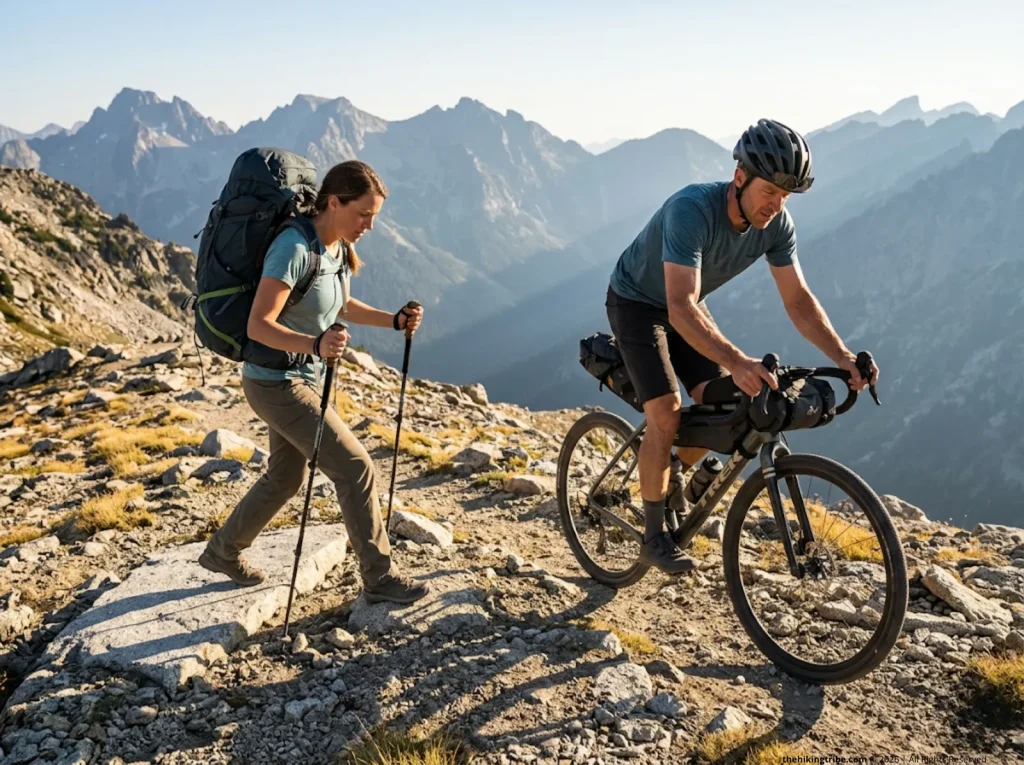
The descent started at 60°F and ended at 32°F ten minutes later. I crested the ridge at 22 mph, sweat-soaked jersey plastered to my ribs, and felt the first serious shivers hit on the way down. I had no idea I was 15 minutes into the early stages of hypothermia. That’s the thing nobody tells you about bikepacking: the bike turns a cool afternoon into a cold emergency. After years guiding in the backcountry and logging thousands of miles on both trails and gravel roads, the question I get most is “which one wrecks your body worse?” The answer depends entirely on which system you’re willing to sacrifice.
⚡ Quick Answer: Both modalities break you down — just in different places. Backpacking targets your structural foundation: connective tissues, spinal discs, and knee cartilage, worn down over years of vertical compression and eccentric loading. Bikepacking targets your peripherals and safety margins: the medial knee from wide Q-Factor geometry, the cervical spine from sustained forward posture, and your skin from convective cooling at speed. On flat gravel, the bike wins on joint preservation. On technical terrain above 15% grade, it becomes a 50 lb anchor. Know your terrain before you choose your modality.
| Bikepacking vs. Backpacking Comparison | ||
|---|---|---|
| Metric | Bikepacking | Backpacking |
| Typical daily mileage | 40–60 mi | 10–20 mi |
| Primary joint stress | Medial knee (Q-Factor) | Knees + ankles (impact) |
| Caloric burn — flat terrain | 400–500 kcal/hr | 200–300 kcal/hr |
| Acute injury risk | Higher — fractures, concussions | Lower — sprains, blisters |
| Wind chill exposure | High — 12–25 mph self-generated | Negligible — ~2 mph walking speed |
| Gear volume limit | 10–15L bikepacking bags | 40–70L packs |
The Physics of the Load — Sprung Mass vs. Human Chassis
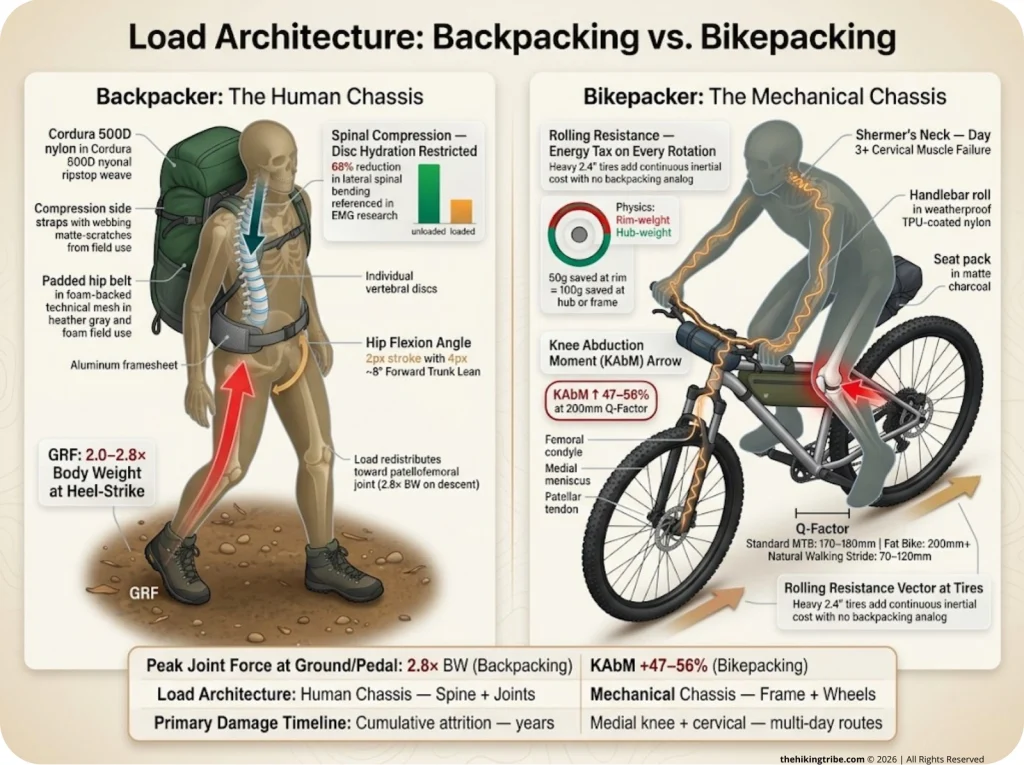
Here’s where most comparison articles get it wrong. They compare backpacking and bikepacking as if the only variable is speed. The actual difference is mechanical architecture — specifically, what acts as the chassis.
In backpacking, your musculoskeletal system is everything: the chassis, the suspension, and the engine simultaneously. Every ounce in your 30 lb pack is riding directly on your frame. During heel-strike on level ground, your body absorbs ground reaction forces that exceed 2.0 to 2.8 times your body weight. On a downhill, that number goes higher. The EMG analysis of backpack load on spinal biomechanics published in PMC shows exactly what this does: a 12% body-weight load reduces erector spinae and multifidus activation and cuts lateral spinal bending by 68–69% and axial rotation by 33–35%. Your pack straps are stenting your spine. The pumping action that keeps spinal discs hydrated gets cut off. Do that enough days in a row and the wear is cumulative.
Bikepacking transfers that vertical compression to the frame. You’re still the engine, but you’re no longer the suspension. The mechanical load shifts from “joint impact” to “rolling resistance.” That trade-off sounds like a win — and on flat terrain, it is. But the bike introduces unsprung mass at the wheels and tires, transmitting vibration directly through the handlebars into your wrists, palms, and soft tissues in ways a loaded backpacker never experiences.
The rotational inertia detail matters more than most people think. A 50g saving at the rim is worth 100g at the hub or frame, because weight at the rim fights you on every acceleration and every climb. Heavy tires on a bikepacking rig aren’t just extra weight — they’re a continuous energy tax with no analog in backpacking’s static load model. Read more about how pack weight distribution shifts your center of gravity to understand why both systems punish you when weight placement goes wrong.
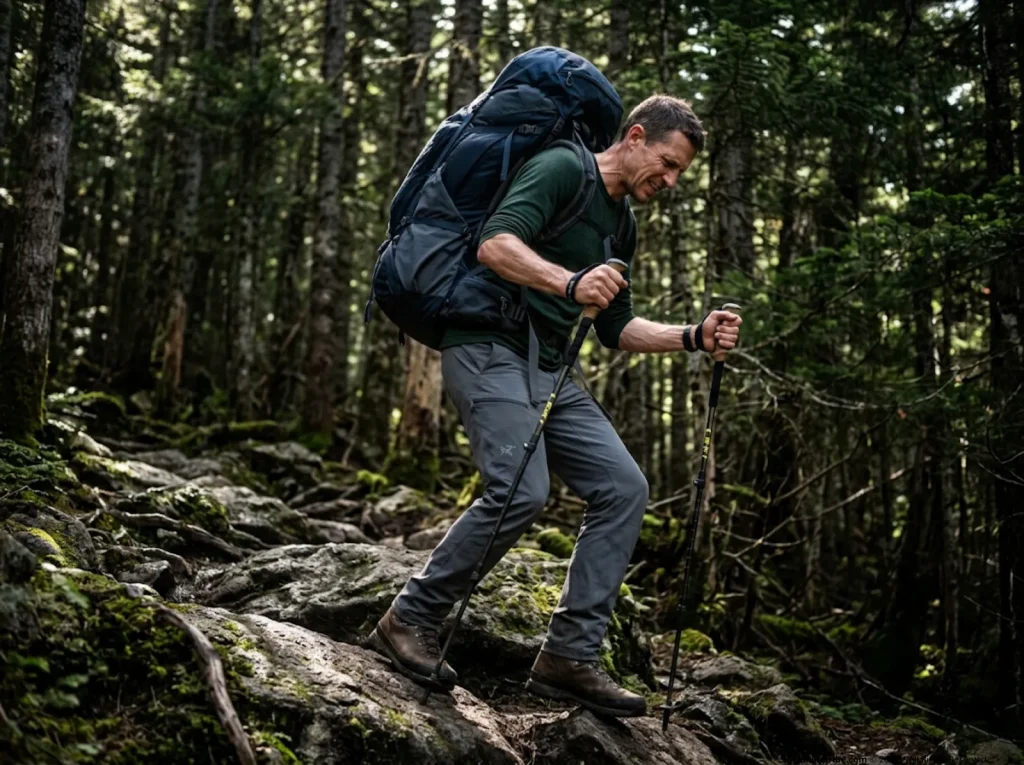
Pro tip: The moment your pack exceeds 15% of body weight, your gait reorganizes. You stop hiking and start surviving the load. On multi-day trips, the first 24 hours feel manageable. By day three, that reorganized gait is loading structures that weren’t designed to absorb it.
The Biomechanics of Damage — Knee Killers in Each Modality
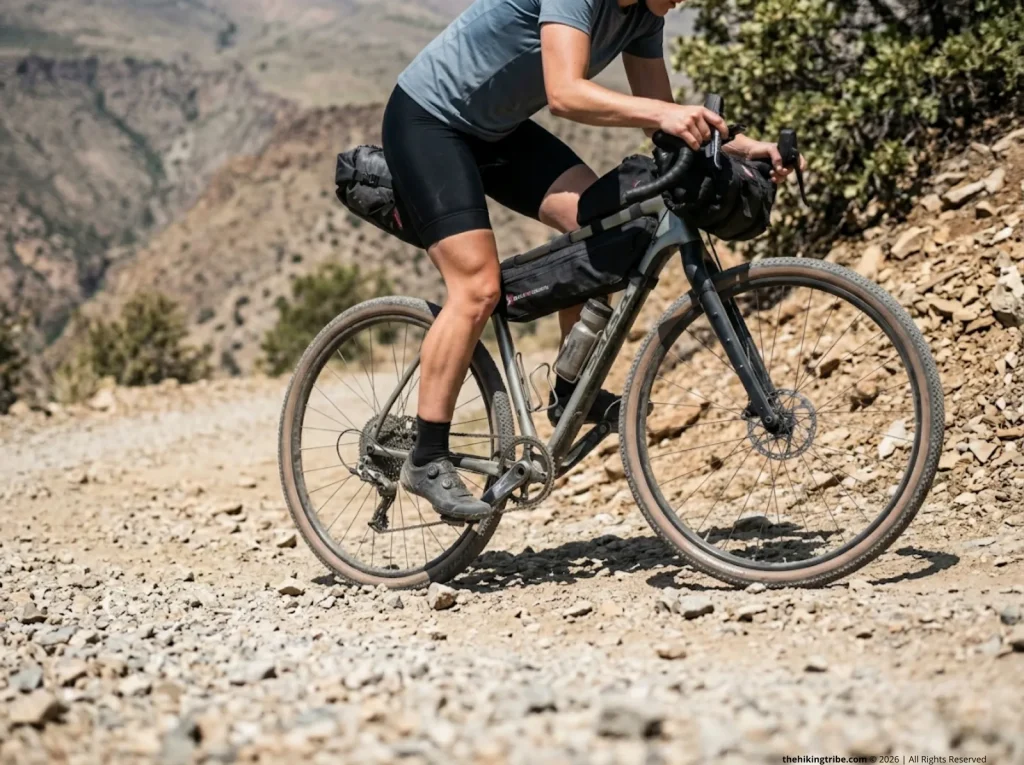
Both modalities wreck your knees. They just wreck different parts of them through completely different mechanisms.
The Hiker’s Knee — Impact Loading and the Connective Tissue Tax
The patellar tendon and Achilles tendon are the first casualties of backpacking. Both are avascular — meaning they heal slowly — and both take eccentric loading on every downhill step. When you’re descending with a loaded 30 lb pack, the shear forces at the patellofemoral joint spike well above the 2.8× body weight baseline recorded on flat ground.
Blisters affect 64% of long-distance hikers, according to PubMed data. That sounds trivial until you understand what a single hot spot actually does: it forces a gait alteration that creates secondary strain at the hip and lower back. The ankle sprain is the most frequent single injury in hiking — accounting for 69–100% of lower-extremity incidents. And ankle sprains don’t just hurt your ankle. They change how you walk, and how you walk changes how your spine loads. Learn how trekking poles redistribute knee load during descents — it’s one of the few interventions with actual mechanical backing.
The Cyclist’s Knee — Q-Factor and the Medial Compartment Problem
Most bikepacking guides ignore Q-Factor entirely. That’s a problem, because Q-Factor — the horizontal pedal-to-pedal distance — is the hidden variable that decides whether your medial knee survives a multi-day route.
Standard mountain bikes run a Q-Factor of 170–180mm. Fat bikes push past 200mm. Your natural walking stride is 70–120mm. That gap matters: Q-Factor and increased knee abduction moment in cyclists research shows that widening the pedal stance raises peak Knee Abduction Moment (KAbM) by 47–56%. In walking, a wider stance reduces medial knee loading. On a bike, it does the exact opposite. For a bikepacker grinding up a sustained grade in high torque, the medial cartilage is under targeted, repetitive assault with every pedal stroke.
Then there’s Shermer’s Neck — cervical muscle failure from sustained forward-leaning posture — unique to multi-day bikepacking. By day three of a long route, the neck muscles simply stop holding the head up reliably. It has no equivalent in backpacking.
The Injury Profile Comparison — Where Each Modality Breaks You
Mountain biking injuries are more severe on average: higher rates of upper-extremity fractures (clavicle, wrist), head injuries, and concussions — driven by speeds that a loaded hiker never approaches. Ulnar neuropathy from sustained handlebar pressure over multiple days produces numbness and weakness in the ring and pinky fingers. Backpacking’s injury profile is dominated by lower extremity: connective tissue attrition, blisters, and ankle sprains. The bottom line is this — backpacking breaks you slowly over time. Bikepacking breaks you acutely, with higher severity when it goes wrong.
Metabolic Warfare — The Energy Efficiency Ratio
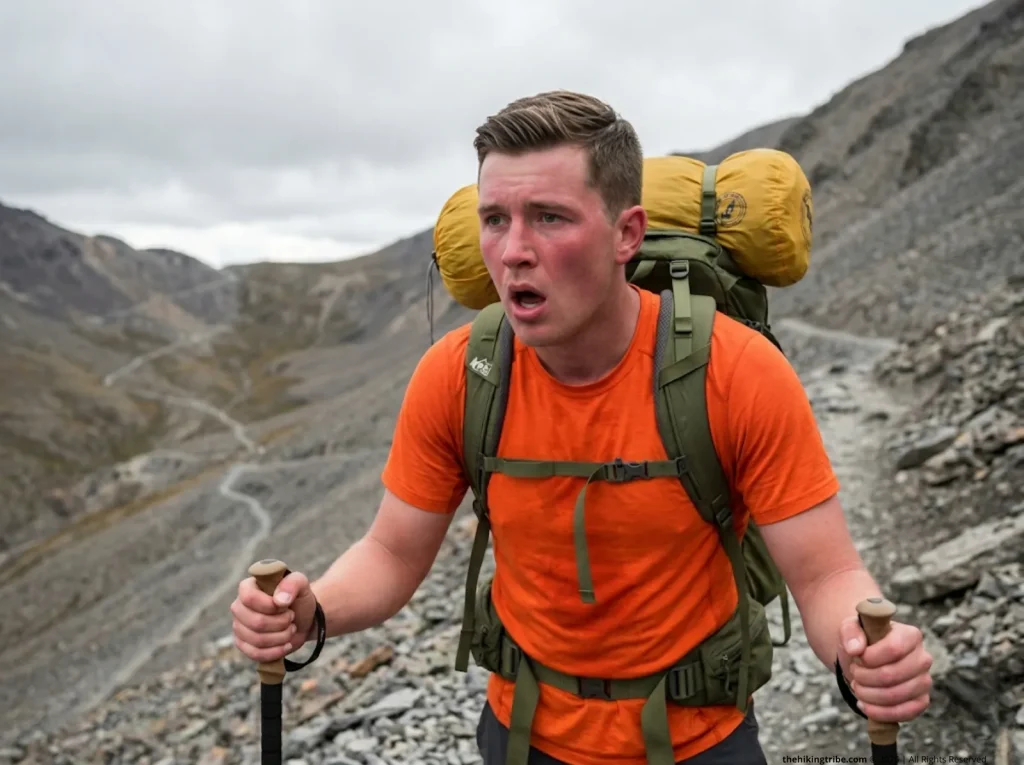
On flat terrain, biking covers approximately 3 times the distance for the same caloric output as hiking. That advantage is real. But it collapses fast above 4% grade, and it tells you nothing about what happens to the body when the terrain fights back.
Calories Per Mile — The Field Math Nobody Does
Flat terrain hiking burns 200–300 kcal/hr. Flat bikepacking burns 400–500 kcal/hr — higher, because rolling resistance from loaded bikepacking bags costs more than people expect. On steep climbs, both modalities converge at 750–800+ kcal/hr. The efficiency gap that made the bike look attractive disappears the moment the grade gets serious.
Military research from the physiology and biomechanics of military load carriage performance study establishes 45% of aerobic capacity as the sustainable ceiling for multi-day load carriage. Above 47%, systemic fatigue and muscle tissue breakdown accelerate. Bikepackers breach that threshold regularly on sustained climbs. For guidance on calibrating caloric intake for multi-day load carriage, the math is different for each modality: plan 3,500–5,000 kcal/day for bikepacking versus 2,500–3,500 kcal/day for comparable backpacking intensity.
Respiratory Physics — The Chest Strap Penalty
This is the one nobody talks about. Tight backpack chest straps mechanically restrict how much your lungs can expand — limiting airflow and raising the oxygen cost of breathing. Research shows that 10kg of tightly fitted load can increase your oxygen demand by 12–17% compared to a 5–6% increase for a better-distributed equivalent load. Your body responds by shunting blood away from the legs to support the laboring diaphragm. You don’t feel this as a chest problem. You feel it as sudden, unexplained leg fatigue on grades that shouldn’t be this hard.
Pro tip: Loosen your chest strap on sustained climbs above 10% grade. The strap that keeps your pack from swaying on flat trail becomes a breathing restriction on a sustained grade. This is counterintuitive enough that most hikers never figure it out on their own.
Thermoregulation — How Speed Becomes a Threat
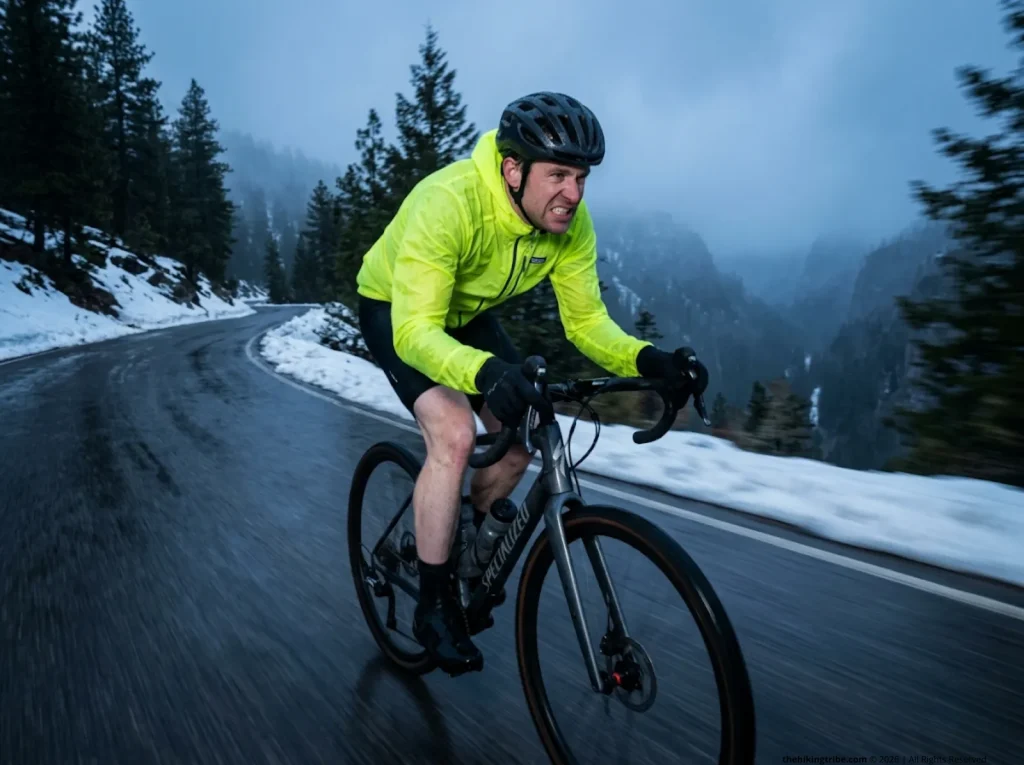
Hikers move at 2 mph. Bikepackers move at 12–25 mph. That difference in speed is the entire thermoregulation story, and most people don’t take it seriously until they’re already in trouble.
The Wind Chill Equation at 20 mph
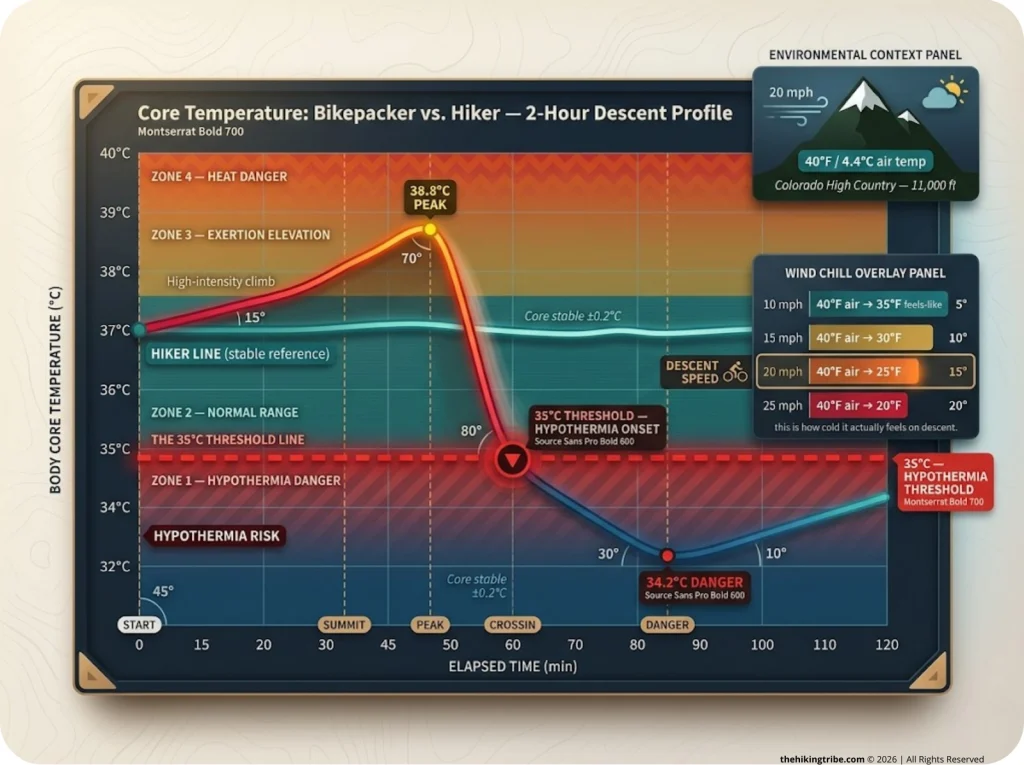
At 40°F air temperature, a cyclist descending at 20 mph experiences a feels-like temperature of 30°F — a 10-degree swing hitting wet, post-climb skin. The NWS wind chill temperature chart validates this physics. A hiker walking into a 15 mph headwind never generates their own wind chill. A bikepacker does it continuously on every descent.
The pattern that sends people into trouble is predictable: high-intensity climb → core temperature spikes → sweat soaks the base layer → descent begins → convective cooling accelerates moisture evaporation → core temperature crashes. I’ve seen people walk into this cycle in July in the Colorado high country. The energy efficiency ratio that makes bikepacking faster on flat ground is the same physics that makes you dangerously cold on the way down.
Clothing System Physics — Why Hiking Gear Fails on a Bike
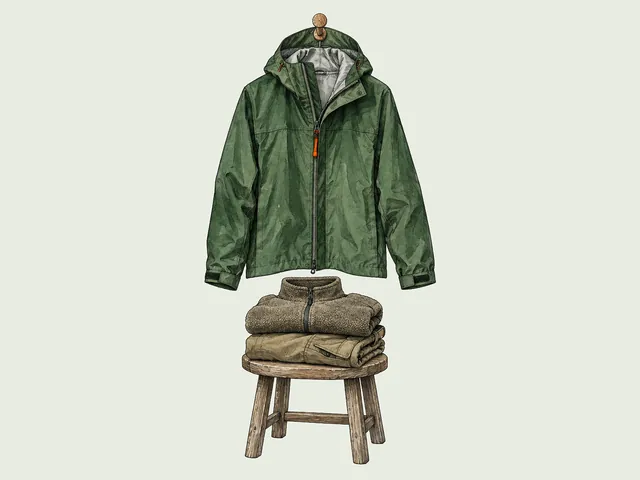
The insulation principles are identical. The timing is the problem. A hiking fleece is designed for steady-state activity. A bikepacker needs a system that responds to a 15-minute interval shift from 400 watts of climbing output to passive descent at freezing temperatures. Wind shirts rated at low CFM (cubic feet per minute airflow) are the most effective single tool for managing convective heat loss on descents — a concept the backpacking world rarely discusses because hikers rarely generate 20+ mph across their skin.
Wet cotton on a bike isn’t just uncomfortable — it’s a hazard. The thermal conductivity of wet cotton is roughly 25 times higher than dry wool. That’s not a figure from a marketing sheet. That’s the gap between uncomfortable and hypothermic. Learn more about using CFM-rated wind shirts and their role in preventing convective hypothermia before your next route with big descents.
Pro tip: Pack your wind shirt at the top of your frame bag or in your handlebar roll where you can grab it at the summit without removing your pack. A wind shirt you can’t reach in 20 seconds at the top of a descent is a wind shirt that doesn’t exist.
The Gear Science — Volume, Weight, and Mode-Specific Design
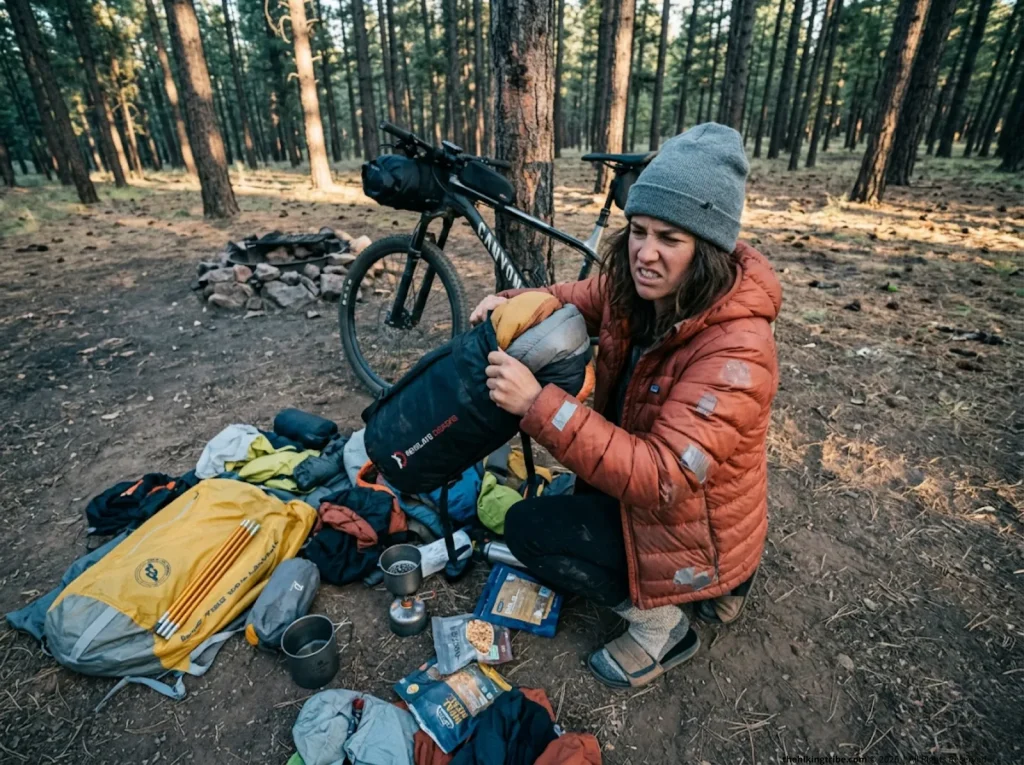
This is where people transitioning from backpacking to bikepacking consistently underestimate what they’re getting into. The constraint isn’t weight. It’s volume and geometry.
Why Your 60L Pack Cannot Go on a Bike
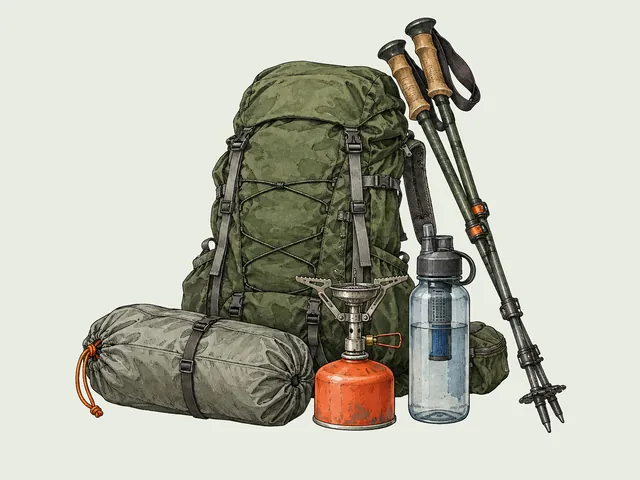
Frame bags, seat packs, and handlebar rolls on a standard bikepacking setup give you 10–20L combined. Your 60L backpack holds 40–70L. That’s not a minor adjustment — that’s a completely different packing philosophy. The Big Agnes Tiger Wall Bikepack case study makes this concrete: the bikepacking version uses “ShortStik” 12-inch pole segments instead of standard 18-inch segments specifically to fit handlebar storage. The trade-off is 7 oz and a different setup geometry. The bike handles the extra mass. Your handlebars and knees don’t handle the bulk.
For anyone doing the math on calculating your base weight and what actually belongs on a bike vs. a back, the calculation is different in each modality. Volume constraints force harder resupply decisions. Filter systems, stoves, and water capacity all get radically downsized.
Can You Use Backpacking Gear for Bikepacking? The Physics Answer
The short answer is no, and the physics explains why. Waterproofness ratings tell one story at hiker speeds and a different one at 20 mph. A tent rated at 1,200mm hydrostatic head is adequate standing in rain at 2 mph. At 20 mph, wind-driven rain hits the fabric with significantly higher dynamic pressure. The effective waterproofing demand changes with speed.
A 60L pack mounted on a rear rack elevates your center of gravity to the worst possible position on a bike — high and lateral. On technical terrain, that instability compounds every steering input. Revelate Designs pioneered the solution: bags attached directly to the frame triangle instead of racked above it. Frame-mounted bikepacking bags keep weight low and central. Repurposed stuff sacks and ovoid backpacks create handlebar interference and mechanical stress points that purpose-built bags eliminate. The lesson for transitioning trekkers is that cross-modality gear saves money and costs you stability at the exact moment you need it most.
Technical Terrain and the Hike-a-Bike Paradox
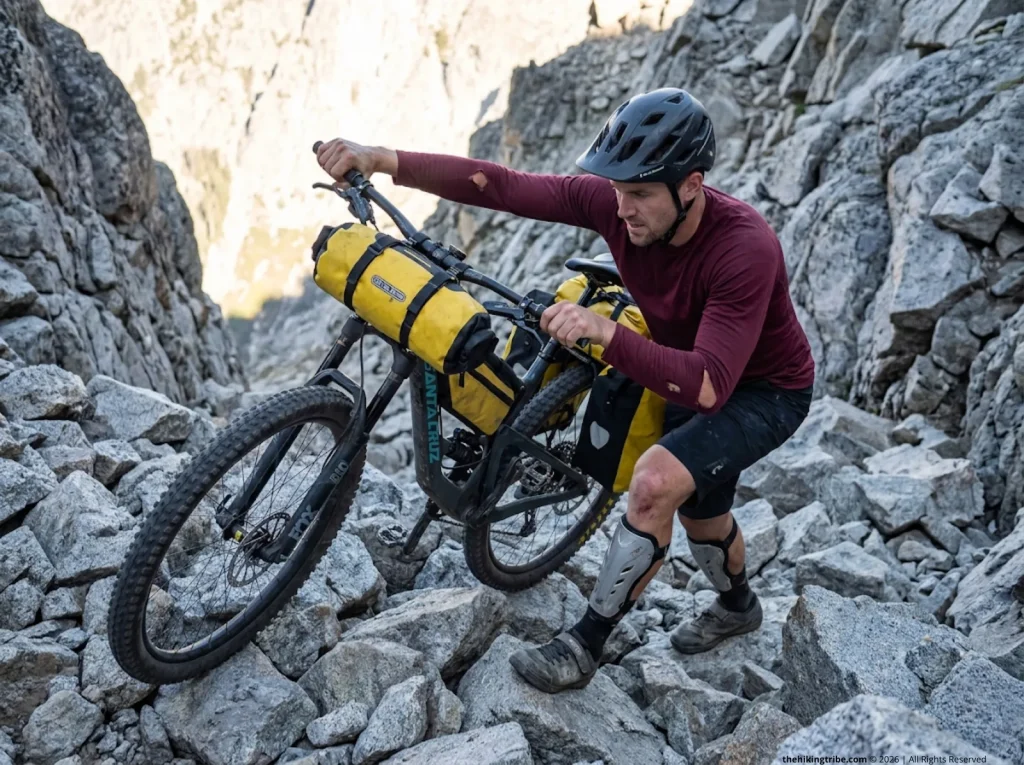
Anyone who has pushed a loaded bike up Class 3 terrain knows something that no comparison article adequately captures: the bike stops being an asset the moment the trail gets serious.
When the Bike Becomes the Burden — Class 3 and Beyond
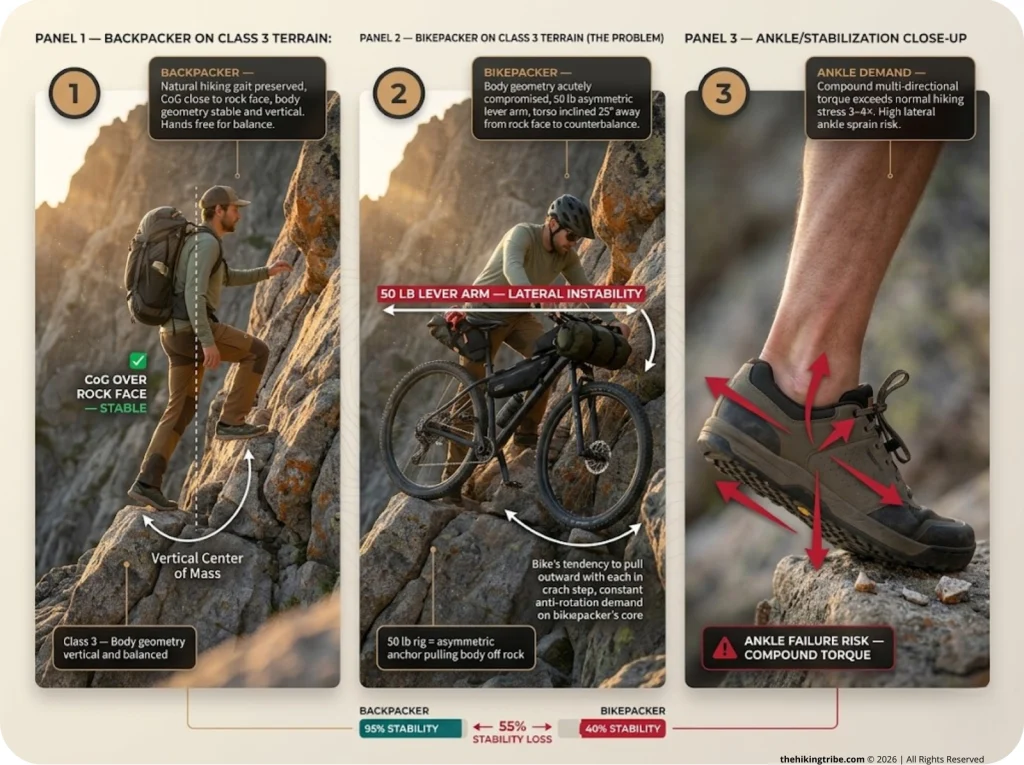
On technical terrain — Class 3+ scrambling, loose scree, talus — the efficiency advantage inverts completely. A 50 lb loaded bike on a loose slope is an asymmetric, offset load you have to fight while simultaneously fighting the terrain. Pushing it requires sustained anti-rotation core work and asymmetrical upper-body recruitment that has no equivalent in backpacking. Heart rate during hike-a-bike sections frequently exceeds both pure riding and pure hiking because the body is simultaneously fighting gravity, bilateral asymmetry, and mechanical wheel resistance.
Center of Gravity in Technical Terrain — The Lever Arm Problem
The systematic review of injury types by anatomical location for mountain bikers and hikers documents the severity differential clearly: when things go wrong at speed on technical terrain, they go badly wrong. A backpacker on Class 3 terrain can press their center of gravity close to the rock face and use the pack as a counterbalance. A bikepacker pushing a loaded bike creates a massive lateral lever arm — the bike pulls outward at every move, dramatically increasing demand on the stabilizing muscles of the foot, ankle, and hip that are already depleted from hours of riding.
The Safety Matrix — When Things Go Wrong in the Backcountry
SAR teams use the FAILURE acronym — Failure to understand the environment, Additional medical implications, Inadequate preparation, Lack of teamwork, Underestimating logistical needs, Rescue vs. Recovery decisions, Equipment not mastered — to analyze technical rescue outcomes. Applied to these two modalities, the risk profiles look very different.
The FAILURE Acronym — Rescue Risk in Each Modality
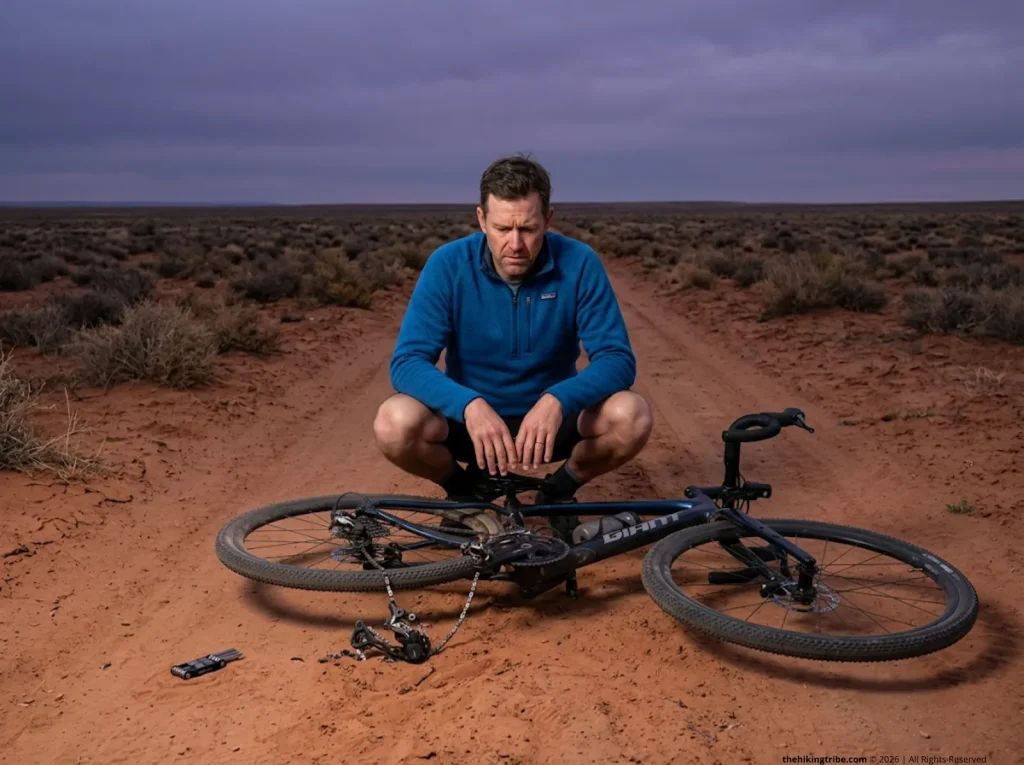
For bikepackers, “I” (Inadequate preparation) and “E” (Equipment not mastered) carry both mechanical and physiological weight. A broken derailleur 40 miles from the nearest trailhead in a no-cell zone is not a manageable biological injury. It’s a logistical rescue. NOLS wilderness rescue risk screening for remote programs addresses exactly this risk profile in technical backcountry contexts. For backpackers, the dominant failure point is “A” — Additional medical implications — the slow cumulative biology of tendinopathy, blister-altered gait, and hypoxia on altitude terrain.
Extraction Weight — The Metal Victim Problem
Rescuing a backpacker requires extracting one human from technical terrain. Rescuing a bikepacker frequently means extracting one human plus a 50 lb mechanical victim that often cannot be abandoned due to cost or Leave No Trace regulations — sometimes requiring additional personnel just to manage the bike. This doubles the logistical complexity and statistically increases the hazard to the rescuers themselves.
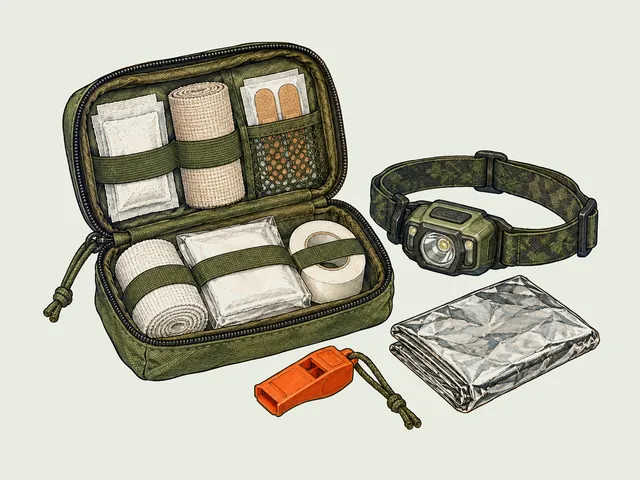
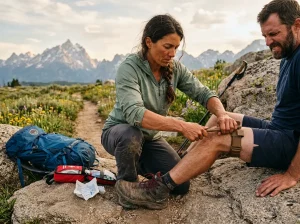
The decision matrix for remote mechanical failures is clear: if you’re solo, in a no-cell zone, and the bike breaks — or you break — backpacking offers a dramatically simpler self-rescue pathway. A hiker with a broken ankle can fashion a splint and move toward civilization. A bikepacker with a broken derailleur has a different problem entirely. Review your wilderness first aid priorities when you’re miles from help before committing to any remote bikepacking route solo.
The Verdict
Three things the data makes clear:
Backpacking wrecks your structural foundation, slowly. Consistent high joint impact, vertical compression, and eccentric loading target connective tissues, spinal discs, and the patellofemoral joint over years. It’s an attrition game that rewards progressive loading and smart training. You can manage it. You can slow it. But you can’t avoid it if you’re putting in serious miles under serious weight.
Bikepacking wrecks your peripherals and safety matrix, acutely. The medial knee, the cervical spine, and the cardiovascular system absorb the daily toll. But the real risk is the high-speed crash and the remote mechanical failure that eliminates self-rescue options in terrain where options matter.
The terrain makes the choice. On gravel ribbons and fire roads, the bike is a physics gift — miles per calorie, joint compression eliminated, energy efficiency ratio tilted hard in your favor. On Class 3 terrain or technical singletrack above tree line, the bike is a 50 lb anchor that wants to take you down with it.
Before your next trip, map the percentage of your intended route that exceeds a 15% grade or goes Class 3+. That single number — your hike-a-bike percentage — tells you more about which modality will wreck you first than any gear comparison ever could. Then train accordingly, pack accordingly, and go find out for yourself.
FAQ
Is bikepacking harder than backpacking?
It depends on the terrain and the metric. On flat-to-rolling gravel, biking covers roughly 3 times the distance for the same caloric output as hiking under load — so per-mile, the bike wins. But on sustained technical climbs or hike-a-bike sections with a 50 lb loaded bike, the physical exertion and injury risk exceed anything backpacking produces on equivalent terrain.
Can you use a regular backpacking pack for bikepacking?
Functionally, no. A large backpack mounted on a rear rack elevates your center of gravity, creates high lateral instability on technical terrain, and interferes with bike handling. Purpose-built bikepacking bags — frame bag, seat pack, handlebar roll — distribute weight through the bike’s main triangle and keep the CoG low. The volume trade-off is real: you carry 10–20L instead of 40–70L. Plan your resupply strategy accordingly.
What is the difference between bikepacking and bike touring?
Bikepacking uses body-conforming frame bags designed for off-pavement, technical terrain — singletrack, gravel roads, and backcountry routes. Bike touring uses panniers mounted on racks, optimized for pavement or paved-gravel roads with higher total volume and gear weight capacity. Bikepackers prioritize terrain; tourers prioritize distance and volume.
Which is safer if something goes wrong on a remote route?
Backpacking offers a significantly simpler self-rescue pathway. A hiker with a sprained ankle can fashion a splint and walk or hobble out. A bikepacker with a broken derailleur, snapped chain, or bent wheel 40 miles from civilization in a no-cell zone has no equivalent option. The mechanical complexity of a bicycle is a liability when it breaks in remote terrain.
How many calories do you need per day for each modality?
Plan for 3,500–5,000 kcal/day for bikepacking versus 2,500–3,500 kcal/day for backpacking at comparable intensity. The bikepacker’s demand is higher despite cycling being more efficient per mile, because higher speeds and interval-intensity climbing create larger total daily energy efficiency ratio debt — especially on routes with significant elevation gain.
I've spent more than a decade researching hiking gear and trail technique. I read the specs, the forum threads and the long-term reviews, and every pick here comes with what it gets wrong.
End of the trail
You read every mile of this one. Here's where the trail goes next.