In this article
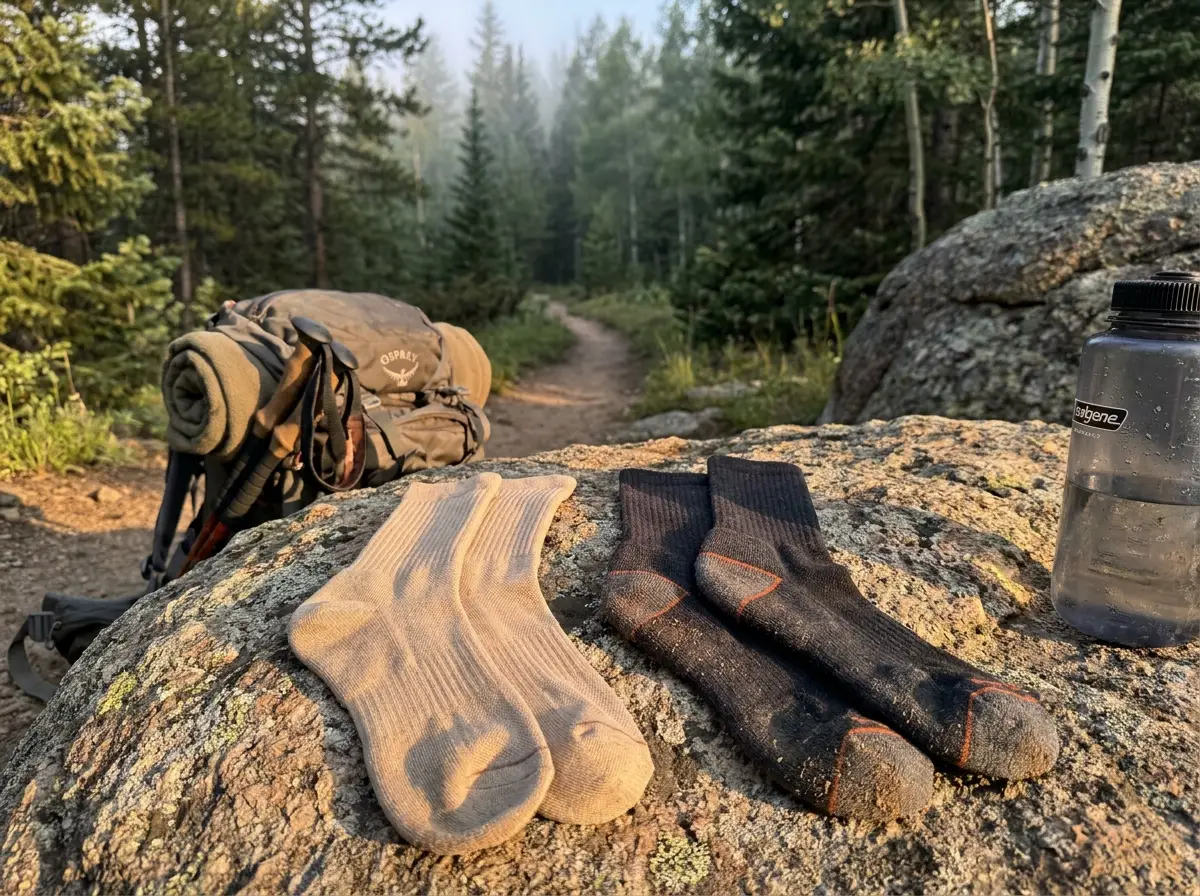
I pulled on a fresh pair of bamboo socks at the trailhead and a fresh pair of merino socks at the same trailhead three days later. Same boots, same trail, same 14-mile out-and-back with a river crossing at mile six. By the time I got back to the truck, the difference wasn’t subtle. After years of testing sock materials on everything from desert scrambles to soggy Pacific Northwest ridge walks, the data is clear — but the answer isn’t as simple as “just buy merino.”
Here’s how both fibers actually perform when the trail gets real, and which one earns a spot in your pack depending on where and when you hike.
Here’s how the two fibers compare at a glance:
| Bamboo Viscose vs. Merino Wool: Feature Comparison | ||
|---|---|---|
| Feature | Bamboo Viscose | Merino Wool |
| Warmth (dry) | Moderate | High — 18% more heat retention |
| Warmth (wet) | Poor — drops fast | High — insulates even when soaked |
| Moisture feel | Damp after 4+ hours | Dry-feeling up to 30% absorption |
| Odor resistance | 1 day max | 2–3 days on trail |
| Softness | Softest option (3x cotton) | Very soft at 18.5 micron |
| Drying speed | Slow — holds water | Moderate — releases gradually |
| Durability | 3–5 months heavy use | 12+ months with care |
| Price range | $10–$18/pair | $18–$30/pair |
What “Bamboo Socks” Actually Are (The Viscose Truth)
The Marketing vs the Label
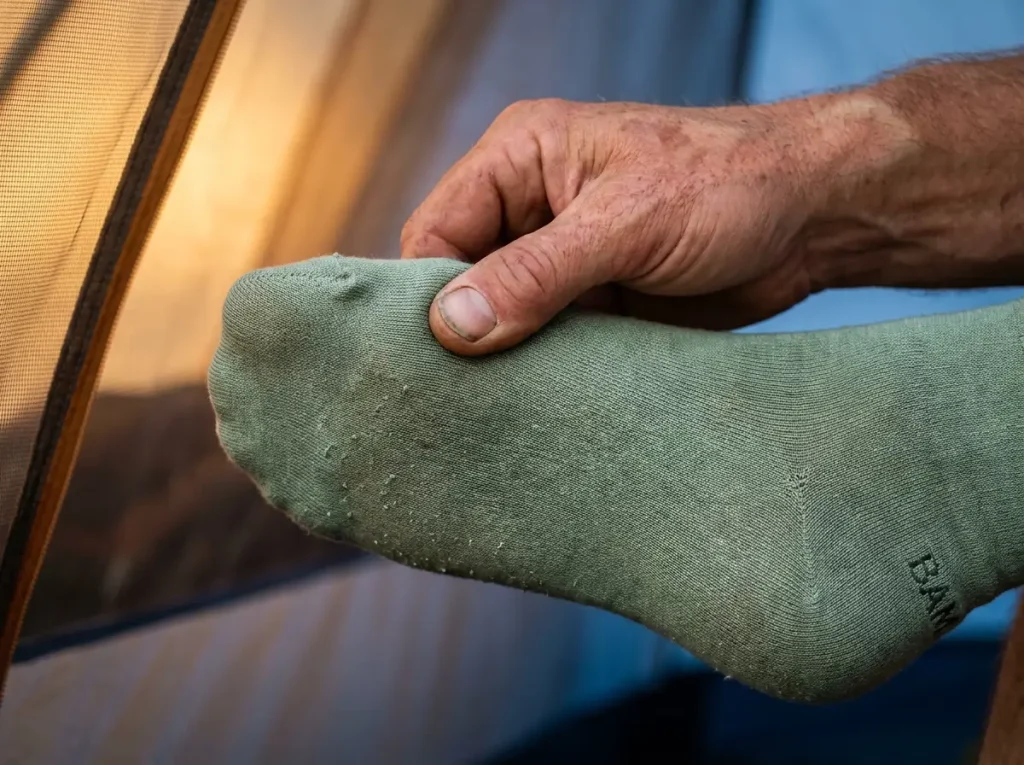
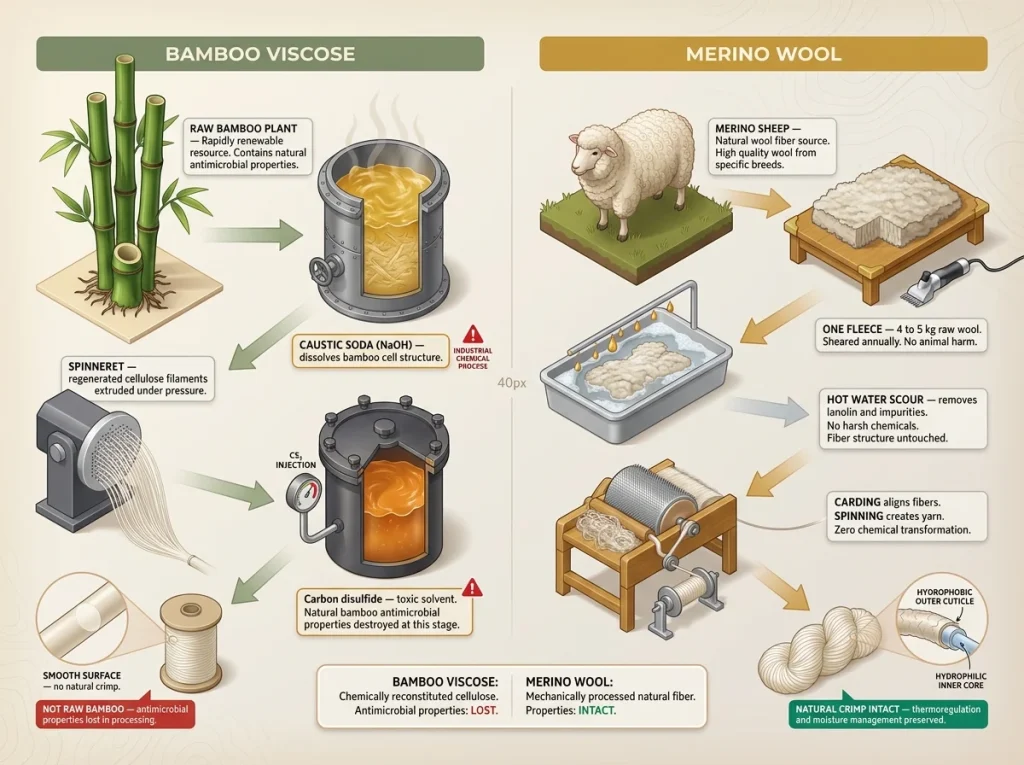
Most hikers grab a pair of “bamboo socks” thinking they’re getting natural bamboo fiber against their skin. They’re not. The FTC requires viscose-processed bamboo to be labeled as rayon because by the time bamboo pulp goes through the chemical conversion, it’s chemically identical to rayon from any other cellulose source.
The process works like this: bamboo pulp gets crushed and soaked in caustic soda to extract cellulose, then treated with carbon disulfide to create a viscose solution, then extruded into fibers. The natural antimicrobial and structural properties of raw bamboo? Gone. What you’re wearing is a regenerated cellulose fiber with a good marketing story.
What the Blend Actually Means
A typical “bamboo hiking sock” is roughly 60% bamboo viscose, 35% nylon, and 5% elastane. That nylon is doing most of the structural work — the bamboo viscose provides the soft hand feel and some moisture wicking, but it’s the synthetic blend that keeps the sock from falling apart after a few hard miles.
Pro tip: Flip the sock inside out and check the label before buying. If it says “rayon from bamboo” or “bamboo viscose,” you’re getting the processed fiber. True mechanically-processed bamboo fiber exists but is rare, rough-textured, and almost never used in socks.
Why This Matters on Trail
The viscose processing changes how the fiber handles moisture, heat, and abrasion. Understanding this isn’t gear snobbery — it’s the difference between packing the right sock for a three-day trip and ending up with perpetually damp feet by day two.
Merino Wool Fiber Science (Why It Works on Trail)
The Dual-Layer Structure
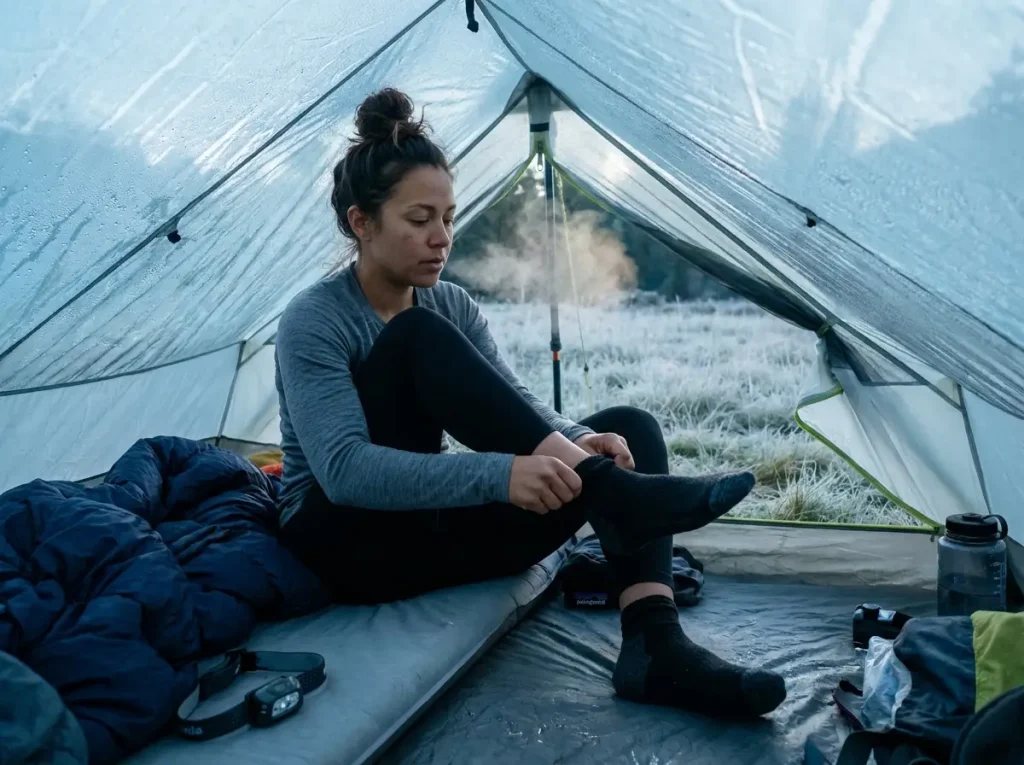
Merino wool does something no synthetic or plant-based fiber can replicate. Each fiber has a hydrophilic (water-loving) core wrapped in a hydrophobic (water-repelling) outer cuticle. Moisture vapor from your sweat gets pulled into the fiber’s interior while the surface stays dry to the touch. That’s why merino wool fibers can absorb more than 30% of their weight in moisture before they feel damp — your skin stays dry long after a bamboo sock would feel soggy.
The absorption process is exothermic too. When merino absorbs moisture, it releases a small amount of heat. On a cold morning with damp boots, that heat matters more than you’d expect.
Crimp and Insulation
Merino fibers have a natural crimp — a wave pattern along the length of the fiber that traps pockets of still air. Those air pockets are insulation. The finer the fiber (measured in microns), the more crimps per inch, and the better the insulation-to-weight ratio.
Standard wool sits around 23 microns. Good hiking sock merino runs 18.5 to 19.5 microns — fine enough to eliminate the itch that gave wool a bad reputation and tight enough to create serious thermal performance in a thin fabric.
Durability at the Fiber Level
Here’s a number that matters: merino wool fibers can bend over 20,000 times before breaking. Nylon manages about 10,000. That flex resistance is why a quality merino blend sock outlasts a bamboo viscose sock by months — the fiber itself handles the repetitive stress of heel strikes and toe push-offs without shredding.
Pro tip: Look for merino socks with at least 20% nylon in the blend. Pure merino feels incredible but pills faster. The nylon reinforcement, especially in the heel and toe, is what gets you past the 12-month mark.
Warmth Test (Wet and Dry)
The Dry Insulation Numbers
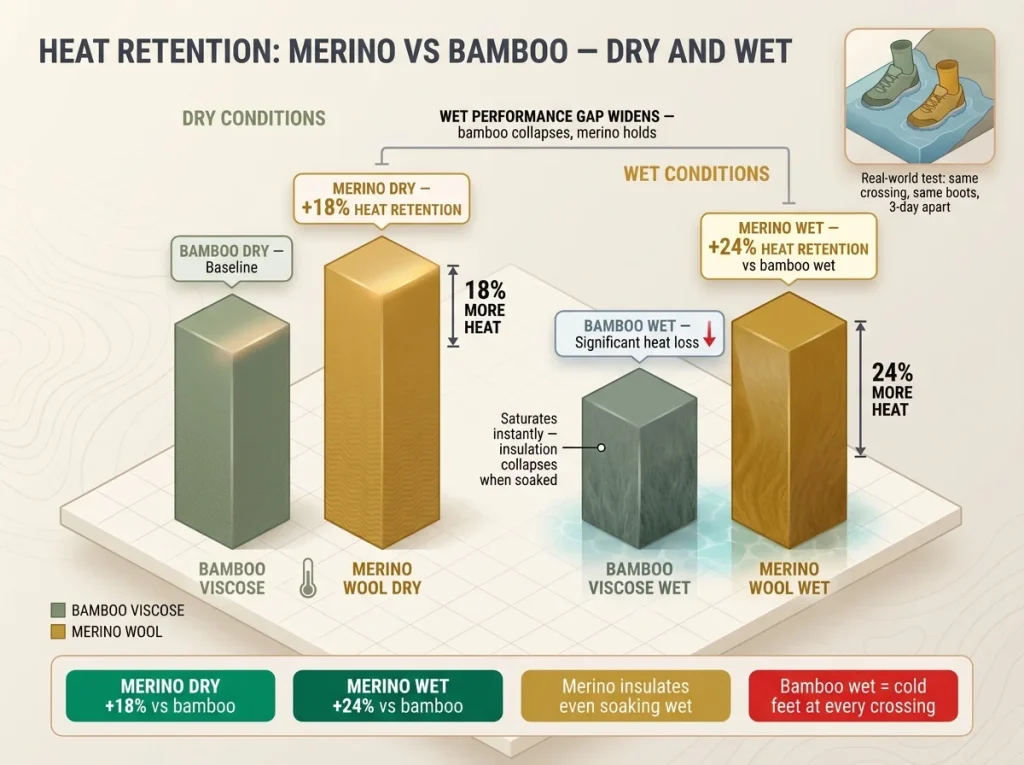
In controlled testing, merino wool socks retained 18% more heat energy than bamboo viscose socks under identical dry conditions. The bamboo sock wasn’t cold — it just didn’t trap heat the way merino’s crimped fiber structure does. On a 40°F morning at the trailhead, that 18% is the difference between comfortable toes and that slow creeping chill that never quite goes away.
The Wet Performance Gap
This is where the comparison stops being close. When both socks were wet, the performance gap widened to 24% more heat retention for merino. Bamboo viscose saturates almost instantly when submerged — it sinks and absorbs water without resistance. Merino requires active wringing to fully saturate because that hydrophobic cuticle layer fights the water.
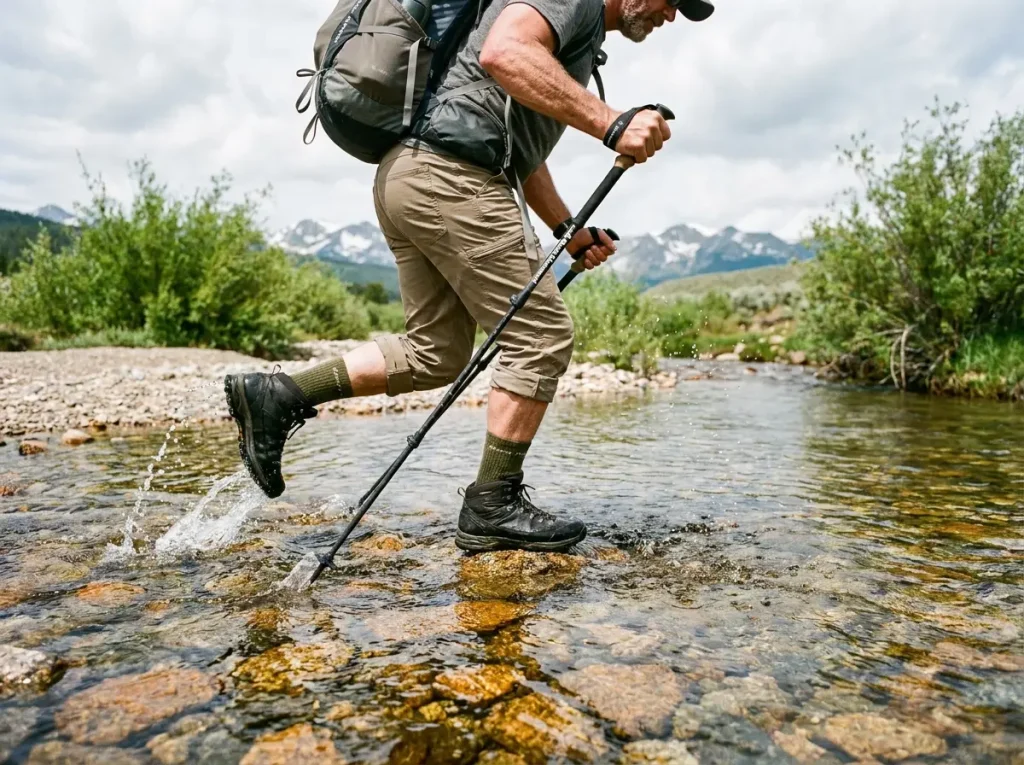
I noticed this at every stream crossing. Walking out of the water in merino socks, my feet were wet but warm. The insulation didn’t collapse. In bamboo socks on the same crossing three days later, my feet went cold within minutes and stayed cold for the next mile until friction and movement generated enough heat to compensate.
When the Cold Gets Real
Above treeline in shoulder season, sock warmth isn’t comfort — it’s safety. Bamboo viscose socks in wet boots on a windy ridge is a recipe for losing feeling in your toes faster than you’d think. Merino buys you time because it reacts to your body temperature with natural thermo-regulating properties that bamboo viscose simply doesn’t have.
Moisture Management (The Real Difference)
Two Different Approaches to Sweat
Bamboo viscose wicks moisture along the surface of the fiber — it moves liquid from your skin to the outer face of the sock. Merino absorbs moisture vapor directly into the fiber’s interior. Both “manage” moisture, but the mechanism changes everything about how the sock feels after mile eight.
Bamboo’s surface wicking works well for the first few hours. Then the fiber saturates. Once saturated, it holds water and dries slowly. Merino keeps pulling moisture inside, and because the outer cuticle stays relatively dry, your skin doesn’t register the dampness even when the fiber is carrying significant moisture load.
The Drying Speed Problem
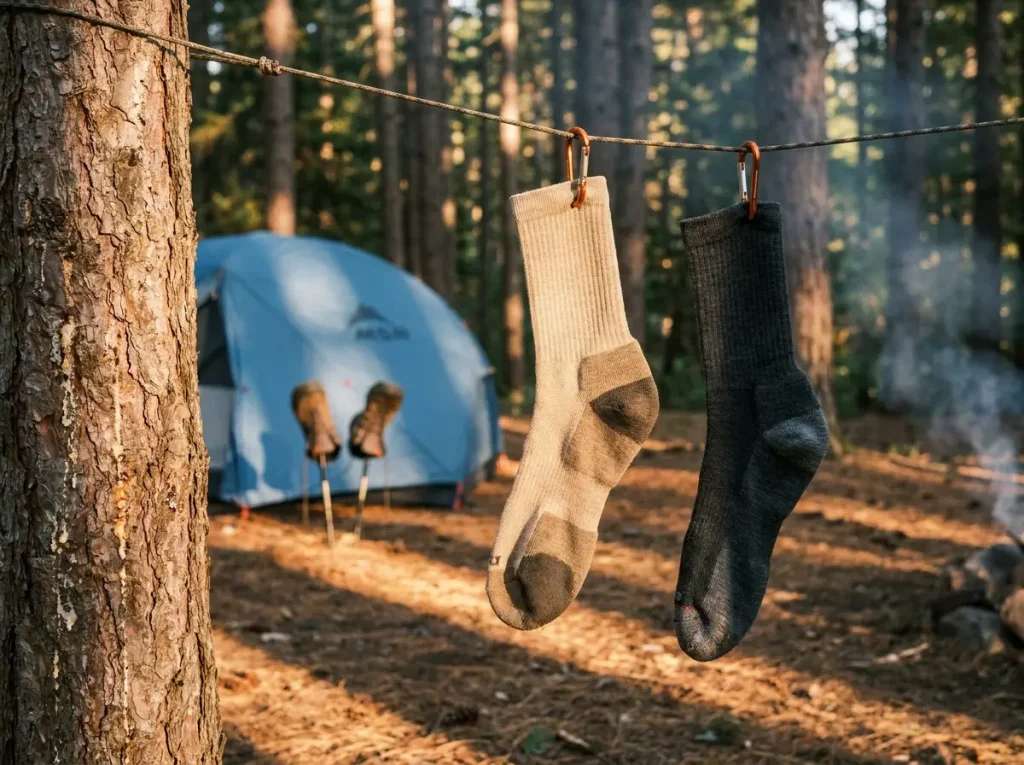
This is where bamboo loses on multi-day hikes. Hang a wet bamboo sock and a wet merino sock on the same ridgeline at camp and check them two hours later. The merino sock will be noticeably drier. Bamboo viscose holds water tenaciously — it soaked up liquid instantly in testing and released it slowly, which means your morning socks are still damp from yesterday.
For day hikes under six hours, this barely matters. For anything longer, the drying gap compounds daily.
Heavy Sweaters Take Note
If you’re someone whose feet sweat heavily, bamboo viscose can actually feel cooler initially because that surface wicking pulls heat away with the moisture. But the trade-off is a soggy sock by afternoon. Merino handles heavy perspiration better over time because the moisture gets locked inside the fiber rather than sitting on the surface where it creates friction problems.
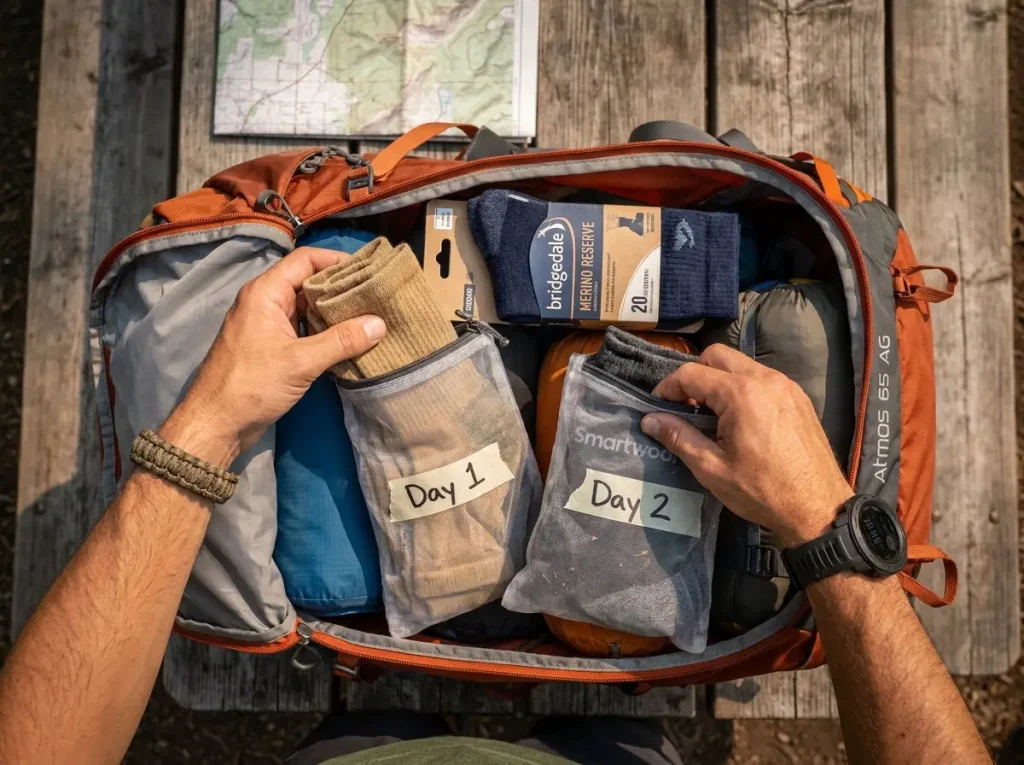
Pro tip: On hot days with heavy sweating, carry a dry pair in a mesh stuff sack clipped to the outside of your pack. Swap at lunch. Your foot care strategy matters more than the sock material when conditions push both fabrics past their limits.
Odor Resistance (The Multi-Day Truth)
Why Merino Wins This Category Outright
Merino wool’s keratin protein structure naturally resists bacterial colonization — the same bacteria that make your feet smell. The fiber’s surface is hostile to odor-causing microbes, which is why experienced thru-hikers can wear merino socks for days without clearing the shelter.
Bamboo viscose marketing claims “natural antibacterial properties,” but those properties belong to raw bamboo — not to the viscose-processed rayon that ends up in your sock. Once the fiber is chemically reconstituted, the antimicrobial advantage disappears. Forum hikers on the Camino de Santiago consistently report bamboo socks developing noticeable odor after a single hard day, while merino socks go two to three days before anyone notices.
The Practical Impact
On a three-day backpacking trip, odor resistance means fewer socks in your pack. Two pairs of merino socks with proper rotation can handle a three-day trip. You’d need three pairs of bamboo socks for the same trip, and they’d be heavier by day two because they’re holding yesterday’s moisture.
That’s extra weight and extra pack volume for worse performance. The math doesn’t work in bamboo’s favor for anything beyond day hikes.
Blister Prevention (Where the Fiber Matters)
Moisture Creates Friction Creates Blisters
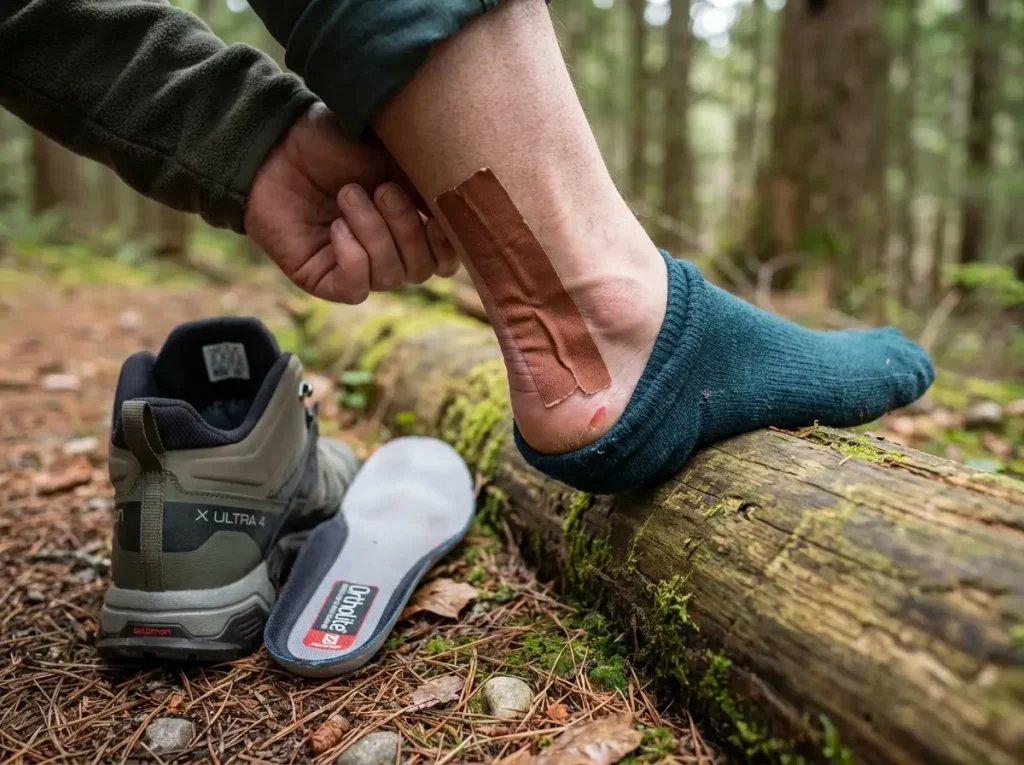
Blisters form when skin stays damp and rubs against fabric repeatedly. The single biggest factor in sock-related blister prevention isn’t cushioning or fit — it’s how well the sock manages moisture at the skin surface.
Merino’s ability to keep the skin-facing surface dry while absorbing sweat internally makes it measurably better at reducing friction blisters on long mileage days. Bamboo viscose’s tendency to hold surface moisture after saturation creates exactly the damp-skin-plus-repetitive-friction combination that produces hot spots by mid-afternoon.
Cushion Level Matters More Than You Think
Both fibers come in light, medium, and heavy cushion. For blister prevention, medium cushion in either material outperforms heavy cushion because heavy padding compresses unevenly under load, creating pressure points. A medium-cushion merino sock with terry loops on the sole distributes pressure better over long miles than a thick bamboo sock that compresses flat by lunchtime.
The Liner Sock Variable
Some hikers run a thin liner sock under their primary hiking sock to manage friction. If you prefer bamboo for its softness but need blister protection for longer distances, a merino or silk liner under a bamboo outer sock captures some of merino’s moisture advantages while keeping bamboo’s soft contact against your skin. It works, but it’s two socks doing the job that one merino sock handles alone.
Pro tip: The best sock blend for blister prevention is 40–70% merino wool, 20–50% nylon, and 1–4% elastane. That’s the sweet spot where moisture management, durability, and fit retention all work together. Skip anything with more than 5% cotton — it holds moisture and stays wet.
Durability and Lifespan (Your Cost Per Mile)
How Each Fiber Breaks Down
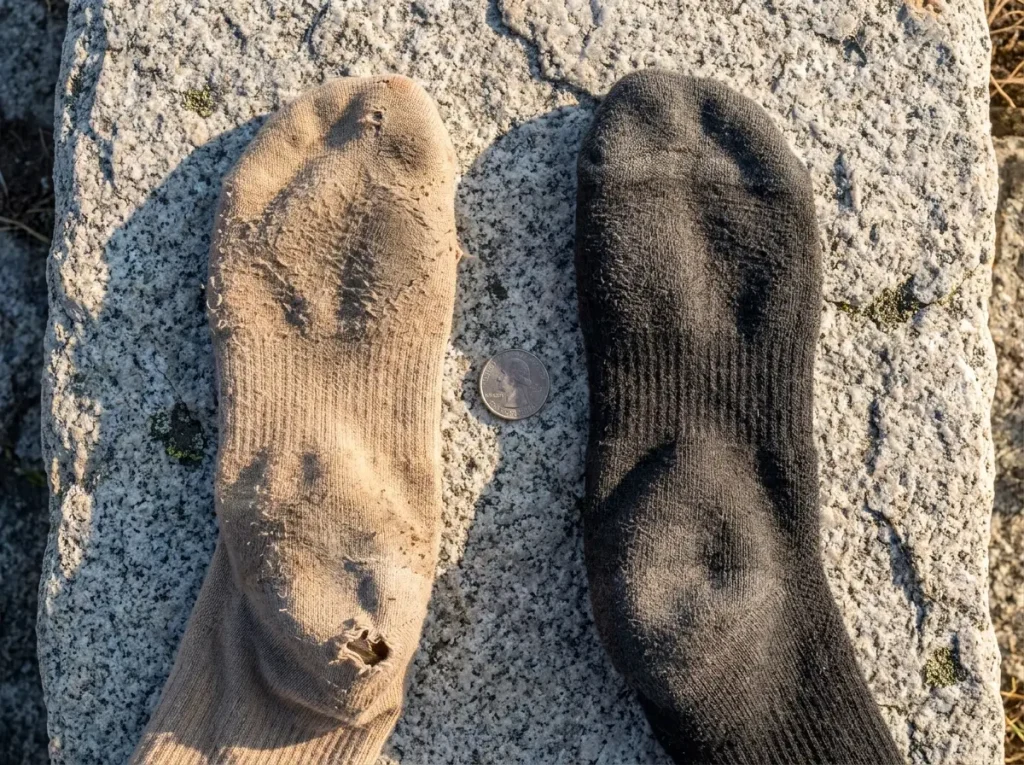
Bamboo viscose is inherently weaker under abrasion than merino wool. The fibers pill faster in high-friction zones — the ball of the foot, the heel cup, and the toe box. After three to five months of regular trail use, most bamboo hiking socks show visible thinning and pilling that degrades cushion and moisture performance. Some develop holes at the heel.
Merino blended with nylon (the standard for quality hiking socks) resists this breakdown. The 20,000-bend fatigue life of merino fibers, reinforced by nylon’s tensile strength, means a well-made pair handles 12 months or more of regular trail use without structural failure.
The Real Cost Comparison
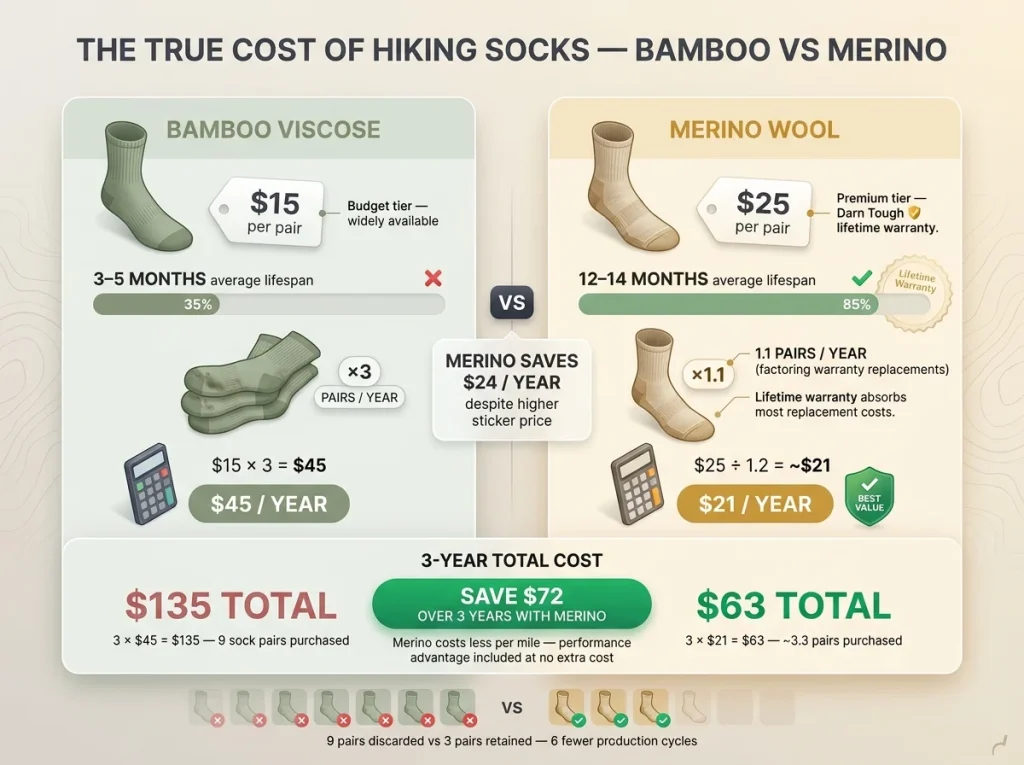
A $15 bamboo sock that lasts four months costs $45 per year. A $25 Darn Tough merino sock that lasts 14 months — and comes with a lifetime warranty — costs roughly $21 per year. Over a three-year hiking career, the “cheaper” bamboo option costs more than twice as much.
Merino wins on cost-per-mile even before accounting for the performance advantages. The premium price at the register is a discount at the trailhead.
Care That Extends the Life
Merino requires some attention: cold wash, no fabric softener (it coats the fibers and kills the moisture management), lay flat to dry or tumble on low. The fibers will felt and shrink in hot water. Bamboo viscose is lower maintenance — machine wash warm, tumble dry — but that convenience doesn’t offset the shorter lifespan.
When Bamboo Wins (Yes, It Has Its Place)
Hot Weather Day Hikes
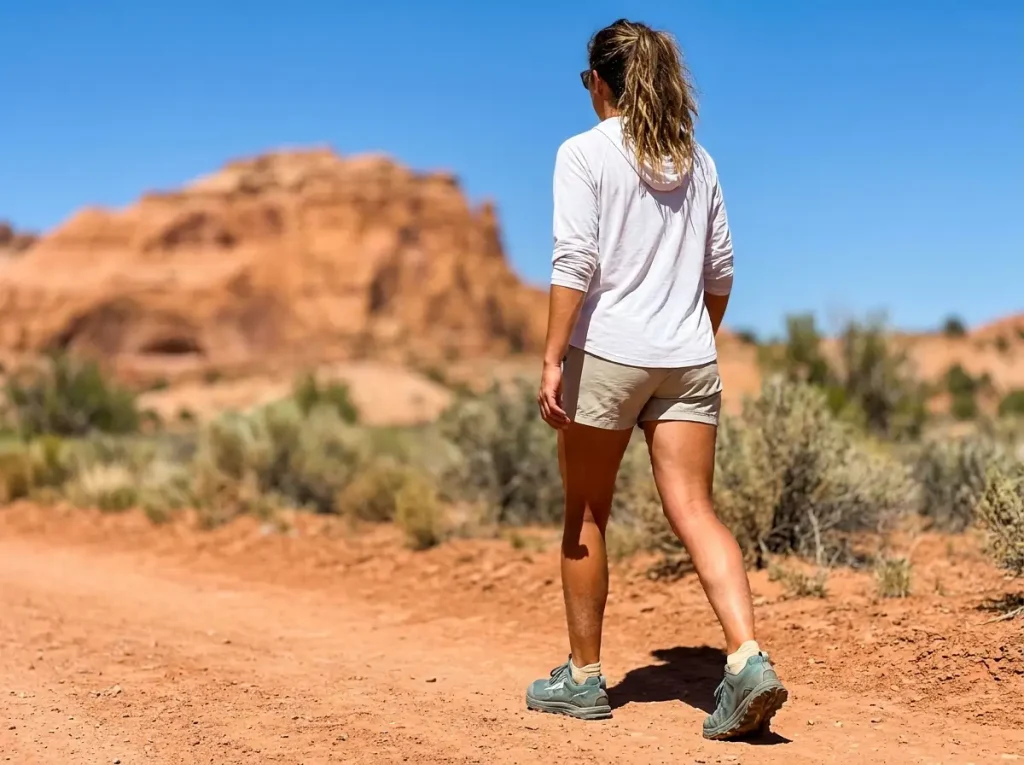
On blazing summer trails below treeline where the temperature pushes past 85°F and you’re out for four to six hours, bamboo viscose’s surface wicking and breathability actually work in its favor. The evaporative cooling from that surface moisture feels good when you’re overheating. Merino’s moisture absorption can feel stuffy in extreme heat because it traps warmth as part of its thermoregulation design.
For short hot-weather hikes with dry trail conditions and no water crossings, bamboo socks in low-cut trail runners are lighter, softer, and more breathable.
Sensitive Skin and Wool Allergies
Some people genuinely react to wool — even fine merino. If your skin itches or breaks out regardless of micron count, bamboo viscose is the next best option for hiking. It’s softer than any synthetic and manages moisture better than cotton. The performance gap versus merino is real, but it’s a meaningless comparison if you can’t wear merino in the first place.
Everyday and Travel Use
Bamboo viscose socks are excellent everyday socks for office, travel, and casual walking. They’re soft, temperature-neutral, and comfortable for eight hours at a desk. Merino’s performance advantages are overkill for a flight or a walk around town — save the good socks for the trail.
The Season-by-Season Decision Matrix
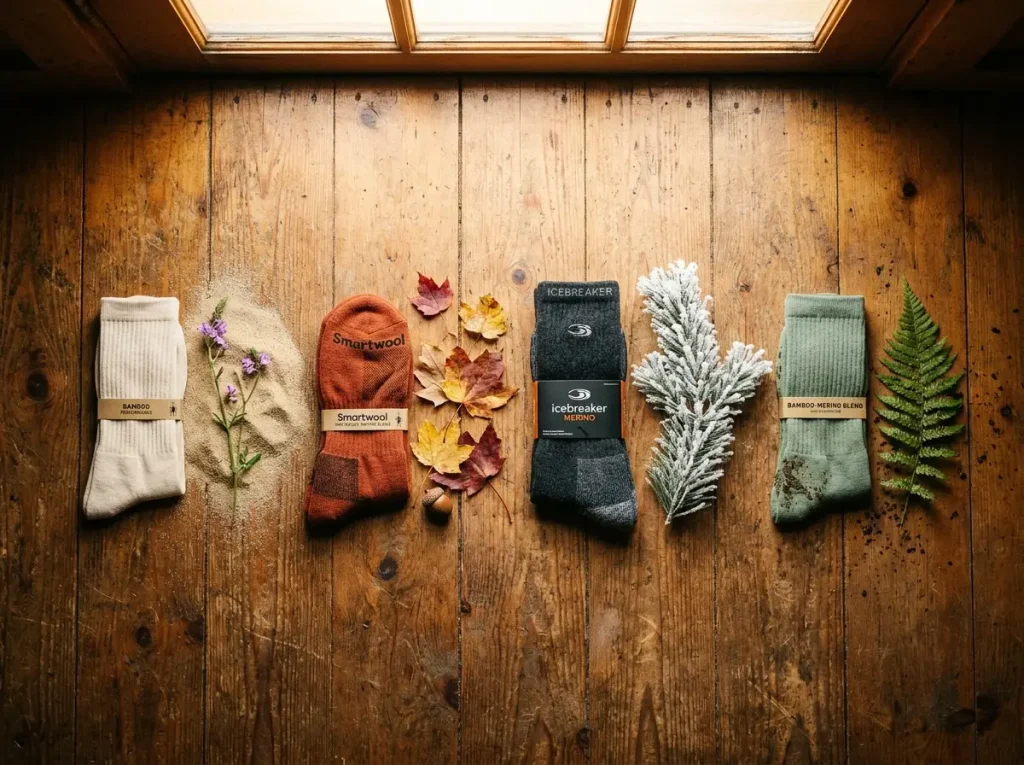
Summer (June–August)
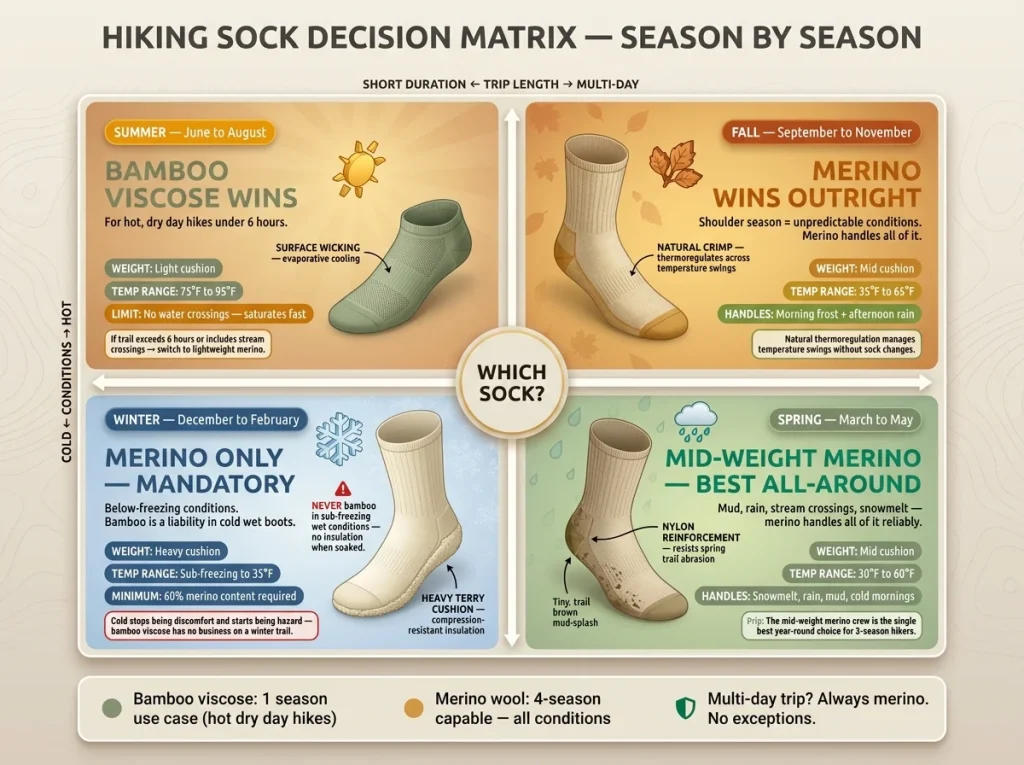
Short day hikes under 8 miles in hot, dry conditions: bamboo viscose wins. You’ll appreciate the breathability and cooling effect. But the moment the hike extends past six hours or includes water crossings, switch to a lightweight merino blend.
Fall and Spring (Shoulder Seasons)
Merino wins outright. Shoulder season weather is unpredictable — morning frost, midday warmth, afternoon rain. Merino’s thermoregulation handles the temperature swings that bamboo can’t. A mid-weight merino crew sock is the single best all-around choice for April through May and September through November.
Winter (December–February)
Merino is the only serious option. Heavy-cushion merino socks with at least 60% wool content in insulated boots are non-negotiable for sub-freezing conditions. Bamboo viscose has no business on a winter trail — the instant moisture saturation and poor insulation make it a liability when cold stops being uncomfortable and starts being hazardous.
Multi-Day Trips (Any Season)
Merino always. The odor resistance, drying speed advantage, and consistent moisture management over multiple days make it the only practical choice. Your sock rotation strategy should be built entirely around merino pairs.
Conclusion
Merino wool earns the top rank for hiking socks — it manages moisture better, insulates when wet, resists odor for days, outlasts bamboo by months, and costs less per mile despite the higher sticker price. The 18% dry heat advantage and 24% wet heat advantage aren’t marketing claims — they’re measured performance gaps that you feel at every stream crossing and cold morning.
Bamboo viscose isn’t a bad fiber. It’s excellent for hot summer day hikes, sensitive skin, and everyday wear. But framing it as a peer to merino for serious trail use ignores the physics of how both fibers handle the conditions hiking actually throws at you.
Buy merino for the trail. Keep bamboo for the days you’re not pushing hard enough to care about the difference.
Q1 Are bamboo socks better than merino wool for hiking?
Merino wool outperforms bamboo viscose for hiking in most conditions. Merino retains 18–24% more heat, manages moisture inside the fiber rather than on the surface, and resists odor for multiple days. Bamboo only wins on softness and breathability in hot, dry conditions under six hours.
Q2 Do bamboo socks keep your feet dry on long hikes?
Bamboo viscose socks wick surface moisture initially but saturate after several hours and dry slowly. Once saturated, they hold dampness against your skin. Merino wool absorbs up to 30% of its weight internally while keeping the surface dry, making it better for sustained moisture management on long hikes.
Q3 How long do merino wool hiking socks last?
Quality merino blend hiking socks with 20%+ nylon reinforcement last 12 to 14 months of regular trail use. Brands like Darn Tough offer lifetime warranties. Bamboo viscose socks typically show significant pilling and thinning after three to five months, making merino the better long-term value.
Q4 Are bamboo socks good for hot weather hiking?
Yes — bamboo viscose excels in hot, dry conditions for day hikes under six hours. The surface wicking creates an evaporative cooling effect that feels better than merino in extreme heat. For longer hikes or any conditions involving water, merino still outperforms because bamboo saturates and dries slowly.
Q5 What is the best sock material for preventing blisters on hikes?
The best blend for blister prevention is 40–70% merino wool, 20–50% nylon, and 1–4% elastane. Merino manages skin-surface moisture better than bamboo viscose, reducing the friction that causes blisters. Medium cushion outperforms heavy cushion because thick padding compresses unevenly under pack weight.
Risk Disclaimer: Hiking, trekking, backpacking, and all related outdoor activities involve inherent
risks which may result in serious injury, illness, or death. The information provided on The Hiking Tribe is for
educational and informational purposes only. While we strive for accuracy, information on trails, gear, techniques,
and safety is not a substitute for your own best judgment and thorough preparation. Trail conditions, weather, and
other environmental factors change rapidly and may differ from what is described on this site. Always check with
official sources like park services for the most current alerts and conditions. Never undertake a hike beyond your
abilities and always be prepared for the unexpected. By using this website, you agree that you are solely
responsible for your own safety. Any reliance you place on our content is strictly at your own risk, and you assume
all liability for your actions and decisions in the outdoors. The Hiking Tribe and its authors will not be held
liable for any injury, damage, or loss sustained in connection with the use of the information herein.
Affiliate Disclosure: We are a participant in the Amazon Services LLC Associates Program, an
affiliate advertising program designed to provide a means for us to earn advertising fees by advertising and linking
to Amazon.com. As an Amazon Associate, we earn from qualifying purchases. We are also an official affiliate partner
of Black Diamond Equipment via the AvantLink network. If you click on a Black Diamond affiliate link and make a
purchase, we may earn a commission at no additional cost to you. We also participate in other affiliate programs and
may receive a commission on products purchased through our links. Additional terms are found in the terms of
service.