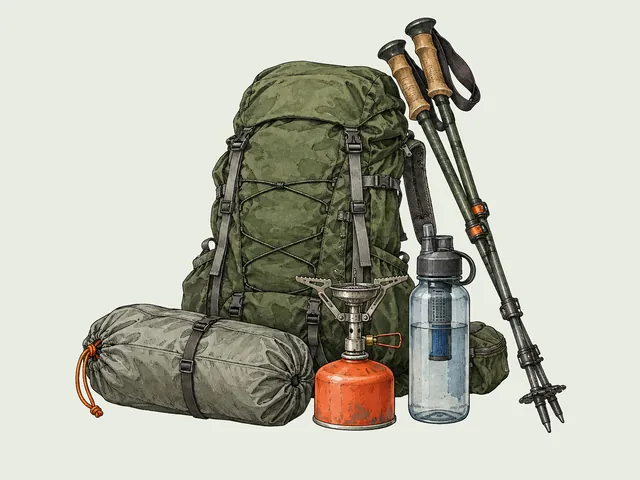
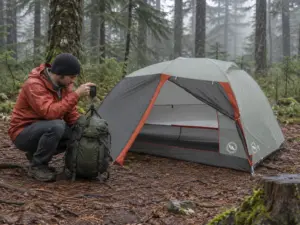
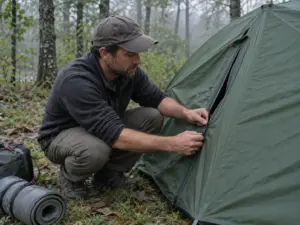
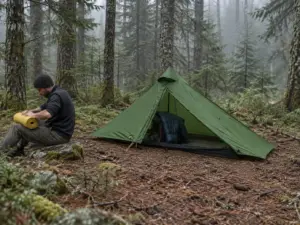
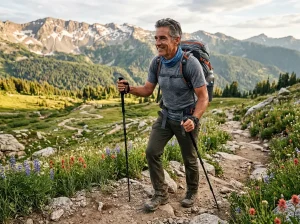

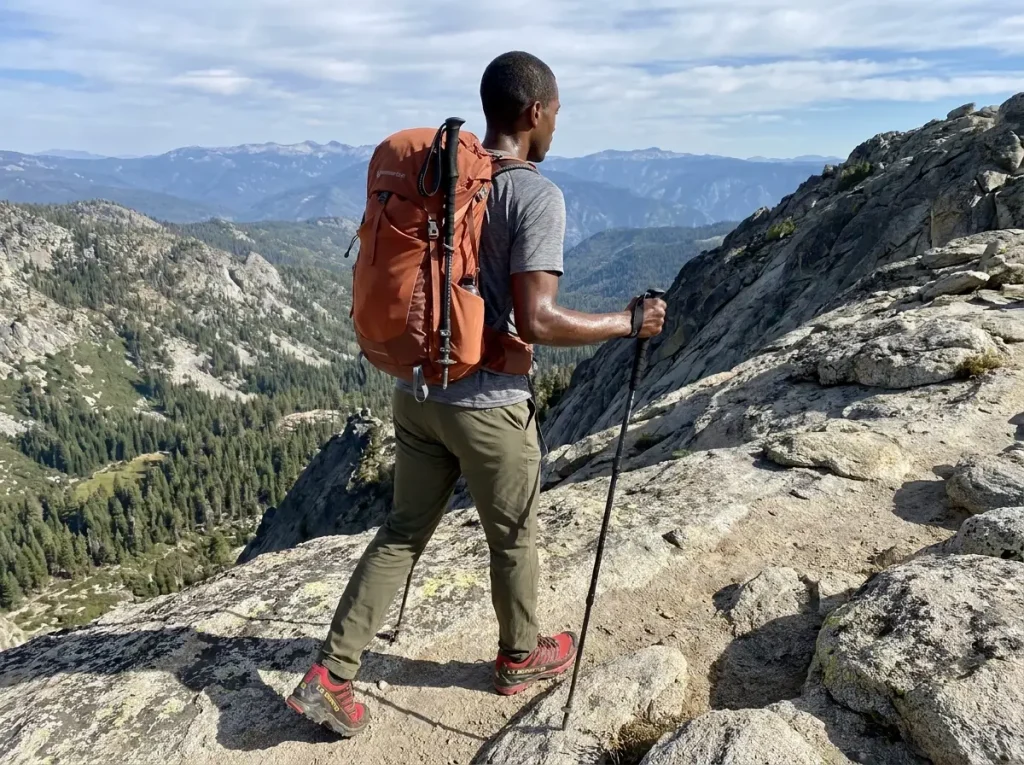
I carried two trekking poles on every hike for three years before I tried dropping one. It happened by accident — the locking mechanism on my left pole failed six miles into a day hike, and I spent the rest of the afternoon with a single pole and a free hand. By the trailhead, I wasn’t sure I wanted the second one back. That surprised me enough to spend the next two seasons testing both setups across every type of terrain I could find. Here’s what actually matters when you’re deciding between a single trekking pole and a pair on trail.
Here’s how the two setups compare at a glance:
| Single Pole vs. Pair of Poles: Feature Comparison | ||
|---|---|---|
| Feature | Single Pole | Pair of Poles |
| Knee stress reduction | ~12% on the pole side | Up to 25% on both sides |
| Weight | 4–8 oz (one pole) | 8–16 oz (two poles) |
| Free hand | Yes — camera, snacks, map | No — both hands occupied |
| Balance on descents | Adequate on moderate grades | Superior on steep/technical |
| River crossings | Risky in fast water | Two points of contact |
| Shelter compatibility | Works for single-pole designs | Required for A-frame tarps |
What the Science Says About One Pole vs Two
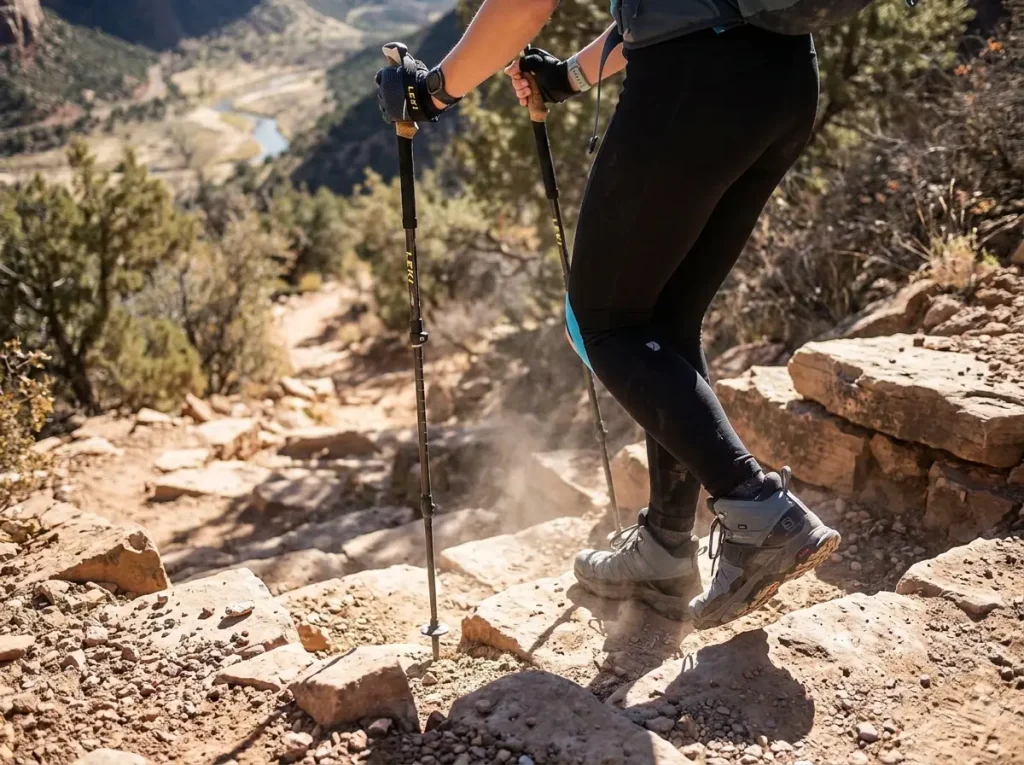
The 25% Knee Relief Number
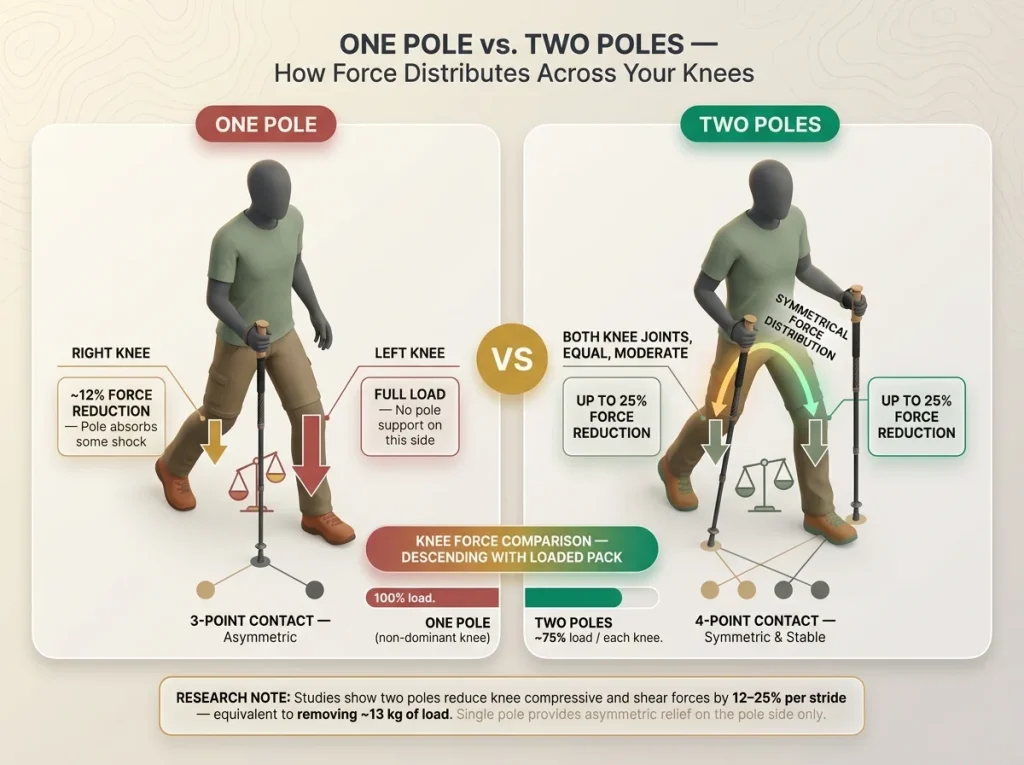
The most-cited research on trekking poles and joint force comes from a study published in Clinical Biomechanics that measured knee joint forces during downhill walking. The finding that gets repeated everywhere: poles can reduce compressive and shear forces at the knee by 12 to 25 percent during descents. That’s real — equivalent to about 13 kilograms of load removed per stride.
But here’s the part most articles skip: that reduction is measured with two poles. The force distribution is symmetrical. Each pole absorbs impact on its respective side of the body, and the combined effect reduces the total load on both knees roughly equally.
With a single pole, you get meaningful relief on one side and almost nothing on the other. Over a 10-mile descent, that asymmetry adds up. Your pole-side knee feels fresh. Your other knee feels every step.
What Hawke and Jensen Found
A 2020 review published in Wilderness & Environmental Medicine by Hawke and Jensen analyzed over 40 studies on trekking pole use. Their conclusion: poles decrease lower-extremity loading and increase balance and stability, particularly when carrying a load. They also noted a slight increase in cardiovascular effort — your heart works a bit harder because your arms are engaged — but most hikers don’t perceive the extra effort.
The review didn’t distinguish much between one-pole and two-pole use because almost all the studies tested pairs. That gap in the literature tells you something: the scientific consensus is built around two poles. The single-pole case is mostly anecdotal — which doesn’t mean it’s wrong, just that the evidence is thinner.
Pro tip: If you have a history of knee issues, particularly on one side, two poles are the safer bet. Trekking pole exercises that strengthen your strap-loading technique make the biggest difference on long descents — more than the poles themselves.
When a Single Pole Actually Wins
The Free-Hand Advantage
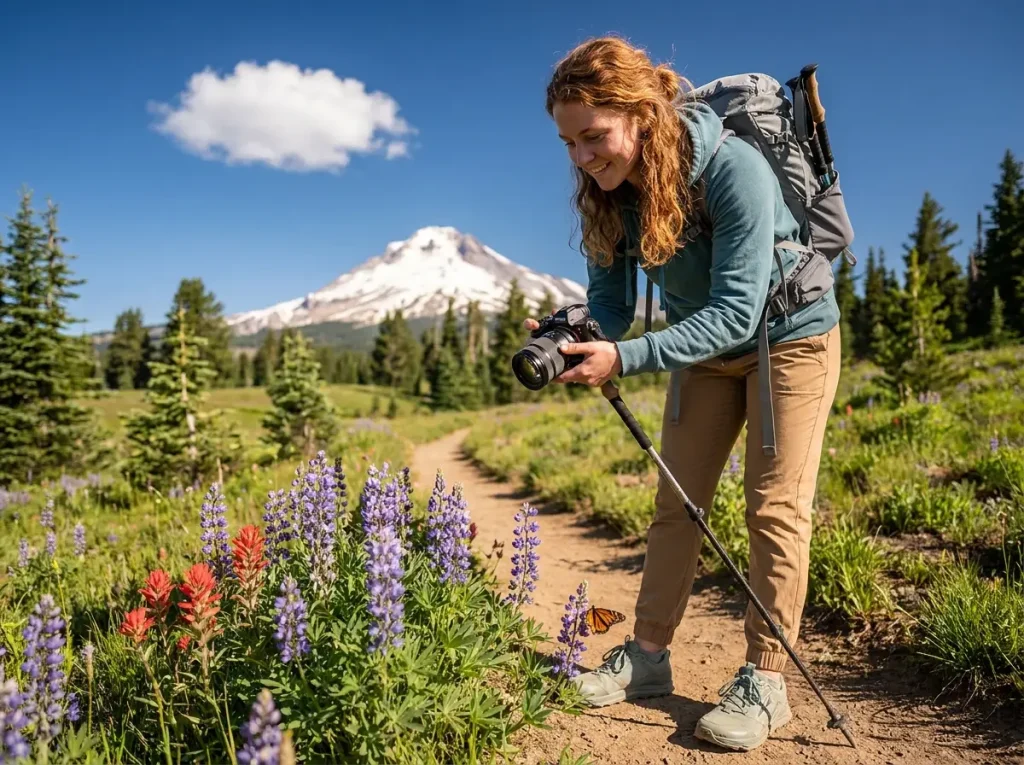
This is where one pole earns its keep. With your second hand empty, you can grab a camera without stopping, check your phone map at a glance, eat a bar without the awkward pole-juggling dance, or grab a handhold on a rocky scramble section. Thru-hikers and ultralight backpackers have known this for years — one pole gives you 90 percent of the stability benefit with zero hand-occupation penalty.
On well-maintained trails with moderate grades, that free hand matters more than the marginal stability gain from a second pole. You move more naturally, your arms swing with your gait instead of synchronizing with pole plants, and you react faster to unexpected obstacles.
Counting Ounces on Long Trails
A single carbon trekking pole weighs between 4 and 8 ounces depending on the model. Dropping one pole from your setup saves that weight permanently — every mile, every day. On a two-week thru-hike, that’s ounces your shoulders thank you for at mile 200.
Backcountry hunters figured this out early. They carry a single pole for balance on uneven terrain and keep one hand free for glassing, operating a rangefinder, or managing a rifle sling. The logic translates directly to hikers who prioritize efficiency over maximum stability.
Technical Scrambling and Exposure
Here’s one nobody talks about: on class 2 and class 3 scrambles, two poles become a liability. You need both hands on rock, and two poles dangling from wrist straps or lashed to your pack get caught on everything. A single pole stows faster (one motion to collapse and tuck), frees both hands when you need them, and redeploys in seconds for the walk back down.
Pro tip: On routes that mix trail hiking with scramble sections, carry one pole in hand and stow the second collapsed on your pack. When the scrambling ends and the descent starts, pull the second one out. Best of both approaches.
Day Hikes Under 8 Miles
For short day hikes on maintained trails, two poles are often more gear than the situation requires. One pole gives you stability on uneven footing and a light brake on downhill sections without the setup time or the weight penalty. It’s the hiking equivalent of wearing trail runners instead of mountaineering boots — right tool for the actual job.
When You Absolutely Need Two Poles
Heavy Packs on Multi-Day Trips
Once your pack weight crosses about 30 pounds, the math shifts hard toward two poles. A loaded pack raises your center of gravity and amplifies the impact of every misstep. Two poles give you four points of ground contact, which means better balance and dramatically less strain on your knees during the dozens of small corrections you make every minute on uneven ground.
The 25 percent knee force reduction from the studies? That number was measured with loaded packs. Drop to one pole with 35 pounds on your back, and the asymmetric loading becomes obvious by mid-afternoon. Your body compensates by shifting weight to the pole side, which changes your gait and can create hip and lower back strain that lingers for days.
Steep Sustained Descents
A 3,000-foot descent over rocky switchbacks is where two poles earn their keep unambiguously. Each pole plant ahead of your body acts as a brake, and the alternating rhythm distributes the braking force evenly between your arms. With one pole, you brake on one side and absorb the full shock on the other — it’s like driving downhill with one foot on the brake and the other on the gas.
Over 2,000 feet of vertical descent, the difference in knee fatigue between one pole and two isn’t subtle. It’s the difference between walking to the car and limping to the car.
River Crossings and Unstable Terrain
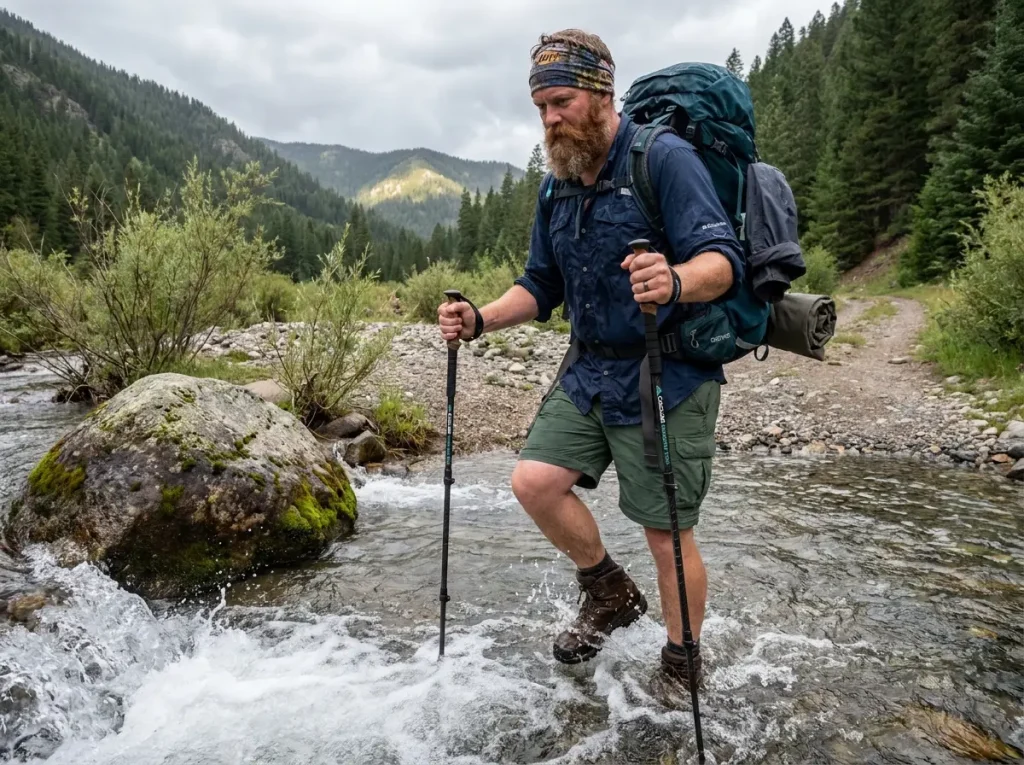
Fast-moving water, talus fields, and muddy slopes are non-negotiable two-pole situations. In a river crossing, two poles planted upstream give you a stable triangle with your feet. One pole gives you a line — and lines tip over. The physics isn’t complicated, but the consequences of getting it wrong in thigh-deep current absolutely are.
On loose talus and scree, the same principle applies. Two poles let you test footing before committing weight, and if a rock shifts, you have two anchor points instead of one. Experienced scramblers call this “three points of contact at all times” — and two poles make it automatic.
Pro tip: For river crossings, loosen your pack straps so you can ditch the pack if you fall. The poles keep you upright, but the pack can drag you under if you go down in fast water.
The Hybrid Approach Most Hikers Miss
Carry Two, Deploy One
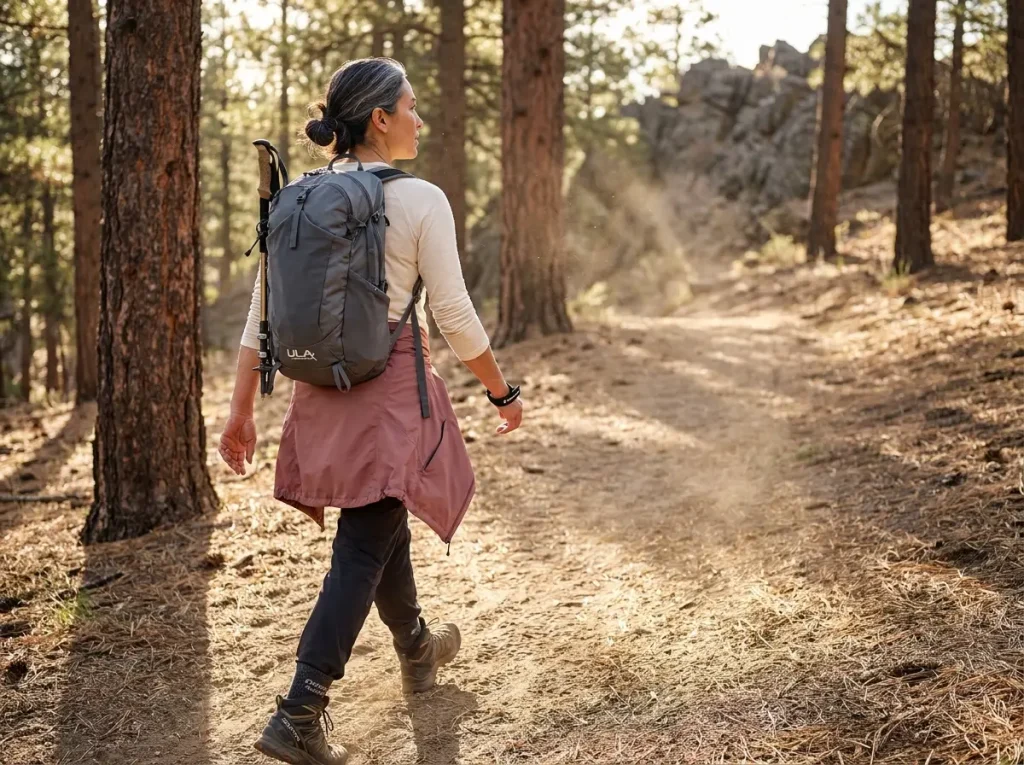
The debate between one pole and two isn’t actually binary — and treating it that way is where most hikers go wrong. The practical answer for variable terrain is to carry both poles and deploy them based on what the trail demands right now.
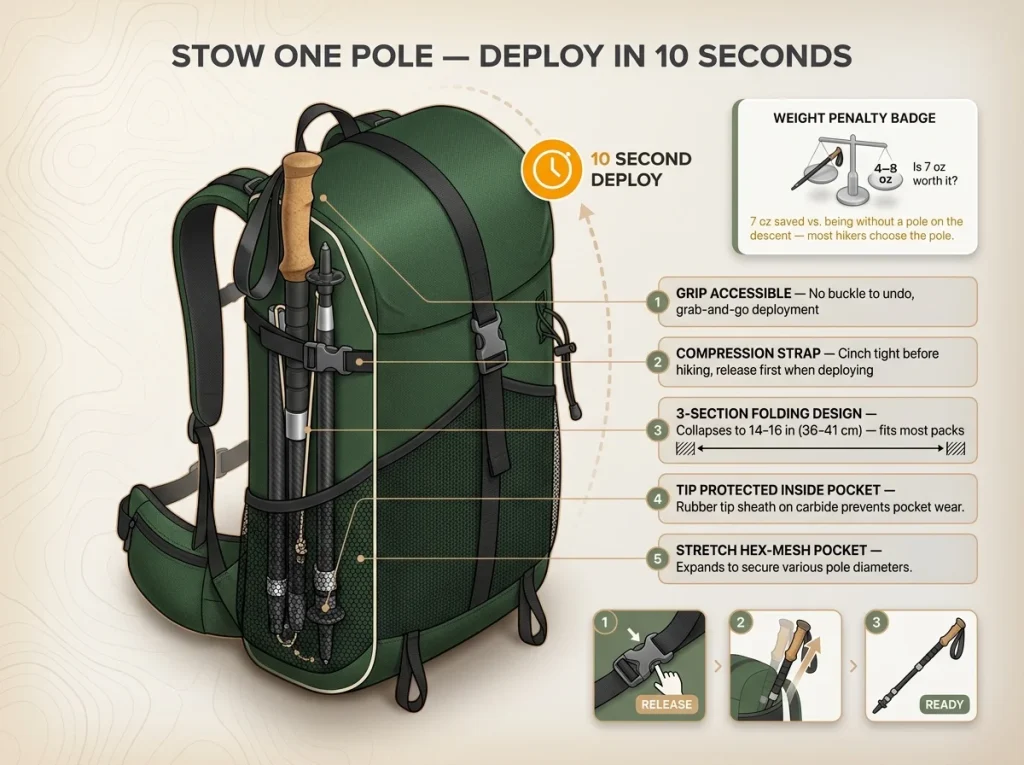
On a flat approach through forest? One pole in hand, the other collapsed and tucked vertically into a side pocket. When the trail turns steep and rocky? Pull the second pole out. Scramble section? Stow both. It takes less than 10 seconds to collapse a modern folding pole and tuck it away. That’s less time than retying a boot lace.
Thru-hikers on the PCT and AT have been doing this for years. They don’t commit to one setup for the entire trail — they adapt by the hour. The extra 4 to 8 ounces of carrying a spare pole that’s stowed half the time is a small price for having the right tool when terrain changes.
The Weight Penalty Is Smaller Than You Think
A single Cascade Mountain Tech carbon pole weighs about 7 ounces. A pair weighs 14. The “savings” from carrying one instead of two is 7 ounces — roughly the weight of a Clif bar. If you’re shaving ounces to hit a specific base weight target, that matters. For most hikers, it’s the difference between one fewer granola bar in the food bag.
The real weight question isn’t “can I save 7 ounces?” It’s “will I regret not having a second pole on the descent?” In my experience, the answer is usually yes.
How to Switch Hands Without Breaking Rhythm
The Transfer Technique
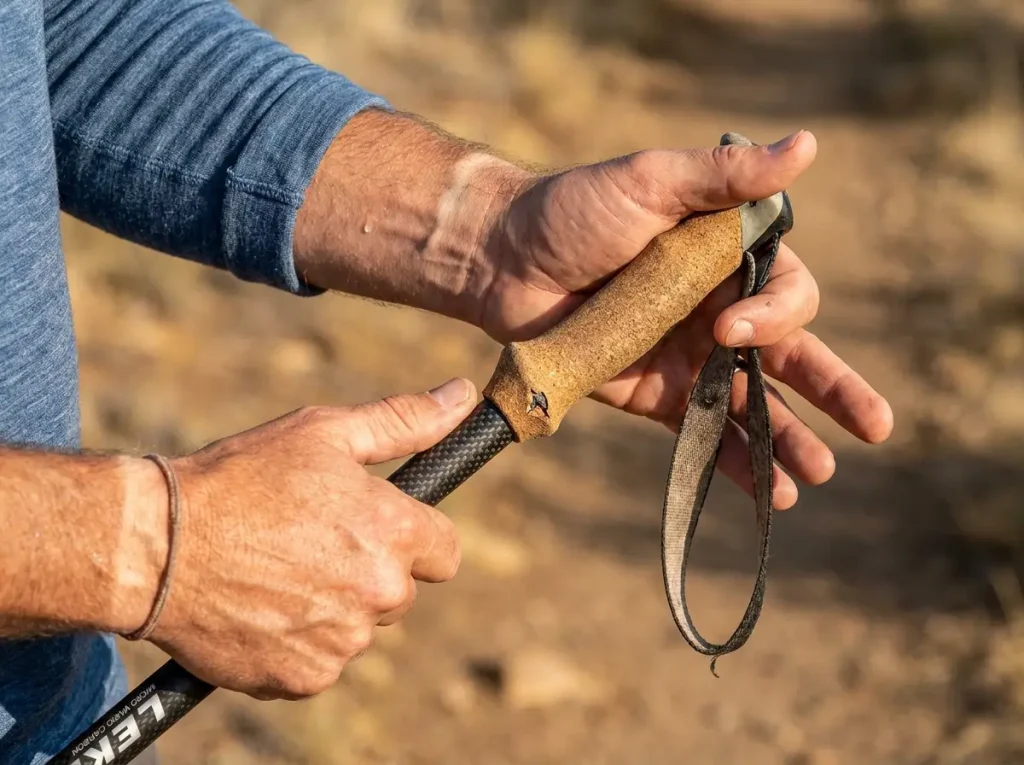
If you hike with a single pole, you need to switch hands every 20 to 30 minutes to prevent overloading one side. The technique is simple but takes practice to do smoothly.
Loosen the wrist strap on your active hand as you walk. On your next pole plant, release the grip and let the pole hang briefly from the strap. Reach across with your free hand, grab the shaft just below the grip, slide your hand up to the cork or foam grip, and slip the strap over your new wrist. The whole transfer takes about two seconds once you’ve practiced it — and you don’t break stride.
The mistake most people make is trying to pass the pole hand-to-hand in front of their body like a relay baton. That works standing still but feels awkward at walking speed. The strap-hang method keeps the pole vertical and in your forward swing line.
When to Switch
Switch hands at natural trail markers — every major switchback, every trail junction, every time you stop for water. This builds the habit into your hiking rhythm instead of relying on a timer. After a few hikes, it becomes automatic. You’ll feel the fatigue building in your grip and forearm before you consciously think about switching.
On trails with consistent cross-slopes, keep the pole on the downhill side. On flat terrain, alternate by time. On descents, put the pole on your weaker knee’s side — that’s the side that needs the support most.
Pro tip: If you notice your pole-side shoulder sitting lower than the other after a long hike, you’re not switching often enough. Asymmetric fatigue shows up in posture before it shows up in pain. Catch it early by adjusting your strap technique so the strap carries the load, not your grip.
Matching Your Pole Setup to Your Shelter System
Single-Pole Shelter Designs
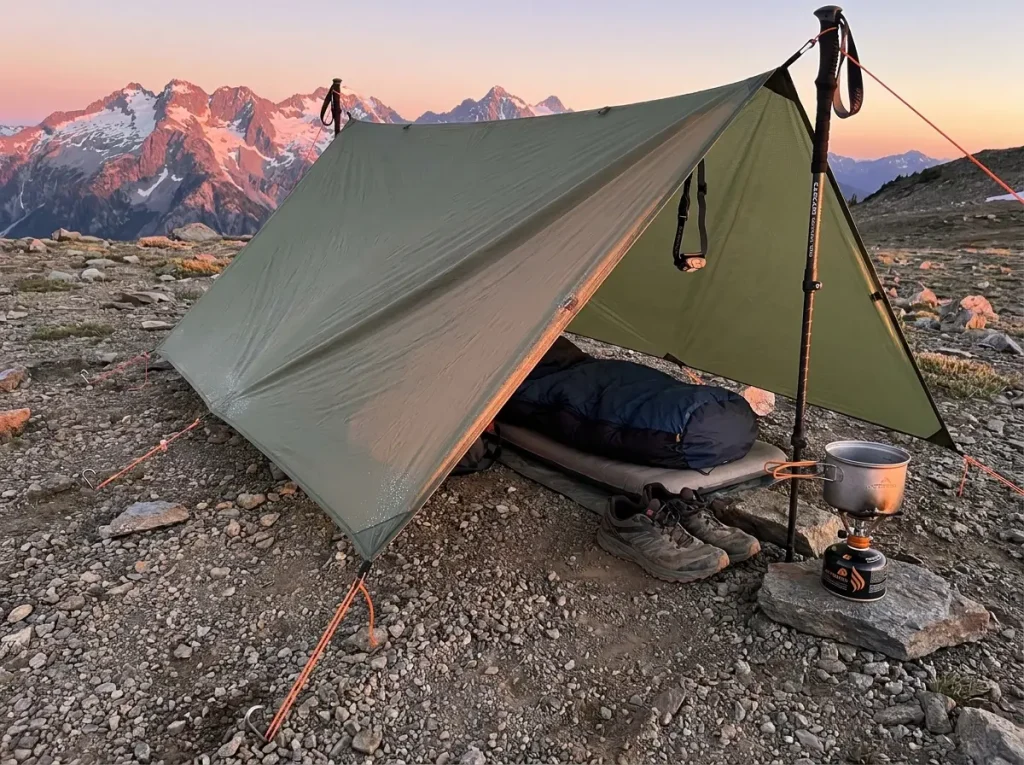
If your tarp or ultralight shelter uses a single center pole for pitch height, one trekking pole does double duty as both hiking aid and tent pole. Designs like the mid-style tarp (pyramid) only need one pole in the center, which means the second pole is dead weight unless you’re using it on trail.
For thru-hikers optimizing every ounce, this is the strongest argument for carrying just one pole. Your shelter system and your hiking support system share the same piece of gear — no redundancy, no extra weight.
Two-Pole Shelter Systems
A-frame tarps and many ultralight tent designs require two poles — one at each end. If your shelter needs two poles to pitch, carrying two poles isn’t optional. The Gossamer Gear The One, Zpacks Duplex, and dozens of similar shelters depend on a pair of poles at specific heights.
Before choosing your pole setup, check your shelter’s pitch requirements. If it needs two, the decision is already made — carry both, deploy as trail conditions dictate, and use the hybrid approach for the hiking portion.
The Compatibility Check
Here’s the detail that catches people: not all trekking poles work with all shelters. Some shelters need a specific pole height — usually 115 to 125 cm — and many telescoping poles don’t extend that far. Some shelters need the pole tip up (inverted), which means your rubber tip or basket gets in the way. Check the shelter specs against your pole specs before your trip, not at the campsite in the rain.
If your folding poles don’t reach the required height, you can use a short tent pole extender or choose a different shelter. But that kind of improvisation belongs at home, not at 10,000 feet with a storm rolling in.
Pro tip: Carry a small rubber cap that fits over your pole tip when using poles as shelter supports. The metal carbide tip can puncture your tent floor or tarp — and that’s a repair you don’t want to do at midnight.
Conclusion
The one-pole-or-two question doesn’t have a single answer, and anyone who tells you otherwise hasn’t hiked enough different trails. Two poles win on steep loaded descents, river crossings, and any day your pack tops 30 pounds. One pole wins on short day hikes, trails with scramble sections, and any time you need a free hand more than you need symmetrical support.
The smartest approach is the hybrid: carry both, deploy what the terrain demands, and stop treating your second pole as an all-or-nothing commitment. It takes 10 seconds to stow or deploy. That’s the easiest trail decision you’ll make all day.
And if you’ve been carrying two poles out of habit without thinking about it — try one for a day. You might be surprised how little you miss the second. Or you might be very glad to pull it back out at the first steep descent. Either way, you’ll know instead of guessing.
Q1 Is one trekking pole better than two?
Neither is universally better. One pole works well on maintained trails under 8 miles with light packs, giving you a free hand and lighter carry. Two poles are measurably better for steep descents, heavy packs, and river crossings where symmetrical support reduces knee forces by up to 25 percent.
Q2 Do trekking poles really reduce knee stress?
Yes. Peer-reviewed studies show two poles reduce knee joint compressive and shear forces by 12 to 25 percent on descents, equivalent to removing about 13 kg of load per stride. The effect is most pronounced during steep downhill walking with a loaded pack.
Q3 Can you use a single trekking pole for a tarp shelter?
Yes, if your shelter uses a single-pole center pitch like a mid-style pyramid tarp. A-frame tarps and most two-pole ultralight shelters need both poles. Check your shelter’s pitch specs before committing to a one-pole hiking setup.
Q4 Which hand should you hold a single trekking pole?
Alternate hands every 20 to 30 minutes to prevent asymmetric fatigue. On cross-slopes, hold the pole on the downhill side. On descents, use the pole on your weaker knee’s side. Build the switching habit around natural trail landmarks like switchbacks and junctions.
Q5 Are trekking poles worth the weight?
For hikes involving sustained descents, heavy packs, or unstable terrain, absolutely. A pair of carbon poles weighs 8 to 16 ounces and provides measurable joint protection plus balance. For flat, short day hikes on smooth trails, the benefit drops and one pole — or none — may suffice.

I've spent more than a decade researching hiking gear and trail technique. I read the specs, the forum threads and the long-term reviews, and every pick here comes with what it gets wrong.
End of the trail
You read every mile of this one. Here's where the trail goes next.