In this article
I once hiked fifty miles with a jagged hole cut directly into the side of my Altras because my pinky toe was screaming so loudly I thought my trip was completely over. If you want to know how to manage foot care on a thru hike, let me save you the desperate knife work: you survive by applying an unyielding daily system, not just throwing thick tape at the problem when you start getting raw. I’ve logged enough miles dealing with trench foot, abscessed heels, and the deep emotional toll of foot pain to figure out what actually keeps a person moving day after day. This guide breaks down the exact morning-to-night routine that keeps your feet from falling apart when you’re knocking out twenty-mile grinds.
⚡ Quick Answer: You manage thru-hike foot care by swapping heavy boots for breathable trail runners, pre-taping hot spots with Leukotape P every morning, airing your feet out mid-day, and sleeping in dry camp socks. Most hikers wait for blisters to form before treating them, which guarantees pain. Here is the exact daily routine that stops issues before they ever start.
| Essential Hiking Gear for Blister Prevention | |
|---|---|
| Essential Gear Item | Purpose on the Trail |
| Leukotape P | Paper-thin athletic tape that sticks aggressively to wet skin for blister prevention |
| Injinji Liners | Specialized toe socks that eliminate skin-on-skin friction between your sweaty toes |
| Darn Tough Outer | Thick merino wool layer that actively pulls moisture away from the interior liner |
| Wax Balm | A hydrophobic barrier that blocks creek water and mud from soaking your skin |
| Sterile Needle | The only tool you need for the clean lancing technique when a blister inevitably shows up |
1. The Realities of How to Manage Foot Care on a Thru Hike: Biology and Blisters
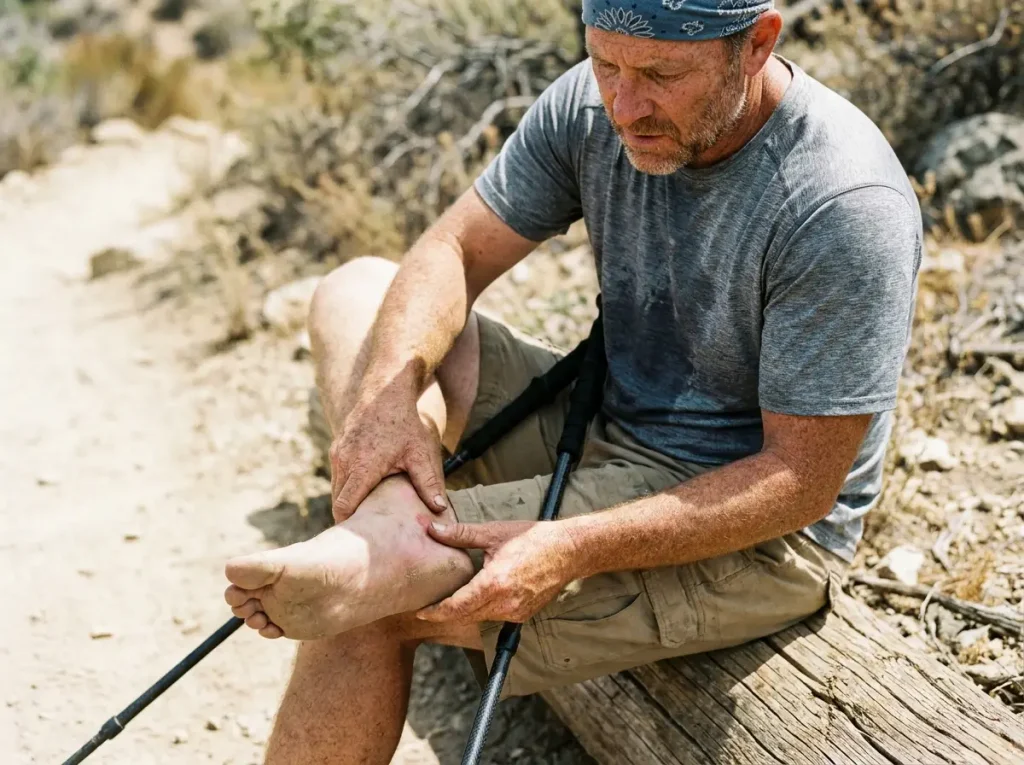
You learn quickly out here that fixing your feet has very little to do with tough skin and everything to do with understanding mechanics. The outdoor gear world spends millions trying to sell hikers on tougher boots and absolute waterproofing, but the reality on the ground comes down to physics. A thru-hiker transfers massive amounts of force through their legs and joints every single hour. You cannot fight that force with stiff leather. You have to work with the biology of your own skin.
The “Shear” Paradigm: Why Friction is Only Half the Story
For decades, your dad’s old-school logic told you that simple rubbing caused blisters. You felt a rub, you expected a blister. In reality, veteran thru-hiking foot management focuses on shear. This happens when your sock aggressively grips the top layer of your skin, but your foot bones keep sliding forward inside the shoe with every downhill step. The friction holds the surface still, while your forward momentum tears the soft tissue layers apart underneath.
You aren’t just trying to stop your shoe from rubbing your foot. You are trying to stop your internal tissue layers from tearing each other apart. Most beginners learn this distinction somewhere around mile fifty when they rip off their socks and find massive bags of fluid forming under skin that never even felt like it was chafing. Understanding this core mechanic changes how you pack a backpacking foot care kit forever.
Heat and Moisture: The True Enemies of Skin
Everybody hates hiking in the rain, but the water itself isn’t the direct threat. The heat inside the shoe is what breaks you down. Turns out, just a four-degree Celsius bump in foot temperature makes your skin fifty percent weaker. When your feet feel like they are baking on a hot, exposed ridge, you are actively creeping toward a major tissue blowout.
Saturated, sweaty skin actually grips the fabric of your sock intensely better than dry skin. This higher moisture grip drastically increases that internal tearing force we call shear. You must start understanding skin and liner friction if you want to avoid the worst damage. A hot swampy shoe is exactly what causes an otherwise perfect day to spiral into misery.
It’s tempting to think you can beat this combination of heat and shear by just toughening up your feet long before you hit the trail. But that approach usually backfires spectacularly once the real miles begin.
The Anti-Callus Myth (Why Armor Backfires)
You see new hikers at the trailhead bragging about the calluses they built up pacing their neighborhood sidewalks all spring. Buying into the anti-callus myth is a massive rookie trap. Building thick, rigid calluses might sound like creating natural armor, but thick calluses act like hard blocks of wood strapped to your foot.
They redirect the extreme shear stress deeper into your foot tissue rather than absorbing it. This creates massive, deep blisters under the callus that you can’t even reach to pop. Keep your skin supple and moisturized instead. Pliable skin bends under pressure. Rigid skin snaps, taking your entire week’s mileage goals down with it.
Pro tip: Rub a heavy lotion into your feet every night for a month before your hike. Soft, flexible skin handles the repetitive pounding of a twenty-mile day infinitely better than a dry, cracking heel, which leads us right into the gear you need to protect that skin.
2. The “Holy Trinity” Gear System for 20-Mile Days
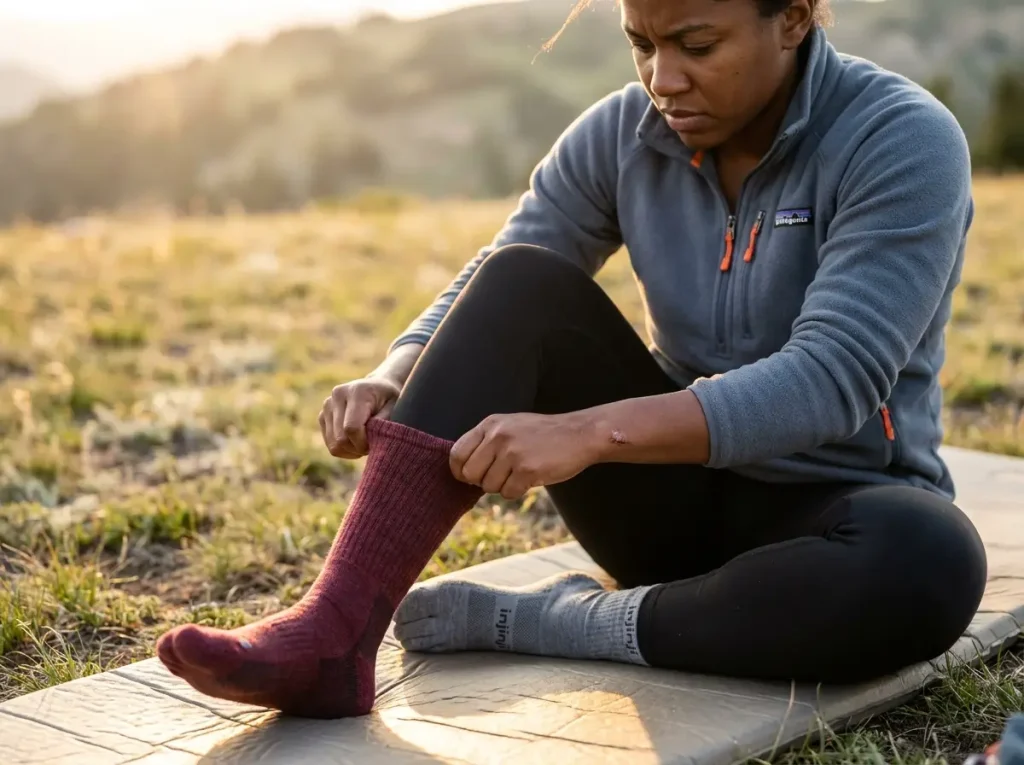
Veterans don’t carry massive medicine cabinets in their packs. They carry a very specific, ruthless triad of footwear, socks, and tape that has been proven to survive long-distance environments like the AT or the PCT. If your current setup involves heavy leather and a cheap cotton blend, you are preparing for a brutal week.
Ditching the Boot for Breathable Trail Runners
Watch the footwear of any group attempting a massive objective. Over eighty percent of the people who actually finish have abandoned full boots in favor of an Altra Lone Peak, a Hoka, or an equivalent trail runner. A pound on your feet equals five on your back. Heavy soles lead to faster leg fatigue, clumsy steps late in the afternoon, and disastrous tripping injuries on rooty descents.
Heavy Gore-Tex boots act like sweltering blister buckets. A waterproof boot sounds like a great idea until the second day of a relentless rainstorm, when water inevitably pours in over the collar. Then, it traps the moisture inside for three days straight. You want a highly breathable mesh runner that drains creek water instantly and dries within an hour of walking under the sun. That’s the trail runner vs boot debate settled by actual mileage on the ground.
The Two-Sock Layer Defense (Injinji + Darn Tough)
The gold standard for keeping the skin on your toes intact is the two socks system. You wear Injinji toe socks as a thin liner directly against your skin. By wrapping each toe individually, you completely stop the skin-on-skin toe friction that causes those agonizing little blisters between your digits.
You layer a dense Darn Tough merino wool outer sock directly over the liner. The merino wildly works to pull the trapped moisture outward away from the liner. We know exactly how toe socks prevent hiking blisters because experienced hikers test this setup daily across thousands of miles of brutal varied terrain.
You can have the perfect trail runners and the ultimate two-sock system, but sheer distance eventually finds a weak point. That’s when you need a reliable barrier to lock down the hot spots before they tear.
Leukotape P: The Only Tape Worth Carrying
Throw your thick moleskin directly in the trash right now. It is a useless leftover from a bygone era. Moleskin is thick, squishy, and slides right off the moment you start sweating on a steep climb.
Leukotape P is the only tape worth keeping in your pack. It is an aggressive, paper-thin, non-elastic zinc-oxide tape that bonds to wet skin like fresh paint. Because it lacks stretch, it locks the skin in place and absorbs the shear forces perfectly. It won’t peel off in a river crossing and it stays exactly where you put it for four days straight if you let it. Once you have the right footwear and tape in your pack, the real secret is applying them correctly before you walk a single step.
3. The Morning Pre-Trail Protocol: Hardening Your Defense
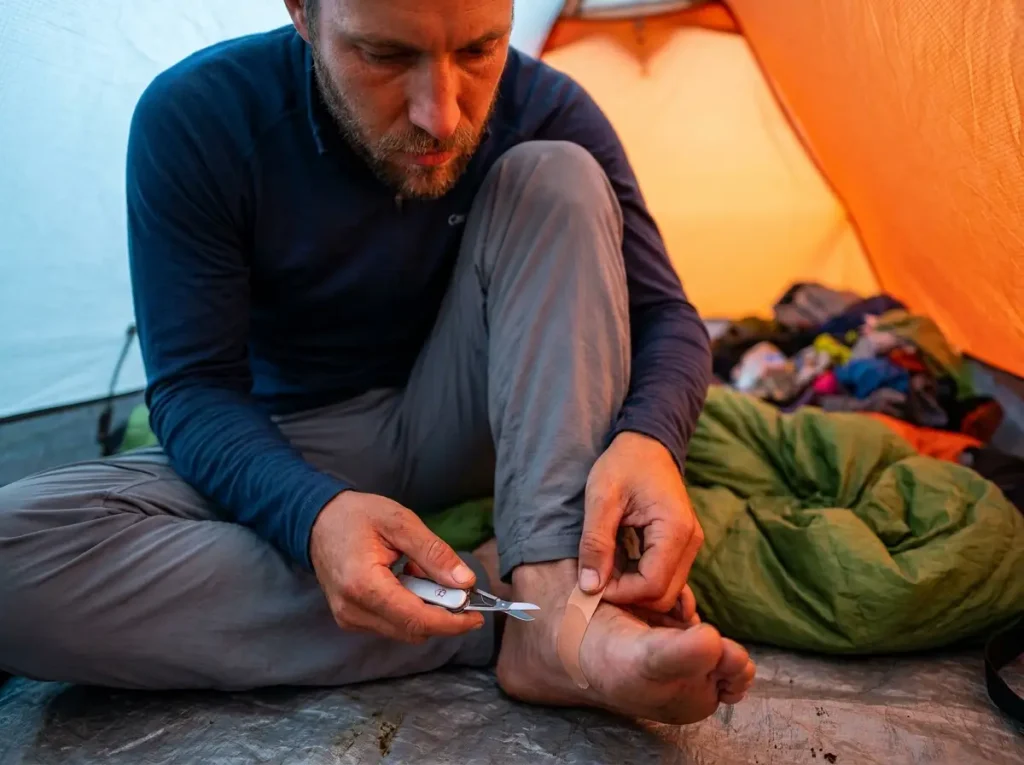
Foot care in the morning is a mandatory chore, right up there with filtering your dirty mountain water and breaking down your tent. If you skip your morning prep, the trail exacts a heavy, painful toll by two in the afternoon. Treating this protocol as optional is why people go home early.
Sanitizing and Inspecting for the “10-Minute Warning”
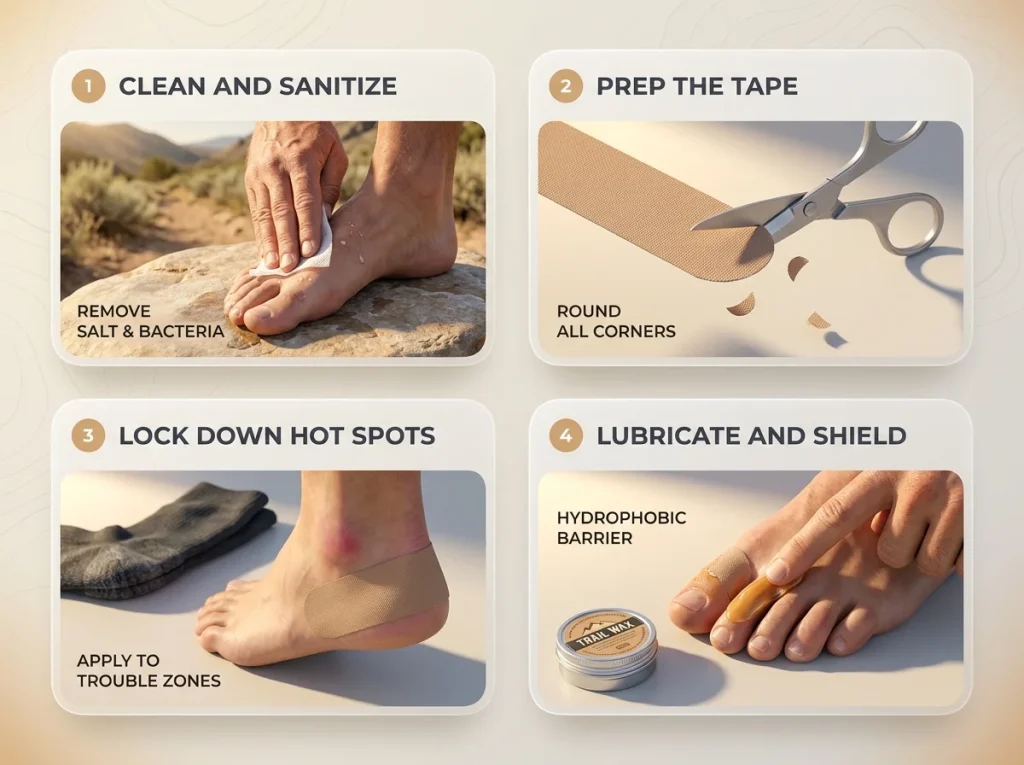
Never roll out of your sleeping bag and put clean socks on yesterday’s dirty skin. That is a recipe for catastrophic failure. Start your daily foot care checklist by running a quick alcohol pad or an unscented wet wipe across every toe. You wipe out the overnight bacteria, remove the hardened salt, and dry the skin completely.
Then you look closely at your feet before doing anything else. If a spot looks vaguely pink or feels slightly warm right now as you sit in the dirt, it will become a raging, fluid-filled nightmare by noon. You have ten minutes to act. This visual inspection is how you prevent hot spots before blisters form, and it is the only real secret to long-term trail survival.
Pre-Taping the Known Trouble Zones
Do not wait for the rubbing to turn into pain. Take the time to tape feet for hiking before you walk a single step. Apply your Leukotape directly over those warm, pink hotspots and your known chronic trouble zones.
Always take your tiny scissors and round every single corner of the tape before you stick it down. A sharp square corner on a piece of athletic tape will aggressively catch on the inside of your damp sock as you walk, slowly peeling the entire strip back until it rolls into a hard, sticky lump that causes a worse blister than if you had just ignored it entirely.
Tape handles the friction, but tape alone won’t save you if your shoes turn into a swamp. You still need an aggressive strategy to stop moisture from softening your skin underneath all that protection.
The Lubrication Layer: Waxes Over Lotions
Once the tape is fully bonded, apply a heavy, wax-based balm completely over the taped areas and generously between your bare toes. Do not use a watery morning lotion. You need a physical, hydrophobic barrier like BodyGlide or specialized trail wax to forcefully block creek water, morning dew, and heavy sweat from soaking into your skin tissue.
This wax layer drastically reduces the friction coefficient inside the shoe, allowing the layers of sock and skin to slide silently past each other instead of grabbing and tearing.
Pro tip: Warm the Leukotape against the side of your morning coffee mug or stash it in your armpit for three minutes before applying it. Warm adhesive bonds significantly tighter to cold morning skin than cold tape does. Getting your morning prep dialed in perfectly gives you a strong start, but you still have to actively maintain that defense when the midday heat peaks.
4. Mid-Day Maintenance: Avoiding the “Blister Bucket”
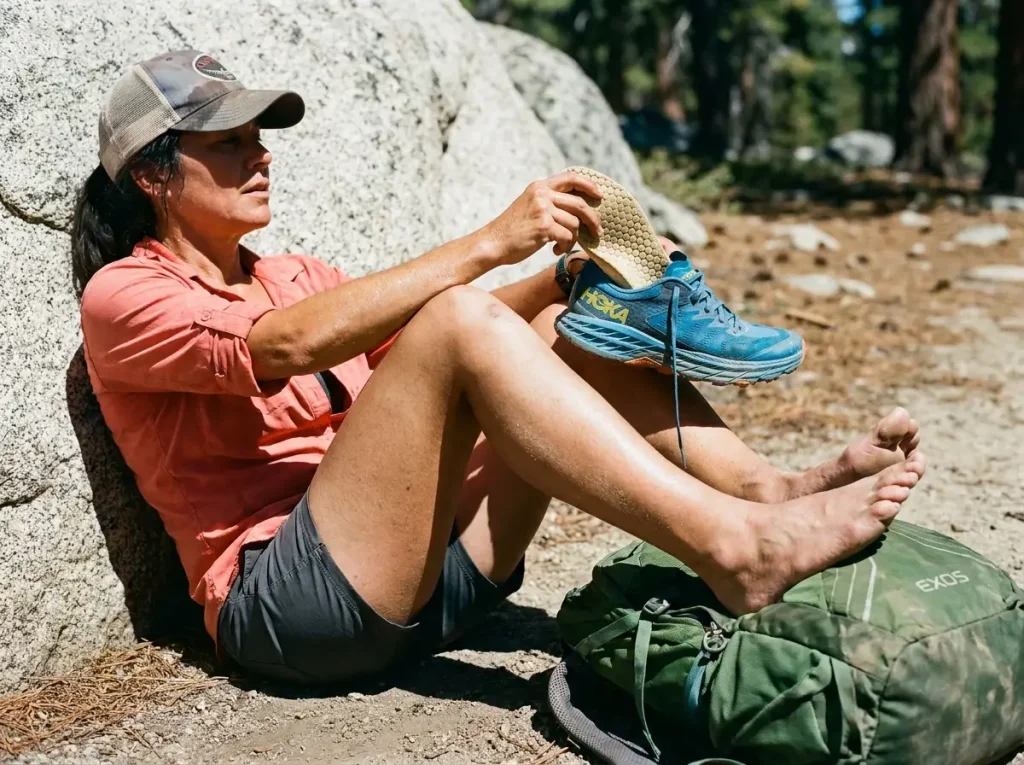
The stubborn hiker wants to crush fifteen miles before unlacing their shoes. They push right through lunch refusing to stop, and they wind up with pale, numb swamp feet at camp. If you want to know everything about keeping feet healthy on a thru hike, you have to acknowledge that a thirty-minute break at noon actually buys you miles later in the week.
The Mandatory 30-Minute Air-Out Reset
Taking your shoes and socks entirely off at a lunch stop isn’t a luxury. It is a mandatory system reset. Your feet need a serious mid-day air-out to dump the accumulated heat and allow the damp skin to firm back up. Let the harsh sun bake the moisture straight out of your fabric while you eat your tortillas and peanut butter. If you keep moving in wet gear, you create a greenhouse effect that cooks your tissue until it pulls apart.
Sock Rotation and the Insole Pull Strategy
While you eat, physically rip your squishy insoles completely out of your wet shoes. Insoles act like giant internal sponges hiding at the very bottom of your shoe, hoarding sweat and foul odors. Getting those insoles out into the direct sun instantly eliminates the dark-loving bacteria and dries the underlying foam.
If your morning socks are soaked through, clip them to the outside back of your pack with a safety pin to aggressively dry in the afternoon breeze. Put on your fresh backup pair for the second half of the day. A dedicated sock rotation strategy is the only absolute defense against walking in pure sludge.
Drying out your sweaty gear only solves the surface issues. Underneath the skin, your legs are taking a beating from gravity and constant impacts that you have to actively manage.
Elevation Techniques to Combat Cumulative Swelling
Your lower legs will blow up like tight balloons by late afternoon. Dealing with cumulative swelling is an unavoidable reality of walking incredible distances. You battle this directly at lunch by lying back on a rock and resting your bare feet high on top of your pack.
Gravity physically drains the stagnant fluid build-up straight out of your swollen ankles and calves. Active mid-day elevation attacks the extreme volume swelling that endurance athletes routinely ignore until their toes go numb. Laying back with your feet raised restores crucial volume in your shoes, setting you up for a strong afternoon push into camp.
5. Evening Camp Recovery: Undoing the Damage
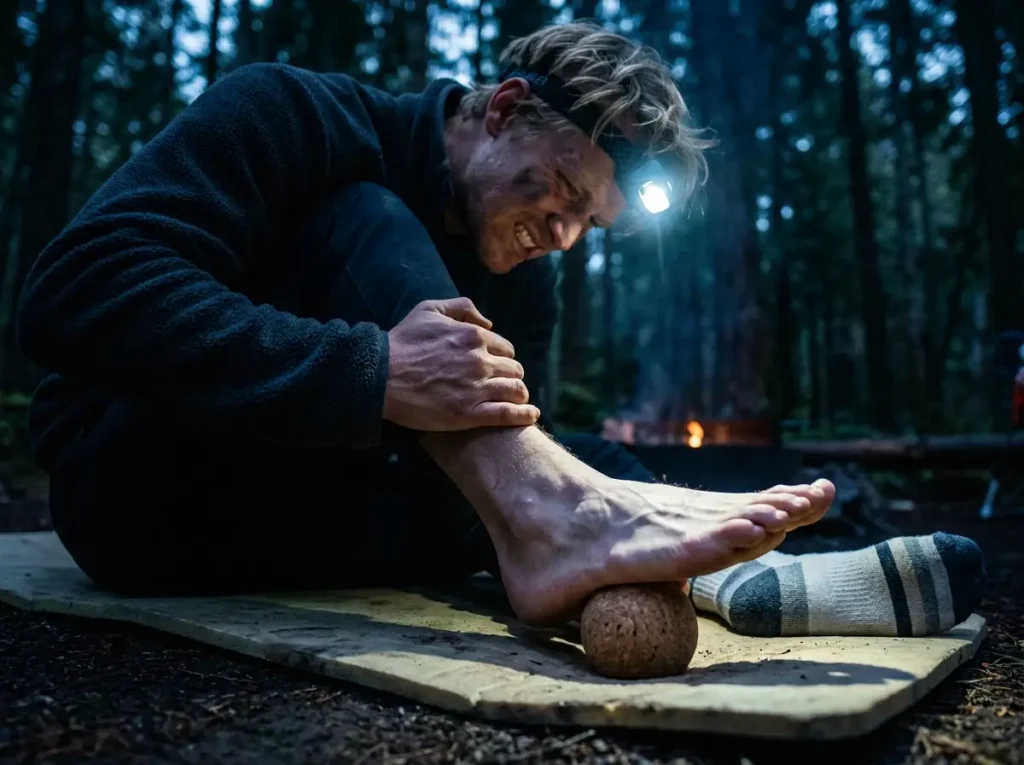
The relief of peeling off muddy trail runners on a cold evening feels incredible. But you cannot just crash inside the tent wearing your sweaty hiking socks, no matter how utterly exhausted you feel. A proper camp recovery promotes fast structural tissue repair and strictly prevents aggressive fungal infections from taking root. What you do right before you close your eyes dictates how tomorrow morning feels.
The Camp Wash and De-Grit Process
A microscopic grain of sharp sand left lingering between your tight toes feels like absolutely nothing on Monday, but it turns into a violently infected paper-cut by Thursday. Wash your feet completely. Strip every bit of dried mud away, pulling off the loose tape, and physically rubbing the sweat off the skin.
This cleanup is exactly as critical as washing your merino wool hiking socks when you hit a town stop. If you sleep with grit glued to your skin, it aggressively shreds your tissue while you toss and turn in your sleeping bag all night long.
Structural Roll-Outs for the “Hiker Hobble”
If you experience a sharp, stabbing pain deep in your heel when you attempt to take your very first morning steps, your fascia is actively tearing. Thru-hikers call this the Hiker Hobble. Managing this structural nightmare takes proactive rolling.
Find a smooth river rock, a firm cork massage ball, or the hard plastic handle of your trekking pole. Roll your bruised arches intensely over the hard object for five full minutes per foot. Breaking up that stiff, crunchy tissue every single night significantly fights the onset of serious, hike-ending plantar fasciitis.
Once the dirt is gone and you’ve rolled out the worst of the knots, your final task of the day is setting up the perfect sleeping environment so your skin can actually recover.
Sleeping Barefoot vs. The “Sacred Socks”
You must carry one pair of incredibly thick, fluffy sleeping socks that absolutely never touch the inside of a filthy hiking shoe. These are your Sacred Socks. Changing into them guarantees your feet remain incredibly warm and bone-dry all night, which powerfully promotes the fast circulation needed to heal torn muscles.
However, if the evening weather runs hot enough and you spent all day suffering in saturated trail runners, sleep entirely barefoot. Giving your skin eight straight hours of perfectly dry, open air is your best defense against severe maceration, following official protocols for preventing trench foot. Going to sleep with dry, clean feet is the best way to start the next day strong, but sometimes even the best routine isn’t enough when things go truly wrong.
6. Advanced Trail Medicine: Fixes for Severe Issues
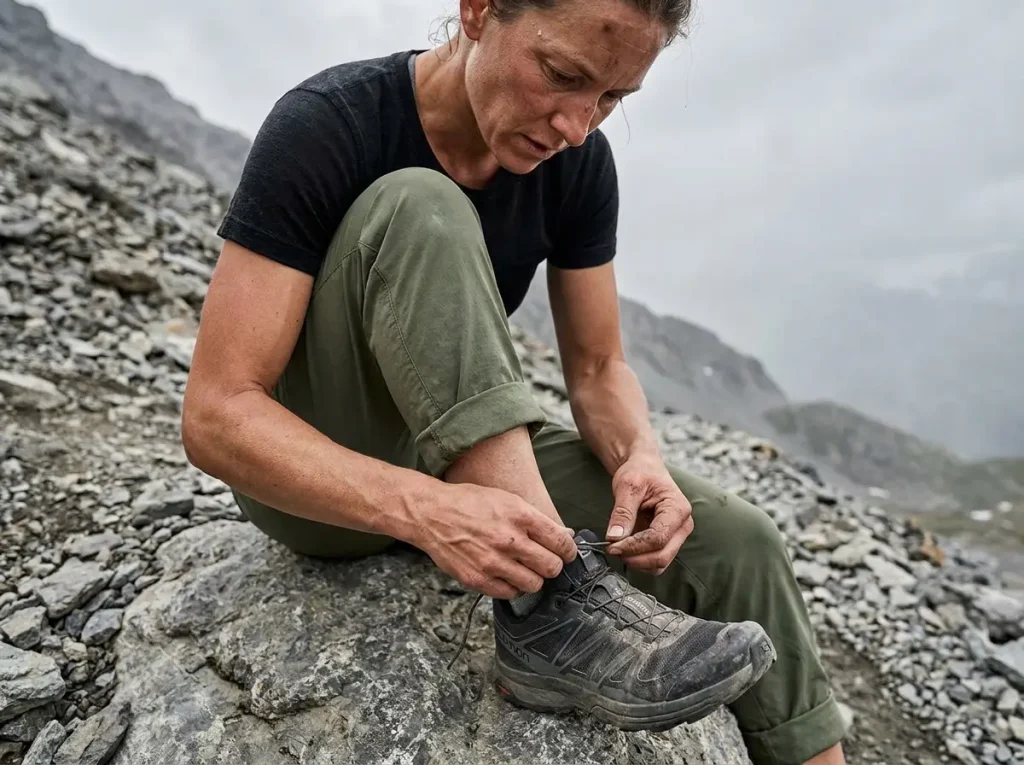
Sometimes the entire preventative system fails completely. You step weirdly on a sharp rock, the swelling outpaces your shoe volume, or a massive blister forms deep under a toe. When you hit real desperation on the trail, you have to execute heavy interventions. You perform crude trail medicine far from any clinic just to save your massive trip from total ruin.
Window Lacing and Heel Locks for Swelling
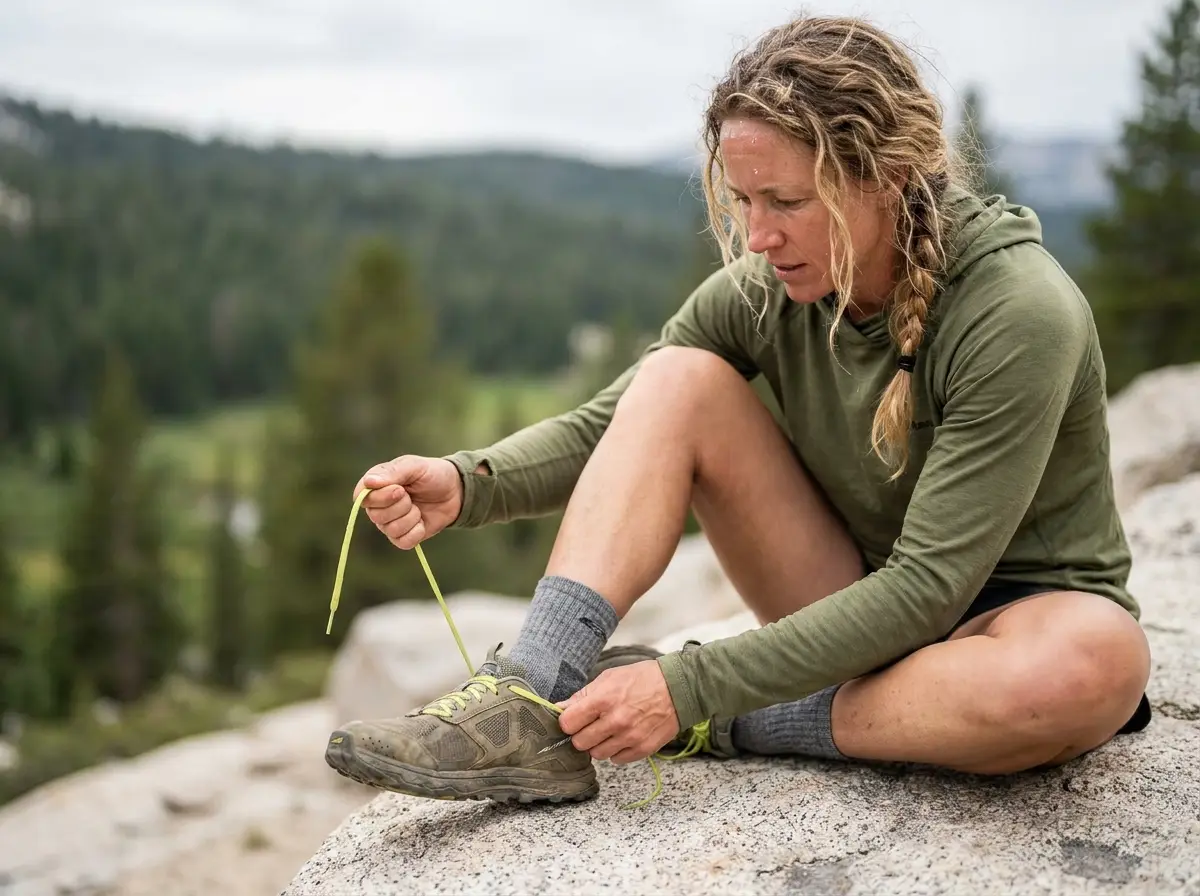
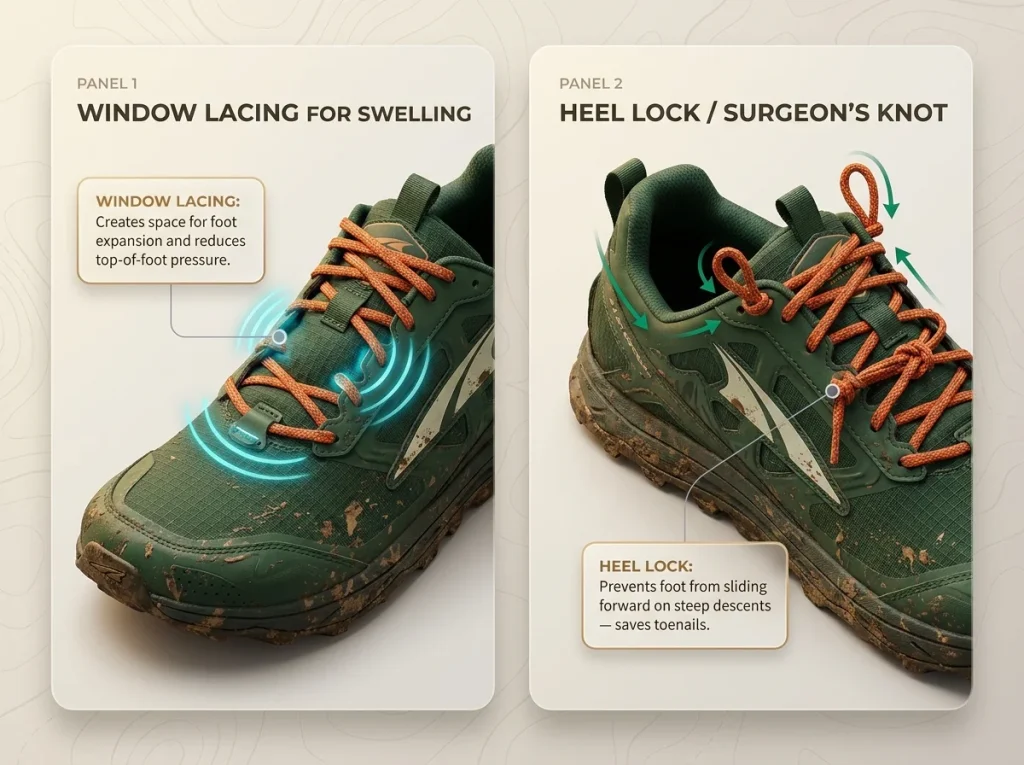
You don’t just tie your messy laces once and forget about them. Laces act as the fine-tuning tension knobs for your entire foot as it inevitably changes shape. If the high top of your foot feels badly bruised from extreme swelling, skip a middle set of eyelets to create an open window in the lacing pattern. This quickly gives the shoe room to bulge harmlessly upwards without violently strangling your swollen foot.
Don’t let a massive, brutal downhill section hammer your toes directly into the hard front bumper. You quickly tie a harsh lacing block to prevent downhill slippage by using a Surgeon’s Knot and a high heel lock. This physically traps your ankle backward in the shoe, flawlessly preventing the horror of dropping all your black toenails an hour later.
Sterile Blister Lancing (The “Wick” Method)
Despite what safe doctors firmly tell you at home, on a real trail, a massive pressure blister will absolutely burst within three harsh miles. It is massively safer to execute a precise, sterile lancing in camp than it is to let a massive blister blow out messily inside a mud-filled, dirty sock. You need to rely on a confident lancing technique.
Carefully wipe the skin down with alcohol. Use the tip of your sterile needle to gently poke three small holes directly at the very edge of the raised blister, not the center. Press the fluid out gently. Leave the dead skin roof totally intact to act as your natural bandage, hit it with antibiotic ointment, and completely cover it underneath a fresh strip of Leukotape.
Lacing tricks and clean draining handle ninety percent of trail emergencies. But when structural pain threatens to end your hike entirely, you have to get creative with your gear.
In-Field “Shoe Surgery” to Save Your Trip
When you discover an agonizing pinky toe pressure point or a massive, brutal bunion flaring up on day ten, you can’t just quit the trail. You resort to outright shoe surgery.
Take your pocket knife and violently slice a clean one-inch slit directly through the tough side mesh of your expensive brand-new shoe right exactly over the pain point. It looks unhinged, and it lets in way more trail dirt, but permanently releasing that targeted pressure saves you from a trip-ending injury and keeps you moving forward.
Pro tip: Before cutting into your shoe, aggressively massage the tight upper fabric from the inside using the smooth end of your knife handle. Stretching the threads forcefully can sometimes pop a tight seam enough to save the shoe from a full slice.
Conclusion
Ditch the heavy waterproof boots for breathable trail runners and implement a rigorous daily sock rotation to forcefully manage crushing moisture. Tap into aggressive preventative Leukotape strategies every single morning before raw friction creates a hike-ending blister in the dirt. Most importantly, respect the mid-day reset to dry out your messy gear and raise your heavily swollen joints.
Don’t wait for your massive five-hundred-mile goal to test out these concepts. Try this aggressive daily system on your next rough weekend shakeout trip. Dialing in a perfect routine early saves you from brutal lessons when the real miles start stretching out over the horizon.
FAQ
How do you manage foot care on a thru hike when it rains for days?
You must radically switch your mindset from trying to stay perfectly dry to ensuring continuous immediate drainage. Wearing breathable mesh trail runners allows nasty water to rapidly pump out with every step, preventing severe trench foot.
Should I toughen my feet to prevent blisters before a long hike?
No, building up thick, rigid calluses frequently traps deep, un-poppable blisters straight underneath the hardened skin layer. Keep your skin intensely supple and heavily moisturized so it easily flexes with the brutal shear stress rather than ripping apart.
Why do hikers use Leukotape instead of Moleskin?
Leukotape stays stuck like an aggressive second skin even through violent river crossings, while traditional Moleskin notoriously slides around uselessly when damp. Leukotapes non-elastic super sticky adhesive locks down major hot spots permanently without altering how your shoe fits.
How much bigger should I buy my shoes for a thru-hike?
Most serious thru-hikers size up a full half to one and a half sizes over a massive trail due to extreme cumulative swelling. Aggressively use the One Thumb rule tightly behind your heel when fitting any new pair to guarantee expansion room.
Is it safe to pop a blister on the trail?
It is critically safer to boldly perform a highly sterile lancing calmly in camp than to allow a dirty blister to burst outward inside your sweaty sock. Carefully drain all fluid from the outer edge, leave the dead roof intact, and tape it.
Risk Disclaimer: Hiking, trekking, backpacking, and all related outdoor activities involve inherent
risks which may result in serious injury, illness, or death. The information provided on The Hiking Tribe is for
educational and informational purposes only. While we strive for accuracy, information on trails, gear, techniques,
and safety is not a substitute for your own best judgment and thorough preparation. Trail conditions, weather, and
other environmental factors change rapidly and may differ from what is described on this site. Always check with
official sources like park services for the most current alerts and conditions. Never undertake a hike beyond your
abilities and always be prepared for the unexpected. By using this website, you agree that you are solely
responsible for your own safety. Any reliance you place on our content is strictly at your own risk, and you assume
all liability for your actions and decisions in the outdoors. The Hiking Tribe and its authors will not be held
liable for any injury, damage, or loss sustained in connection with the use of the information herein.
Affiliate Disclosure: We are a participant in the Amazon Services LLC Associates Program, an
affiliate advertising program designed to provide a means for us to earn advertising fees by advertising and linking
to Amazon.com. As an Amazon Associate, we earn from qualifying purchases. We are also an official affiliate partner
of Black Diamond Equipment via the AvantLink network. If you click on a Black Diamond affiliate link and make a
purchase, we may earn a commission at no additional cost to you. We also participate in other affiliate programs and
may receive a commission on products purchased through our links. Additional terms are found in the terms of
service.