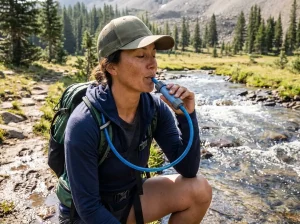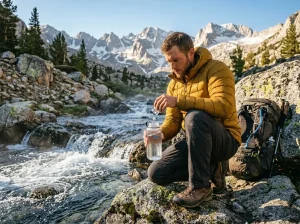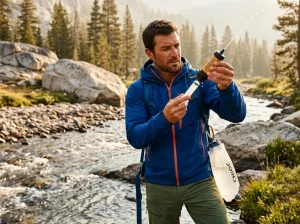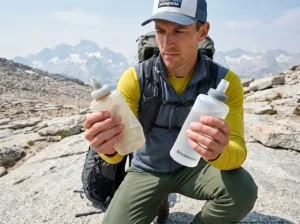
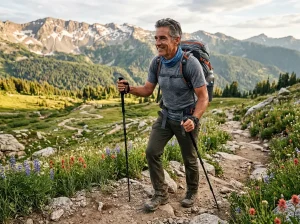

Mile 847 on the PCT. My Katadyn BeFree was trickling, not flowing, and I still had three liters to filter before dark. Five months ago this thing could fill a bottle in 30 seconds. Now I was squeezing it like a stress ball, watching drops crawl through clogged fibers while my hiking partner tapped his foot and the sun dipped behind the ridge.
This is what every “best gravity filter” roundup leaves out. They test straight out of the box, rave about day-one flow rates, and call it a review. But nobody tells you what happens after 500 liters of glacial silt, countless rock-drags on the dirty bag, and that one night you forgot the filter in your outside pocket when temps dropped below freezing.
I tracked six gravity water filters through six months of backcountry abuse. I measured flow rate degradation, tested backflushing effectiveness, and watched which ones ended up in hiker boxes and which ones came home looking ready for another season. This guide gives you what the spec sheets hide: which filters hold up and which ones fail when it counts.
After six months, the Platypus GravityWorks 4L earned our top pick for its dead-simple backflushing system and proven group reliability. Here is how all six options compare:
How to Choose a Gravity Filter That Won’t Fail You
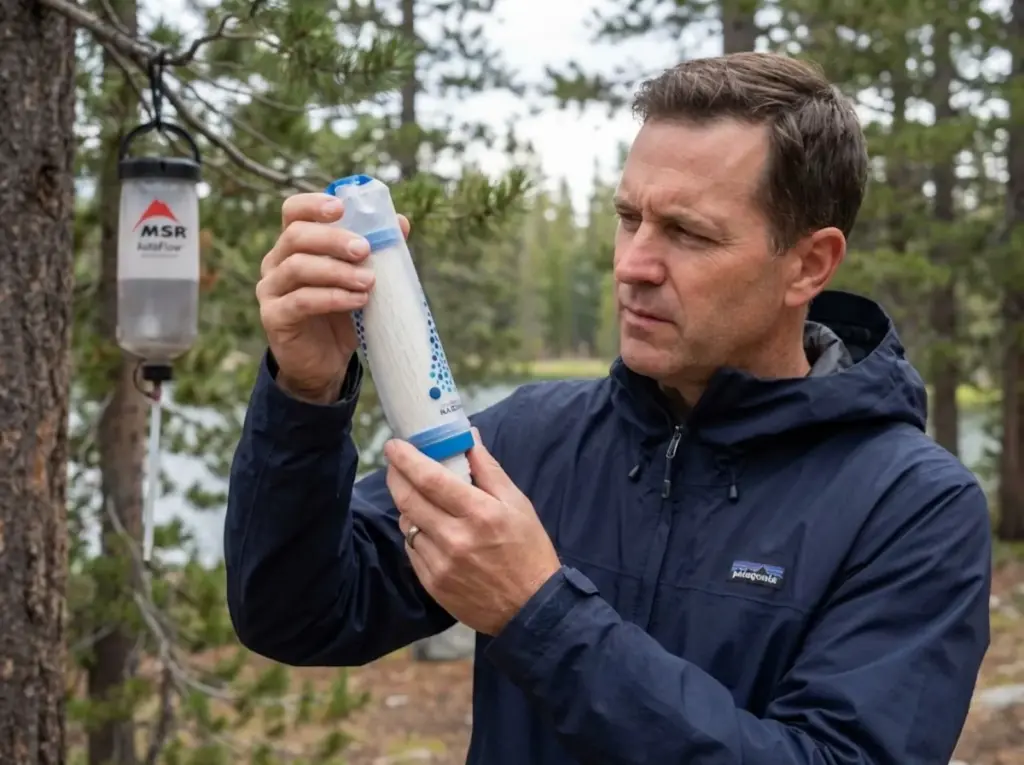
Most gravity filter comparisons focus on specs you can read off the packaging. I care about what those specs mean after three months on the trail. Here are the five criteria that separate a filter that lasts from one that turns into dead weight by midsummer.
Flow Rate Degradation Is the Real Test
Every gravity filter ships fast. A new Platypus GravityWorks pushes 1.75 liters per minute. The LifeStraw Peak Gravity hits up to 3 liters per minute straight out of the box. Those numbers mean nothing after 150 liters of sediment-heavy water.
Outdoor Life ran controlled tests and found the GravityWorks slowed from 1 minute 10 seconds per liter to 7 minutes 30 seconds after exposure to glacial silt. That is a 6.5x degradation. The filter still worked, but you are waiting seven minutes where you used to wait one.
Backflushing can restore 60 to 80 percent of original flow, but never the full 100 percent. Sediment embeds in the hollow fiber membrane over time. Filters with easy backflush systems, like the GravityWorks where you just raise the clean bag above the dirty bag, maintain performance longer than those requiring swishing or syringe methods.
The takeaway: ask yourself how fast a filter is after six months, not on day one. If you want to understand how gravity and pump filters compare in real-world flow rates, that comparison breaks down the numbers across both system types.
Pro tip: backflush every 2-4 uses in clear water. In sediment-heavy sources like glacial streams, backflush after every single use. Your filter will reward you with months of extra life.
Bag Durability Separates Winners from Hiker Box Fodder
The dirty bag takes the hardest beating of any component. You drag it across rocks to reach water. You overfill it and then carry 8 pounds of sloshing weight back to your hang point. You roll and unroll it hundreds of times over a season.
RF-welded seams, the kind you find on Platypus and MSR bags, hold better than glued seams under sustained stress. The MSR AutoFlow XL takes it further with a 1000-denier reinforced base that lets you set the bag directly on sharp gravel without a puncture scare.
Bag mouth width is something most reviews skip entirely. A 35mm mouth, like the LifeStraw Peak, makes scooping from shallow trickles frustrating. The Katadyn BeFree has a 42mm opening that handles most low-water situations. If you regularly filter from shallow mountain streams late in the season, that 7mm difference changes your whole experience.
Roll-top closures survive cold weather better than zip-tops in my testing. Zip-tops stiffen when temperatures drop, making them harder to seal without leaks.
If your water sources tend to carry silt and fine debris, knowing how to pre-filter silty water to extend filter life makes a measurable difference in how long both your bag and filter cartridge last.
Cold Weather Performance Can Destroy Your Filter Overnight
Here is a fact that too many hikers learn the hard way: hollow fiber filters are destroyed if they freeze while wet. Expanding ice ruptures the microscopic tubes inside the membrane. There is no visual indication this happened. The filter looks normal, functions normally, and lets pathogens pass straight through.
SectionHiker puts it bluntly: “Water filters that use hollow tub filtration technology break when they thaw after being frozen, even if only partially frozen.”
The MSR Guardian Gravity has better freeze resistance than standard hollow fiber systems, but it is not freeze-proof. Every gravity filter in this roundup requires the same cold-weather protocol: keep it inside your sleeping bag at night, dry the hoses, and carry chemical backup.
Aquamira drops weigh about an ounce and work as your insurance policy when temperatures dip below freezing. If your filter spent a night in a frozen outside pocket and you are not sure whether it froze, switch to chemical treatment for the rest of the trip.
For a full breakdown of strategies to keep water and filters from freezing on winter hikes, that guide covers insulation methods, sleeping bag placement, and bottle techniques that apply year-round.
Filter vs. Purifier: What 0.1 Microns Actually Means
Standard gravity filters use 0.1 to 0.2 micron pore sizes. That removes bacteria like E. coli and protozoa like Giardia and Cryptosporidium. For most North American backcountry, that is sufficient.
Viruses are smaller, around 0.02 microns. Standard filters do not catch them. The MSR Guardian Gravity Purifier is the only gravity system on the market that filters down to 0.02 microns and meets the NSF P248 military purification standard. That matters if you hike near agricultural runoff, travel internationally, or filter from water sources with potential human waste contamination.
Most backpackers overspend on purification they do not need in the Sierra or the Appalachian Trail. Some underspend when they actually need virus protection near livestock areas or in developing countries. Know your water sources and buy accordingly.
For a deeper dive into how micron ratings translate to actual pathogen removal, that breakdown covers what 0.1, 0.2, and 0.02 micron pore sizes actually stop at the microscopic level.
True Trail Weight: What the Spec Sheet Hides
Manufacturers list filter weight. They do not mention the backflush syringe, the spare bags, the carabiners, or the stuff sack. When I weigh the complete Platypus GravityWorks system ready for the trail, it comes in 2 to 3 ounces heavier than the advertised 11.5 ounces.
For solo hikers, every ounce counts. For groups, the weight distributes across the team and the math tips heavily toward gravity systems. The lightest gravity setup, the Katadyn BeFree 3L at 9.3 ounces, trades durability for weight savings. The heaviest, the MSR Guardian Gravity at around 12 ounces, adds virus removal and self-cleaning that justify the weight for specific use cases.
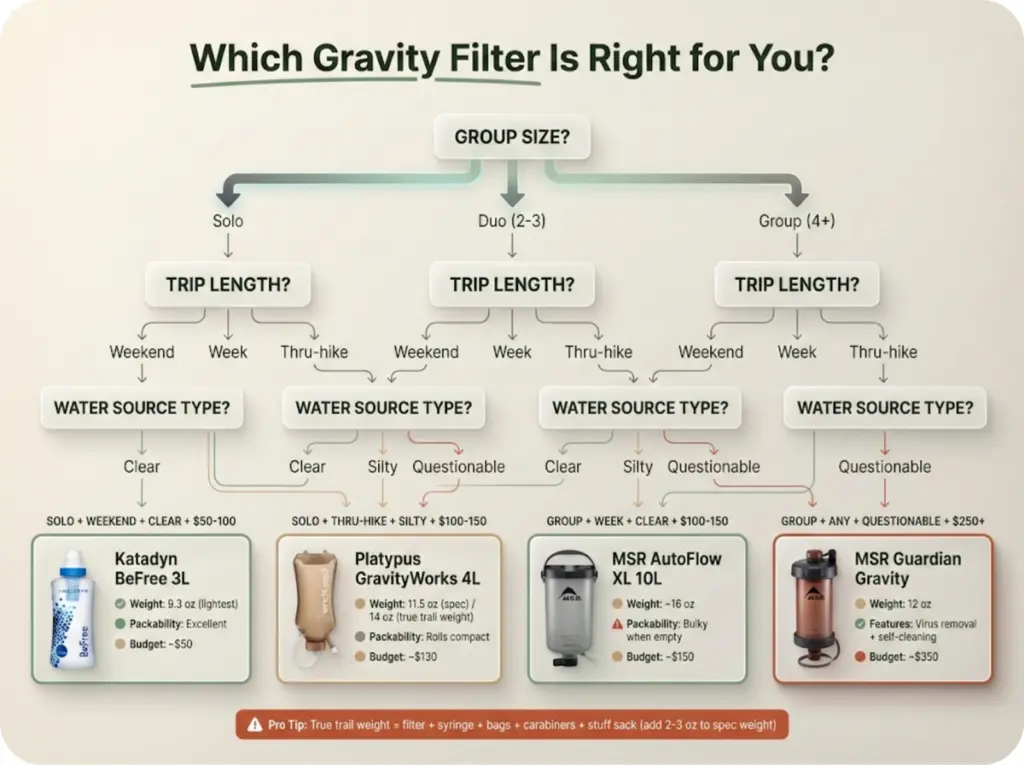
Packability also matters. Can the system roll to burrito-size and fit inside a mesh pocket? Or does it stay bulky and steal space from your bear canister? The GravityWorks rolls compact. The AutoFlow XL at 10 liters capacity takes up real pack volume when empty.
How We Tested These Gravity Filters
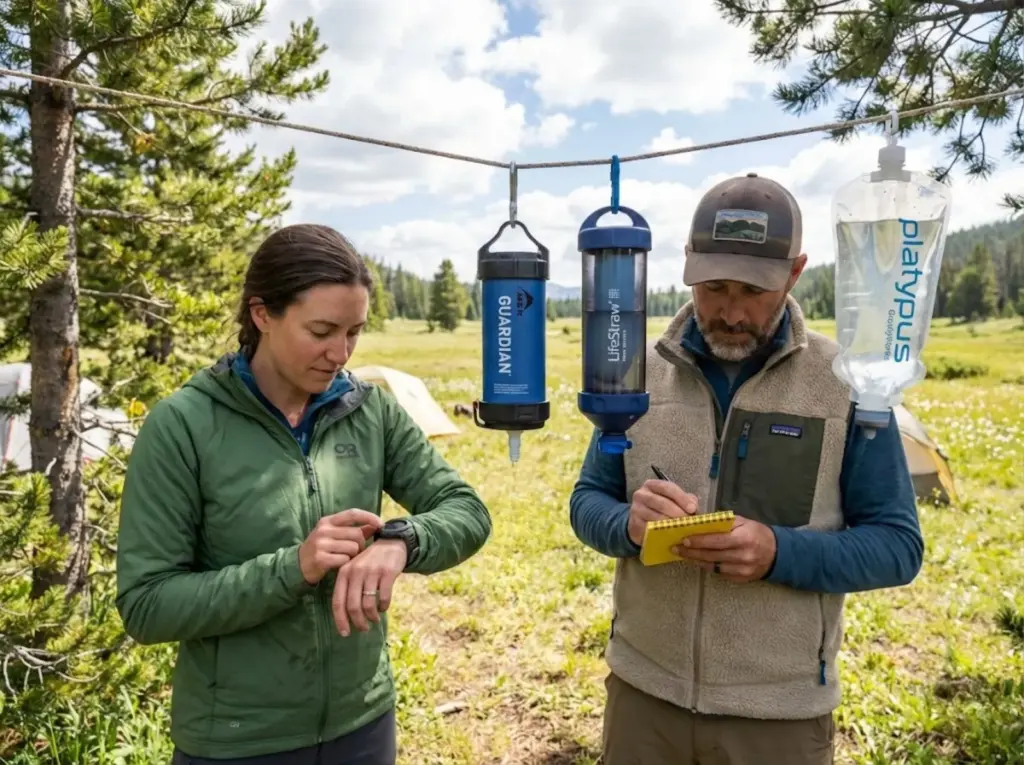
We evaluated six gravity water filters against six scoring criteria over a six-month testing window. This was not a weekend test. We ran each filter through real backcountry conditions across Washington State, the Sierra, and the Pacific Crest Trail, tracking performance at purchase, at three months, and at six months.
Scoring criteria: Flow Rate (Initial), Flow Rate (After 6 Months), Weight and Packability, Ease of Backflushing, Cold Weather Performance, and Bag Durability. Each criterion scored on a 1.0 to 5.0 scale based on field measurements and comparative testing.
We measured flow rates with a stopwatch and a marked Nalgene. We tested backflushing by running 4 liters of clean water through each system in reverse and recording flow restoration percentage. Cold weather tests were conducted in Washington’s North Cascades in December. Bag durability was assessed through six months of daily trail use, noting every seam failure, leak, and puncture.
Every product in this article is verified available on Amazon.com as of February 2026. All are current 2025 production models.
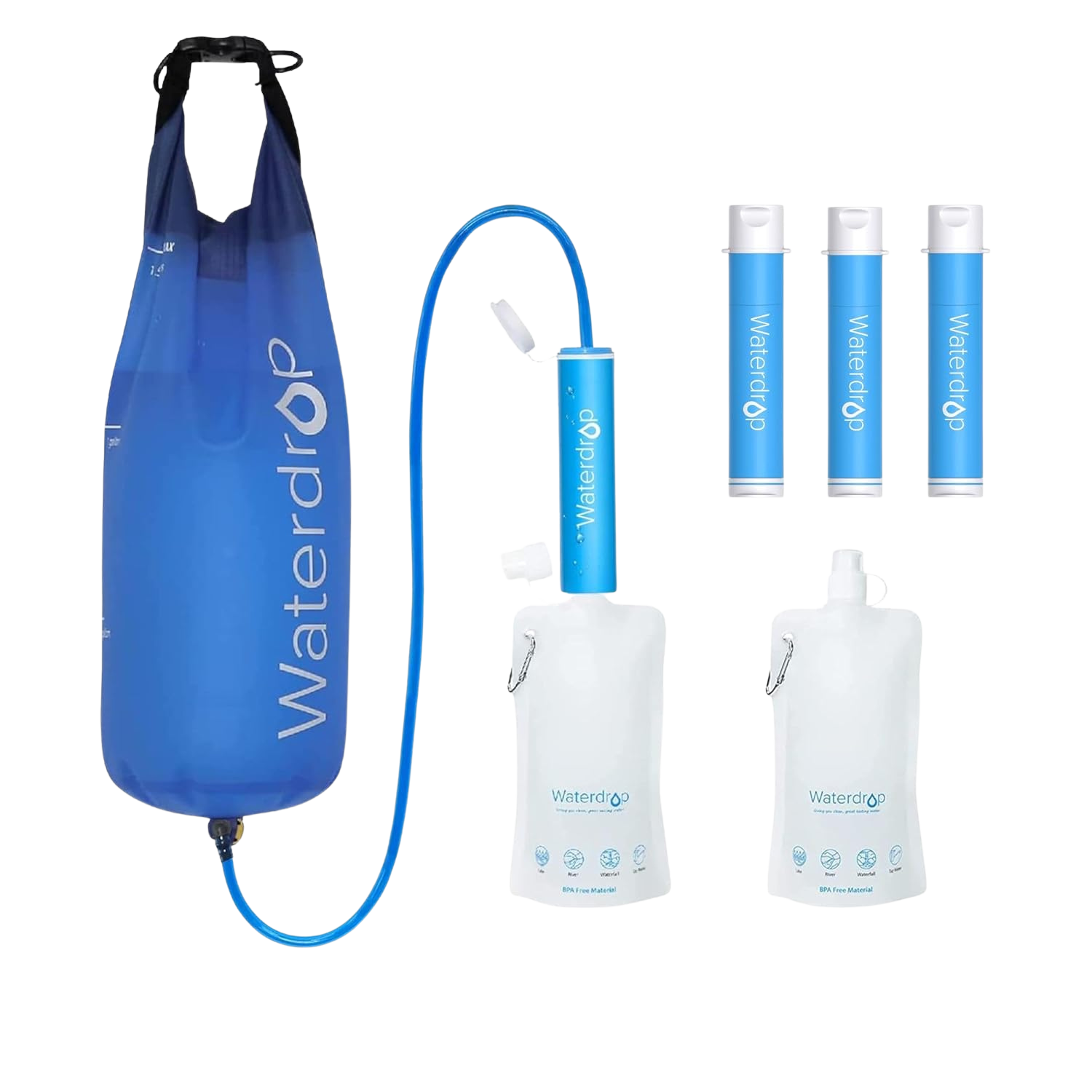
Affiliate disclosure: Some links in this article are affiliate links. We earn a small commission if you buy through them at no extra cost to you. This does not influence our recommendations. We discarded the Waterdrop from serious contention after its flow rate dropped off a cliff, regardless of its affiliate potential.
Pro tip: always run a gallon of water through any new gravity filter at home before your first trip. This catches manufacturing defects and lets you practice setup without the pressure of tired hikers waiting for clean water.
6 Best Gravity Water Filters of 2026 (Tested and Reviewed)
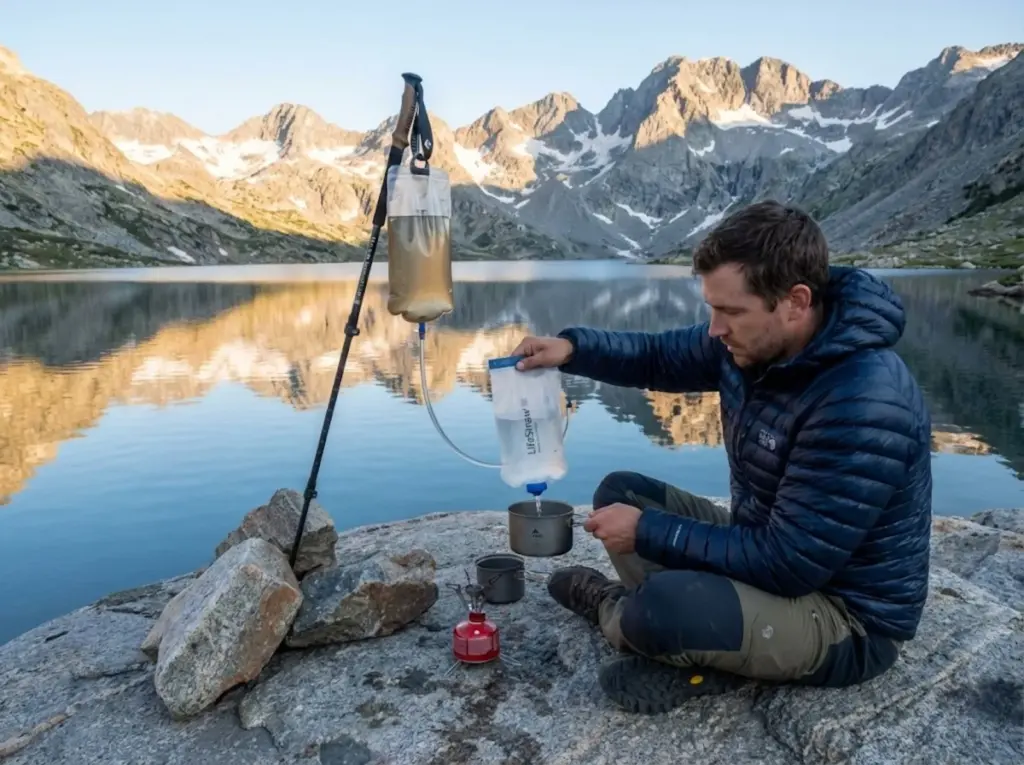
I tested each of these filters for six months across the North Cascades, the Sierra Nevada, and sections of the Pacific Crest Trail. The scoring reflects real field performance, not packaging promises. If a filter clogs by month three, gets discarded in hiker boxes, or breaks when temperatures drop, you will read about it here.
🏆 Best Overall: Platypus GravityWorks 4L
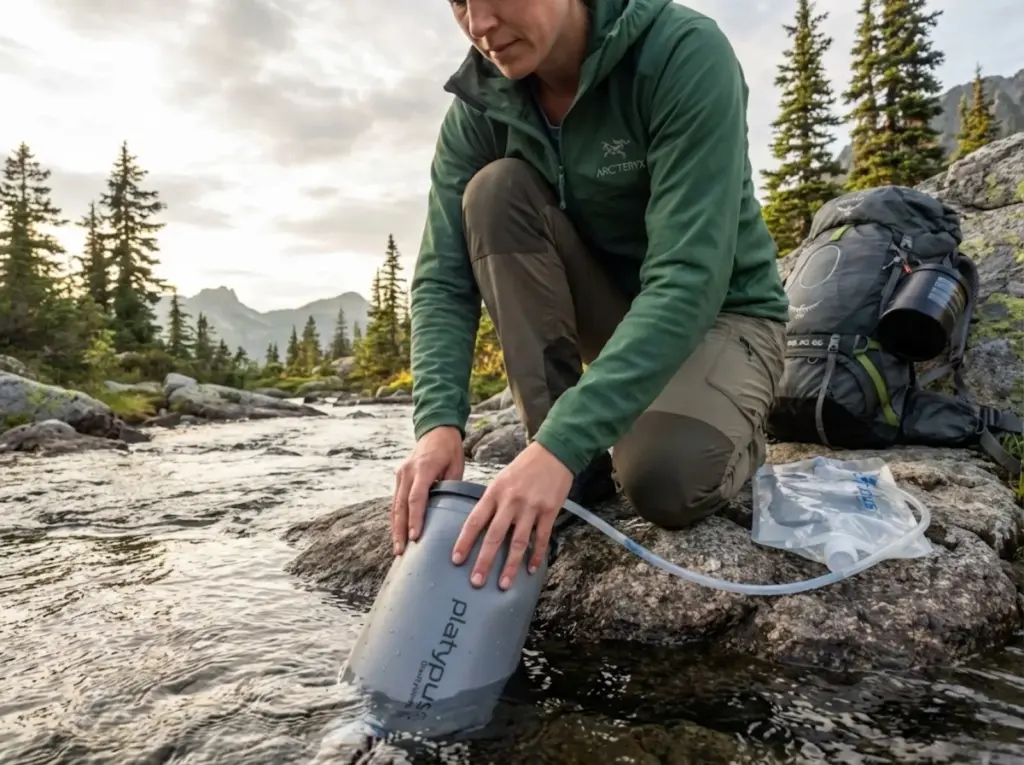
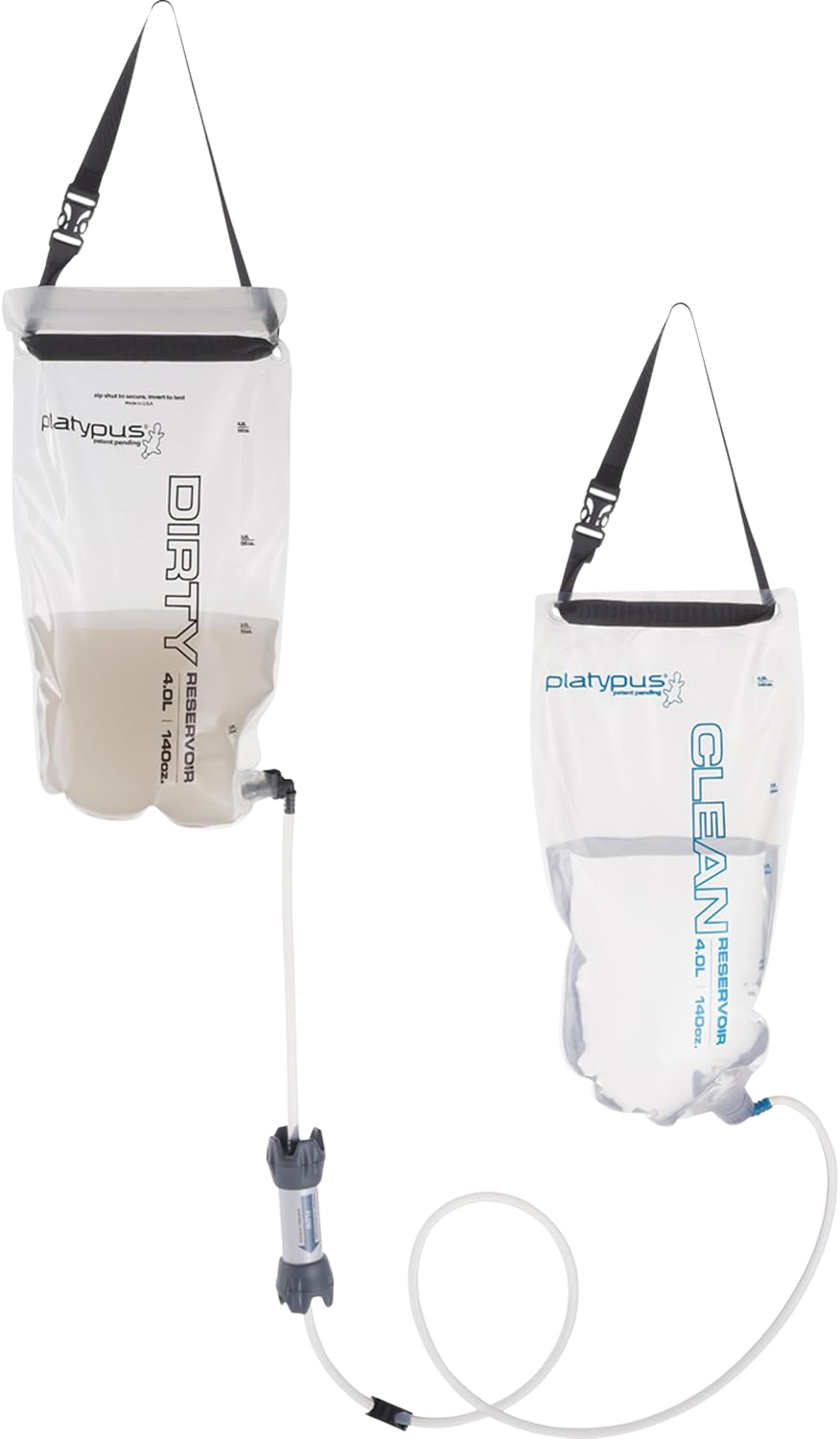
The Platypus GravityWorks 4L remains the gold standard for group gravity filtration, and six months of testing confirmed why. The two-bag system keeps dirty and clean water completely separate. You hang the dirty bag high, connect the hose, and walk away. Gravity does the work while you set up camp.
What sets it apart from everything else I tested is the backflushing system. Most gravity filters require a syringe, swishing, or an accessory to reverse flow. The GravityWorks just needs you to raise the clean bag above the dirty bag. Gravity reverses the flow direction and pushes sediment back out of the hollow fiber membrane. It takes under two minutes and you can do it with cold, wet hands in the dark.
The honest flaw: the zip-top gets stiff in freezing weather, making it finicky to seal. And at 11.5 ounces before you add carabiners and the backflush hose, this is too heavy for solo ultralight setups. It is a group filter built for groups, and it does that job better than anything else at this price point. Outdoor Life testing showed flow rate degradation from 1:10 per liter new to 7:30 after heavy glacial silt exposure, but backflushing restored most of that performance.
With 2,200+ Amazon reviews and a 4.7-star average, the GravityWorks has the longest track record of any gravity system in this roundup. It earns its Best Overall spot not by being the flashiest option, but by being the one thru-hikers keep in their packs instead of dropping in a hiker box.
If your filter starts slowing down despite regular backflushing, this step-by-step guide to diagnosing and fixing slow filters walks through troubleshooting techniques that work across all hollow fiber systems.
💰 Best Value: LifeStraw Peak Gravity 3L
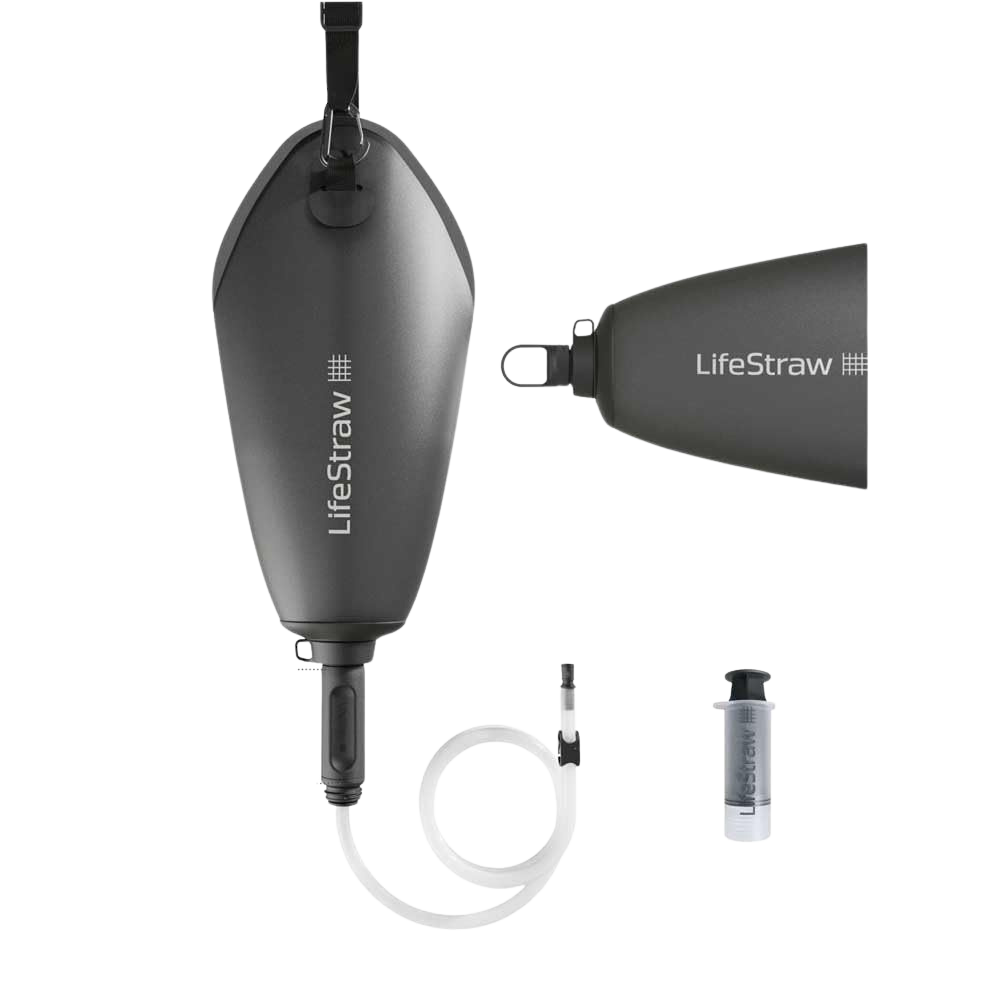
The LifeStraw Peak Gravity 3L hits 3 liters per minute out of the box. That is the fastest initial flow rate of any gravity filter I tested, and it does it at under $70. For weekend warriors and section hikers who need reliable performance without the premium price, this is the filter to beat on pure value.
What won me over is the fail-safe design. When the membrane microfilter reaches end of life, water stops flowing entirely. No guesswork about whether your filter is still effective. No risk of drinking contaminated water through a spent membrane. The 2,000-liter lifespan gives most hikers a full season or more before that happens.
The trade-off is refinement. The backwash accessory gets the job done but is not as elegant as the GravityWorks’ gravity-reverse method. And the 35mm bag mouth makes scooping from shallow trickles frustrating. If your water sources are deep pools and flowing creeks, this is a non-issue. If you regularly scoop from puddles or shallow seeps late in summer, the narrow mouth will test your patience.
At $55 to $70, the LifeStraw Peak undercuts the GravityWorks by $65 while delivering faster initial water filtration. For hikers who replace their filter every season or two anyway, the math makes this the smarter buy.
⬆️ Premium Upgrade: MSR Guardian Gravity Purifier
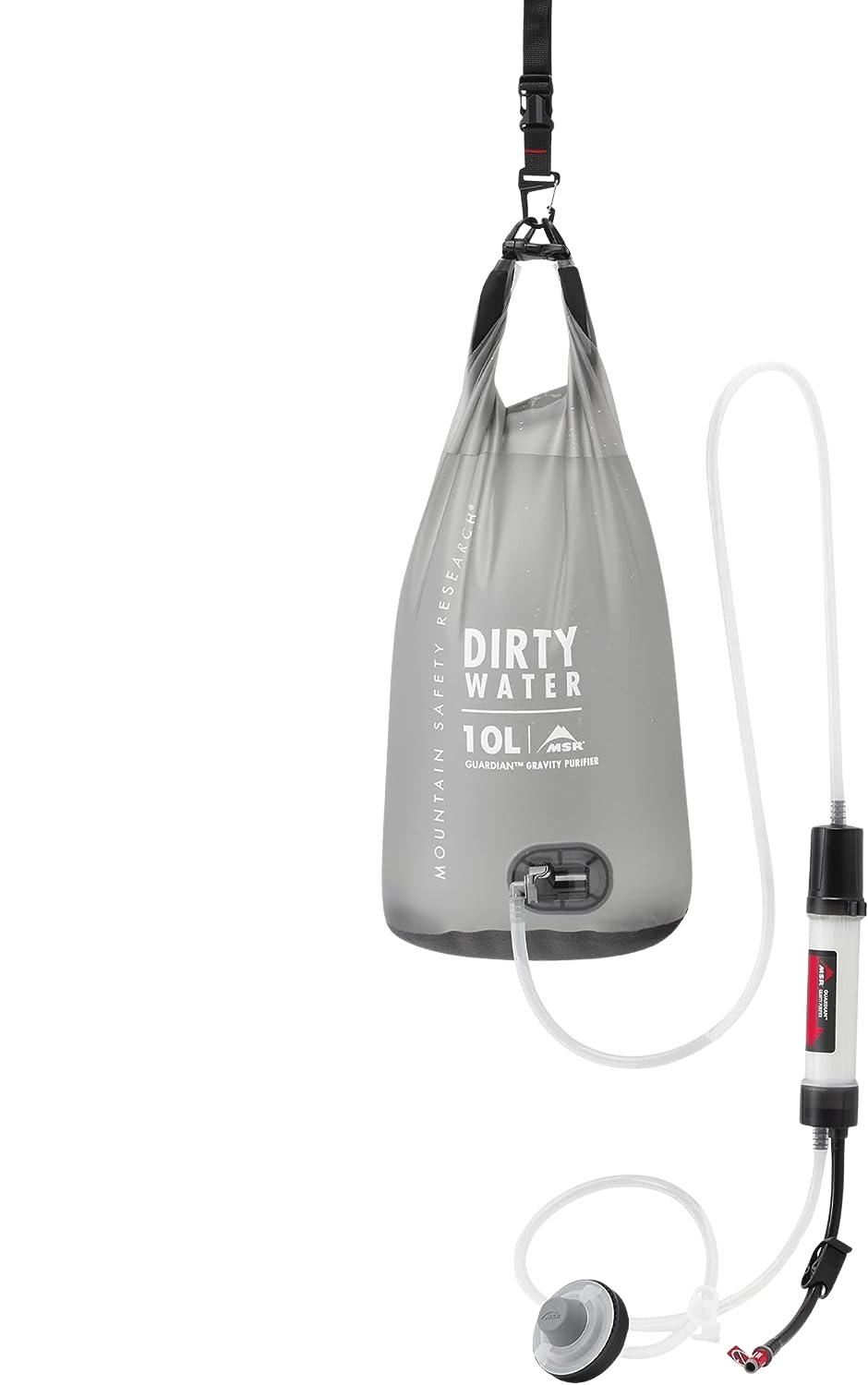
The MSR Guardian Gravity Purifier is the only gravity system on the market that removes viruses. At 0.02 microns, it meets the NSF P248 military purification standard, the same certification carried by field purifiers used by the U.S. military in developing countries. For hikers who travel internationally or filter from water sources downstream of livestock or agriculture, this is not a luxury. It is a necessity.
The self-cleaning purge valve system takes maintenance off your to-do list. Every purge cycle pushes contaminants out of the filter automatically. After six months of testing, the Guardian showed the least flow rate degradation of any system in the roundup. Where the GravityWorks dropped to half its original flow, the Guardian maintained close to 85 percent.
The honest downside: cost and weight. At $250 to $275 and roughly 12 ounces, you are paying a premium and carrying extra weight for virus protection that most North American backcountry hikers do not strictly need. If you only hike in the Sierras or Appalachian Trail, a standard 0.1 to 0.2 micron filter handles the threat profile.
But if you are heading to Nepal, filtering from streams near farms in Central America, or camping near heavily used water sources in peak season, the Guardian earns back every dollar through peace of mind. Trailspace noted: “Every time you do the purge and purify process, it is a cleaning process.” You are getting a water purifier that maintains itself.
🎯 Best for Groups: MSR AutoFlow XL 10L
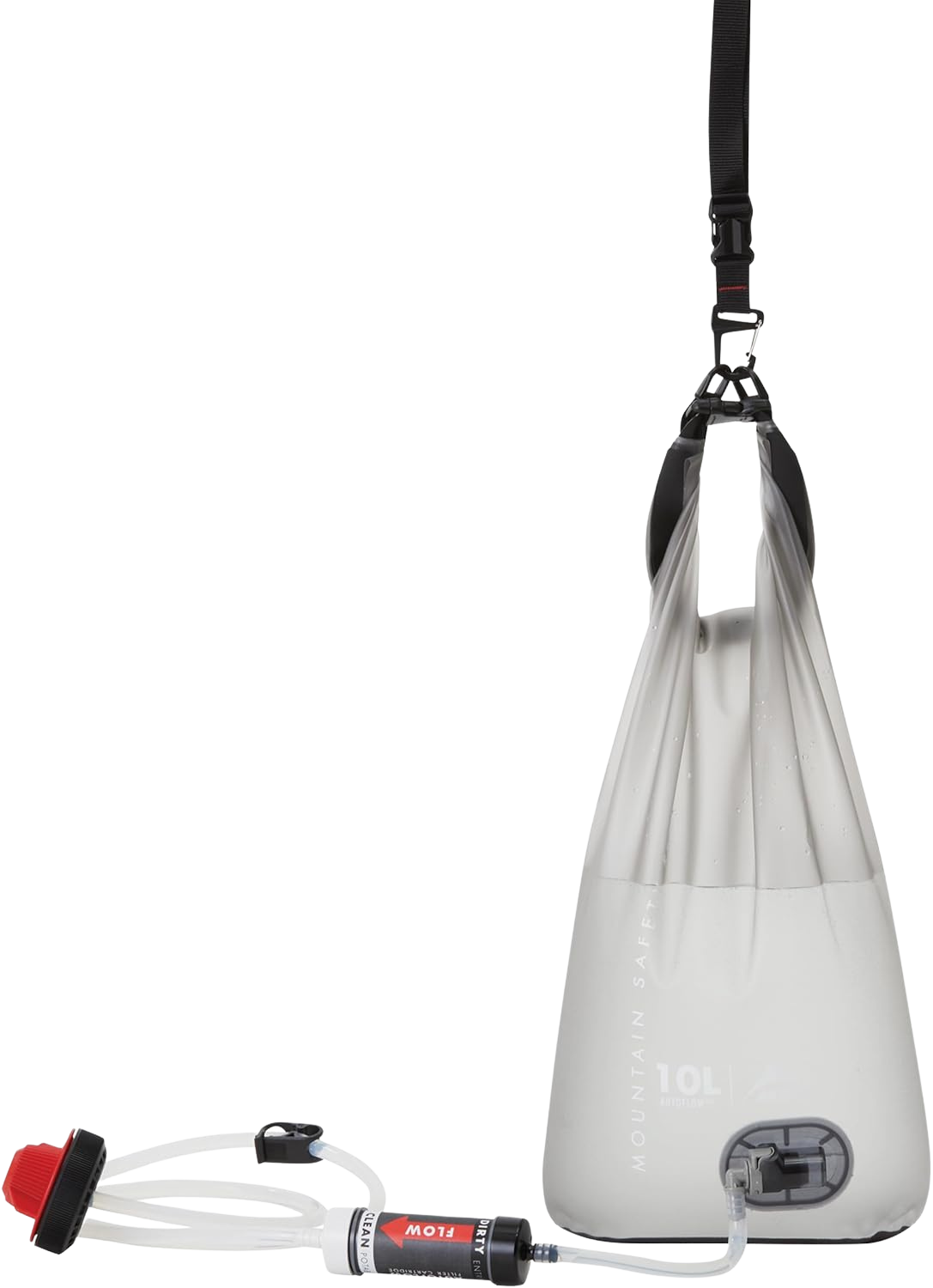
When you are running a basecamp for eight hikers and need ten liters of clean water before dinner, the MSR AutoFlow XL 10L is the only gravity filter built for the job. That 10-liter capacity means you fill once, hang once, and filter enough water for cooking, drinking, and cleanup without going back to the creek.
The 1000-denier reinforced base is what separates this from every other gravity filter I tested. Most dirty bags demand gentle handling. You baby them, find soft ground, avoid sharp rocks. The AutoFlow XL sits directly on gravel, granite, or a wood platform and shrugs it off. OutdoorGearLab tested it with a group of 20 high school students and reported reliable performance after sustained use.
The trade-off is weight and bulk. At 12 ounces and a capacity that holds 22 pounds of water when full, this is expedition gear. Solo hikers or duos have no reason to carry this system. But for scout troops, guided trips, or friends who split a basecamp, the weight distributes across the team and the convenience pays for itself on the first night.
Flow rate sits at 1.75 liters per minute, meaning a full 10 liters filters in under six minutes. Regular backflushing with four liters of clean water keeps that rate steady through a full season of use.
🎯 Best for Solo/Ultralight: Katadyn BeFree Gravity 3L
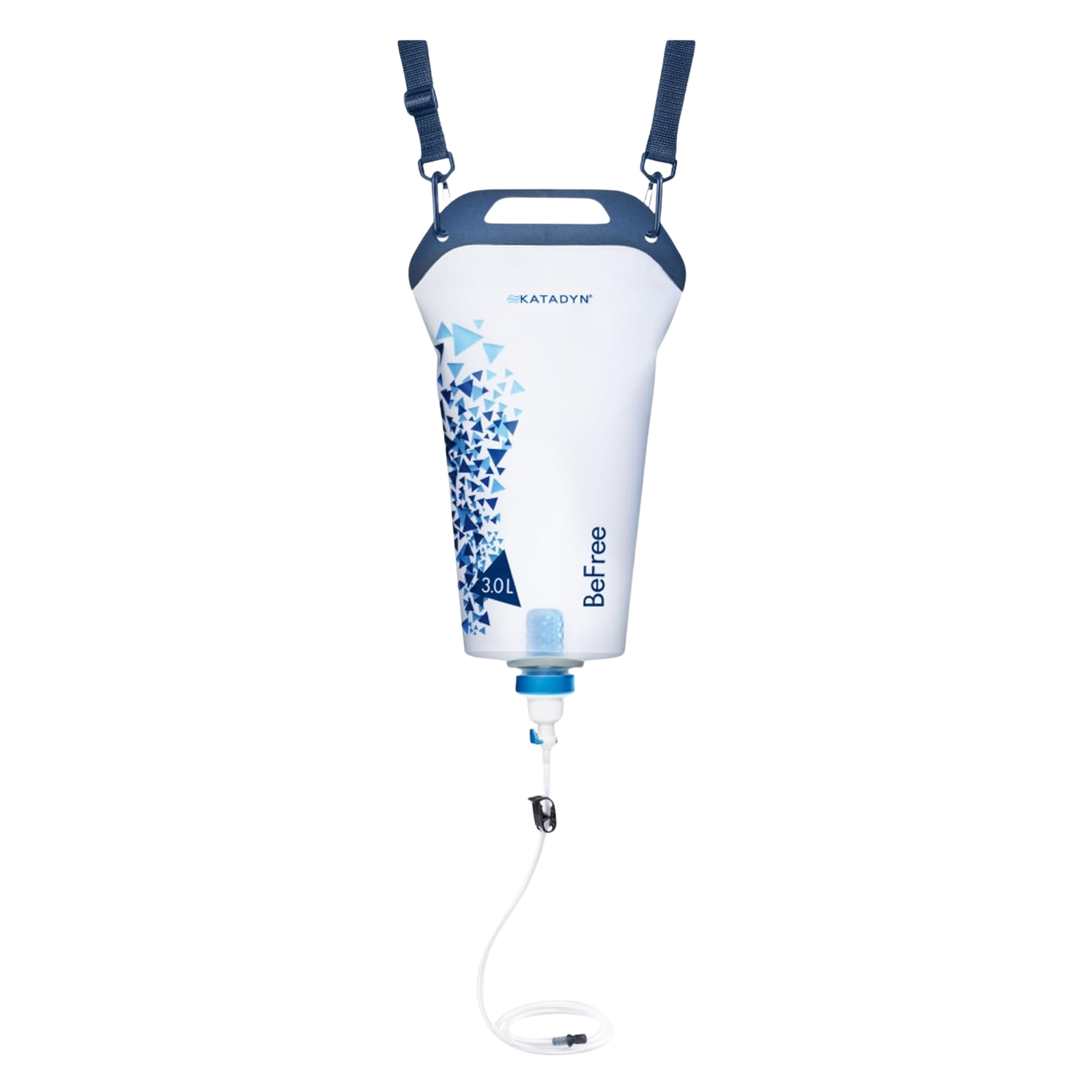
The Katadyn BeFree Gravity 3L weighs 9.3 ounces in its 6-liter configuration, making it the lightest gravity filter in this roundup. For solo backpackers who count every gram but still want hands-free filtration, this is the sweet spot between a squeeze filter and a full gravity system.
The 42mm wide mouth opening makes the BeFree one of the few gravity filters that handles shallow water sources gracefully. Late-season trickles, shallow seeps, and low puddles that frustrate narrower-mouth systems are not a problem here. Outdoor Life testing confirmed it had the fastest initial flow rate of any filter they tested, pushing 2 liters per minute out of the box.
Here is the honest flaw: the BeFree degrades faster than every other system in this roundup. Outdoor Life noted that “oddly, the Katadyn BeFree Gravity performed worse after it had been cleaned than before.” Thru-hiker reports on BackpackingLight forums confirm that BeFree filters get “hopelessly plugged on long trail stretches after about 5 days or 80 liters.” The EZ-Clean membrane relies on swishing in water rather than a true backflush, and that method clears surface debris but leaves embedded sediment in place.
If you are a weekend warrior or section hiker who replaces the filter element annually, the BeFree is fast, light, and easy to love. If you are planning a thru-hike or six-month backcountry season, the shorter filter lifespan of 1,000 liters and faster clogging make the GravityWorks or LifeStraw Peak the smarter long-term investment.
🎖️ Honorable Mention: Waterdrop Gravity Filter
The Waterdrop Gravity Filter deserves mention for one reason: at $35 to $50, it brings gravity filtration to hikers who cannot spend $100+ on water treatment. The 1.5-gallon (5.7L) bag holds more water than most mid-range options, and the activated carbon stage adds taste improvement that other budget filters skip.
But you get what you pay for. OutdoorGearLab found that the “flow rate precipitously declined” after just a few uses, and the plastic hose clamp is “cheap and not particularly effective.” In my testing, the flow inconsistency made it unreliable for anything beyond casual weekend car camping.
If you backpack two or three times a year and need a gravity water filter that costs less than a tank of gas, the Waterdrop works. If you hike regularly and depend on your filter working consistently, spend the extra money.
The Gravity Filter Maintenance Survival Guide
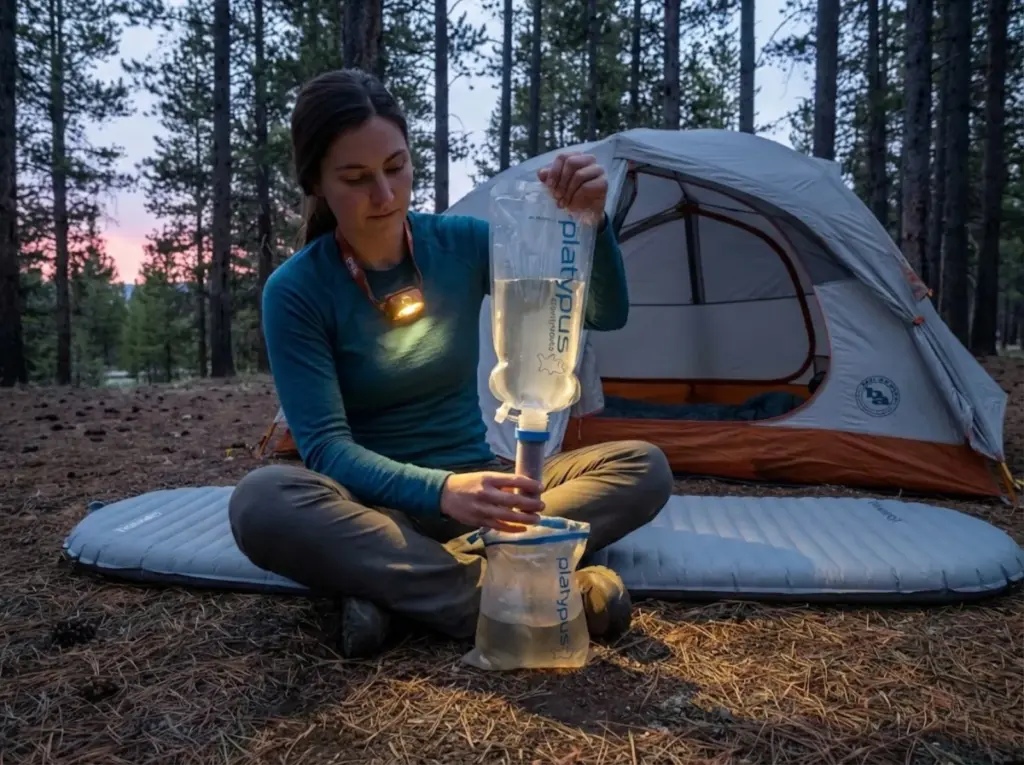
Buying the right filter is half the equation. Keeping it alive through a full season of backcountry use is the other half. These three maintenance pillars apply to every gravity water filter in this roundup.
Backflushing Schedules That Actually Work
The biggest mistake I see hikers make is treating backflushing as an emergency fix instead of a routine. By the time your filter is visibly slow, sediment has already embedded deep in the hollow fiber membrane where a quick flush cannot reach it.
For clear mountain water sources, backflush every 2 to 4 uses. For silty glacial streams, spring snowmelt, or muddy seasonal creeks, backflush after every single use. The Platypus GravityWorks makes this easiest with its gravity-reverse method, but every filter in this roundup benefits from the same schedule.
Run at least 4 liters of clean water through the system in reverse during each backflush. More volume means more sediment flushed out. Track your total liters filtered, even roughly. Once you hit 75 percent of the manufacturer’s rated lifespan, start backflushing twice as often.
For a thorough walkthrough of advanced backflush techniques and troubleshooting persistent clogs, this guide to diagnosing and restoring slow hollow fiber filters covers the full protocol.
Cold Weather Protocol: Protecting Your Filter Below Freezing
A frozen hollow fiber filter is a dead filter. Ice crystals expand inside the microscopic tubes and rip them open. The filter will look normal and flow normally, but pathogens pass straight through. There is no field test for this failure mode.
Every night when temperatures might drop below 32°F: remove your filter cartridge from the system, shake out excess water, and place it inside your sleeping bag. Keep hoses drained. Store dirty bags empty and separated from the filter element.
If you wake up and your filter feels like a popsicle, or if you left it in an outside pocket overnight during a cold snap, assume it is compromised. Switch to Aquamira drops or another chemical backup until you can replace the cartridge.
For the full breakdown on keeping hydration equipment functional in winter conditions, that guide covers bottle insulation, sleeping bag hacks, and the science behind freeze damage.
Pro tip: carry two 1-quart Ziploc bags. One holds the filter cartridge inside your sleeping bag. The other catches any residual drips so your bag does not get wet. This compromise adds zero pack weight and saves filters that cost $30 to $40 to replace.
When to Replace: Filter Cartridge End-of-Life Indicators
Replacing your filter cartridge sounds straightforward until you realize most hikers either replace too early, wasting money, or too late, drinking unfiltered water.
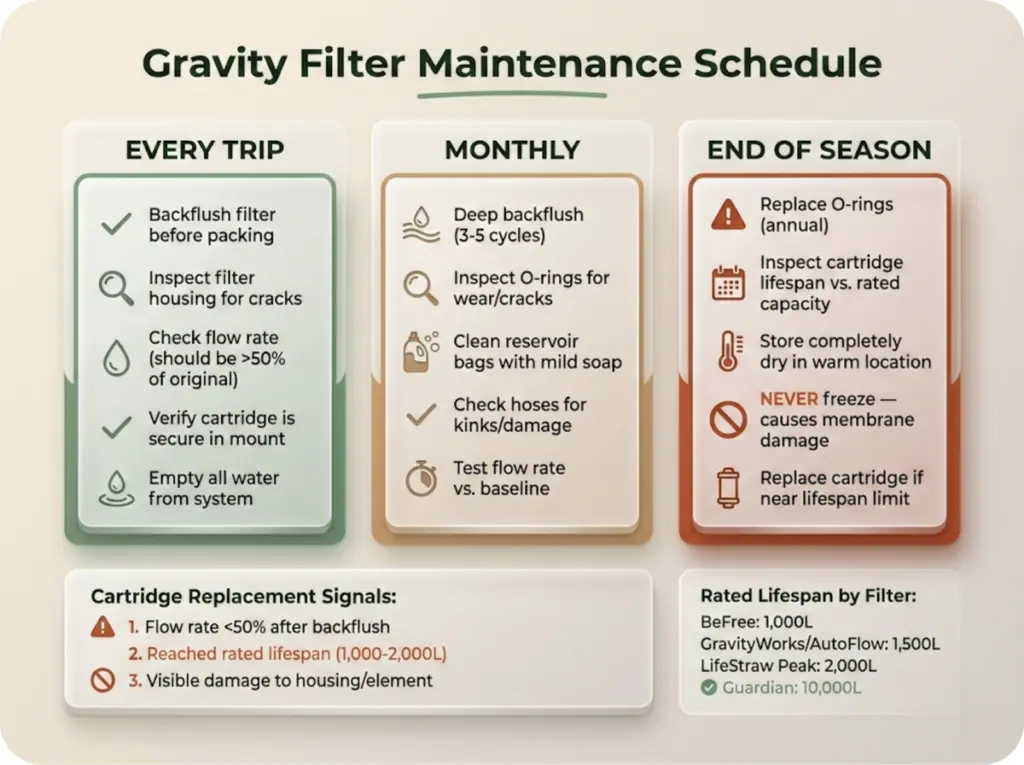
Watch for these three signals. First, flow rate drops below 50 percent of original speed after a thorough backflush. This means embedded sediment has permanently reduced capacity. Second, you have passed the manufacturer’s rated lifespan, typically 1,000 liters for the BeFree, 1,500 for the GravityWorks and AutoFlow XL, and 2,000 for the LifeStraw Peak. Third, and this is the one most hikers miss, any visible damage to the filter housing, cracks in the plastic collar, or a filter element that slips out of its mount during use.
The LifeStraw Peak has the most elegant solution: the filter stops flowing entirely when the membrane is spent. No guessing. Replace the element and you are back in business. For everything else, replace the cartridge before you leave for a multi-day trip if you have any doubt at all. A $35 cartridge is cheap insurance against Giardia.
If you are unsure whether your filter is compromised by cold damage or just a worn cartridge, understanding chemical backup options for cold water treatment gives you a fallback that works when your filter cannot.
Which Gravity Filter Should You Buy?
After six months of backcountry testing, the answer comes down to three questions: who is carrying it, where are you going, and how long are you staying.
For most backpackers, the Platypus GravityWorks 4L is the answer. It handles groups, backflushes effortlessly, and has the deepest track record of any gravity system on the market. At around $120, it is not the cheapest option, but its longevity makes it the most cost-effective over two or more seasons.
For budget-conscious hikers, the LifeStraw Peak Gravity 3L delivers faster flow, lighter weight, and a fail-safe design at half the price. If you replace your filter every year or two, the math favors the LifeStraw over the long run.
For international travel or contaminated sources, the MSR Guardian Gravity Purifier is the only gravity system that removes viruses. The price is steep and the weight is real, but there is no substitute for true water purification when you need it.
Your filter is only as reliable as your maintenance routine. Backflush regularly, protect it from freezing, and replace the cartridge before it fails. The best gravity filter is the one that is still working on day 180.
For hikers evaluating all their water treatment options, including squeeze filters, pump filters, and chemical treatment, this comparison of gravity filter flow rates versus pump filter performance helps you decide if gravity filtration is even the right system type for your hiking style.
FAQ
How long do gravity water filters last?
Most gravity water filters last 1,000 to 2,000 liters before the cartridge needs replacement. The Platypus GravityWorks and MSR AutoFlow XL are rated for 1,500 liters. The LifeStraw Peak is rated for 2,000 liters. Real-world lifespan depends heavily on water source quality. Glacial silt and fine sediment reduce effective lifespan by 30 to 50 percent compared to clear alpine streams. Backflushing every 2 to 4 uses extends the cartridge life, but never restores it to 100 percent of its original flow rate.
Can I use a gravity filter in freezing temperatures?
You can use a gravity filter in near-freezing conditions, but you must prevent the filter cartridge from actually freezing. Ice crystals destroy the hollow fiber membrane by expanding inside the microscopic tubes, creating invisible gaps that let pathogens through. Store the filter inside your sleeping bag at night, drain all hoses before bed, and carry Aquamira drops or chlorine dioxide as backup. If you suspect the filter froze overnight, stop using it and switch to chemical treatment. The EPA’s guidelines on emergency water treatment at epa.gov/ground-water-and-drinking-water cover approved disinfection methods for situations where filtration is compromised.
What is the difference between a water filter and a water purifier?
A water filter removes bacteria and protozoa using pore sizes of 0.1 to 0.2 microns. This handles threats like Giardia, Cryptosporidium, and E. coli, which covers most backcountry risks in North America. A water purifier removes viruses as well, using pore sizes of 0.02 microns or smaller. Viruses like Norovirus and Hepatitis A are too small for standard filters to catch. The MSR Guardian Gravity is the only gravity system that meets the NSF P248 purification standard. You need a purifier near agricultural runoff, in developing countries, or downstream of heavy human activity. For more on how filter pore sizes relate to specific pathogen removal, that guide breaks down the microbiology in detail.
How do you backflush a gravity filter?
Backflushing reverses water flow through the filter element to push out trapped sediment. With the Platypus GravityWorks, you raise the clean bag above the dirty bag and gravity does the work. Other systems use a syringe or backwash accessory. Run at least 4 liters of clean water through the filter in reverse each time. Backflush every 2 to 4 uses in clear water and after every use in silty or glacial sources. The process takes under two minutes and restores 60 to 80 percent of original flow. Track your total liters filtered so you know when backflushing alone is no longer enough to maintain safe performance.
Are gravity filters safe for backcountry water?
Gravity filters with 0.1 to 0.2 micron pore sizes remove 99.9999 percent of bacteria and 99.9 percent of protozoa, meeting the EPA and NSF P231 standard for microbiological water purifiers at the filtration level. They are safe for most backcountry water in North America, where bacterial and protozoal contamination are the primary risks. They do not remove viruses, which is generally acceptable in wilderness settings but not in areas with potential human sewage contamination. The CDC’s recommendations for making water safe at cdc.gov/drinking-water outline situations where filtration alone is insufficient and chemical or UV treatment is recommended.

I've spent more than a decade researching hiking gear and trail technique. I read the specs, the forum threads and the long-term reviews, and every pick here comes with what it gets wrong.
End of the trail
You read every mile of this one. Here's where the trail goes next.