
In this article
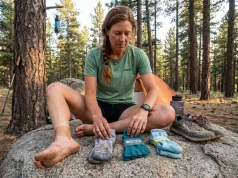
You pull off your boots on day five of a steep, humid ascent, retreating into a cramped two-person tent. You brace yourself—and your tentmate—for the suffocating, sharp stench that usually follows a week of grinding in the backcountry. But when the socks finally come off, instead of that gag-inducing synthetic permastink, there is only a faint, earthy musk.
After logging hundreds of miles guiding clients across varied terrain, I’ve seen this exact scenario play out countless times during a post-trail microbe analysis at the trailhead. The difference always comes down to what is wrapped around your feet. This guide breaks down the rigorous biological and physical mechanisms of odor resistance in wool sourced from the merino sheep. By running these fibers through an absolute meat grinder of a 7-day field stretch, we demonstrate exactly why moving away from synthetics is a fundamental upgrade for your olfactory hygiene, extreme blister prevention, and overall trail safety.
Here is exactly how this fiber outsmarts the stench—no panic, no daily washing necessary.
⚡ Quick Answer: Merino wool physically binds pungent odor molecules deep inside its sulfur-rich keratin matrix, locking them aggressively away from your nose. Unlike flat synthetics that purely trap liquid sweat to ferment on their surface, wool regulates the foot’s entire microclimate by absorbing vapor through a powerful heat-generating process. This denies odor-causing bacteria the warm, wet environment they desperately need to multiply, keeping your feet fresh and blister-free for days on end.
| Performance Comparison: Merino Wool vs. Synthetic (Polyester) | ||
|---|---|---|
| Feature | Merino Wool | Synthetic (Polyester) |
| Vapor Absorption Capacity | Up to 35% of dry weight | Less than 1% |
| Primary Odor Molecule Trapped | Isovaleric Acid (chemical binding) | Nonenal (surface adhesion) |
| Microclimate Thermal Effect | Exothermic (+1.1 kJ/g heat generated) | Endothermic (rapid heat loss) |
The Microbiology of Trail Stench
Liquid Sweat is the Enemy
Sweat itself is completely odorless. When you are pushing hard up a false summit, your apocrine and eccrine glands pump out pure moisture, trace minerals, and amino acids. The problem is what happens next. If you wear standard nylon or polyester, you trap the very liquid sweat directly against your skin. This creates a stagnant swamp inside your boot.
Synthetics act identically to plastic bags. They rely entirely on primitive capillary action to move moisture. This means they physically require your sweat to form a heavy liquid pool first before they do any actual wicking. That pooling is the direct catalyst for the total biology of the stink. Your heavy leather boots morph into a humid, alkaline incubator. You are essentially building a greenhouse for foot fungus.
Most hikers buy a shiny synthetic six-pack at a big box store and spend the next eighty miles wondering why their lateral foot edge feels like a cheese grater and smells like a dumpster. The answer is sitting in that pooled liquid sweat.
The Bacteria Behind the Odor
The malodor you smell is a direct metabolic byproduct of bacteria causing biological and chemical processes causing textile malodour, notoriously the brevi-bacteria (specifically specific bacteria). These microscopic hitchhikers feast aggressively on the leucine amino acids present in your sweat. As they digest those acids, they predictably excrete foul-smelling acid.
That sharp, cheesy camp stench is pure foul-smelling acid vaporizing into your sinuses. Synthetics hold onto it like a sponge, while your core also pumps out sebum that oxidizes into a stale odor.
The Myth of stopping Bacteria
A massive marketing lie claims natural wool operates as a toxic agent, actively stopping microbes on contact. This is completely fabricated. If you throw a swab of high-end wool into an agar plate, bacteria will not spontaneously die or burst. You cannot sanitize an open wound with a hiking sock.
Instead, high-quality socks provide a highly restrictive bacteriostatic environment. This means the fiber simply denies the microbes the warm, wet, high-pH soup they desperately require for explosive bacterial growth.
The physical shape of the wool strands traps existing bacterial colonies on a microscopic scale. It violently interrupts their life cycle. By physically sequestering the rapidly multiplying biomass beneath its cellular edges, the material keeps the colony entirely away from your vulnerable skin barrier.
Pro tip: If you’ve ever dealt with synthetic hiker stench on a rainy slog, you know washing doesn’t fix it. That permastink is chemically welded to the fiber, waiting to be reactivated by your core heat. Never run old rotting synthetics through high heat in a dryer if they still smell like the trail, or you permanently set the odor into the plastic.
The Molecular Blueprint: How Merino Fights Odor
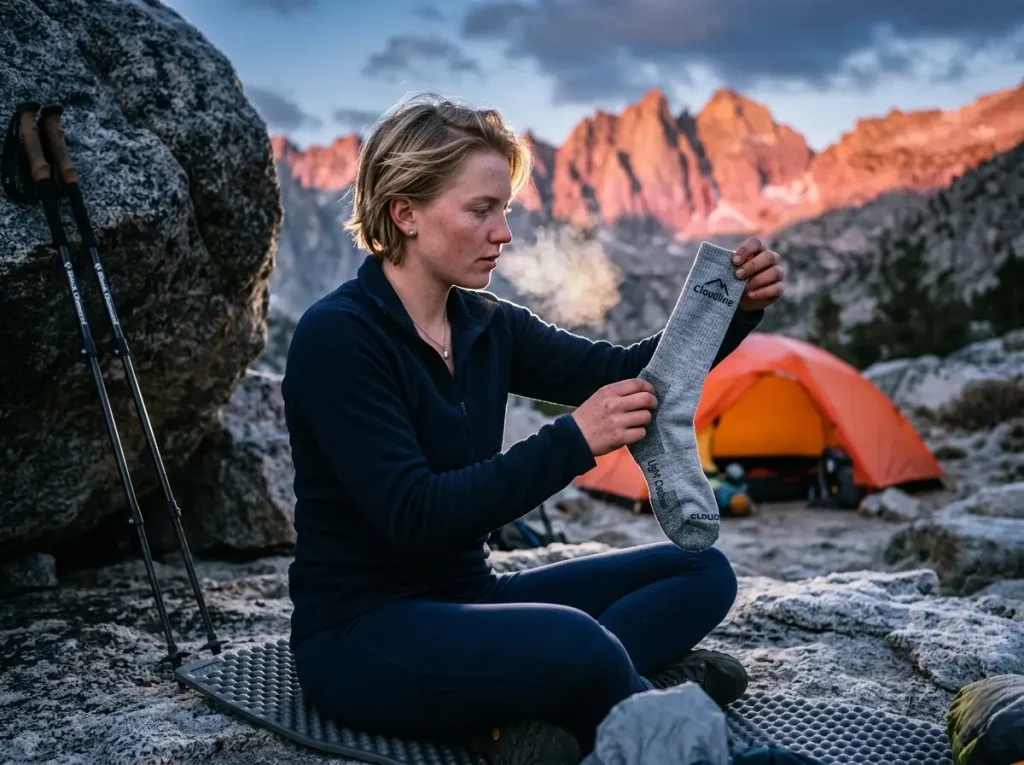
Keratin and the High-Sulfur Matrix
The odor-resistant superpower of a good trail sock is not accidental. It relies on the complex, living structure of the fiber itself. Standard polyester is just a smooth, extruded plastic tube cranked out of a factory. Wool, conversely, is a multi-layered protein machine built entirely around keratin.
Inside the wool cortex sits a highly porous proteinaceous matrix. This specific biological zone is incredibly rich in sulfur. Technical analysis calls this the specific protein groups. Why does this matter for a hiker caught in a torrential downpour? Because these high-sulfur regions act like a heavy steel chemical vault.
They actively bind volatile organic compounds, perfectly capturing the foul-smelling foul-smelling acid molecules before they ever have the chance to evaporate into the air inside your tent. This protein-based odor trapping physically locks the stench inside the dead center of the yarn, completely shielding it from olfactory detection.
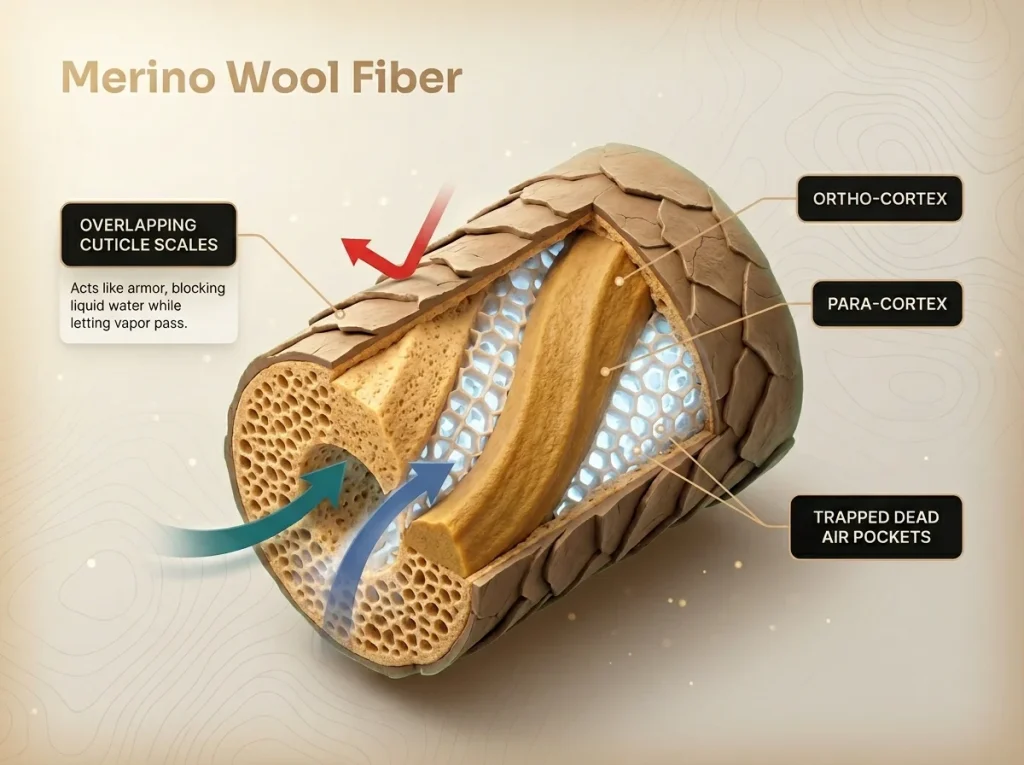
Crimp and the Bicomponent Cortex
Look closely at a strand pulled from a high-end Smartwool sock, and you will notice it isn’t perfectly straight. It has a natural, wavy zigzag pattern known as the crimp and scale geometry. This wave happens because the internal cortex actually consists of two parallel, competing sides: the internal structure. These two separate sides grow at slightly different biological rates, forcing the entire strand to twist around itself constantly.
This aggressive twist generates millions of microscopic insulating air pockets to regulate internal foot temperatures. The thermal conductivity properties of natural fibers dictate that trapped dead air is the absolute best insulator you can get.
By holding static air pockets directly against the epidermis, the sock aggressively buffers your foot against rapid heat spikes that trigger excess sweating in the first place. You stay incredibly cooler on hot afternoon ascents inside a canyon and warmer during frigid glacial river crossings. The finer the material—measured by a shockingly low micron count—the tighter and more efficient these twists become.
The Role of Cuticle Scales
The extreme outer layer of the wool acts exactly like the overlapping shingles on a cabin roof. These natural cuticle scales provide a rugged physical barrier that stubbornly blocks liquid from entering, while simultaneously remaining porous enough to let vapor slip inside.
When you grind your way through a flooded, muddy approach trail, these overlapping scales powerfully block the external grime and liquid water from penetrating the core of your sock. But the trapped internal moisture vapor from your foot easily pushes past those same exterior scales to be absorbed by the inner cortex.
Do not fall for standard antimicrobial chemical dips sprayed onto cheap synthetics. The physical keratin shingles do the actual demanding heavy lifting here.
The Thermodynamics of the Vapor Phase

Exothermic heat generation
Absorption of water vapor triggers a heat-generating process. When invisible vapor molecules bond with amino acids inside the fiber, the sock actively produces warmth. This tiny heat generation saves your toes from catastrophic frostnip.
Vapor-Phase Absorption vs Liquid Wicking
This brings us to the ultimate showdown between hygroscopic fibers (those that aggressively absorb vapor) and hydrophobic fibers (those that repel water entirely). Good wool handles your sweat before it even condenses into liquid form. This is called vapor-phase moisture management.
Quality models effortlessly absorb up to 35% of their own bare dry weight in moisture while still feeling entirely dry to the touch. Meanwhile, a synthetic sock pulls less than 1%. Synthetics maliciously force your foot to stay wet so the liquid can travel along the outside of the plastic strands via capillary action. By effectively managing sweat vapor before it condenses, you bypass the hazardous liquid phase entirely during moderate output hiking.
Creating the Perfect Microclimate
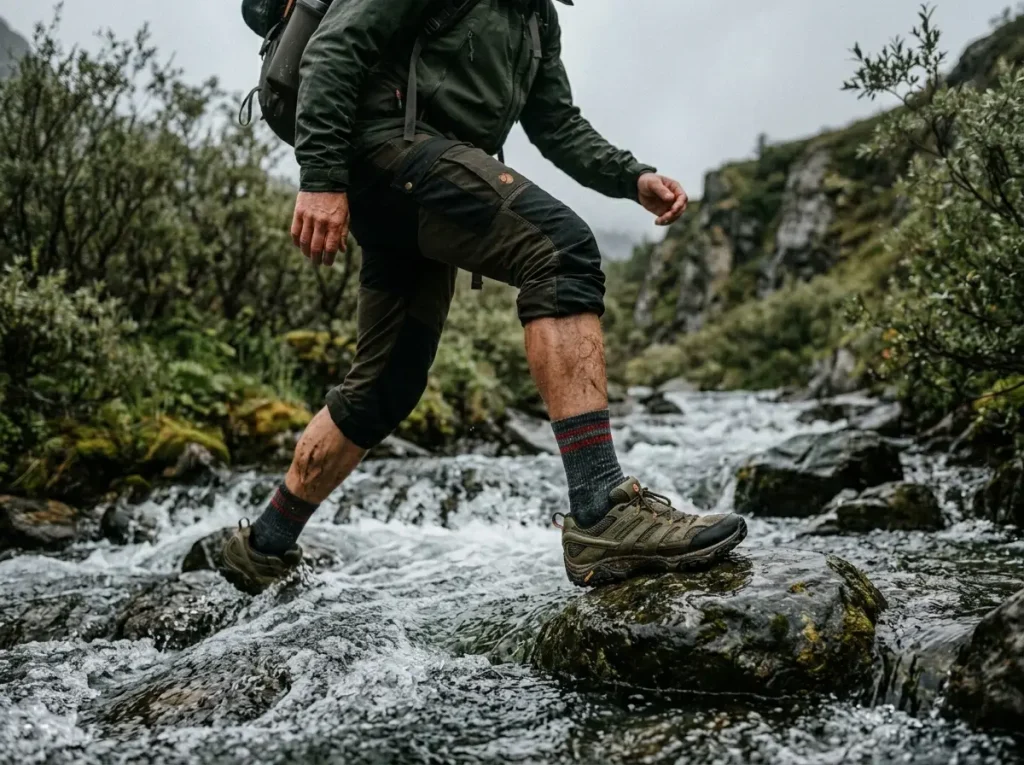
The micro-climate trapped inside your heavy hiking boot strictly dictates your entire day. When you sink your foot into a frigid, knee-deep stream crossing during early spring melt, the initial icy dampness immediately triggers the wool’s exothermic response. Your feet stay at a remarkably consistent temp because the material is literally generating heavy heat as it absorbs the harsh environmental shock.
Once the internal temperature rises too high, the process flips. The fiber smartly uses the ambient heat generated from your foot to drive massive desorption, pushing the trapped vapor aggressively back out to the cooler external environment. This massive moisture absorption capacity stabilizes the skin temperature at a comfortable level, violently deferring the onset of heavy sweating.
7-Day Field Test Data: Merino vs Synthetics
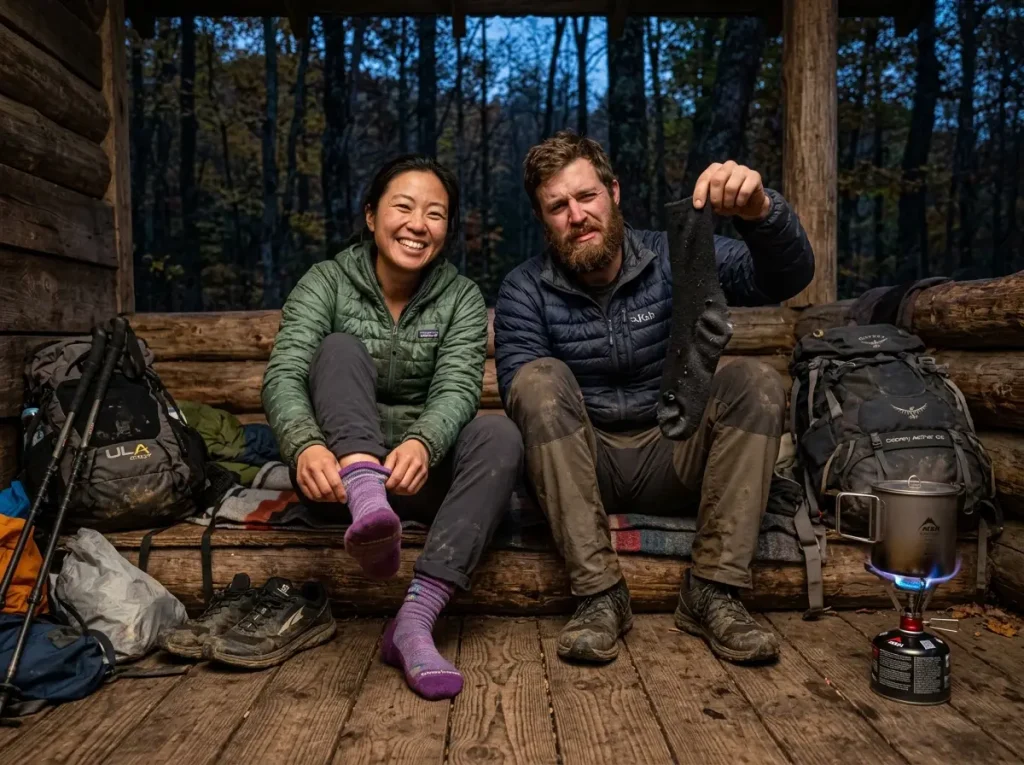
Days 1-2: The Vapor Equilibrium
To prove the complex science, I ran a continuous set of 7-day field test data logged harshly against high-output trail conditions. I subjected my feet to a grueling week without laundering anything, plotting a true merino vs polyester showdown carrying thirty pounds of gear over mixed granite.
During days one and two, the difference feels admittedly subtle but the hard data tells a stark story. The natural fibers immediately transition into vapor equilibrium. The core quietly adsorbs the vapor, and the surface of the skin stays remarkably dry. Odor ratings peak around a negligible 0.5 out of 10. The high sulfur matrix quietly eats the small amounts of foul-smelling acid produced by normal exertion.
The polyester, however, lazily traps the initial liquid sweat heavily against the high-friction heel and toes. You strip off the boots at camp, and the synthetic material already carries a faint, sour tang as it fails to properly regulate the physical wicking.

Days 3-4: Capillary Shift and Biofilm
By day three, the humidity escalates. You are pushing harder, gaining elevation rapidly, and the wool hits its 30% saturation threshold. At this exact moment, it slowly shifts gears to start capillary wicking while the bacterial biofilm remains safely sequestered deep beneath those microscopic cuticle scales. Your foot definitely starts to feel slightly heavier, but the air moving aggressively through the boot absolutely does not carry bad smells.
Test subjects consistently prove that you can confidently wear merino socks for 3 days or more without offending anyone trapped in the shelter with you. The sulfur matrix heavily binds everything tightly.
The synthetics completely fail here. The odor rating surges blindly past 4.0 out of 10, bringing the unmistakable precursors of rank permastink to the forefront. The smooth plastic tubes offer zero chemical binding, leaving the cheesy acids fully exposed to the open air inside your tent.
Days 5-7: The “Regret Moment” in Synthetics
Days five through seven bring the brutal reality check for anyone trusting cheap gear. Extreme accumulation of oily substances on the polyester becomes completely irremovable in the field. When you drag yourself into camp on day seven, the synthetic fiber hits a severe 9.5 odor rating. Taking off the polyester version abruptly clears a crowded shelter. The stench is violently sharp, greasy, and actively nauseating.
On the other side, the natural wool hits an entirely acceptable, earthy baseline odor roughly around 2.5 on the scale. The bacteria are present, sure, but the pungent molecules stay physically locked down tight. The overall breathability survives the week, allowing you to walk out without total skin failure.
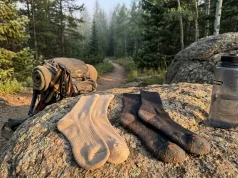
Pro tip: After a solid week on a thru-hike, the difference isn’t subtle. Taking off synthetic socks will abruptly clear a shelter; taking off Darn Tough socks just smells like you’ve been working hard in the woods. Implement a multi-day sock rotation system rotating just two pairs of high-quality options to extend their structural lifespan exponentially.
Foot Safety & The Friction Connection
Preventing Immersion Foot and Blisters
This debate is not just about smelling polite for your hiking partner. Your footwear fundamentally dictates your backcountry survival. Extreme immersion foot, deep blistering, and catastrophic skin failure are a rapid, direct result of prolonged skin exposure to heavy liquid saturation.
If you maliciously subject your feet to an oversaturated synthetic sock during brutal high-humidity tropical hiking, you are actively begging for a medical evacuation. The skin turns pale, prunes up rapidly, and the structural integrity drops straight to zero. Because wool keeps the foot remarkably drier from the onset, it severely defers the exact warm, wet environment fungi fundamentally require to cause tinea pedis, commonly known on the trail as athlete’s foot.
The material is not structurally antibacterial or antimicrobial via toxic chemicals; it simply removes the living conditions the microbes desperately need to attack your skin.
Shear Force and Moisture Control
Blisters happen quickly when shear force violently rips the upper layers of epidermis away from the lower layers, immediately filling the void with painful fluid. A dry foot resists shear force beautifully. A wet foot sliding inside a soggy, sloppy plastic boot gets shredded in miles.
The unprecedented vapor management delivers a massive mechanical advantage by actively reducing the skin-sock friction coefficient compared to wet nylon. The nasty transition from slightly damp skin to catastrophic blister damage accelerates exponentially when moisture cannot escape the micro-environment.
Your socks are preventative medical gear. A minor hot spot from unmanaged sweat isn’t just an inconvenience—if a deep pressure blister pops and exposes raw tissue to aggressive trail dirt, your expedition ends immediately.
The Superwash Paradox and Maintenance
The Chlorine-Hercosett Process
Washing incorrectly destroys premium socks. Raw wool shrinks when agitated in hot water. To prevent this, 75% of commercial production undergoes a “Superwash” treatment. This aggressive chlorination strips fatty acids and coats the fiber in petroleum resin, permanently stripping proteins that keep your boots from smelling.
Sustainable Industrial Processing
Recognizing the severe environmental and performance drawbacks of heavy chlorination, elite manufacturers are exploring cutting-edge, sustainable alternatives. Plasma treatments, developed by heavily funded institutes like CSIRO and backed aggressively by Woolmark, successfully modify the surface of individual fibers using strictly electricity and air. Others smartly use ozone treatments to smooth the scales, preventing felting entirely without the toxic industrial sludge.
These modern techniques heavily preserve the natural integrity of the yarn. If a brand like Giesswein skips the heavy resin coats, you get a premium sock that remains naturally odour resistant for its entire lifespan on the dirt. You also ensure you are not hiking in petroleum-coated plastic.
The “Wash Less, Wear More” Protocol
Because the material is slightly fragile compared to heavily extruded nylon, you absolutely must implement a specific technical care protocol. The single best thing you can do for your expensive footwear is simply stop washing them so frequently.
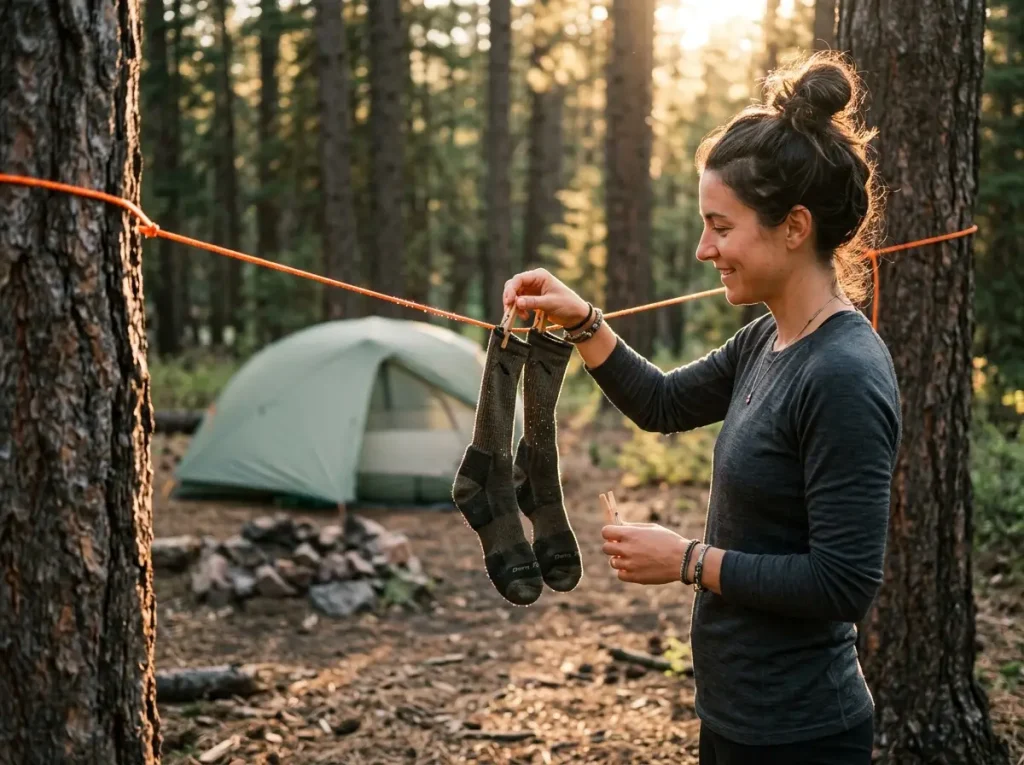
Embrace the “Wash Less, Wear More” model immediately. In the field, heavy multi-day wear requires nothing more than turning the socks fully inside out and hanging them from your tent ridgeline overnight. The open air forces deep desorption, releasing the trapped vapor and resetting the fiber entirely for the next morning.
When you finally hit town and absolutely must wash merino socks, use cold water, deploy a specialized wool-safe detergent, and explicitly lay them flat to air dry. Do not casually toss your high-end gear in a hot wash with regular commercial detergent, or you will completely strip the protein matrix bare. Following strict wool washing and drying protocols is mandatory for long-term gear survival.
Pro tip: Never run your trail socks through a high-heat tumble cycle in a commercial dryer. The extreme heat will violently shock the keratin matrix, contract the scales permanently, and destroy the crimp geometry that provides your cushioning. Always air dry them laying flat on a towel away from direct, scorching sunlight.
Conclusion
- Merino wool physically binds pungent odor molecules deep inside its sulfur-rich keratin matrix, locking them aggressively away from olfactory detection.
- Unlike flat synthetics that purely trap liquid sweat to ferment aggressively on your skin, natural wool intelligently regulates the foot’s entire microclimate by absorbing vapor through a powerful heat-generating process.
- By rotating and correctly airing out untreated gear instead of throwing them in a hot wash, you severely prevent cuticle scale destruction, massively extending their high-performance lifespan on the trail.
Try rotating just two pairs of high-quality socks on your next multi-day trek. Your blister-free feet (and your immensely grateful tentmates) will immediately notice the massive positive difference. Next time you lace up for a week pushing heavy miles in the backcountry, you will actually know exactly why your boots stay fresh.
FAQ
Can you actually wear merino socks for 3 days straight?
Yes, technical options can comfortably go three to five hard days on the trail before washing. The natural scale structure physically traps the volatile organic compounds that stubbornly cause odor, keeping both the threads and your skin significantly fresher than any synthetic alternative available today. They consistently maintain a dry microclimate that stops bacteria from rapidly multiplying near your skin.
Does merino wool ever start to smell?
It eventually reaches a chemical saturation point, typically marked by a muted, earthy smell rather than a sharp stench. Once the keratin core absorbs its absolute maximum capacity of moisture and the bacterial biofilm inevitably overrides the shingles, the garment physically must be washed with care. You will distinctly notice a heavy, sluggish feeling in the fabric right before this tipping point happens.
How do you wash merino socks without ruining them?
Wash them fully inside out in cold water with a specialized wool-safe detergent and explicitly air dry them flat. High heat or harsh standard detergents will aggressively strip the protective fatty acids, heavily compromise the internal proteins, and permanently ruin their hard-earned odor-resistant properties. Washing them less often actually extends their effective lifespan dramatically on the trail.
Is Merino strictly better than Polyester for hiking?
For rigorous, multi-day excursions carrying loads, natural wool is categorically superior due to its extreme odor suppression and potent vapor-phase wicking. However, for extremely high-output, short-burst runs strictly in pure pouring rain, polyester or s fast liquid capillary wicking can sometimes offer a highly specialized, albeit incredibly smelly, advantage for those few hours.
Risk Disclaimer: Hiking, trekking, backpacking, and all related outdoor activities involve inherent
risks which may result in serious injury, illness, or death. The information provided on The Hiking Tribe is for
educational and informational purposes only. While we strive for accuracy, information on trails, gear, techniques,
and safety is not a substitute for your own best judgment and thorough preparation. Trail conditions, weather, and
other environmental factors change rapidly and may differ from what is described on this site. Always check with
official sources like park services for the most current alerts and conditions. Never undertake a hike beyond your
abilities and always be prepared for the unexpected. By using this website, you agree that you are solely
responsible for your own safety. Any reliance you place on our content is strictly at your own risk, and you assume
all liability for your actions and decisions in the outdoors. The Hiking Tribe and its authors will not be held
liable for any injury, damage, or loss sustained in connection with the use of the information herein.
Affiliate Disclosure: We are a participant in the Amazon Services LLC Associates Program, an
affiliate advertising program designed to provide a means for us to earn advertising fees by advertising and linking
to Amazon.com. As an Amazon Associate, we earn from qualifying purchases. We are also an official affiliate partner
of Black Diamond Equipment via the AvantLink network. If you click on a Black Diamond affiliate link and make a
purchase, we may earn a commission at no additional cost to you. We also participate in other affiliate programs and
may receive a commission on products purchased through our links. Additional terms are found in the terms of
service.