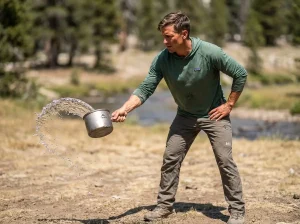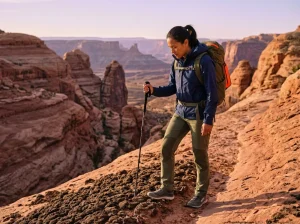
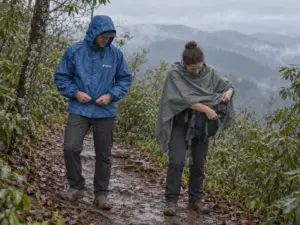
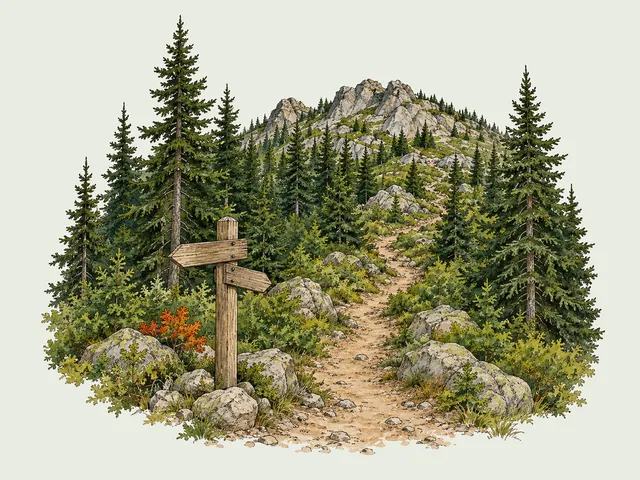
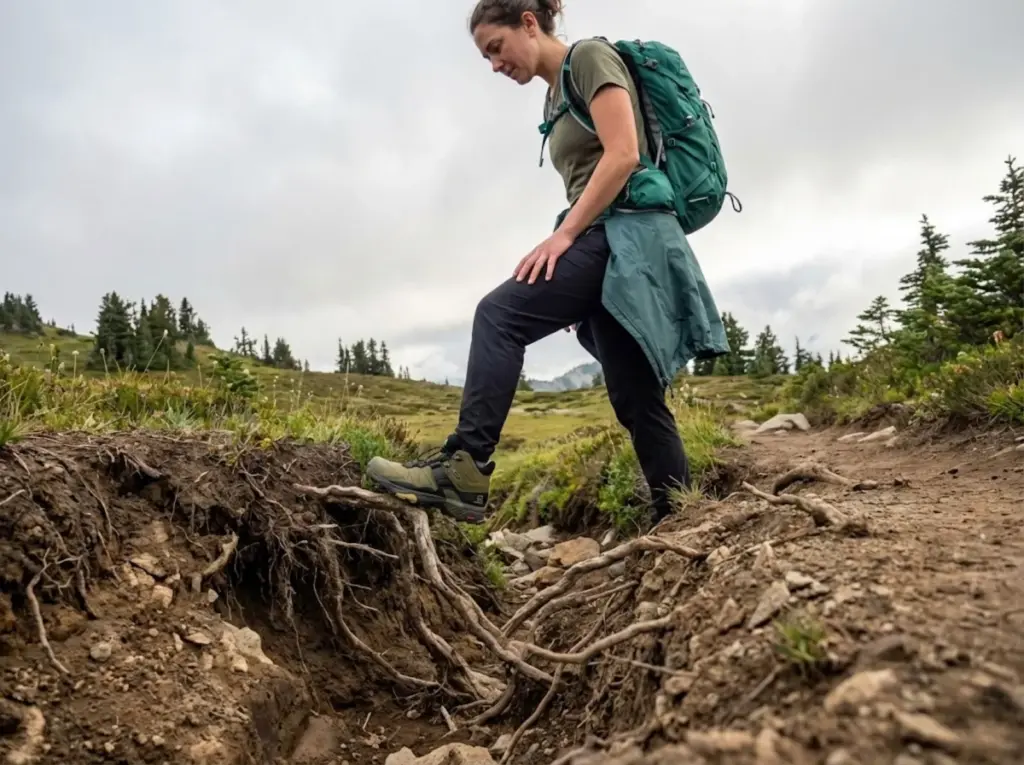
The trail up to Sterling Pond looked fine from the trailhead. Two miles in, I stopped at what used to be an alpine meadow and stared at a braided mess of boot prints fanning out across thirty feet of trampled ground. One hiker had sidestepped a puddle. Then another. Then a hundred more. What started as a two-foot trail had become an open wound.
I’ve spent years walking trails that are slowly being loved to death. And what bothers me most is that almost nobody causing the damage knows they’re doing it. The physics of a single footstep, the way saturated clay falls apart under a boot heel, the invisible chain reaction from trail surface to drinking water—it’s not obvious until you understand the mechanics.
This guide breaks down exactly how your boots destroy soil, why wet trails are exponentially more vulnerable, and what five simple habits will cut your erosion footprint without costing you a single mile.
⚡ Quick Answer: Every footstep compresses soil, kills its ability to absorb water, and starts a cycle where runoff carves deeper damage with every storm. Wet clay trails and mud-avoidance behavior (stepping off-trail to dodge puddles) cause the most destruction. The fix is straightforward: walk through the mud, check your boot treads, respect drainage structures, and turn back when trails are too soft. As few as 50 passes per day can destroy the biological crust holding alpine soil together.
The Physics of a Footstep—How Boots Destroy Soil
Ground Pressure—The Numbers Nobody Tells You
Here’s a fact that stopped me cold the first time I read it: a 200-pound human standing still puts about 17 kPa of pressure on the ground. That’s more ground pressure per square inch than a 44,000-pound rubber-tracked crawler. All your weight concentrates on two small boot soles instead of spreading across massive tracks.
But standing isn’t what wrecks trails. Walking is worse. When you push off each step, your weight pivots through your heel and the ball of your foot, spiking pressure to 60–80 kPa. That push-off creates a tearing action at the soil surface—your boot grips, slides, and rips particles loose. Wilson and Seney’s 1994 study at the Aldo Leopold Wilderness Research Institute confirmed it: feet and hooves make more sediment available for removal than wheels do on pre-wetted soils.
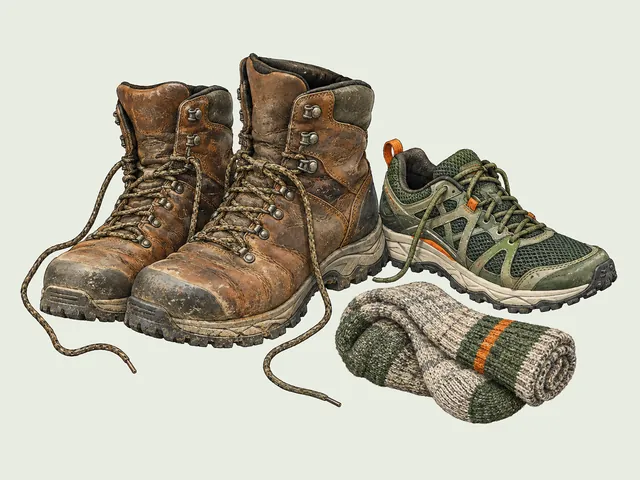
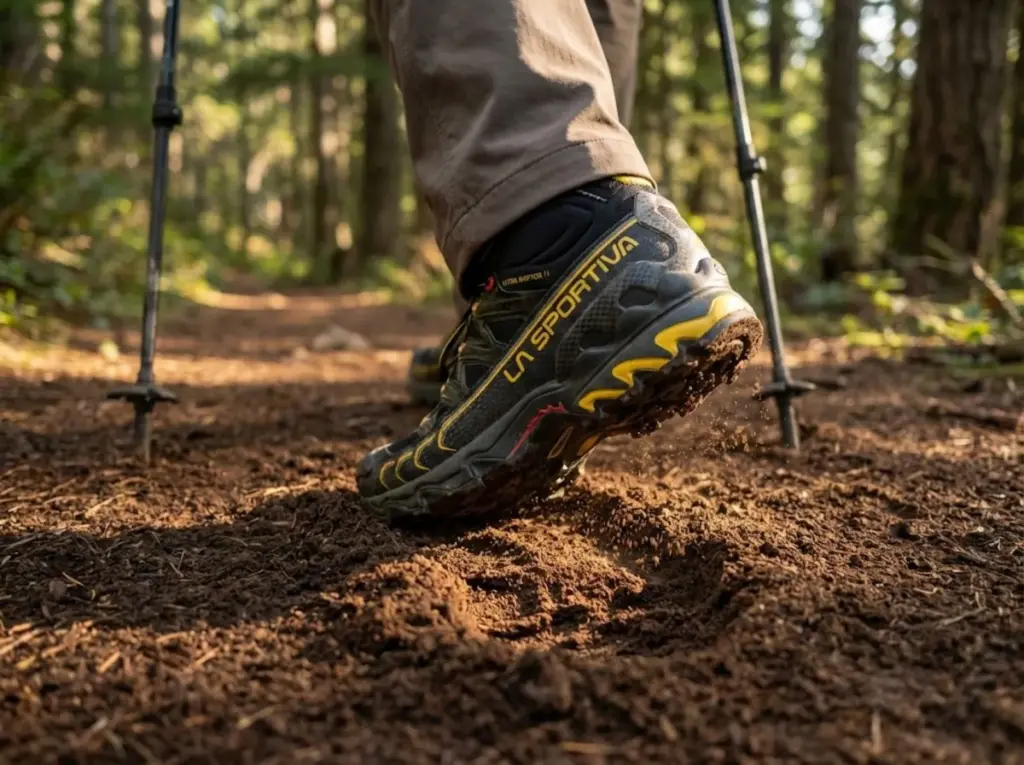
If you’ve ever wondered how deep lug patterns interact with muddy slopes, the same tearing mechanics are at play. Aggressive tread grips better, but it also chews up soft surfaces faster.
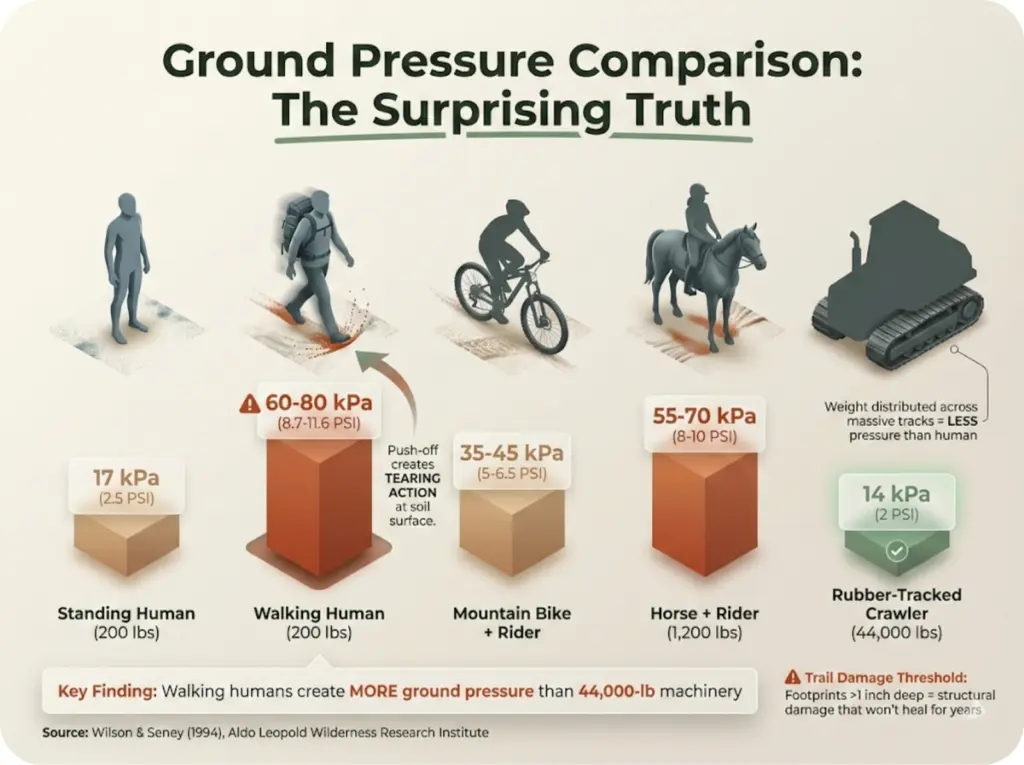
Pro tip: If you’re leaving footprints deeper than an inch, the trail is too wet for traffic. That’s the point where you’re causing structural damage that won’t heal for years.
Compaction, Macroporosity, and the Sponge That Dies
Every step also packs the soil tighter. Dirt has air pockets called macropores—large spaces that let rainwater soak in. When boots crush those pores shut, the soil stops absorbing water. It goes from sponge to pipe. Rain hits the compacted surface and sheets off instead of soaking in, picking up speed and volume as it runs downhill.
This process also pushes plant root structures closer to the surface, where freeze-thaw cycles and further trampling finish them off. The soil loses its living anchor system.
When Rills Become Gullies—The Cascading Failure
Once sheet flow concentrates in the slightly cupped profile of a beaten trail, small rills form—shallow channels an inch or two deep. Those rills become paths of least resistance for every future rainstorm. Without intervention, rills become gullies that expose roots and bedrock.
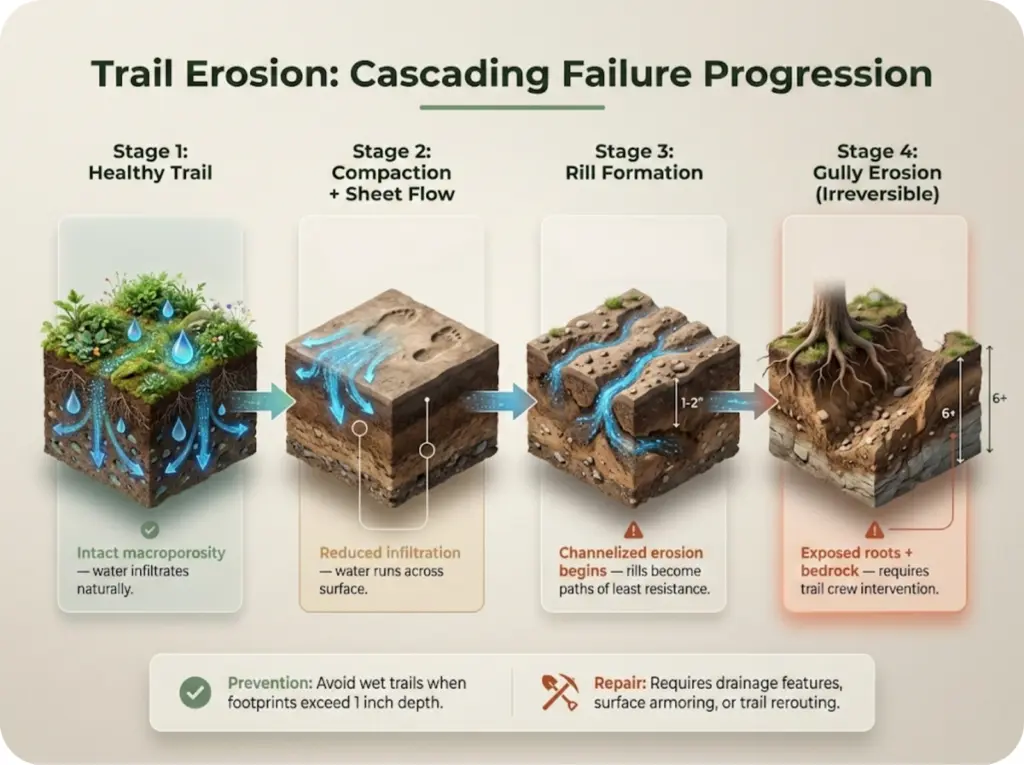
This is channelized erosion, and once it starts, each storm makes it worse. The process is irreversible without active trail crew work: installing drainage features, armoring the surface, sometimes rerouting the trail entirely. Research from American Trails on comparative trail user impacts documents how sediment yield accelerates once this cycle begins.
Wet Trails, Clay Soils, and the Conditions That Multiply Damage
Why Saturated Clay Loses Its Grip Instantly
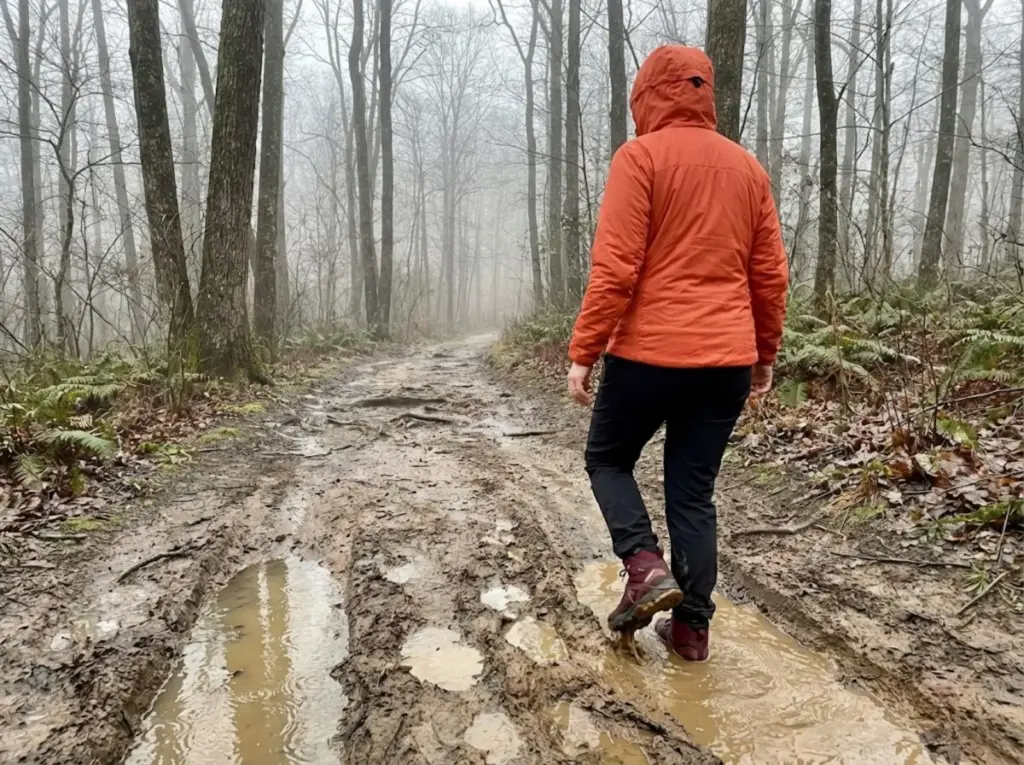
Not all dirt is equal. Clay-based soils hold their structure when dry, but add water and the internal bonds between particles dissolve. Boot pressure on saturated clay doesn’t compress the soil—it pushes it sideways. That lateral displacement creates deeper ruts with every step.
The Mitchell Lake Audubon Center puts it bluntly: trails close when wet because a single day of foot traffic damage can undo weeks of natural recovery. The concept of focused water explains why—water concentrates in hiker-made depressions instead of spreading evenly, turning shallow ruts into drainage channels. This is one of the most common reasons you’ll encounter trail closures, reroutes, and seasonal restrictions.
Freeze-Thaw Cycles and Seasonal Vulnerability Windows
Water expands about 9% when it freezes. In compacted trail soil, that expansion physically shatters the remaining structure. Spring thaw combined with early-season hiking is the worst possible combination: soil is both saturated and loosened by frost heave.
Alpine and subalpine zones take the worst hit. The Green Mountain Club has documented how climate change is intensifying rain events across Vermont’s Long Trail, increasing the frequency of these vulnerability windows. Recovery timelines for compacted alpine soils run into decades without active restoration.
The 50-Pass Threshold—When Biology Collapses
This is the number that should change how you think about trail impact. Leave No Trace research shows that as few as 25 passes on sensitive vegetation can dramatically reduce plant height. Push that to 50 passes per day and you can reduce bacteria and cryptogam cover—the biological soil crust of cyanobacteria, mosses, and lichens that holds dirt in place—to near zero.
Once those living crusts are gone, soil erosion rates spike. The dirt has lost its armor. Desert and alpine environments are worst off; recovery can take 15 to 75 years. If you hike in the Southwest, you’ve probably seen warning signs about cryptobiotic soil and how to identify it in the desert. Now you know why they matter.
Pro tip: In alpine zones above treeline, spread out across durable rock surfaces instead of following a single path through vegetation. Below treeline, do the opposite—stay on the established tread no matter how muddy it gets.
The Hiker vs. Biker vs. Horse Debate—What the Research Actually Says
Shear Force vs. Rolling Force—Why Boots Can Outperform Tires
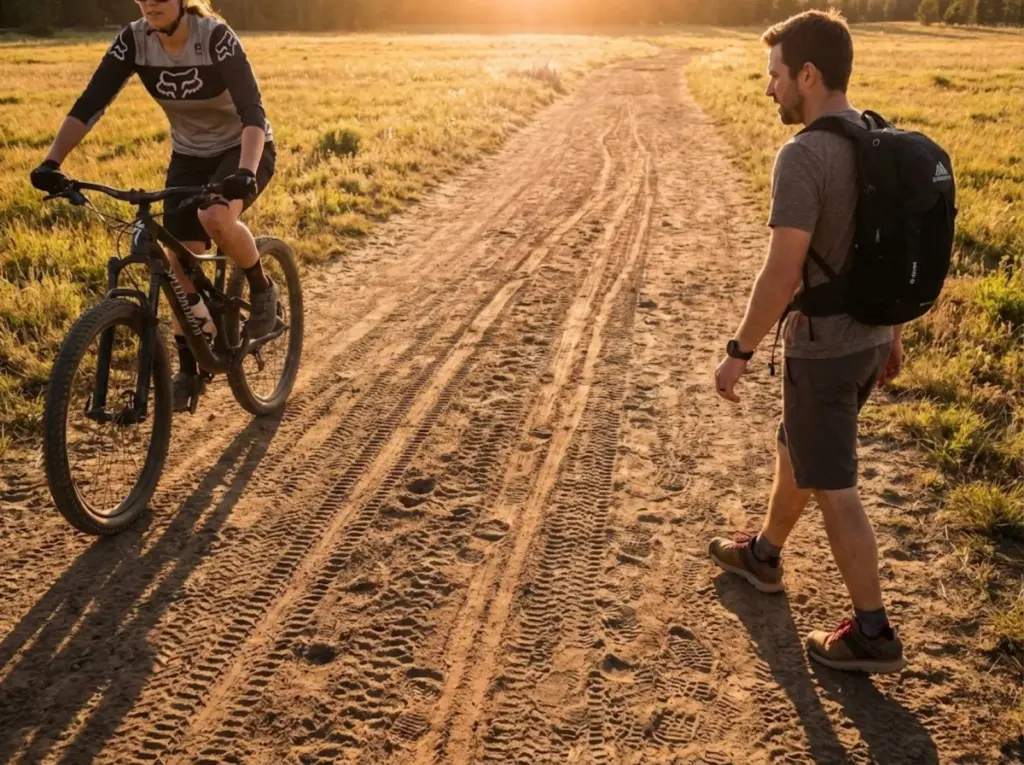
This argument generates more heat than light on trail forums. Here’s what the Wilson and Seney study actually found: hikers and mountain bikers produce statistically similar overall trail erosion impacts. The mechanisms differ—boots create shear and tearing forces, while bike tires create rolling compression—but the total sediment displaced is comparable.
On pre-wetted soils, hikers actually generate more sediment yield per pass than bikes. The boot heel’s tearing action at push-off is more destructive to wet dirt than a tire rolling over it.
Horses—The Data Is Not Subtle
Horses produce significantly higher sediment yields than hikers, llamas, or bicycles. That’s consistent across multiple studies cited by American Trails. A horse at a gallop reaches up to 500 psi of ground pressure. Metal horseshoes dramatically increase the detachability of soil particles. Research from the Aldo Leopold Institute on llama, horse, and hiker erosion found that 250 horse passes cause more measurable erosion than 1,000 llama passes.
This matters for multi-use trail management. Shared trails with regular equestrian use need different maintenance schedules, more frequent drainage clearing, and harder surface treatments.
The Ground Pressure Table Most Guides Get Wrong
Most trail guides compare static pressures only—weight divided by contact area while standing still. They miss the dynamic force multiplier during movement. A hiker walking exerts three to four times the ground pressure of a hiker standing still. A horse at a gallop generates around ten times its standing pressure.
Context matters too: a horse walking slowly on dry, compacted trail causes less damage per step than a hiker sliding sideways on wet clay. The variable that drives the most destruction isn’t body weight—it’s soil moisture at the moment of impact.
Trail Braiding and the Psychology of Mud Avoidance
One Sidestep, Thirty-Foot Scar—The Feedback Loop
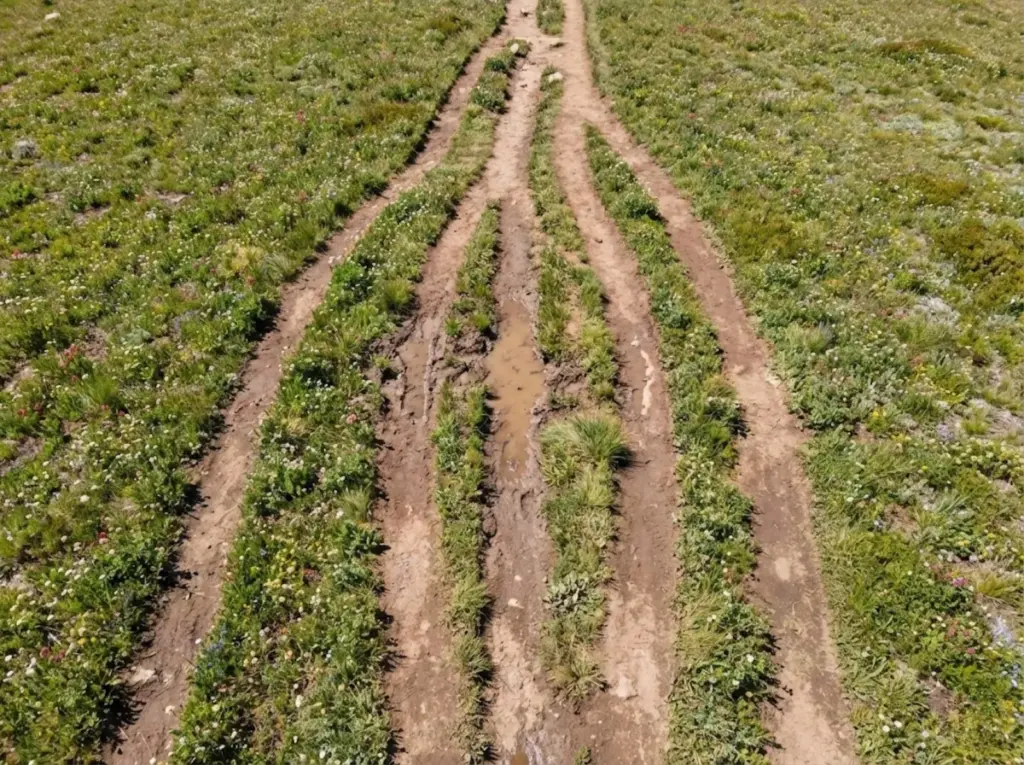
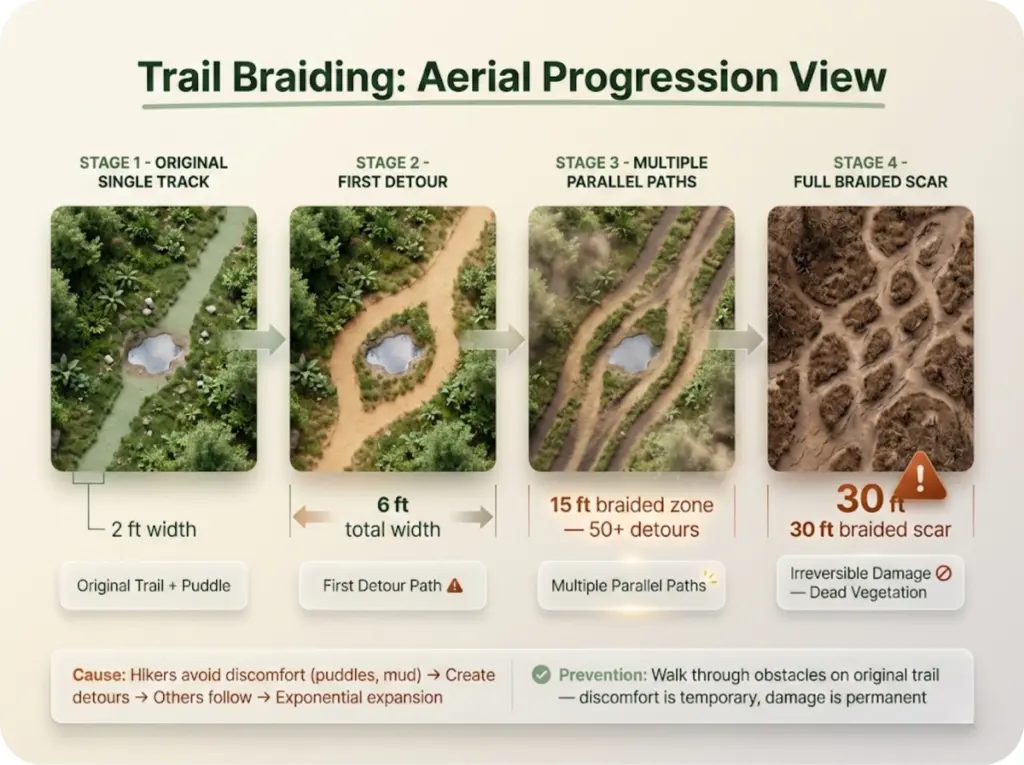
Trail braiding starts with one hiker sidestepping one puddle. The vegetated edge gets trampled, creating bare soil that turns muddy in the next rain. The next hiker steps even wider. This positive feedback loop can turn a two-foot trail into a thirty-foot scar within a single season.
The Washington Trails Association notes that this behavior kills vegetation, introduces non-native plants, and adds enormously to trail maintenance costs. Your boots are tools, not fashion statements. Walk through the middle of the mud.
Why Posting Signs Isn’t Enough—The Behavioral Economics
Research using the Theory of Planned Behavior shows that hikers’ internal desire for comfort often overrides external signals like closure signs. Land managers can’t rely on education alone—they need biophysical strategies like surface armoring and boardwalks that make the correct path the most comfortable choice.
The social media effect compounds the problem. Photo-worthy spots in wildflower meadows attract concentrated foot traffic that creates hyper-localized braiding. If you want to understand the broader impact of posting trail locations online, read about responsible social media practices for hikers. Switchback cutting follows the same psychology—a perceived shortcut that causes massive cumulative damage.
Engineering the Fix—Modern Trail Drainage That Actually Works
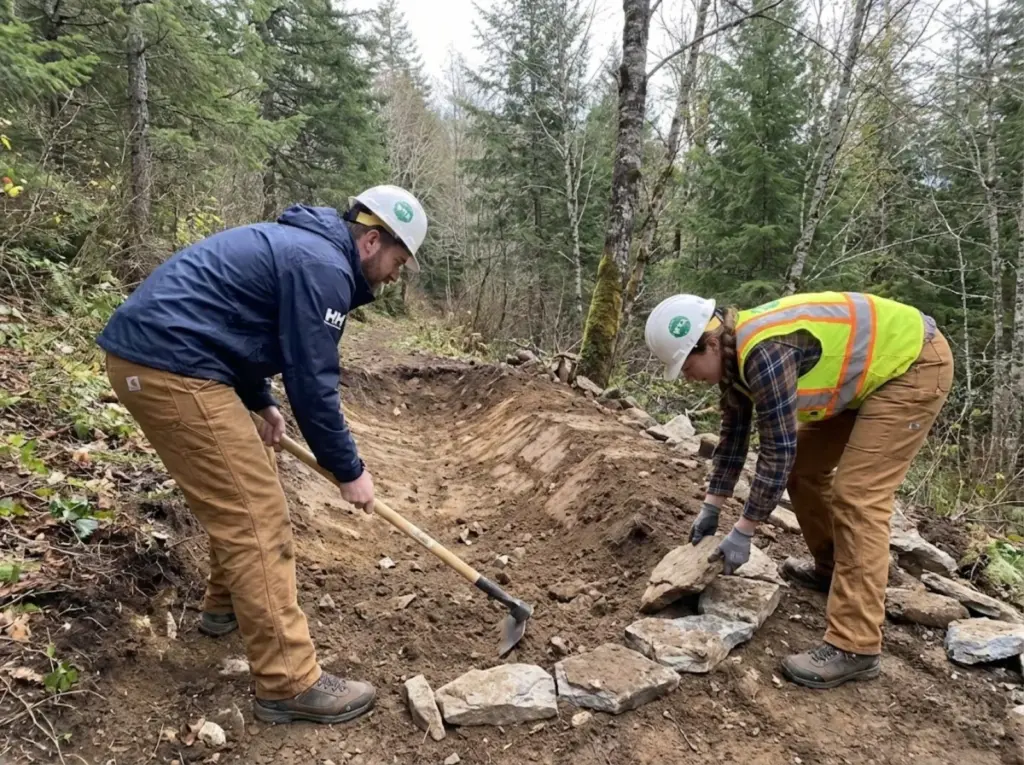
Grade Reversals and Rolling Dips—The Invisible Heroes
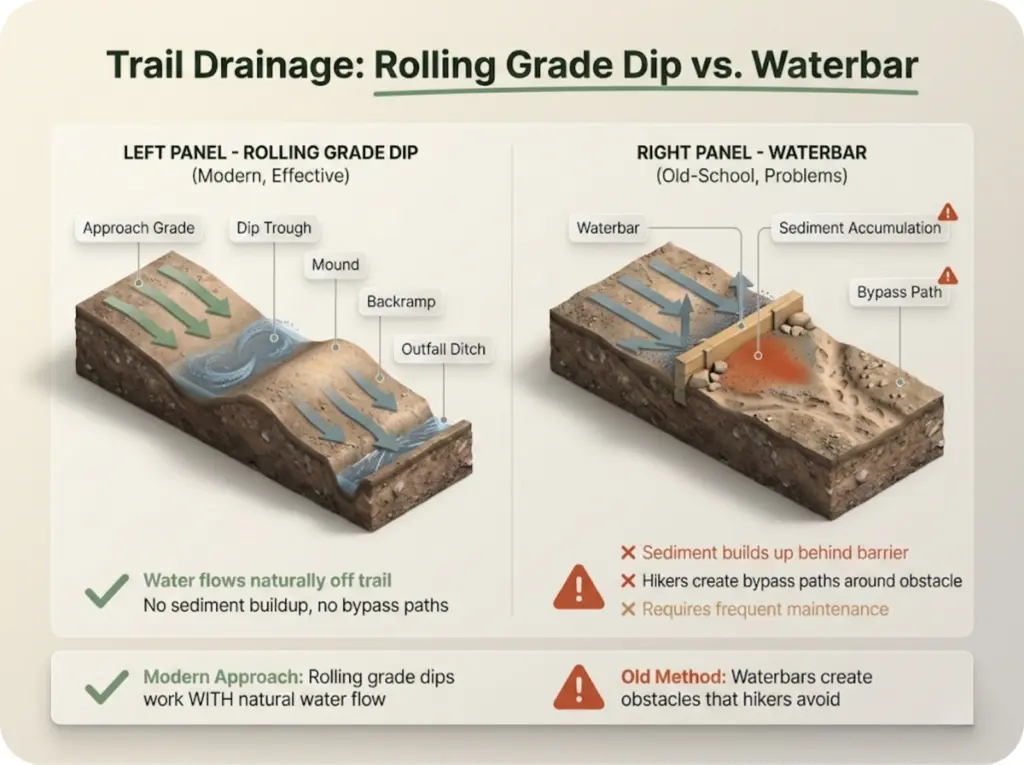
The best erosion control features are the ones you never notice. Grade reversals are deliberate elevation changes built into the trail that force water off the tread at every high point. Rolling grade dips are long, gradual excavations—15 to 30 feet—that shed water so smoothly most hikers walk right over them without realizing they’re there.
That’s the point. Unlike old-fashioned waterbars, rolling dips don’t trigger avoidance behavior. Nobody sidesteps a feature they can’t see.
Why “Old School” Waterbars Fail
Traditional log and rock waterbars fill with sediment quickly and need constant maintenance. Horses damage them regularly. And hikers instinctively step around them, creating bypass paths that defeat the entire purpose.
Across the Pacific Crest Trail, old-school waterbars are being systematically replaced with rolling grade dips. The modern trail philosophy: the best drainage feature is one the hiker never notices.
Pro tip: Drop a tennis ball on the trail and watch where it rolls. That’s where water goes too. Understanding drainage flow helps you recognize—and respect—the structures keeping your trails open.
Turnpikes, Puncheons, and Armored Crossings for Boggy Ground
Turnpikes raise the trail bed above wet ground using parallel logs filled with mineral soil. Puncheons are wooden walkway structures that span boggy areas without disturbing the saturated soil beneath. Outsloping—tilting the trail surface about 5% toward the downhill side—lets water sheet across the tread instead of channeling down it.
Synthetic geocells from companies like BaseCore provide cellular confinement systems that stabilize loose gravel and soil on high-traffic sections. These structures protect both the trail surface and hikers from the mud-avoidance feedback loop. To see how these engineering principles fit into the bigger picture, read about how modern trail design is reshaping park sustainability.
The Ripple Effects—From Trails to Drinking Water to Endangered Species
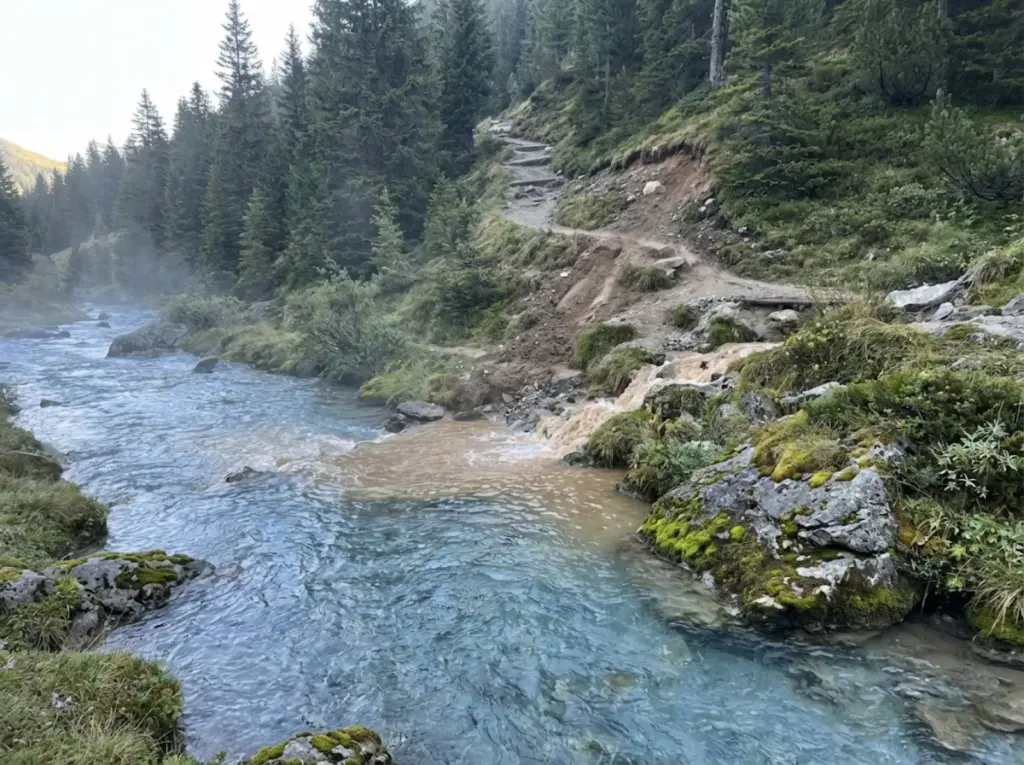
The Eutrophication Cascade—Sediment to Algal Bloom
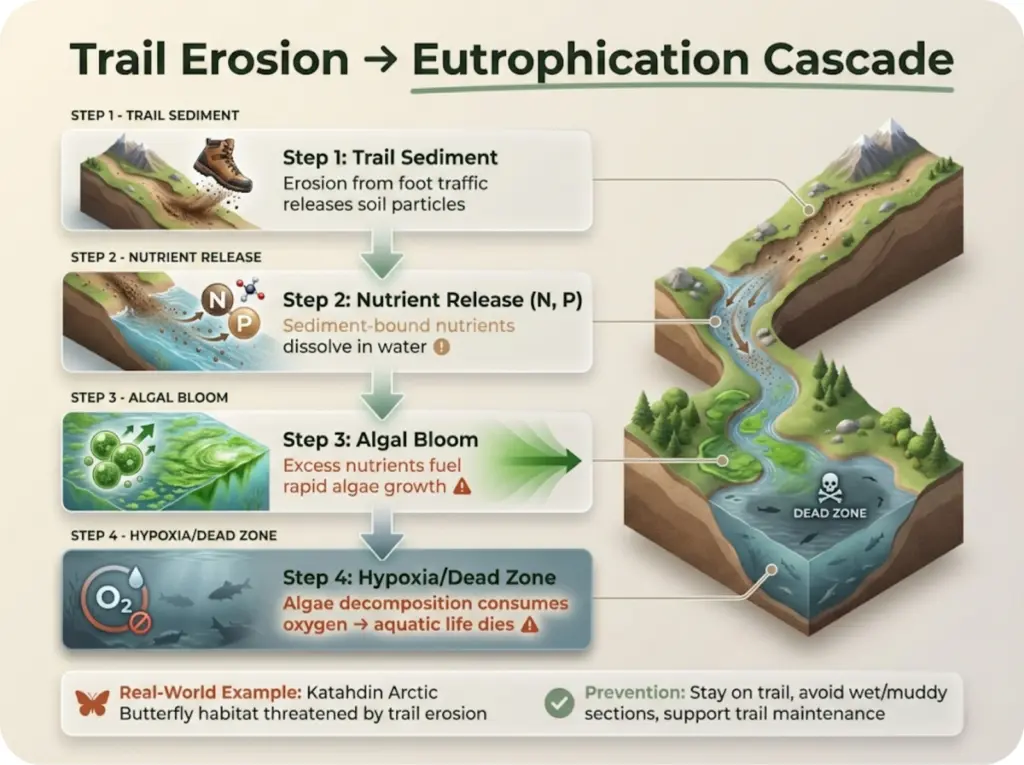
Most hikers think trail erosion stops at the trail. It doesn’t. Sediment washing off eroded trails carries nitrogen and phosphorus into streams and lakes. Those nutrients feed algal blooms. When the algae die and decompose, bacteria consume the dissolved oxygen, creating dead zones where fish and aquatic life suffocate.
Lake Tahoe is a real-world example: trail erosion and urban stormwater are among the largest sources of clarity-reducing pollution. This is cultural eutrophication—human-caused nutrient enrichment that can threaten drinking water quality downstream.
The Katahdin Butterfly and Alpine Habitat Loss
The Katahdin Arctic Butterfly exists nowhere else on Earth except the boulder fields near the summit of Mount Katahdin in Maine. Trail erosion and braiding in the alpine zone directly threaten its habitat. Baxter State Park has limited hiker numbers and closed specific trails to prevent biological loading beyond recovery thresholds.
Previously disturbed areas show a remarkable ability to heal—but only if drainage of summit soils stays intact and boot traffic stays off recovering ground. This isn’t abstract conservation. It’s a specific, measurable extinction risk driven by foot traffic.
5 Erosion-Conscious Protocols Every Hiker Should Follow
Center-Line Travel and the Mud Rule
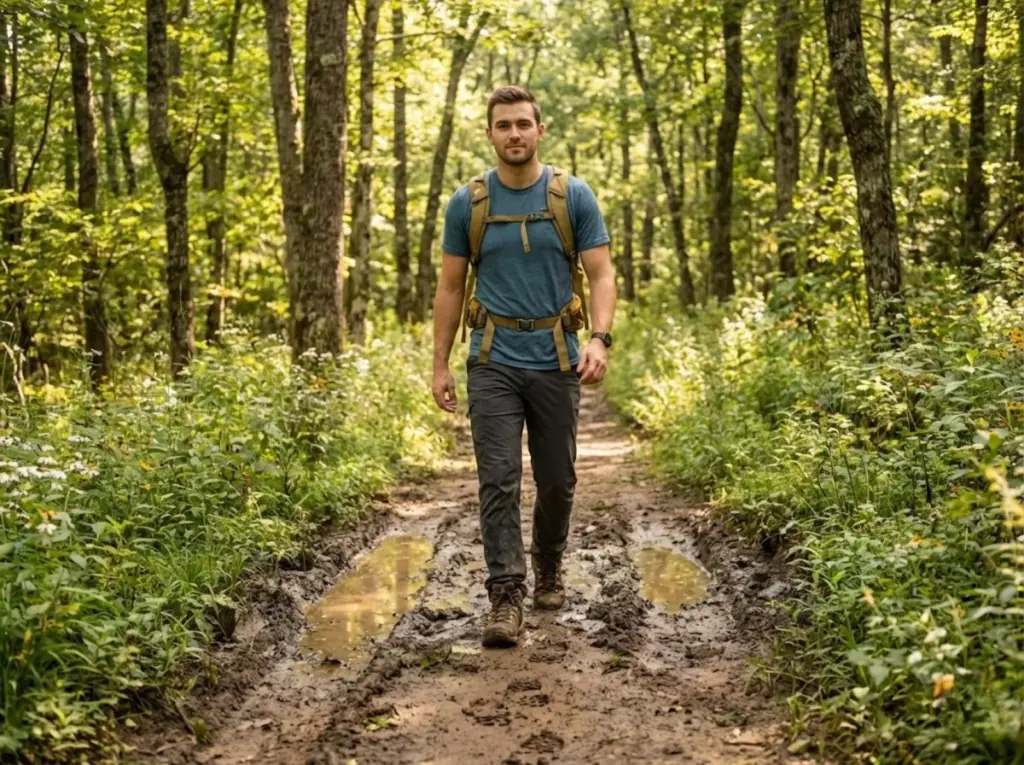
Walk in the middle of the trail tread. Always. Even when it’s muddy, rutted, or pooled with water. Your boots will dry in an hour. The trail might not recover for a decade. This single habit prevents trail braiding—the most widespread and preventable form of trail widening.
The one exception: above treeline on exposed alpine tundra, spread out across durable rock surfaces to prevent creating a single concentrated path through fragile vegetation.
The Tread-Check and When to Turn Back
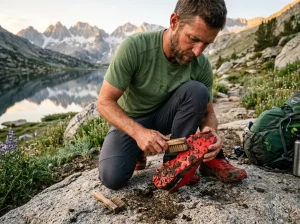
Check your boot soles before every hike. If your tread depth is below 1.5 mm, you’re both unsafe and more erosive—worn boots below 2mm lose roughly 40% of their wet-surface traction. That lost grip means soil displacement from sliding and scuffing instead of clean steps.
On the trail, use the one-inch rule: if your footsteps leave impressions deeper than one inch, the soil is too saturated to handle traffic. Spring thaw and post-rain windows are the highest-risk periods.
Respect Drainage Features and Support Trail Crews
Never step on the mound of a rolling grade dip or the edge of a waterbar. These structures are the trail’s immune system. Step through the center of drainage dips, not around them.
Support your local trail organizations. The Washington Trails Association alone coordinates thousands of volunteer hours annually to clear drain dips and rebuild check steps. That maintenance is continuous, not one-time, and depends on both funding and boots on the ground. Understanding the Leave No Trace principles that protect trail infrastructure is the foundation of every erosion-conscious hiker’s practice.
Pro tip: Before hiking a trail after rain, check the managing agency’s website or social media for condition updates. Many agencies now post real-time trail status. If they say “closed—muddy conditions,” believe them.
Conclusion
Every step is a vote—for preservation or for destruction. Your boots put more pressure on the ground than a 44,000-pound tracked vehicle. As few as 50 daily passes can wipe out the biological crust holding alpine soil together. And the sediment your boots knock loose can end up feeding algal blooms in a reservoir miles downstream.
But the fix is just as simple as the damage. Walk the mud. Check your treads. Respect the drainage features built by the volunteers who keep your trails open. Next time you see a puddle in the middle of the trail, step straight through it. That single decision, multiplied by every hiker behind you, is the difference between a trail that lasts generations and one that becomes a gully by next spring.
FAQ
Why do trails close when it rains?
Saturated clay soils lose their internal structure instantly, meaning boot pressure causes sideways displacement instead of normal compaction. A single day of hiking on a wet clay trail can create ruts and damage that takes weeks or months to repair. Land managers close trails to prevent this cascading structural failure.
Are mountain bikers worse for trails than hikers?
Research shows they produce statistically similar overall erosion impacts. Hikers create shear forces that dislodge particles; bikes create rolling compression. On wet soils, hikers actually generate more sediment per pass. Horses, however, produce significantly higher sediment yields than all other user groups.
What is trail braiding and why is it a problem?
Trail braiding happens when hikers create multiple parallel paths by sidestepping mud or puddles. Each new path tramples vegetation and creates bare soil, widening the trail corridor through a feedback loop. A two-foot trail can become a thirty-foot scar within a single hiking season.
How long does compacted trail soil take to recover?
It depends on the ecosystem. Low-elevation forest trails may partially recover in three to five years if closed to traffic. Alpine and subalpine soils can take decades. Biological soil crusts in desert environments may need 15 to 75 years for full recovery. Active restoration with drainage installation speeds up the process.
Does my boot tread pattern affect trail erosion?
Yes. Worn treads below 2mm lose about 40% of wet-surface traction, which causes sliding and scuffing that tears topsoil into fine particles. Those particles wash away in the next rain. Replacing boots when tread drops below 1.5mm is both a safety measure and an erosion-prevention practice.
I've spent more than a decade researching hiking gear and trail technique. I read the specs, the forum threads and the long-term reviews, and every pick here comes with what it gets wrong.
End of the trail
You read every mile of this one. Here's where the trail goes next.