

In this article
You’ve laced them tight, walked ten minutes, and your heel is already lifting. That familiar piston motion — up, down, up, down — that turns a good trail into a blister factory before you even hit the first switchback. I spent two years and more returns than I’d like to admit figuring out what narrow-footed hikers actually need. Turns out, the problem isn’t always what you think it is.
This guide breaks down the three types of narrow-foot fit problems, which brands build for each one, and the lacing and insole fixes that work on real trails — not store carpet.
Quick Answer: Here’s how to fit hiking boots for narrow feet:
- Identify your specific narrow-foot type — narrow forefoot, low volume, or narrow heel
- Choose brands built on narrow lasts — La Sportiva, Asolo, Lowa, or Zamberlan
- Test fit in the afternoon when feet are swollen, using the insole pull-out test
- Apply surgeon’s knot lacing to create separate tension zones
- Add a high-volume insole like Superfeet Green if the boot is close but not locked in
Why Narrow Feet Need a Different Fitting Approach
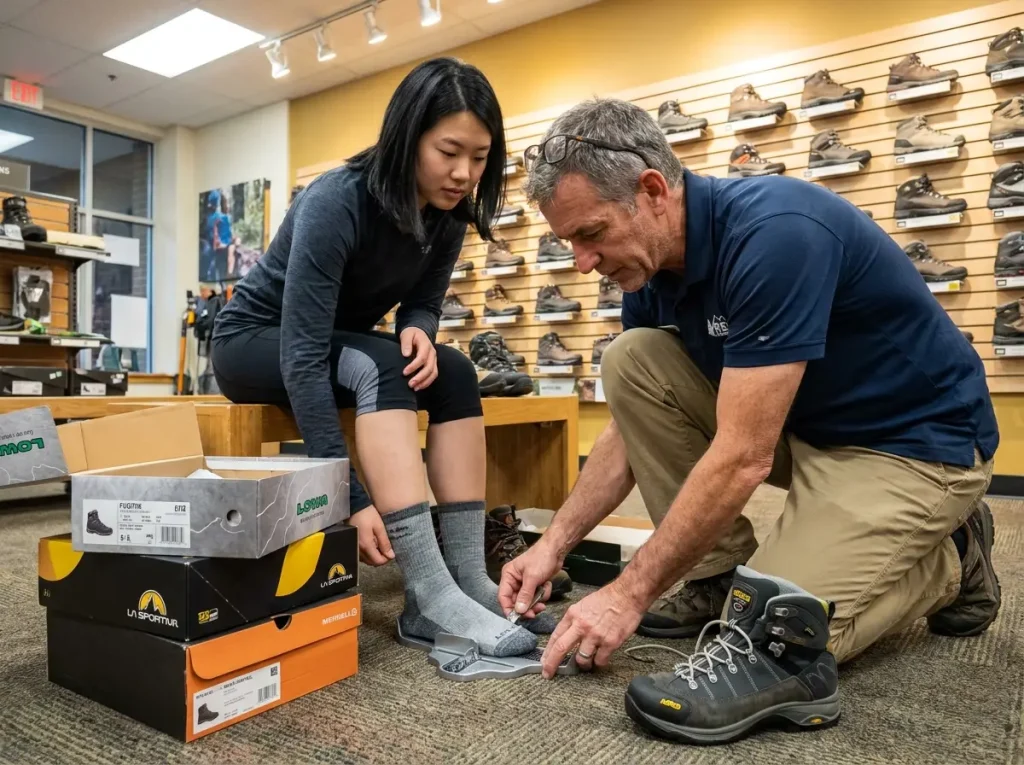
Most boot fitting guides treat “narrow feet” like one problem with one solution. Buy a boot that “runs narrow,” lace it tight, and you’re done. That advice gets a lot of hikers hurt.
Narrow Width vs. Low Volume — They’re Not the Same Problem
Narrow width means your foot is slim side to side — specifically across the forefoot and midfoot. Low volume means your foot takes up less total space inside the boot. You can have a normal-width foot that’s low volume because your arch is flat and your instep is low. These are different problems, and they need different fixes.
A narrow forefoot needs a boot built on a narrower last — the wooden mold that determines the boot’s internal shape. A low-volume foot needs an insole that fills dead space. Treating one like the other is why so many hikers cycle through boots without finding a fit.
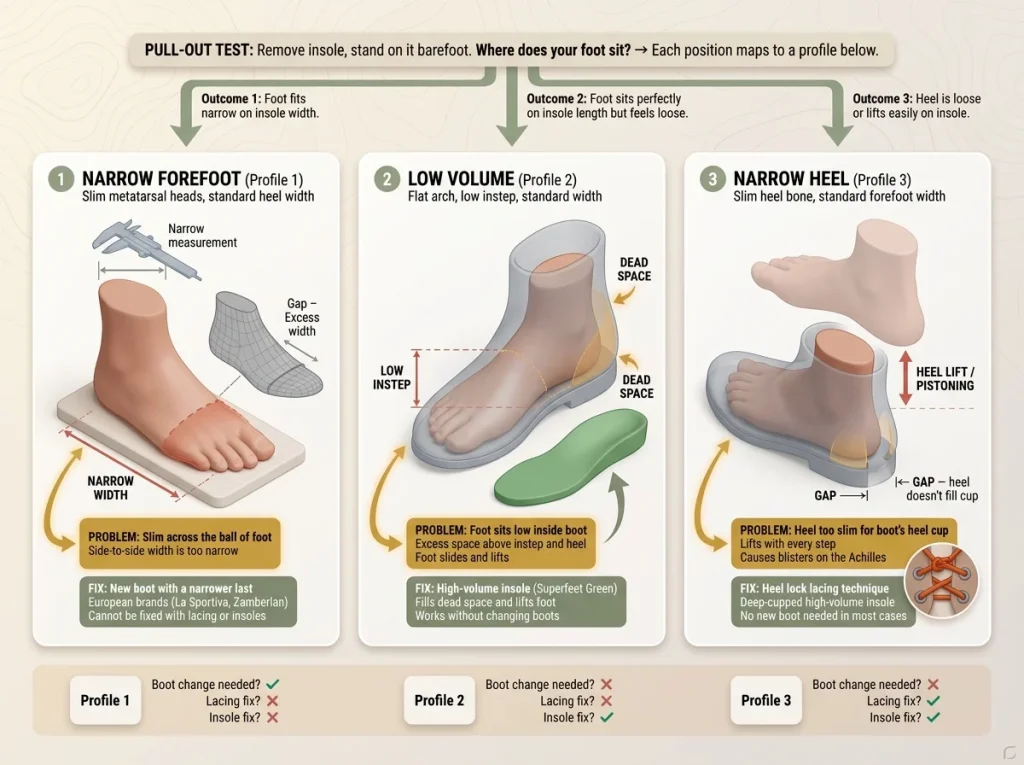
Here’s the quick diagnostic: pull the insole out of your current boot and stand on it barefoot. If your foot reaches the edges but doesn’t hang over, your width is fine — you have a volume problem. If your foot sits well inside the edges with visible space on both sides, you have a width problem. If your forefoot is fine but your heel barely touches the heel cup edges, you have a narrow heel problem that needs lacing fixes, not a new boot.
The Three Narrow-Foot Profiles (And Which Fix Each One Needs)
Profile 1 — Narrow Forefoot: Your foot is genuinely slim across the ball. You need a boot with a narrow last from a European manufacturer. Insoles won’t fix this. Lacing won’t fix this. The boot’s skeleton has to match your foot’s skeleton.
Profile 2 — Low Volume: Your foot doesn’t fill the boot’s internal space — often because of a flat arch combined with a low instep. A high-volume aftermarket insole like Superfeet Green fills the dead space and pushes your foot up into the boot’s structure where it locks in. This is the cheapest fix and it works more often than people expect.
Profile 3 — Narrow Heel: Your heel is slim relative to the boot’s heel cup, causing that pistoning lift with every step. Heel lock lacing and a deep-cupped insole solve this without changing boots. If you have flat feet with a narrow heel, you’re likely dealing with profiles 2 and 3 together.
How Boot Lasts Determine Whether a Boot Will Ever Fit You
Every hiking boot is built around a last — a foot-shaped form that dictates the boot’s internal geometry. European lasts (La Sportiva, Zamberlan, Asolo) tend to run narrower through the midfoot and heel. American lasts (Merrell, Keen, Danner) run wider and higher volume.
No amount of lacing or insole swapping changes the last. If the last is too wide for your foot, the boot will never fit right. This is the single most important thing narrow-footed hikers need to understand before they start buying boots.
Pro tip: When a boot fitter says a model “runs narrow,” ask where — forefoot, midfoot, or heel. A boot that’s narrow in the heel but wide in the toe box is a completely different fit experience than one that’s narrow everywhere.
Which Hiking Boot Brands Actually Fit Narrow Feet
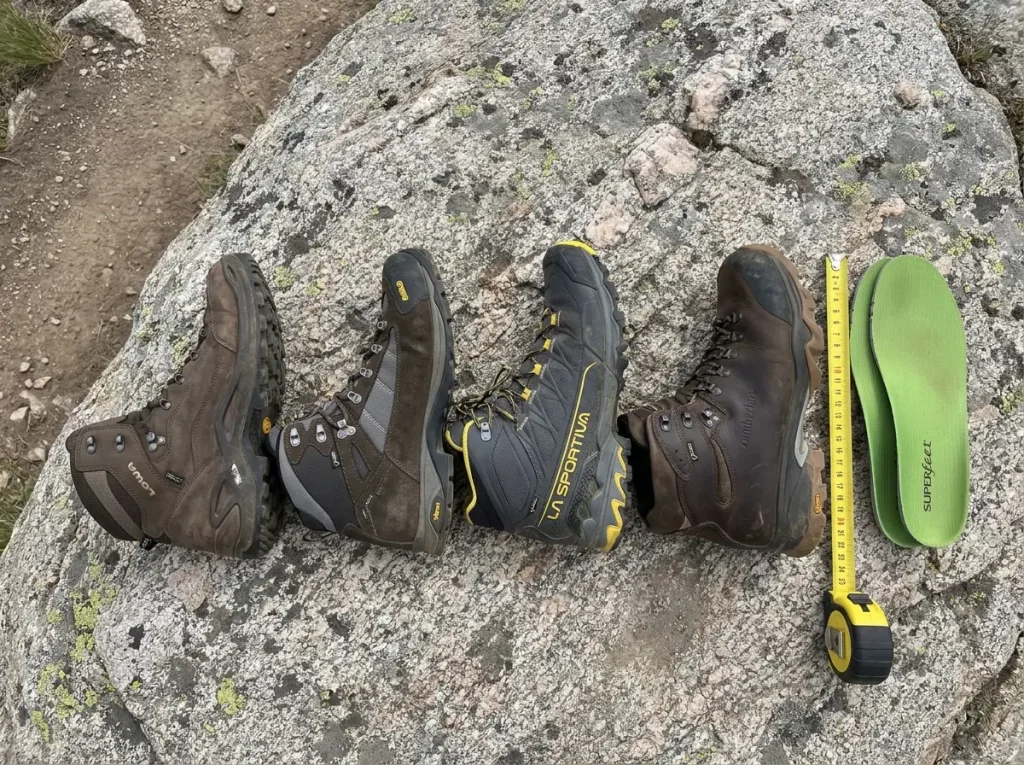
Every article you’ve read says “European brands run narrow.” That’s half the story. Here’s what the specific models actually do.
European Brands That Run Narrow (La Sportiva, Asolo, Lowa, Zamberlan)
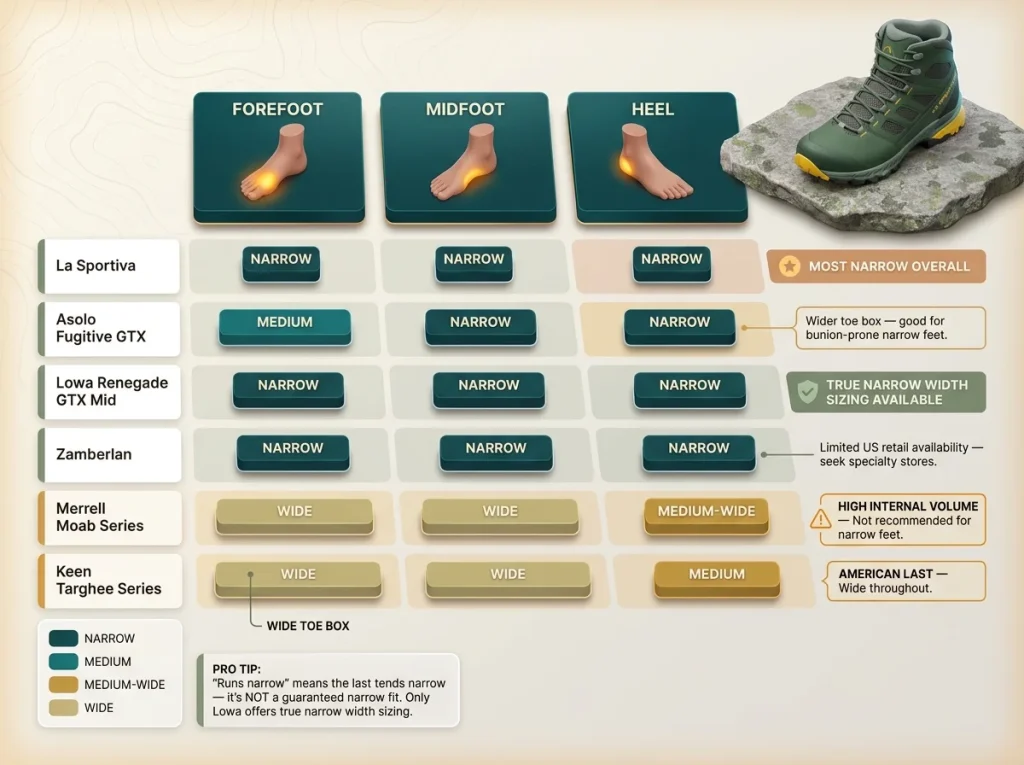
La Sportiva runs narrowest overall among major hiking boot brands. The Nucleo High II GTX is their go-to narrow-fit hiker, but it runs small — size up ½ to 1 full size from your street shoes. Their mountaineering heritage means their lasts prioritize precision over comfort, which is exactly what narrow feet need. If you’re curious how their construction compares to mountaineering boots vs hiking boots, that precision-fit philosophy carries across their entire line.
Asolo Fugitive GTX is narrow in the heel and midfoot but has a wider toe box than most hikers expect. Good choice if you have a narrow heel but need room for your toes — especially if you’re bunion-prone. The deep heel cup reduces slip for low-volume feet after about 20 miles of break-in.
Lowa Renegade GTX Mid is one of the rare hiking boots offered in an actual narrow width — not just “runs narrow.” If standard narrow-running boots are still too wide, this is where you go next. The nubuck leather upper molds over time, which helps.
Zamberlan builds consistently narrow boots, but US retail availability is limited. Worth seeking out if La Sportiva and Asolo don’t click.
Hanwag Tatra II GTX uses a full-grain leather upper that molds to narrow foot shapes over 40-80 hours of wear. Heavier than the others, but the custom-molded fit after break-in is hard to beat.
The Women’s Boot Trick That Works for Men Too
Women’s hiking boots are built on a narrower last than men’s versions of the same model — same materials, same sole, same construction. Men with narrow feet can try women’s models sized up 1.5 sizes. A forum poster hiked the entire Appalachian Trail in women’s Asolo Fugitives after years of heel slip in men’s boots. Zero blisters.
Models to Avoid If You Have Narrow Feet
Merrell Moab series and Keen Targhee both use wide American lasts. They’re great boots, but if you have narrow feet, no amount of lacing will make them fit. The internal volume is simply too high. Save yourself the return shipping.
How to Measure and Test Boot Fit for Narrow Feet
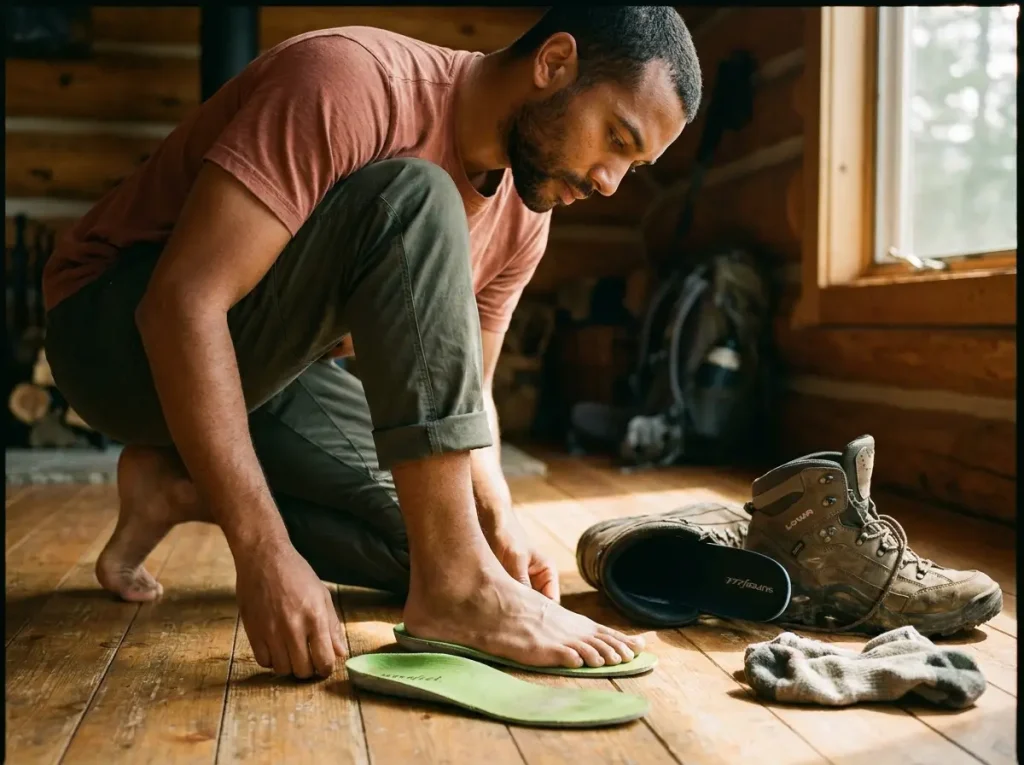
Most fitting guides give you one tip: “try them on with hiking socks.” That’s step one of ten. Here’s the full protocol.
The Afternoon Rule and Why Morning Shopping Fails
Your feet swell 5-8% during a full day due to increased circulation and gravity. The American Hiking Society recommends fitting boots in the afternoon or evening — your feet at 3pm are measurably larger than at 8am. A boot that fits perfectly at 10am will feel tight by mile 6.
If you’re ordering online, do your fitting tests after a walk around the block. Simulate trail conditions, not couch conditions.
The Insole Pull-Out Test (30 Seconds, Zero Guesswork)
Pull the insole out. Stand on it with your heel aligned at the back. Look at the margins:
Your foot reaches the edges evenly — width is correct, move to volume and heel checks. Visible space on both sides of your forefoot — boot is too wide, try a narrower brand. Foot hangs over the edges — boot is too narrow (rare for narrow-footed hikers, but it happens with aggressive European lasts).
This test takes 30 seconds and tells you more than 30 minutes of walking around the store.
The Descent Simulation and Kick Test
Find a ramp or incline. Walk downhill. Your toes should not touch the front of the boot. If they do, you need more length — sizing up is the fix, not tightening the laces.
The kick test: kick a wall lightly. Same diagnostic — if your toes hit the front, go up half a size. Width and length are separate problems.
Finally, wear the boots for 30 minutes. Walk around. Squat. Step up and down. Any warm spot on your heel that appears now becomes a blister at mile 3.
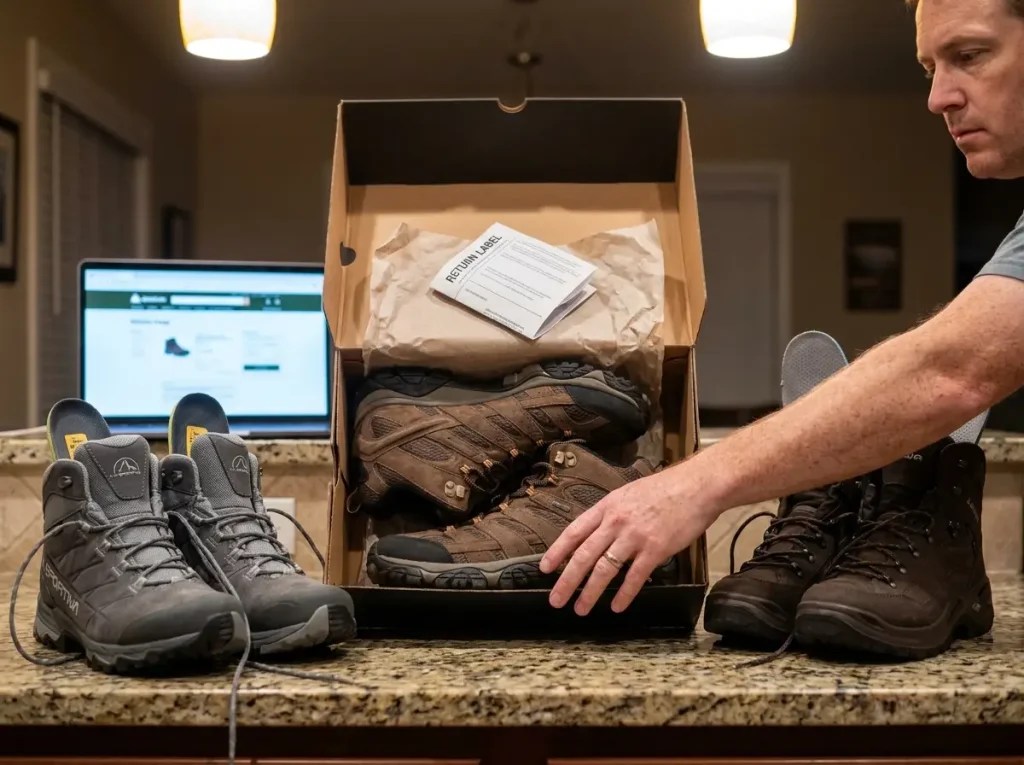
Pro tip: Online buyers — order two sizes. Do every test above at home. Return the loser within the return window. The cost of return shipping is cheaper than six months of wrong boots.
Lacing Techniques That Actually Lock Narrow Feet Down
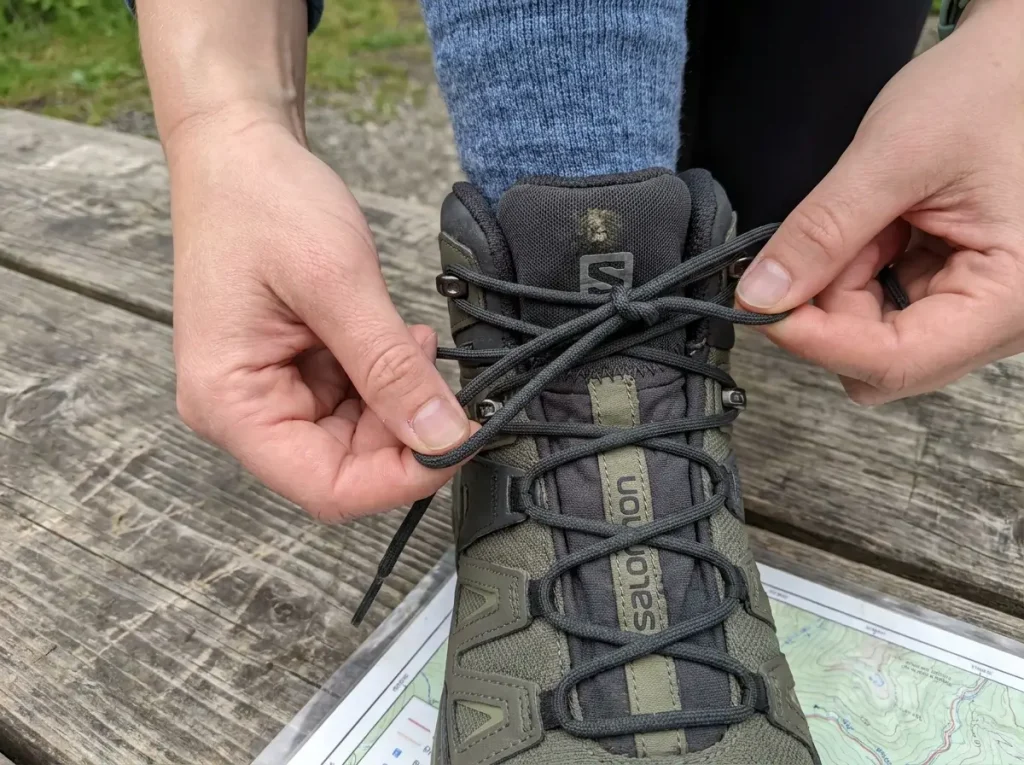
I’ve tried every lacing pattern on the internet. Three of them actually work. The rest are content for content’s sake.
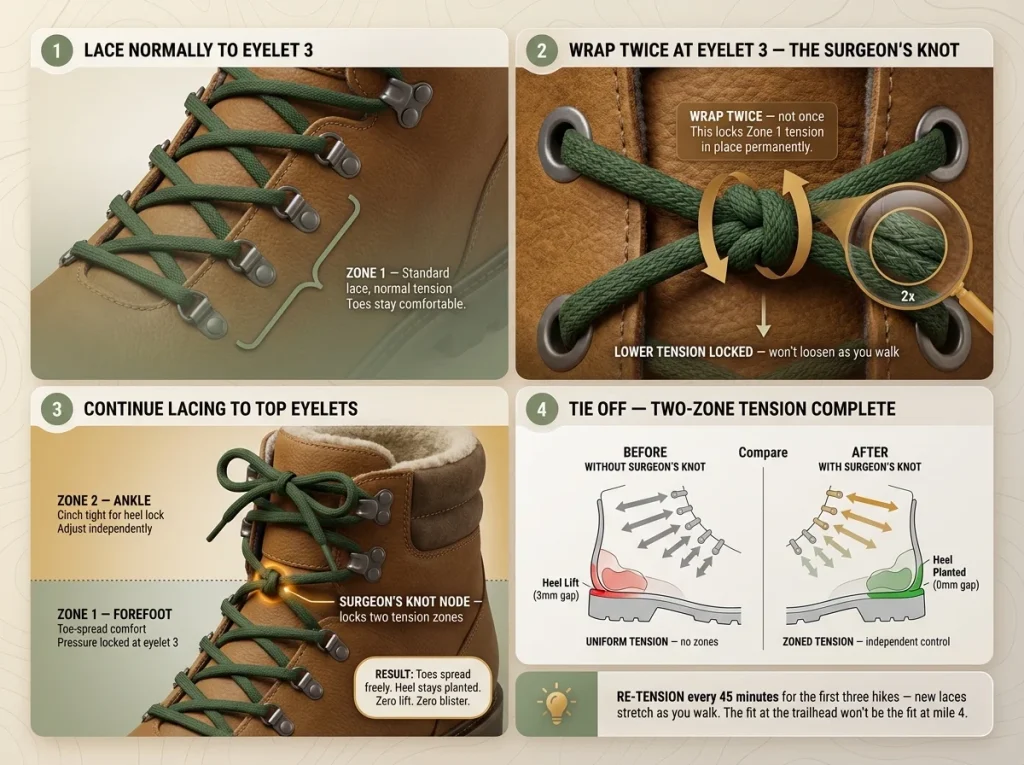
The Surgeon’s Knot (Two-Zone Tension Control)
The surgeon’s knot creates two independent tension zones — your forefoot stays loose while your ankle cinches tight. Here’s how:
Lace your boot normally up to the third or fourth eyelet. At that point, wrap the laces around each other twice instead of once before pulling tight. This locks the lower tension in place. Continue lacing normally to the top and tie off.
The result: your toes have room to spread on descents, but your heel is locked against the heel cup. This single technique eliminates more heel slip than any insole or sock combination.
Heel Lock Lacing for Narrow Ankles
At the top two eyelets, thread each lace straight up through the eyelet on the same side — creating a small loop. Then cross each lace through the opposite loop before pulling tight and tying.
This creates downward pressure right where your foot curves into your ankle, which pins the heel cup against your Achilles. You can apply serious tension here without cutting off circulation because the pressure distributes across the loop, not a single point.
The Skip-Eyelet Method for Narrow Forefoot
Skip the second or fourth eyelet entirely. This redistributes tension away from the forefoot — useful when the boot fits well at the heel but pinches across the ball of your foot. Keep no more than three criss-cross patterns total for the tightest possible forefoot closure.
Common mistake: over-tightening every eyelet instead of zone-tightening. This causes numbness on top of the foot and actually increases heel slip because the rigid lacing prevents the boot from flexing naturally with your stride.
Pro tip: Re-tension your laces every 45 minutes on trail for the first three hikes. New laces stretch and loosen — the fit you set at the trailhead won’t be the fit you have at mile 4.
Insoles and Socks That Fix What Lacing Can’t
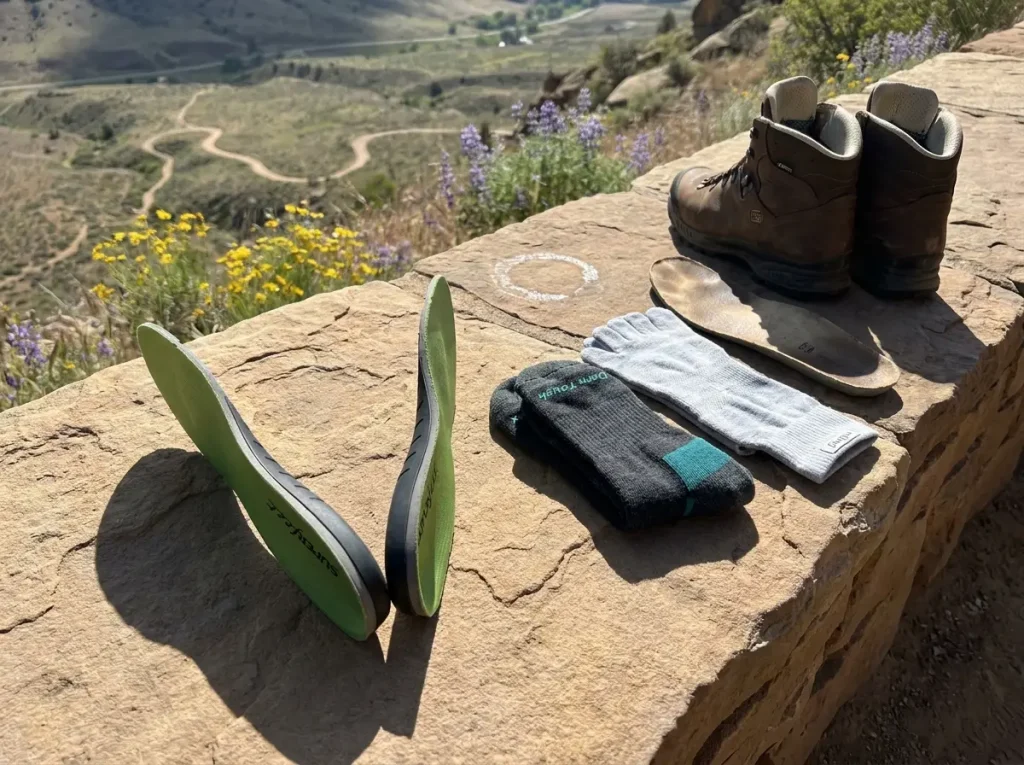
The first thing a good boot fitter reaches for is the insole. It’s the cheapest fix and solves more fit problems than most hikers realize.
High-Volume Insoles vs. Low-Volume Insoles (Which One You Need)
If you have low-volume feet — your foot sits low in the boot with dead space above and around it — you need a high-volume insole like the Superfeet Green. It fills the empty space, pushes your foot up into the boot’s structure, and its deep heel cup stabilizes narrow heels. About $50, and it delivers roughly 80-90% of the support a $300 custom orthotic provides.
If your foot already fills the boot well but you want more arch support, a low-volume or trim-to-fit insole works better — it adds support without changing the boot’s internal volume. Check out whether hiking boot insoles are worth the upgrade for a deeper breakdown.
One fix nobody talks about: a foam tongue pad. Stick a thin piece of foam between the tongue and your laces. It eats up dead space on top of the foot for about $2. The backpacking forums call it “the fix that costs less than a gas station coffee.”
The Two-Sock System for Narrow Feet
Thin polyester or nylon liner sock inside, merino wool mid-crew sock outside. The liner wicks moisture away from skin. The outer sock adds volume inside the boot — effectively making your foot “bigger” to fill the space — while providing cushion.
Avoid cotton socks entirely. Cotton absorbs moisture, stays wet, and creates the friction conditions that produce blisters. If you want to go deeper on sock rotation for multi-day hikes, the merino system scales well.
Pro tip: If you’re curious about taking the liner sock concept further, toe socks like Injinji eliminate between-toe friction entirely. They look weird. They work.
When to Consider Custom Orthotics (And When It’s Overkill)
Start with aftermarket insoles. If you try two or three different high-volume options and still have structural pain — not just discomfort, but pain that changes how you walk — see a podiatrist. Custom orthotics run $150-400 and are built from a mold of your specific foot.
For most narrow-footed hikers without diagnosed structural issues, Superfeet or a similar premium insole handles the job. Custom orthotics are the answer when the problem is biomechanical, not just volumetric.
When No Fix Works and You Need a Different Boot
There’s a point where you’re just fighting the boot. I’ve been there — three pairs of lacing variations, two insoles, and my heel still lifted. Some boots aren’t made for your feet, and no accessory changes that.
Signs the Last Shape Will Never Match Your Foot
Three signals that mean it’s time to stop trying fixes:
Persistent hot spots in the same location after three real hikes — not store walks, real trail miles. The boot’s seams or internal structure are hitting your foot in a spot that won’t change.
Toe numbness that returns after loosening laces. This means the forefoot last is too narrow for your foot shape, and no amount of skip-eyelet lacing will create the space your nerves need.
Heel lift greater than 3mm after heel lock lacing plus a high-volume insole. At that point, the heel cup geometry is wrong for your foot. Move on.
Break-In Expectations for Narrow Feet (Leather vs. Synthetic)
Full-grain leather boots mold to your foot over 40-80 hours of wear. A leather boot that’s slightly stiff on day one will conform to your narrow foot’s shape over several weeks of hiking. That’s real break-in — the material physically reshapes.
Synthetic boots barely stretch width-wise. If a synthetic boot doesn’t fit on day one, it won’t fit on day thirty. The midsole might soften slightly, but the upper’s internal dimensions stay fixed. What you feel in the store is what you get on the trail.
The Return-and-Retry System That Saves Money
Order two or three models at once from retailers with generous return policies — REI’s one-year window and Zappos’ free returns are built for this. Run every boot through the full fitting protocol. Keep the winner, return the rest.
This costs you nothing but time, and it’s faster than buying one pair, hiking in it for a month, realizing it doesn’t fit, returning it, and starting over. If none of the boots work for your feet, consider whether boots, shoes, or sandals are actually the right footwear category for your trails.
Pro tip: Keep a notes app entry for every boot you try — brand, model, size, what worked, what didn’t. After three rounds of testing, you’ll know your foot’s personality better than any store fitter does.
Conclusion
Three things to remember before your next boot purchase:
Know your profile. Figure out whether you’re dealing with narrow width, low volume, or a narrow heel — each one needs a different approach, and most hikers fix the wrong problem first.
Test properly. The insole pull-out test, kick test, and descent simulation take five minutes combined. They tell you more about fit than any online review.
Know when to walk away. If lacing fixes and insoles don’t solve the problem after three real hikes, the boot’s last doesn’t match your foot. Try the next brand. Pull the insole out of your current boots tonight. Stand on it. That ten-second test tells you more about your fit than this entire article.
Q1 What hiking boot brands run narrow?
La Sportiva runs narrowest overall across their entire line. Asolo and Zamberlan are narrow in the heel and midfoot with slightly more toe room. Lowa offers actual narrow-width sizing in models like the Renegade GTX Mid — one of the few brands with a true narrow option.
Q2 How do I stop heel slippage in hiking boots?
Use heel lock lacing — thread the lace through the top eyelet to create a loop on each side, then cross each lace through the opposite loop and pull tight. Pair it with a high-volume insole like Superfeet Green for the strongest heel lock.
Q3 Should I size up or down for narrow feet in hiking boots?
Size up ½ to 1 full size in brands that run narrow, especially La Sportiva and Asolo. Never size down to compensate for width — you’ll crush your toes on descents and create toe bang. Width and length are separate fit dimensions.
Q4 Can insoles fix hiking boots that are too wide?
High-volume insoles fix low-volume problems — too much empty space inside the boot overall. They won’t fix a boot whose last is genuinely too wide across the forefoot. That needs a narrower model from a different brand.
Q5 What’s the difference between narrow and low-volume feet?
Narrow means slim side to side across the forefoot. Low volume means your foot fills less total space inside the boot — often flat arch combined with a low instep. You can have one without the other. The insole pull-out test identifies which applies to you.
Risk Disclaimer: Hiking, trekking, backpacking, and all related outdoor activities involve inherent
risks which may result in serious injury, illness, or death. The information provided on The Hiking Tribe is for
educational and informational purposes only. While we strive for accuracy, information on trails, gear, techniques,
and safety is not a substitute for your own best judgment and thorough preparation. Trail conditions, weather, and
other environmental factors change rapidly and may differ from what is described on this site. Always check with
official sources like park services for the most current alerts and conditions. Never undertake a hike beyond your
abilities and always be prepared for the unexpected. By using this website, you agree that you are solely
responsible for your own safety. Any reliance you place on our content is strictly at your own risk, and you assume
all liability for your actions and decisions in the outdoors. The Hiking Tribe and its authors will not be held
liable for any injury, damage, or loss sustained in connection with the use of the information herein.
Affiliate Disclosure: We are a participant in the Amazon Services LLC Associates Program, an
affiliate advertising program designed to provide a means for us to earn advertising fees by advertising and linking
to Amazon.com. As an Amazon Associate, we earn from qualifying purchases. We are also an official affiliate partner
of Black Diamond Equipment via the AvantLink network. If you click on a Black Diamond affiliate link and make a
purchase, we may earn a commission at no additional cost to you. We also participate in other affiliate programs and
may receive a commission on products purchased through our links. Additional terms are found in the terms of
service.