







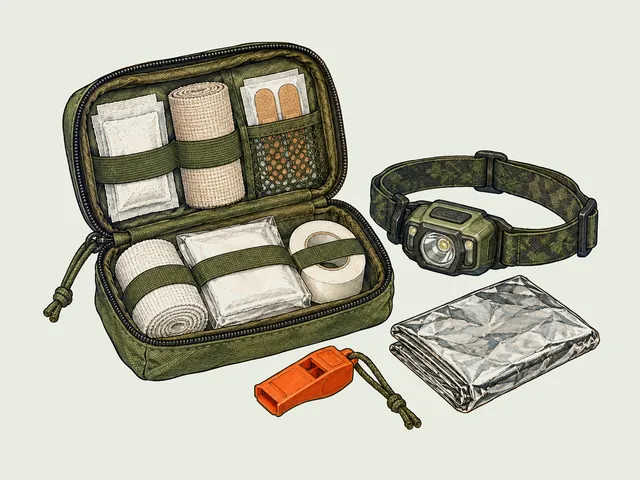

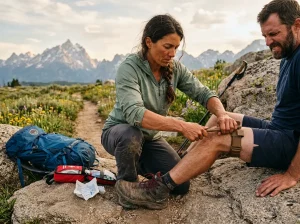


There are two kinds of hikers at any snack break. One reaches down, unzips a pocket on their hip, and pulls out a bar without slowing down. The other stops, swings the pack off, and digs through the top lid while the group waits. That gap is the entire reason hip belt pockets exist. Ask anyone who has logged real miles and they will tell you the same thing: the storage you can reach mid-stride changes how a long day feels, and the wrong setup bounces against your hip until you want to rip it off.
What Hip Belt Pockets Are (and Whether Yours Are Built In)
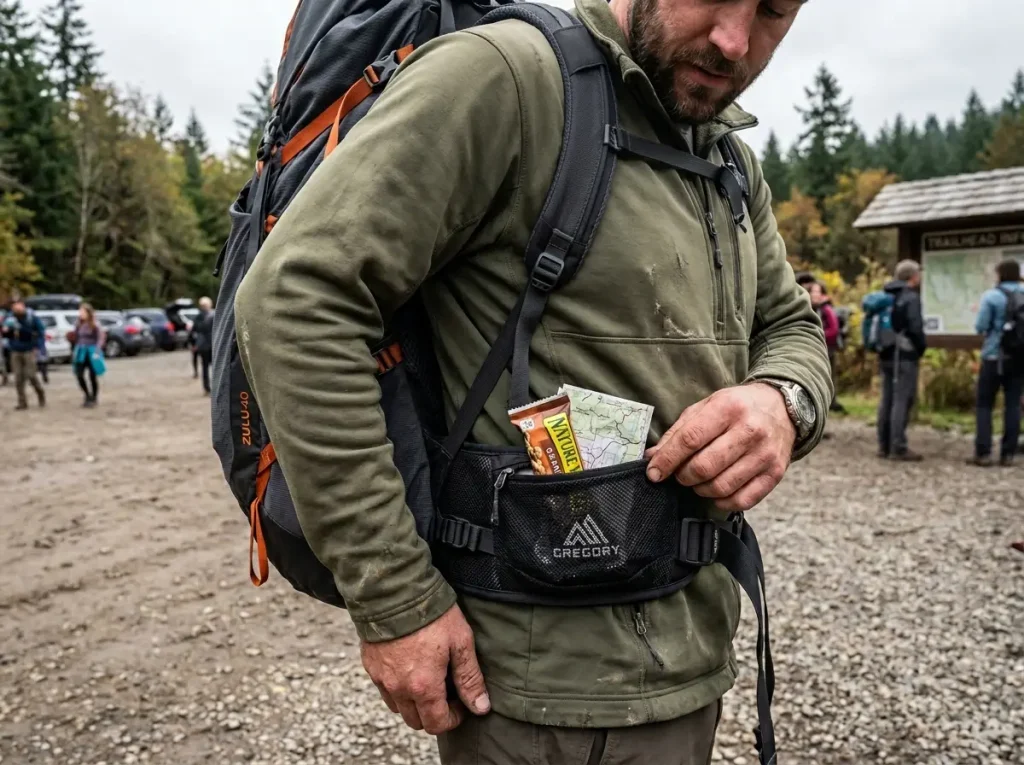
Before you buy anything, figure out which problem you actually have. Plenty of hikers go shopping for a pocket they already own, sewn into a belt they have worn for years without noticing.
Integrated pockets versus add-on pockets
An integrated hip belt pocket is stitched right into the padded belt of your pack. Packs like the Gregory Zulu, the Osprey Talon and Tempest, and the Deuter Aircontact Core wrap these pockets toward the front of your hips, where your hands fall naturally. An add-on pocket is the aftermarket kind: a small zippered pouch that clips or threads onto a belt that came bare. If your pack already has good built-in pockets, buying an add-on is usually wasted money, and any honest guide will say so. If you have not bought the pack yet, our guide to choosing a hiking backpack without wasting money is the place to start. Whether you need a pocket at all often comes down to the kind of pack you carry, which is worth sorting out before you spend a cent.
How a hip belt pocket differs from a fanny pack
People blur a few things together: a hip belt pocket (sometimes called an accessory pocket), a shoulder strap pocket, and a lumbar pack or fanny pack. A hip belt pocket mounts on the pack you are already wearing. A fanny pack is its own belt and rides on your waist whether you have a pack or not. The distinction matters because most of what Amazon returns for hip belt pocket searches is actually a fanny pack or a bike belt, not a true belt-mounted pouch.
How much they hold
Most pockets run between 50 and 80 cubic inches. That is enough for a large phone lying flat, a couple of bars, and a small water filter, with the bigger ones swallowing more. Capacity is the first spec to check, because a pocket that only fits your phone on edge will spit it out the first time you bend down. If you are still working out how much your whole kit needs to carry, the broader question of pack capacity is worth a look before you obsess over pockets.
How Add-On Pockets Actually Attach to Your Belt
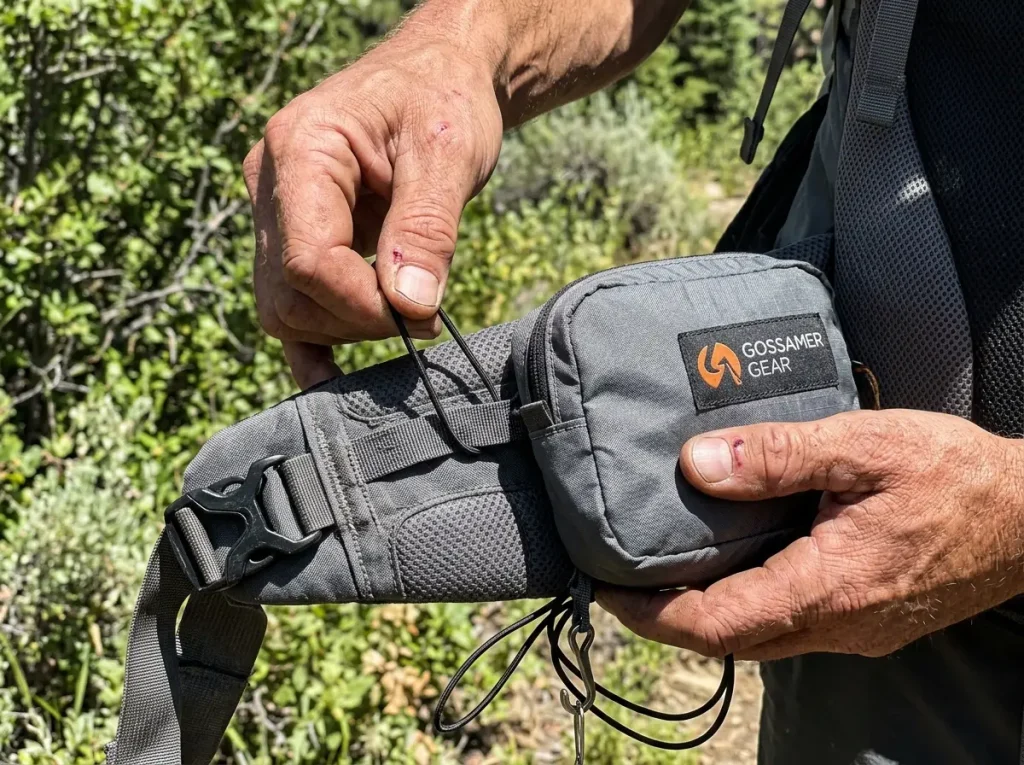
Here is where people get burned. They order a pocket, it shows up, and it will not clip to the belt they own. The fix is understanding the attachment system before you buy, not after.
Elastic strap-through loops
The simplest pockets have elastic loops on the back. You thread the belt through them and the pocket slides on. This works on almost any belt, including the smooth-webbing kind with no clip points, which makes it the most forgiving style for an odd belt.
Daisy-chain clips, Z-clips, and gatekeepers
Most padded belts carry a daisy chain, the row of webbing loops you also use to lash gear to the outside of your pack. Z-clips and gatekeeper buckles lock a pocket onto those loops so it cannot slide. These hold tighter than elastic, but only if your belt actually has the webbing to grab.
Three-point versus four-point attachment
The number of anchor points is the quiet spec that decides how much your pocket sways. A four-point attachment, like the two elastic bands plus two side clips on the SWD Zippered Hip Belt Pocket, locks the pouch down on every corner. A three-point setup is lighter and faster but gives the pocket more room to wander. One more trick worth knowing: cord loops on the ends of a pocket let you cinch a pouch onto a belt it was never designed for. The Gossamer Gear Hipbelt Pocket uses exactly that, which is why it ends up on so many non-Gossamer packs.
Stopping the Bounce Without Buying Anything
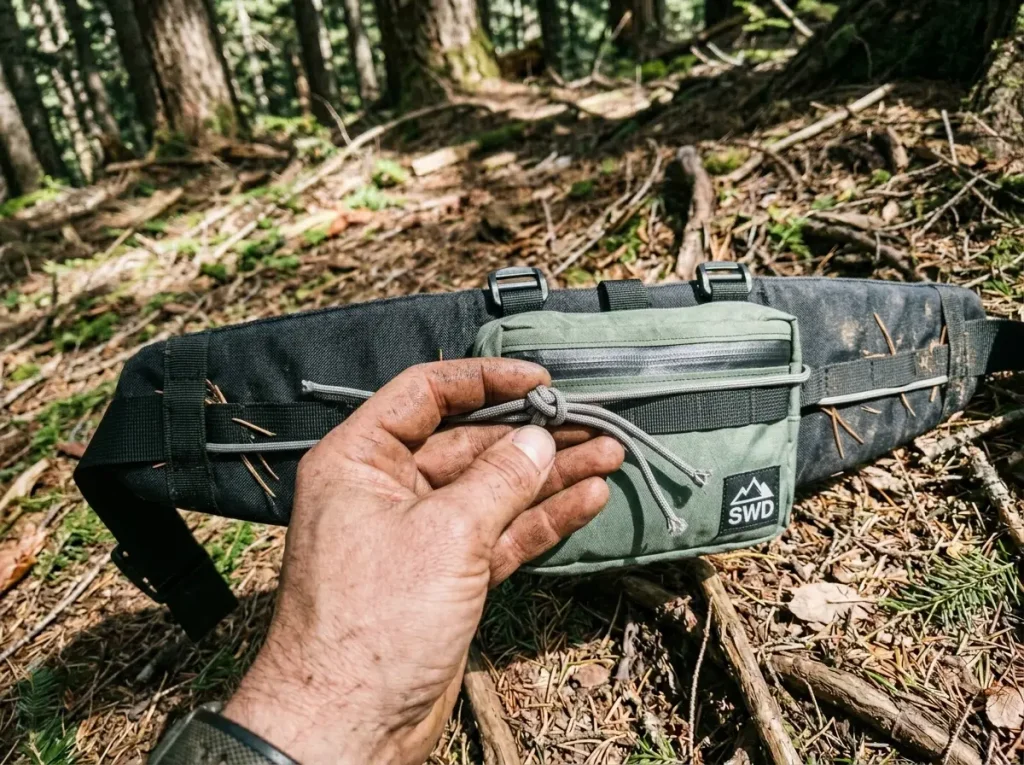
Bounce is the number one complaint, and it is the one problem you can almost always fix for free. You do not need a new pocket. You need a second anchor and some tension.
Why pockets bounce in the first place
A pocket bounces when it hangs from a single anchor with slack in the system. Every step swings it, and a loaded pouch swings harder. Naming the cause first matters, because the people who complain loudest about bounce usually bought a second pocket when the real fix cost nothing.
The free cord tie-off
Run a short length of cord through the daisy chain and use it as a tension line that pulls the pocket flat against the belt. That is it. A length of cord you already have in your pack tames most of the swing before you spend a dollar, and it works on pockets that came with sloppy attachment from the factory. This is the budget move competitors mention in passing and never actually walk you through.
Pairing and tensioning so the pocket rides
Two anchor points plus snug daisy-chain tension is what makes a pocket ride with your hips instead of flopping off them. A small velcro loop to the daisy chain stops the side-to-side slide that drives people crazy. And pace changes the stakes here. A slow hiker can tolerate a single-anchor pouch that a trail runner never could, because the faster you move, the more a loose pocket hammers your hip. The same tension-and-anchor logic that keeps a heavy load stable through your belt applies in miniature to the pouch hanging off it.
If you run a matched pocket on each side, sew the bottom corners of the pair together with a few stitches so each side moves as one unit. Hikers who have done it say it nearly eliminates the bounce, far more than tightening straps ever will.
What to Actually Carry, and Which Side It Goes On
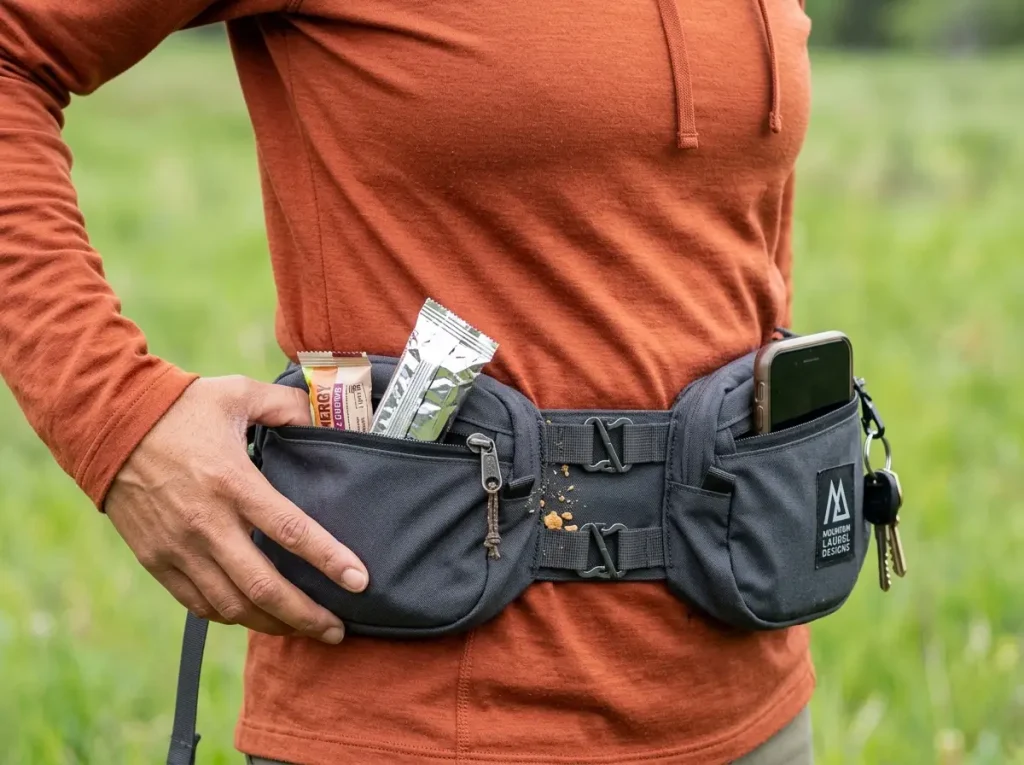
A pocket you have to think about is a pocket you will use wrong. The point is easy access, reaching the right thing without looking, and that takes a little planning before the trail, not during it.
The grab-without-stopping essentials
The short list is the same for almost everyone: phone, snacks, a water filter, a camera, keys, lip balm, sunscreen, and a map if you carry paper. These are the things you want every twenty minutes, and burying them in the top lid defeats the whole purpose. A pocket that keeps a water filter you can reach without stopping turns a chore into a non-event on a hot day.
One side food, one side phone
Here is the habit veterans use that almost no roundup mentions. Dedicate one side to in-motion food, the bars and chews you grab without looking, and the other side to your phone and the things you cannot lose, like keys and ID. After a few miles your hands learn it, and you stop fumbling for the wrong thing. It is the same one-thing-per-pocket logic that makes a good pants pocket layout work, just applied to your hips.
Keeping safety gear reachable
There is a safety angle the SERP ignores. A reachable phone, a whistle, or your ID is emergency access, not just convenience. The National Park Service frames this plainly when it tells hikers to keep your navigation and emergency essentials reachable, not buried at the bottom of a pack. A whistle clipped where you can reach it, the same logic behind running one on your sternum strap, belongs in the same conversation as which snack goes where.
Do not overstuff one side. A lopsided load torques the belt and pulls it off level, which you will feel as a sore hip by mile eight. Balance the weight side to side even if it means moving a snack bag across.
Will an Add-On Pocket Even Fit Your Pack?
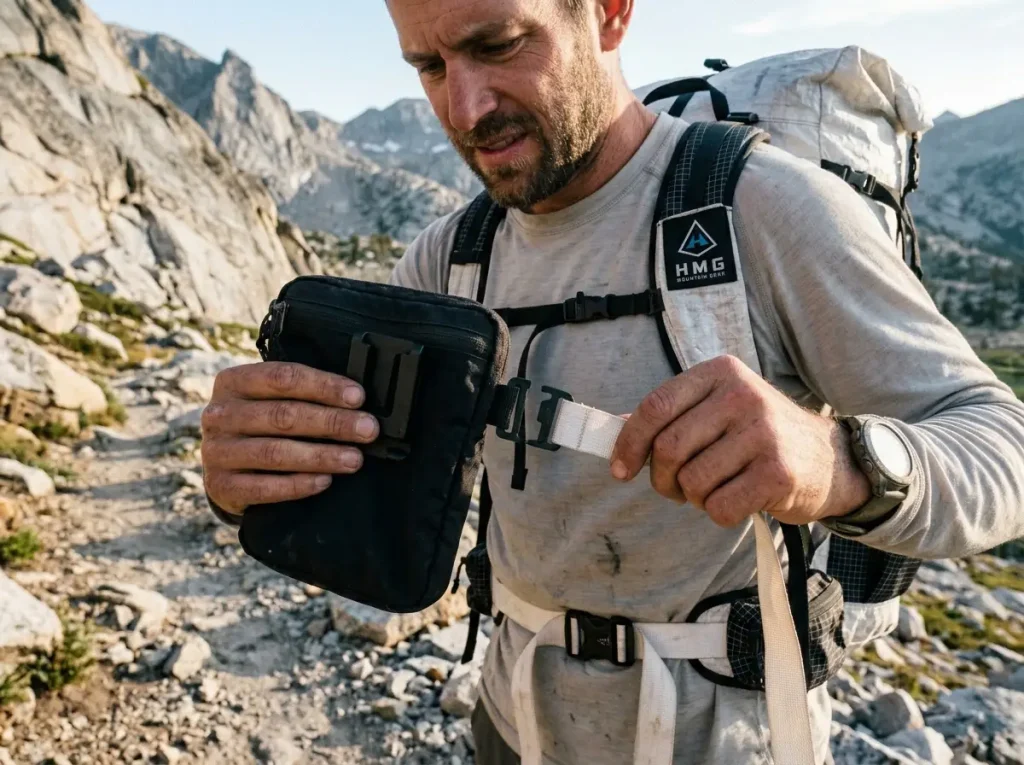
This is the question every roundup skips, and it is the one that decides whether your purchase works or goes back in the box. Compatibility is the number one returns reason, and it is entirely avoidable.
Belt width and webbing type
Most clip-on pockets want a padded hip belt at least about four inches wide with daisy-chain webbing to grab. A wide, well-built belt takes almost anything. The trouble starts when your belt does not match what the pocket expects, and the listing never warns you. Knowing where your belt rides on your hips and how wide it actually is settles half the question before you order.
The frameless and ultralight problem
This is where cottage heartbreak happens. You order the perfect pocket, it arrives, and it will not clip to your frameless pack’s skinny, smooth-webbing belt. Ultralight packs from makers like Hyperlite Mountain Gear (HMG) often run narrow unpadded belts with no daisy chain or gear loop at all, and a clip-on simply has nothing to bite. If you run a frameless or sub-two-pound pack, check the belt before you fall in love with a pocket.
A quick will-it-fit decision path
Walk it in order. First, do you already have integrated pockets? If yes, skip the add-on entirely. Second, does your belt have a daisy chain? If yes, Z-clip and quick-clip pockets like the Mountain Laurel Designs Pack Pocket will lock right on. Third, is your belt smooth and wide? Then elastic-loop or cord-loop pockets like the Gossamer Gear Hipbelt Pocket thread on fine. Fourth, is your belt skinny and minimal? Then a cord tie-off or a fanny pack will serve you better than forcing a clip-on. How the belt carries the load in the first place is worth understanding here, because the same suspension that makes a belt comfortable is what gives a pocket something solid to ride on.
Measure your belt width with a tape before you order, and note whether the webbing is a daisy chain or smooth. Two minutes with a tape measure saves the most common return in this whole category.
The Hip Belt Pockets Worth Knowing (Most Aren’t on Amazon)
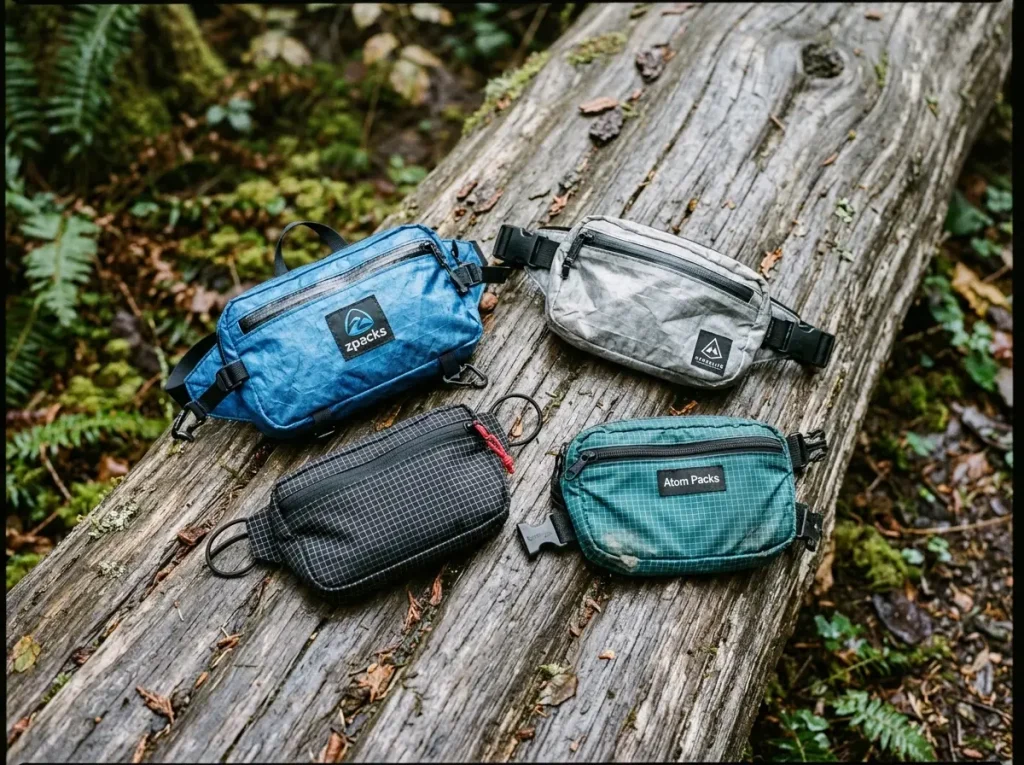
Time for the honest part. I would love to hand you a clean Amazon link for the best pocket here, but I cannot, because the best ones are not sold on Amazon. They come from small cottage makers who sell direct. Here they are anyway, named plainly, so you know what to search for.
The cottage benchmark
The Superior Wilderness Designs (SWD) Zippered Hip Belt Pocket is the one the rest get measured against. Fifty cubic inches, about 1.2 ounces, tough X-Pac fabric, a waterproof YKK zipper, and a four-point attachment that barely moves, and it still swallows a large phone lying flat. The Mountain Laurel Designs (MLD) Pack Pocket is the most universal mounter of the bunch, with Z-clips, an elastic band, and quick clips that let it ride on almost any belt, which makes it the quiet winner of the will-it-fit problem. Granite Gear, ULA Equipment, and Six Moon Designs sell their own takes, and the REI Packmod is the mainstream pick if you want a familiar name.
The fits-any-belt workhorses
The Gossamer Gear Hipbelt Pocket is the everyman pick. Cord loops let it cinch onto belts it was never made for, and the little internal key hook means you stop losing your keys in the bottom of the pouch. For gram counters, the Gossamer Gear Alchemy Hipbelt Pocket drops to about 0.7 ounces with a darted seam for a bit more volume, which is roughly as light as a real pocket gets. Thru-hikers chasing bounce-free storage at the lowest possible weight reach for pockets like these, sometimes built in Dyneema Composite Fabric (DCF) for a near-weightless feel.
Why the best ones skip Amazon
There is no conspiracy here, just economics. These are small shops sewing in small batches, and the marketplace fees and logistics of Amazon do not fit how they run. The practical upshot for you is simple. If you want the best pocket, you order direct from the maker and wait a little longer. If you want something on your porch in two days, you shop the budget shelf, which is the next section. Saying that out loud is the whole point, and it is the same reason these cottage builders own the conversation around the best ultralight packs too.
Budget Buys, DIY Fixes, and When a Fanny Pack Wins
Not everyone wants to wait two weeks for a cottage pocket, and not everyone should buy a clip-on at all. Here is what you can get today, the build-it-yourself route, and the honest case for skipping belt pockets entirely.
Budget pockets you can buy today
If you want storage now and cheap, two water-resistant options ship fast and do the job for casual days.
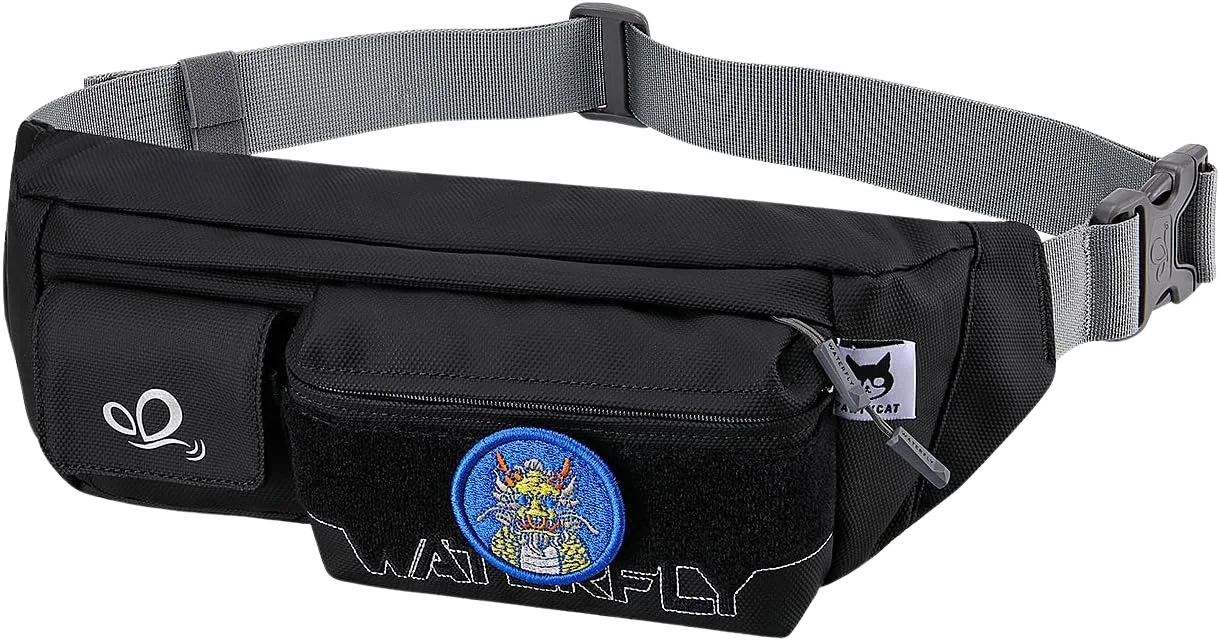
The Waterfly is the simplest way to add a pocket to your hips when your pack’s belt cannot take a clip-on. It rides as its own belt, so compatibility never enters the picture. The tradeoff is that it sits a little looser than a true belt-mounted pocket, and you wear a second strap. For a relaxed day hike, most people never notice.
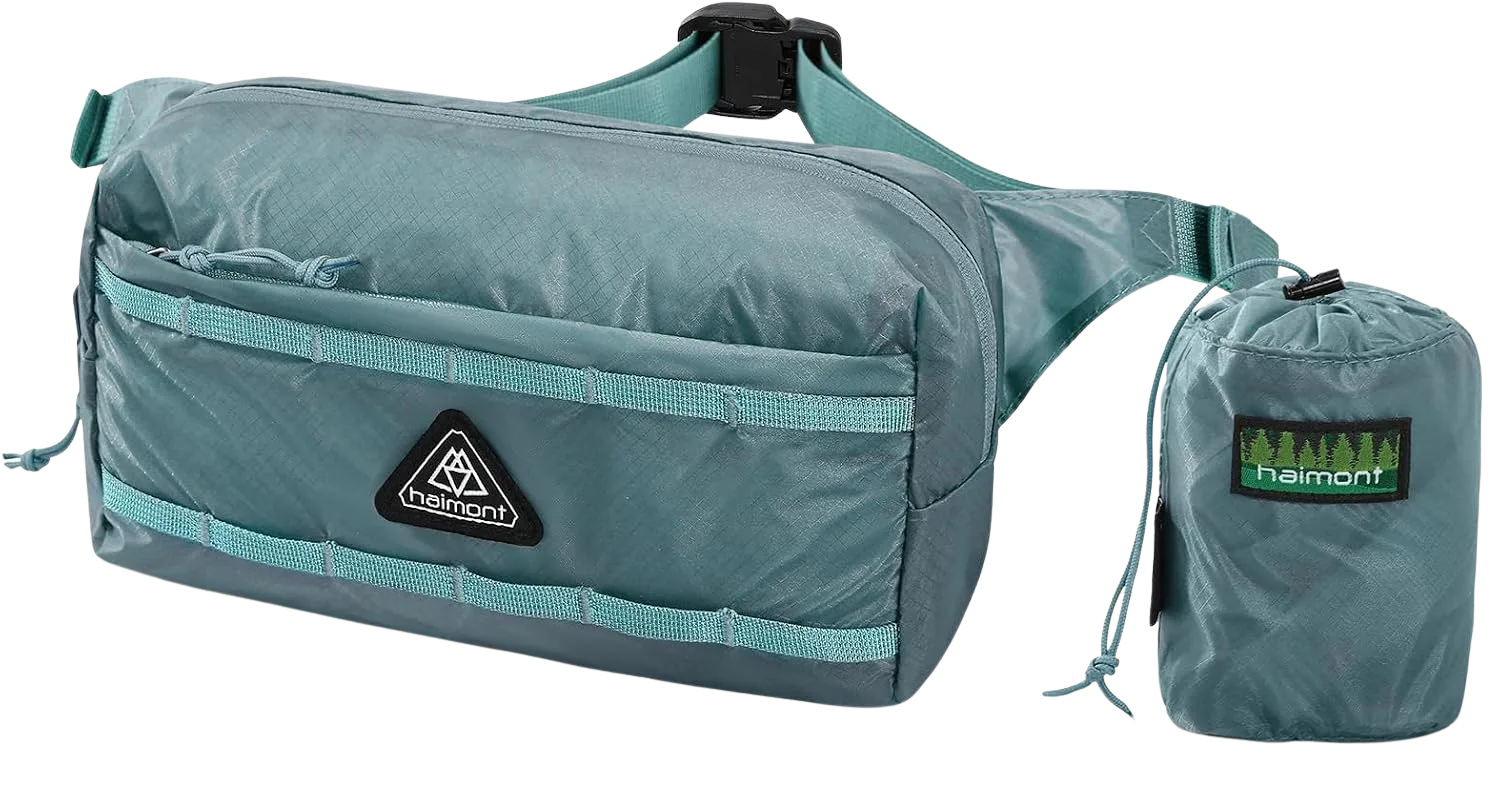
Between the two, the Waterfly is the grab-and-go pick and the Haimont is for the hiker who wants to stow it when it is not earning its keep. Neither will out-ride a four-point cottage pocket, but neither pretends to. They are cheap, water-resistant, and available now.
The DIY and MYOG route
If you can run a sewing machine, the cheapest real pocket is the one you make. MYOG, make your own gear, is a whole corner of the hiking world, and Ripstop by the Roll sells a Hip Belt Pouch Kit in HyperD 300 ripstop that weighs around 27 grams assembled. You cut, you sew, you mount. It is not for everyone, but it is the honest budget floor, sitting just above the free cord fix that needs no pocket at all.
When a fanny pack or water belt wins
Sometimes the right answer is not a belt pocket. If your pack has a skinny belt or no belt worth clipping to, a dedicated waist pack does the job better and you stop fighting compatibility. The Zpacks Multi-Pack is a good honest example of this. It is really a four-in-one chest, fanny, and belt pack, not a clip-on pocket at all, and trying to use it as one misses the point. For a fast, light pace where you want water on your hip instead of a pouch, the belt-plus-bottle hybrid is a different tool worth knowing.
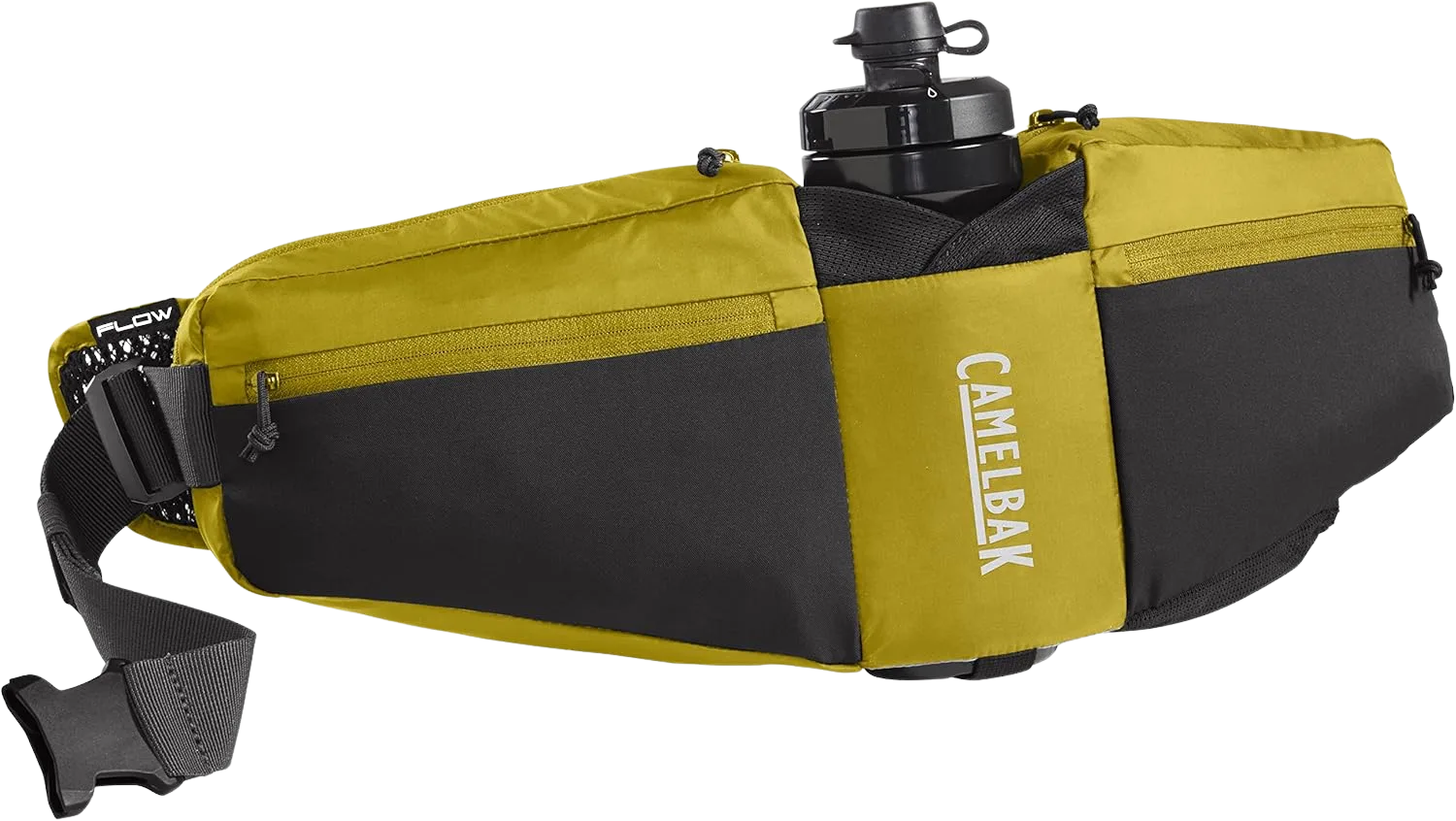
The Podium Flow is a different animal from a belt pocket, and that is the point. If you are moving fast and light and want a bottle riding on your waist with a place for your phone, it solves a problem a clip-on pocket cannot. If you are walking a relaxed day with a full pack, it is more than you need.
Conclusion
Three things to walk away with. First, check whether your pack already has integrated pockets before you buy anything, because half the time you already own what you were about to order. Second, you can stop the bounce for the price of a length of cord, so fix the pocket you have before you replace it. Third, the best pockets come from cottage makers, not Amazon, and the Amazon options are mostly budget fanny packs, which is completely fine as long as you know what you are buying.
Before your next hike, thread a pocket onto your belt, load one side with food and the other with your phone, and walk a mile. You will feel the difference at the first snack break, when your hand finds exactly what it is reaching for without you breaking stride.
Frequently Asked Questions
01How do I stop my hip belt pocket from bouncing?
Add a second anchor point and snug the tension. A free length of cord tied along the daisy chain pulls the pocket flat and stops most bounce. Single-anchor pouches flop, while dual points and tension make a pocket ride with your hip instead of swinging off it.
02Can you add hip belt pockets to any backpack?
Not always. Most clip-on pockets need a padded belt around four inches wide with daisy-chain webbing. Frameless or ultralight packs with narrow smooth-webbing belts often cannot take one, so a cord tie-off or a separate fanny pack is the workaround.
03Are integrated or add-on hip belt pockets better?
If your pack already has good integrated pockets, they usually beat an add-on for stability and you do not need to buy anything. Add-on pockets make sense when your pack came with none, or when you want more capacity than the built-in ones offer.
04What should I keep in your hip belt pockets?
Grab-on-the-go items: phone, snacks, a water filter, keys, lip balm, and sunscreen. A useful habit is dedicating one side to in-motion food and the other to your phone and the things you cannot lose, so your hands learn where each lives.
05What size hip belt pocket do I need for my phone?
Around 50 cubic inches fits a large phone lying flat with room for a snack. Size up toward 78 cubic inches if you want a water filter or bars alongside it. Check that the pocket swallows your phone flat, not just on edge.

I've spent more than a decade researching hiking gear and trail technique. I read the specs, the forum threads and the long-term reviews, and every pick here comes with what it gets wrong.
End of the trail
You read every mile of this one. Here's where the trail goes next.