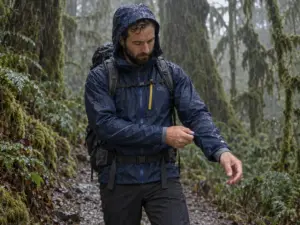
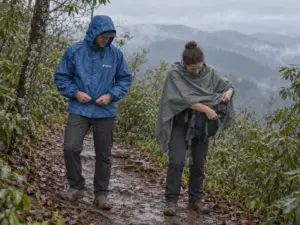
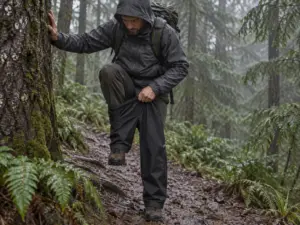

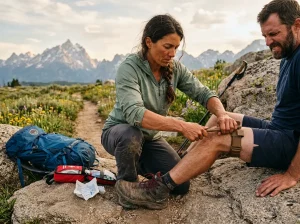
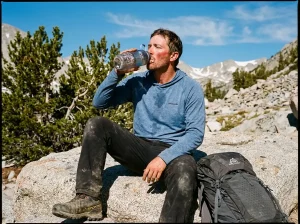
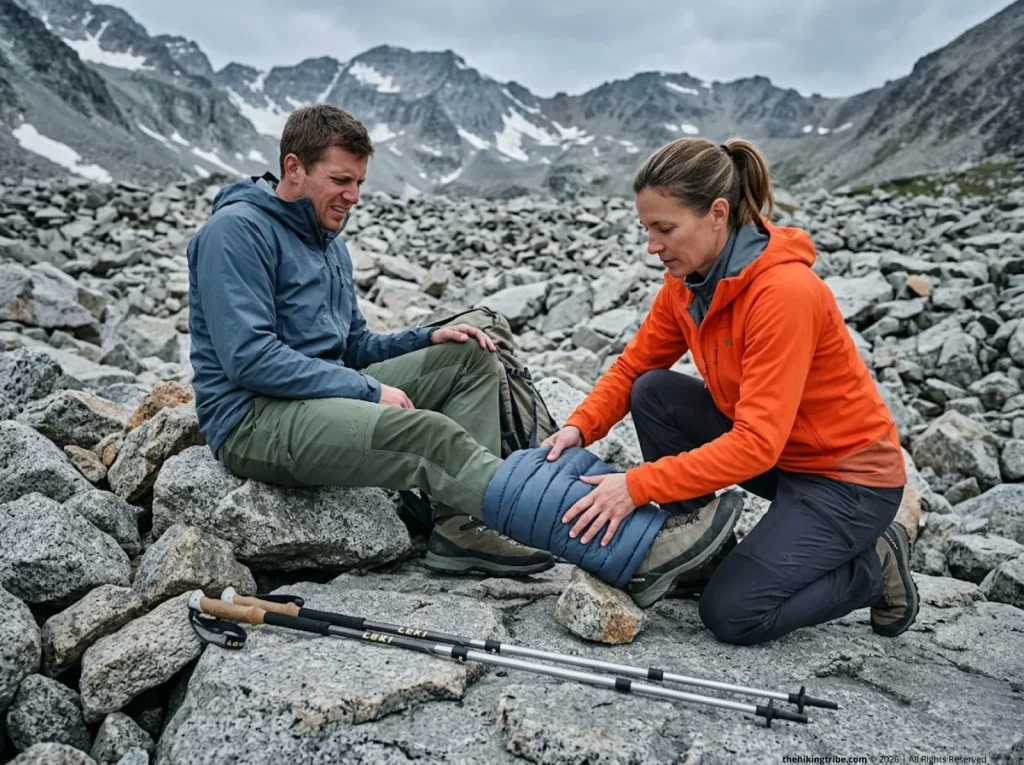
The snap echoed louder than breaking deadfall, and before my partner even hit the talus field, I knew we weren’t walking out of this basin tonight. A lower-leg fracture miles from the trailhead quickly shifts from a pain management issue into a race against permanent tissue damage. After 20 years guiding on these trails, I’ve seen this situation more times than I can count. Getting it wrong means losing a limb. Here’s exactly how to handle it—no panic, no ER visit necessary until you reach the tarmac.
Backcountry Leg Trauma Metrics
- Lower Extremity Injury Share: 50.6%
- Fracture Odds >45 Years Old: 45% Higher
- Fall Height >20 ft Risk: 52% Higher
- Peak Injury Window: 12:00 PM – 6:00 PM
⚡ Quick Answer: An effective wilderness leg splint requires rigid supports extending past the foot, generous padding to fill dead space, and secure but adjustable bindings using wide materials like cravats. Before and after applying the splint, you must check the patient’s circulation, sensation, and movement (CSM) to confirm blood still flows to their toes. Never rush the process—stabilize the limb, manage the patient’s core temperature, and prepare for a delayed backcountry extraction.
The Physics and Biology of a Backcountry Fracture
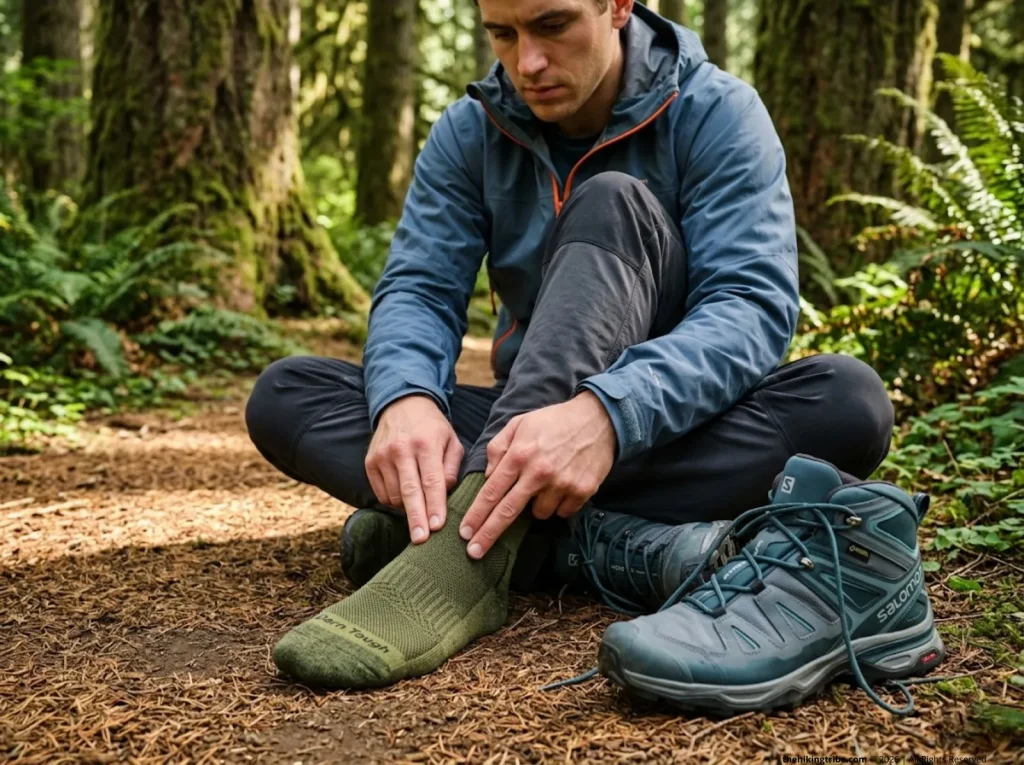
When bone breaks, the jagged edges essentially become knives inside the leg. A severe fracture can easily sever or compress the blood vessels carrying blood to the foot, cutting off blood flow—what medics call distal perfusion. This is why the medical priority is restoring that blood flow, not just making the leg look straight.
Lower extremities account for half of all wilderness injuries, with ankles representing 42% of hiking-specific trauma. Hikers over 45 have a 45% higher probability of fracture when they fall. A tumble exceeding 20 feet spikes that risk by 52%. You want to follow the evidence-based guidelines for fracture management from the Wilderness Medical Society to handle these events properly.
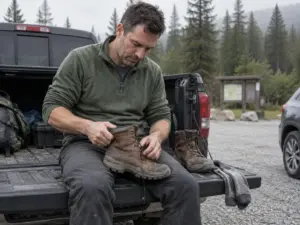
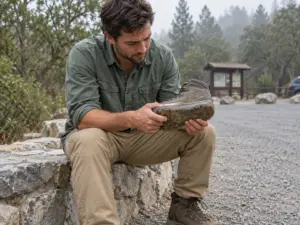
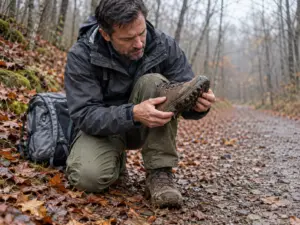
In my experience across dozens of remote trail rescues, the primary mistake is failing to remove the hiking boot immediately if severe swelling is anticipated—or inversely, removing it when it acts as an anatomical splint. That represents a serious judgment call you have to make right there in the dirt.
Pro tip: Always remove the boot if you suspect an open fracture or if swelling is rapid. Once the leg blows up, you’ll have to cut a $200 boot off with trauma shears.
The Mechanism of Injury (MOI) and Primary Survey
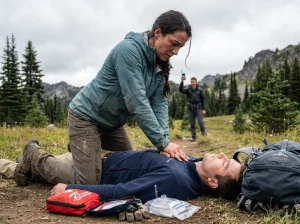
You need to identify the exact forces that caused the injury. Did the ankle twist under a heavy pack, or did a falling rock crush the leg? Secure the ABCs (Airway, Breathing, Circulation) first. Stop any life-threatening hemorrhage before you even think about the broken bone. A basic grasp of Wilderness First Aid keeps you focused on what kills the patient fastest.
Differentiate between open and closed fractures. If bone protrudes through the skin, you are dealing with an open fracture presenting compound fracture warnings—meaning major infection risks and severe bleeding. You must control that bleeding before splinting.
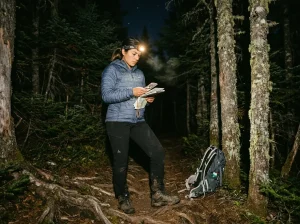
Pro tip: Document the Mechanism of Injury immediately in your notepad. The exact speed, height, and angle of the fall dictates the required Search and Rescue response.
Assessing the Damage: The CSM Framework
Systematically assess Circulation, Sensation, and Movement (CSM), sometimes referred to as PMS (Pulse, Motor, Sensory). Check the distal pulses on top of the foot or behind the ankle bone. Evaluate capillary refill time by pressing the toenail until it turns white, then counting how long it takes for pink color to return.
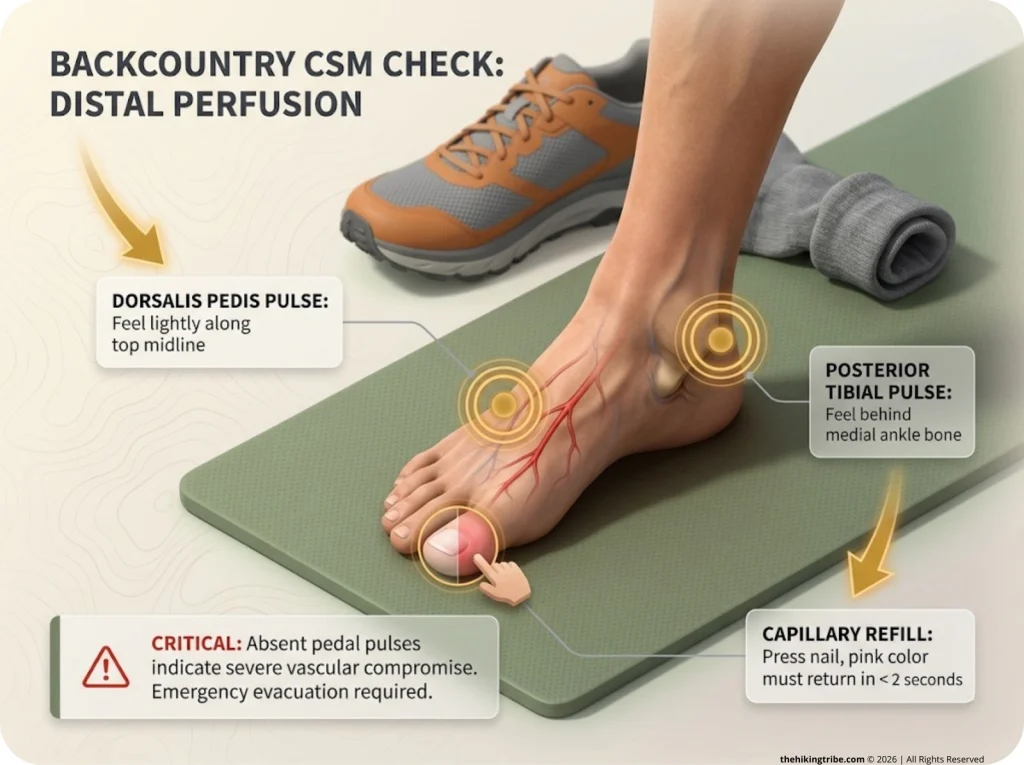
If the limb is pale, cold, and lacks a pulse, you face a dire medical emergency demanding immediate traction. Test light touch sensation on the toes. Ask the patient to wiggle their toes to test motor control.
The Threat of Compartment Syndrome
Bleeding inside the muscle fascias creates a high-pressure condition called compartment syndrome. The pressure literally chokes the blood vessels and nerves. This condition leads to permanent tissue death if left unchecked. Removing restrictive clothing and heavily loosening boot laces is mandatory to give the swelling somewhere to go.
Engineering the Splint: Core Components
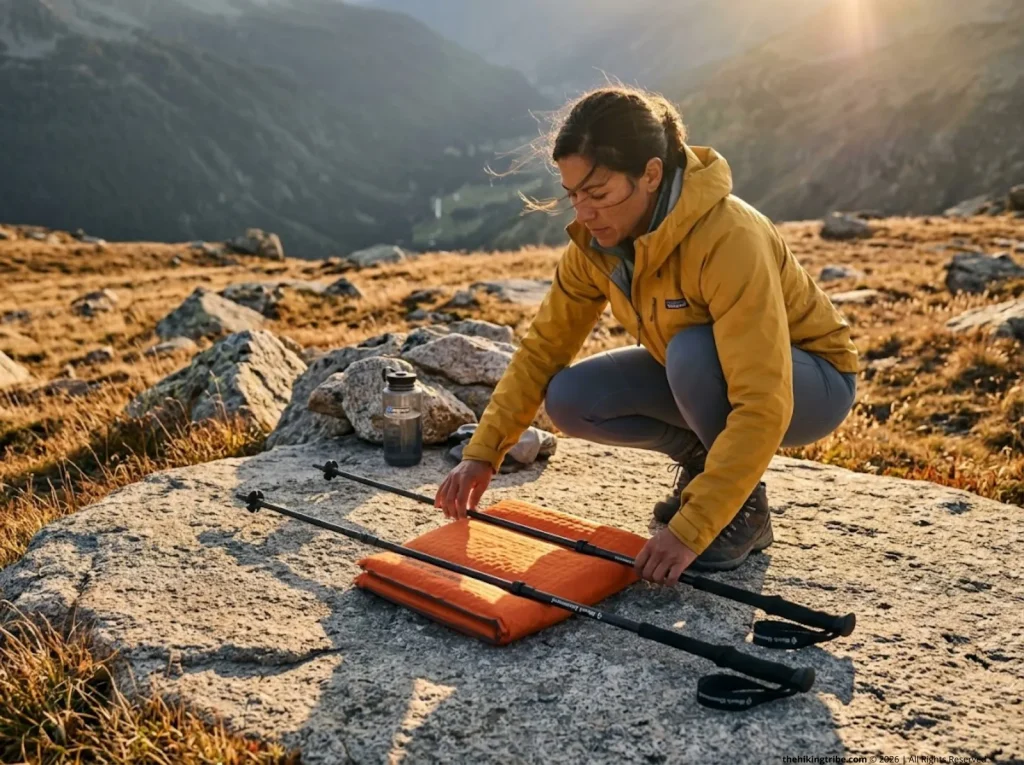
Every functional field splint relies on three physics-based elements: rigid supports, padding, and securement. Skip one, and your splint either fails catastrophically or inadvertently amputates the foot by cutting off circulation.
You must apply the “Go Beyond” Principle. Extending your rigid poles past the heel completely neutralizes ankle flexion and stops the foot from rotating. Padding fills the dead space between the injured tibia or fibula and the hard stays, preventing friction sores. Finally, securement locks the structure without generating a tourniquet effect.
During a high-altitude carry-out on the John Muir Trail, we found that wrapping a trekking pole in duct tape gave us the only rigid element that didn’t snap under the patient’s dead weight. When improvising, NOLS-certified splinting techniques dictate using what you carry.
Rigidity: Building the Structural Frame
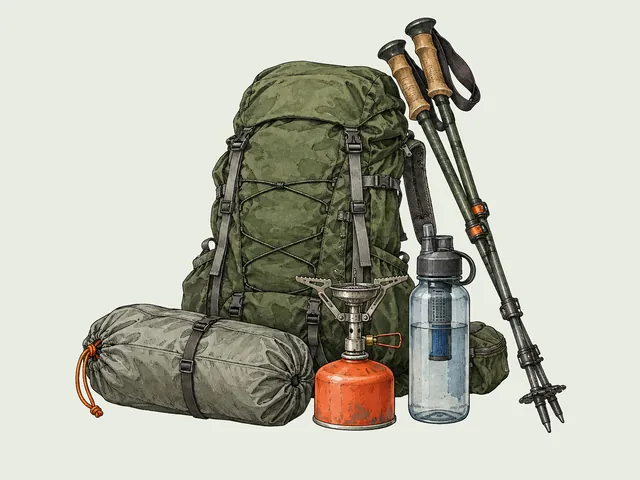
Your primary goal is locking the joint above and the joint below the bone fracture. You will want to repurpose your trekking poles—despite their biomechanical benefits on the descent—ice axes, or tent poles. Position these stays on both the medial (inside) and lateral (outside) sides of the leg to stop the limb from rotating during transport. If you lack gear, sturdy sticks or backpack frame parts can work perfectly.
Padding: Eliminating Dead Space
Rigid carbon fiber pressed straight against swollen skin cuts off blood flow in minutes. Generously apply puffy jackets, base layers, and extra wool socks to buffer the limb. Pay special attention to padding bony prominences like the ankle malleolus and the hollow of the back of the knee. Any unfilled gaps allow the broken bone to shift.
Securement: Utilizing Friction Knots
Avoid using thin paracord to tie the splint together. Rely on wider cravats, triangular bandages, or an ACE wrap. A “triple-wrap” knot heavily increases the friction, so the bindings do not loosen while carrying the patient over rough terrain. They also remain easy to untie when swelling demands adjustment.
The Step-by-Step Wilderness Splinting Protocol
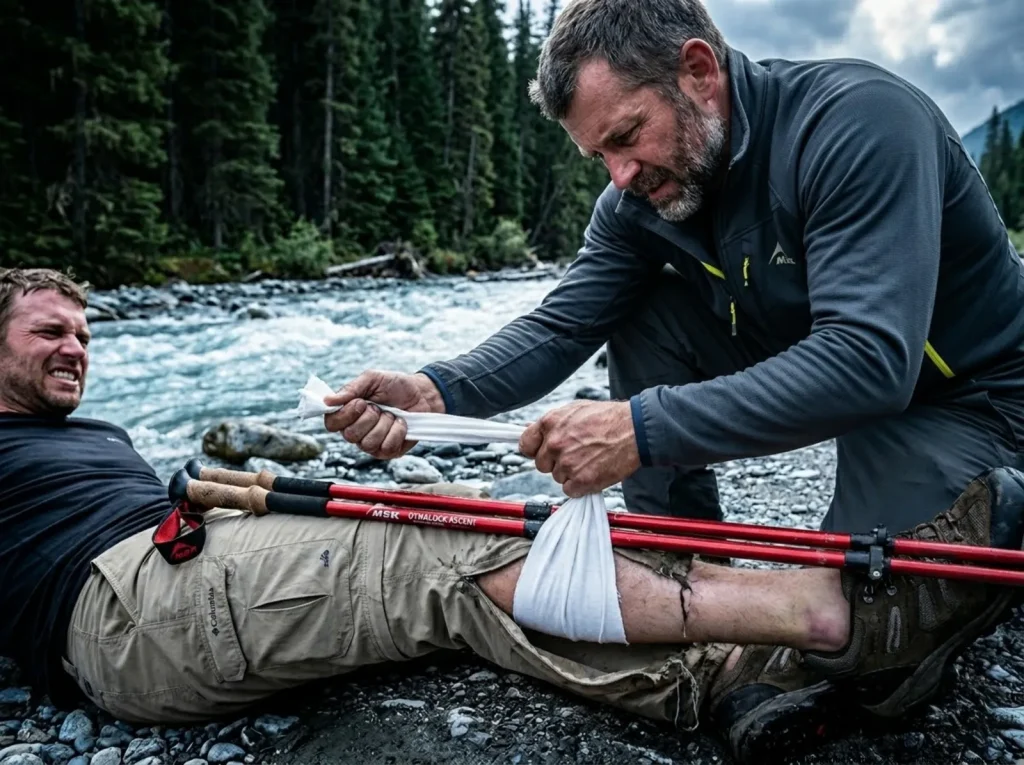
Construction happens in stages. Always stage all of your padding and rigid materials in an organized pile before you physically manipulate the broken leg. The moment you move a broken bone, the patient will scream, and their muscle spasms will fight you.
When ready, use continuous traction application to straighten deformed bones and restore the distal pulse if the foot sits at an unnatural angle. This straightens the kinked “hose” of the artery. Systematically enclose the limb utilizing the WRAPPED method. Finish the job with a triangular bandage tied as an “Ankle Hitch” to maintain a neutral 90-degree foot angle.
In my experience across dozens of remote trail rescues, the most common mistake is tying the splint too tight from the start. You will almost always have to rebuild the rig when the leg blows up with swelling two hours later. Understanding how to signal for a rescue gives you a clear mental picture of the timeline while you focus on the injury.
Restoring Neutral Alignment (Traction-In-Line)
Execute a slow, steady axial pull directly along the long axis of the bone. This constant pressure moves the bone fragments away from compressed vessels. Never yank or jerk the limb. Apply the tension and hold it. Allow the patient’s muscles to gradually tire and relax so the bones can settle back into a natural line.
Executing the Ankle Hitch
Flex the foot to 90 degrees and secure it in place using a cravat. This creates a position of function. This specific maneuver is non-negotiable to stop the foot from flopping forward—what we call distal rotation—during a chaotic and bouncing carry-out to the trailhead.
Securing the Stays and Re-Checking Vitals
Tie off the rigid poles starting from the most proximal point (closest to the hips) and work your way downward toward the foot. You must immediately assess circulation with a secondary CSM check the exact moment the final knot is tied to verify your bindings haven’t inadvertently choked off the blood supply.
The Improvised “Air Splint” Innovation
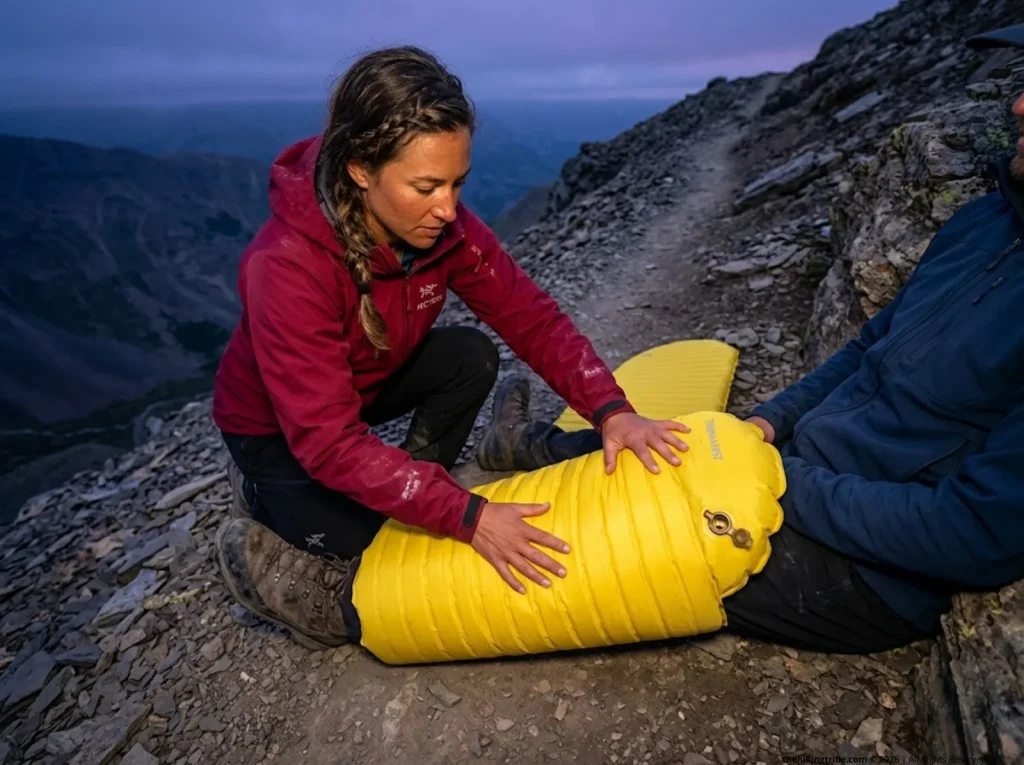
Hikers carry excellent medical tools without realizing it. Modern 40D TPU-coated sleeping pads generate uniform circumferential immobilization when wrapped around an injured limb. Let me be clear: a Therm-a-Rest or similar pad usually works better than sticks.
The improvised air splint entirely removes the focal pressure points that plague rigid stick splints. Using the jelly roll method, you mold the deflated pad around the patient’s exact anatomy, tie it off, and then partially re-inflate the mat. The expanding air acts as an airtight, customized cast holding the leg firmly in place.
After 7 days of field testing the jelly roll technique in backcountry conditions, the structural integrity of the air splint proved noticeably superior to traditional stick-and-cravat bindings. It leverages standard sleep systems into a high-tier medical device.
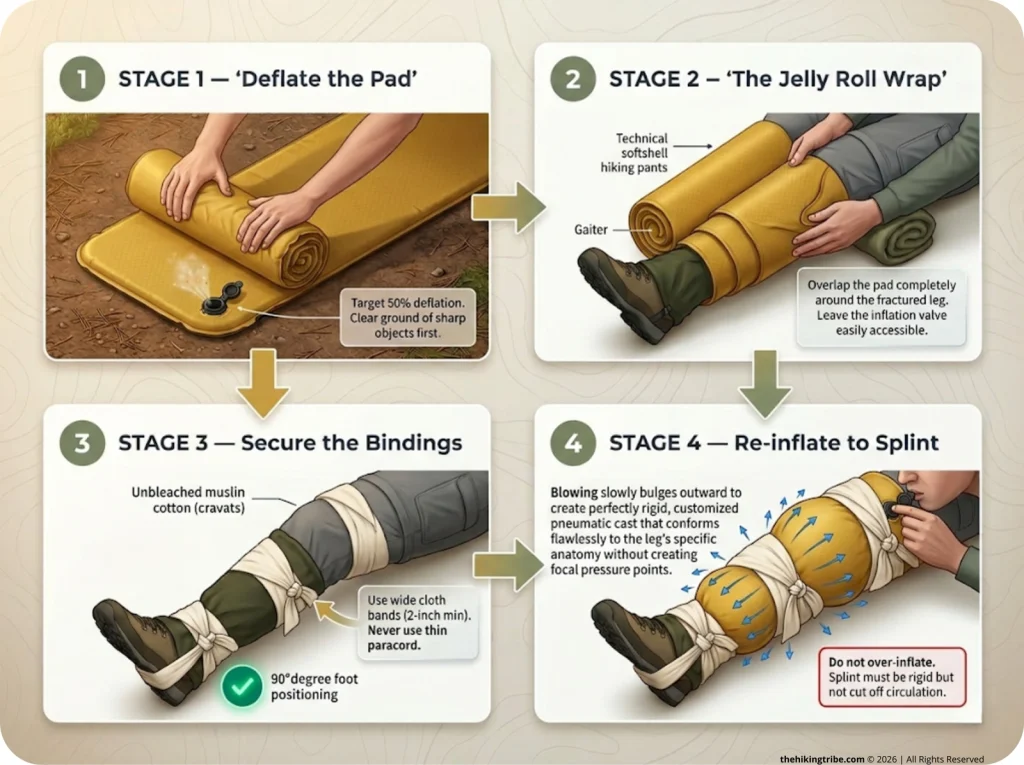
Pro tip: Before deflating your pad to build the air splint, brush off pine needles or sharp rocks. Puncturing the pad while rolling it around a broken leg destroys your only splint.
Why Traditional Methods Fail
Found sticks are rarely perfectly straight. When strapped to a human leg, curve points dig directly into the swelling skin, causing intense pain and vascular damage. The body’s inflammatory phase demands adjustable compression, and rigid wood simply cannot expand as the leg swells.
Executing the Partially Deflated “Jelly Roll”
Deflate your sleeping pad to roughly 50% capacity. Fold it smoothly around the injured leg so the edges overlap, secure it with wide cravats, and then slowly blow air back through the valve. Do not over-inflate. The pad has to become rigid without acting as a giant pneumatic tourniquet.
Managing Pressure and Thermal Insulation
Beyond providing structural rigidity, the dense air gap isolates the patient from conductive heat loss against the freezing ground. Be aware of the ambient lapse rate. When evening temperatures drop, the pad’s internal air pressure shrinks, requiring you to top it off with more air to keep the splint tight.
Post-Splint Logistics: The Reality of Evacuation
Building the splint marks the easy part. Carrying an injured adult 10 miles out of the woods requires a minimum of six to twelve fresh rescuers and easily exceeds ten hours of brutal labor.
Improvised jacket litters look great in manuals but are physically exhausting and wildly dangerous on steep, uneven terrain. You have to anticipate accidental hypothermia and treat it as a guaranteed byproduct of the trauma. The patient is lying motionless on cold rock. Good psychological first aid stops the patient from slipping into metabolic decline and clinical shock.
The “Psychological Splint” matters. In extended rescues, feeding the patient, keeping them hydrated, and giving them small tasks prevents total morale collapse. You want to study search and rescue data on lower-limb trauma from the National Park Service to understand exactly how long you will be sitting out there.
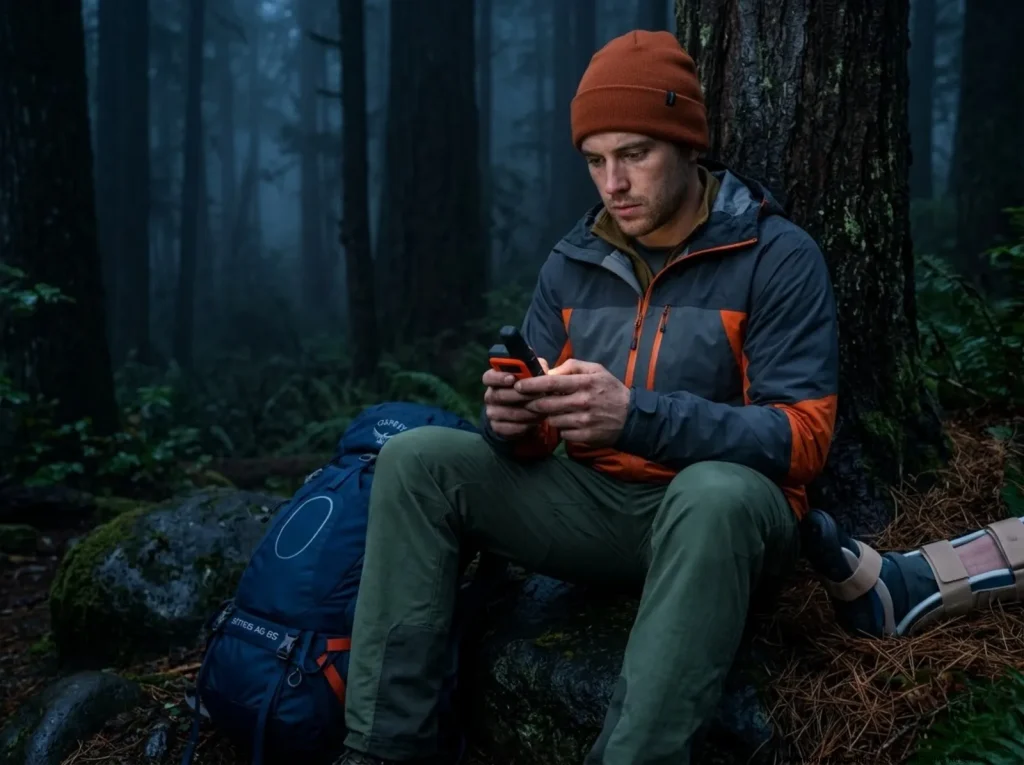
A working satellite messenger determines your evacuation reality. You need to integrate solo hiking safety and communication plans into your messaging sequence.
Crafting an SOS Message for SAR
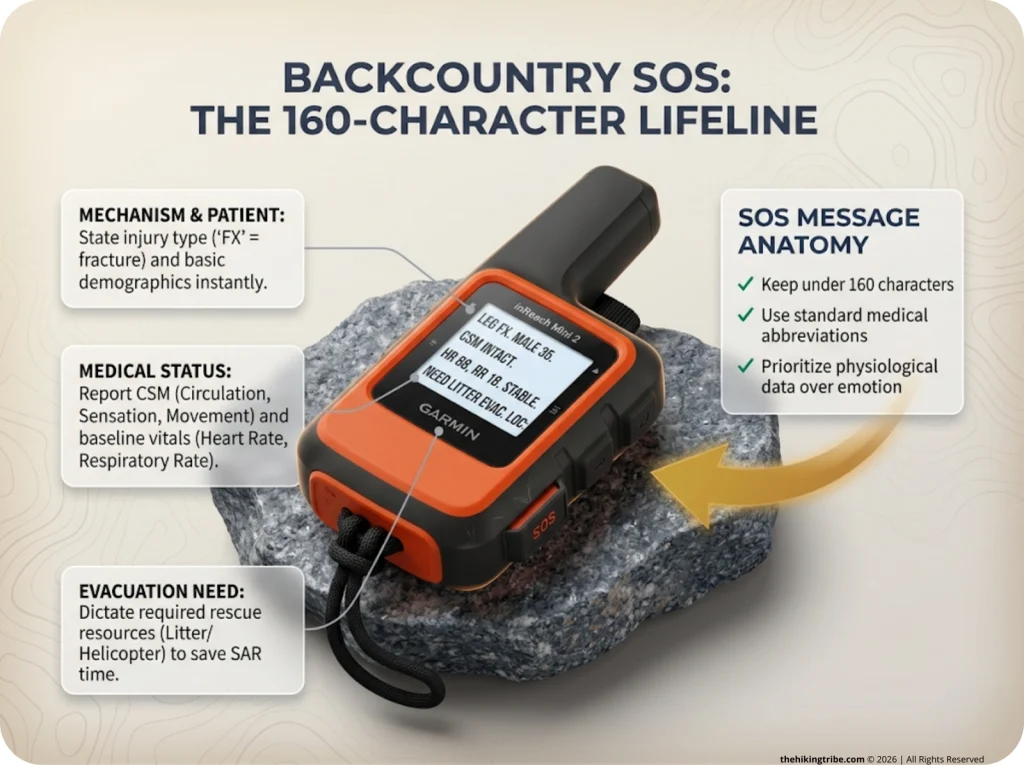
A Garmin inReach and similar messengers have tight character limits. Send raw data: “LEG FX. MALE 35. CSM INTACT. HR 88, RR 18. STABLE. NEED LITTER EVAC. LOC:”. Prioritize physiological data over emotional narrative using the “Aviate, Navigate, Communicate” protocol in your sos message template.
The Physical Toll of an Improvised Carry-Out
A manual ground evacuation completely drains a group’s calorie reserves. Do not attempt “toe-touch weight-bearing” using an improvised crutch made from trekking poles unless the patient’s CSM is perfect, their pain is completely manageable, and the trail ahead resembles a flat sidewalk.
Psychological First Aid and Thermal Management
Physical trauma triggers an Acute Stress Reaction, which burns up the patient’s core heat at an accelerated rate while they lie immobile. Shove a closed-cell foam pad beneath the patient. Deploy chemical heat packs directly to the arterial gateways at the groin and armpits to maintain core temperature while awaiting rescue.
Analyzing Common Fieldcraft Failures
Hikers invent bad medical care when they panic. Under-padding the hollow of the knee leads directly to rapid nerve compression and excruciating pain.
Using thin cordage concentrates the mechanical pressure into tiny bands, literally slicing into the swollen tissue. Too many folks use paracord because it sits handy in their packs. I’ve seen it slice through base layers and skin once the adrenaline wears off and the leg swells against the tight strings. Failing to set a watch alarm for 15-minute CSM checks means you won’t notice when the limb loses circulation.
We constantly see the “Ricky Rescue” syndrome—hikers carrying massive, advanced tactical first-aid kits who possess zero actual clinical training. Master the broader WFA principles before carrying decompression needles into the backcountry.
The Paracord Tourniquet Effect
Paracord is entirely too thin and lacks the surface area required to distribute binding tension safely. Always rely on bands wider than two inches for circumferential securement. Wide ACE bandages, triangular cravats, or strips of cut clothing work perfectly.
Neglecting the Hourly CSM Checks
Wilderness splints are never “set and forget.” The inflammatory response usually peaks hours after the initial trauma. Extreme swelling inside a rigid splint cuts off the distal perfusion. You have to physically check the capillary refill and pulse every 15 to 60 minutes and adjust the knots accordingly.
The “Ricky Rescue” Trap
Relying on specialized gadgets instead of fundamentally understanding trauma physics gets people hurt. You don’t need a commercial SAM splint for every injury if you understand how rigidity works.
Pro tip: Pre-wrap two yards of Gorilla Tape directly around your carbon trekking poles. You instantly gain premium emergency binding material without adding bulk to your kit.
Conclusion
A broken leg miles from the trailhead demands calm, methodical action. Always prioritize testing the Circulation, Sensation, and Movement (CSM) framework over building an aesthetically perfect splint. Repurpose your trekking poles and sleeping pads using physics-based rigidity, manage the patient’s core thermal temperature, and coordinate a tight satellite SOS. Next time you hear that sickening snap on the trail, you will know exactly how to dictate the terms of the rescue and save the limb.
FAQ
Can you walk on a splinted broken leg?
No, a splinted leg is strictly a non-weight-bearing injury. Attempting to walk on it can turn a stable closed fracture into a life-threatening open fracture while severing blood vessels. You must wait for extraction or execute a proper litter carry.
How tight should a leg splint be?
It should be snug enough to prevent any movement of the joints above and below the fracture, but you must be able to easily slide two fingers underneath the bindings. A distal pulse must remain continuously present and strong after you tie the final knot.
What is the best material for an improvised wilderness splint?
Trekking poles deliver the best longitudinal rigidity, while a partially deflated TPU-coated sleeping pad (the air splint) provides superior, uniform circumferential compression and padding. These items combined heavily outperform random sticks and bark.
How often should I check a patient’s pulse after splinting?
Check their Circulation, Sensation, and Movement (CSM) immediately after applying the splint, and then systematically re-assess the limb every 15 to 60 minutes. Log the results in a notebook so expanding swelling doesn’t silently cut off the foot’s blood supply.
I've spent more than a decade researching hiking gear and trail technique. I read the specs, the forum threads and the long-term reviews, and every pick here comes with what it gets wrong.
End of the trail
You read every mile of this one. Here's where the trail goes next.