






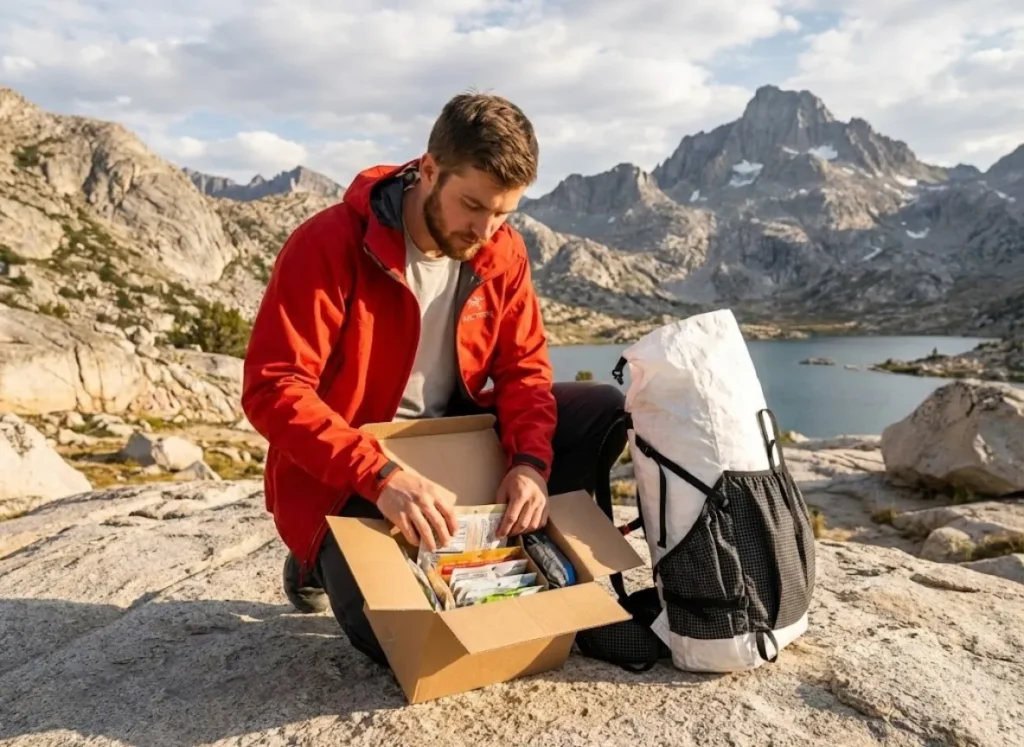
You are standing in the dusty lobby of a general store in the High Sierra. It is ninety degrees outside, you are forty miles from a paved road, and the clerk has just told you your package isn’t there. This isn’t just a shipping error. It is a caloric deficit that forces an immediate, dangerous change in your itinerary.
A resupply box is not just a parcel; it is a life-support node in a decentralized supply chain management system that requires military-grade precision to execute. In my years directing outdoor leadership programs, I have seen more long-distance backpacking trips ended by wilderness logistics failure than by injury. We are dismantling the obsolete “mail drop” advice of the past decade. Instead, we will rebuild a logistical strategy guide based on the 2026 realities of USPS Ground Advantage protocols, inflation economics, and caloric density physics.
This guide focuses on the single biggest money-saver for modern thru-hikers: the switch from USPS Priority Mail to Ground Advantage. We will cover the mathematical framework for deciding when to ship trail food versus buying locally. We will identify the critical bottlenecks—like Stehekin, Kennedy Meadows, and Muir Trail Ranch—where shipping is a mandatory mail drop. We will also examine payload optimization strategies for packing high-density nutrition for the entire trail.
Why is the “Mail Drop” Strategy Evolving in 2026?
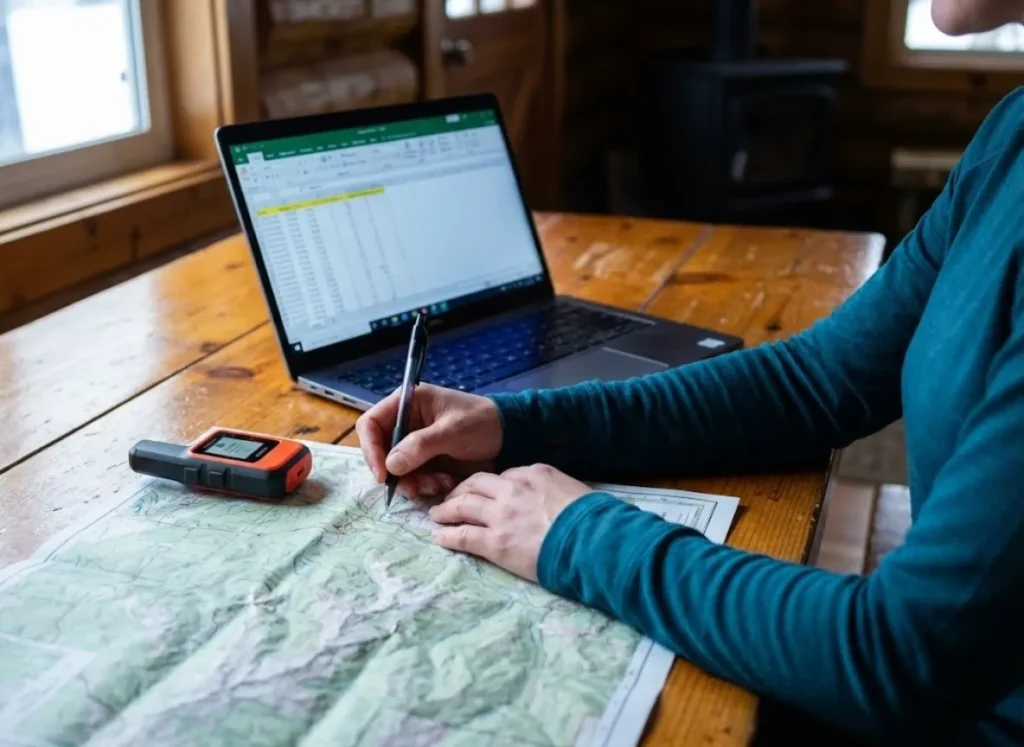
The traditional “purist” approach of mailing twenty-five boxes for a five-month hike is now economically obsolete. Shipping costs and postage rate hikes have tipped the scales, making the “ship everything” mentality a drain on your funds. The modern “Hybrid Strategy” treats mail drops as a surgical tool rather than a default mechanism. You should now use them only for specific “food deserts,” dietary restriction management (like vegan or gluten-free needs), or specific gear-heavy vlogger requirements.
Before packing a single flat rate box, you must audit every potential pickup location against a “Cost/Convenience” matrix. This shift is driven by the expansion of “Trail Angel” networks and improved inventory in small trail stores that previously had limited stock. Today, relying too heavily on resupply boxes creates “Logistical Rigidity.” It forces you to rush to post offices during strict business hours or wait days for delayed trucks.
| Priority Mail vs. Ground Advantage for Hikers | ||
|---|---|---|
| Feature | Priority Mail | USPS Ground Advantage |
| Cost | High / Premium. Projected $29.95 – $31.50 for a Large Flat Rate Box (2026 rates). Represents a roughly 50% surcharge on food value. | Low / Economic. Costs approximately 30-40% less than Priority Mail for the same weight/zone. Significant savings over the course of a full thru-hike. |
| Speed | Fast (1-3 Days). Technically faster, but the advantage is often negligible for a hiker traveling at 3mph unless shipping cross-country. | Standard (2-5 Days). Slower, but for forward “bounces” (e.g., 50 miles ahead), the truck network is often just as fast as the air network in rural corridors. |
| Forwarding Rules (Unopened) | Free. The traditional standard for bouncing boxes. | Free. Under DMM 507 Section 2.3.3, retail packages forward without charge if fully prepaid and the seal remains unbroken. |
| Insurance | Included. Standard coverage included in the higher price point. | Included. Offers similar protection; often referred to as a “Hiker’s Insurance Policy” because it is cheap to send yet retains the free forwarding capability. |
The hybrid model prioritizes “Sovereignty.” It allows you to adapt to your appetite changes—often called palate fatigue—by utilizing a buy-as-you-go approach. You buy what you crave in the moment rather than eating unwanted trail food you packed months ago. Once you accept that you will only ship boxes where absolutely necessary, you must master the mechanics of the only entity capable of delivering them to the wilderness: the USPS. Understanding these rules is as vital as building a detailed budget for your trip.
For the regulatory foundation of these logistics, you should familiarize yourself with the USPS Domestic Mail Manual on Forwarding Services.
How Does the USPS Actually Work for Thru-Hikers?
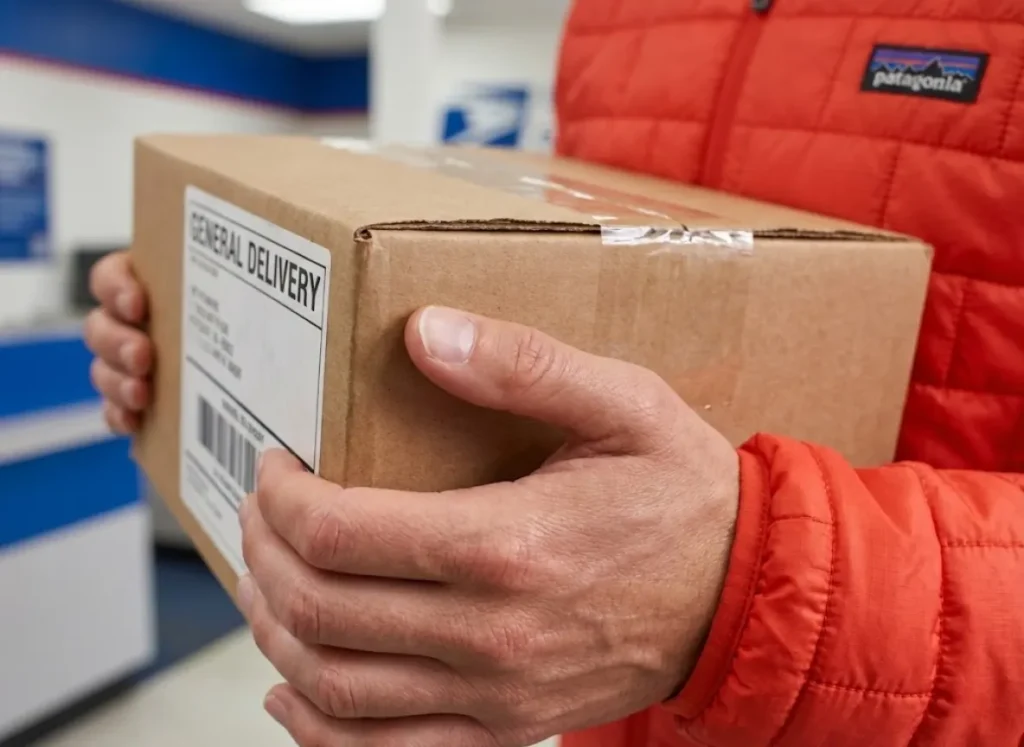
Most experienced hiker types still misunderstand the federal regulations of the United States Postal Service. Specifically, they fail to grasp the distinctions between mail classes that allow for “bouncing” packages. If you get this wrong, you pay double postage.
Why is USPS Ground Advantage the new standard over Priority Mail?
Historically, hikers used Priority Mail Flat Rate because it was the only class that offered free forwarding. However, the consolidation of services into USPS Ground Advantage has changed this rule. USPS regulations now allow Ground Advantage packages to be forwarded (bounced) to a new address for free, provided the package has not been opened. This change allows you to save 30-40% on shipping costs per box while retaining the ability to use a bounce box strategy if you decide to skip a town.
The “Unopened” caveat is strict. If the tape seal is broken even slightly, the postage is void, and you must pay to ship it again. While Ground Advantage is slower (2-5 days) than USPS Priority Mail (1-3 days), the speed difference is often negligible for forward bounces along a rural long distance trail corridor.
Pro-Tip: Hikers must explicitly request “Ground Advantage” at the counter. Clerks often default to Priority Mail for personal parcels because it is faster, but for your purposes, the cost savings are superior.
See the USPS Postal Bulletin on Ground Advantage Launch for confirmation on these service features. Additionally, knowing which service to use connects directly to managing your tailored thru-hiking gear list, as shipping replacement shoes like Altra Lone Peaks requires the same logistical foresight.
What are the specific labeling rules for General Delivery?
The “Addressee” on the box must match the Real Name on ID exactly. Using a “Trail Name” will result in ID verification failure, and the clerk will refuse to release the package. The address format must follow the strict General Delivery protocol: [Name] c/o General Delivery, [City], [State], [Zip]-9999.
Visual annotations are critical. Write “Please Hold for Hiker / ETA: [Date]” clearly on all sides of the box to prevent premature returns. Small rural post offices have limited storage space and may return packages after 14 days despite the nominal 30-day hold policy. The “Estimated Date of Arrival” marking is a vital social engineering tool to prevent this.
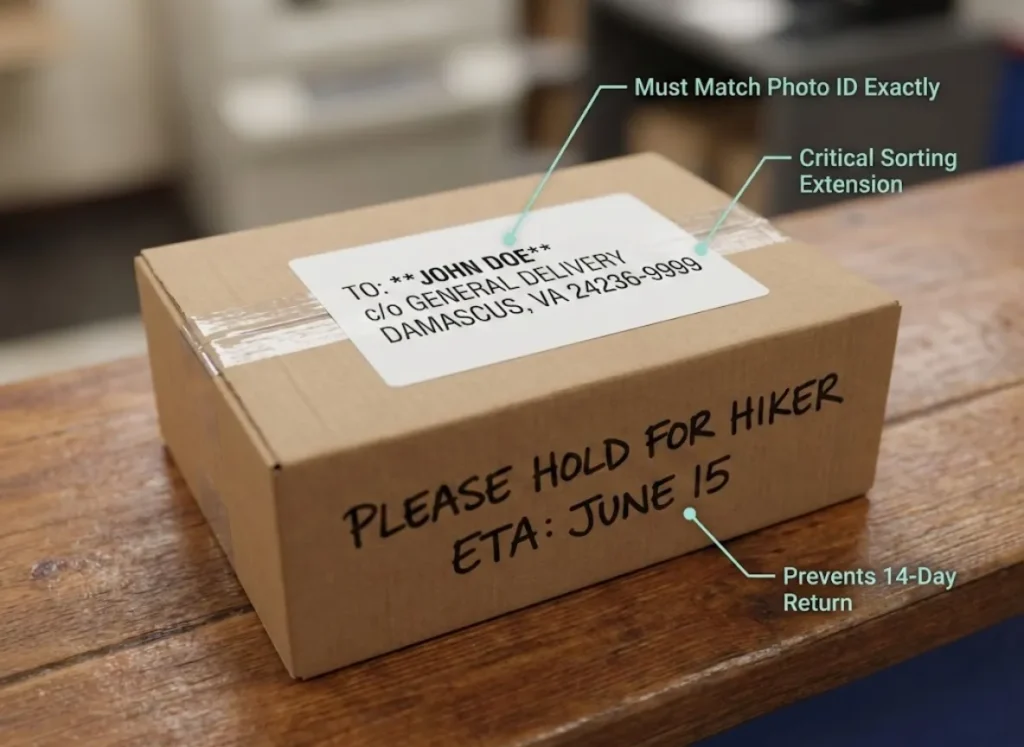
The “-9999” Zip Code extension is a specific signal to the sorting machines that this piece of mail is for General Delivery, reducing the chance of a far-away lost parcel. Always laminate the label with clear packing tape. A rain-smeared barcode or address is unreadable and renders the box “dead mail.” Refer to the USPS General Delivery Regulations for specific retention periods.
How do Lithium Battery regulations impact shipping times?
Modern hikers rely on lithium-ion power banks, such as the Nitecore NB10000. These are classified as Class 9 Hazardous Materials. Loose lithium batteries (those not installed in a device) are prohibited on passenger aircraft. This means they cannot be shipped via Priority Mail (Air) and must go via Surface Transportation.
If you place a power bank in a Priority box, it may be intercepted, diverted to ground trucks, and delayed by weeks. This will destroy your resupply timeline. Fuel canisters (isobutane) are flammable gases and are strictly prohibited in air mail. They must be shipped ground with “Consumer Commodity” labeling, though many clerks will refuse them entirely.
The strategic workaround is to never “bounce” power banks via Priority Mail. Carry them on your pack or buy new ones in town. Packages containing these items must have the appropriate HAZMAT markings to ensure they are routed through the ground network safely. This is critical for maintaining your backpacking solar panel setup and other electronics. For the definitive rules, consult USPS Publication 52 on Hazardous Materials.
Where Are the “Mandatory” Resupply Nodes?
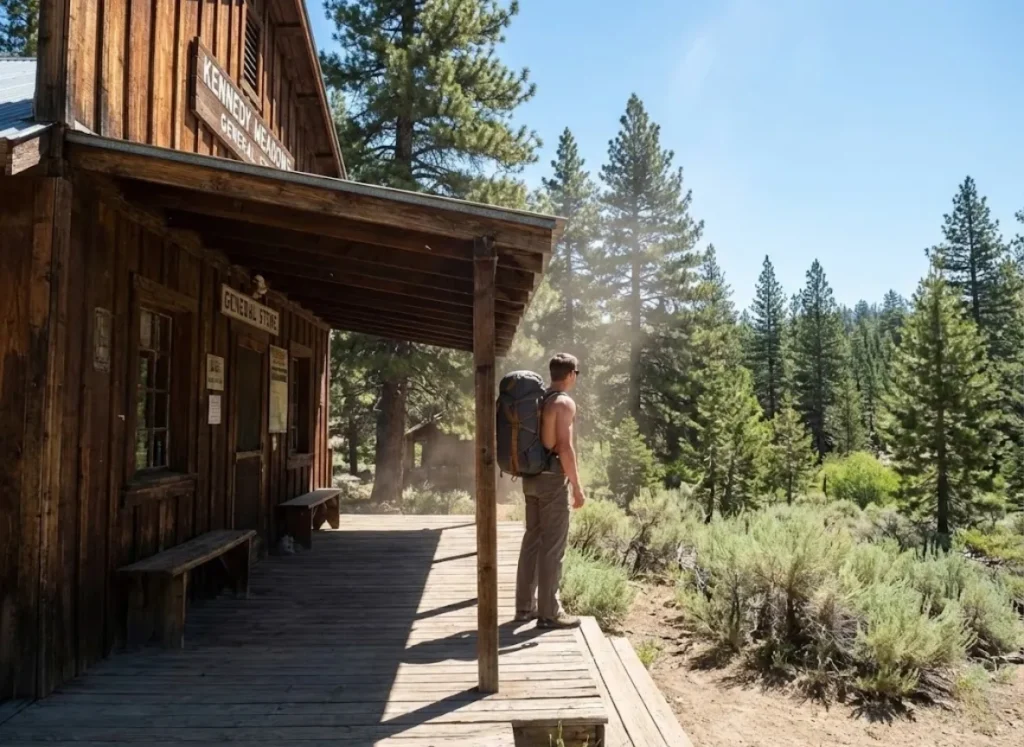
Once you have identified how to ship, you must determine where shipping is financially viable. You need to identify the specific geographical bottlenecks on the major trails (PCT, AT, CDT) where local resupply is either impossible or financially ruinous due to convenience store pricing.
Which locations act as logistical bottlenecks?
Stehekin, WA (PCT): Accessible only by foot or boat, the local store is a resort pantry with minimal inventory. A mail drop here is mandatory.
Kennedy Meadows South, CA (PCT): The gateway to the Sierra Section requires a “Gear Drop” (e.g., BV500 bear canister, Ice Axe) alongside food. Shipping to the General Store often incurs a handling fee.
Pie Town, NM (CDT): A classic “food desert” where the only local infrastructure is a cafe and a hostel. This requires a box sent to the local Post Office or the “Toaster House.”
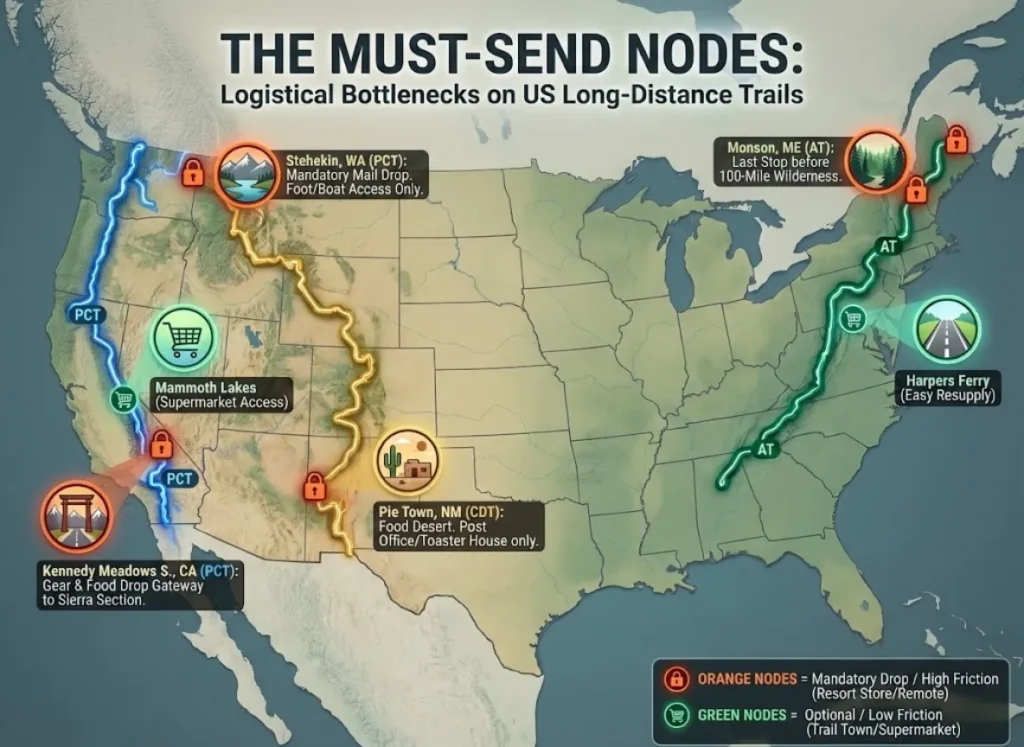
Monson, ME (AT): The last stop before the 100-Mile Wilderness. While resupply is possible at Shaw’s Hiker Hostel, many use this node to arrange a mid-wilderness food drop service.
You must distinguish between “Resort Stores” (high markup, low stock) and “Trail Towns” (supermarkets). Sending boxes to towns with full grocery stores (like Mammoth Lakes or Damascus) is usually a financial error. However, locations like Sierra City, Crater Lake, Snoqualmie Pass, or Standing Bear Farm often have high prices or poor selection, justifying a box.
Conversely, widely accessible stops like Warner Springs, Idyllwild, Tehachapi, Neels Gap, Delaware Water Gap, and Harpers Ferry have sufficient food availability or easy hitchhiking to supermarkets. Always verify the acceptable carriers for non-USPS locations (like hostels in Hikertown or Fontana Village), as they may require UPS or FedEx which cannot deliver to a PO Box.
Validating these remote locations is easier with the USDA Forest Service Pacific Crest Trail Overview or by consulting FarOut App guides and PCTA.org. Picking up your bear canister at Kennedy Meadows is the first step in mastering backcountry food safety for the Sierra section.
What Should Go Inside the Box?
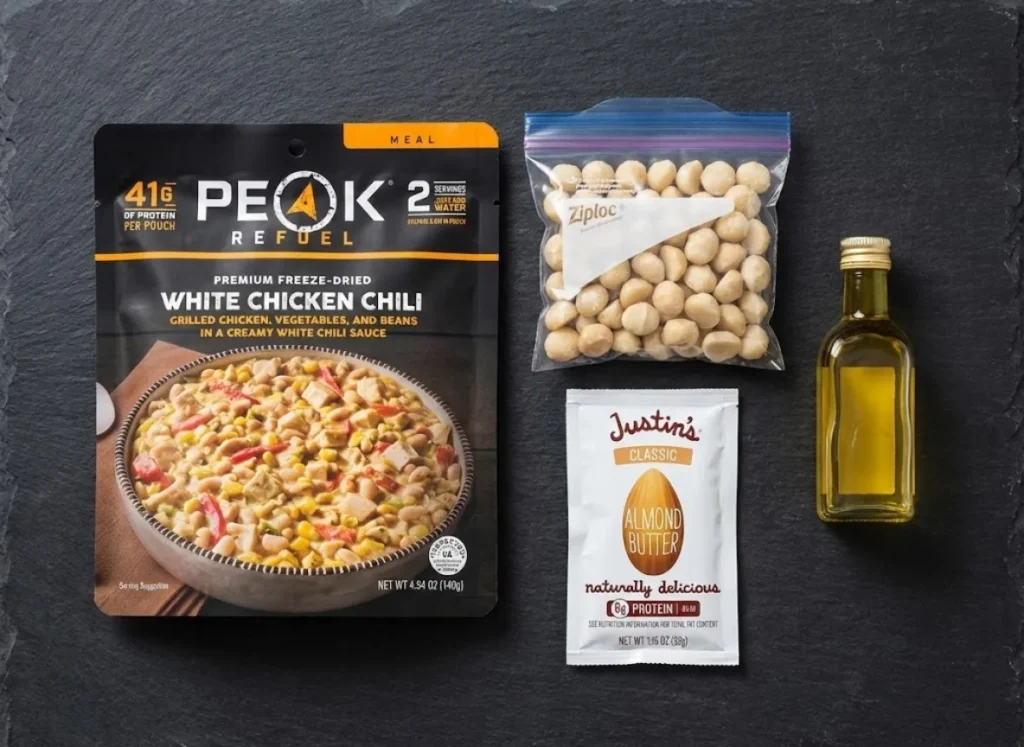
Even with a perfect box sent to the right place, you fail if you pay to ship “dead weight.” We must apply the mathematics of caloric density to packing flat lays.
How does Caloric Density determine what makes the cut?
The “Golden Rule” of resupply is the 125 kcal/oz threshold. Any food below this density is too heavy to carry efficiently and too expensive to ship relative to its energy value. Items like olive oil (240 kcal/oz), macadamia nuts (200 kcal/oz), and peanut butter (165 kcal/oz) are the cornerstones of a high-efficiency resupply package.

“Wet” foods like tortillas, tuna packets, or fresh fruit should be bought locally. Their water weight drastically lowers their caloric density. When shipping freeze-dried meals, prioritize brands like Peak Refuel over Mountain House, as the former typically offers higher protein and fat content per ounce.
Pro-Tip: Repackaging is mandatory. Remove all commercial cardboard and excess air, transferring food into Ziploc freezer bags or Mylar bags to maximize the volume constraints of the Large Flat Rate Box or Bear Canister.
Non-food logistics are equally important. Use the box to replenish “consumables” like toothpaste dots, contact lenses, and prescription medications that are hard to find in rural pharmacies. Verify your nutritional math using the USDA FoodData Central database. This calculation feeds directly into your broader trail nutrition matrix.
Conclusion
Logistics is the silent partner of every successful thru hike. By switching to USPS Ground Advantage, you secure lower rates and critical forwarding privileges. By labeling with precision—using your legal name and clear “ETA” markings—you prevent the disaster of a Returned-to-Sender box.
By strictly adhering to the 125 kcal/oz rule, you ensure your shipping budget translates directly into trail energy. Finally, by focusing your shipping efforts on bottlenecks like Stehekin, Kennedy Meadows, and Muir Trail Ranch, you maintain the flexibility to adapt to the terrain.
Start building your logistics plan today by mapping out your critical nodes using Google Sheets or Halfway Anywhere survey data. For more detailed breakdowns of trail-specific gear and advice, explore our comprehensive library of hiking guides.
FAQ – Frequently Asked Questions
Can I send fuel canisters in my resupply box?
No, you generally cannot ship fuel canisters via air (Priority Mail) as they are flammable gases. While limited quantities are technically allowed via surface mail with strict labeling, most post offices will refuse them; it is safer to buy fuel locally at campground stores.
What happens if I get to town and the Post Office is closed?
If you arrive on a Saturday afternoon or Sunday, you must wait until Monday morning to retrieve your General Delivery items. This Post Office Jail is a common occurrence that requires building buffer days into your schedule.
How long will the Post Office hold my General Delivery package?
Officially, the USPS holds General Delivery mail for 30 days. However, small trail post offices may have limited space and return packages sooner (e.g., 14 days), so always mark your box with Please Hold for Hiker and your ETA.
Is it cheaper to buy food in town or mail it?
It depends on the location. If the local markup is greater than 50% (e.g., a resort store or Mount Laguna), shipping is usually cheaper; if the markup is lower (e.g., a town with a supermarket), buying locally saves on postage and allows for crave-based shopping.
I've spent more than a decade researching hiking gear and trail technique. I read the specs, the forum threads and the long-term reviews, and every pick here comes with what it gets wrong.
End of the trail
You read every mile of this one. Here's where the trail goes next.