
The silence of the backcountry shifts from peaceful to predatory the moment a partner vanishes around a bend. In Glacier National Park, over 75% of search and rescue incidents involve parties that have split up, turning a collaborative adventure into a fragmented emergency.
Finding a hiking partner is not just about sourcing a hiking buddy for conversation; it is about vetting a teammate for survival.
As a mountaineering instructor, I teach students that a robust partnership is the most effective redundancy system a hiker can carry. Conversely, a mismatched alliance is a liability heavier than any pack. This guide will move you from the precarious “socializing” mindset to a professional technical compatibility framework for building a Risk Management Alliance. We will cover how to filter candidates through a standardized “hiking resume,” verify their claims with data, and establish the safety protocols that keep you both alive.
Where is the best place to find a compatible hiking partner? (Discovery)
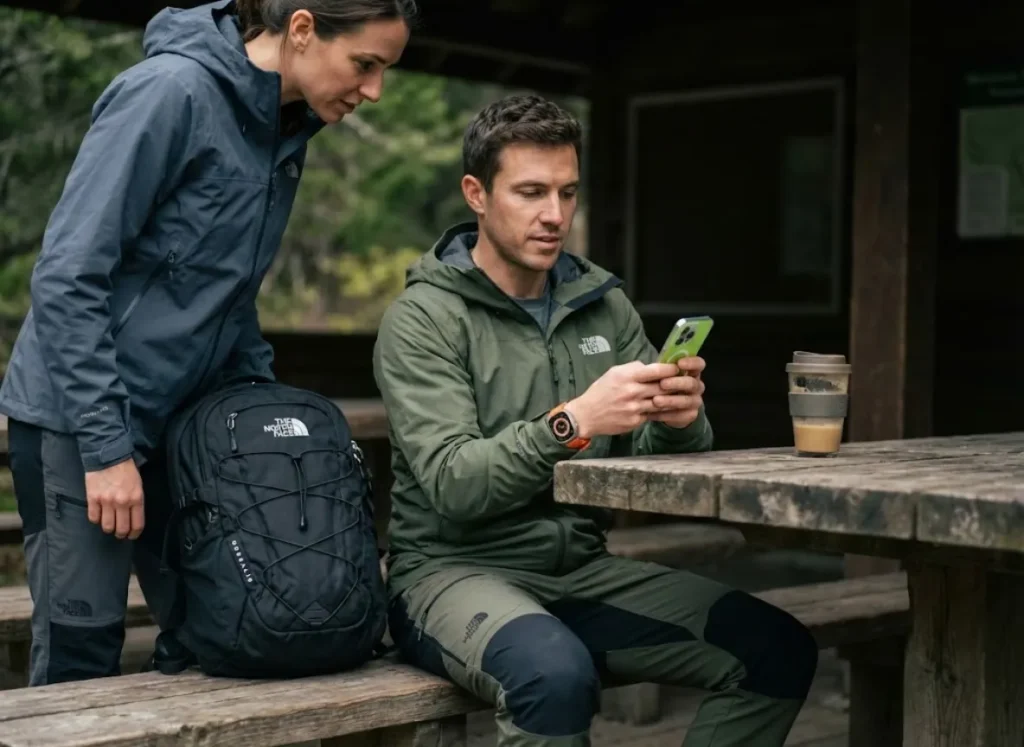
The first step is identifying where serious outdoor enthusiasts congregate. You must distinguish between open marketplaces, where anyone can post a profile, and vetted institutions that require commitment.
Are digital apps effective for finding serious hiking partners?
Digital platforms function as the “open marketplace” of hiking. They offer high volume but require the most rigorous personal vetting. Social-centric apps like Meetup and Boo are excellent for finding local hiking groups but often lack technical filters for pace or skill. While Meetup.com is the most active place online to find hiking partners, you must treat profiles as marketing brochures. Terms like “expert” or “fast” are subjective and unverified without hard data.
Outdoor & Social Safety Comparison
Reviewing top platforms for community vetting and excursion security
Vetting Features
Personality-based matching systems and integrated social universe features for community interaction.
Best For
Performing deep “vibe checks” and ensuring psychological social compatibility before meeting up.
Vetting Features
Data-backed activity tracking and verified athlete profiles to confirm genuine fitness history.
Best For
Athlete verification and matching with others based on similar performance and fitness levels.
Vetting Features
Social-based group RSVP systems and public community reviews of organizers and events.
Best For
Group safety and organizing large-scale community outings where multiple eyes provide security.
Vetting Features
Institutional oversight with certified trip leaders and required formal training for organizers.
Best For
Ensuring “guided safety” during expert-led excursions and high-risk wilderness activities.
Performance-centric platforms like Strava, Gaia GPS, and AllTrails offer a layer of “Data-Verification” that social apps lack. Before agreeing to a hike, audit a potential partner’s “Clubs” or recent activity logs. This allows you to see objective evidence of their mileage, elevation gain, and frequency of travel. Using the “Flyby” feature or community lists transforms a blind date into an informed decision based on historical performance metrics.
You can also scour Facebook groups or Reddit r/hiking for local hikers, but apply extreme caution. While these mobile apps provide a broad net, they often lack the structural safety nets found in established organizations. Search and rescue trends associated with recreational travel indicate that disjointed groups formed in unregulated environments face higher risks. This makes using the best hiking apps of 2025 not just a matter of navigation, but of vetting capability.
How do traditional outdoor clubs differ from online apps?
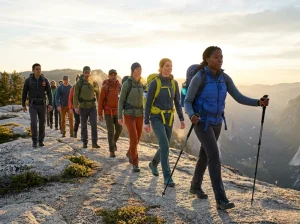
Institutional clubs like the Sierra Club, Appalachian Mountain Club (AMC), The Mountaineers, and the Mazamas offer a “walled garden” approach. These organizations typically require membership fees and liability waivers, which act as an initial filter for commitment. Trips are often led by trained volunteers who have undergone certification in Wilderness First Aid (WFA) and outing leadership.
The primary advantage here is the standardized activity rating system. A “Moderate” hike is defined by specific mileage and elevation metrics, ensuring all participants—whether engaging in day hikes or training for thru-hiking—are physically aligned. This removes ambiguity. You effectively outsource the initial stage of vetting to the institution. This allows you to focus your energy on social compatibility rather than worrying if your partner can physically handle the terrain you’d find when trying to find amazing local hikes.
For those focused on specific long-distance trails, the Pacific Crest Trail Association (PCTA) or Appalachian Trail Conservancy also foster communities where serious backpackers connect.
Where can marginalized hikers find safe and inclusive communities?
For BIPOC, LGBTQ+, and female hikers, social safety in hiking often encompasses protection from harassment and discrimination, not just terrain hazards. Affinity groups like Outdoor Afro, Unlikely Hikers, and The Venture Out Project prioritize “Psychological Safety” as a prerequisite for physical adventure. These communities often employ leaders trained specifically in inclusion and conflict resolution.
Vetting in this context involves aligning on values and conduct. It ensures partners respect pronouns, pacing needs, and lived experiences. The “No Hiker Left Behind” ethos is often strictly enforced here. This contrasts with the competitive “summit fever” sometimes found in general population groups.
Pro-Tip: Review an organization’s volunteer leader training requirements before joining. High-quality groups are transparent about how their leaders are selected and trained to manage group dynamics.
Specific female-centric groups like Explorer Chick and Women Who Hike also provide structured environments. Participating in these groups allows hikers to build a “Tramily” (Trail Family) where vulnerability is met with support. This creates the ideal environment for applying hiking beginner tips without fear of judgment.
How should I evaluate a potential partner’s capability? (Vetting)
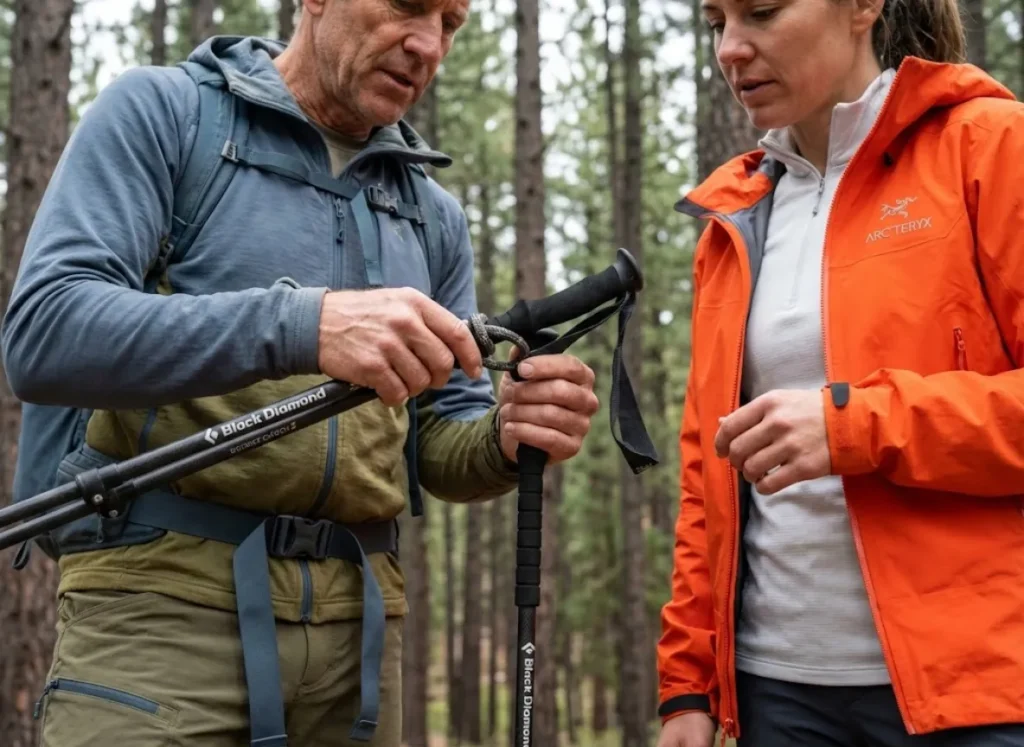
Once you have identified a potential candidate, you must move from subjective “getting to know you” chat to objective “technical interviewing.” Consider this your hiking partner master-guide to filtering.
What is a “Hiking Resume” and why do I need one?
A Hiking Resume is a standardized dataset that partners exchange to objectively verify compatibility. It replaces vague terms like “fit” or “experienced” with numbers. Essential data fields include Base Pace (mph on flats), Climbing Pace (vertical feet/hour), and Max Daily Mileage in the last six months.
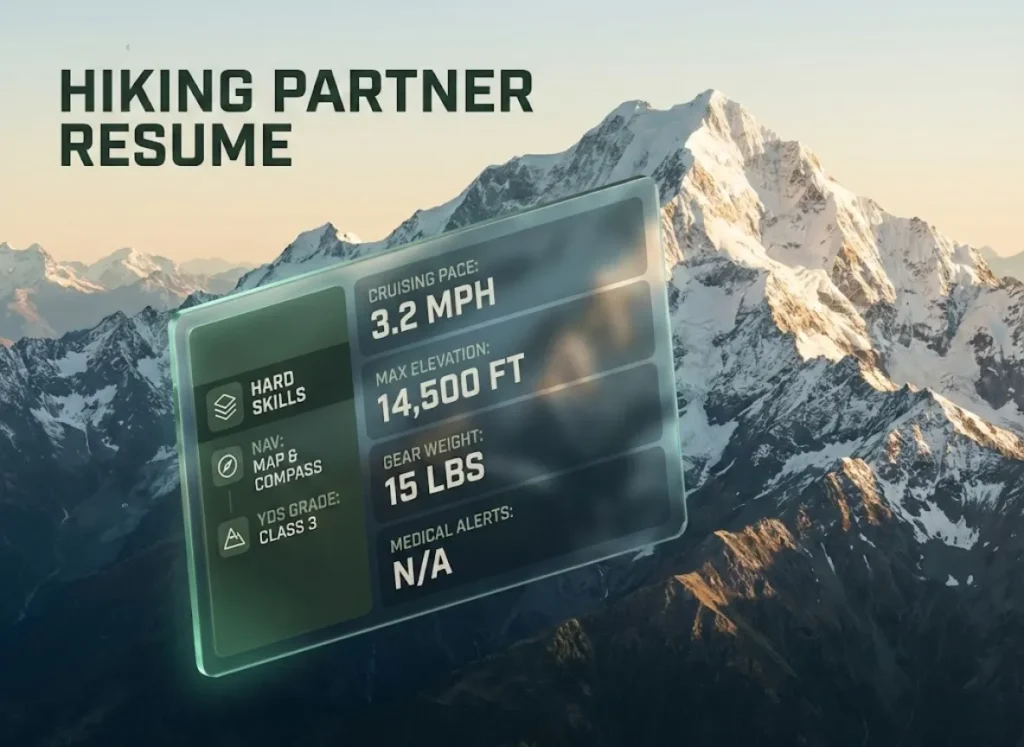
It must also list “Hard Skills,” such as navigation proficiency (map vs. app), technical skill grading (YDS Class 1-3), and medical certifications. The resume acts as a filter for the Dunning-Kruger effect, where incompetent hikers overestimate their abilities. It forces a discussion on medical history, revealing critical info like allergies or conditions that create a “duty of care.”
Using a template similar to a model mountaineering resume template professionalizes the interaction. It signals that you take safety first seriously. This transparency is vital, as knowing your partner’s medical background is as important as carrying a Wilderness First Aid pocket guide.
How can I objectively verify a partner’s hiking pace?
Pace mismatch is a leading cause of group outing separation. Therefore, pace must be calculated, not guessed. Naismith’s Rule provides the standard formula: Allow one hour for every 3 miles of forward travel, plus one hour for every 2,000 feet of ascent.
Ask partners, “What is your offset to Naismith?” A strong answer is specific: “I hike 20% faster than Naismith” or “I add 30% for breaks.” Verification involves cross-referencing their claimed pace with digital footprints. Look for consistency over time. A single fast hike might be an anomaly, whereas a rolling average provides a reliable “Cruising Pace.”
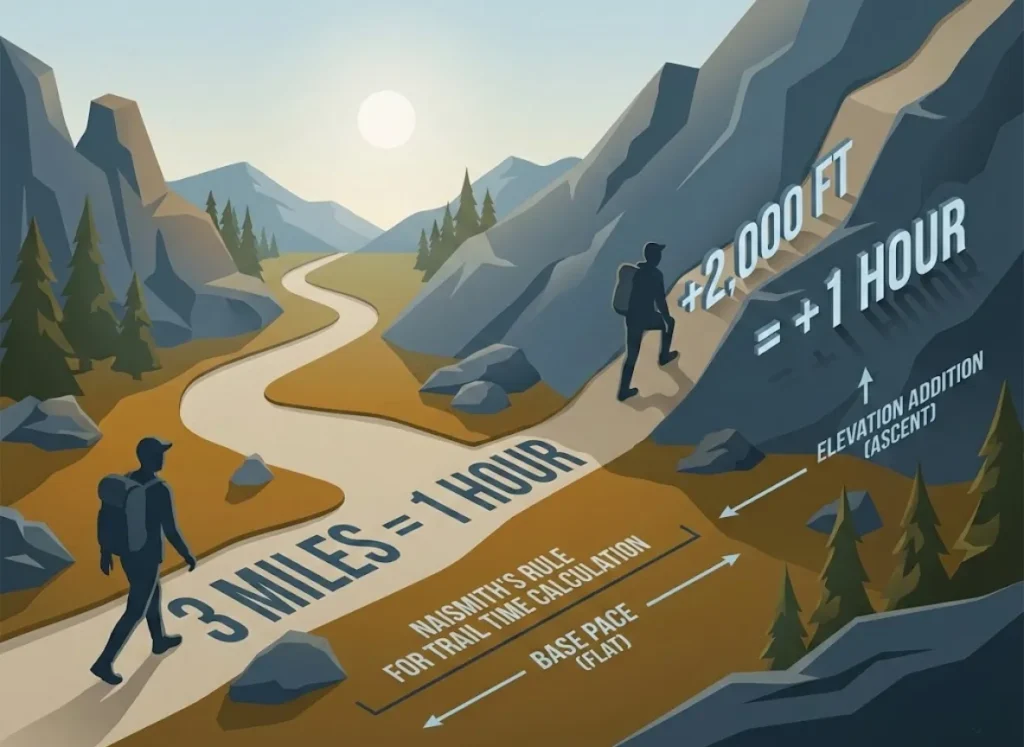
If digital data is unavailable, the “Talk Test” during a shakedown hike is the ultimate validator. Can they speak in sentences while climbing? This physical reality check confirms the theoretical calculation of hill walking time. You can learn more about applying this math on the trail in our guide on how to calculate hiking time.
What specific questions reveal “Red Flags” before the hike?
The “Vetting Script” consists of probing questions designed to reveal risk tolerance and ego. Ask: “What is your typical turnaround time philosophy?” or “How do you handle pace alignment?” Any answer other than “We slow to the slowest hiker” is a major safety red flag.
“What is in your pack right now?” reveals preparedness. Vague answers about “traveling light” may indicate a reliance on the partner for the 10 Essentials. Beware of the “Summit Fever” profile—partners who express frustration with “giving up” or boast about conquering dangerous wilderness areas regardless of conditions.
Listen for dismissal of safety concerns. This indicates a breakdown in the communication hierarchy essential for risk management. Mortality data and safety trends often highlight young males and falls as key risks, frequently exacerbated by ego. Understanding this mindset is part of a broader hiker’s guide to trail psychology.
What safety protocols govern the first meeting? (Validation)
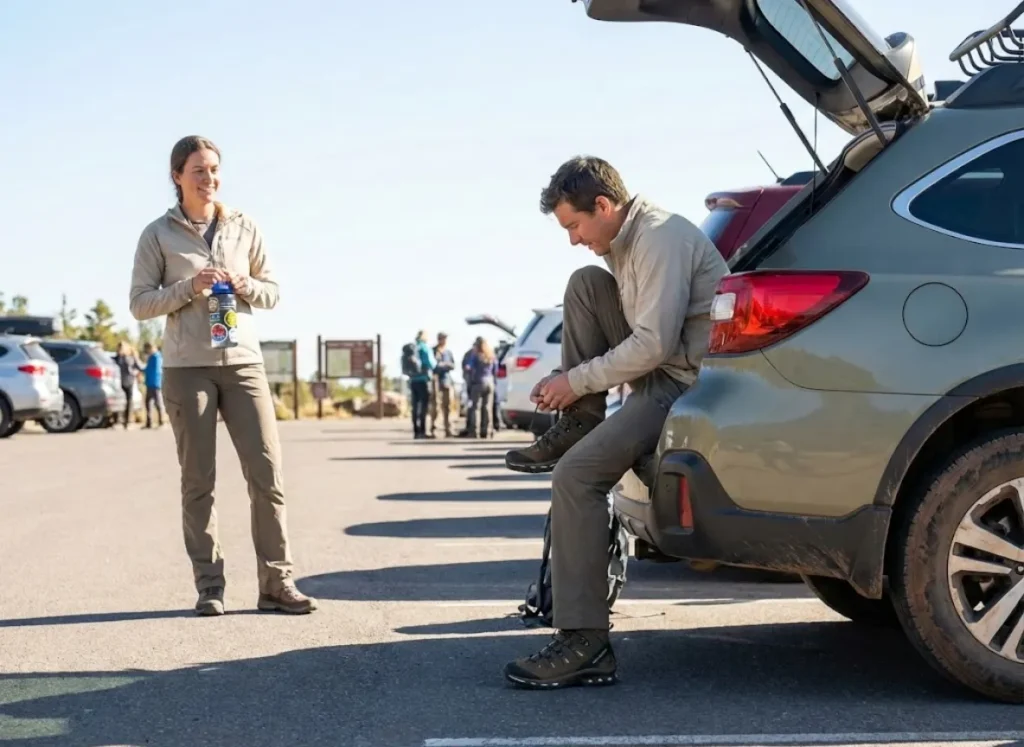
Physical metrics are measurable, but psychological incompatibility is often invisible until the pressure mounts. You need a controlled environment to test the waters of this digital-to-irl connection.
How do I structure a safe “First Date” with a stranger?
The “Coffee Test” is the mandatory first step. Meet in a public, neutral location like a gear shop or coffee house to assess “vibes” and inspect gear. Following a successful meet, schedule a “Shakedown Hike.” This should be a short (<5 miles), local, high-traffic trail with full cell service.
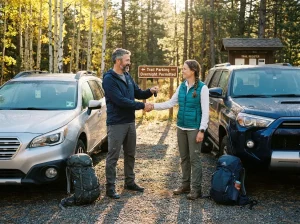
Drive separate cars to the trailhead. This ensures an immediate “escape route” if the partner exhibits unsafe or predatory behavior. Establish a formal trip planning guide and emergency contacts with a trusted person at home. Include the partner’s name, vehicle description, and a specific “Panic Time” for calling 911.
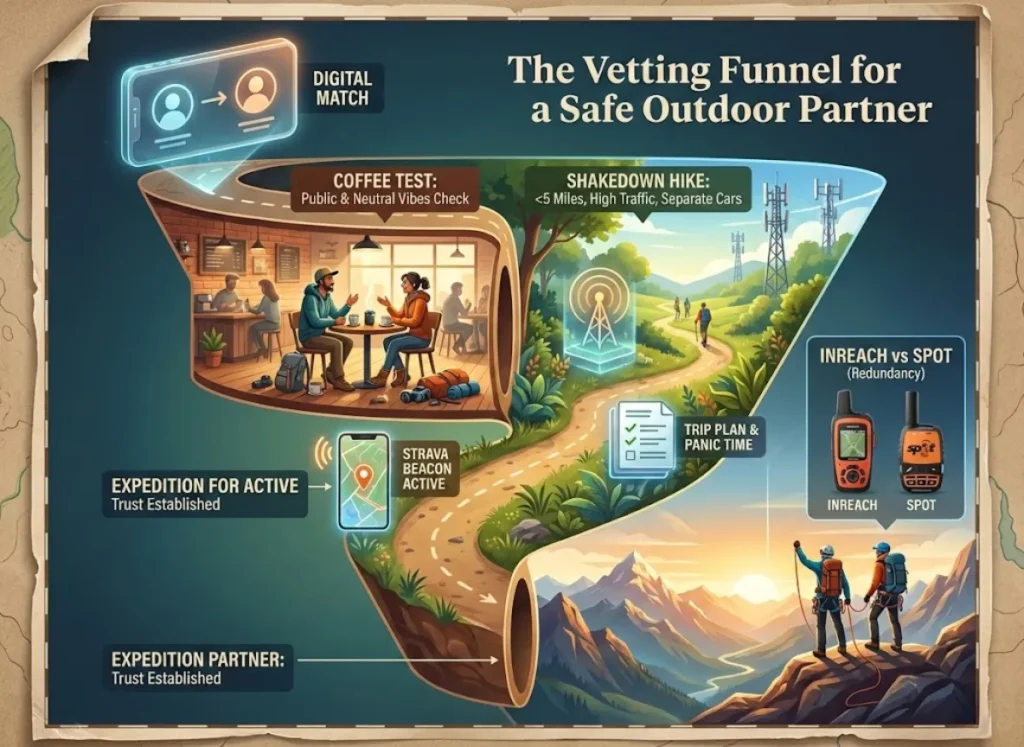
Use technology like Cairn or Strava Beacon to broadcast real-time location. During the hike, test communication dynamics. Does the partner wait at junctions? Do they ask before taking a break? These micro-behaviors predict macro-behavior in a crisis. When venturing further out, consider hardware redundancy like inReach vs SPOT to ensure you stay connected.
What rules keep the partnership safe on the trail? (Execution)
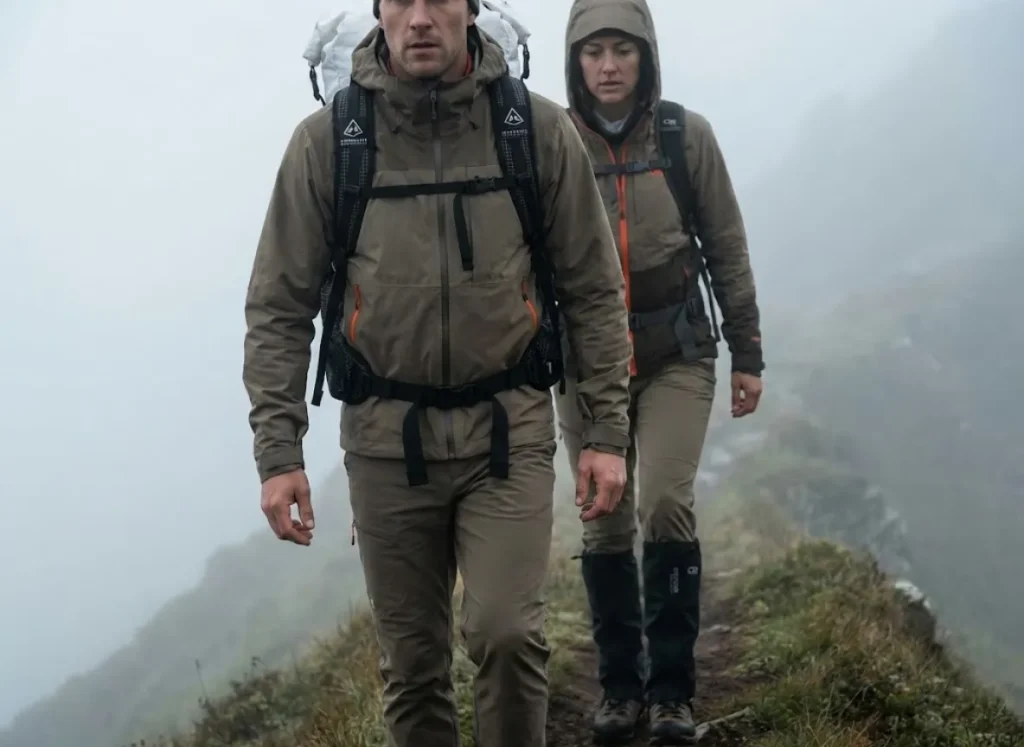
With the partnership validated, the final step is committing to the cardinal rule of wilderness travel.
Why is the “Stay Together” mandate critical for survival?
The most dangerous moment in a hike is the decision to split up. The “Phantom Partnership” occurs when a faster hiker moves ahead to wait. During that gap, the slower hiker loses the navigational redundancy of the group.
The partnership must operate under an explicit contract: “We hike at the pace of the slowest member,” or “We maintain visual contact at all times.” “Junction Waiting” is a failed strategy if the slower hiker takes a wrong turn before the junction. Line-of-sight is the only fail-safe.
In the event of an injury or fatigue, the group must self-arrest and descend together. Leaving an injured person alone to “get help” is a last-resort measure. Hiking safety and separation statistics from Glacier National Park reinforce that separation is the precursor to disaster.
Pro-Tip: Gear redundancy matters. If one person carries the tent and the group splits, the other risks exposure death. Ensure critical survival gear is distributed or duplicated.
If you violate this mandate, you risk becoming lost, injured, or stuck.
Conclusion
A hiking partner is a redundant safety system; treat the selection process with the rigor of a technical interview. Use the “Hiking Resume” and Naismith’s Rule to replace subjective claims with objective data regarding ascent speed and skill. While digital apps offer volume, institutional clubs and affinity groups offer pre-vetted safety structures and inclusivity.
Never compromise on the “Stay Together” mandate. Maintaining proximity is the single most effective action to prevent Search and Rescue incidents.
Download our free “Hiking Partner Vetting Script” template below to professionalize your next meetup, or explore our guide on Wilderness First Aid to ensure you are the kind of partner others can trust.
FAQ – Frequently Asked Questions about Finding Hiking Partners
Is it safe to use dating apps like Boo or Tinder to find hiking partners?
While possible, it requires extra caution as the primary intent of these apps is dating, which can blur boundaries. Always verify their hiking specific skills using a third-party data source like Strava and strictly adhere to public first-hike safety protocol standards.
What should I do if my hiking partner is much slower than they claimed?
You must immediately adjust your pace to match theirs and stick together for the remainder of the hike. Do not split up; after the hike, politely debrief the mismatch and decline future high-consequence trips with them.
How can I find hiking groups for women or LGBTQ+ hikers?
Search for specific affinity organizations like Women Who Hike, Explorer Chick, or The Venture Out Project. These groups have established vetting procedures and codes of conduct specifically designed to create safe, inclusive environments.
Who is responsible for rescue costs if my partner gets injured?
In many jurisdictions (like New Hampshire), the individual—or the negligent leader—can be billed for rescue costs. This highlights the importance of vetting your partner’s insurance (like a Hike Safe card) and preparedness before leaving the trailhead.
I've spent more than a decade researching hiking gear and trail technique. I read the specs, the forum threads and the long-term reviews, and every pick here comes with what it gets wrong.
End of the trail
You read every mile of this one. Here's where the trail goes next.