In this article
I stood at a gear shop last spring holding two tents — one labeled “lightweight” at 3 lbs 4 oz, the other “lightweight” from a different brand at 4 lbs 6 oz. Same word, different planet. That’s when I realized tent weight categories mean whatever each manufacturer wants them to mean, and the only way to actually compare is to understand what the numbers hide.
This guide breaks down every tent weight category, explains why the number on the spec sheet isn’t the number on your back, and gives you a real comparison chart so you can pick the right shelter for how you actually hike.
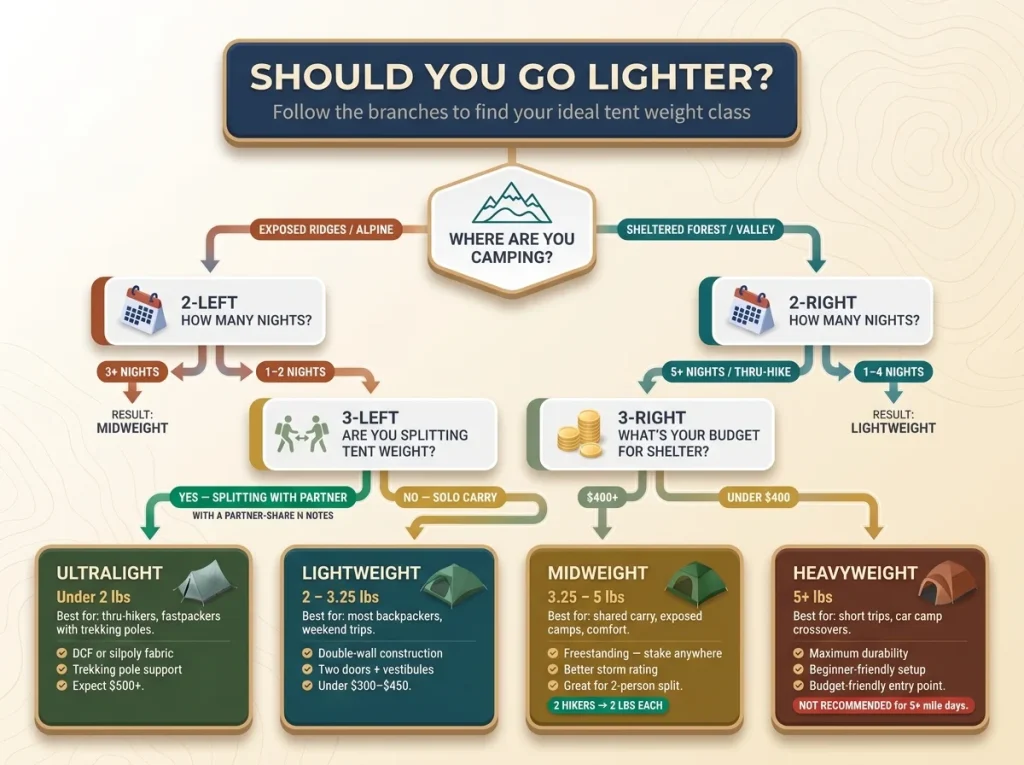
Here’s how the four main tent weight categories compare for two-person, three-season backpacking tents:
| Backpacking Tent Weight Categories | |||
|---|---|---|---|
| Category | Trail Weight Range | Example Models | Best For |
| Ultralight | Under 2 lbs | Zpacks Duplex, Six Moon Designs Lunar Solo | Thru-hikers, fastpackers, gram-conscious backpackers |
| Lightweight | 2–3.25 lbs | Big Agnes Tiger Wall UL2, Nemo Hornet Osmo 2P | Weekend warriors who want low weight without major tradeoffs |
| Midweight | 3.25–5 lbs | Nemo Dagger Osmo 2P, MSR Hubba Hubba LT 2 | Hikers who prioritize livability and storm protection |
| Heavyweight | 5+ lbs | REI Co-op Half Dome 2, Marmot Tungsten 2P | Car camping crossovers, base camp setups, beginners |
What the Four Weight Categories Actually Mean
Ultralight — Under 2 Pounds
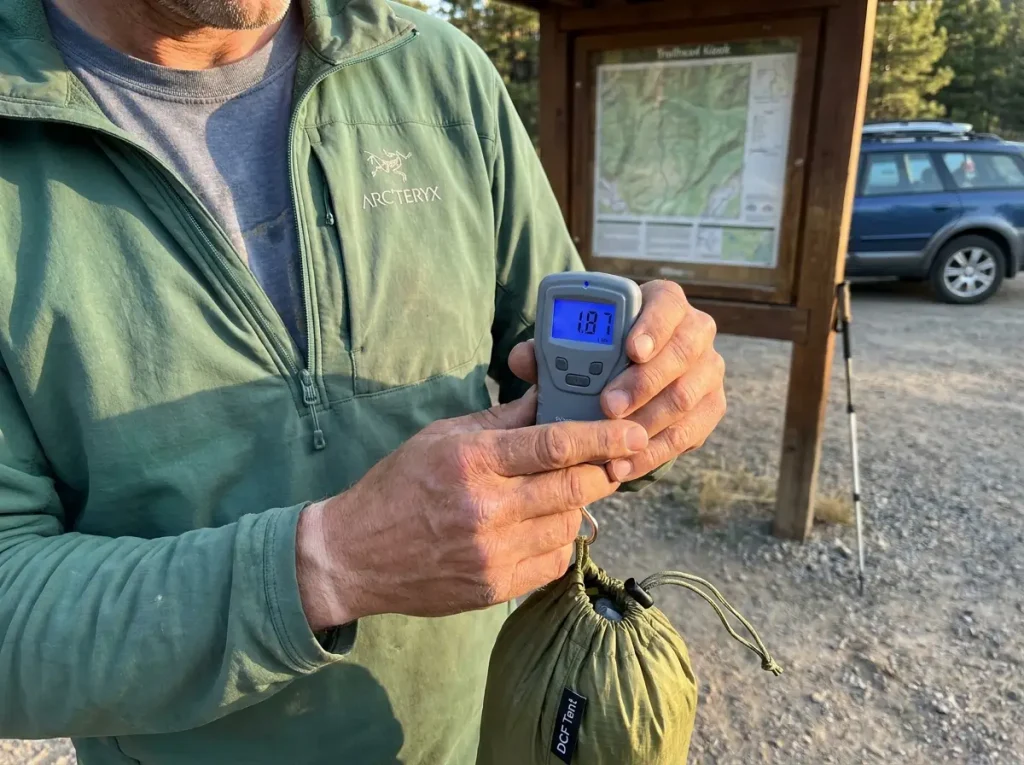
Ultralight tents trade every comfort for ounce savings. Most use DCF (Dyneema Composite Fabric) or ultra-thin silpoly with trekking pole support instead of dedicated tent poles. You get a roof over your head and not much else. The Zpacks Duplex at 19.4 oz and the Six Moon Designs Lunar Solo at 26 oz are benchmarks here.
The catch: you need trekking poles to pitch most of these. No poles in your kit means no shelter. And condensation management in single-wall designs requires leaving vents open, which means trading waterproofness for breathability.
Pro tip: If you’re considering an ultralight shelter, test it in your backyard on a rainy night before committing to a 5-day trip. The first time you wake up with condensation dripping on your face shouldn’t be 15 miles from the trailhead.
Lightweight — 2 to 3.25 Pounds
This is the sweet spot for most backpackers. Lightweight tents like the Big Agnes Tiger Wall UL2 (2 lbs 8 oz) and the Nemo Hornet Osmo 2P (2 lbs 8 oz) give you a freestanding or semi-freestanding design with double-wall construction. That means a separate rainfly and mesh inner, which handles condensation far better than single-wall options.
You still get two doors and two vestibules in this range, which makes a real difference when you’re sharing a tent. The weight penalty over ultralight is roughly 8–16 oz — about the weight of a full water bottle — but the livability jump is enormous.
Midweight — 3.25 to 5 Pounds
Midweight tents are where comfort stops being a compromise. The Nemo Dagger Osmo 2P (3 lbs 15 oz) and MSR Hubba Hubba LT 2 (3 lbs 6 oz) offer generous headroom, bomber storm protection, and fabrics thick enough to survive getting dragged across granite without developing holes.
If you hike with a partner who splits tent weight, a 4 lb tent means 2 lbs each — lighter per person than most ultralight solo shelters. That math changes the entire equation.
Heavyweight — 5 Pounds and Up
The REI Co-op Half Dome 2 at 5 lbs 15 oz and the Marmot Tungsten 2P at 5 lbs 14 oz live here. These are not backpacking tents in the traditional sense — they’re camp tents that some people carry on trails. Interior space is generous, fabrics are durable, and setup is dead simple.
For short overnight hikes under 5 miles, the weight penalty barely registers. For anything longer, you’re carrying the equivalent of three extra Nalgene bottles on your back, and your knees will tell you about it around mile 8.
Packaged Weight vs Trail Weight vs Minimum Weight
Why Three Numbers Exist
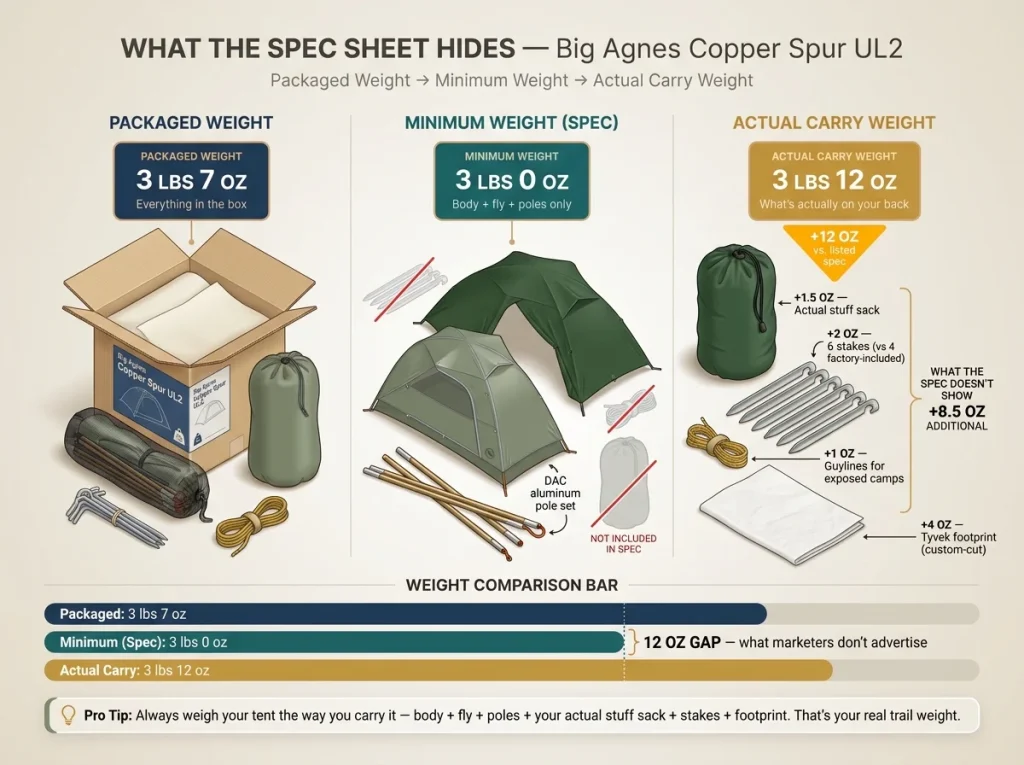
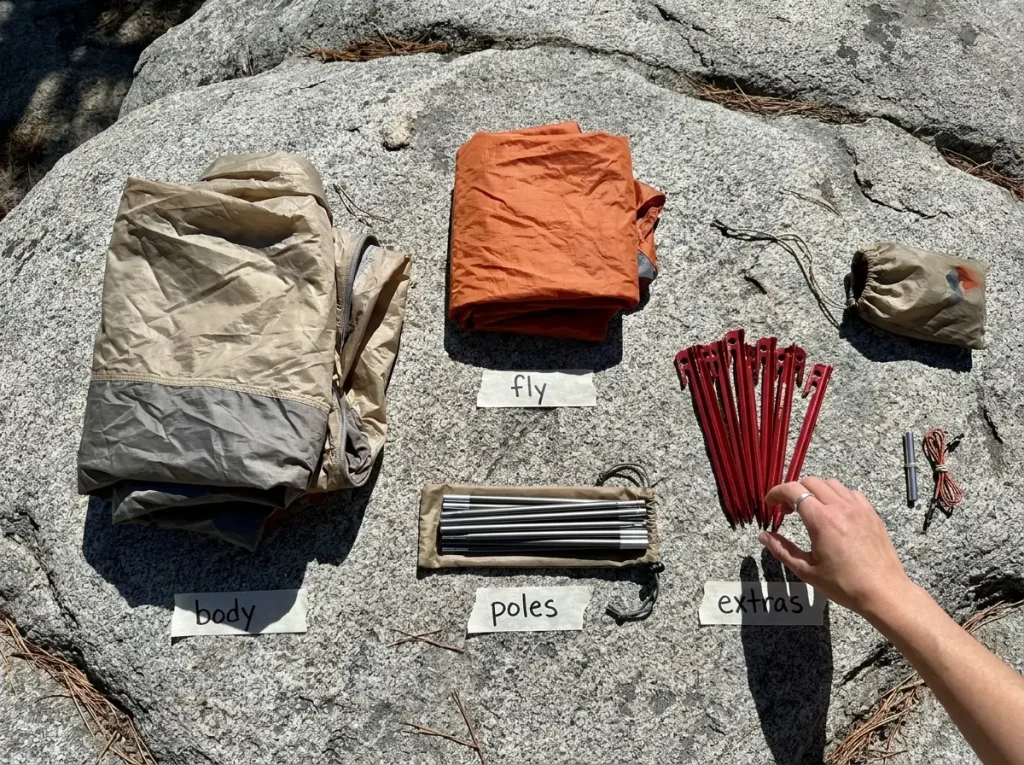
Every tent comes with at least two weight specs, and most brands pick whichever one sounds lighter for the headline. Packaged weight includes everything in the box — tent body, rainfly, poles, stakes, guylines, stuff sack, pole repair splint, and sometimes a footprint. Minimum weight strips it down to just the body, fly, and poles. Trail weight is supposed to be minimum weight plus the essential stakes needed to pitch, but there’s no standardized definition across the industry.
The difference between packaged weight and minimum weight runs 5–8 oz for a typical two-person tent. That’s the weight of a large apple — not insignificant when you’re counting grams.
Which Number to Use for Cross-Brand Comparison
Minimum weight is the only fair comparison metric. It removes variables like how many stakes a brand includes (some pack 8, some pack 12) or whether a footprint comes in the box. When you see a tent marketed as “2 lbs 14 oz,” check whether that’s minimum or trail weight. It’s almost always the lighter number.
Pro tip: Before you buy, search the tent model name plus “actual weight” on Reddit. Backpackers with kitchen scales have weighed almost every popular tent, and the real numbers are often 2–4 oz above the published minimum weight.
The Footprint Factor
Here’s the part nobody mentions: if you carry a tent footprint, you’re adding 3–8 oz that doesn’t appear in any spec. A Tyvek ground sheet for a 2P tent weighs about 4 oz. A branded footprint can hit 8 oz. That weight exists in your pack whether or not it exists on the spec sheet.
Tent Weight Comparison Chart by Category
Two-Person Three-Season Tents
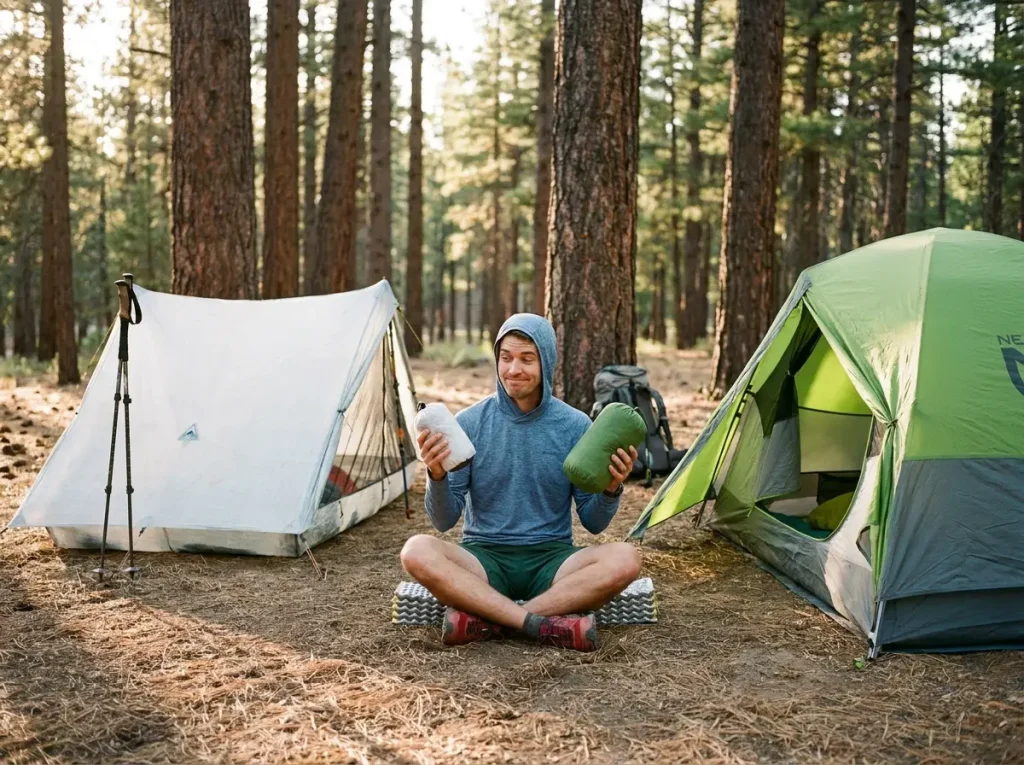
This is the chart you actually need — specific models organized by weight category with the numbers that matter.
| Best Backpacking Tents: Weight & Specs Comparison | |||||
|---|---|---|---|---|---|
| Model | Category | Min Weight | Packed Weight | Fabric | Structure |
| Zpacks Duplex | Ultralight | 1 lb 3.4 oz | 1 lb 6 oz | DCF | Trekking pole |
| Six Moon Designs Lunar Solo | Ultralight | 1 lb 10 oz | 1 lb 14 oz | Silpoly | Trekking pole |
| Big Agnes Tiger Wall UL2 | Lightweight | 2 lb 8 oz | 2 lb 14 oz | Silpoly/mesh | Semi-freestanding |
| Nemo Hornet Osmo 2P | Lightweight | 2 lb 8 oz | 3 lb 1 oz | Osmo ripstop | Semi-freestanding |
| Durston X-Mid 2P | Lightweight | 2 lb 10 oz | 3 lb 0 oz | Silpoly | Trekking pole |
| MSR Hubba Hubba LT 2 | Midweight | 3 lb 6 oz | 3 lb 14 oz | Ripstop nylon | Freestanding |
| Nemo Dagger Osmo 2P | Midweight | 3 lb 15 oz | 4 lb 7 oz | Osmo ripstop | Freestanding |
| Big Agnes Copper Spur UL2 | Midweight | 3 lb 0 oz | 3 lb 7 oz | Silpoly/mesh | Freestanding |
| REI Co-op Half Dome 2 | Heavyweight | 5 lb 3 oz | 5 lb 15 oz | Ripstop nylon | Freestanding |
| Marmot Tungsten 2P | Heavyweight | 5 lb 2 oz | 5 lb 14 oz | Polyester | Freestanding |
One-Person Tents
Solo hikers have more options at the ultralight end because a single occupant means less fabric, fewer poles, and a simpler design.
| Ultralight & Lightweight Backpacking Tents | ||||
|---|---|---|---|---|
| Model | Category | Min Weight | Fabric | Structure |
| Zpacks Plexamid | Ultralight | 14.8 oz | DCF | Trekking pole |
| Gossamer Gear The One | Ultralight | 1 lb 7 oz | Silpoly | Trekking pole |
| Tarptent ProTrail Li | Ultralight | 1 lb 2 oz | DCF | Trekking pole |
| Big Agnes Fly Creek UL1 | Lightweight | 2 lb 1 oz | Silpoly | Semi-freestanding |
| MSR FreeLite 1 | Lightweight | 2 lb 4 oz | Ripstop nylon | Freestanding |
Capacity Scaling Pattern
A consistent pattern shows up when you compare across capacities: each additional person adds roughly 1–1.5 lbs within the same tent line. The Big Agnes Copper Spur UL1 weighs 2 lbs 5 oz, the UL2 weighs 3 lbs 0 oz, and the UL3 weighs 3 lbs 12 oz. That’s about 12 oz per added person — a predictable tax that helps you estimate weights for tent lines you haven’t weighed yet.
What Makes a Tent Light — Fabrics Poles and Design
Fabric Weight Is Where the Real Savings Live
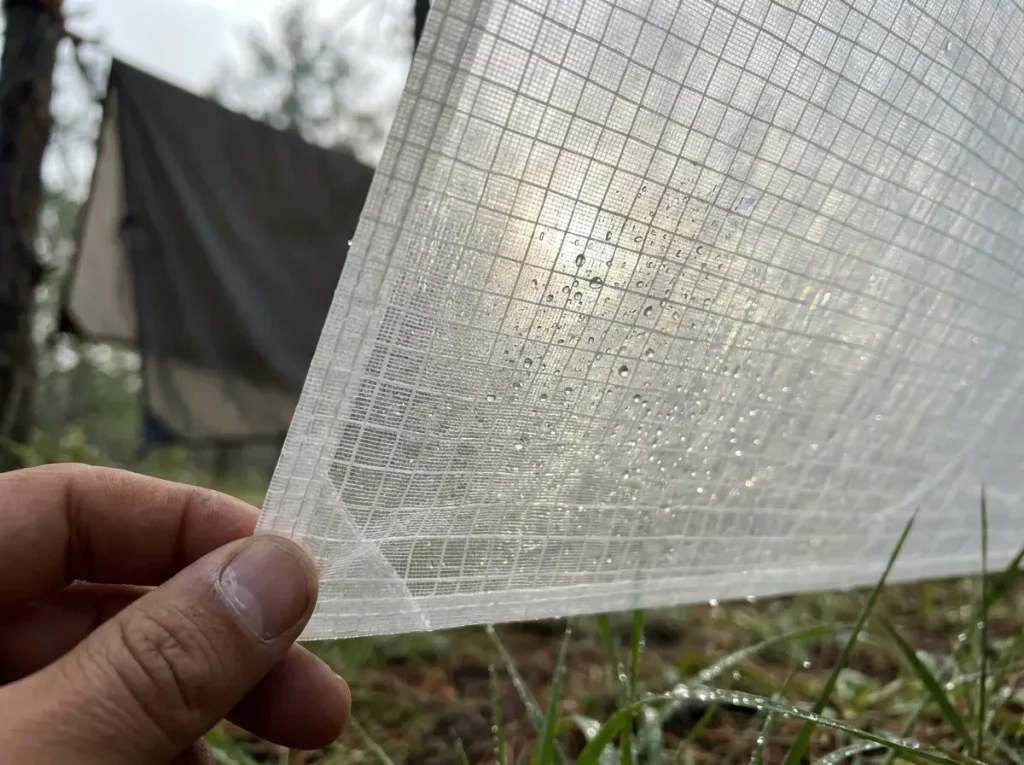
DCF (Dyneema Composite Fabric) weighs 0.34–1.0 oz per square yard. Silpoly and silnylon both run 1.1–1.3 oz per square yard. That means DCF cuts fabric weight roughly in half, which is why a DCF tent like the Zpacks Duplex can hit 19 oz while a silpoly design of similar size weighs 26+ oz.
The tradeoff: DCF costs 3–5× more than silpoly, doesn’t stretch (which means it can’t absorb shock loads the way nylon does), and develops micro-punctures over time. Silpoly holds shape better than silnylon in rain (less stretch, less sag), resists UV degradation better, and costs a fraction of DCF. For most hikers, silpoly is the fabric that actually makes sense.
Poles — Aluminum vs Carbon Fiber
DAC aluminum poles weigh 14–18 oz for a 2P tent frame. Carbon fiber saves 4–6 oz. But carbon poles snap under lateral stress — the kind you get when wind hits a tent broadside or when you accidentally step on a pole segment. Most guides and thru-hikers carry aluminum and accept the weight penalty because a broken pole at 11,000 feet isn’t a minor inconvenience.
Trekking pole designs eliminate dedicated tent poles entirely, saving 10–18 oz. The catch is that your trekking poles become your tent poles, so you can’t use them while your tent is pitched. Need to make a midnight bathroom trip? You’re crawling.
Design Geometry
Freestanding tents use crossing pole arcs and stand without stakes. Non-freestanding designs need stakes and tension to hold shape. Freestanding adds 8–16 oz in pole weight but lets you pitch on rock slabs, wooden platforms, or hard-packed dirt where stakes won’t penetrate. Non-freestanding saves the weight but demands stakeable ground.
When a Heavier Tent Is the Smarter Choice
Wind Exposure Above Treeline
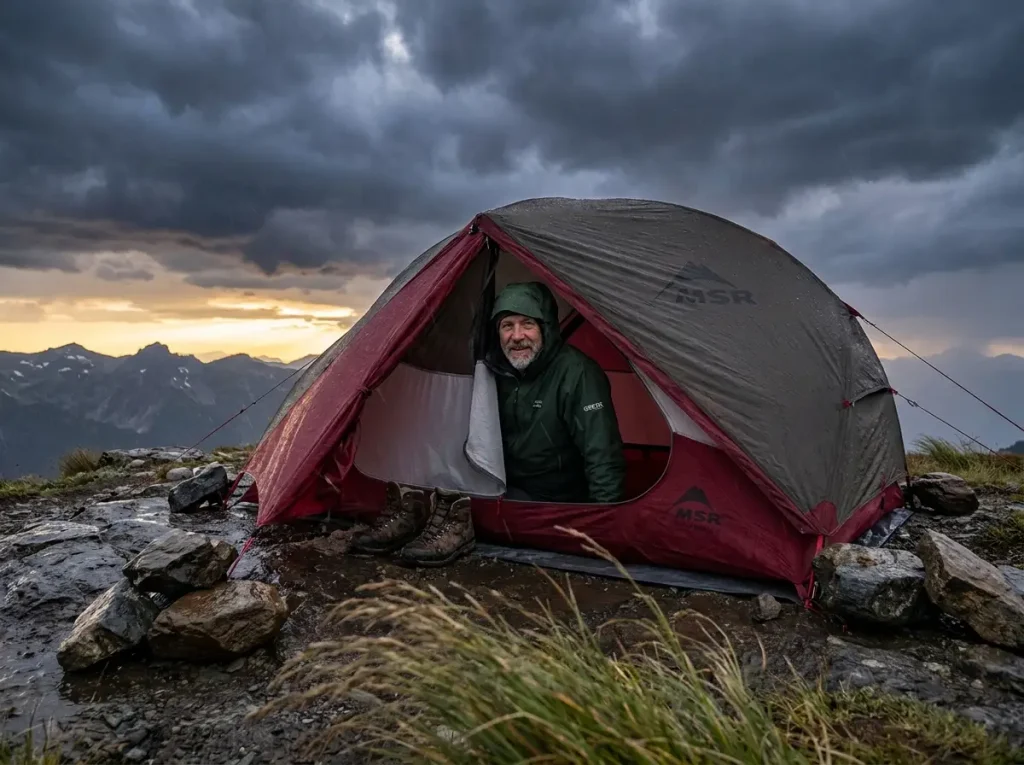
An ultralight shelter in 40 mph gusts is a liability. Thin DCF panels flex and crackle, trekking pole tent structures lack the bracing to resist sustained lateral wind loads, and guylines become the only thing between you and a collapsed shelter. A midweight tent with crossing aluminum poles and a full-coverage rainfly handles exposed ridge camping with a margin of safety that lighter options don’t offer. And when you’re picking campsites in exposed terrain, heavier tents with broader footprints perform better on the durable surfaces recommended by Leave No Trace — rock slabs, compacted dirt, and gravel pads where freestanding designs excel.
Shared Weight With a Partner
A 4 lb midweight tent split between two hikers is 2 lbs each. One person carries the body and fly, the other carries poles, stakes, and footprint. That’s lighter per person than most ultralight solo shelters — with twice the interior space, two doors, two vestibules, and enough headroom to change clothes without doing yoga.
Pro tip: When splitting tent weight, the person carrying the body and fly gets the heavier load. Rotate who carries what each trip so one person doesn’t always get the short end.
Shoulder Season and Winter
Four-season tents weigh 30–50% more than their three-season equivalents. The extra weight comes from additional pole segments, heavier fabric, and snow-load engineering. That weight buys survival-grade weather protection that a three-season tent simply cannot provide. If you’re camping in conditions where snow, high wind, or sub-freezing temps are possible, carrying the extra pounds is a safety decision, not a comfort preference.
The Real Weight You Carry vs the Spec Sheet
The Spec Sheet Gap
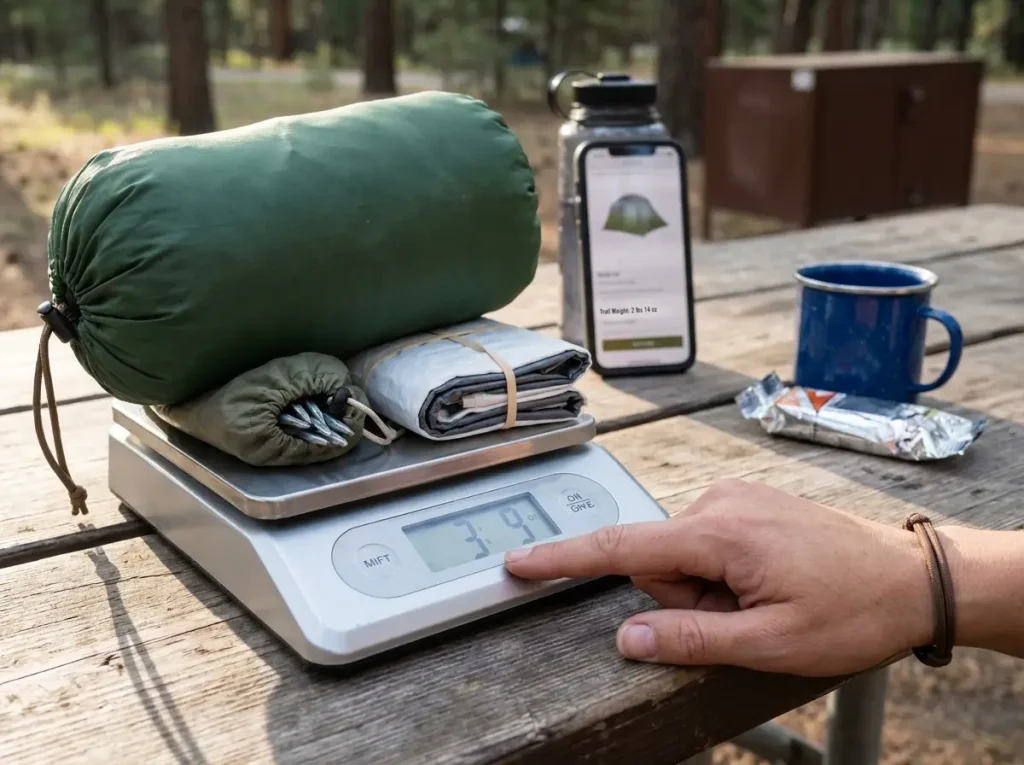
Every manufacturer publishes the most flattering number. Minimum weight omits stakes, guylines, stuff sack, and footprint. But you carry all of those. A tent listed at 2 lbs 14 oz minimum weight becomes 3 lbs 9 oz when you add the stuff sack you actually use (not the gossamer-thin one included), six stakes instead of four, extra guylines for windy camps, and a Tyvek footprint.
That’s a 11 oz gap — nearly three-quarters of a pound that exists on your back but not on the product page.
Moisture Weight Is Real
A silnylon tent absorbs moisture. After a rainy night, your “2 lb” shelter can weigh 2 lbs 8–12 oz because the fabric soaked up water. Silpoly absorbs less. DCF absorbs almost nothing, which is one reason ultralight hikers tolerate its quirks. On multi-day trips where you’re packing a wet tent every morning, that accumulated moisture weight matters.
Shake your tent out before stuffing it. Let it air for even 10 minutes while you eat breakfast. On a 7-day trip, that habit keeps you from hauling an extra half-pound of water every day.
Weight Degradation Over Seasons
After 50+ nights, tents gain weight. Silnylon stretches and absorbs more moisture per cycle. Seam tape adds fractions of ounces during field repairs. Bent pole sections get reinforced with splints. None of this shows up in the spec because specs describe a tent fresh from the factory — not the one that’s been through two seasons of use. When it’s time to assess if your shelter still performs, weight creep is one of the signals.
How to Pick the Right Weight Class for Your Trips
Match Your Category to Your Trail Style
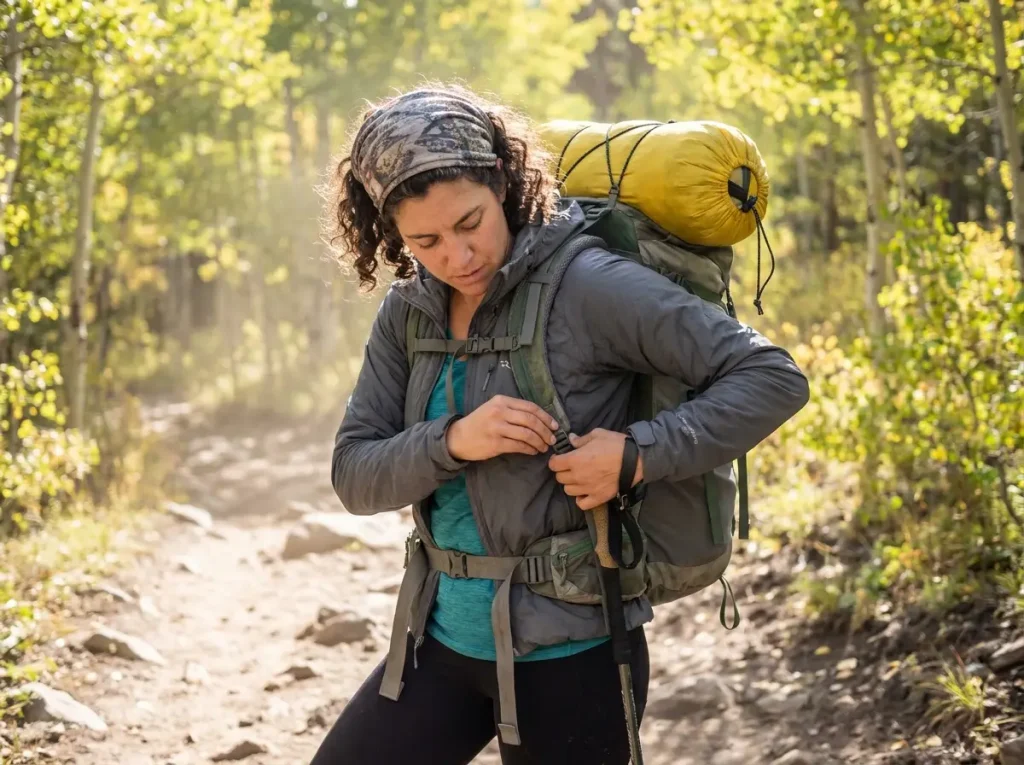
Your tent weight should reflect how you hike, not how you think you should hike. A gram weenie approach works if you log 20+ mile days and need every ounce of savings to maintain pace. A midweight approach works if you prefer 8–12 mile days with a comfortable camp at the end. Neither is wrong.
Ultralight backpackers targeting a 10 lb base weight need a tent under 2 lbs to make the math work — shelter is typically 20–30% of base weight. If your base weight goal is 15–20 lbs (which covers most weekend backpackers), a 3–4 lb tent fits perfectly.
For those just testing gear before a first thru-hike, start midweight and go lighter only after you’ve learned what comforts you actually miss versus what sounded important at the gear shop.
The Budget Reality
Ultralight tents cost serious money. A DCF shelter runs $500–$700. A comparable silpoly tent costs $250–$400. A midweight freestanding tent from a major brand hits $300–$450. And a heavyweight tent from REI Co-op can be had for $150–$250.
If you’re building a complete hiking gear kit on a budget, a midweight tent frees up cash for quality boots, a proper pack, and a warm sleeping bag — all of which affect your comfort and safety more than shaving 12 oz off your shelter.
The 2.5 Pound Per Person Rule
A simple guideline: aim for 2.5 lbs of shelter weight per person. Solo? A tent around 2.5 lbs keeps you comfortable without breaking your back. Duo? A 5 lb tent split two ways hits the target perfectly. This isn’t a hard rule — it’s a sanity check. If your tent exceeds 3 lbs per person for backpacking, you’re hauling more shelter than you need unless conditions demand it.
Consider how your pack suspension system handles the load too. A well-fitted pack with proper load transfer makes a 4 lb tent feel different than the same tent in a frameless ultralight pack.
Pro tip: Before buying a lighter tent, weigh everything else in your pack first. A $30 titanium pot saves 6 oz. Switching from boots to trail runners saves 12–20 oz. You might not need a new tent at all — the weight savings might be hiding in cheaper places.
Conclusion
The right tent weight depends on three things: how far you walk, who carries the load, and what weather you’re walking into. Ultralight works for experienced hikers with optimized kits and fair-weather windows. Midweight wins for shared setups, exposed routes, and hikers who value sleeping well over saving 12 oz. And heavyweight has a place for short trips where weight is genuinely irrelevant.
Use minimum weight for apples-to-apples comparisons. Weigh your tent the way you actually carry it — footprint, stakes, real stuff sack — and use that number for trip planning. And if someone at the trailhead brags about their 19 oz tent, ask them how they slept when it rained. That answer tells you everything the spec sheet hides.
Q1 How much should a backpacking tent weigh per person?
Aim for roughly 2.5 lbs of shelter weight per person as a baseline. Solo hikers should target a tent between 2–3 lbs, while pairs splitting a 4–5 lb tent hit that sweet spot automatically. Thru-hikers often push below 1.5 lbs per person, but that demands experience with ultralight setups.
Q2 What is the difference between packaged weight and trail weight?
Packaged weight is everything in the box — tent body, fly, poles, stakes, guylines, repair kit, and stuff sack. Trail weight strips it to just the body, fly, poles, and the minimum stakes needed to pitch. The gap is typically 5–8 oz for a two-person tent, and manufacturers almost always advertise the lower number.
Q3 Are ultralight tents durable enough for regular use?
DCF tents handle 200–300 nights before showing serious wear, but they develop micro-punctures and lose waterproofing faster than silpoly. Silpoly ultralight tents last longer but use thinner denier fabrics that tear more easily on sharp rocks or branches. For weekend use, either lasts years. For thru-hiking seasons, budget for repairs or replacement.
Q4 What is the lightest 2-person backpacking tent?
The Zpacks Duplex at 1 lb 3.4 oz (minimum weight) is among the lightest widely available two-person shelters. It uses DCF fabric and trekking pole support. The Tarptent Stratospire Li at around 1 lb 5 oz is another strong contender. Both require trekking poles and solid staking ground.
Q5 Is it worth paying more for an ultralight tent?
Only if you’ve already optimized the rest of your kit and still need weight savings. A $600 ultralight tent saves 1–2 lbs over a $300 midweight option. That same $300 difference buys a lighter sleeping bag, a titanium cook set, and trail runners — potentially saving more total weight across your entire pack. Prioritize where each dollar saves the most ounces.
Risk Disclaimer: Hiking, trekking, backpacking, and all related outdoor activities involve inherent
risks which may result in serious injury, illness, or death. The information provided on The Hiking Tribe is for
educational and informational purposes only. While we strive for accuracy, information on trails, gear, techniques,
and safety is not a substitute for your own best judgment and thorough preparation. Trail conditions, weather, and
other environmental factors change rapidly and may differ from what is described on this site. Always check with
official sources like park services for the most current alerts and conditions. Never undertake a hike beyond your
abilities and always be prepared for the unexpected. By using this website, you agree that you are solely
responsible for your own safety. Any reliance you place on our content is strictly at your own risk, and you assume
all liability for your actions and decisions in the outdoors. The Hiking Tribe and its authors will not be held
liable for any injury, damage, or loss sustained in connection with the use of the information herein.
Affiliate Disclosure: We are a participant in the Amazon Services LLC Associates Program, an
affiliate advertising program designed to provide a means for us to earn advertising fees by advertising and linking
to Amazon.com. As an Amazon Associate, we earn from qualifying purchases. We are also an official affiliate partner
of Black Diamond Equipment via the AvantLink network. If you click on a Black Diamond affiliate link and make a
purchase, we may earn a commission at no additional cost to you. We also participate in other affiliate programs and
may receive a commission on products purchased through our links. Additional terms are found in the terms of
service.