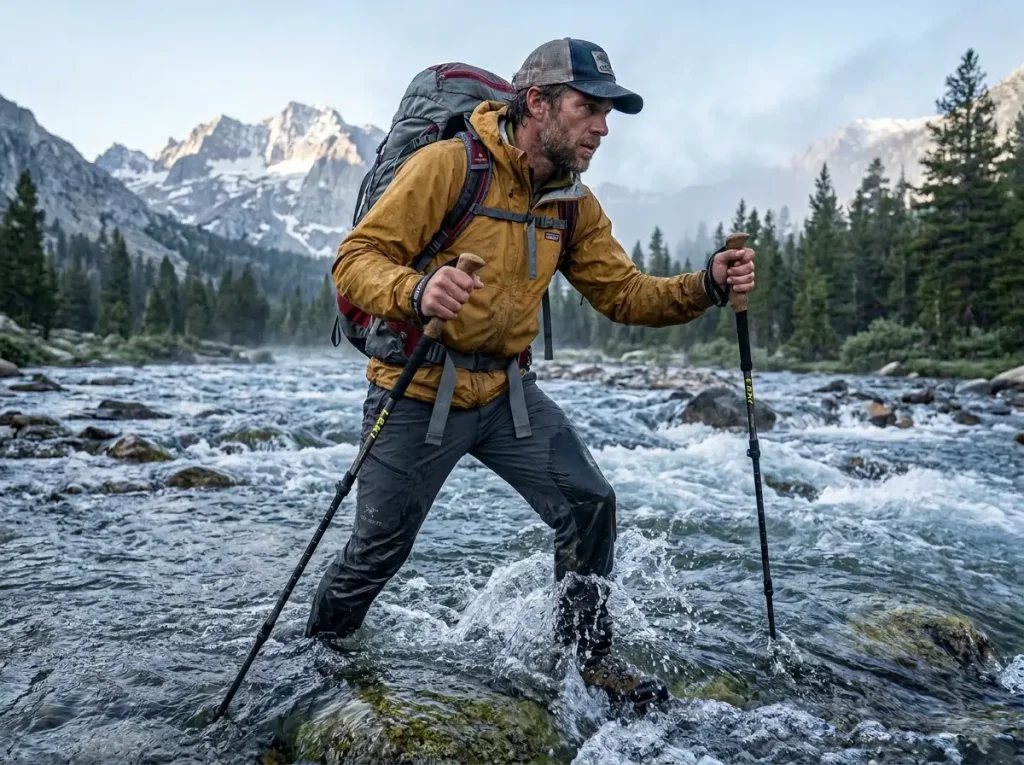
The water was thigh-deep and moving fast. I had a 52-liter pack on my back and both hip-belt buckles cinched tight. Three seconds after I stepped off the bank, the current spun me sideways. I went down on my hip, one elbow on rock, and the pack immediately floated — pulling my head toward the surface and my feet toward a logjam 40 feet downstream. I clawed my way to an eddy on pure muscle memory because nothing I’d read had taught me what to do when the river won.
That was crossing number 23. I know exactly what I did wrong. After 200 crossings — from Sierra Nevada snowmelt to Alaska glacial outflow — I can tell you with confidence that most of the advice out there gets the easy stuff right and ignores the part that matters most.
This guide gives you the physics-based protocols that keep you upright in moving water, and the ejection plan for the moment they don’t.
⚡ Quick Answer: Before you step into any moving water: unbuckle every strap on your pack, locate the widest and shallowest crossing point, face upstream, and side-shuffle with trekking poles extended 5–10cm longer than your trail length. If the water reaches mid-thigh and is moving faster than a walking pace, turn around. The depth-velocity product — depth times speed — is the real hazard metric, not depth alone. A knee-deep stream at brisk current velocity already pushes most adults past the instability threshold.
Why Moving Water Is So Hazardous: The Epidemiology Every Hiker Ignores
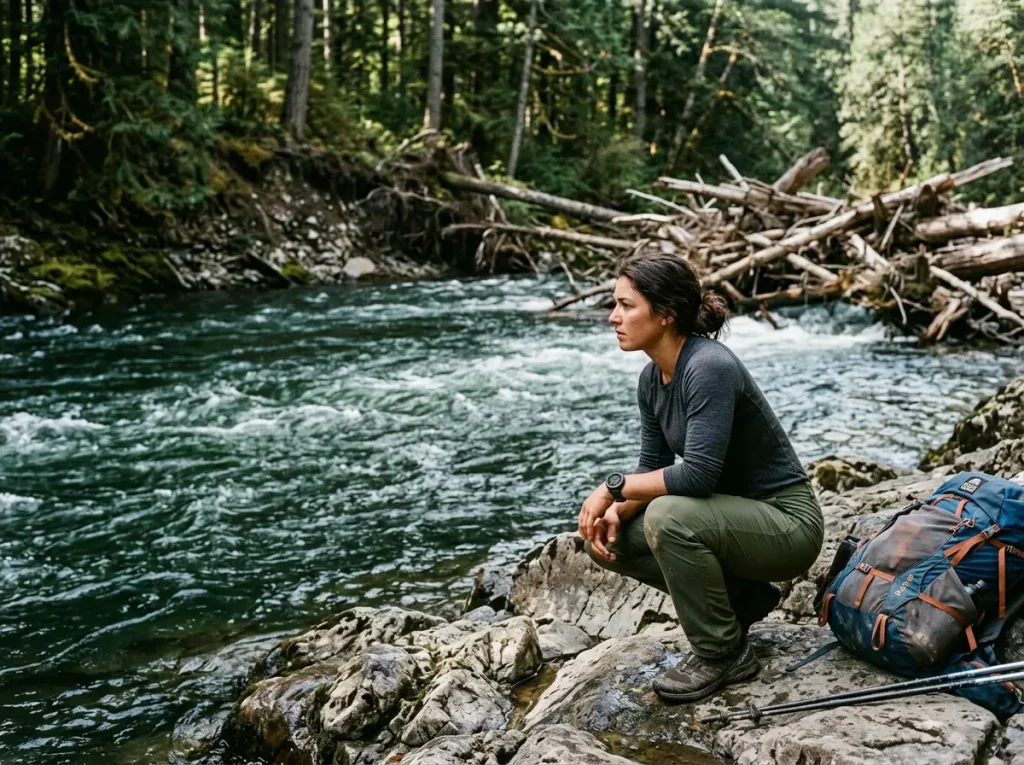
Water-related emergencies are the second leading cause of unintentional fatalities in U.S. National Parks. From 2014 to 2019, the NPS recorded 314 such fatalities — more than falls (206) or environmental exposure (98). The NPS unintentional death data by cause breaks this down clearly: only motor vehicle crashes rank higher. This is not a niche problem.
The demographic data is more uncomfortable. According to U.S. Army Corps of Engineers fatality records from FY98 through FY24, 89% of public recreation aquatic fatalities were male, and 89% were not wearing a life jacket. A 13-year Pima County wilderness mortality study found that 80% of witnessed victims had already expired before SAR personnel arrived. The window for intervention is measured in seconds, not minutes.
The overconfidence problem is real and well-documented. Most victims were not beginners. The peak fatality window — Saturdays and Sundays, 1400 to 1800 hours, May through August — aligns exactly with when experienced weekend hikers are pushing to get back to the trailhead, right as diurnal snowmelt crests. That’s not coincidence. Alcohol was a probable or very probable factor in 40% of unintentional wilderness trauma fatalities. A river crossing requires your clearest thinking.
For backcountry emergencies more broadly, a solid understanding of wilderness first aid protocols for remote emergencies will sharpen your risk instincts before any trip.
Pro tip: If you’re crossing in snowmelt terrain on a summer weekend afternoon, assume the water will be significantly higher than what you checked at camp that morning. Afternoon sun drives melt in alpine headwaters; peak levels hit your crossing point between 1400 and 1800.
The Demographics of Overconfidence
Age 45 and older accounts for the majority of NPS aquatic fatalities. That’s the cohort with the most hiking experience — and often the most willingness to push through a crossing that younger hikers might abandon. The body’s ability to generate corrective force against a strong current doesn’t scale with trail miles logged. Water fitness and hiking fitness are two completely different things.
The Diurnal Trap: Why Afternoon Crossings Are the Most Hazardous
Solar radiation melts high-elevation snowpacks through the afternoon hours. Peak melt reaches the crossing point between 1400 and 1800 — but there’s a lag. If you’re miles downstream from the headwaters, yesterday’s afternoon melt may arrive at your ford the following morning. Cross at dawn, between 0400 and 0800, and you can find water levels 30–50% lower on snow-fed streams than what that same crossing will look like at 3 PM.
The Physics of the Ford: Fluid Dynamics in Plain Language
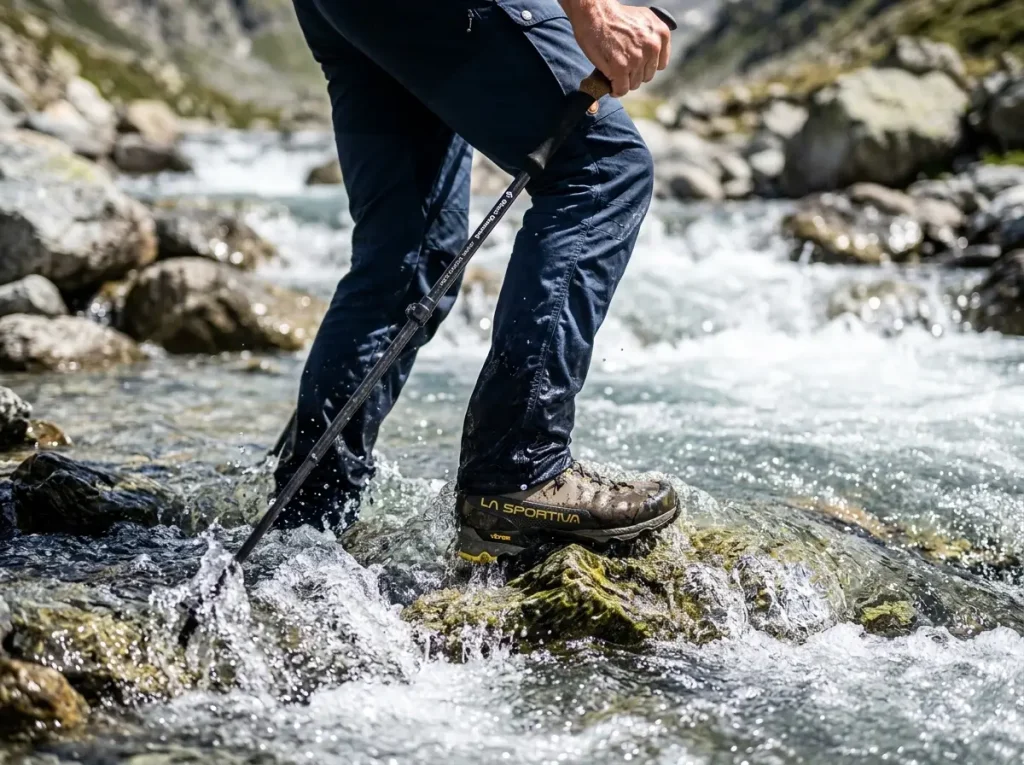
Here’s what nobody tells you before your first technical crossing: the current feels fastest at the surface, but it hits hardest at your knees. That’s not intuition — it’s laminar flow and the vertical speed gradient.
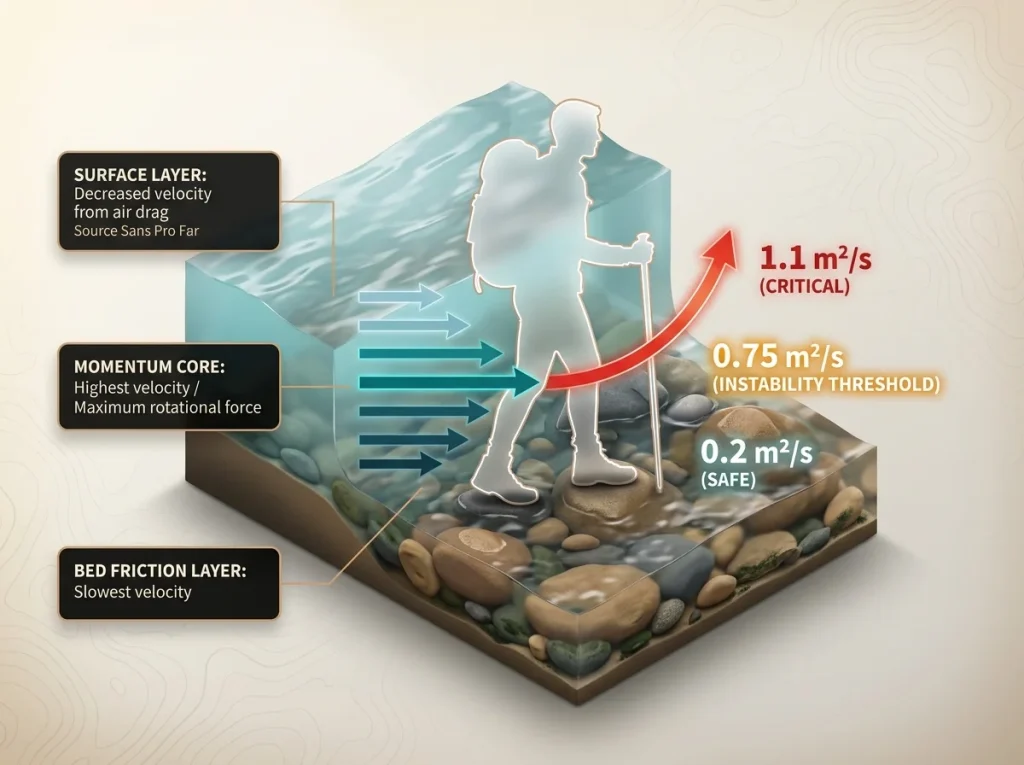
Riverbed friction slows the bottom layer of water. Each layer toward the surface moves faster. Your feet are planted in the slowest water. Your calves and knees take the highest-velocity hit. This creates a moment arm that tries to rotate your body forward and downstream. It’s why strong hikers with great balance get folded over by streams that look ankle-to-knee deep on the surface.
The professional safety metric is the depth-velocity product — depth in meters multiplied by velocity in meters per second. Hydraulic engineers peg the instability threshold at 0.5–0.6 m²/s. The Australian ARR sets the recommended civilian safe limit at 0.4 m²/s. In practice: a stream 0.5 meters deep (roughly knee-height) moving at 1.5 m/s — a brisk walking pace — already produces a reading of 0.75 m²/s. That’s above the hazard threshold for most adults. The stream doesn’t look threatening at that depth. That’s the problem.
How trekking poles change the physics of a river crossing goes deeper into how adding a third point of contact restructures the force equation in your favor.
The Vertical Speed Gradient: Why Knees Feel the Current Hardest
Your feet anchor in the slowest-moving layer, while knee height sits in the fastest. This moment arm is exactly what put me horizontal on crossing 23. Facing upstream and leaning forward uses that same force to press your feet into the riverbed instead of lifting them off it. The current becomes part of your stability system rather than the thing dismantling it. See human instability thresholds in flood flows (Jonkman 2008) for the engineering data behind these thresholds.
The Eddy System: Reading Safe Zones vs. Lethal Zones
Eddies are calm pockets of upstream-moving water behind boulders. They’re safe staging points — but enter from the upstream side. The eddy line, the interface between upstream and downstream flow, has turbulence. Cross it with a committed, quick step. Hesitate on the eddy line and you’ll feel the instability immediately.
Strainers — downed trees, debris — are the thing I genuinely respect most in moving water. Water moves through. You don’t. Before any crossing near a bend, scout downstream at least 100 feet. You need to know what you’ll hit if you fall.
Braided Channels and Reading the Crossing Point
A braided channel looks like a gift: multiple shallow threads instead of one deep run. It’s not that simple. The total flow is the same; you’re just distributing it across more paths. The widest section of any channel is the shallowest. Narrow sections move faster and deeper for the same volume. Look for the widest point, check both banks, and remember that the inside of a bend is slower and shallower — the opposite bank may be the outside of that bend, which is faster and deeper.
Environmental Reconnaissance: Timing and Tactical Scouting
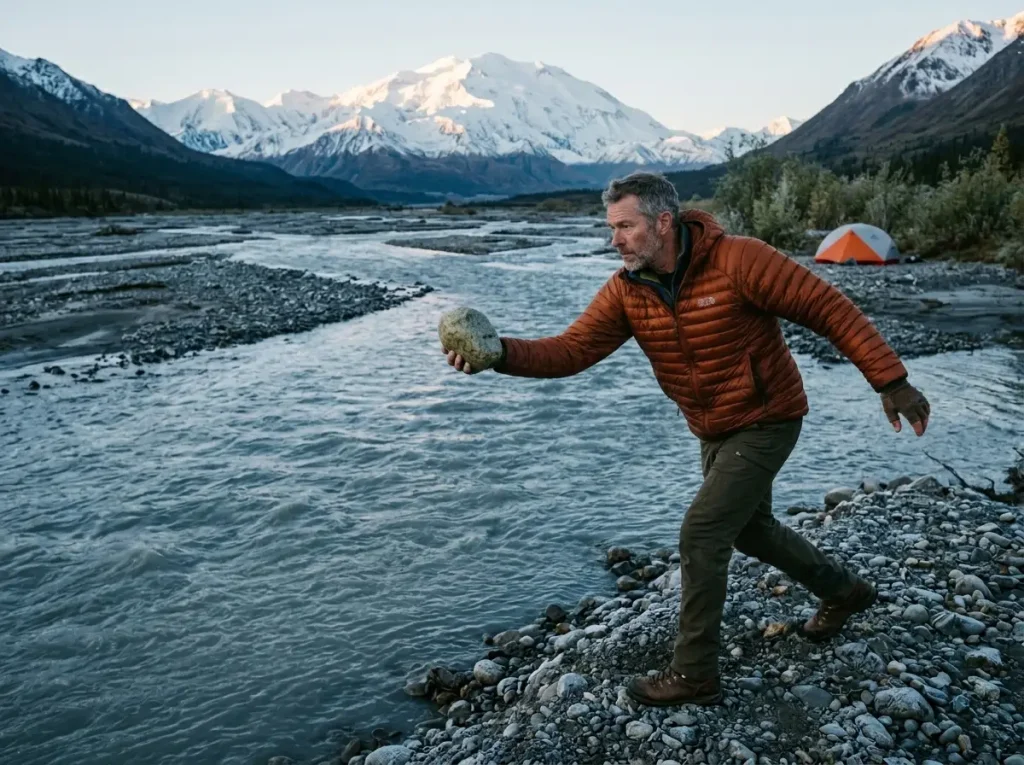
I’ve turned back five times in 200 crossings. Every one of those five was the right call. You can always camp and wait. Three of those five turnarounds were because I ran the field tests listed here and the data was clear.
Before you step in, U.S. Fish & Wildlife Service river crossing assessment protocols provide the official framework — but the field tests you can run in two minutes at the bank are just as useful.
The Stick Test: Throw a stick into the main channel. If it moves faster than you can comfortably walk, velocity is too high for a safe solo ford.
The Ka-thump Test: Toss a large rock into the crossing zone. A hollow “ka-thump” means deep water — waist-deep or more. A sharp “clack” means shallow enough to consider.
Acoustic Scouting: Stand still and listen. If you hear boulders clunking or rolling on the riverbed, the current is moving mass. A current strong enough to transport a 50-pound rock is strong enough to take you. Abort.
For snowmelt-fed streams, run all three tests at the actual crossing point — not from the bank 20 feet away — because current dynamics change significantly across even five meters. Then integrate the results with your pre-trip intelligence protocol, which should include checking the USGS National Water Information System gauge for the nearest downstream station the night before.
Pro tip: Check the USGS gauge on your phone at camp the night before any known crossing and set an alarm for 5 AM. That single habit has saved me more turnarounds than any piece of gear I own.
Diurnal Timing: The Dawn Advantage
On snow-fed streams, 0400 to 0800 gives you 30–50% lower water than mid-afternoon. Factor in watershed delay: if you’re far from the headwaters, the previous afternoon’s melt may not reach your ford until mid-morning. Track precipitation — rain-on-snow events cause rapid, unpredictable flooding with no advance notice. A high Snow Water Equivalent (SWE) year means elevated water all season.
Identifying the Safest Crossing Point
Look for riffles — broken-surface water, ankle-to-knee depth — over runs (smooth, waist-deep) or pools (deceptively deep, often the deepest section in the channel). Downstream obstacle scan: if you fall, where do you go? Identify a flat, calm recovery shore on the opposite bank before you step off your current one.
Gear Physics: What You Wear and Carry Changes the Equation
Footwear Decision: The Crocs vs. Boots Debate (Settled)
Sandals lose in virtually every crossing scenario. Open-toed sandals and foam clogs act as rudders — they catch current and twist the ankle. They have higher drag than a streamlined boot upper. Crocs offer no ankle support and no grip on biofilm-covered submerged rock. One lateral twist in moving water is an immediate balance failure.
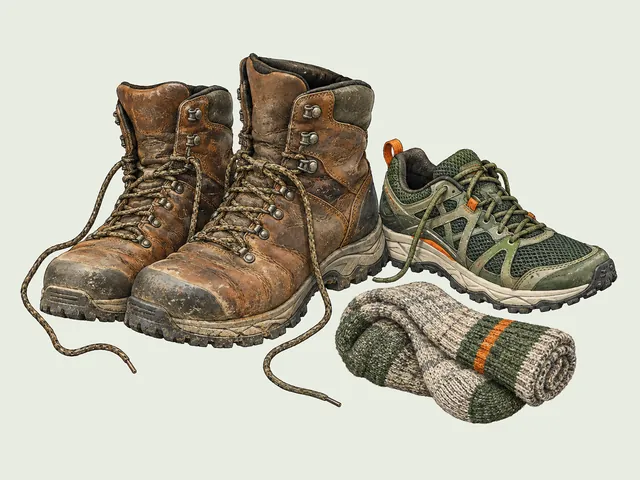
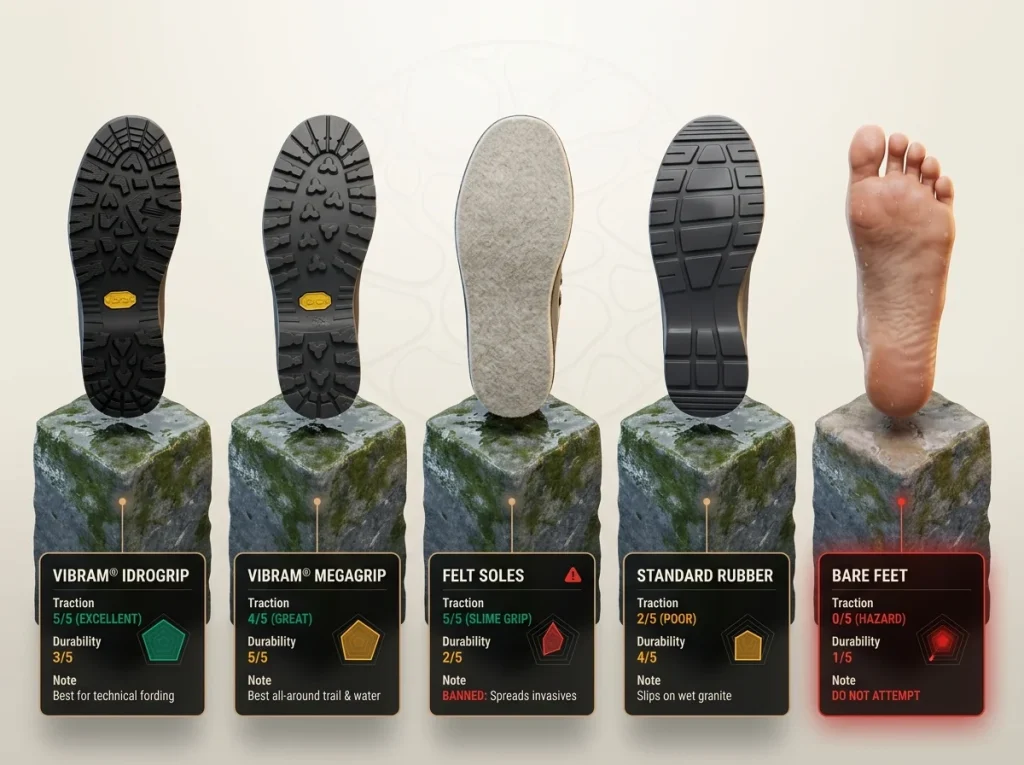
The correct protocol: remove your socks and insoles, cross in your primary hiking boots. Cold feet are uncomfortable. Going down in fast water is worse. Vibram Megagrip provides approximately 0.65 friction score on wet smooth surfaces — solid all-around footwear friction. Vibram Idrogrip is the better compound for technical fording: softer, more conformable, superior mechanical grip on wet rock. If you ford rivers with any regularity, your outsole choice matters. The wet rock grip comparison across outsole rubber compounds runs through the real-world performance differences.
A note on felt soles: exceptional traction on algae-covered rock — and banned in many regions because they transport invasive species like Didymo between watersheds. Bare feet are not a crossing option. Zero grip on submerged slime-covered granite, zero ankle protection. Don’t attempt it.
The Pack Physics Paradox: Float or Anchor
A 50-liter pack has close to 110 pounds of buoyant force when submerged. The specific weight of water is 62.4 lbs/ft³. That buoyancy is the thing that nearly finished me on crossing 23.
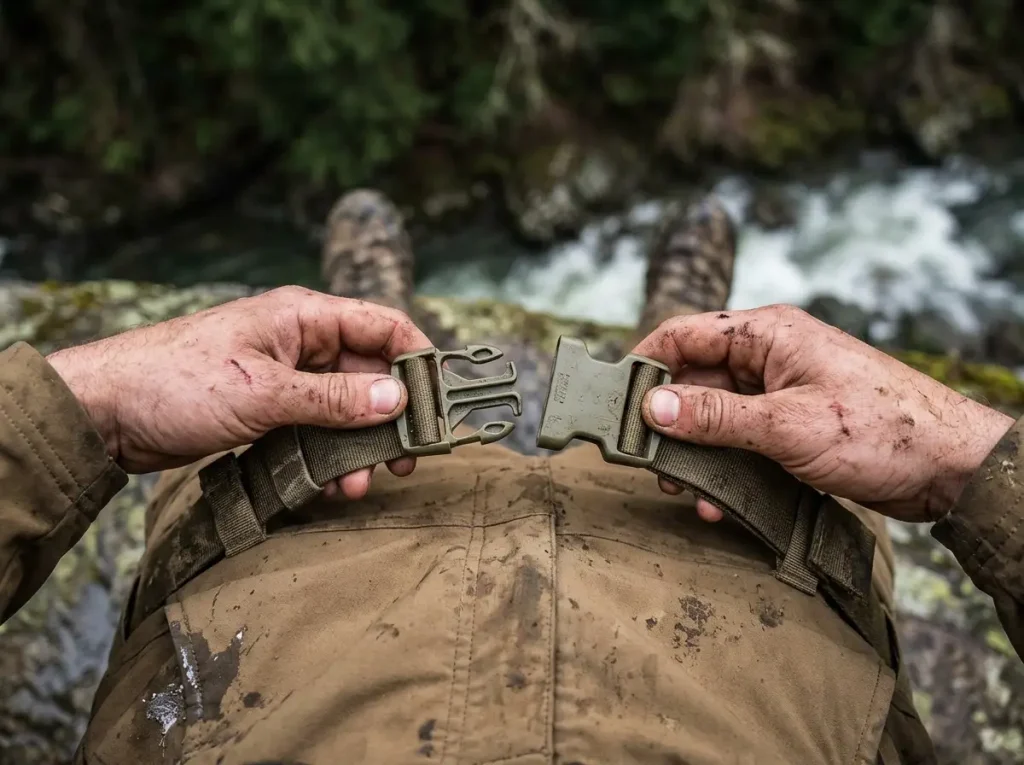
If your hip belt and sternum strap are buckled when you fall, the pack floats up while your head — denser than the pack — gets pushed under by the current. Your airway goes down. If the pack fills through an open zipper, it becomes a 100-pound anchor that snags on strainers and holds you under.
The mandatory rule, per NPS creek crossing safety protocols for pack management: unbuckle all straps before entering the water. This is not a comfort recommendation. It’s the difference between riding your pack’s buoyancy physics to shore and being taken under by it. Unbuckled, you can shed it instantly or hold one shoulder strap and use the pack like a flotation device if you’re swept.
Pro tip: Practice the three-second unbuckle while standing in shallow, calm water before you ever need it in moving current. Your hands don’t work as well when they’re cold and shaking.
Trekking Poles as a Third Point of Contact
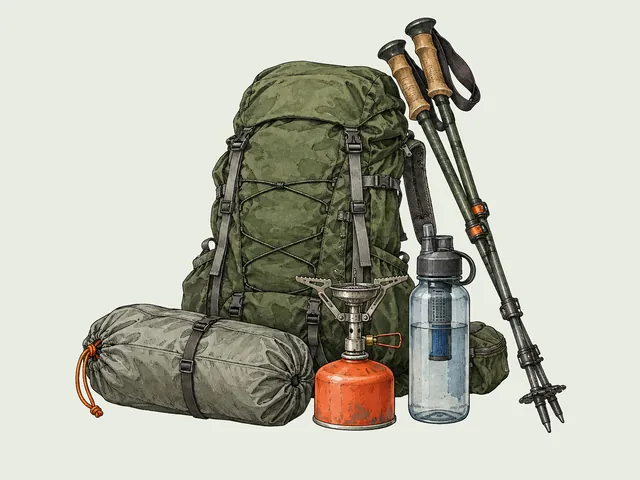
Poles convert you from a biped into a tripod. Three points of contact are geometrically more stable than two. Plant the pole upstream, lean slightly into the current, side-shuffle. Lengthen poles 5–10cm beyond your normal trail length for crossing — you need depth reach, not propulsion. Think of the pole as a probe and brace, not a weight-bearing column. If it slips and you’ve put your full weight on it, you collapse. Use it to test the next step before committing, then as a brace while you move the foot.
Technical Fording Protocols: Solo and Group Mechanics
Solo Crossing: The Tripod Method in 6 Steps
The Tripod Method is the standard solo protocol for the stream crossing safety checklist:
- Unbuckle all straps — hip belt and sternum strap, both.
- Lengthen poles 5–10cm beyond trail length.
- Plant pole upstream. Lean forward into the current, not sideways.
- Side-shuffle one foot at a time — test footing before committing weight.
- Keep two points of contact at all times: two feet, or one foot plus pole.
- If you slip: do not attempt to stand in waist-deep fast current. Transition immediately to the ejection protocol.
One technical note on footwear friction and rock surface: pointy rocks give better grip than flat rocks. More surface contact between the boot sole edge and irregular rock geometry. Flat rocks have more biofilm contact area and less mechanical bite. Move toward the angled and irregular substrate when you can see it.
Move upstream-oblique, not straight across. The current will push you downstream naturally. Angle toward the far bank and slightly upstream; let the current’s lateral force help translate you across. This is the trekking pole cadence transfers to crossing mechanics principle applied in practice.
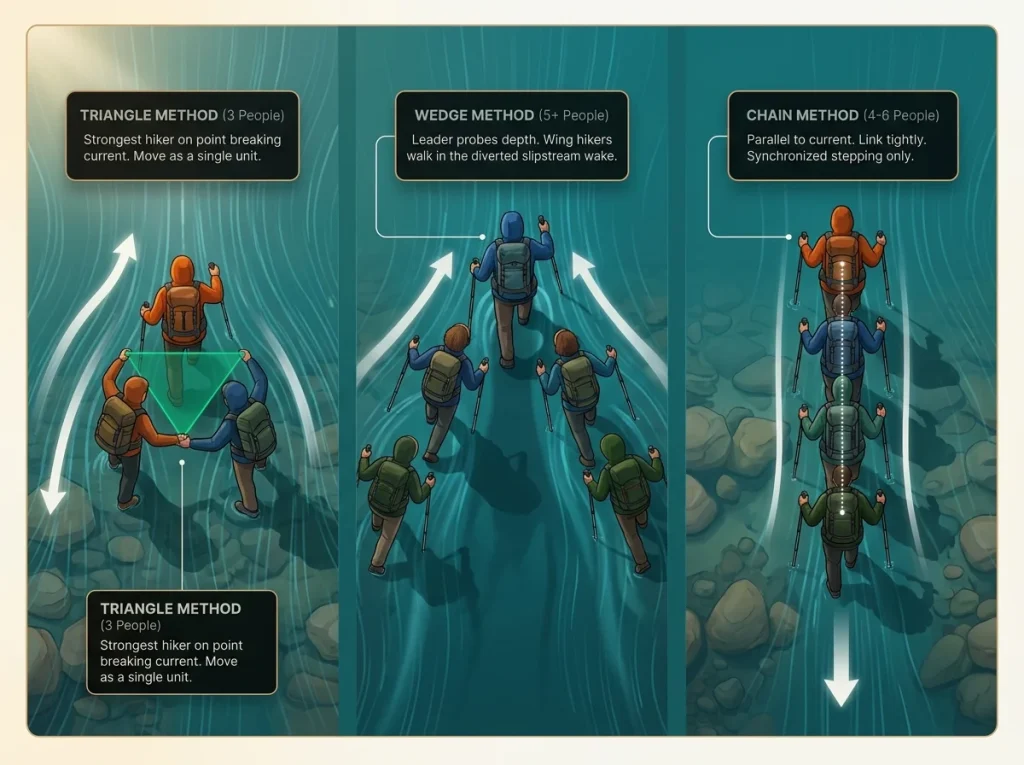
Group Formations: Triangle, Wedge, and Chain
The best group crossing I ever saw was a 6-person wedge through knee-high, fast Sierra Nevada meltwater. Smooth, rehearsed, everyone understood their role. The worst I’ve seen: two solo hikers 30 feet apart, each holding one end of a rope “just in case.” A rope in fast water is a hazard, not a safety device. The river can force it into a cutting line against your body.
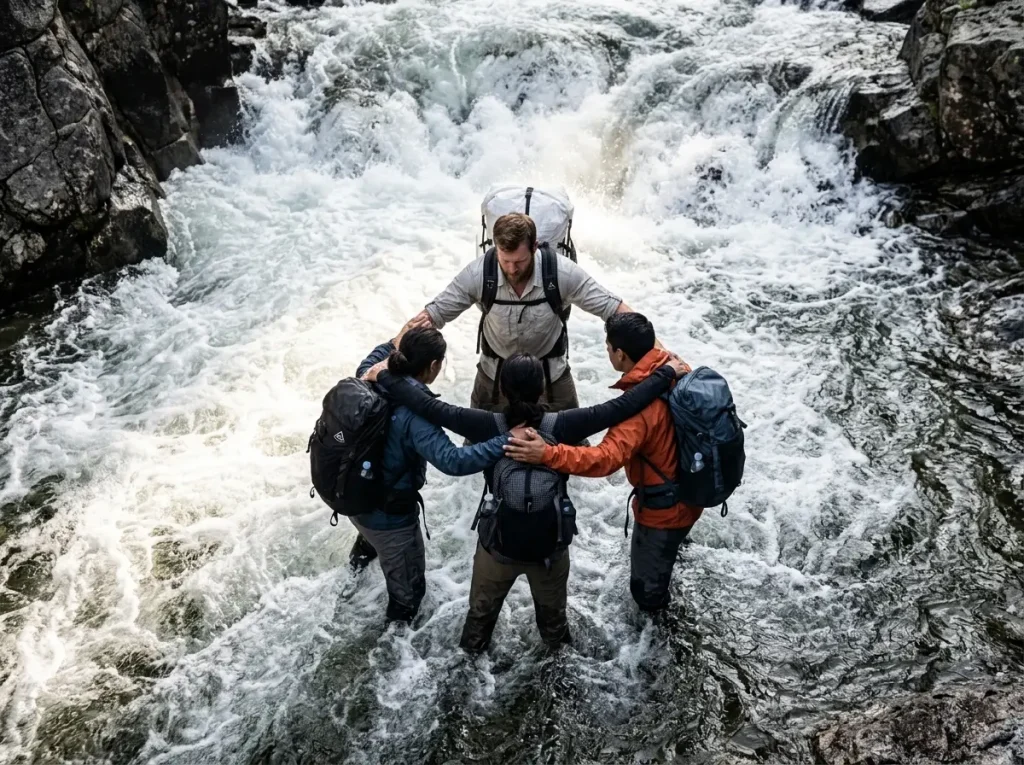
The Triangle Method (3 people) puts one person facing upstream to break the current, with all three linked at pack straps or arms. The group moves as a single unit. Two people remain anchored while one moves.
The Wedge Method (5+ people) puts the strongest hiker at the point, facing upstream, probing depth with a pole. The wedge creates a pocket of calmer water behind the leader for smaller or less experienced hikers. Never let the line thin to single file.
The group chain (4–6 people) arranges hikers in a line parallel to the current, each person holding the one in front. Synchronized stepping only. Never put the weakest person at the front or back: front absorbs maximum force, back risks being swept if the chain breaks.
See the Pacific Crest Trail Association stream crossing safety protocols for a comprehensive breakdown of these formations from an organization that manages thousands of high-water crossings every season.
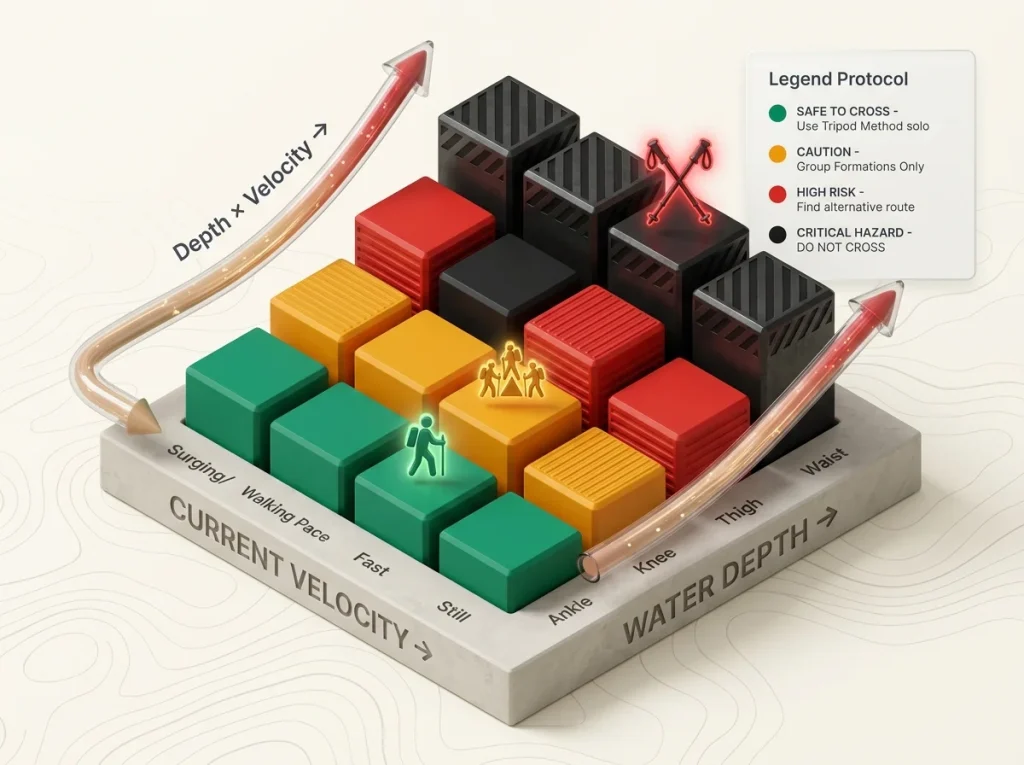
The Go/No-Go Safety Matrix
This is protocol, not preference. The go/no-go risk matrix synthesizes depth, velocity, gear, and team status into a decision you can run in the field:
- Below knee, slow velocity, any team: Cross solo with poles.
- Below knee, fast, no poles: Link up, use Group Triangle.
- Knee to thigh, slow, expert team: Cross in Triangle or Wedge.
- Knee to thigh, fast, any team: Find an alternative. Do not cross.
- Above thigh, any velocity: Do not cross.
- Any depth, surging or debris present: Abort immediately.
The matrix isn’t your opinion. It’s derived from the depth-velocity product instability thresholds established by hydraulic engineers. If the matrix says abort and your gut says push through, trust the matrix. The gut is running on ego. The matrix is running on physics.
The Ejection Protocol: Surviving the Fall You Didn’t Plan
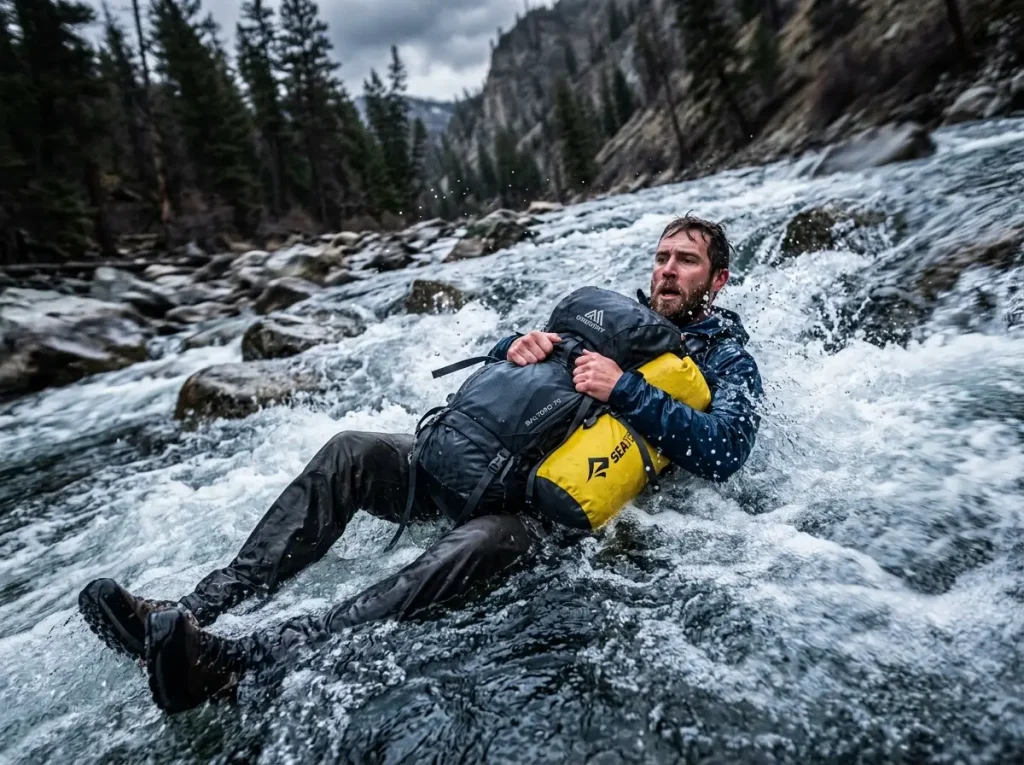
Crossing 23 ended with me in an eddy, soaked, pack floating beside me, staring at the logjam I nearly hit. The muscle memory that got me there wasn’t anything I’d practiced. I got lucky.
Here’s what I should have done — and what I’ve drilled since.
The moment you lose footing in fast water, do not try to stand. This is the hardest instinct to override. Every signal in your body says get up. The data says don’t. Standing in fast, thigh-deep water causes foot entrapment: current pins your foot between submerged rocks, pushes your body forward, and holds your face underwater. In that position, self-rescue is nearly impossible.
The NPS safe river crossing and emergency swimming protocols are explicit on this. Immediately roll onto your back. Feet downstream, knees slightly bent to absorb rock impact, head up. This is the defensive swimming position. Your unbuckled pack — if still in contact — works as anterior buoyancy. Hold it against your chest. White water is aerated; conserve oxygen, breathe between waves, don’t panic-breathe.
The Defensive Swimming Position: Geometry Over Instinct
Back flat, feet downstream, toes up. Feet absorb rock impacts; your head doesn’t have to. Knees slightly bent act as a shock-absorbing buffer. If your pack is still with you and unbuckled, use it as a flotation device held against your chest. Breathe between wave sets.
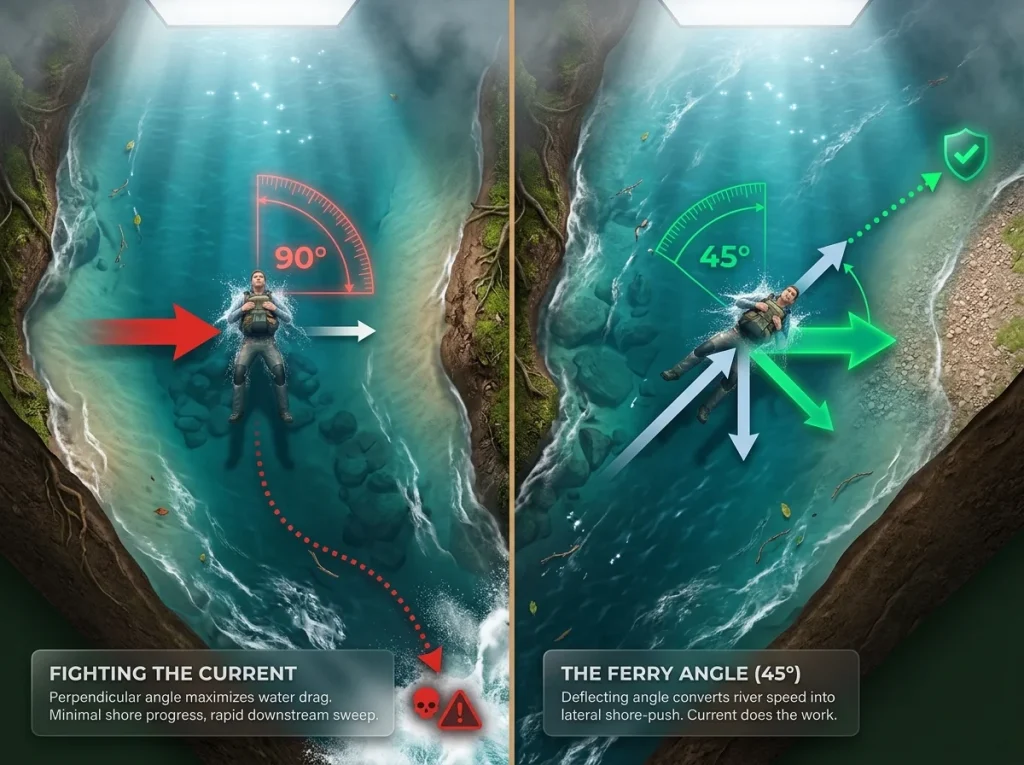
The Ferry Angle: Using Physics Against the Current
Swimming perpendicular to the current maximizes drag and minimizes lateral progress. Instead, use the ferry angle: orient your body at roughly 45 degrees to the current, head pointed toward the bank you want. The current’s lateral component does the work, pushing you sideways toward shore. This is counter-intuitive enough that you need to have thought about it before you’re in 5°C water with your heart rate at 160.
Foot Entrapment: The Deadliest Mistake
In thigh-deep or faster current: standing plants your foot between rocks, current folds your body forward, face goes down. Once face-down in fast water, there is no practical self-rescue. Only attempt to stand when you’ve reached calm water — ankle-deep and slow — or a gravel bar.
Once you reach shore, alpine water at 3–5°C initiates hypothermia within minutes even in warm air. Change into dry clothes immediately, consume high-calorie food to fuel the shivering thermogenesis response, and check every group member for shock and early hypothermia onset. According to the American Hiking Society’s guidelines on backcountry cold water hazards, cold water immersion is one of the most underestimated wilderness emergencies. For clinical next steps: treating hypothermia on trail after cold water immersion.
Pro tip: Practice the defensive swimming position in calm, slow water before you need it in an emergency. Muscle memory at 5°C is not optional — your cognitive function drops faster than your core temperature.
Conclusion
Three things:
First: the depth-velocity rule is real. A knee-deep stream at a brisk walking pace is already above the instability threshold for many adults. Trust the physics, not your confidence level.
Second: unbuckle everything before you step in. Three seconds. Hip belt and sternum strap. It’s the difference between riding a 110-pound float to shore and being taken under by it.
Third: stream crossing safety in snowmelt terrain means dawn crossings. The 30–50% water level reduction between 0400 and 1400 is the difference between a technical ford and an abort. Afternoon convenience is not worth that gap.
On your next pass through alpine terrain, pull out your phone at camp the night before any crossing and check the USGS water gauge for the nearest downstream station. Then set your alarm for 5 AM. That one habit changes how you interact with moving water — from something that surprises you, to something you’ve already read.
FAQ
Should you wear hiking boots or go barefoot when crossing a stream?
Always cross in hiking boots, with socks removed. Barefoot means zero grip on submerged slime-covered granite and zero ankle protection; a twisted ankle mid-crossing is a serious problem far from the trailhead. Sandals are marginally less hazardous than bare feet but create a rudder effect that twists ankles in lateral current. Remove your socks to let boots drain and dry faster at camp, but keep the boots on.
How deep is too deep to cross a stream on foot?
Knee-to-thigh depth is your amber zone — reassess velocity before committing. Thigh-to-waist is red: the go or no-go risk matrix says find an alternative if velocity is anything above slow. Above waist is an absolute abort regardless of velocity or team size. These aren’t opinions — they’re derived from the depth risk assessment thresholds established by hydraulic engineers (instability begins around 0.5–0.6 m²/s).
Why do you have to unbuckle your backpack straps before crossing a stream?
A 50-liter pack has approximately 110 pounds of buoyant force when submerged. If your hip belt and sternum strap are buckled when you fall, the pack floats — pulling your head toward the surface while the current pushes your body horizontal. Your airway goes under. Unbuckled, you can shed the pack instantly or use it as an anterior flotation device in the defensive swimming position.
What is the best time of day to cross a snowmelt stream?
Cross at dawn, between 0400 and 0800. Solar radiation drives snowmelt during afternoon hours; water levels peak between 1400 and 1800. The overnight freeze drops river levels 30–50% by early morning. If you’re far downstream from the headwaters, factor in watershed delay — the previous afternoon’s melt may not reach your crossing until mid-morning.
What do you do if you get swept away while crossing a river?
Immediately roll onto your back, orient your feet downstream with knees slightly bent, and keep your head up — this is the defensive swimming position. Do not try to stand in fast water; this causes foot entrapment between rocks with near-fatal outcomes. To reach shore, use a ferry angle: angle your body at 45 degrees toward the bank you want and let the current’s lateral component push you sideways. Only attempt to stand when you’ve reached calm, ankle-to-knee-deep water.
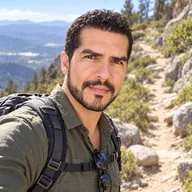
I've spent more than a decade researching hiking gear and trail technique. I read the specs, the forum threads and the long-term reviews, and every pick here comes with what it gets wrong.
End of the trail
You read every mile of this one. Here's where the trail goes next.