

In this article
Mid-August on the Superior Hiking Trail, hands drenched from six hours of climbing in full sun, and every pole plant feels like gripping a wet bar of soap. The EVA foam handles that felt so cushioned in the store are now a slippery liability on a loose-rock descent. I’ve been there. After years of testing poles across desert heat, Appalachian humidity, and sub-zero alpine ridges, I’ve learned that what your hand wraps around matters more than most hikers think.
This article breaks down the real differences between cork grips and foam grips when it comes to sweat absorption, heat, cold, and years of hard trail use. By the end, you’ll know which grip material actually matches the way you hike.
⚡ Quick Answer: Cork grips wick sweat away from your palm through a porous, air-filled cellular structure, making them the better choice for hot and humid conditions. EVA foam grips seal moisture on the surface but offer superior shock absorption out of the box and perform better in cold weather with gloves. The weight difference between the two is negligible. Pick cork for sweaty hands in summer; pick foam for cold-weather versatility and immediate cushioning.
What Makes Cork and Foam Grip Sweat Differently
How Cork Wicks Moisture Away from Your Palm
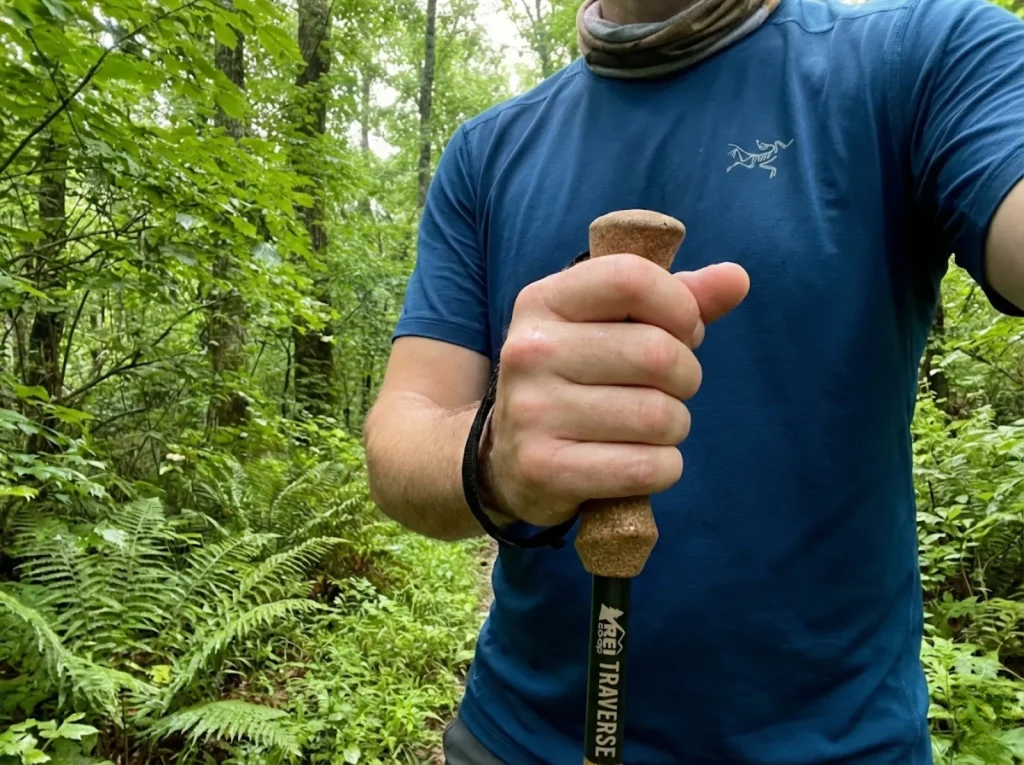
Natural cork contains roughly 40 million dead cells per cubic centimeter, each one filled with trapped air. That alone makes it unique among pole grip materials. But the real story is suberin, a waxy compound embedded in those cell walls that makes cork naturally hydrophobic. Instead of soaking up sweat like a sponge, cork diffuses surface moisture across its surface for rapid evaporation. Think of it as capillary wicking in action. Your hand stays drier because the moisture moves outward rather than pooling between skin and handle.
Cork’s thermal conductivity sits around 0.040 W/m·K, which means it stays temperature-neutral whether you’re hiking under desert sun or gripping cold metal shafts on a frosty morning. It also happens to be inherently antimicrobial. On multi-day treks, that translates to fewer bacteria colonies, less funk, and none of the handle stink that plagues synthetic grips after a week of rain. Hikers who’ve put serious miles on cork talk about the “sweat patina,” where the grip darkens and smooths over hundreds of miles, creating a custom surface that actually improves tack with use. That capillary action works the same way grid fleece manages sweat against your torso on a steep climb.
Why Foam Traps Moisture Between Hand and Handle
EVA foam (Ethylene-Vinyl Acetate) takes the opposite approach. It uses a closed-cell polymer structure where gas is sealed inside each cell. The surface is technically water-resistant, but in practice that means your sweat has nowhere to go. It pools between skin and grip, creating a lubricating film that hikers on the Appalachian Trail describe as “slimy” or “clammy” during sustained effort in high humidity.
There’s an upside to that sealed structure. Once you stop hiking, the moisture sitting on the foam’s non-porous surface evaporates fast. Foam dries quicker at rest than cork does. And high-density EVA maintains consistent shock absorption even when the surface is wet. So if you’re someone who takes frequent breaks and hikes in moderate conditions, that moisture buildup might never bother you.
Pro tip: If you prefer foam’s cushioning but hate the sweaty palms, wear thin sun gloves. The fabric creates a moisture management layer between your skin and the grip, giving you the best of both worlds.
Comfort, Shock Absorption, and the “Birkenstock Effect”

How Cork Molds to Your Hand Over Time
Cork behaves differently under pressure than any synthetic material. Under sustained hand pressure, the air-filled cells permanently collapse along your unique pressure points. Over 50 to 100+ miles of use, this creates a “Birkenstock-like molding effect” where the grip redistributes the load across your palm. The result is reduced risk of ulnar nerve compression and less hand fatigue during high-mile days.
That break-in period is real. Fresh cork feels stiff and generic. But once it molds, it’s your grip and nobody else’s. Some premium poles like the Black Diamond Trail Ergo and Leki Cressida FX Carbon feature a 15-degree ergonomic angle that aligns the wrist in a neutral position during long ascents. Pair that engineered geometry with cork’s natural molding, and you’ve got an ergonomic hand-to-pole interface that’s genuinely hard to beat for all-day comfort.
Why Foam Delivers Better Shock Absorption Out of the Box
EVA foam gives you immediate cushioning with zero break-in. You pull it out of the box, and it’s soft. Paired with a carbon fiber shaft, foam grips can reduce trail impact force significantly on your knees and joints. That’s meaningful on rocky descents where every pole strike sends vibrations up the shaft.
The trade-off is that foam never molds to your hand anatomy. The pressure distribution stays generic, and the cushioning compresses and rebounds identically each time. For hikers with sensitive joints or anyone tackling sustained technical descents, the argument for foam’s biomechanical benefits of pole planting on downhill terrain makes sense in the short term.
Durability and the Weight Myth

How Cork Degrades Over Years of Trail Use
Cork is a natural material, and it wears like one. UV exposure, abrasion, and the salt deposits from your sweat all take their toll. Most dedicated hikers report visible degradation starting around the 1,000 to 1,500 mile mark. The surface gets rough, small voids open up, and if you’re on a thru-hike, the grip can start crumbling at the edges.
Then there’s the wildlife problem. Human sweat deposits sodium chloride into cork’s porous structure, and that salt attracts scavenging rodents. Marmot sabotage is a real thing in the High Sierras and Rockies, where porcupines and marmots will gnaw through a cork handle overnight to reach those mineral deposits. Keep poles inside the tent vestibule on multi-night trips. One AT thru-hiker I talked to rebuilt their gnawed handles trailside using a whisky cork and wood glue from a trail town hardware store.
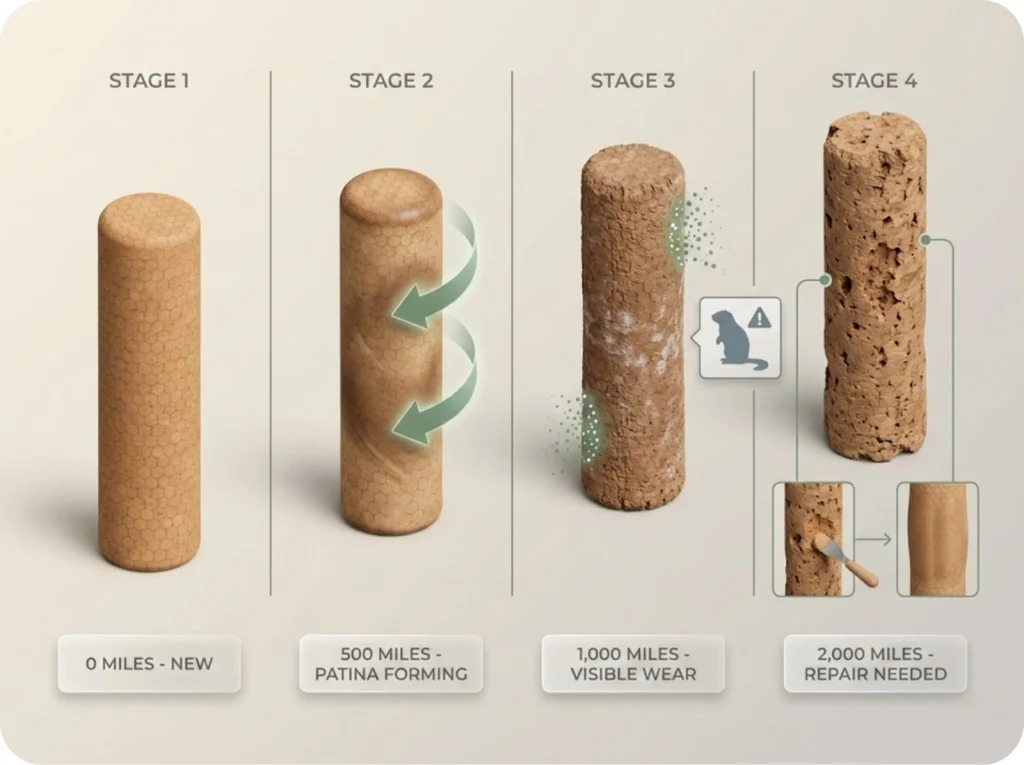
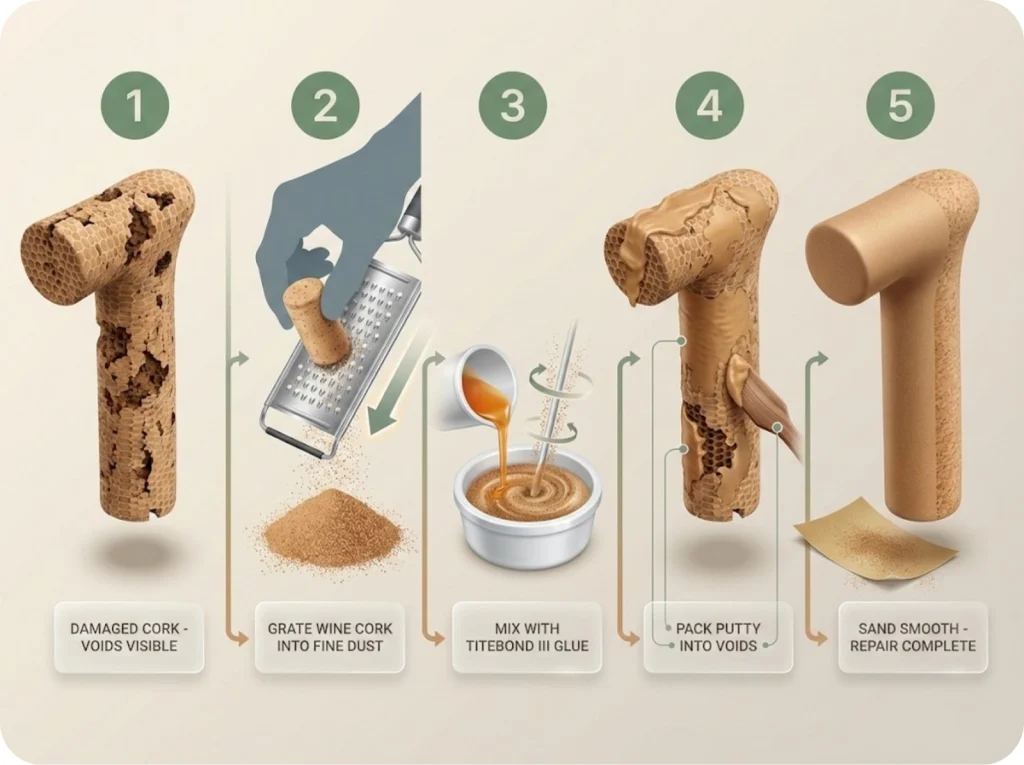
But here’s what separates cork from every other handle material: you can fix it. Unlike plastic or rubber or foam, cork handles are mechanically repairable. Grate a standard wine cork into fine dust, mix it with Titebond III waterproof wood glue to create a “cork putty,” pack it into the voids, let it cure, and sand it smooth with 220-grit paper. The repair is almost invisible. This lets you maintain a “broken-in” grip for years rather than tossing the poles and starting over.
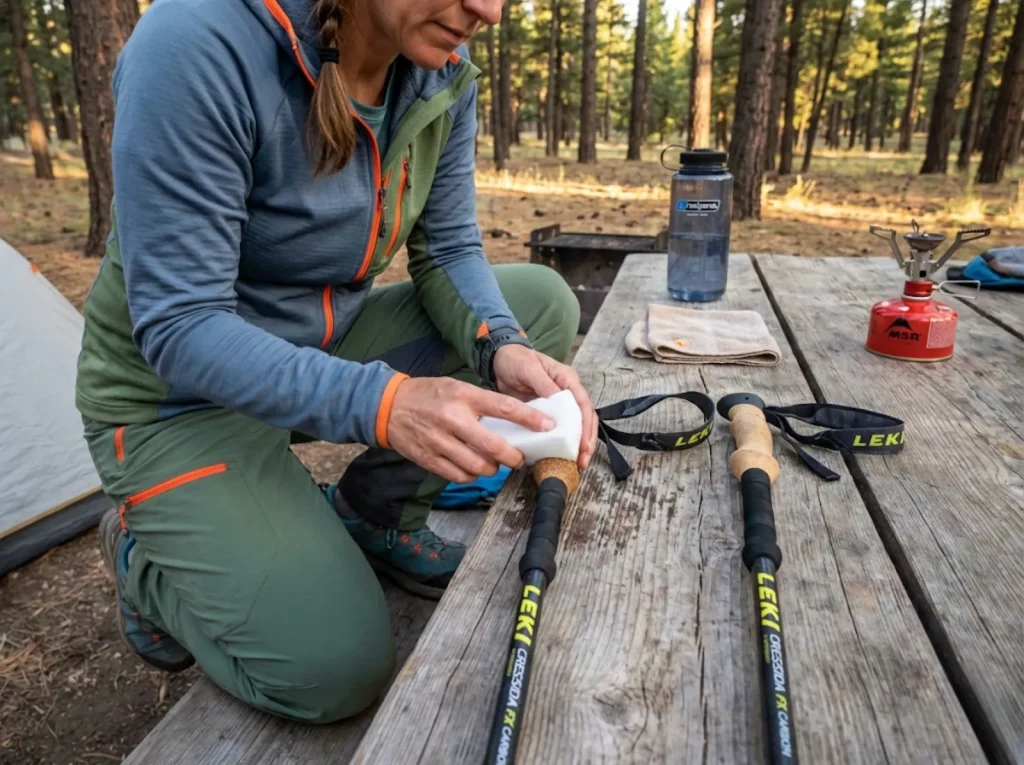
Pro tip: The Magic Eraser (melamine foam) is your best friend for cork maintenance. A damp one acts like microscopic sandpaper, stripping the oil-and-dust salt patina without harsh chemicals and exposing fresh cork cells underneath.
Why Foam Outlasts Cork (But Can’t Be Repaired)
EVA foam is tougher against UV degradation, moisture resistance, and crumbling. High-density cork constructions hold up better than composite blends, but even the best cork can’t match foam’s raw longevity. High-density foam grips maintain structural integrity well past 2,000 miles of use. But once they tear or degrade, the entire grip must be replaced. There’s no field fix. This is where durable materials like foam win the numbers game but lose the repairability argument.
Now for the weight myth. Marketing frames foam as the “ultralight” choice and cork as the “heavy premium” option. Independent weight comparison audits tell a different story. In Leki’s high-end lineup, the EVA version is actually heavier per grip than the cork version, because high-durometer foam is surprisingly dense. Meanwhile, where Black Diamond cork handles are heavier, it’s the internal plastic core and over-molded design that add the grams, not the cork itself.
The real weight conversation isn’t about grip materials at all. The choice of locking mechanism (aluminum FlickLocks vs. plastic twist locks) accounts for a far larger weight swing per pole than any grip ever will. If weight is driving your decision, look at the shaft and locks first. Knowing how folding and telescoping poles actually break down will tell you more about total weight and durability than any cork-vs-foam spec sheet.
Hot Weather, Cold Weather, and Picking the Right Grip for Your Climate

Why Cork Wins in Heat and Humidity
In temperatures above 80°F, cork’s moisture-wicking action keeps the hand-to-grip interface noticeably drier during sustained effort. Its low thermal conductivity means the handle doesn’t bake in direct sun, staying neutral against bare skin while rubber or plastic grips would get uncomfortably hot. Hikers in the Desert Southwest and along exposed ridge lines consistently choose cork for full-day hikes in hot weather hiking conditions.
Cork’s antimicrobial scent resistance pays off during multi-day summer trips when washing your hands or gear is a luxury. And the molding effect gets a slight boost in heat, as warmer temperatures soften the cork structure and accelerate that custom fit.
When Foam Makes More Sense in Cold Conditions
Both cork and EVA trap air, making them solid insulators with strong thermal insulation properties. But EVA has a practical advantage in cold weather hiking: it’s softer and more forgiving when gripped through thick winter gloves. Low-grade composite cork can allow frozen moisture inside its pores in sub-zero conditions, creating a rough, uncomfortable surface that chews up glove fabric.
EVA’s closed-cell foam structure prevents any internal moisture freezing, period. For winter-specific pole use, it’s the safer bet. Rubber grips are a third option, but they become a liability above 85°F, causing friction blisters and hot spots from excess heat absorption. For three-season hikers in moderate climates, honestly, pick whatever feels better in your hand at the store. The difference narrows fast when conditions are mild. Knowing whether carbon or aluminum transmits less cold to your hands matters as much as the grip itself in winter conditions.
Cleaning, Maintenance, and Making Your Grips Last
How to Clean Cork Grips Without Damaging Them
Start with a damp Magic Eraser. The melamine foam acts as microscopic sandpaper, stripping away the oil-and-dust buildup that kills cork’s natural grip texture. For deeper salt stains, isopropyl alcohol on a cloth works, but don’t soak the grip. Avoid harsh chemical solvents entirely. They strip the suberin from the cork cells, accelerating the crumbling you’re trying to prevent.
Clean after every three to four multi-day trips, or whenever the grip feels noticeably slick. After cleaning cork grips, let them air dry fully before storage. Trapped moisture inside cork is how mold starts.
How to Restore Damaged Cork (The DIY Repair Guide)
This is where cork earns its “heirloom gear” reputation. Grate a standard wine cork into fine dust using a cheese grater. Mix that dust with Titebond III waterproof wood glue until you get a thick paste. Pack the cork putty into voids or chewed sections, smooth the surface, and let it cure for 24 hours. Sand with 220-grit paper until the repair blends with the original surface.
This technique can restore a significant portion of the grip’s surface area. The repair is nearly invisible when done well, and it saves you from replacing poles that are otherwise perfectly functional.
Maintaining EVA Foam Grips
Foam is low-maintenance. Wipe down with a damp cloth after each trip. Store poles in a cool, dry area away from direct sunlight to prevent UV degradation. New EVA foam handles should be aired out in a well-ventilated space for 48-72 hours to minimize formamide off-gassing before your first trip. The CDC’s occupational safety profile on formamide notes that it can irritate eyes and skin on direct contact, though the trace amounts in trekking pole grips are far below workplace exposure limits. Inspect the foam-shaft bond annually. Separation there means the grip needs professional replacement.
For the full trekking pole maintenance and field repair guide, we cover everything from lock lubrication to shaft inspection across both cork and foam models.
Pro tip: Never adjust FlickLock tension while the lever is in the closed position. It cracks the housing. Open the lever, turn the screw, then close and test.
Sustainability and the Environmental Cost of Your Grip
Why Cork Is the Clear Environmental Winner
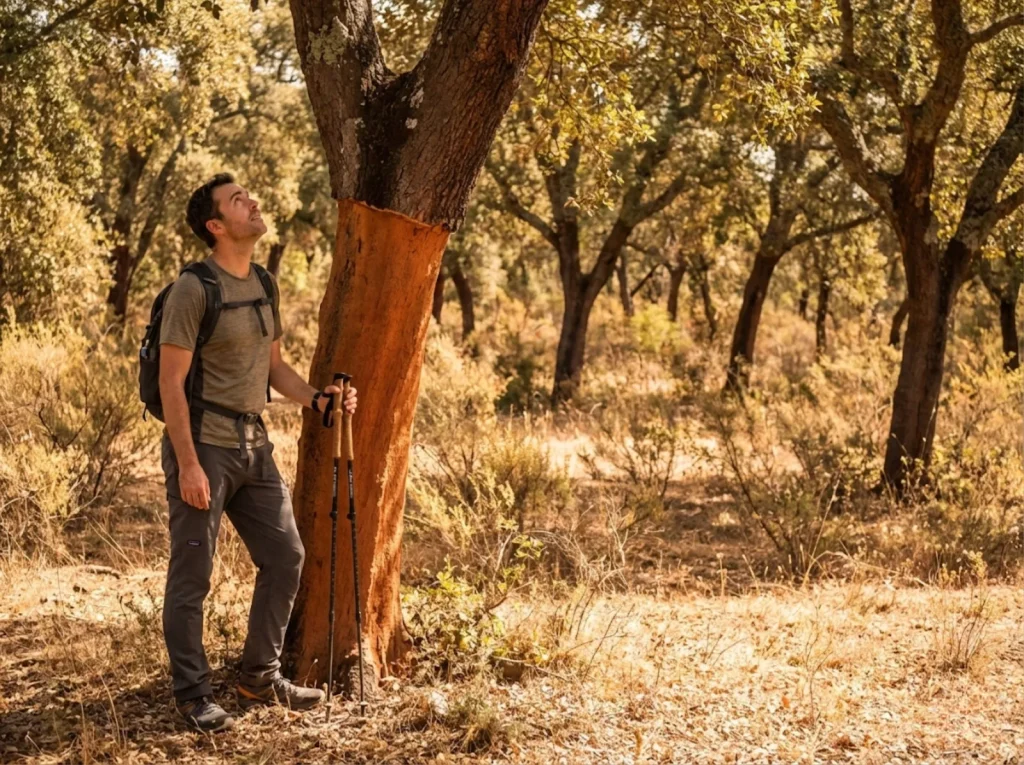
Cork is harvested by stripping bark from living Quercus suber trees, which then regenerate over roughly nine years. That makes it a carbon-sequestering renewable resource. Cork oak forests support biodiversity and prevent desertification across the Mediterranean. At end of life, cork is biodegradable and compostable. The main environmental question is shipping distance since most cork comes from Portugal and North Africa. Choosing eco-friendly material options like cork aligns with the Leave No Trace principles of responsible outdoor stewardship that most serious hikers already practice on the trail.
EVA Foam’s Footprint and the “Bloom Foam” Alternative
Standard EVA is a petroleum-derived thermoplastic. Not biodegradable, difficult to recycle, and its production has a measurable carbon footprint. The emergence of Bloom Foam, an algae-based alternative used in poles like the Black Diamond Pursuit, offers reduced environmental impact while maintaining synthetic material performance characteristics. EVA’s longer lifespan partially offsets its footprint since fewer replacements means less waste over a hiking career.
For vegans, EVA is confirmed as an animal-product-free alternative to certain composite cork binders. And whether you’re choosing how to recycle, donate, or repair your hiking gear, understanding what your gear is made of helps you make better end-of-life decisions.
Conclusion
Three things matter here. First, if you deal with sweaty palms in warm conditions, cork’s moisture-wicking and antimicrobial properties give it a definitive edge over foam’s sealed surface. Second, if you hike mostly in cold weather, use thick gloves, or want immediate cushioning without a break-in period, EVA foam is the smarter pick. Third, the weight difference between cork vs foam pole grips is negligible. Your locking mechanism and shaft material affect total pole weight far more than the grip ever will.
Next time you’re in a gear shop, grip both materials bare-handed for 30 seconds with a tight fist. That squeeze test tells you more about your personal preference than any spec sheet.
FAQ
Do cork grips get slippery when wet?
No. Cork becomes tackier when exposed to moisture due to its hydrophobic surface and moisture-wicking properties. In rain, cork actually improves grip performance while EVA foam can feel slippery as water sits on its sealed surface.
How long do cork trekking pole grips typically last?
With regular cleaning and occasional repair, cork handles can last 1,500 to 3,000+ miles. Solid-cork constructions outlast composite blends significantly, though all cork eventually shows wear.
Can I switch just the grips on my existing trekking poles?
On most poles, the grip is bonded to the shaft and not designed for user replacement. Some manufacturers offer grip replacement as a service, but it’s generally more practical to choose the right grip material when buying new.
Are cork grips worth the higher price?
For hikers logging 500+ miles annually in hot weather hiking conditions, cork’s personalized fit and superior sweat management justify the $20-40 premium over foam models. Casual day hikers won’t notice enough difference to justify the cost.
Is formamide in new EVA foam grips dangerous?
Formamide off-gassing from new EVA drops significantly within 48-72 hours of ventilation. Air out new poles in a non-living space before your first trip. At trail-use exposure levels, it poses minimal risk to healthy adults.
Risk Disclaimer: Hiking, trekking, backpacking, and all related outdoor activities involve inherent
risks which may result in serious injury, illness, or death. The information provided on The Hiking Tribe is for
educational and informational purposes only. While we strive for accuracy, information on trails, gear, techniques,
and safety is not a substitute for your own best judgment and thorough preparation. Trail conditions, weather, and
other environmental factors change rapidly and may differ from what is described on this site. Always check with
official sources like park services for the most current alerts and conditions. Never undertake a hike beyond your
abilities and always be prepared for the unexpected. By using this website, you agree that you are solely
responsible for your own safety. Any reliance you place on our content is strictly at your own risk, and you assume
all liability for your actions and decisions in the outdoors. The Hiking Tribe and its authors will not be held
liable for any injury, damage, or loss sustained in connection with the use of the information herein.
Affiliate Disclosure: We are a participant in the Amazon Services LLC Associates Program, an
affiliate advertising program designed to provide a means for us to earn advertising fees by advertising and linking
to Amazon.com. As an Amazon Associate, we earn from qualifying purchases. We are also an official affiliate partner
of Black Diamond Equipment via the AvantLink network. If you click on a Black Diamond affiliate link and make a
purchase, we may earn a commission at no additional cost to you. We also participate in other affiliate programs and
may receive a commission on products purchased through our links. Additional terms are found in the terms of
service.