In this article
Last spring I stood at a trailhead in southern Utah staring at a map with a 24-mile dry stretch between me and the next reliable water source. My pack already weighed 35 pounds without a single drop loaded. That math problem — too much water to carry, too little water on the trail — is why experienced desert hikers cache water ahead of time. Here’s the complete process I use to plan, place, and retrieve water caches so the desert doesn’t decide my turnaround point.
Quick Answer: Here’s how to cache water for desert hiking:
- Map every water source on your route and identify dry gaps over 10 miles
- Choose heavy-duty HDPE containers that resist UV and freezing
- Place 2 gallons per person at each cache site, spaced by carry capacity
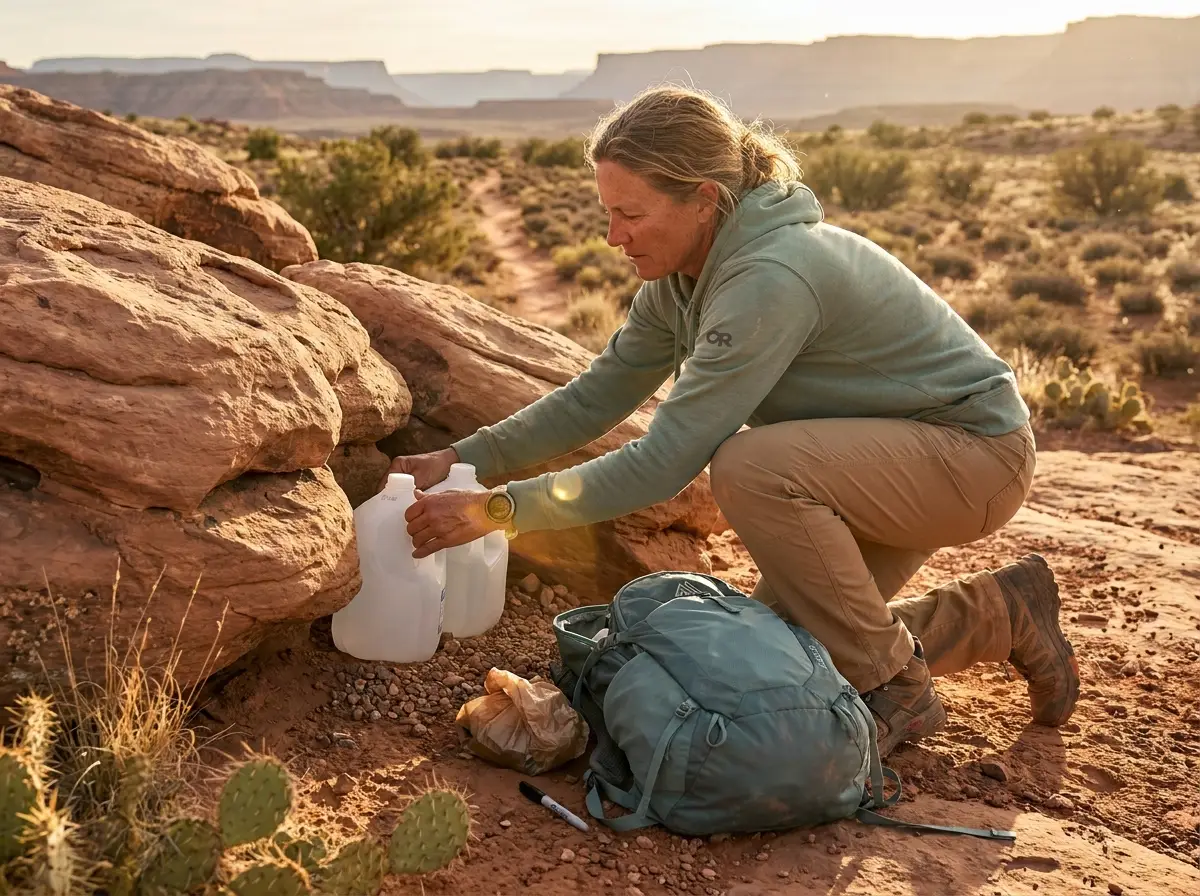
- Hide caches in rock crevices, wrap in brown paper, mark with GPS waypoints
- Label every jug with your name, date, and expected retrieval date
- Pack out all containers and trash when you retrieve them
Why Water Caching Changes Everything in Dry Country
The Weight Math That Breaks Your Back
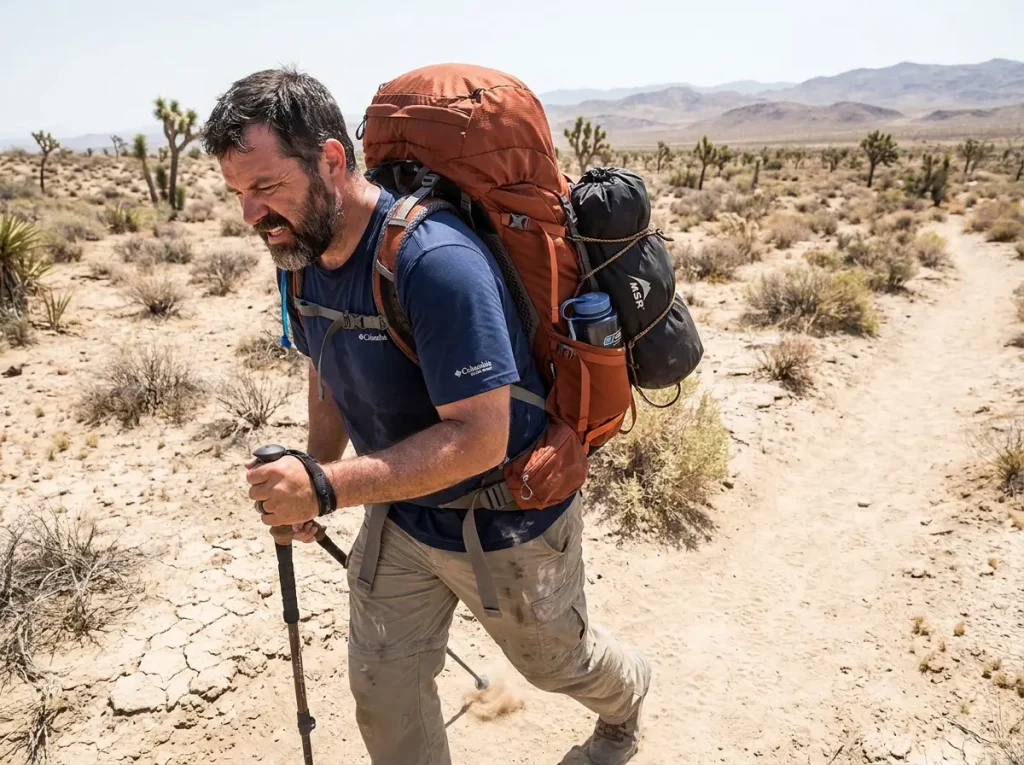
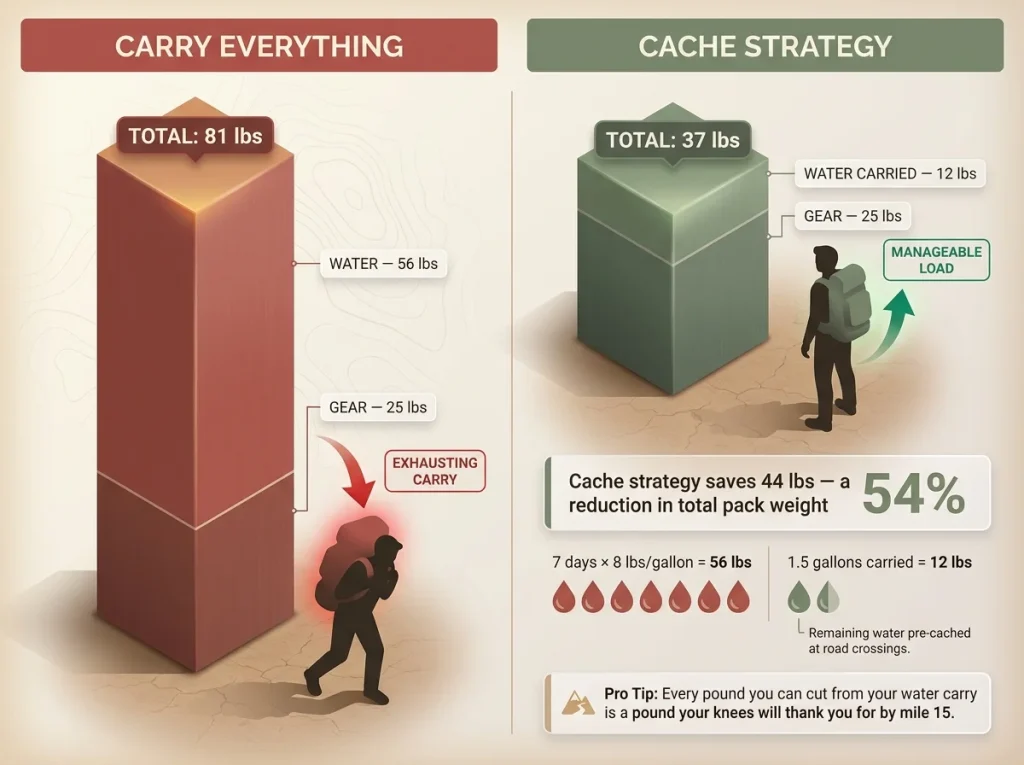
Water weighs 8 pounds per gallon. That’s not a suggestion — it’s physics, and it doesn’t negotiate. A standard rule of thumb puts your ideal pack weight at 25 to 30 percent of your body weight. If you weigh 160 pounds, your fully loaded pack should land between 40 and 48 pounds — gear, food, water, everything.
Now run the numbers for a week-long desert trip. At one gallon per day in hot conditions, you’re looking at 56 pounds of water alone. That’s before you add your tent, sleeping bag, stove, and food. The math simply doesn’t work, and your knees will remind you long before your calculator does.
On a guided trip through Joshua Tree National Park, one group encountered a solo hiker carrying four gallons — 32 pounds of water on top of her full pack. She was tough. She was also miserable by mile six. There’s a better way.
When Caching Beats Carrying
Caching makes sense whenever your route crosses a dry gap longer than what you can comfortably carry water for. In the desert Southwest, that threshold usually falls around 10 to 15 miles depending on heat, your pace, and how much water you drink per hour.
The concept is simple: drive to road crossings or accessible points along your route before the hike, stash water, and pick it up when you walk through days later. You’re trading a few hours of driving and short approach hikes for dramatically less weight on your back during the actual trip.
Pro tip: If your route crosses a paved road at any point, that’s your first cache site. Road crossings are easy to reach by car and nearly impossible to miss on foot — even at night when you’re tired and your GPS battery is fading.
Choosing Containers That Survive the Desert
HDPE vs Grocery Store Jugs
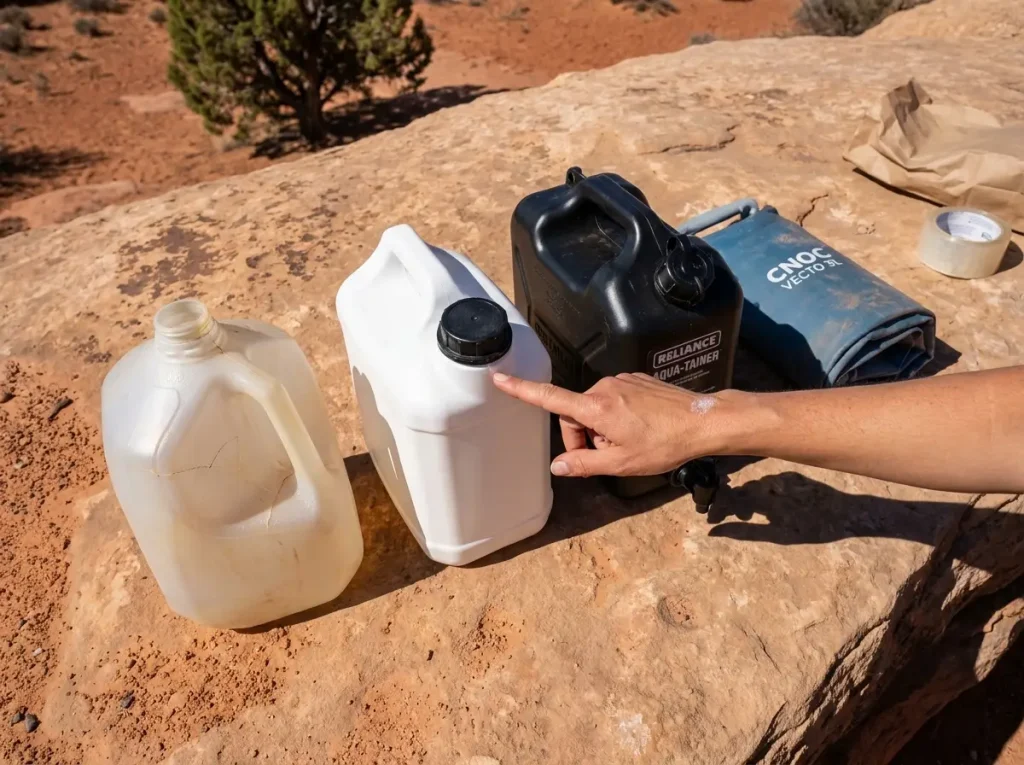
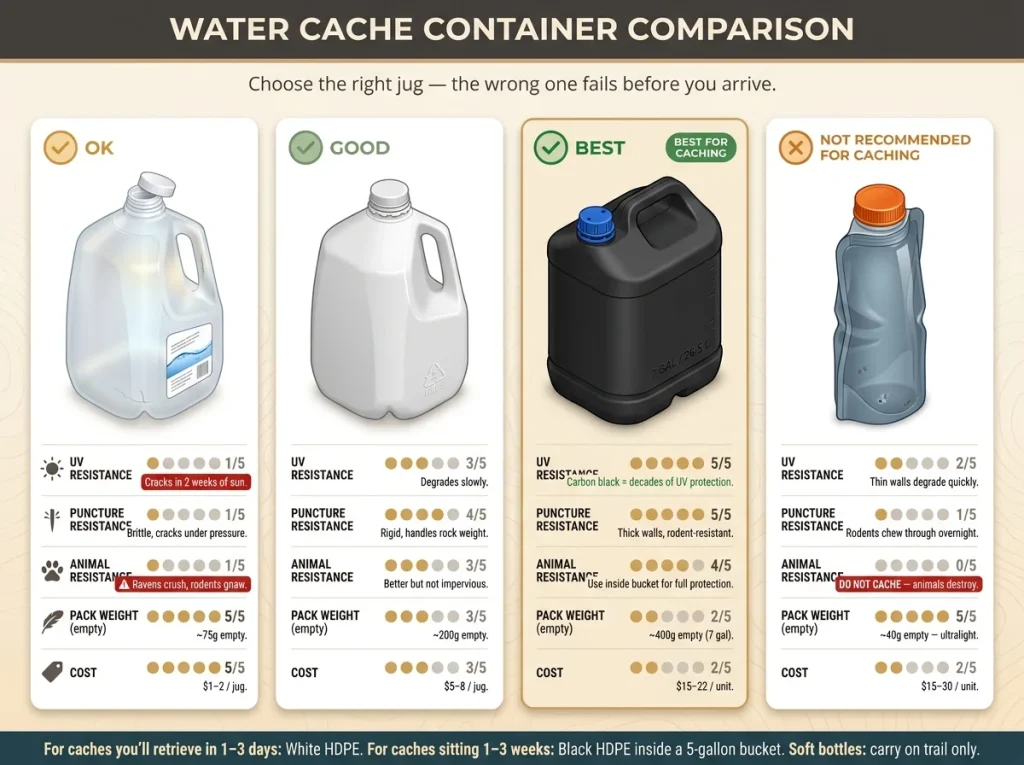
Not all plastic is created equal, and the desert will prove that fast. Those thin translucent gallon jugs from the grocery store are made from LDPE (low-density polyethylene). They’re fine for your refrigerator. In the desert, UV radiation breaks down the polymer chains, and the plastic turns brittle and cracks — sometimes in as little as two weeks of direct sun exposure.
HDPE (high-density polyethylene) is the standard for serious caching. These are the thicker, opaque jugs you find at outdoor retailers and hardware stores. HDPE resists UV degradation far better than LDPE, and when manufacturers add carbon black pigment, the material can withstand direct sun exposure for decades without significant structural failure.
The practical difference: an HDPE jug sitting behind a rock in the Mojave for three weeks will still be intact when you need it. A grocery store jug might be a cracked shell leaking into the sand.
Collapsible vs Rigid Containers
Rigid HDPE jugs with handles are the caching standard for good reason. They’re puncture-resistant, easy to carry short distances, stackable in your vehicle, and they don’t collapse under the weight of rocks you pile on top for camouflage. The gallon size with a screw cap is the sweet spot — heavy enough to stay put in wind, light enough to carry a few at a time on approach hikes.
Collapsible containers like the CNOC Vecto or Platypus SoftBottle are great for carrying water on trail, but they’re risky for caching. Forum reports consistently mention rodents chewing through the thin flexible plastic. One backpacker on the Backcountry Post forum described finding a Platypus bottle with neat little tooth marks punched straight through it — the water long gone, the cache useless.
For caching, save the collapsible bottles for drinking on the move. Use rigid jugs for the stash.
The Black Jug Advantage
If you can find black HDPE containers like the Reliance Aqua-Tainer, use them. The carbon black additive does double duty: it blocks UV light from reaching the water inside (preventing bacterial growth) and it massively extends the plastic’s lifespan in direct sun. No light penetration means fewer biological issues even if the water sits for weeks.
Clear or translucent containers let sunlight through, which promotes algae and bacterial growth in stagnant water. You can mitigate this by wrapping jugs in brown paper bags or aluminum foil, but starting with an opaque container is simpler and more reliable.
Pro tip: Wrap every jug — even black ones — in a brown paper grocery bag and secure it with a rubber band. The brown blends with desert terrain for camouflage, and the paper adds a thin insulation layer that reduces temperature swings inside the container.
Planning Where to Place Your Caches
Mapping Water Sources and Dry Gaps
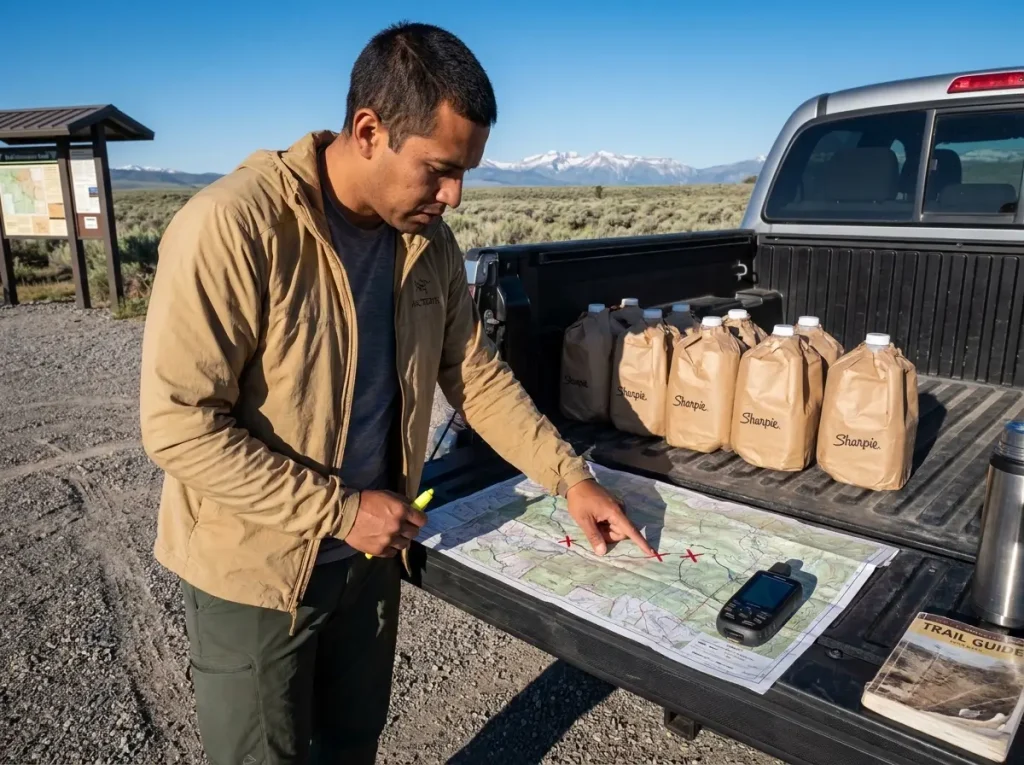
Before you buy a single jug, sit down with a detailed map of your route and mark every known water source — springs, creeks, stock tanks, trail angel caches, and spigots at trailheads or campgrounds. Use current-season reports, not last year’s data. Desert water sources can go from flowing to bone-dry in a matter of weeks depending on snowpack, monsoon timing, and livestock use.
The best tools for this are trail-specific apps like Guthook (now FarOut) with recent hiker comments, water reports published by trail associations, and your own hydration math based on expected temperatures and pace.
Mark the gaps. Any stretch longer than 10 miles without a reliable source in hot conditions deserves a cache — or at minimum, a serious conversation about whether you can carry enough.
The Spacing Formula
Here’s a straightforward approach that works. Figure out your hourly water consumption in desert heat — for most hikers that’s 0.75 to 1.0 liter per hour. Multiply by your expected hiking hours between water points. If the result exceeds what you can comfortably carry (usually 4 to 6 liters for most people), you need a cache somewhere in that gap.
A common rule of thumb among thru-hikers: one liter per five miles in moderate heat. A 20-mile dry stretch means 4 liters minimum, more like 5 or 6 if it’s a hot exposed section with no shade. If the gap is 25 miles or more, you’re looking at placing a cache roughly at the midpoint.
Space your caches so you never need to carry more than about 4 liters at any point. That keeps water weight under 9 pounds — manageable alongside a full pack.
Choosing Cache Sites
The ideal cache site hits three criteria: accessible by vehicle or a short approach hike, located near where the trail crosses a road or passes a landmark, and hidden from casual view but findable with GPS coordinates.
Road crossings are the obvious first choice. A trail crossing a forest road or a paved highway gives you car access for placement and a guaranteed landmark for retrieval. If the route doesn’t cross roads, look for prominent trail junctions, distinctive rock formations, or named landmarks on the topo map.
Avoid placing caches within a quarter mile of natural water sources — other hikers and animals concentrate near water, increasing the chance your cache gets found and raided. Also avoid wash bottoms and flood-prone areas. A flash flood will carry your jugs to the next county.
Pro tip: When planning resupply stops for multi-day hikes, combine water cache placement with food drops at the same sites. One car trip, two problems solved.
How to Hide and Mark Your Cache
Camouflage That Works
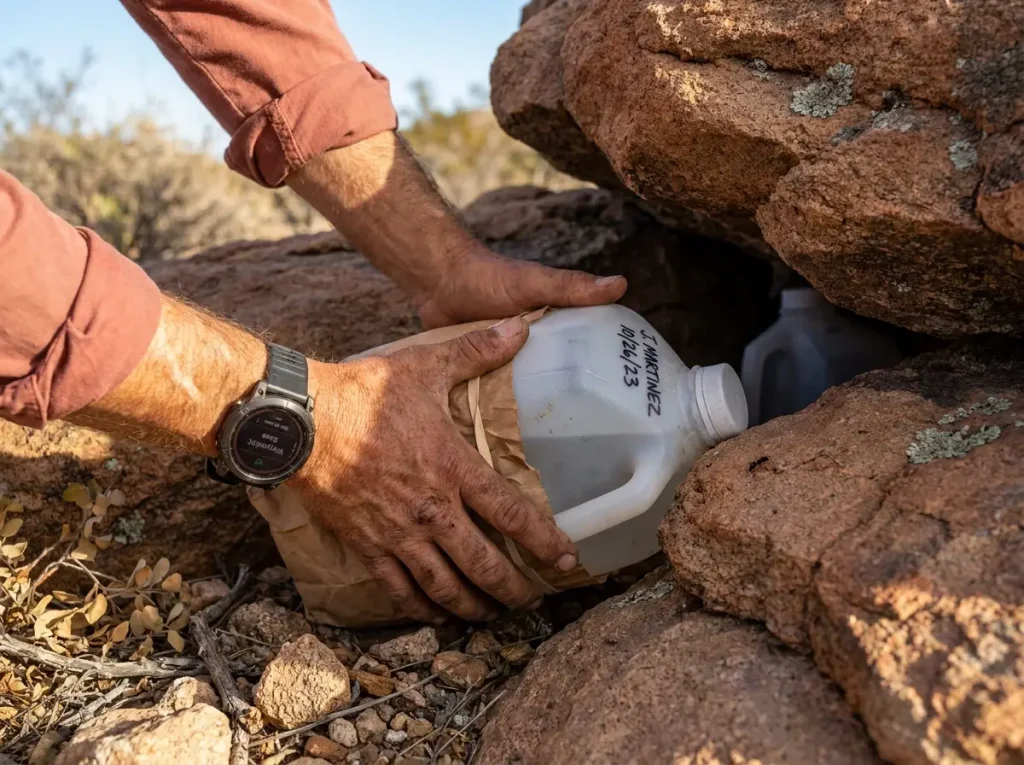
The goal is to hide your jugs well enough that a passing hiker or curious animal doesn’t stumble on them, but not so well that you can’t find them yourself. Tuck jugs into natural rock crevices, under overhanging ledges, or behind large boulders. Cover them with loose rocks and blend the disturbed area back into the surrounding terrain.
Brown paper bag wrapping is the oldest trick in the desert caching playbook — and it works. The matte brown surface matches the dominant color of most desert landscapes far better than white or blue plastic. Secure the bag with a rubber band or a strip of packing tape and tuck the jug out of sight.
Never use flagging tape or bright markers to mark your cache location. They attract attention from other people and they violate Leave No Trace principles on most public lands. Your GPS is your marker — everything else should be invisible.
GPS Waypoints and Backup Navigation
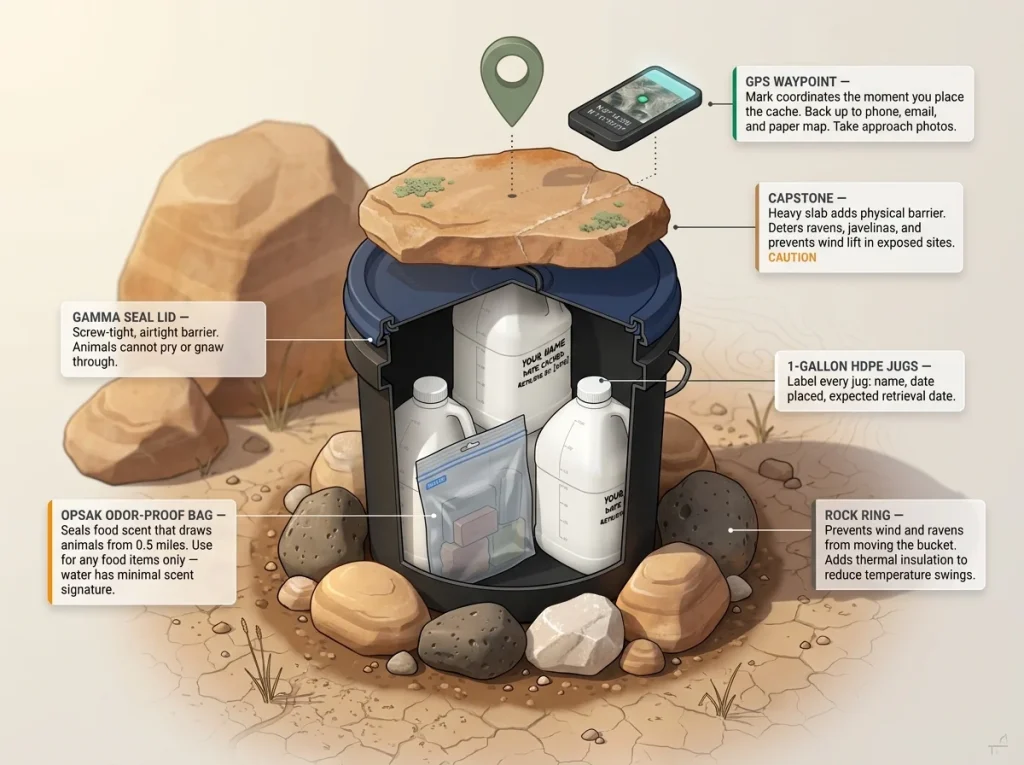
Take a GPS waypoint the moment you place each jug. Not ten minutes later when you’re back at the car trying to remember which boulder it was. Right then, standing over the cache, with the GPS unit in your hand.
Back up those waypoints. Save them to your phone, email them to yourself, and write the coordinates on a waterproofed paper map as a failsafe. Take two or three photos showing the cache location from the approach direction — the angle you’ll be walking from when you come to retrieve it.
Label every jug with your name, phone number, and expected retrieval date using a black Sharpie. Cover the writing with clear packing tape so it survives rain and sun. This serves two purposes: it identifies the cache as intentional (not abandoned trash), and it gives other hikers a way to contact you if they find it in an emergency.
One desert guide tells the story of finding a cache he’d placed three years earlier and forgotten about. The water was long gone through a cracked seam, but the GPS waypoint led him straight to it. Without those coordinates, a white jug behind a boulder in a field of boulders would have become permanent desert litter.
Animal-Proofing Your Water Cache
Desert Animals That Target Caches
This is the part most caching guides skip, and it’s the part that has ruined more than a few trips. Desert animals need water as badly as you do, and they’ll work hard to get it. Rodents — pack rats, kangaroo rats, ground squirrels — gnaw through thin plastic overnight. Ravens are smart enough to peck at caps and drag lightweight containers into the open. In the Southwest, javelinas have been known to crush and puncture jugs to get at the water inside.
The thin walls of collapsible bottles and standard grocery jugs are particularly vulnerable. A motivated pack rat can chew through a Platypus bottle in a single night. You won’t find tooth marks and a small hole — you’ll find an empty shredded shell.
The 5-Gallon Bucket Method
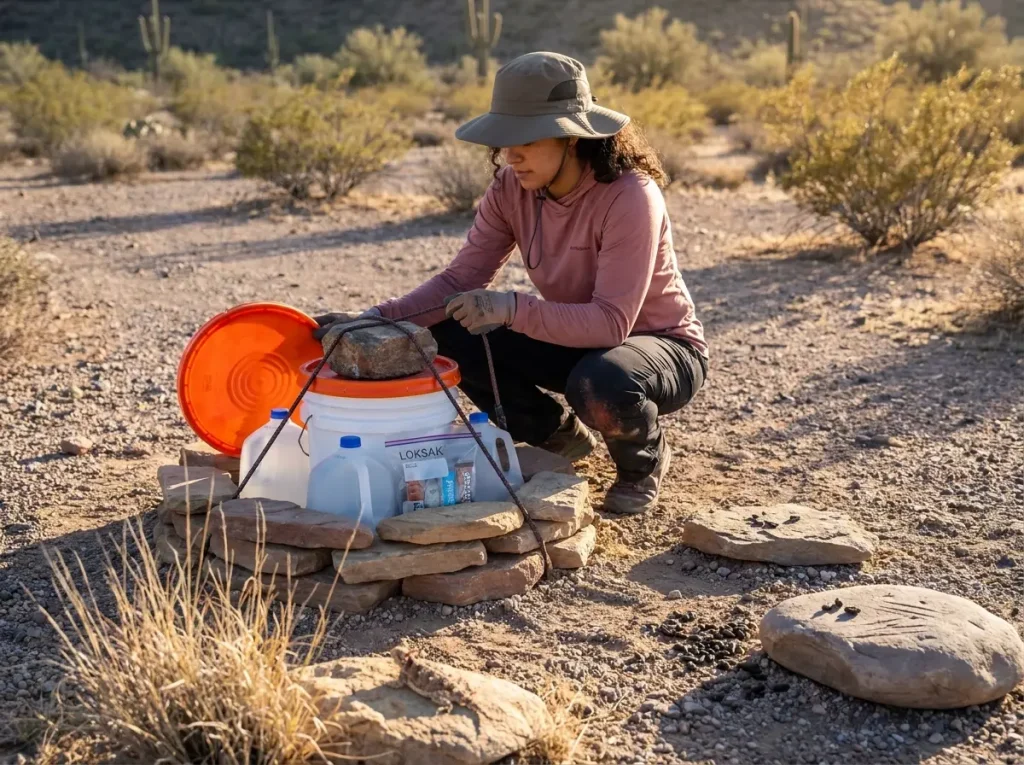
For caches that need to survive more than a few days, the 5-gallon HDPE bucket with a gamma seal lid is the gold standard. Place your individual water jugs inside the bucket, seal the lid, and stack rocks around and on top. The thick bucket walls stop rodents cold, the screw-on gamma seal is too complex for animal jaws, and the weight of the loaded bucket plus rocks keeps it anchored against wind and larger animals.
The Oregon Natural Desert Association specifically recommends 5-gallon buckets for caching on the Oregon Desert Trail, noting that you should bury them on previously disturbed land and cover completely with dirt and rocks.
If food items go into the same cache, seal them in OPSAK odor-proof bags inside the bucket. Scent is what draws animals from a distance — water alone has less scent signature, but food will bring every critter in a half-mile radius.
For quick caches you’ll retrieve within a few days, the minimum animal deterrent is securing rigid HDPE jugs to something immovable. Use paracord or heavy string to tie jugs to a tree trunk, a large rock, or a fence post. This won’t stop a determined rodent from chewing, but it prevents ravens and wind from carrying your water away.
Pro tip: If your cache site has no trees or anchor points, stack flat rocks into a low wall around the jugs, then place a heavy capstone on top. The extra weight and the barrier slow down all but the most motivated animals — and buying time is often enough, since most desert rodents work at night and give up if the effort isn’t worth the reward.
Legal Rules for Caching on Public Land
Federal Land Regulations by Agency
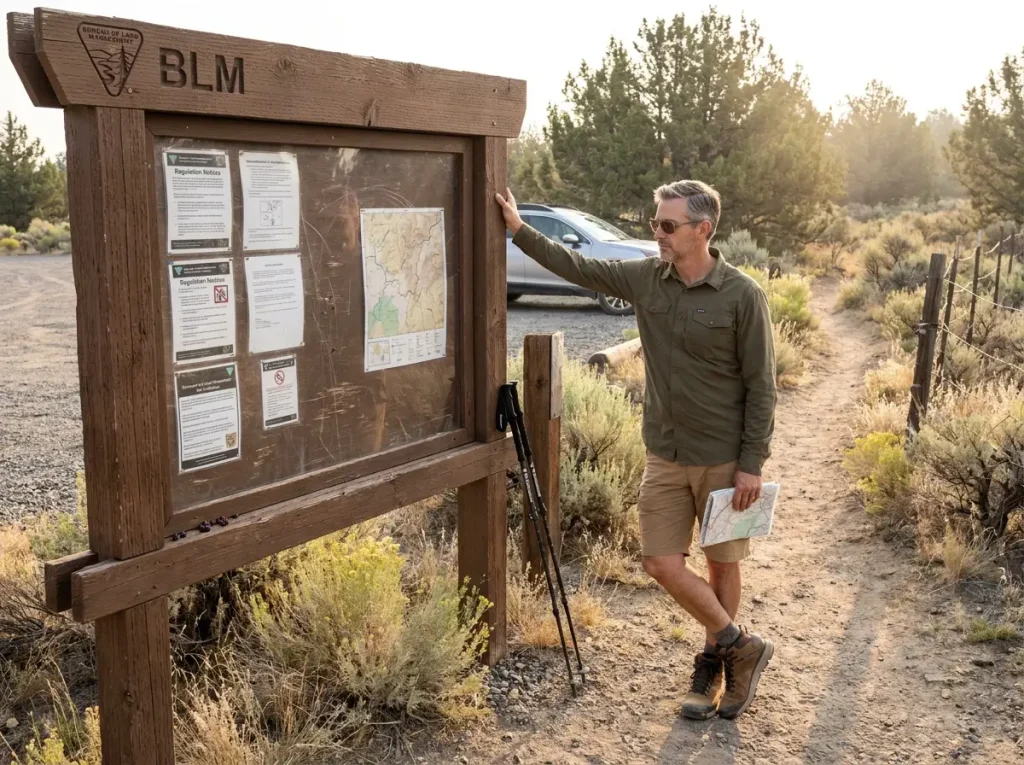
Not all public land treats water caching the same way, and getting this wrong can mean fines or confiscated supplies. Here’s how the major land management agencies handle it:
Bureau of Land Management (BLM) land generally allows caching, but with a critical time limit. You cannot leave personal property unattended on BLM land for more than 10 days in most states. Some field offices have stricter limits. Always check with the local BLM office before your trip.
National Forests (USFS) regulations vary by forest. Some national forests prohibit caching entirely. Others allow it with restrictions on duration and location. The safest approach is to call the ranger district office for the specific forest your route passes through.
National Wildlife Refuges — caching is prohibited. Period. These lands prioritize wildlife, and leaving any stored materials is considered a violation.
National Park Restrictions
National Parks are the strictest category. Most parks prohibit leaving any personal property unattended along trails or in the backcountry. Some parks in the desert Southwest — like Joshua Tree and Big Bend — have specific guidance for water management on backcountry permits, but this typically involves carrying your water, not caching it.
Before caching on any federal land, check three things: Is caching allowed? How long can items be stored? Does the cache need to be labeled with specific information (name, date, permit number)?
When in doubt, contact the land management agency directly. A five-minute phone call can save you from a citation — or worse, from arriving at an empty spot where a ranger removed your cache as abandoned property.
Retrieving Your Cache and Leaving No Trace
The Pack-Out Obligation
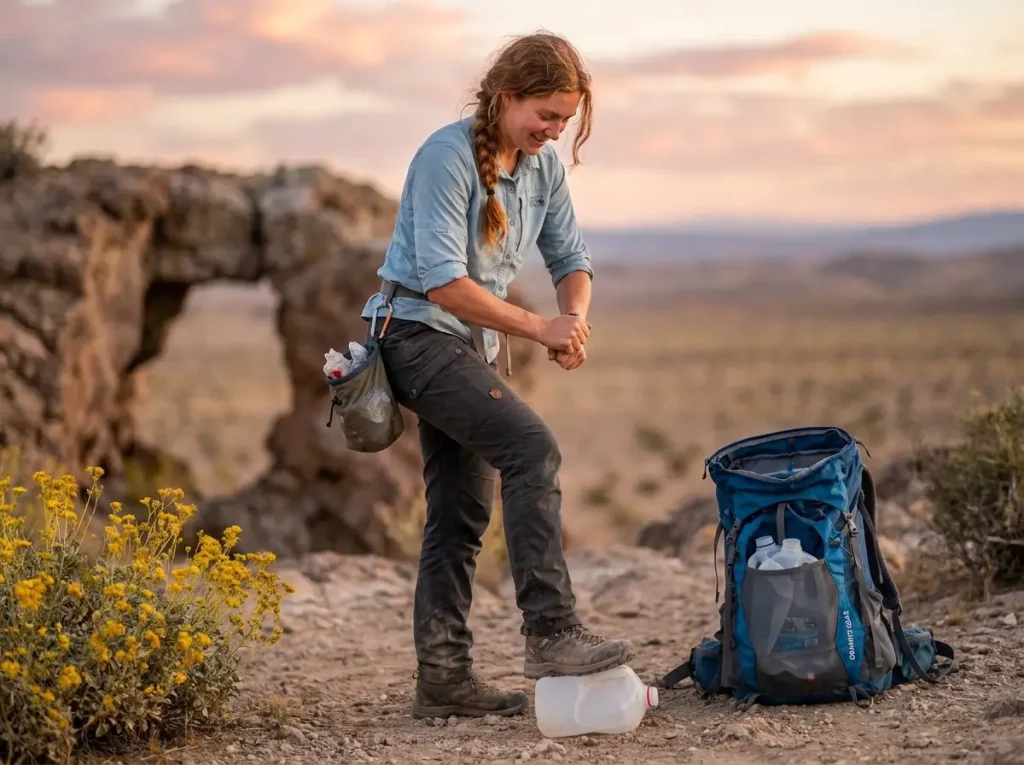
Every jug you place is a jug you carry out. This is non-negotiable under Leave No Trace principles and under the regulations of every public land agency. Empty jugs are still your responsibility — they don’t become “natural features” just because you’re done with them.
The good news: empty gallon jugs are easy to flatten. Step on the jug, twist the cap tight to keep it compressed, and stuff the pancaked plastic into your pack’s front mesh pocket or lash it to the outside with a strap. A crushed gallon jug takes up less space than a rolled-up t-shirt. Brown paper wrapping, rubber bands, tape scraps — all of it goes in your trash bag and comes out with you.
If you used a 5-gallon bucket, you have a harder pack-out. Plan for this in advance. Either stash the bucket at a road crossing where you can retrieve it by car, or accept that you’ll be carrying an awkward but light empty bucket for a section of trail.
What to Do When a Cache Is Missing
Never build a desert hike plan that falls apart if a single cache is gone. Caches fail. Animals destroy them. Other hikers take them in emergencies. Rangers remove them as abandoned property. Flash floods carry them downstream.
Your backup plan should answer one question: if this cache is empty, can I still reach the next water source safely? That might mean carrying an extra liter from the previous source “just in case.” It might mean knowing the location of a marginal seasonal source — a stock tank or a seep — between your cache and the next reliable water. It might mean having an emergency shelter plan and the ability to wait out the heat of the day if you need to ration.
The golden rule of desert caching: caches supplement your water plan. They never replace it.
Pro tip: On multi-day desert routes, I always carry a gravity water filter even when I know my caches are full. If I find a marginal water source — a muddy stock tank, a silty pool — the filter turns it from “last resort” into “plan B.” That peace of mind is worth the extra six ounces.
Conclusion
Water caching turns impossible desert routes into manageable ones, but only when you do it right. The three things that matter most: use HDPE containers that can handle UV and animal pressure, plan your cache spacing around honest consumption math rather than optimistic guesses, and always carry enough water to reach the next source even if your cache is gone.
Start small. Pick a day-hike loop with one dry stretch and practice the full process — drive to the cache point, place the jugs, hike through and retrieve them. You’ll learn more about container selection, hiding spots, and GPS marking from one practice run than from reading ten articles. Then scale up to the multi-day routes when the process feels second nature.
The desert doesn’t care about your plans. But good preparation — and a few gallons of water waiting behind the right rock — tips the odds back in your favor.
Q1 How long can cached water last in the desert?
Cached water in opaque HDPE containers stays safe to drink for several weeks if sealed tightly and kept out of direct sun. Clear containers promote bacterial growth within days. For caches lasting longer than two weeks, treat the water with a filter or purification tablets before drinking as a precaution.
Q2 What containers are best for water caching?
Opaque HDPE gallon jugs with screw caps are the standard choice. They resist UV, handle temperature swings, and hold up against rodent gnawing better than thin LDPE grocery jugs or collapsible soft bottles. Black HDPE containers with carbon black additives offer the best long-term UV protection.
Q3 Is it legal to cache water on public land?
It depends on the land manager. BLM land generally allows it with a 10-day unattended property limit. National Forests vary by district. National Wildlife Refuges and most National Parks prohibit caching. Always check with the local agency office before placing any cache.
Q4 How much water should I cache per location?
Plan for 2 gallons (about 7.6 liters) per person per cache site as a baseline. Adjust upward for extreme heat, longer gaps between sources, or if you’re a heavy sweater. It’s cheaper to cache an extra gallon than to run dry 8 miles from the next water.
Q5 How do I protect my water cache from animals?
Use rigid HDPE jugs — not collapsible soft bottles that rodents chew through overnight. For caches lasting more than a few days, place jugs inside a sealed 5-gallon bucket with a gamma seal lid and stack rocks around it. Tie shorter-term caches to a tree trunk or heavy rock with paracord to prevent ravens and wind from moving them.
Risk Disclaimer: Hiking, trekking, backpacking, and all related outdoor activities involve inherent
risks which may result in serious injury, illness, or death. The information provided on The Hiking Tribe is for
educational and informational purposes only. While we strive for accuracy, information on trails, gear, techniques,
and safety is not a substitute for your own best judgment and thorough preparation. Trail conditions, weather, and
other environmental factors change rapidly and may differ from what is described on this site. Always check with
official sources like park services for the most current alerts and conditions. Never undertake a hike beyond your
abilities and always be prepared for the unexpected. By using this website, you agree that you are solely
responsible for your own safety. Any reliance you place on our content is strictly at your own risk, and you assume
all liability for your actions and decisions in the outdoors. The Hiking Tribe and its authors will not be held
liable for any injury, damage, or loss sustained in connection with the use of the information herein.
Affiliate Disclosure: We are a participant in the Amazon Services LLC Associates Program, an
affiliate advertising program designed to provide a means for us to earn advertising fees by advertising and linking
to Amazon.com. As an Amazon Associate, we earn from qualifying purchases. We are also an official affiliate partner
of Black Diamond Equipment via the AvantLink network. If you click on a Black Diamond affiliate link and make a
purchase, we may earn a commission at no additional cost to you. We also participate in other affiliate programs and
may receive a commission on products purchased through our links. Additional terms are found in the terms of
service.