In this article
When the trail fades and the temperature drops, staring down a dark descent with only your phone flashlight is a helpless feeling. During my first unplanned night hike, a massive hidden root sent me sprawling simply because I couldn’t see my own feet. A reliable night hiking guide combining a dependable headlamp and basic analog navigation skills means the difference between a panicked shuffle and a rewarding trek. You don’t need military-grade gear to execute a night hike safely. You just need to understand eye biology, what light specs matter, and the old-school tricks that keep you found when the shadows get long.
⚡ Quick Answer: You need a headlamp with 100 to 200 lumens and a dedicated red light mode to safely navigate at night. Most beginners blast the woods with maximum white light, which instantly ruins their natural night vision.
| Flashlight Performance Specifications | ||
|---|---|---|
| Minimum Lumens | Ideal Beam Type | Required Feature |
| 100-200 (Walking) | Mixed / Adjustable | Red Light Mode |
| 400+ (Searching) | Mixed / Adjustable | Red Light Mode |
The Biology of Seeing in the Dark
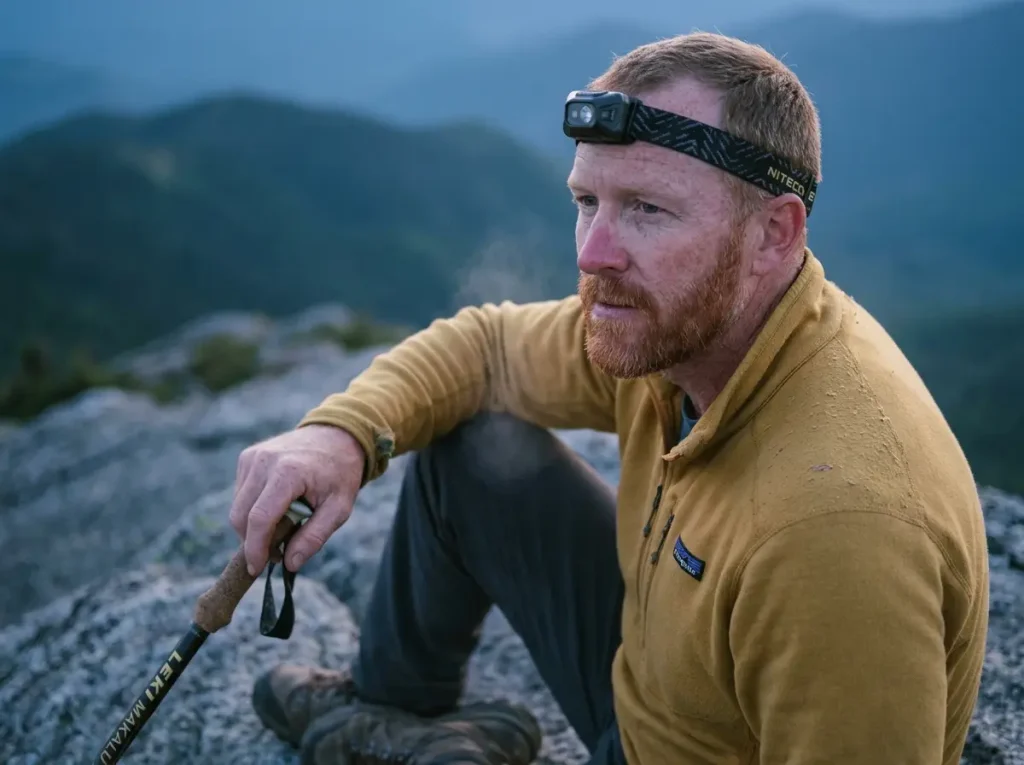
Walking after sundown forces a physical switch in how you see the woods. Daylight uses your eye’s cone cells for sharp colors, but darkness relies entirely on your edge-detecting rod cells. Understanding this biological shift is the first step for anyone learning how the human eye adapts to the dark. If you fight this natural process by staring into a blinding lamp, you actively ruin your ability to read the terrain.
The “Visual Purple” Battery Process
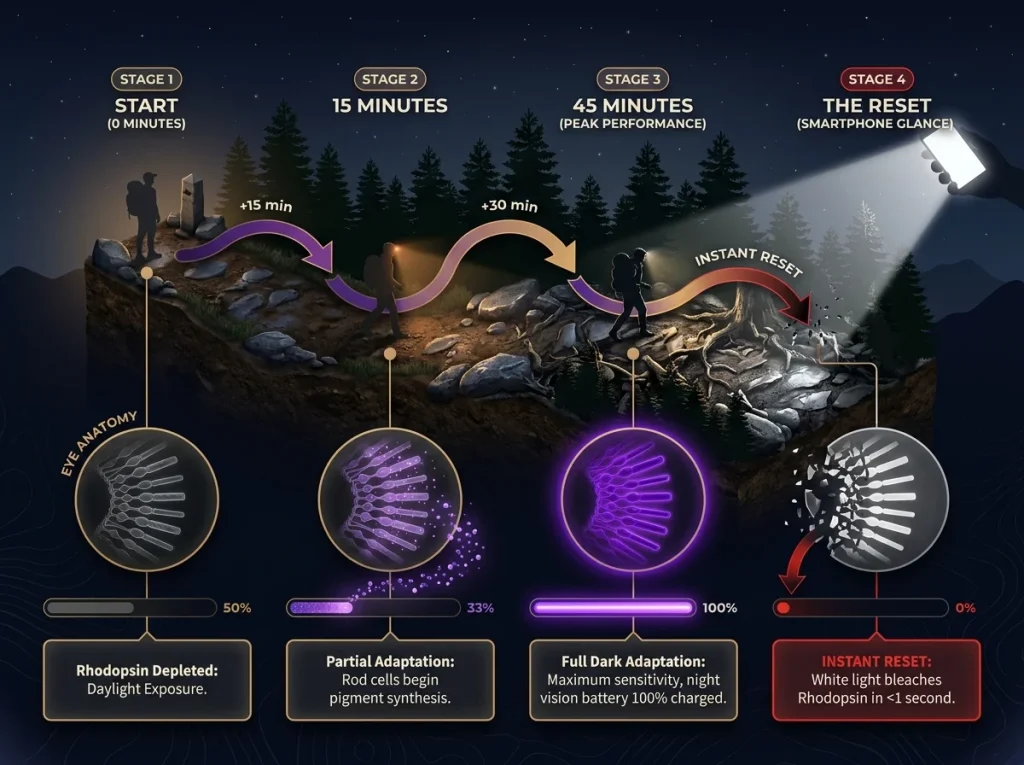
Your rod cells use a fragile chemical called visual purple to see once the sun disappears. Think of it like a rechargeable battery for your night vision. Harsh daylight drains this battery dry, and the recharge process only begins once you stand in the dark. It takes your eyes about forty-five uninterrupted minutes of blackness to hit peak performance. Here’s where most beginners mess up: one quick glance at a bright screen bleaches that chemical, resetting your forty-five-minute charge back to zero instantly. Recognizing this hard limit helps you understand how light output impacts visibility out on a rugged trail.
Why Red Light Actually Works
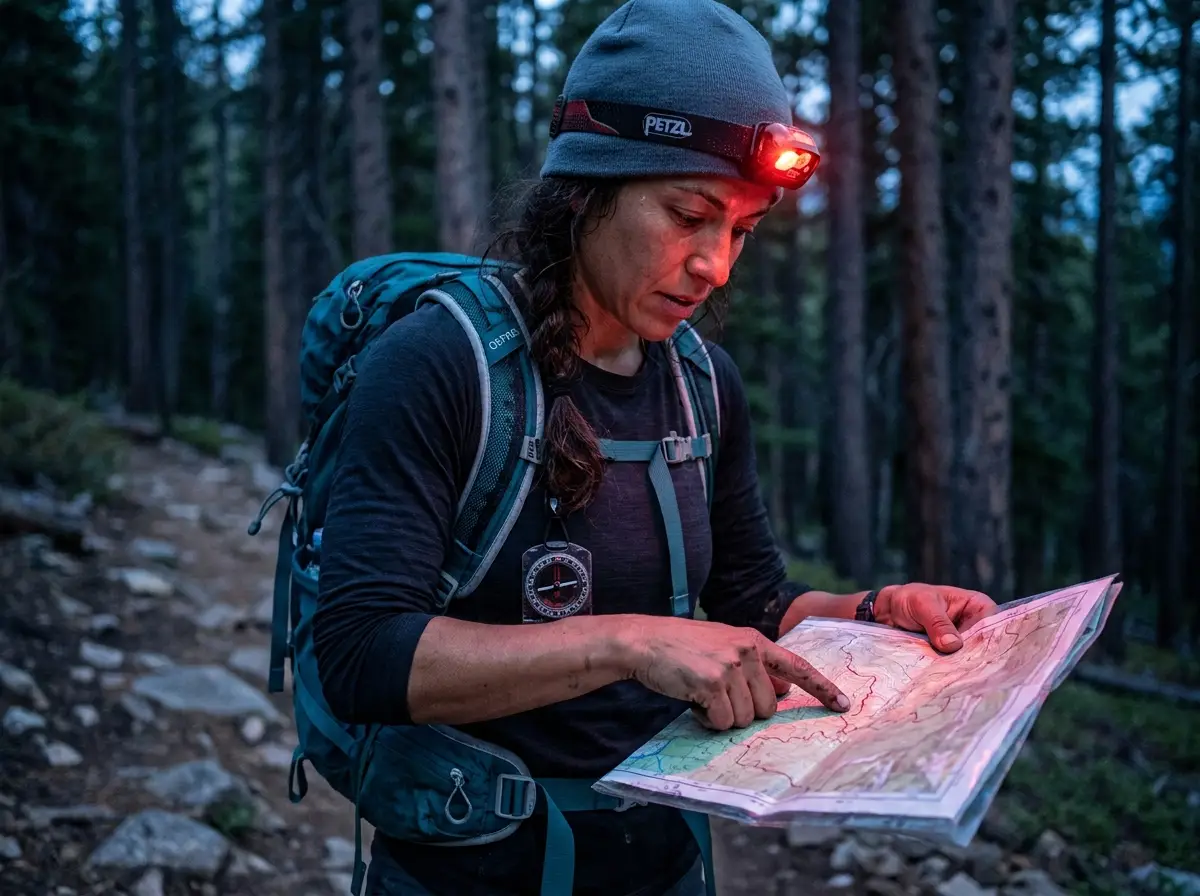
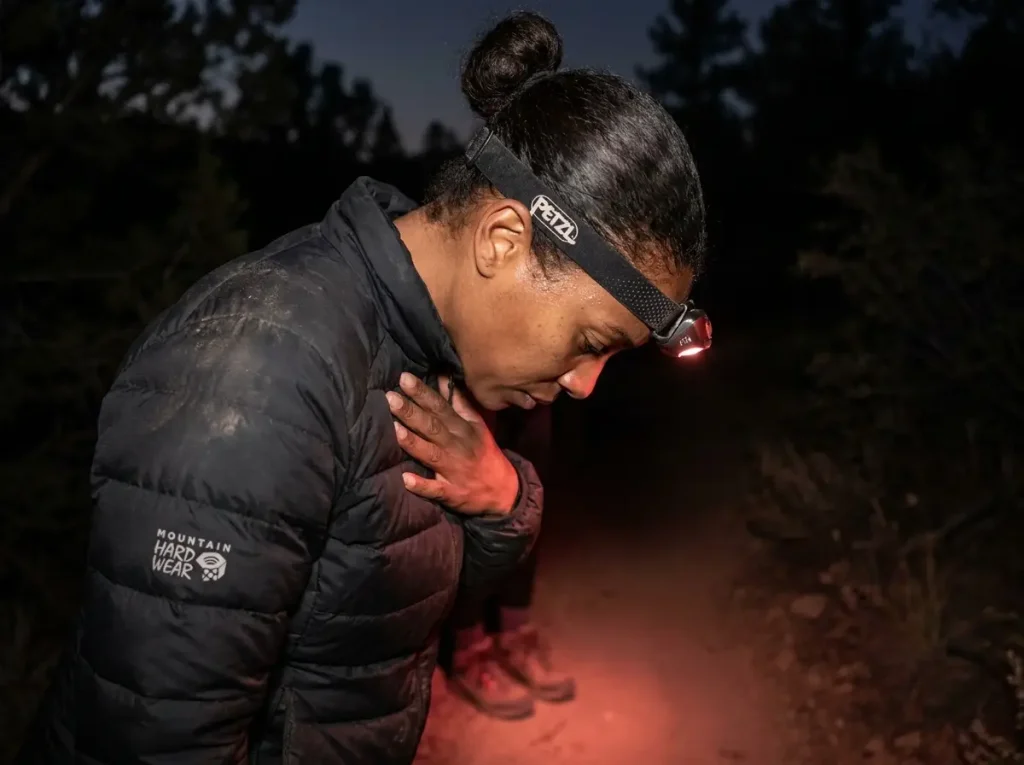
Nearly every modern lamp has a red bulb, but hikers rarely use it. That red light mode is a biological hack for your optical system. Your light-sensitive rods completely ignore long-wavelength red light. You can check a topo map or rummage through your pack without unplugging your night vision battery at all.
Pro-Tip: Make it a habit to switch your headlamp into red mode before turning it on at the trailhead. Many top lamps let you hold the power button from an off-state to jump straight to red, saving your eyes right out of the gate.
Managing your natural night vision keeps you safe, but you also need to know how to look for faint details that your central vision completely misses.
Before exploring the specific specs you need to navigate properly, understanding your peripheral gaze helps maximize any headlamp you buy.
The Averted Vision Trick
Looking directly at a shadow in the darkness almost guarantees you won’t see it clearly. Your light-sensitive rods cluster on the outer edges of your vision, leaving a natural blind spot right dead center. To spot a shadowy trail marker or rock cairn, look slightly to the left or right of it. This analog technique forces the faint image onto the densest cluster of rods in your eye. It feels strange to deliberately look away from what you’re trying to see, but scanning the periphery becomes muscle memory after a few long nights out.
Headlamp Mechanics: Decoding Lumens and Beams
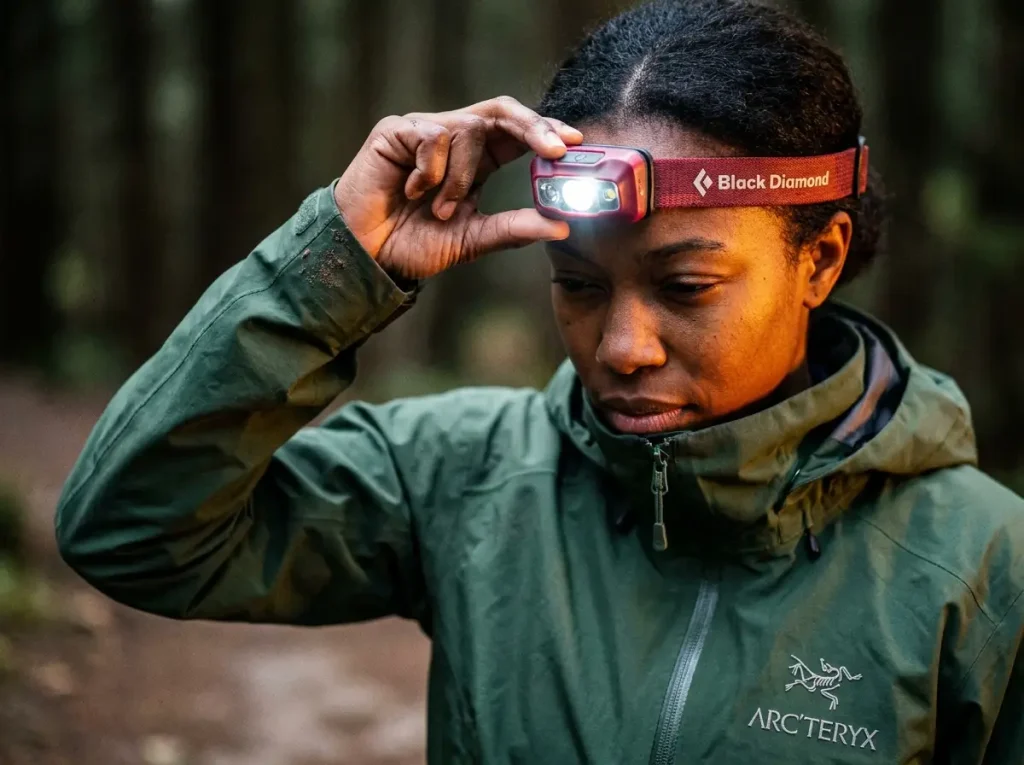
You don’t need a tactical searchlight to walk a dirt path. A reliable lamp that actually turns on when the drizzle starts beats blinding power every time. Looking past the giant lumen numbers printed on the box is the only way to match the physical tool to the realistic conditions of the forest.
Lumens and Beam Patterns Explained
Lumens reflect raw brightness. A massive count looks great on paper, but you only need 100 to 200 lumens to comfortably walk a standard dirt path. Anything brighter just bounces off the dust and wrecks your own vision. You only need that 400-plus setting when you hit a messy junction and desperately need to scan the distant trees for trail markers. A wide flood setting washes the immediate area perfectly for setting up camp, while a narrow spot setting throws a tight spear to figure out if a distant shadow is a bear or just a strange stump.
Water Resistance Ratings You Actually Need
Electronic gear dies because people ignore the weather forecast. Your lamp’s IPX rating dictates whether it survives a passing shower or a full dunk in a creek. An IPX4 rating shrugs off a light drizzle and heavy sweat, which works fine for short loops close to home. If you expect sustained rain, look for an IPX6 rating. If survival relies on that light, pay the premium for an IP68 rating so the housing survives being fully submerged in a river.
Getting the specs right is crucial, but dealing with glare separates the experienced hikers from the beginners.
Map Glare and Reactive Lighting
The classic rookie mistake is reading a white paper map with the high beams on. That paper reflects all those intense lumens directly into your retinas, causing brutal map reflection that destroys your dark adaptation. You need a lamp that is fully dimmable. Some of the best lamps feature reactive lighting, using a tiny sensor to read the light bouncing back at your face. It automatically blasts full power when you look down the trail, and instantly dims to a soft wash when you glance at your boots. Knowing these details simplifies finding the best hiking headlamp on a tight budget.
The Power & Redundancy Rule (Two is One)
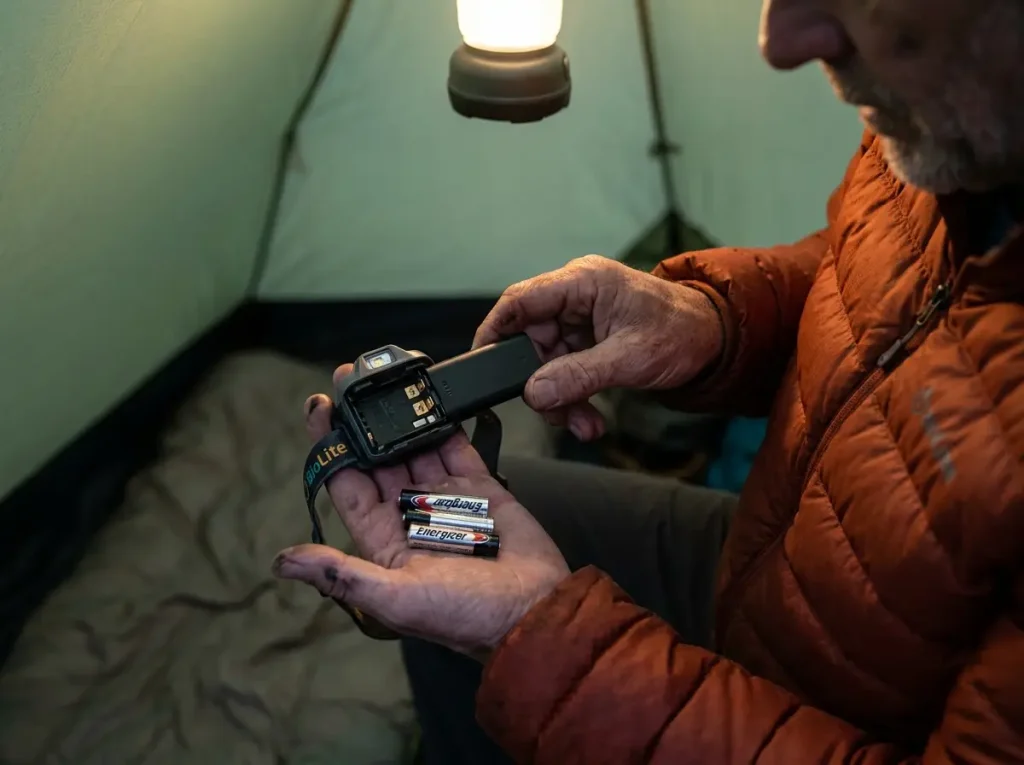
The quickest way to get stuck shivering in the dark is blindly trusting a single battery to keep you moving. Electronics fail. Buttons get mashed inside your pack by your water bottle. Managing your power requires deliberate, stubborn habits and a backup system that works before you ever leave the pavement.
The “Two is One” Mandate
In the backcountry, two is one, and one is none. A single light source is a failure waiting to happen. You must carry a secondary light. A tiny emergency backup weighs next to nothing but will absolutely save you if your primary lamp cracks its housing or dies unexpectedly. It is the cheapest insurance policy you can buy to avoid getting stuck in the dark.
Keeping Lithium Batteries Warm
Rechargeable lithium-ion batteries are fantastic right up until the ambient temperature drops. Cold evening weather pulls the life out of integrated batteries significantly faster than older alkaline cells. If you aren’t wearing the headlamp, keep it close to your body. Don’t simply stuff it in the lid of your pack where the cold air chills the casing. Put it in your chest pocket so your body heat keeps the internal battery optimized.
Learning how cold drains electronics is a miserable lesson you only want to learn once.
Before you even step on the trail, implementing a harsh check prevents your gear from dying in transport.
The Trailhead “Triple Check”
Most dead headlamp stories begin hours before the hike starts. Your lamp shifts around inside your bag, the power button bumps tightly against a water bottle, and it burns quietly on high for three hours while you drive to the mountains.
Pro-Tip: Always activate the physical lock-out function on your headlamp. If your lamp lacks a lock mode, pop the battery door open and reverse one of the batteries so the entire circuit is dead while sitting in your pack.
Make the trailhead triple check a stubborn habit. Pull your headlamp out of your bag in the parking lot. Verify the lock function is engaged. Verify the battery indicator flashes green. Once that passes, you are ready to hit the trail.
Night Navigation Skills You Can Trust
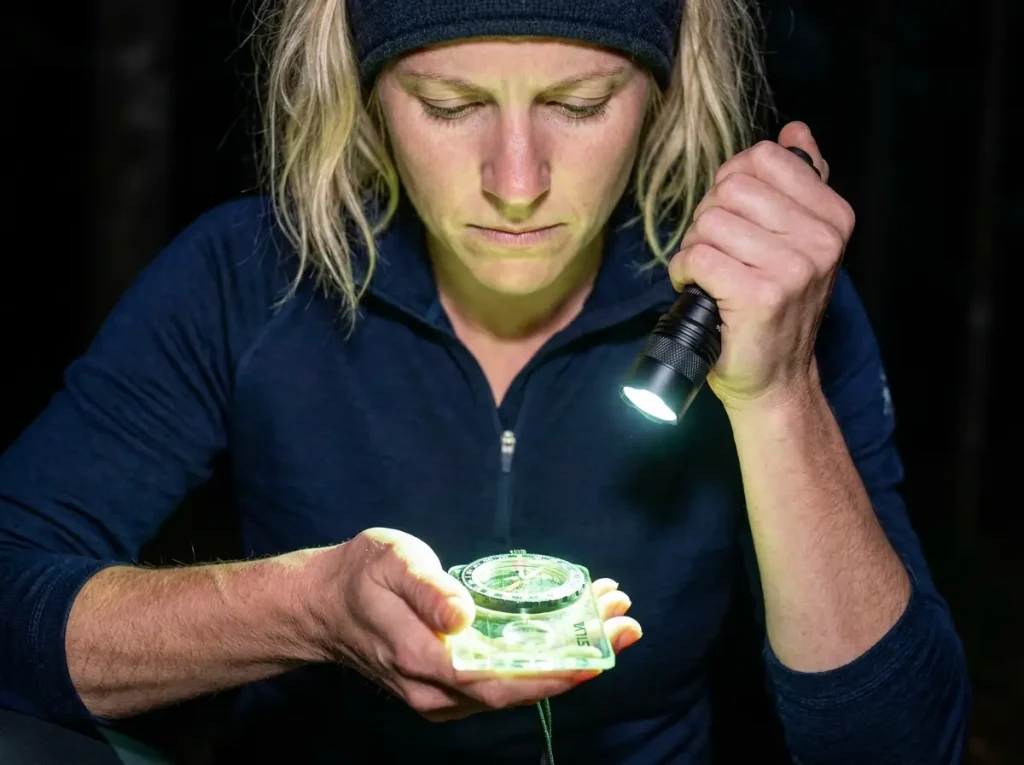
When the orange sun finally disappears, the landscape shrinks. You lose the distant mountain peaks and the massive visual landmarks you use for easy terrain association. You cannot trust what you see; you have to rely on hard analog numbers to stay found.
Charging Your Compass Markers
Your baseplate compass is your lifeline when the physical trail fades entirely. Models like the Silva Expedition compass feature luminous markings painted on the bezel ring and the magnetic needle. Here is the massive misconception: those little green dots do not glow endlessly on their own. You have to manually charge them. Every hour or so, pull your compass out, hold your headlamp directly against the dial for ten solid seconds, and hit it with full power. This quick blast provides enough lingering glow to let you read your precise bearing in pitch darkness.
Naismith’s Rule for Night Time Estimates
At night, distance feels incredibly warped. A single mile feels like three because you simply cannot see your progress against the distant horizon. To fight the deep anxiety of wondering if you missed your turn, you use Naismith’s Rule to calculate your overall hiking time. Allow one hour for every three miles of walking, and add one additional hour for every two thousand feet of elevation gain. If you have a six-mile hike back to the truck with a heavy climbing section, you know right away it will take at least three hours.
Having your math sorted before you hike prevents you from questioning every shadow. If the timeline stretches and the trail vanishes entirely, counting your physical steps keeps you anchored.
How to Count Paces Without Losing Track
Particularly in dense pine woods or flat snow fields, you completely lose sight of any helpful guideposts. When you cannot see the big picture, you track your physical distance traveled through dedicated 100m pacing. You measure steps using a double-step method. Every time your left foot hits the dirt, that counts as one single pace. On flat ground, roughly sixty-five paces equal one hundred meters. Keeping a set of simple ranger beads attached to your shoulder strap allows you to slide a bead down for every hundred meters, freeing your exhausted brain from having to remember a massive rolling number.
Surviving Atmospheric Hazards and Tunnel Vision
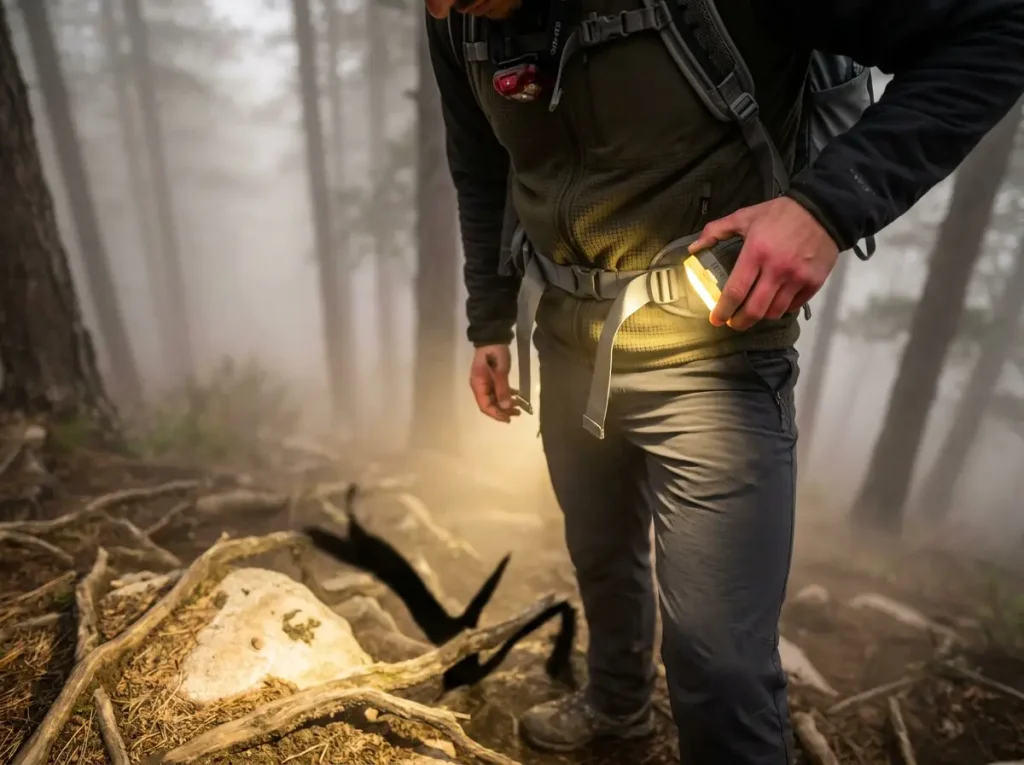
The dense night air physically changes the environment around you. The temperature drops fast, water vapor condenses into mist, and the visual feedback your brain expects completely vanishes. You might think more light equals more safety. That is the biggest lie in modern gear marketing.
Why Fog Is Your Worst Enemy (Backscatter)
If you hike into a heavy rolling fog bank, instantly hitting the high-beam switch is the absolute worst thing you can do. The intense, cool-white light blasts out and smashes directly into suspended microscopic water droplets. Those droplets act like tiny mirrors, bouncing the harsh white light straight back into your retinas. This miserable effect creates a blinding white wall immediately in front of your face. It completely ruins your depth perception, a primary factor when you read the grim statistics on mountain hiking injuries. Choosing a lamp with a warm light mode, around 3000 Kelvin, cuts right through the dense moisture instead of bouncing off it. If you lack a warm setting, drop your beam to the lowest possible brightness when navigating in thick fog.
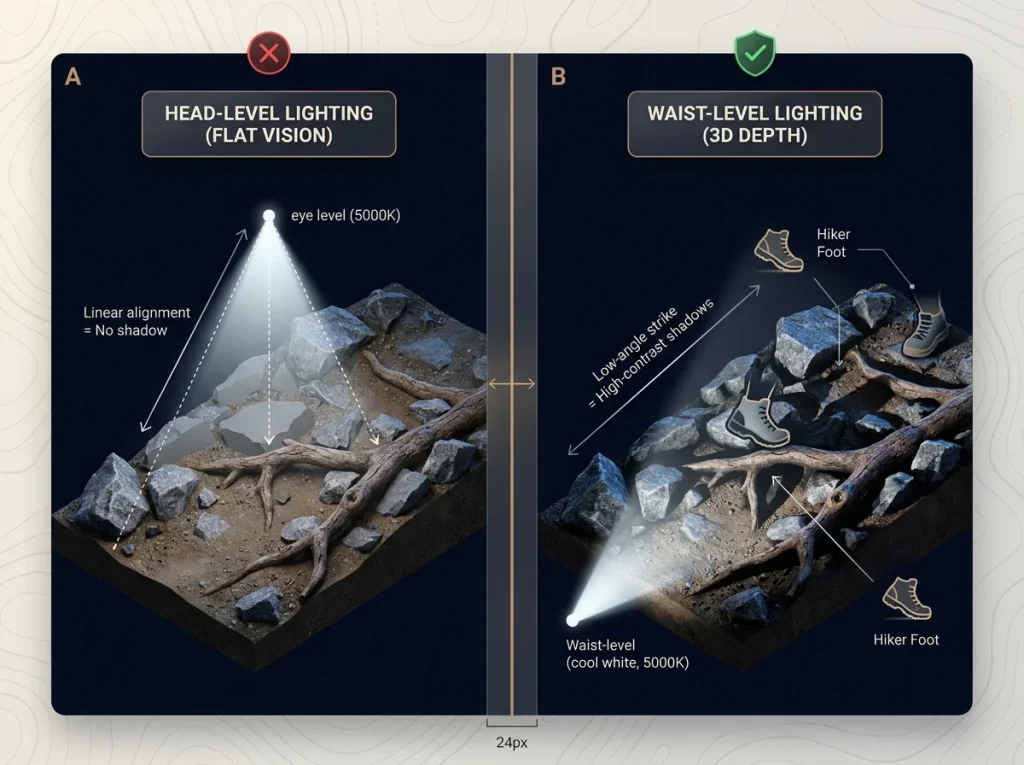
The Waist-Level Lighting Hack
When you wear a single light directly over your eyes, the beam perfectly lines up with your exact line of sight. This flattens the terrain entirely. Any physical shadow cast by a jagged rock falls directly behind the object itself, completely hidden from your view. Without those shadows, a hazardous six-inch root looks identical to a flat patch of soft dirt. Take a secondary flashlight or click a small backup lamp to your belt buckle. By lowering the angle of illumination to your waist, the light hits the rocks at a sharp angle. Massive black shadows are instantly thrown across the trail, allowing you to easily step over tripping hazards you would have otherwise kicked.
Mastering your beam angles prevents falls, but staring into a harsh circle of light for long hours messes with your head just as much as your feet.
Handling “Night Terror” and Tunnel Vision
Staring exclusively into a tiny, bright circle of light for three running hours causes massive tunnel vision. You totally miss huge trail junctions, and your entire known world painfully shrinks to a harsh ten-foot bubble. This sustained hyper-focus creates psychological exhaustion. When your vision shrinks, your native hearing becomes painfully sensitive to compensate. Every snapped twig sounds exactly like a charging bear.
Pro-Tip: Stop walking every twenty minutes. Turn your lamp off entirely. Stand quietly in the dark, let your strained eyes relax, and deliberately listen to the ambient noise of the deep forest without moving a muscle.
Turning the light off breaks the tunnel effect. You force your brain to understand that the woods are simply quiet and static, dramatically lowering your heart rate.
Trail Etiquette for the Dark
Walking quietly through the dark woods requires a different set of manners than a bright weekend afternoon. The decisions you make with your intense gear impact everyone else trying to enjoy the silence. You need to follow standard trail etiquette regarding the right-of-way, but you suddenly have the added responsibility of managing a laser beam strapped to your forehead.
Stop Blinding Your Hiking Buddy
We all do it on our first few night trips. Your tired buddy asks you a simple question, you turn your head to politely face him, and you thoughtlessly blast a thousand lumens directly into his expanded pupils. You just blinded him for the next five minutes. While walking tightly in a group, deliberately train yourself to look directly down at the dirt whenever you turn to speak to someone. If you are hiking behind someone, keep your focused beam pointed exactly downward.
Leaving No Light Trace
Leave No Trace applies to your photons exactly the same as your granola wrappers. The modern trend of absurdly powerful LEDs has actually created pockets of disruptive light pollution deep in the pristine backcountry. You have a massive responsibility for minimizing light pollution in parks. Many nocturnal animals, from hunting owls to foraging mammals, rely heavily on unbroken darkness to survive. Panning a frantic tactical beam wildly through the trees disrupts their habits. Respect the profound dark and use the minimum amount of light actually required to walk safely.
Being a good steward of the trail matters, but taking care of your gear properly at camp directly impacts your hike back home.
Protecting Your Gear (The Salt Lick Warning)
When you finally reach your remote camp, you will likely dump your heavy gear directly on the ground immediately. At night, this is a terrible track to losing expensive equipment entirely to the local wildlife. Throughout the hard day, your bare hands sweat salt deeply into the cork grips of your trekking poles and the shoulder straps of your backpack. To a deer traversing the woods at midnight, those sweaty straps are an irresistible salt lick. Never leave your poles or your heavy pack unprotected on the dirt overnight. Stash them securely inside your zipped tent vestibule or hang them cleanly off the high ground.
Conclusion
Night hiking doesn’t have to be a miserable survival test. It is a phenomenal way to deeply enjoy a peaceful trail long after the busy crowds have gone home. By truly understanding how to respect your eye’s natural chemistry, managing your battery redundancy ruthlessly, and trusting hard math over your confused native senses, you easily command the rough trail instead of nervously reacting to it. Pack up your gear tonight, grab a reliable lamp, print out your night hiking essentials checklist, and go test your pacing on a completely familiar loop. The dark woods are quietly waiting for you.
FAQ
Is it safe to start a hike at night?
Your risk level drops dramatically if you choose familiar trails and carry backup lighting. The hazards primarily stem from tripping over hidden obstacles, which is easily mitigated by stepping deliberately and scanning with adequate headlamps.
How many lumens do I need for standard trail walking?
A solid 100 to 200 lumens is perfect for walking on established trails, preserving your battery while lighting your path smoothly. Carrying a lamp capable of pushing 400+ lumens is only necessary if you momentarily lose the trail.
Can I just use my phone for emergency navigation at night?
You can, but relying on it exclusively is a massive mistake. Phone screens blast white light that continuously ruins your dark adaptation, and cold evening air drains cell batteries shockingly fast.
What should I do if my lamp reflects animal eyes in the dark?
Pause and remain calm, as seeing eye shine is completely common and usually belongs to harmless local wildlife. Keep your distance, speak at a normal volume, and slowly continue on your path to let them move away.
Risk Disclaimer: Hiking, trekking, backpacking, and all related outdoor activities involve inherent
risks which may result in serious injury, illness, or death. The information provided on The Hiking Tribe is for
educational and informational purposes only. While we strive for accuracy, information on trails, gear, techniques,
and safety is not a substitute for your own best judgment and thorough preparation. Trail conditions, weather, and
other environmental factors change rapidly and may differ from what is described on this site. Always check with
official sources like park services for the most current alerts and conditions. Never undertake a hike beyond your
abilities and always be prepared for the unexpected. By using this website, you agree that you are solely
responsible for your own safety. Any reliance you place on our content is strictly at your own risk, and you assume
all liability for your actions and decisions in the outdoors. The Hiking Tribe and its authors will not be held
liable for any injury, damage, or loss sustained in connection with the use of the information herein.
Affiliate Disclosure: We are a participant in the Amazon Services LLC Associates Program, an
affiliate advertising program designed to provide a means for us to earn advertising fees by advertising and linking
to Amazon.com. As an Amazon Associate, we earn from qualifying purchases. We are also an official affiliate partner
of Black Diamond Equipment via the AvantLink network. If you click on a Black Diamond affiliate link and make a
purchase, we may earn a commission at no additional cost to you. We also participate in other affiliate programs and
may receive a commission on products purchased through our links. Additional terms are found in the terms of
service.