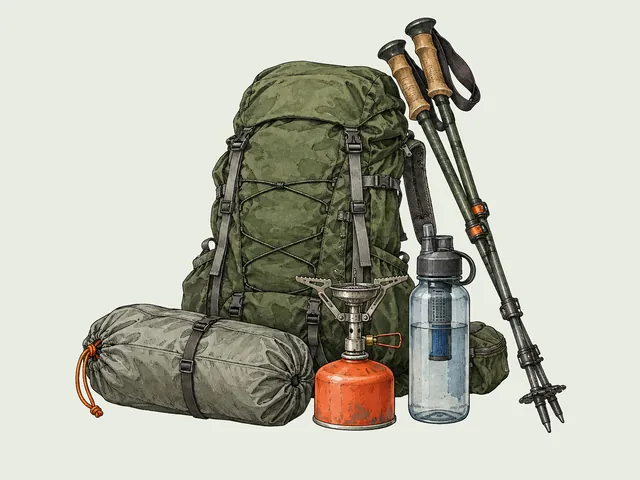
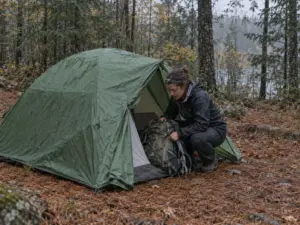
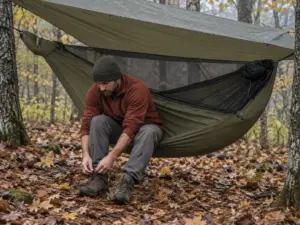

















I remember watching an elite runner abandon his Pacific Crest Trail attempt in Northern California. It wasn’t his lungs that failed him. It was a vicious 3,000-calorie daily deficit that had steadily eaten through his leg muscles over 1,500 continuous miles. Meanwhile, a methodical section hiker with fresh legs and a well-rested nervous system walked past him, pushing north without a grimace. I’ve guided and dragged myself over these paths for two decades, and the choice between thru-hiking and section hiking isn’t a debate about who the real hiker is. It’s a calculation about what kind of damage you’re willing to accept. Here is the hard reality behind both strategies so you can pick the suffering that matches your current time commitment and lifestyle bounds.
⚡ Quick Answer: Thru-hiking demands a 4-to-6 month continuous push that strips your frame of fat and tests your bone density, while forcing a high total cost upfront. Section hiking breaks the trail into smaller missions over years, saving you from chronic physical damage but imposing a heavy logistical tax on your wallet through repeated travel. Both require different gear rules and completely distinct training strategies.
The Biological Cost: Metabolism and Physical Adaptation

The “Metabolic Scalpel” and Fat Oxidation Ceilings
You strap 30 pounds to your back and start walking uphill for eight hours. The math gets ugly fast. The mechanics of carrying weight dictate that your daily calorie burn skyrockets to anywhere between 4,000 and 8,000 calories. You can’t eat enough tuna packets and ramen to cover that deficit. Thru-hikers routinely enter a 3,000-calorie hole every single day. Your system treats this like an emergency and starts carving up fat reserves. But there is a ceiling to this process.
Your system can only burn about 31 calories per pound of stored fat each day. As you get leaner on the appalachian trail or somewhere in the high desert, that ceiling plummets. You experience deep thru-hiker hunger because your body realizes it can’t pull enough energy from fat anymore. It starts eating your muscles. Without shoving 2.3 to 3.1 grams of protein per kilogram of body weight down your throat daily, that rate of burn will cannibalize your strength.

Pro tip: Don’t rely on peanut butter alone for protein when you are burning this hard. Pack hard cheeses and cured meats. You need dense, complete protein to defend your muscle mass on a long haul.
If you are a section hiker, you don’t face this brutal depletion. You hike for a week or two, then go home and eat real food. But if you take on the one-shot model, you must understand calculating your true base weight to minimize that daily deficit.
The Reality of “Trail Legs” Adaptation
Everyone talks about getting their trail legs. Nobody mentions how much it hurts to earn them. This physiological shift happens when your muscles and nerves finally figures out how to walk up mountains efficiently without wasting energy. It takes three to five weeks of relentless, continuous walking to trigger this response.
Section hikers rarely cross this threshold. If you only step out for ten days at a time, you spend every single trip suffering through the initial break-in period. You never escape the soreness. You never get the mechanical efficiency that lets a thru-hiker crush twenty miles with less perceived effort than you spend dragging yourself through twelve. You are basically volunteering for the hardest part of the trail, over and over again. This is the biological cost of the iterative model.
Thru-hikers pay the toll early and then reap the benefits of a machine-like walking efficiency. But that machine requires constant fuel, and the constant pounding forces a totally different kind of debt.
Before we look at the long-term structural damage, understand that these metabolic and muscular adaptations don’t happen in a vacuum. Your heart and bones are simultaneously taking a massive beating.
Cardiovascular and Bone Density Decay
Walking 25 miles a day for five months sounds like the ultimate fitness program. Look closer at the medical data from serious medical data on hikers. The reality is shocking. Thru-hikers pushing massive mileage on a diet of cheap sugar and processed carbs often end up with increased arterial stiffness and a higher resting heart rate. You are essentially putting your system through a low-grade, chronic inflammatory event.
Worse, you lose bone density. Men and women walking the pct have lost around 5% of their spine and pelvic bone mass by the end of their trek. The sheer volume of steps strips minerals out of your frame if you aren’t supplementing heavily. You don’t build bone density out there. You spend it. While your internal systems quietly degrade over thousands of miles, the mechanical wear and tear on your joints poses a much louder, more immediate threat.
Trail Damage: Acute Traumatic vs Repetitive Stress

Acute Injuries in Dispersed Segmenting
When you bounce from an office chair directly onto rocky terrain for a sudden weekend push, your joints rebel. We see it constantly. Upwards of 61% of all long-distance walkers report some form of musculoskeletal nightmare. For the section hiker, the threat sits firmly in the acute category.
You haven’t built the supporting tendon strength, so you roll an ankle or snap a hamstring. About 18% of the injuries forcing folks off the trail early are sudden, traumatic breaks or tears. Your tendons aren’t ready for the sudden load of carrying a 35-pound bag over wet roots. This lack of conditioning is why I constantly emphasize pre-hike conditioning and eccentric loading.
Pro tip: Stop doing flat squats in the gym and expect it to protect your knees downhill. Start doing step-downs off a box with a weighted vest to build the eccentric braking strength your patellar tendon actually needs.
Repetitive Stress Evolution on a 150-Day Push
Thru-hikers survive the acute phase, but they graduate into a slow, grinding destruction. We are talking about chronic joint loading. When you walk two million steps over five months across the continental divide trail, the repetitive friction creates catastrophic wear. Around 28% of the injury profile here involves deep, nagging issues.
Think plantar fasciitis that feels like walking on broken glass every morning. Think tibial stress fractures and IT band friction syndrome. Your skeleton isn’t designed to repeat the exact same weighted movement every single day without recovery. It is a war of attrition. A hard 11% of thru-hikers quit entirely because a joint finally refuses to function.
I constantly see hikers masking early joint pain with ibuprofen instead of taking two days off. Those are always the folks who end up going home early with a stress fracture.
You cannot completely eliminate the risk of either acute breaks or slow-grinding repetitive injuries. But you can drastically reduce your odds of ending up in that 11% failure bracket by changing your mechanical approach on steep descents.
Musculoskeletal Mitigation Strategies
The absolute best defense you have against this physical toll is understanding offloading mechanics. Trekking poles aren’t just for balance. When used correctly, they absorb up to 25% of the compressive force on your knees during steep descents. That is a massive reduction in cumulative damage.
Look at the brutal medical surveys on trail injuries. It proves hikers who skip poles pay worse consequences. And stop packing your fears. Carrying seven days of heavy food for a three-day resupply stretch destroys your knees faster than anything else. Take care of your joints by dumping the unnecessary weight and relying on those trekking poles—it is the only way you survive the physical toll.
The Economics of the Trail: Budgeting the Long Haul

The Massive Upfront Financial Outlay
Dropping your career to walk in the woods means burning cash with zero income replacements. The base requirement for an at thru-hike currently hovers around $7,600. Want to walk the pacific crest trail? Plan for more than $10,100. That covers boots, resupplies, dehydrated meals, and the occasional motel bed.
The biggest lie hikers tell themselves is that living in the woods is cheap. It isn’t. You eat three times as much as a normal human. Your gear rots and breaks. You are forced to buy overpriced cheese and beef jerky from tiny convenience stores in remote towns. If you don’t pad your budget, the trail will bankrupt you before you hit the halfway point.
The Section Hiker’s Redundant Logistics Tax
Section hikers avoid the massive chunk of lost wages, but they bleed money through a thousand cuts. Every time you return to the woods for a lash (long ass section hike) or a sash (short ass section hike), you buy plane tickets. You pay for a rental car. You hire an expensive shuttle.
This hidden logistical tax inflates your final cost-per-mile heavily. Breaking a 2,000-mile footpath into thirty separate trips guarantees you will spend more total money on transportation than a thru-hiker spends on the entire expedition. You just don’t feel the sting all at once.
Whether you are burning cash on a single six-month push or bleeding it slowly over five years of flights and shuttles, minimizing town stops is your only real financial defense.
Optimizing the Cost-Per-Mile Ratio
Town stops murder your budget. A thru-hiker paying for zero days—where you rent a bed, eat hot food, and drink beer without hiking a single mile—will watch their bank account vanish. You bleed $150 to $200 every single day you stay stationary in civilization.
If you want to stretch your dollar, learn how to execute strategic nero days rather than full zero days. Hike a fast five miles into town in the morning, do your laundry, eat a heavy burger, grab your resupply, and hike five miles back out before sunset. You get the calories and the cleanliness without paying for the expensive mattress. While town strategies help control your budget, understanding the actual lifespan of your gear is the next massive factor in preventing financial bleed.
Material Science: Gear Failure and Lifecycle Timelines

Footwear Degradation: Compression vs Hydrolysis
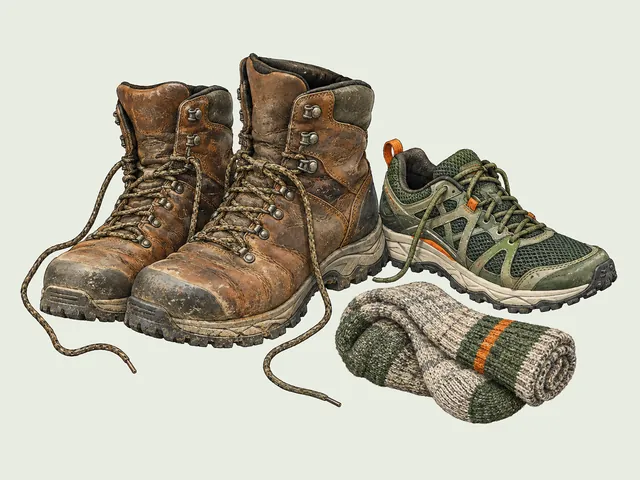
Your shoes will betray you. Modern trail runners are the golden standard for 90% of the long-distance community right now. But they face a hard limit on gear durability. Expect catastrophic foam compression between 400 and 520 miles. The cushion dies, the tread rips away, and if you push them further, you invite shin splints and knee pain. Thru-hikers burn through four or five pairs of trail runners guaranteed.
If you dig through the hiker boxes in the first 500 miles, they are practically overflowing with heavy leather boots that people abandoned in favor of light trail runners.
Section hikers face a completely different enemy. Polyurethane midsoles in boots will actively destroy themselves in your closet. It is called hydrolysis. The moisture in the air breaks down the chemical bonds. You pull down your boots after two years of storage, hit the trail, and the entire sole violently delaminates on day two. You must know how to diagnose backpack polyurethane hydrolysis and boot decay before you trust old gear in the backcountry.

Shelter Fabrics under Ultraviolet Stress
The tents you buy face a choice between mileage failure and age failure. Dyneema Composite Fabric dominates the ultralight thru-hiking scene. It is incredibly light and totally waterproof. But you drag it across 2,500 miles, and it will eventually develop pinholes and rip under the stress of hundreds of rough setups.
Section hikers rely heavily on Silnylon. It laughs at abrasion. It survives heavy winds. But that fabric falls victim to hidden gear decay. UV rays slowly cook the nylon fibers over years of weekend trips. It looks fine, but the tear strength drops to zero. A strong gust of wind will suddenly shred what was once an impenetrable shelter.
If you understand these distinct failure modes—mileage destruction versus chronological decay—you can stop wasting money on the wrong materials for your specific timeline.
Selecting the Optimal Material System
You have to match the chemical properties of your gear to your timeline. Do not buy advanced ultralight Dyneema if you are piecing the trail together over fifteen years. The glue might fail before you finish.
If you are a section hiker, buy 30D or 40D Silnylon. The thicker fibers protect the core from ultraviolet ruin. If you are a thru-hiker, spend the money on Dyneema to save your knees from the excess weight, knowing full well you will probably destroy the tent by the time you reach Canada.
Pro tip: Never store your dirty tent or sleeping bag tightly stuffed in a hot garage. You bake the dirt directly into the fibers, permanently damaging the waterproof coatings and crushing the loft forever. Match your fabric choices to your timeframe; Dyneema belongs on a fast thru-hike, while thick Silnylon is the reliable workhorse for a decade of section hikes.
Tactical Logistics, Resupply, and Ecological Impact

Strategic Approaches and Completion Rates
Most people fail. The Northbound attempt on a long trail sees a brutal 30% completion rate. You are fighting the season. You have to start late enough to avoid freezing in the southern mountains, but early enough to beat the first blizzard in the northern peaks. It is a rigid, unforgiving window.
The alternative is flip-flop hiking, where you start in the middle, hike north, then fly back to the middle and hike south. It buys you perfect weather, but totally wrecks the traditional linear journey. Section hiking offers massive permit flexibility. You pick the best weekend to visit the hardest sections.
Managing Complex Shuttle Systems
Logistics break more section hikers than mountains do. When you try to logistically plan a section hike, you spend hours coordinating drops, cars, and strangers with vans. The absolute worst thing you can do is park at the beginning and try to hike fast enough to meet a shuttle driver at the end on Sunday evening. The pressure ruins the experience.
Always park your car at the extraction point. Hire the driver to pick you up there and drop you off at your starting line miles away. Now you are walking toward your own vehicle. If you are slow, you don’t panic. You just arrive late to your own car.
But getting yourself safely to the trailhead is only part of the equation. We also have to face the compounding damage our sheer numbers inflict on these fragile corridors.

Mitigating Ecological Damage from ‘The Bubble’
When thousands of hikers start moving north on the same path in the same month, we destroy the ground we claim to love. The NOBO bubble applies extreme ecological impact. The privies overflow. The tent sites widen exponentially because there is no room left.
We see intense soil compaction that turns green ridges into dead ruts. You can read the raw trail condition impact studies and realize how much damage concentrated foot traffic causes. As an individual, you must recognize how walker impact causing trail erosion forces land managers to close down pristine areas. Spread out. Disperse your impact. Beyond the physical logistics and ecological damage, the most unpredictable variable you will face is the psychological weight of the journey.
Psychological Architecture: Re-entry and Burnout

The Solitude Load and Trail Loneliness
You expect to find peace in the woods. Instead, you often find profound isolation. Fully 33.3% of long-distance walkers report severe loneliness. This happens even when you are trapped in a massive herd of other hikers. True connection is hard when everyone is starving, exhausted, and solely focused on grinding out the miles.
On the eastern trails, we call it the virginia blues. It is a heavy, dark scenery fatigue where the green tunnel never ends, and the romantic idea of the trail is dead. You just have to walk. Knowing how you react to this mental strain is critical. Look hard at the medical data on long-term mental health data to understand that the crash is real.
Navigating Post-Trail Depression
Eventually, the walking stops. And that is when the real problems start. Post-hike depression hits almost every thru-hiker who finishes a five-month journey. Your cortisol levels crash. The sharp, simple purpose of walking north evaporates, leaving you sitting on a couch wondering what the point of a normal job is.
You need to actively learn strategies for managing profound trail loneliness and reintegrating into society. Section hikers sidestep the worst of the post-hike blues because they never really sever the ties to their civilian life. They just experience a mild letdown before returning to work on Monday. But if you walk for half a year, you must prepare your brain for the hard landing.
This psychological turbulence is often worsened by artificial divisions within the community itself. How you interact with other hikers frequently determines your overall satisfaction.
The “Real Hiker” Debate and Social Validation
The community is full of gatekeepers. Some claim you aren’t a legitimate backpacker unless you abandon your job to do it all at once. This social stratification is garbage. The appalachian trail conservancy and groups like the american hiking society rely entirely on the vast network of weekend warriors to actually fund and clear these trails.
Whether you log hours on farout checking water reports for a three-day weekend or check the trek for news on a six-month push, your boots are hitting the same dirt. A technical readiness audit proves that section hiking often demands far tighter logistical discipline than simply walking in one direction for months. Regardless of how you slice the mileage, both groups battle their own highly specific mental demons to reach the exact same goal.
Conclusion
Choosing your approach is mostly about picking your poison. You either sign up for the chronic physical breakdown of a six-month siege, or you accept the relentless transportation costs and painful physical resetting of a decade-long project. Weak gear and poor planning will fail spectacularly in exactly the same way across both formats.
The trail does not care if you have five days or five months. It only respects preparation. Take an honest look at your bank account, your knee cartilage, and your mental resilience. Build a system that supports your route, step onto the dirt, and start walking.
FAQ
Is section hiking easier than thru-hiking?
No, section hiking is generally harder on a day-to-day physical basis because your physiology rarely achieves neuromuscular trail adaptation. While you avoid catastrophic chronic stress injuries, every segmented trip requires pushing through the painful, acute break-in phase of early hiking.
What legitimately counts as a thru-hike?
A recognized thru-hike requires completing the entirety of a long-distance trail system, like the AT or cdt, in a single continuous direction or flip-flop within a 12-month calendar window. Breaking the hike across multiple years categorizes the effort strictly as a section hike.
How do you logistically plan a section hike shuttle?
The most effective method is parking your vehicle at your intended extraction point and hiring a private shuttle to drop you at your geographic starting line. This forces you to walk constantly toward your car, eliminating the risk and anxiety of missing a tight pickup window on a Sunday afternoon.
How much does a 6-month thru-hike actually cost on the AT?
The base requirement currently sits at approximately $7,600, with overages easily scaling past $10,000 if you take frequent zero days in trail towns. This figure entirely excludes the massive soft cost of lost career income over the half-year duration.

I've spent more than a decade researching hiking gear and trail technique. I read the specs, the forum threads and the long-term reviews, and every pick here comes with what it gets wrong.
End of the trail
You read every mile of this one. Here's where the trail goes next.