In this article
Your rain jacket is delaminating three months into its second season. The shoulder strap on your pack is separating at the seam after 400 miles. Your trekking pole snapped clean at the shaft on a scramble that shouldn’t have broken anything. I’ve been through all of these — 11 warranty claims across seven brands over the past six years. Some got me brand-new replacements. Two got denied. One took four months and three phone calls. Here’s everything I learned about how the system actually works, and how to make it work for you.
Quick Answer: Filing a successful hiking gear warranty claim comes down to five steps:
- Register your gear and save receipts immediately after purchase
- Document the failure with clear photos before cleaning
- Clean the gear thoroughly before sending it in
- Submit the claim through the brand’s online portal with honest, specific details
- Follow up persistently if you don’t hear back within 2 weeks
What Hiking Gear Warranties Actually Cover (And What They Don’t)
Manufacturing Defects vs Wear and Tear
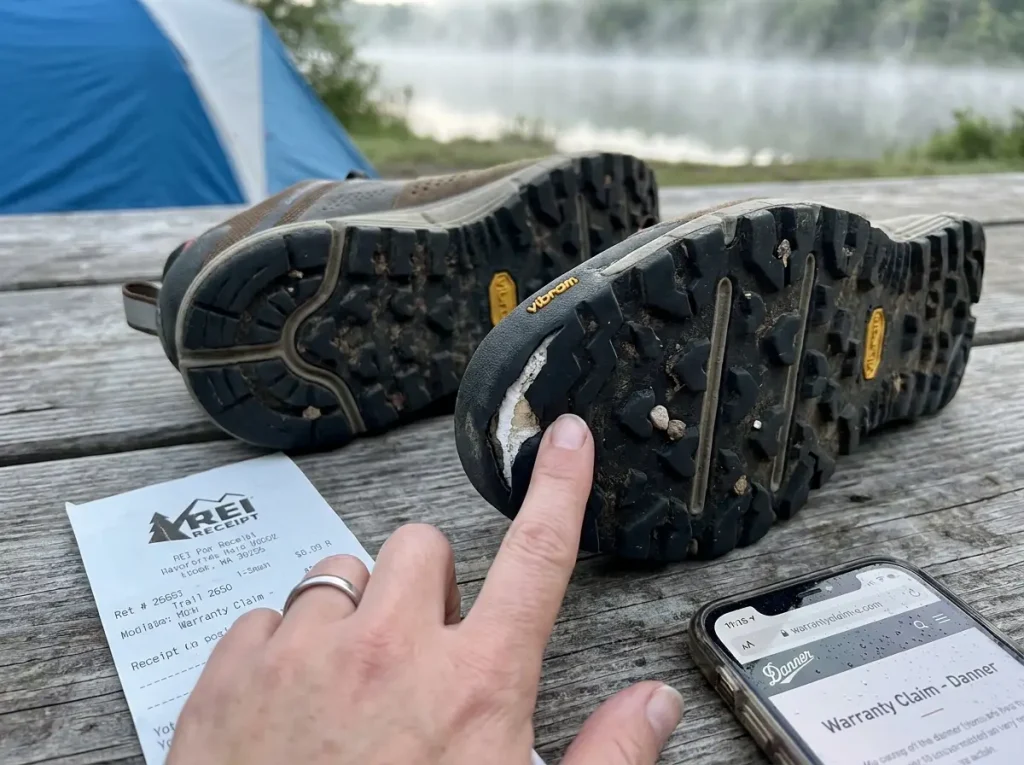
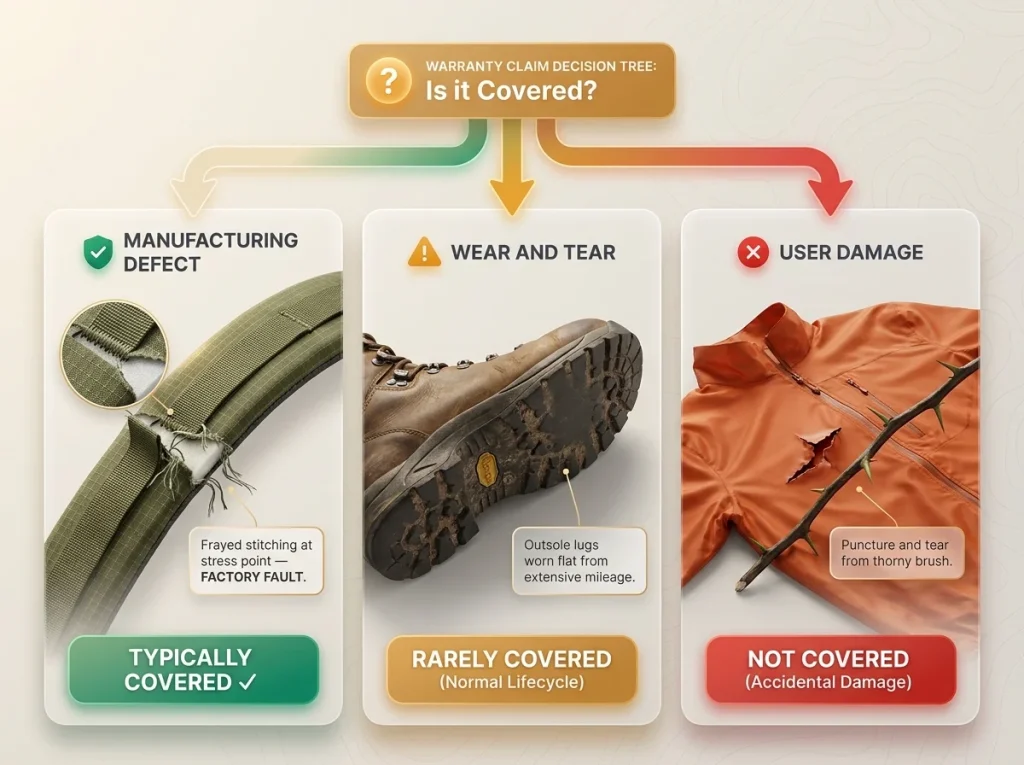
The single most important distinction in any outdoor gear warranty is between a manufacturing defect and normal wear and tear. A manufacturing defect means something failed because of how it was made — stitching that wasn’t reinforced at a stress point, sole adhesive that delaminated prematurely, a zipper track that bent because the metal was too thin. These are the brand’s fault, and almost every warranty covers them.
Wear and tear is different. That’s the outsole rubber that wore down after 800 miles of rocky trail. That’s the DWR coating that stopped beading after two seasons of rain — if you’re not sure whether your jacket is failing or just needs re-treatment, these three tests tell you the truth. That’s the foam in your sleeping pad that compressed from three years of nightly use. These failures happened because you used the gear for its intended purpose over time — and most limited warranties exclude them.
The confusion happens because some brands blur the line. Darn Tough covers wear and tear explicitly — their socks wear out, you send them back, you get a new pair. Osprey covers “any reason, any product, any era.” But most brands — The North Face, Black Diamond, MSR — cover manufacturing defects only. Reading the specific warranty language before you file saves you the time and shipping cost of a claim that was never going to be approved.
The “Lifetime” Warranty Myth
“Lifetime warranty” means different things depending on who’s saying it. For some brands, it means the expected lifetime of the product — which they define, not you. A tent might have a “lifetime warranty” that the manufacturer interprets as 5 years. A jacket might be “lifetime” but only for the original purchaser, which means that secondhand pack you bought on eBay isn’t covered no matter what the hang tag says.
Before filing any claim, go to the brand’s warranty page and read the actual terms. The FTC’s consumer guide on warranties outlines your baseline rights under federal law — manufacturers can’t require you to use specific parts or pay for labor to maintain coverage unless they provide those for free. Beyond the legal minimums, look for three things on the brand page: what’s covered (defects only vs. defects plus wear), who’s covered (original purchaser vs. anyone), and whether there’s a time limit hidden behind the word “lifetime.”
User Damage — The Gray Zone
Then there’s the category nobody wants to talk about: user damage. You caught your rain shell on a branch and tore it. Your tent pole snapped because you forced it in wind that exceeded the tent’s rating. Your boot sole delaminated because you dried them too close to a campfire — and yes, how you dry your boots matters more than most hikers realize.
Some brands cover this. Osprey’s All Mighty Guarantee famously covered a pack that was mauled by a bear. Most brands don’t. The gray zone is where the failure sits between defect and damage — that zipper that jammed and then broke when you yanked it, the seam that popped because the stitching was marginal but your pack was also overloaded. These are the claims where documentation and honesty matter most.
Pro tip: If you’re not sure whether your failure is a defect or user damage, file the claim anyway and be honest about what happened. Brands respect transparency. The worst they can say is no.
Before Your Gear Breaks — The 10-Minute Setup That Saves You Later

Register Everything the Day You Buy It
Most hikers skip this step and regret it later. The 10 minutes you spend registering your gear after purchase is the single highest-value action in the entire warranty process. Many brands — Gregory, Black Diamond, Kelty — use registration to verify original ownership. Without it, your claim starts on the back foot.
Here’s the system that works: the day you buy a piece of gear, take a photo of the receipt with your phone and email it to yourself with the subject line “WARRANTY — [Brand] [Product] [Date].” Then go to the brand’s website and complete the warranty registration if they offer one. This takes less than 5 minutes per item and creates a searchable digital paper trail that lives in your email forever.
The Receipt Archive That Takes 30 Seconds
Physical receipts fade. Thermal paper from outdoor shops turns blank within a year. If your only proof of purchase is a receipt sitting in a drawer, it won’t be readable when you need it three seasons from now.
Take the phone photo immediately — in the store parking lot, at the kitchen table when the package arrives, wherever. A readable photo of a receipt is accepted as proof of purchase by every major outdoor brand. Some brands also accept credit card statements showing the purchase, which is a useful backup if the receipt photo is blurry.
Document Your Gear’s Condition Over Time
This one separates experienced warranty claimants from first-timers. Take a quick photo of your gear before each season — not because you expect it to fail, but because having a visual timeline of normal wear progression makes it obvious when something fails prematurely. If your boot sole looked fine in April and was delaminating by August with only 200 miles on it, those two photos tell the story better than any written description. Knowing when your gear actually needs replacing versus when it just looks worn also helps you decide whether a warranty claim is worth pursuing.
Pro tip: Create a simple folder on your phone called “Gear Warranty.” Every receipt photo, registration confirmation, and condition photo goes here. When something breaks, you’ve got everything in one place.
The Step-by-Step Warranty Claim Process
Step 1 — Document the Failure Before You Do Anything Else
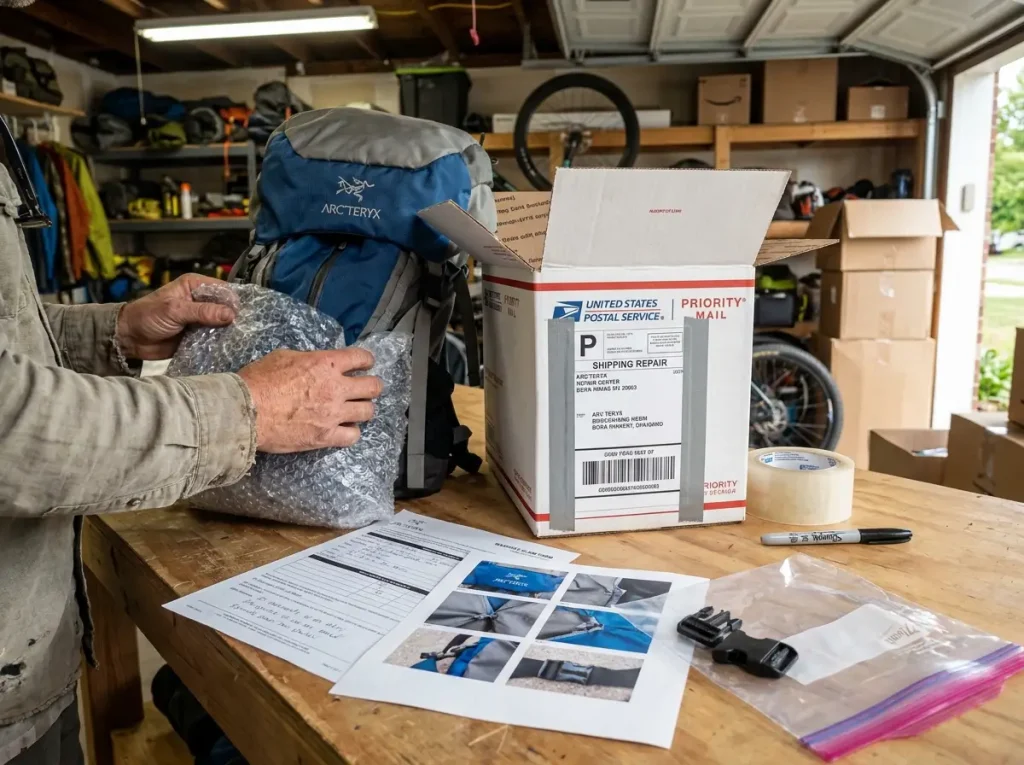
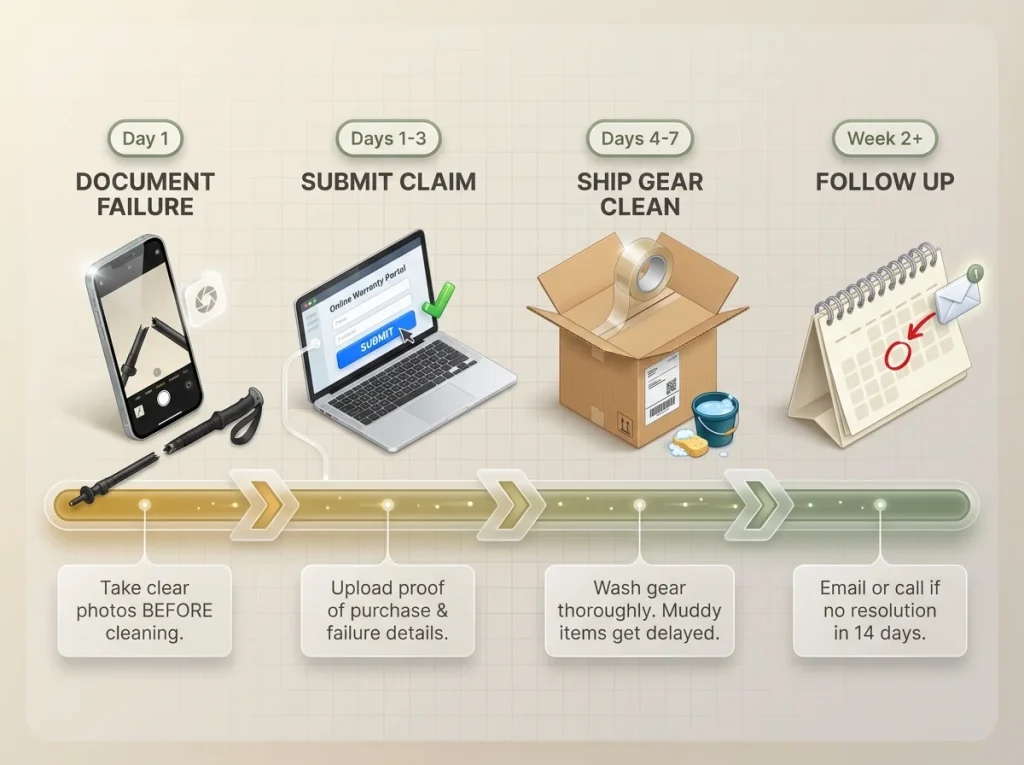
The moment you notice a failure, stop and take photos. Multiple angles. Close-ups of the failure point. A wide shot showing the full item. If there’s a part number or lot number on the product, photograph that too. Do this before you clean the gear, before you attempt a field repair, and before you contact the brand.
Why before cleaning? Some brands want to see the gear in the condition it failed. If the failure is related to a seam, seeing trail dirt in the seam proves it was being used in normal conditions. Cleaning it first removes that context. Take the documentation photos with the dirt and grime, then clean it before shipping.
Step 2 — Find the Right Claim Portal
Almost every major outdoor brand now has an online warranty claim portal. Go to their website, find “Warranty” or “Guarantee” (usually in the footer), and follow the submission process. Most require: your name, proof of purchase, photos of the issue, and a written description of what happened.
The written description matters. Be specific and honest. “The left shoulder strap seam separated at the load lifter attachment point after approximately 400 trail miles over 14 months” is infinitely better than “strap broke.” Include the purchase date, where you bought it, and how you used it. If you registered the product, reference your registration number.
Step 3 — Clean the Gear Before Shipping
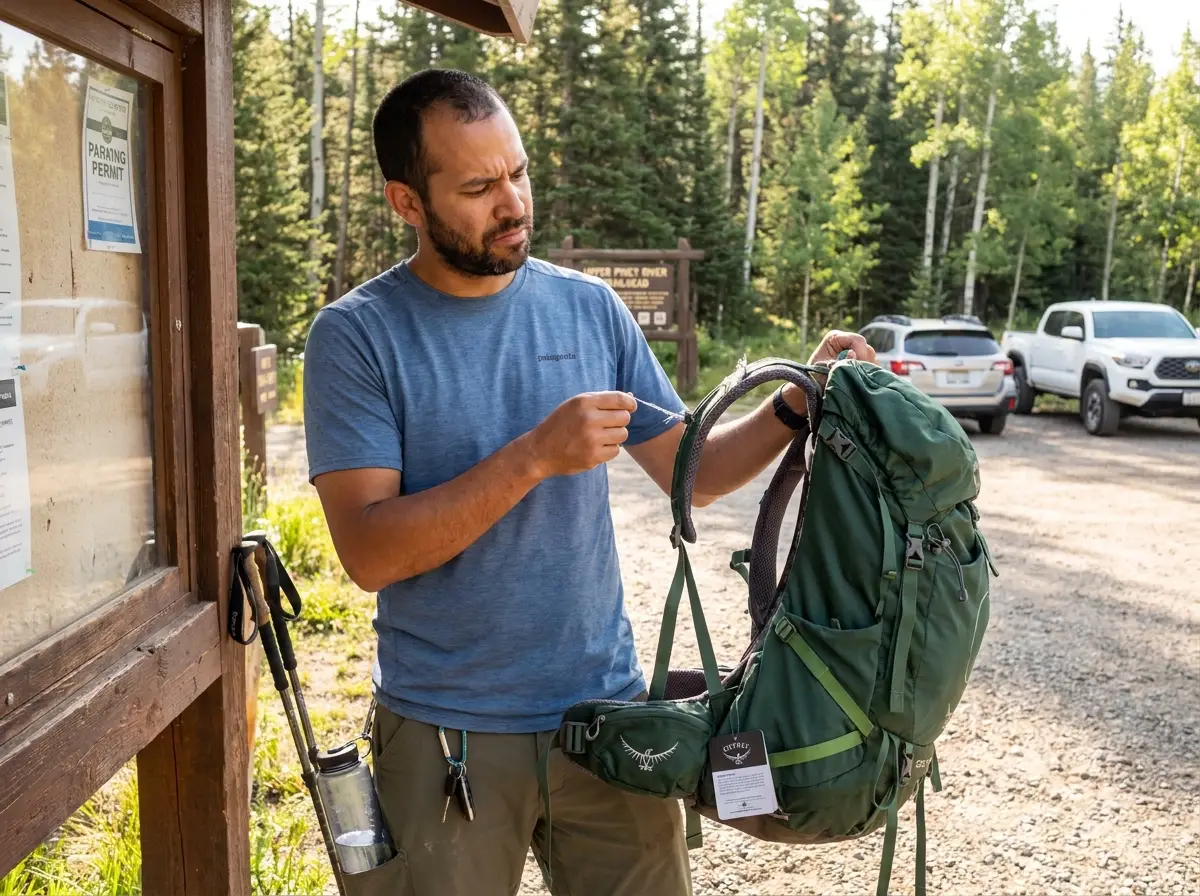
This is the insider tip that outdoor industry customer service reps consistently mention: send it in clean. Brands process hundreds or thousands of claims per month. A pack that arrives caked in mud and smelling like a wet dog goes to the bottom of the priority list. A pack that arrives clean, dry, and neatly packed gets processed faster and gets the benefit of the doubt on borderline claims.
Wash jackets according to label instructions. Brush dirt off packs. Clean and maintain your trekking poles before boxing them up. Remove personal items from every pocket. You’d be surprised how many claims ship with old granola bars still inside.
Step 4 — Ship It and Follow Up
Most brands require you to pay for shipping to them and they cover the return shipping. Osprey and Patagonia follow this model. Some brands provide a prepaid label — ask before you ship.
Get tracking on your outbound shipment. Set a reminder for 2 weeks after delivery confirmation. If you haven’t heard back, follow up with a polite email referencing your claim number. If another week passes with no response, call. Phone calls escalate claims faster than emails in almost every case.
Pro tip: If the brand has a physical retail presence or is sold at REI, bring the damaged item to the store. Many retailers will process the warranty exchange on the spot or ship it on your behalf, saving you the outbound shipping cost.
Brand-by-Brand Warranty Breakdown — Who Stands Behind Their Gear
The Gold Standard — No Questions Asked
A few brands set themselves apart with warranties that go beyond manufacturing defects:
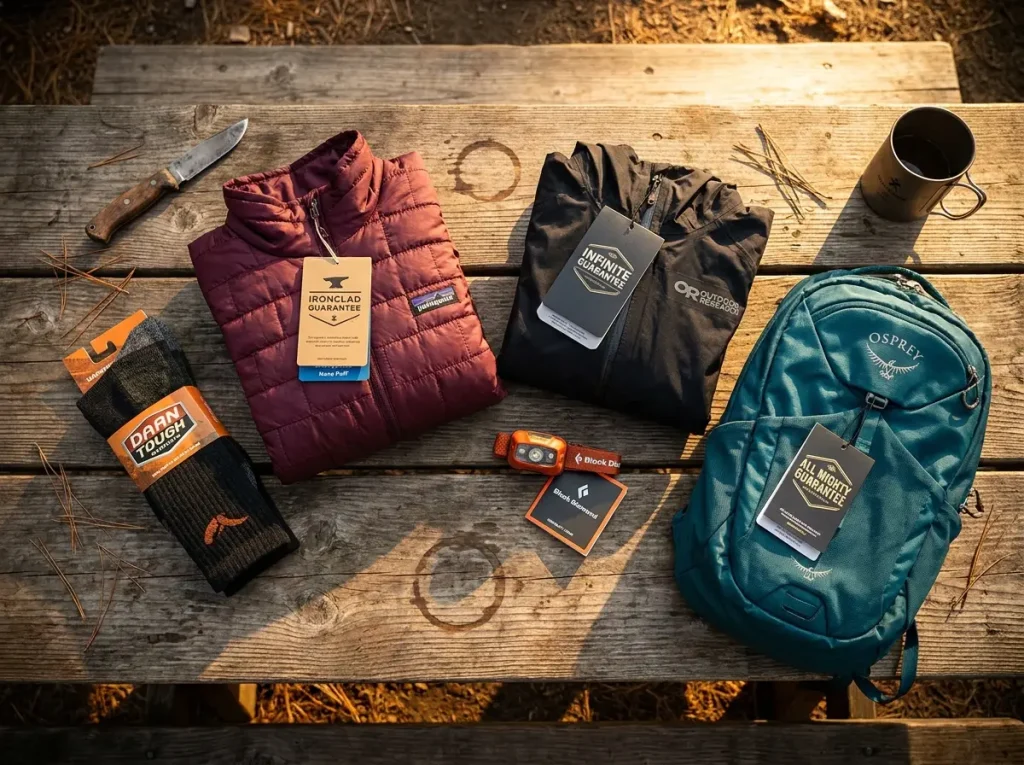
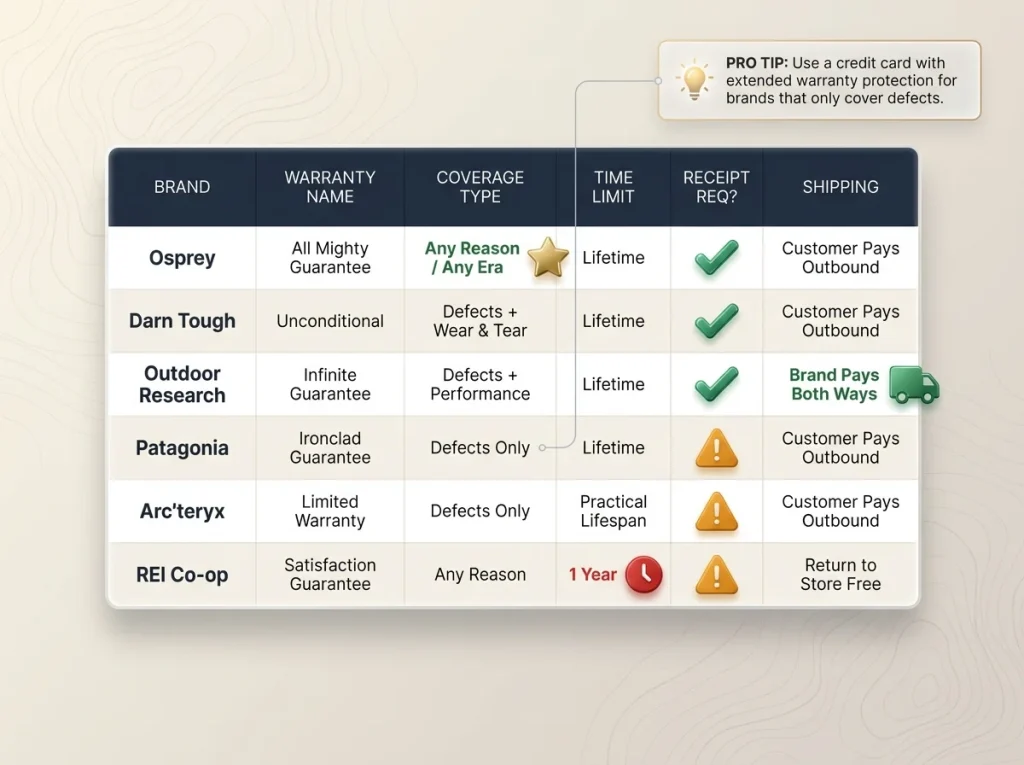
Osprey — The All Mighty Guarantee covers any product, any reason, any era. They’ll repair it for free. If it can’t be repaired, they replace it. If you’re wondering whether your backpack actually needs replacing, check that first — Osprey may fix what looks terminal. You pay outbound shipping; they cover the return. This is the strongest warranty in the outdoor industry, and they’ve backed it up for decades. You need an RMA number first — submit through their website and allow a few days for processing.
Darn Tough — Their unconditional lifetime guarantee covers wear and tear explicitly. Your socks wore through? Send them back and get a new pair. No receipt required, no time limit. The only void condition: cutting or dyeing the socks yourself.
Outdoor Research — The Infinite Guarantee covers their products if they don’t perform to your satisfaction, regardless of the reason. One hiker reported getting a $450 replacement jacket after a $150 closeout purchase developed a zipper failure.
Strong but Limited — Defects Only
Patagonia — The Ironclad Guarantee covers defects and also offers repair services for normal wear for a small fee. Their Worn Wear program extends gear life through professional repairs. Good for defects; less helpful for general wear and tear unless you’re willing to pay for the repair.
Arc’teryx — Covers manufacturing defects for the lifetime of the product. They define “lifetime” based on expected product life, not your life. Repairs are thorough when approved, but claims for wear-related failures often get declined.
REI Co-op brand — Manufacturing defects covered indefinitely on their house brand products. For third-party brands, REI directs you to the manufacturer’s warranty process.
The Retailer Safety Net
REI Co-op members get a 365-day return window on most gear — used or not, satisfied or not. Non-members get 90 days. This isn’t a warranty, it’s a return policy, but it functions as a first-year safety net. If your boots feel wrong at mile 50, the REI return window catches what no warranty would.
One important note: REI has started flagging accounts that abuse this policy. In 2024, they notified a small subset of members — less than 0.02% — that their return privileges were permanently revoked due to excessive returns. Use it honestly, and it works as intended.
When Your Claim Gets Denied — The Appeal Playbook
Why Claims Get Denied
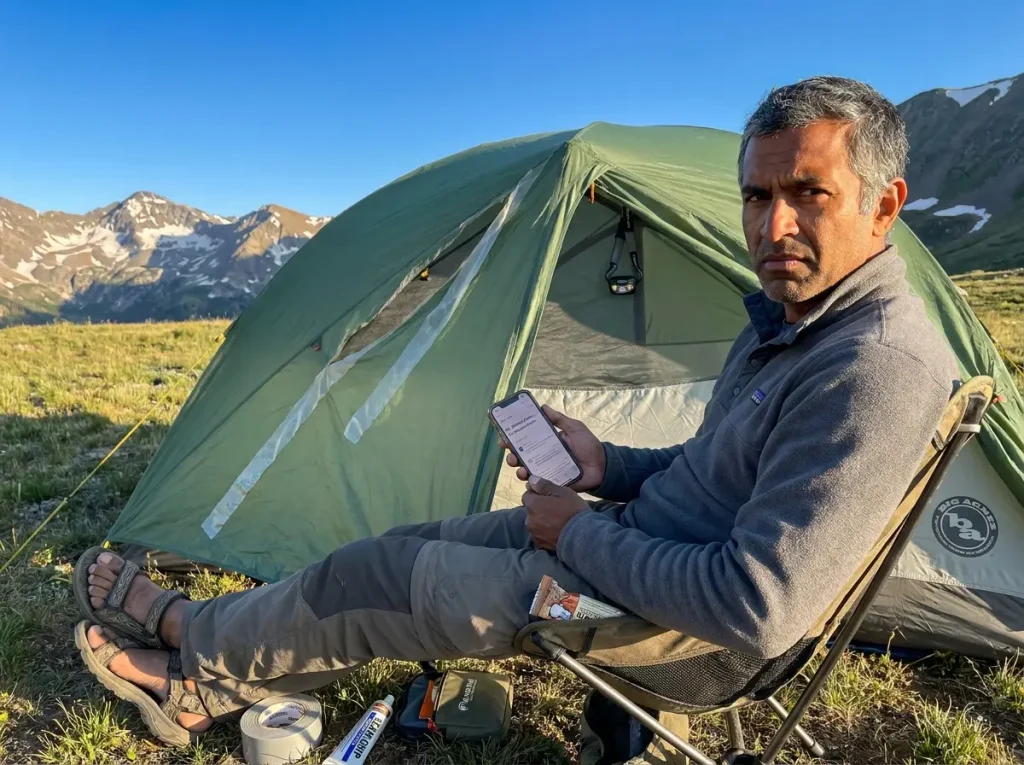
The three most common denial reasons: the brand classified your failure as user damage rather than a defect, you couldn’t prove original ownership, or the item’s age exceeded their internal product lifetime definition. Understanding which reason applies determines your next move.
Ask for the denial reason in writing. Some brands give you a vague “unfortunately your claim doesn’t qualify” email — push back politely and ask for the specific reason. You can’t appeal effectively without knowing what you’re arguing against.
The Escalation Ladder
If your claim was denied and you believe the failure was genuinely a defect, here’s the progression that works:
Reply to the denial email with additional documentation. Include close-up photos of the failure point, emphasize the timeline (how quickly the failure occurred relative to purchase), and reference similar failures you’ve found in online reviews or forums. If other customers have reported the same stitching failure or delamination issue on the same product, that pattern supports a defect argument.
If the email appeal doesn’t work, call customer service and ask to speak with a supervisor or warranty manager. Phone conversations allow you to explain context that gets lost in form submissions. Stay professional. Stay factual. Avoid emotional arguments about how much you love the brand — the person on the other end deals with those all day.
The Social Media and Community Option
This is the last resort, not the first step. If direct channels have failed and you genuinely believe the denial was wrong, a detailed, factual post on Reddit’s r/hiking, r/backpacking, or r/CampingGear communities can put social pressure on the brand. Companies with strong outdoor reputations monitor these forums. A well-documented post with photos, timeline, and correspondence screenshots gets attention.
Don’t threaten or rage. State the facts: “I bought X on [date], it failed at [point] after [miles/months], I filed a claim, it was denied for [reason], here’s why I believe it’s a defect.” The community will judge whether your case is reasonable — and if it is, brands often reach out to resolve it.
Credit Card Purchase Protections — The Warranty You Already Have
How Credit Card Extended Warranties Work
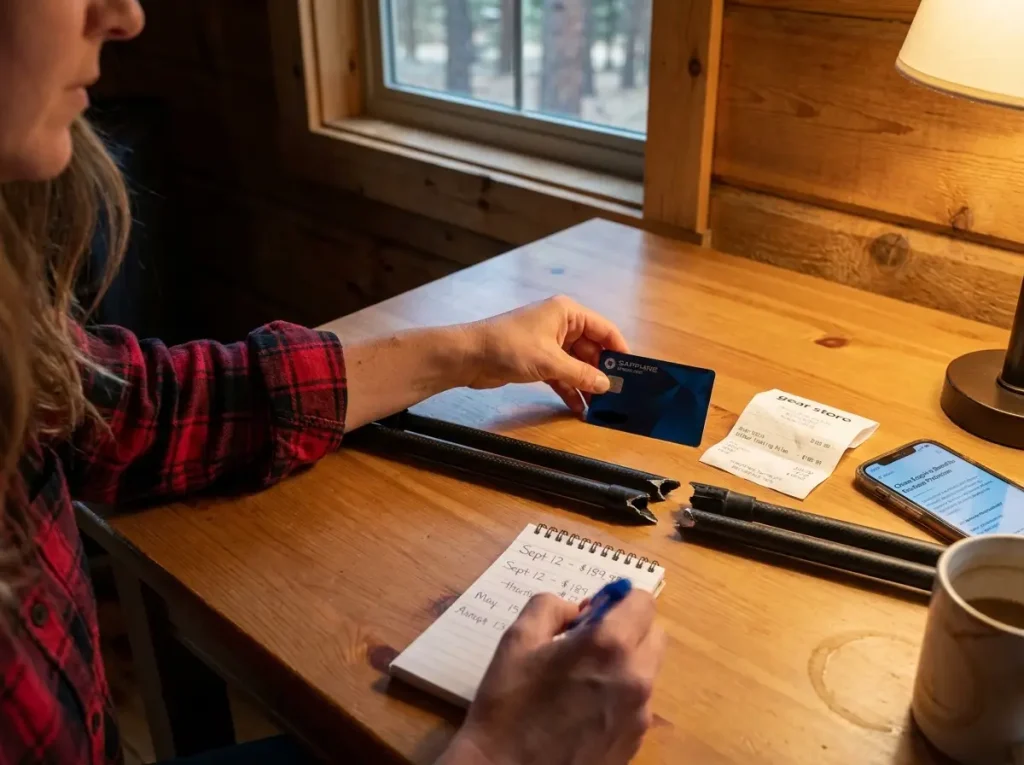
Most hikers don’t know this: if you bought your gear with certain credit cards, you already have an extended warranty that kicks in after the manufacturer’s warranty expires. Cards like the Chase Sapphire, American Express Platinum, and Citi Double Cash automatically extend the original warranty by one to two additional years at no cost.
This means a pair of boots with a 1-year manufacturer warranty effectively has a 2 or 3-year warranty if you paid with the right card. The coverage typically mirrors the manufacturer’s original terms — if the manufacturer covered defects, the credit card extension covers defects for the additional period.
Purchase Protection for Early Failures
Beyond extended warranties, many cards offer purchase protection that covers damage, theft, or loss within 90 to 120 days of purchase. If your new tent got damaged on its first trip and the manufacturer is dragging their feet on a claim, your credit card’s purchase protection might resolve it faster.
Most cards cap reimbursement at $500 to $1,000 per item with an annual cap. You’ll need the original receipt and documentation of the failure — which is why that receipt photo system from earlier matters here too.
How to File a Credit Card Warranty Claim
Call the number on the back of your card and ask for the “benefits” or “purchase protection” department. You’ll need: the original receipt, the manufacturer’s warranty terms showing the coverage period has ended, and documentation of the failure. Processing typically takes 2 to 4 weeks.
Pro tip: Before buying expensive gear, check which of your credit cards offers the best extended warranty benefit. Some cards add 1 year, others add 2. Putting a $350 jacket on the card with a 2-year extension instead of the card with no benefit is free money.
The Cost-Benefit Math on Extended Warranties

What Third-Party Extended Warranties Actually Cover
Some retailers and third-party companies offer extended warranty plans for outdoor gear — typically 2 to 3 year plans that cost 10 to 20 percent of the product’s price. These cover mechanical failures and defects beyond the manufacturer’s warranty period.
The question is whether the math makes sense. A $30 extended warranty on a $200 pair of hiking boots adds 15% to the purchase price. If the boots already come with a 2-year manufacturer warranty and your credit card adds another year, the extended warranty only covers year 3 and beyond — by which point most hikers have worn through the outsole anyway.
The Self-Insurance Alternative
Here’s the approach experienced hikers use: instead of buying extended warranties on individual items, set aside a gear replacement fund. If you’d spend $100 to $150 per year on extended warranties across all your gear, put that money into a savings account. When something breaks outside warranty, you’ve got the cash to replace it — and if nothing breaks, you keep the money.
This only works if you’re disciplined about the fund and realistic about gear lifespans. But the math consistently favors self-insurance over extended warranties for outdoor gear, because most failures happen either early (covered by manufacturer warranty) or late (beyond any extended warranty’s coverage anyway).
When Extended Warranties Make Sense
There are exceptions. High-ticket electronics — a $500 GPS unit, a $400 satellite communicator — have higher failure rates from moisture and impact exposure on trail than most soft goods. These items benefit from extended coverage because the repair cost often exceeds the warranty cost, and manufacturer warranties on electronics are typically shorter than for apparel or packs.
For everything else — boots, jackets, packs, sleeping bags, trekking poles — the manufacturer’s warranty plus credit card extension covers the window where defects actually surface. If a small repair can extend your gear’s life past the warranty window, a compact gear repair kit pays for itself on the first fix. Save the extended warranty money.
Conclusion
Filing warranty claims on hiking gear isn’t complicated once you understand the system: register early, document everything, send it clean, and follow up if you don’t hear back. Know the difference between defects and wear before you file. Use the brand’s direct portal first, your retailer’s return window as a backup, and your credit card’s purchase protection as the safety net most hikers forget they have.
Next time you buy a piece of gear, spend 5 minutes registering it and photographing the receipt. That small investment pays for itself the first time something breaks on trail.
Q1 How do I file a warranty claim on hiking gear?
Go to the brand’s website and find their warranty or guarantee page. Submit photos of the failure, proof of purchase, and a clear description of what happened and when. Most brands respond within 1 to 2 weeks. Ship the item clean with tracking if they request it.
Q2 What does a lifetime warranty on outdoor gear actually cover?
Most lifetime warranties cover manufacturing defects only — not normal wear and tear. Lifetime usually means the expected product life as defined by the manufacturer, not your lifetime. Exceptions include Darn Tough and Osprey, which cover wear and any-reason failures respectively.
Q3 Can I claim a warranty on hiking boots?
Yes, if the failure is a manufacturing defect like sole delamination, stitching separation, or eyelet failure. Normal outsole wear from mileage is not covered by most boot warranties. Take photos of the failure, check the brand’s specific warranty terms, and submit through their portal.
Q4 What outdoor brands have the best warranties?
Osprey (All Mighty Guarantee — any reason, any era), Darn Tough (unconditional lifetime including wear), and Outdoor Research (Infinite Guarantee) consistently stand out. Patagonia’s Ironclad Guarantee is strong for defects and offers paid repair for wear.
Q5 Does REI accept warranty returns?
REI members have a 365-day return window for satisfaction issues, not a warranty. For manufacturing defects on REI-brand products, there’s no time limit. For third-party brand defects, REI directs you to the manufacturer. REI’s return policy is a safety net for the first year, not a long-term warranty replacement.
Risk Disclaimer: Hiking, trekking, backpacking, and all related outdoor activities involve inherent
risks which may result in serious injury, illness, or death. The information provided on The Hiking Tribe is for
educational and informational purposes only. While we strive for accuracy, information on trails, gear, techniques,
and safety is not a substitute for your own best judgment and thorough preparation. Trail conditions, weather, and
other environmental factors change rapidly and may differ from what is described on this site. Always check with
official sources like park services for the most current alerts and conditions. Never undertake a hike beyond your
abilities and always be prepared for the unexpected. By using this website, you agree that you are solely
responsible for your own safety. Any reliance you place on our content is strictly at your own risk, and you assume
all liability for your actions and decisions in the outdoors. The Hiking Tribe and its authors will not be held
liable for any injury, damage, or loss sustained in connection with the use of the information herein.
Affiliate Disclosure: We are a participant in the Amazon Services LLC Associates Program, an
affiliate advertising program designed to provide a means for us to earn advertising fees by advertising and linking
to Amazon.com. As an Amazon Associate, we earn from qualifying purchases. We are also an official affiliate partner
of Black Diamond Equipment via the AvantLink network. If you click on a Black Diamond affiliate link and make a
purchase, we may earn a commission at no additional cost to you. We also participate in other affiliate programs and
may receive a commission on products purchased through our links. Additional terms are found in the terms of
service.