





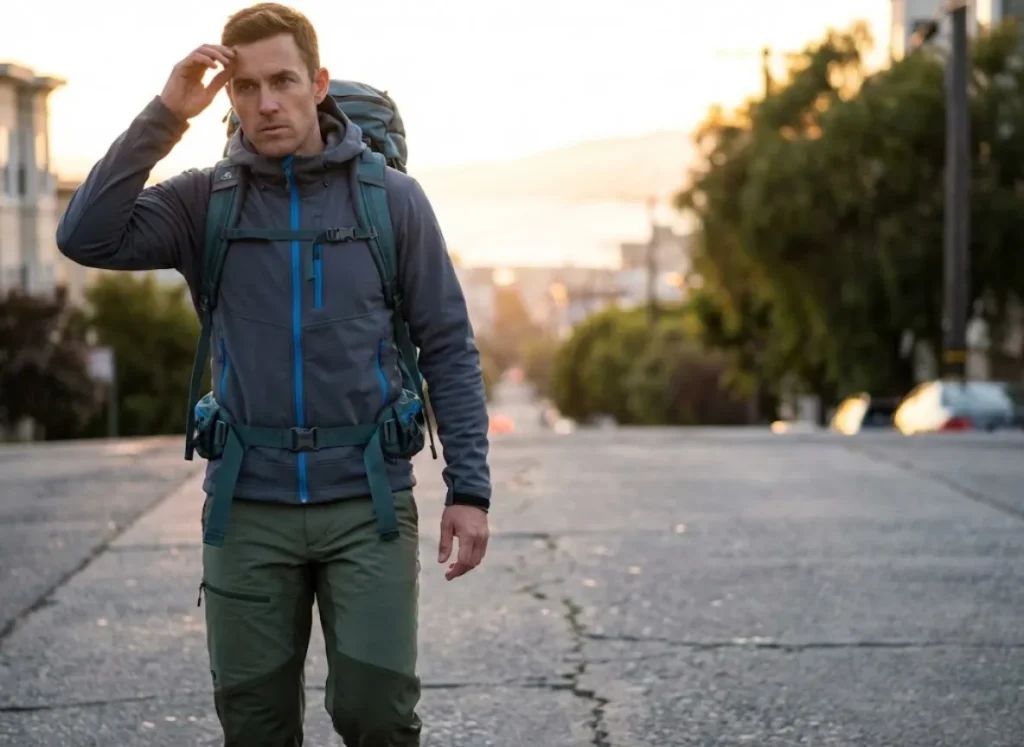
The sidewalk ends where the pavement cracks, but the trail doesn’t stop just because the skyline appears. For the practitioner of urban mountaineering, the city isn’t an obstacle to avoid; it is a complex topography of vertical gain, concrete abrasion, and navigational hazard. Urban hiking is not a leisurely stroll. It is a rigorous discipline that demands the endurance of a thru-hiker and the tactical awareness of a street navigator.
I have spent decades guiding teams up glaciated peaks, but my training ground has often been the vertical stairways of San Francisco and the sprawling greenways of Chicago. This geography-based guide bridges the gap between the built environment and the wilderness, equipping you to treat the metropolis as a legitimate training ground. We will break down route selection, the specific failure points of traditional gear on concrete, and the logistics lens required for trekking through the grid.
What defines the modern discipline of urban hiking?
How does urban hiking differ from a city walk?
Urban hiking is defined strictly by intensity and duration. Unlike utilitarian walking or commuting, this discipline involves multi-hour or multi-day efforts that rival the caloric expenditure of wilderness-style hiking. The activity transforms civic infrastructure—public stairways, steep gradients, and urban forests—into “technical terrain” requiring active navigation and significant physical exertion.
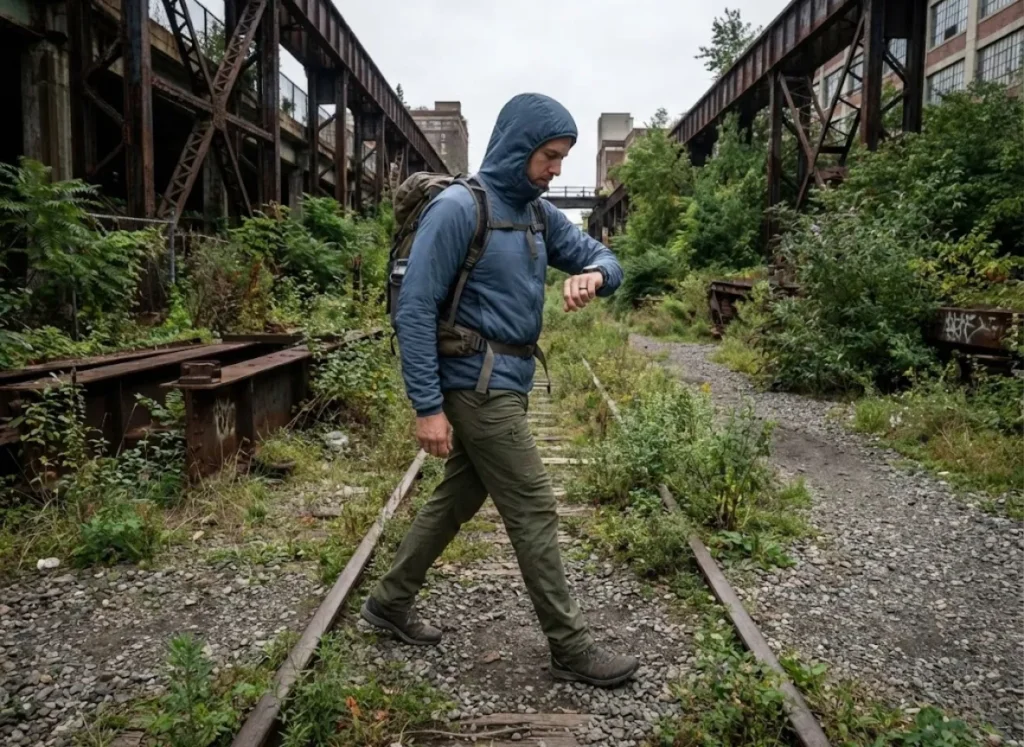
Routes often utilize “Green Arteries,” which are reclaimed industrial zones or rail lines like The High Line in NYC or The 606 in Chicago. These corridors connect disparate neighborhoods, creating a continuous path where stoplights are minimized. Psychologically, the intent shifts from “commuting” to “traversing.” We engage the biophilia hypothesis, which drives our innate need to connect with nature, even in micro-doses found in urban parks and nature preserves.

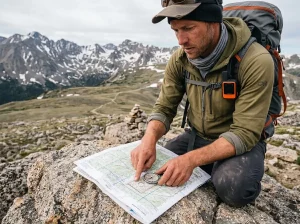
This practice creates a “mental map” of the city that prioritizes topography and urban wildlife over commercial centers. Research regarding nature experience and rumination reduction supports the data that finding these green pockets within the concrete jungle offers tangible mental health benefits through a wellness lens. Treating the city as a wilderness also requires developing natural navigation techniques, forcing you to read the slope of the land and the flow of water rather than relying solely on street signs or public transit lines.
Who is the “Urban Thru-Hiker”?
The Urban Thru-Hiker is a distinct persona who attempts massive, continuous routes like the Inman 300 (220 miles in LA), pioneered by Bob Inman, or the Chicago Outerbelt (210 miles), championed by Jay Readey. They treat the city as a single contiguous trail. Their logistical planning focuses on “resupply” points—eateries, convenience stores, and water fountains—rather than carrying days of food weight.
Navigation is complex. It often requires linking “stub” streets, alleys, and unofficial hidden paths that do not appear on standard transit maps. The primary challenge is route continuity, finding ways to bypass highways or industrial zones that sever pedestrian access. Because stealth camping is illegal in most urban cores, these hikers often engage in “Slackpacking” or “Credit Card Camping,” utilizing hotels or transit to return home at night.
Pro-Tip: Treat an urban thru-hike with the same respect as a wilderness trek. If you are attempting a multi-day loop in the Midwest, review state park camping regulations and reservations well in advance. Do not assume you can pitch a tent in a forest preserve just because it looks secluded.
This approach requires a high tolerance for visual density and noise. You are trading the silence of the woods for the endurance challenge of the concrete landscape. This mindset shift is a critical component of thru-hiking mental preparation, proving that resilience can be built anywhere, from rocky terrain to paved paths.
Where are the ultimate urban routes located?
Where can hikers find vertical elevation within city limits?
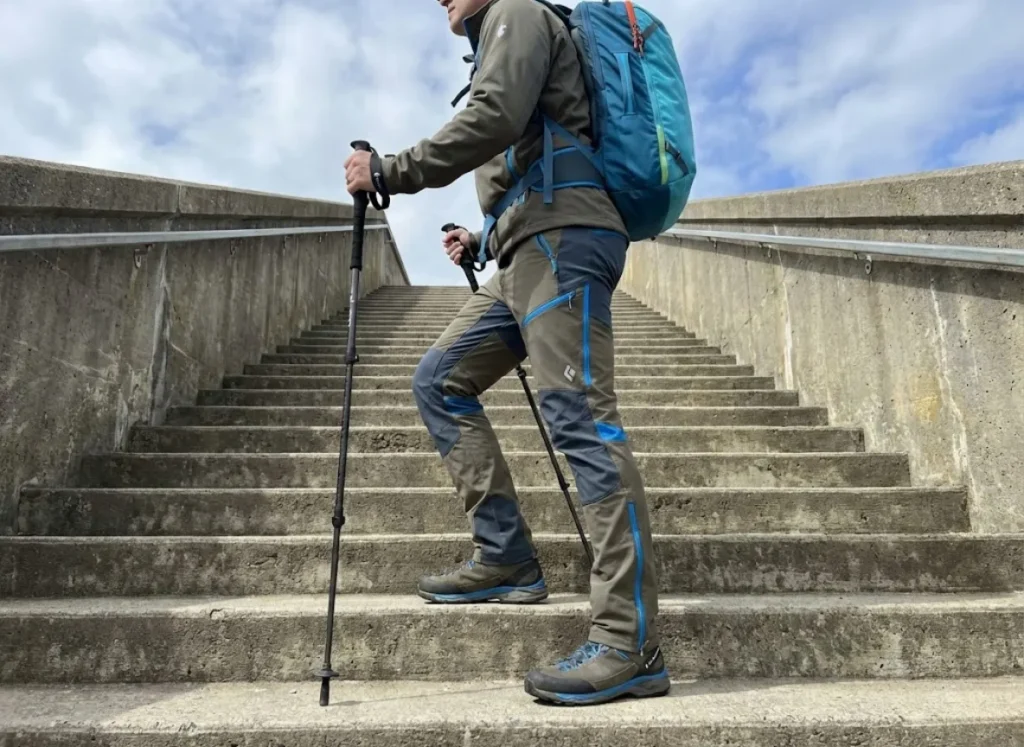
San Francisco stands as the premier destination for vertical urban training. The San Francisco Crosstown Trail (17 miles) and Double Cross Trail (14.5 miles) define the vertical urban hike, utilizing historic stairways like the Greenwich Steps or Telegraph Hill Stairs to gain thousands of feet in elevation gain. The terrain is a jagged profile of steep ascents, such as Twin Peaks and Mt. Olympus, offering a cardio-pulmonary challenge equivalent to alpine approaches.
In Los Angeles, the Inman 300 and The Big Parade incorporate roughly 350 public stairways. Originally created for trolley access, these stairs now serve as a massive, localized training ground. These routes are technically “mixed-surface,” blending concrete steps with dirt singletrack in parks like Griffith Park or Runyon Canyon. For those seeking Instagrammable spots and serious grade, Mount Woodson (home to Potato Chip Rock) offers significant verticality just outside the core.

Hikers must prepare for “micro-climates,” particularly in SF. Coastal fog on the trail’s west end can shift to intense heat in the mission districts. The Lands End Trail and routes through The Presidio offer a rare coastal wilderness experience with views of shipwrecks, directly connected to the urban grid. The National Park Service manages these areas with care, and Presidio ecology trail restoration efforts have brought native species back to these cliffs. If you are exploring hiking trails in Los Angeles, look for these stairway connectors to add significant verticality to your routine.
Which cities offer the best “Orbital Loops” and endurance challenges?
For pure total mileage, the Midwest and East Coast offer massive endurance loops. Chicago features the Chicago Outerbelt (210 miles), which connects forest preserves, the Chicago Lakefront Trail, and greenways into a continuous loop. This route is often hiked over 10 to 20 days. Despite the lack of mountains, the mileage creates a grueling endurance test.
Portland offers the 30-mile Wildwood Trail in Forest Park. This serves as a premier “one-day thru-hike,” allowing hikers to be fully immersed in deep forest while remaining within city limits. Similarly, the Denver Orbital Trail (177 miles) utilizes the High Line Canal and Cherry Creek Trail to circle the metro area, keeping hikers largely off-road. Hikers in Texas can explore the Trinity Trails in Fort Worth, while those in the Pacific Northwest might trek the Foster Island Trail or sections of the Washington Trails Association network.
New York City presents the Manhattan Waterfront Greenway (32.5 miles) and connections to the Empire State Trail or The Long Path. This route offers a flat, high-visual-density circumnavigation of the island, connecting the Battery to the Little Red Lighthouse. You can review the Manhattan Waterfront Greenway project details to understand the scope of this connectivity.
These routes act as “green necklaces,” linking fragmented ecosystems like Wissahickon Valley Park (Philadelphia) or Rock Creek Park (DC). Logistics for loops like the Outerbelt are critical; hikers must book designated campgrounds months in advance. Mastering the route planner’s blueprint is essential here, as you will need to map water sources and legal sleep spots with precision.
What gear is required for the “Door-to-Trail” transition?
Why do traditional hiking boots fail on city streets?
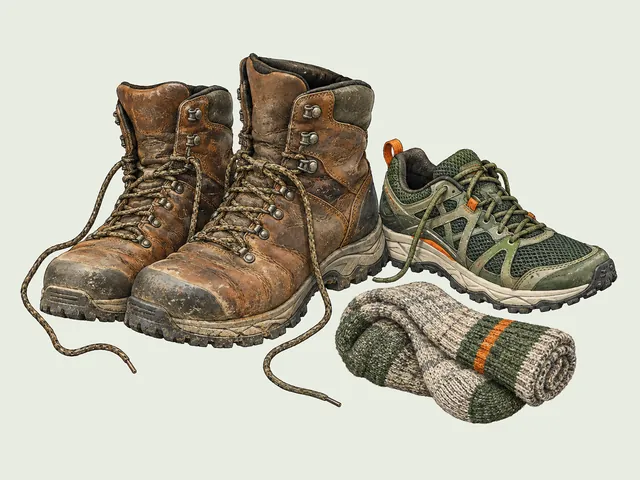
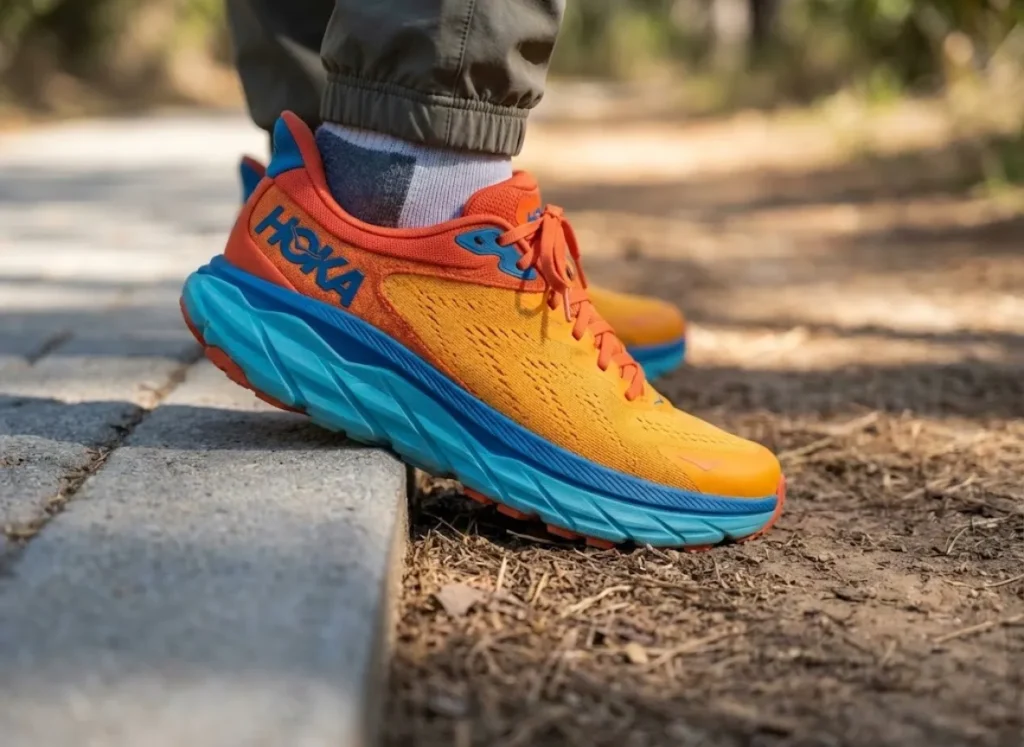
Concrete acts as 60-grit sandpaper. Soft, sticky rubber compounds, like those found on technical approach shoes, will shear off and degrade rapidly on pavement. Traditional heavy boots with stiff shanks and deep lugs (5mm+) create an uncomfortable “wobble” on hard flat surfaces. They lack the necessary shock absorption for repetitive impact on asphalt.
The ideal solution is “Road-to-Trail” (Hybrid) footwear. These feature moderate lugs (2mm-4mm) and dual-density outsoles that balance grip with durability. Cushioning and higher rebound are essential. The impact forces on asphalt are significantly higher than soil, requiring “Max Stack” shoes (like Hoka or Altra) to protect joints during high-mileage urban days. Brands like Oboz are also entering this space with Oboz fast trail options that handle the paved vs dirt ratio effectively.
Urban Exploration Footwear Comparison
A breakdown of technical specs for transitioning between road and trail environments.
Comparison Specs
Hiking Boot: 5mm-7mm | Trail Runner: 5mm-8mm | Hybrid: 2mm-4mm
Rationale
Shallow lugs grip pavement without “wobble”; deep lugs wear down fast on concrete.
Material Composition
Hiking Boot: Hard/Stiff | Trail Runner: Soft/Sticky | Hybrid: Balanced
Rationale
Sticky rubber disintegrates on asphalt; hard rubber slips on wet metal surfaces.
Impact Protection
Hiking Boot: Low/Rigid | Trail Runner: Varied | Hybrid: High Stack
Rationale
Concrete impact forces are higher than soil; max cushion protects joints during urban travel.
Heel-to-Toe Drop
Hiking Boot: 10mm+ | Trail Runner: 0mm-8mm | Hybrid: 4mm-10mm
Rationale
Moderate drop supports the repetitive gait cycle typical of flat urban walking and hard surfaces.
Look for “Transition” zones in the tread pattern that allow for a smooth heel-to-toe rocker motion on flat ground. Understanding the mechanical differences between trail runners vs. hiking shoes is vital; hybrid runners like the Nike Pegasus Trail often outperform heavy boots in this environment. Whether you are shopping at REI or reading reviews on Field Mag or Outside Online, prioritize impact protection. Regardless of the surface, always adhere to Leave No Trace principles for urban environments, disposing of waste properly even when surrounded by concrete.
How should a hiker configure their pack for urban environments?
The “Urban Ruck” must serve a dual purpose: protecting technology while providing the suspension system of a technical daypack. Volume should sit in the 20L to 30L range. This is sufficient for water, layers, and tech without the bulk of a wilderness backpacking frame. Key features include a padded laptop sleeve that doubles as a hydration bladder compartment and “anti-theft” considerations, like zipper garages, for crowded transit legs.
Ventilation is critical. Urban environments often retain more heat due to the “heat island effect.” A suspended mesh back panel can prevent overheating. Water access is a major differentiator. Hikers should consider carrying a “Silcock Key” (water key) or carefully map commercial resupply points, as public fountains are often seasonal.
Pro-Tip: Safety in the city requires different tools than the backcountry. Familiarize yourself with local statutes, such as New York Penal Law regarding self-defense sprays, before carrying protective gear.
Visibility gear, such as reflective strips or clip-on lights, is mandatory for the “Door-to-Trail” hiker operating near vehicle traffic. When selecting your urban hiking gear, consult a dedicated day-hiking rucksack guide to ensure your pack has the ergonomic support needed for 20-mile days on pavement.
Why is urban hiking critical for physical and mental conditioning?

How does stair climbing specifically target mountaineering muscles?
Urban stairways provide a high-intensity interval workout that engages the glutes and hip flexors more deeply than flat walking. However, the descent is the critical component. Descending stairs forces an eccentric contraction of the quadriceps and patellar tendon. This mimics the heavy load of a mountain descent, which is where most alpine injuries occur.
This “Eccentric Loading” strengthens the connective tissue around the knee. It serves as the single best injury prevention method for “hiker’s knee” before a major trip. To maximize this, implement a Weighted Rucking Protocol. Carry 20-30 lbs (water or sandbags) on stair repeats to increase cardiovascular density and muscular endurance.
Frequency is key. One to two sessions per week allow for connective tissue adaptation without overtraining. This training transfers directly to alpine objectives, improving VO2 max and leg durability. Integrating this into a complete hiking training system ensures you are physically ready when you finally reach the trailhead. Beyond the physical, Trust for Public Land reports on community parks indicate that utilizing these spaces strengthens social capital and personal well-being.
The Final Mile
Urban hiking is not a compromise; it is a discipline. From the 210-mile Chicago Outerbelt to the vertical stairs of San Francisco, the city offers diverse, high-mileage trail systems that challenge even veteran hikers. Success requires adapting your gear—swapping rigid boots for cushioned “Door-to-Trail” hybrids—and mastering the logistics of legal camping and water access.
Most importantly, the city offers a unique training ground. The eccentric loading provided by urban stairways is premier conditioning for alpine descents. Don’t wait for the weekend or a permit. Lace up your hybrids, walk out your front door, and find the wilderness hidden in the grid. Share your local urban route discoveries in the comments below.
FAQ – Frequently Asked Questions
What is the difference between urban hiking and walking?
Urban hiking involves intentional physical exertion, often seeking elevation gain, mixed terrain (stairs, gravel, pavement), and longer distances (5+ miles). It treats city infrastructure as technical terrain for fitness or urban exploration rather than just transportation.
Can you camp on urban hiking trails?
Generally, stealth camping in city parks is illegal and heavily policed. You must utilize designated campgrounds (like in Cook County Forest Preserves) or hotels. Always check specific municipal codes, as regulations vary wildly between cities.
What shoes are best for walking on concrete and dirt?
Road-to-Trail or hybrid running shoes are ideal. They feature shallower lugs (2-4mm) and softer cushioning than rigid hiking boots. Look for models that absorb the high impact of pavement while still gripping loose dirt.
Is urban hiking safe?
It carries different risks than wilderness hiking, primarily traffic hazards and navigating unfamiliar neighborhoods. Safety requires situational awareness, carrying legal self-defense tools (check local laws), and having a charged phone for wayfinding.
I've spent more than a decade researching hiking gear and trail technique. I read the specs, the forum threads and the long-term reviews, and every pick here comes with what it gets wrong.
End of the trail
You read every mile of this one. Here's where the trail goes next.