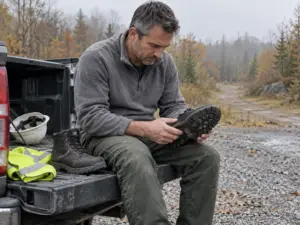
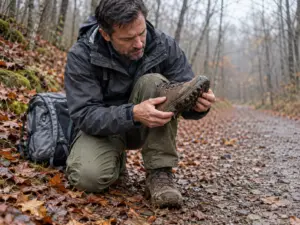









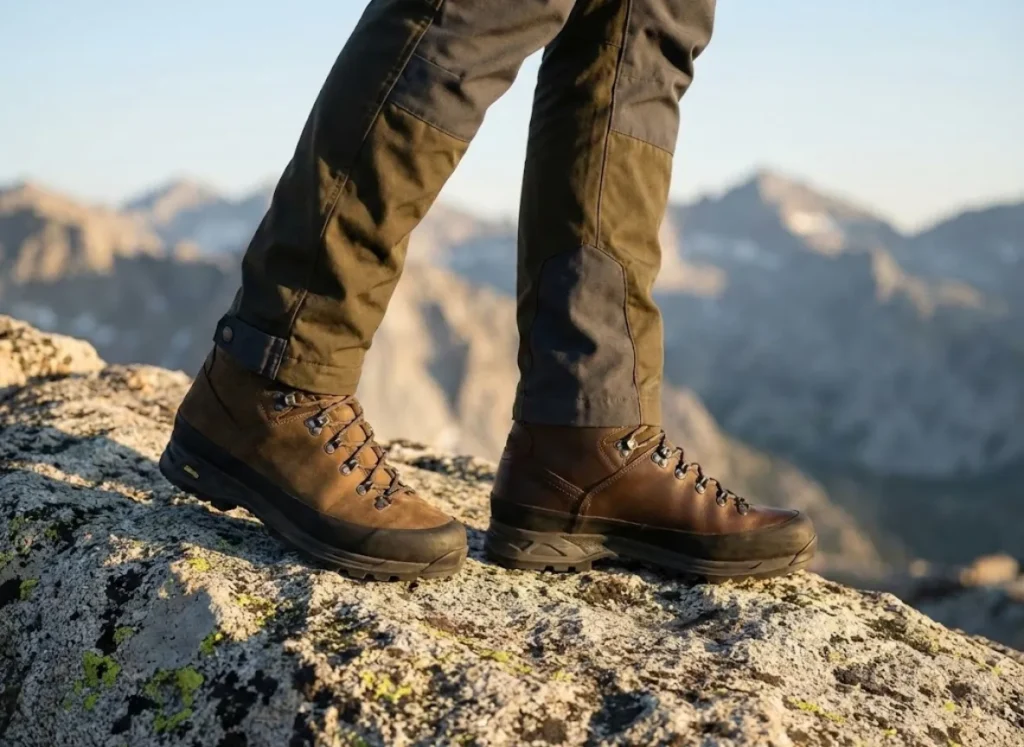
Boots rarely fail in the parking lot. They break on mile 40, deep in a rock field, when a sidewall blows out or a “waterproof” boot soaks through and freezes your toes.
In my years leading expeditions and teaching outdoor education, I’ve seen hikers tape their soles back together more times than I care to count.
Choosing between Nubuck leather and Full-Grain leather isn’t just about how the boot looks or the price tag. It is a choice between mechanical armor and climate control. Understanding the structure of your footwear materials is the first step to making sure your technical hiking gear survives the hike. You need to match the material to the terrain.
What Actually Separates Nubuck From Full-Grain Leather?
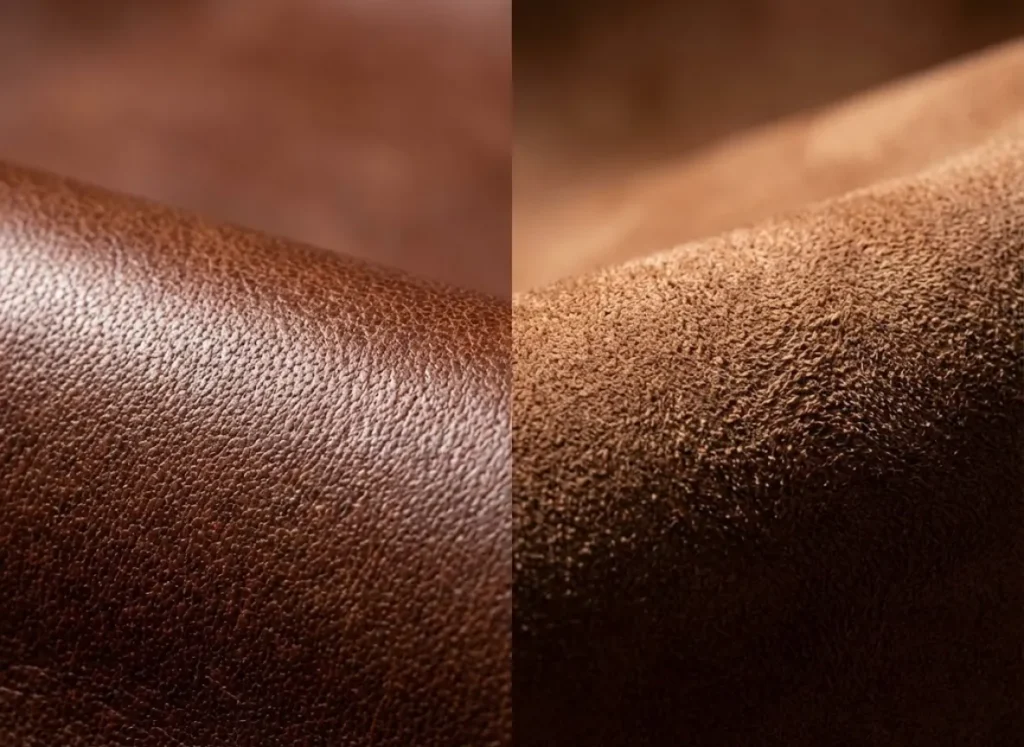
We need to start by looking at the physical differences between these premium leather materials. The anatomy of the cattle hide is the foundation for how it performs, even if marketing terms often make it confusing.
How does the “Buffing” process alter the hide’s structure?
Full-Grain leather uses the entire outer layer of the hide, often referred to as the hair side. This is where the fibers are tightest and stand vertically. It acts as natural armor against sharp rocks and water. It is the skin in its strongest form, offering bombproof durability.
Nubuck is different. To make it, manufacturers use a sanding process or buffing on that outer surface. This cuts the tops of the fibers to create a soft, velvet texture or nap. While this feels nice, this buffing process physically “uncorks” the structure. It opens up the pores much more than the sealed surface of Full-Grain.
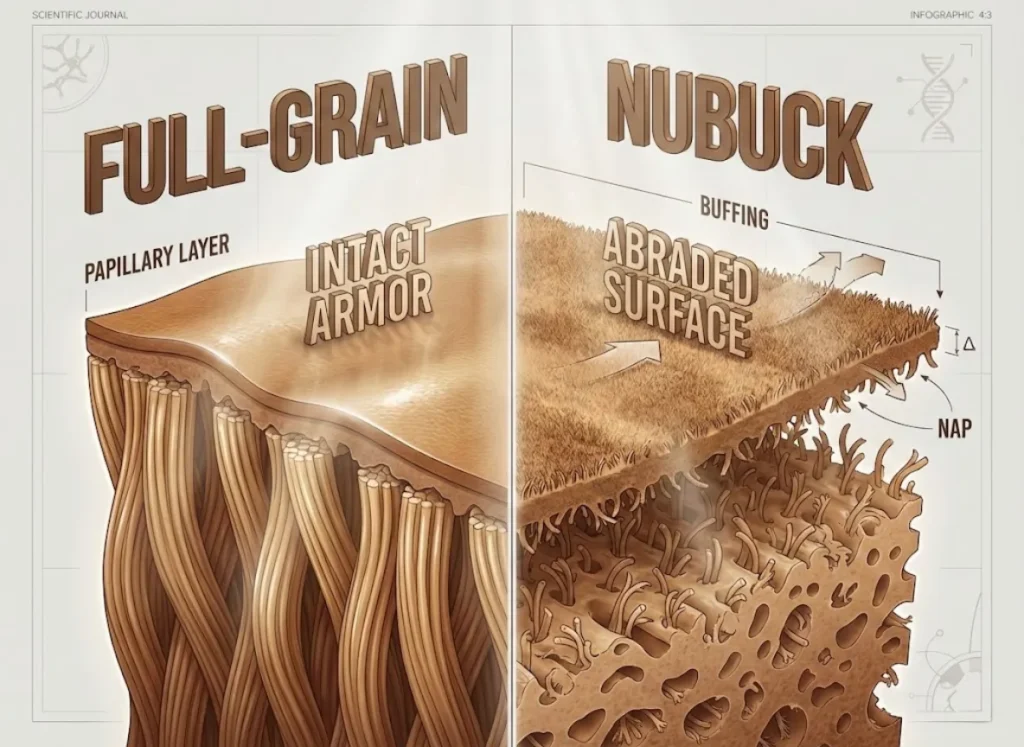
Under a microscope, you can see that this sanding drops the tensile strength of the leather significantly (measured in MPa). It is a deliberate trade-off. You get more flexibility and out-of-the-box comfort, but you lose some durability. A microscopic analysis of full-grain versus top-grain structures shows us exactly why Nubuck behaves differently with water.
The exposed fiber ends created by sanding absorb water much faster than the smooth surface of Full-Grain. That is why factory treatments are so important. You have to understand this porosity and “open” structure to realize why Nubuck breathes better but wets out faster. You can see how this fits into the larger picture by decoding hiking boot anatomy to understand how the upper works with the rest of the boot.
Why is Nubuck distinct from Suede?
Once you visualize the layers of the hide, the confusion often shifts to a similar-looking material: suede.
Suede comes from the inner side (the flesh side) of the hide, also known as split-grain. It completely lacks the tough outer layer found in both Nubuck and top-grain hide. Because it relies on looser internal fibers, Suede is much weaker and tears easily.
Nubuck is technically top-grain leather. It keeps that strong outer structure despite being sanded. It is a hybrid of strength and softness, seen in popular models like the Lowa Renegade GTX or Hanwag Banks. A comparative analysis of fiber bundle orientation shows clearly why that outer layer is essential for heavy loads.
Hikers often mix them up because they both have a matte finish. However, Suede should generally be used for casual shoes or light hiking (think Merrell Moab Speed 2 Mid GTX styles). For serious trekking, Nubuck offers a strong frame capable of supporting a heavy pack. Suede is mostly just for comfort panels. Knowing the difference prevents the mistake of choosing the best men’s leather hiking boots only to find you’ve bought a fashion material for a technical trip.
How Do They Compare in Technical Performance?
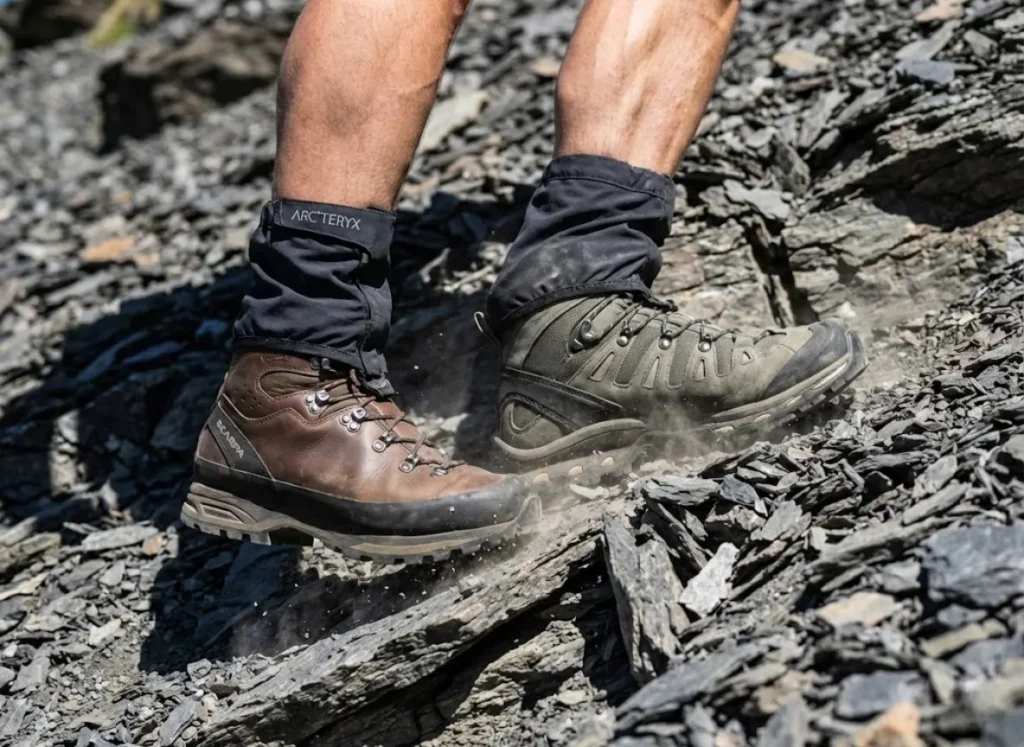
Now that we know the anatomy, we need to look at how these materials perform when dragged across rock and scree. We have to compare the trade-offs, specifically the breathability-to-durability ratio.
Which leather withstands granite and scree better?
Full-Grain leather acts as a shield. It lasts a long time because its smooth surface lets sharp edges slide right off, providing superior abrasion resistance. Nubuck wears out faster. Its fuzzy surface creates friction against rocks, which leads to the fibers shredding over time.
For off-trail scrambling where boots get wedged into cracks, Full-Grain resists tearing much better. According to SATRA TM47 water vapour permeability standards, gaining breathability almost always means losing some toughness.
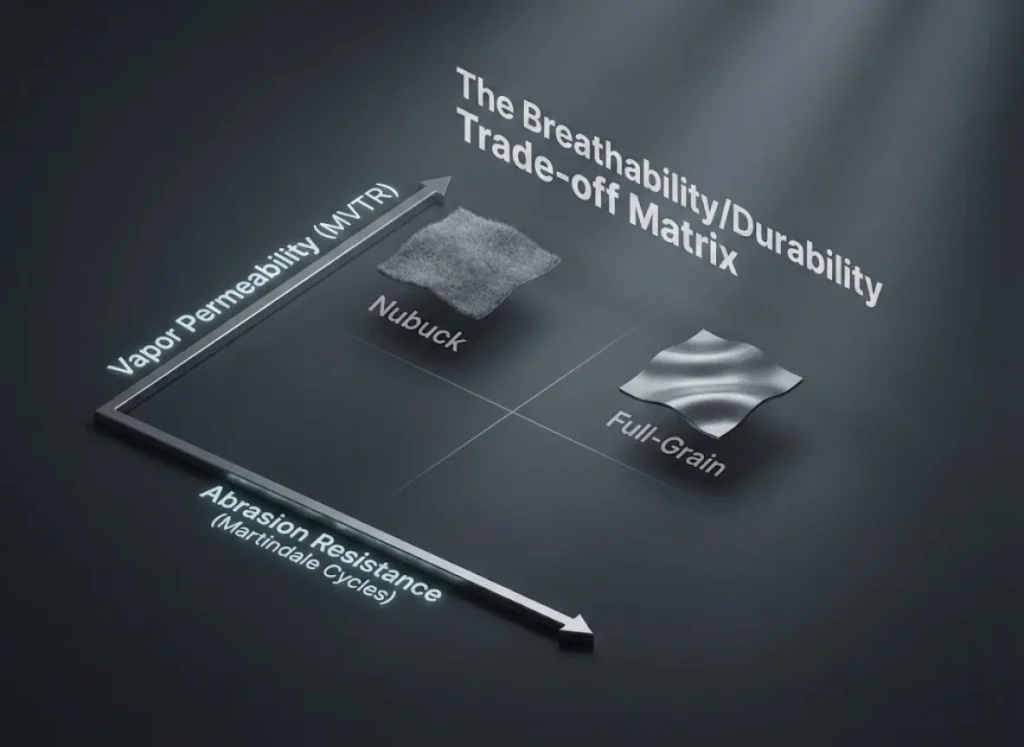
In rough volcanic terrain or granite cracks, Nubuck can suffer from scuff susceptibility and tear. Full-Grain just gets scratched. However, modern Nubuck boots often fix this by adding a polyurethane rand or rubber bumpers at the toe and heel.
The choice comes down to whether you trust the material itself (Full-Grain) or the added protection (Reinforced Nubuck). This is a critical factor when calculating the true cost of leather vs synthetic hiking boots over a decade of use.
How does the sanding process impact Vapor Permeability (MVTR)?
While Full-Grain acts as armor against the outside world, Nubuck acts as a ventilation system.
“Vapor Permeability” is just a fancy term for how much sweat can escape the boot. Nubuck’s sanded surface breaks the “seal” of the leather. This creates open pores that let sweat vapor get out much faster than sealed Full-Grain. This makes Nubuck a great partner for waterproof membranes like Gore-Tex Surround, as it lets the membrane breathe.
In contrast, heavily waxed Full-Grain can trap moisture inside the boot. Studies on the impact of finishing layers on water vapour transmission confirm that thick surface treatments block airflow.
This breathability is vital in humid conditions where sweat leads to soft skin and blisters. Hikers who move fast or hike in warm weather—perhaps wearing the Hoka Kaha 3 GTX—will find that the cooling benefits of Nubuck are worth the loss in durability. Of course, even the best leather material needs help, so understanding the science of boot socks is key to moving moisture away from your skin.
Which Material Fits Your Specific Trail Conditions?

We can now use this trail longevity forecast to predict how long your boots will last. You must match the material to where you hike.
Scenario A: The High Sierra (Granite & Scree) vs. Scenario B: The Appalachian Trail (Mud & Humidity)
In the High Sierra or High Desert, the terrain is dry and sharp. Here, Full-Grain leather is the best choice. Its smooth surface deflects scratches, while Nubuck risks getting shredded by the rock. For Nubuck to survive here, it needs a full rubber bumper all the way around the boot.
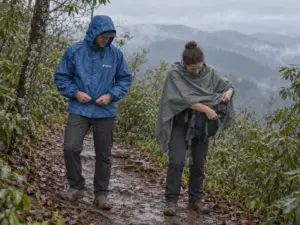
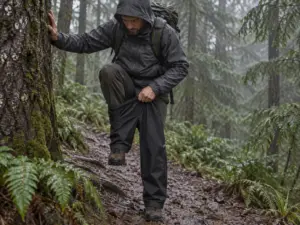
On the Appalachian Trail or the Pacific Northwest, you are constantly in humidity and mud. Full-Grain risks holding water and rotting if you can’t dry it out. Nubuck wins in humid environments because it dries faster and breathes better, which helps prevent trench foot.
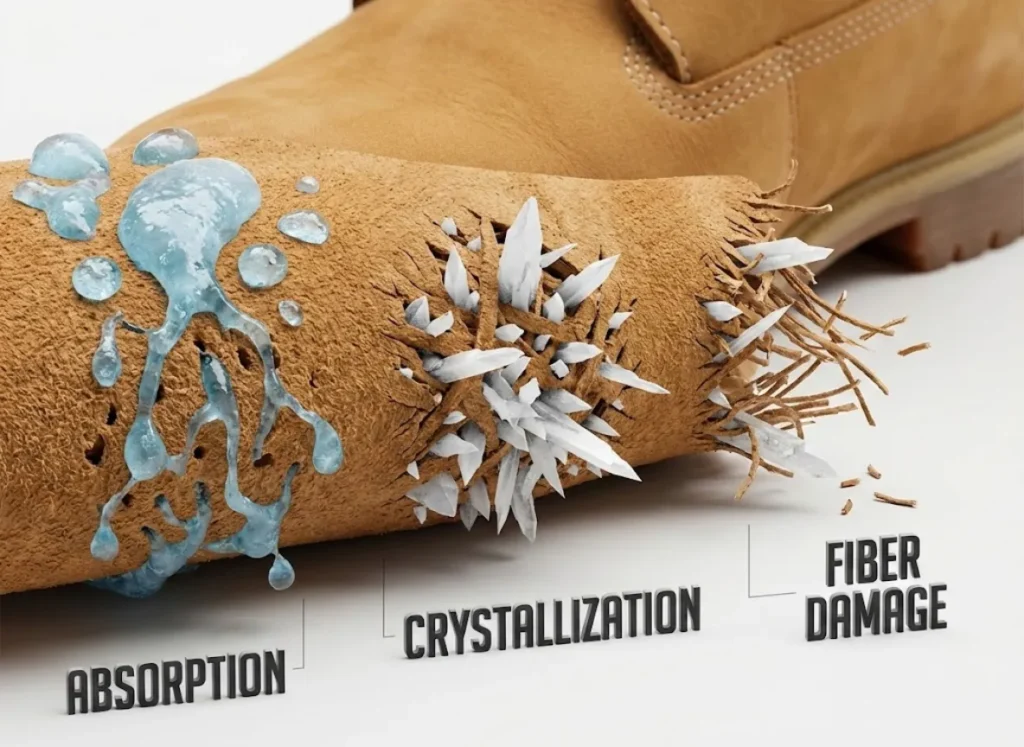
Pro-Tip: If you hike in winter or areas with salted roads, be wary of Nubuck. Dissolved road salt enters the open pores, turns back into crystals, and cuts the fibers from the inside. We call this “Salt-Rot.”
Full-Grain can be heavily treated with Dubbin wax to block out salt and slush, making it the king of winter hiking. The factors affecting water-vapor permeability of leather explain why finished leather handles water so differently than fibrous leather. In extreme mud or loose rock, regardless of leather choice, choosing hiking gaiters is often the best insurance policy for your boots.
How Does Maintenance Affect the Breathability-Durability Ratio?
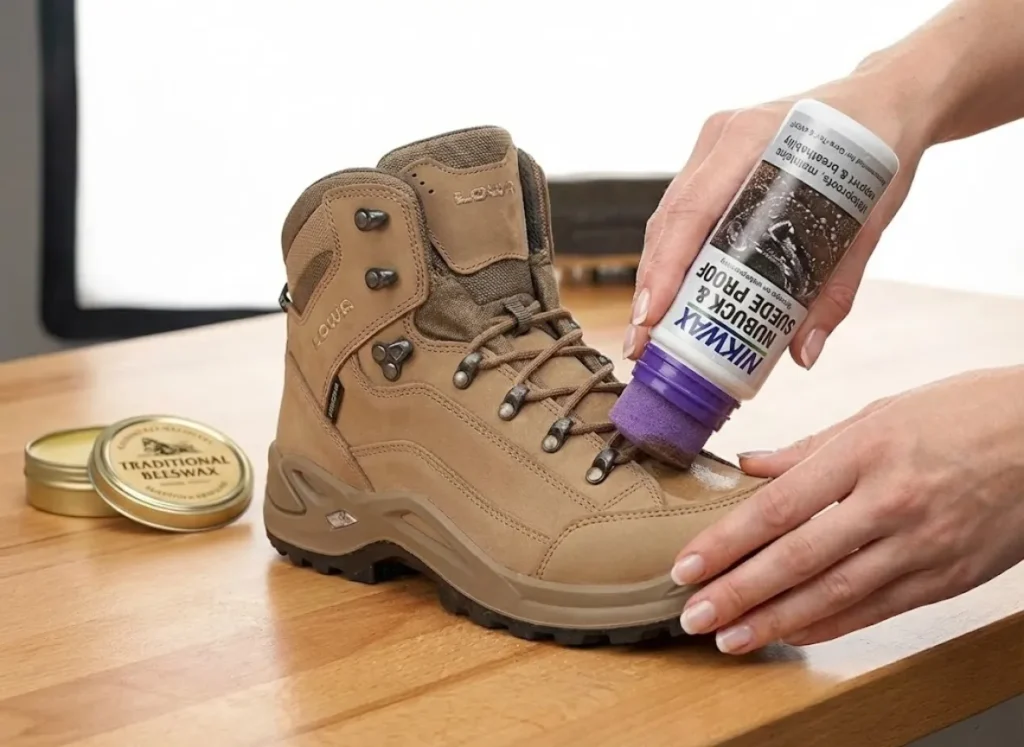
Once you’ve selected the right material, the final factor is your maintenance routine. This is where most hikers accidentally ruin their boots.
Does waxing Nubuck ruin its technical advantage?
Applying heavy wax or grease to Nubuck mats down the fuzz and fills the open pores. It turns the material into smooth leather. While this makes it very waterproof and tough, it kills the breathability. It creates a “sweatbox” and undoes the reason you bought Nubuck in the first place.
Once waxed, you cannot get Nubuck back to its original state. The change is permanent.
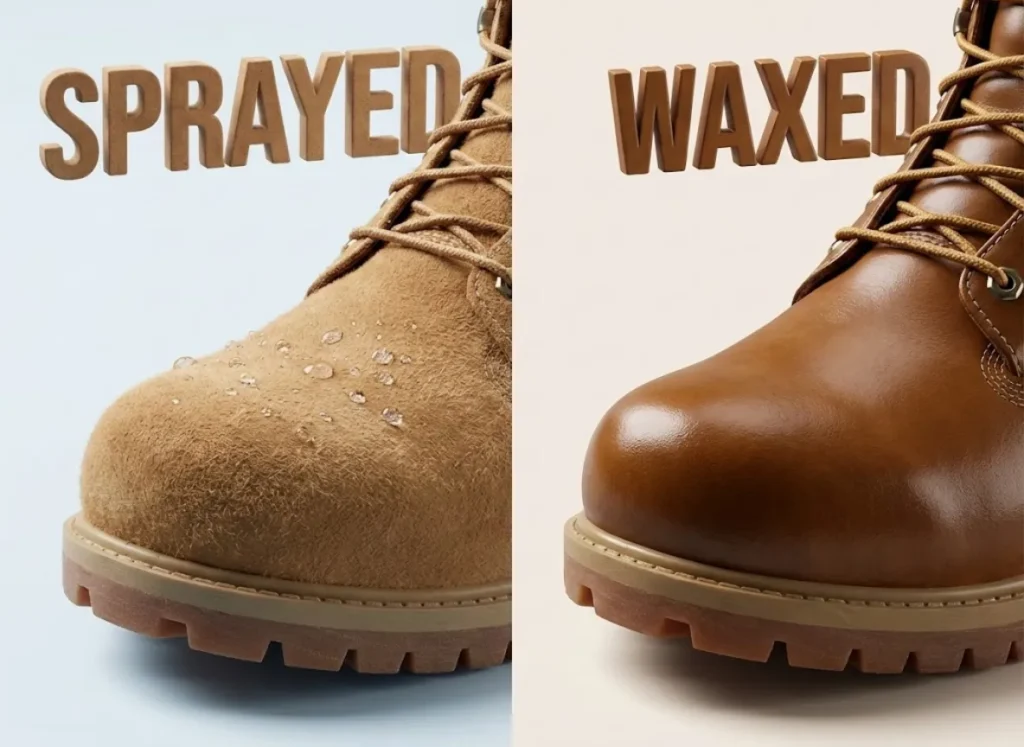
To keep Nubuck breathable, use waterproofing spray or DWR coatings (like Nikwax). These coat the individual fibers to repel water but leave the spaces between them open for air. You can use a soft-bristled nubuck brush or a nubuck cleaning eraser to remove dirt without damaging the nap. Understanding the mechanism of directional water repellency is vital here.
You have to choose: treat for airflow (spray) and re-apply often, or treat for armor (wax) and accept sweaty feet. This logic applies when learning how to restore DWR on all your gear, not just footwear.
What Are the Hidden Failure Points Beyond the Leather?
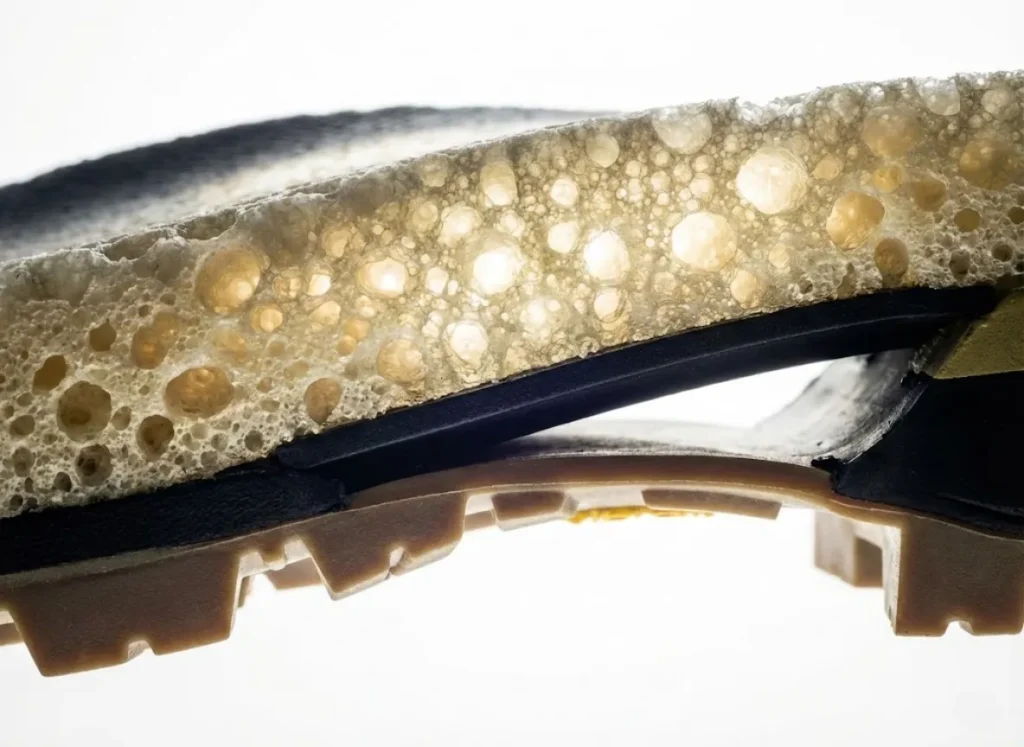
Even with perfect care, there is a hidden clock ticking inside your boot. We need to talk about “Hydrolysis,” which affects the foam above the Vibram outsole.
Why do boots fail “on the shelf” regardless of leather type?
Hydrolysis is the chemical breakdown of the foam midsole. Moisture attacks the foam, causing the sole to crumble or fall off. This happens faster when you don’t use the boots. Walking squeezes the midsole, pumping air in and out. Storage allows moisture to settle and rot the glue and foam.
A “mint condition” pair of Full-Grain boots stored in a closet for 5 years might lose its sole on mile one. We call this “You Rest, You Rust.” While Full-Grain leather uppers can last 15 years, the foam underneath usually only lasts 5 to 7 years.
Pro-Tip: Never store your boots in a plastic bag or a damp basement. They need airflow to prevent the midsole from rotting from the inside out.
When looking at durability, you have to separate the leather (which lasts) from the foam chassis (which dies). A technical explanation of sole hydrolysis details this chemical process. To make them last, follow best practices for storing hiking gear to stop mold and delamination.
Conclusion
The choice between Nubuck and Full-Grain is not about “good vs. bad.” It is about “protection vs. ventilation.”
- Durability: Full-Grain is stronger and lasts longer against rocks. It is the best choice for rough, off-trail hiking.
- Breathability: Nubuck has an open structure that lets heat escape. It is great for 3-season backpacking, as long as you don’t clog it with wax.
- Usage: Choose Full-Grain for winter and longevity. Choose Nubuck for comfort and speed in warmer weather.
- The System: Remember that leather is just one part. Proper storage and the right waterproofing spray are just as important.
If you’re ready to improve your gear system further, explore our guide on “Sock Systems and Foot Care” to ensure your new boots perform as intended.
FAQ – Frequently Asked Questions about Nubuck vs Full-Grain
Is Nubuck leather waterproof?
Untreated Nubuck absorbs water naturally because of its sanded surface. However, most hiking boots use treated Nubuck and a waterproof membrane (like Gore-Tex) to keep water out.
Can I use beeswax on Nubuck boots?
Yes, but it will darken the leather, flatten the surface, and stop it from breathing. This turns Nubuck into smooth leather. Only do this if you care more about waterproofing than ventilation.
Does Nubuck scratch more easily than Full-Grain?
Yes. The soft surface of Nubuck shows scratches from brush and rocks easily. While often just cosmetic, deep scratches can damage the fibers more than on smooth Full-Grain.
Which leather breaks in faster?
Nubuck has a shorter break-in period (often 0-20 miles) because it is sanded and usually thinner. Full-Grain boots are thicker and stiffer, often needing 50+ miles to mold to your feet.

I've spent more than a decade researching hiking gear and trail technique. I read the specs, the forum threads and the long-term reviews, and every pick here comes with what it gets wrong.
End of the trail
You read every mile of this one. Here's where the trail goes next.