In this article
You’re scrolling through 200+ hiking pants on Amazon, half of them marketed as “cold weather ready,” and you can’t tell which ones actually block wind at 7,000 feet and which ones just have a fleece label stitched inside. The difference matters when you’re two miles from the trailhead and the temperature drops 20 degrees in an hour. After cross-referencing verified Amazon reviews, specs from six major brands, and analyses from Outdoor Gear Lab and Switchback Travel, we narrowed the field to six pants that earn their place in a cold-weather pack — each filling a specific role from budget-friendly layering to full alpine armor.
This guide ranks the best hiking pants for cold weather men across five criteria that actually matter on winter trails: warmth-to-weight ratio, wind and water resistance, mobility, durability, and value. Whether you need a lightweight softshell for shoulder-season ridge walks or a burly double-weave pant for January snowshoe missions, one of these six fits.
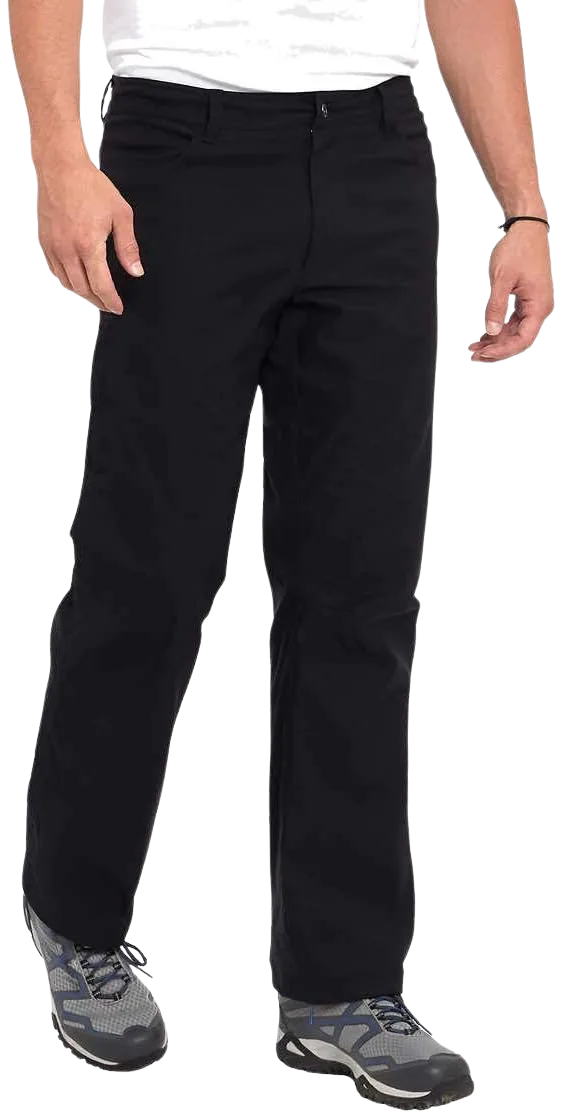
The 6 Best Hiking Pants for Cold Weather Men 2026
These six pants cover the full spectrum from budget three-season layering to dedicated winter mountaineering. Each earned its category based on verified owner reports, professional gear reviews, and spec-to-spec comparisons against at least four competitors in the same price tier.
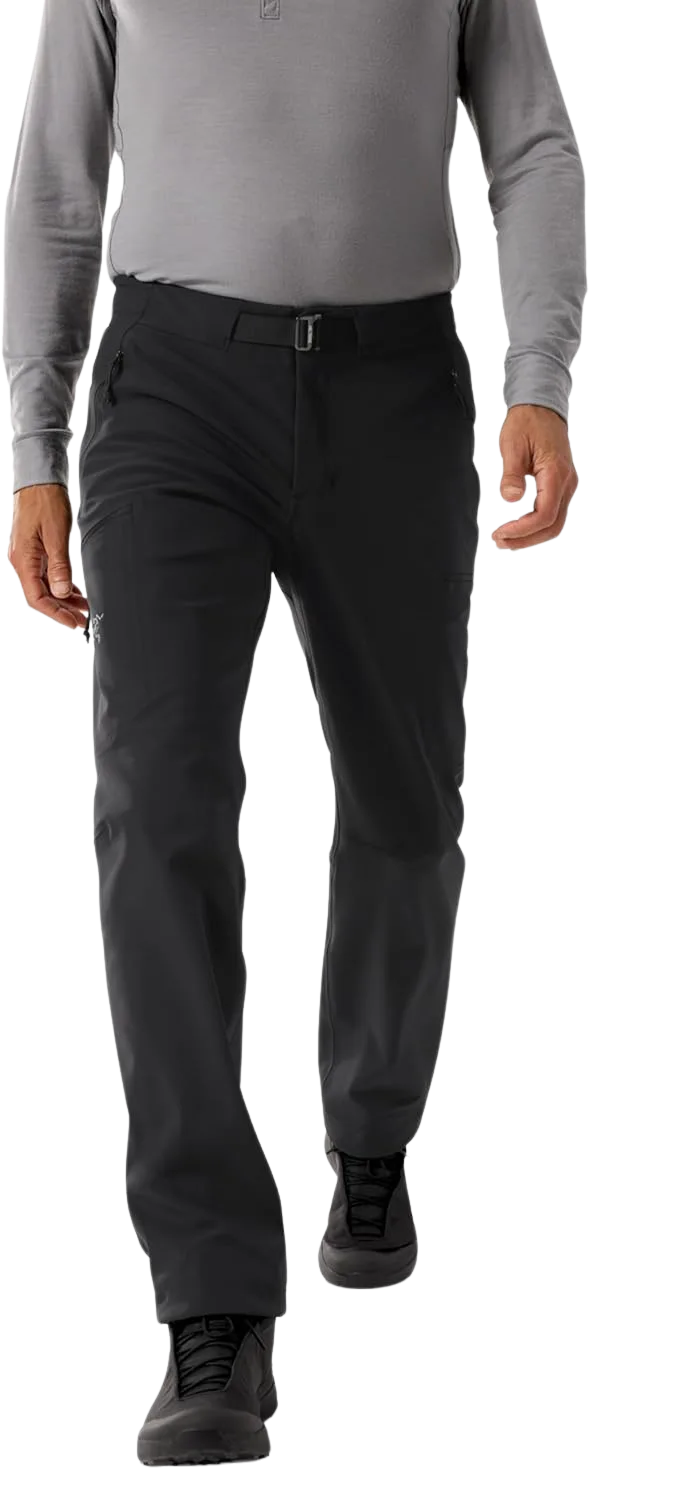
🏆 Best Overall: Arc’teryx Gamma MX Pant
The Gamma MX earns Best Overall because its Fortius 2.0 softshell fabric delivers the best warmth-to-weight ratio of any pant in this roundup — it’s lightly insulated, wind-resistant, and stretchy enough for technical movement without feeling bulky. Switchback Travel’s 2026 hiking pants guide specifically flagged the Gamma line’s weather resistance as “repelling moisture at a much higher level than most others” in misty and light rain conditions, which matters when you’re above treeline and the weather turns fast.
Verified Amazon reviews from owners using these through full winter seasons consistently report two things: the wind blocking is noticeably better than competing softshells at the same weight, and the gusseted crotch combined with the stretch fabric means you can high-step over blowdowns or scramble Class 2 terrain without fighting the pants. The DWR finish is PFAS-free and handles light snow and drizzle for about 30-45 minutes before wetting out — enough for moving fast through mixed conditions, not enough for standing in a downpour.
The honest flaw: the price. At roughly $200-$250, these cost 2-3x more than most options on this list, and the Fortius 2.0 fabric pills faster than you’d expect at that price point. Multiple 6-month reviews mention pilling on the inner thighs where pack straps rub. Buy this if you hike 30+ days per winter in mixed alpine conditions and need one pant that handles everything from approach trails to exposed ridgelines. Skip this if you hike fewer than 10 cold-weather days per year — the prAna Zion with a base layer underneath gets you 80% of the performance at 40% of the price.
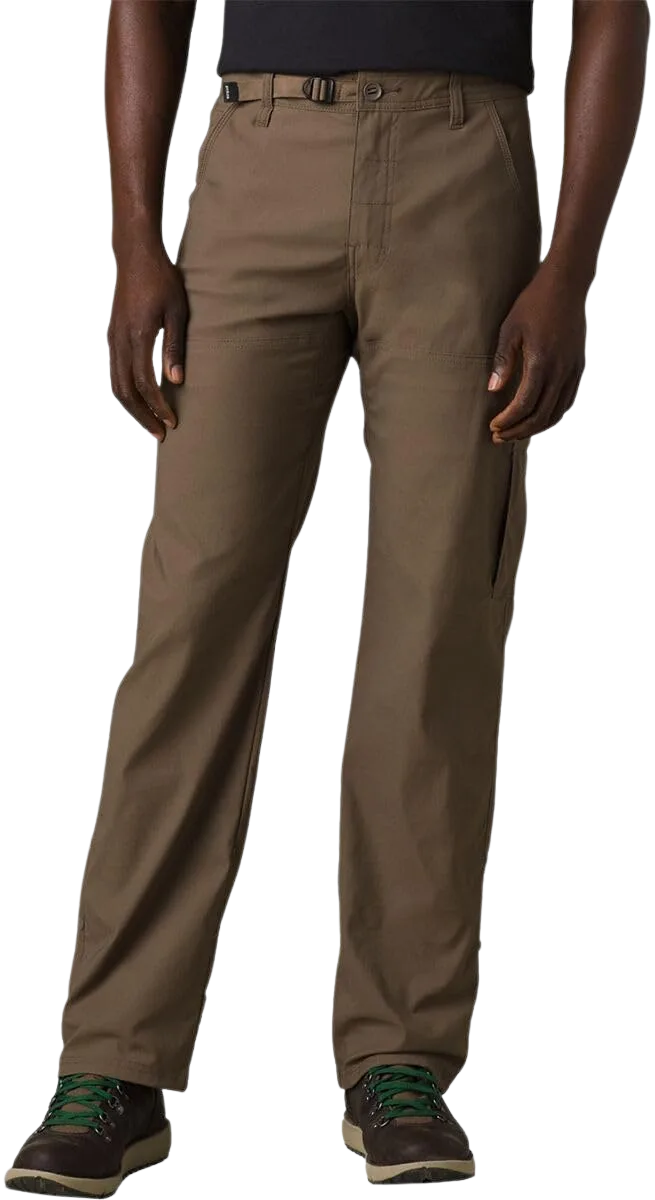
💰 Best Value: prAna Stretch Zion Pants II
The Stretch Zion earns Best Value because it does something no other pant under $100 manages — it works as a genuine three-season hiking pant that extends into cold weather with a proper base layer underneath. The nylon-spandex fabric with DWR coating handles light rain, dries in under an hour in moving air, and stretches enough for scrambling without bagging out at the knees.
Outdoor Gear Lab has consistently ranked the Stretch Zion among their top hiking pants for versatility, noting the abrasion resistance holds up to bushwhacking and off-trail travel that would shred thinner nylon pants. Verified Amazon reviews from cold-weather users repeatedly confirm the same pattern: paired with a merino or synthetic base layer, these handle temperatures down to about 25°F during active hiking. Below that, you need a dedicated insulated pant.
The honest flaw: the Zion is not a cold-weather pant on its own. Without a base layer, you’ll feel every gust below 40°F. The fabric is also thinner than the Arc’teryx Gamma or the OR Cirque, which means less wind blocking and faster heat loss during breaks. The DWR also fades faster than premium options — expect to reapply after 8-10 washes. Buy this if you want one pant that spans March through November and extends to winter with smart layering. Skip this if you need standalone cold protection without layering — the Gamma MX or Chockstone Alpine are better suited.
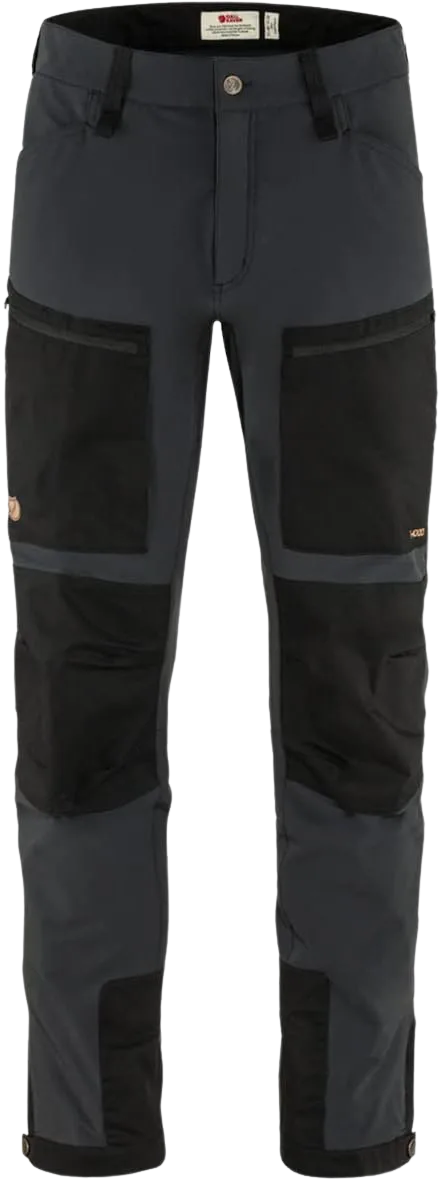
⬆️ Premium Upgrade: Fjallraven Vidda Pro Trousers
The Vidda Pro wins Premium Upgrade because it’s built for a completely different philosophy than every other pant here — it’s not optimized for speed or weight, it’s optimized for indestructibility. The G-1000 cotton-polyester fabric is the thickest, most weather-resistant material in this roundup, with double reinforcements over the knees and seat that shrug off sharp rocks, thorns, and repeated ground contact that would tear thinner softshells apart.
CleverHiker’s 2026 review specifically noted that “the Vidda Pro’s heft comes from Fjallraven’s G-1000 fabric — this thick material not only builds durability but makes these one of the most weather-resistant pants in our lineup.” Verified reviews from bushcraft and winter trekking communities confirm the same: these handle wet brush, snow, and sustained below-freezing temperatures better than any pant in the sub-$200 range. The waxability is a genuine differentiator — you can apply Greenland Wax to increase water resistance as conditions demand, a feature no synthetic softshell can match.
The honest flaw: weight and breathability. At nearly 22 oz, the Vidda Pro is the heaviest pant in this guide by a wide margin, and the dense G-1000 fabric traps heat aggressively. Multiple reviewers report overheating during sustained climbs even in 35°F weather. These are pants for slow-and-steady winter hiking, snowshoeing, and bushcraft in cold, wet conditions — not for cardio-heavy ascents where you generate heat fast. Buy this if you prioritize durability over everything else and your pace is deliberate. Skip this if you run hot or hike fast uphill.
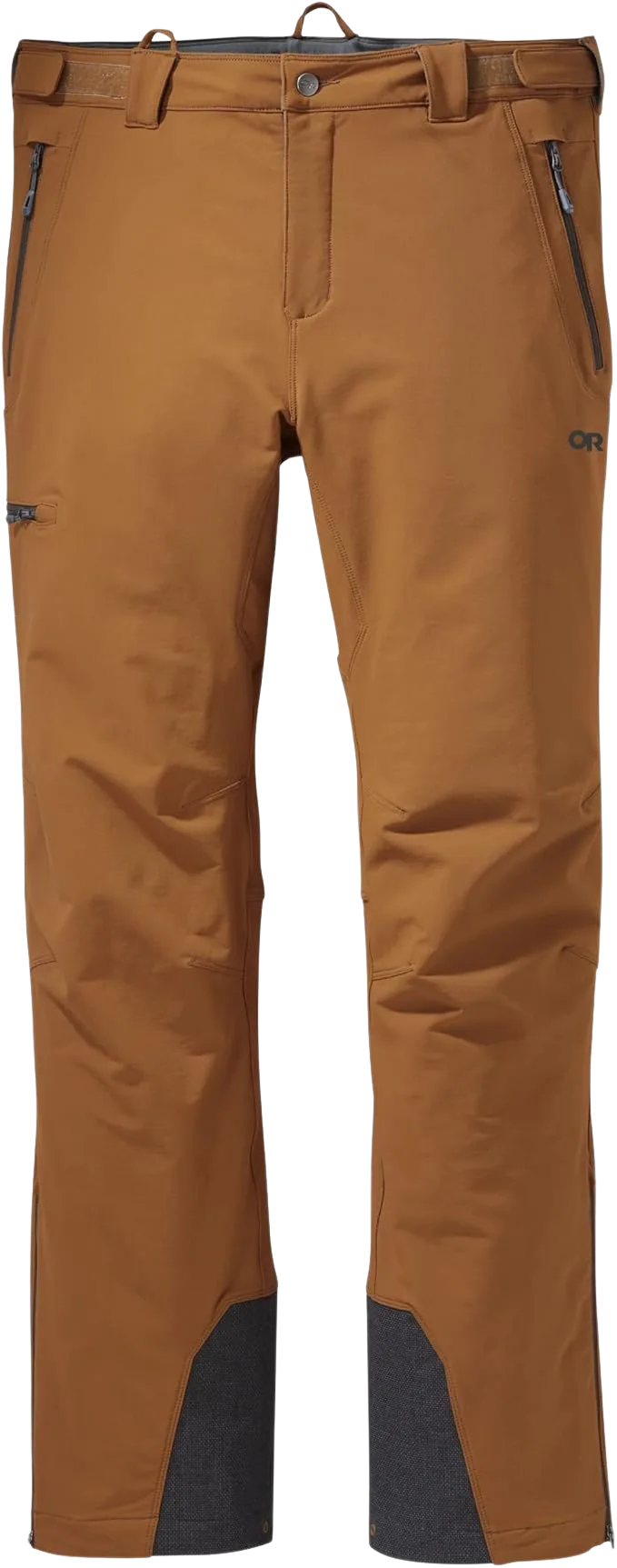
🎯 Best for Alpine Use: Outdoor Research Cirque II Pants
The Cirque II wins Best for Alpine Use because its 90-denier double-weave softshell fabric delivers the toughest wind and water protection of any stretchy pant in this guide — it’s the pant that OR built for mountaineering and ski touring, but winter hikers in exposed alpine terrain benefit from the same engineering. The 90D face fabric is noticeably more abrasion-resistant than the Arc’teryx Gamma’s Fortius 2.0, which means it handles rock contact, crampon straps, and gaiter hardware without wearing thin.
SectionHiker’s 2026 winter pants roundup placed the Cirque line among their top softshell picks for snowshoeing and winter hiking, noting the combination of “water resistance, breathability, and toughness for off-trail adventuring.” Verified Amazon reviews from mountaineers and winter hikers confirm the durability signal — multiple owners with 2+ seasons report zero fabric degradation even with regular crampon use and post-holing through crusty snow.
The honest flaw: fit runs tight, especially in the thighs. About 15% of Amazon reviewers mention sizing up, and hikers with larger quads from cycling or lifting consistently report the regular fit is restrictive. The articulated knees help with forward movement but don’t fully compensate for the snug thigh cut. Buy this if you hike in exposed alpine terrain, scramble on rock, or snowshoe in conditions where wind and abrasion resistance matter more than anything else. Skip this if you have larger thighs or prefer a relaxed fit — the Gamma MX has a more accommodating cut.
Pro tip: The debate between softshell and hardshell pants for winter hiking comes down to one thing — how hard you’re working. Softshells breathe better during sustained effort (hiking uphill), while hardshells block rain and wet snow better during low-output activities (standing at a summit, sitting in camp). For most winter day hikers moving at a steady pace, softshell wins.
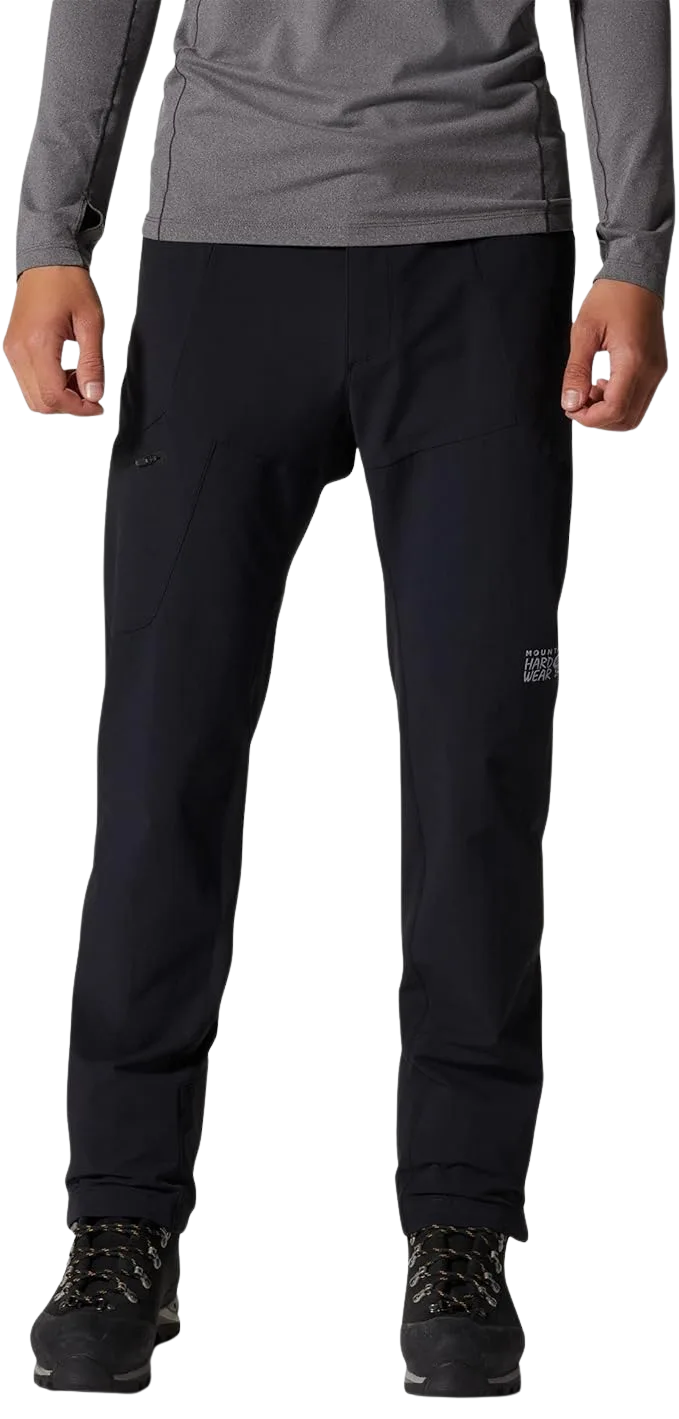
🎯 Best for Deep Cold: Mountain Hardwear Chockstone Alpine Pant
The Chockstone Alpine earns Best for Deep Cold because Mountain Hardwear designed it specifically for alpine guides who spend full days in sub-freezing temperatures with no option to bail. The 4-way stretch double-weave nylon-elastane fabric is the heaviest-duty softshell in this roundup after the Fjallraven, but unlike the Vidda Pro, it stretches — which means you get cold protection without sacrificing the range of motion needed for technical scrambling or stepping over blowdowns.
GearJunkie’s 2026 men’s hiking pants review highlighted the Chockstone’s “abuse-resistant construction” and the built-in belt that eliminates the need to thread a separate belt under a hip belt-loaded pack. Verified reviews from winter mountaineers and ski tourers report that the fabric blocks wind as effectively as a dedicated wind pant while remaining breathable enough for sustained climbing. The thigh pocket designed to hold a logbook or map is a small detail that signals who Mountain Hardwear built these for — professionals who work outdoors all day.
The honest flaw: the price-to-feature ratio is hard to justify for casual winter hikers. At roughly $150-$180, the Chockstone Alpine costs nearly as much as the Arc’teryx Gamma MX but doesn’t offer the same warmth-to-weight ratio — it protects through fabric weight rather than insulation. And the built-in belt, while handy, means you can’t swap to a wider or thinner belt for preference. Buy this if you regularly hike in single-digit temperatures or need a pant that handles technical alpine movement in deep cold. Skip this if your winter hiking stays above 20°F — the OR Cirque II delivers similar protection at a lower weight.
🎖️ Honorable Mention: Eddie Bauer Guide Pro Lined Pants
How to Choose the Right Cold Weather Hiking Pants
Picking the right cold-weather hiking pant comes down to matching your conditions to the right fabric weight and construction. Here’s what actually separates a good winter pant from a mediocre one.
Why Warmth-to-Weight Ratio Matters More Than “Insulation”
Most cold-weather hiking pants don’t use traditional insulation like jackets do. Instead, they rely on fabric density, brushed linings, and wind resistance to trap body heat. The Arc’teryx Gamma MX uses Fortius 2.0 softshell that’s lightly insulated — meaning the fabric itself has thermal properties rather than a separate insulation layer. The Fjallraven Vidda Pro takes the opposite approach: sheer fabric thickness (G-1000 at nearly double the weight of most softshells) creates warmth through mass.
Neither approach is wrong. The question is how fast you move. Light insulation with stretch (Gamma MX, Chockstone Alpine) works for active hikers who generate heat. Heavy fabric (Vidda Pro) works for slower-paced winter trekking where you need the pant to do the warming, not your body.
Why Wind Resistance Separates Good From Great
Wind is the real killer on cold-weather trails. A pant that blocks wind at 30 mph saves more body heat than one with a thicker lining but loose weave. Every softshell in this guide — the Gamma MX, Cirque II, and Chockstone Alpine — blocks wind significantly better than standard nylon hiking pants. The Vidda Pro’s dense G-1000 fabric blocks wind through sheer material density rather than softshell engineering.
Pro tip: Choosing hiking pants by activity type is the single biggest decision factor most people skip. A softshell pant for ridge walking is wrong for snowshoeing in deep powder (you want hardshell or at least DWR-heavy softshell), and a heavy bushcraft pant is wrong for fast alpine hiking (you’ll overheat on every climb). Match fabric to effort level first, temperature second.
Why the DWR Finish Matters in Cold Weather
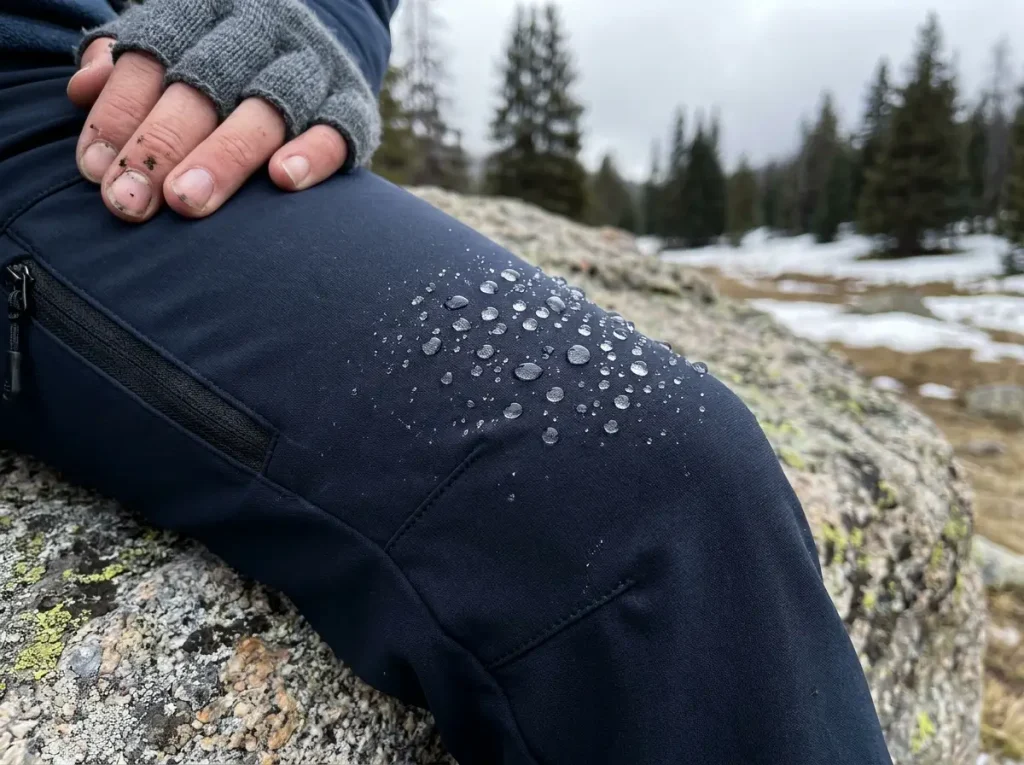
DWR (Durable Water Repellent) coatings cause water to bead and roll off fabric rather than soaking in. In cold weather, this matters more than in summer because wet fabric against skin accelerates heat loss dramatically — wet nylon conducts heat 25 times faster than dry nylon. Every pant in this guide has DWR, but longevity varies: the Arc’teryx Gamma MX and Outdoor Research Cirque II maintain DWR performance longest, while the prAna Zion needs retreatment after 8-10 washes.
Conclusion
The right cold-weather hiking pant depends on three things: how cold it actually gets where you hike, how fast you move, and how much you’re willing to spend. The Arc’teryx Gamma MX is the best all-around performer for hikers who want one pant that handles everything from shoulder season to deep winter, but the prAna Stretch Zion paired with a merino base layer gets most weekend hikers through winter at a fraction of the cost.
For dedicated winter use below 20°F, the Mountain Hardwear Chockstone Alpine and Outdoor Research Cirque II deliver serious protection with enough stretch for technical terrain. And for hikers who measure gear in years rather than seasons, the Fjallraven Vidda Pro’s waxable G-1000 fabric is the only pant here you’ll hand down to someone.
Match your specific conditions to the recommendations above — the Zion serves most weekenders who layer smart, the Gamma MX earns its price for 30+ cold-weather days per year, and the Cirque II is the move for anyone who hikes where wind and rock demand toughness over comfort.
Q1 What are the best hiking pants for cold weather men?
The Arc’teryx Gamma MX Pant is the best overall cold-weather hiking pant for men, combining Fortius 2.0 softshell insulation with wind resistance and 4-way stretch. For budget buyers, the prAna Stretch Zion with a merino base layer handles temperatures down to about 25°F during active hiking.
Q2 Are softshell pants good for winter hiking?
Softshell pants are the best option for most winter hikers because they balance wind resistance, breathability, and stretch better than hardshells or fleece-lined pants. They shed light snow and drizzle via DWR coatings while breathing enough to prevent overheating during sustained climbing.
Q3 How cold is too cold for regular hiking pants?
Standard nylon hiking pants become inadequate below about 40°F in windy conditions without a base layer. With a merino or synthetic base layer, most three-season pants extend to roughly 25°F during active hiking. Below that, you need a dedicated softshell or insulated pant.
Q4 Should I wear a base layer under hiking pants in winter?
Yes, a snug-fitting merino or synthetic base layer is the most weight-efficient way to extend three-season hiking pants into cold weather. The base layer traps warm air against skin while wicking moisture, and it weighs less than upgrading to heavier pants.
Q5 What is the difference between softshell and hardshell pants for hiking?
Softshell pants stretch, breathe, and block wind but only resist light rain via DWR coating. Hardshell pants are fully waterproof but trap moisture during high-output activities. For active winter hiking, softshells are better because they manage sweat — the bigger threat to warmth than rain in cold, dry conditions.
Risk Disclaimer: Hiking, trekking, backpacking, and all related outdoor activities involve inherent
risks which may result in serious injury, illness, or death. The information provided on The Hiking Tribe is for
educational and informational purposes only. While we strive for accuracy, information on trails, gear, techniques,
and safety is not a substitute for your own best judgment and thorough preparation. Trail conditions, weather, and
other environmental factors change rapidly and may differ from what is described on this site. Always check with
official sources like park services for the most current alerts and conditions. Never undertake a hike beyond your
abilities and always be prepared for the unexpected. By using this website, you agree that you are solely
responsible for your own safety. Any reliance you place on our content is strictly at your own risk, and you assume
all liability for your actions and decisions in the outdoors. The Hiking Tribe and its authors will not be held
liable for any injury, damage, or loss sustained in connection with the use of the information herein.
Affiliate Disclosure: We are a participant in the Amazon Services LLC Associates Program, an
affiliate advertising program designed to provide a means for us to earn advertising fees by advertising and linking
to Amazon.com. As an Amazon Associate, we earn from qualifying purchases. We are also an official affiliate partner
of Black Diamond Equipment via the AvantLink network. If you click on a Black Diamond affiliate link and make a
purchase, we may earn a commission at no additional cost to you. We also participate in other affiliate programs and
may receive a commission on products purchased through our links. Additional terms are found in the terms of
service.