In this article
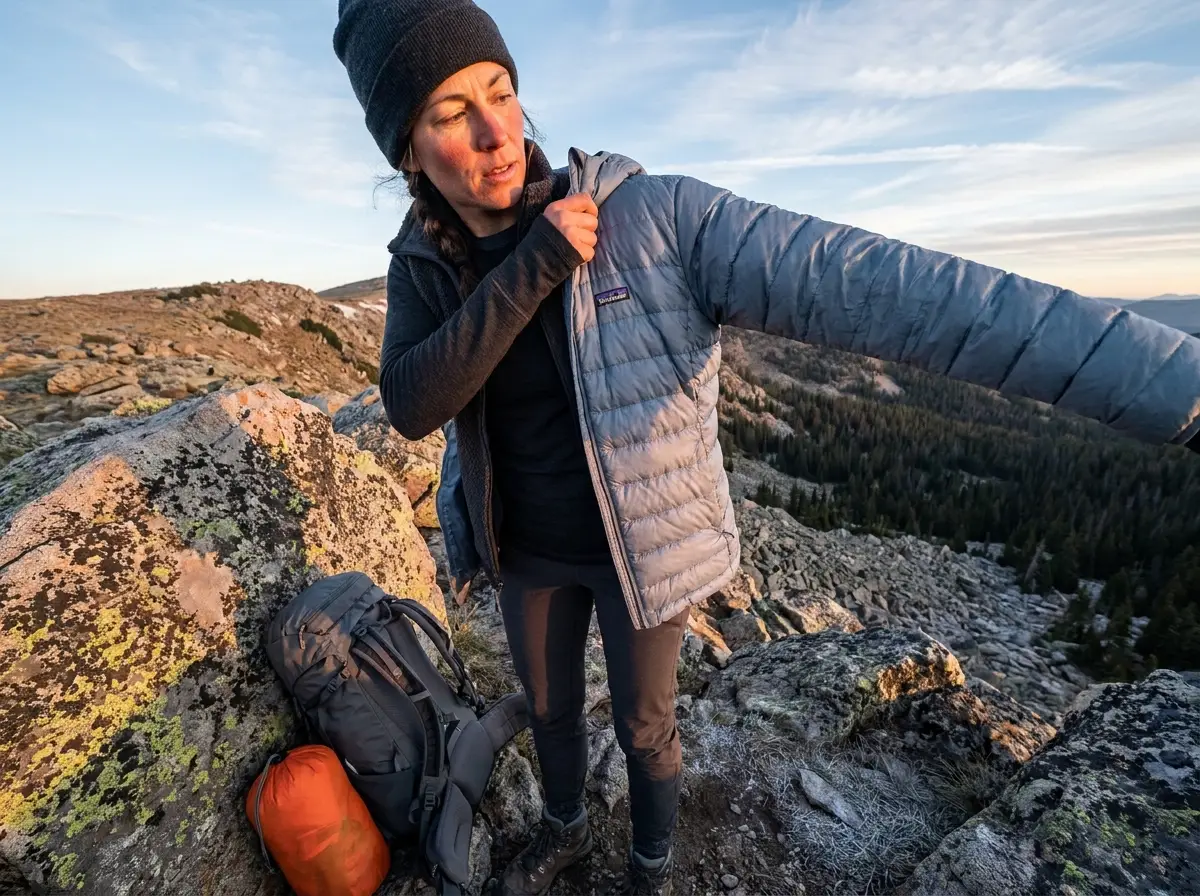
Most down jacket roundups are written for ski resorts and airport layovers. Hiking has a different problem: you spend 90 minutes generating heat on a sustained climb, then stop at a windy ridgeline where the temperature drops 15°F in under a minute. The jacket you pull from your hip belt pocket has to perform in that transition — packable enough to carry all day, warm enough to matter at rest, and moisture-resistant enough to stay lofted when your base layer is already damp. Most generic “best down jacket” lists optimize for the wrong use case. After comparing fill-power-to-weight specs across the category, cross-referencing Switchback Travel and Treeline Review’s field data, and reading verified Amazon reviews specifically from hikers and backpackers, the six picks below are the ones that hold up to hiking’s specific demands. If you’re choosing between down and active insulation for high-output hiking, our comparison of active insulation jackets for stop-and-go hiking covers that decision in detail — but if you need a summit layer, a belay jacket, or a packable warmth buffer for cold mornings, read on.
The 6 Best Lightweight Down Jackets for Hiking
These six jackets represent the most defensible picks across five criteria that matter specifically to hikers: warmth-to-weight ratio, packability, shell durability on trail terrain, moisture resistance, and price-to-performance. Each fills a distinct slot — there’s no overlap in what they do best.
🏆 Best Overall — Rab Mythic Alpine Light Down Jacket
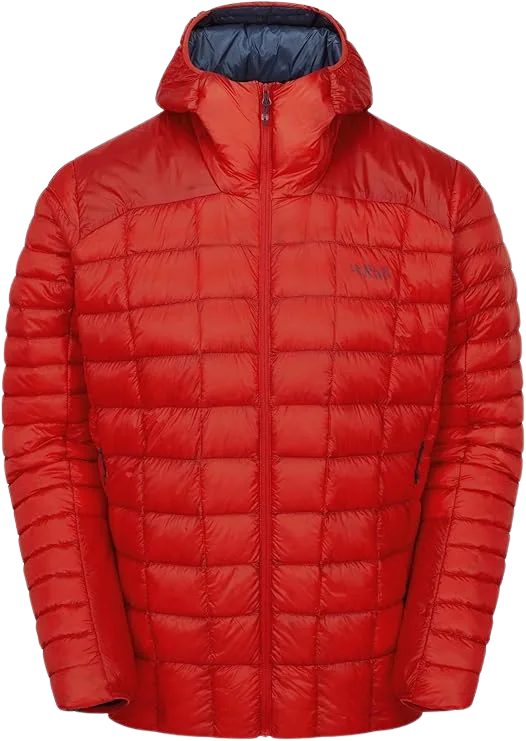
The Rab Mythic Alpine Light earns Best Overall for a reason other 900-fill jackets in this price range don’t match: the Nikwax Hydrophobic Down finish treats each feather individually, so the insulation retains meaningful loft even when exposed to light moisture — sweat from a base layer, condensation on a cold morning, or brief drizzle on the approach. At 8.8 oz (men’s), it’s not the outright lightest jacket here — the Ghost Whisperer/2 runs 1.2 oz lighter — but 900-fill means each ounce of fill delivers more warmth, so the loft-to-weight equation tips in the Rab’s favor for shoulder-season backcountry use. Switchback Travel named it their top ultralight pick, and verified Amazon buyers who use it specifically for mountaineering and backpacking consistently cite the compression as the standout feature: it packs to roughly the size of a softball, small enough for a hipbelt pocket.
The 10D Pertex Quantum shell is the Rab’s clearest limitation. Buyers who hike through granite talus, dense brush, or rocky ridgeline terrain report shell abrasion and minor tears within a season of hard use. This is not a jacket to wear while scrambling — the shell is built for movement efficiency, not contact with rough surfaces. At $330, it also sits $90 above the Ghost Whisperer/2, and the warmth advantage only justifies that premium for hikers regularly operating in cold conditions where 900-fill matters. If your trips are mostly shoulder-season day hikes, the Ghost Whisperer/2 gets you 90% of this performance for less.
Pro tip: When comparing 900-fill vs 800-fill down jackets at similar weights, check the stated fill weight (oz of down inside), not just fill power. The Rab’s warmth advantage over 800-fill options comes from packing more cubic inches of insulation per ounce of down — but if you see a lighter 900-fill jacket with only 1.5 oz of fill, it will be cooler than an 800-fill jacket with 3 oz of fill. Both numbers matter.
⚡ Best Ultralight — Mountain Hardwear Ghost Whisperer/2 Down Jacket
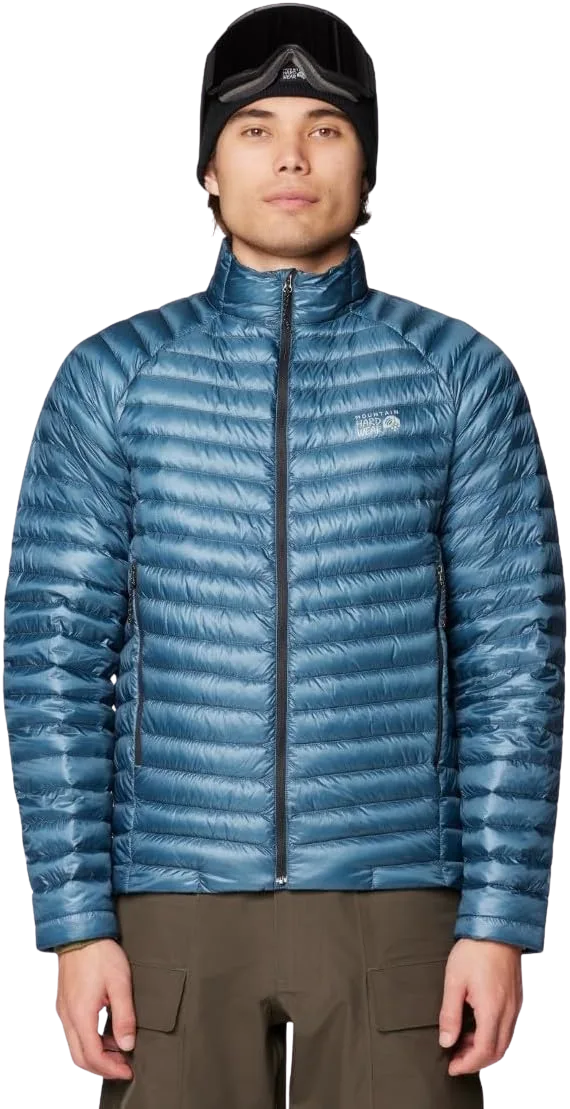
At 7.6 oz (men’s), the Ghost Whisperer/2 is the lightest 800-fill hydrophobic down jacket in this lineup — and it’s been earning that position in backpacker gear lists for years because the warmth-to-weight ratio holds up against jackets that cost significantly more. The updated /2 version uses 100% recycled ripstop shell and lining fabric with RDS-certified Allied Traceable Down, which addresses the sustainability objections the original Ghost Whisperer drew. The packability is what gets repeated most in verified reviews: it stuffs into its own interior chest pocket to roughly the volume of a large orange, and multiple long-distance hikers and thru-hiker reviewers note carrying it in a hipbelt pocket for the entire Pacific Crest Trail or John Muir Trail without it feeling burdensome.
The 10D shell is the honest limitation — and it’s the same limitation as the Rab Mythic Alpine Light. Verified buyers who hike through granite and brush report wear on the shell within one season of serious use. Where the Ghost Whisperer/2 separates itself from the Rab is price: at roughly $235, it delivers comparable packability and only marginally lower warmth-to-weight for $95 less. The hydrophobic down treatment handles incidental moisture well, though it doesn’t match the Outdoor Research Helium’s waterproof shoulder panels in sustained wet conditions. For hikers whose primary use case is summit insulation and belay warmth on dry-weather alpine routes, the Ghost Whisperer/2 is the rational buy.
⬆️ Premium Upgrade — Arc’teryx Cerium Hoody
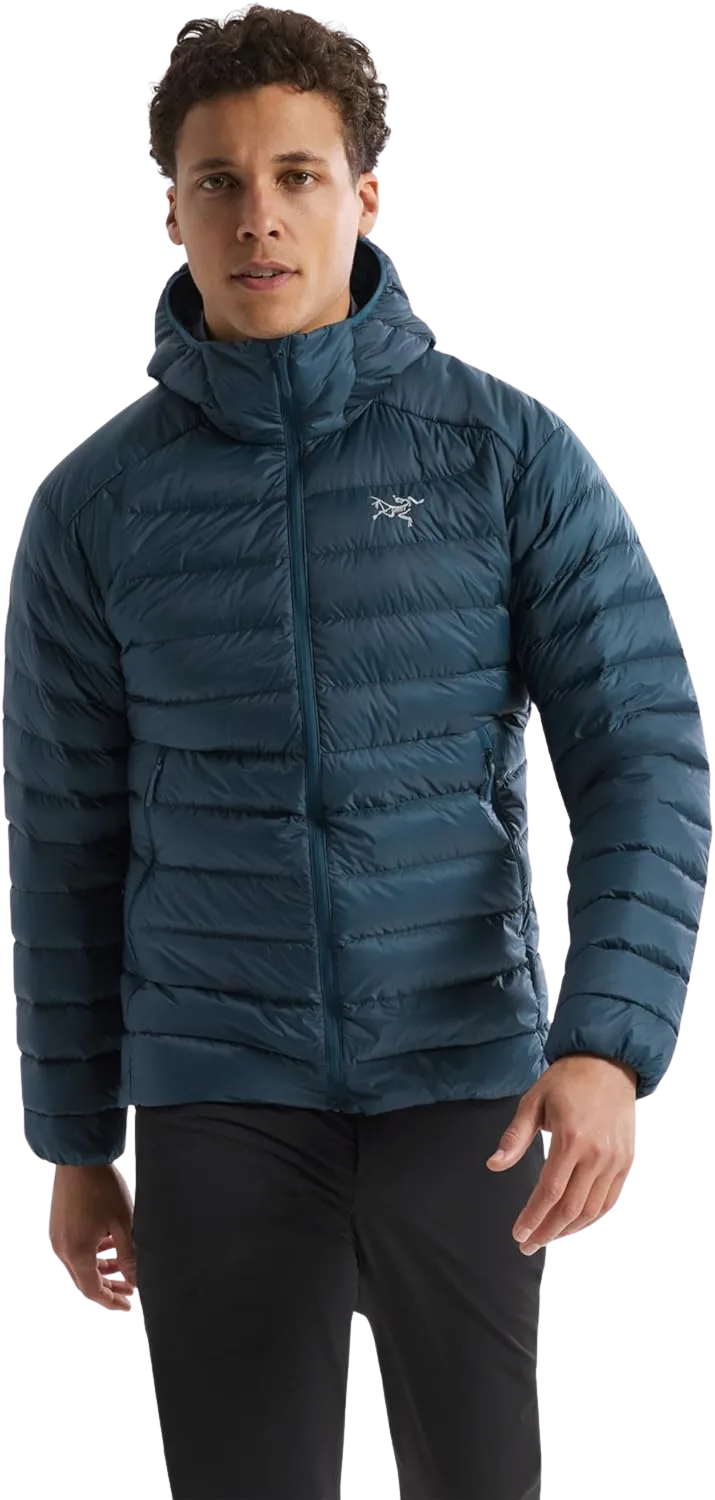
The Arc’teryx Cerium Hoody solves a specific problem that the Rab and Ghost Whisperer/2 don’t address: what happens to down in the zones where your body generates the most sweat. Arc’teryx replaces the down in the armpits, collar, and cuffs with Coreloft synthetic insulation — areas that see the highest moisture output during aerobic effort. The rest of the jacket uses 850-fill down, giving you premium warmth-to-weight across the torso while the synthetic panels maintain loft where down would damp out. BetterTrail’s testing noted the Cerium stayed warm into the low 40s paired with a midlayer, and verified Amazon buyers specifically highlight the trim fit as purpose-built for layering under a hardshell without bunching or constriction. If building a functional layering system for shoulder-season alpine hiking is your goal, the Cerium is the piece that was designed for exactly that.
The price is the honest hurdle: at $400, the Cerium costs $165 more than the Rab Mythic Alpine Light for incremental improvements that matter primarily to hikers building a technical layering system. The 15D nylon shell — better than the 10D on the Rab and Ghost Whisperer/2 — adds meaningful durability for daily trail use, though it’s still not bulletproof against sustained abrasion. The trim fit that makes it ideal as a midlayer under a hardshell also makes it uncomfortable as a standalone jacket over a thick fleece. It earns the Premium Upgrade slot not because it’s the best jacket in the list on raw warmth-to-weight, but because no other jacket here was designed with the same clarity of purpose for technical hiking layering systems.
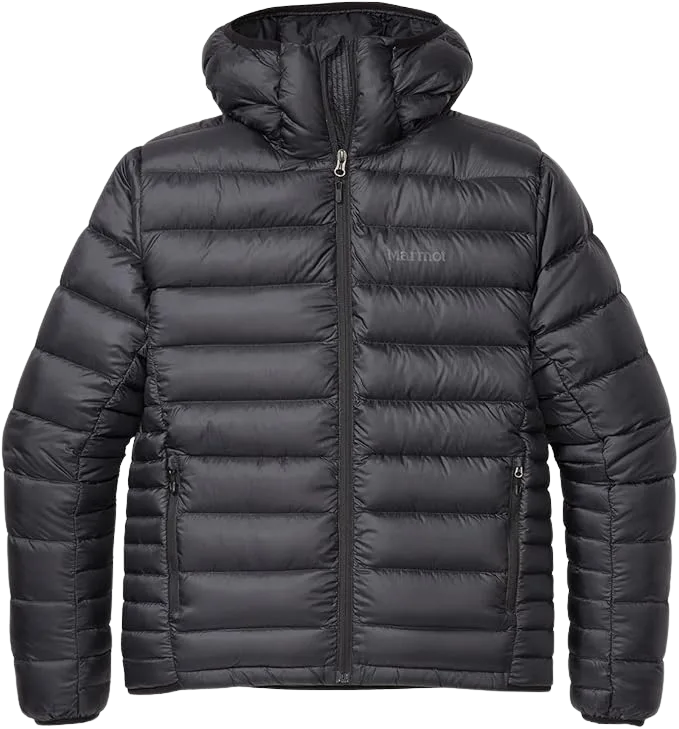
💰 Best Value — Marmot Hype Down Hoody
The Marmot Hype Down Hoody makes a straightforward case: 800-fill power with a Pertex Quantum shell at roughly $140. That fill-power-per-dollar ratio is the strongest in this lineup. Pertex Quantum is a legitimate performance shell fabric — it’s windproof, lightweight, and the same material specification used in jackets at twice the price — so the Marmot isn’t cutting corners on shell construction to hit the price point. For hikers who want real insulation quality for morning warmth, camp layers, or summit stops without the premium outlay, this is the pick.
The weight is the honest counter-argument. At roughly 14 oz (men’s), the Hype weighs nearly twice as much as the Ghost Whisperer/2, and it doesn’t pack into its own pocket — it requires a separate stuff sack. For day hikers and car campers, that’s irrelevant. For backpackers counting grams across a 60-liter load, the weight premium erases the price savings. The moisture resistance is also standard — DWR-treated shell, no hydrophobic down treatment noted — so it performs like a conventional down jacket in damp conditions rather than like the Rab or OR Helium. What the Marmot delivers is straightforward: the best 800-fill warmth per dollar spent, in a durable-enough package for hiking use without backcountry weight obsession.
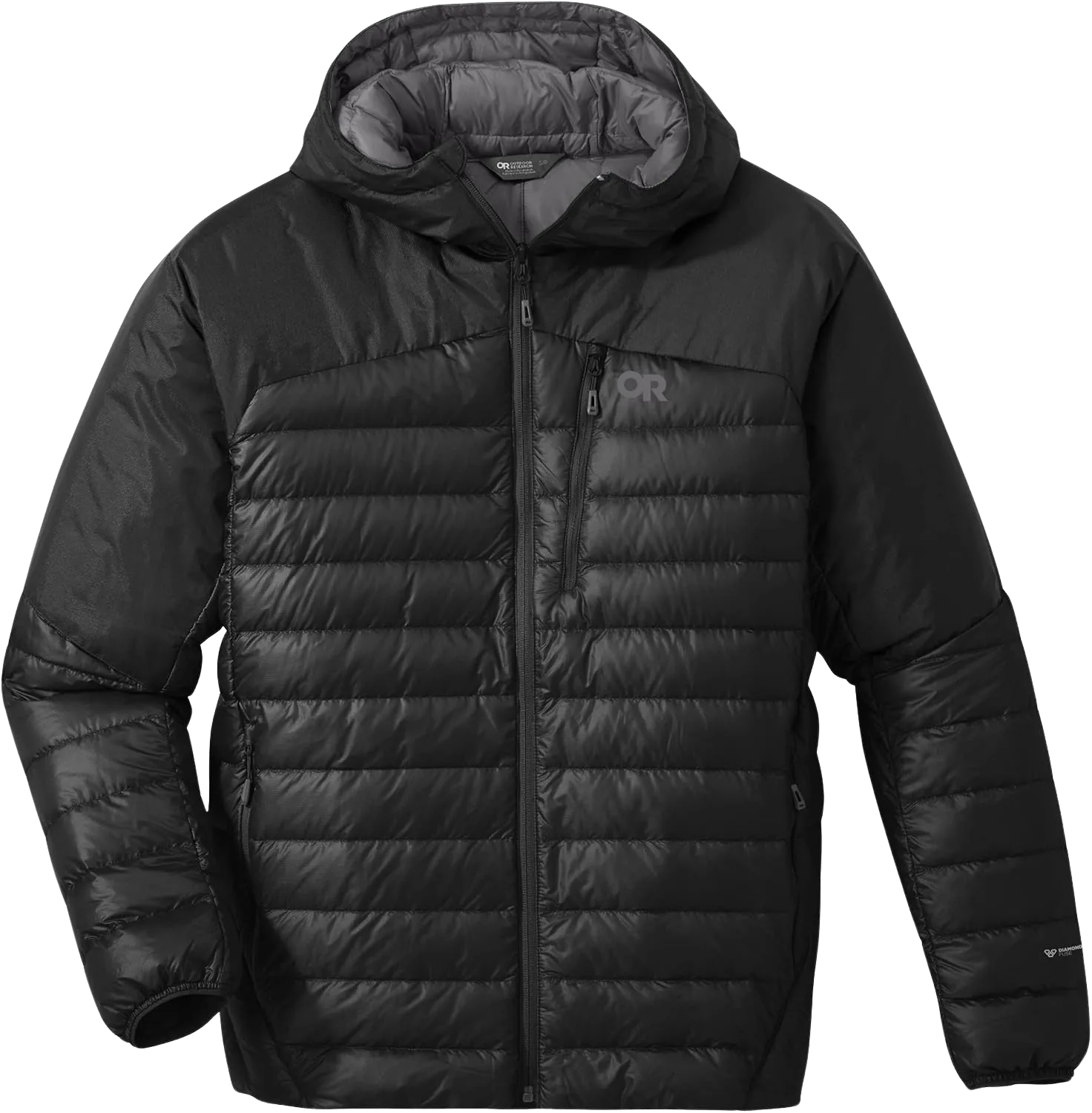
🌧️ Best for Wet Conditions — Outdoor Research Helium Down Hoodie
The OR Helium Down Hoodie addresses the single biggest failure point of standard down jackets on wet-weather hiking trips: the shoulders and hood. These are the first surfaces that contact rain and condensation, and where conventional DWR-only down jackets start losing loft after 20 minutes of sustained exposure. The Helium adds a waterproof membrane specifically to the shoulders and hood — the rest of the jacket uses 800+ fill RDS-certified down with standard DWR — creating a hybrid construction that manages the moisture entry points without adding a full waterproof shell weight. Backcountry Magazine gave it their Editor’s Choice award, and verified Amazon buyers who specifically mention hiking in the Pacific Northwest and shoulder-season alpine conditions highlight the shoulder construction as the functional differentiator. This is a jacket designed for hikers who can’t always pick fair-weather days.
At $299, the Helium sits within $30 of the Rab Mythic Alpine Light, and the Rab’s warmth-to-weight advantage is real — the Helium is heavier per ounce of warmth because the waterproof panels add weight. The trade-off is deliberate: the Helium is the more confident choice when the forecast is uncertain. For hikers whose routes involve prolonged exposure to drizzle, morning condensation, or shoulder-season moisture, the Pertex Quantum shell with reinforced construction also outperforms the 10D shells on durability. If your hikes are reliably dry, the Rab delivers better warmth-per-dollar. If your hikes are not reliably dry, the OR Helium is the more functionally honest pick.
Pro tip: The RDS (Responsible Down Standard) certification on the OR Helium guarantees that the down supply chain meets animal welfare standards verified by third-party audits — not just a manufacturer claim. If sourcing transparency matters in your gear purchasing decisions, it’s worth verifying which certification applies to any jacket you’re considering.
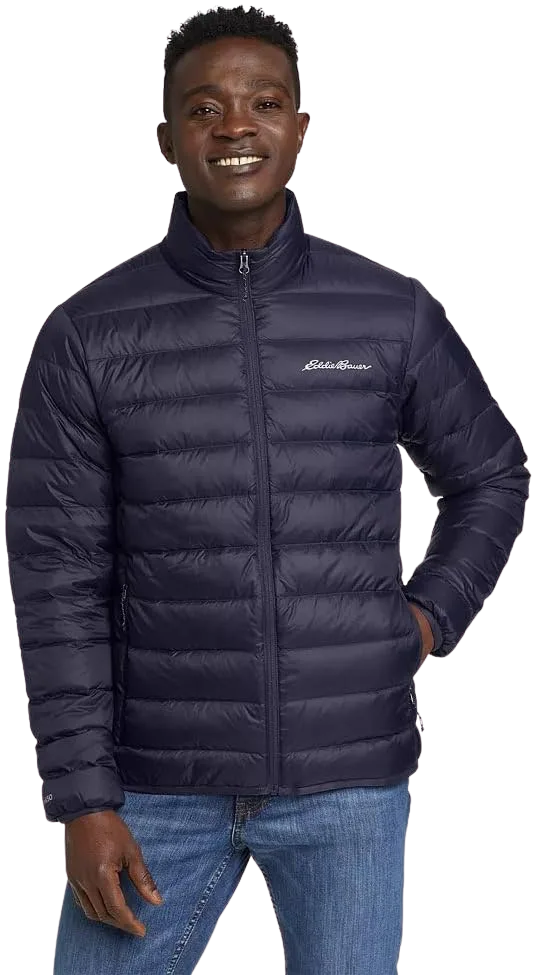
🎖️ Honorable Mention — Eddie Bauer CirrusLite Down Jacket
The Eddie Bauer CirrusLite earns a mention for one use case: hikers who want packable down insulation at a sub-$130 price point without the technical requirements of the primary picks above. It uses 650-fill down — lower fill power than any other jacket in this lineup — but at this price it’s not competing on warmth-to-weight. It’s competing on accessibility: a lightweight, packable insulation layer for day hikers, beginner backpackers, or anyone who wants a camp jacket or morning warmth layer without the financial commitment of 800+ fill. Verified Amazon buyers consistently note it as a value buy for casual use, and it fills the gap for anyone who finds the Marmot Hype Hoody’s $140 still too steep.
How to Choose the Right Lightweight Down Jacket for Hiking
Most down jacket buying decisions get made on fill power alone. That’s incomplete — and it explains why buyers are surprised when a 900-fill jacket from one brand runs noticeably cooler than an 800-fill from another. Two numbers determine how warm a jacket actually runs on trail: fill power and fill weight. Understanding both prevents buying the wrong piece for your temperature range.
Fill Power vs Fill Weight — The Number That Actually Predicts Warmth
Fill power measures insulation efficiency: how much space one ounce of down occupies when fully lofted. Higher fill power means each ounce of down traps more air per gram of weight. A 900-fill jacket is warmer per ounce of down than an 800-fill jacket using the same amount of fill.
The number most buyers skip is fill weight — the actual weight of down stuffed inside the jacket, usually listed in ounces or grams on the manufacturer’s spec sheet. This is the number that determines how warm the jacket actually runs, because warmth is determined by how much insulation is present, not how efficient each ounce is. A 900-fill jacket with 1.5 oz of down will be noticeably cooler than an 800-fill jacket with 4 oz of down. Both fill power and fill weight need to be in the equation. Most lightweight hiking jackets use 2–3 oz of fill, while mid-weight options run 4–5 oz. When comparing two jackets at the same fill power, the one with more fill weight will run warmer. When comparing at the same fill weight, the one with higher fill power will be lighter for equivalent warmth.
Shell Denier and What It Means on Trail
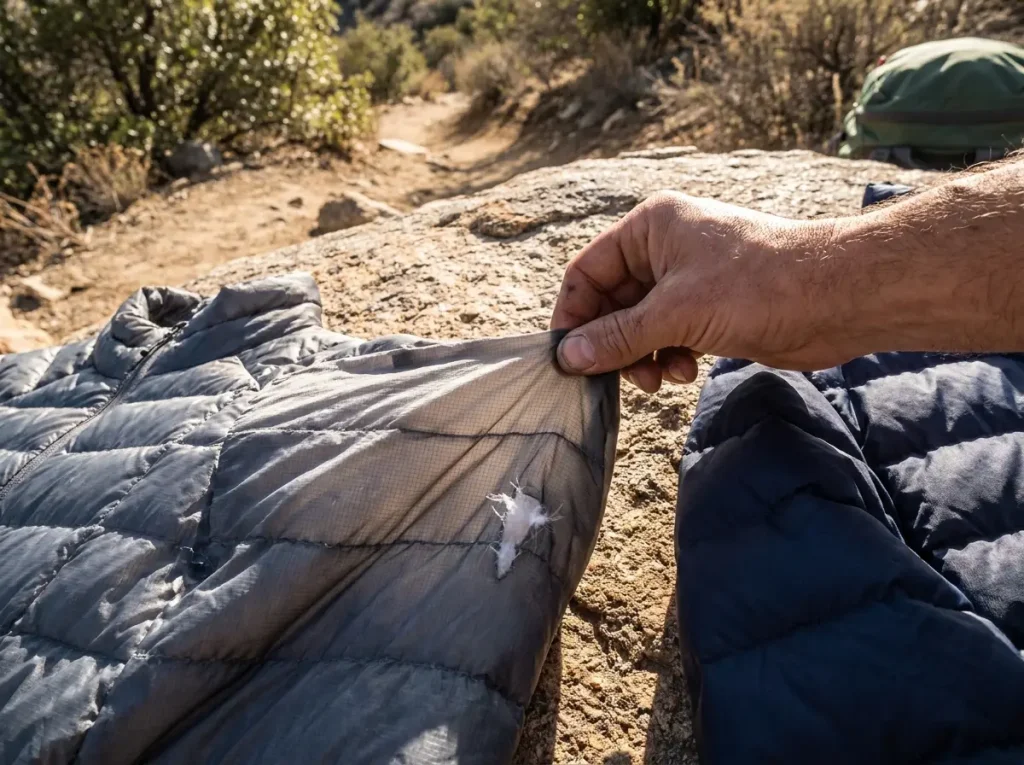
The shell fabric’s denier rating — the number you’ll see listed as 7D, 10D, 15D, or 20D — measures thread thickness. Lower numbers mean lighter, more packable fabric. They also mean the shell tears more easily on contact with rough surfaces. For hiking, this trade-off has real consequences that ski-resort or urban-use reviews don’t address.
A 7D or 10D shell is ultralight and compresses exceptionally small. It’s also genuinely fragile against granite abrasion, pack buckles, and dense brush. The Ghost Whisperer/2 and Rab Mythic Alpine Light both use 10D shells — verified reviews from hikers doing off-trail routes and technical terrain consistently document shell damage within a season of hard use. A 15D shell, like the one on the Arc’teryx Cerium, adds meaningful durability for daily trail use without a major weight penalty. If you plan to patch a down jacket on trail after a season of scrambling, a 10D shell will give you more opportunities to practice than a 15D or 20D. For hikers sticking to maintained trails, the 10D options hold up fine. For off-trail work, the calculus changes.
When to Skip the Down Jacket Entirely
Down insulation performs best when you’re stationary in cold air — at a summit, during a belay, at camp, at a rest stop where the temperature drops the moment you stop moving. What it doesn’t do well is manage the transition from effort to rest, because down traps the heat and moisture your body generates during aerobic output. If you pull on a down jacket while still sweating from a climb, you’re trapping that moisture in the insulation, which compresses the down and reduces loft. The jacket that felt warm for the first five minutes starts losing function as the fill dampens.
For high-output hiking — sustained climbs, technical terrain, shoulder-season days when you’ll be sweating heavily between stops — active insulation designed for stop-and-go hiking handles the transition better than down. Polartec Alpha and Primaloft Active constructions breathe while you’re moving and still insulate when you stop. Down is the right tool for the summit stop, the belay, and the camp layer — not for wearing during sustained climbs. A practical hiking system for variable conditions uses active insulation as the moving midlayer and a packable down jacket as the rest-stop layer carried in the hipbelt pocket. Our guide to layering for shoulder-season hiking covers how to build this system for temperatures between 30°F and 50°F.
Conclusion
The case for each of the five main picks breaks down by use case. For backcountry hikers whose primary concern is warmth-to-weight on multi-day trips in mixed conditions, the Rab Mythic Alpine Light’s 900-fill Nikwax-treated construction is the most defensible all-around choice at $330. For ounce-counters who want to spend $95 less for marginally lower warmth performance, the Mountain Hardwear Ghost Whisperer/2 at ~$235 makes the practical case. For hikers building a technical layering system with a hardshell, the Arc’teryx Cerium Hoody’s trim cut and synthetic moisture panels were designed for exactly that configuration. For shoulder-season hiking in consistently wet terrain, the Outdoor Research Helium Down Hoodie’s waterproof shoulder construction changes what you can deploy in drizzle and sustained moisture. And for day hikers who need a capable insulation layer without the premium investment, the Marmot Hype Down Hoody delivers 800-fill Pertex Quantum at $140. The rule that holds across all of them: pack this jacket in your hipbelt pocket, not on your back. Down earns its weight when you stop moving — not during the climb.
Q1 What is the best lightweight down jacket for hiking?
The Rab Mythic Alpine Light is the strongest all-around choice for hikers prioritizing warmth-to-weight in mixed conditions — 900-fill with Nikwax hydrophobic treatment at 8.8 oz. For hikers on a tighter budget, the Mountain Hardwear Ghost Whisperer or 2 delivers comparable packability at 800-fill and $95 less.
Q2 What fill power do I need for a hiking jacket?
800-fill is the practical minimum for a lightweight hiking jacket — it delivers meaningful warmth at a manageable weight. Higher fill power (850–900) means more warmth per ounce of down, but fill weight — the actual amount of down inside the jacket — matters equally. A 900-fill jacket with 1.5 oz of fill runs cooler than an 800-fill jacket with 3.5 oz.
Q3 Is down or synthetic better for hiking jackets?
Down is better for cold, low-output conditions — summit stops, belays, rest breaks. Synthetic insulation performs better during aerobic effort and in wet conditions where down loses loft. The Arc’teryx Cerium Hoody’s hybrid design — down torso, synthetic in high-sweat zones — is the practical compromise for shoulder-season hiking that involves both sustained climbs and cold stops.
Q4 How warm is an 800-fill down jacket for hiking?
An 800-fill jacket with a typical lightweight hiking fill weight (2.5–3.5 oz of down) handles three-season summit warmth, shoulder-season belay insulation, and cold-night camp layers comfortably down to around 25–30°F depending on fit, baselayer weight, and wind exposure. Fill weight and wind resistance determine how far you can push that range.
Q5 Can you wear a down jacket while hiking uphill?
Down is not the right tool for sustained aerobic output — it traps body heat and absorbs sweat during heavy exertion, reducing loft and function. Pack it for the summit stop and pull it out at rest. For insulation during movement in cold conditions, active insulation with softshell panels breathes during effort and insulates when you slow down — a more functional choice for active hiking than down.
Risk Disclaimer: Hiking, trekking, backpacking, and all related outdoor activities involve inherent
risks which may result in serious injury, illness, or death. The information provided on The Hiking Tribe is for
educational and informational purposes only. While we strive for accuracy, information on trails, gear, techniques,
and safety is not a substitute for your own best judgment and thorough preparation. Trail conditions, weather, and
other environmental factors change rapidly and may differ from what is described on this site. Always check with
official sources like park services for the most current alerts and conditions. Never undertake a hike beyond your
abilities and always be prepared for the unexpected. By using this website, you agree that you are solely
responsible for your own safety. Any reliance you place on our content is strictly at your own risk, and you assume
all liability for your actions and decisions in the outdoors. The Hiking Tribe and its authors will not be held
liable for any injury, damage, or loss sustained in connection with the use of the information herein.
Affiliate Disclosure: We are a participant in the Amazon Services LLC Associates Program, an
affiliate advertising program designed to provide a means for us to earn advertising fees by advertising and linking
to Amazon.com. As an Amazon Associate, we earn from qualifying purchases. We are also an official affiliate partner
of Black Diamond Equipment via the AvantLink network. If you click on a Black Diamond affiliate link and make a
purchase, we may earn a commission at no additional cost to you. We also participate in other affiliate programs and
may receive a commission on products purchased through our links. Additional terms are found in the terms of
service.