In this article
Cooking for two on trail is a different calculation than solo. Pot capacity, fuel math, and whether you simmer or only boil all shift the moment a second hungry person is sitting next to you. Most stove roundups bury pair advice inside solo-centric reviews and leave you to guess whether a 1.0L cup covers two dinners or forces two boils.
The lineup below is built specifically around two-person workflows. I pulled verified Amazon reviews across forty-plus stoves, cross-referenced rankings from Outdoor Gear Lab, CleverHiker, GearJunkie, and SectionHiker, and added picks the major roundups miss when pairs are the real audience — including the Primus Lite+ and the MSR WindBurner Group, both absent from every top-ranking listicle as of early 2026. If you want to squeeze more boils out of any canister system, the off-heat cooking technique thru-hikers use will save you 15-25% of your fuel regardless of which system below you pick.
The 7 Best Backpacking Stove Systems for Two in 2026
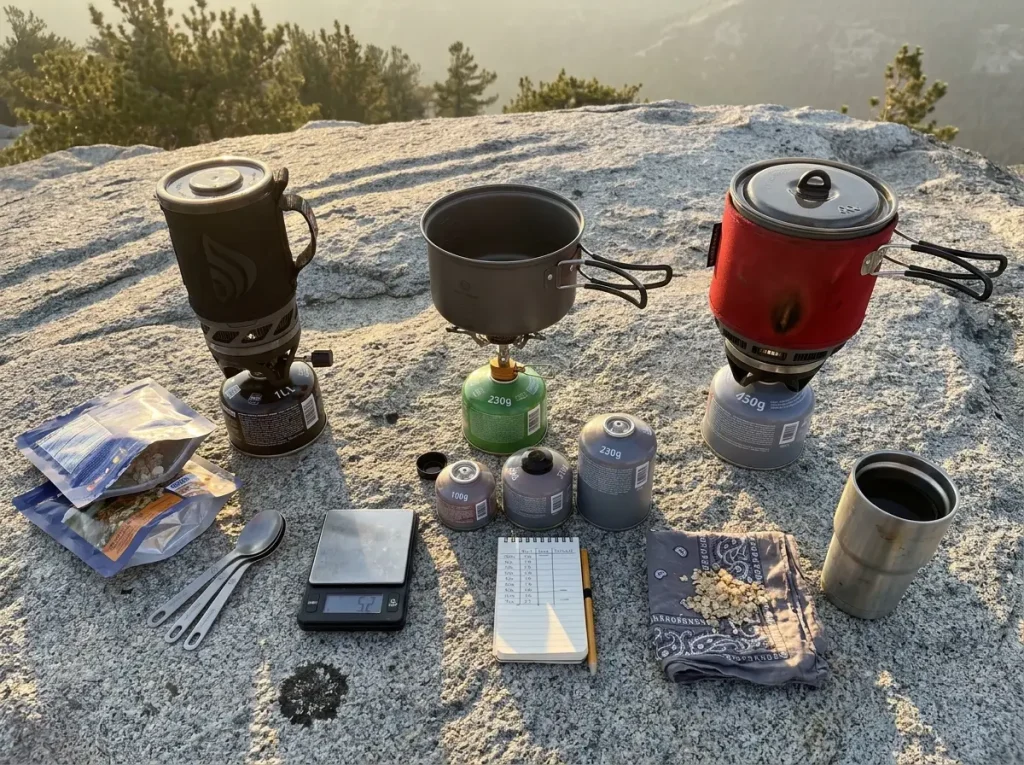
Each pick below covers a specific two-person workflow. Match the one your trips actually look like, not the one that sounds aspirational. A snow-melt monster on a summer weekend in Shenandoah is wasted weight. A 1.0L boil-only system on a seven-day trip with real cooking will grind both of you down by day three.
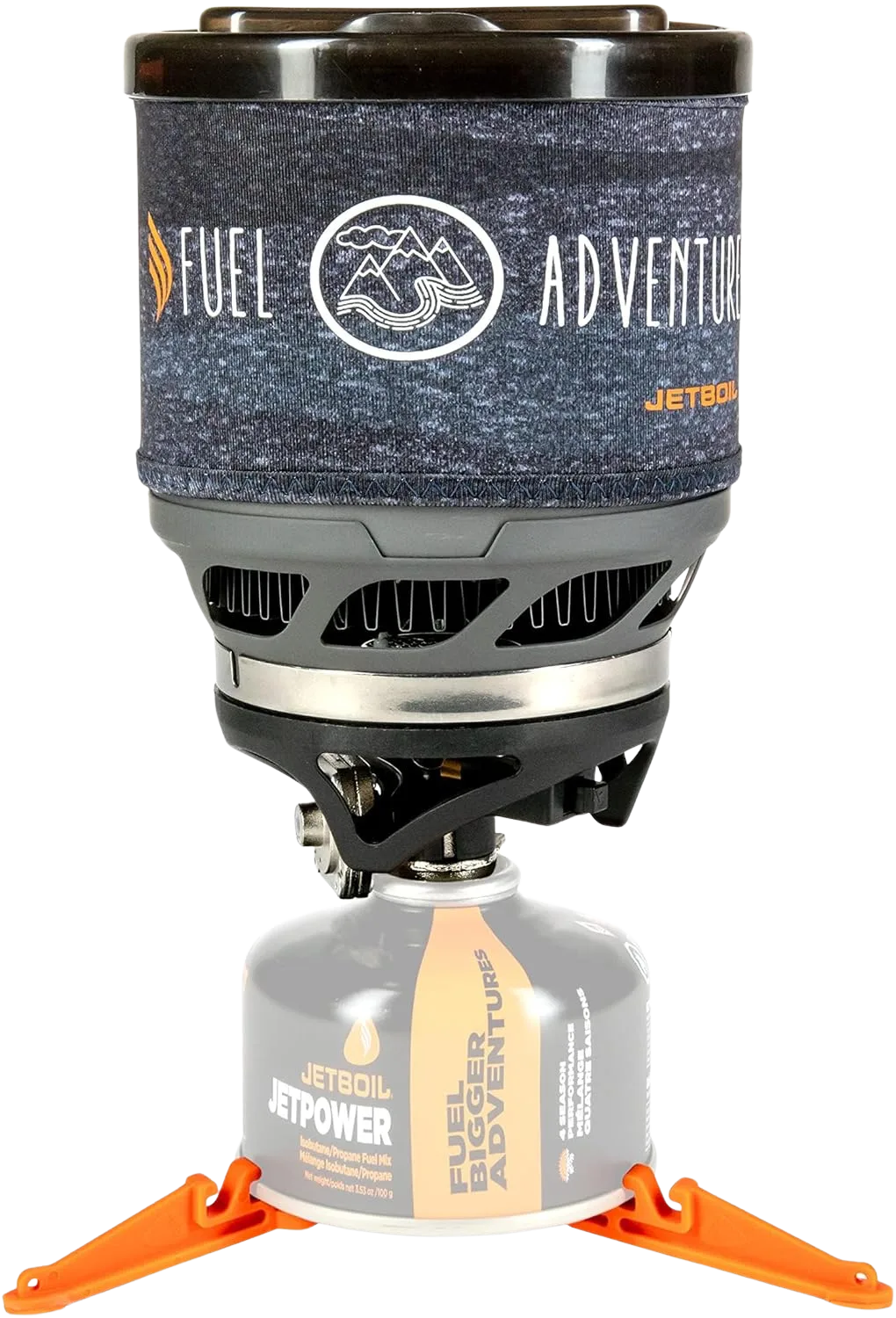
🏆 Best Overall for Two: Jetboil MiniMo
The MiniMo earns Best Overall because it is the only mainstream integrated system that genuinely simmers, which is what you actually need when two people are cooking instead of just boiling. OutdoorGearLab’s 2026 stove roundup scored it 78/100 and named it “the most versatile integrated canister stove” specifically because the regulator valve gives you real low-flame control — something the Flash and Reactor flatly cannot do. The wide-mouth 1.0L FluxRing cup is also deeper than a spoon angle needs, which means two people can share a pot of oatmeal without fighting the geometry.
Verified Amazon reviews from six-plus-month owners converge on two patterns. First, fuel efficiency is the real selling point for pairs — owners routinely report six to eight boil cycles from a 100g canister, which maps to a full weekend for two people on rehydrated dinners plus morning coffee. Second, the piezo igniter holds up past the first season on most units, though a vocal minority report failures around the 18-month mark on heavily used stoves.
The honest flaw is capacity math. At 1.0L, the MiniMo is perfect for two freeze-dried meals in sequence or one shared pot of pasta with restraint. If either of you regularly eats two servings or wants to cook more elaborate one-pot meals, you will run two boil cycles per dinner and the fuel advantage evaporates. Buy the MiniMo if your two-person trips are weekend-to-five-day, your meals are mostly rehydrated, and simmer control matters for the occasional eggs or oatmeal morning. Skip it if you cook real meals for two regularly (go Soto WindMaster) or if you do winter snow-melt (go Reactor 1.7L).
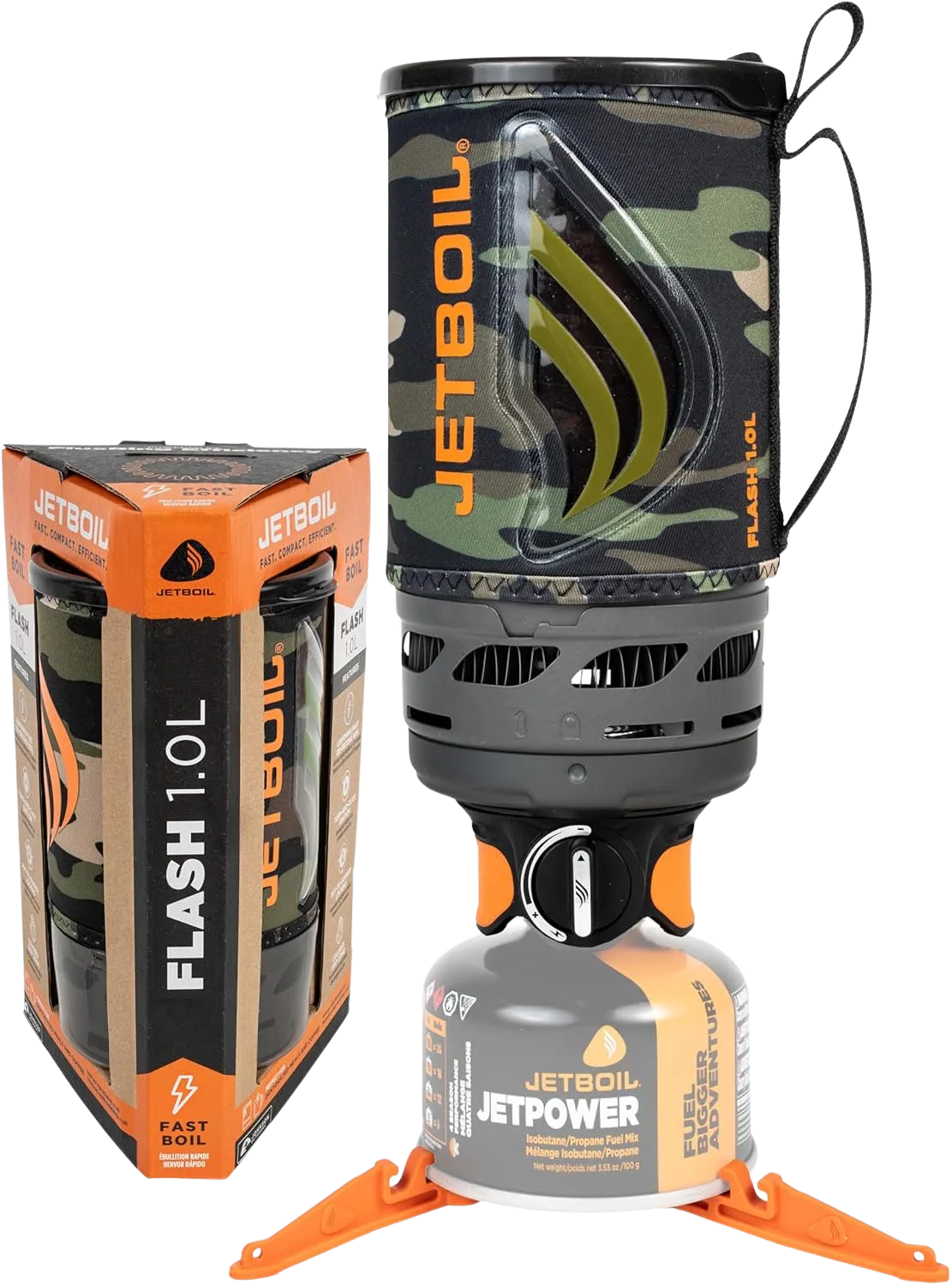
💰 Best Value Fast-Boil: Jetboil Flash 1.0L (2025)
The 2025 Flash is Jetboil’s fastest stove, full stop — 100 seconds to boil half a liter per manufacturer spec, which matters when two people are shivering at a camp kitchen and need hot water now. CleverHiker’s March 2026 roundup named it the “Best Value Integrated Stove System” at $145, noting it undercuts the MiniMo by roughly $30 while boiling noticeably faster. GearJunkie’s 2026 guide confirmed the Flash at 8.5/10, specifically calling out the new 1-Step Auto Ignition as more reliable than the previous piezo.
Verified Amazon reviews from the 2025 generation echo two patterns that matter for pairs. First, the temperature-change color indicator on the insulating cozy works — owners report it’s a useful visual signal when cooking at dawn without watching the cup. Second, the top-heavy balance with a full 1.0L pot is real; several reviewers mention using a flat rock or the included canister stabilizer as non-negotiable on anything but a picnic table.
The flaw is simmer control, or rather the absence of it. The Flash is a boil-only system — the valve goes from full flame to nothing with a narrow control band in between. If you plan to cook pasta or eggs, this will frustrate you within the first trip. Buy the Flash if two people on your trips eat freeze-dried dinners and instant breakfasts, you want the fastest canister boil available, and you’re saving $20-40 versus the MiniMo. Skip it if either of you cooks real food on trail — the MiniMo or the Soto WindMaster outperform it by a wide margin for that workflow.
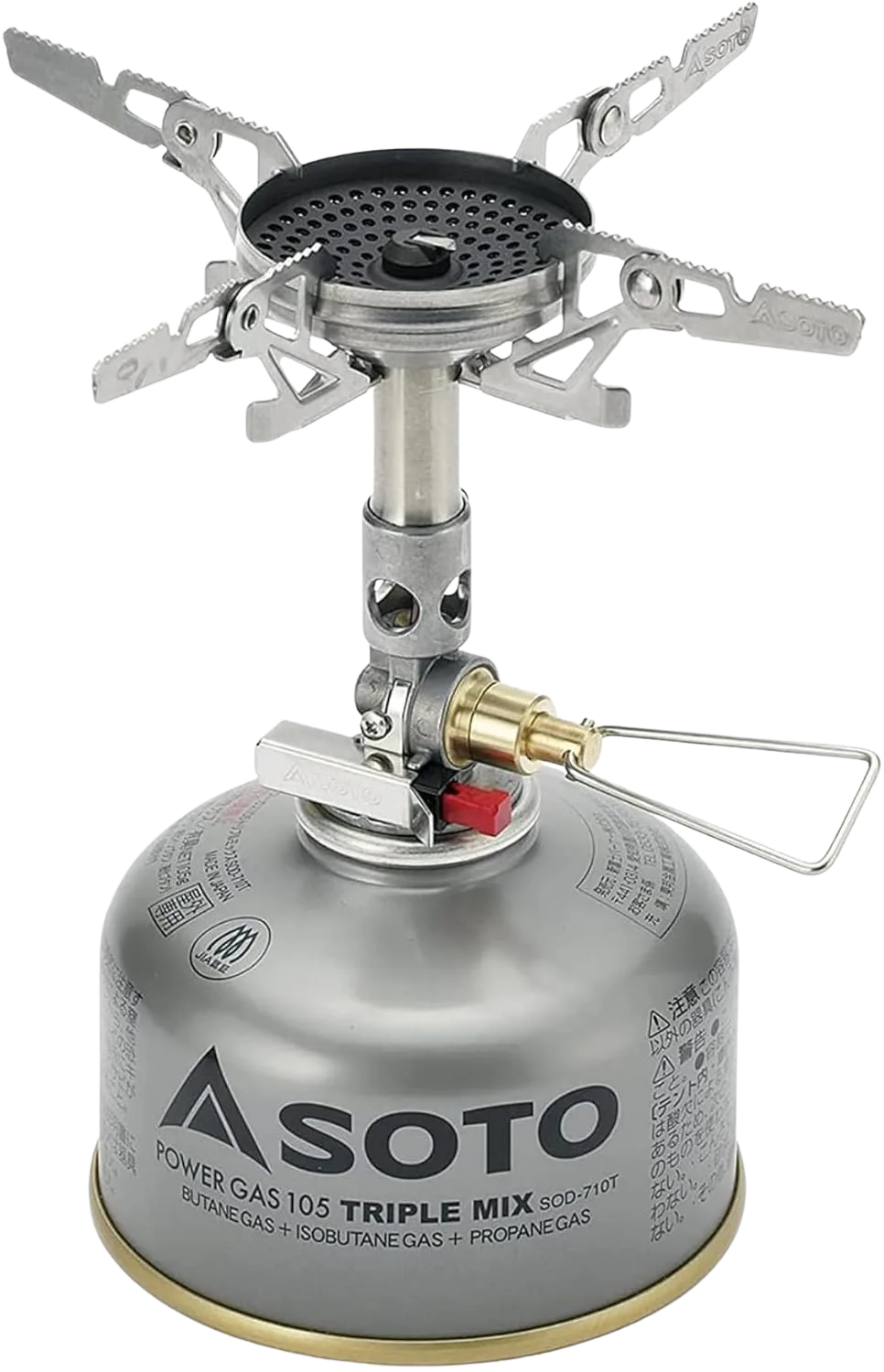
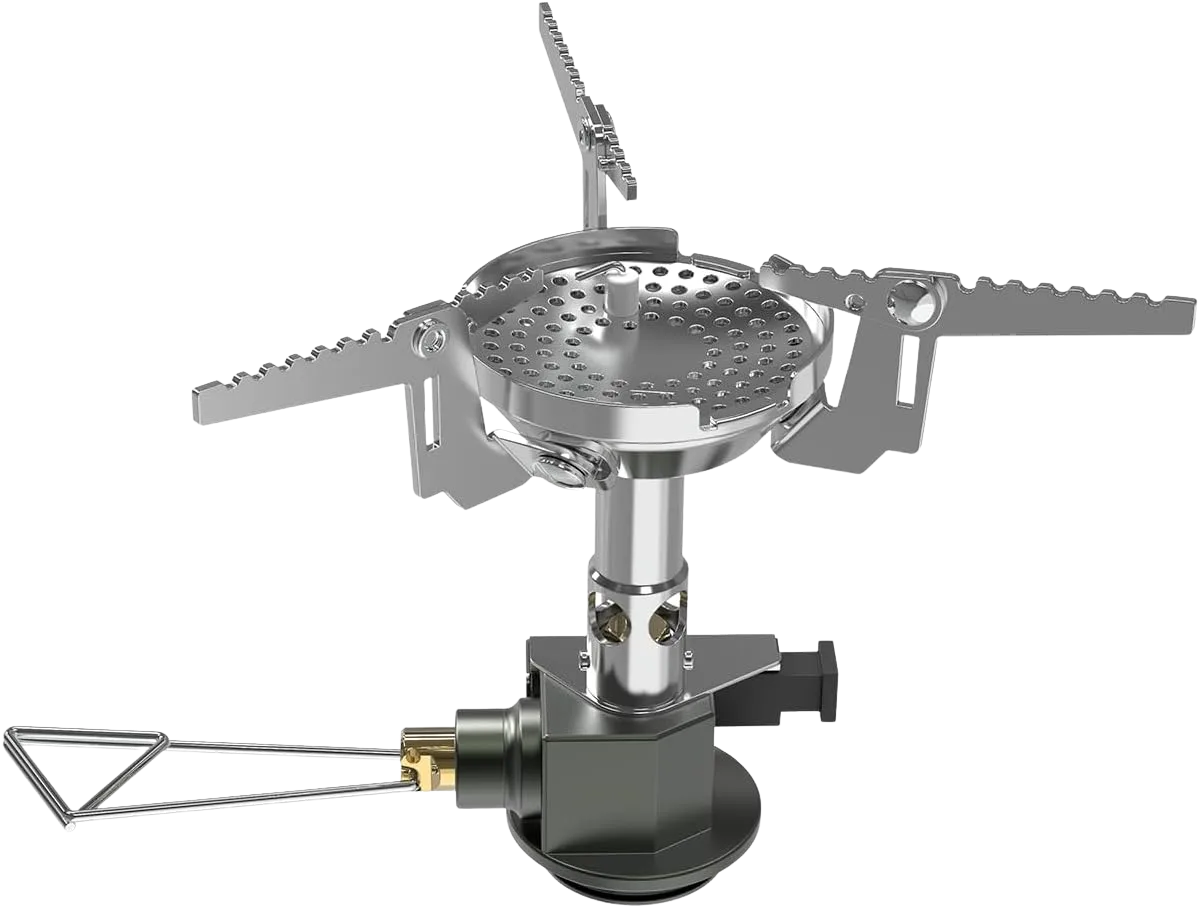
🎯 Best for Real Cooking: Soto WindMaster + 4Flex
The Soto WindMaster with the 4Flex pot support is what you buy when you actually cook for two on trail and want real simmer control. OutdoorGearLab’s 2026 lab tests ranked it Best Overall among standalone burners at 81/100, and GearJunkie gave it 9.2/10 and Best Overall in their 2026 guide. The micro-regulator valve is the honest reason — it holds a low flame without pulsing, which no Jetboil can match, and the concave burner head combined with the 4Flex legs creates a built-in windscreen effect that saves roughly 15-20% of fuel on exposed ground.
Verified Amazon reviews from owners running the WindMaster with 1.5L and 1.8L pots consistently flag the 4Flex’s stability as the differentiator. The standard 3-prong TriFlex is adequate for a 1.0L cup but feels sketchy with anything larger — owners specifically mention the 4Flex as required gear for pairs planning to cook in a bigger pot. The second pattern is cold-weather performance: the WindMaster’s stealth ignition holds up well down to around 25°F, below which owners report it starts to need a lighter as backup.
The honest flaw is that this is a two-purchase workflow — you pay $75-90 for the WindMaster-plus-4Flex bundle and then budget another $30-60 for a compatible 1.5-1.8L pot (Toaks, Evernew, or MSR Ceramic are the usual pairings). It is also worth noting that the piezo on several units ages less reliably than Soto claims, so plan to carry a backup lighter at year two. Buy the WindMaster + 4Flex if you actually cook for two (pasta, eggs, real sauces), you’re comfortable pairing a stove with your own pot, and you camp in variable wind conditions. Skip it if you want one-box integrated convenience or if simmer control is not something you’ll use.
Pro tip: Run the WindMaster with 30g less canister fuel than the integrated systems require for the same trip. The 4Flex’s windscreen effect plus the micro-regulator’s efficient low-flame cooking means the same stove sips less fuel at the same output. Pairs routinely pull 14-16 boils out of a 230g canister with this combination versus 12-13 on a Flash or MiniMo.
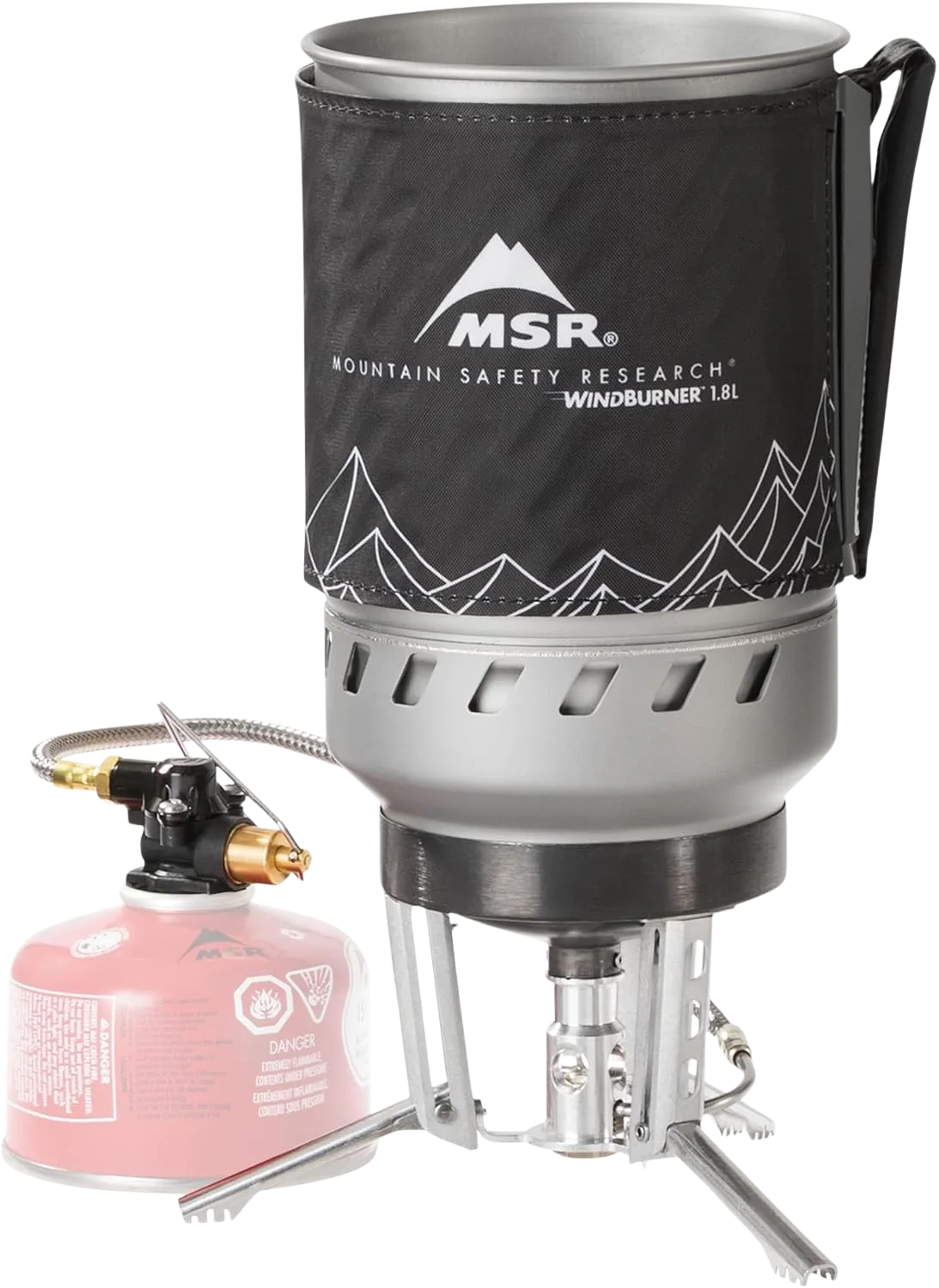
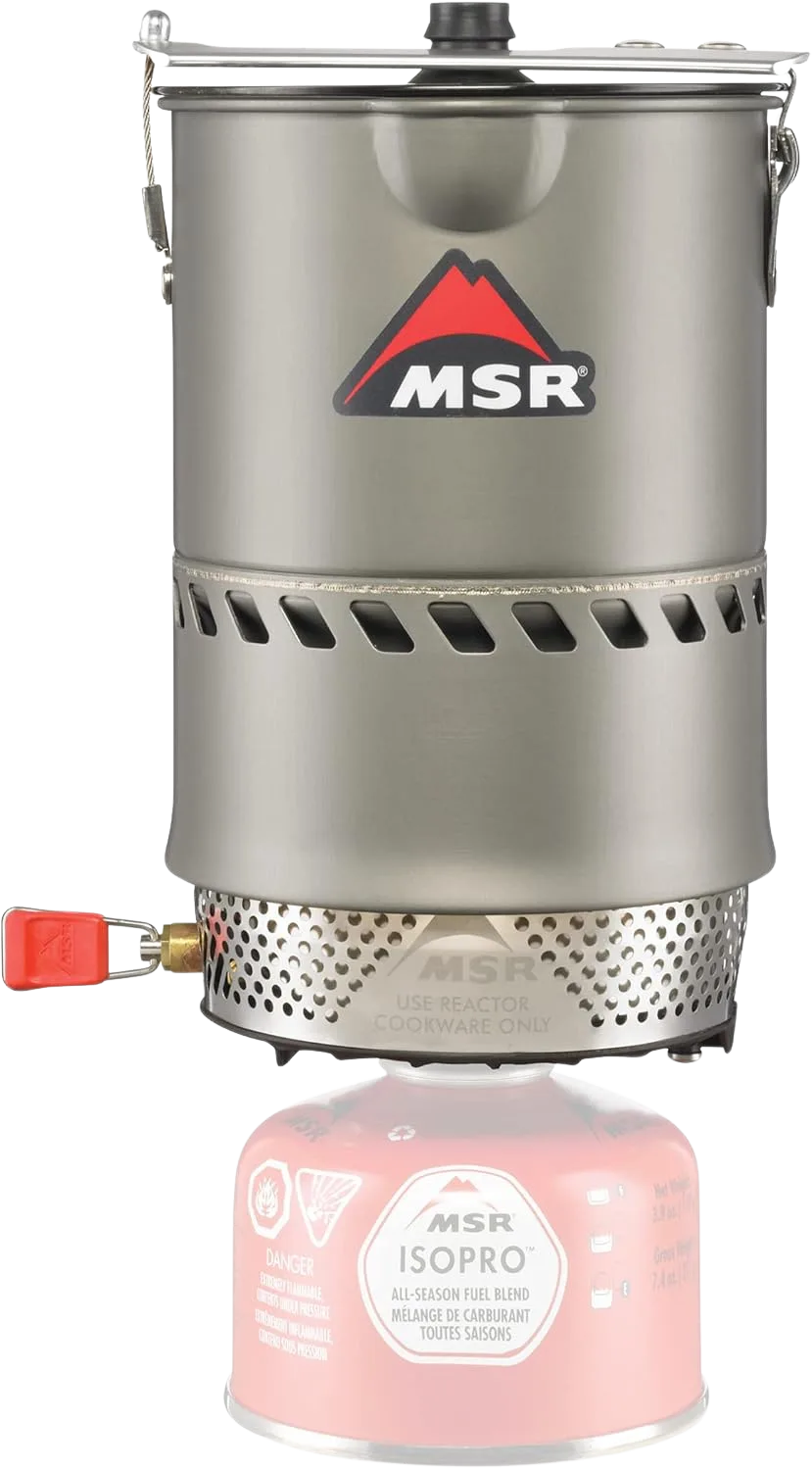
⬆️ Best Group Upgrade: MSR WindBurner Group Stove System (2.5L)
The WindBurner Group is the system you buy when “for two” is the floor, not the ceiling. Its 2.5L sauce pot with Fusion ceramic coating handles real pasta for two, an omelet scramble, or a three-person dinner without the geometry fight of forcing everything into a 1.0L cup. The radiant pressure-regulated burner inherits the wind immunity that makes the WindBurner line survive alpine passes where conventional canister burners stall out.
Verified Amazon reviews concentrate on two benefits for pairs. First, the wide base is genuinely usable — owners consistently mention being able to sauté without scorching, because the ceramic surface plus the radiant burner geometry spreads heat more evenly than a FluxRing deep cup. Second, fuel economy stays competitive despite the larger volume; owners report 10-12 boils per 230g canister with full pot loads, which compares reasonably to the MiniMo’s numbers on much smaller water volumes. The nesting is tight enough to disappear inside a backpack side pocket.
The flaw is weight and cost: 1 lb 6 oz loaded and a $250-300 price point that pushes this firmly into the committed-cooker category. If either of you is counting grams on a thru-hike, the Group is overbuilt for the workflow. Buy the Group if you actually cook elaborate meals with your partner, you occasionally host a third camper, and you regularly camp above treeline where wind defeats other systems. Skip it if your trips are strictly freeze-dried-for-two — the MiniMo or the Flash saves weight and money without compromising your actual workflow.
🎯 Best for 4-Season & Snow Melting: MSR Reactor 1.7L
The Reactor 1.7L exists for one job pair-sized: melt snow and boil water in wind and cold where every other system falters. Its radiant burner is fully enclosed inside the heat exchanger — no visible flame — which means the stove is essentially wind-immune, and OGL’s 2026 tests confirm it still produces 9000 BTU at temperatures where canister-stratified burners go sideways. The 1.7L capacity holds roughly three melted liters from packed snow before you re-pack, which maps to two people’s daily water needs on a winter day.
Verified Amazon reviews from owners running the Reactor in the Cascades and New England winter back two patterns. First, the boil speed in real cold is the headline — users report under three minutes for one liter at 20°F in 15 mph wind, which conventional integrated systems cannot match. Second, the canister nests inside the pot along with the stove for a tight pack, and that detail shows up repeatedly as a weight and bulk win for alpine routes.
The real flaw: zero simmer. The Reactor’s valve is essentially a boil-or-off switch, and the burner design is optimized for heat transfer efficiency, not for controlled cooking. If you intend to cook pasta for two, this is the wrong stove. Also worth flagging: no piezo ignition — you carry a lighter, period. Buy the Reactor 1.7L if you and your partner do shoulder-season or winter backpacking, snow-melt is part of your routine, and you camp exposed terrain. Skip it if you’re a fair-weather pair — this is 4-season specialty equipment and you’ll carry 50% more stove than you need for a summer weekend.
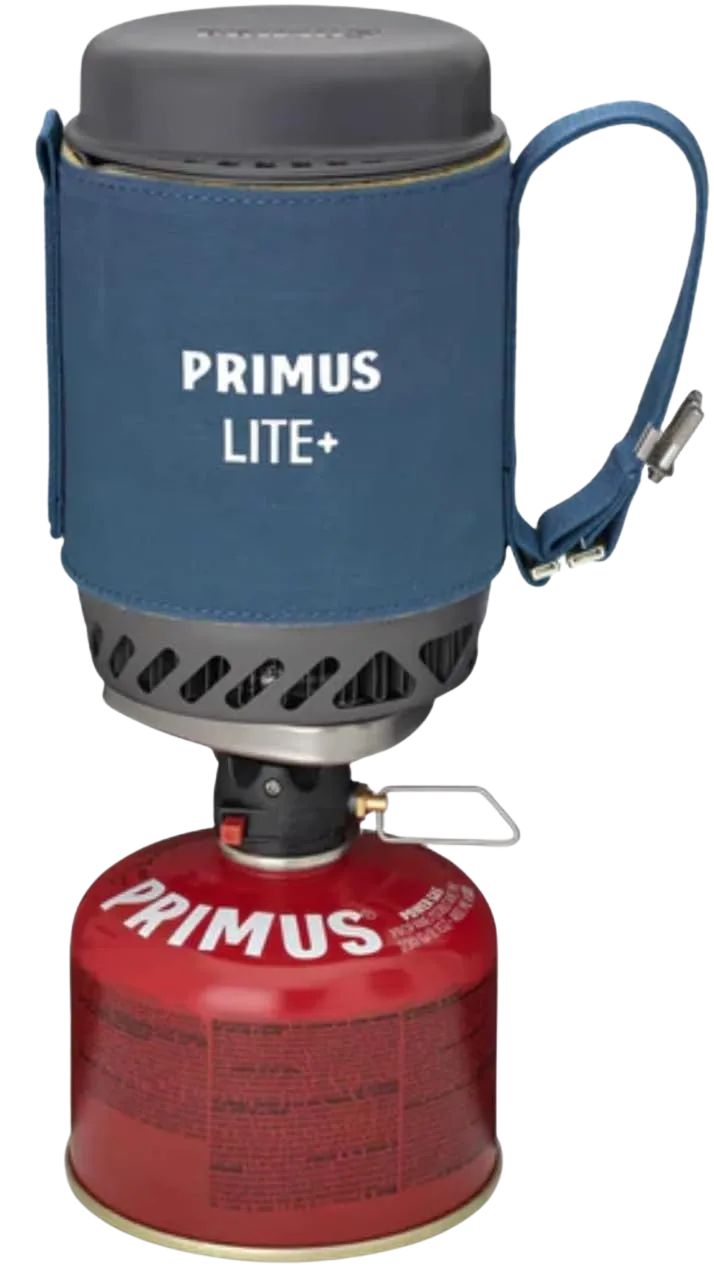
🎯 Best Unsung Cold-Weather Pick: Primus Lite+
The Primus Lite+ is the stove system that none of the major 2026 roundups cover — OGL, CleverHiker, GearJunkie, SectionHiker all pass it by — which is why you haven’t heard of it if you rely on US outdoor blogs. That’s a miss, because Primus’s Laminar Flow Technology preheats the isobutane gas before it reaches the burner, which gives the Lite+ genuine cold-stable fuel delivery down into the 30°F range without the canister-flip workaround other brands require. European alpine hikers have been using Primus integrated systems for a generation; the US just underrepresents them.
Verified Amazon reviews on the Lite+ converge on the cold-weather use case. Owners running it in shoulder seasons in the Rockies and Pacific Northwest consistently note steady flame through cold mornings where their Jetboils pulse and stutter. The hanging kit option — not included by default — is called out repeatedly by alpine bivy campers who cook while hanging from a portaledge or inside a tent vestibule with limited floor space.
The honest flaw for pairs: the Lite+ cup is 0.5L, which is small for two. You’ll either stagger meals (one cook, one waits) or carry a second vessel for a full two-person dinner. Also, retail presence in the US is thinner than Jetboil or MSR, so replacement parts (regulator seals, piezo) ship slower. Buy the Lite+ if you hike shoulder-season or cold-morning weekends and want the fuel-vapor stability the big three don’t offer, you already own a second mug or cup for your partner, and you value niche tech over brand familiarity. Skip it if you only camp summer — the capacity hit isn’t worth it for warm-weather pairs who have better 1.0L options.
🎖️ Honorable Mention: Fire-Maple Greenpeak 2
Fire-Maple’s Greenpeak 2 earns its spot because it is the only sub-$40 burner that ships with a micro-regulator valve — a feature normally reserved for the Soto WindMaster at triple the price. Paired with a compatible 1.3-1.5L pot (Fire-Maple’s own G3 Petrel or a Toaks at equivalent capacity), it handles a two-person weekend in fair weather without punishing the wallet. Adventure Alan’s 2026 roundup specifically noted it “outperforms stoves 2-3x the price” at around $30 for the stove alone.
How to Choose a Backpacking Stove System for Two
Four decisions drive the right pick: pot capacity, simmer control, fuel math, and wind resistance. Every major stove decision for a pair collapses into some combination of these four. Solo-stove checklists don’t work here — they undersize the pot, ignore the fuel math for two hungry people, and skip the simmer question entirely.
Why Pot Capacity Matters More Than You Think
The 1.0L integrated systems (MiniMo, Flash, WindBurner 1.0L) are sized for one. For two, they work only if both people eat rehydrated meals that fit in 500ml of water each — one boil, one meal. The moment one of you wants two servings of oatmeal or a proper pasta dinner, 1.0L forces two boil cycles per meal and the fuel advantage disappears.
The 1.5-1.8L range (Soto WindMaster with 1.8L pot, or paired with the Fire-Maple Greenpeak) is the capacity sweet spot for actual two-person cooking. It holds enough water or pasta for a shared dinner without spill anxiety, and the extra headroom handles real food like couscous and instant sauces. The 2.5L Group is a tier above — that’s the capacity you carry when you regularly cook real meals or expect a third camper. Pair capacity to what you actually eat, not to what sounds efficient. Our dehydrating your own backpacking meals guide covers how pot size maps to meal types for pairs — a shortcut if you’re still deciding what your on-trail menu even looks like.
Why Simmer Control Determines Your Trip Menu
Simmer control is the binary that separates boil-only systems from real cooking systems. Jetboil Flash and MSR Reactor: full flame or nothing. Jetboil MiniMo: regulated simmer (good). Soto WindMaster and Primus Lite+: micro-regulator valve simmer (excellent). This single feature determines whether your trail menu can include eggs, pancakes, pasta with sauce, or proper instant polenta — or whether you’re locked into freeze-dried pouches and rehydrated oats.
Most pairs figure this out the hard way: they buy a Flash because it’s cheap and fast, then realize on trip three that they actually want to cook. If either of you wants variety on trail menus, buy a simmering system from day one. You’ll cook more, eat better, and the weight penalty of a micro-regulator versus a plain valve is effectively zero.
Why Fuel Math Changes at Two People
The numbers most reviews dodge: a 230g isobutane canister produces roughly 12-14 two-cup boils in ideal conditions, degrading to 8-10 in cold or wind. For two people at two hot meals per day (dinner + breakfast coffee/oatmeal), that’s 4 boils per day in rehydrated workflow, 6-8 if either of you cooks. A 230g canister covers 2-3 days for a pair; you need a second canister for a 4-5 day trip with margin, or bump up to a 450g for week-long trips. A good windscreen breakdown of fuel savings shows this math in more detail, and the savings compound fast over a week for pairs.
The shared-weight logic is where one-stove-for-two wins: instead of two solo systems at ~13-15 oz each (26-30 oz total), one 14.6 oz MiniMo covers both of you. Net savings: 10-15 oz per person over carrying independent stoves. That’s a meaningful chunk of base weight, particularly if either of you runs a sub-10-pound base.
Pro tip: For weekend trips with two people, run a 230g canister for the primary system and carry a 100g canister as backup. The 100g tucks into a corner of almost any pack, adds 7 oz, and guarantees you’re not cold-fingering a dead canister on Saturday morning. For trips past 4 days, step straight to 450g canisters and skip the 100g backup to save redundancy weight.
Why Wind Resistance Is Not Optional Above Treeline
Wind cuts canister-stove efficiency by 30-50% without some form of shielding. For a solo stove on a weekend, that’s an annoyance. For two people on a week-long trip, it’s an extra canister of weight. The three shielding approaches each work:
Integrated systems with FluxRing cups (Jetboil) or heat-exchanger pots (MSR WindBurner, Reactor) build the shielding into the cook vessel itself. Remote-canister burners like the Soto WindMaster use a concave burner head plus the 4Flex legs to create a built-in windscreen effect. Standalone burners with separate pots need an external aluminum windscreen, which saves fuel but adds a real safety consideration — never wrap a canister in a windscreen, because trapped heat can overpressurize the canister.
If your trips take you above treeline or into open alpine bowls regularly, buy wind resistance into the system rather than bolting it on. The MSR Reactor and WindBurner Group are the wind champions; the Jetboils are adequate; standalone burners need the 4Flex or equivalent to compete.
Conclusion
Match the system to how you actually eat and camp, not to the review’s star rating. The three frameworks that work for most pairs:
For weekend-to-five-day trips with mostly rehydrated meals: the Jetboil MiniMo is the sweet spot — integrated convenience, real simmer, and enough capacity for two without overbuilding. If budget is tighter and simmer doesn’t matter, drop to the Jetboil Flash 1.0L and save $30.
For pairs who actually cook on trail — pasta, eggs, sauces, real variety: the Soto WindMaster + 4Flex paired with a 1.5-1.8L pot is the flexible workhorse. If you host a third camper regularly or cook elaborate meals, step up to the MSR WindBurner Group 2.5L.
For 4-season, winter, or alpine pairs: the MSR Reactor 1.7L is the snow-melt specialist that no other system matches. For shoulder-season pairs who want cold-morning fuel stability without full 4-season overkill, the overlooked Primus Lite+ beats its US-market competitors on the specific metric that matters. Before your next trip, check current fire restrictions for your region — pressurized canister stoves are generally exempt from Stage 1 bans but rules vary by district, and getting this wrong means carrying a dead stove.
Q1 What size stove do I need for two people backpacking?
For two people on a rehydrated-meal workflow, a 1.0L integrated system like the Jetboil MiniMo works. For real cooking — pasta, eggs, sauces — step up to a 1.5-1.8L pot (Soto WindMaster + 4Flex setup). For regular three-person use or elaborate cooking, the 2.5L MSR WindBurner Group is the right tier.
Q2 Is the Jetboil MiniMo or Jetboil Sumo better for two people?
The MiniMo wins for two at 1.0L — it has a wider cup for sharing, genuine simmer control, and it’s lighter and cheaper. The Sumo’s 1.8L capacity only beats the MiniMo when you’re consistently feeding three-plus people, which is a group scenario, not a two-person workflow.
Q3 How much fuel do two people need for a weekend backpacking trip?
One 230g isobutane canister covers most two-person weekends with margin. Budget roughly 4 two-cup boils per day (breakfast coffee, dinner rehydration, evening tea) over 2-3 days, which a 230g canister handles with a backup 100g in reserve for safety.
Q4 Can you actually cook real meals for two on a backpacking stove?
Yes, with a simmering system and a 1.5L+ pot. The Soto WindMaster with the 4Flex legs and a 1.8L aluminum pot handles pasta, scrambled eggs, and real sauces for two. Boil-only systems like the Jetboil Flash or MSR Reactor restrict you to rehydrated meals.
Q5 Should two people share one stove or each carry their own?
Share one stove. A single 14.6 oz MiniMo for a pair saves 10-15 oz per person versus two solo stoves, plus one shared canister instead of two. The only exception is thru-hiking pairs hiking their own pace — if you cook at different times or camp separately, redundancy wins.
Risk Disclaimer: Hiking, trekking, backpacking, and all related outdoor activities involve inherent
risks which may result in serious injury, illness, or death. The information provided on The Hiking Tribe is for
educational and informational purposes only. While we strive for accuracy, information on trails, gear, techniques,
and safety is not a substitute for your own best judgment and thorough preparation. Trail conditions, weather, and
other environmental factors change rapidly and may differ from what is described on this site. Always check with
official sources like park services for the most current alerts and conditions. Never undertake a hike beyond your
abilities and always be prepared for the unexpected. By using this website, you agree that you are solely
responsible for your own safety. Any reliance you place on our content is strictly at your own risk, and you assume
all liability for your actions and decisions in the outdoors. The Hiking Tribe and its authors will not be held
liable for any injury, damage, or loss sustained in connection with the use of the information herein.
Affiliate Disclosure: We are a participant in the Amazon Services LLC Associates Program, an
affiliate advertising program designed to provide a means for us to earn advertising fees by advertising and linking
to Amazon.com. As an Amazon Associate, we earn from qualifying purchases. We are also an official affiliate partner
of Black Diamond Equipment via the AvantLink network. If you click on a Black Diamond affiliate link and make a
purchase, we may earn a commission at no additional cost to you. We also participate in other affiliate programs and
may receive a commission on products purchased through our links. Additional terms are found in the terms of
service.