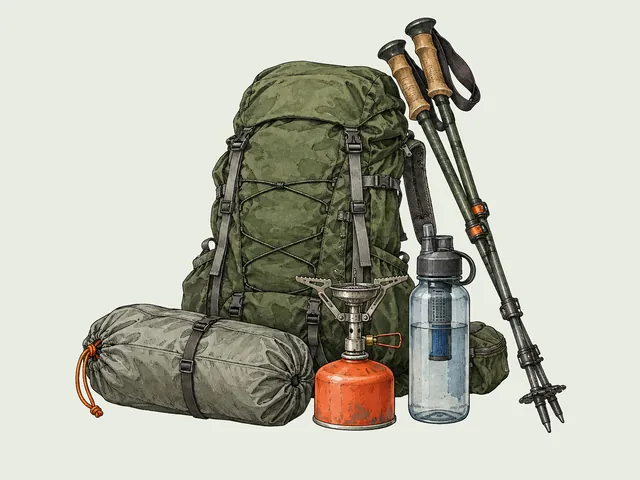
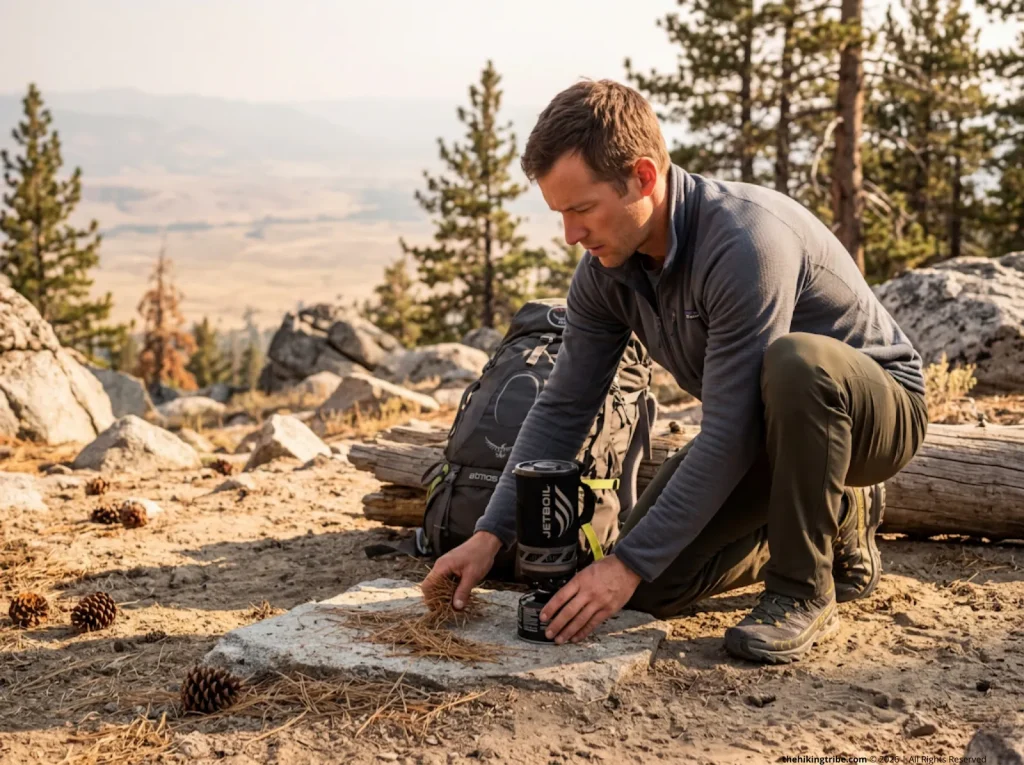
The trail was bone-dry after two months without wetting rain. The hiker, resting near the PCT, unscrewed his unpressurized alcohol stove, thinking a small, clean flame couldn’t hurt. Thirty seconds later, a kicked trekking pole tipped the burner, sending invisible liquid fire racing across the pine duff. Because ethanol burns without a visible flame, he didn’t even realize the ground was ablaze until a three-foot crown fire had fully engulfed the nearest juniper. After 20 years guiding on these waters and trails, I’ve seen this situation more times than I can count. Understanding regional fire restrictions isn’t just about avoiding a $5,000 penalty—it’s a critical, high-stakes backcountry skill rooted in basic weather patterns, heat management, and the unforgiving reality of human error. Here’s exactly how to navigate these bans, adapt your gear, and stay legal—without burning the forest down.
⚡ Quick Answer: Backcountry campfire regulations depend on local fuel moisture and are categorized into stages. Stage 1 fire restrictions limit you to government-provided fire rings in developed sites. Stage 2 fire restrictions ban all open flames across the board, strictly legally limiting you to pressurized gas stoves with mechanical shut-off valves. To stay legal and safe, ditch the alcohol stoves during drought, secure your California campfire permit if out west, and always use the ash soup method to completely extinguish a fire.
| Fire Restriction Comparison | ||
|---|---|---|
| Metric | Stage 1 | Stage 2 |
| Allowed Locations | Developed recreation sites only | Total prohibition everywhere |
| Allowed Stoves | Most stoves, provided area is cleared | Strictly pressurized gas/liquid with shut-off valves |
| Campfires / Charcoal | Only in agency-provided metal rings | Banned entirely |
| Trigger Conditions | Curing fuels and increasing daily fire risk | 90th percentile ERC, maxed firefighting resources |
The Scientific Foundation of Fire Danger Ratings
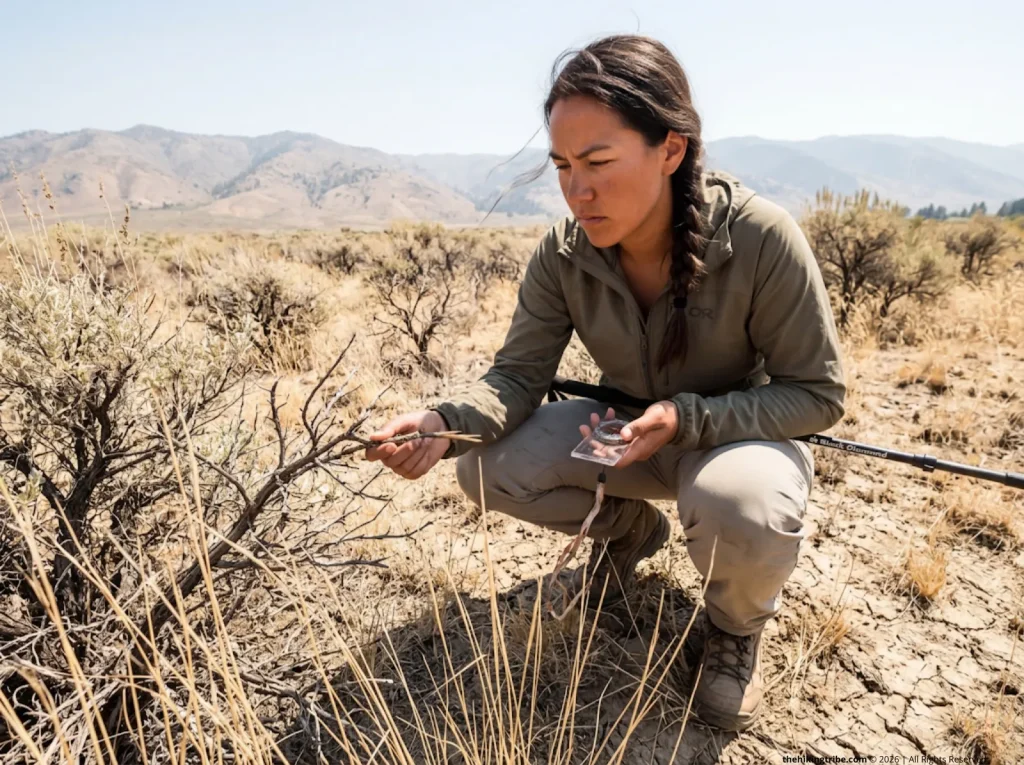
The us forest service, alongside the bureau of land management and the national park service, doesn’t just guess when to shut down your weekend plans. They rely on the National Fire Danger Rating System to measure the exact potential for a spark to erupt into a monster.
By analyzing the National Fire Danger Rating System outputs, land managers evaluate the heat energy sitting in the forest floor. The system tracks cumulative drying.
Energy Release Component (ERC) Explained
The energy release component tells you the available heat energy per square foot. It has memory. It tracks the physical drying over weeks. Once that number crosses the 90th percentile threshold, the probability of an uncontainable fire reaches the extreme. Rangers start pulling the plug on open flames.
Learning to read real-time weather signs on the trail helps you understand what happens when fine flashy fuels respond to dropping humidity instantly.
Fuel Moisture and Time-Lag Physics
Every stick around you fits into a time-lag class that dictates the combustion realities. We look closely at fuel moisture content. The big stuff, tracking 1000-hour fuel moisture, represents deep-seated drought.
When moisture drops in those three-to-eight-inch logs, a fire becomes nearly impossible to stop mechanically. During afternoon heat, if fine fuel moisture drops below 3%, a single stray ember will ignite a spot fire instantly.
Biological Indicators and Live Fuel Moisture
Even living bushes burn. Land managers track the Growing Season Index to predict flammability. If live shrubs drop below 80% moisture, they actively amplify the fire intensity.
In the West, we watch for the “Spring Dip” in conifer needles, a dangerous window where new growth emerges but moisture plummets. Learning to interpret trailhead danger signs from “Moderate” to “Extreme” means knowing that when 10-hour twigs snap like dry pasta, your margin of error drops to zero.
Pro-Tip: Pay attention to the snap. If a dead twig bends, you have moisture. If it shatters instantly, the forest is a powder keg. Adapt your cooking plans immediately.
Decoding the Regulatory Archetypes: Stage 1, 2, and 3
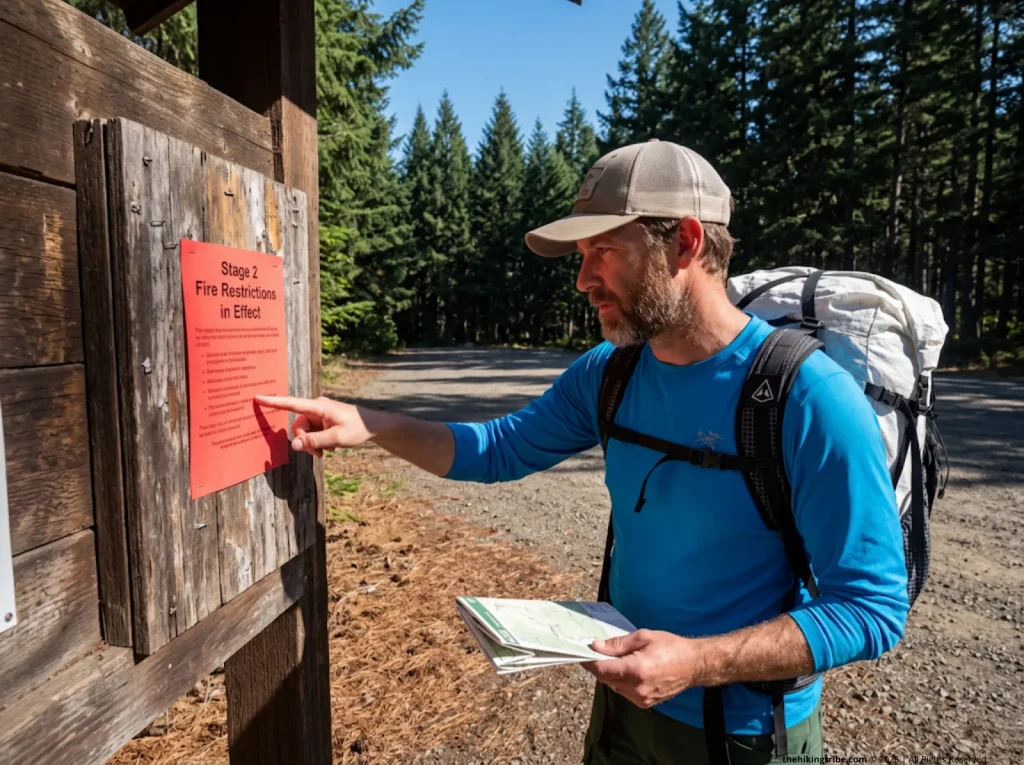
When you hit the backcountry, ignorance of the law costs you money and potentially jail time. You need to know the regulatory definitions separating the levels of backcountry fire management.
Reading the strict Stage 2 fire restriction protocols dictates the harsh reality on the ground when things get bad.
Stage 1: The Transition to Developed Sites
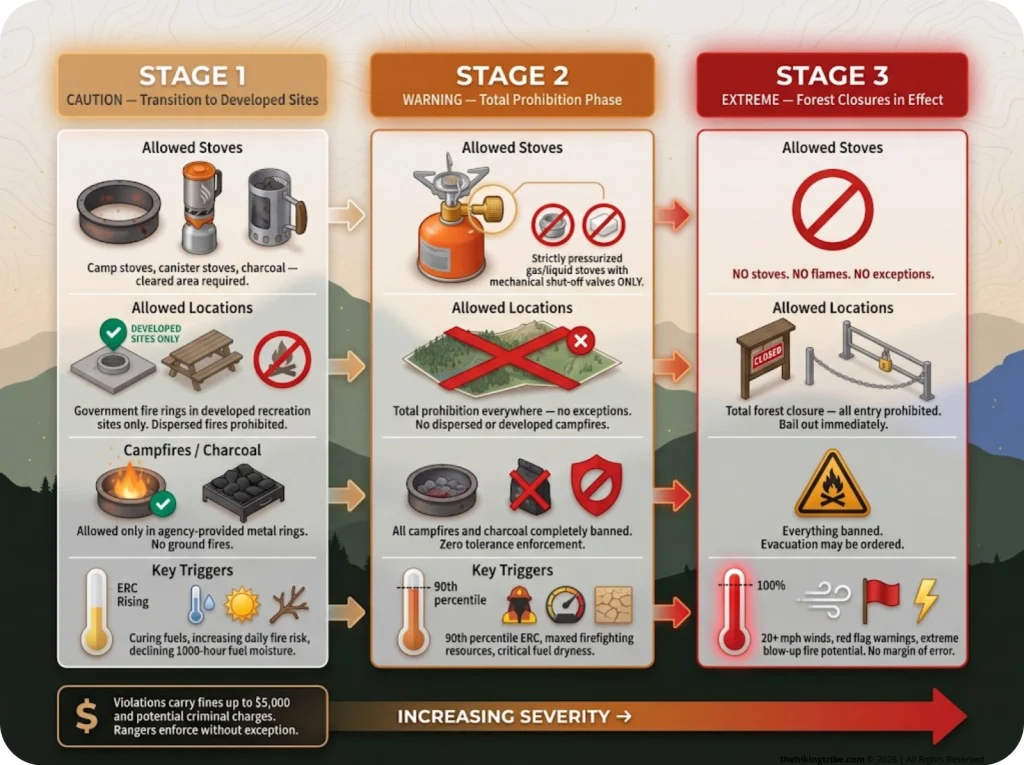
Under Stage 1, the fundamental goal is engineered defensible space. You are restricted to using government-provided metal fire rings in developed sites. Dispersed fires out in the raw woods are unlawful.
You can still use portable stoves in the backcountry, provided you clear flammable brush around your prep area.
Stage 2: The Total Prohibition Phase
This is the lockdown phase. You cannot build a campfire. You cannot light a charcoal grill. Period. You are legally required to rely exclusively on pressurized liquid petroleum or isobutane gas stoves equipped with a mechanical shut-off valve.
Agencies often issue “Hoot Owl” restrictions here, banning any internal combustion engine like chainsaws during peak heat. Rangers do not care about your backcountry resume; violating these rules carries fines up to $5,000.
Stage 3: Extreme Conditions and Forest Closures
Stage 3 represents total shutdown. Knowing how to handle how to research a trail before you go becomes mandatory as authorities block all entry to the forest.
This triggers when wind speeds exceed 20 mph during red flag warnings and the chance of a blow-up fire is unacceptably high. If a region hits Stage 3 while you’re out there, bail out immediately. You cannot outhike a closure mandate.
The Backcountry Kitchen: burning process and Compliance
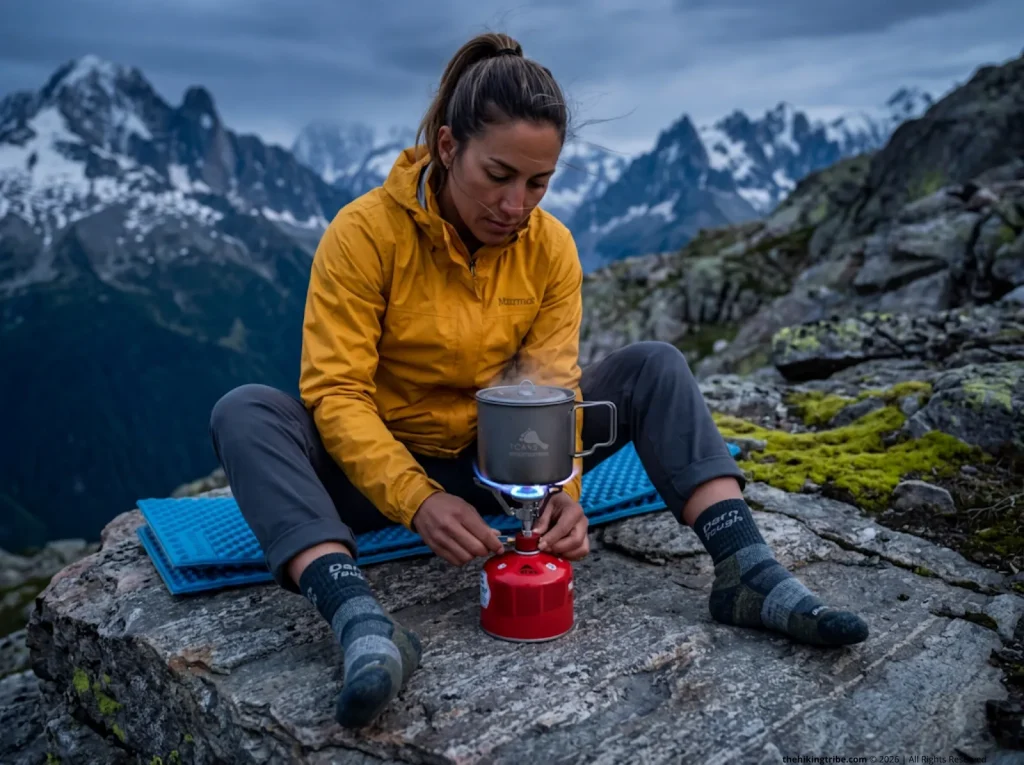
A massive point of failure for hikers is misunderstanding why their favorite ultralight stove suddenly becomes contraband. It comes down to safety thresholds and the ignition realities.
Pressurized Systems vs. Solid Fuel Safety
Jetboil and PocketRocket style canister stoves are overwhelmingly permitted during bans. Why? Because they contain pressurized lpg (isobutane/propane) within a reinforced shell.
Crucially, they have a high-precision, self-sealing shut-off valve. If you knock it over, you reach out and twist the knob, stopping the flame instantly. Standard solid fuels like Esbit tablets release open flames that react violently to wind. There is no emergency stop. Try stomping out a tumbling Esbit tablet on an exposed ridge in 30mph gusts, and you will understand why agencies outlaw them during drought.
For those trying to weigh the fuel efficiency of alcohol versus canister stoves, the legal shut-off valve is the ultimate deciding factor.
The Invisible Flame: Physics of Alcohol Stoves
The alcohol/wood stove loophole used to exist, but land managers wised up. Alcohol burners like a trangia or a DIY soda can stove are terrifying in dry conditions. High-efficiency ethanol burns cleanly.
Without hot soot particles to radiate light, you get exactly what scientists measuring the thermal visibility of ethanol combustion found—which is to say, none at all. The flame is entirely invisible in daylight. Re-fueling a stove you think is off creates a massive fireball.
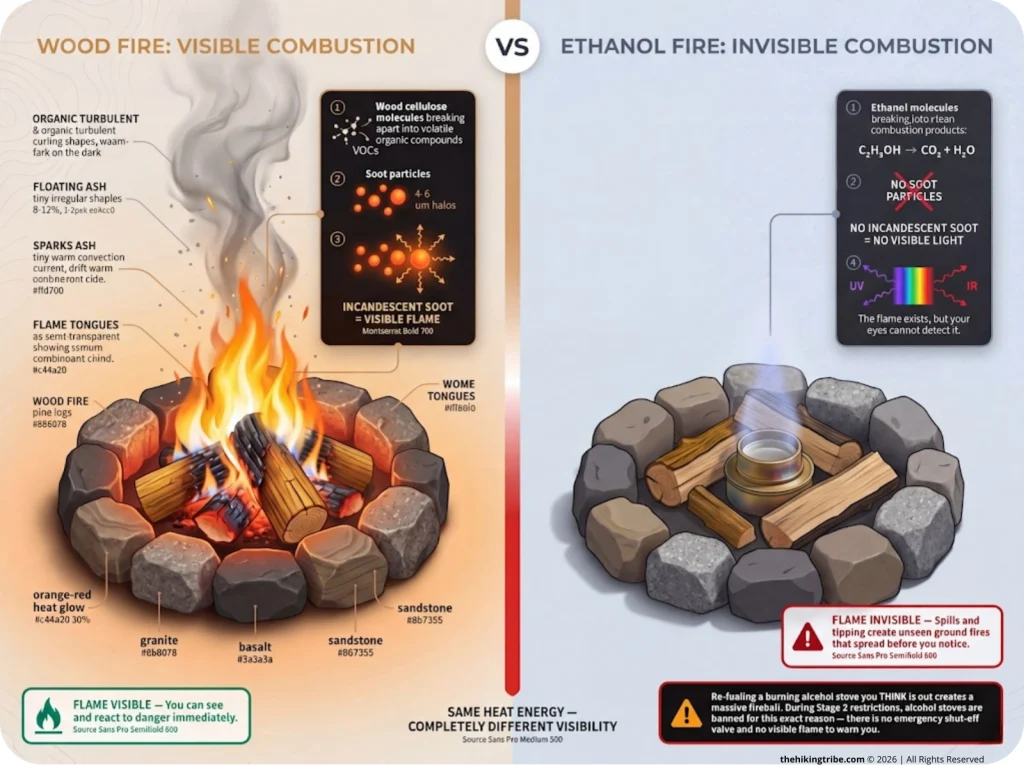
The Dangers of Wood Gasifiers
We see this often with solo stoves and similar wood burners. Despite having efficient secondary combustion, they still rely on burning small sticks that spit wind-borne embers. If you kick over a wood gasifier, you dump super-heated coals directly onto the dry forest floor.
Fire Policy Deep Dive: Regional Case Studies
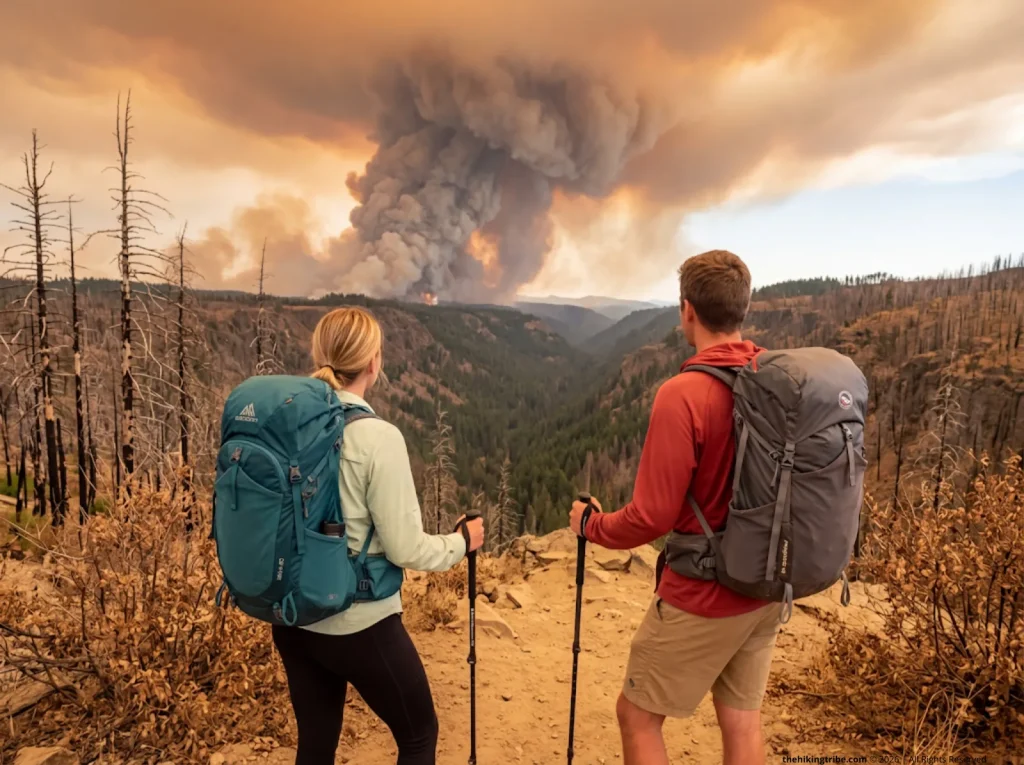
A uniform regional fire matrix does not exist. The law changes depending on the ecosystem you step into.
California: The Permit and the Shovel
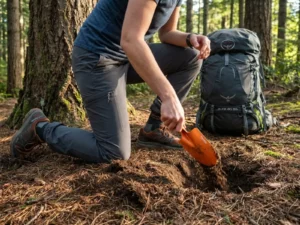
Out west, the infrastructure is incredibly strict. You must secure the California Campfire Permit requirements before operating any stove on federal land, even outside of a ban. It’s free online, but the law requires you to clear a massive diameter down to bare mineral soil around your stove.
Further, you have to carry a round-point shovel with at least a 35-inch handle. Even with this permit, during Stage 2, wood and charcoal remain universally prohibited. Keep this in mind when navigating permit required USA hiking trails.
Pacific Northwest: Drought and Scale
Up in Oregon and Washington, relative humidity plummets in late summer. The 2024 season saw an agonizing stretch of 75 days without wetting rain, drying out heavy timber incredibly fast. Vegetation moisture fell to historic lows, forcing 17 national forests to implement blanket bans at the exact same time.
Pro-Tip: Do not assume early summer means safety in the Pacific Northwest. Unseasonably hot Junes dry out heavy alpine timber much faster than historical averages.
The Southwest: Wind Events and the “Tinderbox” Effect
Down in Arizona and New Mexico, the danger peaks in the spring right before the monsoons hit. High-velocity winds mix with bone-dry invasive grasses like cheatgrass to push fires at terrifying speeds. This acts as fine flashy fuel that drives crown fires up into the trees.
Advanced Stewardship: The “Ash Soup” Extinction Method
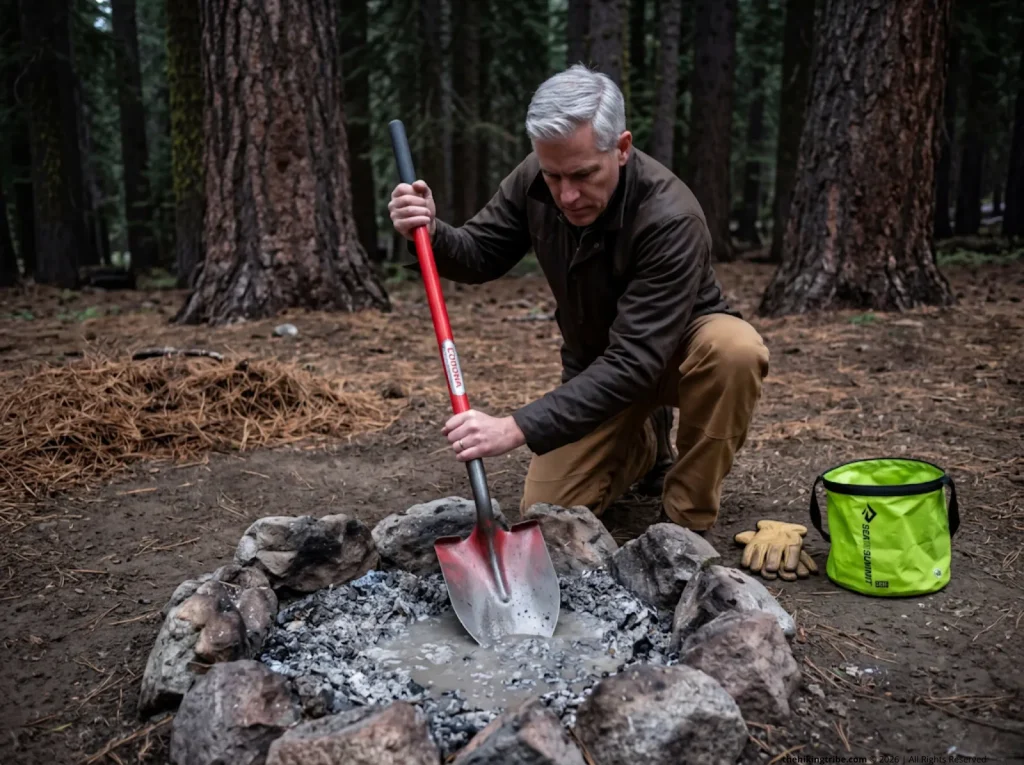
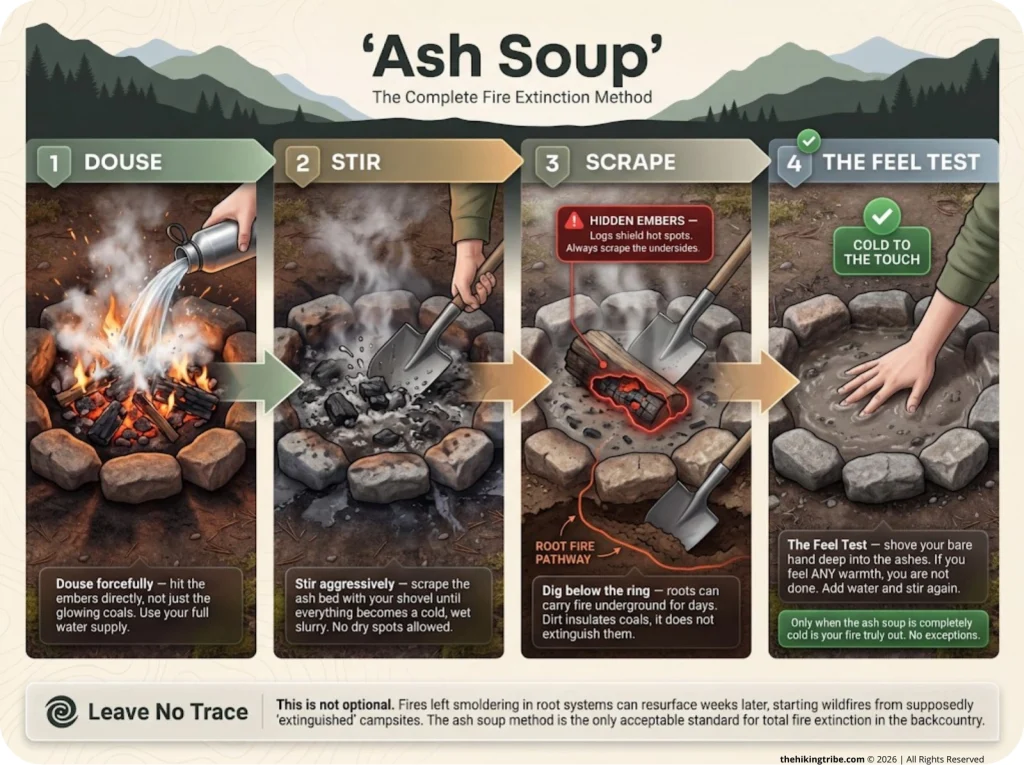
For times and places where a regular campfire is allowed, you cannot just pour your leftover drinking water on the coals and walk away. That leaves fires smoldering in root systems for weeks, eventually resurfacing. The leave no trace principle demands the ash soup method.
The 7-Step Protocol for Total Extinction
This 7-step extinction protocol guarantees total thermal fatalities. First, let the wood burn down entirely to white ash to strip its thermal mass. Second, take your water and douse it forcefully. Hit the embers, not just the glowing red coals. Third, take your shovel and stir aggressively until the whole mess becomes a cold, disgusting slurry.
Identifying Hot Spots Through Sub-Surface Checks
Next, scrape the undersides of any unburned logs to expose hidden embers. Dig directly into the dirt below the rock ring to sever any root pathways. Never just throw dirt on top. Dirt insulates coals, effectively building an oven right in the ground.
Finally, the “Feel Test”—shoving your bare hand into the muck. It must feel completely cold to the touch.
Ethical Firewood Collection: The 4 D’s
Adhere to the 4 D’s when sourcing fuel, ensuring you meet safe firewood collection standards while hiking in sensitive ecosystems safely.
- Dead: Never peel green bark or damage living trees.
- Down: Only take dead and down wood off the ground.
- Dinky: Only snap sticks smaller than your wrist so they burn cleanly.
- Distance: Gather wood away from camp to avoid stripping the immediate area bare.
If you are dealing with sensitive river corridors, governed by agencies like utah state parks, you might be required to use fire pans or build mound fires with a 15-foot clearance.
Leveraging Predictive Navigation Tools for Fire Safety
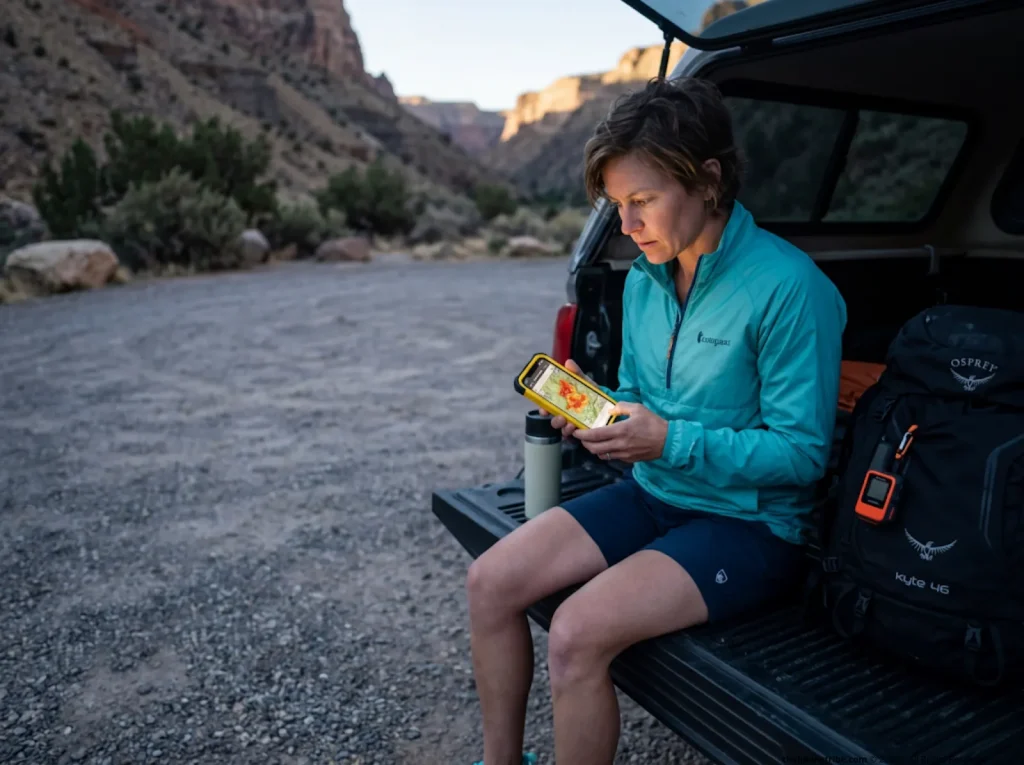
Don’t wait until you read the signboard at the trailhead. Real backcountry competence means you check fire status from home using modern data.
Utilizing NOAA Fire Weather Spot Forecasts
By accessing National Weather Service fire weather tools, you can pull “Spot Forecasts” for specific ridges and canyons. These localized readings watch for Red Flag parameters like high heat combined with low humidity and strong winds. noaa fire weather gives you precise microclimate intel that flatland forecasts completely ignore.
Satellite Heat Detection via InciWeb and Gaia
If a fire is already burning, you want to monitor inciweb for the official perimeter updates and closures. cal fire does the same for state-level incidents.
By how to plan a day hike from scratch, you can use Gaia GPS satellite heat detection layers to spot fresh thermal anomalies before dispatch boards even post them.
Monitoring the ERC Before the Trailhead
Check the Wildland Fire Assessment System charts. If you see the ERC curve crossing the 90th percentile, swap your alcohol stove for an isobutane rig days before your trip. That is what advanced trip intelligence looks like.
Pro-Tip: Set bookmarks on your phone for local dispatch centers and InciWeb pages before you lose cell service in the mountains. Knowledge only works if you can access it.
Field Notes on Open Flames
Fire bans exist because the legal requirements are written in hard lessons and ash. When fuel moisture bottoms out and the ERC spikes, the only safe fire is the one you refuse to build. Your isobutane canister gives you a mechanical shut-off valve that creates a margin of safety solid fuels simply cannot provide.
And when you do run a legal campfire, you have a duty to execute the ash soup method flawlessly until that pit is freezing to the touch. On your next planning night, pull up a NOAA Spot Forecast and read the ERC charts. Start respecting the data that determines if you come home.
FAQ
What is the exact difference between Stage 1 and Stage 2 fire restrictions?
Stage 1 restricts open flames specifically to government metal rings in developed sites, while Stage 2 bans all campfires and charcoal universally across the region. During Stage 2, your only legal option is a pressurized gas or liquid stove equipped with a reliable mechanical shut-off valve.
Can I use an alcohol stove like a Trangia or DIY soda can stove during a fire ban?
Absolutely not. They do not have a mechanical valve to shut off the gas immediately if tipped over or if the wind kicks up. they burn with an invisible blue flame that creates a terrifying hazard in dry brush, drawing strict bans everywhere.
Are Jetboils and other isobutane canister stoves allowed under Stage 2 restrictions?
Yes. Because they house pressurized fuel inside a metal can and use a direct shut-off valve, land managers permit them during Stage 2. You still have to clear a safe diameter down to the dirt around your cooking spot before lighting it up.
How do I know if a campfire is actually 100% extinguished?
You use the Feel Test after employing the ash soup method. You drown the fire, stir it violently into a wet slurry, scrape the logs, and then push your bare hand deeply into the ashes without feeling any warmth at all.
Where do I get a California Campfire Permit, and what does it mandate?
You take a short online quiz through the state’s Ready for Wildfire portal to get the free permit. Legally, it forces you to carry a shovel with a 35-inch handle and strip a five-foot circle down to bare soil whenever you ignite a stove or fire on federal lands.
I've spent more than a decade researching hiking gear and trail technique. I read the specs, the forum threads and the long-term reviews, and every pick here comes with what it gets wrong.
End of the trail
You read every mile of this one. Here's where the trail goes next.