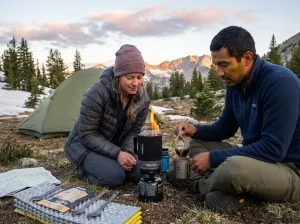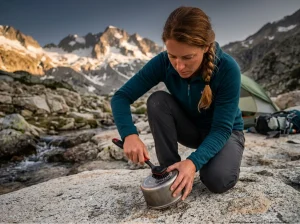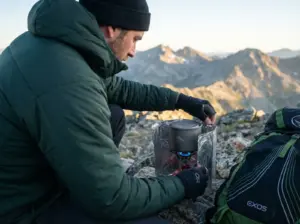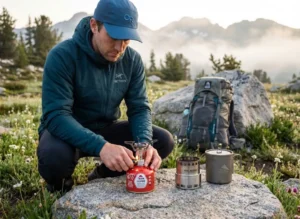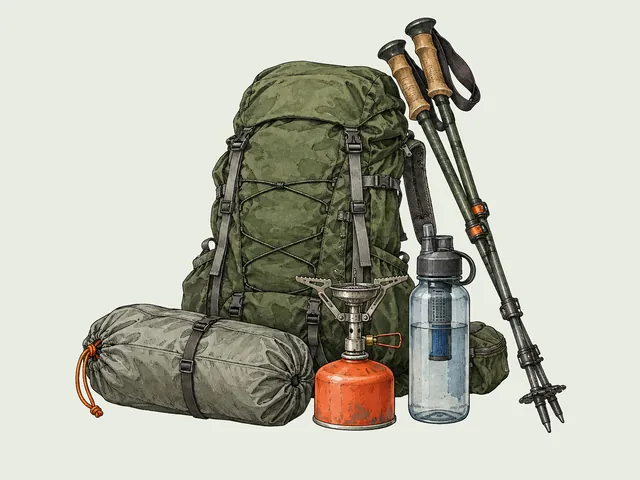



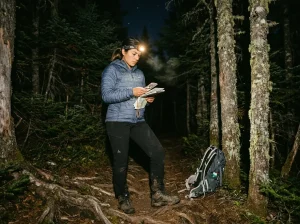

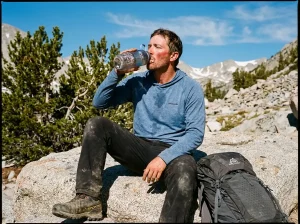
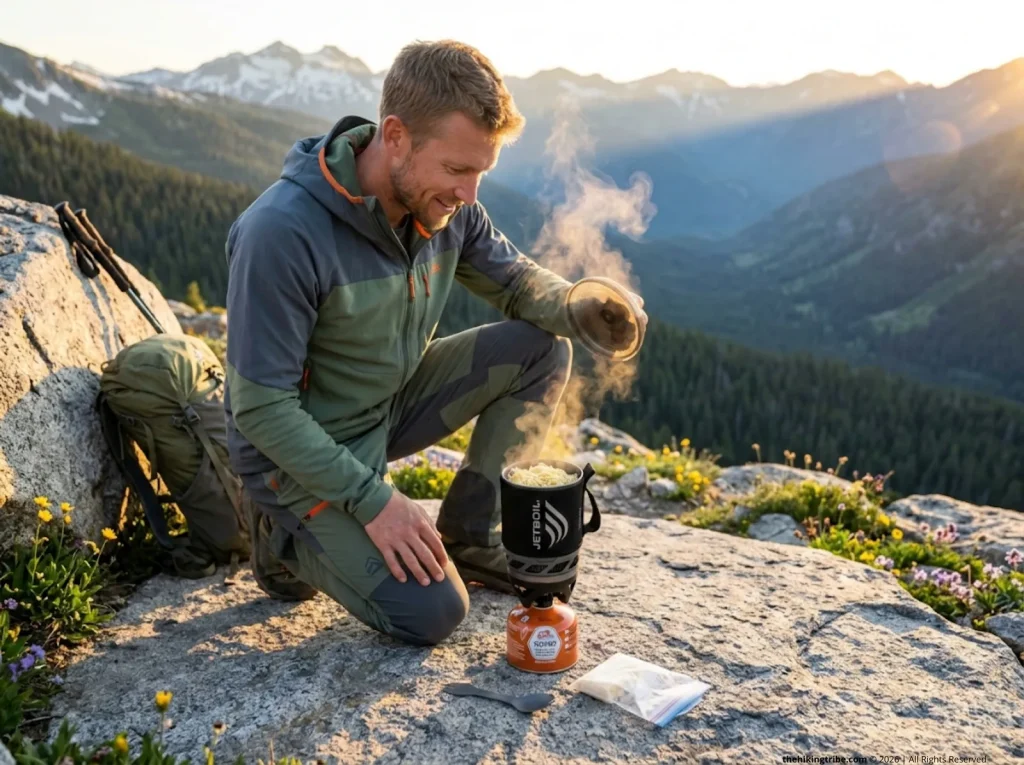
The pasta was still crunchy. Halfway through a five-day section on the John Muir Trail, I’d burned through nearly a full 100g IsoPro canister trying to simmer angel hair in a Jetboil Flash—and all I had to show for it was scorched noodles, a boilover burn across my thumb, and the sinking realization that I had no fuel left for two more mornings of coffee.
That evening, a PCT thru-hiker at the next campsite watched me scrape charred starch from my FluxRing pot. He shook his head and said five words that changed how I cook on the trail forever: “Turn the stove off, man.”
After fifteen years of backcountry trips, dozens of canister stoves, and more ruined meals than I’ll admit, I’ve pressure-tested the off-heat cooking technique on everything from desert washes to 12,000-foot passes. This is the guide I wish someone had handed me before that JMT disaster—how to slash your fuel consumption by 40–60%, which Jetboil models actually cook food and which ones don’t, and five trail-tested recipes that need zero sustained flame.
⚡ Quick Answer: The off-heat method works by bringing food to a boil in your Jetboil, killing the flame after 60–90 seconds, then wrapping the pot in a neoprene cozy to finish cooking with retained heat. It cuts fuel use by 40–60%, works on any Jetboil model, and handles pasta, rice, couscous, and Ziploc bag meals perfectly. Your 100g canister goes from lasting 5–7 sustained-cooking meals to 10–12 off-heat meals.
Why Your Jetboil Burns Through Fuel (And What Nobody Mentions)
The Unregulated Burner Problem
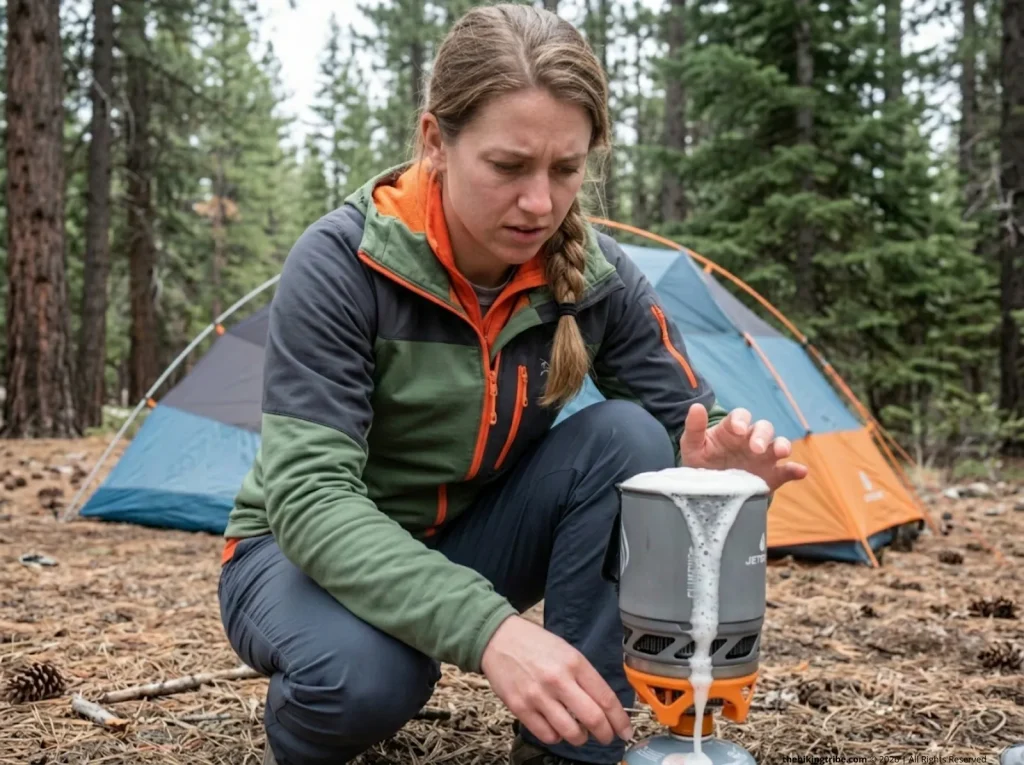
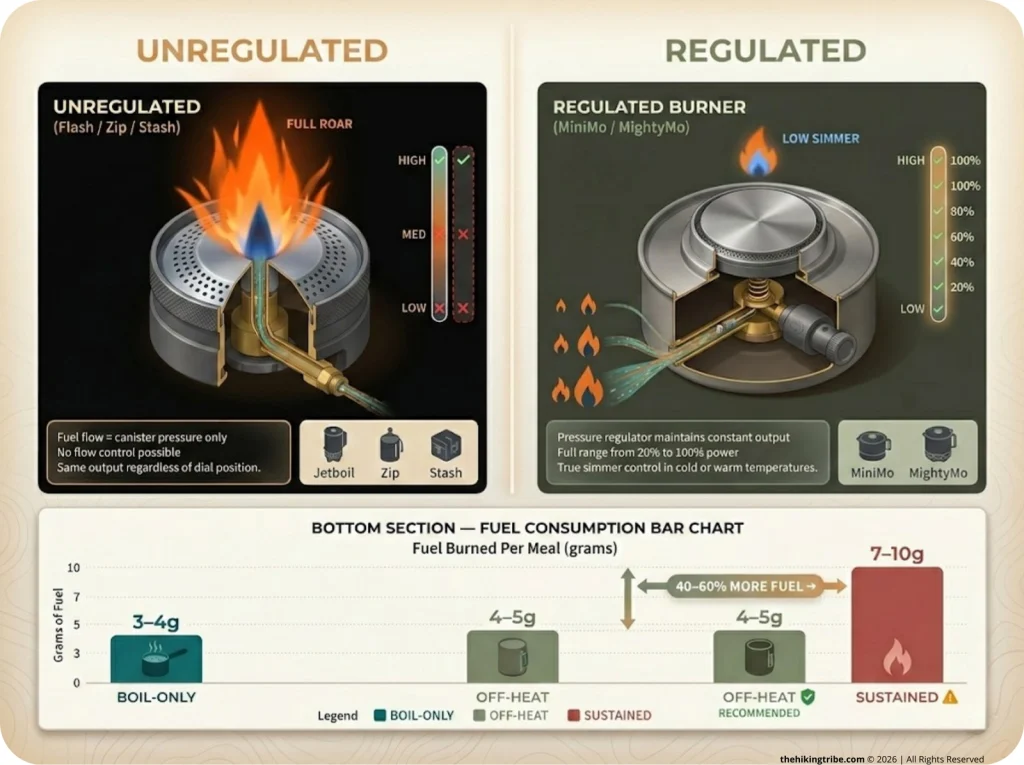
Here’s what most reviews skip. The Jetboil Flash and Jetboil Zip use an unregulated burner—fuel output depends entirely on canister pressure, not how far you twist the dial. You get full blast or nothing. There is no gentle simmer, no medium heat, no “let it cook slow.”
Most hikers run these stoves on full flame for eight to fifteen minutes per meal, burning 5–7 grams of fuel when they only need two to three minutes of actual heat. FluxRing technology delivers over 80% thermal efficiency compared to 30–40% for a traditional open burner, but that advantage evaporates if you keep the flame running after your water boils.
Pro tip: If your Flash or Zip won’t hold a low flame—that’s not a defect. It’s unregulated by design. Stop fighting the stove and learn the off-heat method instead.
The Real Cost of Continuous Boiling
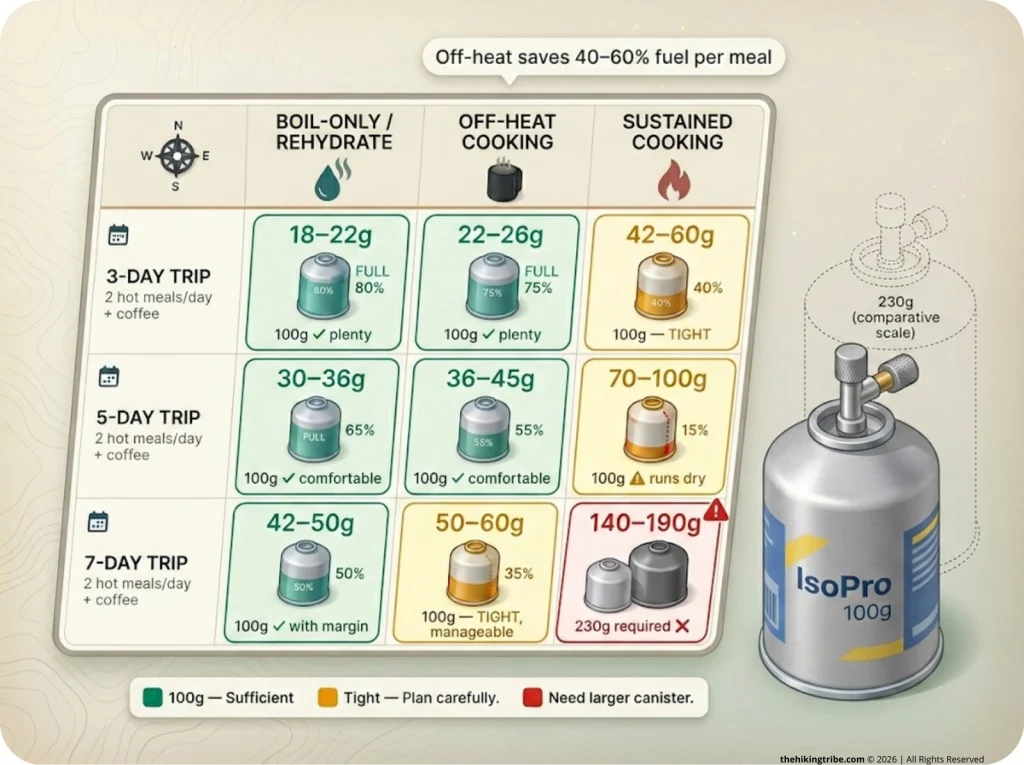
A 100g canister boils roughly 10–12 liters of water. That’s 10–12 meals if you only boil and rehydrate. But sustained cooking—keeping the flame running for pasta or rice—drops that count to 5–7 meals. On a five-day trip with two hot meals per day, continuous cooking burns through a 230g canister. Off-heat cooking uses less than half a 100g.
The fuel crossover point between alcohol and canister stoves matters even more once you factor in actual cooking versus just boiling water. Most fuel guides don’t make that distinction.
Regulated vs. Unregulated — The Model Split Nobody Explains Clearly
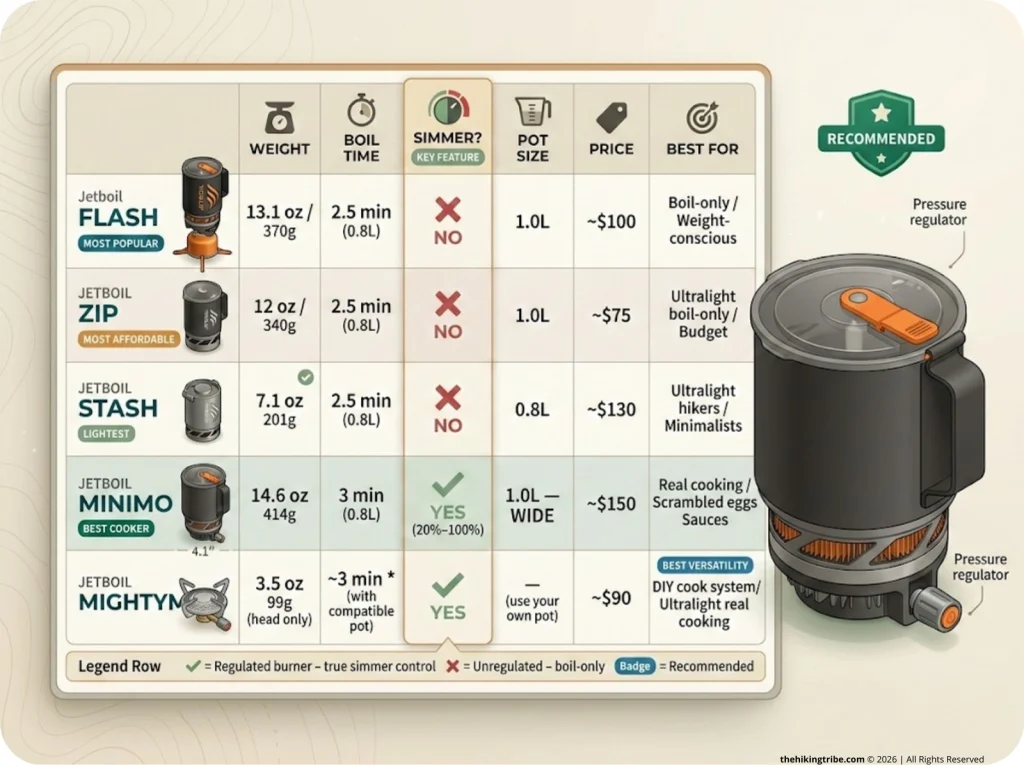
Regulated models like the Jetboil MiniMo and Jetboil MightyMo have a pressure regulator that maintains consistent output down to 20% power. That means true simmer control—you can scramble eggs, sauté, or hold a gentle bubble.
Unregulated models like the Flash, Zip, and Jetboil Stash are water boilers, not camp kitchens. As Andrew Skurka puts it: “The Zip and Flash use the same unregulated burner, making them most suitable for boil-only meals and drinks.”
The good news? You don’t need a regulated stove if you learn to cook off-heat. The technique turns every Jetboil into something capable of real food.
The Off-Heat Method, Step by Step
Boil, Kill, Cover — The Three-Step Protocol
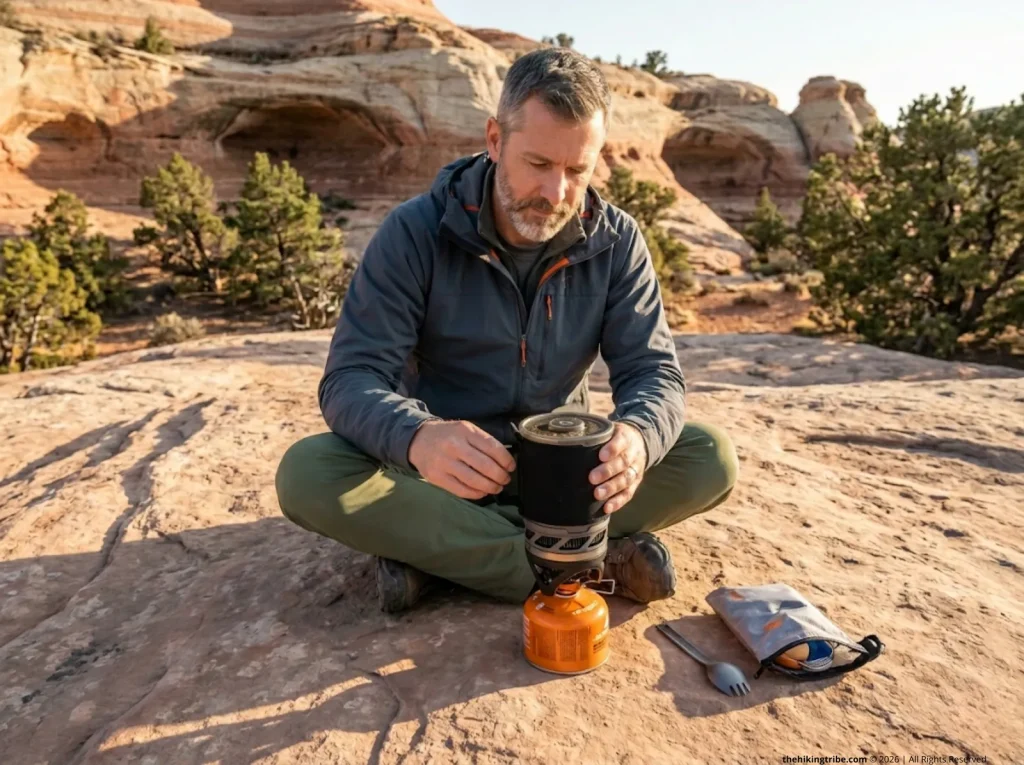
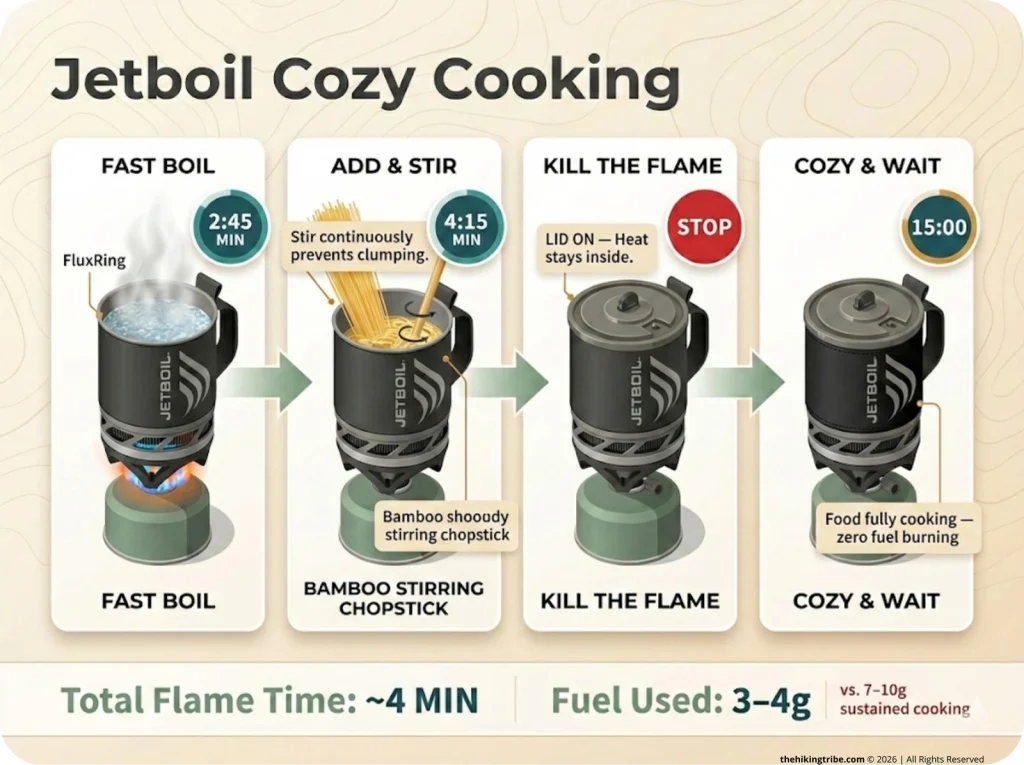
The method is dead simple once you see it:
- BOIL — Bring water to a rolling fast boil. With FluxRing, that takes 2.5–3.5 minutes for 0.8 liters. Add your dry pasta, rice, or grain.
- KILL — Stir for 60–90 seconds at a boil, then turn the stove off completely.
- COVER — Lid on, neoprene cozy wrapped tight around the pot. Wait 10–15 minutes.
That’s it. Total flame time: under four minutes. Total fuel burned: roughly 3–4 grams versus 7–10 grams for continuous cooking. The cozy holds internal temperature above 160°F—hot enough to fully cook pasta and rice without touching the stove again.
What Works Off-Heat (And What Doesn’t)
Not everything cooks passively. Here’s the honest breakdown:
Works perfectly — angel hair, ramen, Knorr Pasta Sides, couscous, instant oatmeal, dehydrated beans. These need heat to rehydrate, but they don’t need sustained boiling.
Works with a longer soak (20–25 min) — brown rice, thicker pasta spirals, lentils. Double the cozy time and they come out fine.
Does NOT work off-heat — raw meat, hard vegetables like carrots or potatoes, anything demanding sustained 212°F. For those, you need a regulated stove or a different technique entirely.
Knorr Pasta Sides are the signature hot-soaking food across thru-hiker communities. SectionHiker, Reddit’s r/AppalachianTrail, and dozens of trail forums all point to them as the perfect Jetboil meal—cheap, calorie-dense, and done in ten minutes with zero flame.
The Neoprene Cozy — Your Secret Fuel Saver
Without a cozy, pot temperature drops below the cooking threshold in three to five minutes. With one, it holds above 160°F for fifteen to twenty minutes. That cozy effectively replaces five to eight minutes of flame per meal.
You don’t need to buy a branded insulator. A cut piece of yoga mat or car windshield reflector wrapped around your Jetboil cup does the job. Cost: zero to three dollars. Weight: negligible.
Understanding the physics behind boiling point changes at elevation matters here too—at 10,000 feet, water boils at around 194°F instead of 212°F, which means your cozy has to make up for a lower starting temperature. Add three to five minutes of additional soak time per 2,000 feet of elevation gain.
Pro tip: Keep the cozy on the pot during boiling, not just after. The FluxRing heats the bottom; the cozy retains heat around the sides. Combined, they reduce boil time and extend off-heat cooking time.
Ziploc Bag Cooking — Zero-Cleanup Trail Meals
The Freezer Bag Cooking Method
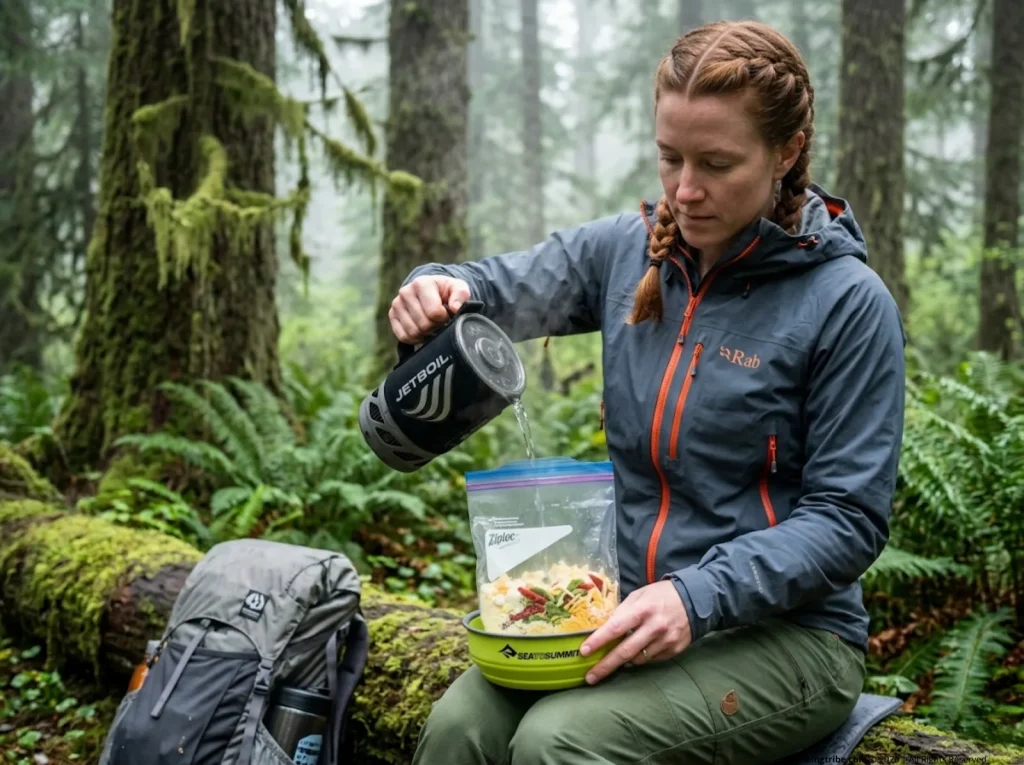
Freezer bag cooking flips the process. Instead of cooking food in your pot, you boil water, pour it into a heavy-duty Ziploc Freezer bag filled with dry ingredients, seal it, and wrap the bag in your cozy. Ten to fifteen minutes later, you’ve got a hot meal and a pot that’s still perfectly clean.
This works for omelets (powdered eggs, cheese crumbles, dried peppers), curries (instant paste with coconut powder and dried chicken), and even pre-cooked bacon with instant rice packets. Jetboil’s official recipe page features the Ziploc-bag sous-vide omelet technique—it’s not a hack, it’s endorsed.
One critical detail: use FREEZER-grade bags, not regular sandwich Ziplocs. Standard bags can melt or leak with boiling water. The thicker mil on freezer bags handles 212°F without issue.
Why FBC Changes Multi-Day Trips
On a multi-day hiking trip, especially water-scarce sections of the PCT or CDT, not needing water to scrub your pot is a real advantage. Your Jetboil stays clean for the entire trip—you’re only ever boiling water in it. Pack out the used Ziploc with your trash for full Leave No Trace compliance.
These cook-in-bag meals also tie directly into backcountry food safety protocols, since your food never contacts the pot surface where previous meals might have left residue. One sealed bag per meal means zero cross-contamination risk.
Pro tip: Pre-portion meals into labeled Ziplocs at home. Write “D3 Dinner” on each bag with a Sharpie. On the trail, you just boil water and grab the right bag. No measuring, no thinking, no cleanup.
Five Trail-Tested Recipes That Actually Work
Three-Minute Ramen Upgrade
Start with an instant ramen packet and boiling water. Kill the flame after 90 seconds. Add a peanut butter packet, sriracha, crushed peanuts, and dried scallions. Cozy for five minutes. Total fuel: roughly 3 grams. You jump from 380 calories in stock ramen to 550–650 with the additions—a solid calorie boost for trail meal preparation that takes barely any effort.
Off-Heat Knorr Pasta (The Thru-Hiker Standard)
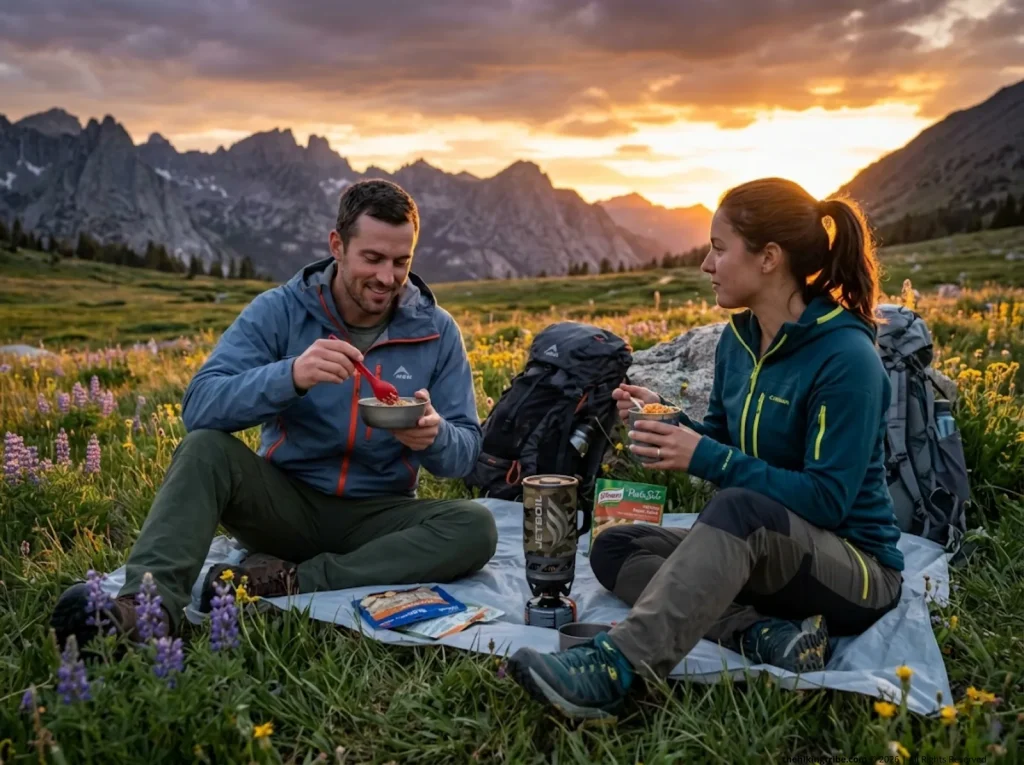
Add a Knorr Pasta Side to boiling water. Stir for 60 seconds. Kill the flame, cozy for 12–15 minutes. Toss in an olive oil packet, pre-cooked bacon bits, and a parmesan packet. Works on the Flash, Zip, MiniMo—any Jetboil model. Around 500–600 calories and under 4 grams of fuel.
Ziploc Trail Omelet
Bag contents: three tablespoons powdered eggs, one tablespoon powdered milk, dried peppers, cheese crumbles, salt. Pour in one cup boiling water. Seal the bag, cozy for ten minutes. Total fuel: about 3 grams for the boil. Pot stays completely clean. Add pre-cooked sausage crumbles for extra protein.
Mountain Couscous Bowl
Couscous dishes are the fastest off-heat meal possible. Pour boiling water into couscous at a 1:1 ratio. Kill flame immediately. Cozy five minutes. Add sun-dried tomatoes, pine nuts, dried basil, and olive oil. Ready in five minutes total, under 3 grams of fuel. Works at any altitude because couscous is pre-cooked—it only needs rehydration.
For more ideas beyond these four, check out trail-tested recipes that go beyond granola bars for a deeper look at calorie-dense backpacking meals.
Multi-Day Fuel Planning — The Math Nobody Publishes
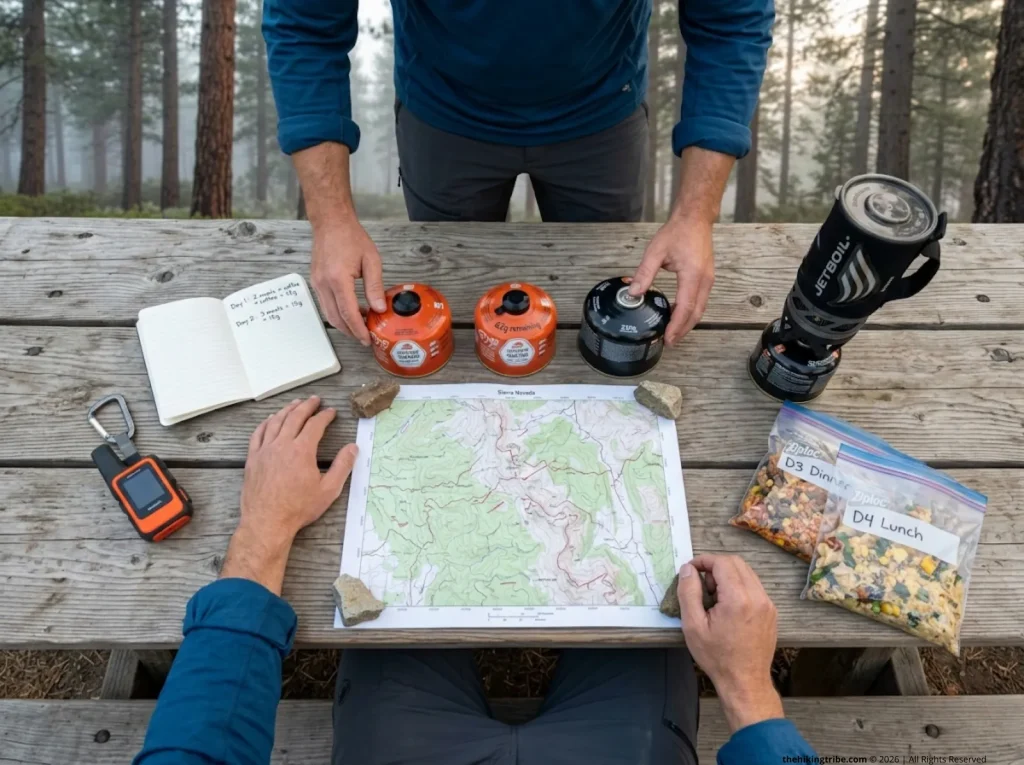
Fuel Per Meal, Per Method
Nobody publishes this data, so here it is:
- Boil-only (rehydrate): 3–4 grams per meal. Kill flame right after boil.
- Off-heat cooking (pasta/rice): 4–5 grams per meal. Ninety seconds of boil plus off-heat.
- Sustained cooking (simmer on MiniMo): 7–10 grams per meal. Regulated flame for five to ten minutes.
- Coffee/tea: 3 grams per cup. One quick boil.
These numbers assume sea level, no wind, and a full canister. Add 20–30% for altitude above 8,000 feet or windy exposed ridges.
Trip Planning Calculator
A three-day trip with two hot meals per day plus morning coffee runs about 30–35 grams total with off-heat passive cooking techniques. One 100g canister handles that with plenty of reserve.
Five days, same schedule: 50–60 grams. Still one 100g canister with margin.
Seven days: 70–85 grams. One 100g canister gets tight here—bring a 230g canister or two 100g canisters for safety. Compare that same seven-day trip using sustained cooking: 140–190 grams. That’s two 100g canisters minimum, adding over three ounces of dead weight to your pack.
That weight difference matters when you’re calculating how stove system weight factors into your base weight calculation. Three fewer ounces of fuel adds up over 140 miles.
Cold Weather and Altitude Adjustments
Canister temperature is the variable most hikers ignore. Below 20°F, IsoPro pressure drops and the stove sputters or refuses to light. Sleep with your canister in your sleeping bag on cold nights—body heat keeps the fuel vapor pressure viable.
At 10,000+ feet, your boiling water reaches only about 194°F. Food takes longer to cook even off-heat. Add three to five extra minutes of cozy time for every 2,000 feet above sea level. The National Park Service recommends that backcountry users plan adequate fuel for conditions at elevation, and this is exactly why—your stove performs differently above 8,000 feet than it does at the trailhead.
Wind is the biggest fuel efficiency killer on exposed terrain. Use your pack as a windbreak or carry a lightweight windscreen. The field-tested data on windscreen fuel savings shows a 15–25% reduction on exposed ridges—that can mean the difference between making it through your trip on one canister or running dry on day five.
Which Jetboil Model Actually Cooks? (The Decision Framework)
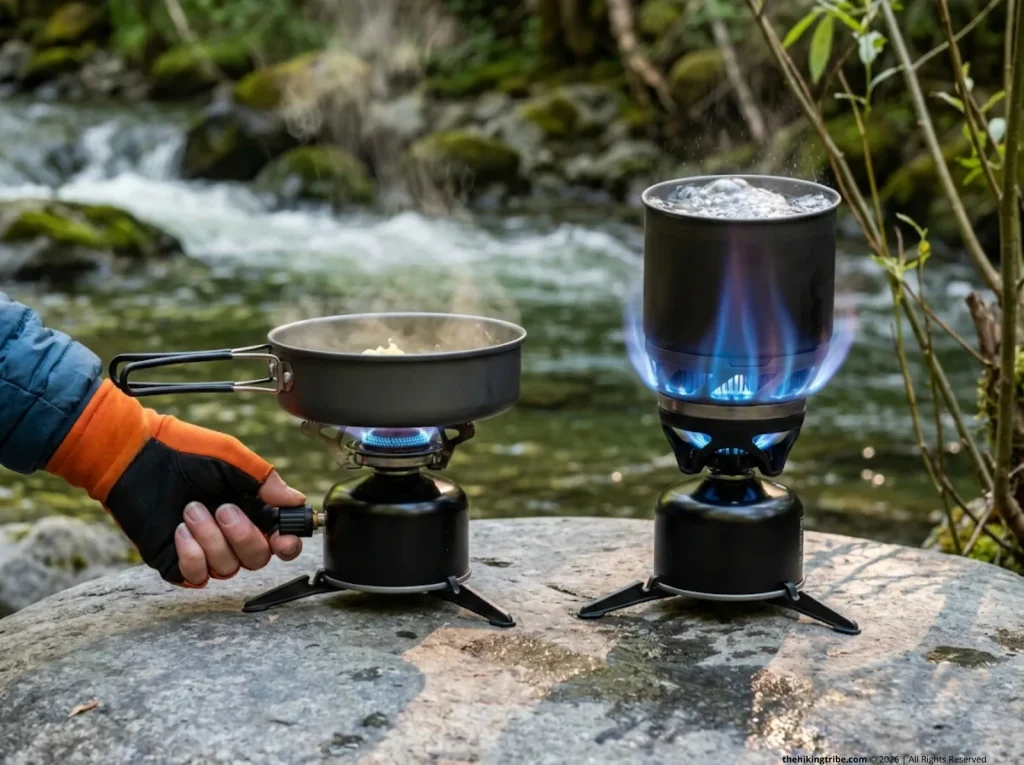
Boil-Only Models (Flash, Zip, Stash)
The Jetboil Flash is the most popular model—and the one most people try to cook with, then fail. It boils 0.8 liters in 2.5 minutes with a fast boil time that no other integrated canister stove matches. It weighs 13.1 ounces and has a piezo igniter. The Jetboil Zip is the lighter manual-igniter variant at 12 ounces. The Jetboil Stash is the ultralight option at 7.1 ounces—40% lighter than the Zip.
All three share the same limitation: unregulated burners. But all three work perfectly with the off-heat method. You don’t need simmer capability if you master boil-kill-cozy.
Real Cooking Models (MiniMo, MightyMo)
The Jetboil MiniMo is the only integrated Jetboil that functions as a genuine backpacking stove for fuel-efficient cooking. Its regulated burner holds a regulated simmer down to 20% power, and the wider 4.1-inch pot makes stirring and cooking physically possible. Outdoor Gear Lab found it “boils faster and performs better in moderate winds” than other models.
The Jetboil MightyMo offers the same regulated burner in a 3.5-ounce standalone head—pair it with your own ultralight titanium pot for a custom cook system.
The Bottom Line — Match the Model to Your Cooking Style
If you only boil and rehydrate: the Flash or Stash with the off-heat method covers everything. If you want actual recipes with eggs, stir-fry, or sauces: the MiniMo’s regulated burner is worth every gram. If you’re counting grams but still want real cooking: the MightyMo burner with a separate ultralight pot gives you both.
LNT Stove Care — Field Cleaning Without a Water Source
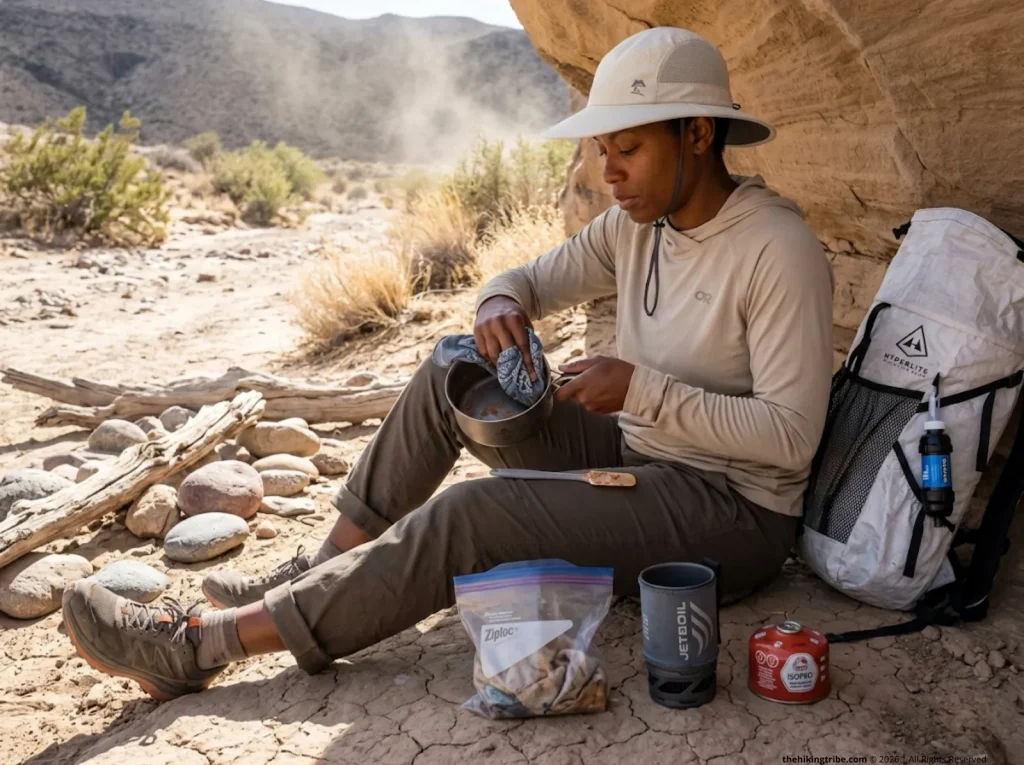
Dry-Clean Protocol for Desert and Alpine Sections
Most guides assume you have water to clean your pot. On desert sections or above treeline, that’s a bad assumption. Here’s the no-water-source cleaning protocol that works anywhere.
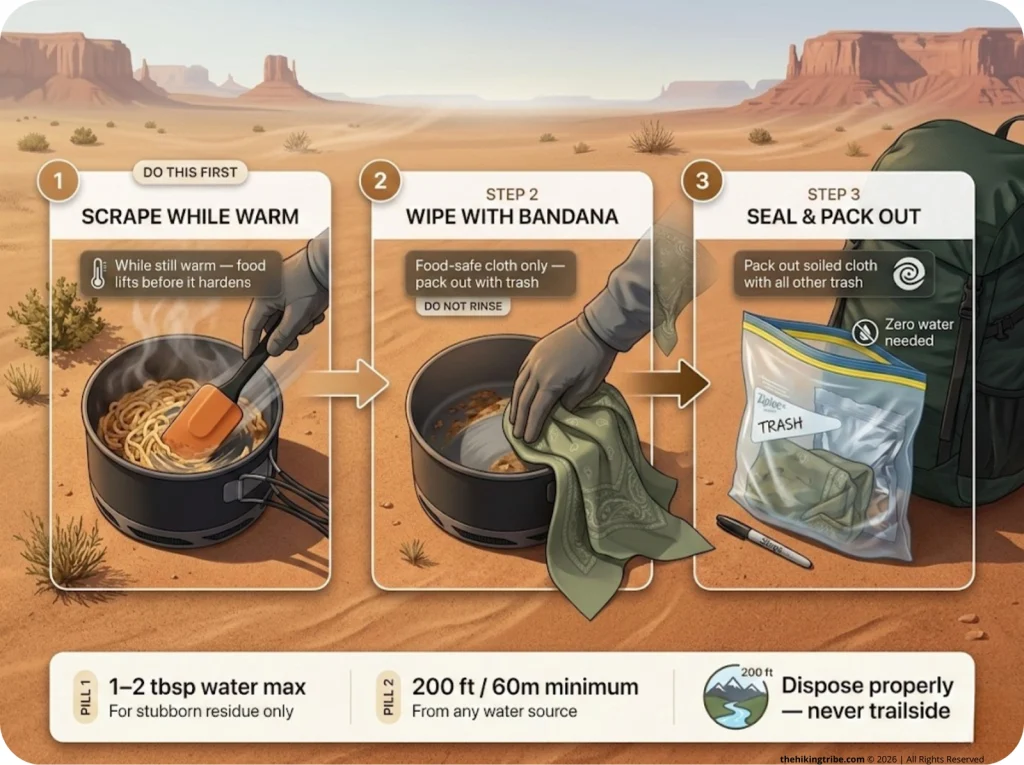
After off-heat cooking, scrape residue with a silicone spatula while the pot is still warm—food lifts easier before it cools and hardens. Wipe the interior with a dedicated bandana or food-safe cloth. Pack that cloth in a sturdy Ziploc bag with your other trash. Don’t rinse it trailside.
For stubborn residue, add one to two tablespoons of water, let it sit for a minute, then wipe clean. That’s a fraction of the water a full wash would need—critical when your next water source is miles away.
Never dump food residue within 200 feet of any water source. This falls under the Leave No Trace waste disposal principles that every backcountry cook should know cold.
Canister Disposal Done Right
Empty IsoPro canisters are pressurized containers. Never puncture one that still has fuel. Use the Jetboil CrunchIt tool to safely puncture empties before recycling—many trailheads and outdoor retailers accept punctured canisters. On multi-day trips, carry empties out. Don’t stash them in rock crevices or bury them. LNT canister disposal isn’t optional.
Pro tip: Mark your canister weight with a Sharpie before each trip. Weigh it each morning. When it hits the empty tare weight printed on the side, use the CrunchIt tool, flatten it, and pack it out. No guessing, no waste, no abandoned canisters.
Conclusion
Three things separate hikers who burn through canisters from those who make one last a week.
First, turn the stove off. The off-heat method with a neoprene cozy cuts fuel use per meal by 40–60% while cooking pasta, rice, and grains perfectly. You don’t need sustained flame—you need retained heat.
Second, know your model. The Flash and Zip are water boilers with no simmer control. They’re excellent with the off-heat technique. If you want real meals—scrambled eggs, sautéed anything—the MiniMo’s regulated stove is worth every gram of the weight penalty.
Third, plan fuel by the gram, not by the canister. Off-heat cooking turns one 100g canister into a full week of hot meals. Fewer canisters means less weight on your back and less waste in the backcountry.
Next trip, leave the second canister at home. Grab a neoprene cozy, a box of Knorr Pasta Sides, and practice the boil-kill-cover method once in your kitchen before you hit the trail. Your pack and your meals will both be better for it.
FAQ
Can you cook real food in a Jetboil Flash?
Yes, but not by simmering—the Flash has an unregulated burner that can’t hold a low flame. Use the off-heat pasta method instead: bring food to a boil, turn the stove off, and wrap the pot in a neoprene cozy for 10–15 minutes. Pasta, rice, and couscous cook perfectly this way.
How much fuel does a Jetboil use per meal?
With off-heat cooking, approximately 3–5 grams per meal (about 0.2 oz per 500 mL of water). With sustained cooking, 7–10 grams. A single 100g canister provides 10–12 off-heat meals or 5–7 sustained-cooking meals.
Which Jetboil model is best for actual cooking?
The MiniMo. It’s the only Jetboil with a regulated burner that delivers true simmer control, and its wider pot makes stirring practical. If you only need hot water for rehydrating, the Flash or Stash with off-heat technique is plenty.
How do you simmer with a Jetboil?
Only regulated models—MiniMo and MightyMo—can truly simmer. They maintain consistent heat even as the canister empties. The Flash and Zip can’t simmer at all. For those models, the off-heat passive cooking method is your best option.
Does altitude affect Jetboil fuel consumption?
Yes. Water boils at lower temperatures above 8,000 feet, so food takes longer to cook even off-heat. Add 3–5 minutes of cozy time per 2,000 feet of elevation gain, and budget 20–30% more fuel for alpine conditions.
I've spent more than a decade researching hiking gear and trail technique. I read the specs, the forum threads and the long-term reviews, and every pick here comes with what it gets wrong.
End of the trail
You read every mile of this one. Here's where the trail goes next.