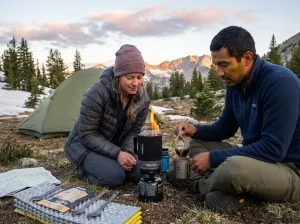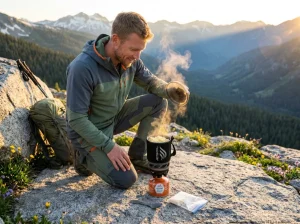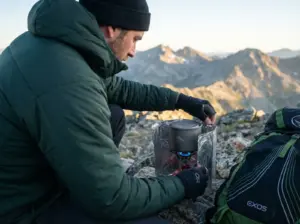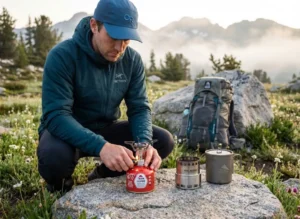


The dehydrated chili had welded itself to the thin titanium like industrial epoxy, and we were three days from the nearest sink. When you’re miles into the backcountry, scraping burnt food over a headlamp beam, the traditional advice of bringing biodegradable soap falls apart. After dialing in my backcountry kitchen routine over dozens of high-altitude treks, I learned the hard way that soap is a massive liability. This guide details the mechanics of thermal sanitation and aggressive scraping, giving you the protocols to keep your dishes safe and the fragile backcountry pristine without carrying an ounce of chemical detergent.
⚡ Quick Answer: You don’t need soap to clean camp cookware. Scrape the pot completely empty, add two ounces of water, drop the lid on, and bring it to a rolling boil. The steam releases stuck-on starches, while the 212°F temperature instantly pasteurizes the metal, neutralizing all enteric threats.
| Pathogen Lethal Temperatures | |
|---|---|
| Pathogen | Lethal Temperature |
| Giardia duodenalis | 131°F (54.4°C) |
| Cryptosporidium parvum | 148°F (64°C) |
| E. coli / Salmonella | 149°F (65°C) |
The Microbiology of “Hiker Clean”
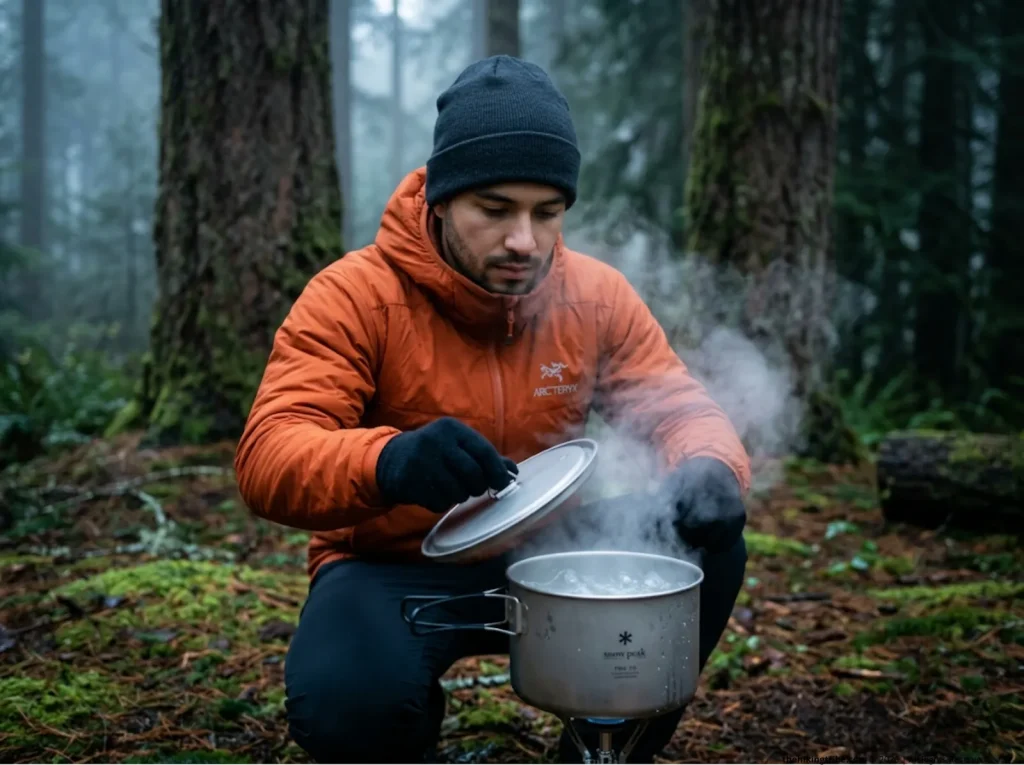
The primary objective of trail hygiene is eliminating enteric pathogens like Giardia and Cryptosporidium that ruin trips. Giardia cysts neutralize between 130°F and 145°F, which is far below the boiling point. Taking a small volume of water to 212°F provides an instantaneous, visually recognizable safety threshold. You don’t need a thermometer.
“Hiker clean” relies on pasteurization, not total sterilization. Scrubbing combined with boiling water removes the biofilm where bacteria thrive. This method works at altitude too. Water boiling at 16,000 feet reaches 181°F, which safely clears the 149°F mark you need to neutralize common bacteria. The Centers for Disease Control and Prevention confirms that bringing water to a rolling boil is the most reliable method for neutralizing waterborne pathogens.
Turbid water changes the situation. Silt and floating debris provide physical shelters for microorganisms, insulating them from the heat. This is exactly why pre-filtering turbid water matters before you heat it. Let the silt settle out, or run it through a coarse filter before using it to clean.
Pro-Tip: Never rely on hot water if it hasn’t reached a rolling boil. Drop a lid on to trap the steam and wait until you see heavy bubbling to guarantee pathogen elimination.
Pathogen Lethal Temperatures vs. Boiling Point
Heat transfer works fast, meaning microbes perish much quicker as the water gets hotter. A rolling boil isn’t strictly necessary for neutralizing protozoa, but it’s the only foolproof field metric without carrying extra equipment. Once the water rolls, the combination of physical scrubbing and raw heat totally strips the biofilm.
High Altitude Boiling Point Suppression
The higher you climb, the less heat you need to boil water. At 5,000 meters, the boiling point drops drastically. The water rolls at 181°F. That suppressed boiling point feels wrong if you’re used to sea-level cooking, but it remains fully adequate to sanitize cookware against any enteric threat you’ll face on the mountain.
The Re-Boil Methodology: Step-by-Step Execution
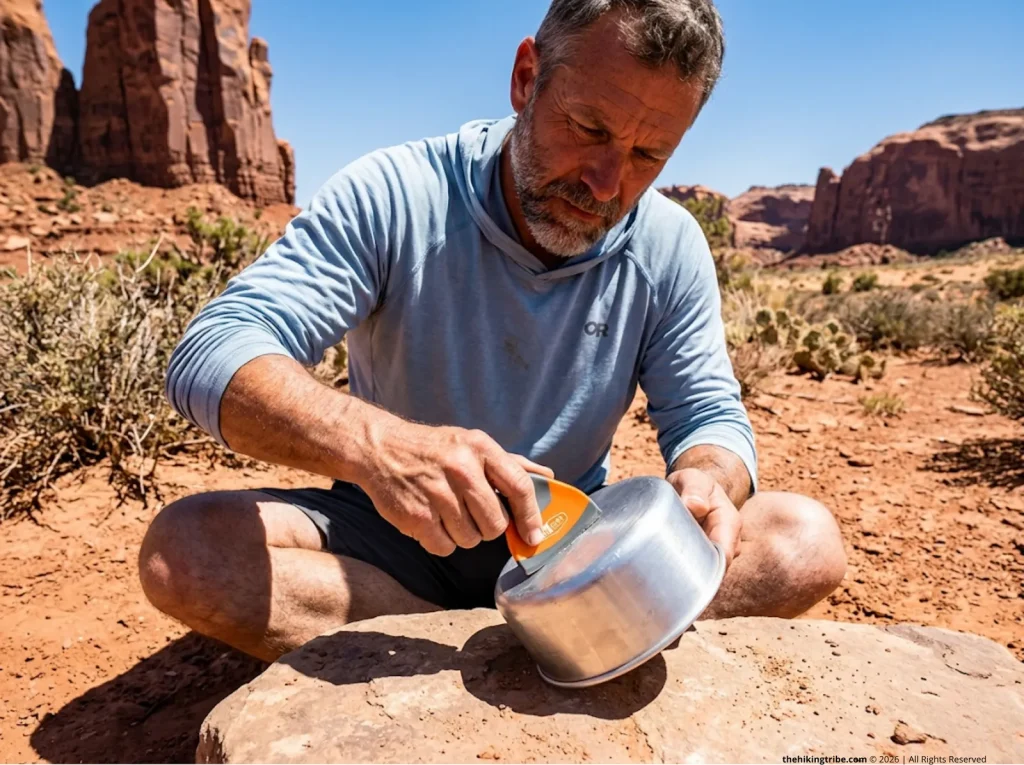
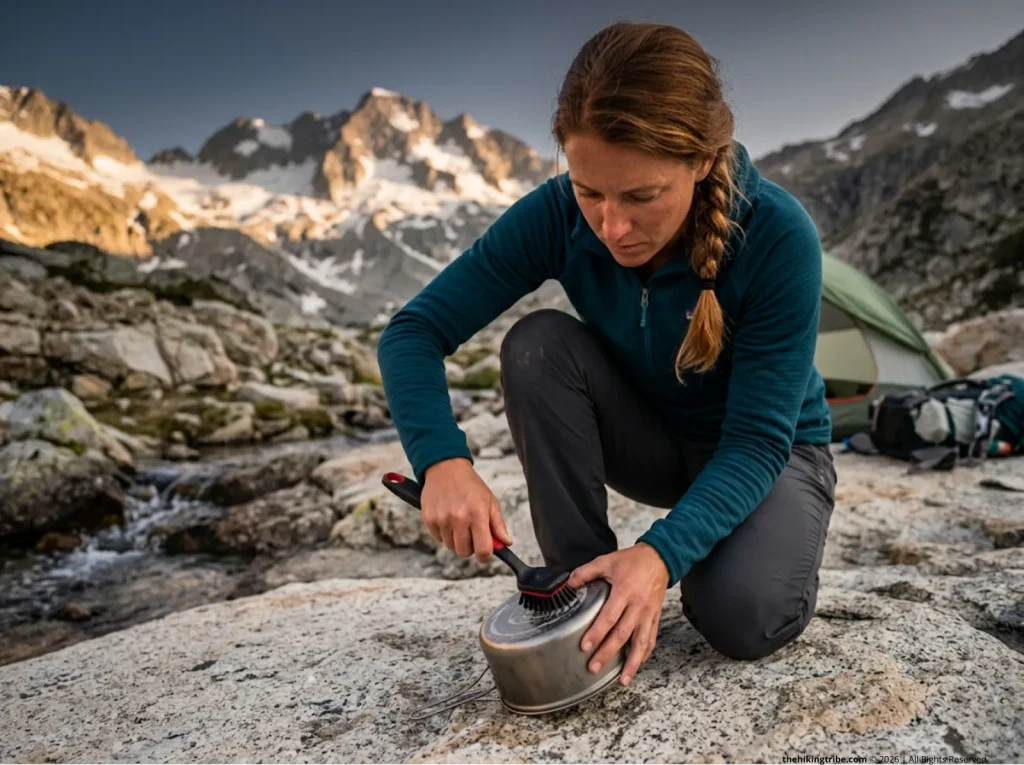
The re-boil method leverages steam and high-intensity heat to lift food residue from pot walls. To do this right, you have to scrape all visible food chunks first. You want to minimize the organic load when you eventually dump that wash water.
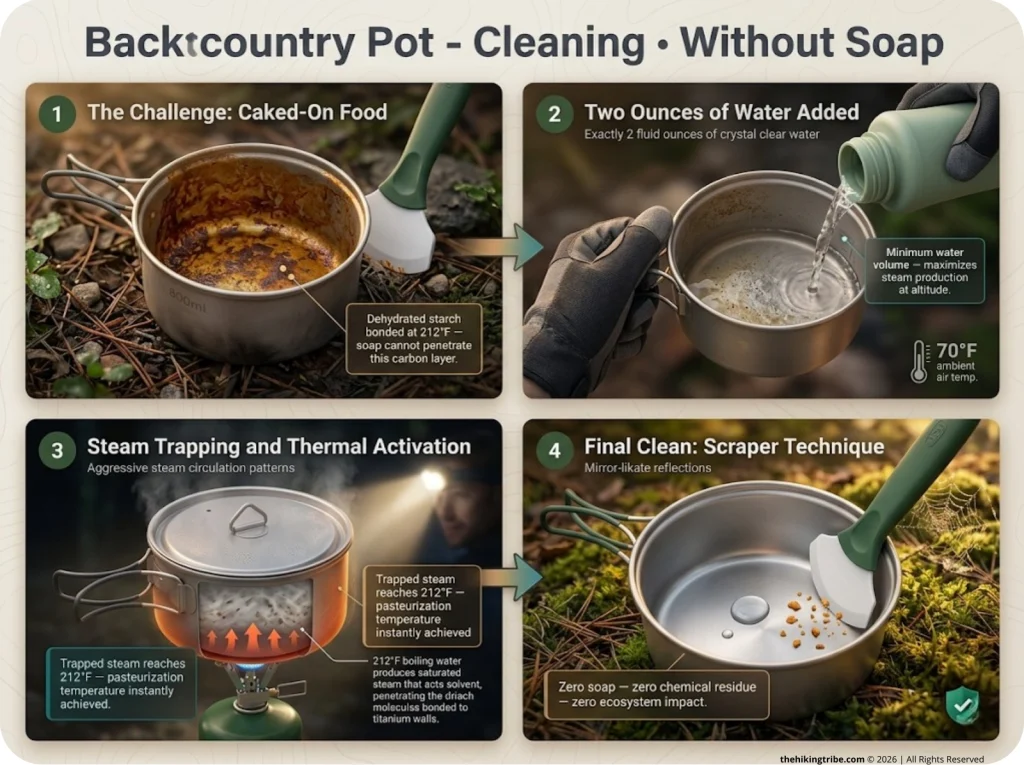
You only need two to four ounces of water to deeply hydrate dried smears on the metal. Boiling provides immediate pasteurization of those remaining residues. Use a dedicated tool for this, and always strain out the micro-trash before dumping the water to prevent wildlife habituation. If you leave scraps, Leave No Trace guidelines show exactly how animals quickly associate campsites with food.
Step 1: Initial Scrape and “Sumoing”
Use an ultralight scraper to vigorously remove food chunks. The sumo method shines right here. Eat the leftover calories straight from the pot. Feeding yourself instead of tossing those scraps drastically reduces your waste footprint, which makes safely managing microtrash much simpler.
Step 2: Thermal Activation and Steam Trapping
Add just a few ounces of water, covering only the bottom, and apply heat. Place the lid on immediately. The trapped steam acts as a solvent for the dried starches cemented higher up the sidewalls.
Step 3: Mechanical Agitation and Gray Water Disposal
As the water boils, grab your utensil and gently nudge off the loosened food. Let the water cool slightly, drink the “tea” if you’re sumoing, or strain the resulting liquid so macro-particles don’t end up scattered on the trail. You need to broadcast the remaining water at least 200 feet from your tent.
The Physics of Cookware Materials (Titanium vs. Aluminum)
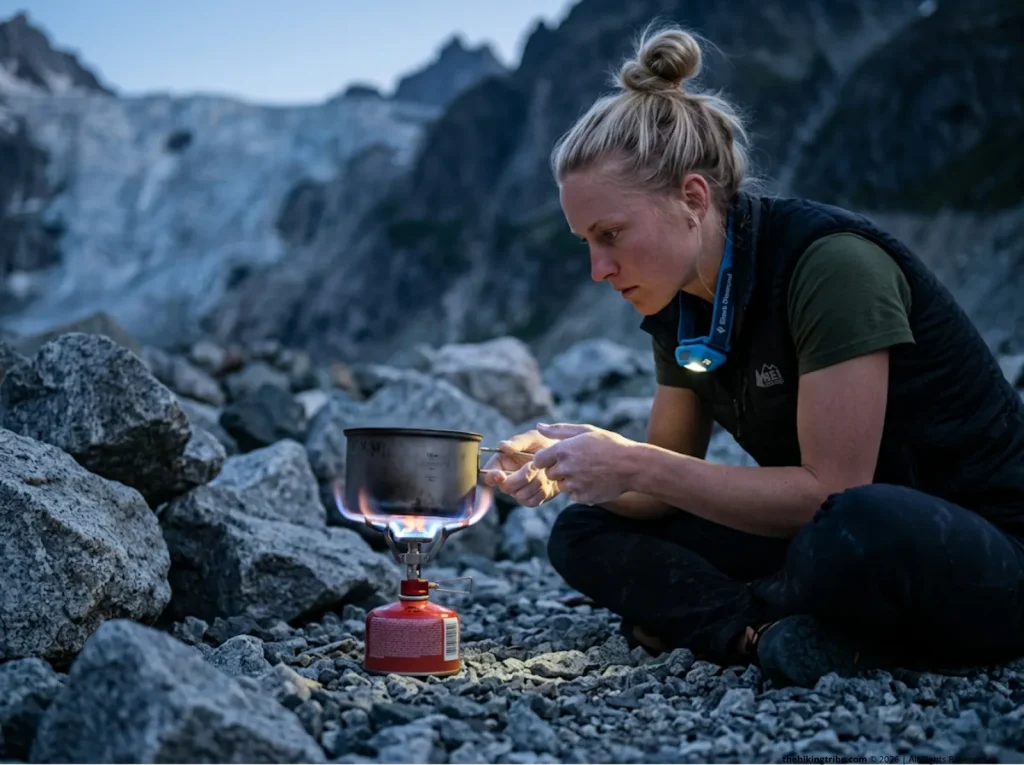
Metal dictates how hard your cleanup is going to be. Aluminum moves heat quickly, preventing the food from sticking to the bottom.
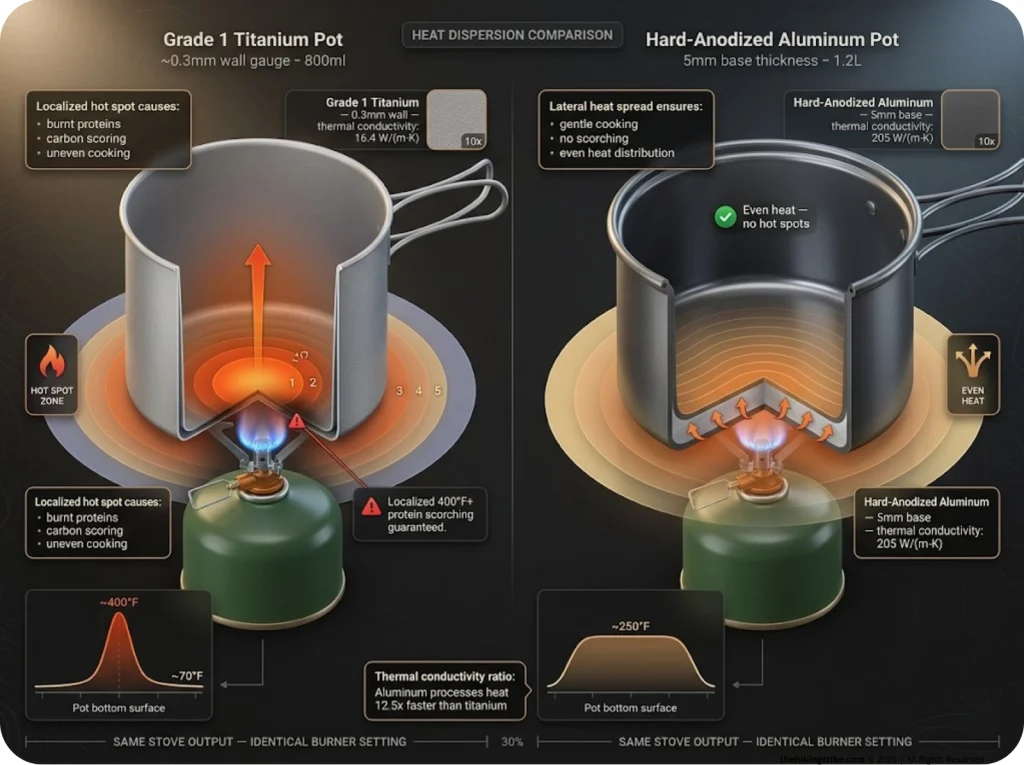
Grade 1 titanium, by contrast, stubbornly holds heat in one place. The heat stays localized directly above the stove flame. Manufacturers love titanium because the superior strength allows them to stamp out ultra-thin walls. The problem is that thin metal heats up too fast and unevenly, causing immediate scorching.
You also have to consider the finish of the metal. Sandblasted titanium has a micro-texture that gives food molecules a place to grip securely. Hard-anodization on an aluminum pot provides natural glide by integrating a smooth oxide layer. You can clearly see this difference when optimizing stove efficiency at altitude. The heat behavior fundamentally changes your cook times.
Pro-Tip: If you are cooking thick starches in titanium, physically hold the pot two inches above the flame and constantly move it in circles. Never let it sit stationary.
Thermal Conductivity and the “Hot Spot” Phenomenon
Aluminum’s rapid heat transfer mitigates burnt-on disasters and promotes even cooking. A Jetboil or a thick aluminum pan pushes heat outward. Titanium, however, creates localized hot spots of burnt proteins. Those black spots mock standard rinsing and require serious mechanical force.
Surface Texture and Food Adhesion
The matte finish on a titanium pot means mechanical interlocking. The food and metal bind tightly together. Aluminum’s anodic finish feels distinctly smoother, drastically reducing the mechanical leverage you need to clear the sidewalls.
Material-Specific Cleaning Tactics
You need material-specific cleaning approaches here. Use aggressive natural grit on titanium only. The superior hardness resists scratches from rough rocks. If you use abrasive river sand on hard-anodized aluminum, you will quickly strip away that protective coating and ruin the pot.
The Environmental Impact of Gray Water
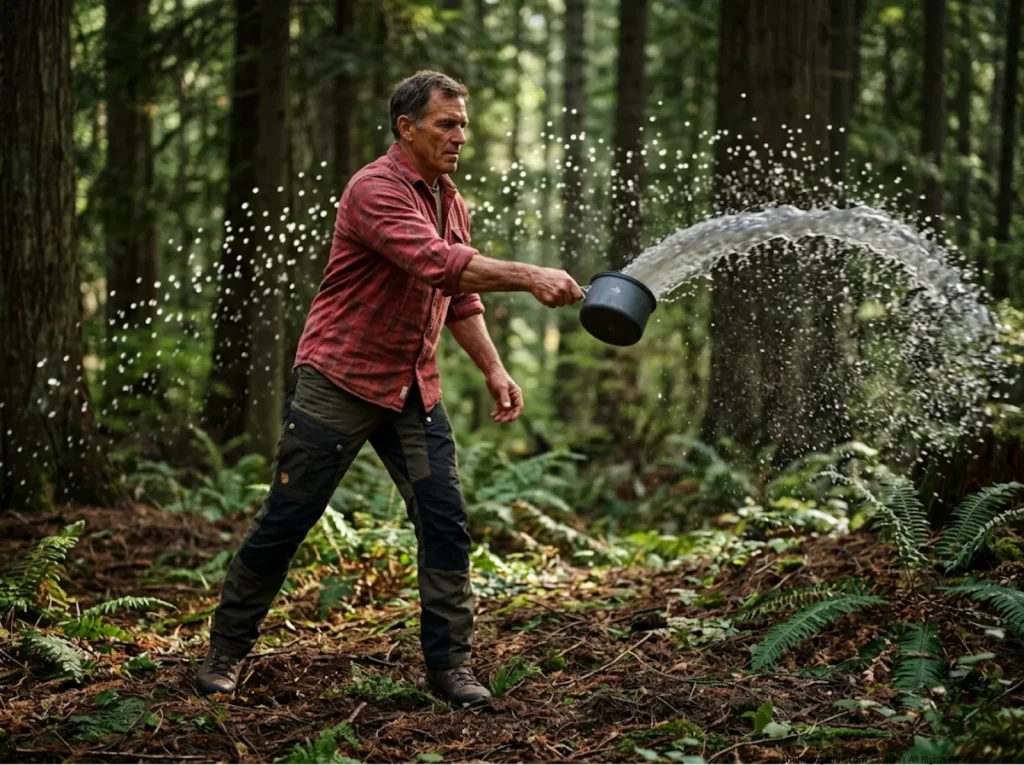
Gray water carrying heavy starches totally disrupts the ecological balance of an alpine environment. High organic loads rapidly consume the oxygen in the water. When the soil microbes process that sudden influx of carbon and sugar, they choke out everything else.
Introducing unnatural phosphorus and nitrogen triggers toxic algal blooms in pristine areas. Scree soils lack the thick dirt needed to digest that gray water. The nitrates wash straight down. Meadow soils, however, pack dense root networks that act as robust natural sponges.
If you understand how roots filter the water, you quickly grasp the importance of preventing unseen damage to fragile ecosystems. You have to target the right soil for disposal.
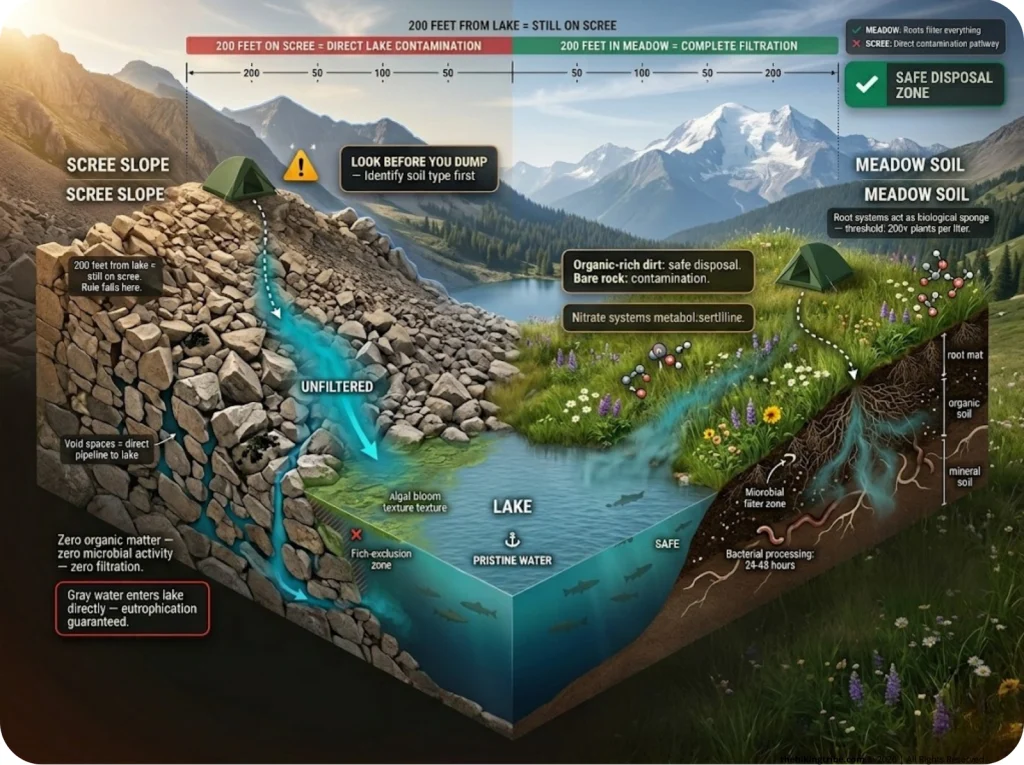
Pro-Tip: Never rely on the “200-foot rule” blindly. Throwing your dinner water on bare rock 200 feet from a lake still guarantees runoff. Always aim for organic-rich dirt.
Organic Load and Water Contamination
A few ounces of pasta water actively suffocates small water bodies if dumped directly into them. Cold water environments break down waste much slower than warm lowland rivers. The contamination just sits there, altering the pristine balance.
The “Human Sump” Method
The human sump method is pure efficiency. Swirling a small amount of water in the freshly scraped pot and drinking it entirely zeroes out your gray water footprint. You recover 100% of the meal’s energy while keeping your impact completely out of the watershed.
Topography Dictates Disposal (Broadcast vs. Sump)
If you can’t stomach drinking the rinse, use the broadcast method. Scatter the strained water over a wide area to maximize evaporation and shallow absorption in dry forests. The sump method, digging a six-inch hole, becomes mandatory in alpine zones. You must force those nutrients below the surface runoff zone.
Advanced Cleaning Tactics for Cold Weather and Heavy Oils
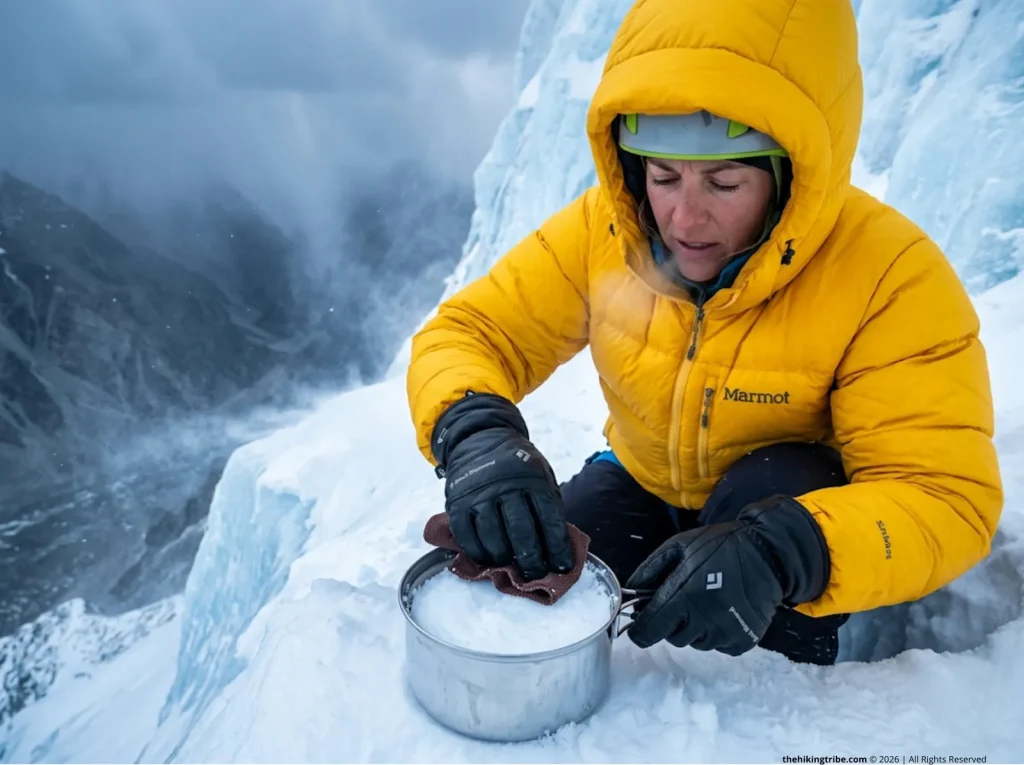
Fats handled in sub-freezing conditions solidify into wax-like, waterproof layers. Cold water just bounces right off. You have to leverage heat and natural compounds to break them down. Tea bag degreasing relies on natural plant compounds to act as emulsifiers, breaking down grease in dirty pots.
If you leave a dairy-caked pot filled with snow overnight, the freezing forces the water to expand. The cheese residue structurally changes and flakes off easily by morning. This trick is a massive help when managing hydration in sub-freezing temperatures, where every ounce of liquid fuel matters.
For fast and light operations, hard-anodized aluminum proves statistically superior for snow melting. The thick base prevents the powerful stove flame from burning a hole through the metal. Titanium shines when you need to use aggressive scouring from sharp river sand.
Tannin-Based Degreasing (The Tea Bag Technique)
Boil a used black tea bag to release natural tannins that attack stubborn oils left from pesto or bacon. It’s a mild reaction leveraging natural plant compounds rather than synthetic bottle soaps that harm the soil.
Pro-Tip: Use the spent tea bag from your degreasing boil to scrub the exterior soot off your pot before packing it away in your pack.
Overcoming “Winter Fondue” and Hardened Greases
To beat the dreaded wax-layer effect of cold-solidified fats, act fast. Scrape the pot clean with a silicone spoon while the fat is still hot and liquid. Avoid the freezing problem entirely by getting the grease out into your trash bag before the ambient air temperature locks it down.
Natural Abrasives: Sand and Grit Scouring
Exploit titanium’s extreme physical ruggedness by using coarse natural abrasives from a riverbank. You have a strict limit here, though. You must ensure all grit is removed entirely from your disposal area back to the river to maintain the local soil balances.
Essential Gear: The High-Leverage Trail Kitchen
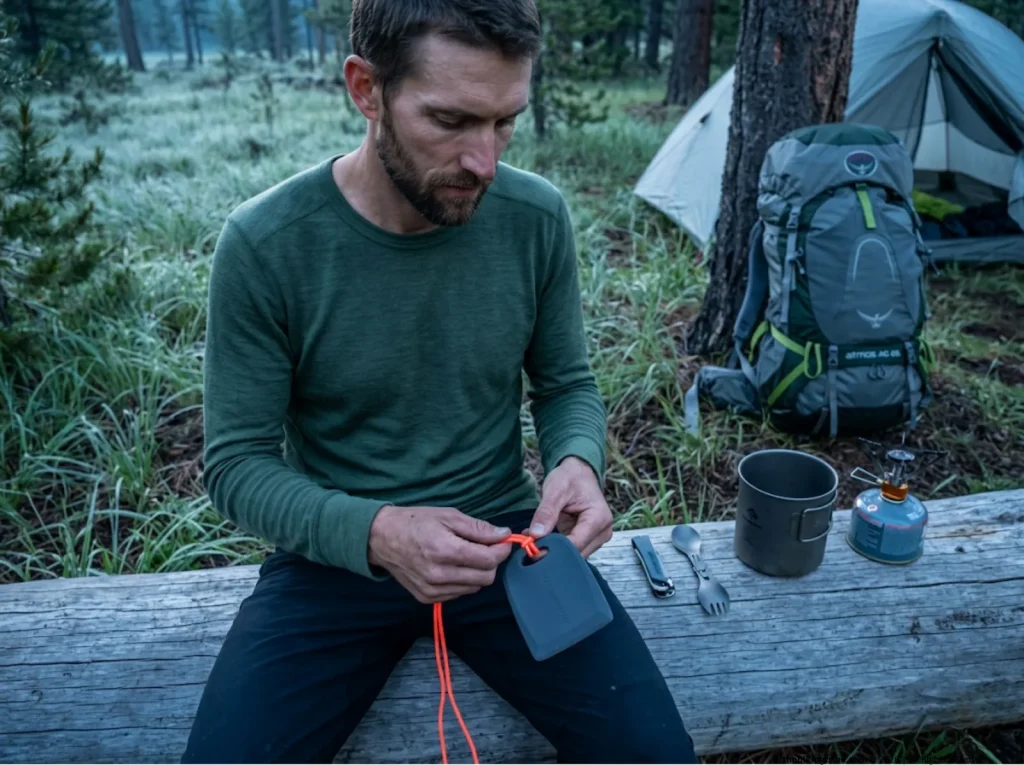
Transitioning fully off bottled detergents demands superior mechanical leverage. You need specialized scrapers. The MSR Alpine Dish Brush weighs just 22 grams and provides a curved edge cut to match standard cookware corners seamlessly. The stiff nylon bristles easily access hard-to-reach handle rivets where pathogens hide from generic scrapers.
The GSI Outdoors Compact Scraper utilizes a strategic dual-material design. You get a soft rubber side for wiping sauces and a hard edge for rigid scouring. Even a basic Sea to Summit X-Pot silicone spatula provides optimal recovery by contouring to the pot shape without scratching. Finding the right tool means refining your ultralight gear system to balance weight against efficiency.
Pro-Tip: Tie your scraper to the outside of your food bag with a bright piece of micro-cord. It’s the number one item lost in the underbrush during evening cleanups.
The MSR Alpine Dish Brush
This brush is specifically engineered for high-pressure scraping of burnt-on starches. The rubberized grip allows maximum force application, even when you’re wearing gloves in zero-degree weather.
The GSI Outdoors Compact Scraper
The flat profile on this scraper makes it a supreme choice for thru-hikers prioritizing packability over handle ergonomics. The dual materials offer critical versatility in a single 18-gram piece of hardware.
Conclusion
In the backcountry, prioritizing pasteurization over visual cleanliness keeps you healthy without compromising fragile ecosystems. By matching your mechanical scraping technique to the type of your cookware and executing the re-boil method, you eliminate the need for synthetic soaps entirely. Ditch the bottled soap on your next trek, master the physics of the scrub, and leave those alpine watersheds cleaner than you found them.
Next time you hear someone unzipping a bottle of Campsuds near a pristine alpine lake, you’ll know exactly why they’re making a mistake and exactly how to show them a better way.
FAQ
Can I use Dr. Bronner’s or biodegradable soap in a stream?
Absolutely not; no soap of any kind should ever be introduced directly into a water source. Even biodegradable soaps require soil bacteria to break them down over time, and throwing them in a stream aggressively harms delicate aquatic ecosystems.
How do you clean burnt pots on trail?
Skip the soap and utilize the re-boil methodology. Scrape the worst chunks out, add two ounces of water, drop the lid on, and boil the water to steam-release the carbonized starches directly off the metal.
Do you need soap for backpacking dishes?
Soap is entirely unnecessary for backcountry hygiene if you employ heat-based pasteurization correctly. The combination of 212°F boiling water and mechanical scraping effectively neutralizes all enteric pathogens and removes stuck food.
What is the sumo method in hiking?
The sumo method involves drinking the hot wash water created by swirling a small amount of liquid in your freshly scraped pot. It acts as an incredibly efficient no-soap protocol that recovers maximum trail calories to fuel your next day while keeping the ecosystem completely untouched.

I've spent more than a decade researching hiking gear and trail technique. I read the specs, the forum threads and the long-term reviews, and every pick here comes with what it gets wrong.
End of the trail
You read every mile of this one. Here's where the trail goes next.