
In this article
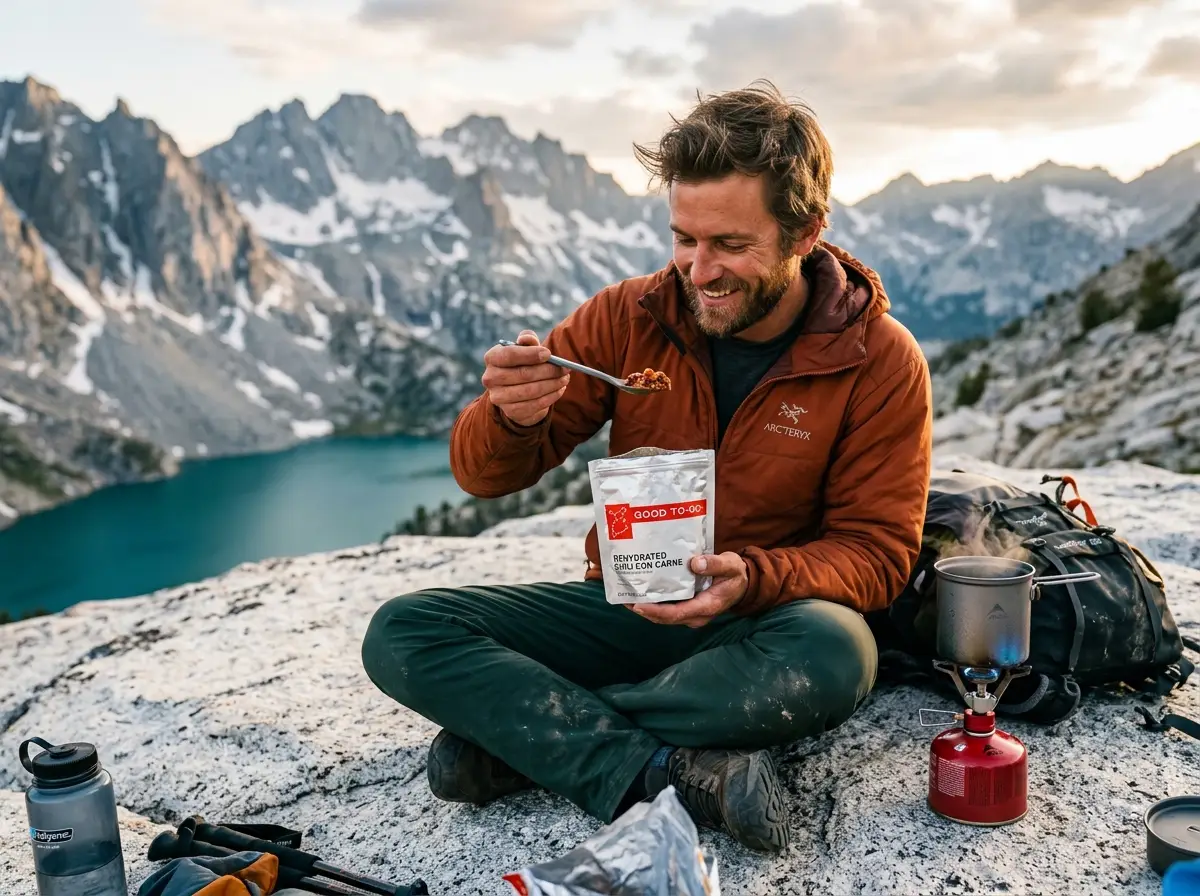
You unseal a bag of homemade chili three days into the Sierra high route, and the smell of rancid fat hits you like a physical blow. The odor is unmistakable. You are now five days from a resupply without your primary source of calories. You accept this reality, but it costs you miles, morale, and physical power. Finding a reliable step-by-step guide changes everything. This process breaks down the biological and chemical mechanics of safely removing moisture from trail food. I spent a decade refining systems through strict first-person testing because failing on a long haul translates directly into severe food poisoning. Moving your wilderness nutrition strategy away from expensive commercial pouches and into DIY assembly saves money, but only if you respect heat and bacteria.
⚡ Quick Answer: Safe food dehydration requires wet-heat pre-cooking meats to 160°F to destroy pathogens before they hit the drying racks. Eliminate protective fat, utilize the breadcrumb method for texture, and store the completely dry yield inside 5-mil Mylar bags with appropriate oxygen absorbers. Standard dehydrator temperatures alone are insufficient to guarantee safety.
| Food Safety & Preparation Standards | |
|---|---|
| Metric | Standard Parameter |
| Required Internal Temp for Meat | 160°F (Beef) / 165°F (Poultry) |
| Best Storage Material for Long-Term | 5-mil Metalized Mylar |
| Ideal Oxygen Absorber CC | 300 cc per Gallon Bag |
| Elevation Boiling Point Modifier | -1°F per 500 feet of gain |
Core Principles for a Dehydrate Your Own Backpacking Meals Guide: Microbiology
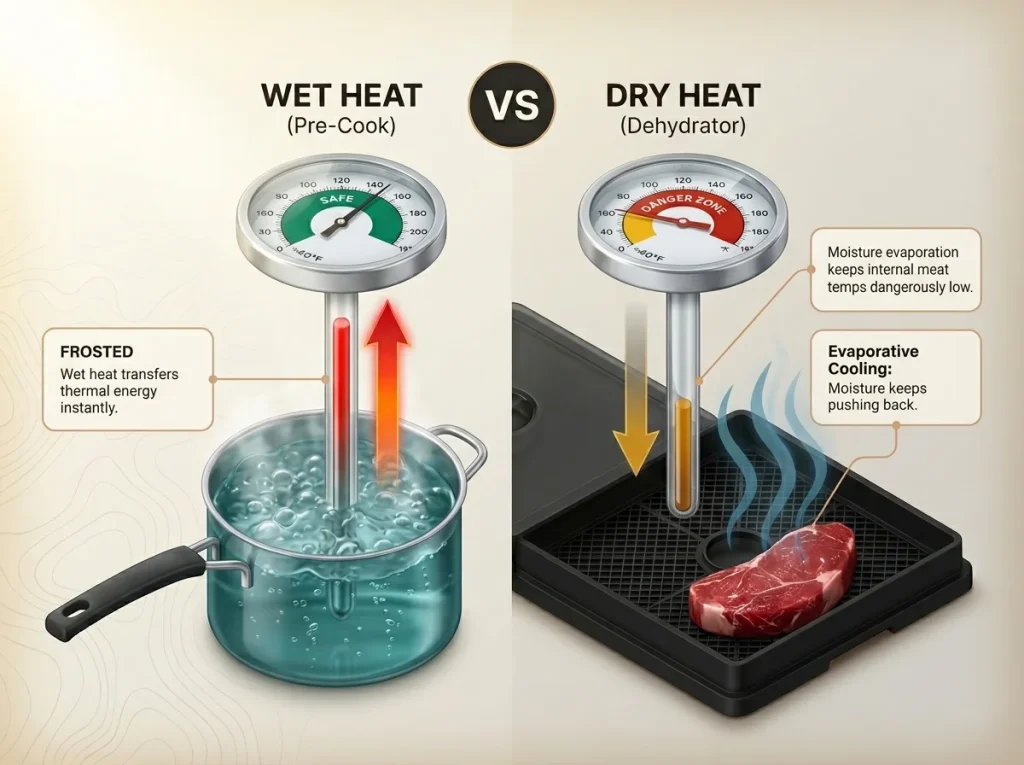
The fundamental reason hikers get sick eating their own home-cooked food stems from a misunderstanding of how bacteria handle heat. We instinctively assume putting raw meat into a hot box running at a standard dehydration temp solves everything. The primary goal is reducing water activity to a level that starves spoilage organisms like Salmonella and e. coli o157:h7. But pulling water out inherently leaves a critical blind spot.
Within a standard consumer appliance operating between 130°F and 160°F, you face evaporative cooling. As moisture aggressively leaves the food surface, it drastically lowers the temperature of the meat itself. By the time the food actually rises to match the ambient air temperature, the early drying phase has inadvertently trained the bacteria to become heavily heat-resistant. This forces us to look past basic dial settings and focus on actual lethality thresholds before the food hits the trays.
Pro-Tip: Never trust the dial on entry-level dehydrator hardware to reliably hit the numbers printed on the side. The internal thermostat fluctuates wildly. Always perform a verified pre-boil marinade or an aggressive 275°F post-oven bake to guarantee complete pathogen destruction before you hit the trail.
The Danger Zone and Pathogen Survival
Consumer hardware operates entirely too close to the human-pathogen danger zone (40°F to 140°F). The first few hours your food sits on those plastic trays are critical. If the internal temperature crawls up too slowly, bacterial colonies rapidly multiply, creating bacterial growth thresholds you cannot reverse simply by letting the machine run longer. Relying entirely on a low-moisture environment completely ignores the severe heat resistance that Salmonella and other pathogens develop in dry heat. In fact, toxins produced by Staphylococcus aureus before the meat dries remain highly stable and persist even if the surface bacteria eventually die off.
The Dry Heat vs. Wet Heat Paradox
Evaporative cooling stops the food’s internal temperature from matching the appliance’s air temperature during the crucial early hours. Pre-cooking guarantees that bacteria encounter lethal wet heat while the moisture content is still high enough to conduct that thermal energy effectively. Dry heat is a miserable conductor. This is precisely why pathogenic strains survive drying times of up to 10 hours at 145°F in thick cuts of ground beef. Never place raw poultry directly onto a drying rack without prior boiling or pressure cooking under any circumstances. You are essentially building an incubator.
The FSIS Thermal Death Protocol
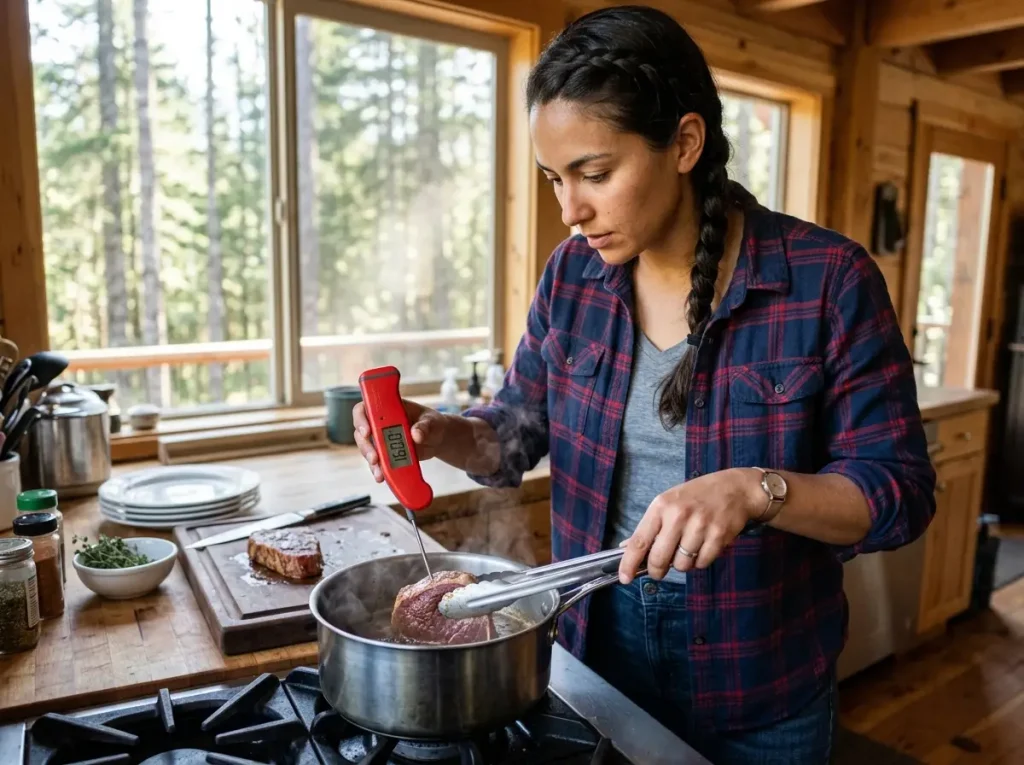
Executing a proper thermal death protocol requires discipline. The USDA mandates a wet-heat treatment before drying to prevent foodborne illness. Submerge your strips in a liquid marinade and bring it to a rolling simmer. Use a digital probe to verify the meat registers heavily past 160°F (or 165°f for poultry) before the pieces touch a drying mesh. If you skip this pre-cook stage, using a 275°F post-drying oven step acts as your final lethality treatment for un-blanched meats. Always trim visible fat aggressively before applying any thermal protocol, as lipids heavily shield pathogens from the heat. Having a structured process flowchart in your kitchen stops you from skipping these steps when you are tired.
Lipid Oxidation: The Chemistry of Rancid Meals
Walking away from commercial options demands addressing rancidity. We obsessively track moisture exclusion, assuming dry air fixes all preservation issues. But fat does not actually lose moisture. Structural fats simply suffer through autoxidation, a relentless chain reaction driven by free atmospheric oxygen hitting the lipids.
This specific chemistry of rancidity dictates everything we do at the prep station. Oxygen molecules crash into the fat cells, pull a hydrogen atom from a polyunsaturated fat, and create a vicious alkyl radical. This quickly degrades your high-end calories into foul-smelling garbage that destroys your gastrointestinal tract on the trail. Surprisingly, driving the water activity too low strips the microscopic water barrier protecting those lipids. This actively accelerates oxidation by stripping the protective water barrier, rushing the biological breakdown of lipids considerably.
Molecular Mechanics of Spoilage
Oxidative rancidity generates secondary products like aldehydes that cause severe stomach cramping miles away from a trailhead. Transition metals like iron and copper, commonly found in red meat, act as heavy prooxidants that accelerate this propagation phase. This means your protein sourcing determines your expiration date. For red meat, purchase nothing less than a 93/7 ratio of lean meat. While ground poultry sounds healthier, poultry fat content runs highly unsaturated, throwing a massive vulnerability into your logistics. Stick to totally fat-trimmed white meat breasts. When assessing the final yield, vigorously rinse the cooked meat with boiling hot water. Rinsing strips away the surface lipids before starting the dehydration cycle, a step that actively saves batches from turning rancid.

The Breadcrumb Technique for Texture
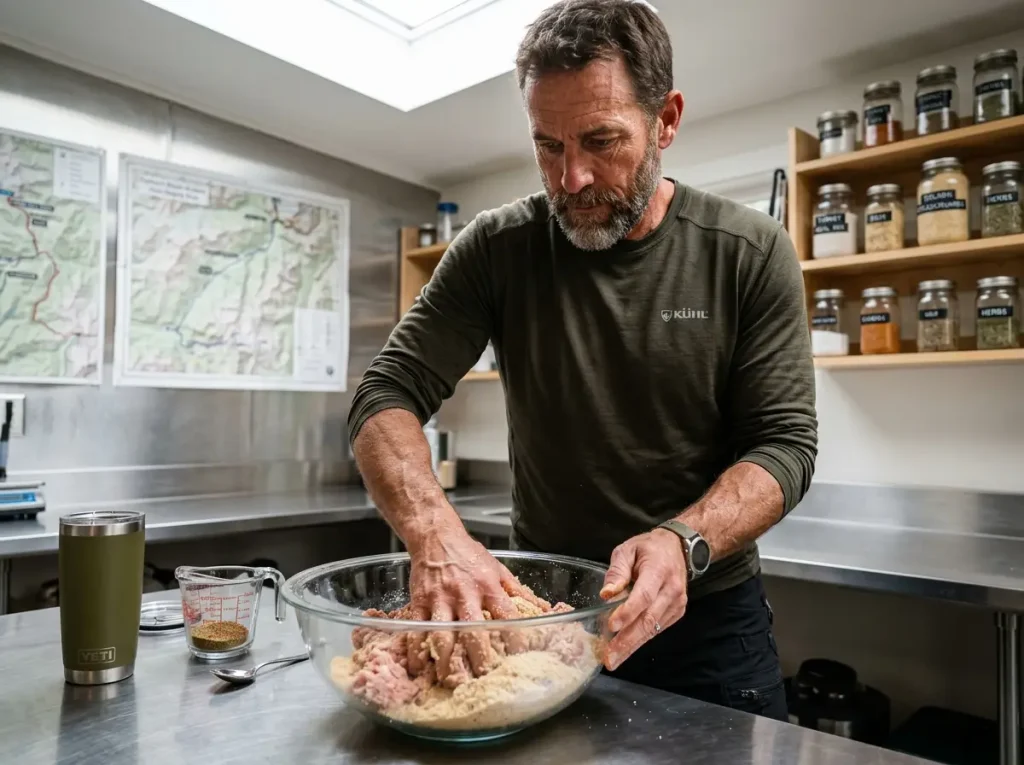
Dehydrating bare ground beef often yields hydrophobic pieces that refuse to absorb water, resembling trail gravel. The protein fibers inherently want to close tight and lock out foreign liquids after a drying run. The only reliable fix relies on the “Breadcrumb Trick.” You actively mix half a cup of extremely fine breadcrumbs into every pound of meat before cooking.
The breadcrumbs act strictly as physical spacers. They jam those molecular doors open, forcing microscopic holes to remain porous during the dehydration cycle. Those holes act like capillary sponges sitting inside your cook pot. This step alone radically restructures how fast you can eat after hitting camp. Furthermore, hitting tough beans inside a high-pressure cooker before slicing dramatically damages their dense cell walls, leading to far more rapid extraction. If you mess up a batch and it smells sour, throw it in the trash and add the specifics to your failure logs.
Cellular Preparation: Enzymatic Inactivation
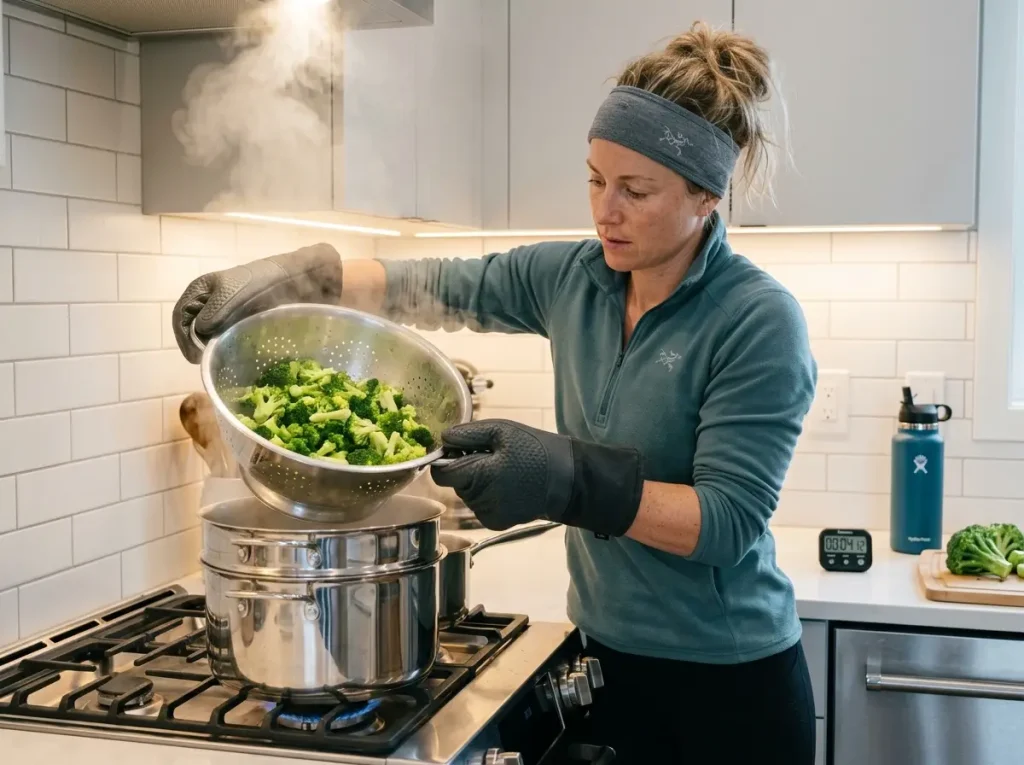
Drying raw vegetables produces terrible results. Every fresh vegetable holds aggressive enzymes like peroxidase and catalase. Unless physically stopped, those enzymes quietly degrade color, break down vital nutrients, and ruin the flavor profile entirely. Adding vegetables to your menu demands serious blanching.
Bypassing this step guarantees encountering pieces that refuse to soften. You find yourself chewing furiously through leathery broccoli stems that entirely reject hot water. Your diy ultralight backpacking logistics fall apart if your produce remains inedible. Pushing raw greens through a violent steam blast shuts down this enzymatic destruction instantly. The steam aggressively softens the cellular armor, letting the internal locked moisture escape far faster into the fan airflow. Strict thermal shock completely destroys enzymes such as peroxidase and catalase, saving your nutritional payload.
Pro-Tip: Always plunge your blanched materials violently into a heavy ice-water bath the second you pull them from the steam. You must stop the residual thermal cooking immediately, or you end up racking out mushy vegetable paste that never dries correctly.
Why Unblanched Vegetables Fail
Untreated vegetables harden defensively during drying, resulting in tough textures that survive even prolonged boiling times on a remote ridge. The continuous enzymatic activity physically browns the surface and seriously degrades the long-term flavor profiles. Dense vegetables with high water content actively require precise structural break-down to create porous escape channels for the interior moisture. Achieving massive quality means enforcing strict metric precision here, meticulously cutting every slice to exactly 1cm dicing dimensions to ensure totally uniform drying.
Steam vs. Water Blanching Protocols
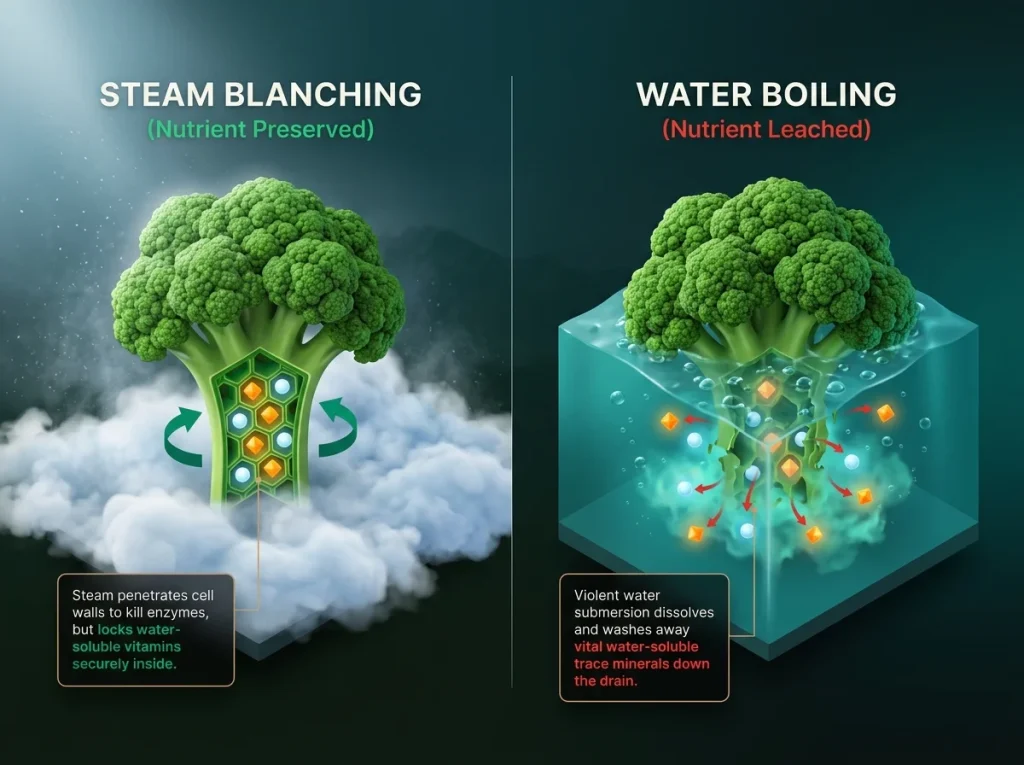
Use steam blanching for ninety percent of your operations. Submerging vegetables directly into a boiling pot actively dissolves and leaches water-soluble Vitamin C elements down your kitchen drain. You need those trace minerals to keep your joints firing smoothly across loose talus fields. Steam masterfully mitigates the loss of delicate structural minerals. Aggressive water blanching remains acceptable strictly for dense, structurally robust starches and thick legumes.
The Acid Treatment for Longevity
Stir a quarter teaspoon of citric acid directly into the water reservoir beneath your steam deck. The acid solution aggressively neutralizes surface alkalinity. This rapid chemical shift kills the oxidation cascade that turns cut apples into terrible brown pucks. A light acid wash holds off microscopic mold spores during those highly vulnerable first four hours inside the drying chamber. Applying this to cut potatoes entirely prevents massive discoloration and extends your reliable shelf-life considerably.
Hardware Engineering: Extracting the Moisture
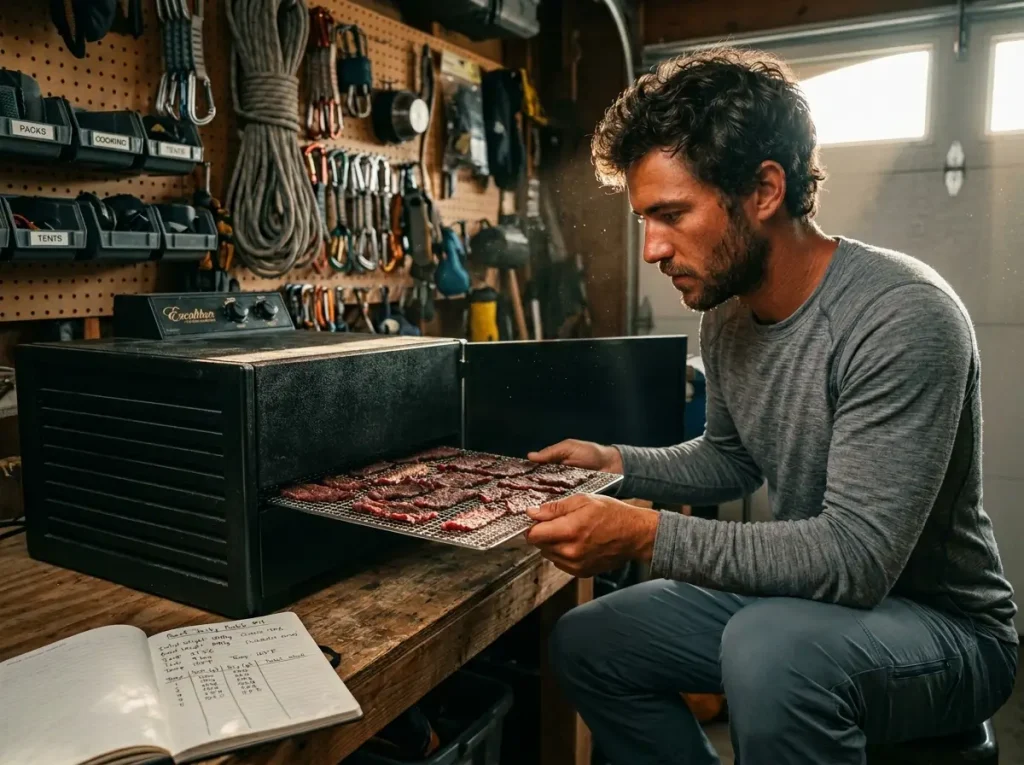
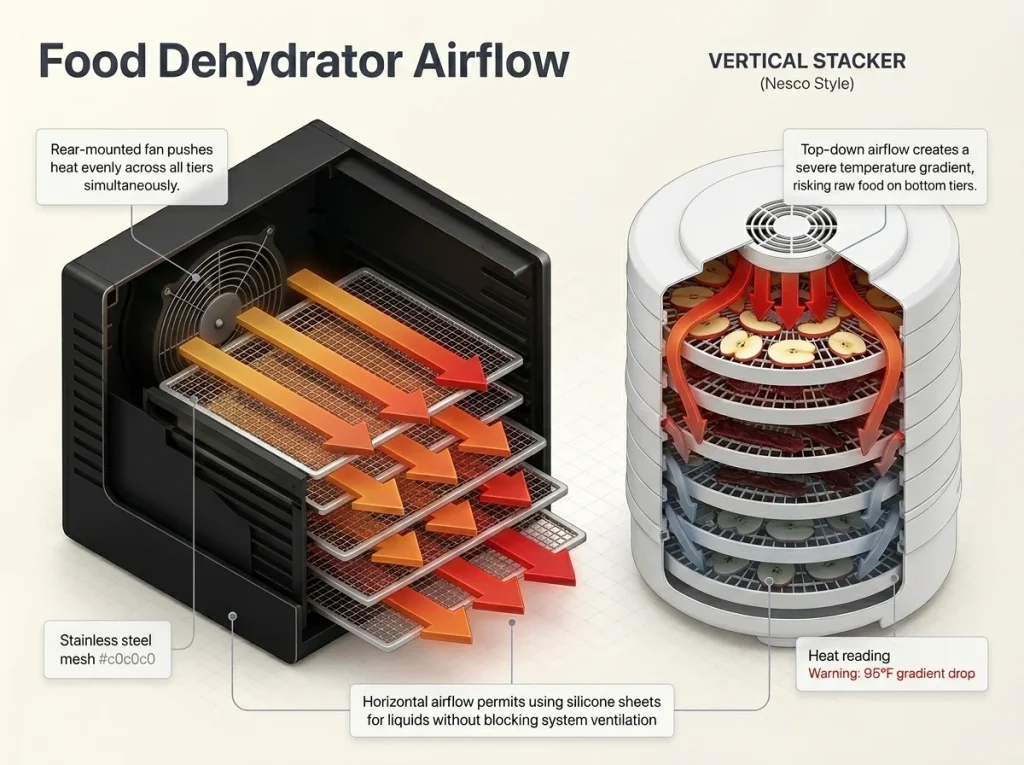
Choosing the proper hardware dictates your entire output quality. When pulling moisture out of organic mass, you face two distinct mechanical paths: horizontal airflow arrays and vertical stack systems. Operating past normal equipment barriers demands serious baseline knowledge of how your machine actually moves hot air.
Uneven drying reliably triggers case hardening. This terrifying defect happens when a machine pushes extreme heat too quickly against a dense object. The exterior flash-dries and forms an impermeable crust, explicitly trapping raw, liquid moisture in the soft core. It feels completely dry to the touch on the outside but silently molds from the inside out while sitting in your pack. The only solid case hardening prevention involves running lower, slower temperature settings over highly patient timelines. Attempting to rush dense items always ends in failure.
Horizontal vs. Vertical Airflow Designs
A horizontal unit like the excalibur forces air parallel right across the trays. This geometry effortlessly allows you to run solid silicone sheets, which lets you effectively dry soupy “barks” and heavy pasta sauces without worrying about blocking the main fan column. The air simply blows straight across the surface.
Conversely, a vertical stacker like a nesco gardenmaster pushes air downwards from the top. When you stack this machine past five trays high, you rapidly kill the fan power. Users report a severe temperature gradient where the top trays scream at 160°F while the bottom trays linger around 95°F. Using these vertical stackers requires you to manually rotate the trays every two hours to avoid catastrophic bottom-tier spoilage. Having a dedicated horizontal dehydrator matters deeply for consistent output.
Conditioning the Final Yields
Once the fan stops running, you must execute the “Conditioning” phase. Drop the cooled yield strictly into a glass mason jar for ten to fourteen days. Doing proper conditioning fruit runs keeps moisture completely honest. This phase guarantees that residual moisture trapped in the center softly distributes back out, equalizing the entire batch.
If you hit a crisp leathery texture or a sharp brittle texture, physically gauge the snap exactly at room temperature. Shake your conditioning jars fiercely every single morning. If any white condensation fog sticks to the inner glass, your batch failed the test. It requires more time. Dump it back out onto the trays for another four hours immediately. Once conditioned, seal the yields instantly. Leaving dried goods exposed to high ambient humidity quickly ruins your work. Understanding how to evaluate when to replace your failing gear is critical, and the same principle applies to your rations—if it feels soft when it should snap, it has failed.
High-Altitude Rehydration Thermodynamics
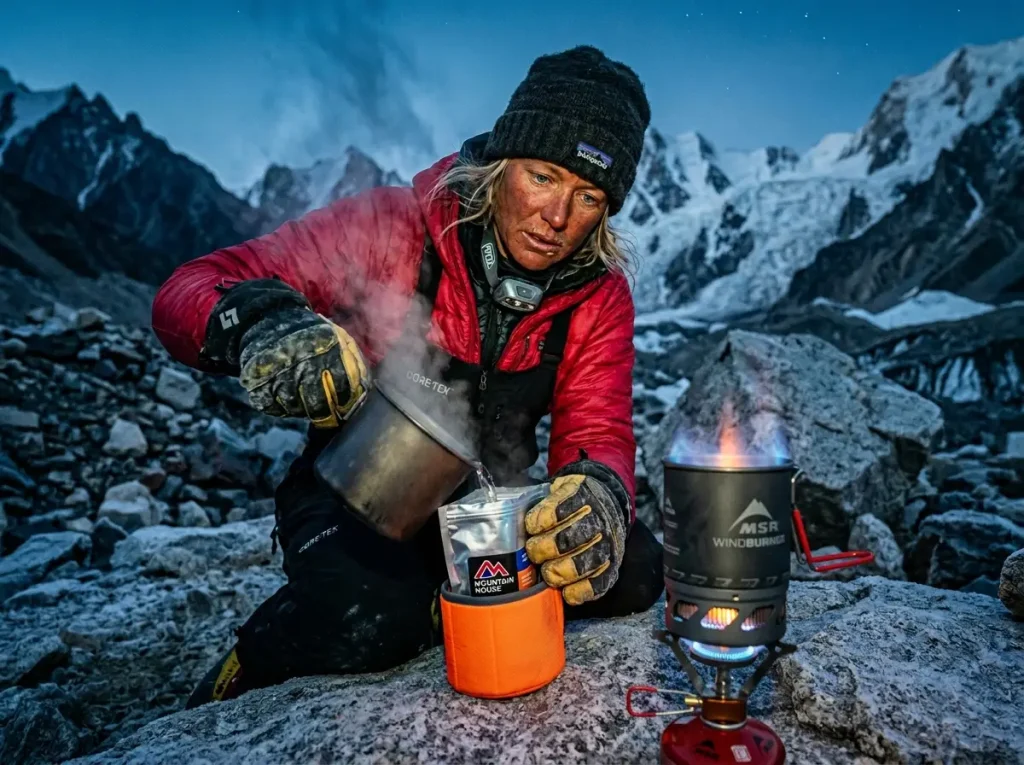
Sitting at a windswept alpine col at 12,000 feet changes the physics engine governing your dinner. The atmospheric crush drops radically as you gain elevation, directly tanking the boiling point of your stove water. Cold boiling water radically ruins your eating timelines. You must track the physics of rehydration aggressively if you want hot food.
You inherently drop roughly a single degree off the boiling point for every five hundred feet of sustained climbing. Sitting at 10,000 feet, you run a rolling boil at an anemic 194°F instead of 212°F. That thermal difference severely slows the diffusion process pushing hot water molecules into your dried food matrix. It often forces you to jump from a fast ten-minute soak done at sea level to a grueling twenty-minute wait higher up.
Boiling Point Suppression at Elevation
Pushing past 14,000 feet drops your boil down to roughly 185°F. Continuing to pound the stove dial wide open repeatedly wastes extreme thermal output against severely diminishing ambient returns. You cannot afford to throw that much gas specifically at one meal due to the realities of altitude on rehydration. Acknowledging this thermal lag actively stops you from chewing on sharp, raw pasta spears that cut the roof of your mouth and instantly seize your digestive tract. Let it steep, save the fuel, and wait.
Micropore Mechanics and Pasta Selection
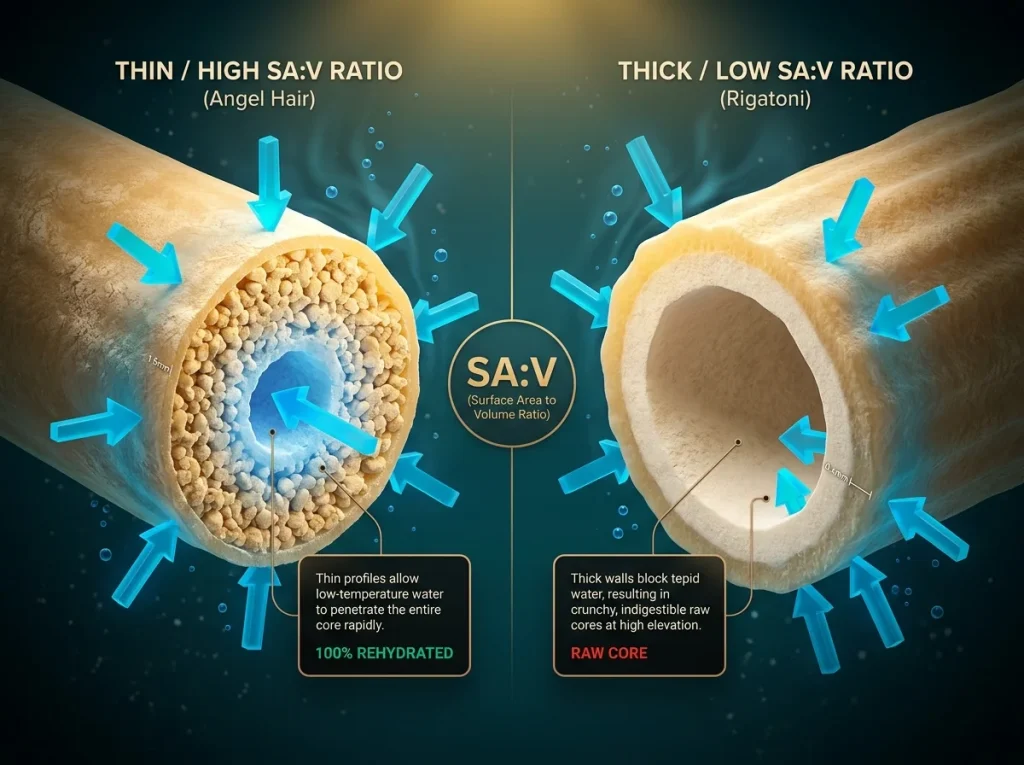
Never carry heavy rigatoni or thick ramen logs past 8,000 feet. The sheer micro-pore mechanics of forcing tepid water into a 2mm thick pasta wall at high elevation fails miserably. Instead, deploy shapes boasting a massive Surface Area to Volume ratio.
Shapes like angel hair spaghetti expose vastly more starch granules to the surface than densely extruded shapes. Small convex shells (conchiglie) completely excel here. The thin walls pull moisture violently fast from all directions. The tiny shells physically cradle pieces of meat and crushed sauce pucks directly inside their concave structure. This maximizes massive flavor hits for almost zero added pack weight.
Insulated Pot Cozies for Slow Extraction
The professional move here involves dropping off the stove flame immediately after the violent boil starts. You then place the sealed pot instantly into an engineered foam insulation sleeve called a cozy. Transferring a boiling pot into this insulating foam traps the latent heat, effectively creating an autonomous slow-cooker.
This specific preparation method forces the liquid to steep silently inside the trapped thermal envelope for half an hour. You execute this passive procedure and absolutely reduce your base fuel weight. Toss heavy “sauce pucks” (pre-dried sauce discs) directly into this soak to inject extreme savory notes, actively overriding the severe appetite suppression that hits hard at high camps. Accurate trip packing means balancing exact base weight versus pack weight ratios, giving you an edge when carrying dense custom meals.
Long-Term Logistical Storage: High-Barrier Materials
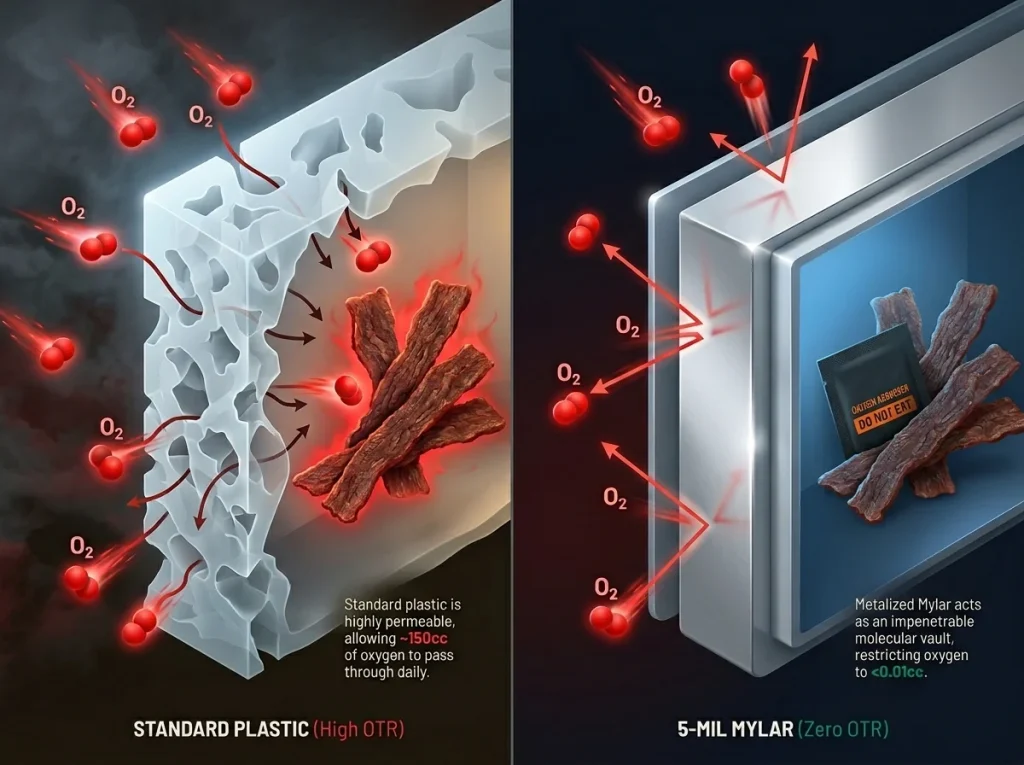
Using standard kitchen zip-top baggies for a four-week trek constitutes serious negligence. The oxygen transmission rate on standard high-density polyethylene active allows oxygen molecules to bleed endlessly right through the plastic membrane. Regular plastic leaks roughly 150 cubic centimeters of destructive gas daily. Your meticulously crafted meals become stale within two weeks.
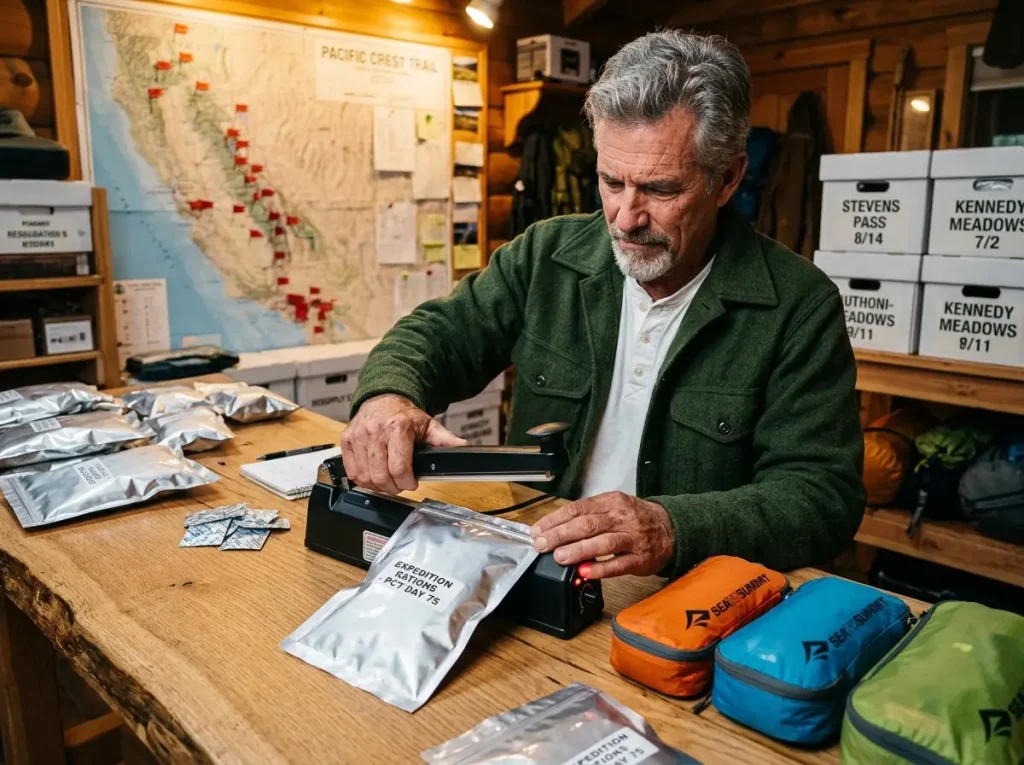
The absolute gold standard requires moving your tight storage protocols directly into heavy 5-mil thickness mylar bags. The metalized aluminum layer functions as a physical molecular vault, stopping gas transmission dead. When appropriately sealed, Mylar restricts gas flow down to a staggering 0.01 cubic centimeters every twenty-four hours. Getting serious means double-sealing mylar edges perfectly with a flat iron. For hikers managing extensive town resupply logistics and mail drops, understanding packaging failures dictates if you eat or hike hungry.
Pro-Tip: Ensure the thermal seal is perfectly welded flush across the entire rim of the bag. A microscopic pinhole fold entirely renders the interior oxygen absorber depleted within ten minutes.
Mylar Oxygen Transmission Rates (OTR) vs. Plastics
Vacuum-sealing standard plastic only provides temporary illusionary relief. It pulls the bulk air out, but the micro-pores in the thin plastic immediately allow ambient gases to diffuse straight back in. Plastic bags reliably let moisture vapor transfer, ruining crispy vegetables and triggering rapid fat oxidation.
Running a heavy Mylar exterior blocks gas, but it also heavily throws off destructive UV light rays that actively break down calories in the sun. This material walls the oxygen out completely. You massively upgrade the total shelf-life operating parameters based purely on materials science. When creating no-cook cold soaking meal plans, holding those delicate ingredients completely dry is paramount.
Oxygen Absorbers and Headspace Volume
To completely strip any remaining ambient air locked inside the sealed head-space, you insert calculated oxygen absorbers. These iron-powder packs violently rust inside the air-tight pouch, literally burning off the residual oxygen until the internal atmosphere drops below 0.01 percent saturation.
You must accurately match the CC rating to the bag volume and the geometric void space of the food sitting inside. A gallon bag of airy pasta requires a 500 cc packet, while dense grains might only need 300 cc. Executing heavy vacuum sealing actively prevents oxidation when done correctly.
Avoiding Anaerobic Pathogens (Botulism Risk)
If you build a softer batch of pliable fruit leathers or moist jerky intentionally meant for a fast weekend route, absolutely leave the oxygen absorbers out of the bag entirely.
You rather deal with mildly fast staling than actively triggering a fatal anaerobic bloom. Clostridium botulinum thrives in completely oxygen-free environments packed with trapped moisture above 10 percent. Only deploy absorbers on yields that shatter violently and cleanly across the grain. The consequences of botulism toxicity deep in the woods require air evacuations, so never guess on moisture content. The same methodical care you apply to maintaining your gravity water filter flow rates applies to keeping your food bags free from toxic blooms.
Conclusion
Executing a flawless backcountry food system separates the weekend amateurs from hikers surviving week-long technical objectives heavily off the grid. Pre-cook your proteins violently past the 160°F parameter to destroy heat-adapted pathogens instantly before they hit the trays. Mitigate rampant lipid degradation by aggressively mixing in microscopic breadcrumbs and strictly sealing out the oxygen with a 5-mil Mylar barrier line. Attack the unforgiving physics of high-elevation boiling point collapse by deploying thin pastas with massive surface area ratios inside thick insulated heat sleeves. Lock these habits down in your kitchen right now, and measure exactly how fast your physical recovery times surge on your next sustained push out of the valley floor.
FAQ
What is the best dehydrate your own backpacking meals guide template for beginners?
A reliable beginner template starts with heavily separating all your ingredients. You must dry lean proteins, blanched vegetables, and complex carbohydrates entirely independently on separate trays before combining them. This strict separation ensures each individual component reaches its ideal safe moisture depletion level without fundamentally compromising the shelf-life of the others due to cross-contamination.
Is it cheaper to dehydrate your own meals?
Yes, it runs dramatically cheaper over a full hiking season. While buying an entry-level machine necessitates an upfront gear cost, the price-per-meal drops drastically from an $18 commercial freeze-dried pouch to roughly $3 in bulk grocery components. The raw savings easily pay for the entire hardware setup during a single consecutive 7-day technical trek.
How long do home-dehydrated meals last?
When correctly dried, strictly conditioned for a week in glass, and hermetically sealed in heavy 5-mil Mylar bags loaded with appropriate oxygen absorbers, these meals can maintain deep nutritional integrity for up to a full year. Conversely, meals casually stored in standard thin zipper-lock bags begin to heavily degrade from immediate oxygen transmission and moisture ingress within just 2-3 short weeks.
Can you dehydrate meat without a dehydrator?
Yes, a standard residential kitchen oven dial set strictly to its absolute lowest temperature (usually 170°F) with the metal door cracked physically open to allow deep moisture to escape works. However, standard ovens remain vastly less efficient at moving continuous fan airflow and extracting tight moisture, making dedicated commercial hardware functionally superior for actually preventing dangerous case hardening on thick cuts.
Risk Disclaimer: Hiking, trekking, backpacking, and all related outdoor activities involve inherent
risks which may result in serious injury, illness, or death. The information provided on The Hiking Tribe is for
educational and informational purposes only. While we strive for accuracy, information on trails, gear, techniques,
and safety is not a substitute for your own best judgment and thorough preparation. Trail conditions, weather, and
other environmental factors change rapidly and may differ from what is described on this site. Always check with
official sources like park services for the most current alerts and conditions. Never undertake a hike beyond your
abilities and always be prepared for the unexpected. By using this website, you agree that you are solely
responsible for your own safety. Any reliance you place on our content is strictly at your own risk, and you assume
all liability for your actions and decisions in the outdoors. The Hiking Tribe and its authors will not be held
liable for any injury, damage, or loss sustained in connection with the use of the information herein.
Affiliate Disclosure: We are a participant in the Amazon Services LLC Associates Program, an
affiliate advertising program designed to provide a means for us to earn advertising fees by advertising and linking
to Amazon.com. As an Amazon Associate, we earn from qualifying purchases. We are also an official affiliate partner
of Black Diamond Equipment via the AvantLink network. If you click on a Black Diamond affiliate link and make a
purchase, we may earn a commission at no additional cost to you. We also participate in other affiliate programs and
may receive a commission on products purchased through our links. Additional terms are found in the terms of
service.