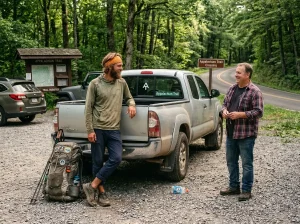
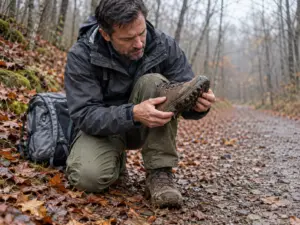

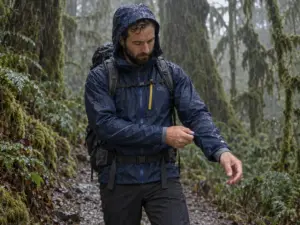
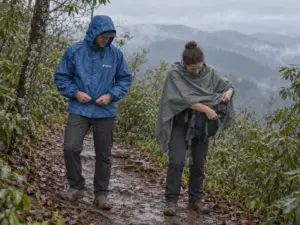
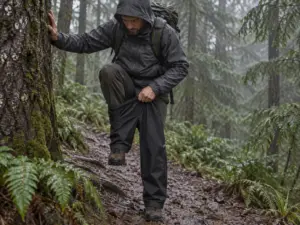






You are standing at the base of the Approach Trail with a 35-pound pack, your legs trembling before you’ve even hit the first major ascent. Three days later, severe Achilles tendonitis or dime-sized heel blisters end your 2,000-mile dream before it barely began. After two decades of guiding and seeing hikers drop on the Appalachian Trail and the Pacific Crest Trail, I know exactly why this happens. You can run marathons at sea level, but if you haven’t conditioned your connective tissue for heavy loads on steep descents, the trail breaks you. I’ve watched 20-somethings tap out in the first 30 miles due to shin splints. This guide provides the exact protocol to forge mountain-ready legs and an unbreakable mindset—even if you live hundreds of miles from the nearest peak. Here is how to prepare your body and your mind so you can actually hike, instead of just surviving.
⚡ Quick Answer: You don’t need mountains to train for a thru-hike. The core requirement is building heavy tendon durability through eccentric loading, parking garage rucking, and high-volume walking. You must adapt your feet to constant moisture, shift your nutrition as miles increase, and perform mental boredom drills. Focus on joint stability exercises and consistent weighted pack walks rather than pure cardiovascular high-intensity workouts.
The Physiology of Durability: Connective Tissue Over Cardio

A baseline of 150 minutes of moderate aerobic activity per week meets the general physical activity recommendations for adults, but thru-hikers need to scale this by three to five times to avoid overuse injuries on day one. Downhill hiking forces your muscles to lengthen under tension—known as an eccentric loading muscle contraction. This is entirely different from the cardiovascular stress of running.
“Hiker’s knee” is a devastating inflammatory response directly linked to unprepared tendons absorbing the gravity-multiplied shock of steep descents. Lungs do not carry the pack; your connective tissue does. I’ve seen sub-3-hour marathoners quit by day four because their lung capacity outpaced what their tendons could handle. A staggering 75% of falls in steep terrain occur during the descent, largely due to leg fatigue overriding your balance. Learning about using trekking poles downhill offers a mechanical advantage, but your body must be fortified first.
Why “Time on Feet” Trumps the StairMaster
Your tendons and ligaments adapt much slower than your lung capacity because they receive far less blood flow. Spending four unbroken hours of time on feet walking builds structural tendon durability that a 45-minute high-intensity cardio burst simply cannot replicate.
Ramping up the volume of your workouts is what triggers your body to actually grow and adapt, not just a spiking heart rate. Treat your long, slow weekend walks with your loaded pack as your primary, non-negotiable training plan. This slow burn is what saves you later.
Pro tip: Consistency over several months beats massive weekend pushes. Aim to hit back-to-back 15-mile days before your start date.
Eccentric Loading: Downhill Armor for Your Knees
Gravity multiplies your body weight plus your pack weight drastically on every descent. Your back muscles, glutes, and quads must be armored to act as heavy-duty shock absorbers.
The severe muscle soreness you feel from walking downhill is just your body adapting so that a single bout of exercise protects your muscles in the future. Triggering this safely now is a form of injury prevention that stops catastrophic failure on the trail. You need to focus heavily on slow eccentric squats and reverse step-downs. These are mandatory for downhill preparation to protect your knee ligaments.
The Trap of the Heavy Pack (Base Weight Delusions)
Recent hiking data shows the average pack weight at the start of the trail is around 30.4 lbs. Do not start your training by hauling an arbitrary 50 lbs thinking it builds toughness.
An oversized pack radically shifts your center of gravity. This alters how you walk and increases dangerous shear forces on your lower spine. Bringing your pack weight up must be progressive. Add weight in 5-pound increments every two weeks.
The Flatland Formula: Building Mountain Legs in the City

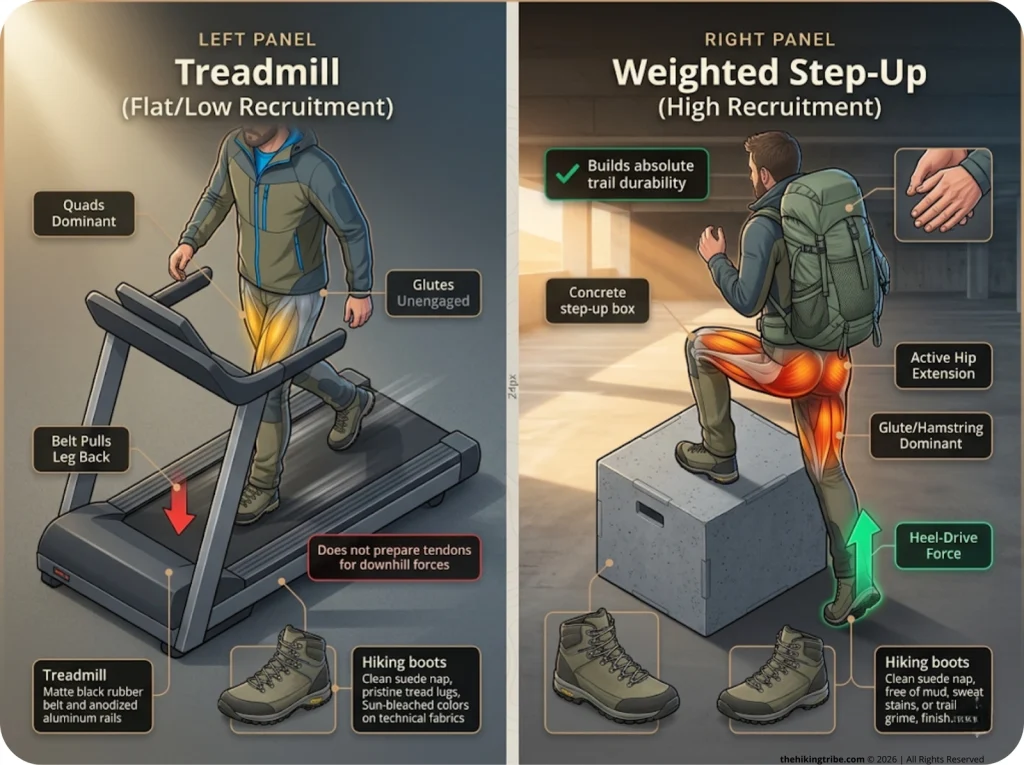
Incline walking takes up to 70% more energy than flat terrain, meaning flat walking simply will not recruit the necessary muscle groups. However, a treadmill belt physically pulls your leg back, robbing you of the ground-reactive force you need in nature.
Concrete and asphalt are brutal compared to soft trail dirt. Doing your weighted rucking on paved streets builds rapid impact adaptation, but it spikes your early shin splint risk. Living in the Midwest did not compromise my hike because my local 8-story concrete parking garage became my personal Sierra Nevada simulator. Getting your numbers dialed in by calculating your true base and pack weights is critical before you start hammering stairs.
Parking Garage Rucking vs. Treadmill Inclines
Treadmills completely lack the downhill component unless you own a specialized negative-incline model. Parking garages provide both the heavy ascent and the knee-pounding descent you need in flatland training.
The sharp turns and stiff concrete in garages create uneven joint stress. You should rotate your climbing direction every few flights to balance the lateral load on your ankles. This forces your body to adapt better than walking straight ahead.
The 1,000-Foot Step-Up Paradigm
Grab a 12-to-16-inch box and you can perform continuous step-ups with a weighted pack walks approach. This mimics a brutal alpine climb without ever leaving your apartment building, giving you the specific strength required for big mountains.
Drive entirely through the heel of your elevated foot. Do not push off the toes of your trailing foot. This proper form recruits your glutes and guarantees you properly strengthen knees and protect the patellar tendon.
Fatigued Balance Drills for Uneven Terrain
Trail walking asks you to constantly stabilize laterally over rocks and roots. When you are exhausted, your brain struggles to tell your ankles what to do—a terrifying lag in your nervous system.
Perform your single-leg balancing tasks immediately after your long walks, not before. Standing on a soft surface when your legs are already shivering forces your body to learn how to keep you upright when it matters most.
Ankle & Foot Bulletproofing: Skin and Joint Resilience
Dedicated ankle proprioception training cuts the risk of debilitating ankle sprains by a massive 35% to 43%, according to research on proprioceptive training for the ankle joint.
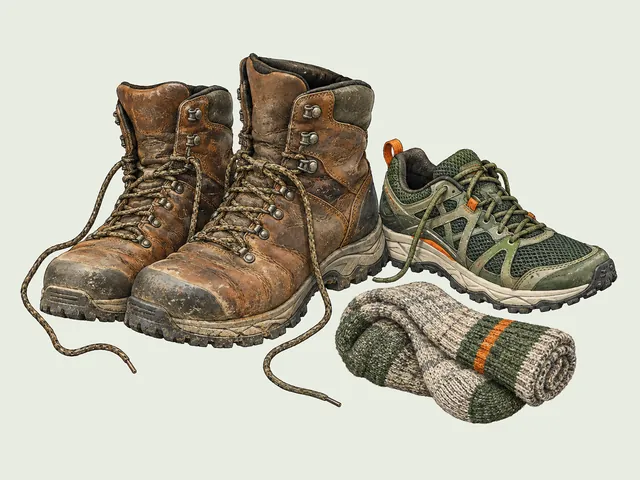
Skin breakdown due to prolonged moisture is equally as dangerous as friction-based blisters. Flexibility in your main ankle joint directly dictates whether your foot clears technical obstacles on steep uphill grades without rolling over. I’ve watched hikers wearing pristine $300 boots cry on day three because they assumed their feet would stay dry. The reality is your feet will be wet nearly all the time. Facts show waterproof socks trap sweat and eventually fail from the inside out. Train for the wet.
Ankle Flexibility and Stretching Techniques
Focus on repetitions rather than weight here. Doing 25 strict repetitions per leg for single-leg heel raises builds essential calves strength and side-to-side ankle stability for shifting loose rocks.
Closing your eyes during these drills removes your visual anchor points. This forces the balance sensors in your ankles to adapt to unstable input in real-time, matching exactly what happens when you misstep in the dark.
The “Wet Sock Drill” and Moisture Management
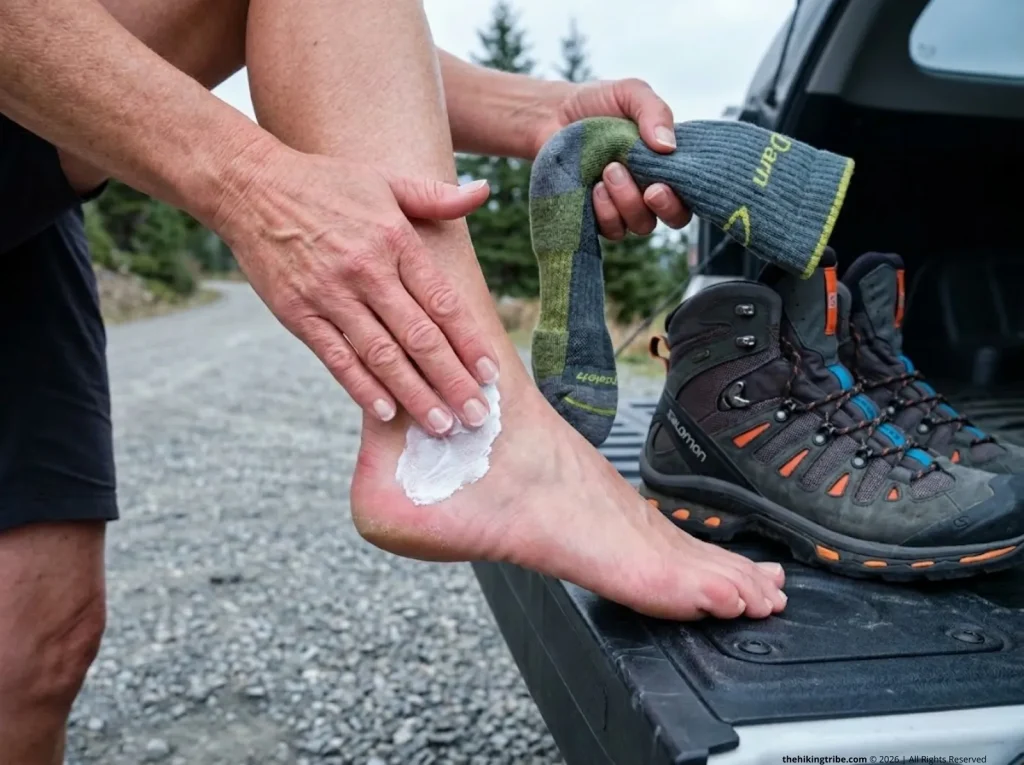
To survive the trail, your training must involve deliberately hiking in saturated Darn Tough socks to test your skin’s reaction and your barrier cream.
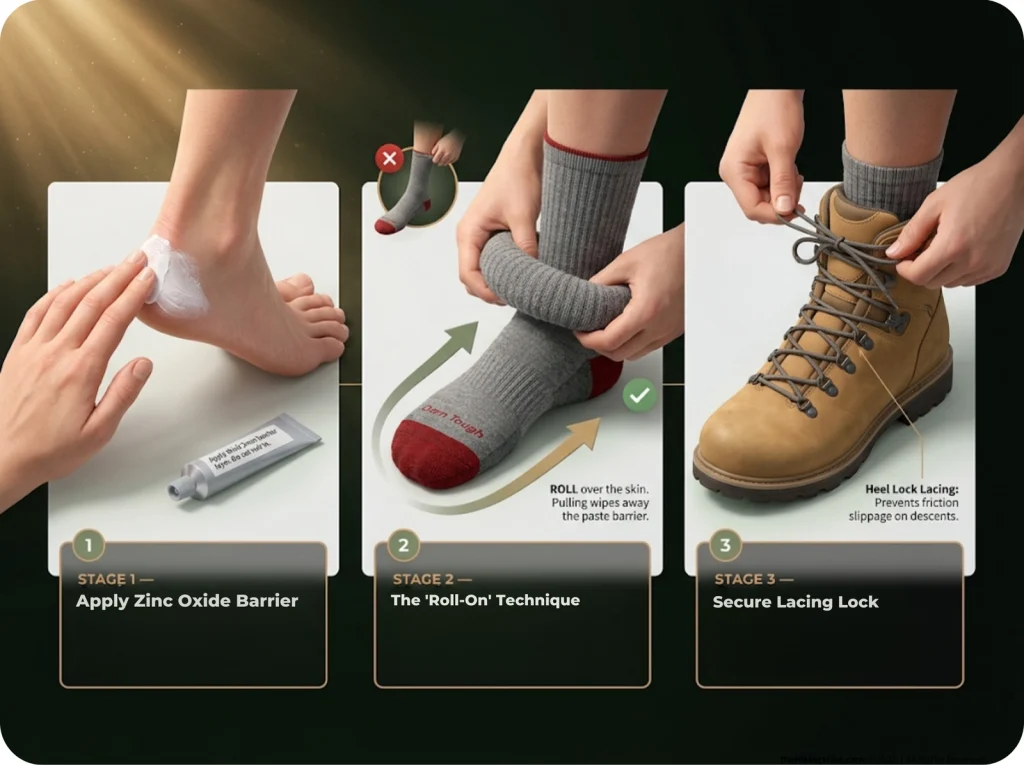
Using zinc oxide paste creates a thick water-blocking barrier on the skin. You absolutely need this to stop the cellular breakdown caused by perpetual moisture. If you don’t use it, the water softens your flesh until it shears right off your foot.
Skin Conditioning: Callus Management
Thick, rigid calluses are a massive liability. They will crack, split, and bleed under extreme miles. You want pliable, leathery skin, and that requires rigorous foot care conditioning.
Pro tip: Roll your socks onto your feet rather than pulling them up. Dragging the sock up wipes away the protective friction-saving lubricant layer you just applied to your heels.
Trail Nutrition: Eating to Build vs. Eating to Hike

With the average thru-hiker age expanding to 44, strict nutritional periodization is mandatory to prevent muscle wasting during high-volume training weeks.
Early training phases require heavy protein to repair your tendons, whereas actual trail life demands incredibly dense carbohydrate and fat calories for sustained output. Your daily calorie burn skyrockets on the trail, demanding 4,000 or more calories a day to maintain your pace. You can’t safely test trail food like ramen bombs at your desk months before your hike. Eat for the phase you are in, and follow a proper post-hike recovery blueprint to rebuild your tissue.

Phase 1: Protein Loading for Muscle Repair
Between one to three months out, your focus is building back strength and fortifying connective tissue, similar to lifting like a Stronglifts 5×5 program but targeted for endurance. Your diet must supply the raw protein required to fix the micro-tears from heavy rucking.
Tendons heal very slowly. Coupling your vitamin C intake with your protein sources before your workout can marginally improve how fast your body knits those tissues back together.
Phase 2: Shifting to High-Fat Endurance Ratios
As your time on feet scales up to 20-mile weekends, your body needs to become highly efficient at burning fat for long, slow efforts. This is the foundation of specific endurance.
Incorporating calorie-dense, trail-like food ratios during your peak volume training trains your liver and gut to process heavier foods while you are moving.
Simulating “Hiker Hunger” on Training Weekends
You need to find out right now if your stomach actually tolerates a tortilla wrapped around a block of cheddar cheese at mile 15. The gut must be conditioned exactly like a calf muscle.
Never pack a food item for a 5-day mountain stretch that you haven’t successfully digested during a high-output 10-hour training day. Your digestive system relies on deep core stability to function while bouncing down a trail.
Mental Gear-Checks: Conditioning the Mind
Southbound completion rates plummeted to a dismal 14% recently, according to 2000-miler completion statistics. This failure is heavily linked to the immediate physical and psychological shock of the rugged northern terrain.
The infamous “Virginia Blues” hits around the 1,000-mile mark. It is a psychological graveyard where the novelty has entirely bled out of the journey. Pain is magnified by physical isolation, endless rain, and the uninterrupted monotony of the green tunnel. Spending 45 minutes on a machine watching videos is easy; finding the baseline will to put on frozen boots in the freezing rain on day 40 breaks people. Putting together a mental preparation protocol is your true lifeline.
Boredom Drills: The Antidote to the “Green Tunnel”
Ruck on a perfectly flat, visually unstimulating path for four unbroken hours. Leave your headphones, podcasts, and music at home to simulate stark trail monotony. A devastating mental slump hits fast when there is zero entertainment to distract you.
Your brain sends severe fatigue signals out of sheer boredom long before your muscles actually fail. You have to train your mind to hit the override switch.
The “Three Lists” Methodology
Draft three highly specific lists before you leave: Why you are doing this trip, What happens if you quit, and What you will feel when you finally finish it.
Keep these folded safely in a waterproof bag in your hip-belt pocket. When morale is decimated and catching a ride to town looks tempting, pull them out and physically read them. It reconnects you with your initial intent.
Embracing “The Suck” in Bad Weather
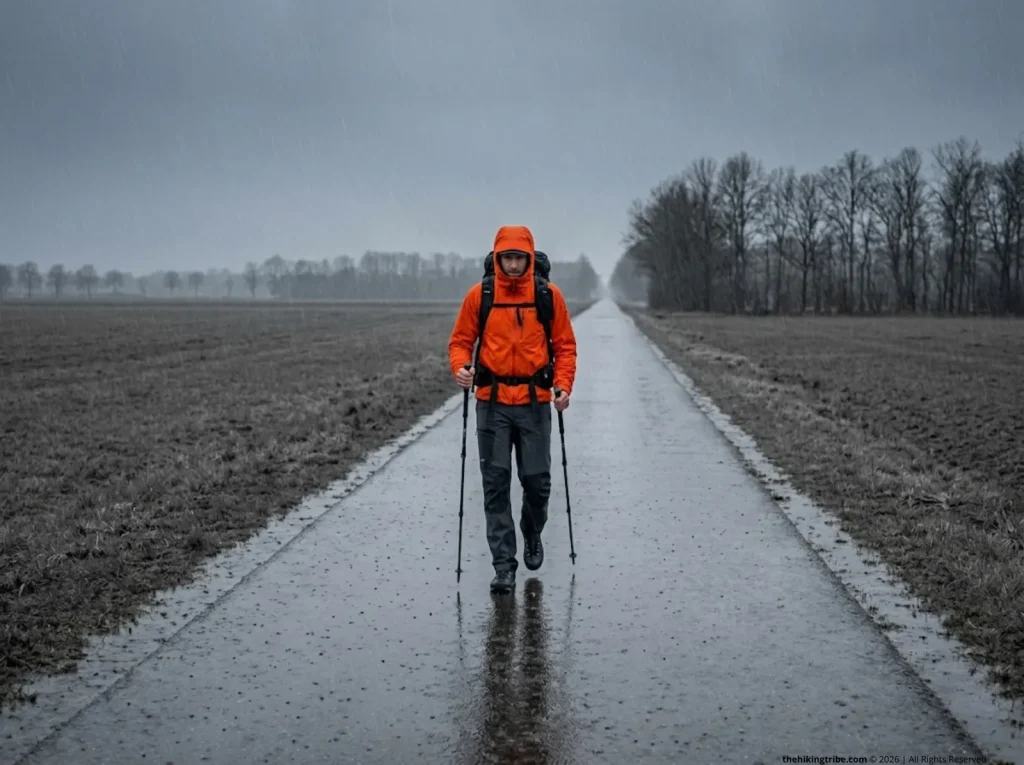
Training in terrible weather isn’t just physical conditioning—it acts as your psychological insurance policy. Do not cancel a long training hike just because it’s pouring rain.
Walking through misery when you are just three miles from your warm truck creates the mental calluses you need when you are three days from the next town.
The Shakedown Protocol: Field-Testing Gear and Ethics
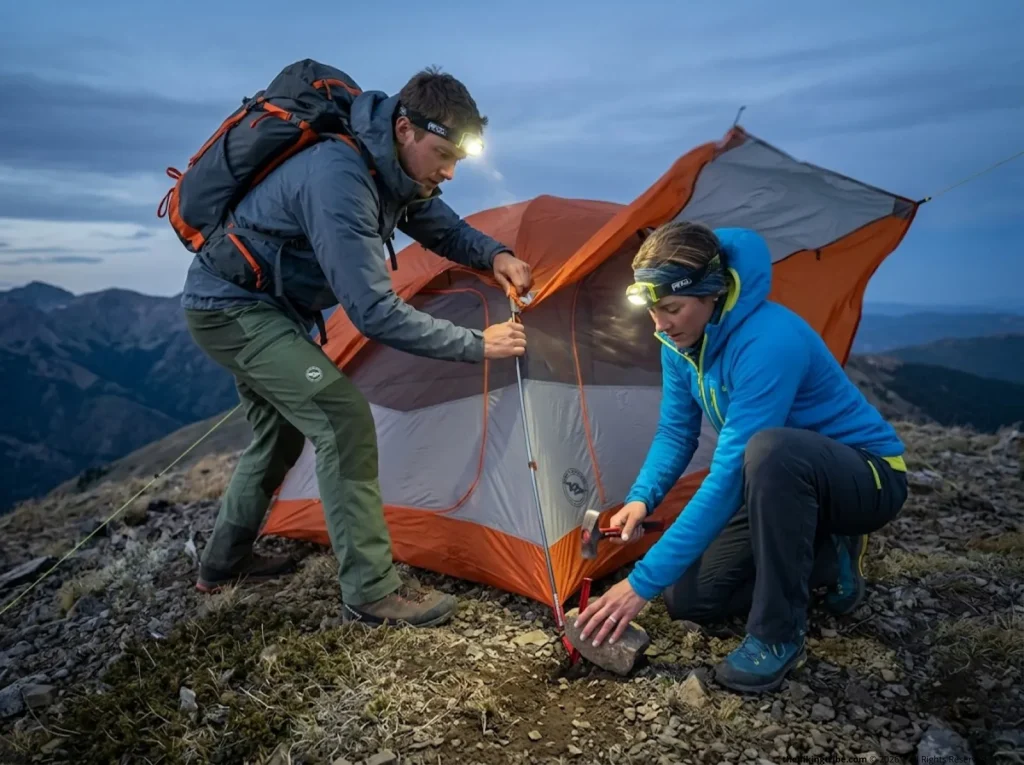
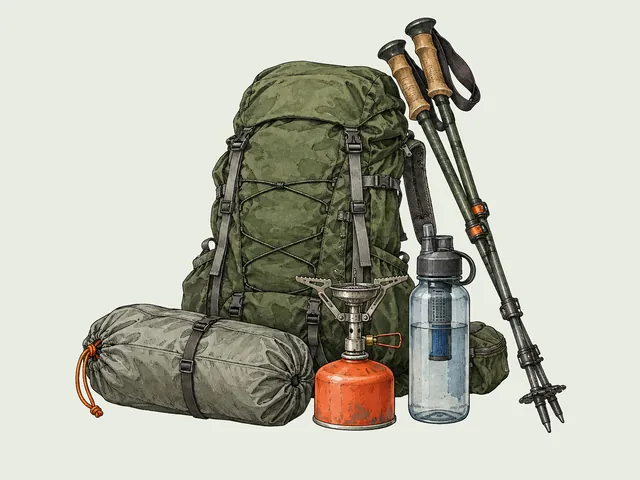
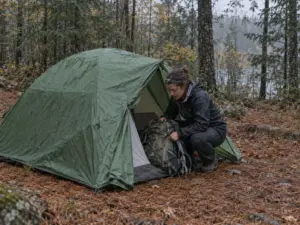
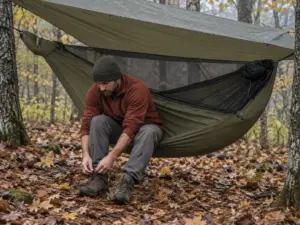
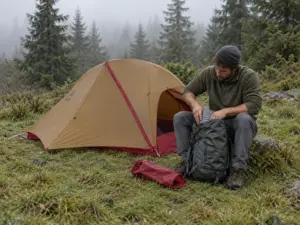
A sleeping bag theoretically works in your 70-degree living room, but it fails instantly under heavy tent condensation and mud. You must execute realistic shakedown hikes. Complete gear testing identifies catastrophic failures while you still have cell service.
Leave No Trace principles must transform into subconscious habits before the trail. My first brutal test hike proved my lightweight stove windscreen was utterly useless in 20mph gusts. That $10 oversight would have guaranteed a cold night on an exposed ridge. Knowing the official Leave No Trace Seven Principles are rules of engagement, and performing proper backcountry cathole digging is a non-negotiable skill you must practice.
Validating Your Sleep System in the Cold
A 20-degree sleeping bag rating is a survival rating, not a comfort rating. A shakedown hike forces you to test your sleep system’s thermal limits near a trailhead where you can get to safety if needed.
Air mattress insulation values stack. Testing exactly how your closed-cell foam pad interacts with your inflatable pad is critical to stop the frozen ground from sucking away your body heat.
Practicing Leave No Trace (LNT) Under Stress
It is far harder to make sound ethical decisions regarding campsite selection and waste disposal when you are shivering and exhausted.
Good campsites are found, not engineered. Resist the urge to flatten vegetation or dig trenches, practicing strict camp hygiene even when your body screams at you to just sleep.
Dialing in Footwear at Peak Swelling
The sheer volume of blood flow and heavy impact causes feet to swell up to a full shoe size after intense trail miles.
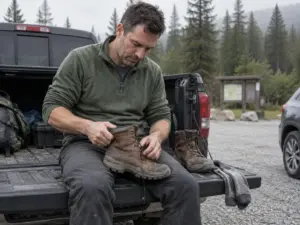
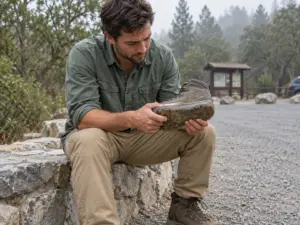
Pro tip: Do your footwear fit tests, lacing adjustments, and blister taping at the very end of your longest training day. Do not size your Altra trail runners or boots when your feet are fresh and rested early in the morning.
The Final Step
Training for a 2,000-mile journey without access to mountains is totally possible, but it demands an unrelenting, systematic approach to your body mechanics. By prioritizing heavy shock absorption over pure cardiovascular work, executing rigorous balance drills, and purposefully engaging in painful mental boredom rucks, you immunize yourself against the very things that send most hikers home early. Stop waiting for the perfect alpine weekend, load up your pack, find the tallest parking garage in your city, and start bulletproofing your tendons today.
FAQ
Can you just get in shape on the trail instead of training beforehand?
This is the most dangerous myth in long-distance hiking. While your lungs will quickly adapt, starting the trail unconditioned with a heavy load guarantees an overuse injury like Achilles tendonitis or shin splints within the first 100 miles.
How many miles should I walk a day to effectively train for a thru-hike?
You should systematically ramp up to completing back-to-back 15-mile days with your fully loaded pack. Dialing in your training frequency and maintaining consistency over several months builds the structural integrity you need.
How do I strengthen my knees for massive downhill descents if I live in a flat city?
Focus heavily on eccentric strength exercises, such as slow reverse step-downs and weighted lunges. Walking down the stairs of high-rise buildings or parking garages effectively mimics the exact braking forces required on steep descents.
What is a good training weight for my backpack?
Start with 15 pounds and meticulously add 5 pounds every two weeks until you reach your projected trail weight. Never jump straight to maximum weight, as it drastically alters your center of gravity.
How do I avoid severe blisters on a thru-hike?
You can actively avoid blisters by intentionally toughening the skin through high-friction training and moisture management well before you leave. Use zinc oxide pastes, train in wet socks occasionally, and ensure your boots accommodate massive swelling.
I've spent more than a decade researching hiking gear and trail technique. I read the specs, the forum threads and the long-term reviews, and every pick here comes with what it gets wrong.
End of the trail
You read every mile of this one. Here's where the trail goes next.