In this article
The sun hadn’t crested the ridge yet, and already my stomach was churning—that urgent, unmistakable signal every backpacker dreads. I was three miles from the trailhead, surrounded by hikers breaking camp, with no privy in sight. What I did next would either protect this watershed or contribute to a growing public health crisis that’s forcing land managers to close popular trails.
After fifteen years of backcountry travel and teaching Leave No Trace principles to scout troops, I’ve watched too many well-meaning hikers make mistakes that contaminate water sources, attract wildlife, and leave “white flowers” of toilet paper blooming across alpine environments. This guide will teach you the field-tested method for cathole digging—the technique endorsed by the Leave No Trace Center for Outdoor Ethics and required in most wilderness areas.
⚡ Quick Answer: To dig a proper cathole, walk at least 200 feet from water, trails, and campsites. Dig a cathole 6-8 inches deep and 4-6 inches in diameter. Deposit waste, stir with a stick to promote decomposition, backfill with original soil, and disguise the site. Pack out toilet paper in a sealed bag.
Why the 200-Foot Rule Isn’t Arbitrary

The mandate to dig your cathole at least 200 feet from water sources—roughly 70 to 80 adult paces—isn’t a random number invented by bureaucrats. It’s a calculated buffer zone based on how soil filters pathogens before they reach streams, lakes, and groundwater.
The Pathogen Problem Most Hikers Ignore
Human waste carries a cocktail of bacteria, viruses, and parasites that can survive in soil far longer than most people realize. A landmark study from Montana’s Bridger Range found that E. coli and Salmonella survived in large numbers throughout summer and fall, with Salmonella persisting over winter at all test sites.
Even more concerning: Giardia and Cryptosporidium form cysts that are highly resistant to environmental breakdown. In cold, organic-rich soil, these parasites can remain infectious for over 12 months—a significant factor in norovirus transmission among backcountry hikers. That cathole you dug last October? The parasites inside might still be viable when spring hikers arrive. Understanding Giardia symptoms helps you recognize when water sources may have been compromised by improper waste disposal.
What “200 Feet” Actually Protects
The 200-foot distance creates a soil filtration zone that catches pathogens before they enter riparian ecosystems. This isn’t just about keeping drinking water clean—it’s about preventing water contamination that affects the entire food chain, from aquatic insects to the trout that anglers prize.
Pro tip: Counting paces is faster than measuring, but pace length varies. Most adults cover 200 feet in 70-80 paces. Practice on a known distance before your trip so your count is accurate.
The Science Behind 6-8 Inches Deep
The standardized cathole dimensions—6-8 inches deep and 4-6 inches wide—aren’t arbitrary either. These measurements position your waste in the biologically active zone of the soil where decomposition happens fastest.
Understanding Soil Layers and Decomposition
The top layers of soil, particularly the dark, humus-rich “O” and “A” horizons, contain the highest concentration of decomposing organisms. Bacteria, fungi, and invertebrates thrive in organic soil, breaking down the high nitrogen content of human feces through the same processes that decompose leaf litter.
According to the National Park Service guidelines on waste disposal, microbes work most efficiently when fed a balanced diet. Human waste has a very favorable carbon-to-nitrogen ratio (around 5:1 to 8:1), which triggers rapid microbial activity. Burying waste in the right soil layer essentially hijacks the forest floor’s natural recycling system—a key concept if you want to master backcountry food safety and hygiene comprehensively.
Why Depth Matters Less Than Location
Interestingly, research shows that burial depth has less impact on pathogen survival than you might expect. The feces themselves appear to protect bacteria from environmental stressors. What matters more is cathole site selection—choosing dark, rich organic soil in a sunny location where elevated temperatures accelerate microbial metabolic rates through thermophilic bacteria activity.
The 7-Step Cathole Protocol
Master this sequence, and you’ll handle backcountry hygiene needs with confidence in any environment.
Step 1: Scout Your Site
Walk at least 200 feet from any water source, trail, or campsite. Look for thick undergrowth, downed timber, or gentle hillsides with dark, rich organic soil. Sunny locations promote faster decomposition than shaded ravines. Avoid sandy washes in desert environments (flash flood risk) and areas with visible cryptobiotic crust—knowing how to identify cryptobiotic soil is essential for desert hikers.
Step 2: Select and Test Your Spot
Before committing, kick the duff (leaves, needles, twigs) aside and check the soil. Good cathole site selection means finding ground that is dark and crumbles easily. Rocky soil or root-filled ground is a sign to move elsewhere. In New England forests, finding soil deep enough for a proper cat hole often requires checking several spots.
Step 3: Excavate Properly
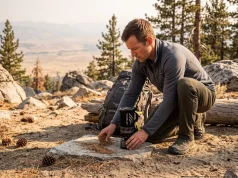
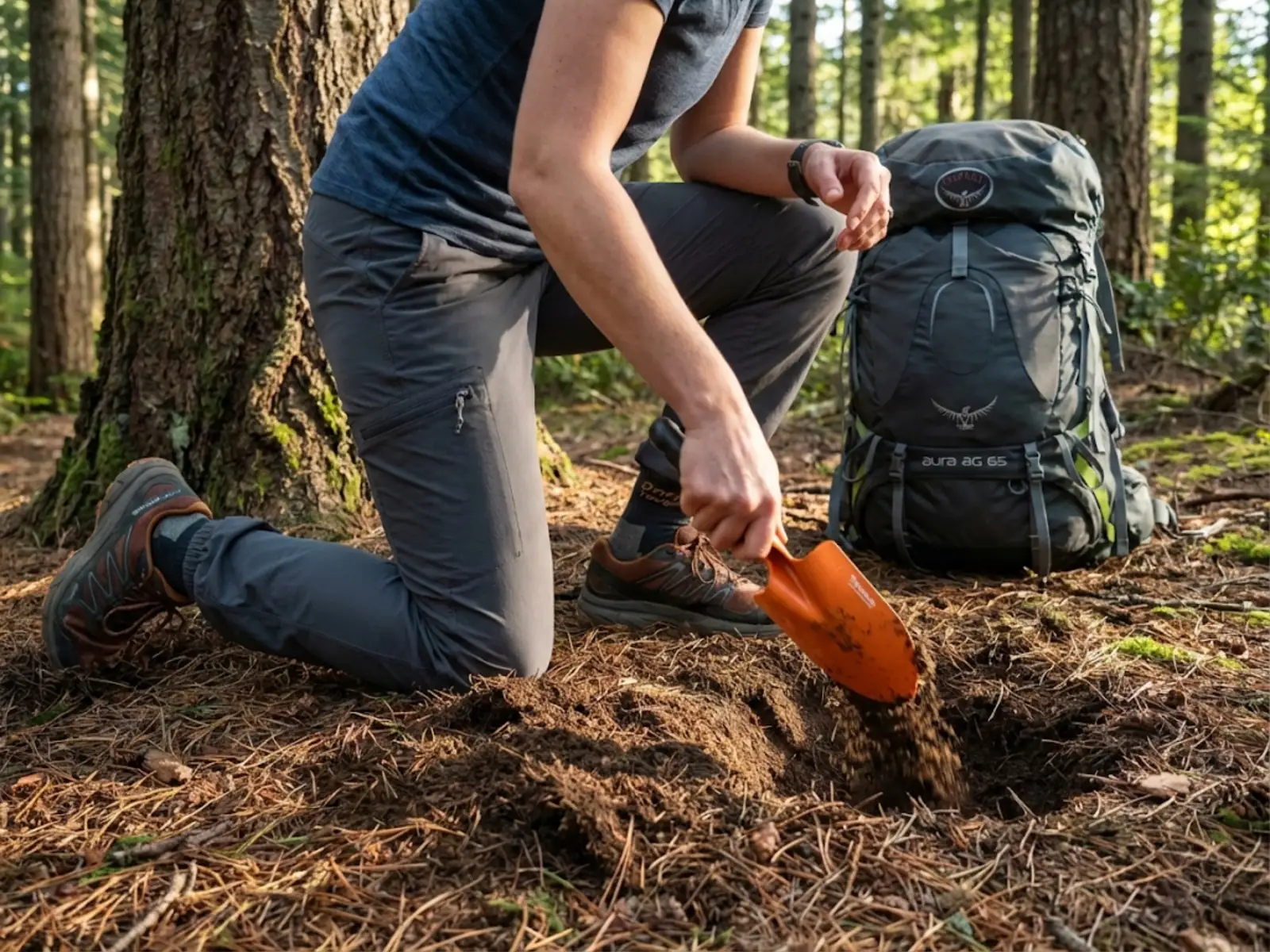
Using a sanitation trowel like the TheTentLab Deuce of Spades or GSI Outdoors Cathole Sanitation Trowel, dig a hole 6-8 inches deep and 4-6 inches in diameter. Remove the top soil plug—that layer of duff and root mat—in one piece if possible. Many quality trowels are engineered to be exactly 6-8 inches long, serving as built-in measuring tools. Poor digging tools like boot heels often fail to reach proper depth.
Pro tip: If the ground is too hard or rocky, try lifting a large rock and using the underlying depression. Replace the rock when finished. This is less effective for decomposition but beats surface deposits.
Step 4: Position Yourself
Find your position of choice—squat, sit, or stand depending on anatomy and constraints. For stability, use a wide stance on soft, absorbent ground like pine needles. The tree lean (bracing your back against a trunk) or hanging onto a sturdy branch disperses body weight and lets you focus on the process rather than balance.
For hikers with knee issues or mobility challenges—similar considerations apply when using trekking poles downhill—two rocks or logs of similar height can create an elevated “throne” that mimics a standard chair. Female urination devices can help with positioning challenges for some hikers.
Step 5: The Post-Deposit Protocol
Once finished, use a small stick (not your trowel) to stir a small amount of soil into the waste. This isn’t squeamishness advice—stirring increases surface area for microbial colonization and accelerates the decomposition process. Think of it as inoculating your waste with the microbes that will break it down. Some advanced kits include decomposition accelerators like mycelium tabs to speed this process.
Step 6: Backfill and Compact
Fill the hole with the original dirt, not rocks or debris that create air pockets slowing decay. Use the boot heel method to step on or tamp down the soil to remove excess air—this also discourages animals from digging it up. Finally, replace your preserved soil plug and scatter natural materials using duff scraping technique to disguise the site completely.
Step 7: Clean Up and Pack Out TP
This is where most hikers fail: toilet paper does not decompose quickly in backcountry environments. A study examining toilet paper biodegradability across nine Tasmanian environments found that TP persists through multiple seasons, especially in high-rainfall or alpine environments where very little decay was observed over two years.
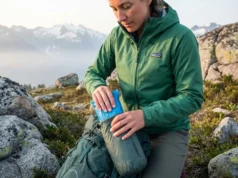
The current Leave No Trace standard is to pack out toilet paper in a sealed bag. Use a ziplock lined with aluminum foil or wrapped in duct tape to disguise contents, stored in a dedicated dry sack. For menstruation waste management, the same pack-out rules apply to tampons and pads.
Essential Cathole Gear
The right equipment makes proper waste disposal easier and more reliable. Here’s what experienced backpackers carry in their “poop kit assembly.”
Trowels That Actually Work
Not all digging tools are equal. The boot heel method works in loose soil but fails miserably in compacted earth—exactly when a proper cathole matters most. A dedicated trowel with sharp edges for cutting roots transforms frustrating excavation into a quick task.
The TheTentLab Deuce of Spades is the gold standard among thru-hikers: weighing under an ounce in aluminum, its narrow blade excels in rocky soil found in New England forests. The GSI Outdoors Cathole Sanitation Trowel offers a broader blade for softer western soils. Either beats poor digging tools that leave you struggling to reach proper depth.
Building Your Poop Kit
The Appalachian Trail Conservancy recommends assembling a dedicated “bathroom kit” using a gallon ziplock containing:
- Sanitation trowel
- Toilet paper in a second ziplock
- Hand sanitizer (at least 60% alcohol)
- Pack-out bag for used TP (lined with plastic)
- Optional: WAG bag for emergencies
The PACT Outdoors Kit represents the cutting edge of backcountry hygiene—it includes mycelium tabs that use mycoremediation (fungi) to accelerate decomposition and kill pathogens. Third-party testing shows 95-100% breakdown in 75-95 days using these decomposition accelerators, significantly faster than conventional methods.
When Burial Isn’t an Option
In some environments, catholes simply don’t work. Alpine environments above treeline lack the soil biology for decomposition. Desert environments may have soil too shallow for proper burial. Slot canyons and narrow river corridors—where you’d use a groover or river toilet—make the 200-foot requirement physically impossible.
For these situations, WAG bags (Waste Alleviation and Gelling agents bags) contain NASA-developed polymers using the double-bag system that gel and deodorize waste for safe transport. Brands like Cleanwaste and Biffy Bag design specifically for backcountry use. Many wilderness areas, including parts of North Cascades National Park, Canyonlands National Park, and the Grand Canyon, mandate pack-out systems.
Terrain-Specific Adaptations
The standard cathole protocol requires adjustment for challenging environments where one-size-fits-all advice fails. These considerations build on the foundational principles of Leave No Trace ethics.
Desert and Arid Lands
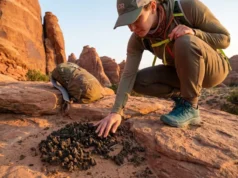
In hot deserts, the lack of moisture and organic soil severely restricts microbial decomposition. The Boy Scouts of America recommends a shallower cathole—only 4-6 inches deep—in desert environments. This placement allows solar heat to reach waste, promoting breakdown through thermal inactivation and desiccation rather than biological processes. This is similar to the smear technique used in some arid regions.
Choose elevated, sunny locations rather than dry washes prone to flash floods that transport waste directly into sensitive aquatic ecosystems, causing contamination.
Alpine and Winter Conditions
Above treeline, cold temperatures and short growing seasons mean waste can remain frozen and preserved for years. Here, a cathole becomes a preservation chamber, not a disposal method. The only ethical option is packing out with WAG bags or portable toilet systems—never attempt the crevassing or poop bird method techniques sometimes mentioned in older guides.
The same applies to snow burial—waste survives perfectly preserved until spring melt, when it enters the watershed in a concentrated pulse of fecal contamination. Locate snow-free areas (tree wells) to reach actual soil, or pack out entirely.
Rocky and Root-Filled Ground
In regions like New England where rocky soil dominates, the standard approach requires patience and creativity. Check multiple cathole sites before committing. Flat rocks can serve as supplementary digging edges when leveraged with your trowel. The rock-lift method (depositing under a large loose rock) provides an alternative when reaching 6-8 inches deep proves impossible.
Common Mistakes That Contaminate Water
Years of backcountry teaching have shown me the same errors repeated by well-intentioned hikers. Avoid these to protect both the ecosystem and other visitors.
The “Close Enough” Distance
Tired hikers routinely underestimate 200 feet, especially during night emergencies. That stream might look far enough, but proximity to water creates direct pathogen pathways to drinking sources downstream. The human tendency to seek privacy near water features (a stream provides ambient noise) compounds this problem.
Develop the discipline to count paces every time—even when uncomfortable. Your 70 steps protect everyone who drinks from that watershed from potential raw sewage exposure.
Surface Deposits and “Desperation Pooping”
Surface pooping—leaving waste exposed without burial—creates severe public health risks. The Appalachian Trail Conservancy specifically warns against this practice, linking it to norovirus transmission outbreaks among hikers on the Appalachian Trail. If you couldn’t dig beforehand, it’s not too late: excavate a hole beside the deposit, use a stick to push waste in, and bury properly.
Burying Toilet Paper
Despite persistent myths, burying toilet paper in catholes is no longer considered best practice—contributing to food waste concerns in the backcountry. Even “biodegradable” TP breaks down slowly in backcountry conditions—alpine environments show minimal decay over years. Pack out toilet paper every time using the double-bag system.
Natural alternatives eliminate the problem entirely: smooth stones, sticks, or mullein leaves can be buried directly. Snowballs work effectively in winter. This commitment to proper waste paper management separates responsible hikers from those degrading trails.
Pro tip: A “pee rag” like the Kula Cloth handles urination without using disposable paper. Hang it on your pack exterior where UV light assists sterilization—a key technique for supporting proper privy etiquette on busy trails.
Legal Consequences of Improper Disposal
Wilderness sanitation isn’t just ethics—it’s regulated by federal and state law under the legal penalty framework. According to the Bureau of Land Management, disposing of human waste improperly carries significant consequences:
- Polluting park waters: up to $250 fine
- Improper refuse disposal: up to $100 fine
- Damaging archaeological sites through digging: up to $500 and/or six months imprisonment
The National Park Service enforces these regulations across all park units. State littering laws—which legally include human waste and sewage—carry penalties ranging from $500 in Alabama to $30,000 in Maryland for serious environmental violations. The point isn’t to frighten you; it’s to emphasize that land managers take this seriously because the ecological stakes are real.
Master This Skill Before Your Next Trip
The cathole isn’t glamorous, but mastering proper technique separates responsible backcountry travelers from those who degrade trails for everyone. Three takeaways to remember:
Distance matters: Those 200 feet protect entire watersheds from contamination. Count your paces every time.
Depth and soil type drive decomposition: Dark, organic soil in sunny locations breaks down waste fastest. The 6-8 inches deep placement positions waste where thermophilic bacteria thrive.
Pack out your TP: It’s the single most visible sign of careless hikers and the easiest problem to solve—the core of proper cat hole technique.
For a deeper exploration of backcountry sanitation including privy etiquette and specialized scenarios, continue building your wilderness hygiene skills. What feels awkward now becomes automatic with practice—and the mountains stay clean for everyone who follows.
FAQ
How deep should a cathole be?
Dig a cathole 6-8 inches deep and 4-6 inches in diameter. This places waste in the biologically active soil zone where decomposition organisms are most abundant. Many trowels are engineered to this exact length as a built-in measuring guide.
Can you bury toilet paper in a cathole?
The current Leave No Trace recommendation is to pack out toilet paper. Research shows TP persists for months or years in backcountry environments, especially alpine environments. Use natural alternatives (stones, leaves, sticks) if you prefer to bury on the trail.
How far from water should you dig a cathole?
At least 200 feet from water (70-80 adult paces) from any water source, trail, or campsite. This distance provides a soil filtration buffer that prevents pathogens from reaching waterways and groundwater, preventing water contamination.
When should you use a WAG bag instead of a cathole?
Use pack-out systems in alpine environments above treeline, desert environments with poor soil, narrow canyons, snow-covered terrain, and any area where regulations require it. WAG bags are the only option when proper burial isn’t possible.
How long does human waste take to decompose in a cathole?
In ideal conditions (warm, moist, organic soil with sun exposure), decomposition takes 1-3 months. In alpine, arid, or frozen environments, waste can persist for over 12 months while pathogens remain viable—which is why these zones often require pack-out systems.
Risk Disclaimer: Hiking, trekking, backpacking, and all related outdoor activities involve inherent
risks which may result in serious injury, illness, or death. The information provided on The Hiking Tribe is for
educational and informational purposes only. While we strive for accuracy, information on trails, gear, techniques,
and safety is not a substitute for your own best judgment and thorough preparation. Trail conditions, weather, and
other environmental factors change rapidly and may differ from what is described on this site. Always check with
official sources like park services for the most current alerts and conditions. Never undertake a hike beyond your
abilities and always be prepared for the unexpected. By using this website, you agree that you are solely
responsible for your own safety. Any reliance you place on our content is strictly at your own risk, and you assume
all liability for your actions and decisions in the outdoors. The Hiking Tribe and its authors will not be held
liable for any injury, damage, or loss sustained in connection with the use of the information herein.
Affiliate Disclosure: We are a participant in the Amazon Services LLC Associates Program, an
affiliate advertising program designed to provide a means for us to earn advertising fees by advertising and linking
to Amazon.com. As an Amazon Associate, we earn from qualifying purchases. We are also an official affiliate partner
of Black Diamond Equipment via the AvantLink network. If you click on a Black Diamond affiliate link and make a
purchase, we may earn a commission at no additional cost to you. We also participate in other affiliate programs and
may receive a commission on products purchased through our links. Additional terms are found in the terms of
service.