In this article
Mile 14 on a brushy scramble through downed timber, and there it went. A branch punched straight through the inner-thigh vent of my Ex Officio Sand Fly pants, leaving a three-inch rip that exposed my leg to every blackfly in the drainage. I slapped on a square of duct tape at camp, smoothed it flat, and figured I was good. By the trailhead two days later, the patch was dangling like a flag and the duct tape residue had gummed up the fabric worse than the original tear.
That “fix” cost me the pants entirely. And I spent the next six months learning exactly why.
After years of shredding pants on barbed wire fences, scrambling over talus, and melting holes near campfires, I’ve tested every repair method short of hiring a professional tailor. The mistakes are always the same, and they’re all preventable. Here’s the complete field-tested protocol for patching hiking pants so the repair actually outlasts the fabric around it.
Quick Answer: Most hiking pants patches fail because of square corners that catch and lift, dirty surfaces that block adhesive bond, and single-side application on high-flex areas. Clean the area with isopropyl alcohol, cut a Tenacious Tape patch with rounded corners at least 0.5 inches larger than the damage, apply firmly for 30 seconds, and wait 24 hours before washing. For punctures on knees or inner thighs, tape both inside and outside for a mechanical interlock that holds through months of machine washes.
Why Your Patch Failed Before You Even Hit the Trail
Square Corners Catch, Round Corners Don’t
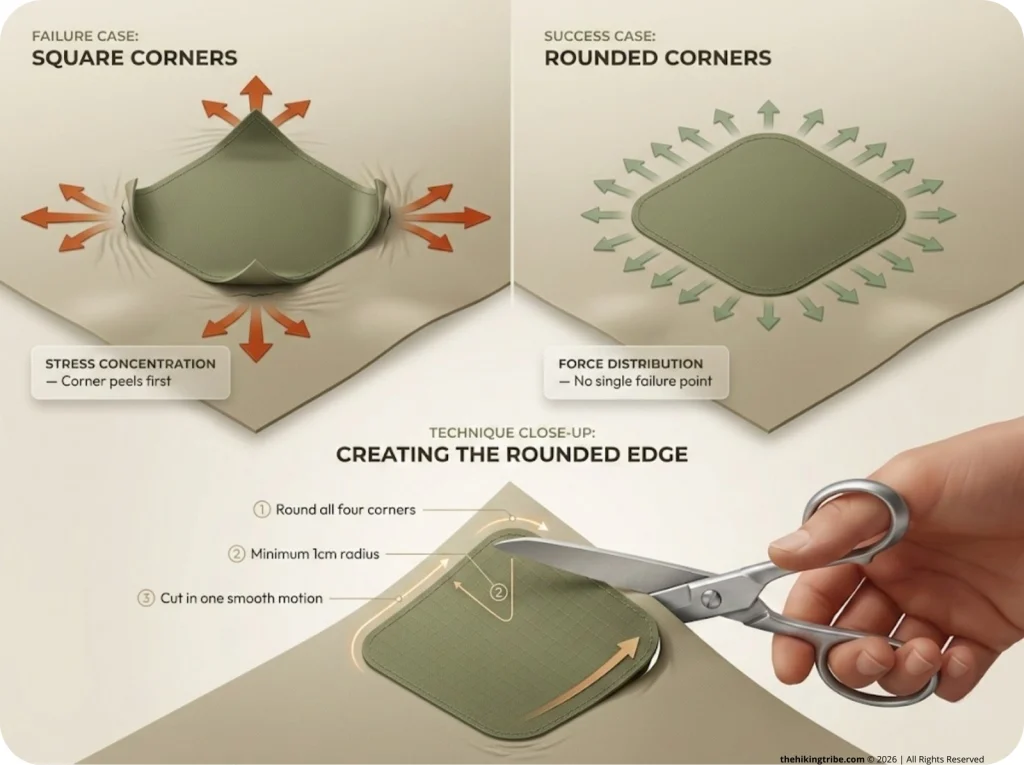
Every pair of pants I’ve trashed started with the same mistake. I’d cut a neat rectangle of repair tape, press it on, and watch it peel back from one corner within a week. The physics here are straightforward. Square corners create a concentrated stress point where fabric flex catches and lifts the edge. Every squat, every high step over a log, every scramble puts tension directly on that 90-degree angle.
Rounded corners distribute stress along a continuous curve. There’s no single point for branches, pack straps, or fabric flex to grab. Gear Aid’s technical team confirms this in their FAQ, and Philip Werner at SectionHiker documented the same thing across six months of field testing. It’s the single most important variable in whether your patch holds or peels.
Pro tip: Cut pre-cut circular patches at home and store them on the backing paper inside a flat pocket of your pack. When you rip your pants on trail, you skip the scissors step entirely and just peel, press, and go.
Dirty Fabric Kills Adhesion on Contact
Body oils, sunscreen, trail dirt, and dried sweat create an invisible film between your adhesive patch and the nylon. Even handling the fabric with sweaty hands before taping reduces bond strength enough to cause failure after one machine wash cycle.
An isopropyl alcohol wipe is non-negotiable. It strips oils, evaporates clean, and leaves zero residue on synthetic hiking pants or stretchy softshell materials. I carry individually sealed alcohol pads in my repair kit. They weigh almost nothing, and they double as wound-cleaning supplies.
The community discussion boards tell the same story. The number one reason people report their Tenacious Tape peeling after a single wash is skipping the cleaning step. In cold weather below 50°F, warming the fabric with your hands before applying improves the initial tack on the adhesive.
Single-Side Patches Flex Off High-Movement Zones
Knees, inner thighs, and seat areas move in every direction when you hike. A single-side patch on those zones acts like a lever. Every bend pulls one edge up, and once that edge lifts, dirt works underneath and the whole patch starts rolling.
The fix is understanding how four-way stretch fabric moves under load and then working with it instead of against it. Taping both inside and outside creates a mechanical interlock through the damaged hole. The two patches grip each other through the fabric, distributing force in every direction. SectionHiker documented this on damaged Ex Officio mesh vents and Columbia nylon pants. The both-sides repairs survived six-plus months of weekly washing, while single-side versions on similar fabric peeled within weeks.
The Field Patch Protocol That Actually Lasts
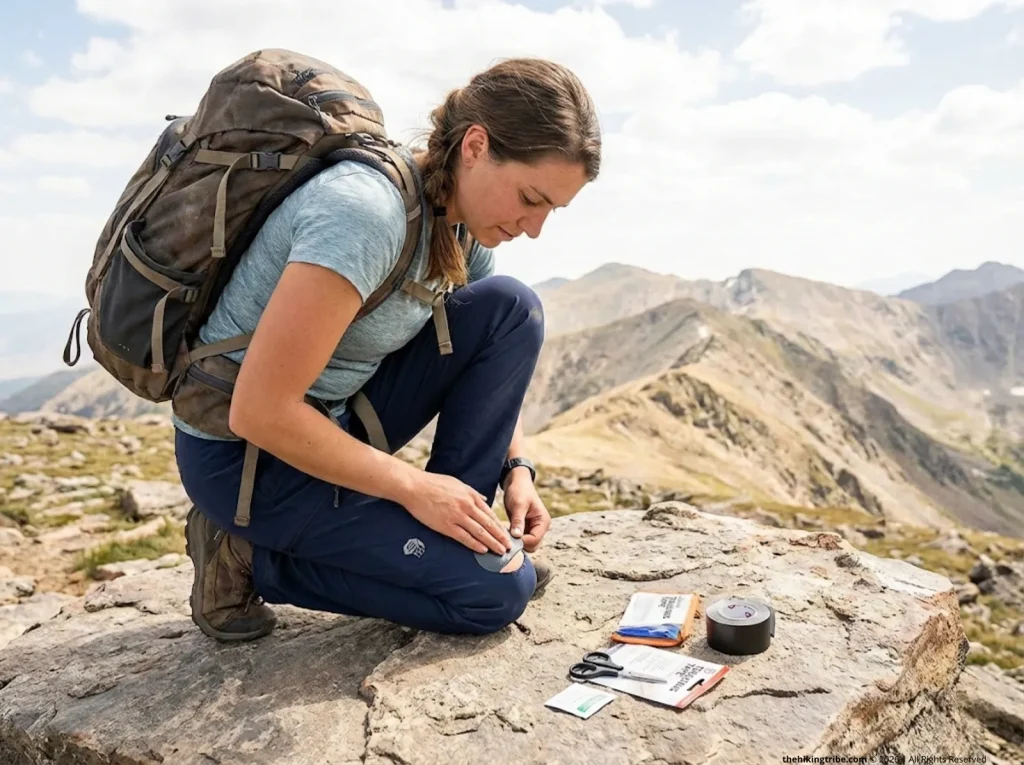
Step 1 — Assess the Damage
Not every rip needs the same treatment. A clean rip where the fabric threads are still intact is easier to patch than a puncture where material is actually missing. Burns from campfire sparks are the trickiest, because melted nylon fuses together and won’t bond to gear repair tape without trimming.
For small tears under an inch in a low-flex area like the calf, a single outside patch holds fine. Anything larger, or anything on the knee or inner thigh, gets the both-sides treatment, which I’ll cover in the home repair section.
Step 2 — Clean the Surface
Wipe a two-inch radius around the damage with an alcohol pad. Wait 15 to 30 seconds for it to fully evaporate. Applying tape to wet or damp fabric is a guaranteed failure. I’ve watched people at trail shelters slap tape on sweaty pants and wonder why it came off the next morning.
No alcohol on trail? Dry dirt removal with a bandana and warm breath is better than nothing, but your patch durability drops significantly. The Leave No Trace Center for Outdoor Ethics includes repair tape in recommended pack essentials alongside first aid and navigation supplies, and that recommendation assumes you carry the cleaning materials to use the tape properly.
Step 3 — Cut, Round, and Apply
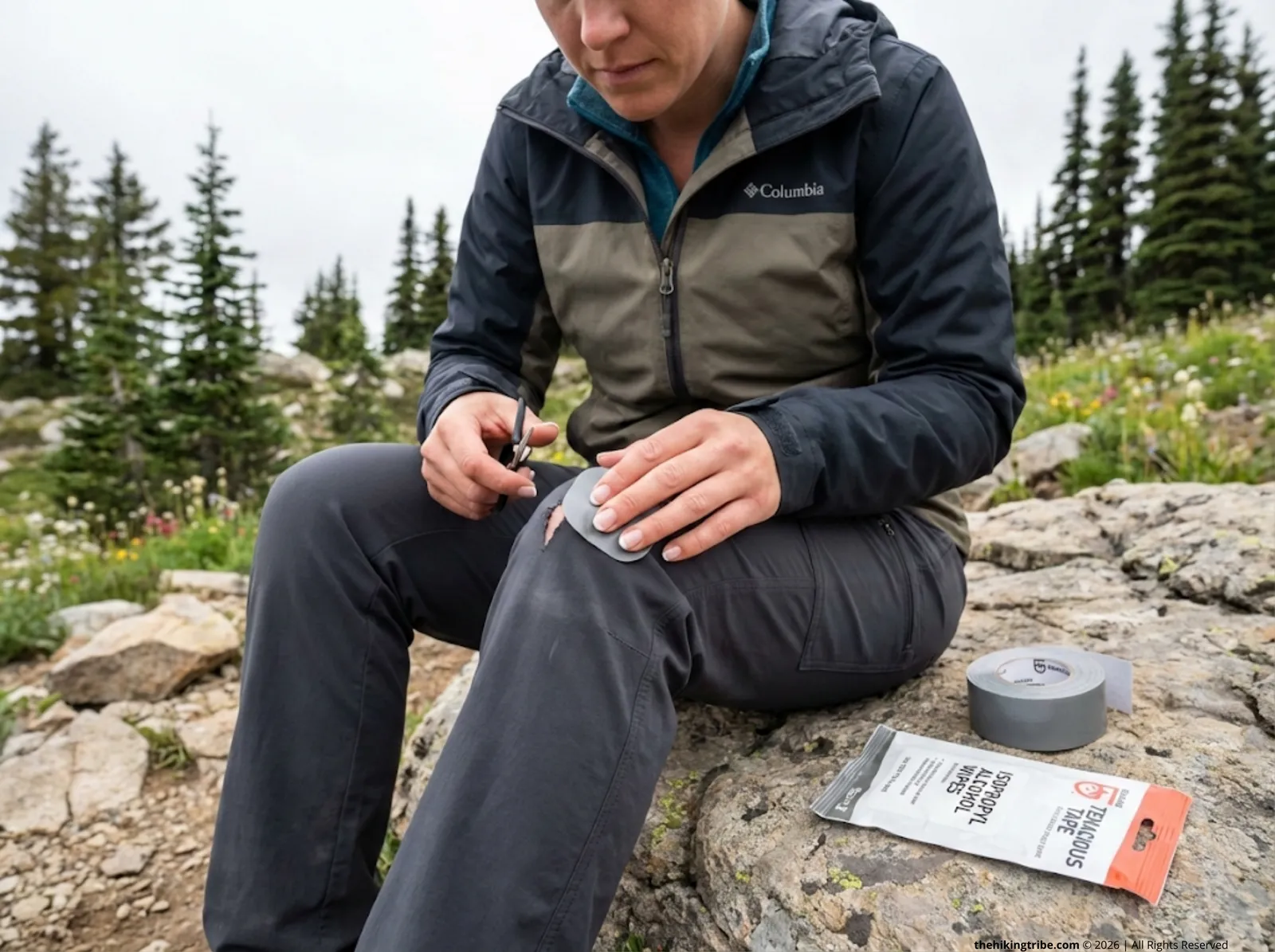
Cut your Tenacious Tape patch at least half an inch larger than the damage in every direction. Round all corners with scissors. No exceptions. Even one sharp corner starts the peeling process.
For field repair, apply to the outside of the pants and press firmly for 30 seconds with palm heat. Your hand warmth helps the adhesive flow into the fabric weave. For punctures or high-stress areas, apply a second patch to the inside, pressing the two pieces together through the hole.
If you’re building a modular hiking gear repair kit, this three-step process is the core skill everything else supports. Tape, scissors, alcohol wipes, and the knowledge of how to use them is worth more than any replacement gear you could carry.
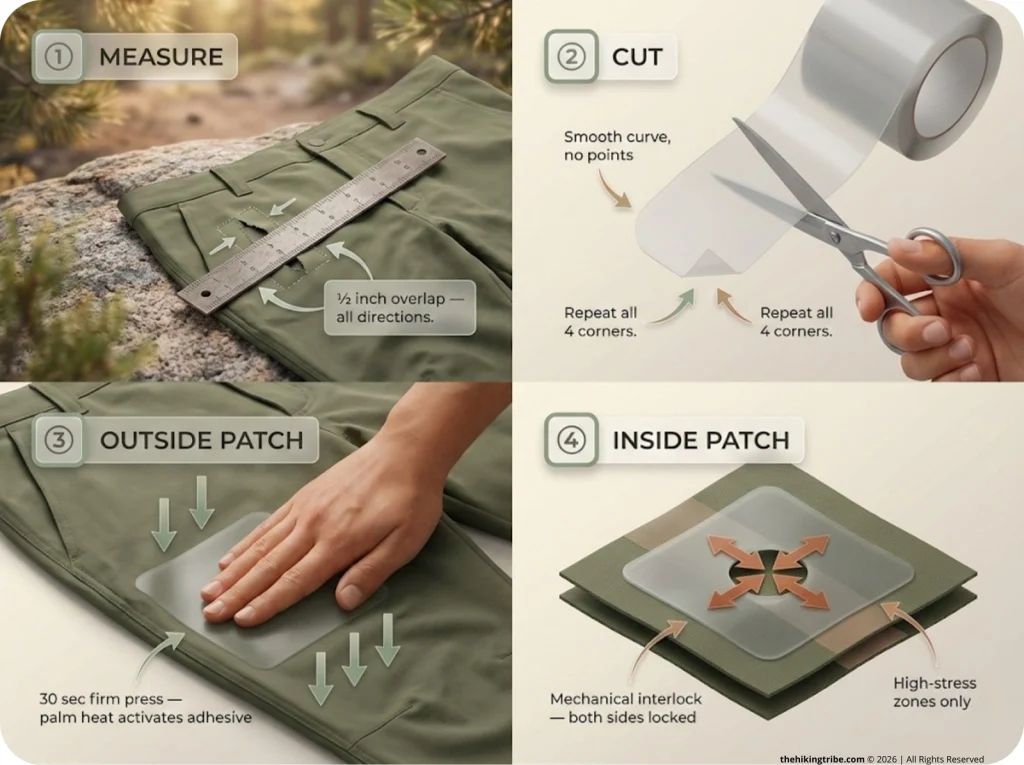
Pro tip: The adhesive reaches full strength after 24 hours. If you’re on a multi-day trip, apply the field patch and keep hiking, but baby it for the first day. Avoid sitting directly on a seat patch or loading a knee patch with heavy scrambling until it’s had time to cure.
Home Repairs That Outlast the Pants
The Both-Sides Technique for Maximum Bond
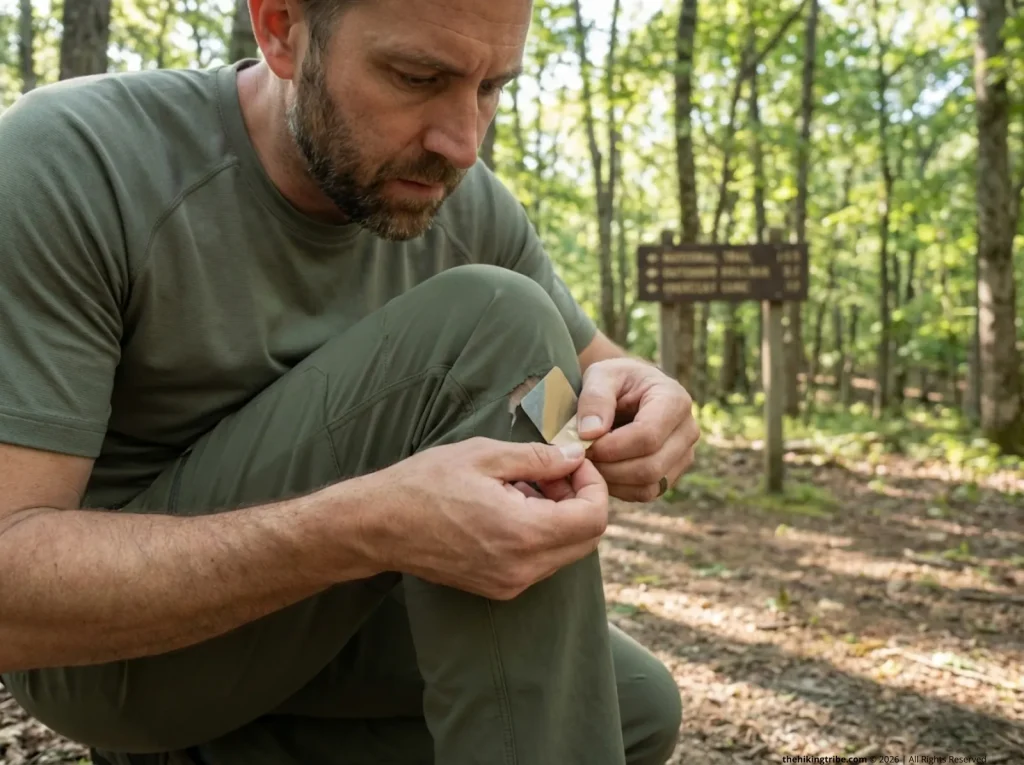
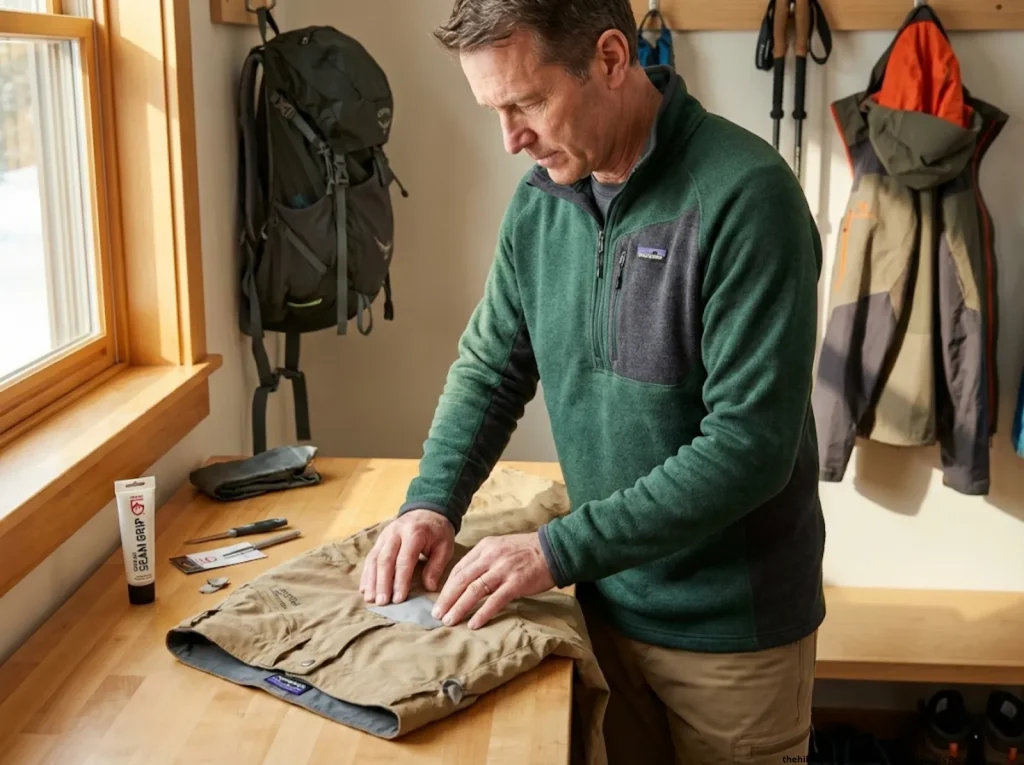
When you get home and want a repair that lasts years instead of weeks, the both-sides method is the standard. Turn the pants inside out. Apply the inside patch first, pressing firmly for 30 seconds. Flip right-side-out. Apply the outside patch, aligning over the same damage, pressing firmly again.
The two patches now grip through the hole. It’s a sandwich that creates a mechanical lock surviving repeated machine wash and dry cycles. Philip Werner documented this approach holding “fine after 6 months of use” on Ex Officio Sand Fly mesh vent repairs, with community reports of three-year-plus survival on similar nylon hiking pants.
Seam Grip Edge Sealing for Bombproof Longevity
For the most durable option short of professional gear repair shops like Rainy Pass Repair, add a thin bead of Seam Grip around all patch edges after taping. This liquid adhesive from Gear Aid cures into a flexible, waterproof seal that prevents edge lift from repeated laundering.
Let the tape adhesive cure 24 hours, then apply Seam Grip and let that cure overnight. Yes, that’s two full days before you wear or wash the pants. It’s worth the wait. The backpacking community calls this “bombproof” for good reason. It’s the ceiling for adhesive-based outdoor gear maintenance.
Stretchy Softshell Pants — The Inside-Only Rule
If you’re working with stretchy pants like the OR Ferrosi or similar softshell models, outside tape fights the fabric’s natural stretch. The material pulls away from the adhesive during movement, and over time the outer patch peels and pills.
Forum consensus on BackpackingLight points to a smarter approach. Patch the inside only. The interior tape conforms to your body’s shape and stays under compression rather than tension. It stretches with you instead of fighting you. Color-matched or transparent Tenacious Tape options exist if appearance matters, but for stretch fabrics, the inside is where the tape needs to go.
Tenacious Tape vs Duct Tape vs Iron-Ons vs Sewing
What Each Method Does Well (and Where It Fails)
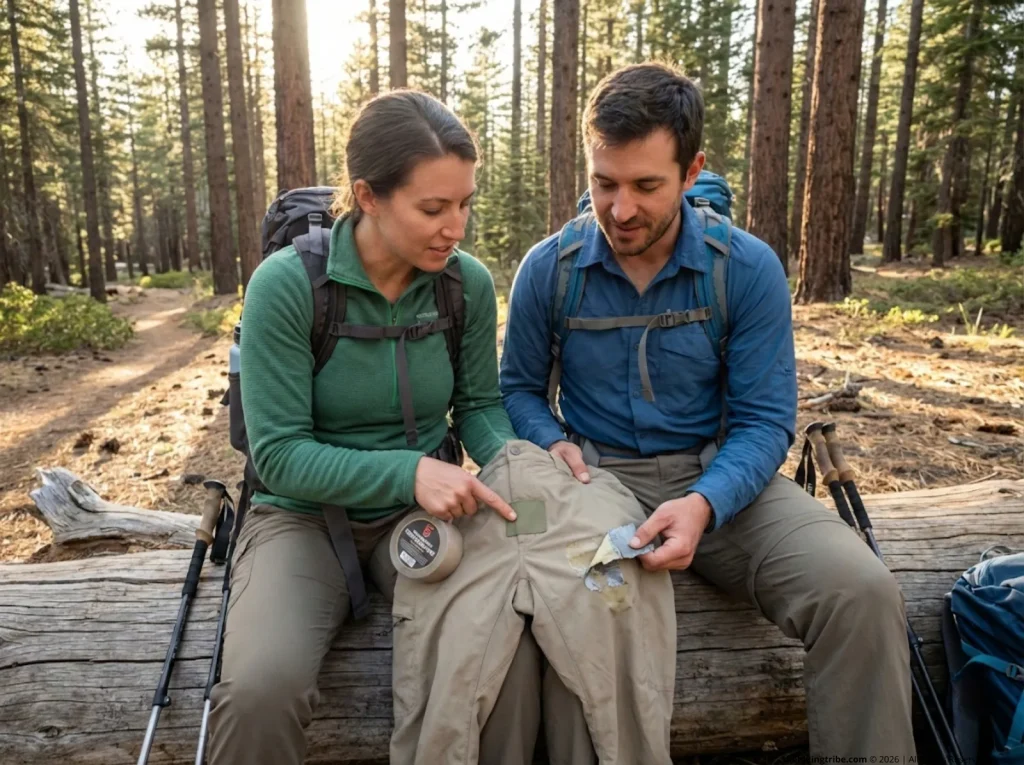
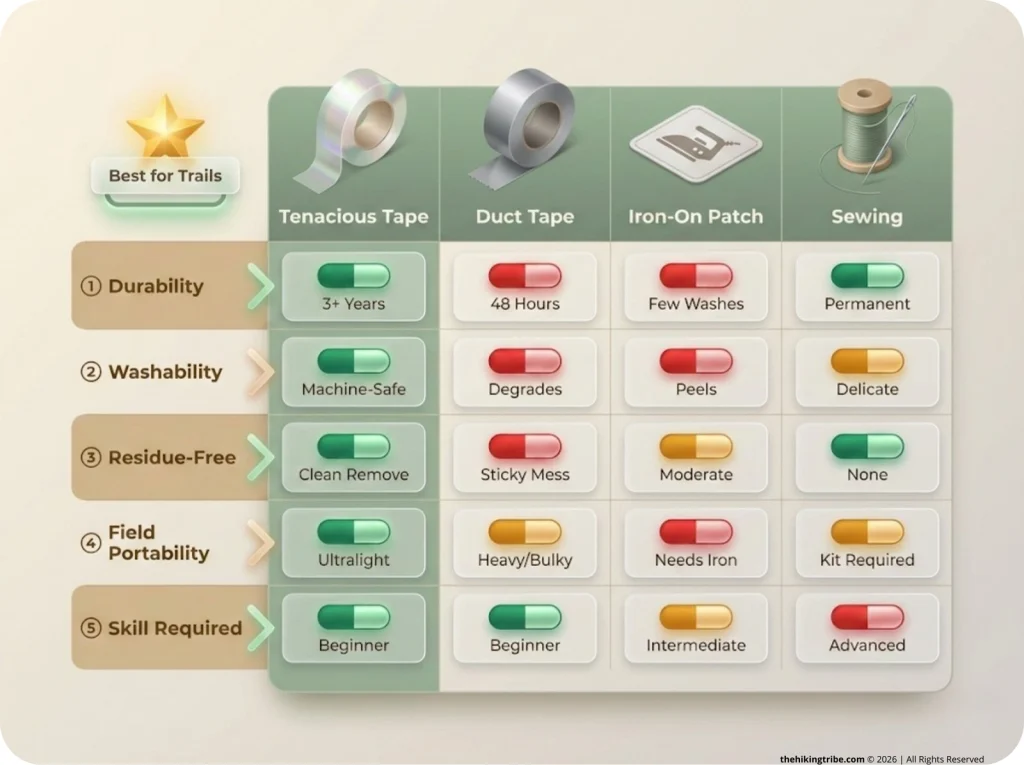
Tenacious Tape is flexible, machine-washable, and leaves no residue when you eventually remove it. Properly applied with rounded corners and a clean surface, it holds six months to three-plus years. It’s purpose-built for nylon hiking pants and performance fabrics.
Duct tape works for 48 hours in an emergency, then turns into a nightmare. The adhesive degrades, leaves a sticky residue that attracts every particle of trail dirt, stiffens the fabric, and makes future repairs nearly impossible. If you’ve ever tried scraping old duct tape off hiking pants, you know the frustration.
Iron-on patches were designed for blue jeans and cotton. On synthetic fabrics, the heat-activated glue doesn’t bond to nylon properly and peels within a few washes. Your mom’s iron-on technique doesn’t cross over to trail gear.
Sewing is permanent when done well, but it requires skills and tools most hikers don’t carry in the field. A heavy-duty needle and thread handles seam failures and zipper attachment points. For anything else, tape is faster, lighter, and holds just as well in the patched area.
Sierra Club’s assessment of the best gear repair products ranks Tenacious Tape as a standout for its washability and clean removal. That’s a hard endorsement to argue with.
Pro tip: If a rip exceeds four inches in a high-flex zone, or the surrounding fabric has gone thin and UV-degraded enough to tear on contact, the pants have run their course. A patch over failing fabric just delays the inevitable. Know when to call it.
Build Your Trail Repair Kit in 3 Ounces
The Essentials List
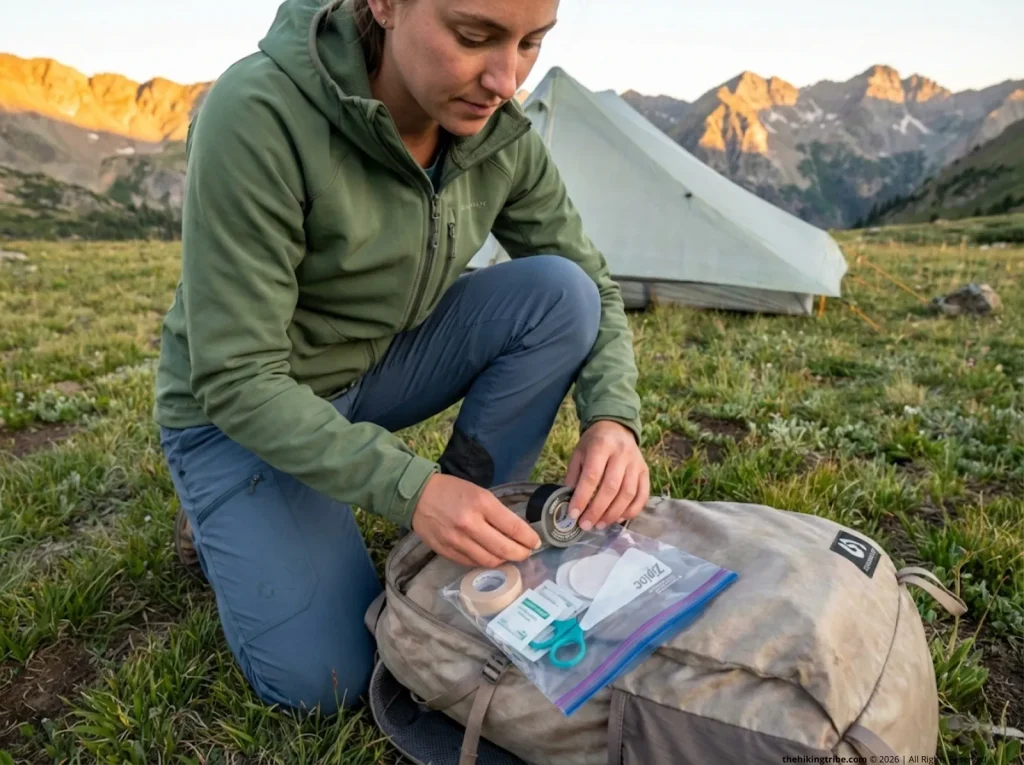
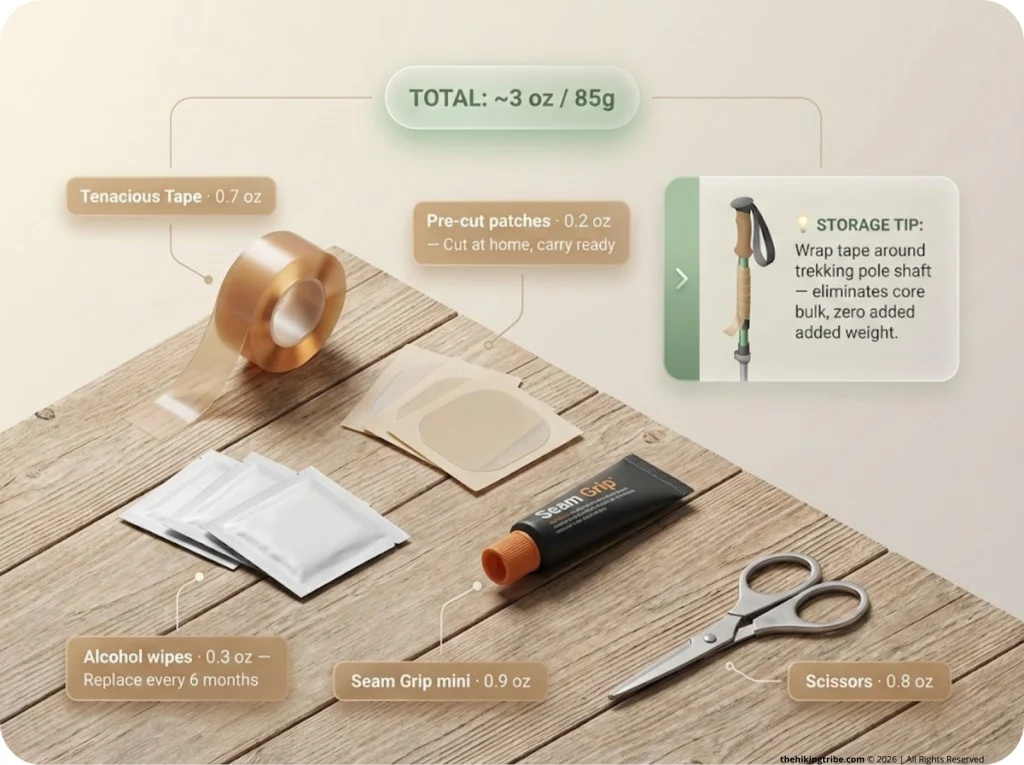
A complete hiking repair kit for pants and general gear repair fits in a sandwich-size Ziploc and weighs under three ounces. Here’s what goes in:
- 1 roll Tenacious Tape (3″ x 20″ roll, under 1 oz) or 4-5 pre-cut circular patches
- 2-3 individually sealed isopropyl alcohol wipes
- Small folding scissors or a blade from your multi-tool
- 1 mini tube Seam Grip (0.25 oz, for home reinforcement)
That’s it. Under three ounces total, and it handles hiking pants, jackets, tents, sleeping pads, and backpack fabric.
Packing and Storage Tips
Wrap the tape roll around a trekking pole or lighter to eliminate the cardboard core and save space. Store alcohol wipes with your first-aid supplies since they serve double duty for wound cleaning. Pre-cut three or four rounded patches at home and keep them flat on the backing paper inside your pack’s brain pocket.
Replace alcohol wipes every six months. They dry out in storage, and a dried-out wipe is the same as no wipe at all. If you’re carrying your multi-tool pliers for gear repair on trail, the scissors are already covered.
The Adirondack Mountain Club lists repair kits among backcountry essentials alongside navigation and emergency shelter. It’s not optional gear. It’s part of being ready for what the trail throws at you.
Repair Over Replace — The Stewardship Argument
The Cost Math Most Hikers Ignore
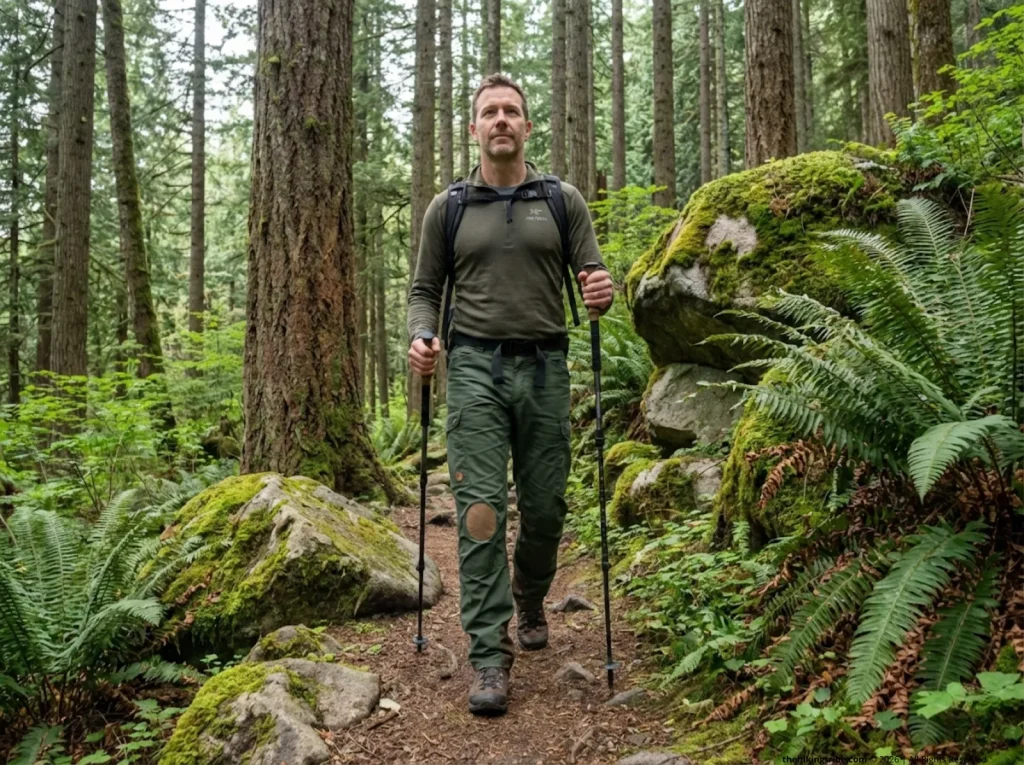
Quality hiking pants cost $80 to $150 or more. A roll of Tenacious Tape costs five to eight dollars and handles ten or more repairs. One patched pair kept in rotation for an extra two to three years saves over $200 compared to replacement cycles. The math is embarrassingly simple once you do it, and yet most hikers toss pants at the first serious rip.
The environmental side matters too. Manufacturing new gear from petroleum-based nylon consumes water, energy, and raw materials that a five-dollar tape repair eliminates entirely. The full gear lifecycle from repair to recycling starts with keeping what you already own in service as long as possible.
Self-Reliance as a Trail Skill
Field repair capability isn’t a last resort. It’s a core backpacking skill that separates hikers who stay on trail from hikers who spend unexpected zero days in town replacing outdoor gear. Washington Trails Association’s guide to mending before spending frames this exactly right. The ability to fix your gear in the field is part of responsible outdoor practice, right alongside choosing between hiking pants and leggings for different conditions.
Every thru-hiker I’ve met who finished their trail knew how to patch pants, seal a leaking tent seam, and fix a busted backpack strap. It’s not glamorous. But it’s what keeps you moving forward when something rips 30 miles from the nearest town.
Conclusion
Three things decide whether your hiking pants patch lasts a week or lasts years. Rounded corners, a clean surface, and a full 24-hour cure time before washing. Skip any one of those and you’re peeling tape by next Thursday.
Both-sides application on high-flex areas creates a mechanical lock that single-side patches can’t touch. It’s the technique that turns a trail band-aid into a permanent repair your pants can grow old with.
A three-ounce repair kit and the knowledge to use it is worth more than any pair of brand-new $120 pants sitting in your closet. Next time you catch your trousers on a branch or snag them on barbed wire, don’t trash them. Grab your tape, round those corners, and fix them right. Your wallet, the landfill, and your next 500 miles will be better for it.
FAQ
Does Tenacious Tape work on stretchy outdoor pants?
Yes, but apply to the inside only. Stretchy softshell fabrics like those on OR Ferrosi pull against outside patches, causing peeling. An interior patch conforms to your body and stays under compression rather than tension.
Can you wash pants repaired with Tenacious Tape?
Absolutely, if you wait 24 hours after application for the adhesive to fully cure. After that, properly applied Tenacious Tape survives repeated machine wash and dry cycles for months to years. SectionHiker documented six-plus months of weekly washing with zero degradation.
What is the best way to patch hiking pants without sewing?
Clean the area with isopropyl alcohol, cut a Tenacious Tape patch half an inch larger than the damage with rounded corners, and press firmly for 30 seconds. For high-stress areas like knees, tape both inside and outside to create a mechanical interlock that holds through active backpacking.
How do you repair burn holes in synthetic hiking pants?
Trim any melted or fused fabric edges first, because burned nylon won’t bond to adhesive. Then apply Tenacious Tape with the standard rounded-corner, clean surface protocol. For larger burns, use the both-sides technique with Seam Grip edge sealing for maximum durability.
Is it worth repairing hiking pants or should I just buy new ones?
Almost always worth repairing. A five-to-eight-dollar roll of tape handles ten-plus repairs and keeps $80 to $150 pants in service for years longer. Replace only when the fabric itself is UV-degraded or the damage exceeds four inches in a high-flex zone where no patch will hold.
Risk Disclaimer: Hiking, trekking, backpacking, and all related outdoor activities involve inherent
risks which may result in serious injury, illness, or death. The information provided on The Hiking Tribe is for
educational and informational purposes only. While we strive for accuracy, information on trails, gear, techniques,
and safety is not a substitute for your own best judgment and thorough preparation. Trail conditions, weather, and
other environmental factors change rapidly and may differ from what is described on this site. Always check with
official sources like park services for the most current alerts and conditions. Never undertake a hike beyond your
abilities and always be prepared for the unexpected. By using this website, you agree that you are solely
responsible for your own safety. Any reliance you place on our content is strictly at your own risk, and you assume
all liability for your actions and decisions in the outdoors. The Hiking Tribe and its authors will not be held
liable for any injury, damage, or loss sustained in connection with the use of the information herein.
Affiliate Disclosure: We are a participant in the Amazon Services LLC Associates Program, an
affiliate advertising program designed to provide a means for us to earn advertising fees by advertising and linking
to Amazon.com. As an Amazon Associate, we earn from qualifying purchases. We are also an official affiliate partner
of Black Diamond Equipment via the AvantLink network. If you click on a Black Diamond affiliate link and make a
purchase, we may earn a commission at no additional cost to you. We also participate in other affiliate programs and
may receive a commission on products purchased through our links. Additional terms are found in the terms of
service.