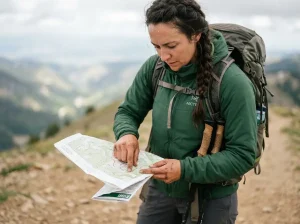
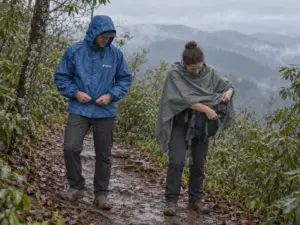
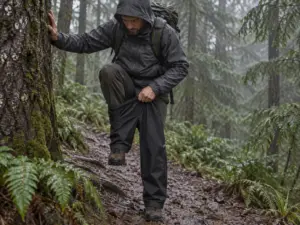
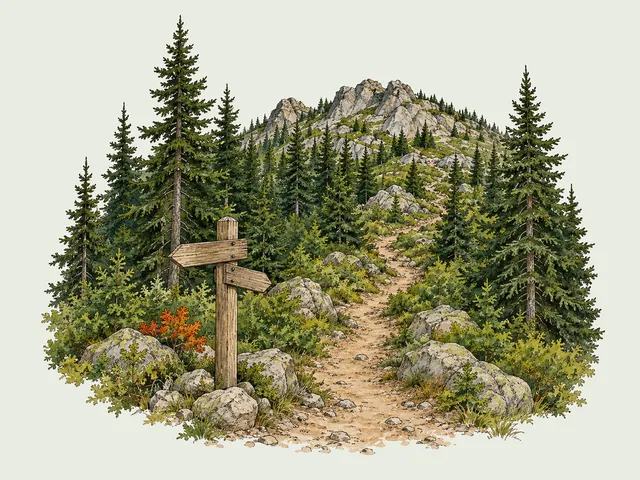
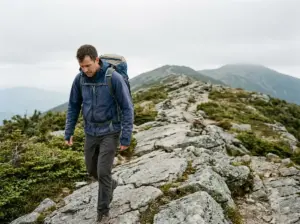
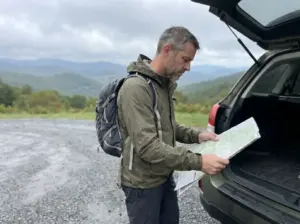
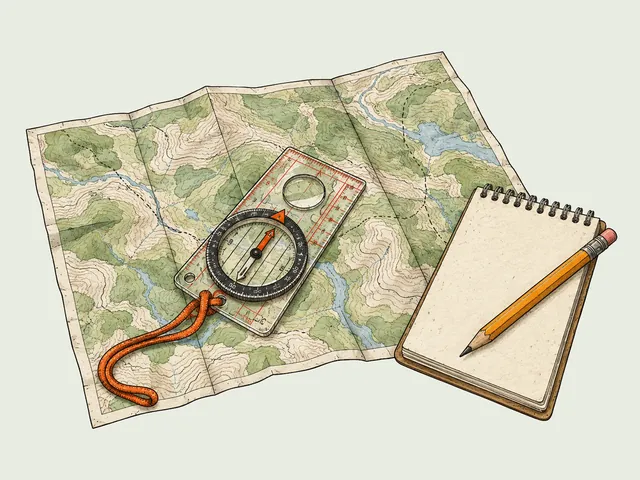
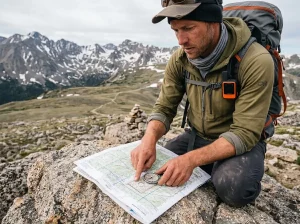
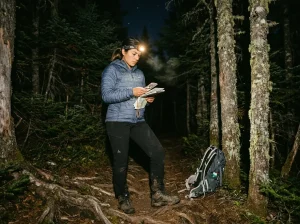

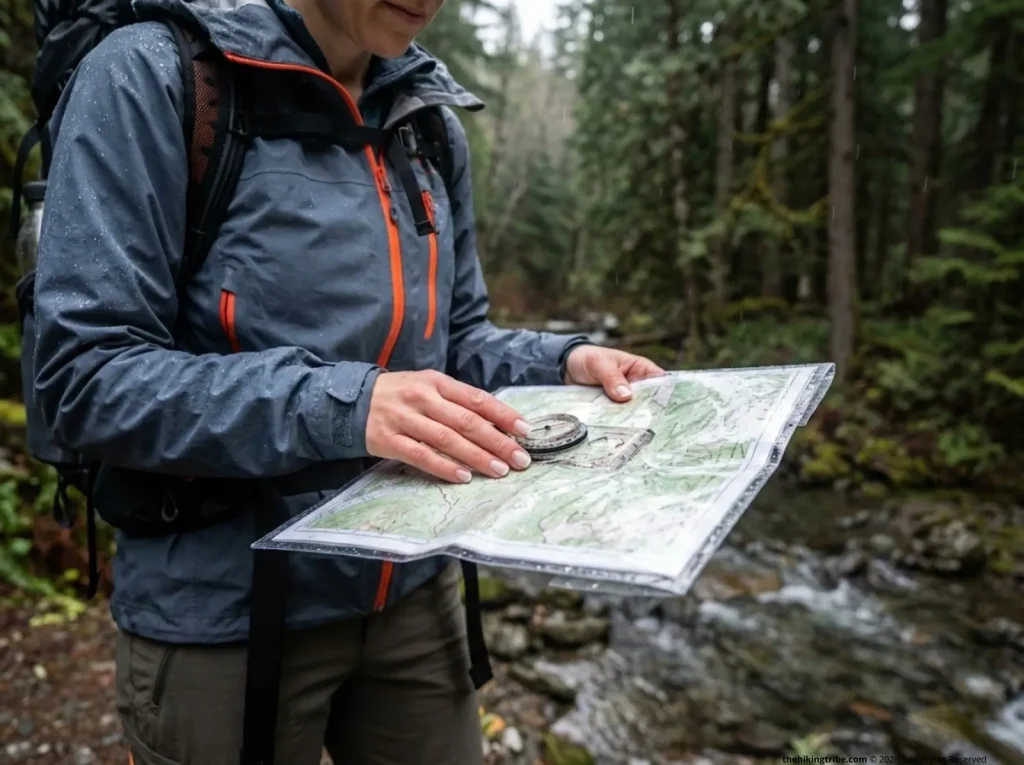
The rain hit sideways at the drainage fork. I pulled my CalTopo print from my cargo pocket, and the contour lines bled together like wet ink on a napkin. The ridge route — the one I needed — dissolved between my fingers. I stood there with two valleys ahead and a fistful of wet pulp where my paper topographic map used to be.
That was the last time I carried an unprotected paper topo into the backcountry. Since then, I’ve tested five different waterproofing methods across river fords, three-day storms, and months of pocket abuse. Some held up. Others turned my maps into wrinkled bacon. Here’s exactly what works, what fails, and how to pick the right method for your next trip.
⚡ Quick Answer: The most reliable paper map waterproofing field methods are diluted RTV silicone impregnation (best for multi-day river trips), Camp Dry aerosol spray (fastest for day hikes), and printing on iGage waterproof paper (zero treatment needed). Each method offers different trade-offs in cost, durability, and writability. Match your choice to your trip type — a day hike in drizzle needs different protection than a week-long route through boundary waters.
Why Paper Maps Fail in Wet Conditions
How Water Destroys Standard Paper Fibers
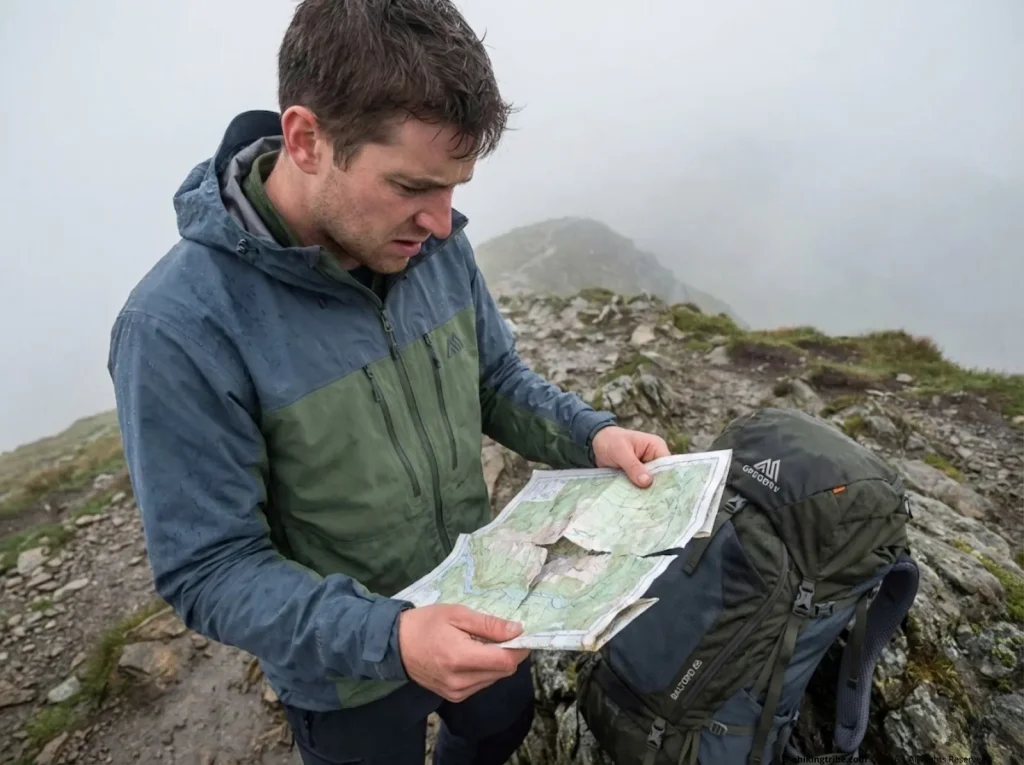
Standard paper absorbs moisture through capillary action within seconds of contact. The cellulose fibers swell, weaken, and pull apart — and every contour line, trail marker, and elevation number bleeds into mush. A CalTopo print on basic 20 lb bond paper becomes unreadable after about fifteen minutes of steady rain.
The real damage happens at fold lines. That crease where you’ve been bending the map back and forth all morning? That’s where wet paper tears first. The fibers are already stressed from folding, and once water gets in, they separate under almost no force. Your topo maps fail exactly where you handle them most.
When you’re reading topographic maps with confidence on a sunny afternoon, standard paper works fine. The moment weather rolls in, you discover why pre-trip waterproofing matters more than most hikers think. Reliable backcountry navigation starts before you leave the house.
When a Ziploc Bag Is Enough (And When It Isn’t)
A Ziploc 1-gallon freezer bag handles about 80% of day hikes without issues. Fold the map, slide it in, toss it in your hip pocket. Done. The problem shows up when you actually need to reference your map in real wet weather — punctures from pack contents, condensation fogging the plastic, and the hassle of pulling the map out every time you need to check a bearing.
For multi-day trips, river fords, or sustained downpours, bags alone fall short. Water finds the seal gaps under pocket pressure. The bag fogs from your body heat. And you can’t write field notes without removing the map entirely. If your route crosses water, you need a standard protection method that goes beyond a plastic bag.
Pro tip: pair an untreated map with a freezer bag for casual day hikes. Upgrade to a treatment method the moment your route involves water crossings or multi-day exposure.
Surface Coating vs. Fiber Impregnation — The Critical Difference
This is the concept most hikers miss. Surface coatings — sprays, laminates, seal spray — create a barrier ON TOP of the paper. They can peel, crack at creases, or trap water at unsealed edges. Fiber impregnation saturates the paper internally, creating a hydrophobic surface throughout the entire material.
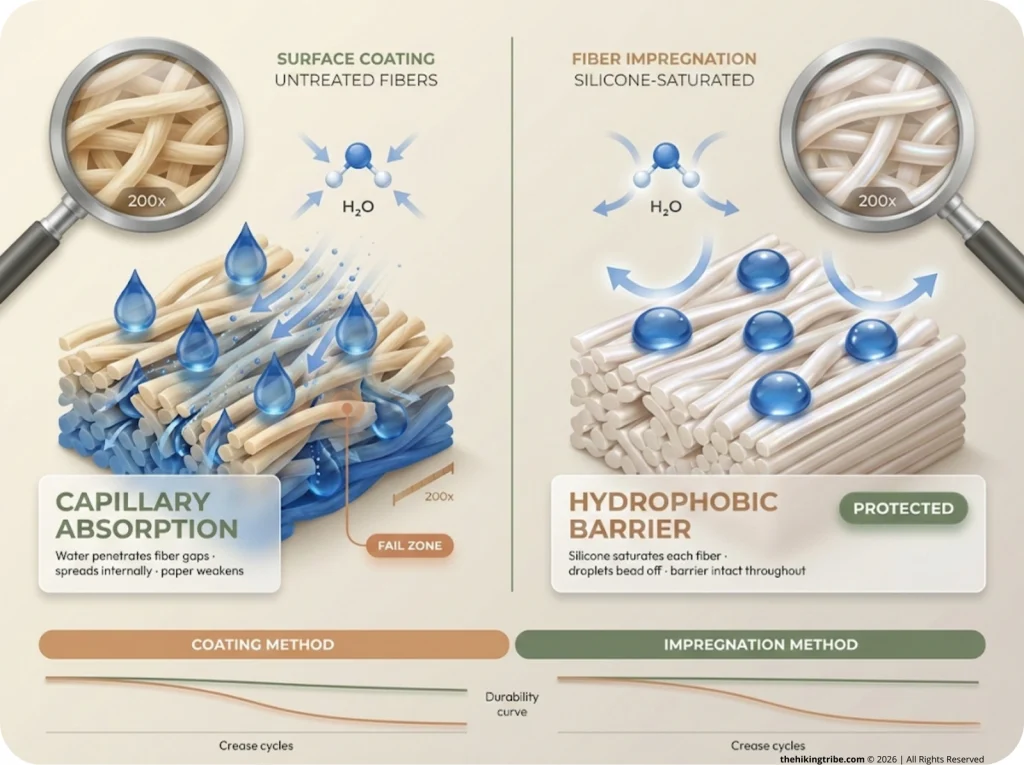
Think of it like waterproofing a tent versus waterproofing a dry bag. One has a coating that wears off. The other IS the barrier. Understanding this distinction is the key to choosing the right waterproof method for your trip type, and it explains why some maps survive river crossings while others fall apart after heavy pocket carry.
Method 1: Diluted RTV Silicone Impregnation
What You Need and How the Chemistry Works
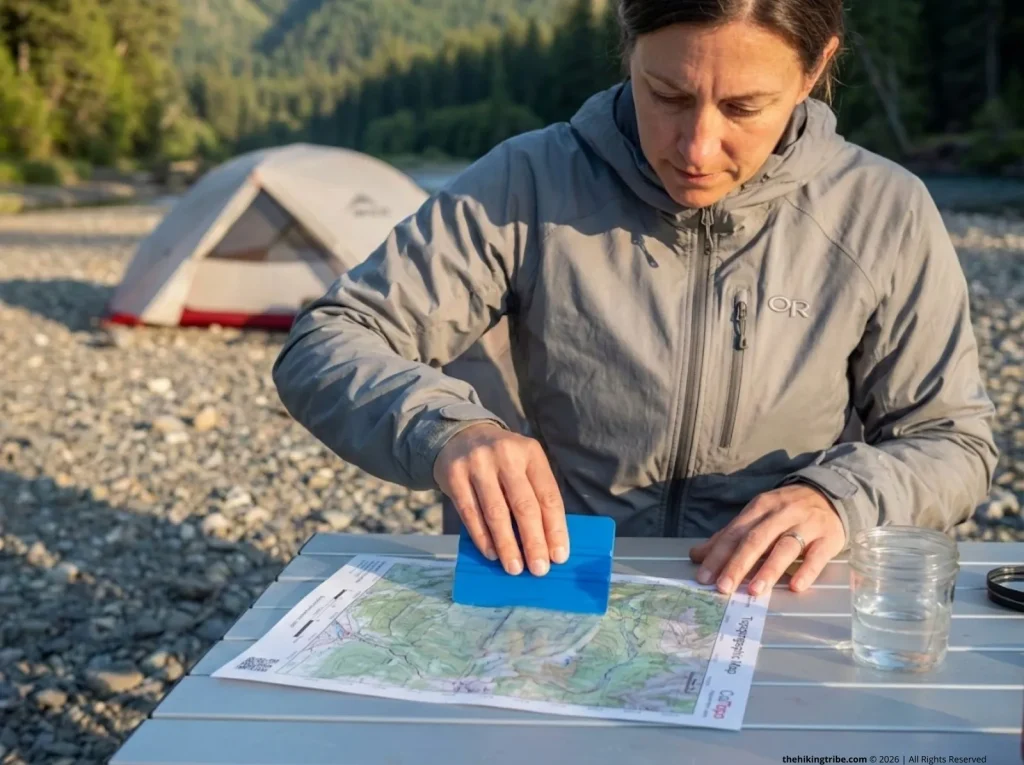
The diluted RTV silicone rubber treatment is the gold standard for multi-day map durability. You need three things: clear acetic-cure bathroom sealant (about 5 grams), mineral spirits or mineral turpentine (about 15 grams), and a flexible squeegee or old credit card.
Mix the sealant into the mineral spirits until it dissolves into a thin, watery liquid. That liquid penetrates the cellulose fibers completely — not sitting on the surface, but soaking through to the core. As the solvent evaporates over 30 to 60 minutes, it leaves a pure silicone rubber matrix bonded throughout the paper. Full cure takes roughly 24 hours.
⚠️ Work in a well-ventilated area. Mineral spirits produce harmful vapors that you don’t want to breathe in a closed room.
Step-by-Step Application Process
Flip the map over. Always work from the unprinted side — the back — to avoid smudging toner during squeegee application. Apply the diluted silicone with your squeegee in even strokes, pushing it across the entire surface until the paper turns translucent. That temporary see-through look tells you the fibers are fully saturated.
Don’t touch the printed side until it’s completely dry. Hang the map or lay it flat on wax paper for 24 hours to cure. The acetic-cure RTV releases a vinegar smell as it sets — that’s normal. Once the smell fades, your waterproof topo map is ready for the trail.
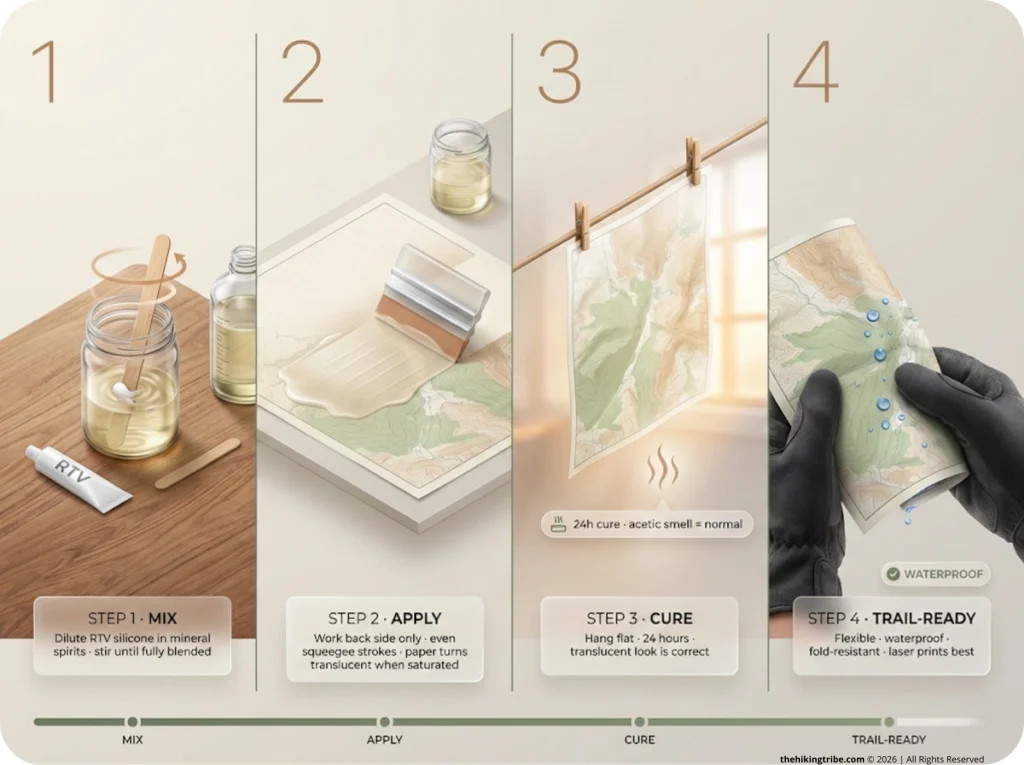
Pro tip: test a corner first. Some inkjet prints smudge during silicone application — laser and toner prints hold up far better. Always use CalTopo laser prints for the best results with this method.
Field-Test Results: 3-Day River Ford Abuse
Here’s where this method earns its reputation. A bushwalker named Tim Tinker — a respected ultralight DIY tinkerer in Australia — carried an RTV-impregnated map on a 3-day trek through Wonnagatta Valley. The map survived repeated folding, constant pocket carry, and multiple river crossings. It came back dog-eared but fully usable.
The submersion test was even more impressive. Tinker dropped the treated map into a wheelbarrow full of rainwater. It floated. The hydrophobic surface caused water droplets to bead and roll off. Every contour line stayed readable after submersion. The map retained a paper-like flexibility when wet — no stiffness, no cracking. That’s the difference between fiber impregnation and a surface coating.
If your route involves safe river crossing technique with trekking poles, this is the method that keeps your navigation intact while your boots are underwater.
Method 2: Aerosol Spray Waterproofing (Camp Dry and Alternatives)
Camp Dry: The Spray That Won the Field Test
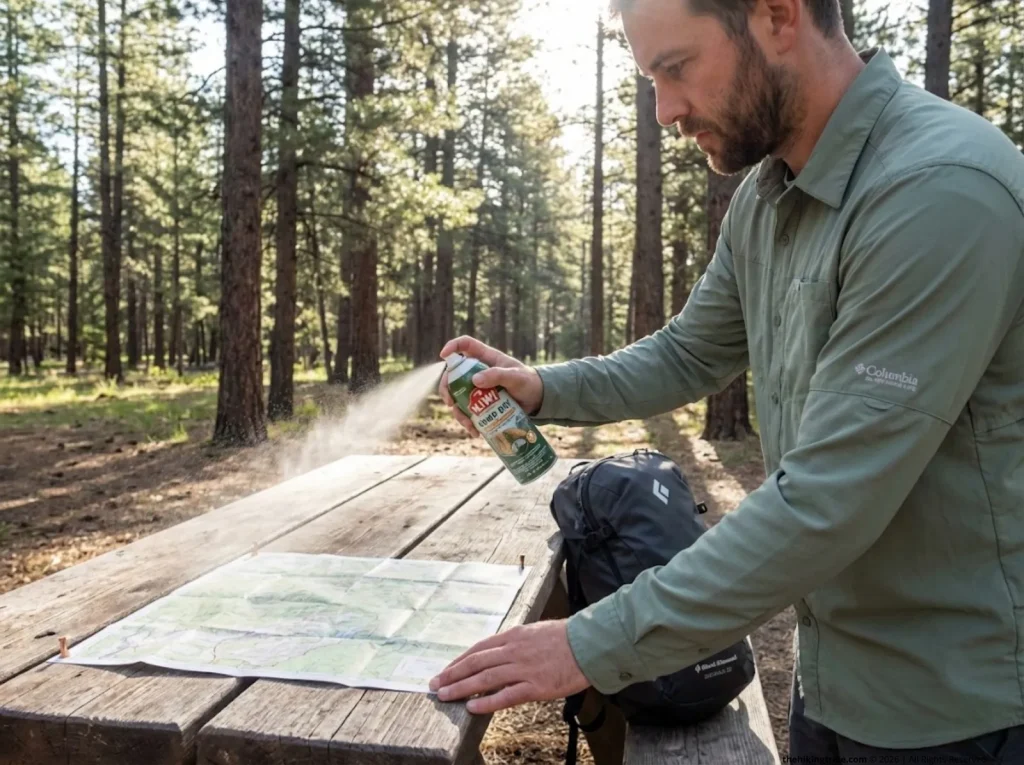
KIWI Camp Dry aerosol is the fastest path to a waterproof map. Hold the can 8 to 10 inches from the paper, spray in light sweeping passes, and let each coat dry fully — about 20 minutes — before adding the next. Three to four light coats create a fully water-resistant surface that handles rain and brief submersion without any wrinkling.
One field tester used Camp Dry for maps headed into an Alaskan sheep hunt after trying and rejecting several other products. His verdict: “I will never use anything else.” The key is patience — multiple light spray coats always outperform a single heavy application. That’s the universal rule across every spray method.
The cost works out to roughly $0.50 per map from a $10 can that treats 15 to 20 sheets. For day hikes and weekend overnights, this hits the best balance of speed, cost, and map readability.
Flex Seal, Gorilla Clear, and Other Spray Rubber Options
Flex Seal and Gorilla Clear spray rubber take waterproofing a step further by adding tear resistance. One tester wadded up a standard copy paper map, submerged it overnight — fully crumpled and soaking — and found zero water penetration the next morning. The map unfolded and dried flat.
The trade-off is feel. Spray rubber products create a thicker coating than Camp Dry, adding slight stiffness and reducing writability. If you need to write field notes on the map, Camp Dry is the better call. If you need a rip-resistant map that can survive being balled up in a wet cargo pocket for two days straight, spray rubber wins.
What NOT to Use: Map Seal and Paraffin Failures
Aquaseal Map Seal sounds perfect in theory — a brush-on polymer designed for maps. In practice, it soaks unevenly into paper fibers and causes severe wrinkling. One field tester described the result as looking “like a giant piece of bacon” that no amount of pressing could flatten.
Paraffin wax rubbing is the old-school method you’ll find in scouting manuals. It leaves the map permanently tacky, takes far too long to apply evenly, and produces inconsistent results. Thompson’s Water Seal shows up in forum threads but is too thick for fine topo print — it obscures detail rather than protecting it. Skip all three and use the same light-coat principle that works for tent seam sealing instead.
Method 3: Self-Laminating Sheets and Protective Barriers
3M Self-Laminating Sheets: Application and Edge Sealing
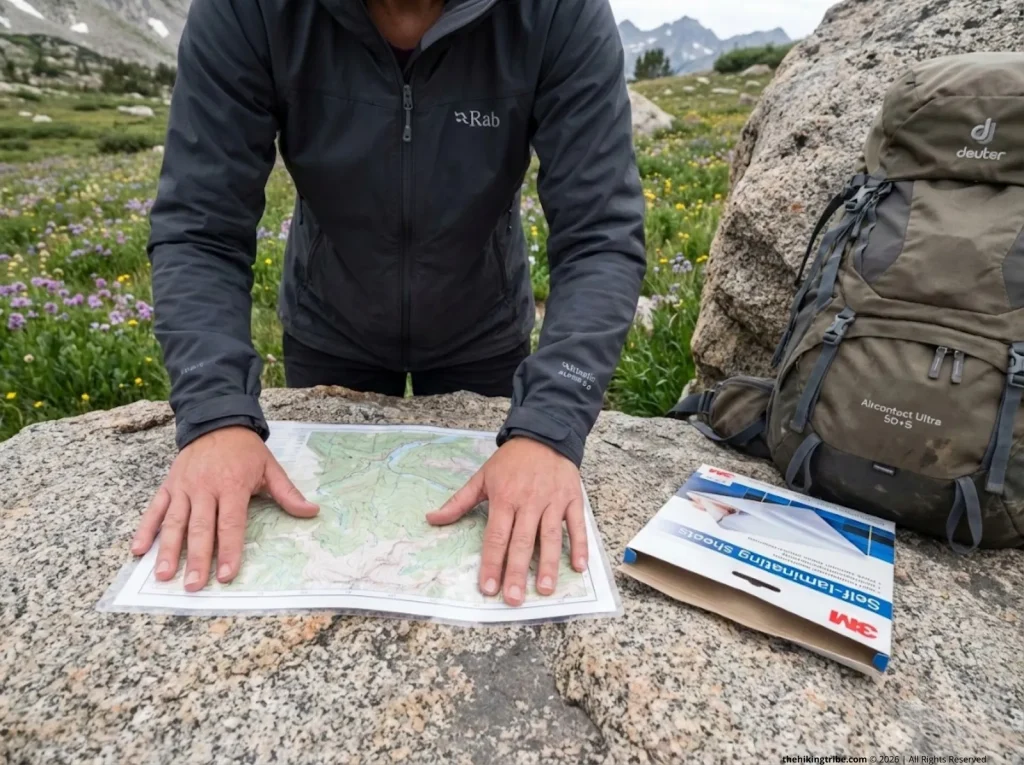
Self-laminating 3M sheets encase your map in clear adhesive film without requiring heat or special tools. Peel, press, smooth out the bubbles, and you’re done in 10 to 15 minutes. The critical detail is edge sealing — leave at least a quarter inch of film beyond the map edges on all sides. That sealed bag of clear film is your waterproof barrier.
A properly laminated map survives rain, repeated folding, and short submersion. And unlike spray treatments, laminated maps accept alcohol-soluble markers like Staedtler Lumocolor for erasable field notes. Write your compass bearings, wipe them off after the trip, and the map is ready for next time.
The Fold-Line Weakness: Why Laminated Maps Fail in the Field
Here’s what nobody tells you about paper map lamination. Every time you fold and unfold a laminated map, the crease creates micro-channels in the adhesive seal. Water enters through those fold-line failures and gets trapped BETWEEN the laminate and paper. After five to ten heavy fold-unfold cycles in your pocket, the edge seals begin separating.
This is why lamination works for day hikes but breaks down on multi-day trips with constant pocket abuse. The pressure from pocket carry compromises seals over time — and once water gets under the film, there’s no getting it out. For overnights, pair lamination with a Ziploc backup. For anything longer, choose RTV silicone or synthetic paper instead.
Understanding waterproof ratings and what they actually mean on the trail helps explain why barriers under pressure always eventually fail.
Method 4: Synthetic Waterproof Paper (Print and Forget)
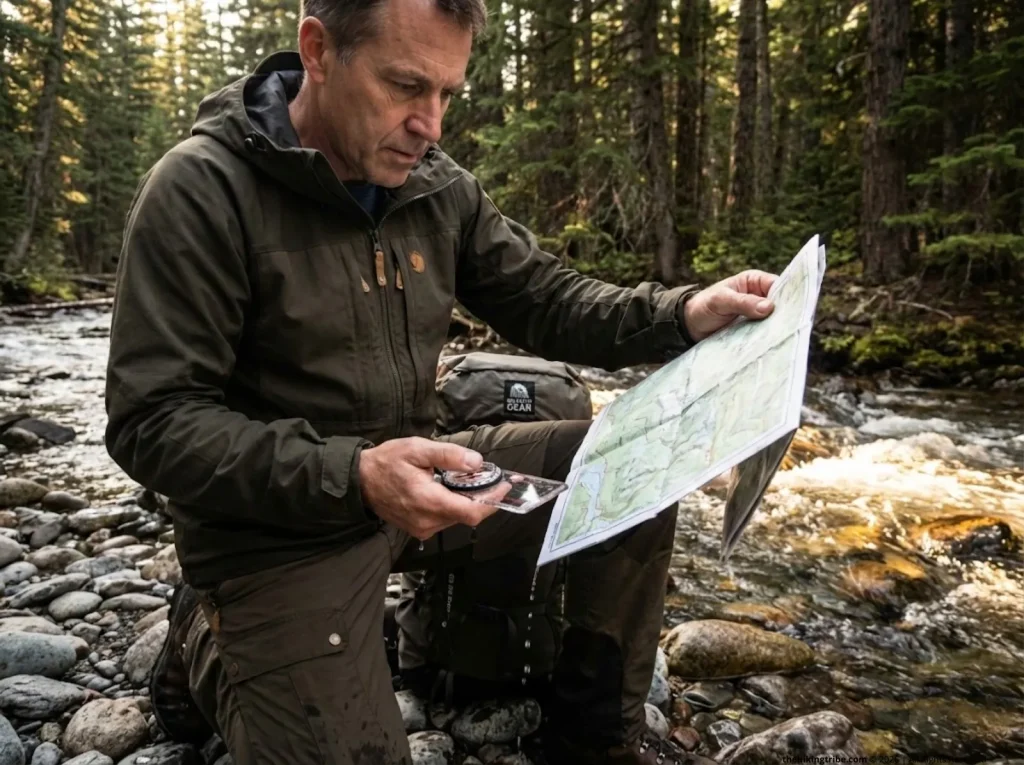
iGage and YUPO: What Synthetic Paper Actually Is
iGage waterproof paper and YUPO synthetic paper aren’t treated paper — they’re a completely different material. These synthetic waterproof materials (8 or 10 mil thickness) reject moisture entirely. They don’t absorb water because there are no cellulose fibers TO absorb it. The result is a sheet that resists tearing, survives submersion, and folds without degrading.
A box of 50 iGage sheets runs $35 to $40, working out to about $0.60 to $0.80 per map. That’s more expensive than a DIY spray treatment, but you’re getting a tough waterproof map that needs zero preparation. Print it. Fold it. Forget about it.
When you’re pairing a printed topo with the right baseplate compass, synthetic paper gives you the most reliable hiking map for wet environments — no treatment anxiety, no wondering if the coating will hold.
How to Print on Synthetic Paper at Home or FedEx
Load iGage sheets into your home color laser printer’s manual feed tray and print your CalTopo or USGS map export directly. The sheets run through standard printers with no special settings. Avoid inkjet — the polymer surface causes inkjet ink to smudge. Laser toner bonds cleanly and permanently.
For those without a laser printer, FedEx Office and Staples locations will usually accommodate your own paper. Bring your sheets and ask staff to load tray 1 manually. Most locations do it without issue. For guidance on optimal print settings, Oregon State University Extension guidance on printing durable topographic maps covers the process for different printer types.
Pro tip: print on iGage at FedEx with your own sheets. Ask staff to load tray 1 manually — most locations will do it. One box of 50 sheets gives you a season’s worth of trail maps across every route you hike.
6-Month Nalgene Storage Test: Long-Term Durability Proof
Andrew Skurka — a long-distance hiker and author — rolled an iGage-printed map inside a 1-quart Nalgene bottle. Six months later? Zero degradation. No yellowing, no cracking, no ink fading from temperature swings. The map came out identical to when it went in.
For hikers who reuse the same route maps season after season, synthetic paper offers unmatched long-term value as durable maps you can trust trip after trip. The higher per-sheet cost disappears when you factor in unlimited reuse and zero treatment time. You can source free USGS topographic quadrangles from the National Geologic Map Database and print them on iGage sheets for the best combination of accuracy and durability.
Writing on Waterproofed Maps: Marker Compatibility by Method
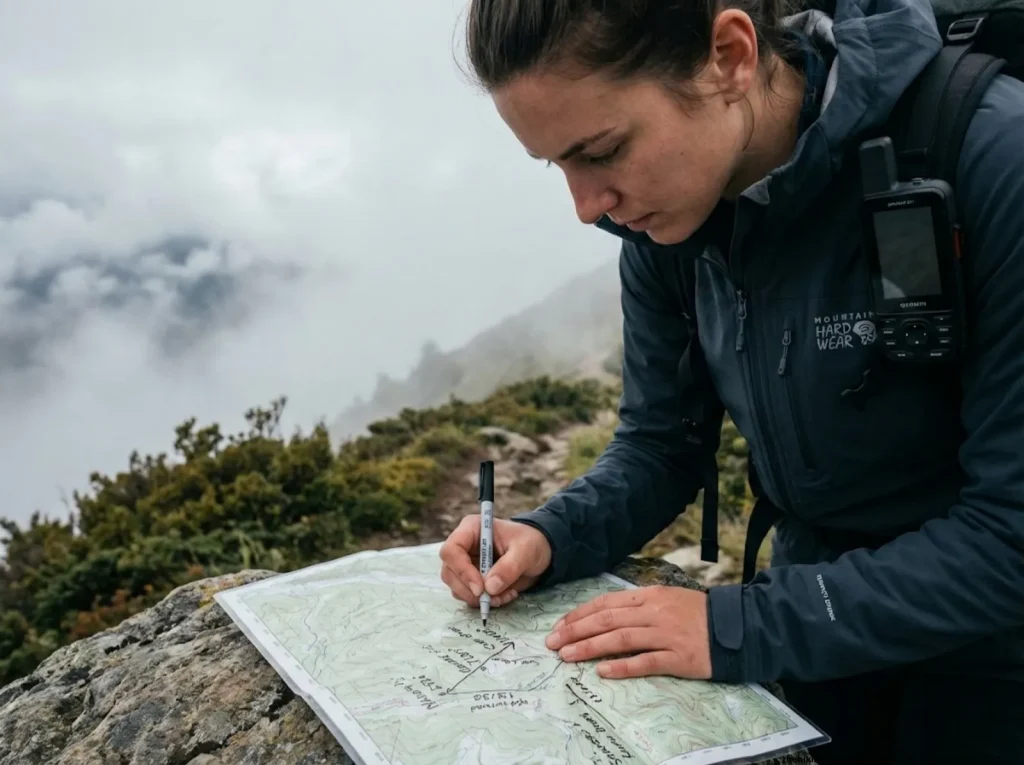
Marker Testing: Sharpie, Lumocolor, and Grease Pencil Results
This is the question everyone ignores — can you still mark waypoints and bearings on a treated map? The answer depends entirely on the marker and the treatment method.
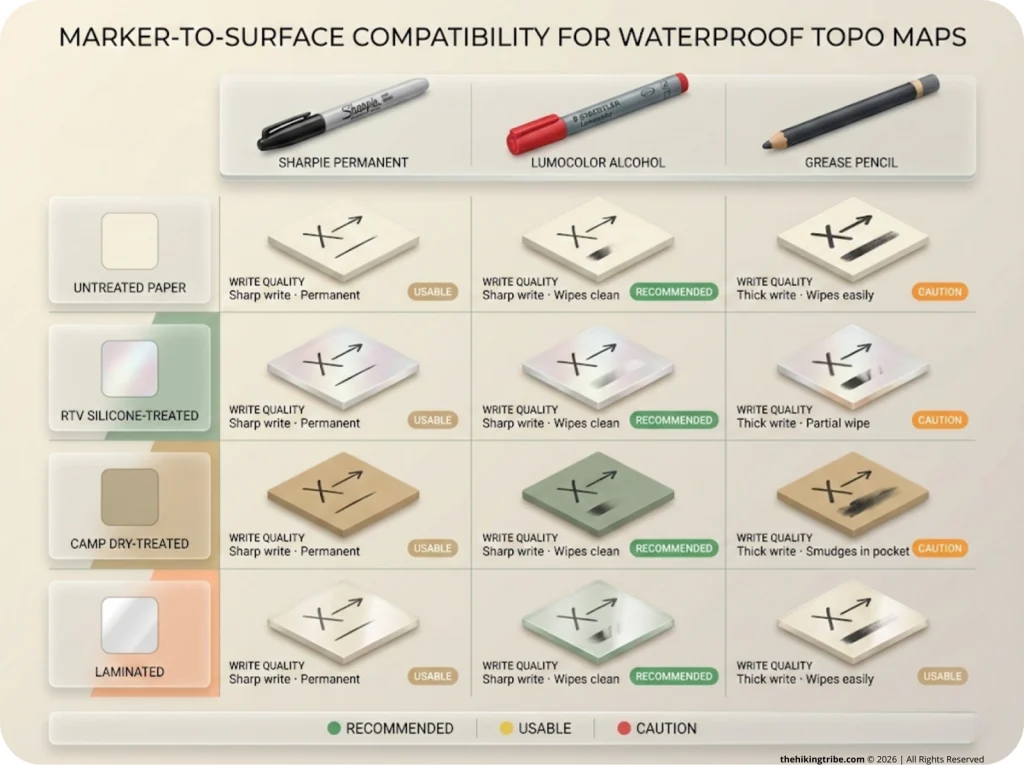
Staedtler Lumocolor alcohol-soluble markers write cleanly on both silicone-treated and laminated surfaces. The ink goes on sharp and wipes off with vigorous rubbing — perfect for removable marking on a map you plan to reuse. Sharpie permanent marker works on every treated surface but won’t erase. Grease pencil writes on anything and wipes off easily, but smudges in your pocket within an hour. On RTV-impregnated paper, fresh marks can be partially wiped off with rubbing — which is either a feature or a problem depending on your use case.
Compass Bearings on a Wet Map: What Actually Works
Taking compass bearings on a wet treated map requires the baseplate to slide smoothly across the surface. Silicone-treated and synthetic waterproof surfaces work well — the compass glides without catching. Laminated surfaces can create glare from water droplets, reducing map readability under overcast light.
For serious navigation in rain, mark your bearing points with a grease pencil before you leave the trailhead. If the map gets wet, the marks survive and you save time not fumbling with markers in a downpour. And make sure you’re adjusting for magnetic declination before plotting your bearing — a waterproof map won’t help if your bearing is off by 15 degrees.
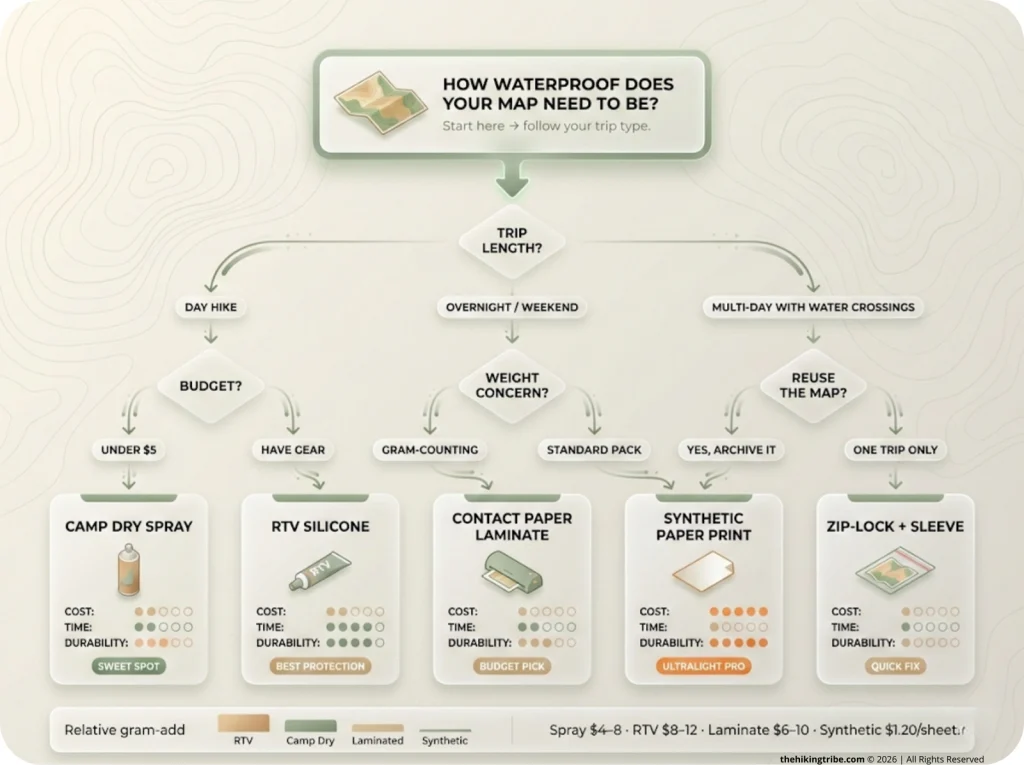
Choosing Your Method: The Decision Matrix
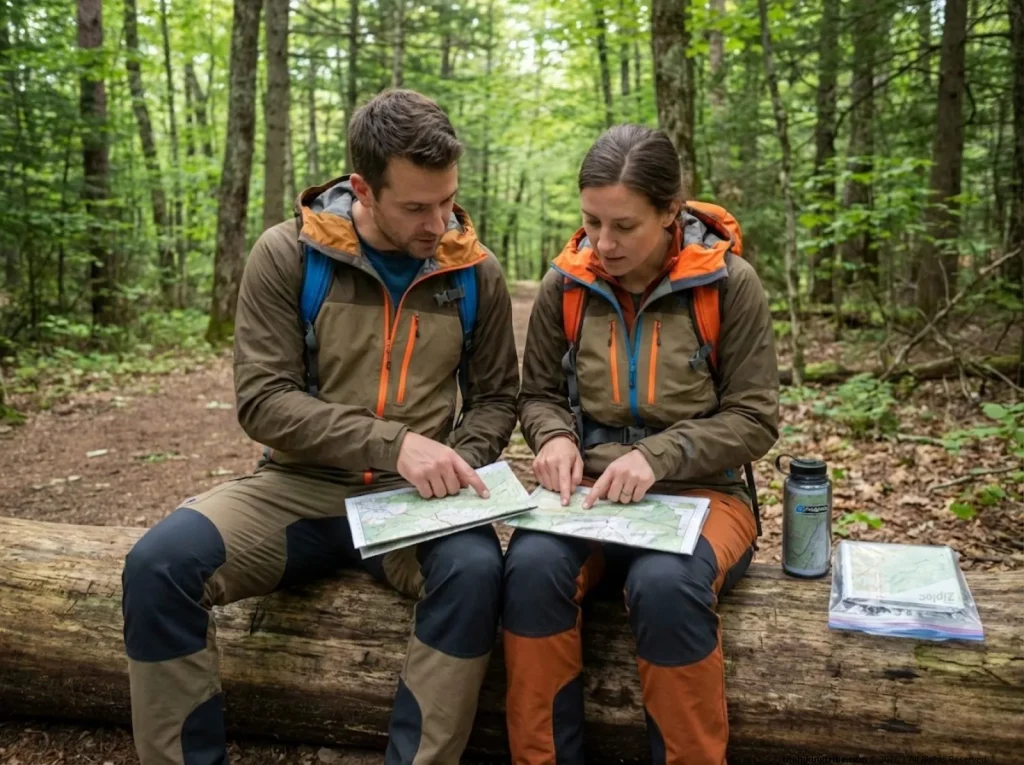
Day Hike vs. Multi-Day River Trip: Match Method to Mission
No single method is best for every trip. A Ziploc bag at $0.10 handles a sunny trail day with a chance of showers. Camp Dry at $0.50 per map covers rainy weekend overnights. RTV silicone at roughly $0.30 in materials delivers the most durable waterproof map for sustained multi-day abuse with river fords. And iGage at $0.60 to $0.80 per sheet gives you a permanent waterproof solution you never have to treat again.
Match the method to the mission. A day hike through possible drizzle doesn’t need the same protection as a week-long traverse through boundary waters. Spend two minutes thinking about what your map will face, and you’ll choose the right method every time.
Weight, Cost, and Durability Breakdown
Weight matters to every hiker, especially ultralight packers counting every gram. RTV silicone adds minimal weight to a standard print. Camp Dry adds slightly more depending on how many coats you apply. Lamination approximately doubles the weight of a standard paper map. Synthetic paper weighs more per sheet than bond paper but adds zero treatment weight.
The cost vs durability tradeoff is straightforward. Cheap and fast methods like spray trade longevity for convenience. Expensive methods like synthetic paper trade upfront cost for unlimited durability. For most hikers on most trips, Camp Dry hits the sweet spot between protection, weight, and cost.
In-Field Emergency Fixes When You Forgot to Prep
You’re at the trailhead, rain moving in, and your map has zero protection. Fold it inside a Ziploc freezer bag and keep it in your hip belt pocket — not buried in the pack where you won’t pull it out. If you don’t have a bag, wrap the map in a section of emergency space blanket and secure it with a rubber band.
If the map is already partially wet, let it air dry completely before folding. Wet folds become permanent weak points that tear on the next opening. And carry a spare printed map in a dry bag inside your pack — because you should never rely on any single outdoor document in the backcountry.
Keeping your entire kit dry starts with keeping your pack contents dry with a liner system. Your next field-ready paper map deserves the same protection you give your sleeping bag.
Pro tip: always carry a lightweight backup of your route. Print two copies — one treated, one untreated in a Ziploc. Total cost: under $2. Total peace of mind: immeasurable.
Conclusion
Three takeaways from hundreds of wet miles and too many ruined paper maps. First, understand the difference between surface coating and fiber impregnation — it determines whether your map survives a storm or just a drizzle. Second, match your method to your mission: Camp Dry for day hikes, RTV silicone for river trips, iGage for maps you plan to reuse all season. Third, always test your treated map before you need it — a five-minute submersion test at home beats discovering failure at a trail junction in the rain.
Pick one method from this guide. Treat your next trail map before your next trip. Then throw it in the sink, fold it, write on it, and see for yourself what survives. That five minutes of testing at your kitchen counter is worth more than any gear review you’ll ever read.
FAQ
How do you waterproof a paper map for hiking?
The most reliable method is diluted RTV silicone impregnation, which saturates the paper fibers to create a flexible, hydrophobic composite. For faster prep, spray multiple light coats of Camp Dry aerosol and let each coat dry fully. Both methods survive rain and brief submersion while keeping the map foldable and readable.
Can you write on a waterproofed map?
Yes, but marker choice matters by method. Staedtler Lumocolor alcohol-soluble markers write cleanly on silicone-treated and laminated surfaces and can be erased. Sharpie works on all treated surfaces but is permanent. Grease pencil writes on anything but smudges during pocket carry.
Does Map Seal work on topographic maps?
Map Seal (Aquaseal) is not recommended. The brush-on application soaks unevenly into paper fibers, causing severe wrinkling that cannot be flattened. Field testers describe the result as looking like a giant piece of bacon. Camp Dry spray or RTV silicone produce far better results with no distortion.
How do you protect a map from rain without laminating?
Three options from fastest to most durable. Seal it inside a Ziploc 1-gallon freezer bag for basic rain protection. Spray multiple light coats of Camp Dry for moderate water repellency. Or apply diluted RTV silicone to the back and let it cure for 24 hours for serious backcountry protection. All three preserve foldability better than paper map lamination.
Is waterproof paper worth the cost for hiking maps?
For hikers who reuse the same route maps across multiple trips, absolutely. iGage waterproof paper costs $0.60 to $0.80 per sheet and survives indefinitely — a 6-month Nalgene storage test showed zero degradation. For one-time use on a single trip, DIY spray treatment at $0.30 to $0.50 per map is more cost-effective.
I've spent more than a decade researching hiking gear and trail technique. I read the specs, the forum threads and the long-term reviews, and every pick here comes with what it gets wrong.
End of the trail
You read every mile of this one. Here's where the trail goes next.