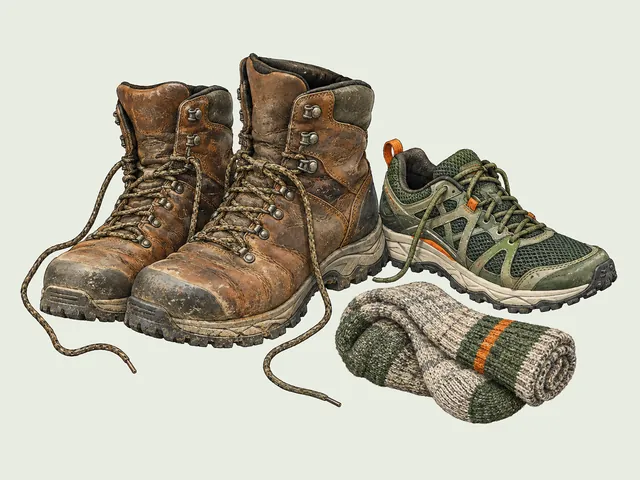
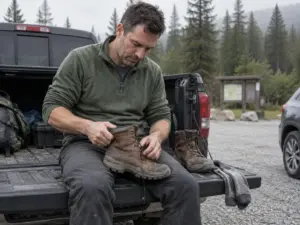


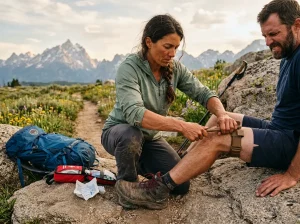
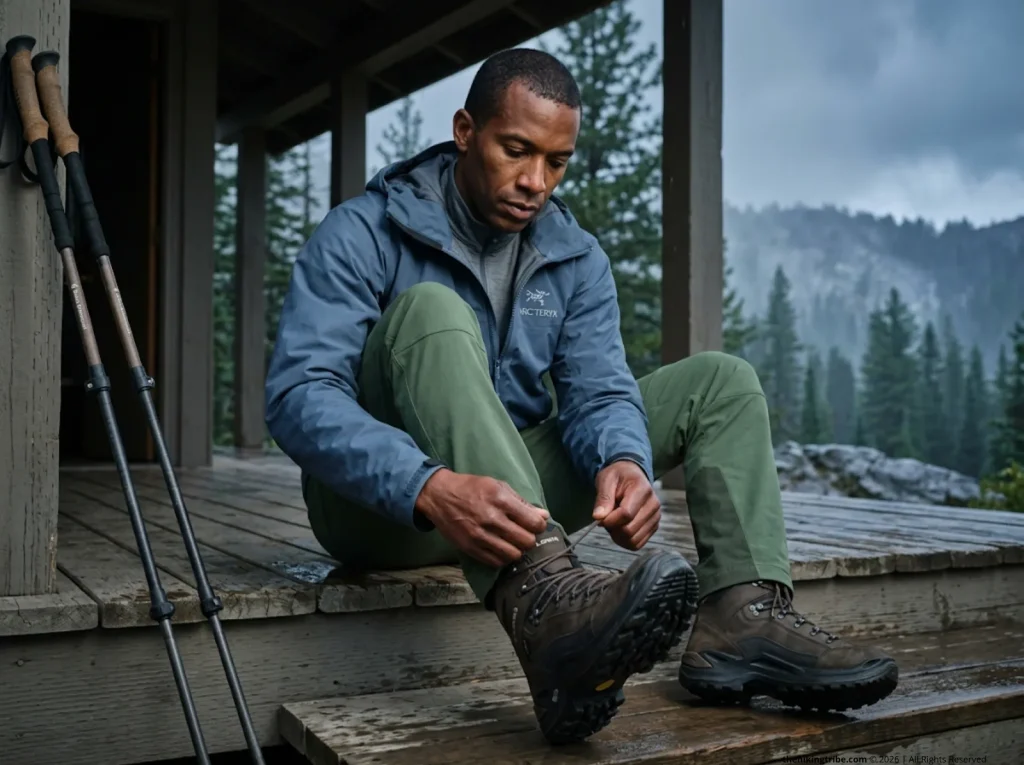
The creek crossing looked knee-deep at most. Two steps in, the current punched through to my thighs, and both boots flooded to the collar. Camp was still four miles out. I had ten hours before sunrise and a 16-mile ridgeline push that demanded dry footwear. What I did next determined whether the morning started with trail-ready boots or the first stages of trench foot.
After years of guiding in the Pacific Northwest—where “dry” is a relative term from October through May—I’ve wrecked enough boots to know what works and what sends a $300 pair to the trash overnight. This guide covers the drying protocols that remove moisture without destroying the adhesives, membranes, and leather that keep boots performing for hundreds of miles.
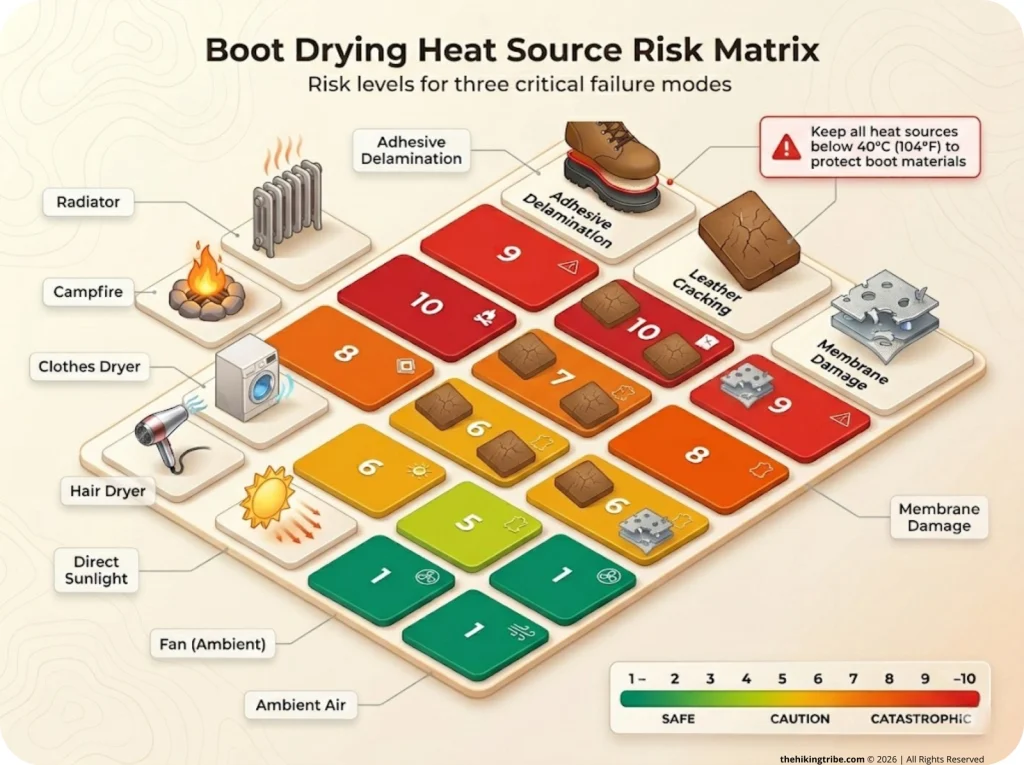
⚡ Quick Answer: Never use direct heat to dry hiking boots. Pull the insoles, remove the laces, and point a fan directly into the boot openings at room temperature. For backcountry situations, fill a Nalgene with near-boiling water and place it inside the boot for 30–45 minutes, then stuff with dry material. Keep all heat sources below 40°C (104°F) to protect boot adhesives and Gore-Tex membranes. Match the drying method to your environment: fan and dehumidifier at home, hot water bottle in camp, desiccants in an emergency.
Why Heat Destroys Hiking Boots (And What Actually Works)
The Adhesive Meltdown: How Radiators Wreck Soles
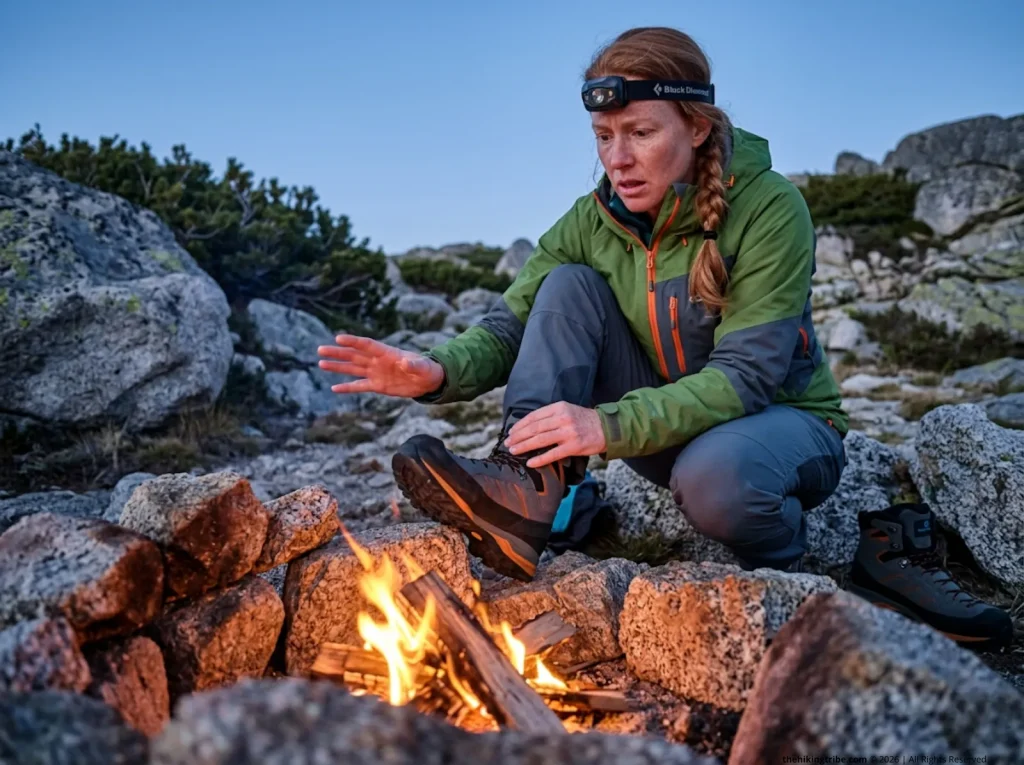
The most obvious fix—parking your boots next to a heat source—is the fastest route to wrecking them. The thermoplastic adhesives bonding your outsole to the midsole soften around 40°C (104°F). A household radiator runs 50–70°C. A campfire can spike past 200°C in localized spots, cracking leather, melting synthetics, and destroying seam tape in minutes. Both Lowa and Scarpa warn against any direct heat source and recommend room-temperature drying in ventilated spaces.
Pro tip: I once set boots “a safe distance” from a campfire ring—about two feet. By morning, the toe caps had curled upward and the rubber outsole had separated at the forefoot. Two feet isn’t safe. Six feet barely passes.
If you want to understand how Goodyear welt and cemented construction differ, the differences in boot construction explain exactly why these adhesive layers are so vulnerable to heat.
Hydrolysis: The Invisible Sole Wrecker
Polyurethane midsoles—the standard on premium mountain boots from Scarpa and Lowa—undergo a chemical breakdown called hydrolysis. Water molecules attack the polymer bonds from the inside. The weird part? This process accelerates when boots sit damp in storage, not when you’re wearing them. Regular compression from walking actually squeezes out moisture and keeps the material flexible.
Boots stored damp in a garage, car trunk, or sealed plastic bag for extended periods can crumble at the midsole without any visible warning. One morning you lace up and the sole literally falls apart mid-hike. PU soles begin showing degradation after 4–5 years even with proper care, but damp storage can cut that window in half.
Why the Gore-Tex Membrane Complicates Everything
Gore-Tex and other ePTFE membranes contain microscopic pores 20,000 times smaller than a water droplet but 700 times larger than a water vapor molecule. That’s what makes them waterproof yet breathable—and it’s also what makes drying complicated.
The real problem is wet-out. When the outer fabric saturates, it forms a liquid barrier that shuts down breathability until the exterior dries. High heat can delaminate these membranes permanently. In my experience, scrubbing the exterior free of dirt before drying matters just as much as stuffing the interior—mud clogs the DWR finish and traps wet-out conditions. A peer-reviewed analysis of waterproof breathable membrane performance confirms that the pore structure is precise, and heat disruption is irreversible.
The Physics of Safe Drying: Airflow Beats Heat Every Time
Boundary Layer Disruption: The Science Behind the Fan
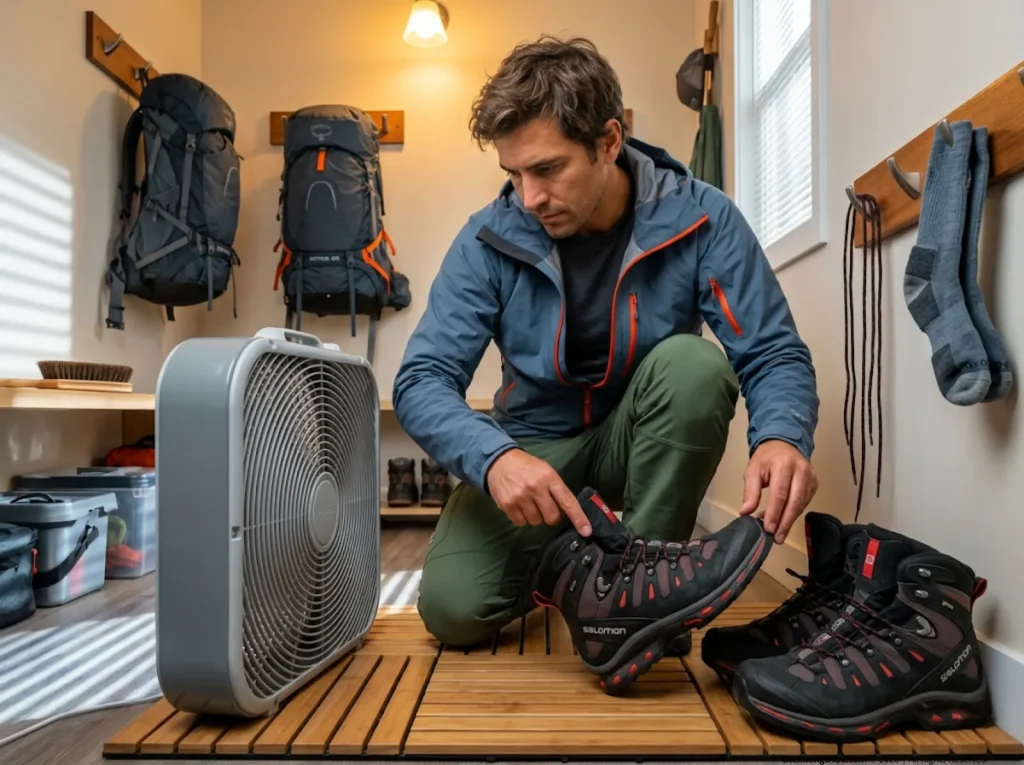
Evaporation speed depends on air velocity, available surface area, and the vapor pressure difference between the boot and surrounding air. In still air, a saturated boundary layer forms around the wet material and halts evaporation. Moving air strips that layer away continuously.
A household fan pointed at the boot opening is the single most effective safe drying method. Removing insoles and laces opens the boot’s throat to airflow and dramatically increases internal surface area for evaporation.
Material-Specific Dry Times (The Numbers No One Publishes)
Controlled drying trials at 72–76°F, 28% humidity, and 4–7 MPH wind revealed sharp differences. A mesh trail racing shoe shed 80% of its moisture in 2 hours and fully dried in about 2.5 hours. A full-grain leather hiking boot? It held onto 72% of its absorbed water at the 2-hour mark and needed 5.5+ hours to approach dryness.
Full-grain leather absorbs up to 8.6 oz of water thanks to its dense fiber structure. Synthetic mesh absorbs just 2.6 oz. Nubuck leather’s sanded nap increases effective surface area, so it dries faster than smooth full-grain (12–24 hours vs 24–48 hours ambient), but the trade-off is deeper water penetration.
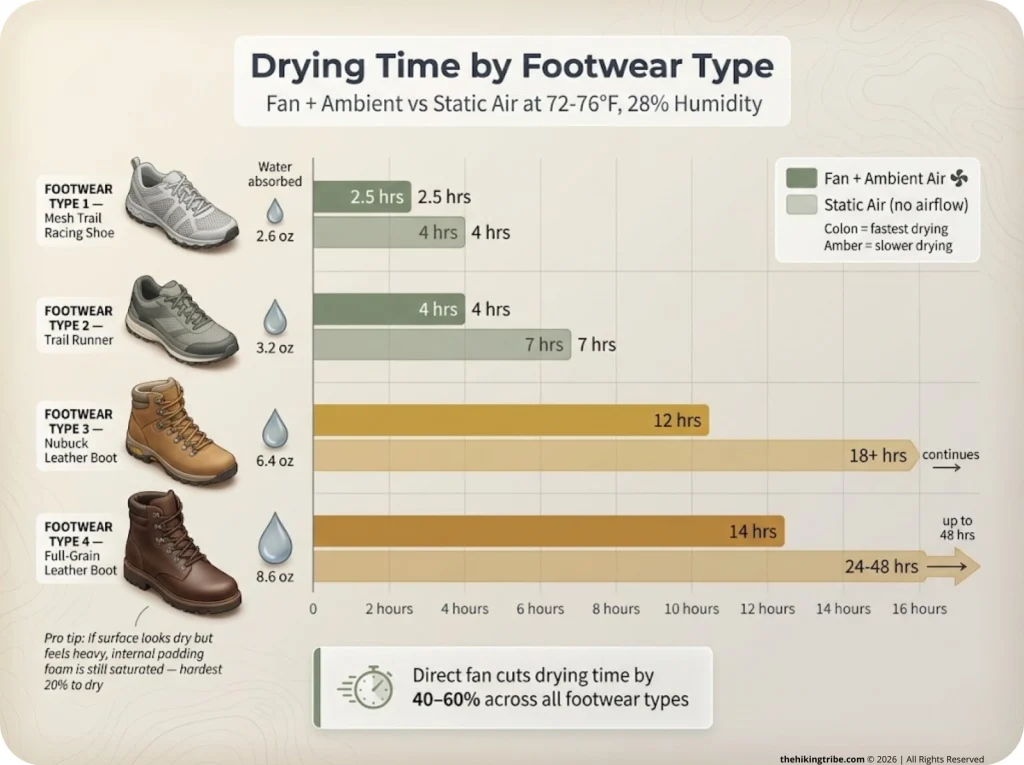
Pro tip: If the boot surface looks dry but still feels heavy, the internal padding foam is still saturated. That reservoir holds the last 20% of moisture and is the hardest to reach without desiccants or active airflow.
The Humidity Factor: Why Your Garage Doesn’t Work
Relative humidity below 30% pulls moisture out fast by maintaining a strong vapor pressure gradient. A humid garage, mudroom, or car trunk traps moisture instead of removing it—creating the exact conditions that accelerate hydrolysis and delamination. That’s why manufacturers specify “well-ventilated” spaces. It’s about humidity control, not just temperature.
A dehumidifier in a small closet or bathroom creates a micro-climate with dramatically lower relative humidity. It pulls deep-seated moisture from leather far more efficiently than a fan alone. If you’re serious about proper gear storage that prevents mold and delamination, humidity management is the foundation everything else rests on.
The Home Protocol: Precision Drying With Household Tools
Step 1: Decontaminate and Disassemble
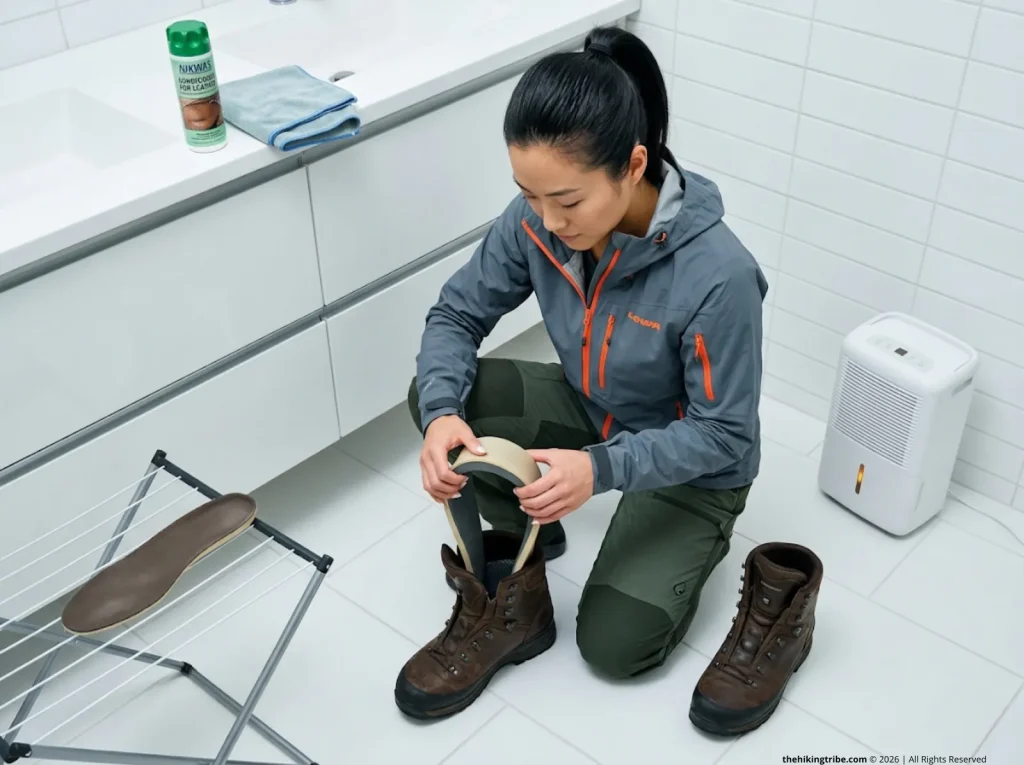
Mud functions as a hygroscopic barrier—it traps moisture against the boot surface and blocks evaporation paths. Clean your boots with lukewarm water and a soft brush immediately upon arrival. Not hot water. Hot water triggers the same adhesive softening you’re trying to prevent during drying.
Remove laces completely to open the tongue and upper for maximum airflow. Pull insoles out and set them aside to dry independently. This doubles the internal surface area available for evaporation. Shake out any debris from the toe box—even small gravel pockets trap dampness.
Step 2: The Fan Method (The Gold Standard)
Point a box fan or desk fan directly into the boot openings. Angle boots at roughly 45° facing the airflow. For even better results, bend a wire hanger into two hooks and suspend boots upside-down over the fan so gravity assists moisture migration.
In ambient room conditions (68–72°F, 40–50% humidity), a direct fan cuts drying time by 40–60% compared to static air. Replace any absorbent inserts every 2 hours as they reach saturation.
Step 3: The Dehumidifier Hack (The Upgrade Most Guides Miss)
Place boots in a small enclosed space—a closet, a bathroom—with a portable dehumidifier running. It creates a sustained low-humidity micro-climate that accelerates the vapor pressure gradient. This approach works especially well for heavy full-grain leather boots where deep-fiber moisture resists fan-only approaches. The combination of fan plus dehumidifier is the most efficient home drying method for overnight recovery.
Pro tip: A 30-pint dehumidifier in a bathroom-sized space can get leather Lowas from “stream-crossing soaked” to “trail-ready” in about 8 hours. Fan alone, same boots, same temperature—took 14.
This is also a good moment to consider why rotating between multiple pairs extends boot lifespan. Giving each pair a full day to dry between uses prevents the moisture buildup that triggers PU hydrolysis and EVA foam degradation.
The Backcountry Protocol: Drying Boots Without Electricity
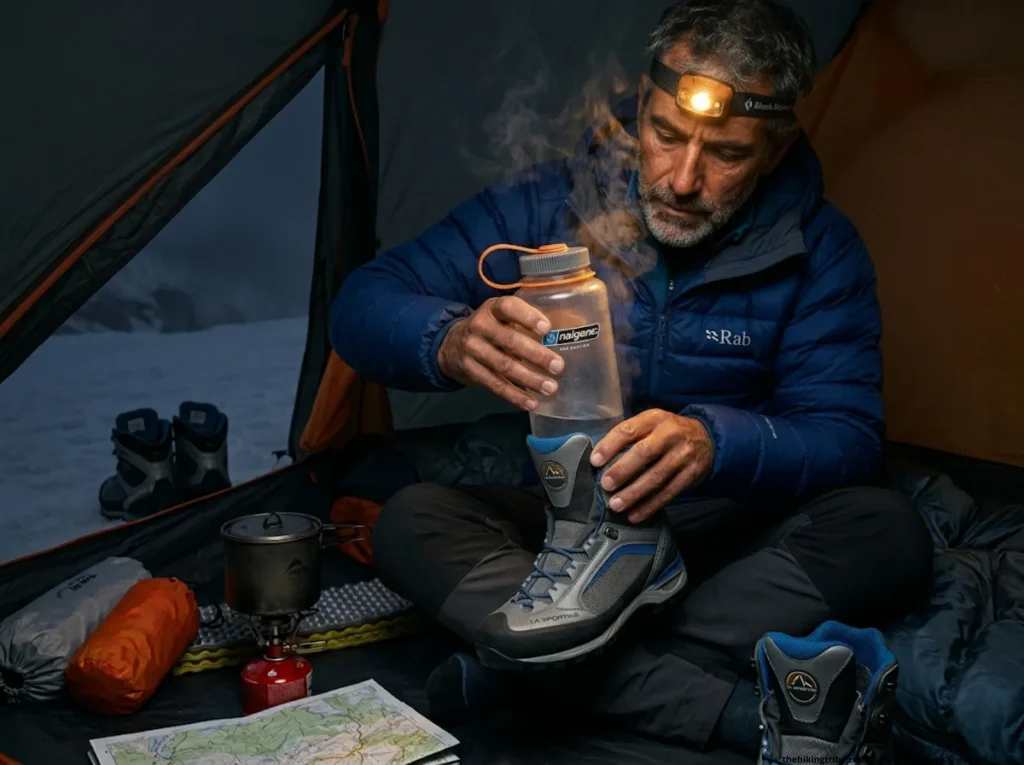
The Nalgene Hot Water Bottle Technique
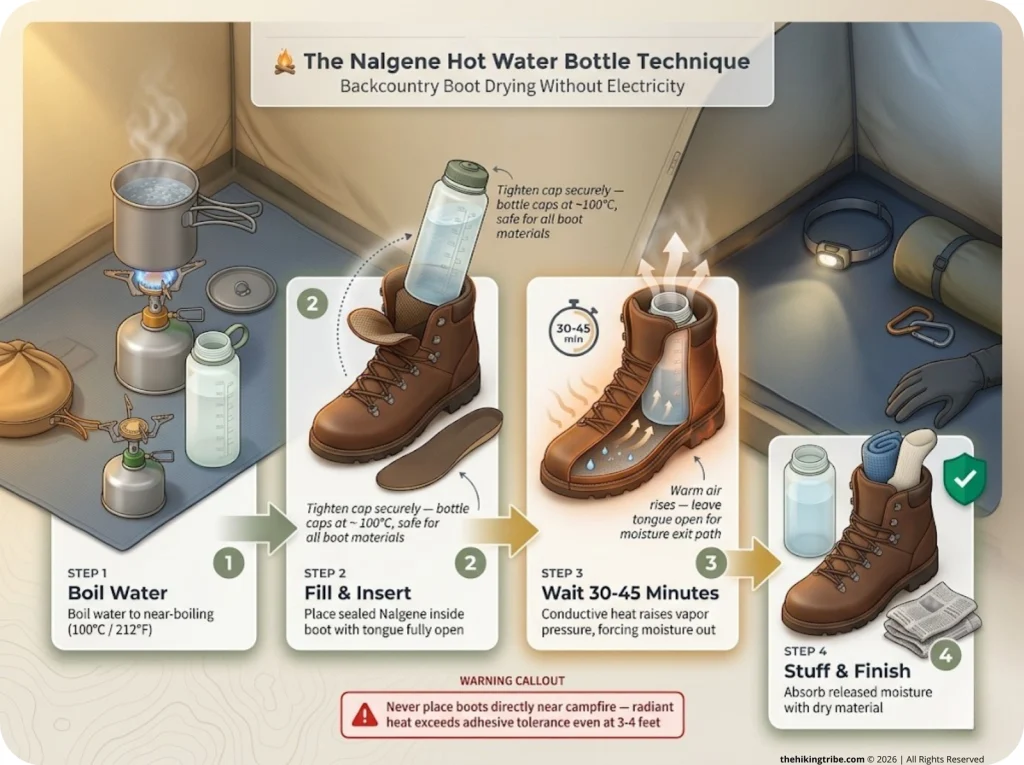
No fan, no electricity—physics still works. Fill a heat-resistant Nalgene with near-boiling water and place it inside the boot. The conductive heat raises internal vapor pressure, forcing moisture out through the opening. The bottle caps at around 100°C—well below adhesive melt points when conducted through the bottle wall. Leave it in for 30–45 minutes, then stuff with dry material to absorb the released moisture.
Leave the boot tongue fully open while the bottle is inside. Warm, moisture-laden air needs an exit path or you’re just redistributing steam.
The Boiled Stone Method (And How Not to Melt Your Liners)
Campfire-heated stones can exceed 300°C—far past any adhesive tolerance. The fix: heat stones in a pot of boiling water instead. This limits stone temperature to 100°C, safe for all boot materials. Wrap the stone in a camp towel or sock, place inside the boot for 20–30 minutes. On a 4-day Cascades traverse, this was the difference between frozen boots and flexible ones each morning.
Sleeping Bag Boot Liner Recovery
For boots with removable liners, pull them and place at the bottom of your sleeping bag. Core warmth (36–37°C) plus insulation creates a gentle warming environment that prevents freezing overnight. Place liners inside a dry stuff sack first to avoid transferring moisture to your bag’s insulation.
Pro tip: Stuff one dry wool sock inside each liner before placing them in the bag. The wool wicks moisture away from the liner surface while your core warmth provides the energy for evaporation. Two mornings in a row on the Haute Route, this was the only thing that kept my liners from freezing solid.
For a deeper look at managing wet boots in the field, including methods for drying wet footwear overnight without melting the glue, the companion article covers additional techniques.
Emergency Desiccants: When Newspaper Isn’t Enough
Newspaper and Microfiber: The Baseline Methods
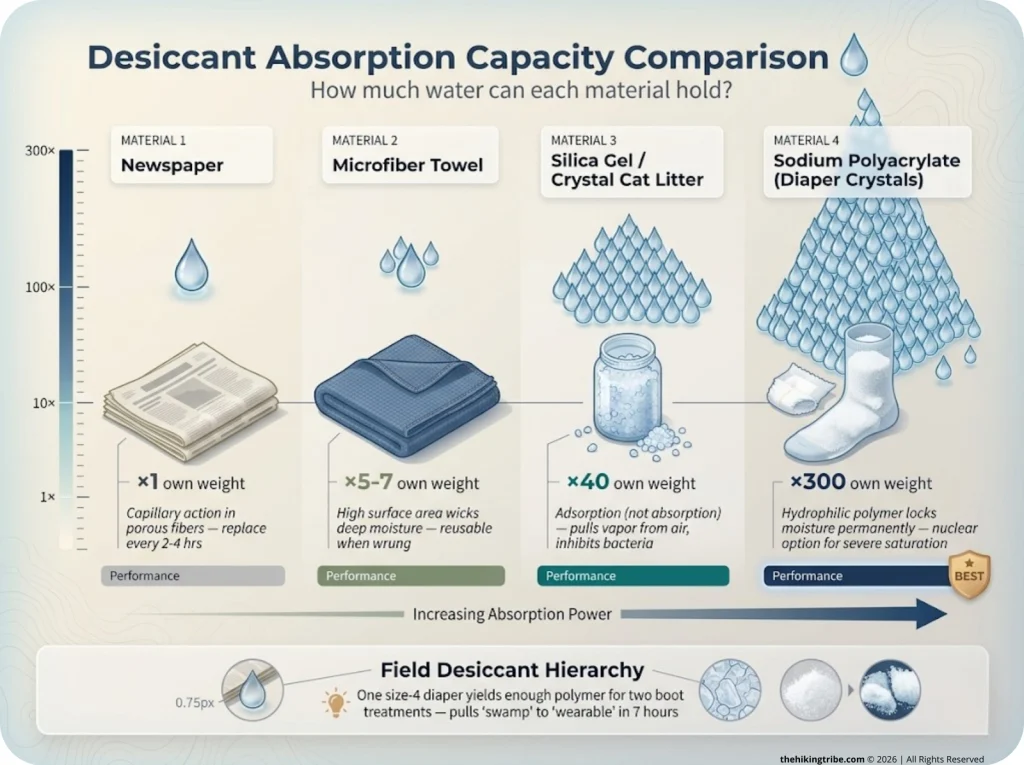
Newspaper absorbs moisture via capillary action in its porous fibers. Scrunch it loosely—over-stuffing blocks airflow and traps moisture in the toe box. Replace every 2–4 hours as the paper reaches moisture equilibrium.
Microfiber towels outperform newspaper thanks to higher surface area. They wick moisture from deep foam reservoirs without ink transfer or structural collapse. The towel-wicking method also protects Gore-Tex membranes by preventing liquid water from pooling at the membrane interface. Microfiber is reusable if wrung out periodically—a real advantage on multi-day trips.
The porosity difference between materials affects which desiccant works best. Understanding how nubuck’s breathability affects drying speed compared to full-grain helps you choose the right approach.
Silica Gel and Crystal Cat Litter: The Middle Tier
Crystal cat litter—pure silica gel—placed in a sock inside the boot creates a low-humidity microenvironment and inhibits odor-causing bacteria simultaneously. Silica gel packets (saved from shoe boxes, electronics packaging) work via adsorption rather than absorption, pulling water vapor from the air rather than requiring direct liquid contact.
Both are reusable. Silica gel can be reactivated by oven-drying at low temperature. Crystal cat litter is effectively single-use but widely available. A single sock filled with roughly 100g of silica crystals, rotated every 3 hours, can reduce interior moisture by 30–40% overnight when fan drying isn’t available.
Sodium Polyacrylate: The Nuclear Option
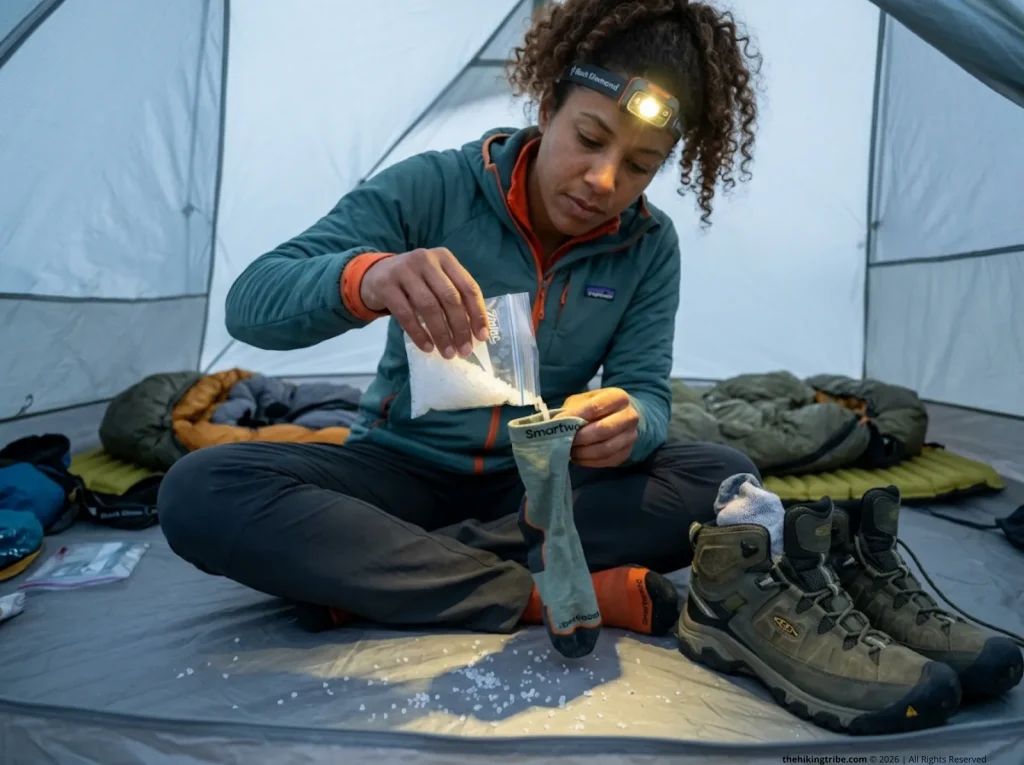
The white crystals inside disposable diapers—sodium polyacrylate—can absorb 300 times their weight in water via hydrophilic polymer bonding. Unlike fiber-based absorbents, this material doesn’t release water under pressure. It locks moisture permanently into its gel matrix, making it superior for extracting deep-seated moisture from thick mountaineering boot padding.
Fill a thin sock with the extracted crystals, place inside the boot, and leave overnight. This is the highest-throughput desiccant available in a field setting. Research on superabsorbent polymer reusability and water retention capacity confirms the 300x absorption ratio.
One size-4 diaper yields enough polymer gel to fill two thin socks. It’s ugly, it’s awkward to explain to your tent-mates, but it pulled my double-leather La Sportivas from “swamp” to “wearable” in seven hours during a Patagonia downpour camp day.
Post-Drying Restoration: The Step Everyone Skips
Conditioning Leather Before It Cracks
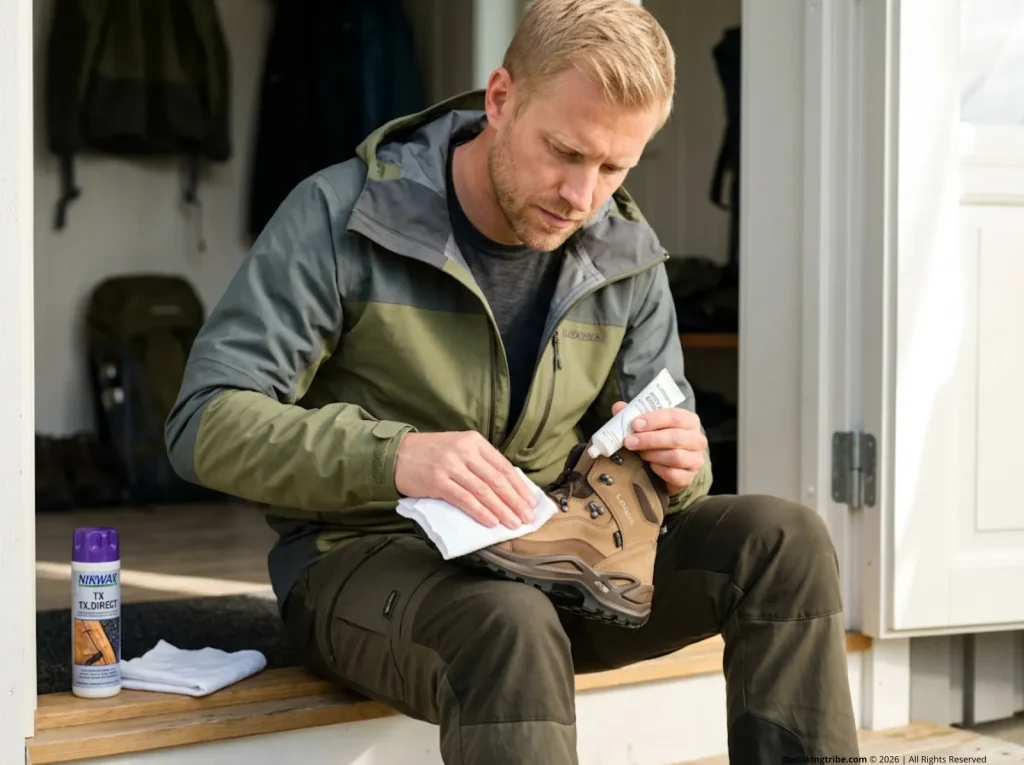
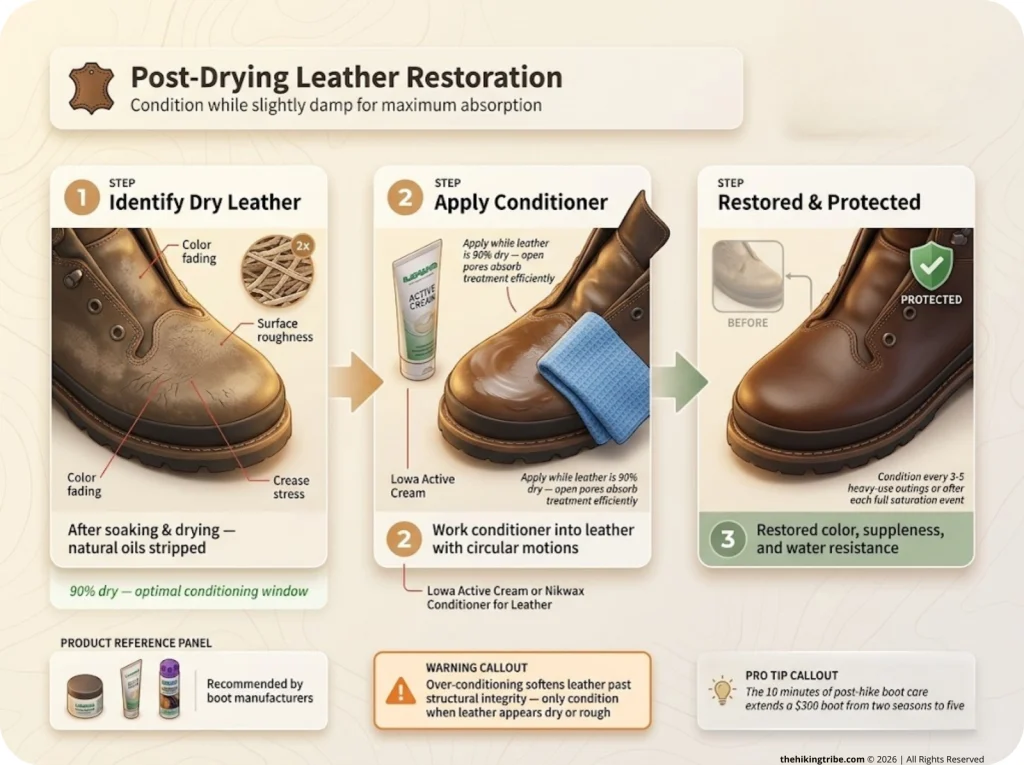
When full-grain leather gets soaked and then dried, the natural oils within the fiber matrix are partially stripped away. Without replenishment, the leather stiffens, develops crease fractures, and eventually cracks. The fix is straightforward: apply a specialized conditioner—Lowa Active Cream, Nikwax Conditioner for Leather—while the boot is still slightly damp, roughly 90% dry. The open leather pores absorb treatment far more efficiently than fully dried leather.
Over-conditioning is a real risk. Too much product softens the leather past the point of structural integrity, reducing the support the boot provides on technical terrain. Only condition when leather appears noticeably lighter in color or feels rough to the touch. For most hikers, that’s every 3–5 heavy-use outings or after each full saturation event.
Restoring the DWR Finish
Durable Water Repellent coatings degrade with every soak-dry cycle. When water stops beading and soaks into the fabric, the DWR needs attention. Modern spray-on treatments like Nikwax TX.Direct or Lowa Water Stop work best applied to damp boots—open pores allow deeper penetration.
Wax-based treatments offer high repellency but clog leather pores, reduce Gore-Tex breathability, and interfere with future resoling. Heat reactivation—10 minutes in a warm oven—can restore existing DWR without reapplication if the coating isn’t abraded away. For the complete method, see the full heat-first DWR restoration protocol.
The Foot Health Check You Can’t Afford to Skip
Your feet produce up to half a cup of perspiration daily during hard hiking. Combined with external moisture, that’s a breeding ground for Athlete’s Foot (Tinea Pedis). The APMA guidelines on moisture management and athlete’s foot prevention recommend drying boots for at least 24 hours between uses.
Merino wool or synthetic blend socks are mandatory—cotton traps moisture against skin. In cold, wet conditions (0–15°C), wet boots risk Non-Freezing Cold Injury (trench foot), which causes irreversible nerve and tissue harm. The stakes go beyond comfort or boot longevity.
Conclusion
Three things to remember before you peel off those soaked boots again.
Airflow is king, heat is the enemy. Every drying method worth using relies on disrupting the boundary layer through moving air—not cooking the boot on a radiator. Keep temperatures below 40°C (104°F), always.
Match the method to the scenario. Fan plus dehumidifier at home. Nalgene hot water bottle in the backcountry. Sodium polyacrylate in a genuine emergency. Knowing which tool fits the moment is what separates damaged boots from dry ones.
Drying is only half the job. Condition the leather, restore the DWR, and let the boots breathe between uses. The ten minutes of post-hike boot care is what extends a $300 boot from two seasons to five.
Next time you peel off soaked boots after a wet day, resist the urge to park them by the heater. Set up the fan, pull the insoles, and let physics do the work. Your soles—both kinds—will last longer for it.
FAQ
Can I put hiking boots in the dryer?
No. Household dryers generate temperatures of 54–66°C (130–150°F), which exceeds the adhesive softening point for most boot constructions. The tumbling action also stresses stitching and seam tape. Use a fan at room temperature instead.
How long does it take hiking boots to dry?
It depends on the material. Synthetic mesh trail shoes dry in 2–6 hours with a fan. Nubuck leather takes 12–24 hours. Full-grain leather boots require 24–48 hours for complete drying at ambient temperature. Using a fan and dehumidifier together can cut these times by 40–60%.
Can you dry boots in front of a fire?
Not safely. Even at a safe distance of 3–4 feet, radiant heat from a campfire is uneven and can exceed adhesive softening temperatures in localized spots. Use the Nalgene hot water bottle technique or boiled stones instead—both provide controlled internal warmth without external radiant heat risk.
How do you get the smell out of wet boots?
Odor comes from bacterial growth in moist conditions. The fix is thorough drying combined with a desiccant that inhibits bacterial activity—crystal cat litter (silica gel) is particularly effective. For persistent wet boot smell, sprinkle baking soda inside fully dried boots and leave overnight, then shake out before wearing.
Is it safe to dry Gore-Tex boots in direct sunlight?
Brief sun exposure (1–2 hours) is generally safe, but prolonged UV damage degrades the DWR coating and causes color fading. More importantly, direct sunlight on dark boot surfaces can raise material temperatures above safe thresholds. Shade with moving air is always the better choice.

I've spent more than a decade researching hiking gear and trail technique. I read the specs, the forum threads and the long-term reviews, and every pick here comes with what it gets wrong.
End of the trail
You read every mile of this one. Here's where the trail goes next.