









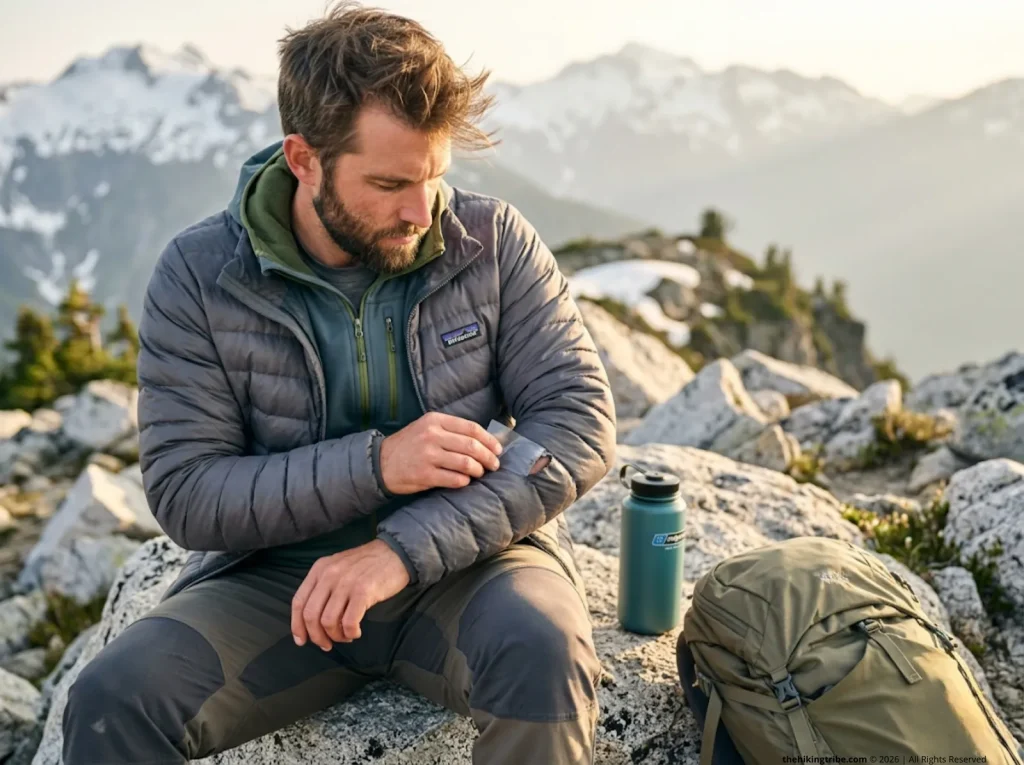
The barb of a rogue branch caught my sleeve at 10,000 feet, and suddenly, my primary defense against hypothermia was bleeding premium 800-fill goose down into the freezing wind. Panic sets in quickly when you watch your expensive insulation fly away. After years of testing gear up high, I’ve seen exactly how fast a small snag turns into a serious problem if you don’t stop the leak immediately. Field-repairing a down jacket doesn’t require a sewing kit or an engineering degree, and you don’t need to cut your trip short. Here is exactly how to halt feather loss, properly sanitize the fabric without specialized cleaners, and apply a permanent patch that will outlast the rest of the garment.
⚡ Quick Answer: Never pull out an escaping feather—push it back inside with a blunt twig. Clean the tear with isopropyl alcohol to strip the jacket’s waterproof coating, then firmly apply a rounded piece of specialized repair tape directly over the hole. In freezing weather, press a hot water bottle against the patch for 60 seconds to lock the adhesive into the fabric for a permanent fix.
The Physics of Feather Bleeding and Heat Loss

A compromised down jacket on the trail isn’t just a cosmetic issue; it’s a structural failure that actively bleeds your body heat into the surrounding air. To understand why immediate repair is absolutely necessary to maintaining thermoregulation, you have to look at how the insulation physically fails once the shell is punctured.
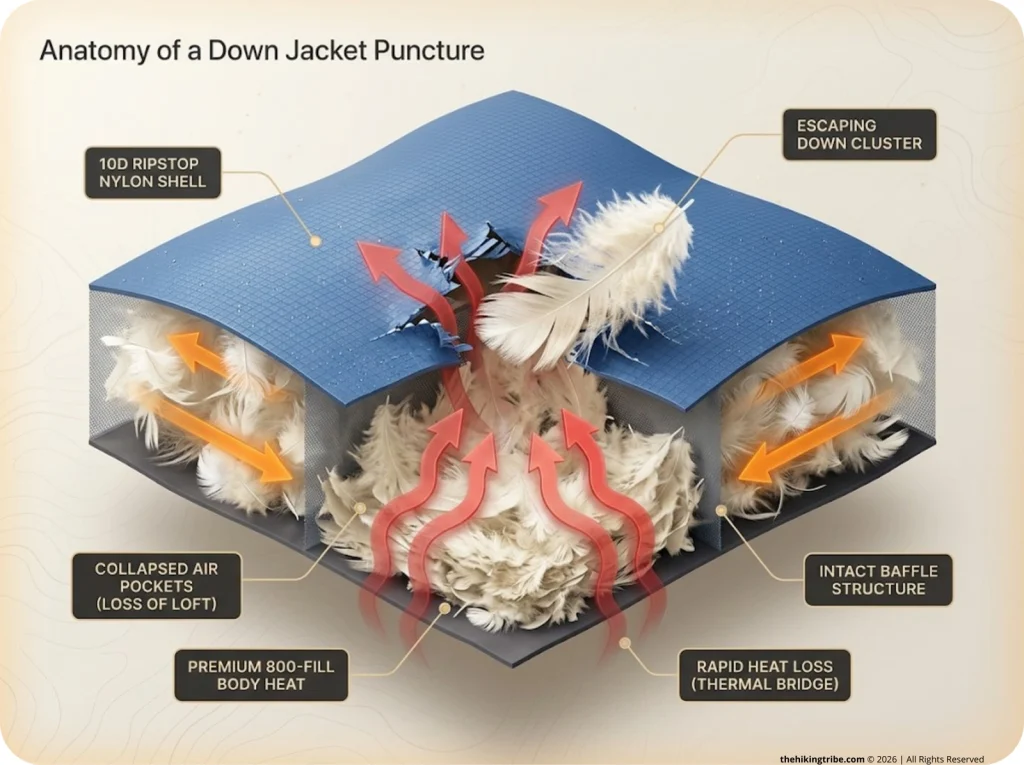
The Thermodynamics of a Puncture
Down insulation relies on microscopic clusters trapping stagnant air to keep you warm. These clusters provide massive thermal resistance, effectively holding your body heat hostage so the cold air outside can’t steal it. When a branch or crampon point rips the shell, you don’t just lose feathers. You create an immediate thermal bridge. The internal air pockets collapse instantly, and body heat escapes directly from that hole to the environment.
This drop in loft drastically increases your heat loss. A jacket’s ability to keep you warm is directly tied to how thick that layer of trapped air is. The physical process of heat loss here mimics what researchers look for during standardized thermal resistance testing for batting systems. If you’ve spent serious money on premium 800-fill goose down, a single 5mm tear negates all that advanced engineering in that specific baffle. The preservation of your down jacket relies entirely on keeping those clusters sealed tightly inside their microscopic nylon compartments, similar to what you’d see when evaluating a fleece vs. down jacket layering system.
Stop Pulling the Feathers (The Pen-Tip Method)
You look down, see white fluff popping out of your sleeve, and your instinct is to pinch it and pull it away. Stop. Never pull an escaping feather.
Down clusters naturally interlock with one another. If you yank on one plumule, you drag ten more out right behind it, turning a tiny puncture into a massive gap in your insulation. This is what we call feather bleeding. Instead of pulling, use the pen-and-pressure technique. Take a blunt object—the plastic tip of a pen, a dull tent stake, or a smooth twig—and gently push the quills back through the puncture and into the baffle.
Pro tip: If the hole is tightly frayed, slightly pinch the fabric around the tear to spread the ripstop grid apart just enough to poke the feathers back inside without damaging the threads further.
Low-denier fabrics—like the 7-denier to 20-denier ripstop nylon used in ultralight jackets—rely on a reinforced grid to stop catastrophic rips from running the length of your arm. But that grid does absolutely nothing to stop the down from migrating out. You have to handle the stray feathers carefully before you even think about applying tape.
Anatomy of the Ultralight Repair Kit
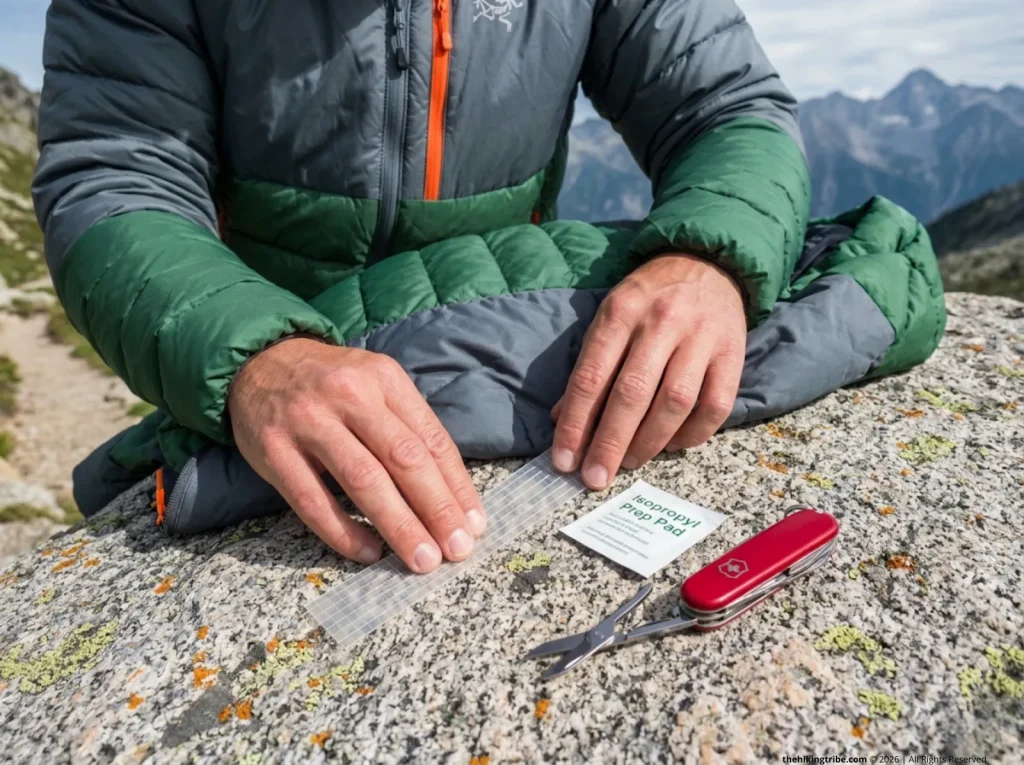
Backcountry repairs demand specific technical materials to guarantee a durable bond on synthetic fabrics. If you throw standard household tape at the problem, you will fail.
Pressure-Sensitive Adhesives: Tenacious Tape vs Noso Patches
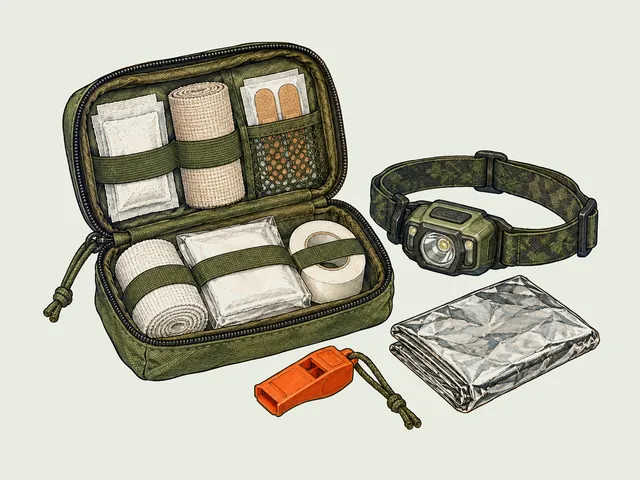
A proper ultralight field repair kit relies heavily on pressure sensitive adhesive products. Unlike traditional glues that need air-drying time to harden, these tapes activate and cure under physical friction and pressure. Tenacious Tape from Gear Aid is arguably the gold standard for this job. It stretches slightly with the nylon shell rather than creating a rigid fracture point, keeping the flexibility of the garment intact.
Another excellent option is the line of NoSo Patches. These cut-to-shape fabric patches offer impressive adhesive strength while allowing you to add some personality to your gear. Utilizing products from brands known to perform, whether that’s a clear strip of tape or a brightly colored shape, ensures you meet the no-sew requirement for modern ultralight shells. Sewing 10-denier fabric by hand on a rocky ledge just creates hundreds of new micro-punctures for down to escape through.
Isopropyl Alcohol and Trail-Safe Sanitization Alternatives
The biggest mistake hikers make is trying to slap an adhesive patch directly over a dirty jacket. Your shell is treated with a Durable Water Repellent (DWR) finish, which actively repels adhesives just as effectively as it repels rain. Combine that with trail dirt and natural body oils, and a patch applied “raw” will peel off within hours.
You have to sanitize the contact area. Isopropyl alcohol (70-99%) is the exact solvent you need to strip away the waterproofing treatment and trail grime without degrading the synthetic fibers underneath. Pack a few foil-wrapped alcohol prep pads into your kit; they add practically zero weight and improve packability immensely.
What if you’re miles from the trailhead and forgot your alcohol wipes? You can use high-proof ethanol (like Everclear) if you carry it for your alcohol stove. But avoid typical hand sanitizers. Most contain glycerin or aloe, which leave a oily film behind and will actively prevent the tape from sticking.
The Duct Tape Trap: Why Quick Fixes Fail
We all carry duct tape wrapped around a trekking pole or water bottle, but applying it to technical apparel is a massive mistake. Can you use duct tape on a down jacket? Yes, if you literally have no other option to stop bleeding out feathers, but you will pay for it later.
Duct tape leaves a horrific, sticky residue that ruins the fabric for a proper, permanent repair once you get off the mountain. When you try to peel thick duct tape off a thin jacket, it violently stretches the nylon weave. Stick to dedicated gear tapes when building a modular tracking and repair kit for your backcountry trips.
The 5-Minute Trail Protocol: Step-by-Step
Executing a proper repair while shivering on a windy ridge requires a structured, actionable plan. This is the exact protocol I use to lock down a tear and get moving again. I call it the 5-minute field fix.
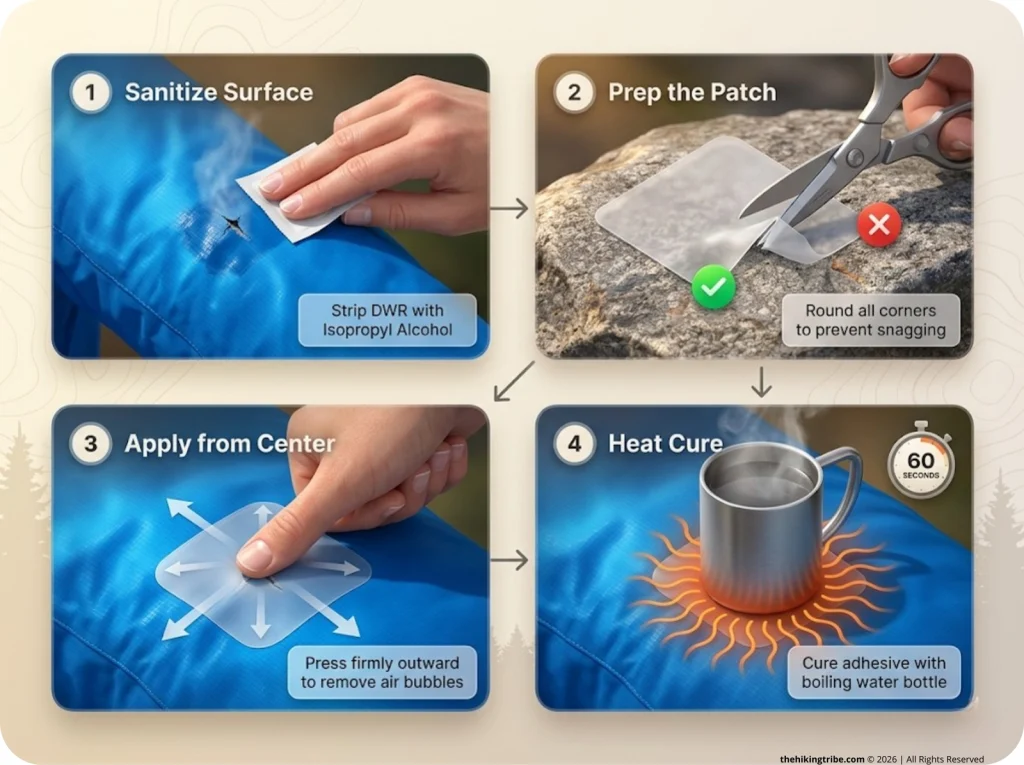
Step 1: Containment and Surface Sanitization
First, manage the feathers using the pen-and-pressure technique. Get them back inside the baffle. Next, you need complete field sanitization. Rip open an alcohol wipe and scrub the fabric vigorously for at least 20 seconds. You must strip the DWR coating completely off the area where the patch will sit. Let the alcohol evaporate completely until the fabric is bone dry to the touch. It usually flashes off in seconds.
Step 2: Customizing the Patch Geometry
Patch shape dictates exactly how long it will last. If you cut a square piece of tape and slap it on, the sharp 90-degree corners will act as focal stress points. A backpack strap will eventually snag an edge, and the patch will quickly peel.
Grab your tiny folding scissors and cut your tape into a circle or an oval. If you have to use a rectangle to cover a long slice, you must cut rounded corners. Make sure the patch overlaps the damage by at least half an inch (12mm) in every direction. You need that surface area to achieve proper mechanical interlocking with the fabric weave. Proper color matching is optional, but taking the time to round the corners is mandatory.
Step 3: Application and the “Hot Water Bottle” Cure
Lay the fabric as flat as possible against your knee or a smooth rock. Apply the tape directly over the tear, starting from the center and pressing outward to forcefully expel any air bubbles that could later act as pockets for moisture ingress.
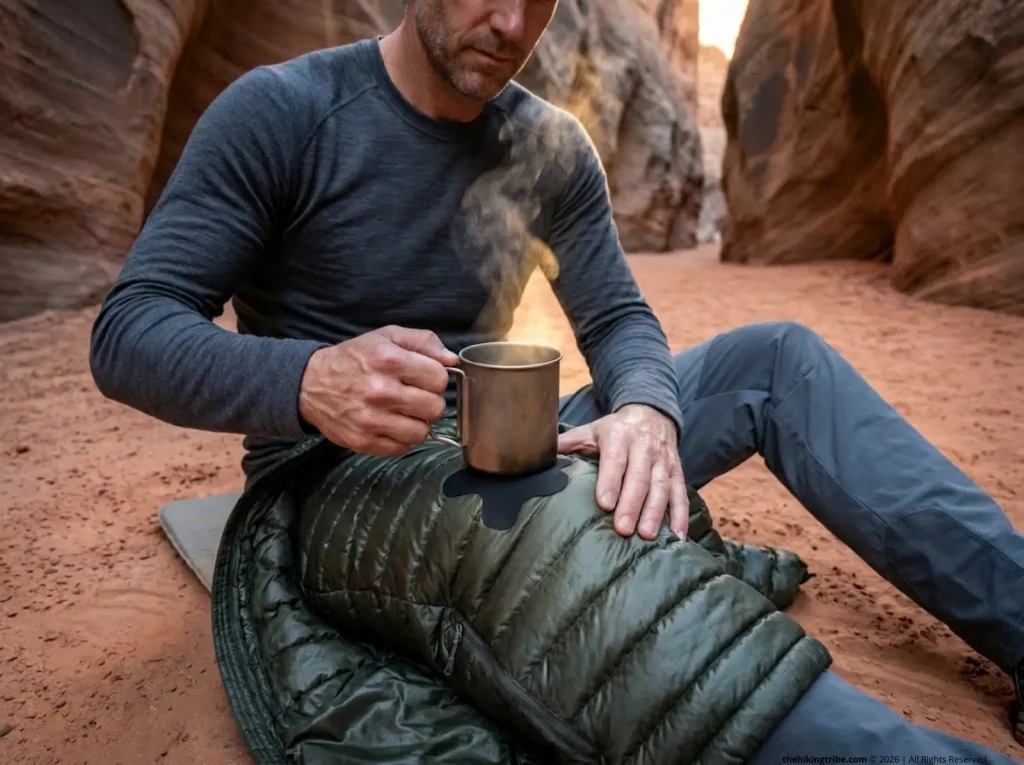
Here is the reality of patching gear high up on the mountain: cold weather kills adhesives. In freezing conditions, adhesives become stiff and simply fail to grab the microscopic grooves of the fabric. The secret to surviving the 24-hour reality of severe mountain environments is the “Hot Water Bottle Cure.”
Take your Nalgene or a metal camp mug, fill it with nearly boiling water, and press the hot container firmly over the newly applied patch for 60 seconds. This heat setting strategy mobilizes the glue, forcing it deep into the nylon grid. Employing the same round-edge protocol used to save torn hiking pants, combined with this cold weather curing trick, makes the mend permanent.
Pro tip: If you don’t have enough water to spare for a hot bottle, vigorously rub the back of a spoon—or even your thumb—over the patch for a minute. The sheer friction generates enough heat to activate the pressure-sensitive adhesive.
Advanced Scenarios: High-Flex Zones and Membranes
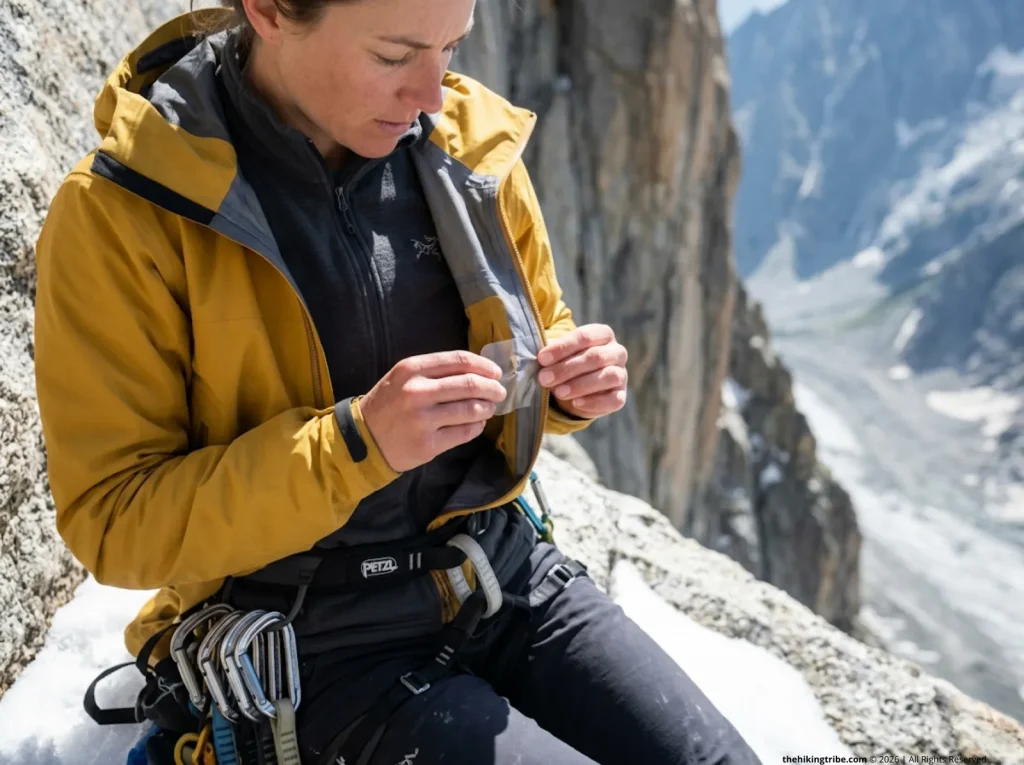
Not all tears happen on a perfectly flat baffle across your chest. Getting snagged in areas of high friction or ripping a jacket built with a waterproof-breathable layer requires a different approach to ensure it actually holds.
The Sandwich Strategy for Armpits and Elbows
Tears occurring in high-flex areas—like the armpits or the inner crooks of elbows—exert constant shear forces against an adhesive. If you stick a single patch on the outside of an elbow tear, the repetitive bending motion of your arm will rapidly delaminate it.
The fix is the “Sandwich Technique.” You apply a patch on the inside of the shell fabric (if the jacket construction allows you to access it without destroying a seam) and another identical patch directly over the outside. This double-sided fix creates a physical lock that stops the fragile 10-denier weave from pulling apart under heavy tension.
Patching GORE-TEX and DWR-Coated Shells
If your puffy features a true waterproof membrane like GORE-TEX, you have to be careful not to clog the breathable pores across a massive area. For tiny punctures, standard tape works fine. But for larger gashes that demand dedicated membrane patch kits, extreme heat activation is non-negotiable.
You must use heat activation techniques commonly used for DWR restoration to bond the patch properly to the ePTFE membrane. Pressing a warm iron (if you are at home) or relying on the boiling water bottle method (if you are on the trail) forces the adhesive to secure itself without blocking the surrounding fabric from venting sweat.
Also, avoid standard clear tape or basic vinyl rolls on exterior surfaces in extreme cold. They turn brittle and crack. A nylon-backed tape heavily mimics the natural drape of your shell and won’t shatter when the temperature hits single digits.
Dealing with Charred Edges from Campfire Burns
A stray ember from a campfire melts right through nylon. When this happens, a hard, charred ring of melted plastic forms around the burn hole. Do not try to stick tape directly over this crust. Adhesive cannot bond successfully to ash or hardened, melted plastic. Take your scissors, carefully pinch the fabric, and trim away the rigid charred edges until you hit clean nylon. Then sanitize and patch normally.
Professional Maintenance and Long-Term Care
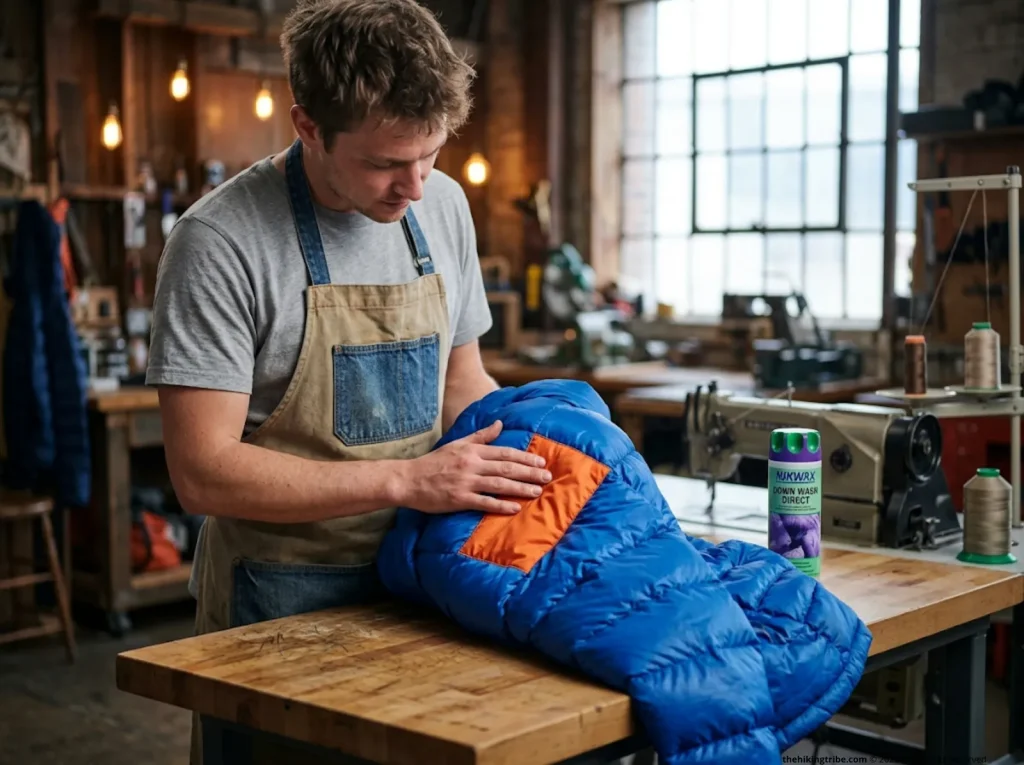
Patching your gear in the dirt is about survival and keeping the trip alive. But how you treat the jacket once you are back in town determines if that gear survives the next decade.
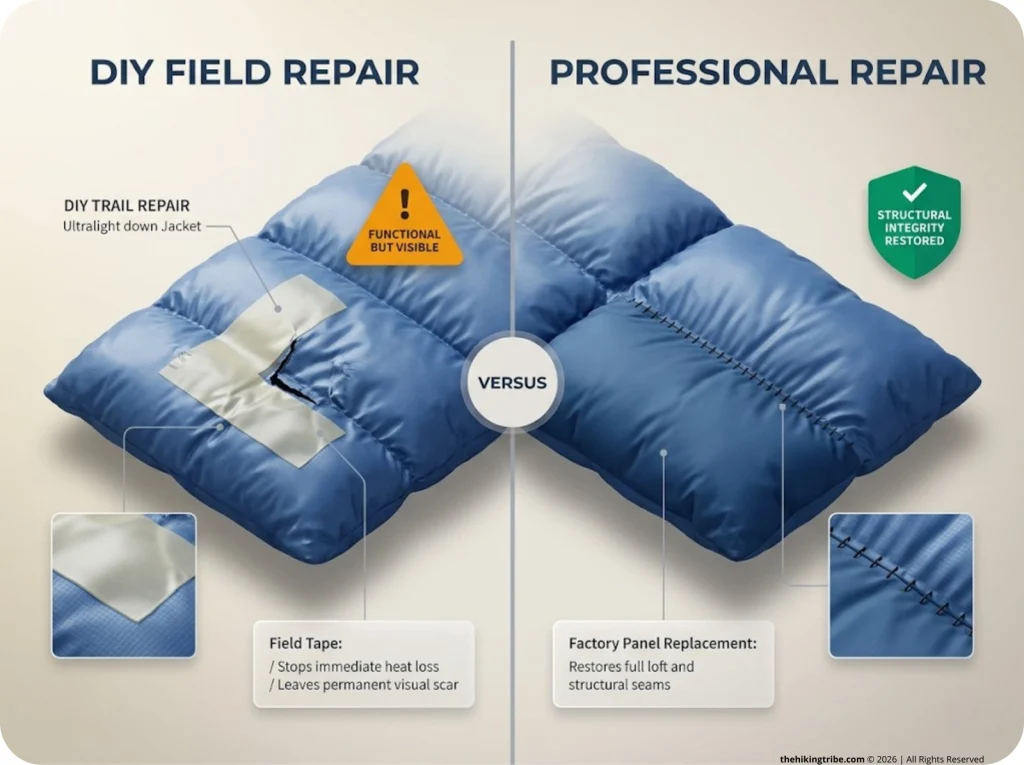
Washing Down Without Ruining the Adhesive
I get asked all the time: will tenacious tape stay on in the wash? Absolutely, but you must respect the curing time. Allow the field repair patch to cure for at least 24 hours at room temperature before putting the jacket in a washing machine.
When you finally wash it, you cannot use standard laundry detergent. Detergents strip the natural oils out of goose down, turning the soft plumes brittle and killing your loft permanently. You must use specialized, non-detergent technical soaps (like Nikwax Down Wash Direct). This process is delicate, very similar to how you would properly wash a GORE-TEX shell. Throw the jacket in the dryer on low heat with three clean tennis balls to bust up the clumps of wet feathers, and your tape job will show true durability after washing.
When to Seek Professional Panel Replacement
While tapes handle most trail accidents, catastrophic failures require serious help. If you suffer a massive L-shaped tear across multiple baffles, or your primary zipper track completely detaches from the nylon, you need to escalate the job.
Brands like Patagonia and REI Co-op have established robust repair infrastructure, such as the Worn Wear program, to handle massive trauma to garments. A specialist will execute a professional panel replacement, physically stitching in a brand new baffle to restore full structural integrity and safety to the piece. If you need invisible repairs, this is the only true option.
Pro tip: Always check your brand’s specific warranty and repair policy before attempting massive tape jobs at home. Some manufacturers will replace an entire arm panel for a minor shipping fee if you haven’t smeared the fabric with superglue first.
The Ethics and Economics of Gear Longevity
Treating gear as disposable is a bad habit that hurts your wallet and the backcountry. The textile industry remains a significant contributor to global textile waste, generating roughly 92 million tonnes of waste every year. Extending the lifespan of a premium down jacket by just nine months can reduce its carbon, water, and waste footprint by almost 30%.
Instead of demanding perfectly invisible fixes, the hiking community is increasingly adopting visible mending. Slapping a bright, contrasting patch over a tear doesn’t just cut down on waste; it builds a map of your experiences directly into your equipment. The scars on your gear are proof you actually use it. By mastering the the zero-waste trail method of repairing what you already own, you respect the materials and keep dangerous microplastics out of the landfills.
Conclusion
Watching your premium down blow away in the wind is a sickening feeling, but a ripped jacket is rarely a death sentence for your gear. If you respect the physics of the shell fabric, perform aggressive alcohol sanitization, and utilize the hot water bottle method to lock down the adhesive, you can turn a frantic five-minute trail fix into a permanent technical mend. Stop settling for sloppy duct tape solutions. Pack up a designated field repair kit checklist, address punctures the moment they happen, and take serious pride in equipment that wears the scars of your toughest miles.
FAQ
How do you patch a puffy jacket?
Clean the torn area with isopropyl alcohol, push the feathers back inside using a dull pen tip, and firmly apply a rounded nylon repair patch. Once the patch is flat, apply heat by pressing a hot water bottle against it for 60 seconds to lock the adhesive into the fabric weave.
Can you use duct tape on a down jacket?
Duct tape should only be used in an absolute emergency, as it leaves a thick, sticky residue that severely damages the highly fragile ripstop nylon. When you attempt to remove the duct tape later for a permanent fix, the fabric will stretch and warp, preventing specialized technical tapes from bonding correctly.
Will Tenacious Tape stay on in the wash?
Yes, if properly applied with rounded corners and allowed to fully cure for at least 24 hours at room temperature. Utilizing a heat source to activate the adhesive immediately after applying the tape significantly improves its long-term resistance to heavy laundering and tumbling.
How do you stop feathers from coming out?
Never pull an escaping feather with your fingers, because their interlocking barbs will drag a massive clump of insulation out right behind it. Employ the pen-and-pressure technique by using a blunt object, like a tent stake or a small twig, to gently push the cluster back through the exact puncture hole.
Can you sew a hole in a down jacket?
Attempting to sew low-denier ripstop fabric with a standard needle by hand is highly discouraged outside of a professional factory setting. Needles create hundreds of new micro-punctures in the fragile shell, dramatically weakening the baffle and allowing fine down plumules to eventually escape along the stitch line.

I've spent more than a decade researching hiking gear and trail technique. I read the specs, the forum threads and the long-term reviews, and every pick here comes with what it gets wrong.
End of the trail
You read every mile of this one. Here's where the trail goes next.