In this article
I once spent three hours dragging a ruined cooler out of the woods because a well-meaning angel left hotdogs unattended on a dirt road. Having been a starving thru-hiker and a volunteer trying to give back, I’ve seen the ugly side of this tradition. If you want to support long-distance hikers without creating a bear hazard, or you’re a hiker terrified of breaking unwritten rules, here is the real-world guide to giving and receiving trail magic responsibly.
⚡ Quick Answer: Give trail magic in person with fresh food or by offering to carry out smelly trash. Leaving an unattended cooler isn’t magic—it’s a severe hazard that attracts wildlife and burdens rangers. Most rookies skip the basics and accidentally make trail conditions actively worse.
The Reality of Trail Magic vs. The Myth
Forget the massive tailgate parties at road crossings. Real magic isn’t a raging festival parked on the edge of the wilderness, complete with pop-up tents. It’s much quieter. Angels are usually former hikers paying forward the serendipitous help they received when they were out of water and questioning their life choices.
The True “Trail Angel” Philosophy
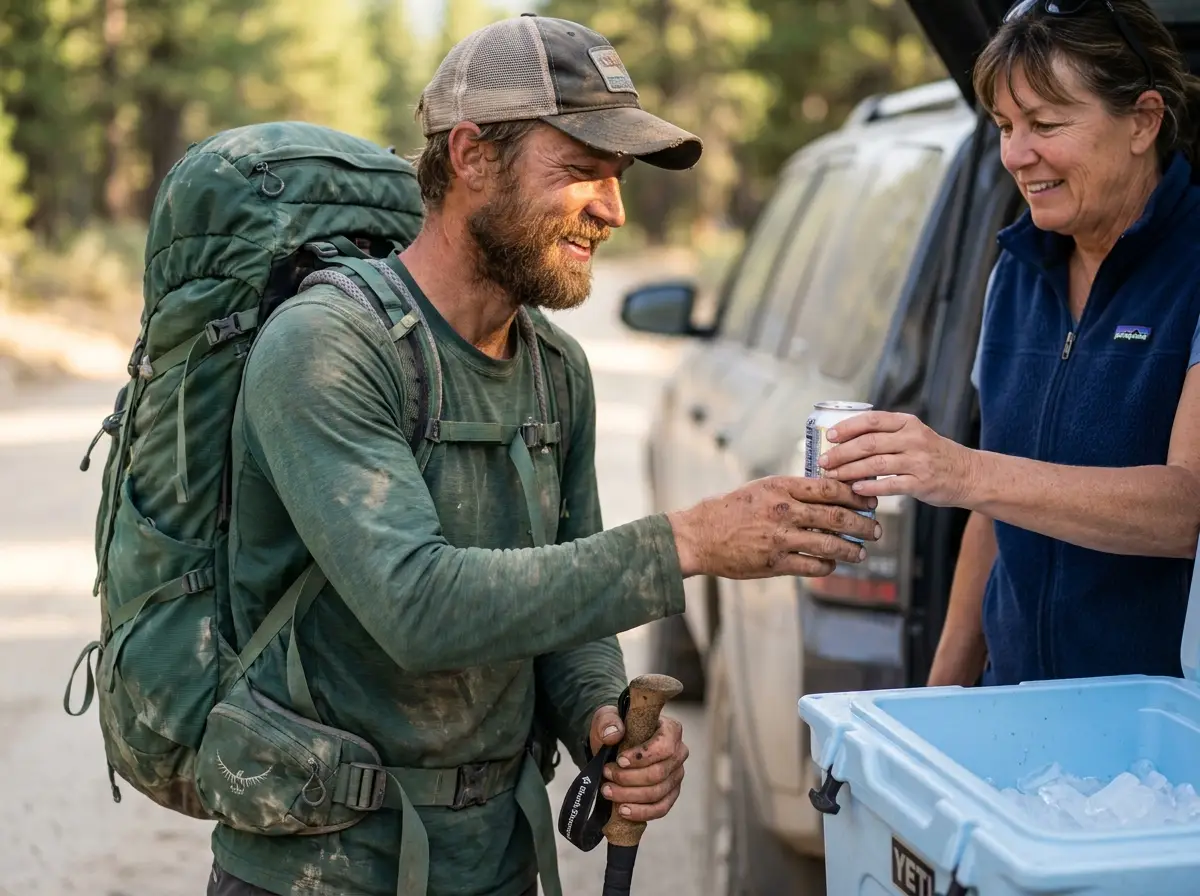
Magic is supposed to be totally unexpected. It shouldn’t be a scheduled catering event broadcast on Facebook weeks in advance. Magic happens when you’re physically drained, grinding out a massive climb, and someone sitting quietly on a tailgate offers you a camp chair and an icy sports drink. You don’t demand attention or force a tired stranger into a conversation. Your job is simple: make a hiker’s day dramatically easier.
Hiker Hunger and the 5,000-Calorie Deficit
Most front-country folks don’t grasp the reality of hiker hunger. Thru-hikers routinely operate at a massive caloric deficit, burning roughly 5,000 calories a day. Because you carry exactly what you consume on your spine, you survive strictly on dry, dense food. Eventually, your teeth physically hurt just thinking about biting into another dry protein bar.
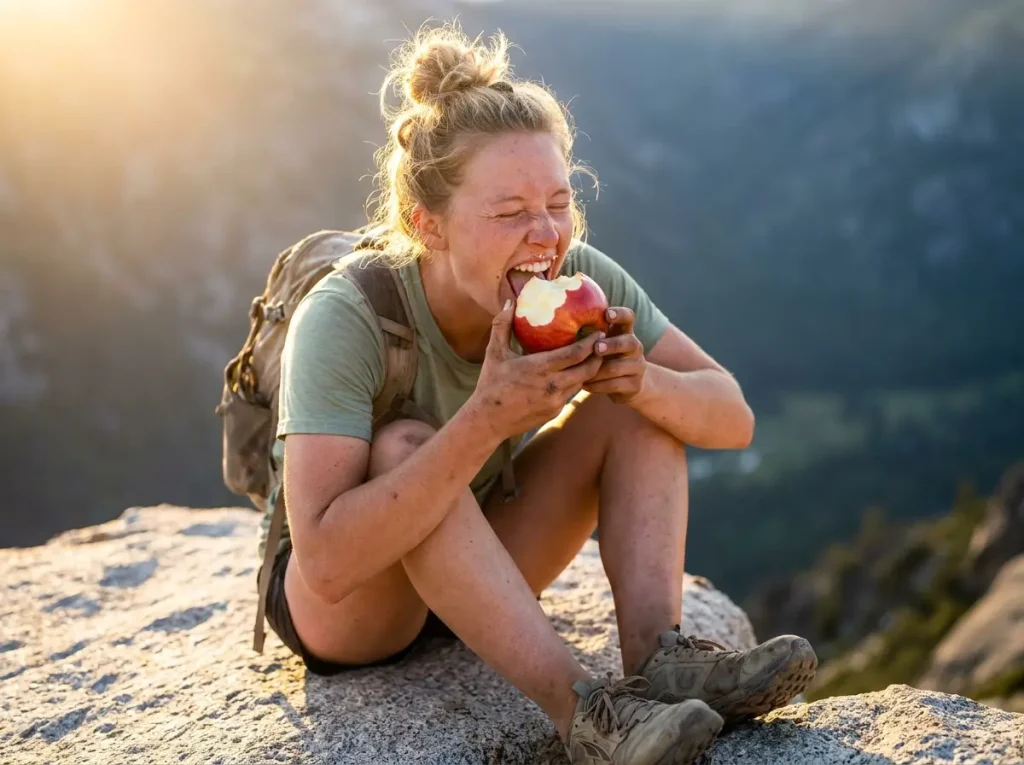
When you’ve been eating dehydrated mush for days straight, biting into a crisp apple hits a level of joy you can’t fake. This physical demand forces you into a daily hustle for safely managing food on the trail. By the time you hit pavement, you don’t want another packaged snack. You want salt, water, and fresh produce you couldn’t afford the weight to pack out.
Knowing what a hiker craves is only the first part; how you deliver that support determines if you are an asset to the community or an environmental liability.
How to Give Magic Without Creating a Mess
The glamorous setup—a giant barbecue grill loaded with expensive meat—rarely aligns with harsh trail reality. Sometimes the highest-impact magic is completely unglamorous.
The Ultimate Gift: The “Trash Exchange”
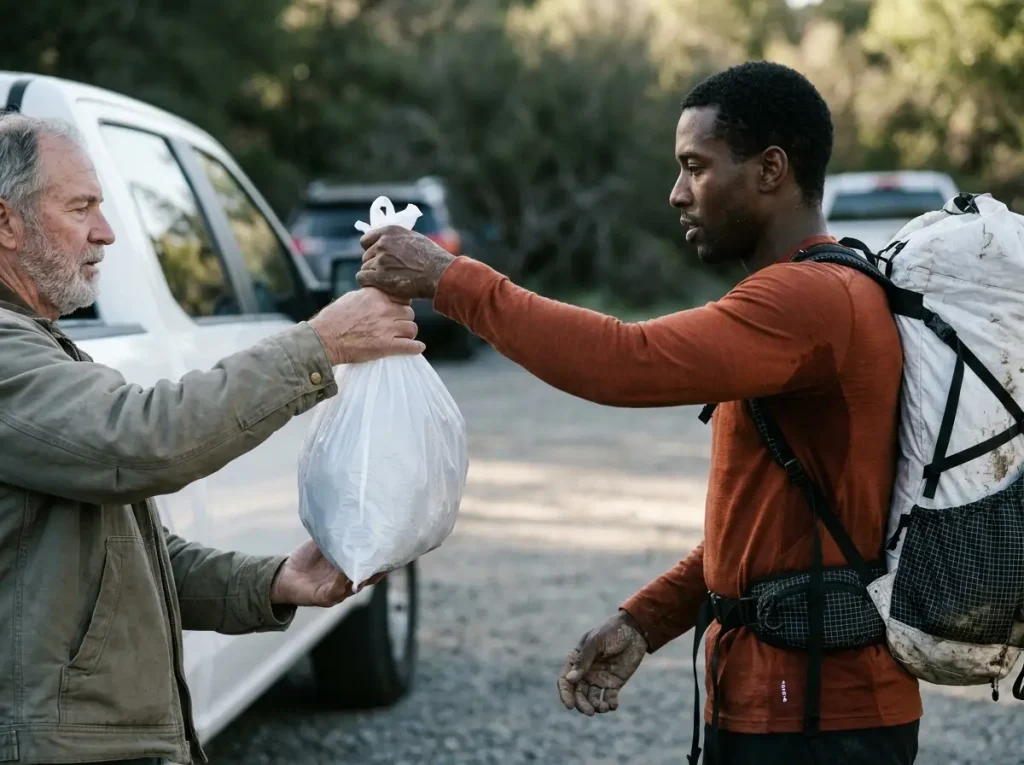
Most hikers walking out of the deep woods don’t lack heavy, packaged food—they lack fresh stuff and desperately need to dump their garbage. A thru-hiker carries their trash in an increasingly foul-smelling ziplock for days. It bakes in the outer mesh pocket of the pack, stinking up their expensive gear.
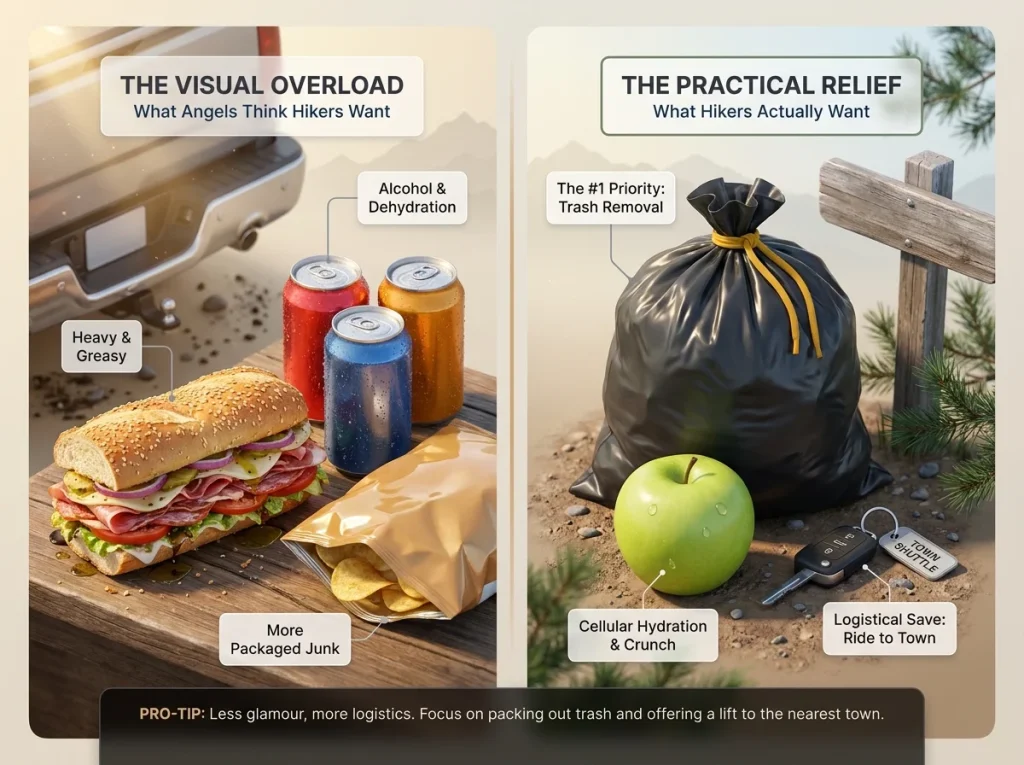
Pro-Tip: Keep a heavy contractor trash bag in your trunk. Tell every hiker you see, “I’m heading to town, hand over your garbage.” Watch their faces light up like you gave them a hundred bucks. They will remember you more than the guy handing out cheap beer.
Taking their smelly trash removes pack weight and limits the exact food scents that attract wildlife to camp later that night. Active trash removal solves their biggest logistical headache while directly combatting the impact of micro-trash blowing endlessly into the surrounding woods.
Fresh Food Over Packaged Junk
Hikers get intensely sick of processed cheese quickly. Do not bring boxes of hard candy or dry potato chips. They likely have five crushed bags crammed into their hip belts already.
Bring thick slices of iced watermelon, crisp apples, or cold pasta salad. The sheer hydration from fresh fruit provides an incredible physiological boost they simply can’t get from chemically treated water alone. A cold orange slice on a hot afternoon clears the dry dust from your throat instantly. If you cook hot food, keep the group intensely small. Gathering fifty dirty hikers crushes the fragile forest floor into a permanent mud pit.
While feeding hikers and hauling off their bags solves obvious problems at the trailhead, the most legendary support doesn’t always happen around a plastic cooler.
Slackpacking and Crucial Rides to Town
Sometimes the best magic doesn’t involve food at all. Shuttling a hiker’s heavy gear to the next road crossing gives their battered joints a critical day to recover. Walking fifteen miles without a thirty-pound weight strapped to your spine allows your body to heal while moving aggressively forward. It delivers all the benefits of slackpacking without the crippling logistical nightmare of organizing it yourself.
Offering a safe ride to town for resupply is a massive relief. Hitching from a rural, dusty trailhead in the midday heat just to buy cheap peanut butter is agonizing. Giving them a lift, letting them resupply, and driving them back saves half a day of pure stress.
Just don’t cross the legal line. The exact second you accept cash or set out a glass “donations” jar, you’re running an illegal commercial shuttle service. The forest service doesn’t mess around with unregulated guiding; learn the rules for commercial use permits on public lands and keep your magic totally free.
Providing that support requires staying physically present, as leaving your setup behind fundamentally violates wilderness stewardship and ruins the trail experience.
The Unattended Cache Disaster (What Not to Do)
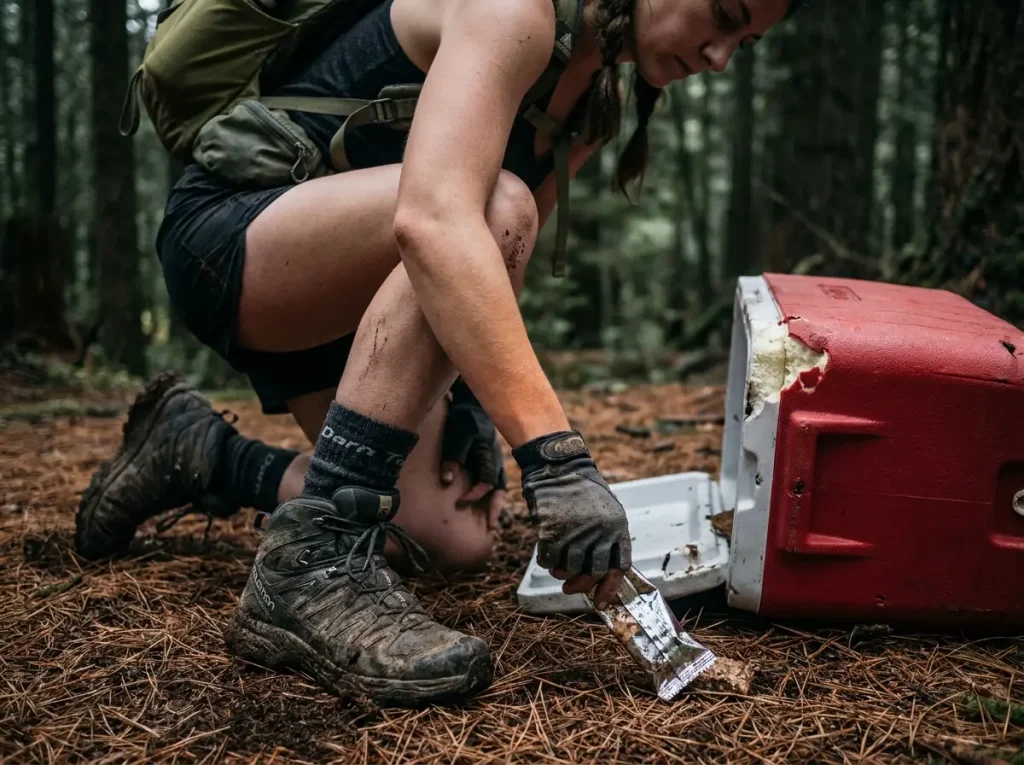
There is nothing quite as heartbreaking as walking out of a sweltering green corridor hoping for a cold drink, only to stumble upon a totally ruined cache. You lift the heavy plastic lid expecting icy sodas, and instead, you find a tragic mass of shredded plastic and rotten meat raccoons tore apart three nights ago. Now you’re standing waist-deep in a biohazard you have to somehow haul out.
Why Coolers Become Bear Bait
Leaving unattended coolers full of sugary snacks isn’t magic—it’s practically ringing a massive dinner bell for local wildlife. Leaving a cache is the single most irresponsible thing a well-meaning person can do near the backcountry.
When you leave a plastic ice chest on a stump and drive away, ravens and bears smell the dense sugar from miles away. When wildlife gets into human food, it triggers a severe, irreversible cycle of wild habituation. A bear that loses its natural fear of humans quickly becomes highly aggressive. Park rangers then have absolutely no choice but to trap and euthanize the animal. Relocating a garbage-habituated bear simply moves a fatal problem to another remote county. Make sure you fully understand the severe hazards of habituating bears before bringing raw food near the woods.
Additionally, leaving unattended chests is strictly prohibited. Management legally considers these abandoned dumps to be straight-up severe littering. If you cannot stand directly next to the food and hand it to a hiker personally, do not bring it out there.
The “Pack It In, Pack It Out” Reality for Angels
The exact same Leave No Trace rules that govern backpackers apply to anyone driving a truck up a forest service road. If you bring it into the woods, you must take it back out in your vehicle.
Angels often slice up fresh fruit and mistakenly toss the leftover pistachio shells and banana peels into the thick bushes. They wrongly think because it’s organic, it must be fine. But a waxy banana peel dropped at high elevation can take several long months to decompose in the cold, dry air. It looks terrible and teaches wild rodents to actively forage near the road edges.
Staying on-site is the only responsible way to operate. When you stand next to your cooler, you enforce that every single plastic wrapper and sticky fruit pit goes directly into your secure trash bag.
Protecting wildlife from micro-trash is crucial, but failing to manage basic hygiene at these busy sites poses an immediate threat to the hikers themselves.
The Threat of the Trail Plague (Norovirus)
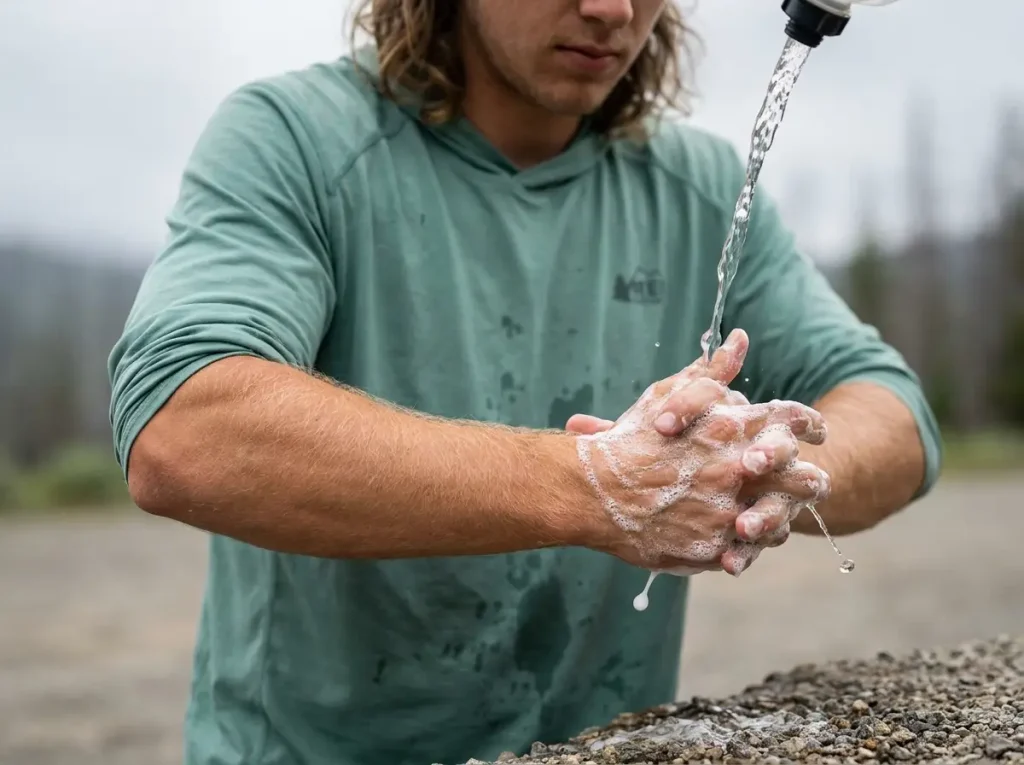
When hundreds of dirty people walk in a tight line, touch the exact same wooden shelter logs, and eat with perpetually filthy hands, illness spreads fast. Large, uncontrolled feeds inadvertently turn a beautifully kind gesture into a horrifying biological disaster.
Why Shared Feeds Become Spreader Events
Large roadside feeds usually completely lack functioning sanitation stations. When fifty grimy hikers cram unwashed hands into a shared bag of chips or repeatedly grab the wet handles of the same drink cooler, those feeds instantly become ground zero for a Norovirus outbreak. Ask literally any veteran thru-hiker about the dreaded stomach bug, and they will physically wince.
This contagious virus rapidly depletes your bodily fluids. The worst part is the sneaky incubation period. The virus sits active inside a hiker for two full days before symptoms abruptly hit. This means an infected person hikes thirty hard miles, using five different public outhouses and sleeping in three-sided shelters, contaminating every surface they contact. By the time they’re trapped in their nylon tent purging, they have already quietly infected the entire trail bubble hiking directly behind them.
Land managers strongly suggest angels only serve commercially pre-packaged food wrapped securely in plastic unless they have access to a sterile kitchen. Read the terrifying realities of CDC findings on trail outbreaks if you wrongly assume the bug is a minor inconvenience.
The Purell Myth vs. Real Soap
There is a massive, dangerous misconception in the outdoor community that squeezing a tiny dollop of alcohol sanitizer onto your palms makes you totally safe to handle communal food.
Pro-Tip: Alcohol-based hand sanitizers do virtually nothing to kill the Norovirus pathogen. You can aggressively scrub your hands with pure alcohol all day long, and the tough virus shell will happily survive to infect you immediately.
The virus spreads rapidly through fecal-oral transmission on heavy-use touch surfaces. We are talking about dirty cooler handles, wooden privy latches, and the communal sharpie marker used for trail registers. Effective prevention requires flowing water, vigorous mechanical friction, and real soap to actively scrub the sticky virus directly off your skin. Setting up a cheap five-gallon water jug with a foot pump and Dawn dish soap is rare, but it is the absolute baseline of preventing backcountry infections.
While angels must rigidly manage sanitation at the feed, hikers hold a massive unwritten responsibility for exactly how they act when receiving that support.
The Hiker’s Etiquette for Receiving Magic
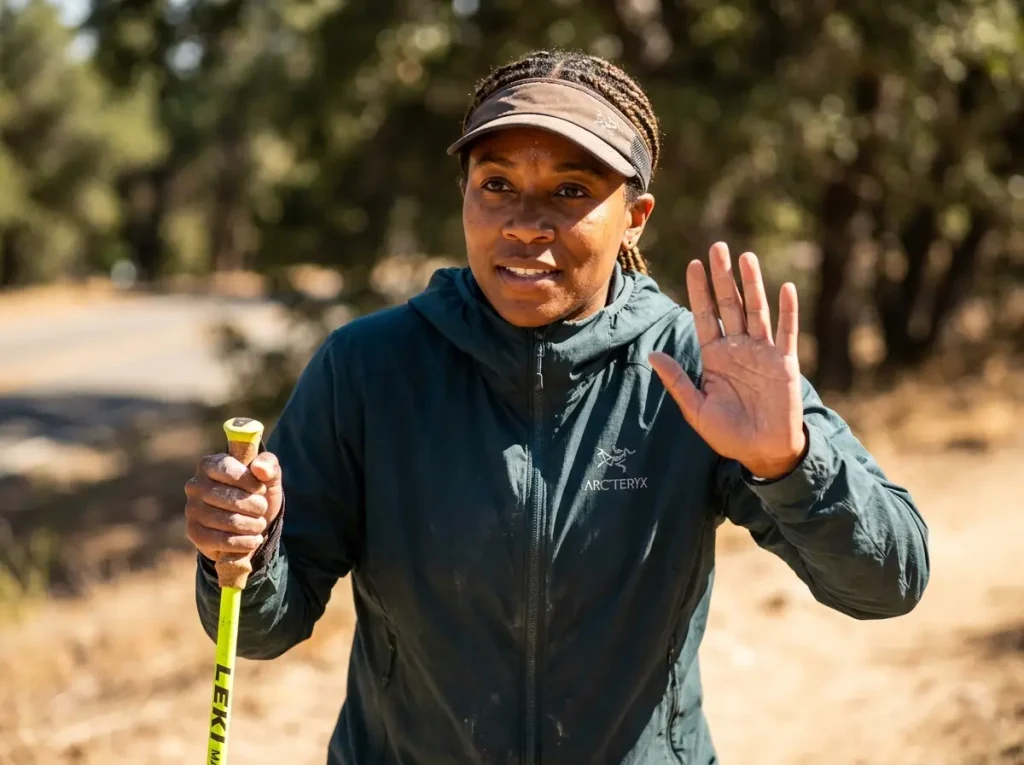
Receiving magic gracefully is a difficult art form. It requires knowing how to accept amazing generosity with grace, how to proactively give back to the communities that support you, and how to decline an offer without acting like an entitled jerk.
Handling “Magic Overload” and Politely Declining
When you are deep in the pain cave pushing a grueling twenty-five-mile day over rocks, your mindset totally shifts. You fall into a hypnotic walking trance. When you’re moving solidly in that zone, the absolute last thing you want to do is drop your heavy pack and spend forty-five minutes making forced small talk with a stranger. You develop “hiker brain,” where answering basic questions feels like a massive chore.
Not every exhausted hiker wants to stop for a party. The sheer social energy required to stand around smiling broadly at a crowded feed is sometimes far more exhausting than walking up a steep mountain. It is perfectly acceptable to politely decline magic.
A simple, polite “Thank you so much, but I’ve got to make camp before dark to stay on schedule,” respects the angel’s deep effort without derailing your walking rhythm. Good trail angels deeply understand this and know exactly when to back off.
Reverse Trail Magic: Giving Back to the Locals
Hikers often wrongly fall into a trap, holding the arrogant assumption that the trail owes them endless favors. The reality is that the hiker holds the strict moral responsibility to be a solid ambassador to the tiny, often economically struggling local towns that generously host them.
You should constantly look for small ways to pay it forward. This is reverse trail magic. If you are hitchhiking in the dusty back of a pickup, offer to buy the driver coffee. Spend ten solid minutes carefully picking up crushed beer cans and plastic debris along the highway shoulder while you wait out a ride. Leave glowing online reviews for the small, cheap diners that tolerate your raw hiker funk.
Being a highly respectful guest ensures that rural communities don’t actively resent the massive wave of thru-hikers pouring out of the woods. Showing gratitude through practical action is a core part of managing your own waste and maintaining the fragile harmony of the trail corridor.
That deep respect for the local community must extend directly into the personal spaces of those generous enough to pull you off the street.
Hostel Courtesies You Can’t Ignore
If an angel generously slaps a roof over your head or offers you their clean couch for the night, the bare minimum requirement is actively cleaning up after yourself.
Throw away your trash in the outside bins. Offer to aggressively scrub the greasy pots after they cook you dinner. Sweep the caked dirt off the wooden floor from your heavy boots before you pack out. Pitch in cash for the hot water tank you drained and the laundry detergent you completely burned through trying to wash the dark stink out of your thick socks. Be a good guest. And whatever you do, never quietly raid their downstairs bathroom cabinets to steal rolls of toilet paper for your pack. Entitled people actually do it, and it permanently ruins the vital goodwill for everyone walking behind them.
Good manners inside a private home naturally transition directly into how you cautiously handle the communal gear scattered across public resupply points.
The Rules of “Hiker Boxes” and Town Resupplies
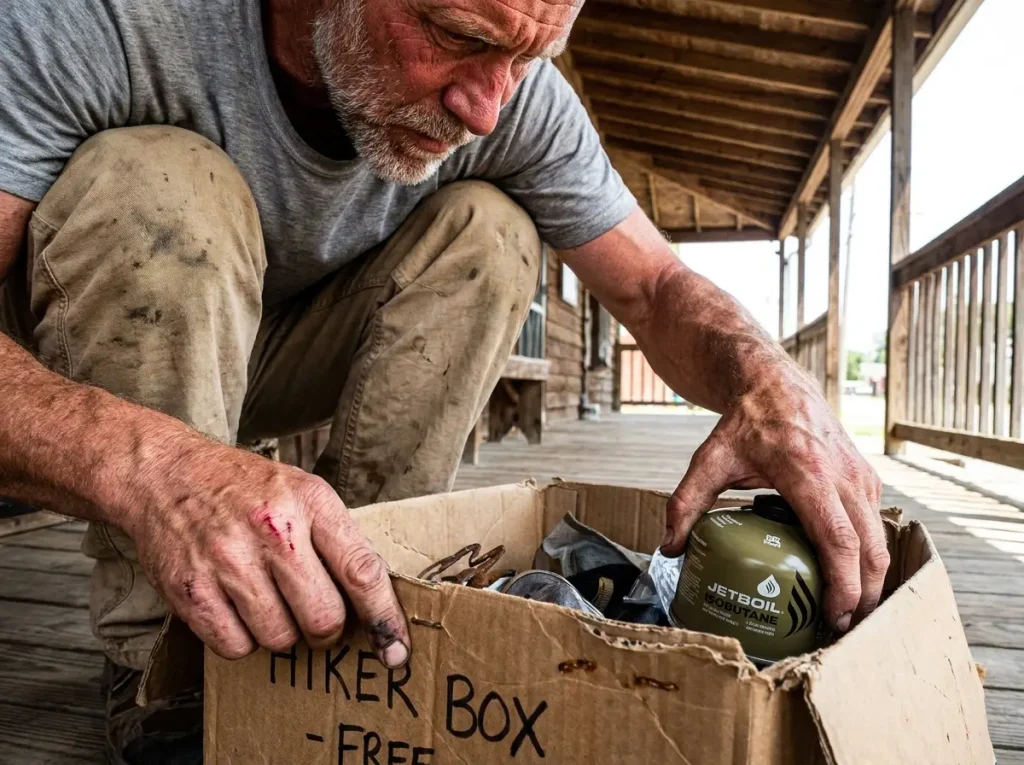
One of the greatest silent forms of community magic happens totally out of sight, deep inside a battered cardboard box sitting directly on the dusty floor of a post office or an old outfitter. Understanding exactly how to use these communal bins is essential for running efficient town logistics.
How a Hiker Box Actually Works
A hiker box is exactly what it sounds like. Found at almost every major trail town hostel and USPS location, it is a communal open bin where hikers dump unwanted dry food or heavy gear for the next desperate person who walks through the door.
It is the ultimate functional ecosystem of “take exactly what you realistically need, leave exactly what you don’t.” Finding half a jar of crunchy peanut butter or a brand new roll of sticky tape sitting at the bottom of the box when your wallet is totally empty is trail magic in its purest, most raw form.
But you must be highly selective. Rooting through the box to top off your food bag is totally fine, but do not selfishly hoard heavy, high-calorie items just because they are completely free. Taking three heavy days of extra food from the box when you personally only need one quick dinner to reach the next town is flat-out greed. Leave the heavy surplus for the broke hiker moving a tough day behind you.
What Belongs in the Box (And What Doesn’t)
You need to act with strict common decency when contributing your excess bulk to these community bins. Great additions include sealed freeze-dried backpacker meals, fully unopened fuel canisters, heavy durable gear items you swapped out, and individually sealed packaged snacks.
Pro-Tip: Do not treat the hiker box as your personal garbage can. Nobody on this earth wants your crusty wool socks, your moldy green tortillas, or a dirty ziplock bag containing crushed trail mix you painfully picked the chocolate out of.
If your resupply package sent early by FedEx accidentally gave you way too many calories to physically carry, the hiker box is the perfect place to distribute that extreme wealth. Dropping off five extra heavy meals you simply can’t carry is a heroic move. Just keep everything deeply hygienic, ensure the seals are perfectly intact, and thoroughly understand how to properly handle managing your mail drops without accidentally turning the helpful community box into a gross biological hazard for the next guy.
Conclusion
Trail magic is the true beating heart of the long-distance hiking community. It is fundamentally built on serendipitous, quiet encounters, shared grueling struggles in the dirt, and small acts of profound kindness—not massive catered events blocking the fire road. We all have a heavy, undeniable responsibility to aggressively protect the wild places we rigidly walk through and strictly respect the animals that call them home. Never leave food caches or heavy coolers unattended in the dark woods; the life of the local bear population and the intense cleanliness of the trail rely strictly on our in-person stewardship and focused situational awareness.
Always remember that quietly offering to carry out a dirty bag of trash or blindly granting a silent car ride back to town often means a thousand times more to a broken hiker than a free processed hotdog ever could. As you organize your heavy gear and plan your next big trip out to the remote trailhead—whether you are carrying a fully loaded overnight pack or an extra pack of cold sodas to hand out from your trunk—step up. Make the hard choice to be the responsible, deeply thoughtful hiker or angel the fragile trail actually needs right now. You’ll know exactly what to do when you see that exhausted hiker walking out of the heavy timber.
FAQ
Is it prohibited to leave trail magic unattended?
Yes, leaving unattended coolers or open food caches on protected public lands is legally considered abandoning property and severe littering. It actively attracts hazardous wildlife to road crossings and is strictly banned by management agencies like the US Forest Service and the PCTA. Never just abandon food alone in the woods.
What do thru-hikers actually need the most?
Exhausted hikers fiercely crave fresh, water-dense foods like crisp apples and chilled electrolyte drinks, alongside highly practical physical help like trash bag disposal. They generally carry plenty of heavy, processed dry foods in their packs already, so handing them another dry granola bar rarely provides any true relief.
Do I need a permit to be a trail angel?
You generally only need a formal federal permit if you are deliberately hosting a massive organized group event—like feeding over 25 people—or if you are ever charging money or accepting cash donations for things like shuttles and hot meals. Random, small-scale acts of totally free kindness do not require any complicated paperwork.
Can I catch a stomach bug from a hiker feed?
Yes, large disorganized roadside feeds are formally recognized hotspots for rapidly spreading intense stomach bugs due to communal grabbing and a complete lack of running water. Always vigorously scrub your filthy hands with actual running water and real soap, because standard alcohol hand sanitizers simply cannot kill the tough virus shell.
How do you politely turn down trail magic?
A simple Thank you so much, but I really need to heavily push and make camp before it gets dark is the absolute best approach to take without coming off as horribly rude. Experienced angels deeply understand that hikers must fiercely keep their momentum going and will totally respect your decision to keep moving.
Risk Disclaimer: Hiking, trekking, backpacking, and all related outdoor activities involve inherent
risks which may result in serious injury, illness, or death. The information provided on The Hiking Tribe is for
educational and informational purposes only. While we strive for accuracy, information on trails, gear, techniques,
and safety is not a substitute for your own best judgment and thorough preparation. Trail conditions, weather, and
other environmental factors change rapidly and may differ from what is described on this site. Always check with
official sources like park services for the most current alerts and conditions. Never undertake a hike beyond your
abilities and always be prepared for the unexpected. By using this website, you agree that you are solely
responsible for your own safety. Any reliance you place on our content is strictly at your own risk, and you assume
all liability for your actions and decisions in the outdoors. The Hiking Tribe and its authors will not be held
liable for any injury, damage, or loss sustained in connection with the use of the information herein.
Affiliate Disclosure: We are a participant in the Amazon Services LLC Associates Program, an
affiliate advertising program designed to provide a means for us to earn advertising fees by advertising and linking
to Amazon.com. As an Amazon Associate, we earn from qualifying purchases. We are also an official affiliate partner
of Black Diamond Equipment via the AvantLink network. If you click on a Black Diamond affiliate link and make a
purchase, we may earn a commission at no additional cost to you. We also participate in other affiliate programs and
may receive a commission on products purchased through our links. Additional terms are found in the terms of
service.