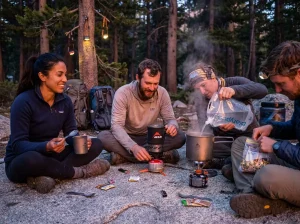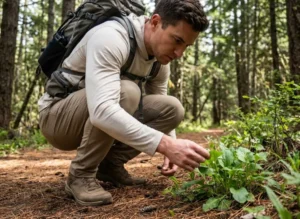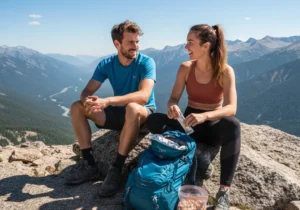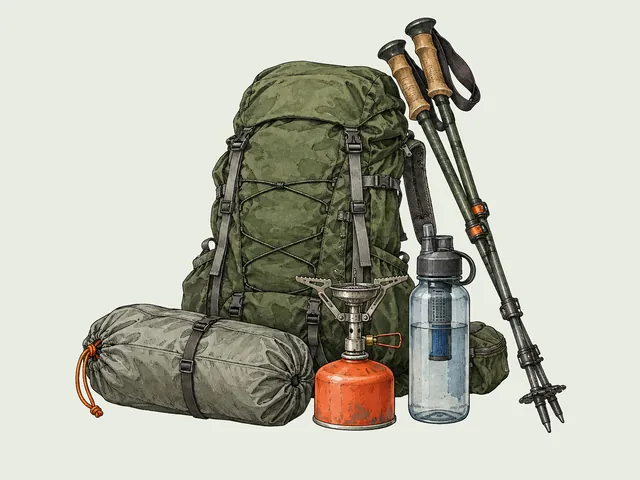
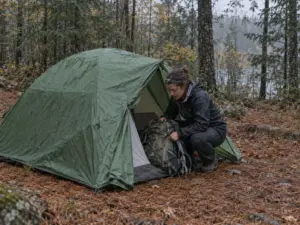
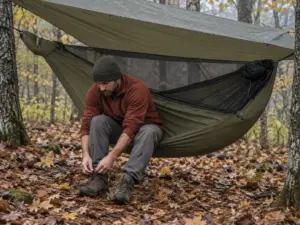
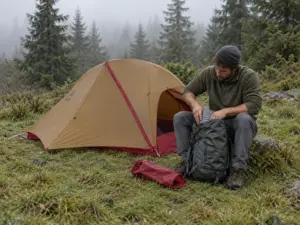
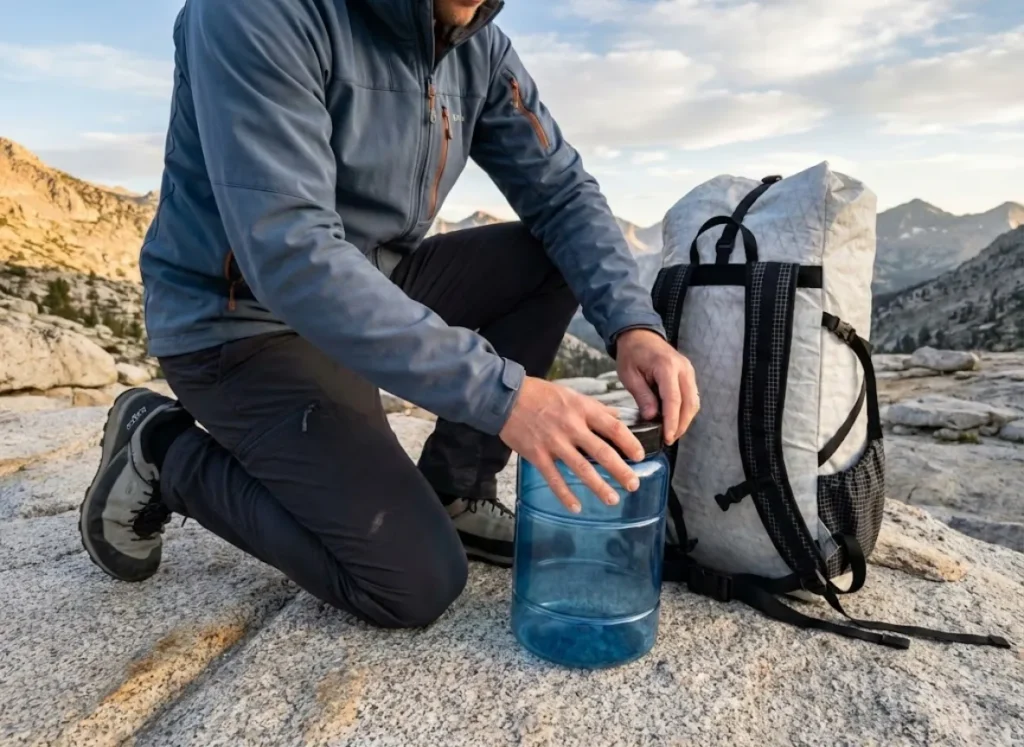
I once watched a seasoned thru-hiker lose his entire food supply to a black bear in the Sierra Nevada. It wasn’t because he was messy; it was because he trusted a traditional “bear hang” in a forest where the bears had spent decades learning to untie knots. The hike ended that morning.
True backcountry safety isn’t a product you buy at REI; it is a rigid system you enact. It requires shifting from a passive camper mindset to an active risk mitigation protocol. We are dealing with biological time bombs in your pack, the physics of crush-proof plastic, and the regulatory environment of federal lands. This survivalist’s protocol moves beyond generic camping tips to establish a unified theory of biosecurity.
In my years leading expeditions, I’ve taught students that a single crumb of rehydrated chili mac dropped near a tent vestibule changes the behavior of a 400-pound apex predator. It also serves as a breeding ground for pathogens capable of ending an expedition within hours. In the wilderness, food is not just fuel; it is a liability that demands a strict containment strategy. This comprehensive how-to guide addresses the microscopic threats of microbiology, the macroscopic threats of wildlife encounters, and the complex logistics of store food in the backcountry.
What Are the Invisible Threats to Your Rations? (The Micro Level)
Before we worry about claws and teeth, we must address the foodborne illness—often colloquially called backcountry belly—that takes hikers off the trail long before a bear does. Food safety begins with thermodynamics.
Why is the USDA “Danger Zone” Critical in the Wild?
The “Danger Zone” is the thermodynamic window between 40°F and 140°F (4°C – 60°C) where bacteria like Salmonella and E. coli proliferate exponentially. In a standard kitchen, mechanical refrigeration keeps perishable food at bay. Without it, your only control variable is temperature control. Standard USDA FSIS guidance on food safety dictates that perishable food must not remain in this temperature range for more than two hours before becoming a safety threat.
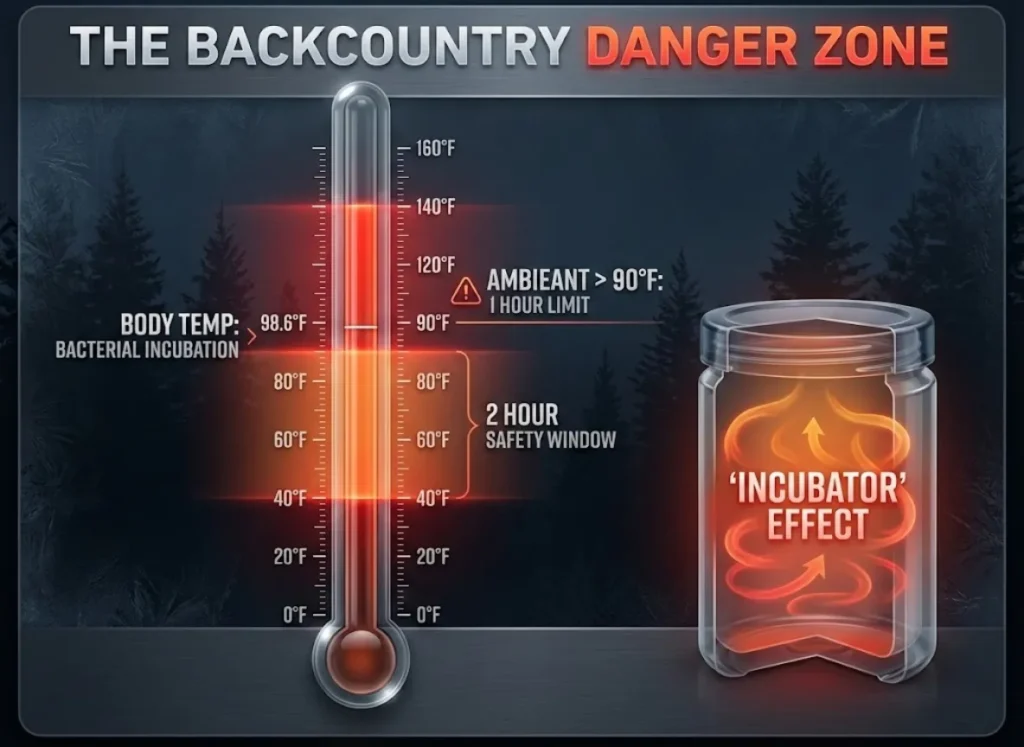
In typical summer backpacking conditions, where ambient temperatures exceed 90°F (32°C), this 2-hour rule shrinks to just one hour. This physical constraint effectively rules out the transport of raw meats, poultry products, or soft cheeses for multi-day treks without heavy active cooling. Even insulated bear canisters can inadvertently act as incubators. If you pack warm leftovers, the canister retains that heat, keeping your meal in the Danger Zone for dangerous durations. This makes selecting easy, high-energy camping meals composed of shelf-stable items a matter of safety, not just convenience.
Does Freeze-Drying Actually Kill Bacteria?
A critical misconception among hikers is that freeze-drying (lyophilization) creates a sterile product; in reality, it only creates a stasis environment. According to the University of Minnesota Extension on freeze-drying, the process removes water to lower “water activity” below the threshold for bacterial metabolism, but the pathogens remain dormant, not dead. Once water is reintroduced during rehydration, the biological clock restarts immediately. The bacteria “wake up” and begin to multiply.
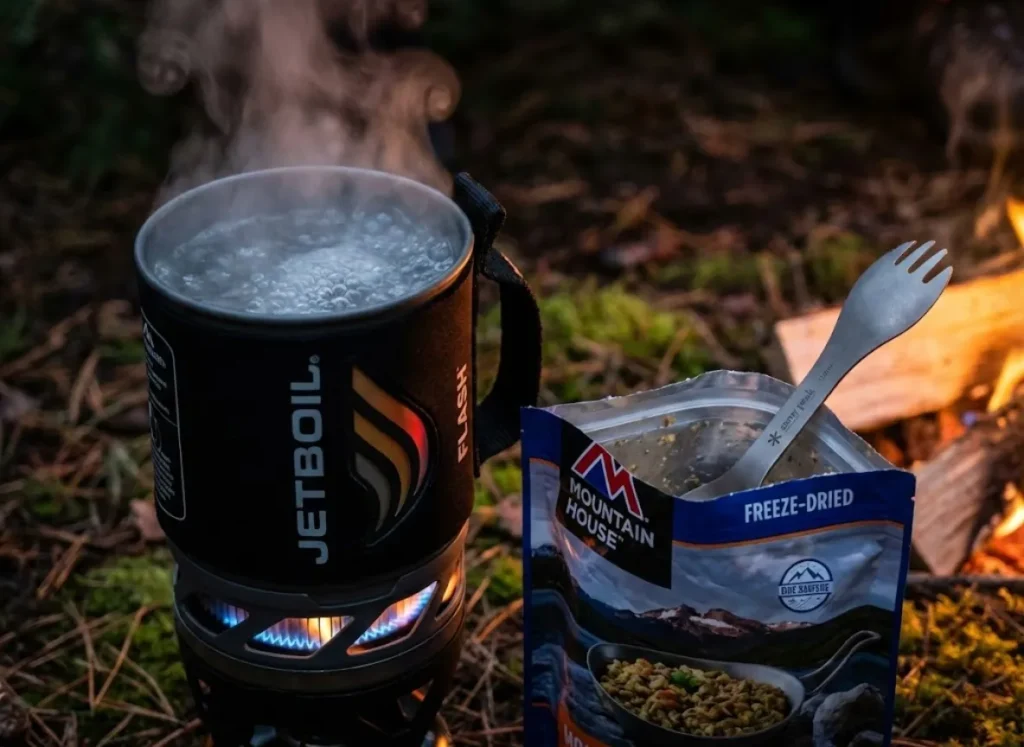
This has major implications for “Cold Soaking”—rehydrating packaged foods without heat. If you carry a soaking jar in a pack against your warm body, you are creating an ideal petri dish. Because freeze-drying does not include a thermal kill step equivalent to boiling on an MSR PocketRocket or Jetboil, rehydrated food should be consumed immediately. This risk is why mastering trail-safe recipes and techniques for cold soaking is essential to avoid Giardia-like symptoms miles from a trailhead.
Pro-Tip: If you cold soak, never save leftovers. The combination of moisture, time, and body heat creates a bacterial load your stomach may not be able to handle. Eat it all, or dispose of it properly.
How Does Wildlife Perceive Your Campsite? (The Macro Level)
Once you understand the biological integrity of your food chain, the focus shifts to the external forces actively seeking to consume it. We need to analyze the sensory capabilities of the adversary to understand why concealment fails and containment is necessary.
How Powerful is a Bear’s Sense of Smell?
The black bear (Ursus americanus) possesses an olfactory system roughly seven times more sensitive than a bloodhound’s and significantly more powerful than a human’s. Their nasal cavity contains a complex honeycomb structure of turbinates that maximizes the surface area available for detecting chemical compounds. As detailed in Washington State University bear research, this biological hardware allows bears to detect food odors from miles away.
Scent travels in a “plume,” which is heavily influenced by environmental factors. Thermals play a tactical role: warming morning air carries food scents up-canyon, while cooling evening air pushes scent down-canyon. Campers must visualize their backcountry campsite not as a static location, but as a source emitting a constant, directional signal. Relying on “hiding” your food bag is futile; instead, you must focus on adhering to strict outdoor ethics regarding LNT principles and scented items.
Why Are “Mini-Bears” (Rodents) a Greater Statistical Threat?
“Mini-bears”—including mice, chipmunks, ravens, and pack rats—are statistically more likely to raid a backpacker’s food supply than ursids. These animals possess continuously growing incisors capable of chewing through heavy-duty synthetic fabrics, including standard nylon and backpack materials. According to Grand Canyon National Park rodent guidelines, the primary defense against rodents is physical armor, such as hard-sided containers or stainless steel mesh bags like Rat Sacks.
Rodents are vectors for serious diseases like Hantavirus and Plague, making their presence in food stores a biosecurity hazard. They are adept climbers, often descending suspension ropes used for “bear hangs” to access food bags that are technically safe from bears. Therefore, managing the microtrash that attracts them—crushed crackers, spilled powder, and dropped wrappers—is the first line of defense against having a hole chewed through your expensive tent.
Which Storage System Fits Your Expedition Profile? (The Gear Matrix)
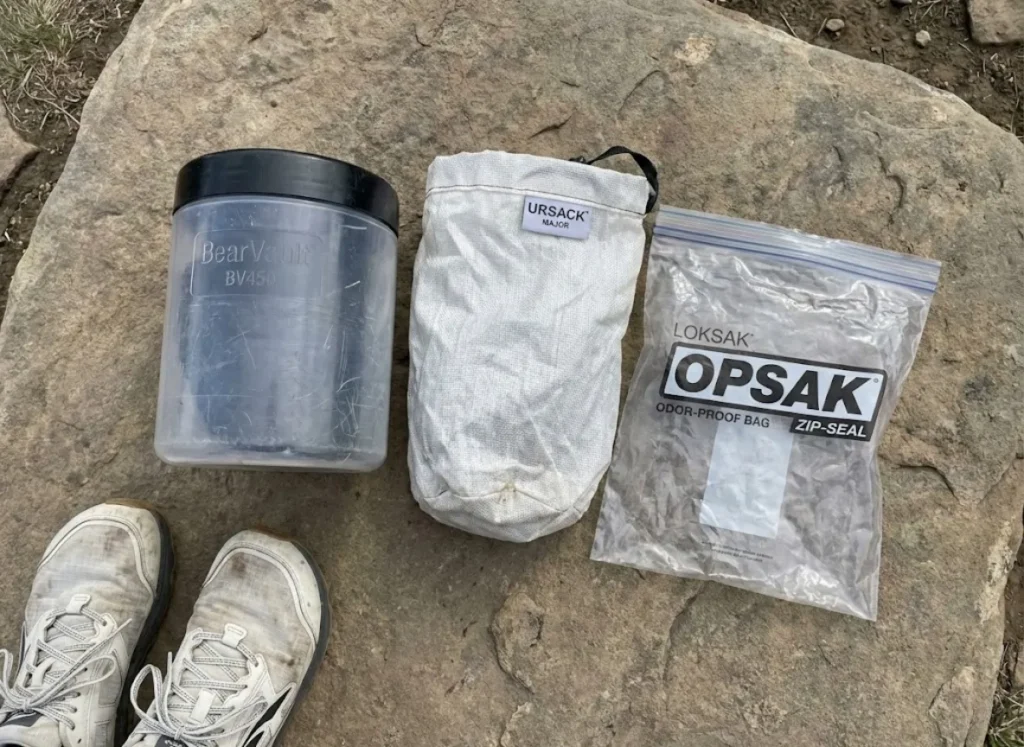
There is no single perfect system selection matrix. The right choice depends on the specific predators in your region, weight, and volume requirements.
When Are Hard-Sided Canisters Non-Negotiable?
Hard-sided bear canisters (like BearVault or Bearikade) are the gold standard because they rely on geometry (too wide to bite) and structural rigidity. They are the only storage method universally accepted in high-conflict zones like Yosemite National Park canister requirements dictate. Unlike soft bags, these IGBC-certified containers protect food from being crushed into an inedible powder during a wildlife encounter.
BearVault Canister Comparison
Technical specifications and capacity guide for wildlife-resistant food containers.
Volume & Efficiency
Storage: 305 cu in (5.0L). Efficiency rating: 5.6 oz/L.
Trip Duration
Optimized for 1-2 days. IGBC Cert #5422.
Form Factor
Weight: 1 lb 12 oz. Size: 8.7 x 6.0 in.
Volume & Efficiency
Storage: 440 cu in (7.2L). Efficiency rating: 4.6 oz/L.
Trip Duration
Optimized for 3-4 days. IGBC Cert #5340.
Form Factor
Weight: 2 lb 1 oz. Size: 8.7 x 8.3 in.
Volume & Efficiency
Storage: 565 cu in (9.3L). Efficiency rating: 3.9 oz/L.
Trip Duration
Optimized for 5-6 days. IGBC Cert #5423.
Form Factor
Weight: 2 lb 4 oz. Size: 8.7 x 10.5 in.
Volume & Efficiency
Storage: 700 cu in (11.5L). Efficiency rating: 3.6 oz/L.
Trip Duration
Optimized for 7 days. IGBC Cert #5339.
Form Factor
Weight: 2 lb 9 oz. Size: 8.7 x 12.7 in.
While effective, they are bulky. Carbon fiber models offer weight savings but come at a high cost. Users must pack canisters efficiently, often fitting a rigid canister into your backpacking backpack vertically to keep the center of gravity close to the spine. Compliance involves placing the canister on the ground, 50-100 feet from camp, rather than tying it to a tree where a bear creates leverage to break it.
Are “Bear-Resistant” Bags (Ursacks) Sufficient Protection?
The Ursack utilizes Ultra-High Molecular Weight Polyethylene (UHMWP) fabrics like Spectra to resist tearing under the force of a bear’s claws and teeth. These bags are significantly lighter and more packable than canisters, making them a staple for those optimizing their lightweight gear list. However, they are classified as “Bear Resistant,” not “Bear Proof.” Contents can be crushed, and the bag will likely be coated in saliva after an attempt.
Standard Spectra models are vulnerable to the sharp teeth of mice and pine martens, which can separate the fabric weave to access food. To mitigate the rodent threat, newer hybrid models incorporate Kevlar for higher puncture resistance. Before purchasing, always check the IGBC list of certified products to ensure the specific model has passed the 60-minute grizzly bear contact test.
Do Odor-Proof Bags (OPSAKs) Actually Work?
OP Sacks (like those from Watchful Eye Designs) are hermetic barrier bags designed to be impermeable to oxygen and scent molecules. While effective in a lab, their field performance is often compromised by microscopic food residue transferred to the outside of the bag by human hands. As Leave No Trace on attractant management notes, these should be viewed as a hygiene liner to keep the interior of a bear canister clean, rather than a magical shield.
Reliance solely on odor-proof bags without physical protection is a high-risk strategy often referred to as “sleep-sack roulette.” Drug-sniffing dogs—and by extension, bears—can often detect contents through the seal if the bag has been handled with contaminated fingers. Use them as a redundancy layer when organizing your trail nutrition system, not as your primary defense.
How Do Regulations Change Across Different Environments? (The Compliance Map)
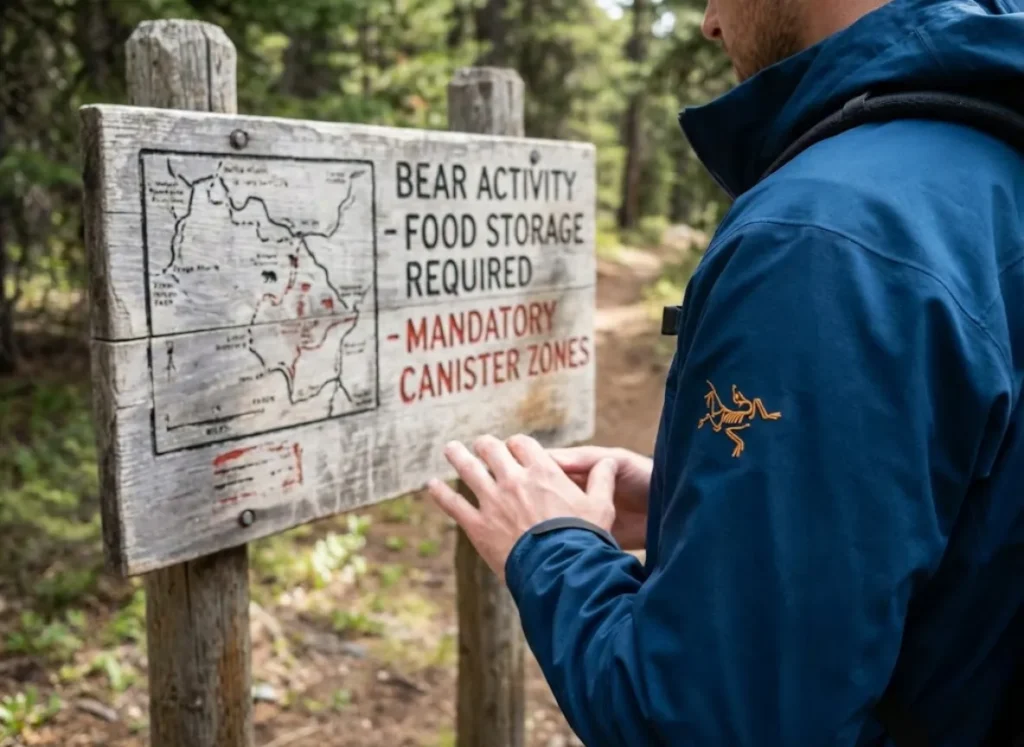
Food storage rules are not just about safety; they are about legality. Rangers can and will issue fines for non-compliance with national park canister regulations.
What Are the Specific Requirements for the Sierra Nevada?
The High Sierra, including Yosemite, Sequoia, and Kings Canyon (SEKI), represents the strictest regulatory environment due to high bear density and animal habituation. Hard-sided, IGBC-approved canisters are mandatory for overnight travel in most zones; the traditional bear hang is illegal. Sequoia & Kings Canyon food storage rules provide specific zoning maps where canisters are mandatory.
Hikers planning their hiking trips in California, particularly on the Pacific Crest Trail (PCT) or John Muir Trail (JMT), must carry canisters for the entire duration of the Southern Sierra section. While permanent steel food storage lockers exist at some campsites, relying on them limits your itinerary flexibility significantly.
How Do Rules Differ in the Desert and East Coast?
In Canyonlands‘ Needles District, along the White Rim Road, and in the Grand Canyon, the “bear hang” is discouraged because it damages fragile desert trees and fails against climbing rodents. Stainless steel mesh bags are the preferred tool here. Conversely, Shenandoah National Park food storage regulations and parts of the Appalachian Trail (AT) maintain a hybrid policy where hanging is technically legal, though canisters are increasingly recommended.
The AT has specific “mandatory canister zones,” such as Blood Mountain in Georgia, which are activated seasonally. Similarly, knowing the routes and planning for backpacking in Glacier National Park or Rocky Mountain National Park requires checking the Superintendent’s Orders, as rules regarding food poles and designated eating areas are strictly enforced to manage grizzly bear encounters.
How Do You Execute the “Bearmuda Triangle” Protocol? (Field Operations)
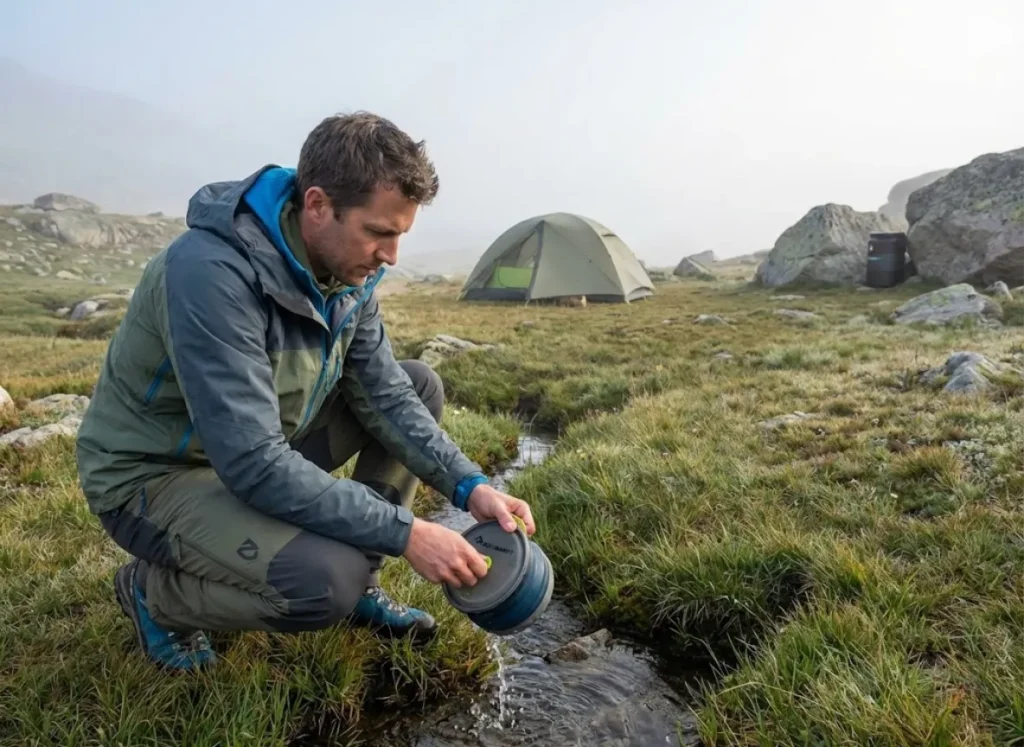
With the gear selected and the laws understood, the final piece of the puzzle is the physical execution of safety in the field.
How Should You Geometrically Arrange Your Campsite?
The “Bearmuda Triangle” (or Triangle of Life) dictates a strict separation of camp functions into three points: Sleeping Zone, Kitchen Zone, and Storage Zone. Leave No Trace camp layout principles suggest that each point of the triangle should be separated by at least 70 big steps (the 70-step distance rule—approximately 200 feet or 60 meters). This creates a scent buffer essential for safety.
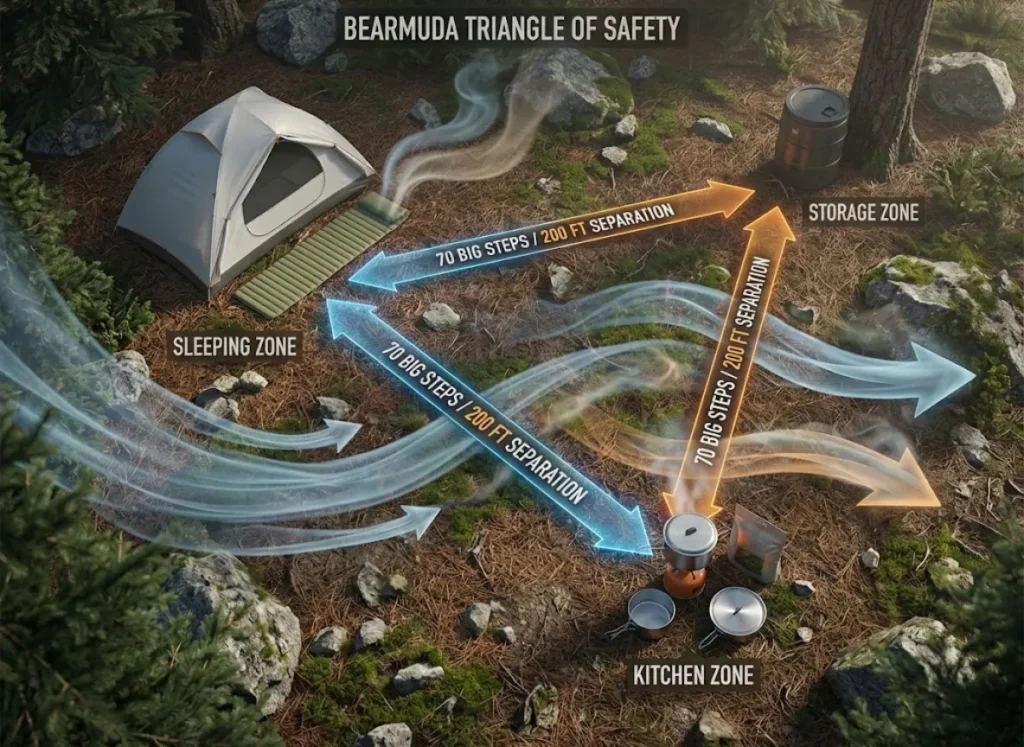
Wind direction is the critical variable; the food storage and kitchen areas should be located downwind or crosswind from the sleeping zone. The sleeping area must be the “cleanest” node, kept entirely free of food odors, toiletries, and any scented items. This geometric approach is a key part of strategic backpacking with a tent placement.
What is the “One-Pot” Method for Hygiene?
Dishwashing is a major attractant vector. The “One-Pot” method minimizes waste by using a small amount of warm water to clean the cooking vessel. The resulting “greywater soup,” which contains food particles and sauce, is consumed by the hiker (the “Human Sump”). This eliminates the need to strain and pack out trash (wet sludge) and drastically reduces the food scent left at the kitchen site.
Pro-Tip: Use a dedicated silicone scraper to clean your pot before adding water. It removes 95% of the food residue, making the “sumping” process much more palatable and using less water.
NOLS hygiene tips for camp kitchens emphasize that if biodegradable soap must be used, the remaining water should be “broadcast” (flung widely) over a large area at least 200 feet from camp. Never dig a “sump hole,” as animals will dig it up. Finally, hand washing with soap and water is mandatory. Hand sanitizer is ineffective against non-enveloped viruses, and failing to wash hands is a primary cause of Giardia symptoms.
Conclusion
Food safety in the backcountry is a tripod of Microbiology (controlling the Danger Zone), Physics (using crush-proof canisters), and Law (adhering to park regulations). The “Bear Hang” is largely an obsolete technique in high-use areas; hard-sided approved containers are the only reliable defense against habituated wildlife. Sanitation ergonomics are as critical as containment; the “Human Sump” and proper handwashing prevent illness and protect the integrity of the trail for the next backcountry user.
Explore our detailed guides on Gear Selection to find the right canister for your next trip, or share your own experiences with backcountry food storage in the comments below.
FAQ – Frequently Asked Questions
Is hanging a bear bag still an effective method?
Generally, no. In high-traffic areas, bears have learned to defeat hangs, and finding the perfect tree is often impossible; hard-sided canisters are statistically safer and often required.
Can I keep food in my tent if it’s in a bear canister?
Absolutely not. The canister should be placed 100-200 feet downwind from your tent to ensure that if a bear investigates the scent, it remains far away from your sleeping area.
Do toiletries count as food for bear safety?
Yes. Anything with a scent—toothpaste, sunscreen, deodorant, lip balm, and even wet wipes—must be stored in the bear canister, as animals are attracted to the chemical odors.
Is Cold Soaking safe from bacteria?
It carries risks. Since there is no kill step (boiling), bacteria in the food or container remain alive; consume cold-soaked meals immediately and do not carry rehydrated food in a warm pack.
I've spent more than a decade researching hiking gear and trail technique. I read the specs, the forum threads and the long-term reviews, and every pick here comes with what it gets wrong.
End of the trail
You read every mile of this one. Here's where the trail goes next.