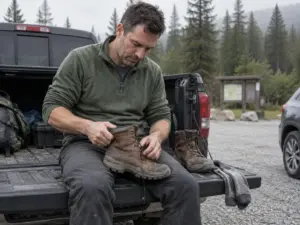
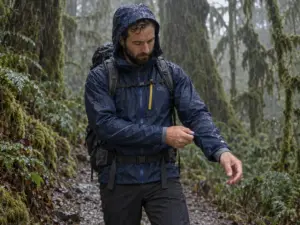
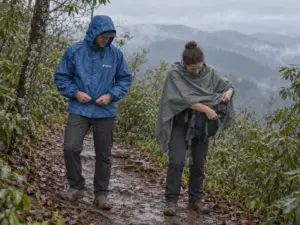
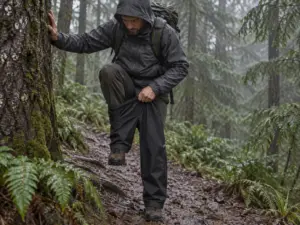


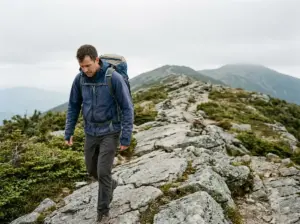

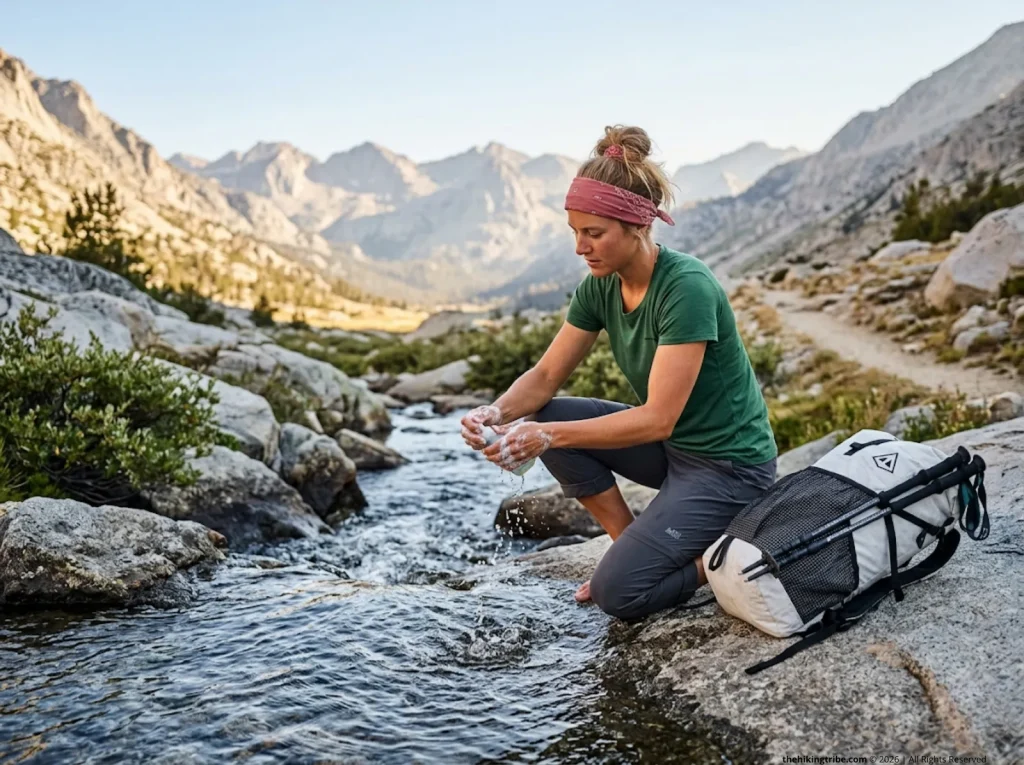
My third week on the Pacific Crest Trail, I watched a seasoned hiker get pulled off the trail because a “minor” bout of chafing turned into a deep skin infection within 48 hours. I warned him at the trailhead, but a long-distance expedition usually falls apart not from a catastrophic gear blowout, but from the microscopic breakdown of your biological integrity. After logging thousands of miles dialing in thru-hiking hygiene, I’ve found that a real safety risk assessment cannot just focus on flooded river crossings or grizzly bears.
This system teaches you how to stop viral transmission, wash away abrasive salt crystals, and protect your skin’s natural defenses using a field-tested, lnt compliance-approved method over a 2,000-mile haul. Here is exactly how to handle it—no panic, no ER visit necessary.
| Wash Methods & Pathogen Neutralization Comparison | |||
|---|---|---|---|
| Wash Methods Comparison | Norovirus Neutralization | Bacteria/Protozoa | Technical Limitation |
| 70% Alcohol Gel | 0% (Low) | High | Ineffective against non-enveloped viruses |
| Soap & Water | 99% (High) | High | Requires 20 seconds of mechanical scrubbing |
| 0.1 Micron Filter | 0% (Zero) | 99.9999% | Pore size exceeds viral dimensions |
⚡ Quick Answer: Hand sanitizer cannot neutralize non-enveloped Norovirus, making true soap and water necessary for handwashing. Evaporated sweat leaves abrasive salt crystals that cause chafing and Cellulitis, requiring a daily water rinse to wash the salt away. High-alkaline biodegradable soaps strip your skin’s defensive oil layer, while sharing trail mix bags creates a massive cross-contamination risk.
The Bio-Film Trap: Why Hand Sanitizer Fails Against Norovirus
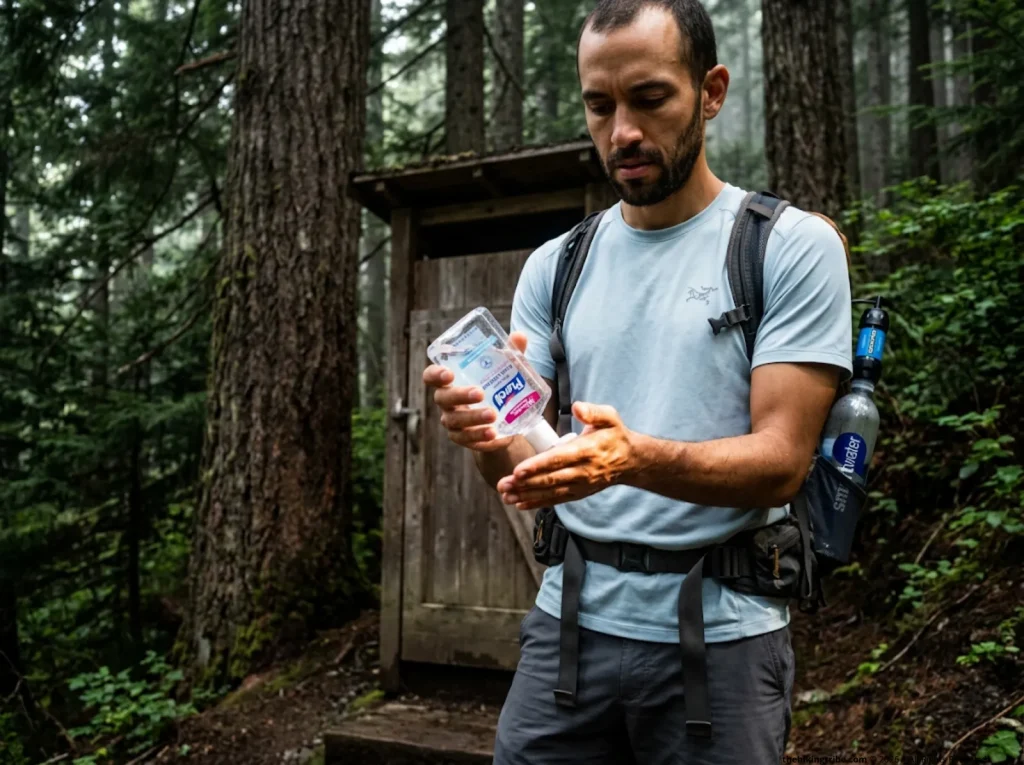
Relying on a squirt of Purell or similar hand sanitizer after using filthy backcountry privies remains the number one reason trail outbreaks happen. You might think your hands are clean, but you’re just dragging the exact pathogen you’re trying to avoid into your tent.
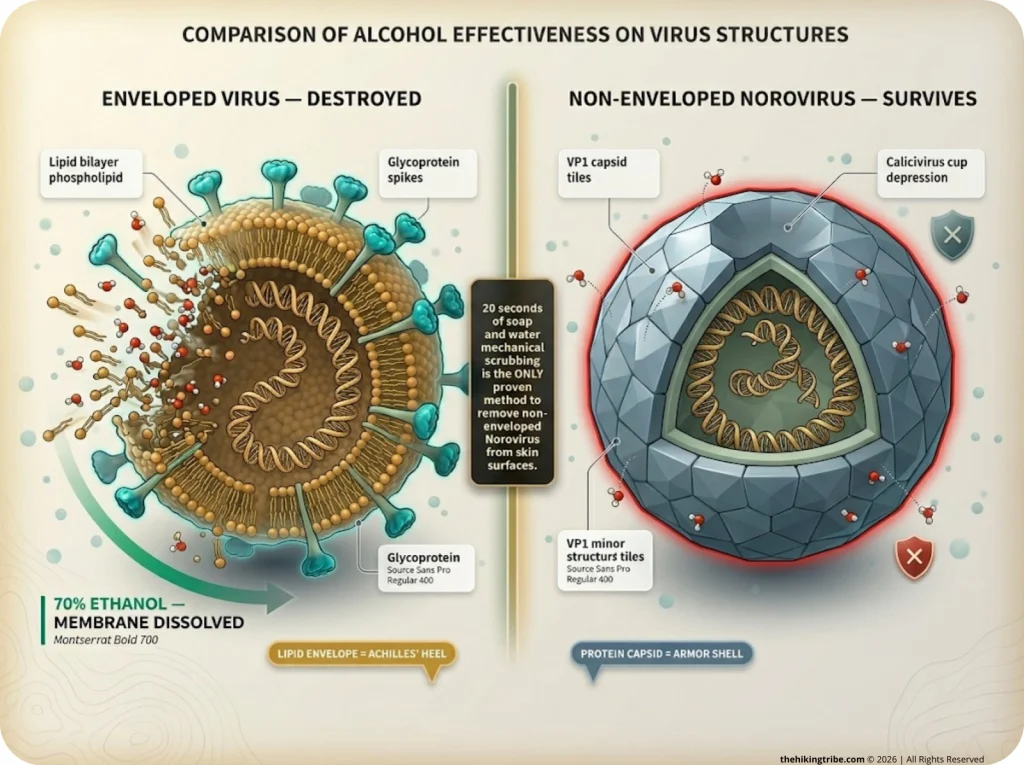
The biology of norovirus makes it a unique threat outside. It is a non-enveloped virus, which means it completely lacks the fatty outer layer that alcohol gels dissolve. Because it lacks that target, the virus completely ignores the 70% ethanol formulations found in standard sanitizers. During the 73-mile PCT Norovirus outbreak in Washington, hikers who strictly relied on sanitizer became the primary carriers.
The reality gets much worse once you factor in trail grime. Hands in the backcountry stay perpetually coated in trail dust, pine sap, and sweat. Smearing sanitizer over dirty hands creates a bio-film that traps and protects living pathogens rather than neutralizing them. A 2024 NPS analysis of viral persistence on environmental surfaces confirms that alcohol rubs simply fail here. A real decontamination requires 20 seconds of physically scrubbing with soap and water to wash the virus down the drain. This same physical filter failure applies to your hydration setup, while standard hollow fiber arrays fail to exclude viral entities—like the 0.1 micron absolute Sawyer Squeeze, which stops bacteria but lets viruses flow right through.
The Physics of Chafing: How Sweat Turns Into Sandpaper
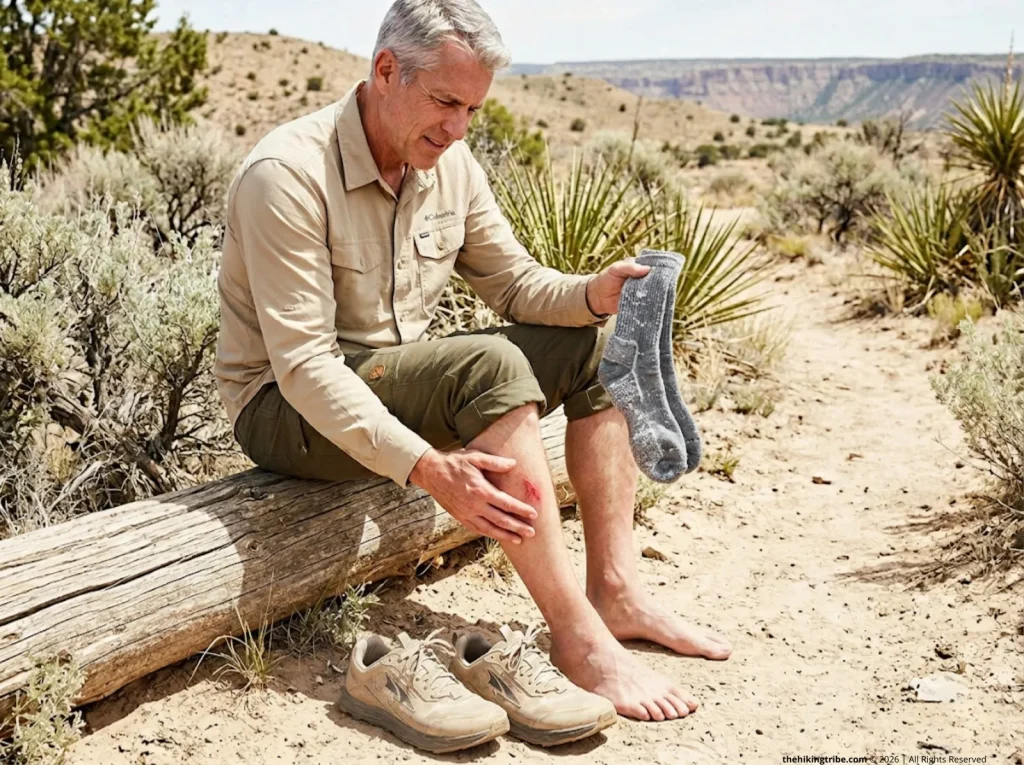
Many hikers treat chafing as an annoying rite of passage, but the physics of chafing turns friction into a medical liability. Sweat is mostly salt water. As your sweat dries across miles of exposed ridgelines, it leaves behind heavy concentrations of sodium chloride that crystallize into sharp bits of salt.
Salt Creeping and Friction
These salt crystals don’t stay put. They spread out and grind against you. Friction traps this grit between your clothes and your skin, dragging it across your thighs, groin, and shoulders.
According to MIT research on the mechanical stress of salt crystallization, these tiny formations chew up surfaces. Every step you take in salty clothes creates hundreds of micro-cuts in your skin. You are literally wearing sandpaper.
Cellulitis and Washing the Salt Away
Leaving those micro-cuts untreated opens the door to disaster. Opportunistic bacteria bypass your compromised skin, triggering Cellulitis—a deep-tissue infection that can force a medical evacuation overnight.
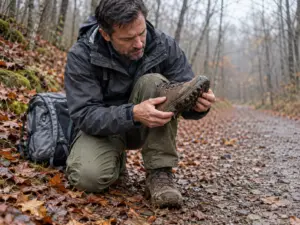
You must perform a daily mechanical surface decontamination to survive long hauls. This means executing a thorough water-only rinse to wash these embedded crystals off your skin, adhering to the Leave No Trace 200ft rule from water sources. You have to scrub the salt deposits from your gear, specifically removing abrasive embedded salt from your hiking socks to prevent deep blister formation and foot rot.
Pro-Tip: Embrace the stink, but wash the salt. Odor is an inconvenience; salt abrasion is a medical risk. You can handle bacterial odor colonization just fine, but sharp salt crystals will end your hike.
The Biodegradable Soap Illusion and Skin Barrier Health
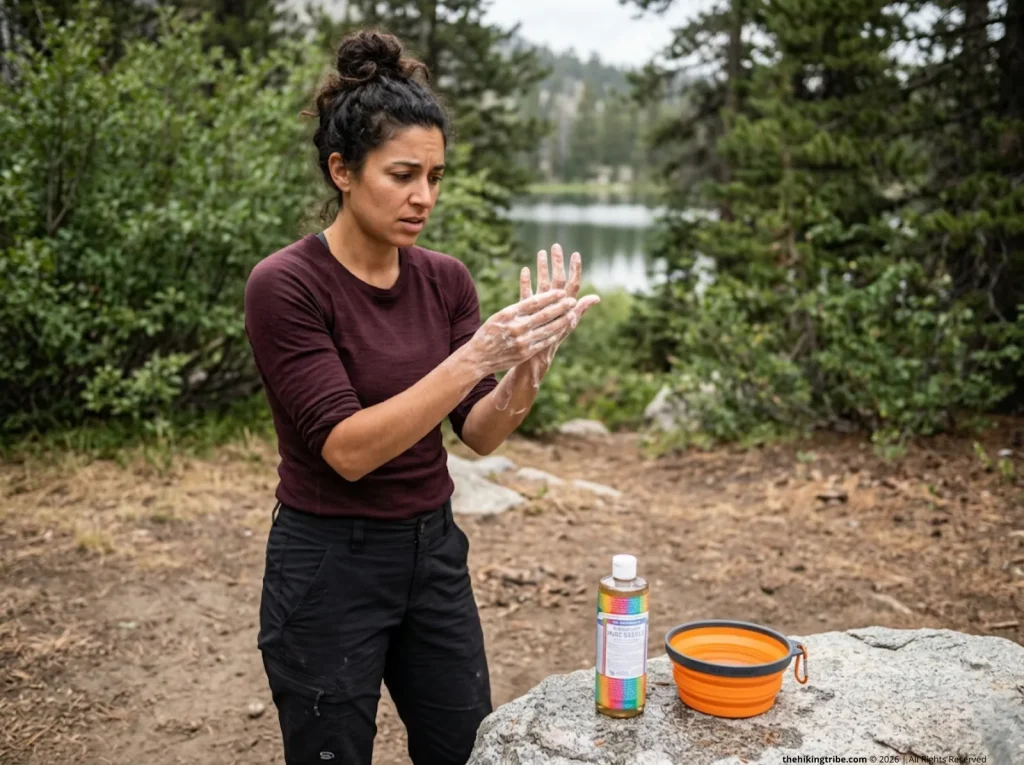
A common mistake among well-intentioned backpackers is believing that natural, biodegradable soap is better for your skin. Sure, heavily concentrated soaps like Dr. Bronner’s excel at cutting grease in dirty cook pots, but their specific surfactant type aggressively attacks your skin’s natural defenses.
How Soap Breaks Your Defenses
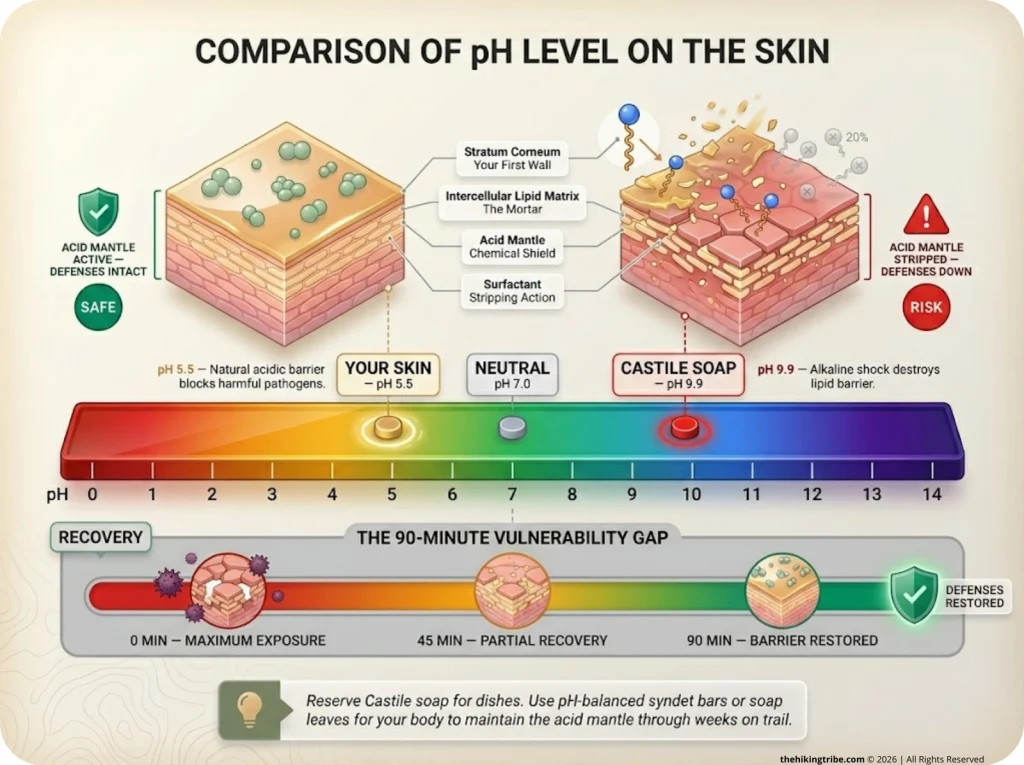
Human skin stays slightly acidic—around 5.5 pH—which creates a natural shield that stops harmful bacteria. In contrast, the chemistry of soap in traditional natural formulations is highly alkaline, measuring a harsh pH 8.7 to 9.9.
When you scrub yourself with these heavy-duty soaps, they strip away your protective lipid layer. This alkaline shock leaves you vulnerable to fungal infections and bacterial spikes for 30 to 90 minutes while your skin attempts to recover its balance. You compromise your own skin barrier health every time you take a soapy bath.
Technical Alternatives and Packability
You need to limit those heavy soaps to dishwashing rather than taking full-body wet wipe baths. Swap to a ph balance synthetic detergent (syndet) system or packable soap leaves. Using no-rinse micellar water perfectly clears dirt without stripping away your natural oils.
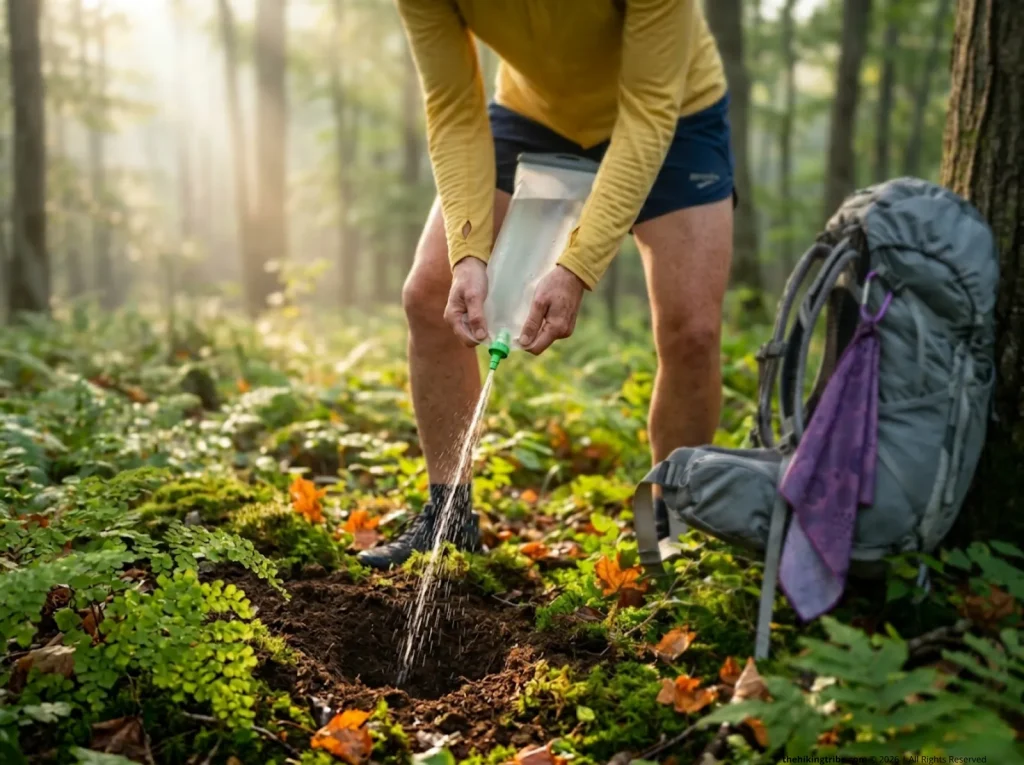
Never forget that biodegradability refers strictly to microbial breakdown in soil—it does not mean the soap belongs in lakes or streams. You still have to manage your wastewater through proper soil filtration. Dumping any suds near water is an ethics violation. Always pour your soapy waste in a 6-to-8 inch cathole, 200 feet from water. It’s a foundational Leave No Trace mandate for managing microtrash and chemical runoff.
The Gorp Bag Vector: Cross-Contamination on the Trail
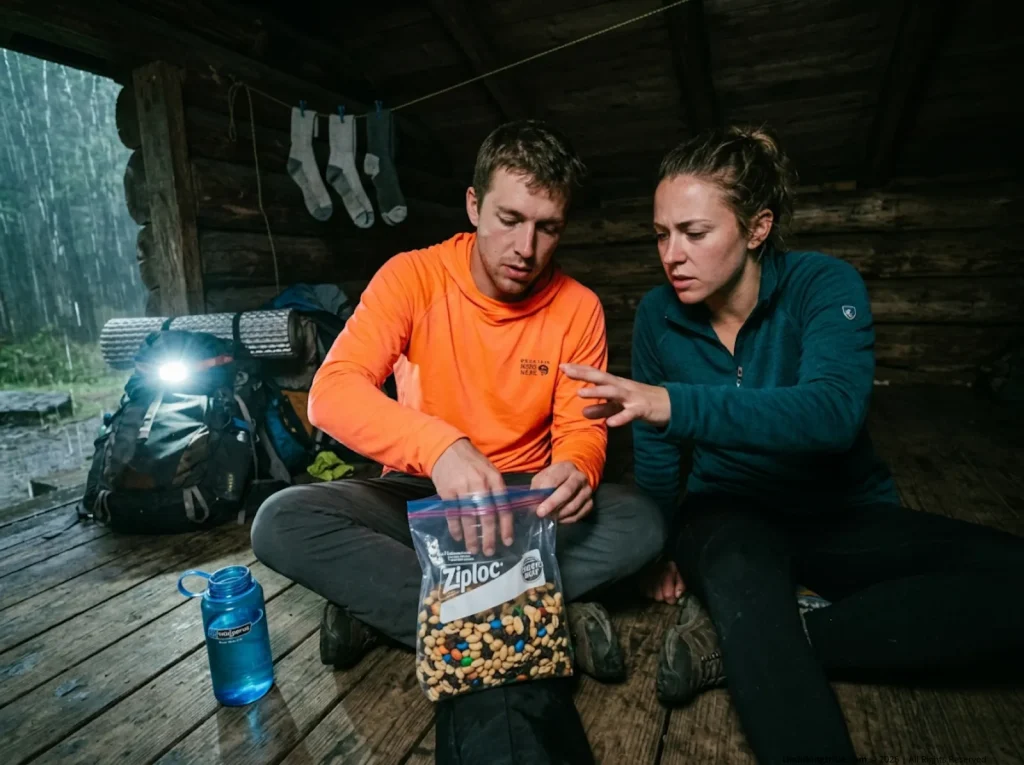
You can run a flawless solo microbiome protocol, but communal trail habits will still burn you. The failure to recognize shared food bags as a primary vector for hygiene-related illnesses takes out bubbles of hikers every season.
High-Traffic Shelters and Sickness
Highly trafficked areas like privy latrine handles, trail registers, and shelter floors serve as super-spreaders for non-enveloped viruses. People use the bathroom, squirt ineffective sanitizer on their hands, and grab the door handle. It takes fewer than 20 viral particles to make you violently sick.
A 2023 update from the CDC recommendations for Norovirus prevention in backcountry settings makes it clear that these viruses live a long time outside, surviving temperatures up to 145 degrees Fahrenheit (63°C).
The “Pour, Don’t Reach” Community Rule
Reaching into a shared “gorp” (trail mix) bag with unwashed fingers guarantees pathogen transfer into a high-surface-area food source. Every peanut and raisin becomes a carrier.
Adopt a strict “pour, don’t reach” policy. Dispense food directly into a personal bowl or hands instead of digging into the master bag. If you focus on maintaining absolute food hygiene in the backcountry, you shut down your illness risk exponentially.
Watch out for contaminated water bottle threads, too. Touching the drinking lip of a hydration bladder after handling a communal shelter door dumps pathogens directly into your “clean” water system. During severe outbreak alerts, the smartest tactical choice is to skip the shelters altogether and camp a quarter-mile away in the brush.
Pro-Tip: Do not share a spoon to try someone’s dehydrated meal. I’ve watched six hikers go down vomiting in the same night because they passed around a single pouch of beef stroganoff.
7-Day Hygiene Protocol for Base Weight Optimization
True backcountry hygiene requires ruthless packability and a hardline approach to staying dry. It is about maximizing your weight-to-utility ratio while actively keeping your skin intact.
Managing the “Vampire Sock” System
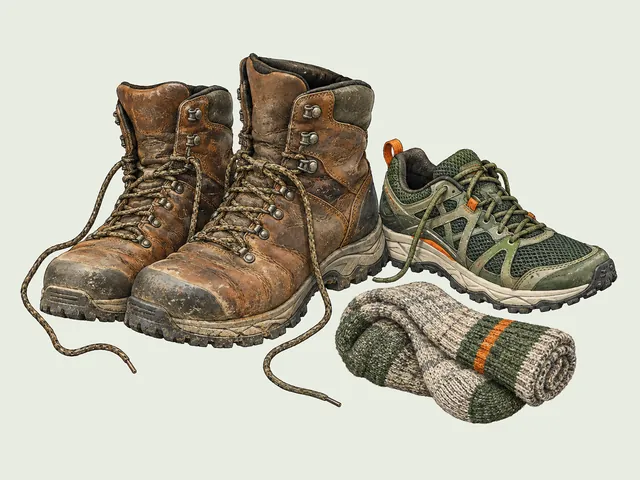
Dedicate one pair of completely dry merino wool “vampire socks” exclusively for sleeping. A pair of heavy Darn Tough socks works beautifully here. Never let these touch the trail dirt. Never walk around camp in them.
Pro-Tip: Guarding a dedicated dry pair ensures a critical 8-hour recovery window for macerated foot tissue. If your feet stay wet through the night, the skin begins to break down, blister, and rot.
The Ziploc Agitation Laundry Method
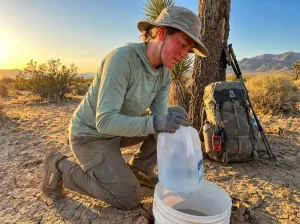
Traditional river-washing heavily pollutes the water. Instead, use the Ziploc agitation method. Place your garments and a single drop of pH-balanced soap into a 1-gallon Ziploc bag.
Use aggressive mechanical agitation by shaking the bag vigorously to knock the salt and dirt loose from the fibers. Open the bag, step far off the trail, and broadcast the greywater 200 feet from any water source or camp.
Backcountry Bidets vs. Wipes
Drop the wet wipe reliance and switch to a backcountry bidet. Packable bidets—like a Cnoc Vecto paired with a technical nozzle, a Sea to Summit pocket shower, or a dedicated Nemo Helio—weigh fractions of an ounce but offer massive multi-use capability. They completely eliminate the friction damage caused by prolonged toilet paper use.
This system drastically reduces your pack-out weight because you’re no longer carrying heavy, soiled wipes for miles—the true definition of living the packable life. Combining a bidet with a dedicated technical urine rag like the Kula Cloth vastly lowers the risk of urinary tract and yeast infections in female hikers by executing a proper backcountry sanitation routine. You get the benefit of antimicrobial properties woven directly into the fabric, meaning less odor and better health.
Conclusion
True backcountry hygiene isn’t about smelling pleasant or masking odors; it’s about neutralizing viral pathogens, rinsing away abrasive salt crystals, and defending your skin’s natural barrier across thousands of miles. Relying on an alcohol sanitizer is an active gamble against Norovirus, and high-alkaline biodegradable soaps do more harm to your skin’s defenses than good.
Upgrade your kit today by trading heavy wipes for a technical backcountry bidet and implementing the “vampire sock” recovery rule on your next weekend shakeout hike. Next time you grab a shelter door handle, you’ll know exactly what precautions to trigger.
FAQ
Can you use biodegradable soap like Dr. Bronner’s in a river or lake?
Absolutely not. Biodegradable means the soap requires soil-dwelling bacteria to break down. Using any soap directly in a water source pollutes the aquatic ecosystem and violates Leave No Trace rules; always dump your greywater in a cathole 200 feet away from the water.
Do I need to pack out used toilet paper and wet wipes?
Yes. Wet wipes and toilet paper contain harsh chemicals and do not decompose efficiently in backcountry soil. Packing them out in a dedicated, sealed waste bag keeps wildlife safe and preserves the trail corridor for the next hiker.
How do you prevent chafing when hiking in extreme heat?
Preventing chafing requires washing the grit away. Rinse the sharp salt crystals off your skin with plain water daily, and ensure your hiking clothing is agitated in a Ziploc bag with water to clear embedded salt from your synthetic layers.
What is the lightest way to stay clean on a thru-hike?
A backcountry bidet paired with a dedicated pee rag and an ounce of pH-balanced soap provides the best hygiene-to-weight ratio available. This system completely removes the need to haul heavy, wet wipes for a full week on trail.
I've spent more than a decade researching hiking gear and trail technique. I read the specs, the forum threads and the long-term reviews, and every pick here comes with what it gets wrong.
End of the trail
You read every mile of this one. Here's where the trail goes next.