In this article
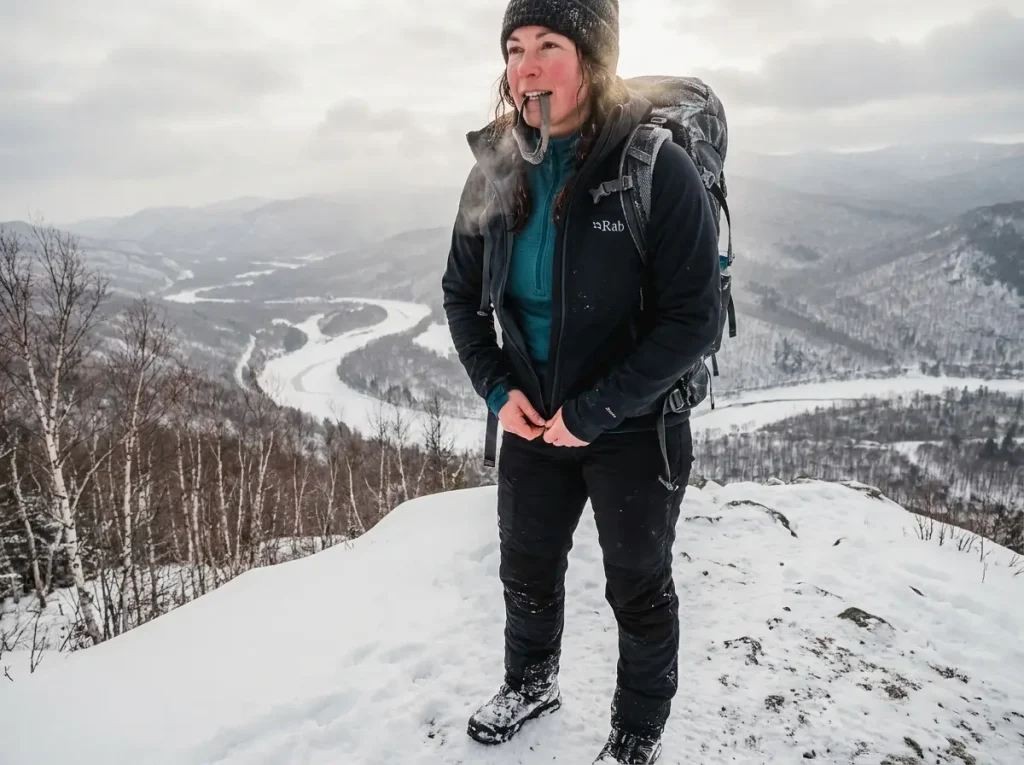
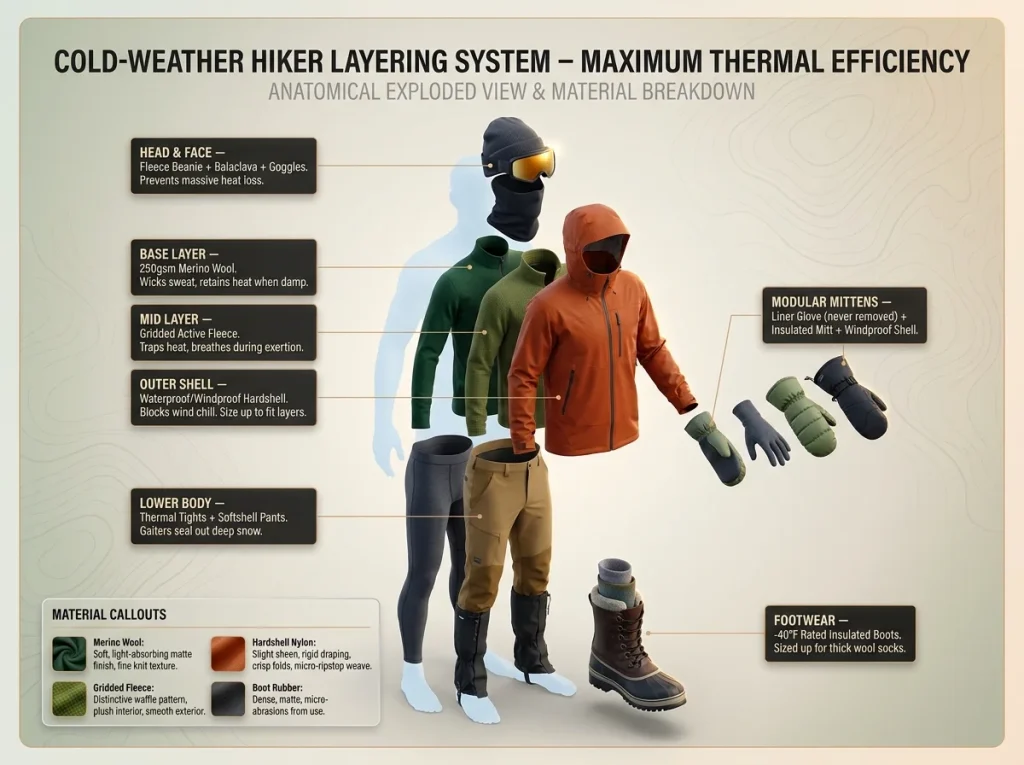
January in the White Mountains taught me something no gear guide mentioned: at -15°F, my biggest problem wasn’t staying warm. It was the sweat soaking my base layer on the uphill that turned to ice the moment I stopped moving. I’ve since hiked in subzero conditions across three states and two Canadian provinces. The clothing system that works below zero is not the same layering advice that works at 30°F, and most articles don’t make that distinction.
Quick Answer: To hike below zero, you need a specific layering plan for every zone of your body:
- Merino or synthetic expedition-weight base layer against skin
- Fleece or active insulation mid layer that breathes during exertion
- Waterproof, windproof hardshell as the outer barrier
- Insulated pants or softshell over thermal tights for legs
- Insulated boots rated to at least -40°F with wool socks and gaiters
- Modular mitten system with liner gloves for hand dexterity
The Sweat Paradox — Why Overheating Is Your Biggest Risk Below Zero
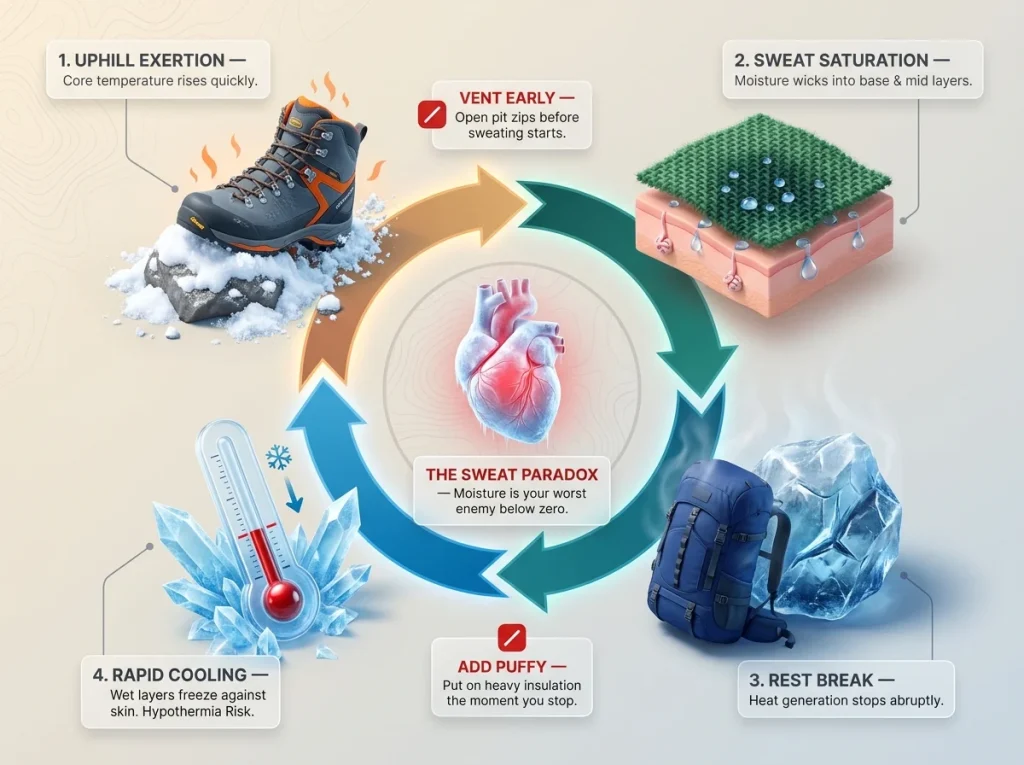
How Moisture Becomes Your Enemy at Subzero Temps
Polar explorer Eric Larsen puts it bluntly: “Your biggest problem isn’t getting cold. It’s getting too warm and sweaty, because once you stop moving, hypothermia can strike in less than five minutes on cold, windy days.” That quote should be printed on every winter hiker’s base layer tag.
Here’s what happens: you start hiking uphill in all your layers. Your core temperature rises. You sweat. That moisture wicks into your insulation layers.
Then you stop for a break, a view, or a snack. The sweat cools instantly in -10°F air, and your insulation — which was keeping you warm — is now a wet, cold compress against your skin.
This is why subzero layering is fundamentally a moisture management problem, not a warmth problem. Every layer choice, every zipper pull, every decision to add or remove a piece comes down to controlling sweat before it controls you.
The “Start Cold” Rule
You should feel slightly chilly when you step onto the trail. If you’re comfortable standing still at the trailhead, you’re overdressed for the first mile. Within 10 minutes of hiking, you generate enough heat to warm a properly layered system. Starting warm means starting sweaty, and starting sweaty below zero means trouble.
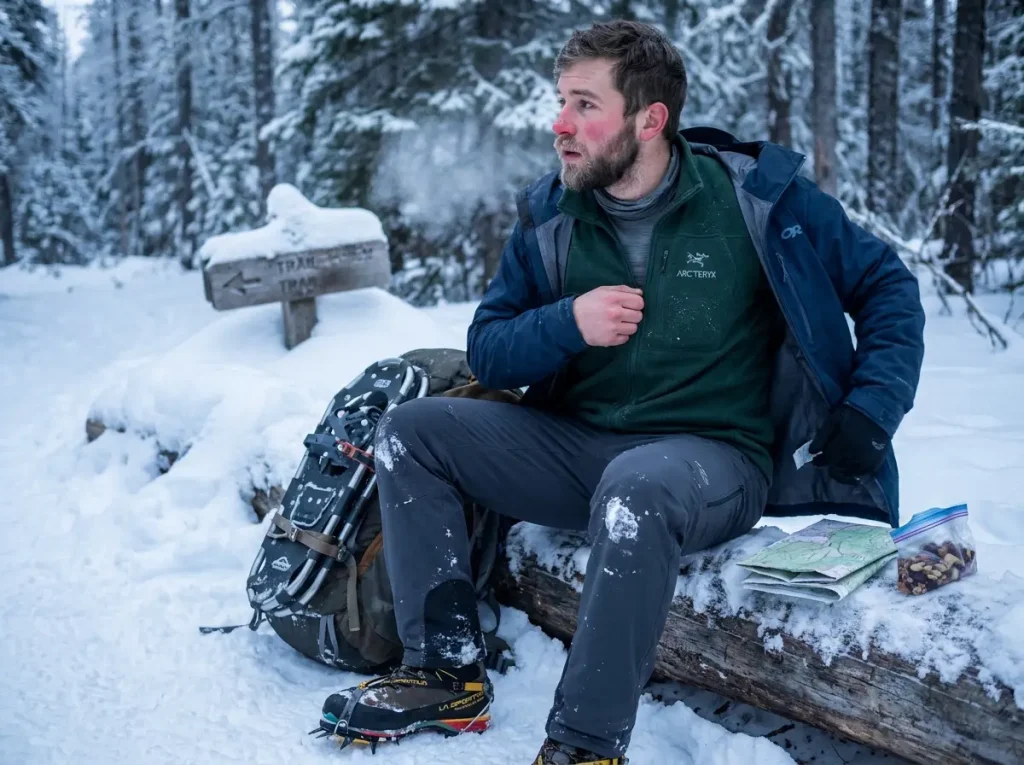
Pro tip: Open your pit zips and chest zipper before you start sweating — not after. Once moisture is in your layers, you can’t vent it out. Preemptive venting keeps you dry. Reactive venting just slows the damage.
Base Layers — The Foundation That Touches Your Skin
Merino Wool vs Synthetic — The Real Tradeoff
For extreme cold hiking, both merino wool and synthetic base layers work, but they work differently, and the right choice depends on your trip.
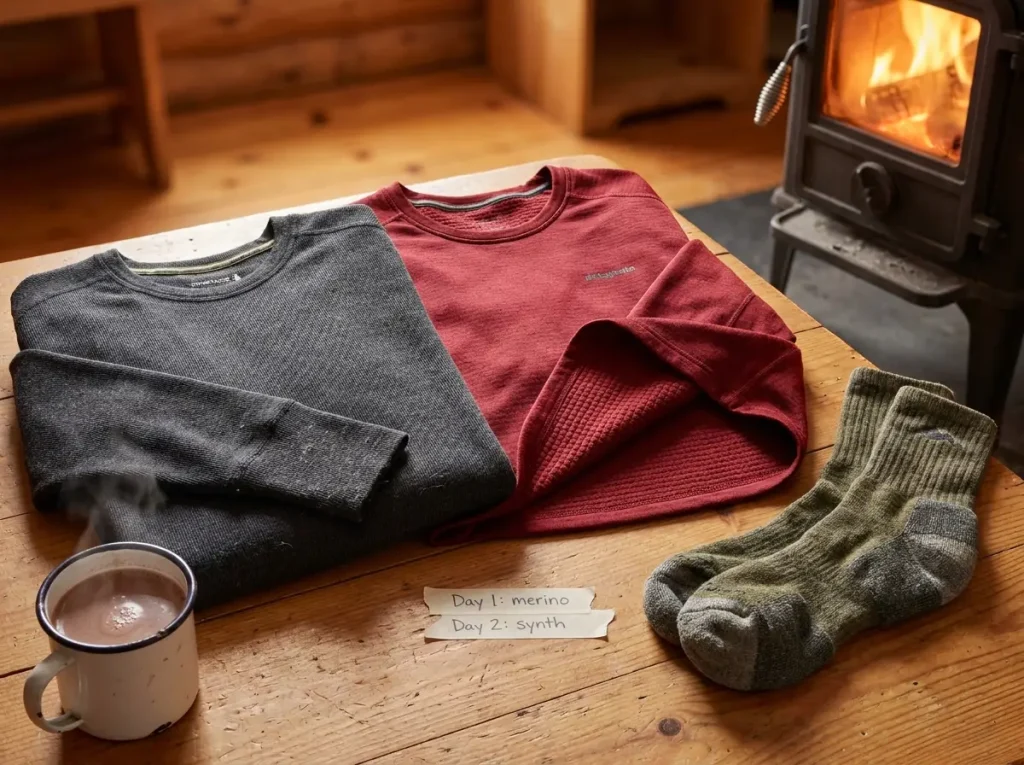
Merino wool (expedition weight, 250+ gsm) retains up to 80% of its insulating ability when wet. It regulates temperature naturally, resists odor for days, and feels comfortable against skin. The downside: merino dries slowly.
On a single-day hike with a warm car waiting, that’s fine. On a multi-day winter trip where you sleep in your base layer, slow drying means you might start day two in a damp shirt.
Synthetic base layers (Patagonia Capilene Thermal Weight, for example) dry significantly faster. They wick moisture to the surface where it can evaporate or be absorbed by the next layer. The tradeoff: synthetics stink after one hard day and don’t insulate as well when saturated.
The practitioner answer for multi-day subzero trips: carry one of each. Merino for sleeping and low-output days. Synthetic for high-exertion summit pushes and long uphill grinds where sweat production is highest.
Fit Matters More Than Fabric Below Zero
Your base layer needs to sit snug against your skin — not compression-tight, but close enough that there’s no air gap between fabric and skin. That contact is what enables wicking. A loose base layer traps sweat against your skin instead of pulling it away.
If you can pinch a full inch of fabric away from your torso, it’s too loose. If the seams dig into your shoulders under a loaded pack, it’s too tight. The sweet spot is a second-skin fit that you stop noticing after the first mile. If you want to understand snug vs loose base layer fit for backpacking, the difference is measurable.
Pro tip: Avoid cotton in any layer. Cotton absorbs moisture, loses all insulation when wet, and dries slower than anything else. “Cotton kills” isn’t a catchy phrase — it’s a field reality at subzero temperatures.
Mid Layers — Trapping Heat Without Trapping Moisture
Fleece, Down, and Synthetic Insulation — When to Use Each
The mid layer is your heat engine. It traps warm air in its loft and keeps it close to your core. But not all insulation behaves the same when you’re working hard in the cold.
Fleece (Polartec R1, 100-weight, 200-weight) is the workhorse for active hiking. It breathes well, moves moisture outward, dries fast, and works even when damp. A gridded fleece like the Patagonia R1 is specifically designed for stop-and-go exertion — the grid channels pull sweat away from your base layer while still trapping warm air. For sustained uphill effort in subzero conditions, fleece is the right call.
Down jackets (Arc’teryx Cerium, Rab Microlight) deliver the best warmth-to-weight ratio but collapse when wet and don’t breathe during high output. Below zero, save your down puffy for camp, rest breaks, and emergencies. It goes in the pack until you stop moving.
Synthetic insulation (Patagonia Nano-Air, Arc’teryx Atom series) splits the difference. It handles moisture better than down, breathes better than most fleece, and works as both a hiking layer and a rest layer. Active insulation jackets for stop-and-go hikes are worth considering if you want one mid layer to do everything.
Layering Multiple Mid Layers — When One Isn’t Enough
At -10°F and below, a single mid layer rarely cuts it. The system that works: a thin breathable fleece (R1 weight) as your active hiking mid layer, plus a heavier insulated layer (down or synthetic puffy) that you add during breaks or when the temperature drops further.
Two thin mid layers give you more temperature control than one thick one. You can run with just the fleece on the uphill, add the puffy at the summit, and strip back down for the descent. Flexibility is the whole point.
Outer Shell — Your Shield Against Wind and Wet
Hardshell vs Softshell — The Wind Chill Decision
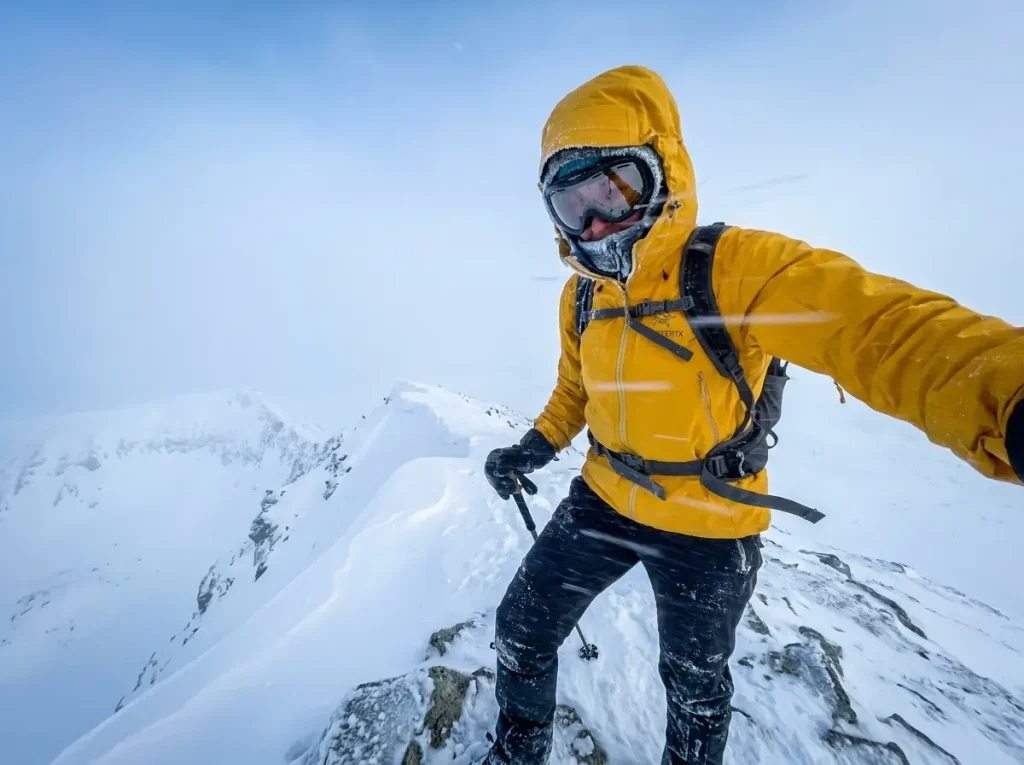
Your outer shell has one non-negotiable job below zero: block wind. Wind chill is the multiplier that turns -10°F into -35°F on exposed skin. Without a windproof layer, your insulation layers can’t do their job — wind strips warm air from the loft faster than your body can replace it.
Hardshells (Gore-Tex or equivalent) block wind completely, shed snow, and handle precipitation. They’re the default outer layer for any subzero day with wind or snowfall. The tradeoff: most hardshells breathe poorly during high exertion. You’ll be reaching for those pit zips constantly.
Softshells work in cold, dry conditions with moderate wind. They breathe better than hardshells, stretch with your movement, and feel less like hiking in a trash bag. But they’re not waterproof. If wet snow or freezing rain is possible, the hardshell wins.
For the softshell vs hardshell decision in winter hiking, the honest answer is carry both if your pack allows it. Softshell for the climb, hardshell for the ridge and the descent.
Fit Over Your Layers — The Sizing Trap
Buy your shell one size larger than your normal fit. You’re wearing two to three layers underneath it. A shell that fits perfectly over a T-shirt in the store will be too tight to zip over a fleece and a puffy when you actually need it. Check the fit with your full layering system before you leave town.
Pro tip: Your shell’s hood needs to fit over a beanie and a balaclava with enough room to turn your head. If you can’t look left and right without the hood staying fixed, it’s too small. You’ll miss trail markers and wind shifts.
Legs and Lower Body — The Zone Most Hikers Underdress
Why Your Legs Need More Than One Layer Below Zero
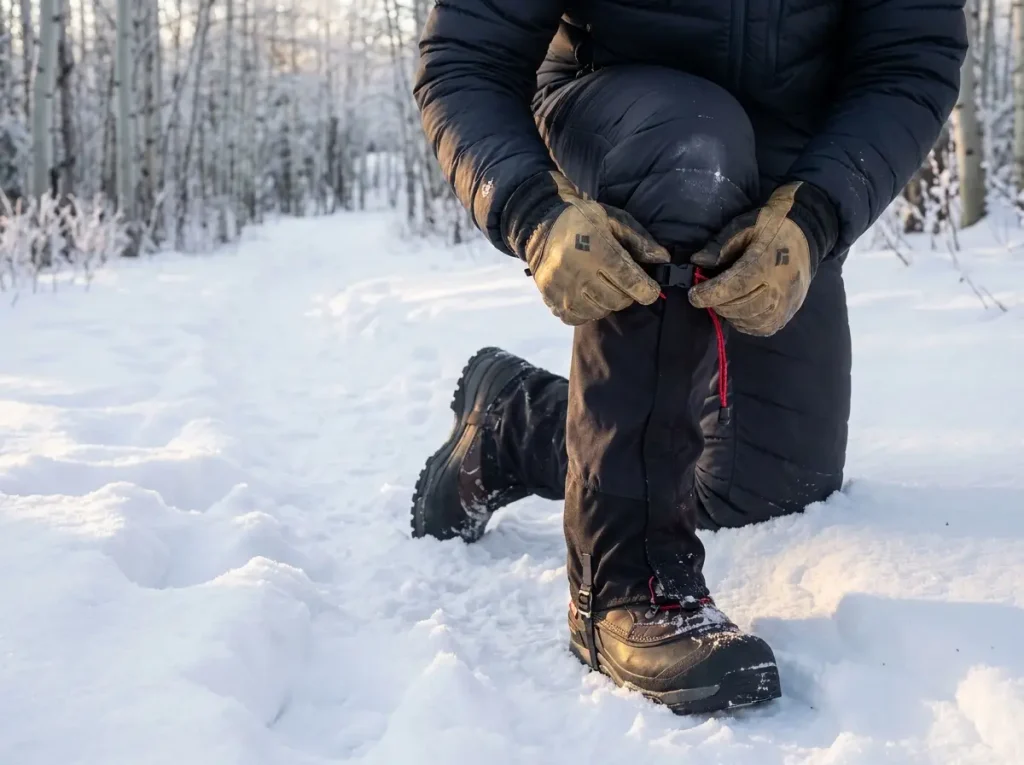
Most hikers overthink their torso layering and completely ignore their legs. At -10°F, a single pair of hiking pants is not enough. Your legs generate less heat than your core, have less fat insulation, and are fully exposed to wind on every ridgeline.
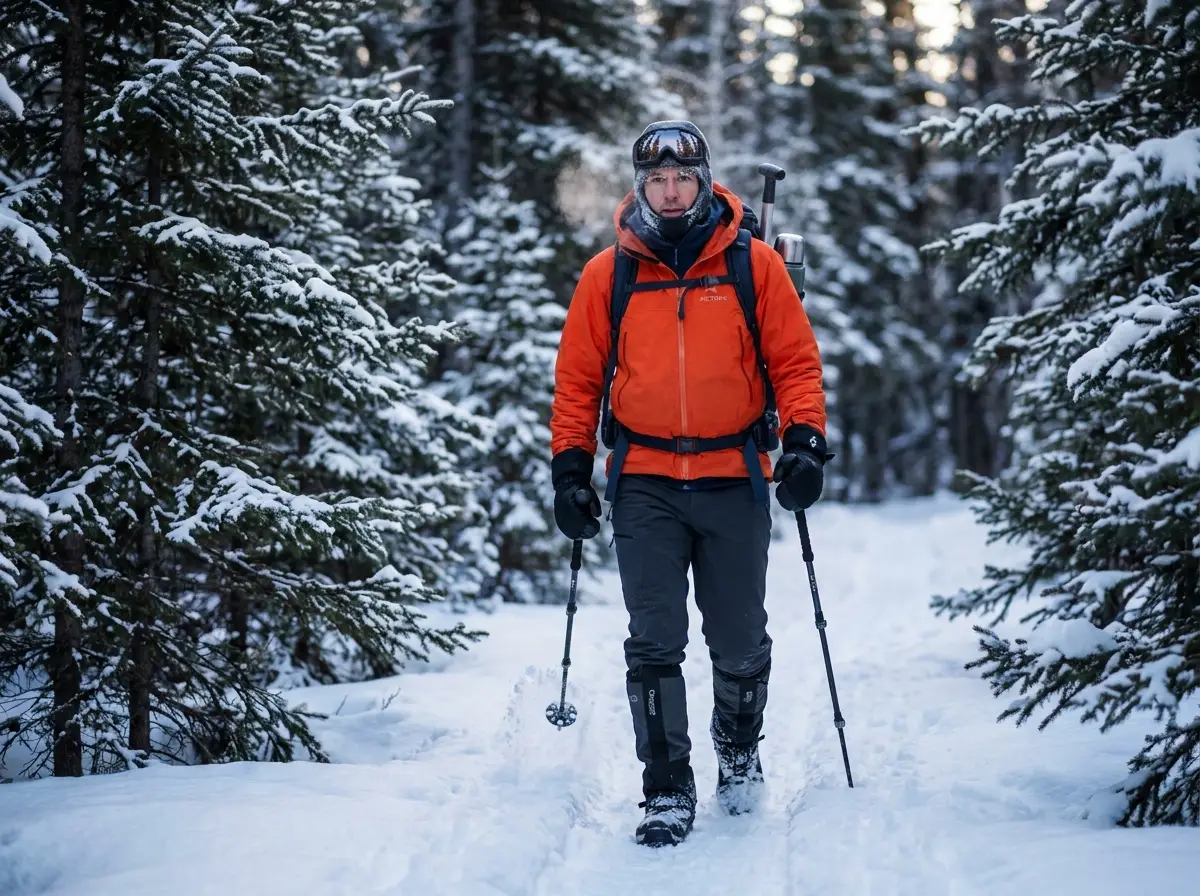
The minimum system: thermal base layer tights (merino or synthetic) under insulated softshell pants. For deep cold below -15°F, add insulated over-pants or ski-touring bibs over the softshell. The winter hike planning checklist for beginners covers this as a common oversight.
Gaiters Are Non-Negotiable
Snow gets into boots. It gets in through the tongue, through the gap between pant cuff and boot collar, and through every loose seam. Gaiters seal that gap. Full-length gaiters that cover from boot toe to below the knee keep snow out, add a wind barrier to your shins, and prevent your pant cuffs from getting soaked and freezing stiff.
In subzero powder, gaiters aren’t optional — they’re structural. A wet boot interior in extreme cold isn’t just uncomfortable. It’s a frostbite risk. Make sure your gaiter sizing fits your boot type before heading out.
Hands, Head, and Face — Where Frostbite Strikes First
The Modular Mitten System
Your hands lose heat faster than almost any other extremity. Fingers have high surface area relative to their mass, minimal fat insulation, and your circulatory system restricts flow to extremities when your core gets cold. At -10°F, exposed fingers develop frostbite in minutes.
The system that works: three layers, modular.
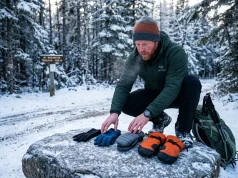
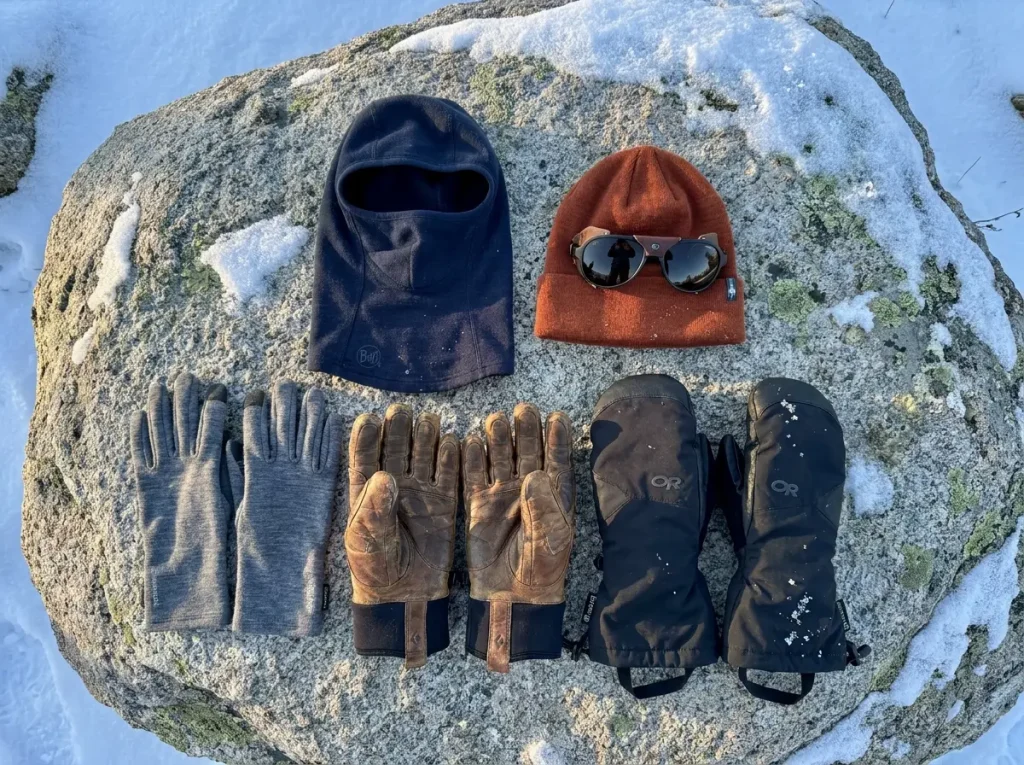
Layer 1 — Liner gloves. Thin fleece or merino gloves you wear all day. They provide just enough insulation for tasks that need finger dexterity: adjusting pack straps, operating a camera, eating a snack. You never take these off outside.
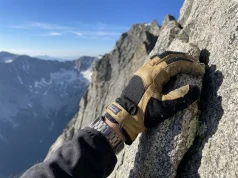
Layer 2 — Insulated gloves or mittens. Your primary hand warmth. Mittens are warmer than gloves because your fingers share warmth in a single chamber. For hiking, insulated gloves with a good grip work better when you’re using trekking poles. Switch to mittens at rest stops and camp.
Layer 3 — Shell mitts. Waterproof, windproof over-mitts that go over your insulated layer. These are the wind blockers for exposed ridgelines and storms. Gore-Tex shell mitts with long gauntlets that tuck under your jacket cuffs prevent any gap where wind can reach skin.
Head and Face Protection
You lose significant heat through your head — wearing a hat is the fastest way to warm your whole body. At subzero temperatures, you need a fleece-lined beanie that covers your ears, plus a balaclava or neck gaiter for your face and neck.
A balaclava does triple duty: it covers your neck, chin, and nose in one piece. Pull it up when the wind hits, push it down to a neck gaiter when you’re working hard. For the worst conditions, pair it with ski goggles to protect your eyes from wind and snow glare.
The CDC recommends covering all exposed skin to prevent frostbite, noting that at -10°F, frostbite develops on exposed skin in just minutes depending on wind chill.
Vapor Barrier Liners — The Advanced Technique for Multi-Day Subzero Trips
What VBLs Do and When to Use Them
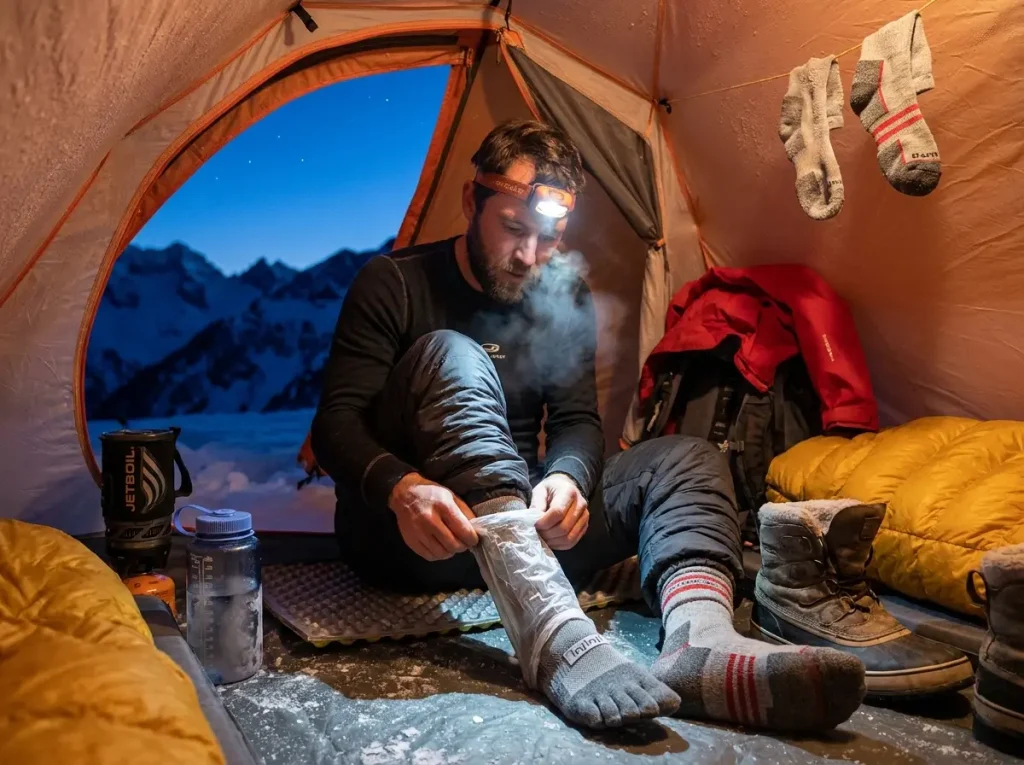
Vapor barrier liners are the technique that separates weekend winter hikers from multi-day cold-weather veterans. A VBL is a non-breathable layer — essentially a thin plastic membrane — worn between your liner sock and your insulating sock. It traps your foot’s moisture against the skin instead of letting it migrate outward into your insulation.
That sounds counterintuitive. Why would you want moisture trapped against your skin? Because at subzero temperatures, the alternative is worse: your sweat migrates outward through your socks, hits the cold zone inside your boot, and freezes. Now your insulating sock is a block of ice, your boot liner is soaked, and your feet are in trouble.
VBLs keep the frozen-moisture problem from happening. Your foot stays damp but warm inside the barrier. Your insulating sock stays bone dry. Your boot liner stays dry.
On a multi-day trip where you can’t dry your gear by a fire every night, this is the difference between functional feet and frostbite.
The Layering Sequence and the Risks
The correct foot layering order with VBLs: thin wicking liner sock → VBL sock → thick insulating wool sock → insulated boot.
Never put a thick wool sock directly against the VBL. The liner sock wicks moisture to a thin layer against the barrier, keeping skin contact manageable. Without the liner, your foot sits in a pool of sweat and maceration becomes a real risk.
VBLs work best below 10°F. Warmer than that, your feet produce too much sweat for the system to stay comfortable. The technique requires practice — understanding frostbite prevention and vapor barriers provides the field context for why this approach works when other systems fail.
Pro tip: You can make DIY vapor barrier socks from Reynolds Oven Bags for a few cents each. They work as well as commercial VBL socks for testing whether the technique suits your feet before investing in the real thing.
Boots — The Foundation of Your Foot System
Your boots determine your temperature floor. For hiking below zero, you need insulated winter boots rated to at least -25°F, ideally -40°F. Regular hiking boots — even waterproof ones — don’t have the insulation or the volume to accommodate the sock layering system you need.
Baffin Impact boots are rated to -148°F and have been tested at both poles. They’re heavy (4+ lbs per pair) but nothing keeps feet warmer. Sorel Caribou boots with their removable felt liners are rated to -40°F and work well for moderate winter hiking at a lower price point. Kamik Nation Plus offers a budget option rated to -40°F for under $100.
Size up at least half a size from your normal shoe. Your thick sock system needs room. Tight boots compress your insulation and restrict blood flow — both of which make your feet colder, not warmer. The sizing guide for when to size up hiking footwear explains why the extra space matters more in winter than any other season.
Conclusion
Subzero hiking is a moisture management game disguised as a warmth game. Every layer from skin to shell serves one purpose: control where sweat goes so your insulation keeps working when you stop moving. Start cold, vent early, and treat your base layer like the most important piece of clothing you own.
The head-to-toe system is merino or synthetic base, breathable fleece mid layer, windproof hardshell outer, insulated pants over thermal tights, modular mitts, balaclava, and boots rated for the temperature with room for your sock system. VBLs are the upgrade for multi-day trips where gear drying isn’t an option.
Test your system on a short local hike before committing to a backcountry trip. The trailhead parking lot is a much better place to discover a layering gap than a ridgeline at -20°F with the wind picking up.
Q1 What should I wear hiking in below zero weather?
Wear an expedition-weight base layer (merino or synthetic), a breathable fleece mid layer, and a windproof hardshell. Add insulated pants, modular mittens, a balaclava, and boots rated to -40°F. The layering system must allow venting to manage sweat during exertion.
Q2 Is merino wool or synthetic better for extreme cold hiking?
Both work. Merino retains 80% of its warmth when wet and resists odor for days, making it ideal for multi-day trips. Synthetic dries faster and handles heavy sweating better. For subzero multi-day trips, carrying one of each gives you the best flexibility.
Q3 How many layers do you need for subzero hiking?
Expect three to four torso layers: base layer, active fleece, optional puffy for stops, and a hardshell. Legs need two to three layers: base tights, insulated pants, and possibly shell over-pants. Hands need three layers. More thin layers give better temperature control than fewer thick ones.
Q4 What boots are best for hiking in extreme cold?
Insulated winter boots rated to -40°F or colder. The Baffin Impact (-148°F rating), Sorel Caribou (-40°F), and Kamik Nation Plus (-40°F) are proven options. Size up half a size to fit thick sock systems, and pair with full-length gaiters to seal the boot-pant gap.
Q5 How do you keep your hands warm hiking in subzero temps?
Use a three-layer modular system: thin liner gloves for dexterity, insulated mittens for warmth, and waterproof shell mitts for wind protection. Mittens are warmer than gloves. Never remove your liners outdoors. Keep spare dry liners in an inside pocket warmed by your core warmth.
Risk Disclaimer: Hiking, trekking, backpacking, and all related outdoor activities involve inherent
risks which may result in serious injury, illness, or death. The information provided on The Hiking Tribe is for
educational and informational purposes only. While we strive for accuracy, information on trails, gear, techniques,
and safety is not a substitute for your own best judgment and thorough preparation. Trail conditions, weather, and
other environmental factors change rapidly and may differ from what is described on this site. Always check with
official sources like park services for the most current alerts and conditions. Never undertake a hike beyond your
abilities and always be prepared for the unexpected. By using this website, you agree that you are solely
responsible for your own safety. Any reliance you place on our content is strictly at your own risk, and you assume
all liability for your actions and decisions in the outdoors. The Hiking Tribe and its authors will not be held
liable for any injury, damage, or loss sustained in connection with the use of the information herein.
Affiliate Disclosure: We are a participant in the Amazon Services LLC Associates Program, an
affiliate advertising program designed to provide a means for us to earn advertising fees by advertising and linking
to Amazon.com. As an Amazon Associate, we earn from qualifying purchases. We are also an official affiliate partner
of Black Diamond Equipment via the AvantLink network. If you click on a Black Diamond affiliate link and make a
purchase, we may earn a commission at no additional cost to you. We also participate in other affiliate programs and
may receive a commission on products purchased through our links. Additional terms are found in the terms of
service.