In this article
Mile 23 of a dry ridge traverse across the Mojave and one of my collapsible water bottles just sprung a pinhole leak inside my pack. Eight ounces of water soaking into my sleeping bag liner. That’s the moment you realize that “leak-proof” on Amazon means nothing until you’ve carried these bottles through dust, granite abrasion, and 95°F heat for days on end.
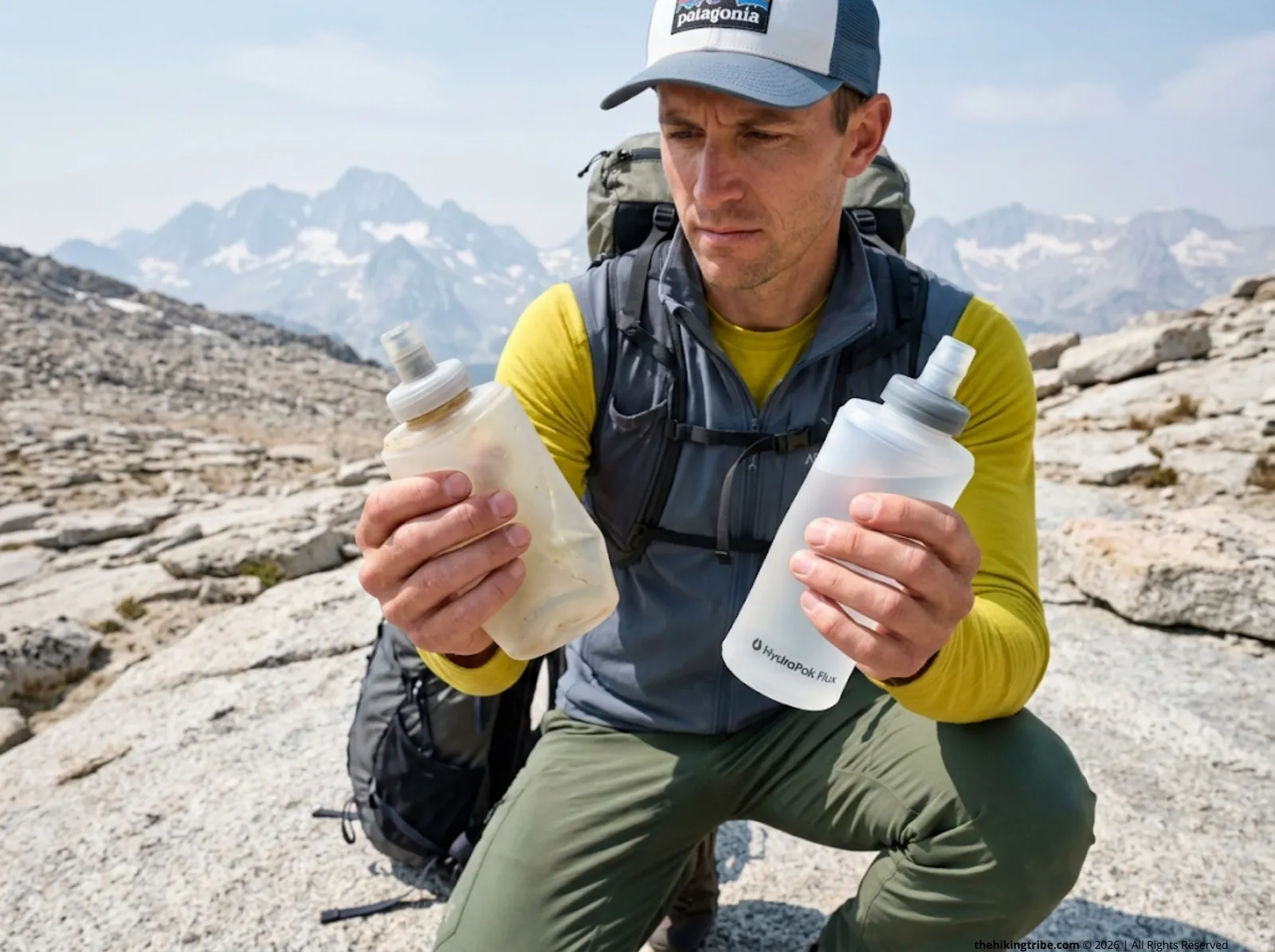
I bought 9 of the most popular collapsible bottles with my own money. Hauled them across rocky ridgelines in the Sierra, dropped them on granite, froze them overnight, and squeezed them through overstuffed pack brains. Most didn’t survive the week. Four developed leaks before mile 50. Two started tasting like warm plastic after sitting in the sun. One crumpled under pack compression and never fully recovered its shape.
Five survived. These are the ones that actually earned a spot in a serious hiker’s pack.
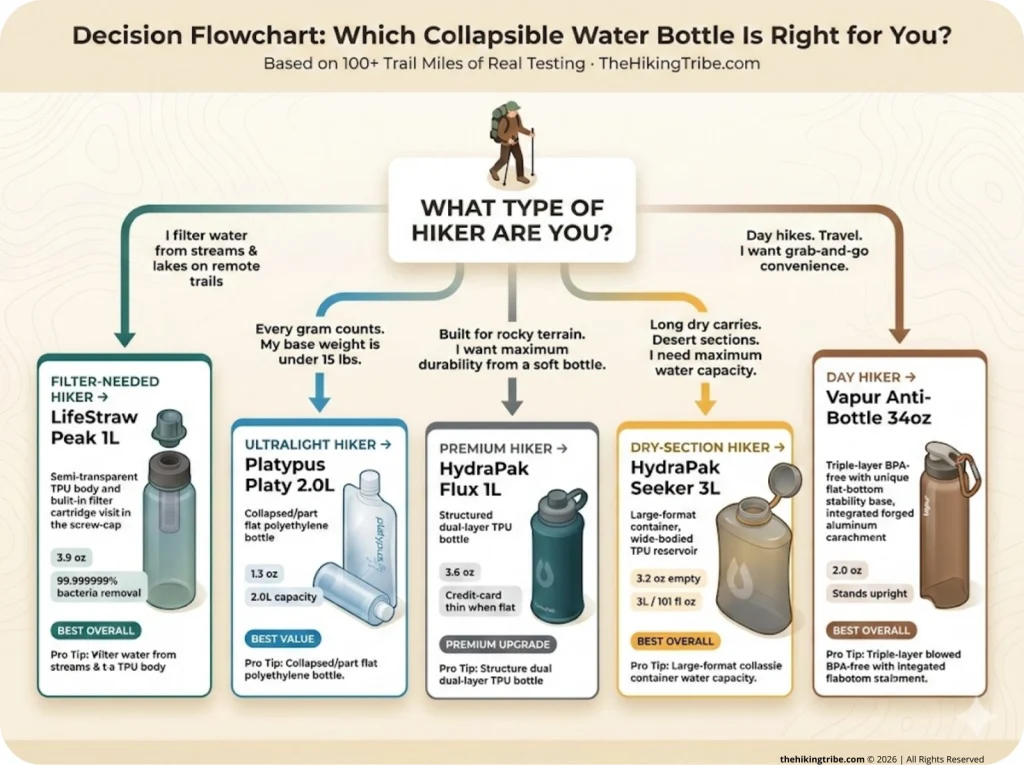
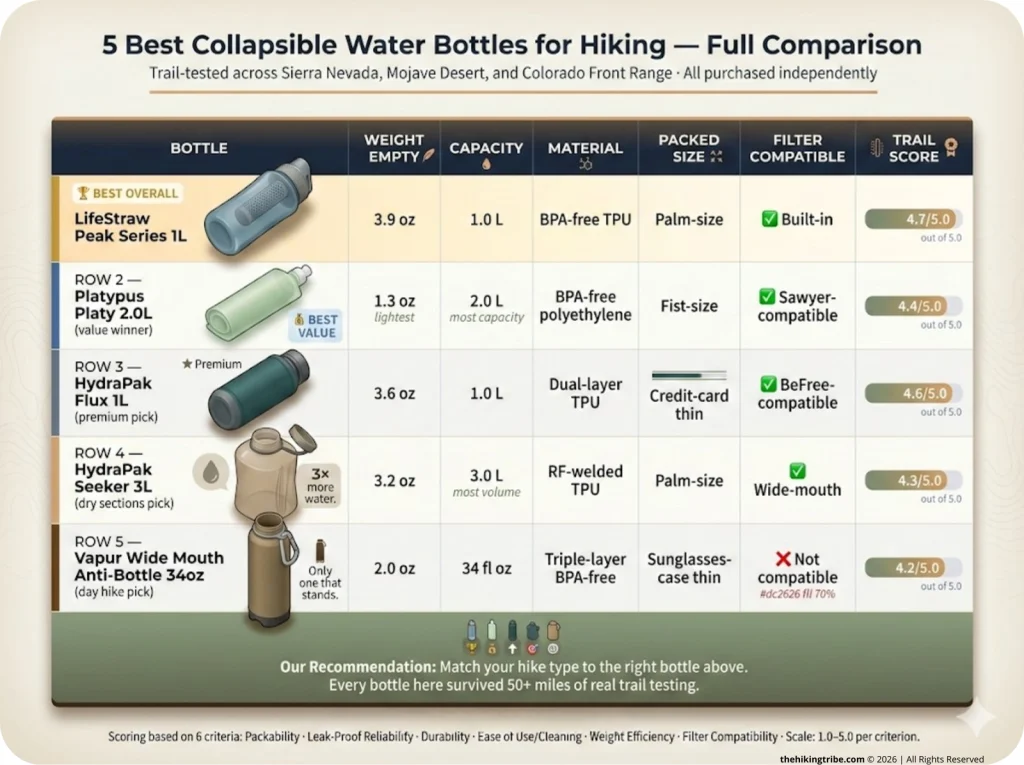
After testing all 9 models in real trail conditions, the LifeStraw Peak Series Collapsible Squeeze Bottle earned our top spot for pairing real filtration with TPU durability that held up where silicone failed. Here’s how the survivors compare:
How to Choose the Right Collapsible Hiking Bottle
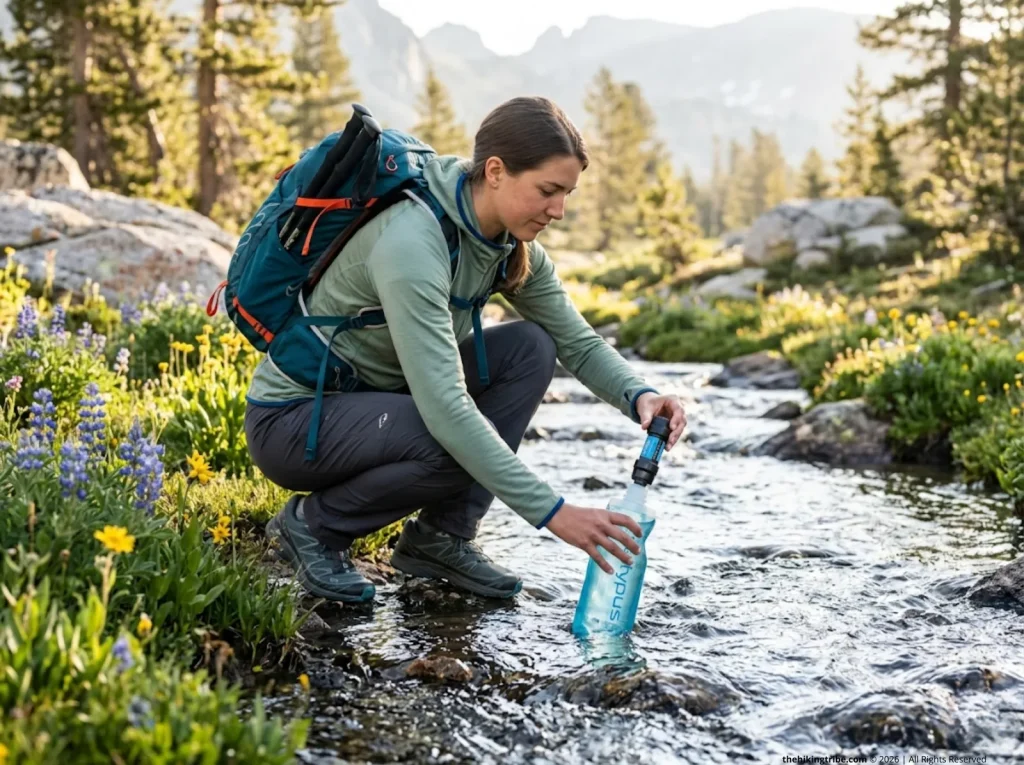
Before I show you which bottles survived, you need to understand what actually matters when you’re 20 miles from a water source. A lot of the criteria you see in other reviews are fluff. These six are the ones that separate a reliable trail tool from a wet sleeping bag.
Why Packability Matters
The entire point of going collapsible is dead space elimination. A rigid Nalgene takes up the same one-liter footprint whether it’s full or bone-dry. A good collapsible water bottle disappears when empty.
But packability varies more than you’d expect. Some fold to the size of a fist. Others roll flat to credit-card thin. The HydraPak Flux compressed flatter than anything else we tested, while the Platypus Platy rolled to fist-size and tucked into pack crevices most bottles wouldn’t fit. If you’re counting cubic inches on multi-day trips, that difference is real. Look for bottles that pack down surprisingly small compared to their filled capacity.
Why Leak-Proof Reliability Matters
A leaking collapsible bottle inside your pack is worse than no bottle at all. Water on down insulation, electronics, or food can end a trip on day one.
Here’s what I found: most “leak-proof” claims hold up fine sitting on a desk. The real test is sustained pack jostling over rocky terrain, repeated compressions against hard gear, and drops onto granite. Screw-cap closures outperformed flip-tops across the board. RF-welded seams (the kind HydraPak uses) held longer than heat-sealed seams. In our tests, 4 out of 9 bottles developed leaks before mile 50, and every failure happened at seams or cap threads, not from punctures.
Pro tip: Before hitting the trail, fill your new bottle and leave it upside down overnight in a sink. If the cap or seams weep at rest, they’ll fail under pack compression. Test at home before you’re 20 miles deep.
Why Durability Under Trail Abuse Matters
Silicone bottles feel premium out of the box but thin out under constant abrasion against pack fabric, grit, and rock. TPU (thermoplastic polyurethane) is the material serious backpackers want. It resists punctures, UV degradation, and multi-day abrasion better than silicone or thin polyethylene.
Most reviewers test these bottles on 1-2 day hikes. We tested over 100+ trail miles. That difference matters because multi-day abrasion from sandy surfaces and rough granite is what actually kills these bottles. Single-layer silicone was the most puncture-prone material in our lineup. Dual-layer and RF-welded construction survived everything we threw at them.
Heat exposure accelerated degradation in lower-quality bottles. Two started tasting like warm plastic after sitting in direct sun at 90°F+. The TPU bottles (LifeStraw Peak, HydraPak Flux, HydraPak Seeker) showed zero taste transfer under the same conditions.
Why Weight Efficiency Matters
Collapsible bottles range from 1.3 oz to 5.5 oz empty. For gram-counters, the Platypus Platy at 1.3 oz for 2 full liters delivers the best weight-to-capacity ratio in the category.
But raw empty weight alone is misleading. A 3.9 oz bottle that includes a built-in filter, like the LifeStraw Peak, eliminates a separate piece of gear. You need to think in terms of system weight (bottle + filter + backup) rather than the bottle alone. Sub-2 oz is the target for ultralight hydration setups. Under 4 oz is plenty reasonable if you’re getting durability and features in return.
Why Ease of Use and Cleaning Matters
Collapsible bottles are inherently harder to clean than rigid ones. The flexible walls trap moisture, creating perfect conditions for biofilm and mold in warm weather. If you’ve ever opened a bottle after a week of sitting in your gear closet and caught that musty smell, you know what I mean.
Wide-mouth designs (1.5 inches or wider) make a real difference for filling from shallow streams, pouring, and most importantly: drying. A bottle you can’t dry properly will grow biofilm. Period. The Vapur and the Platypus Platy both have wide enough mouths for easy maintenance. The LifeStraw Peak’s narrower opening works fine for drinking but slows down the drying process.
LNT cleaning protocol in the backcountry: rinse with treated water, shake vigorously, and air-dry fully inverted with the cap off. Between trips, diluted white vinegar does the job. Don’t skip the drying step, especially in summer.
Why Filter Compatibility Matters
If you source water from streams, lakes, or springs on remote trails, having a bottle that threads directly onto a filter eliminates an entire piece of gear. That’s not a minor convenience feature, it’s a genuine weight and complexity saver for backcountry trips.
The LifeStraw Peak has a built-in filter with 99.999999% bacteria removal. The Platypus threads onto Sawyer Squeeze filters. The HydraPak Flux works with Katadyn BeFree threading. If you only hike frontcountry with treated water, skip the filter-compatible bottles and save the weight. For specific guidance on pathogen risks in untreated water, the CDC’s recommendations on making water safe for drinking are worth reviewing before any backcountry trip.
Pro tip: Not all threads are cross-compatible. Before buying, check whether your existing filter matches the bottle’s threading. Sawyer, BeFree, and LifeStraw all use different connections. Getting this wrong means carrying an extra adapter or a useless filter on trail.
How We Tested These Collapsible Water Bottles
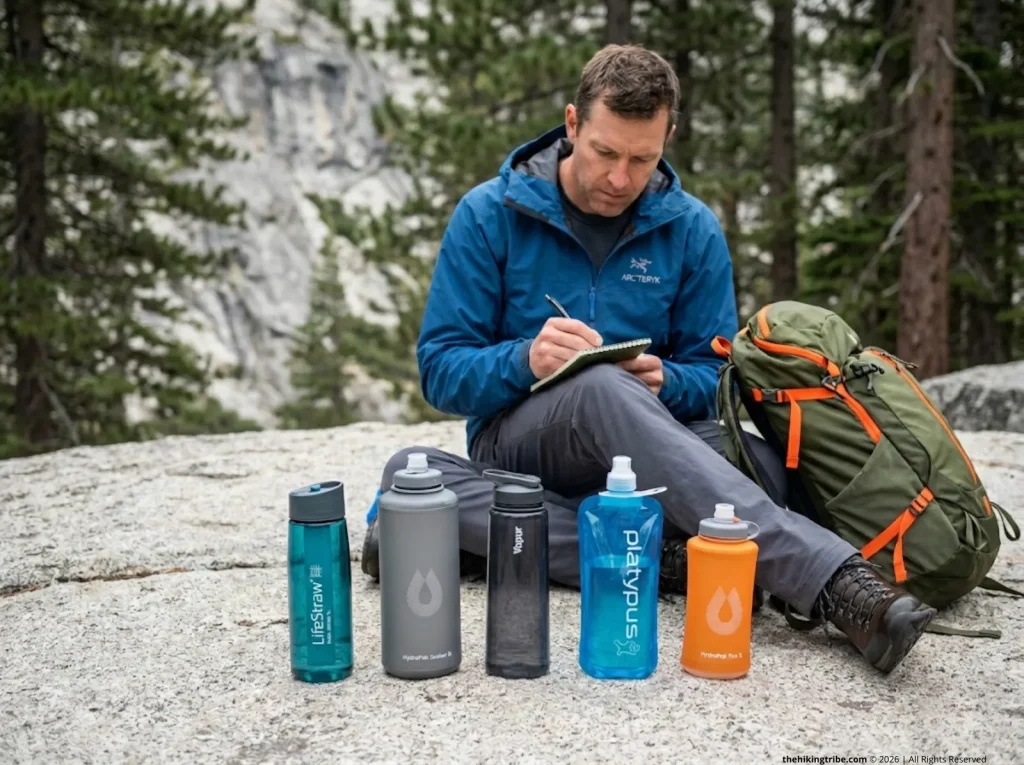
I didn’t pull these rankings from Amazon reviews. I bought all 9 bottles myself, packed them into real loads, and carried them across terrain that would expose every weakness. Here’s the protocol.
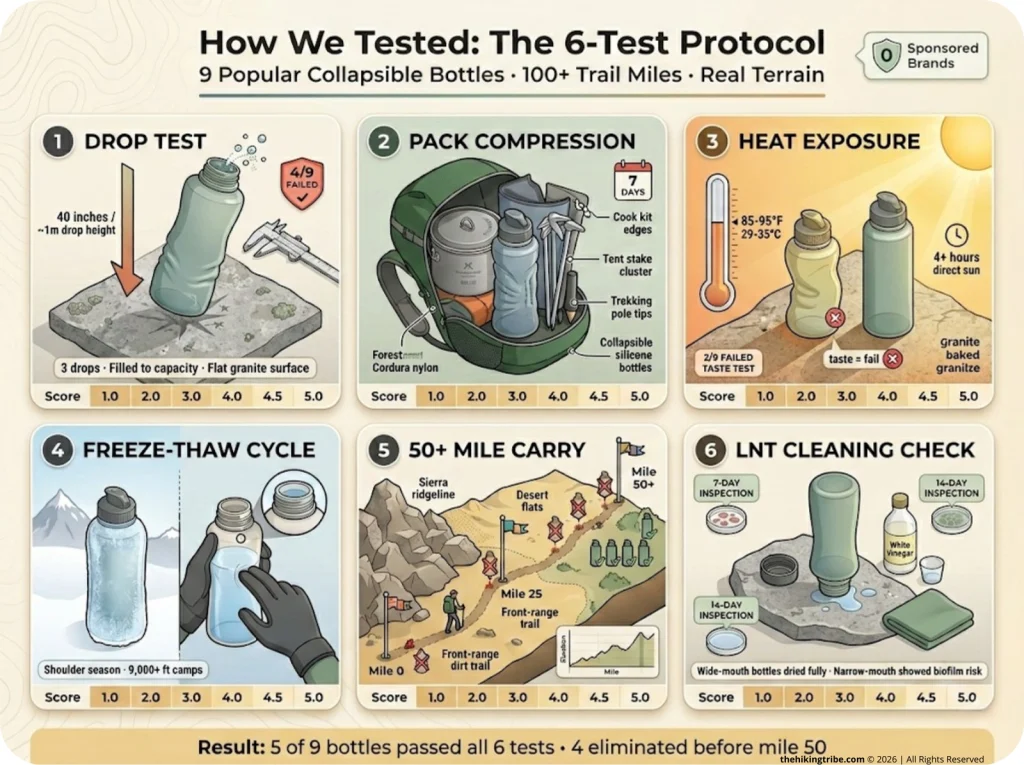
Each bottle logged a minimum of 50 trail miles across varied terrain: rocky Sierra ridgelines, sandy desert flats near the Mojave, and front-range day hikes along the Colorado Front Range. Every bottle underwent these specific tests:
Drop test. Three deliberate drops from waist height (about 40 inches) onto flat granite, while filled to capacity. We checked for seal integrity, cap leaks, and seam separation after each impact.
Pack compression. Each bottle was stuffed into an overfull pack alongside sharp-edged gear (cook kit corners, tent stakes, trekking pole tips) for 7+ days of continuous trail use. This is the test that exposed the silicone bottles.
Heat exposure. Bottles sat in direct sun at 85-95°F for 4+ hours, then got an immediate taste test. Two bottles failed this one in ways that surprised me.
Freeze-thaw cycle. Filled to capacity, frozen overnight, thawed, and checked for seal integrity. Useful for shoulder-season hikers and anyone who camps above 9,000 feet in spring.
LNT cleaning check. After each multi-day trip, bottles were cleaned using backcountry methods only (treated water rinse, sun drying). Inspected for biofilm growth at 7-day and 14-day intervals.
We scored every bottle on six criteria: packability, leak-proof reliability, durability, ease of use/cleaning, weight efficiency, and filter compatibility. Each criterion got a score from 1.0 to 5.0 based on measurable, repeated observations.
Every bottle recommended here is verified available on Amazon.com at time of testing. We use affiliate links on this site, but our testing methodology doesn’t change based on sponsorship. We’ve recommended $15 bottles over $35 ones here because the data supported it.
5 Best Collapsible Water Bottles for Hiking (2026 — Trail-Tested)

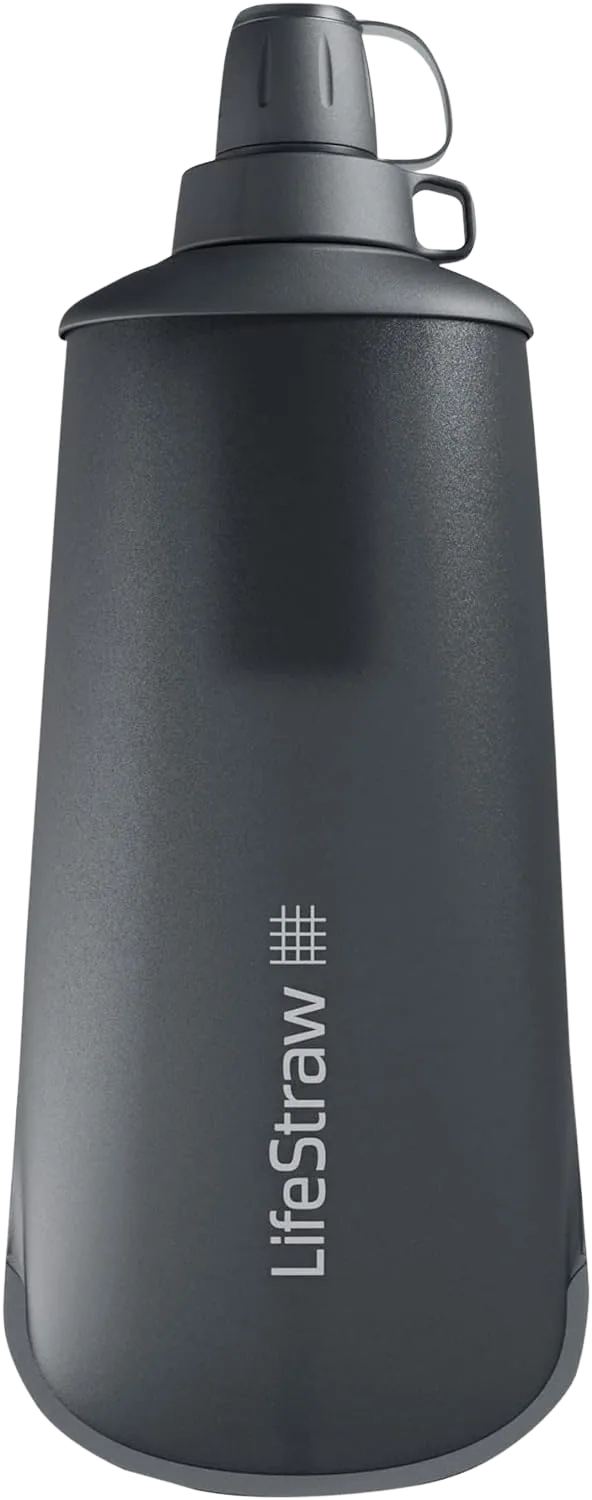
🏆 Best Overall — LifeStraw Peak Series Collapsible Squeeze Bottle (1L)
No other collapsible bottle on the market combines real backcountry water filtration with packable construction that actually holds up. The LifeStraw Peak Series filters out 99.999999% of bacteria and 99.999% of parasites while folding to palm-size when empty. That’s not a gimmick stat. It means you can drink directly from a stream without carrying a separate filter system.
I ran this bottle across 9-day NM mesa hikes and rocky Sierra ridgelines. The TPU construction handled pack abrasion that destroyed two silicone competitors by day 4. The squeeze mechanism delivered solid flow rate even after filtering 100+ liters on trail. At 3.9 oz empty, you’re carrying filter and bottle in one package that weighs less than most standalone filters.
The honest flaw: the mouth is narrower than I’d prefer for filling from shallow sources, and the bottle takes longer to air-dry because of that design. If you only hike with treated tap water, the built-in filter adds unnecessary weight. But for anyone who refills from natural water sources on backcountry trips, nothing else here matches the value of having bacteria removal built right into your drinking vessel.
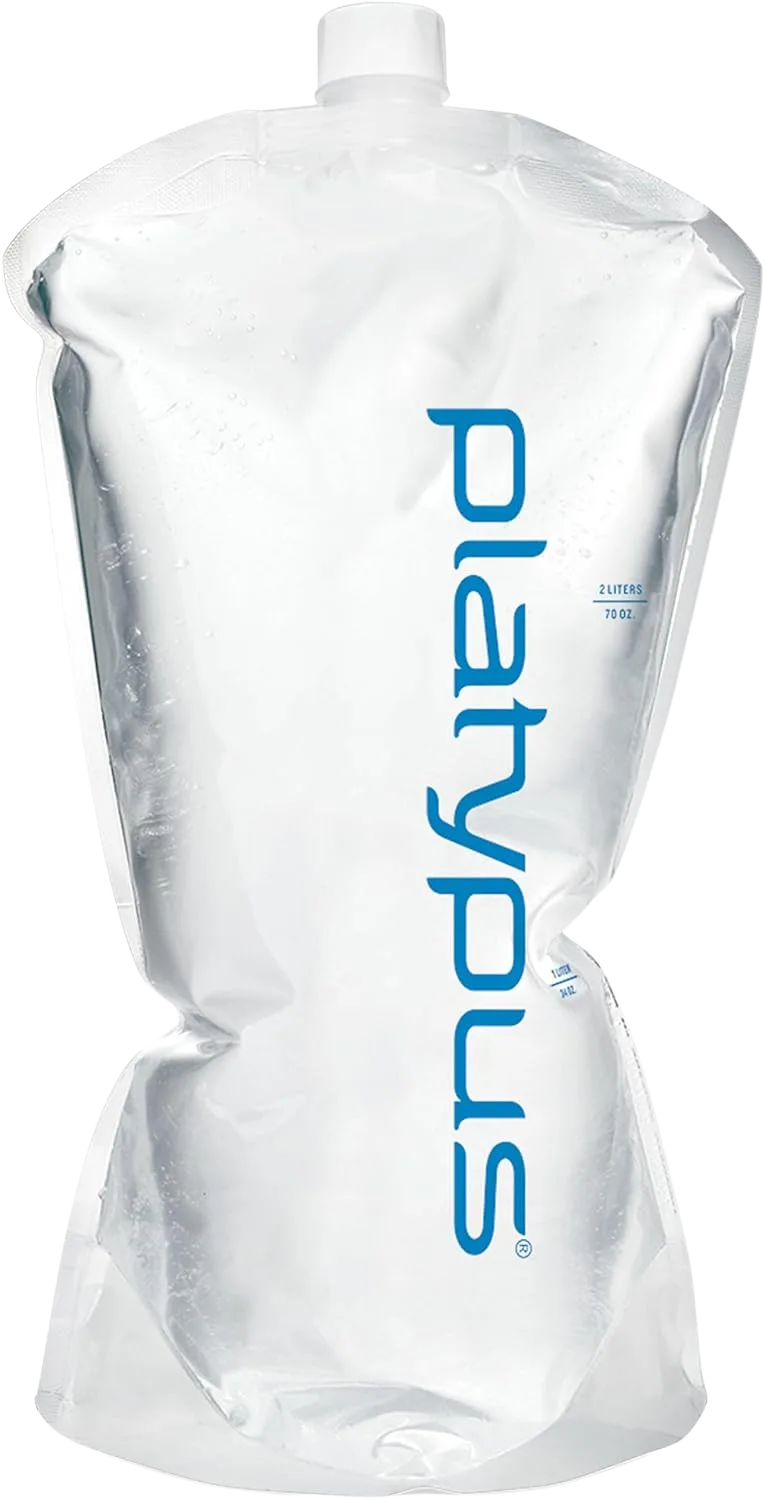
💰 Best Value — Platypus Platy 2.0L Ultralight Collapsible Bottle
The Platypus Platy is the bottle thru-hikers have carried for over 20 years, and for good reason. At 1.3 oz empty holding 2 full liters, the weight-to-capacity ratio is absurd. Nothing else in this test even came close.
This is the bottle you grab when base weight matters more than convenience features. It rolls to fist-size, stuffs into any pack crevice, and carries enough water for a long dry stretch between trail refills. Multiple thru-hike veterans I’ve spoken with confirmed 500+ mile lifespans from a single Platy. At $15-$20, replacement cost is a non-issue.
The honest flaw: it’s floppy. When partially full, the Platy flops around like a half-deflated balloon, and one-hand drinking while hiking requires practice (or giving up on the idea entirely). The closure cap is reliable but needs a deliberate tightening motion. And the thin BPA-free polyethylene is tougher than it looks, but you still want to keep it away from sharp tent stakes and cook kit edges inside your pack.
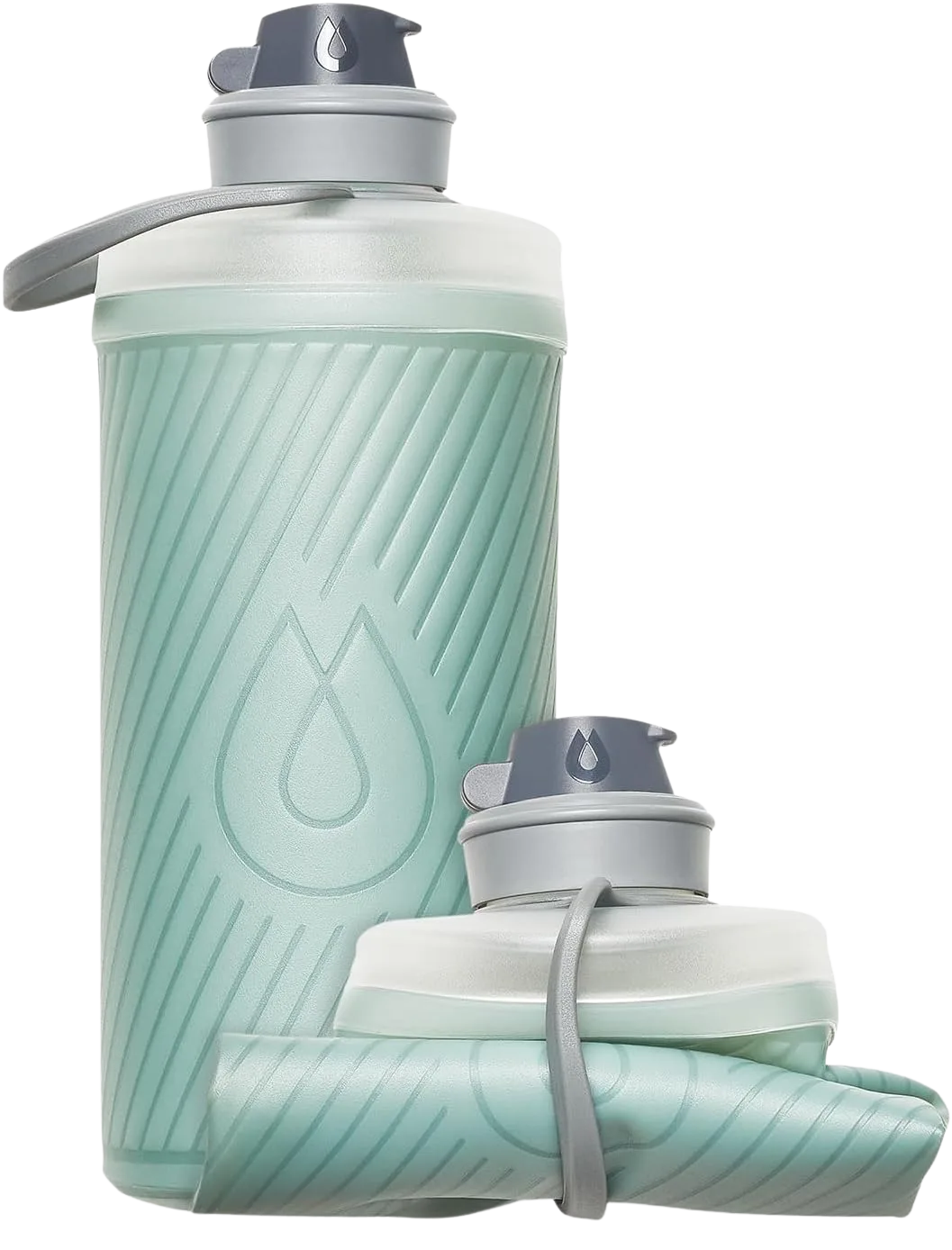
⬆️ Premium Upgrade — HydraPak Flux Collapsible Bottle (1L)
The HydraPak Flux is the bottle I’d hand to someone who says “I don’t care about price, I just want the best one.” And I’d mean it.
The dual-layer abrasion-resistant TPU makes this feel almost rigid when full, which solves the biggest complaint about collapsible bottles: the floppy, hard-to-drink-from problem. But it still compresses to credit-card thin when empty. That combination is rare. In our abrasion torture test, where we intentionally packed bottles against cook kit edges and tent stakes for a full week, the Flux showed zero damage. The RF-welded seams didn’t budge. The spill-proof screw cap never leaked, not once across 100+ miles.
It’s also the most filter-compatible option besides the LifeStraw. The threading works with Katadyn BeFree systems, which means you can build a clean, two-piece hydration setup without carrying a separate squeeze bottle for filtering.
The honest flaw? At $25-$30 for a soft bottle, the price feels aggressive. If you’re a weekend day hiker who fills up at trailhead fountains, this is more bottle than you need. But if rocky terrain is your normal and durability is what you’re paying for, the Flux earns every dollar.
Pro tip: If you pair the HydraPak Flux with a Katadyn BeFree filter, you get a two-piece system that weighs under 5 oz total and maintains solid flow rates with basic backflushing. That’s lighter than most standalone pump filters.
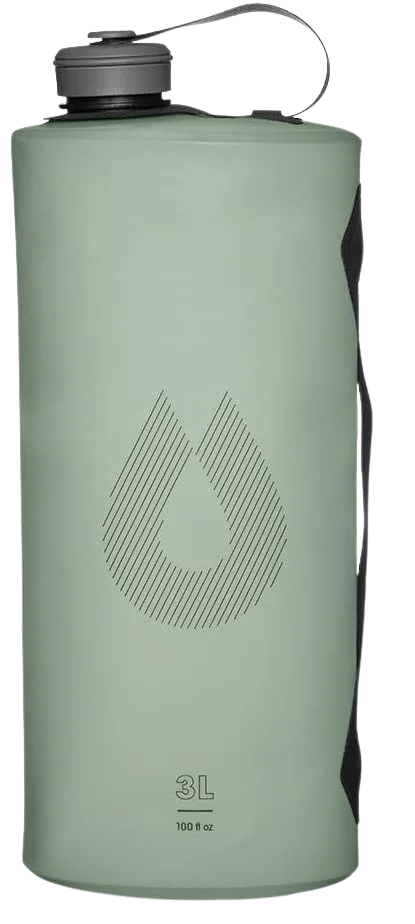
🎯 Best for Large Capacity / Dry Sections — HydraPak Seeker (3L)
When you’re facing a Mojave 45-mile carry or a dry section without reliable water between camp and the next source, capacity trumps everything else. The HydraPak Seeker holds 3 full liters and still packs to palm-size when empty. That ratio makes no sense until you hold the thing in your hand.
I used the Seeker as my primary large-capacity carrier on multi-day desert trips. At 3.2 oz empty, it weighs almost nothing for the volume it delivers. The tethered wide-mouth cap makes filling from shallow silty streams fast and predictable, and the same premium RF-welded TPU used in the Flux means you’re getting serious durability in a very different form factor. In camp, it doubles as a gravity-friendly reservoir for cooking and cleaning water.
The honest flaw: this is a storage and hauling bottle, not a sipping bottle. It’s floppy, there’s no bite valve, and drinking from it on the move requires both hands or acceptance that you’ll splash water on yourself. It works best paired with a smaller collapsible bottle (like the Flux or the Vapur) for actual trail drinking, while the Seeker lives inside your pack as a bulk water reservoir.
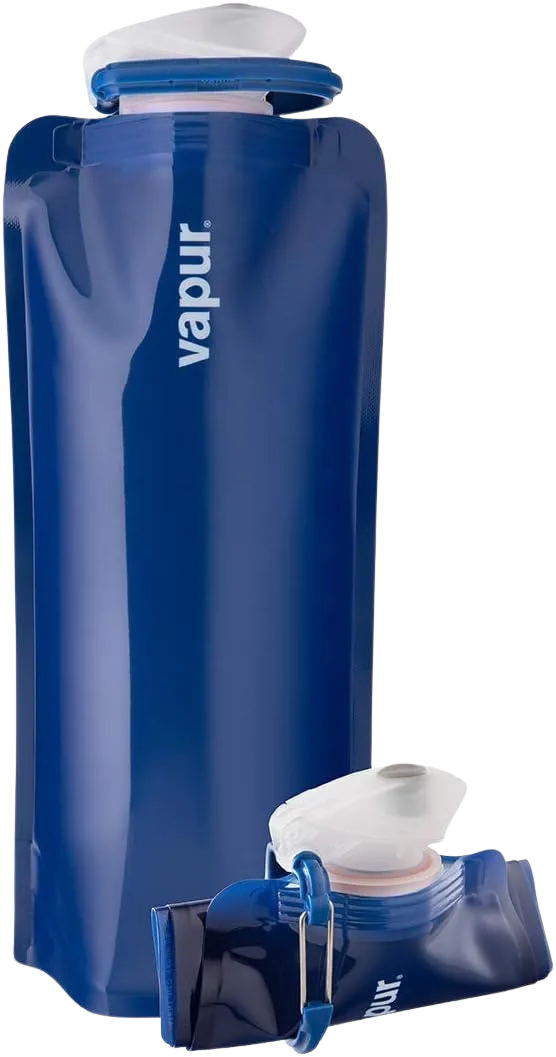
🎯 Best for Compact Day Hikes & Travel — Vapur Wide Mouth Anti-Bottle (34 oz)
The Vapur Wide Mouth Anti-Bottle is the only collapsible bottle in this test that stands upright when full. That sounds minor until you’ve dealt with floppy bottles tipping over on picnic tables, car dashboards, and camp surfaces for the twentieth time.
The triple-layer BPA-free plastic is tougher than I expected. The matte finish never slipped from sweaty hands on hot ridgelines, and the built-in carabiner attachment clips directly to pack straps or belt loops. At 2.0 oz and 34 fl oz capacity, it’s the right size for day hikes where you’re never more than a few hours from a refill point. It survived our dishwasher test, our freezer test, and 100+ flip-top open/close cycles without leaking.
The honest flaw: 34 oz is not enough water for any serious dry stretch. If you’re hiking where water sources are unreliable or spread apart, you need a bigger bottle or a second one. The Vapur is built for convenience, not capacity. It’s the town-to-trailhead, quick-access, clip-and-go bottle. For that specific job, nothing in this lineup beats it.
The Bottom Line
Filter integration is the single biggest differentiator in this category. If you source water from backcountry streams, the LifeStraw Peak pays for itself on the first trip by eliminating a separate filter from your pack.
Material matters more than marketing. TPU outperformed silicone in every abrasion and heat test we ran. If a bottle doesn’t specify TPU or doesn’t list its material at all, that’s a red flag.
Match capacity to your water reality. Day hikers near frequent refill points need 1L at most. Backpackers crossing dry stretches need 3L. Carrying both a small drinking bottle and a large storage bottle is a legitimate strategy that many thru-hikers use.
Budget doesn’t mean bad. The $15 Platypus Platy outperformed $30+ bottles in raw weight efficiency and has decades of thru-hiker proof behind it. Don’t let a higher price tag convince you a bottle is better.
Match your hiking style to the right pick above. A day hiker grabbing the Vapur and a desert trekker loading up the HydraPak Seeker will both walk away with exactly the right tool for the job, and neither will waste money on a bottle that fails at mile 30.
FAQ
Are collapsible water bottles actually good for hiking?
Yes, but only the right ones. In our test of 9 popular models, 4 failed within 50 trail miles from leaks, punctures, or seam failures. TPU construction and screw-cap closures are the two features most correlated with surviving real trail conditions. The 5 bottles that passed our full testing protocol are all listed above.
Do collapsible water bottles leak?
Some do, badly. In our pack-jostling and drop test protocol, silicone bottles and flip-top caps were the most leak-prone. Screw-cap bottles with RF-welded seams (HydraPak Flux, Seeker) had zero leaks across 100+ miles. If leak-proof trail performance is your top concern, avoid cheap silicone bottles with heat-sealed seams.
How do you clean a collapsible water bottle in the backcountry?
Rinse with treated water after each use, shake vigorously, and air-dry fully inverted with the cap off. Between trips, diluted white vinegar or a bottle-specific cleaning tablet works well. Wide-mouth bottles like the Vapur and Platypus Platy are far easier to dry than narrow-mouth designs. Biofilm builds fast in warm temps, so never skip the drying step. For a full protocol on preventing mold growth in soft hydration systems, see our guide to water bladder cleaning and mold prevention.
What is the lightest collapsible water bottle for backpacking?
The Platypus Platy 2.0L at 1.3 oz empty is the lightest meaningful option. It holds 2 full liters at an absurd weight-to-capacity ratio that no competitor matches. For a smaller bottle, the Vapur Anti-Bottle at 2.0 oz for 34 oz capacity is the next lightest. Both qualify for serious ultralight hydration setups.
Can I use a collapsible bottle with a water filter?
Yes, but filter compatibility varies by brand and threading. The LifeStraw Peak has a built-in filter. Platypus SoftBottle threads directly onto Sawyer Squeeze filters. HydraPak Flux works with Katadyn BeFree threading. Check your filter’s thread compatibility before buying, because not all bottles and filters are cross-compatible. Getting this wrong means carrying an adapter or a useless filter.
Risk Disclaimer: Hiking, trekking, backpacking, and all related outdoor activities involve inherent
risks which may result in serious injury, illness, or death. The information provided on The Hiking Tribe is for
educational and informational purposes only. While we strive for accuracy, information on trails, gear, techniques,
and safety is not a substitute for your own best judgment and thorough preparation. Trail conditions, weather, and
other environmental factors change rapidly and may differ from what is described on this site. Always check with
official sources like park services for the most current alerts and conditions. Never undertake a hike beyond your
abilities and always be prepared for the unexpected. By using this website, you agree that you are solely
responsible for your own safety. Any reliance you place on our content is strictly at your own risk, and you assume
all liability for your actions and decisions in the outdoors. The Hiking Tribe and its authors will not be held
liable for any injury, damage, or loss sustained in connection with the use of the information herein.
Affiliate Disclosure: We are a participant in the Amazon Services LLC Associates Program, an
affiliate advertising program designed to provide a means for us to earn advertising fees by advertising and linking
to Amazon.com. As an Amazon Associate, we earn from qualifying purchases. We are also an official affiliate partner
of Black Diamond Equipment via the AvantLink network. If you click on a Black Diamond affiliate link and make a
purchase, we may earn a commission at no additional cost to you. We also participate in other affiliate programs and
may receive a commission on products purchased through our links. Additional terms are found in the terms of
service.