In this article
The barb was buried deep in your thumb, blood pooling in your palm, and now you’re staring at a crystal-clear alpine stream at 11,000 feet. The sheep scat on the bank tells a different story—and you’re out of filtered water. The choice you make with your chemical drops right now dictates whether you’ll be summiting tomorrow or enduring a brutal, 48-hour evacuation with severe intestinal cramping.
After 20 years guiding across environments from the high Sierra down to the humid Appalachian Trail, I’ve seen exactly what happens when hikers trust the wrong purification method. I’ve watched strong athletes curled up in the dirt because they didn’t understand the limitations of their iodine tablets. Everyone assumes chemicals work perfectly. They don’t.
Here’s exactly how to handle it—no panic, no ER visit necessary. This guide breaks down the biological mechanisms, temperature kinetics, and physiological risks of iodine vs chlorine dioxide. We leave the marketing fluff behind to give you the hard data needed to definitively choose the right chemical backup for your backcountry water treatment.
| Water Treatment Comparison Table | |||
|---|---|---|---|
| Treatment Type | Pathogen Spectrum | Wait Time (20°C/4°C) | Thyroid Risk |
| Iodine | Bacteria, Viruses, Giardia | 30 min / 60+ min | High |
| Chlorine Dioxide | Bacteria, Viruses, Protozoa | 15 min – 4 hrs / 30 min – 4+ hrs | None |
⚡ Quick Answer: You cannot trust iodine to neutralize Cryptosporidium. While iodine drops bacteria and viruses quickly, the hard lipid shell of a Crypto oocyst completely ignores it. Chlorine dioxide actively penetrates that shell to destroy the pathogen from the inside out. For full safety, your best tactic is physically filtering the water first, then following up with a quick chlorine dioxide treatment to neutralize the viruses that slip through.
The Biology of Backcountry Pathogens
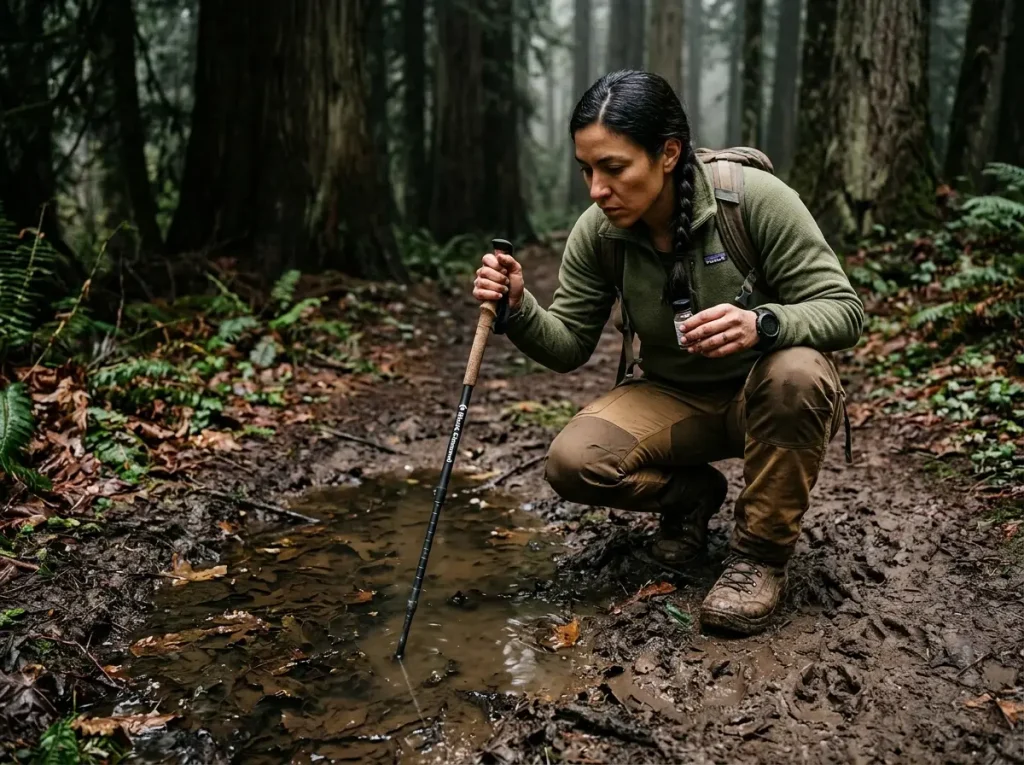
You dip your bottle into a pristine glacial run-off. The water looks pure enough to bottle and sell. But clear water bias ruins trips. Never assume a pristine alpine stream is safe. Wildlife upstream guarantees microscopic threats are floating in that ice-cold current.
When you want to purify water hiking, you are fighting an invisible war. If you fail at evaluating backcountry water sources for invisible contamination, the consequences will hit your gut hard. You aren’t just fighting dirt; you are matching your treatment method against living organisms designed by nature to survive extreme environments.
According to the Wilderness Medical Society Clinical Practice Guidelines for Water, threats fall into three primary camps: viruses, bacteria, and protozoan cysts. You need to know your enemy before you choose your tool. Your gear only works if you match the chemical to the specific biological threat waiting in the water.
The Crypto Shell: Why Oocysts Ignore Chemicals
Cryptosporidium is the undisputed heavyweight champion of backcountry pathogens. While a standard bacterial cell features a relatively simple wall, Crypto travels in an armored transport called an oocyst. These cryptosporidium cysts are specifically engineered for environmental dormancy. They wait outside a host for months, surviving freezing temperatures easily.
The oocyst shell is built with complex acid-fast lipids and heavily cross-linked proteins. Think of it like a reinforced bank vault. When you toss standard iodine into your bottle, those halogens bounce right off the lipid armor. The chemical never reaches the soft interior. The multi-layered defense of Crypto completely neutralizes the efficacy of standard halogenation.
The Size Discrepancy: Viruses vs Protozoa
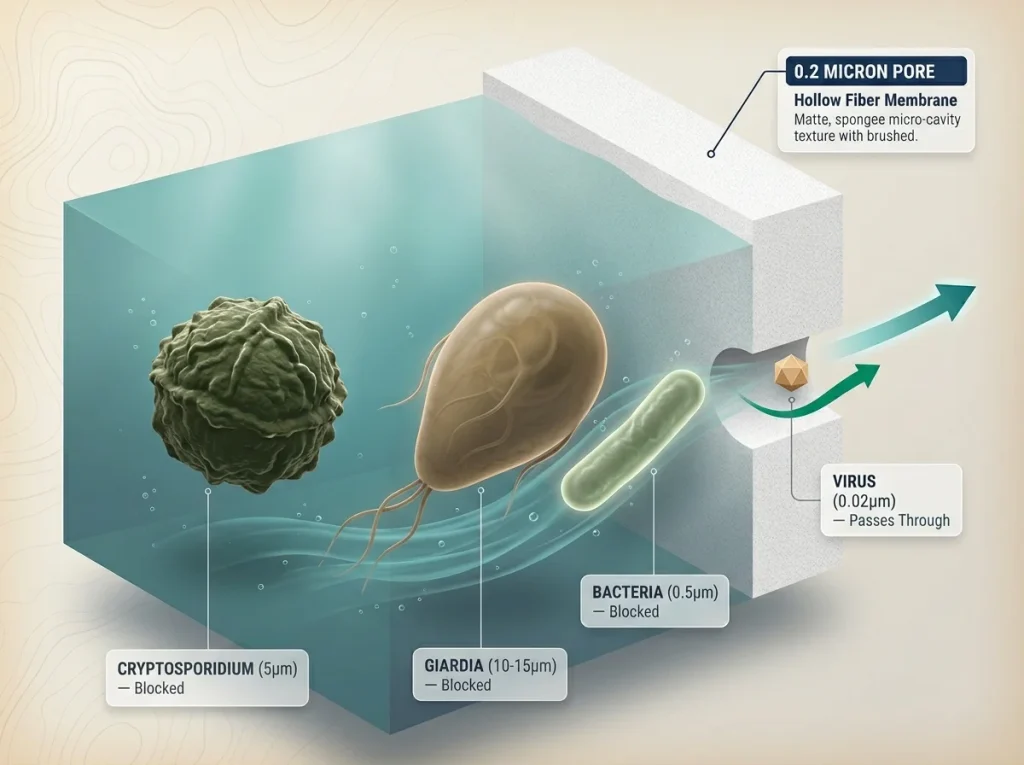
Size dictates your strategy. Viruses are incredibly small, measuring around 0.02 microns. They slip straight through the pores of almost any mechanical pump filter on the market. But they have a critical weakness: their outer protein capsids are highly vulnerable to chemicals.
Protozoa like giardia and Cryptosporidium are giant boulders by comparison, roughly 4 to 15 microns. They have thick shells that laugh at standard chemicals, but their large size makes them incredibly easy to trap in a physical filter. Bacteria sit squarely in the middle, around 0.2 to 0.5 microns. They lack heavy armor and get caught by filters or neutralized by chemicals with equal ease.
Why Clear Water Still Threatens High-Alpine Hikers
Hikers look at a crystal-clear stream bubbling off a snowfield and assume it needs no treatment. The reality of high-altitude environments proves otherwise. Cold temperatures act like a refrigerator, preserving pathogens in an extended state of suspended animation. The intense uv sensitivity of some bacteria does not apply to hard-shelled cysts hiding safely below the surface ripples.
Even if the water looks pure, a single marmot or a herd of bighorn sheep grazing a mile upstream can load that current with cysts. You cannot see Giardia, and you certainly cannot taste it. If you gamble on visual clarity, you will eventually lose. Treating your water is not about paranoia; it is about risk management when help is days away.
How Trail Disinfectants Work
Iodine Hydrolysis: The Problem with Unknown pH
When you drop iodine into solution, it reacts. It splits into molecular iodine and hypoiodous acid. The ratio of these two compounds dictates how well the chemical ruins bugs. But here is the massive flaw: that ratio completely depends on the pH of your water source.
Chlorine Dioxide: The One-Electron Oxidative Attack
Chlorine dioxide operates like a special forces unit. Instead of relying on a clunky balancing act, it works via a one-electron exchange mechanism. It is a free radical. The instant it hits your water, it remains a stable, dissolved gas.
This stability gives it a massive advantage. It does not care if your stream is highly acidic or heavily alkaline. It preserves its oxidative power across wide pH extremes. It actively hunts down electrons, tearing them away from the structural proteins of the pathogen. This aggressive redox reaction makes it a vastly superior killer, giving you reliable disinfection in environments where iodine fails.
Defeating the Oocyst Shell
Pro-Tip: Turbidity crushes the effective power of any chemical. If you have silty water, your expensive drops will attack the mud instead of the pathogens. Read our guide on pre-filtering suspended silt using a simple bandana or coffee filter to drop the sediment load before you add your chemicals.
Cold Water Treatment Rules
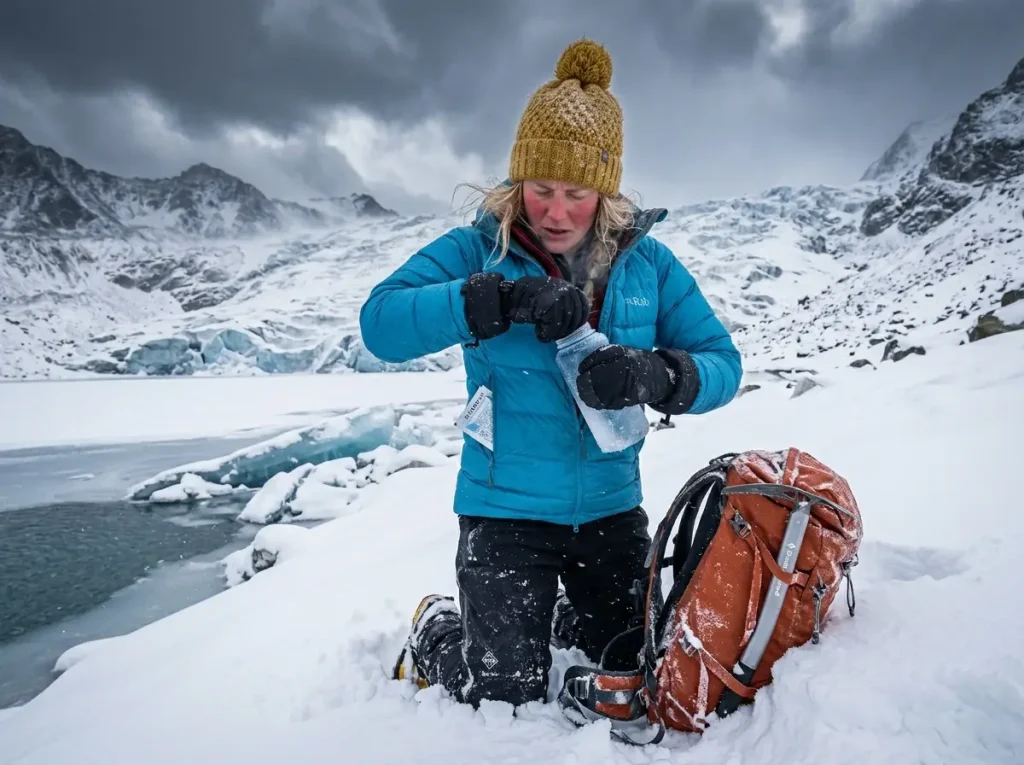
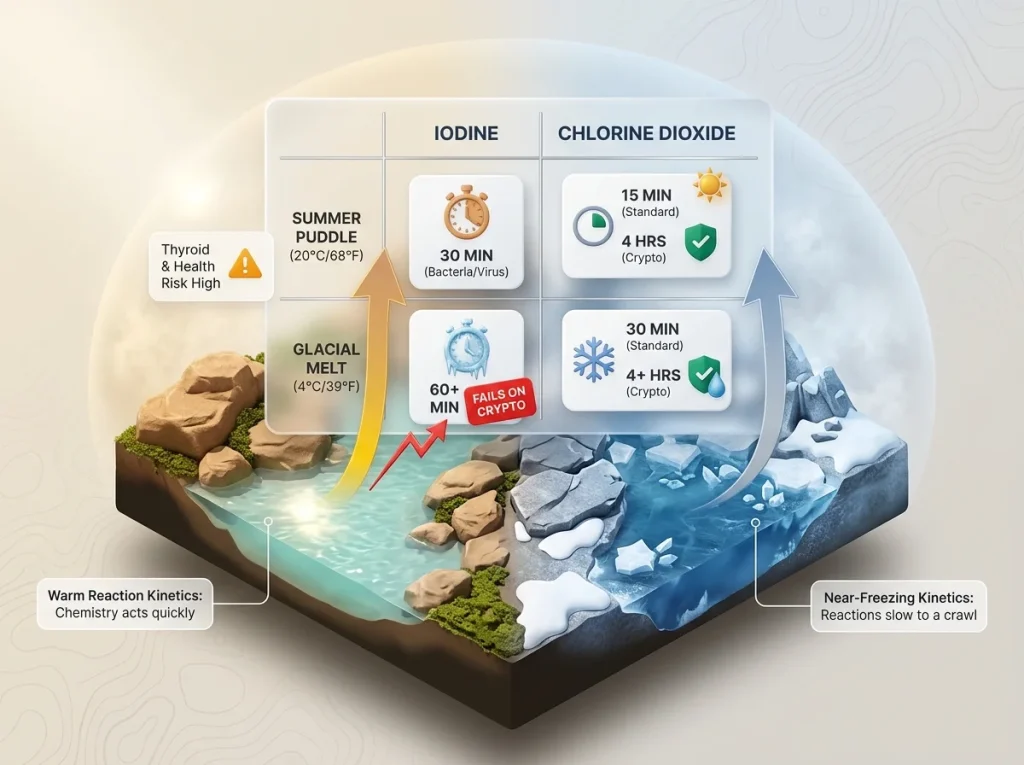
The temperature of your water dictates how fast your chemicals work. Most hikers read the back of the bottle in their living room, see a 15-minute wait time, and assume that rule applies everywhere. It does not. The moment you hike above the tree line, everything changes.
The physics of cold water on the Trail
The physics of cold water are unforgiving. The physics of cold water proves that chemical reaction rates drop off a cliff as water approaches freezing. The thermal energy required to force the chemical reaction slows to a crawl in a 38-degree mountain stream.
Because of these temperature-dependent reaction rates, manufacturer promises made at comfortable room temperature completely fall apart in the alpine zone. If you wait for iodine tablets based on the packaging directions you read in your warm house, you are drinking live bugs. You have to understand that your system heat is the only warm thing within twenty miles.
The 4-Hour Chlorine Dioxide Rule
If you want to neutralize cryptosporidium with chlorine dioxide, you face a harsh reality. The contact time required is four solid hours. The sheer thickness of the oocyst wall demands a long immersion, and this pathogen neutralize time cannot be shortened if the water is clear.
For standard viruses and bacteria, you only need about 15 to 30 minutes. But if Crypto is your primary concern, that wait time stretches endlessly. The EPA emergency disinfection guidelines mandate strict adherence to these benchmarks. The bright side is that chlorine dioxide actually dissolves better in cold water, keeping the gas trapped in your bottle rather than off-gassing into the air.
Managing the “Camel-Up and Carry” Strategy
You treat your bulk water right before crawling into your sleeping bag. The chemical does its grueling work overnight. Keep your bottles near your core inside the tent to prevent freezing. By sunrise, you have safe, fully treated water ready to drink. When mapping your route, getting good at adjusting contact times for near-freezing temperatures separates the fast movers from those who spend half the day waiting for chemistry to happen.
The Physiological Cost of Iodine
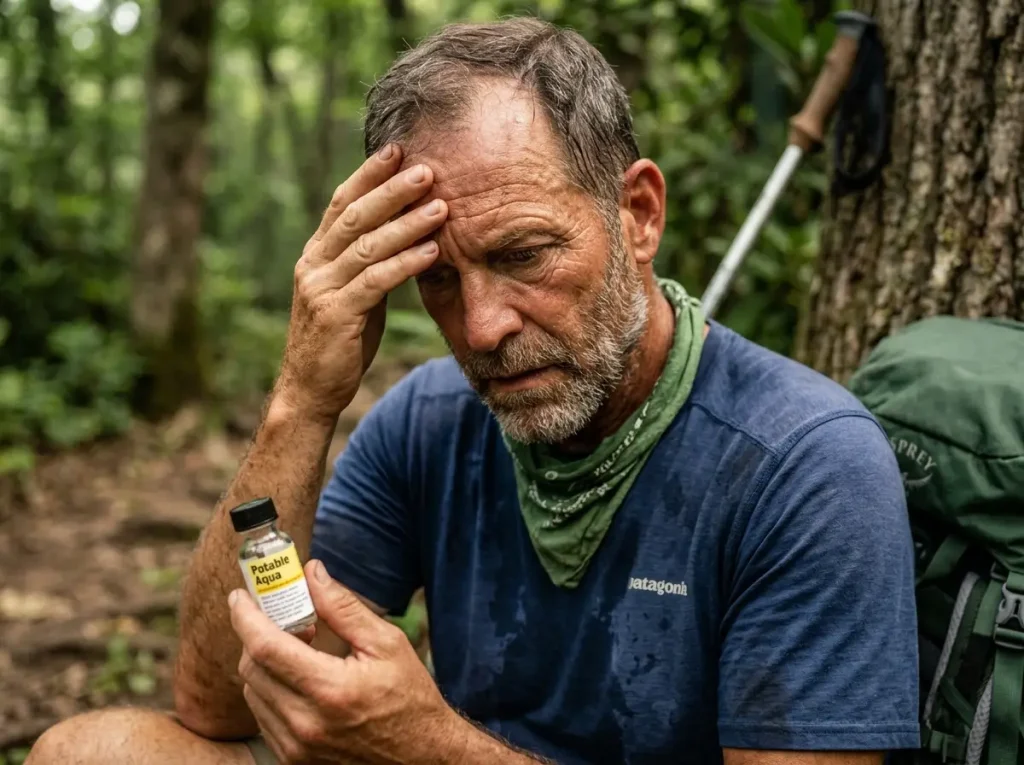
Ingesting chemicals off the trail is never ideal, but doing it on a week-long thru-hike carries actual medical consequences. Iodine is not a passive purifier; it is a highly active biological element that hacks directly into your hormonal system.
The natural defense mechanism and Systemic Overload
Your system uses trace amounts of iodine to synthesize hormones. Purifying just one liter of water dumps a massive chemical dose into your system—up to fifty times your recommended daily intake.
Healthy hikers typically trigger a defense mechanism called the natural defense mechanism, which temporarily shuts down hormone synthesis to handle the overload. Your system absorbs the hit, but you might feel an intense, crushing fatigue that you mistakenly blame on the elevation or the miles. These thyroid issues act as a hidden anchor dragging on your performance, turning a pleasant hike into a brutal slog.
The severe metabolic hazard
The hazard escalates fiercely for anyone with pre-existing autoimmune conditions. If you administer iodine to someone with an undisclosed medical history, you risk triggering the severe metabolic hazard. This induces acute hyperthyroidism, sending their metabolism into a hazardous overdrive.
Pregnancy Risks and Absolute Contraindications
Iodine is absolutely contraindicated during pregnancy. The fetal thyroid cannot defend itself against the massive chemical load, often leading to severe fetal hypothyroidism and thyroid dysfunction. The CDC strongly advises against iodine for pregnant hikers for this exact reason.
Chlorine dioxide, by stark contrast, breaks down into highly nominal and safe levels of chlorite. It easily passes the safety test for week-long treks without turning your own metabolism against you. You can drink it confidently knowing your endocrine system is safe.
Field Performance: Liquid Drops vs. Tablets
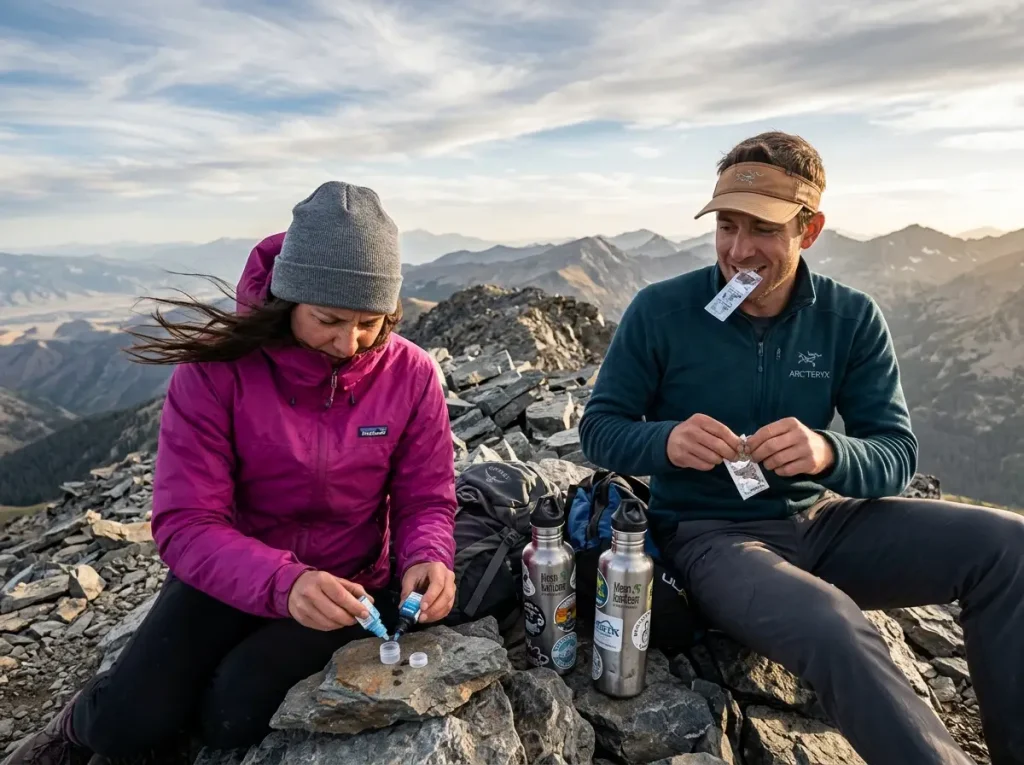
When your hands are freezing and the wind is howling at 50 miles per hour, fine motor skills vanish. Evaluating field performance means looking at the logistics of the container, the usage complexity, and the bitter reality of the taste profile. We are going to look at the differences between a two-part liquid and standard solid doses.
Aquamira Drops: The Ultralight Gold Standard
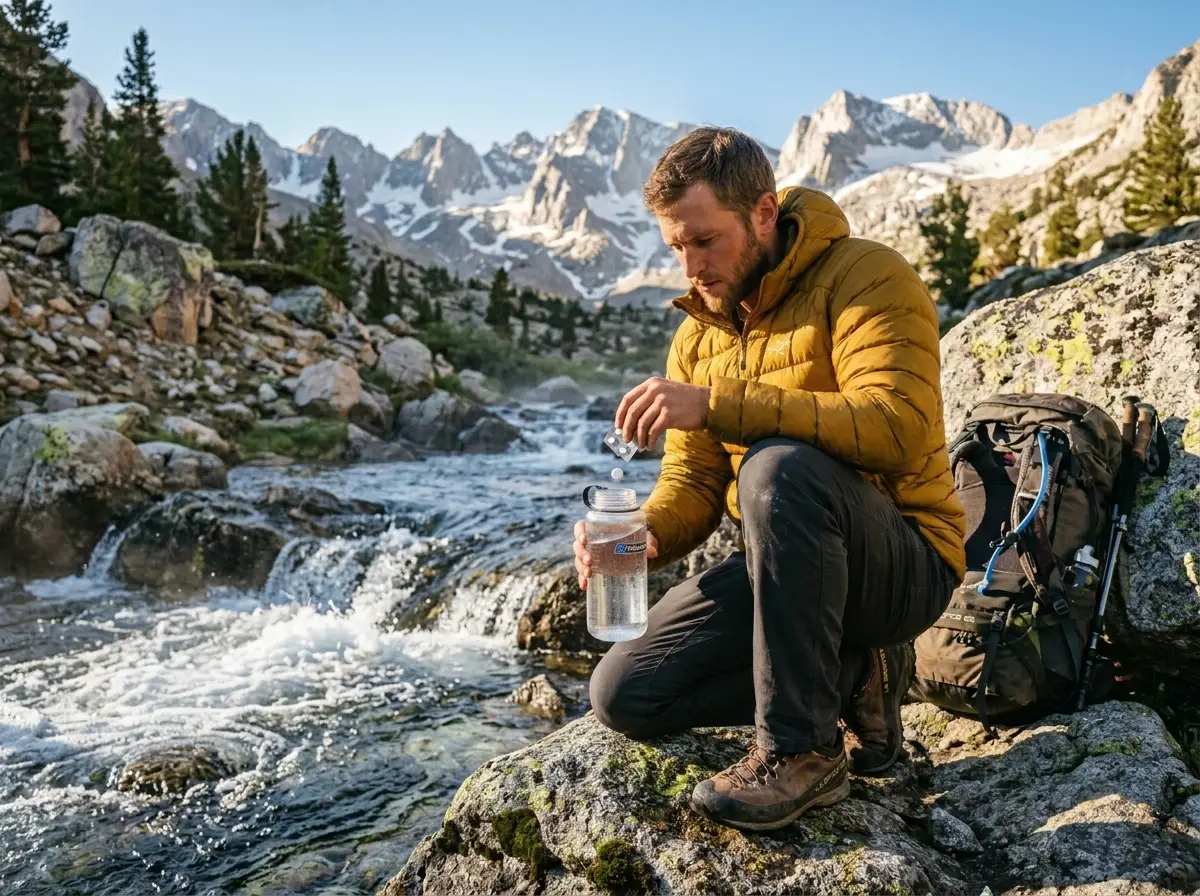
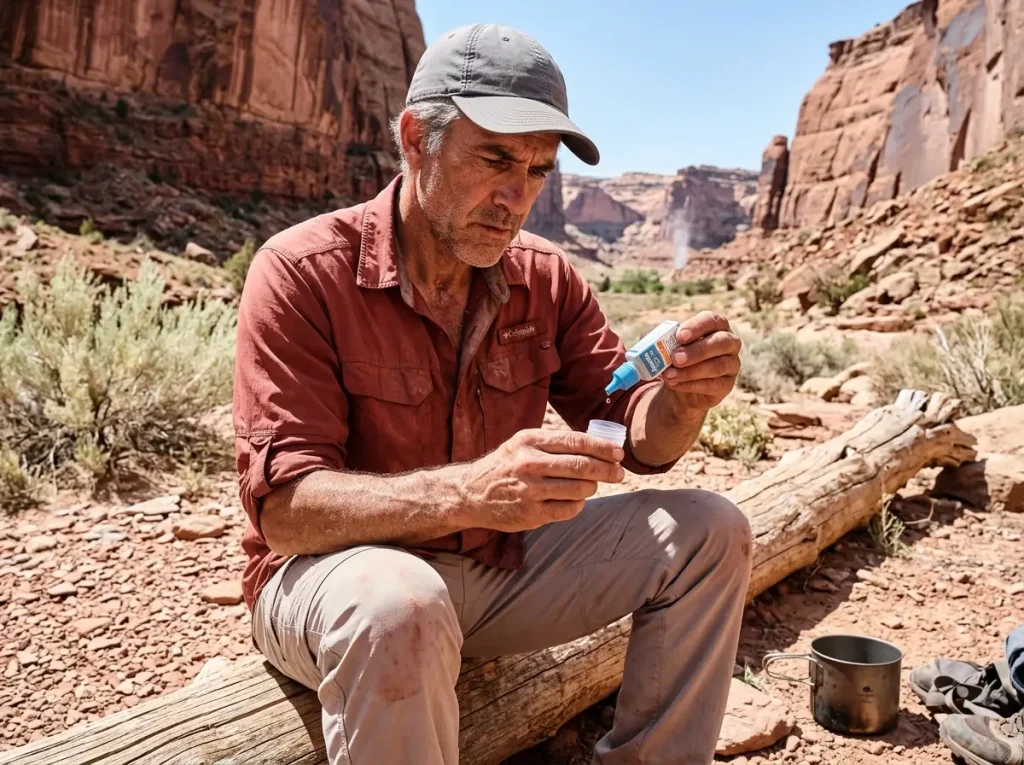
Aquamira relies on a liquid mixing cup system. You mix seven drops of Part A with seven drops of Part B, wait five minutes for it to activate and turn yellow, then dump it into your liter of water.
This liquid vs. tablet debate centers on weight and speed. Thru-hikers love Aquamira because you can repackage it into smaller dropper bottles to cut your total weight. However, keeping a tiny plastic cap steady while you count drops in a freezing gale is a nightmare. It requires patience and dexterity you might not have when hypothermia knocks at the door. I have spilled half my dosage on a dark, rainy morning when I couldn’t feel my fingers.
Katadyn Micropur: Foolproof Failsafes
Katadyn Micropur tablets eliminate the mixing ritual entirely. Every single tablet comes wrapped in heavy-duty foil. This guarantees an incredible five-year shelf life unaffected by the atmospheric moisture that destroys loose pills in glass vials.
These katadyn tablets represent foolproof reliability. The only downside is the price per liter, which runs drastically higher than liquid drops. But for an emergency kit that might sit in your pack for years, that foil-wrapped preservation is worth every cent. Proper no-cook backpacking meal prep relies heavily on knowing exactly how much safe water you have on hand, and dropping a tablet into your pot is as easy as it gets. Always consult the CDC guidelines for international traveler water disinfection before carrying these across borders.
The Vitamin C Taste Neutralization Trap
Standard potable aqua leaves your water tasting like a hospital floor. Old-school hikers use ascorbic acid to make iodine taste better. This vitamin c neutralization forces a chemical reduction that instantly strips the foul flavor and murky color out of the water, leaving a neutral salt behind.
Pro-Tip: Never add your electrolyte powder, Tang, or Vitamin C neutralizer to your bladder until the full chemical contact time runs completely out. Ascorbic acid stops the disinfection process instantly. Drop it in too early, and your chemical treatment dies, leaving the pathogens very much alive.
Brands like aquatabs and polar pure exist on the fringes, but chlorine dioxide remains the superior choice for anyone who actually wants to enjoy drinking their water on a long uphill slog.
The Ultimate Redundancy: Filter + Chemical Synergy
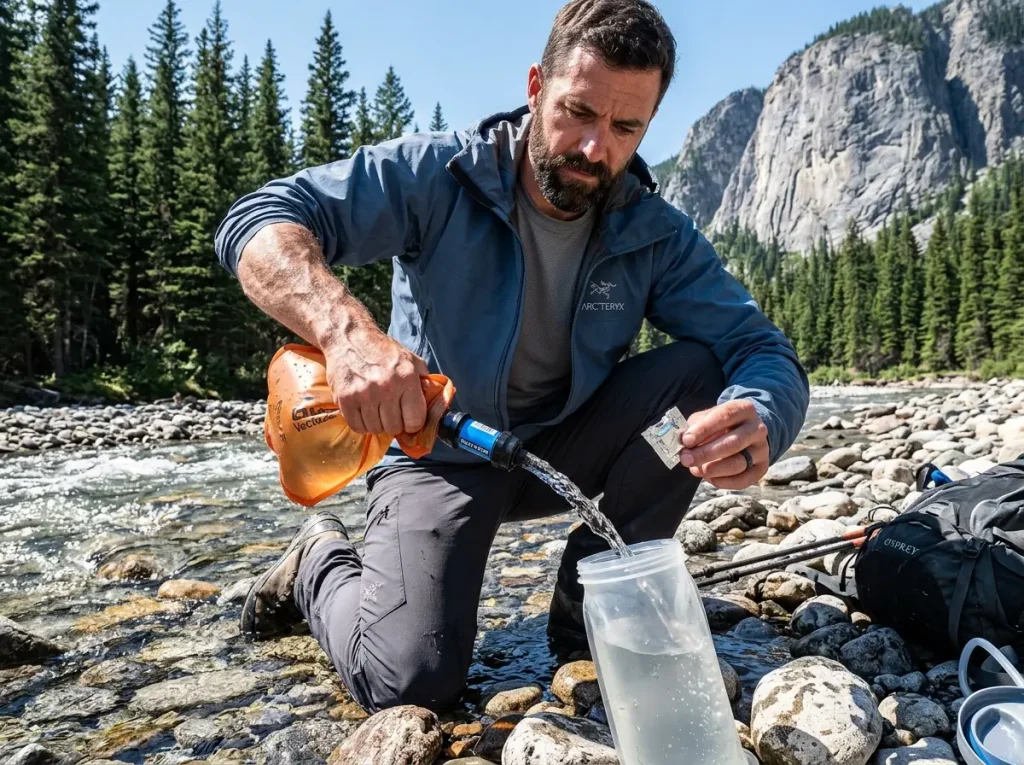
The absolute best backcountry protocol abandons the single-tool mindset. The smartest guides run a two-stage defense system that pairs physical removal with chemical mop-up. This guarantees total safety without the agonizing wait. You carry a primary tool and a chemical backup.
Mechanical Removal of Protozoa
A quality mechanical pump or gravity filter completely strips Giardia and Cryptosporidium right out of the water. Hollow fiber membranes standard in a sawyer squeeze or similar unit use 0.1 to 0.2-micron pores to physically block the massive protozoan cysts.
By pushing your water through these gravity and pump filtration systems, you immediately bypass the grueling 4-hour wait time required for chemical penetration. You catch the boulders in the net, providing instantly drinkable water free of the hard-to-neutralize threats. The water tastes clean immediately.
Chemical Mop-Up of Viruses
But physical filters have a blind spot. The ultra-small 0.02-micron viruses slip right through those microscopic hollow fibers. To solve this, you apply the chemical mop-up.
Following the Wilderness Medical Society practice guidelines for austere situations, you chase your mechanical filtration with a 15-minute chlorine dioxide blast. The filter takes out the armor-plated cysts. The chemical instantly drops the vulnerable viruses. You get absolute, multi-spectrum safety in less than a quarter of an hour.
Managing Extreme Turbidity and Silt
Running silty water through a mechanical filter ruins the cartridge. The sediment clogs the pores, destroys your flow rate, and adds unnecessary weight to your pack when the filter holds all that mud.
If you face extreme turbidity, use a pinch of white campfire ash to flocculate the water. Let the sediment sink to the bottom, then carefully filter the clear water off the top. This reduces strain on your filter and ensures that your secondary chemical hit targets actual pathogens instead of wasting its oxidative energy fighting organic mud.
Pro-Tip: If you drop your mechanical pump filter or let your squeeze filter freeze overnight, the internal microscopic hollow fibers will shatter. It will look fine, but it will offer zero protection. Always keep foil-wrapped chlorine dioxide tablets in your first-aid kit as a non-mechanical, fail-proof contingency.
Conclusion
We rely on gear to keep us alive, and clinging to outdated traditions gets people hurt. Iodine is a hazardous, obsolete trail technology that completely fails against Cryptosporidium and introduces substantial toxicity risks to your thyroid. The science and the field results prove it.
Chlorine dioxide stands as the undisputed champion of field chemicals. It safely acts as a dissolved gas, powerfully penetrating the resilient oocyst wall, provided you respect the harsh kinetic reality of the cold-water contact time.
The absolute safest, most efficient backcountry method remains the synergistic overlap. Pair a quality mechanical filter to physically strip out the hardened cysts, and chase it with a fast chlorine dioxide hit to vaporize the remaining viruses. Before your next multi-day alpine push, audit your emergency kit. Toss out those expired glass vials of iodine and upgrade to foil-wrapped chlorine dioxide tablets. You never want to be caught off-guard on a ridge line when your mechanical filter cracks or freezes.
FAQ
How long do you have to wait for iodine tablets?
Iodine requires at least 30 minutes to neutralize basic bacteria and viruses, but no practical wait time will ever neutralize Cryptosporidium. In unheated alpine water, you must double that strict 30-minute minimum to an agonizing 60 minutes just to neutralize less resilient Giardia cysts. If you guess wrong on the time, you drink live pathogens.
Is chlorine dioxide safer than iodine?
Yes, drastically so. Chlorine dioxide degrades into highly nominal, safe levels of chlorite that pass through your system without trouble. Iodine floods your thyroid with massive doses of a physiologically active element, introducing serious medical, metabolic, and fatigue risks, especially for pregnant individuals and those with autoimmune histories.
Does chlorine dioxide neutralize Cryptosporidium?
Yes. Chlorine dioxide operates as a powerful free radical that diffuses straight through the oocyst’s highly-defended lipid wall to destroy the structural proteins inside. However, you must respect the chemistry. It requires a strict 4-hour contact time at normal manufacturer doses to achieve full inactivation before you take your first sip.
Does Vitamin C affect water purification?
Vitamin C (ascorbic acid) instantly neutralizes halogens like iodine and chlorine, completely stopping the disinfection process dead in its tracks. Never add drink mixes, electrolytes, or Vitamin C neutralizers to your bladder until the full chemical wait time has utterly elapsed, or you guarantee yourself a miserable hike out.
Risk Disclaimer: Hiking, trekking, backpacking, and all related outdoor activities involve inherent
risks which may result in serious injury, illness, or death. The information provided on The Hiking Tribe is for
educational and informational purposes only. While we strive for accuracy, information on trails, gear, techniques,
and safety is not a substitute for your own best judgment and thorough preparation. Trail conditions, weather, and
other environmental factors change rapidly and may differ from what is described on this site. Always check with
official sources like park services for the most current alerts and conditions. Never undertake a hike beyond your
abilities and always be prepared for the unexpected. By using this website, you agree that you are solely
responsible for your own safety. Any reliance you place on our content is strictly at your own risk, and you assume
all liability for your actions and decisions in the outdoors. The Hiking Tribe and its authors will not be held
liable for any injury, damage, or loss sustained in connection with the use of the information herein.
Affiliate Disclosure: We are a participant in the Amazon Services LLC Associates Program, an
affiliate advertising program designed to provide a means for us to earn advertising fees by advertising and linking
to Amazon.com. As an Amazon Associate, we earn from qualifying purchases. We are also an official affiliate partner
of Black Diamond Equipment via the AvantLink network. If you click on a Black Diamond affiliate link and make a
purchase, we may earn a commission at no additional cost to you. We also participate in other affiliate programs and
may receive a commission on products purchased through our links. Additional terms are found in the terms of
service.