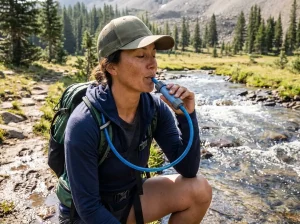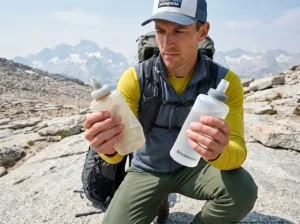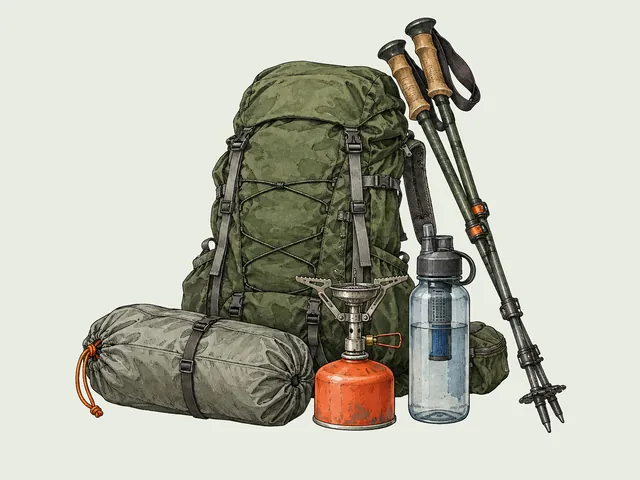





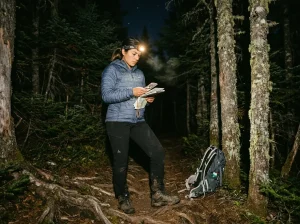



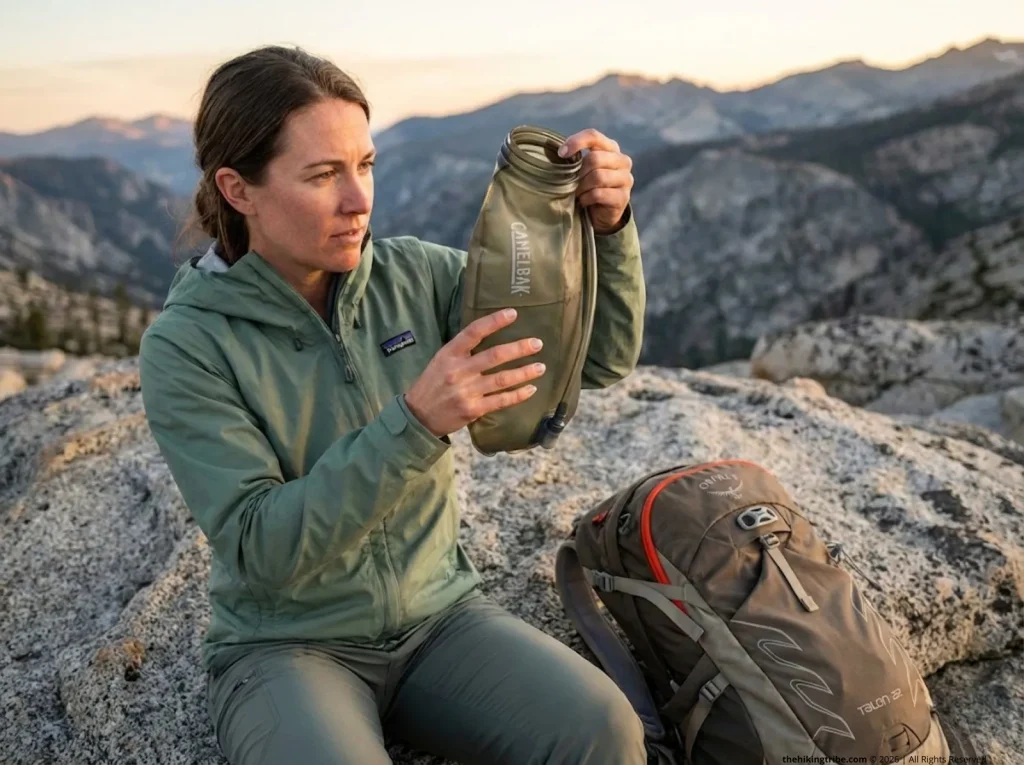
Three days into a Sierra ridge traverse, I bit the valve and got a mouthful of something sour. Pulled the hydration bladder out of the pack and held it up to the light. Red streaks lining the inside. Black gunk clogging the drinking tube. Fourteen miles from the trailhead with five liters of water I couldn’t trust and a gut already turning hostile.
That trip taught me something every serious hiker figures out eventually. Keeping your water bladder clean has nothing to do with scrubbing harder. It has everything to do with running the right routine every single time you come off trail.
After years of field-testing every cleaning method worth trying on multi-day backpacking trips, this is the exact protocol that keeps mold out of your hydration reservoir, your tube, and your bite valve from the first fill to the last sip.
⚡ Quick Answer: Rinse your water bladder thoroughly and air-dry completely after every use. Deep clean every 2-4 weeks (or after any electrolyte fill) with baking soda, bleach, or reservoir-cleaning tablets. Disassemble the tube and valve separately for scrubbing. Store in the freezer between trips to halt bacteria and mold growth. This four-step routine prevents recurring contamination in any hydration system.
Why Mold Owns Your Hydration Bladder (And Why It Matters on Trail)
The Biology of Biofilm Inside Flexible Reservoirs
Your hydration bladder is built from TPU (thermoplastic polyurethane), a flexible plastic that retains microscopic moisture even when it looks empty. That thin film of remaining water is all it takes.
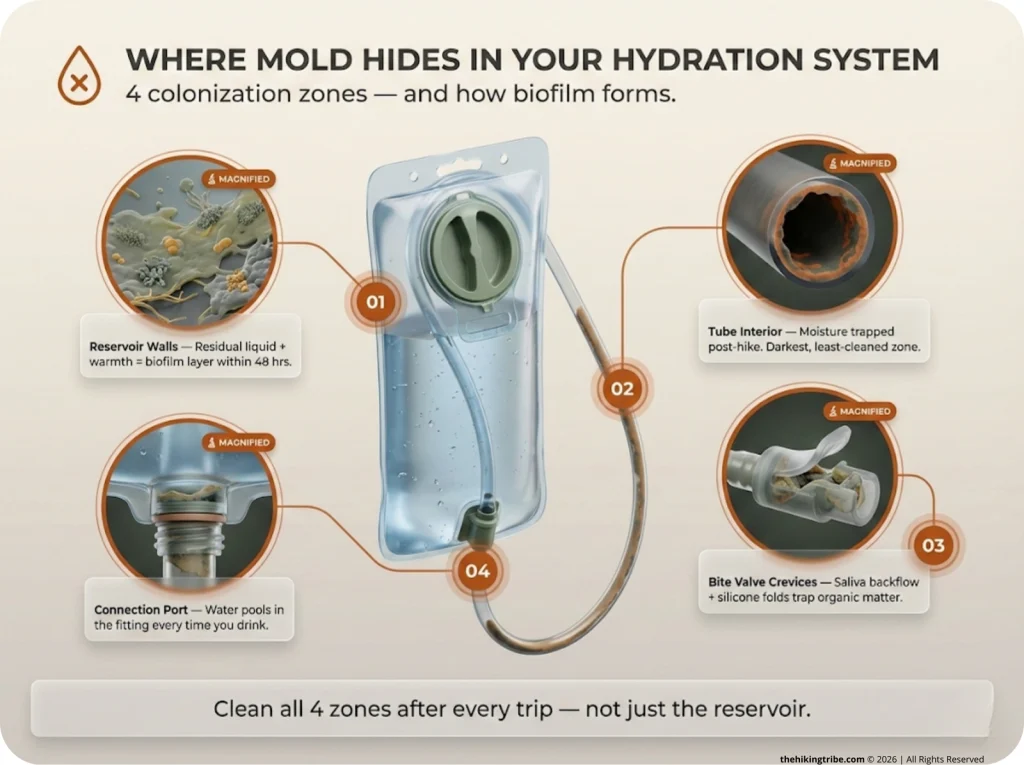
Within 48 hours of sitting in a warm closet or car trunk, biofilm — a slimy colony of bacteria and fungi — takes hold on the interior walls, inside the hose, and deep in the valve crevices. According to CDC guidelines on preventing biofilm in moist devices, any enclosed space with trapped moisture becomes a breeding ground for waterborne germs. Your bladder qualifies.
The REI Expert Advice team puts it bluntly: “Bacteria and mold are resourceful little buggers, and will inevitably find their way into your CamelBak, Platypus or other brand of hydration reservoir.”
The single most common mistake across every hiking forum is the same one. “I just rinse it and stuff it away damp — mold every time.” That damp storage habit is exactly how you feed the colony.
What Happens When You Drink Mold on a Remote Trail
This is not a cosmetic issue. Mold ingestion on trail triggers GI distress — cramps, nausea, diarrhea. On a multi-day route deep in the backcountry, that kind of dehydration cascade compounds fast. No clinic for hours. Limited clean water. Compromised judgment from fluid loss.
Most hikers don’t connect the dots until they are already symptomatic mid-hike. That funky taste in your water is the first warning sign, and by the time you taste it, you have already been drinking colonized fluid. Research on common mold species found in moist household surfaces shows how quickly these organisms establish colonies in enclosed environments.
If you want to understand how moisture accelerates gear degradation across your entire kit, this same principle applies to storing hiking gear to prevent mold and delamination.
Pro tip: If your water tastes off on trail, switch to a backup water bottle immediately. Do not finish what is left in the bladder. A sour or funky taste means biofilm is already active inside the system.
The Full Disassembly Protocol (Most Hikers Skip This)
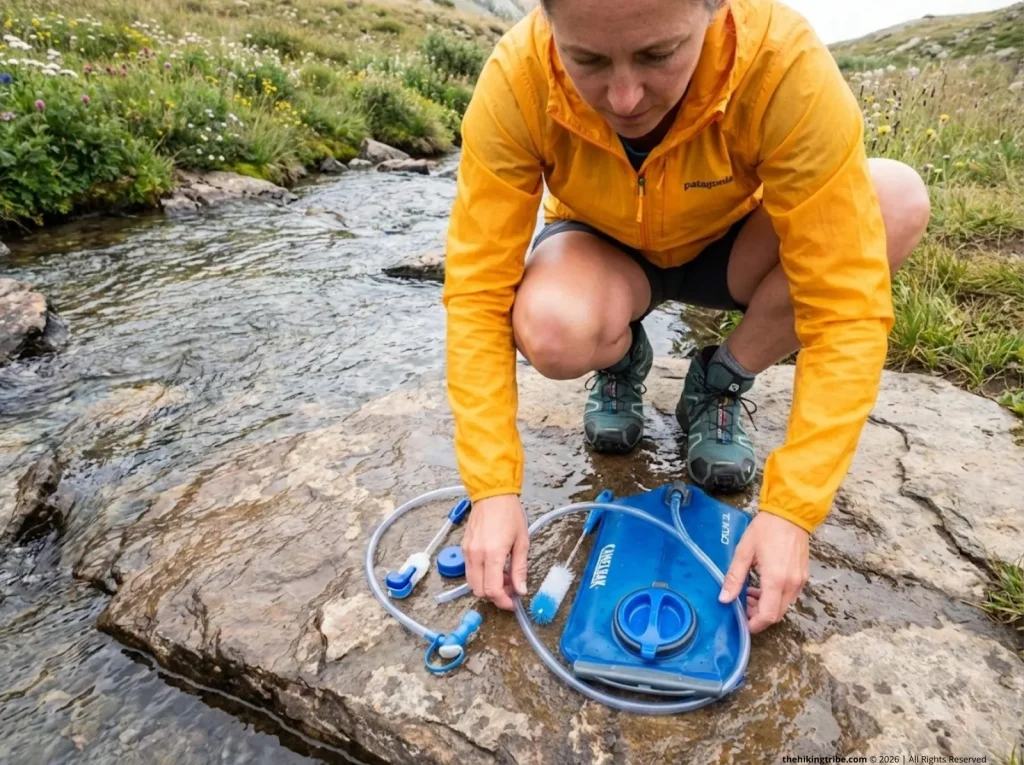
Separating Reservoir, Tube, and Bite Valve
Half-measures created most of the mold problems you see posted online. Pouring a cleaning solution into an assembled bladder and swishing it around misses every crevice that matters.
Pull the drinking tube from the reservoir port. Twist and pull firmly. Remove the Big Bite Valve (on CamelBak models) or the equivalent by pulling it straight off the tube end.
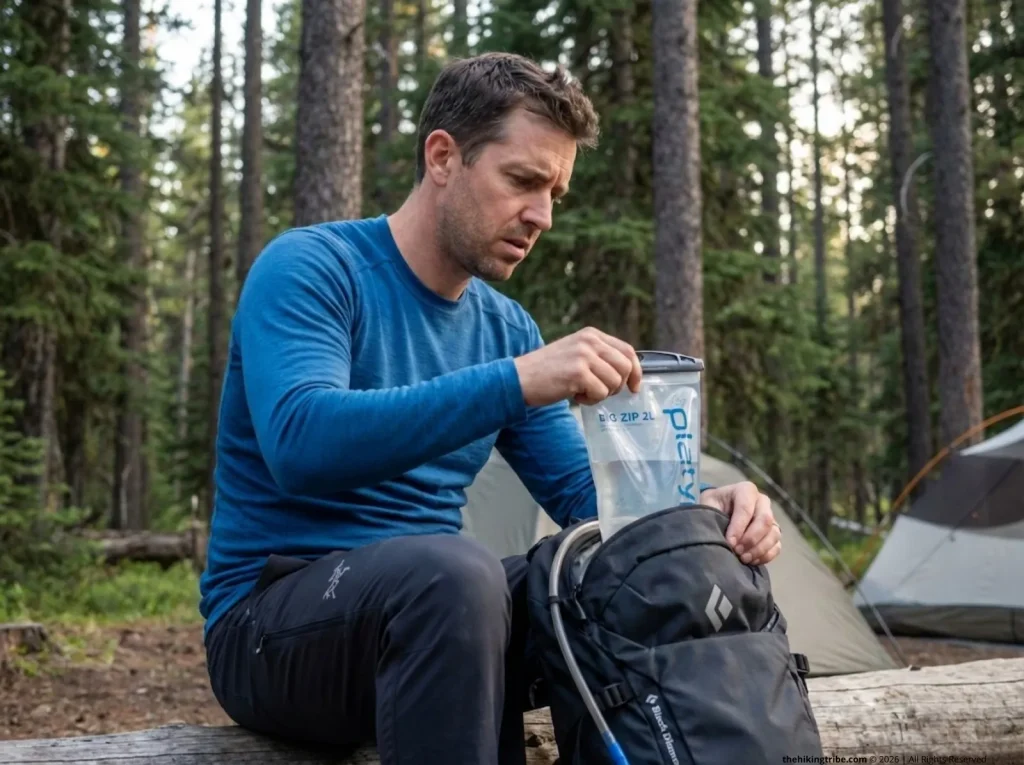
On Platypus Big Zip models, unzip the full-width closure for interior access. On Osprey Hydraulics setups, detach the magnetic bite valve and slide the tube free from the reservoir. On Geigerrig pressurized systems, always depressurize fully before pulling anything apart.
Every component gets cleaned separately. The tube interior is where most bacteria hide, and solution cannot reach those hose crevices without full disassembly.
Tools You Actually Need (And What’s Overkill)
A long-handled reservoir brush, a string-attached brush for pull-through tube cleaning, and a drying accessory are all you need. The CamelBak cleaning kit bundles all three for around $15.
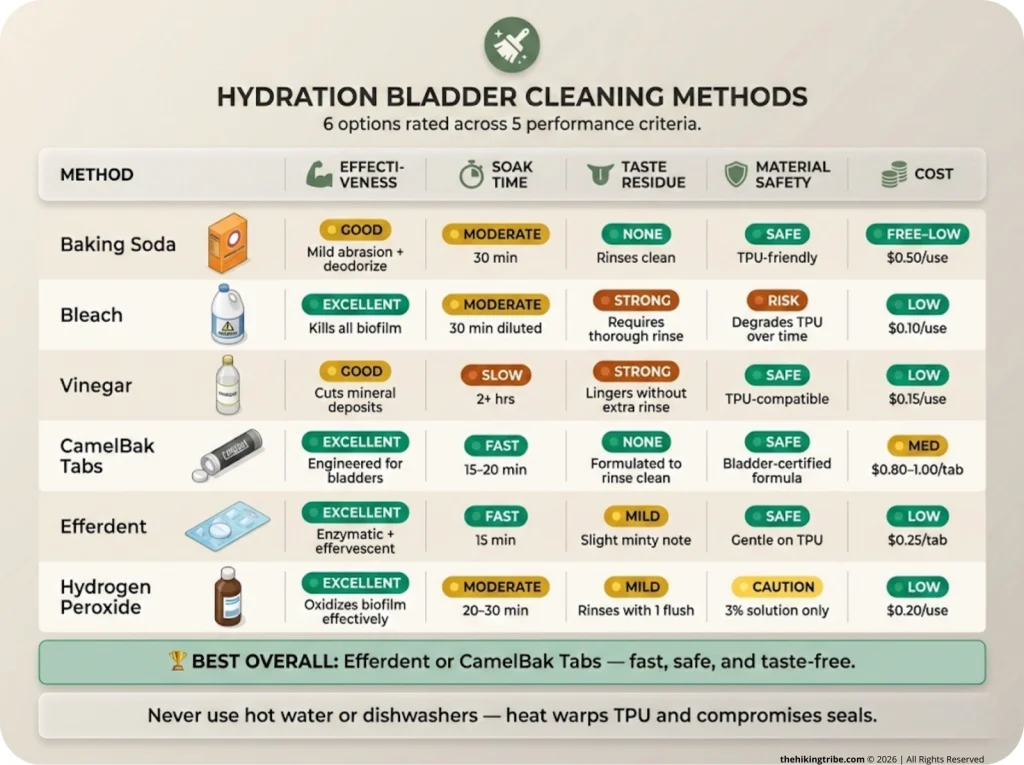
Skip the UV wands, steam cleaners, and dishwashers. CamelBak explicitly warns against dishwasher use on most reservoirs. The heat warps TPU and compromises seals. A $3 scrub brush and some baking soda outperform every gadget on the market.
Deep Clean Methods Ranked by Effectiveness
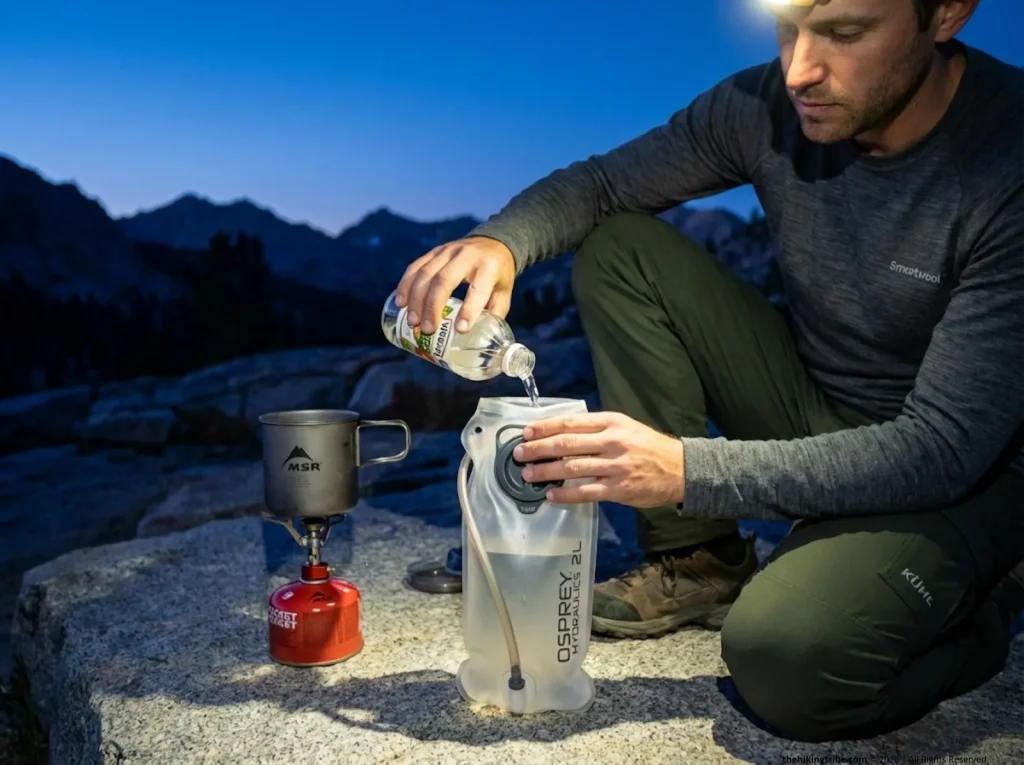
Household Solutions That Work
Three household options handle most mold situations before you ever need a commercial product.
Baking soda and lemon juice is the gentlest route. Platypus recommends a quarter cup of baking soda per liter mixed into a paste with three-quarters cup of water, then adding a quarter cup of lemon juice. Fill the bladder, let it soak for 20 minutes, and flush solution through the tube by pinching the valve open. Non-toxic, no aftertaste, effective against light mold.
Diluted bleach is the heavy hitter. Two to five drops of unscented bleach per liter of water eliminates stubborn biofilm and deep mold staining. Rinse thoroughly at least three times afterward. If you still detect chemical residue or plastic taste, rinse again. This method ranked among the most effective in field tests of eight different approaches.
White vinegar in a 50/50 mix handles odor removal well and goes easier on the material than bleach, but falls short against entrenched mold growth.
Commercial Cleaning Tablets
CamelBak Cleaning Tabs dissolve in warm water and sanitize the entire reservoir in about five minutes. Drop one in, fill with water, let it work.
Efferdent denture-cleaning tablets run about half the cost and deliver similar oxygenated water cleaning action. Both are solid choices for regular maintenance when you need a fast, reliable thorough cleaning between trips.
The Bite Valve and Tube Flush (Where Mold Actually Hides)
This step separates people who think they cleaned their bladder from people who actually did. Push your cleaning solution through the entire reservoir system by pinching the bite valve open and squeezing the bladder.
Pull the string-attached brush through the tube three to five times. Scrub the valve crevices individually because those tiny chambers harbor more bacteria than any other part of the system. If you are troubleshooting slow flow or persistent taste issues in other filtration gear, the same biofilm clogging applies to diagnosing and fixing slow water filters.
Pro tip: Bite the drinking valve and pull solution through the whole tube before scrubbing. This pre-soaks the interior walls and loosens mold that a dry brush alone won’t catch.
Drying Is the Entire Game (And Nobody Gets It Right)
Why 95% Dry Is Not Dry Enough
This is the step where every shortcut catches up with you. Even a few trapped drops of remaining water inside the tube or valve restart the mold cycle within days.
Warm, dark storage locations like closets, car trunks, and garage bins act as incubators. Hidden moisture plus warmth plus darkness plus any organic residue guarantees biofilm within 48 to 72 hours. That is the whole story.
“Get it bone dry or bust” is not just community slang. It is the only standard that reliably prevents recurring mold growth.
The Wire Hanger Hack and Other Field-Tested Drying Methods
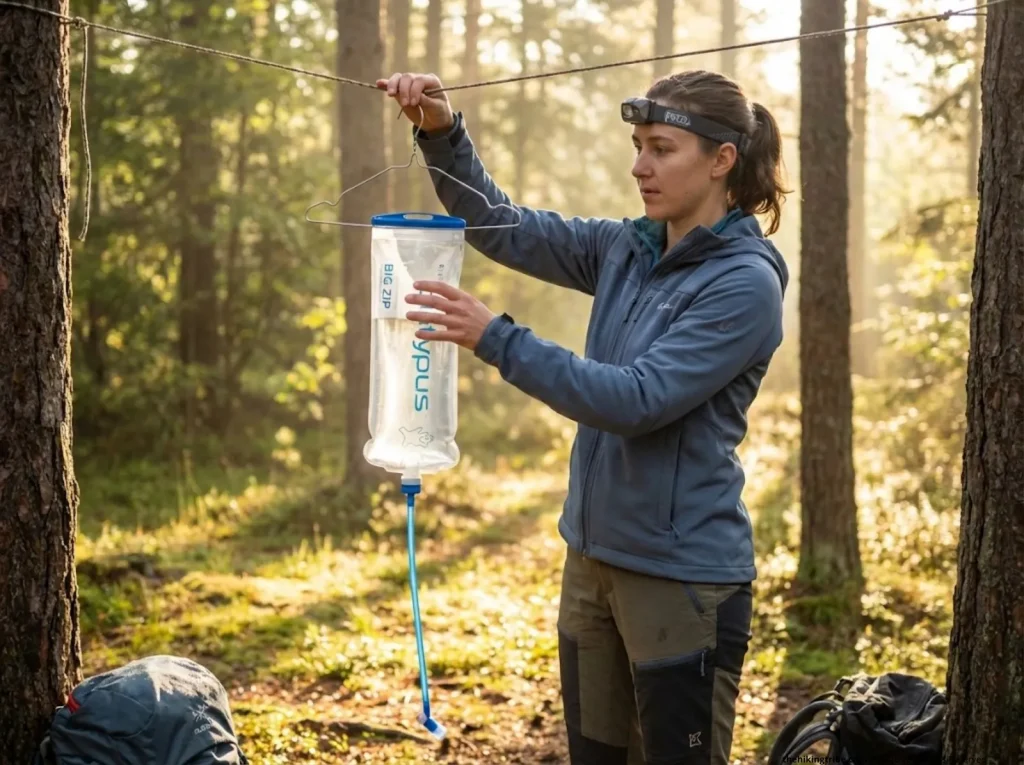
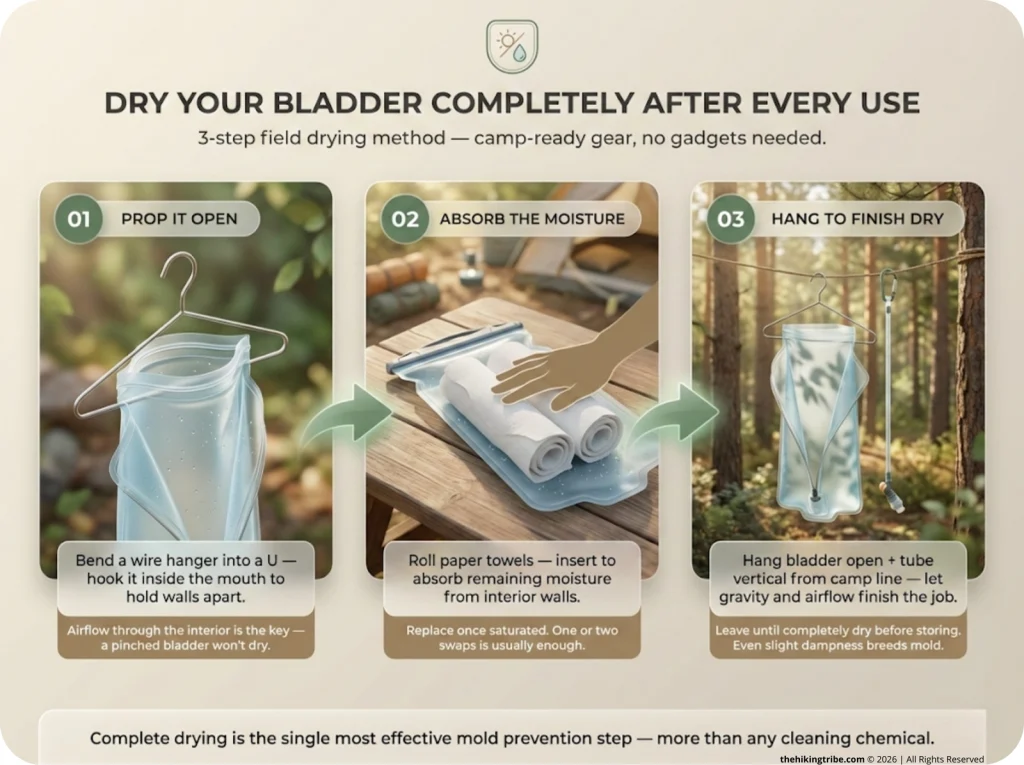
The CamelBak Reservoir Dryer is a purpose-built accessory that props the bladder opening wide for airflow. Runs about five to eight dollars. A bent wire clothes hanger shaped into a U does the same job for free. Shove it inside the bladder, hang the whole thing open in a ventilated area, and let gravity and airflow do the work.
Roll a paper towel inside the bladder to absorb remaining water in the tight corners where air alone doesn’t reach. For the tube, hang it vertically and shake out the drips.
If you want military-grade drying, an aquarium pump or a can of compressed canned air forces moisture out of the tubing completely. That method is overkill for weekend hikers, but serious multi-day backpackers who field-test their gear on back-to-back trips swear by it. The same moisture sensitivity applies to other gear with adhesive bonds, and there is a good parallel in drying wet gear overnight without damaging adhesives.
How Long Until It’s Actually Safe to Store
Give it a minimum of 24 hours in open air with decent ventilation. In humid climates, aim a fan at it or use a blow dryer on the cool setting.
Run a finger inside the bladder before sealing it. If you feel any moisture at all, keep drying. Never fold or roll the bladder closed until it is bone dry.
The Freezer Protocol (What Multi-Day Hikers Swear By)
Why Freezing Stops Bacterial Growth
Freezing your water bladder works because temperatures below 32°F halt bacteria reproduction and mold colonization cold. It does not sterilize. It pauses growth, which buys you weeks or months of contamination-free storage.
This is why the freezer method works even when the bladder is not perfectly dry, although drying first always gives better results. Four out of five top-ranking articles mention this technique, and communities across SectionHiker, Northeast Hiker, and 99Boulders call it “the secret.”
The Exact Freezer Storage Steps
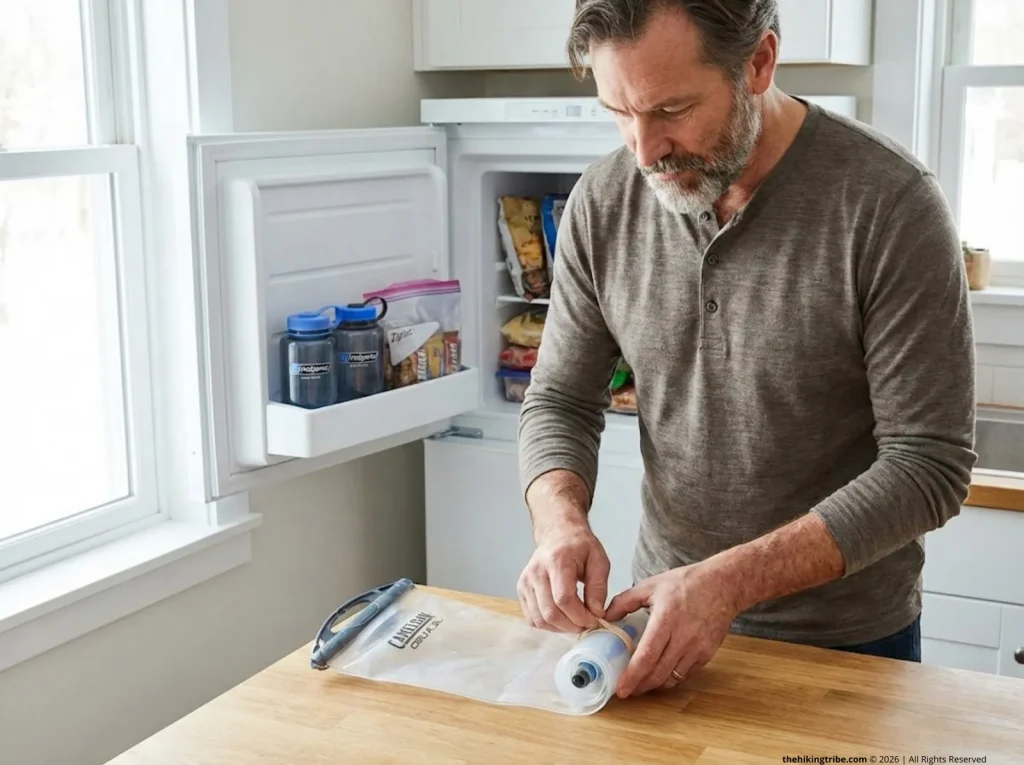
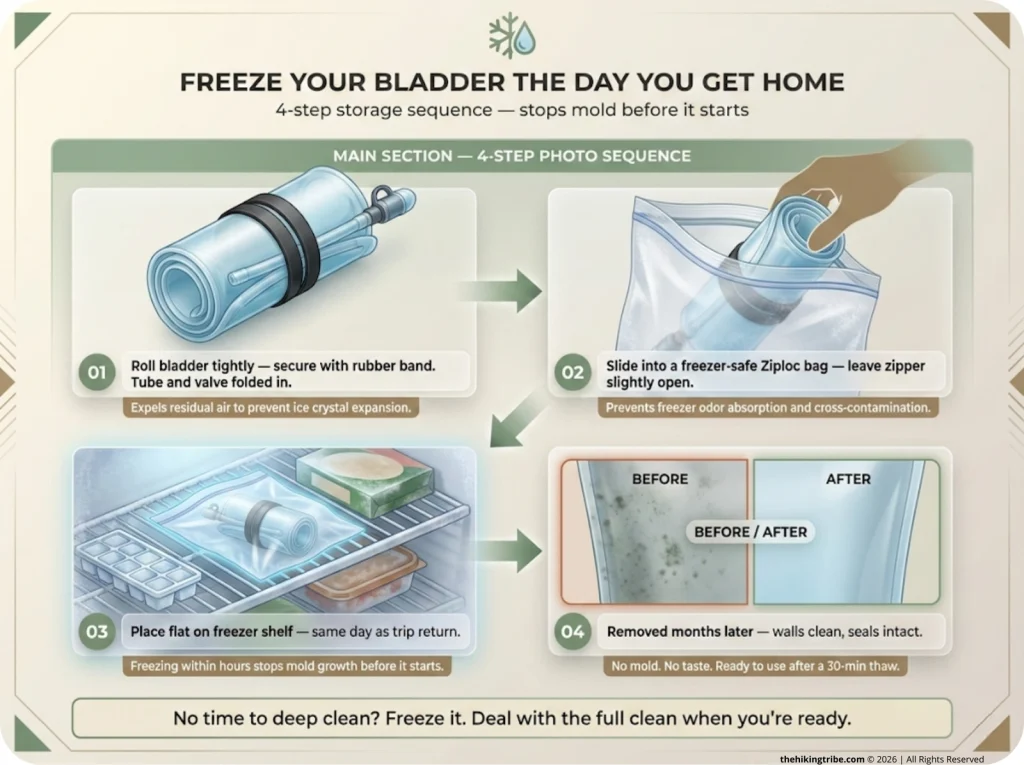
After cleaning and getting the bladder as dry as possible, roll it tight into a compact coil. Secure it with a rubber band or slide it into a Ziploc bag. Place it in the freezer, laid flat or on its side.
Leave the tube attached or detached — both methods work. The critical part is getting the whole assembly frozen before any new bacteria colonize. “Roll it up tight with a rubber band before freezing — stays fresh for months.”
When Freezing Isn’t Enough (Replace the Bladder)
If mold staining persists after three or more deep clean cycles, the TPU material may be permanently compromised. Black gunk embedded in tube walls that won’t scrub out means it is time for a new tube.
Most brands sell replacement tubes separately for eight to twelve dollars. A full bladder replacement runs $25-45, which is cheaper than a bout of GI distress on a remote trail.
Pro tip: Throw it in the freezer the same day you get home from a trip. Even if you don’t have time for a full deep clean yet, freezing within hours of use stops mold growth before it starts.
The Electrolyte Problem Nobody Warns You About

Why Sugar-Based Mixes Turn Your Bladder Into a Petri Dish
If you fill your hydration pack with electrolyte powder, Gatorade, Nuun, or Liquid IV on multi-day trips, you are feeding the mold colony directly. Sugar and mineral electrolyte residue coats the interior walls and the tubing, providing an organic food source that accelerates bacteria and mold growth three to five times faster than plain water alone.
According to University of Alabama at Birmingham steps to prevent mold in reusable hydration gear, organic residue in reusable containers dramatically increases contamination speed. Multi-day hikers who refill with electrolyte mix daily without rinsing between fills are the highest-risk group.
“Used electrolyte mix all week and didn’t deep-clean — tasted disgusting.” That mistake shows up in trail forums constantly.
The Mid-Trip Protocol for Electrolyte Users
After each electrolyte fill, rinse the bladder twice with clean water before refilling. At camp, flush the tube with clean water by biting the valve and squeezing the bladder.
Every two to three days on multi-day trips, run a quick baking soda flush through the system and rinse thoroughly. The simpler alternative is separating your hydration entirely. Use a water bottle for electrolytes and reserve the bladder for plain water only.
If you are working out your electrolyte strategy for longer routes, there is a solid breakdown over at choosing the right electrolyte strategy for long hikes.
Responsible Disposal on Trail (The LNT Angle Everyone Forgets)
Where and How to Dump Cleaning Solution
Bleach water, vinegar water, and baking soda rinse water all need to go at least 200 feet from any water source. Scatter the wastewater broadly across soil rather than dumping it in a single concentrated spot. Never pour cleaning solution into streams, lakes, or near camp water collection points.
At trailheads with facilities, use utility sinks or restroom drains. If you clean gear on trail, pack the cleaning solution out in a sealed container. This is not optional. It falls under the deeper LNT principles most hikers overlook.
Trail-Ready Cleaning Without Harsh Chemicals
Plain hot water and a vigorous scrub handle light post-use cleaning without any environmental concern. Baking soda is the most LNT-friendly cleaner — fully biodegradable and low-impact when scattered properly.
Save your bleach and commercial cleaning tablets for deep cleans at home, before and after trips. That keeps the harsh chemistry out of the backcountry entirely.
Pro tip: Do your deep clean at home before AND after every trip. The pre-trip clean ensures you start with a sterile system. The post-trip clean prevents mold from colonizing during storage.
Conclusion
Three things determine whether your hydration bladder stays clean or turns into a mold farm.
First, drying is the non-negotiable step. Not 95% dry. Bone dry. Every surface, every crevice, every centimeter of tubing. Second, full disassembly separates a real clean from a cosmetic rinse. The tube and bite valve are where the worst contamination hides, and you cannot reach them without pulling the whole system apart.
Third, the freezer is your insurance policy between trips, and the electrolyte flush protocol is the upgrade for anyone running mixes on multi-day routes. Run this routine once before your next trip. The whole process takes under ten minutes. The first sip of pure drinking water on day three of your next traverse tells you whether it worked.
FAQ
How often should you deep clean a hydration bladder?
Deep clean every two to four weeks during active use, or immediately after any non-water fill like electrolyte mixes or flavored powders. A plain-water rinse and full air dry should happen after every single use. If you only fill with plain water and dry thoroughly to prevent mold, monthly deep cleaning is enough.
Can you put a CamelBak bladder in the dishwasher?
CamelBak does not recommend dishwashers for most reservoirs. The heat warps TPU material and compromises the seals. Hand-wash with a cleaning solution, scrub brushes, and a thorough rinse instead. It takes five minutes and preserves the bladder for years.
What is the best way to dry a water bladder?
Prop the bladder open with a Reservoir Dryer, a bent wire hanger, or rolled paper towels inside. Hang in a ventilated area for at least 24 hours. The tube should hang vertically so gravity pulls out remaining water. Touch-test the interior before storing — if anything feels damp, keep drying.
Is it safe to use bleach inside a hydration bladder?
Yes, in the right concentration. Platypus recommends two to five drops of unscented household bleach per liter of water. Soak for 20 minutes, then rinse at least three times with clean water until you cannot detect any bleach taste. Avoid scented or concentrated formulas.
Does freezing a water bladder kill mold completely?
Freezing inhibits mold growth but does not sterilize. It stops bacteria and mold from reproducing, effectively pausing colonization for weeks or months. For best results, clean and dry the bladder first, then store in the freezer as your standard protocol between trips.

I've spent more than a decade researching hiking gear and trail technique. I read the specs, the forum threads and the long-term reviews, and every pick here comes with what it gets wrong.
End of the trail
You read every mile of this one. Here's where the trail goes next.